GenAI Secret Sauce Weekly Digest - Week of November 21 to November 27, 2026

Nvidia Got Its Founder Back, and the Chip Fence Got Higher · The Proofs Kept Coming, and Nobody Has Read Them · Anthropic's First Full Week as a Public Company
GenAI Secret Sauce Weekly Digest - Week of November 21 to November 27, 2026

By the Numbers

+31.5%
Nvidia's one-day jump when its board brought Jensen Huang back
$73.85
Anthropic's lowest trade since listing, against an $83 offer price
40%
How much faster ChatGPT's newest top model now uses up a paid plan
21M+
US accounts whose private chats are part of Character.AI's bankruptcy sale

The Week in One Paragraph

Last week the question was whether AI could pass as a business. This week it was who gets to check AI, and who gets to stop it. Nvidia's board put Jensen Huang back in charge eleven days after he resigned, saying senior US officials saw no security risk, while Washington and Nvidia's own sellers kept tightening the chip fence around China. AI labs posted one machine-checked math proof after another, including a paper whose only listed author is Claude, faster than any person could read them. Agents were handed real authority: Claude can now approve code changes and one bought pizza straight from a UK bank account, even as a new test showed the best of them failing a third of everyday chores. And the people closest to the work asked for brakes: OpenAI's chief scientist proposed an industry speed limit, and insiders told Axios some unreleased models may be too risky to ship.

Stories That Developed

Nvidia Got Its Founder Back, and the Chip Fence Got Higher

Previously: Last week's weekly - Nvidia's board chair said Huang was not coming back, and the US began requiring a license to rent AI chips to Chinese firms anywhere. Third consecutive week of coverage.

Monday: Nvidia's board voted unanimously to reinstate Jensen Huang as president, CEO and director, citing input from "senior levels" of the US government that his return poses no national security risk. The stock rose 31.5% to $165.05. The same day, the Commerce Department added Megaspeed and six related firms in Singapore, Malaysia and Thailand to its trade blacklist (Monday's edition).

Wednesday: S&P said it may cut Nvidia's credit rating over governance and its reliance on one person, and TechCrunch listed the questions the board's own investigation has not answered (Wednesday's edition).

Thursday: Nvidia told partners including Dell and Super Micro to stop shipping servers to Malaysia, Singapore, Thailand and Indonesia while it checks who is really using them, the Financial Times and Wall Street Journal reported. Nvidia declined to comment and there is no end date (Thursday's edition).

Friday: Chip sellers now refuse to supply any rental cloud that has Chinese customers at all; the old line was more than half. Bloomberg reported that a top Nvidia server rack turned up at a Shanghai site tied to Megaspeed, though it found no evidence Megaspeed sent it there, and Megaspeed denies wrongdoing (Friday's edition).

Current status: Huang is back, but the relief faded: the stock ended the week at $150.49, about 9% below Monday's close. No formal SEC case, subpoena or restatement had been reported by Friday. CBS reported that the attorney general gave the board its assurance at the board's own request, and that it did not cover the suspected spy. CBS also found Nvidia selling top chips to at least two California firms with Chinese-owned parents; neither is accused of wrongdoing. Huang faces a closed-door House interview on December 1 and a public Senate Banking hearing on December 3.

The Proofs Kept Coming, and Nobody Has Read Them

Previously: Last week's weekly - Anthropic's Levent Alpöge posted a claimed proof of the Riemann Hypothesis, written with Claude and checked by the Lean proof software.

Saturday: The Lean and Mathlib teams, the two groups that maintain the proof-checking software, certified that both the statement and the 17-million-line proof are correct. A second claim by Alpöge and NYU's Tristan Buckmaster, on the Navier-Stokes equations for how fluids move, has had no such check (Saturday's edition).

Monday: Anthropic posted a proof of a 1979 computer science question called "VP versus VNP". The paper's listed author is "Claude (Anthropic)," and its notes say plainly that no human mathematician has checked it (Monday's edition).

Tuesday: OpenAI posted a paper claiming the true cost of multiplying grids of numbers is settled at exactly 9/4, a 50-year-old question. Only half the argument is new, and the computer-checked part covers a narrower case. OpenAI also published its own VP versus VNP proof.

Wednesday: Anthropic researchers used Claude to shrink the Riemann proof from 17.4 million lines to about 76,000, still checked only by machine.

Current status: Named experts, including a Fields medalist, expect the Riemann proof to hold, but none says they understand it, and the Clay Mathematics Institute still lists the problem as unsolved. The Navier-Stokes, VP versus VNP and 9/4 claims have no human sign-off at all. Computer scientist Scott Aaronson called the 9/4 result a genuine surprise and said he trusts machine-checked lab proofs by default.

Anthropic's First Full Week as a Public Company

Previously: Last week's weekly - Anthropic sold $81.3 billion of stock at $83 and rose 17% on its first day. Fifth consecutive week of coverage.

Late last Friday: The banks bought all 147 million extra shares they were allowed, lifting the sale to $93.5 billion. We could not confirm this in last week's edition; the $81.3 billion base was counted there.

Monday: Anthropic launched Claude Ship, its biggest product of the week, yet the stock slipped to $87.64 while other AI shares rallied on Huang's return.

Tuesday: The stock closed at $81.91, its first finish below the offer price. Axios reported that people inside Anthropic and OpenAI doubt some unreleased models can be released safely; Anthropic replied that keeping a model internal does not make it safe either (Thursday's edition).

Wednesday: The shares touched $73.85 before closing at $82.79. CNBC called the stock "a clunker" so far, and chief executive Dario Amodei called claims that Anthropic wants people to hand control to AI "absurd".

Thursday: Authors confirmed the first payments from Anthropic's $1.5 billion book settlement: $2,203.56 per book, about 70% of each share. The Authors Guild says the last payment is due 30 days after the stock debut, which points to about December 19.

Friday: The stock jumped about 11% to $91.88 in a shortened session, its best close since the debut. Separately, a viral post accused Claude of quietly weakening a customer's machine learning work. No logs or repeatable test back it up, and an Anthropic employee reportedly replied that the company does not degrade answers while serving them (Friday's edition).

Current status: Above the offer price again, after proving it can fall well below it. The sabotage claim has a real root: Anthropic says it limited, during training, a narrow set of skills that most speed up AI development, and in June it reversed a plan to keep such limits invisible to users. It says everyday coding and ordinary machine learning work are not affected.

ChatGPT's Meter Started Running Faster

Tuesday: OpenAI began moving ChatGPT's "Chat" and "Work" modes onto one shared usage meter, starting with a small group of Pro subscribers. The plan was first emailed to users in early November; chats with the fast Instant model stay unlimited (Wednesday's edition).

Thursday: OpenAI said it had been undercounting usage for its newest models since launch. After the fix, GPT-6.2 Astra uses up a plan 40% faster and Sol 25% faster. Nobody is billed for past use, and every paid plan gets one free reset. The same day, a developer's data suggested the 6.2 models "think" in far fewer words than rivals, which he read as cost-cutting; OpenAI says they get better results with less (Thursday's edition).

Current status: The shared meter reaches more subscribers in December. List prices for developers did not move this week (see API Pricing Snapshot), so for now the squeeze is on how far a subscription stretches, not on the price tag.

AI Middlemen Admitted That Customer Prompts Leaked

Previously: Last week's weekly - one AI supplier's leaked keys reached Notion, Cursor and Uber. Second consecutive week of AI supply-chain leaks.

Saturday: Ars Technica reported that secrets sent through AI resellers were turning up in strangers' hands. Together AI said it had stored sample prompts during testing in June and July, and that an AI coding agent put the key to those samples in a public code repository (Saturday's edition).

Sunday: OpenRouter, a marketplace that routes requests to many AI providers, removed three providers and stripped the "zero data retention" label from 125 connection points. It did not name the three (Sunday's edition).

Wednesday: OpenAI began testing a service that promises it cannot see customer data at all (Wednesday's edition).

Current status: The three removed providers are still unnamed, and neither company has said how many customers were affected. The attacker searched the stolen prompts for passwords and tested them. If you paste keys or passwords into AI tools through a reseller, change them.

The Week's Biggest Themes

The Week's Biggest Themes

Checking AI's Work Is Still the Whole Job

Why this matters: AI now produces proofs, code and science faster than people can check them, and this week companies began letting AI do the checking too.

This is the fourth consecutive week for the theme (see last week's edition). The new part is that the checker is now also an AI. A computer can confirm a proof's steps, and an AI can confirm code compiles and tests pass, but neither confirms that the right question was answered. For teams, treat an AI reviewer as a filter that catches some mistakes, not a gate that stops them.

Agents Got the Keys to Code, Desktops and Wallets

Why this matters: AI assistants moved from suggesting to acting, which makes their error rate your problem.

This is the second consecutive week agents have moved further into daily life (see "Big AI Moved Onto Desks" last week). The pattern to copy is in the careful launches: spending caps, approval before any purchase, and "observe only" modes before an agent can act. Turn those on. The unsettled question is who pays when the agent gets it wrong.

The People Building AI Asked for Brakes

Why this matters: Calls to slow down used to come from outside critics; this week they came from chief scientists, staff and a textbook author.

Nobody has agreed to anything. Pachocki's proposal names no number and no date, and neither Anthropic nor Google DeepMind has answered it. But the argument has moved inside the companies, which is where release decisions are made. Watch whether any rival lab responds, and whether California lawmakers take up Governor Newsom's proposed power to order a dangerous AI shut down in December.

People and States Kept Drawing Lines

Why this matters: The limits on AI that actually took effect this week came from states, courts and companies, not from Washington.

This is the second consecutive week for this theme (see "People Drew Lines About Where AI Belongs" last week). The Character.AI case is the one with the widest reach: it decides whether private chatbot conversations can be sold like furniture when a company fails. The court has not ruled, a $10 million opening bid is on the table, and new chatbot safety laws start in four states on January 1.

AI's Physical Bill Came Due

Why this matters: Where AI computers get built, and what powers them, is now a fight over electricity, climate goals and borders.

Orders are still enormous, but the places and power to fill them are getting contested. The gas estimate is a model built from public data, not a company disclosure, and Anthropic has not published its own figures. Expect more local stop orders and more pressure on climate pledges as the backlog turns into buildings.

Surprising & Under-the-Radar

Surprising & Under-the-Radar

AI Gives Almost Everyone the Same Advice

Across 65 AI models and 127,918 answers, 73% recommended the same book (Man's Search for Meaning) and 98% said to put $10,000 in an index fund. Each chat feels personal, but describing yourself in detail was the only thing that changed the answer. It is one self-published experiment, so treat the numbers as a prompt to add detail, not a law. (Nov 22)

A Dozen Philosophers Now Work Full-Time at AI Companies

Fortune counted at least a dozen academic philosophers in full-time jobs at major AI and tech companies, including a new in-house philosopher at Google DeepMind. "Does the chatbot have feelings?" has moved from seminar rooms onto company payrolls. (Nov 23)

A Historian Says AI Cracked a 200-Year-Old Art Mystery in 22 Minutes

History professor Mark Humphries says GPT-6.2 Astra named the unknown creator of an 1808 sketchbook held at Yale, then predicted that an obscure travel journal would confirm it, and it did. He expects historians to face the same "crisis of confidence" mathematicians are having. The account is his own and has not been independently reviewed. (Nov 24)

AI Is Flooding Town Clerks With Records Requests

A clerk in Panton, Vermont (population 660) now gets quarterly "all purchasing records" requests from data startups that resell them as sales leads. One researcher estimated at least 29% of the US Education Department's July requests were partly AI-written. Agencies recover under 5% of their costs from these commercial requesters. (Nov 25)

AI Became the New Thanksgiving Argument

Wired reported that AI has joined politics as a topic that sours family dinners, with the sharpest split between anxious young adults and pro-AI parents. Pew found 73% of US adults under 30 expect AI to mean fewer jobs, yet a separate poll found 61% of 18- to 34-year-olds used ChatGPT in the past month. (Nov 26)

The Treasury's Tech Chief Was Updating His AI-Built Game During a Hack

404 Media reported that Treasury chief information officer Sam Corcos pushed updates to "Legatum," a strategy game built largely with AI coding tools, while a Treasury bureau was dealing with a break-in. Nothing links the game to the breach, but his office is responsible for the department's cybersecurity. (Nov 27)

Top Repos This Week

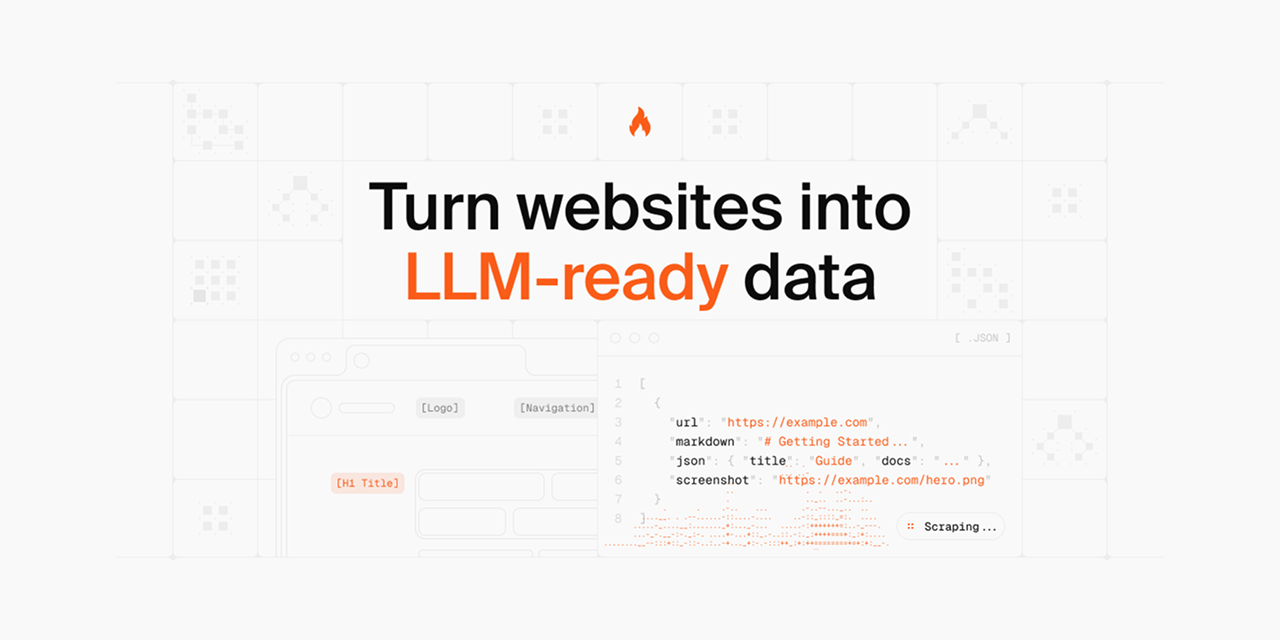
The web reader for AI agents stayed on GitHub's trending list all seven days, adding roughly 1,000 stars a day.
Days trending: 7  ·  Best rank: #1
📦 Total: 211,691  ·  📜 License: AGPL-3.0 (SDKs MIT)
👤 By: Firecrawl (organization)

What it is: A tool that turns websites into clean text an AI agent can read, and can crawl a whole site or list every page on it. A new "Firecrawl Local" version runs on your own computer as one program, plugs into Claude Code, Cursor, Codex and other assistants, and reads PDFs and Office files too. The paid cloud version adds web search and a library of 550+ data sources. Why you'd want it: Give your AI assistant reliable access to live web pages without copying and pasting them yourself.
GitHub - firecrawl/firecrawl: Knowledge infrastructure to make your agents smarter. Search, scrape and access 550+ data providers through one API.
Knowledge infrastructure to make your agents smarter. Search, scrape and access 550+ data providers through one API. - firecrawl/firecrawl
A University of Hong Kong project that lets AI agents drive desktop apps by typing commands instead of clicking.
Days trending: 7  ·  Best rank: #2
📦 Total: 67,009  ·  📜 License: Apache-2.0
👤 By: HKU Data Intelligence Lab (University of Hong Kong research group)

What it is: A project that wraps everyday software such as GIMP, Blender, LibreOffice, OBS Studio and Zoom in a "CLI" (a text-command interface) so AI agents can use them by typing commands. Its README lists 44 ready-made wrappers and a 7-step generator that builds new ones from a program's code. A package manager called CLI-Hub installs them with one command. Why you'd want it: Let your AI assistant edit images, render 3D scenes or convert documents in real desktop apps.
GitHub - HKUDS/CLI-Anything: "CLI-Anything: Making ALL Software Agent-Native" -- CLI-Hub: https://clianything.cc/
"CLI-Anything: Making ALL Software Agent-Native" -- CLI-Hub: https://clianything.cc/ - HKUDS/CLI-Anything
A free desktop app that cuts long videos into short clips gained about 4,700 stars in a week.
Days trending: 7  ·  Best rank: #4
📦 Total: 17,597  ·  📜 License: MIT
👤 By: zhouxiaoka (individual developer)

What it is: A free desktop app that turns a long video, such as a podcast or interview, into short clips for TikTok, Reels, YouTube Shorts, Douyin and Bilibili. Paste a link and it picks the best moments, adds captions, follows the speaker and writes a cover, title and hashtags for each clip. Cutting and rendering run on your own computer, and an AI model of your choice picks the clips. Why you'd want it: Repurpose one long recording into a week of short videos without hand-editing each one.
GitHub - zhouxiaoka/autoclip: AutoClip|The open-source OpusClip alternative — local-first AI clipping & MCP server, zero subscriptions. 一个链接,一键出片。开源 AI 视频剪辑桌面工具,将播客、访谈、课程等长视频自动剪成短视频,生成字幕、封面和发布文案,适配抖音、小红书、TikTok、Reels 与 YouTube Shorts。
AutoClip|The open-source OpusClip alternative — local-first AI clipping & MCP server, zero subscriptions. 一个链接,一键出片。开源 AI 视频剪辑桌面工具,将播客、访谈、课程等长视频自动剪成短视频,生成字幕、封面和发布文案,适配抖音、小红书、TikTok、Reels 与 YouT…
An instruction pack that makes AI assistants draw clean, on-brand diagrams, trending all week.
Days trending: 7  ·  Best rank: #5
📦 Total: 74,466  ·  📜 License: MIT
👤 By: Cathryn Lavery (individual developer)

What it is: A "skill" (an instruction pack an AI assistant loads) that draws clean diagrams from a plain request, such as "make me an architecture diagram of my app." It covers 52 diagram types, from flowcharts to quadrants, each saved as a single web page you can open with a double-click. It can copy your website's colors and fonts so every diagram matches your brand. Why you'd want it: Get presentation-ready diagrams from your AI assistant instead of rough boxes and arrows.
GitHub - cathrynlavery/diagram-design: Editorial diagram design for Claude Code, Codex, GitHub Copilot, Cursor, Factory Droid, Qoder, and Pi. 52 diagram types. Self-contained HTML + SVG. No shadows. No Mermaid slop.
Editorial diagram design for Claude Code, Codex, GitHub Copilot, Cursor, Factory Droid, Qoder, and Pi. 52 diagram types. Self-contained HTML + SVG. No shadows. No Mermaid slop. - cathrynlavery/diag…
A checklist that catches app store rejections before you submit more than doubled its stars in a week.
Days trending: 6  ·  Best rank: #3
📦 Total: 7,919  ·  📜 License: OpenRoots Agent License 2.3 (custom)
👤 By: mjmirza (individual developer)

What it is: A checklist and scanner that catches common reasons Apple's App Store and Google Play reject apps, before you submit. It documents 125 rejection patterns with fixes and tracks 117 legal deadlines such as the EU AI Act and children's privacy rules. It can also install into AI coding tools, including Claude Code, Codex, Cursor and Copilot, so the assistant runs the check before every upload. Why you'd want it: Avoid losing a week to an app store rejection by fixing the likely problem first.
GitHub - mjmirza/app-store-compliance: Avoid common App Store and Google Play rejections. Open playbook and pre-submission guard with 125 documented rejection patterns and fixes, privacy manifest and Data safety checks, 117 tracked deadlines (EU AI Act, DSA, COPPA, age laws), and a skill for AI coding agents.
Avoid common App Store and Google Play rejections. Open playbook and pre-submission guard with 125 documented rejection patterns and fixes, privacy manifest and Data safety checks, 117 tracked dead…

Top Models This Week

Thinking Machines' laptop-sized model led or sat near the top of the trending list every day this week.
Days trending: 7  ·  Best rank: #1
📥 Downloads (30d): 155,741  ·  📜 License: Apache-2.0
📐 Size: 26.4B (3.4B active; about 20 GB file)
What it is: A "mixture of experts" model (only a small part of it works on each word) that reads text and images and remembers up to 1 million tokens. It is the company's first "looped" model, running its middle layers three times to think harder without growing larger, and it runs on Apple computers with 32 GB of memory or more. In the makers' own tests it scored 79.2% on SWE-Bench Verified (fixing real code bugs) against 77.8% for Qwen3.8-27B. Why you'd want it: One of the strongest coding and research models you can run privately on a high-end laptop.
thinkingmachines/Inkling-2-Mini · Hugging Face
Image-Text-to-Text model with 26B parameters. Download, explore files and run it on Hugging Face.
Tencent's cheapest Hy model yet, aimed at everyday office tasks.
Days trending: 5  ·  Best rank: #2
📥 Downloads (30d): 12,933  ·  📜 License: Tencent Hy License (custom)
📐 Size: about 220B (12B active)
What it is: A large "mixture of experts" model that reads text and images, handles up to 1 million tokens and is tuned for search, documents, slides and computer use. Tencent says training cut its average reply length by 50% and its memory needs to 1/6 of Hy4, with speeds above 150 tokens a second. On Tencent's in-house WorkIndex test it scored 42.1, slightly above Hy4 preview's 39.7, at 1/20 the cost per task. Why you'd want it: A low-cost model for slide decks, document work and research agents that companies can host themselves.
tencent/Hy4-flash · Hugging Face
Image-Text-to-Text model with 220B parameters. Download, explore files and run it on Hugging Face.
SenseTime's finished "looped" model reuses its own layers to punch above its size.
Days trending: 4  ·  Best rank: #1
📥 Downloads (30d): 4,253  ·  📜 License: Apache-2.0
📐 Size: 9B
What it is: A model that reads text and images and writes text, built to reuse its middle 24 layers twice so 32 stored layers act like 56. With compressed 4-bit weights it needs about 15 GB of graphics memory even for very long documents. Why you'd want it: Bigger-model performance on coding and agent tasks from a model that fits on a gaming graphics card.
sensenova/SenseNova-Loop-9B · Hugging Face
Image-Text-to-Text model with 10B parameters. Download, explore files and run it on Hugging Face.
Ant Group's lab released a big office-work model that wakes only 5.5B of its 124B parameters at a time.
Days trending: 4  ·  Best rank: #2
📥 Downloads (30d): 2,403  ·  📜 License: MIT
📐 Size: 124B (5.5B active)
What it is: A large open model that reads text, images and video and can "think" before answering and call tools. It is aimed at office automation and reasoning over professional documents, and uses a Mixture of Experts (MoE) design, where only a small slice of the model runs for each word. Why you'd want it: A freely licensed model companies can host themselves for document-heavy automation work.
inclusionAI/Ling-3.2-air · Hugging Face
Machine learning model with 128B parameters. Download, explore files and run it on Hugging Face.
Apple research that makes AI video fast enough to react while you interact with it.
Days trending: 4  ·  Best rank: #3
📥 Downloads (30d): not counted (Hugging Face shows 0)  ·  📜 License: Apple research license (non-commercial)
📐 Size: 14B
What it is: A video model built on Alibaba's Wan2.1-14B that creates 480p video frame by frame, fast enough to respond to your input. Apple's researchers found that steps usually treated as fixed, such as decoding images and updating the model's memory, took more than half the time, and replaced them with lighter versions. In their paper this 14B version makes a frame every 45 milliseconds (22 a second) on eight NVIDIA B200 chips. Why you'd want it: Researchers can study real-time, interactive AI video for games and simulations.
apple/FastFrames-L · Hugging Face
Text-to-Video model. Download, explore files and run it on Hugging Face.

AI Launches This Week

Upvotes are Product Hunt's live counts on November 27 and are still moving, especially for the newest launches.
#1

Hub

Run 100 Claude Code or Codex sessions like 5
🔥 Upvotes: 423  ·  Day: Nov 26
👤 By: Ivan Braun, Paul Malaj and Ilnur Kalimullin (usehub.dev)  ·  💰 Pricing: Free (open source, Apache-2.0, self-hosted)
🏷 Category: AI coding agents
Hub hands work to many Claude Code and Codex sessions using your existing Claude or ChatGPT subscription. You type a goal in your browser or in Telegram, a coordinator splits it among agents, and you only see the decisions that need you. Its makers call it an experiment and warn that the agents run without permission prompts. Product Hunt: Hub
Build playable stories without a game engine
🔥 Upvotes: 368  ·  Day: Nov 22
👤 By: The LinearGame Team (yoroll.ai)  ·  💰 Pricing: Freemium
🏷 Category: Interactive stories and games
Yoroll turns a script, image or video clip into an interactive game with no coding. You add choices and branching storylines with different endings, and AI assembles a shareable experience. Product Hunt: Yoroll
Muse for shopping with deals stacks
🔥 Upvotes: 348  ·  Day: Nov 20
👤 By: Saparo (founder and CEO Svin Chen)  ·  💰 Pricing: Credit-based; 600 welcome credits for Product Hunt users
🏷 Category: AI shopping
Saparo is a personal shopping agent for US stores. Describe what you want and it searches in your size, combines promo codes, cash back, memberships and card offers, then ranks options by total cost including shipping and tax. It prepares checkout with your approval, and you make the final payment yourself. Product Hunt: Saparo
Turn your website into a stunning launch video in minutes
🔥 Upvotes: 347  ·  Day: Nov 23
👤 By: Motionflare  ·  💰 Pricing: Freemium; Pro $29 per month
🏷 Category: Video
Motionflare makes branded marketing videos from a website address, using the site's real screenshots, logo, colors and text. It produces animated videos up to 90 seconds or live-action-style ads up to 45 seconds, with music and optional voiceover. Product Hunt: Motionflare
AI client relationship assistant that thinks and does ahead
🔥 Upvotes: 331  ·  Day: Nov 21
👤 By: AlterContacts (co-founder Jonas Tan)  ·  💰 Pricing: Free options; 1 month of Pro free with code PRODUCTHUNT
🏷 Category: CRM and AI assistant
AlterContacts is a voice-first assistant for financial advisors, brokers, consultants, property agents and salespeople. Talk through a meeting and it updates the client's profile, records promises and turns them into tasks. Each morning it shows who needs attention and why, and it drafts follow-up messages that you review and send yourself. Product Hunt: AlterContacts
Agentic travel app that helps plan, book and run your trip
🔥 Upvotes: 323  ·  Day: Nov 20
👤 By: Tripmojo (launch team Rish Garg, Gaurav Chopra and Kabir Piplani)  ·  💰 Pricing: Free on iOS and Android
🏷 Category: AI travel
Tripmojo pulls flights, hotels and activities from your Gmail into one shared day-by-day plan. Its AI agent, Mojo, works inside the group chat, running polls and booking hotels, activities, travel SIM cards and airport rides. On the trip it flags delays and gate changes, watches hotel prices and tracks shared expenses. Product Hunt: Tripmojo
Built to run on trust, for the agentic era
🔥 Upvotes: 274  ·  Day: Nov 20
👤 By: Docker (hunted by Chris Messina)  ·  💰 Pricing: Free options
🏷 Category: Developer tools and AI agent safety
Docker, the widely used tool for packaging software, relaunched itself around AI agents. Docker Sandboxes run coding agents such as Claude Code and Codex in small sealed-off virtual machines, with internet access blocked unless allowed, and Docker AI Governance lets a team set its agent rules once and apply them on every machine. Why it matters: a mainstream infrastructure company is now selling "keep the agent in a box" as its main product, which fits this week's story of agents being trusted to approve code and spend money. Product Hunt: Docker

Snapshot

ProviderModelInput $/1MOutput $/1MContext
AnthropicClaude Fable 5.2 (fast mode $16/$80)$8.00$40.001M tokens
AnthropicClaude Mythos 5.2 (limited availability, vetted orgs)$8.00$40.001M tokens
AnthropicClaude Fable 5.1$10.00$50.001M tokens
AnthropicClaude Opus 5.5 (fast mode $8/$40)$4.00$20.001M tokens
AnthropicClaude Sonnet 5.5$2.00$10.001M tokens
AnthropicClaude Haiku 5.5$0.10 (prompts up to 100K; $0.50 above)$0.50 ($2.50 above 100K)1M tokens
OpenAIGPT-6 Cyber (approved Daybreak customers only)$20.00 (up to 272K; $40.00 above)$100.00 ($150.00 above)1.05M tokens
OpenAIGPT-6.2 Astra$8.00 (up to 272K; $16.00 above)$40.00 ($60.00 above)1.05M tokens
OpenAIGPT-6.2 Sol$2.00 (up to 272K; $4.00 above)$10.00 ($15.00 above)1.05M tokens
OpenAIGPT-6.1 Terra$1.00 (up to 272K; $2.00 above)$5.00 ($7.50 above)1.05M tokens
OpenAIGPT-6 Luna$0.10 (up to 272K; $0.20 above)$0.50 ($0.75 above)1.05M tokens
OpenAIDecisions API on GPT-6 Luna$0.10free1.05M tokens
OpenAIGPT-5.6 Sol (promo ends Nov 30; later price not published)$4.00 (up to 272K; $8.00 above)$20.00 ($30.00 above)1.05M tokens
GoogleGemini 4 Carbon$2.00 to Nov 30; $4.00 from Dec 1$10.00 to Nov 30; $20.00 from Dec 11M tokens
GoogleGemini 4 Argon$2.00 to Nov 30; $4.00 from Dec 1$10.00 to Nov 30; $20.00 from Dec 11M tokens
GoogleGemini 4 Neon$3.00$15.001M tokens
GoogleGemini 4 Hydrogen$1.50$7.501M tokens
GoogleGemini 3.8 Flash$0.75 (to Dec 31; $1.50 from Jan 1)$3.75 (to Dec 31; $7.50 from Jan 1)1M tokens
GoogleGemini Decision 1 (Decisions API)$0.10free262K tokens (input)
MicrosoftMAI Code 2 (50% launch price to May 17, 2027)$0.50 (list $1.00)$2.50 (list $5.00)not listed
MicrosoftMAI Code 2 Flash (50% launch price to May 17, 2027)$0.05 (list $0.10)$0.25 (list $0.50)not listed
MistralMistral Large 4 (open weights)$0.70$2.10not listed
xAIGrok 4.7 / Grok 4.6$2.00 (under 200K; $4.00 above)$6.00 ($12.00 above)500K tokens
MetaMuse Ember$0.10 (up to 200K; $0.30 above)$0.50 ($1.50 above 200K)1M tokens
MetaMuse Spark 1.3$1.25$4.251M tokens
MoonshotKimi K3.1 Pro$2.00$10.001M tokens
AlibabaQwen4-Max$1.50$4.501M tokens (input)
DeepSeekDeepSeek V4.1-Flash-1017 (API name deepseek-flash)$0.30 peak, $0.15 off-peak$1.20 peak, $0.60 off-peak1M tokens
MiniMaxMiniMax M3.1 Flash$0.15$0.60not listed
Thinking MachinesInkling 2 Small (Tinker serverless beta)$0.30$1.00256K tokens
InceptionMercury 3 (half-price launch rate, no end date)$0.10 (list $0.20)$0.35 (list $0.70)not listed
GroqGPT-OSS 120B$0.15$0.60131K tokens
What this means: No week-over-week changes. No list price rose or fell, no row was added or removed, and no new model launched, which makes this the fifth straight week without an increase. That is about to end unless someone blinks: OpenAI's GPT-5.6 Sol promotion still ends November 30 with no later price published, and Google's Gemini 4 Carbon and Argon are still set to double to $4 in and $20 out on December 1. The real price move this week was outside this table: ChatGPT subscribers now burn through their plans up to 40% faster on GPT-6.2 Astra (see Stories That Developed). One fix to last week's table: Gemini 3.8 Flash has a 1 million token context window, which we had as "not listed." Only the Kimi K3.1 Pro row relies on third-party trackers.

How Much Effort Does an AI Code Reviewer Need? Evidence from Claude 5.5 Models on Plausible-but-Wrong Patches

Zax Shen, Hanling Zhang, Zixu Wang - arXiv 2611.33639
Why it won the week: In the week Anthropic let Claude approve code changes, this paper put a hard number on whether an AI reviewer can be trusted, and showed which price tier is worth paying for.

What it claims: Teams now let one AI check code written by another, and newer models let you pay for more "effort" (thinking time) on each check. The authors gave Claude Opus 5.5, Sonnet 5.5 and Haiku 5.5 the same 90 AI-written code fixes to review at low, medium and high effort. Of those, 55 looked fine and passed the original tests but were actually wrong.

Key finding: Even at the best setting, every AI reviewer approved at least 45% of the broken fixes. More effort helped: the top model approved 45% of wrong fixes at high effort against 67% at low. Medium effort on the top model was about as accurate as high effort and cost 20% less. The sample is small: 90 fixes and three models from one company.

Why practitioners should care: An AI reviewer is a useful filter, not a safety gate. If the code matters, keep stronger tests or a human check before it ships. If you do use an AI reviewer, medium effort on a top model is a sensible default, and the highest setting buys little. The runner-up, a study of coding agents that overstate their finished work, pairs with it: agents exaggerate, and AI reviewers wave much of it through.

Last Week's Watchlist

Whether Anthropic Holds Above Its $83 Offer Price - Developing

"The basis: the stock fell about 8.5% on Friday, November 20, in the market sell-off, and closed above $83 only by a few dollars."

It did not hold: the stock closed below $83 on November 24 and 25 and traded as low as $73.85, then jumped about 11% on Friday to end the week at $91.88 (FinanceFeeds: ANT back above its IPO price).

Whether the SEC's Look at Nvidia Becomes a Formal Case - Developing

"The basis: Reuters reported on November 20 that SEC enforcement staff are reviewing possible accounting issues, after a Wall Street Journal report of a civil inquiry on November 17."

No formal order, SEC subpoena or restatement was reported through November 27, and Reuters could not determine whether Huang's return changed the review's status (Carrier Management: Reuters on the Nvidia probes).

Whether Mathematicians Accept the Riemann Proof - Developing

"The basis: the Lean proof software accepts Levent Alpöge's proof, and Fields medalist James Maynard said he suspects it is correct, but no expert review is complete."

The Lean and Mathlib teams certified the statement and the proof and no gap has been found, but no mathematician has read it through and the Clay Institute still lists the problem as open (Scientific American: Independent mathematicians attest).

Whether Google and OpenAI Extend Their Launch Prices - Developing

"The basis: OpenAI's GPT-5.6 Sol promotion ends November 30 with no later price published, and Gemini 4 Carbon and Argon double to $4 and $20 on December 1."

Neither company had extended as of November 27; both official pages still show the deadlines, which fall just after this edition (OpenAI: API pricing).

Last week's dormant stories: chip-rental limits are still not in any released defense bill text. Mirendil's $1 billion round has no outside confirmation and no product. The UN talks on autonomous weapons ended November 20 with two more years of discussion and no mandate for a treaty. OpenAI's physics proposal has no outside endorsement, and California's suit against OpenAI had no court activity.

Season tally: 30 confirmed, 43 developing, 7 faded, 4 wrong.

What to Watch Next Week

01

What Jensen Huang Says Under Oath

The basis: a closed-door House interview is set for December 1 and a public Senate Banking hearing, with Huang as the only witness, for December 3.

His answers about Megaspeed, and about what "input" the White House gave Nvidia's board, will show whether his return ends the crisis or only moves it to Congress (TechCrunch: The questions Huang still has to answer).

02

Whether a Court Lets Character.AI's Chat Logs Be Sold

The basis: the auction is set for December 1, a privacy ombudsman's report is due around November 30, and 42 attorneys general object.

A sale that includes the chat histories would set the rule for every failed AI company's data; a block would make private chats a special category in bankruptcy (TechCrunch: State AGs fight Character.AI's auction).

03

Whether the First Price Rise in Six Weeks Arrives

The basis: OpenAI's GPT-5.6 Sol promotion ends November 30 and Google's Gemini 4 Carbon and Argon double on December 1; neither had been extended by Friday.

If both deadlines pass untouched, the price war pauses for the first time since October. Amazon's re:Invent conference also opens November 30, and analysts expect new models there. A last-minute extension would say the fight for developers is still on (Google AI Studio: Gemini pricing).

04

Whether Any Human Signs Off on an AI-Written Proof

The basis: four machine-checked or partly machine-checked claims are now waiting (Riemann, Navier-Stokes, VP versus VNP, and the 9/4 result), and only the Riemann proof has outside checks of any kind.

A named expert finding a flaw in how a problem was stated to the computer would be the first real test of "trust the checker." A clean human read of any one of them would be a landmark (GitHub: Anthropic formal-math VP vs VNP).

What Faded

Trump's Threat to Tax Data Centers Built Abroad

Peaked Saturday. A week later there is no order, no rate and no legal mechanism, and the White House has not answered press questions. Our read: dormant-but-real; it revives the moment a written order or a bill appears.

South Korea's Exam Cheating Scandal

Peaked Sunday when the education minister resigned over AI-assisted cheating around the national university exam. No follow-up by Friday. Our read: flash-in-the-pan abroad, though exam scores on December 11 could reopen it at home.

Google's Homepage Without a Search Button

Peaked Sunday. The redesign began rolling out on November 19, pressing Enter still gives normal results, and nobody reversed it. Our read: done; the change that matters is traffic to websites, which will show up in data, not headlines.

One-Day Deals and Launches

CrowdStrike's offer for Zscaler and Amazon's Decart purchase each led Monday's edition and drew no follow-up beyond analyst downgrades; both need regulators' approval. Google's Gemini 4 Neon led Saturday's edition but was covered last week. Our read: dormant; the deals revive when regulators speak.

Corrections & Updates

Confirmed since last week. Anthropic's banks bought all 147 million extra shares on November 20, so the sale raised $93.5 billion, not the $81.3 billion base we counted last week; with the $26 billion private sale, the total is $119.5 billion before fees (CNBC: Anthropic IPO greenshoe). Last week we listed this as not verified.

Corrected from the dailies. The Riemann proof was checked by the two teams behind the proof software, and what they checked is the computer version; no human-readable proof exists, and it is technically a proof of a broader statement, the Generalized Riemann Hypothesis. Claude did not work alone; Levent Alpöge guided it, using an unreleased Claude model. OpenAI's 9/4 paper adds only the lower half of the argument; the upper half was released in October. Virginia and Oregon filed their Grok lawsuits on Monday, November 23, and the study they cite is from the Center for Countering Digital Hate. Axios cited "people familiar with the internal debates," not only staff. The final Anthropic author payment does not wait on a future stock debut; the debut has happened, and the count of eligible books is 482,460. South Korea's 10-year exam ban is a proposal, not a rule. OpenRouter removed the privacy label from 125 "endpoints." The only bidder for Character.AI is now known to be backed by Octave Fund I, with a $10 million opening bid. The CrowdStrike chief executive's "single control plane" quote was not in the article our daily cited. OpenAI's 70% protein figure was for redesigned small antibodies, not new ones. Anthropic stock's "12% fall" on November 20 was before the market opened; it closed down 8.5%. Belgium's January date is a hearing, not a ruling.

Missed by the dailies. OpenAI countersued Apple on November 27 in their trade-secret fight over OpenAI's first device, with a trial set for July 2027. Microsoft said Chinese and North Korean state hacking groups have adopted Artex, an open-source AI attack tool, in a week of US government breaches that included the Air Force's cloud platform; no AI link has been established for that one. Apple removed MiniMax's Talkie companion app worldwide after an investigation into sexual content reaching children. And the Nasdaq rose 6.7% on the week, its best since April 2025.

Dated or re-run claims. Several stories that led this week's dailies broke before the week began: Google's Tasks, Gemini 4 Neon and Mac agent (November 17 to 19), Signal's blocking plan and the Trump threat (November 20), the gas-power estimate (November 16), Walmart's tie-up with Meta's Muse (October 21; only the Black Friday push is new), and ChatGPT's merged meter (announced around November 2; the rollout is new). None is counted in By the Numbers.

Not verified. Amazon has not confirmed the $7.5 billion Decart price, which comes from Bloomberg. The Anthropic employee's reply to the sabotage claim comes from one secondary source. The "first" in the UK agent payment is TrueLayer's own claim. Mark Humphries's art-mystery account and the same-advice experiment are each a single self-published source. Only the Kimi K3.1 Pro price relies on third-party trackers.

Trending and Product Hunt notes. GitHub and Hugging Face lists rank only projects our dailies picked this week; older repos that also trended all week, led by obra/superpowers, are left out because they were covered before. Three Product Hunt launches listed here (Saparo, Tripmojo and Docker) went live on Friday, November 20; they are included because last week's edition had no data for that day. Upvotes are live counts from November 27 and are still moving.

No video edition. There is no video this week because our video tool is still down.
Member discussion

Subscribe to GenAI Secret Sauce newsletter and stay updated.

Don't miss anything. Get all the latest posts delivered straight to your inbox. It's free!

By subscribing, you agree to our Privacy Policy and Terms. We track email opens and clicks. Unsubscribe anytime.

Great! Check your inbox and click the link to confirm your subscription.