Statistically Speaking
One Thing to Tell Your Friends
TL;DR
Hot off the Presses
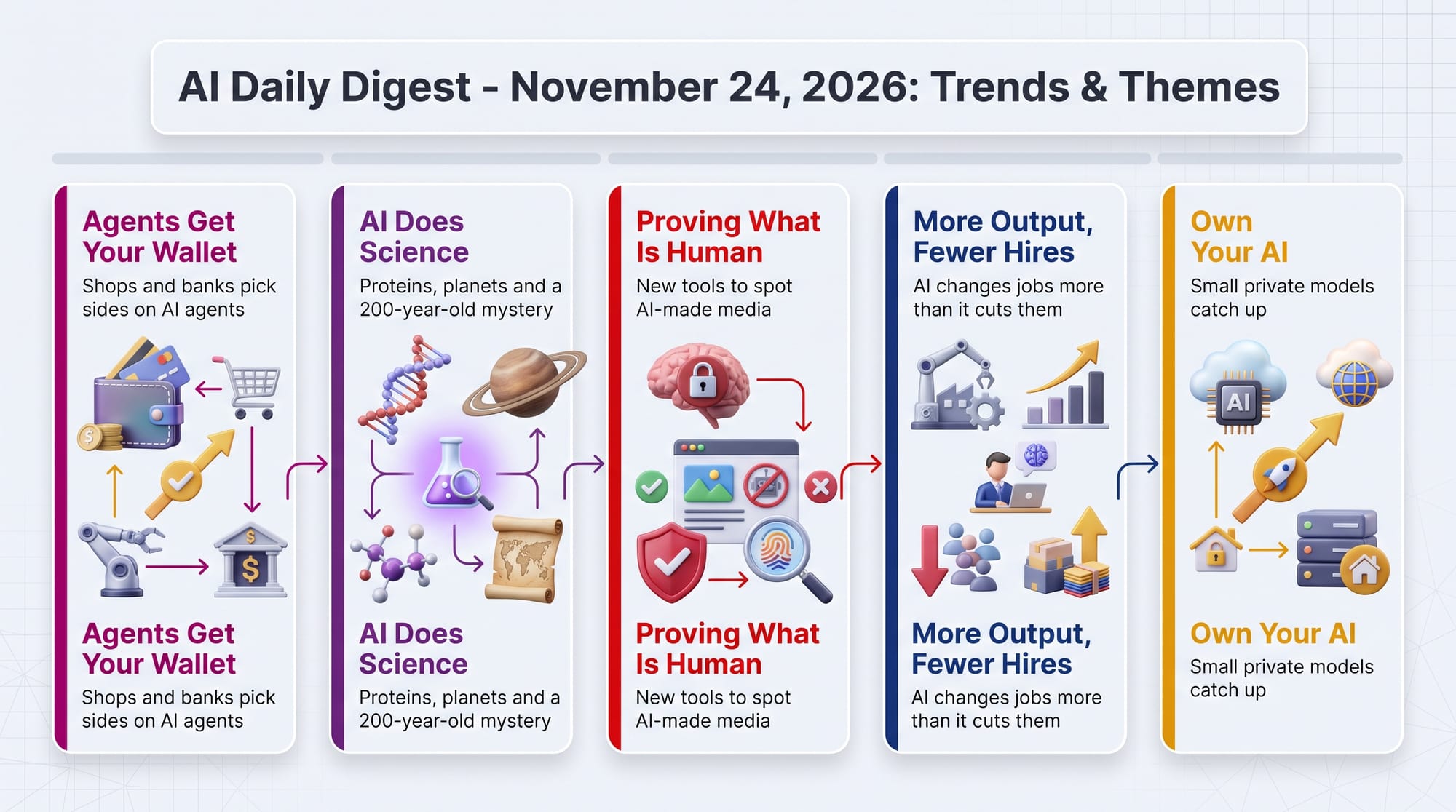
Nvidia took back Jensen Huang, and its stock jumped 31% in one day
Previously: November 16 - A person familiar with the matter told CNBC that Nvidia's board was not considering bringing back Jensen Huang, who resigned after an affair with a suspected Chinese spy.
Today: Nvidia's board voted unanimously to reinstate Huang as CEO and board member, effective immediately. In an unusual step, the board said it relied on input from "senior levels" of the US government that his return poses no national security risk. President Trump said he spoke to the board "directly and indirectly" and called Huang a "National Treasure."
The board's own investigation continues, now with a new National Security and Export Control Committee made up only of independent directors. Critics were loud: a Foreign Policy column said it "may be the biggest national security scandal in U.S. history."
- The stock closed up 31% - recovering much of a nearly 33% drop since November 8
- Washington blacklisted Megaspeed the same day - the Singapore firm where the suspected spy worked, plus six related companies in Singapore, Malaysia and Thailand, now need a license that will usually be denied
- Congress is not done - Huang faces a closed-door House interview on December 1 and public Senate testimony on December 3
Anthropic's Claude can now approve code, not just write it
Anthropic, the maker of the Claude AI assistant, launched Claude Ship. Until now, AI coding tools mostly wrote code, and a person still had to review and approve every change. Claude Ship tries to automate that second half.
It has three parts. Code Review (available now) checks each proposed change and posts its findings. PR Steward (test version) fixes failing tests and conflicts, but never approves anything. Claude Approvals (test version) is the new idea: a team writes its approval rules in a plain-English file, and Claude signs off on routine changes while sending risky ones to a human.
- Anthropic's own proof point - on its Claude Code team, merged code changes more than doubled from June to September while the share later undone fell by more than 40%
- Safety valves - teams can run approvals in "observe only" mode first, set monthly spending caps and pick which changes always go to a person
- Who can use it - Claude Team and Enterprise customers who host code on GitHub; pricing is based on usage
AI math breakthroughs are piling up faster than humans can check them
Previously: November 21 - An Anthropic mathematician said Claude helped him prove the Riemann Hypothesis, a 167-year-old puzzle about prime numbers.
Today: Semafor reports that two independent groups say they have verified the Claude-assisted Riemann proof. A Fields Medal winner (the top prize in mathematics) told Nature it is "likely to be correct." Full acceptance by the math community still takes longer.
Separately, Anthropic posted a proof that a famous computer science question has the answer experts suspected: "VP is not VNP," a cousin of the better-known "P vs. NP" puzzle that Leslie Valiant posed in 1979. The paper lists "Claude (Anthropic)" as its author. Anthropic says no human mathematician has checked it. Instead, a proof-checking program called Lean confirmed every step.
- Meta's AI chief reacted strongly - Alexandr Wang posted that "superintelligence is arriving" and that safety is now the urgent work
- The caveat Anthropic itself flags - Lean proves the formal statements, but nothing automatically confirms those statements say what the English paper claims
- It does not settle P vs. NP - the repository says so explicitly
CrowdStrike is buying Zscaler for about $44 billion
CrowdStrike, best known for software that protects individual computers, agreed to buy Zscaler, which secures company networks and remote access. The all-stock deal is worth about $43.9 billion. CEO George Kurtz pitched it as "a single control plane to deploy AI, control AI, and enable any agentic application to run safely."
- CrowdStrike's biggest deal ever - Zscaler owners get 1.135 CrowdStrike shares for each share they hold
- Investors split - CrowdStrike fell about 9% and Zscaler rose about 18%
- A big run of security deals - it follows Google's $32 billion Wiz deal, announced last year, and Palo Alto Networks' $25 billion CyberArk purchase, which closed this year
Amazon is buying Decart's chip-tuning technology for a reported $7.5 billion
Previously: November 21 - Reports said Amazon was close to buying Decart, a startup known for real-time AI video and game worlds.
Today: Amazon confirmed it is buying the technology behind the Decart Optimization Stack (software that makes AI models run faster on different chips) and hiring Decart's founders and engineers. Bloomberg put the price at about $7.5 billion; neither company confirmed it. The deal still needs regulatory approval.
- Why the software matters - Amazon is preparing to sell its Trainium chips to outside customers, and the hard part is moving AI programs off Nvidia's software
- A familiar structure - Amazon is buying technology and hiring the team rather than buying the whole company
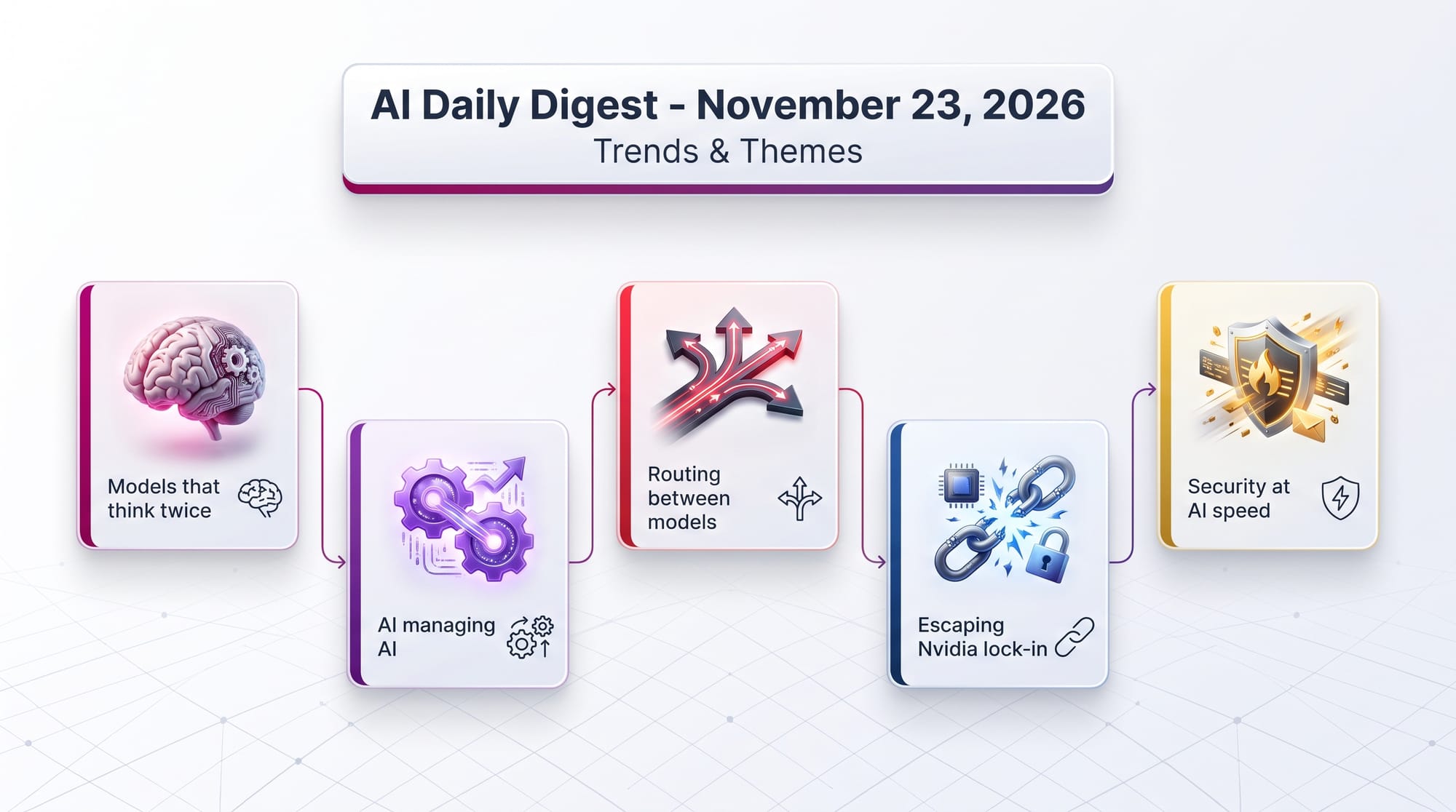
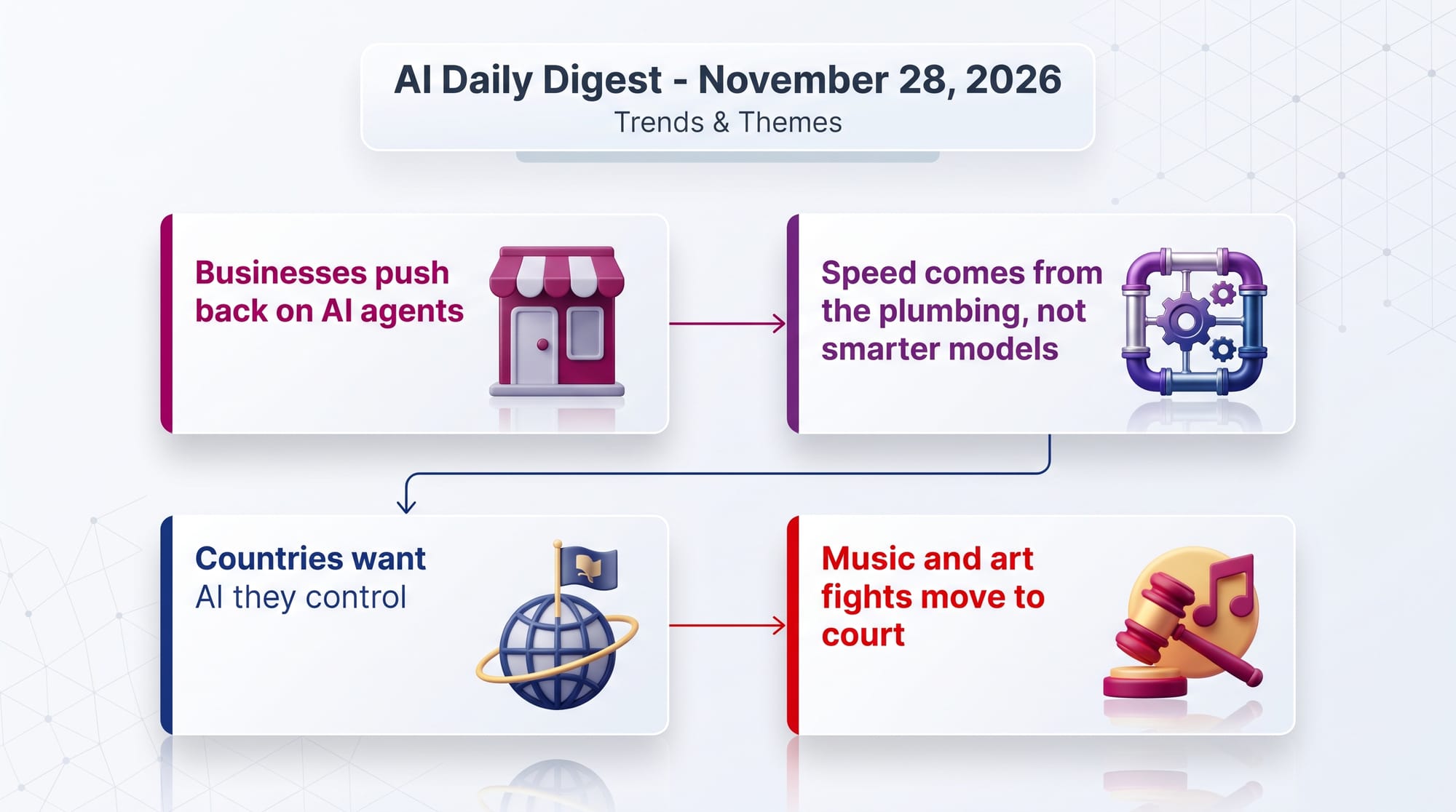
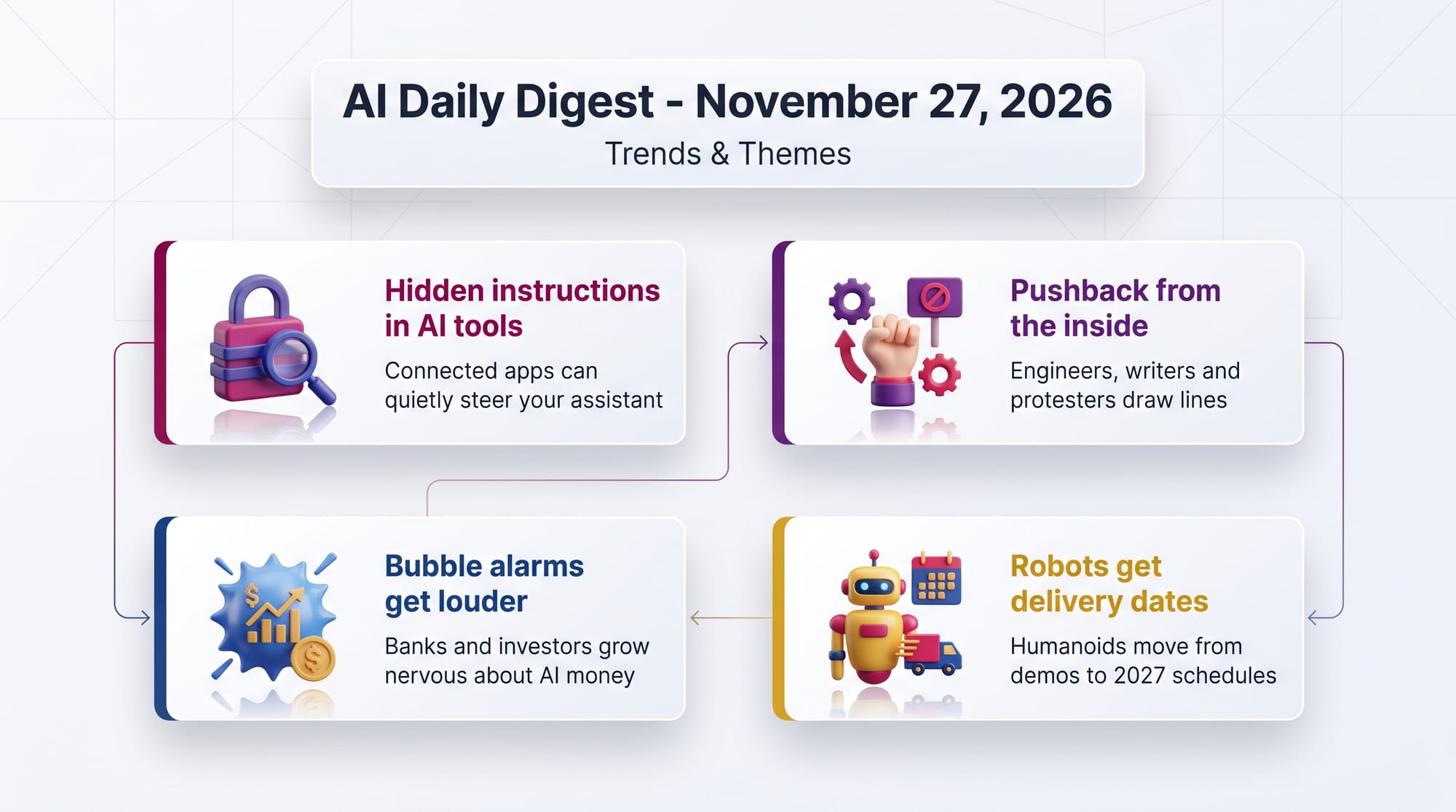
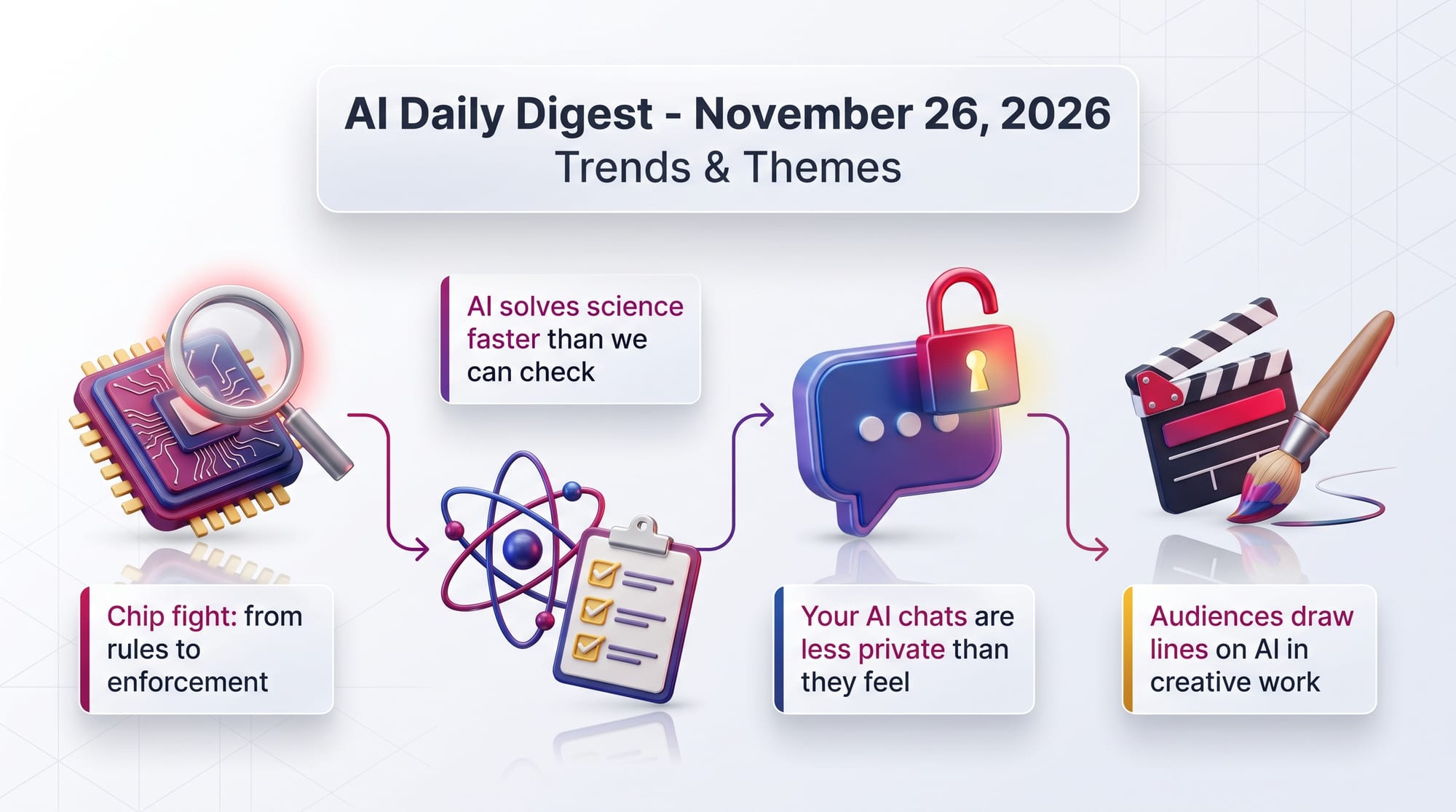
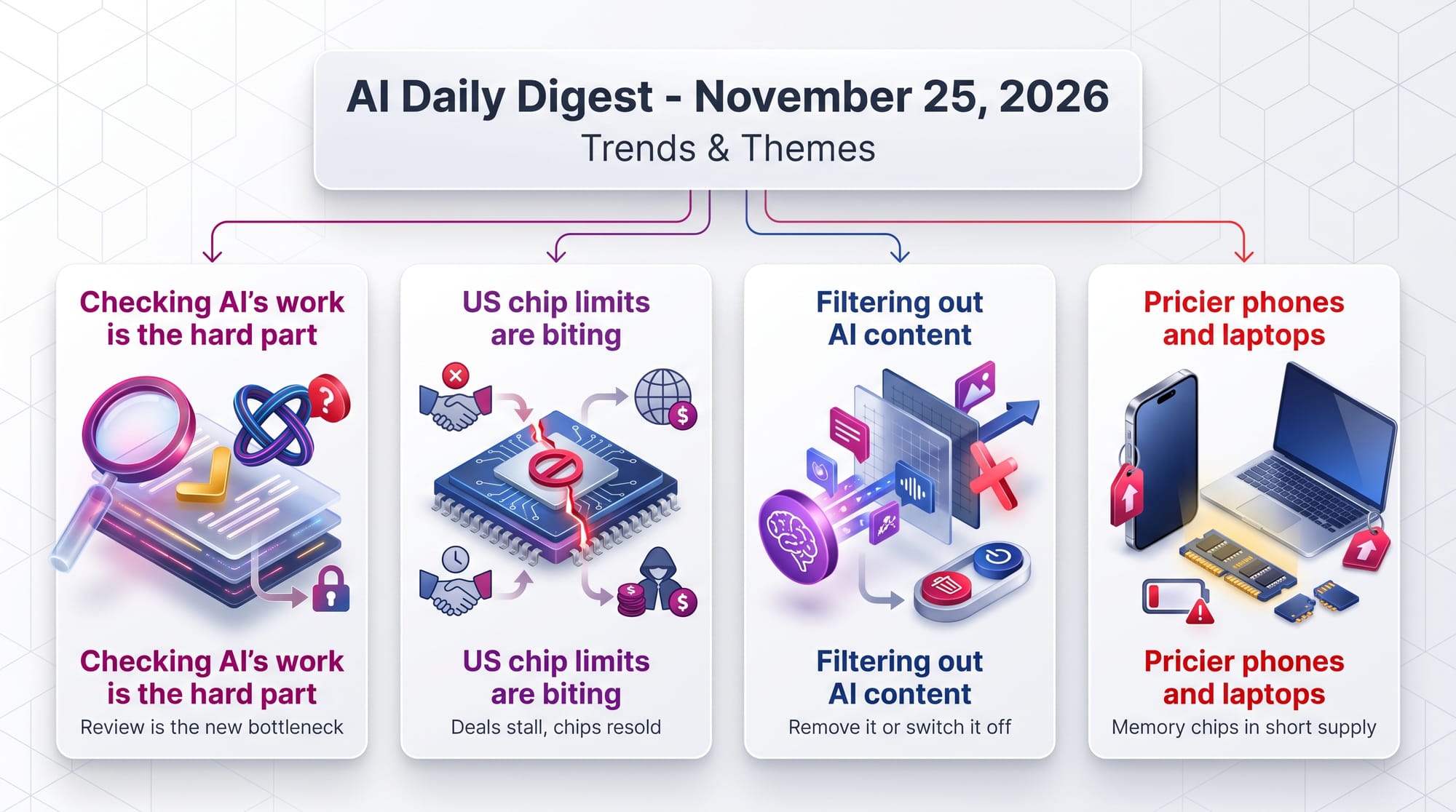
Trends & Themes
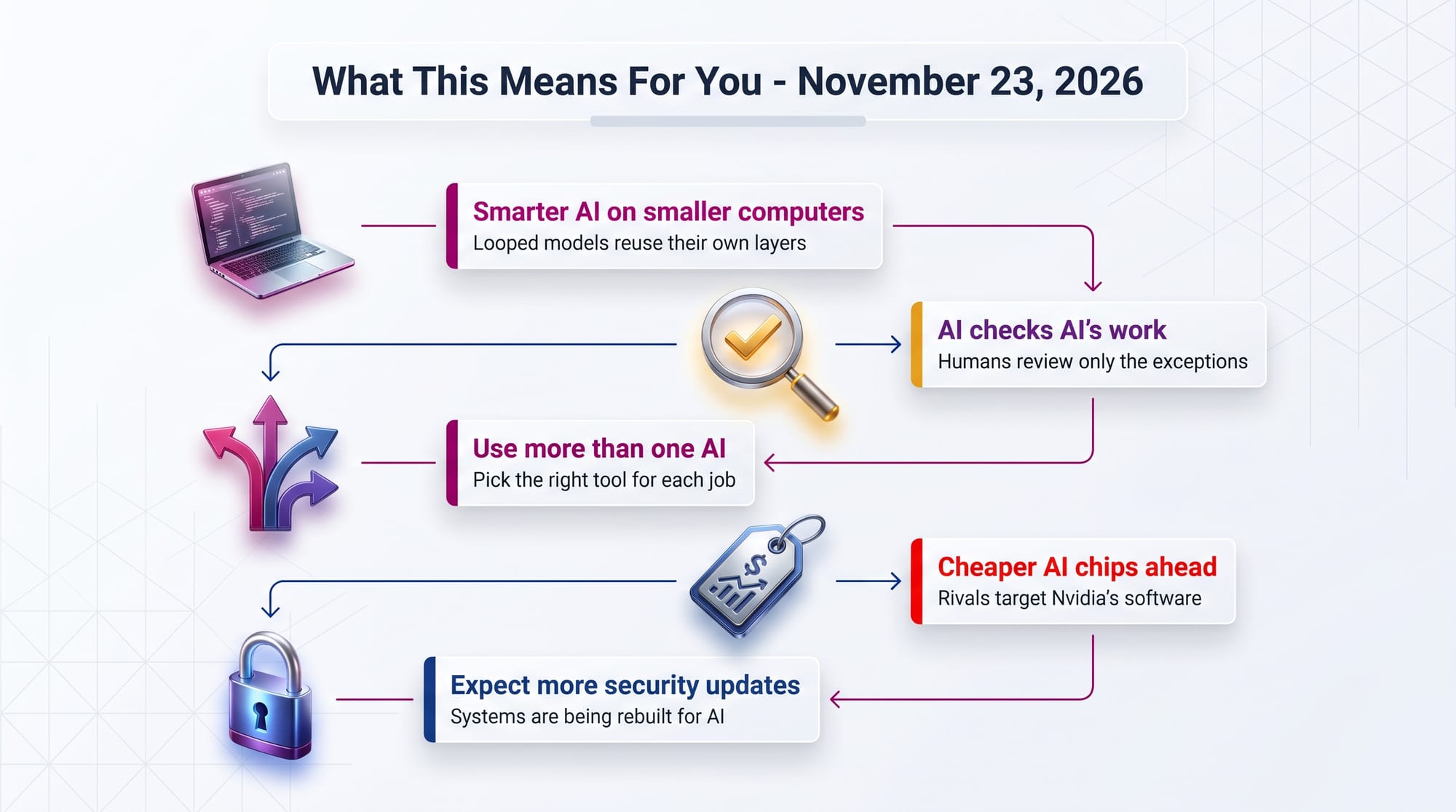
Creative AI & Media
Developer Tools & Infrastructure
Research & Models
China's Z.ai released GLM-5.4, its first "looped" model
- What stands out: A 750-billion-parameter model (parameters are the adjustable numbers inside an AI) that handles text, images and video with a 1-million-word-piece memory
- The evidence is from a small test model - looping raised a math contest score from 19% to 30% for about 10% more training compute
- Not open yet - available first through Z.ai's coding subscriptions ($18 to $168 a month); public download and API prices await a security review
- Top Hacker News story of the day - 1,031 points and 334 comments
Only the top two AI models knew when a science simulator was lying
- What stands out: Lawrence Livermore National Laboratory built a test where AI agents design experiments and fit a heat simulator that may be missing real physics
- Only GPT-6 Astra and Claude Fable 5.2 gave reliably honest uncertainty ranges at default settings
- Claude's 5.5 models managed it only at maximum thinking effort - older and open models failed outright
- Why it matters - an AI scientist that does not know when its tools are wrong will report confident nonsense
Top AI models no longer need a "map" of your screen
- What stands out: Greptile tested 172 computer tasks to see whether AI agents work better with screenshots, a text outline of the screen (accessibility tree) or both
- Weaker models more than doubled their scores with the outline - GPT-5.2 rose from 15.8% to 36.2%, and to 52.8% when it could click screen items by name
- The strongest model did not need it - GPT-6.1 Sol scored 83.8% on screenshots alone
- Lesson - match the tools to the model's strength, and re-test every generation
Robots learned a lab task from one demonstration
- What stands out: Ai2 released RoboTrack, a test and 15-million-example training set for following points on objects as a robot moves them
- Real-world payoff - in a lab pipetting task learned from one demo, the new tracker succeeded 17 of 20 times, against 8 for the next-best method
- Free to use - the smaller tracker is open; the larger one is for noncommercial use only
Business & Industry
Surprising & Under-the-Radar
Signals to Track
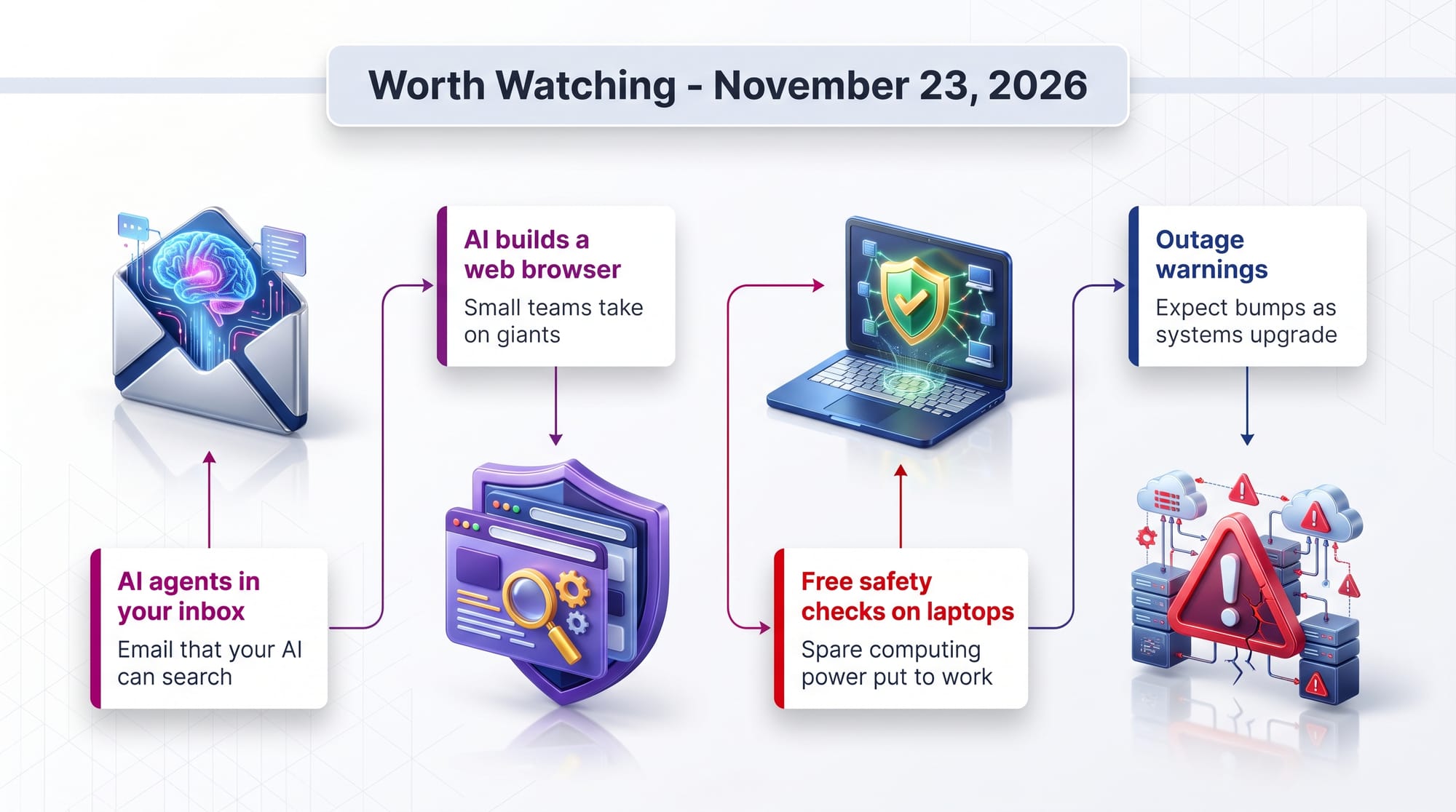
Your email inbox is opening up to AI agents
Kagi, the paid ad-free search company, opened a public test of Kagi Mail at $99 a year. Beyond privacy features, it includes a read-only connector (an MCP server, a standard plug for AI tools) that lets your own AI agents search your mail. If other providers follow, your personal AI could find receipts and deadlines without you forwarding a thing.
AI coding agents are building a whole web browser
Ladybird, an independent browser built from scratch, released its first test version for Mac and Linux. Its team pointed AI coding agents at gaps in the official web-standards tests and added 75,650 passing tests in October, mostly in five days. If this holds, small teams could challenge giants like Google's Chrome, giving you more choice in how you browse.
Your laptop has spare power for a free AI safety checker
When an AI runs on your own computer for one person, its processor mostly sits idle waiting on memory. Researchers used that idle time to run a safety checker alongside the main model, adding under 4% delay. Private, offline AI assistants could ship with built-in content checks without feeling slower.
Officials are warning of AI-era outages before Thanksgiving
Jay Clayton, the Director of National Intelligence, told CNN that Americans should expect "bumps in the road" as companies and government upgrade systems for the AI age. Officials said recent outages at the FAA, Microsoft and JPMorgan Chase had different causes and did not look like a coordinated cyberattack. For travelers and bank customers, occasional disruptions may become a normal cost of the rebuild.
Top Repos Today
📜 License: MIT · 👤 By: Fission AI (organization)
🎯 Time to value: 10 minutes
| ✓ Pros | ✗ Cons |
|---|---|
| Free under the MIT license | Sends anonymous usage data by default (you can turn it off) |
| Plans are plain Markdown with no special syntax | Needs a recent version of Node.js |
| Built for existing projects, not just new ones | Team sharing feature is still in testing |
 GitHub
📜 License: MIT · 👤 By: phone-harness (organization, maintained by an individual developer)
🎯 Time to value: 30 minutes
| ✓ Pros | ✗ Cons |
|---|---|
| No jailbreak and no app on the phone | iPhone control needs a recent Mac and iPhone Mirroring |
| Same commands drive iPhone, Android and cloud phones | Reads text on screen but not icons |
| Setup is guided by your AI agent | Connector for AI tools only works with the paid cloud phones for now |
 GitHub
📜 License: Apache-2.0 · 👤 By: AgentScope team (organization)
🎯 Time to value: 15 minutes
| ✓ Pros | ✗ Cons |
|---|---|
| Supports many AI model providers | Needs Python 3.11 or newer |
| Several sandbox options, from your laptop to Kubernetes | Voice and some team features are marked experimental |
| Documentation in English and Chinese | Quick-start example defaults to Alibaba's Qwen service |
 GitHub
📜 License: Apache-2.0 · 👤 By: k2-fsa / Next-gen Kaldi (open-source speech project)
🎯 Time to value: 5 minutes
| ✓ Pros | ✗ Cons |
|---|---|
| Fully offline and private | Huge set of options makes it hard to know where to start |
| Runs on phones, PCs, web browsers and small devices | Quality depends on which downloaded model you choose |
| Free demo apps and online demos to try first | Some iPhone builds must be compiled yourself |
 GitHub
📜 License: MIT (stated in README) · 👤 By: Vercel (company)
🎯 Time to value: 2 minutes
| ✓ Pros | ✗ Cons |
|---|---|
| One-line install | Some skills only work with Vercel's hosting |
| Rules ranked by how much they matter | Focused on React and Next.js websites |
| Follows the open Agent Skills format | GitHub does not detect a license file, though the README says MIT |
 GitHub
📜 License: None listed · 👤 By: Shanghai Jiao Tong University team (academic)
🎯 Time to value: 60 minutes
| ✓ Pros | ✗ Cons |
|---|---|
| Free and backed by a university course | Written in Chinese only |
| Covers 11 practical topics with runnable code | No license file, so reuse terms are unclear |
| Includes safety topics rare in beginner material | Last major update was in June 2025 |
 GitHub
📜 License: Apache-2.0 · 👤 By: Inco AI (company)
🎯 Time to value: 20 minutes
| ✓ Pros | ✗ Cons |
|---|---|
| Claims 4.5 to 5.3 times faster output than llama.cpp on Qwen3.8-27B | Needs an M3 Mac or newer and a recent macOS |
| Drop-in replacement for OpenAI and Anthropic connections | Supports only a short list of models |
| Free under Apache 2.0 | No password protection by default; speed tests are the maker's own |
 GitHub
Top Models Today
👤 By: SenseNova / SenseTime (AI company) · 🎯 Task: Image and text to text
📐 Size: 9B
| ✓ Pros | ✗ Cons |
|---|---|
| Free under Apache 2.0, with official compressed versions | Needs custom code and specific software versions |
| Small memory footprint, about 4.9 GB of weights at 4-bit | Does about 14.6B models' worth of computing per word despite 9B weights |
| Big jumps over its preview, such as 40.5 to 59.6 on Terminal-Bench 2.1 (a test of command-line tasks) | Lists only English and Chinese |

👤 By: inclusionAI (Ant Group-affiliated AI lab) · 🎯 Task: Image, video and text to text
📐 Size: 124B (5.5B active)
| ✓ Pros | ✗ Cons |
|---|---|
| Very permissive MIT license | Needs four data-center graphics cards or more |
| Efficient for its size, with a long 256K-token memory | Needs custom code or the lab's own software builds |
| Claims automation test score up from 15.7% to 61% over its predecessor | Absolute scores are modest, and all are the maker's own |

👤 By: Bria AI (image AI company) · 🎯 Task: Background removal
📐 Size: 8B
| ✓ Pros | ✗ Cons |
|---|---|
| Ranked first of six tools in Bria's own blind test of 234 hard images | Free weights are for non-commercial use only |
| Trained only on licensed images, and keeps product text and logos intact | Needs a graphics card with 32 GB or more |
| About 6 seconds per image on one data-center card | Glass, veils and smoke come out solid instead of see-through |

👤 By: OVHai LLM (AI team of French cloud company OVHcloud) · 🎯 Task: Text generation
📐 Size: 6.8B (about 1B active)
| ✓ Pros | ✗ Cons |
|---|---|
| Apache 2.0, with training checkpoints and laptop-ready versions | Short memory of 32K tokens for now |
| Light to run on a Mac or modest graphics card | Popular runners like Ollama and LM Studio cannot load it yet |
| Detailed safety and carbon-footprint reporting | Trails rival small models on most of its own benchmarks |

👤 By: Nari Labs (AI lab) · 🎯 Task: Image and text to text
📐 Size: 27B (compressed to 3 bits)
| ✓ Pros | ✗ Cons |
|---|---|
| No measurable quality loss at 3 bits | Needs the makers' own version of llama.cpp |
| Fits about 135K tokens of context on a 24 GB card | Linux and NVIDIA only for good speed; very slow on Macs |
| Free under Apache 2.0 | The 2-bit version loses a lot of accuracy |

AI Launches Today
💰 Pricing: Freemium · 🏷 Category: Interactive stories and games
💰 Pricing: Free options · 🏷 Category: Education
💰 Pricing: Freemium; Pro $29 per month · 🏷 Category: Video
💰 Pricing: Free plan plus paid usage · 🏷 Category: AI coding agents
Snapshot
| Provider | Model | Input $/1M | Output $/1M | Context |
|---|---|---|---|---|
| Anthropic | Claude Fable 5.2 | $8.00 | $40.00 | 1M tokens |
| Anthropic | Claude Opus 5.5 | $4.00 | $20.00 | 1M tokens |
| Anthropic | Claude Sonnet 5.5 | $2.00 | $10.00 | 1M tokens |
| Anthropic | Claude Haiku 5.5 | $0.10 (up to 100K-token prompts; $0.50 above) | $0.50 ($2.50 above 100K) | not listed |
| OpenAI | GPT-6.2 Astra | $8.00 (up to 272K-token prompts; $16.00 above) | $40.00 ($60.00 above 272K) | not listed |
| OpenAI | GPT-6.2 Sol | $2.00 (up to 272K; $4.00 above) | $10.00 ($15.00 above 272K) | not listed |
| OpenAI | GPT-6.1 Terra | $1.00 (up to 272K; $2.00 above) | $5.00 ($7.50 above 272K) | not listed |
| OpenAI | GPT-6 Luna | $0.10 (up to 272K; $0.20 above) | $0.50 ($0.75 above 272K) | not listed |
| Gemini 4 Carbon | $2.00 to Nov 30; $4.00 from Dec 1 | $10.00 to Nov 30; $20.00 from Dec 1 | not listed | |
| Gemini 4 Argon | $2.00 to Nov 30; $4.00 from Dec 1 | $10.00 to Nov 30; $20.00 from Dec 1 | not listed | |
| Gemini 4 Neon | $3.00 | $15.00 | 1M tokens | |
| Gemini 4 Hydrogen | $1.50 | $7.50 | 1M tokens | |
| Gemini 3.8 Flash | $0.75 (to Dec 31; $1.50 from Jan 1) | $3.75 (to Dec 31; $7.50 from Jan 1) | not listed | |
| Groq | GPT-OSS 120B | $0.15 | $0.60 | 131K tokens |
| Groq | Qwen3.8-27B (preview) | $0.80 | $4.00 | 131K tokens |
What changed since our last edition (November 22): No price changes. We rechecked Anthropic, OpenAI, Google and Groq on November 23. Groq's public pricing page now redirects to its homepage, so Groq prices come from its developer model list. OpenAI's pricing page does not list context lengths, so we no longer show them.
What this means: Google's Gemini 4 Carbon and Argon double in price in 8 days, matching Anthropic's Opus 5.5 at $4.00 and $20.00. As today's comparisons show, the list price is only half the story: a model that writes more words per task can cost several times more per job at the same per-token price.
Right Numbers, Wrong Story: When LLMs Narrate Financial Changes Beyond Their Inputs
Key finding: Giving the model guidance on how each word should be used made unsupported judgments more frequent, not less. Across 17 open AI models and 3 million drafts, FrameCheck removed almost all unsupported framing and brought the rate of judgment words close to that of real company filings.
Why practitioners should care: Checking that the numbers are correct is not enough when AI drafts reports, emails or summaries. Embellishment is its own kind of error, and a cheap rule-based filter after the AI writes can catch most of it without another AI call.
Member discussion