Statistically Speaking
One Thing to Tell Your Friends
TL;DR
Hot off the Presses
People inside the top AI labs say their newest models may be too powerful to release
Axios interviewed more than two dozen current and former staff at Anthropic and OpenAI, the companies behind Claude and ChatGPT. Some said they no longer believe their best unreleased models can be safely shared with the public. The internal debate is shifting from "when do we release this?" to "should this ever leave the building?"
Both companies pushed back in different ways. OpenAI said it has new safety rules that could slow releases. Anthropic said keeping a model internal does not by itself make it safe, because internal use carries its own risks.
- More than two dozen insiders - spoke to Axios, which did not name the models or share test scores
- The core worry - abilities have grown faster than the tools for controlling them
- Commercial pressure is a concern - staff fear both companies may put money ahead of caution as they head toward the stock market
- Anthropic's CEO pushed back on a related charge - Dario Amodei called claims that Anthropic wants humans to hand control to AI "absurd" and said AI improving itself without human help may need limits
Anthropic has started paying authors from its $1.5 billion copyright settlement
Anthropic agreed in September 2025 to pay $1.5 billion to settle a class-action lawsuit over pirated books it used to train Claude. It is the largest copyright payout in US history. Novelist Courtney Milan has confirmed she already received her share, The Verge reports.
- About $3,000 per book in total - spread across roughly 465,000 to 500,000 covered books
- The first round is about 70% of each share - payments started the week of November 23, a little later than promised
- Disputed claims wait - many involve how authors and publishers split the money on older books, and a court-appointed referee may decide them
- The last 30% depends on Anthropic's stock-market debut - a final payment of about $450 million is due about 30 days after it, and no later than September 2027
- The money is taxable - and arrives by bank transfer, Zelle or check
OpenAI says it has settled a 50-year-old math question about multiplying number grids
Multiplying two grids of numbers (matrices) is one of the most common jobs computers do, from video games to AI itself. Mathematicians have long asked how few steps it can possibly take, a number called omega. OpenAI posted a paper claiming omega is exactly 9/4 and that no method can ever do better, in a specific mathematical model of computing.
The claim has not yet been checked by outside experts. OpenAI's own files call the papers raw research that may contain issues. A computer-checked version of the proof covers only part of the argument.
- Decades of progress - experts had pushed the best known value from about 2.37 toward 2 bit by bit, with no proof of where it stops
- The claim is about counting steps - not about how fast real software runs
- No individual authors are listed - the paper is credited to OpenAI as a whole
- Computer scientist Scott Aaronson called the result a genuine surprise - he also said he has heard from several sources that labs hold unreleased results with implications for cryptography, but he has no verified details and did not repeat them
Nvidia paused server shipments to four Southeast Asian countries
Previously: November 23 - The US blacklisted Singapore's Megaspeed and six related firms over fears of passing chips to China.
Nvidia makes the chips that power most AI. It told partners such as Dell and Super Micro to stop shipping servers to Malaysia, Singapore, Thailand and Indonesia while it checks that partners there follow US export rules. The pause has no end date, according to the Wall Street Journal, as reported by TechCrunch.
Chinese companies have been renting Nvidia chips through data centers in these countries. The US closed that gap earlier in November.
Today: Nvidia itself is freezing shipments to the whole region.
- About 24% of China's AI computing power - comes from these overseas data centers, the Institute for Progress estimates
- Dell and Super Micro are among the partners told to stop - and the pause will last until Nvidia's review is done
- Nvidia faces Congress soon - Jensen Huang has agreed to testify before the Senate Banking Committee, which requested a December 3 hearing, though no date has been confirmed
ChatGPT's newest models will now use up your plan up to 40% faster
Previously: November 25 - ChatGPT moved chat and work modes onto one shared usage meter.
OpenAI says it made a billing mistake when it launched GPT-6.2 Astra and Sol about a week ago. The error undercounted how much of each subscriber's allowance the models used, so plans stretched further than intended. OpenAI's Thibault Sottiaux announced the fix on November 26.
Today: The usage that meter counts for the newest models just went up.
- 40% faster for GPT-6.2 Astra - and 25% faster for GPT-6.2 Sol, compared with last week
- No back charges - OpenAI will not bill for past usage
- One free usage reset - for everyone on the Go, Plus, Pro and Business plans, as an apology
- Heavy users feel it most - people running Codex, OpenAI's coding tool, use far more than casual chatters
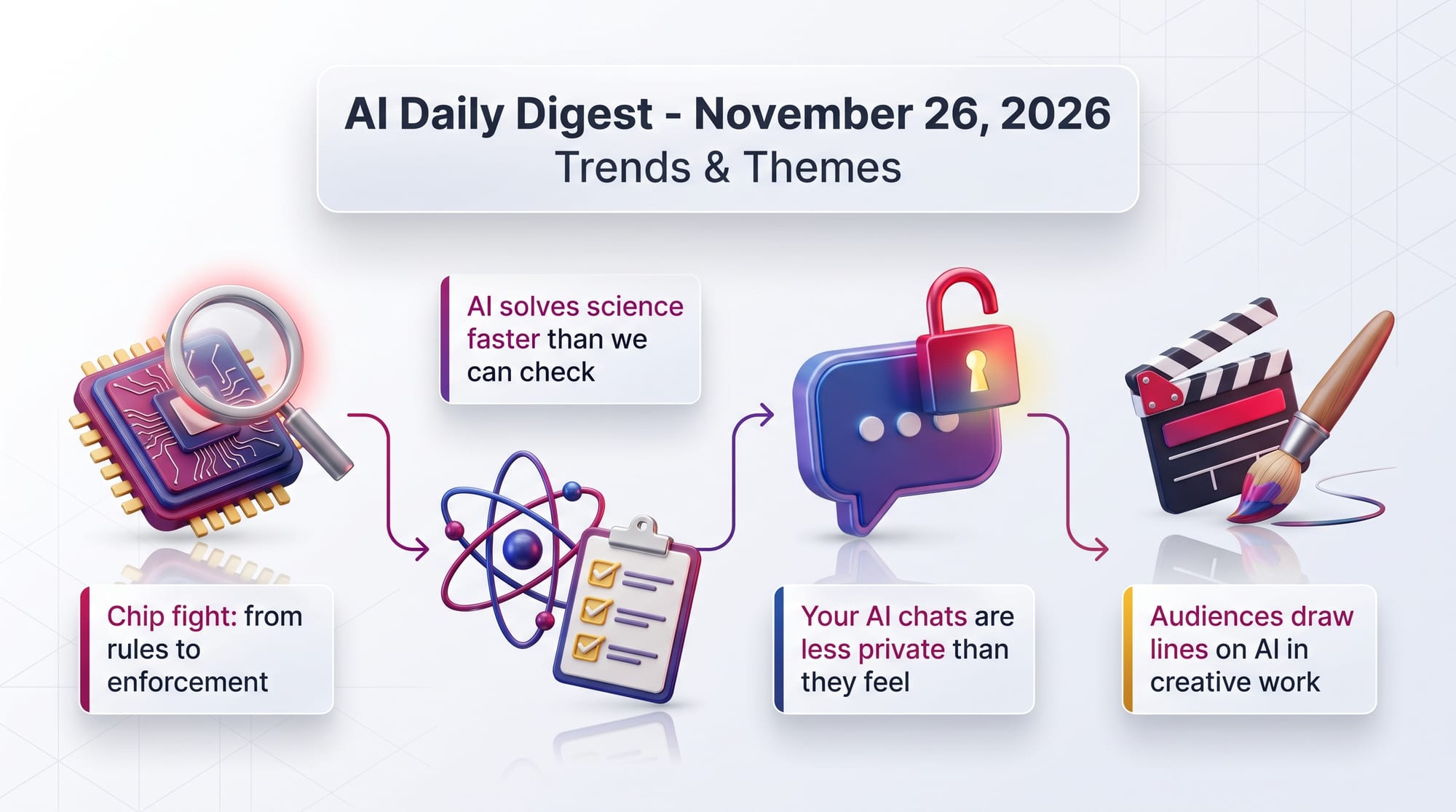
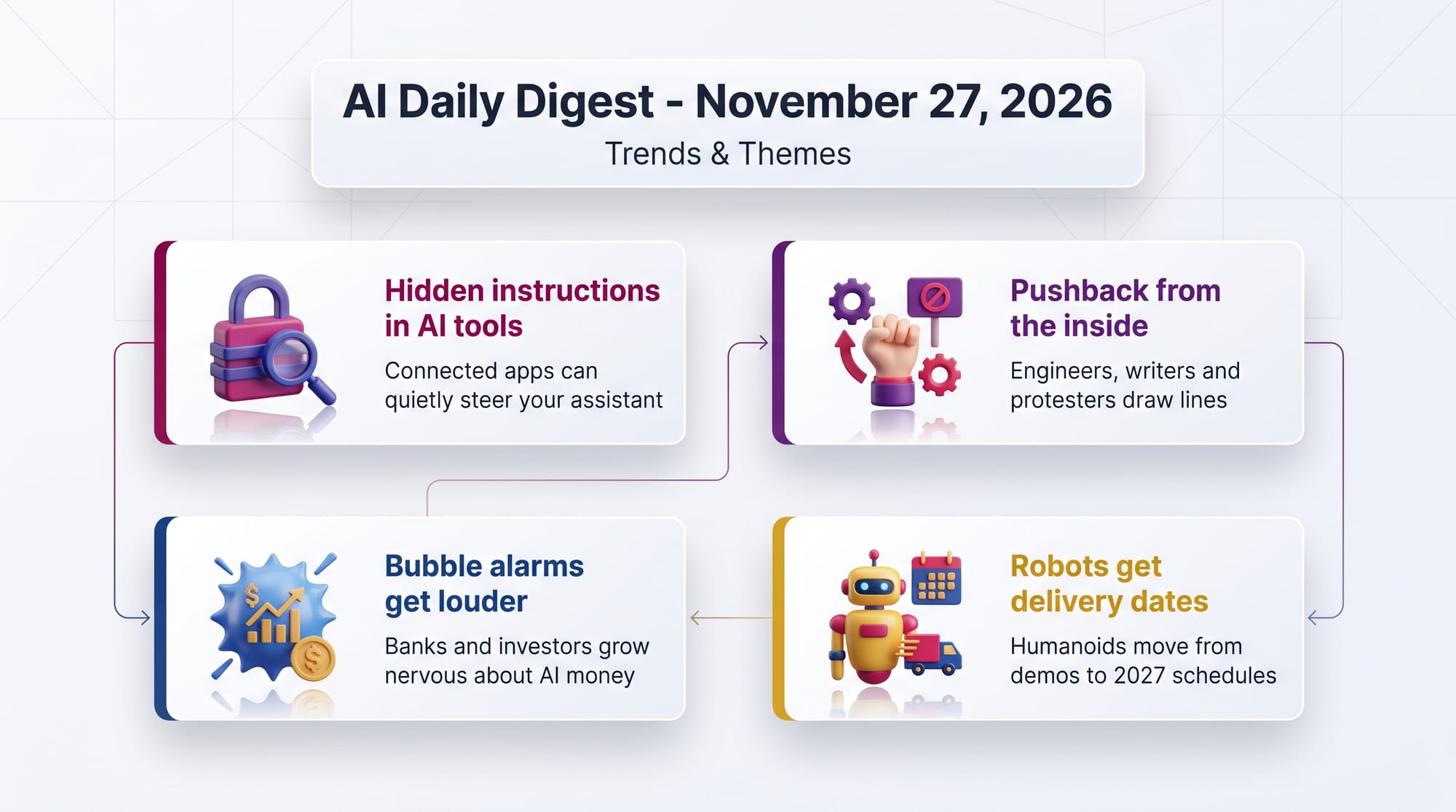
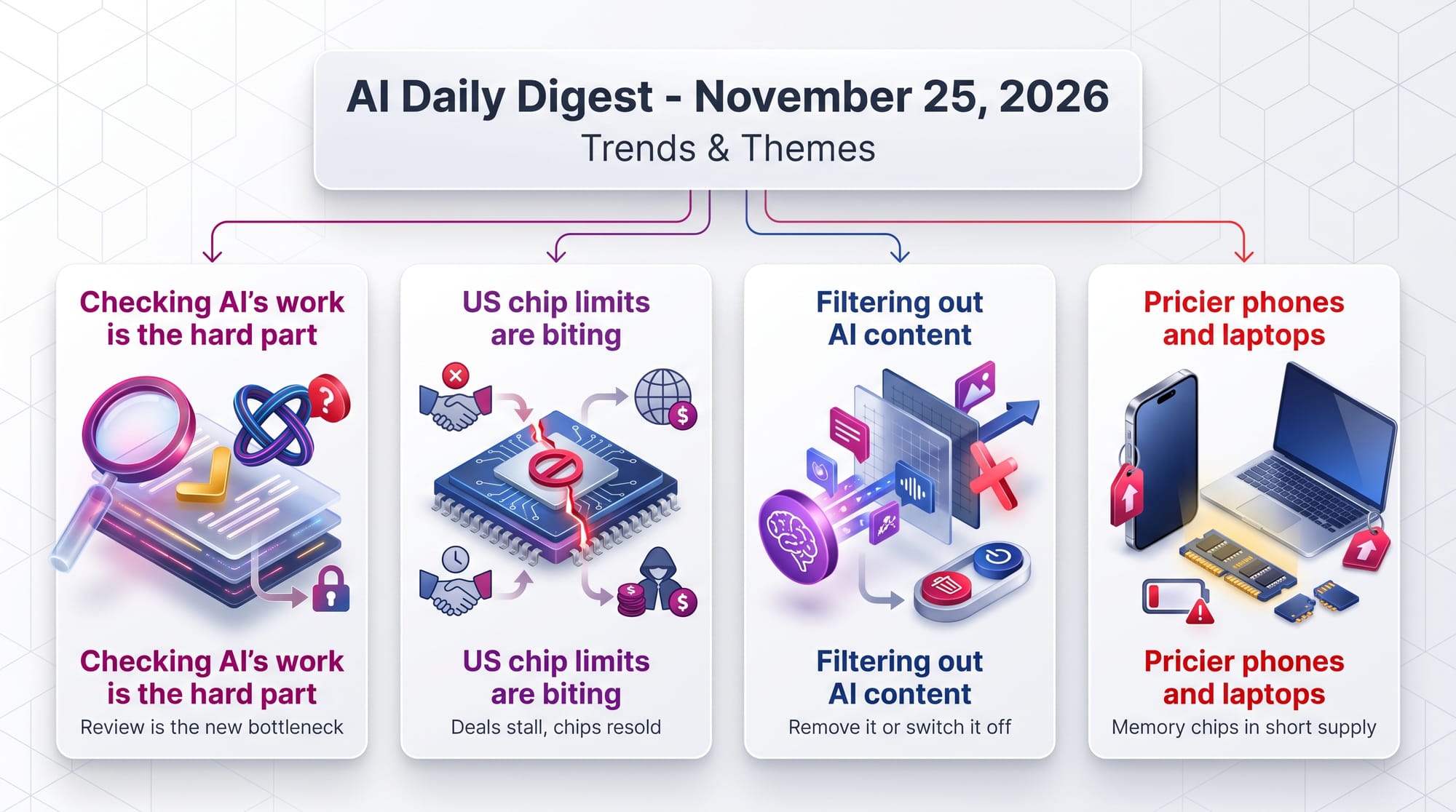
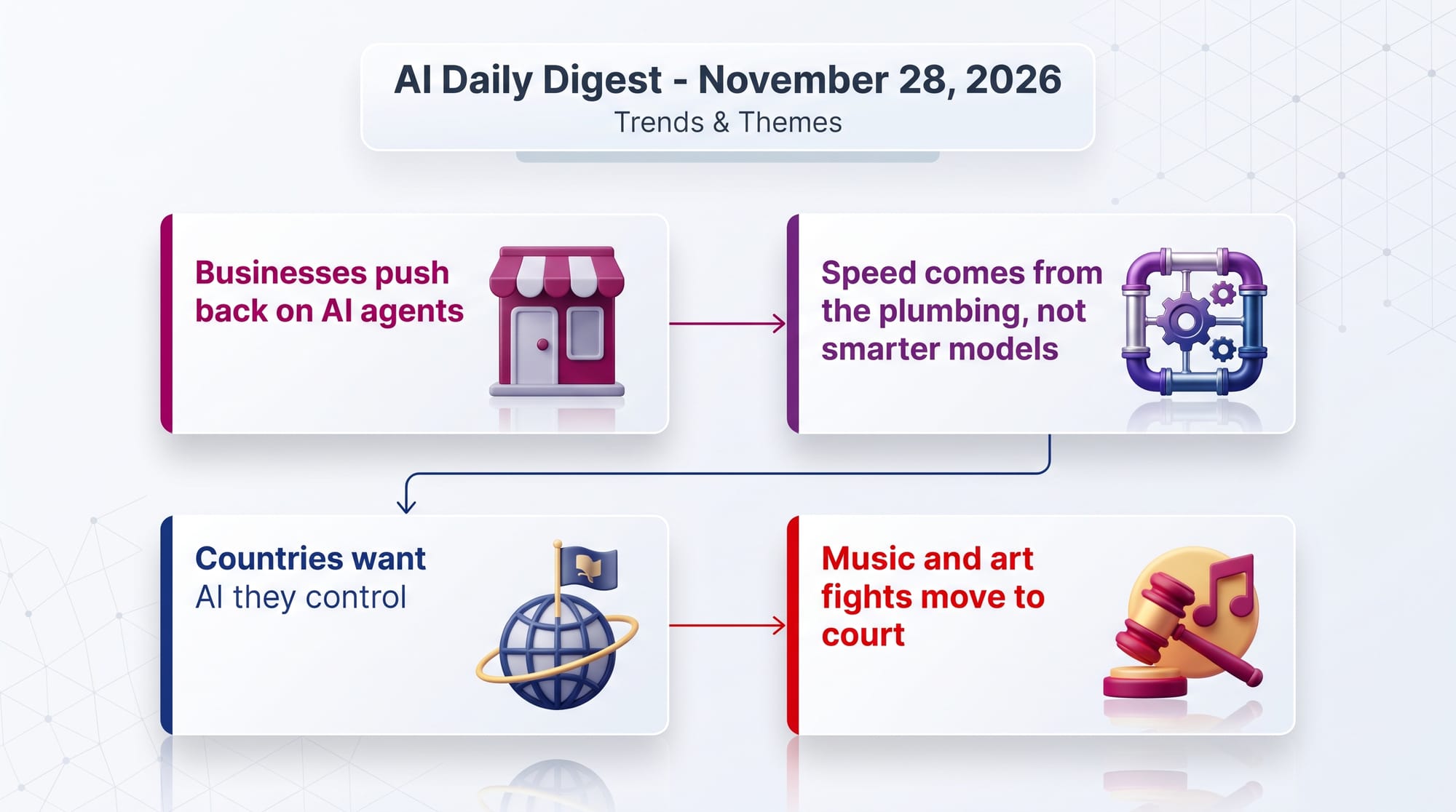
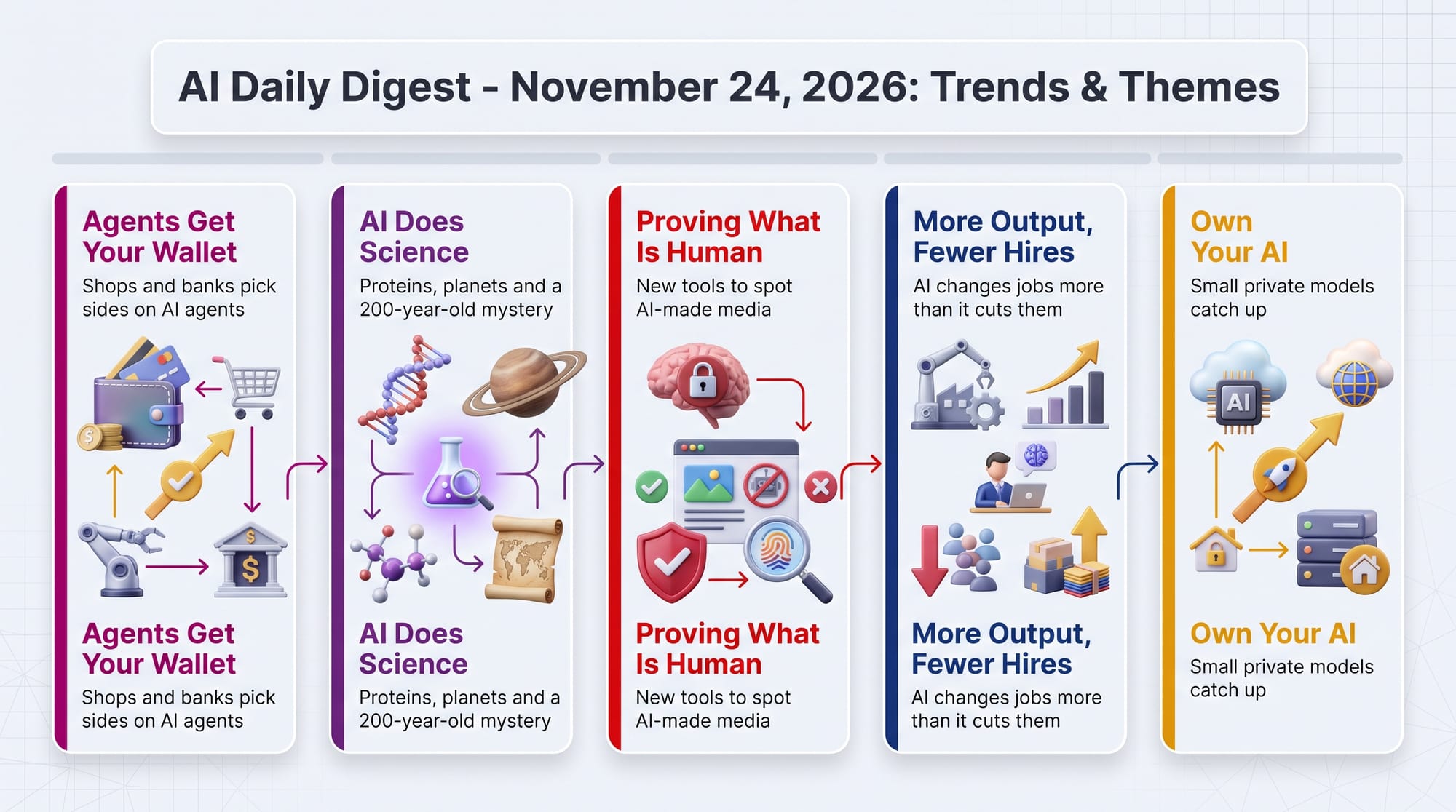
Trends & Themes
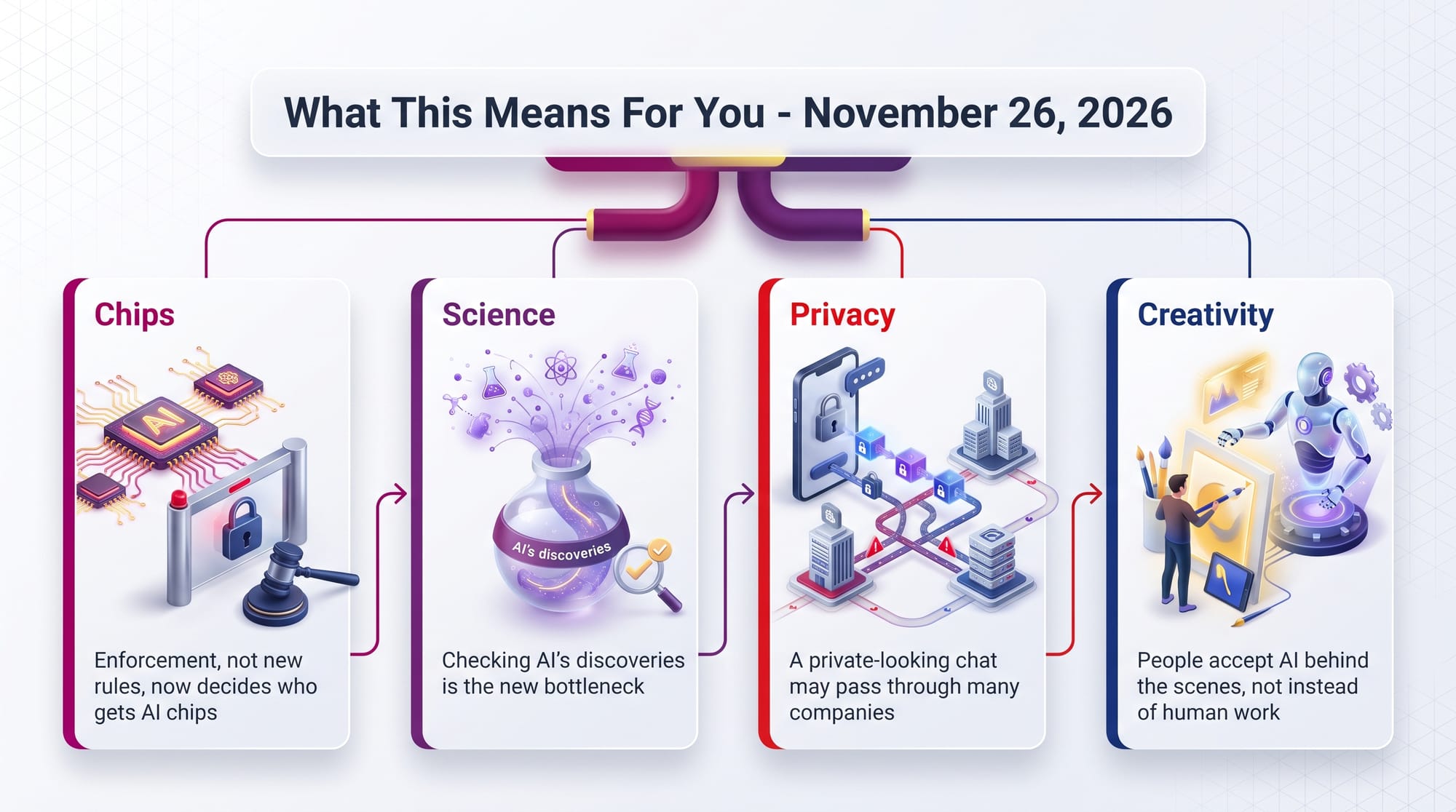
The chip fight is moving from writing rules to catching rule-breakers
Rules on paper are no longer the main question. The fight is now over enforcement, including inside Nvidia's own partner program and between the US and its allies.
- Nvidia sold top chips to California firms controlled by Chinese-owned companies - a CBS News investigation named RiCloud AI, a San Jose company that became an Nvidia partner about 10 weeks after it was founded (CBS News: Nvidia chip sales investigation)
- Banned Nvidia servers are openly offered in Shenzhen - vendors reportedly quoted about $3 million for an eight-chip server that costs roughly $500,000 in the US (Washington Post: Nvidia chips on offer in China)
- The maker of the world's key chipmaking machines wants softer limits - ASML's CEO said cutting China off completely would push it to build its own tools faster (Semafor: ASML makes the case for China sales)
- The Dutch government will fight a US bill aimed at ASML - the MATCH Act would let the US apply its own rules to Dutch machines if allies do not match US limits (Bloomberg: Netherlands to fight MATCH Act)
- Nvidia's own shipment pause - see Top Stories
AI is solving science problems faster than people can check them
Calculation is becoming cheap, and checking is becoming the bottleneck. In medicine, where proof means years of human trials, AI's real-world score is still zero.
- A test of 50 hard physics problems was beaten before it was released - OpenAI's GPT-6 Astra effectively solved 49 of 50, each for under $3 of computing (Ars Technica: AI and theoretical physicists)
- Physics research papers jumped about 30% in a year - on arXiv's high-energy theory list from January to October, compared with a previous record rise of 8%, per the same report
- Scott Aaronson now treats proofs released by OpenAI or Anthropic as correct unless shown otherwise - he compares the moment to Galileo's telescope (Scott Aaronson: Shtetl-Optimized post)
- One public tally of diseases cured by AI-discovered drugs stands at zero - a new public tracker says no AI-discovered drug has yet won US or European approval (Diseases Cured by AI)
- OpenAI's matrix math claim - see Top Stories
Your AI chats are less private than they feel
A chat window hides a long chain of companies. Privacy is becoming something buyers have to check and pay for, not something they can assume.
- Data sent to Chinese AI company MiniMax was later accessed by unknown parties - security firm Dragos found this even for traffic labeled "no data kept," Reuters reports (Reuters: MiniMax data accessed)
- Signal's creator says chatbots "invite confession" - Moxie Marlinspike told Tyler Cowen that a one-on-one chat feels private but may involve staff, leaks and data pipelines (Conversations with Tyler: Moxie Marlinspike)
- TrustedRouter has raised $6 million to encrypt AI requests - it aims to make sure that neither it nor the data center can read what you send (Bloomberg: TrustedRouter and AI privacy)
- Apple pulled MiniMax's Talkie chatbot app - after reporters found characters sexualizing child users (The Bureau of Investigative Journalism: Talkie investigation)
Audiences are drawing lines on AI in creative work
The pattern is consistent: people accept AI as a tool behind the scenes, but push back when it replaces the human work they are paying for.
- Viewers accused David Fincher's new Netflix film of using AI - Fincher later confirmed AI was used to combine takes and adjust actors' lip movements, per follow-up coverage (The Verge: Fincher AI backlash)
- Grand Theft Auto VI earned $3.79 billion on day one without generative AI - about 5,000 people built it over more than a decade (TechCrunch: GTA VI and efficiency)
- EA recreated the voice of a late football commentator with AI - his family approved, but a voice-rights group says he never did (BBC: John Motson voice in EA Sports FC 27)
- Etsy sellers are still unhappy after a policy rewrite - see Business & Industry
Creative AI & Media
PenGPT - an AI that writes in your handwriting
Lets you type a sentence and get it back in realistic handwriting, in your own style from just one to three sample words.
Try it: GitHub: greydanus/pengpt · Sam Greydanus: PenGPT write-up
- Two tiny models - one with 6 million settings (parameters) for handwriting, one with 54 million for drawing sketches from a text prompt
- Cheap to train - about 8 minutes for handwriting on a set of eight powerful graphics chips
- Data mattered most - the creator says results were "80% data, 15% speed and 5% architecture"
EA Sports FC 27 brings back a late commentator's voice
Lets football fans hear John Motson, who died in 2023, call today's players in the game.
- Built from his old studio recordings plus AI - EA says it was "the only way" to have him name modern players
- His family approved and was paid - EA did not share the terms
- EA says it has no plans to replace human commentators
Developer Tools & Infrastructure
Research & Models
Business & Industry
GenAI in Education
Teacher AI use has stopped growing
- 62% of US teachers use AI at least a little - flat from 61% last year, after nearly doubling from 34% in 2023
- Experts call it saturation - most teachers who planned to use AI already do
- Thin training - only 64% of teachers have had even one training session on AI
Future teachers are split on AI
- About 2 in 5 trainee teachers view AI for teaching positively - and about 1 in 4 view it negatively, per a survey of 268 teacher educators
- Some refuse to lean on it - one student said handing off lesson planning erodes a teacher's own thinking
Four ways to stop students from handing their thinking to AI
- Detection does not work - experienced teachers spotted AI-written essays only 37.8% of the time in one study
- Ask "what would you do?" - role-play questions are harder to outsource than "why did this happen?"
- Use quick spoken defenses and in-class micro-tasks - to confirm understanding rather than catch cheating
A learning designer's five daily AI habits
- AI sorts and counts, she decides - Philippa Hardman uses AI to group learner feedback, then has a fresh chat check every quote is real
- Fake students test quizzes - AI plays beginner and expert learners to find confusing questions
- A warning from research - in one study, unrestricted AI raised practice scores but cut exam scores by 17%
Surprising & Under-the-Radar
AI is the new Thanksgiving argument
Wired reports that AI has joined politics as a topic that sours family dinners. The sharpest split runs between anxious young adults and pro-AI parents. Pew found 73% of US adults under 30 expect AI to mean fewer jobs, yet Axios polling found 61% of 18- to 34-year-olds used ChatGPT in the past month.
Is everyone starting to write like Claude?
Writer Jack Despain Zhou says he now hears Claude's voice in YouTube videos, conference talks and emails from experts. He calls it a "great de-individualization," where one AI's style flattens everyone's. Simon Willison shared the quote and filed it under AI misuse.
Debate: Is OpenAI quietly making its models think less?
One side: A developer who runs a coding-contest site found OpenAI's new 6.2 models use far fewer "thinking" words than rivals, a statistically clear drop, and argues they were tuned to save money. The post drew 243 points on Hacker News.
Other side: The data comes from one site, and fewer words is not proof of worse answers or intent. OpenAI says the new models get better results with fewer words.
Debate: Should a family be able to approve an AI copy of a loved one's voice?
One side: EA paid John Motson's widow and son, who said the tribute "means an awful lot."
Other side: The campaign group Save Our Voices Now says Motson himself never consented, and relatives should not automatically hold that right.
Signals to Track
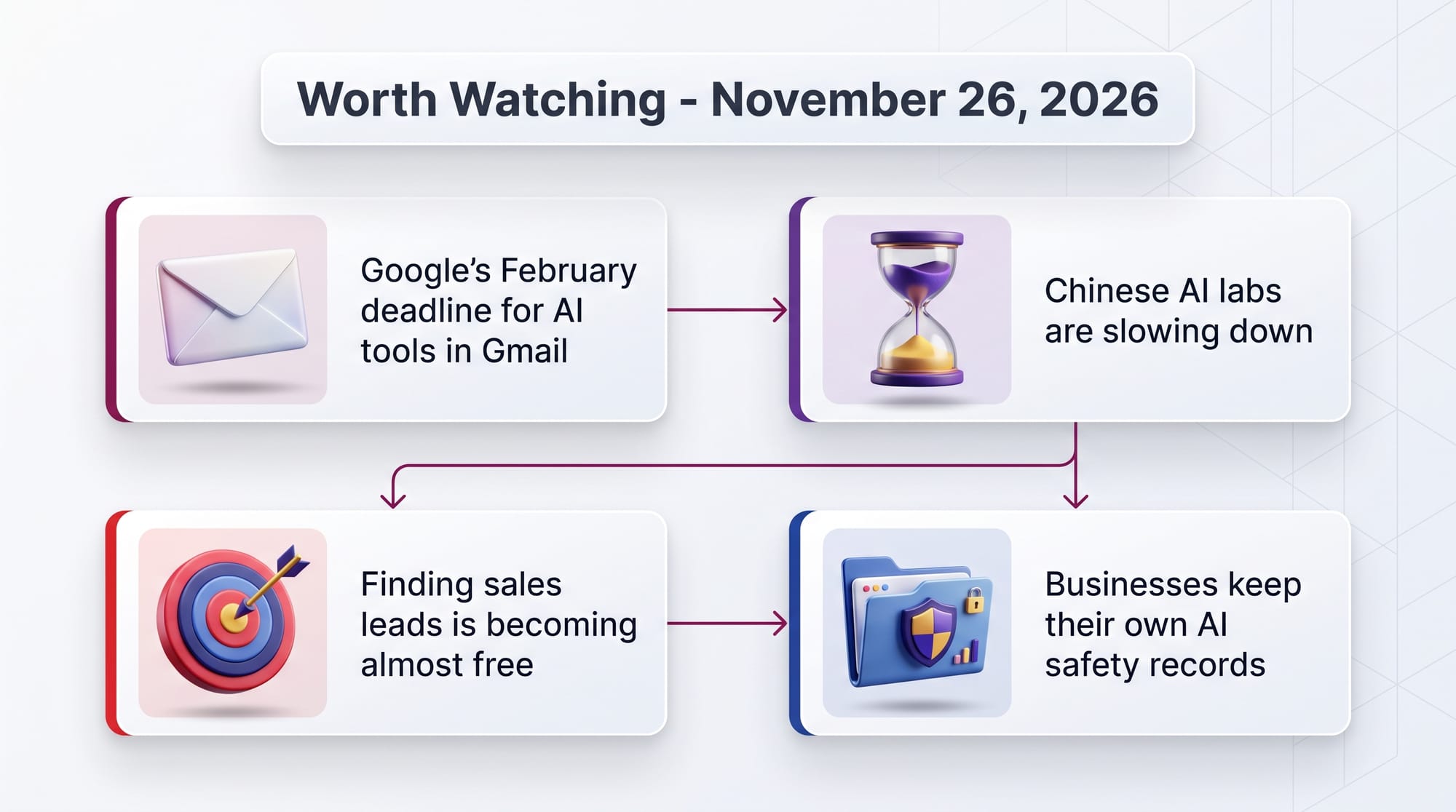
Google is about to decide which AI assistants can touch your Gmail
From February 1, 2027, any AI agent reaching Gmail, Drive or Calendar must go through Google's own connection points (MCP servers) or face tight limits. Google's public Gmail connector can read and draft but cannot send or reply; that needs special partner access that Google has not opened widely. If this plays out, the AI assistant you choose for email may depend on deals Google strikes.
Chinese AI labs are slowing down
Z.ai's planned GLM-5.5, a roughly 3-trillion-setting model due this month, will likely slip to early 2027, per Reuters reporting summarized by The Decoder. Moonshot AI is turning to Google and Meta models for training data after OpenAI and Anthropic blocked copying, and its next model could slip to mid-2027. If this continues, the stream of free, strong AI models from China that undercut US prices could thin out.
Finding sales leads is becoming almost free
Clay's head of AI says AI models have aced its tests for picking promising customers for about a year. Scoring all 40 million companies in Clay's database would cost only about $1,500. If this spreads, expect far more precisely targeted sales emails, and sales jobs that shift from research to relationships.
Businesses using Anthropic's top models through Amazon will host their own safety records
Amazon launched a way for companies to sign up for Anthropic's stricter safety programs for top Claude models on its Bedrock service. In one option, every prompt and answer is stored in the customer's own encrypted storage, and no AWS or Anthropic staff read it, only automated checks. If the customer cuts off access, the models stop working after 24 hours. This could become the template for how businesses get powerful AI while keeping their data in-house.
Top Repos Today
📜 License: MIT · 👤 By: Anthropic (company)
🎯 Time to value: 10 minutes
| ✓ Pros | ✗ Cons |
|---|---|
| Free under the MIT license, from Anthropic itself | You need a paid Claude API key to run the examples |
| Covers basics through advanced topics like caching and cost tuning | Mostly written in Python |
| Copy-and-paste code you can adapt to your own project | Some links still point to the project's older name |
 GitHub
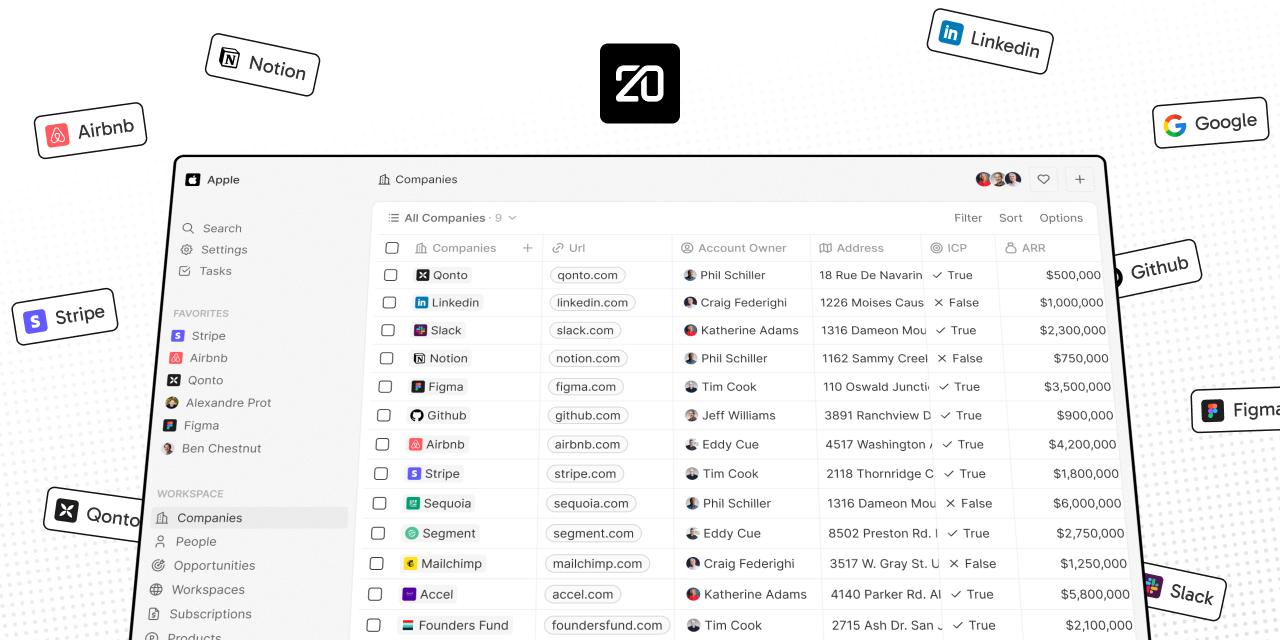
📜 License: AGPL-3.0 for most code, MIT for its developer kit, some enterprise files under a commercial license · 👤 By: Twenty (company)
🎯 Time to value: 15 minutes
| ✓ Pros | ✗ Cons |
|---|---|
| Free to self-host, with a hosted option for quick starts | AGPL license means changes you offer to others must be shared |
| Customize objects, fields and views as code | Some enterprise files are under a separate paid license |
| Ready-made skills for AI coding agents | Building custom apps needs developer skills |
 GitHub
📜 License: BSD-3-Clause · 👤 By: Appwrite (company)
🎯 Time to value: 20 minutes
| ✓ Pros | ✗ Cons |
|---|---|
| Free under the permissive BSD-3-Clause license | Self-hosting means running and updating Docker yourself |
| Cloud version has a free plan | Paid cloud plans needed as you grow |
| MCP connector included on the cloud, with no local install | Giving an agent access to a live project needs careful permissions |
 GitHub
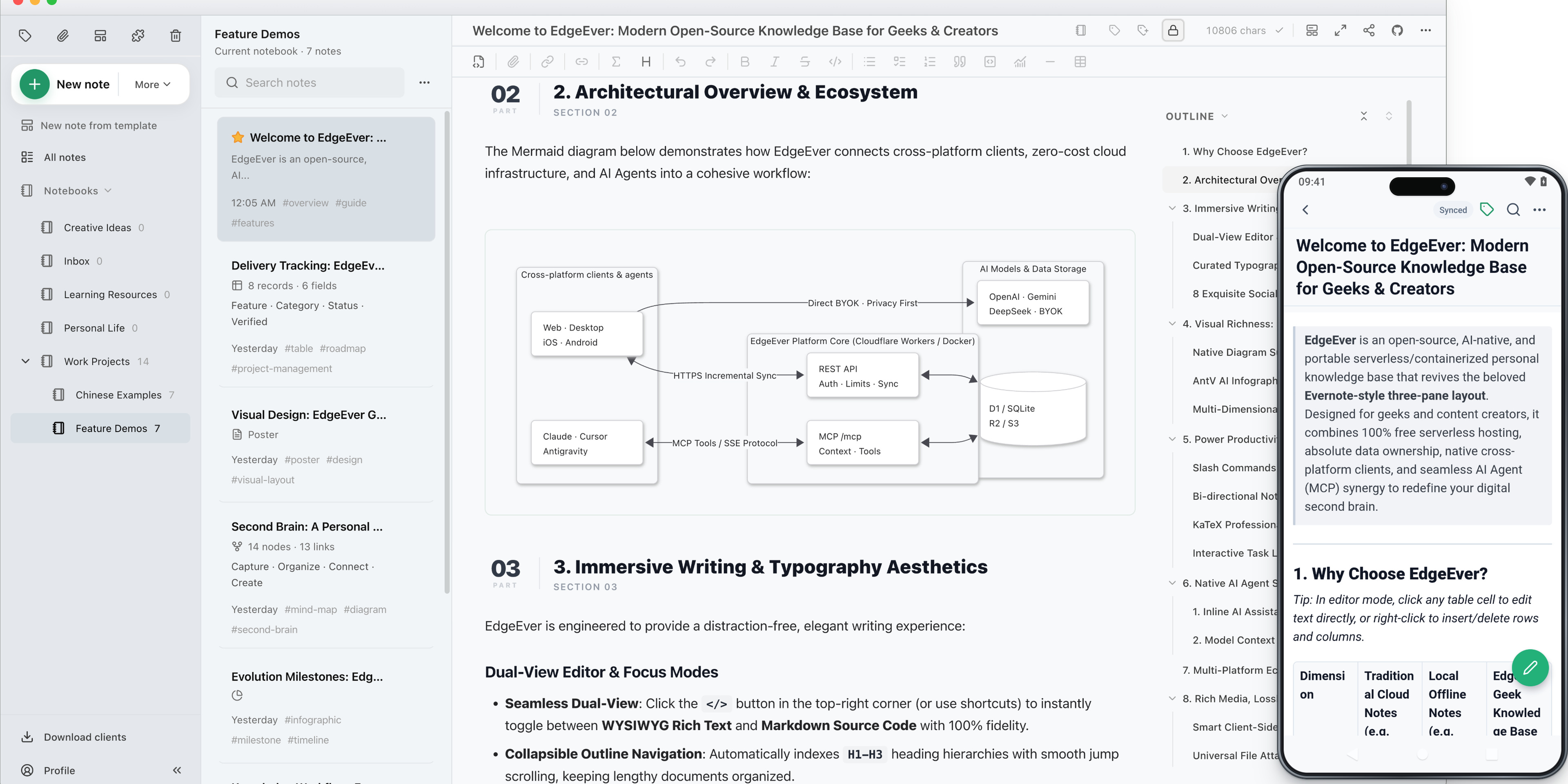
📜 License: AGPL-3.0 · 👤 By: tianma-if (individual developer)
🎯 Time to value: 30 minutes
| ✓ Pros | ✗ Cons |
|---|---|
| Can run within Cloudflare's free limits, or on your own server with Docker | Setup needs a Cloudflare or GitHub account and some patience |
| Imports notes from Evernote, Obsidian, Notion and more | Small, young project from a single developer |
| AI features work with your choice of provider | AI features need your own paid API key |
 GitHub
📜 License: MIT · 👤 By: Microsoft (company)
🎯 Time to value: 30 minutes
| ✓ Pros | ✗ Cons |
|---|---|
| Free under the MIT license | Only works with models trained in the special 1-bit format |
| Runs on regular CPUs, with Graphics Processing Unit (GPU) support too | The official chat model is small, at 2.4 billion parameters |
| Big speed and energy savings, according to Microsoft | Building from source needs developer tools |
 GitHub
📜 License: Apache-2.0 (with some third-party parts under their own licenses) · 👤 By: Tencent Cloud (company)
🎯 Time to value: 60 minutes
| ✓ Pros | ✗ Cons |
|---|---|
| Free under Apache 2.0, from Tencent | Needs an x86 Linux server with KVM (hardware virtualization) |
| Drop-in replacement for E2B's software kit | Aimed at infrastructure teams, not individuals |
| Snapshots, cloning and auto-pause to save resources | Several newer features are still marked preview |
 GitHub
📜 License: MIT · 👤 By: wonderwhy-er (individual developer)
🎯 Time to value: 5 minutes
| ✓ Pros | ✗ Cons |
|---|---|
| Free under the MIT license, installs with one command | Gives an AI real control of your computer, and its makers say it is not a sandbox |
| Handles Excel, PDF and Word files directly | Collects limited usage data unless you turn it off |
| Uses your chat subscription, not API charges | Requires Node.js on your machine |
 GitHub
Top Models Today
👤 By: ai-sage (GigaChat team) · 🎯 Task: Text generation
📐 Size: 708B (41B active)
| ✓ Pros | ✗ Cons |
|---|---|
| Free under the permissive MIT license | Needs two servers with eight H100 data-center graphics cards each |
| Reports 79.55 on BFCL v4, a tool-use test, ahead of the rivals it lists | Trails GLM-5.3 and DeepSeek 4.1 on several of its own coding tests |
| Works with popular serving software vLLM and SGLang | Brand new, with almost no downloads yet |

👤 By: inclusionAI (AI research lab) · 🎯 Task: Text to image
📐 Size: 6B (image-making part)
| ✓ Pros | ✗ Cons |
|---|---|
| Free under the MIT license | Tested setup needs one graphics card with 80 GB of memory |
| Strong at text inside images and design layouts | The leaderboard result is described as preliminary |
| Pairs with a sister model that splits designs into editable layers | Best results need a detailed, structured prompt |

👤 By: Kandinsky Lab (team behind the Kandinsky image models) · 🎯 Task: Image to image (upscaling)
📐 Size: 4.5B
| ✓ Pros | ✗ Cons |
|---|---|
| Free under the MIT license | Needs an NVIDIA graphics card and some Python setup |
| One model handles both 2x and 4x enlargement | Large 8K outputs take about 37 seconds even on an H100 |
| Adjustable creativity level | Brand new, with few downloads so far |

👤 By: ccore (independent developer) · 🎯 Task: Text generation
📐 Size: 4.5B (built on Qwen3.5-4B-Base)
| ✓ Pros | ✗ Cons |
|---|---|
| Free under Apache 2.0 | A full answer uses around 20,000 tokens, so it can be slow on a laptop |
| Smallest download is 2.71 GB | Pages load code from the internet, so they need a connection to display |
| Can be used as a helper inside bigger AI agent setups | One-person project, so support is limited |

👤 By: Baidu (Chinese tech company) · 🎯 Task: Image and text to text
📐 Size: 3.3B
| ✓ Pros | ✗ Cons |
|---|---|
| Free under the MIT license | Needs an NVIDIA graphics card |
| Handles multi-page documents in one pass | Setup involves several pinned software versions |
| Ready-made packages for vLLM and SGLang | Its card shows no accuracy scores, only setup steps |


AI Launches Today
💰 Pricing: Free (open source, Apache-2.0, self-hosted) · 🏷 Category: AI coding agents
💰 Pricing: Free options; 50 bonus credits at launch · 🏷 Category: AI testing and developer tools
💰 Pricing: Free readiness score; paid reports, with launch pricing until December 3 · 🏷 Category: AI search and marketing
💰 Pricing: Free · 🏷 Category: AI coding agents
💰 Pricing: Free to start; 20% off the first month · 🏷 Category: AI assistants
Snapshot
| Provider | Model | Input $/1M | Output $/1M | Context |
|---|---|---|---|---|
| Anthropic | Claude Fable 5.2 | $8.00 | $40.00 | 1M tokens |
| Anthropic | Claude Opus 5.5 | $4.00 | $20.00 | 1M tokens |
| Anthropic | Claude Sonnet 5.5 | $2.00 | $10.00 | 1M tokens |
| Anthropic | Claude Haiku 5.5 | $0.10 (up to 100K-token prompts; $0.50 above) | $0.50 ($2.50 above 100K) | not listed |
| OpenAI | GPT-6.2 Astra | $8.00 (up to 272K-token prompts; $16.00 above) | $40.00 ($60.00 above 272K) | not listed |
| OpenAI | GPT-6.2 Sol | $2.00 (up to 272K; $4.00 above) | $10.00 ($15.00 above 272K) | not listed |
| OpenAI | GPT-6.1 Terra | $1.00 (up to 272K; $2.00 above) | $5.00 ($7.50 above 272K) | not listed |
| OpenAI | GPT-6 Luna | $0.10 (up to 272K; $0.20 above) | $0.50 ($0.75 above 272K) | not listed |
| Gemini 4 Carbon | $2.00 to Nov 30; $4.00 from Dec 1 | $10.00 to Nov 30; $20.00 from Dec 1 | not listed | |
| Gemini 4 Argon | $2.00 to Nov 30; $4.00 from Dec 1 | $10.00 to Nov 30; $20.00 from Dec 1 | not listed | |
| Gemini 4 Neon | $3.00 | $15.00 | 1M tokens | |
| Gemini 4 Hydrogen | $1.50 | $7.50 | 1M tokens | |
| Gemini 3.8 Flash | $0.75 (to Dec 31; $1.50 from Jan 1) | $3.75 (to Dec 31; $7.50 from Jan 1) | not listed | |
| Groq | GPT-OSS 120B | $0.15 | $0.60 | 131K tokens |
| Groq | Qwen3.8-27B (preview) | $0.80 | $4.00 | 131K tokens |
What changed since our last edition (November 25): No price changes. We rechecked Anthropic's developer pricing page, OpenAI's developer pricing page, Google's Gemini API pricing page on Google AI Studio and Groq's developer model list on November 26. OpenAI's page still notes that its premium "Ultrafast" speed for GPT-6.2 Astra and Sol rises from 3 times to 6 times the standard price on March 1, 2027, and that GPT-5.6 Sol's promotional pricing ends November 30; standard prices are unchanged.
What this means: Google's Gemini 4 Carbon and Argon double in price in 5 days, on December 1, so teams using them should test a cheaper model or set aside budget before the holiday weekend ends. Prices at Anthropic, OpenAI and Groq held steady.
When Are Parallel Subagents Effective for Coding? An Empirical Study on Repository Construction
Key finding: On typical tasks, parallel subagents raised hidden-test pass rates by only about 1 to 5 percentage points while costing up to 3.8 times as much as a single agent. Gains were bigger on hard tasks, but one added sentence telling a single agent to check the reference program first recovered most of that gain at a fraction of the cost. A single agent that periodically started a fresh conversation also made faster early progress than one that kept its long chat going.
Why practitioners should care: Before turning on subagents for every job, try cheaper fixes: tell one agent to test its own work and restart long sessions with a clean slate. Subagents mainly pay off when an agent stops checking too early, stalls in a long session or the task benefits from well-split code.
Member discussion