GenAI Secret Sauce Daily Digest - 2026-04-18

The $300 Overnight Loop That Could Make Manual Engineering Obsolete · Stanford AI Index 2026: The Numbers That Rewrite the AI Map · KIMI K2.6: The Stealth Launch That Undercuts Every Frontier Model
GenAI Secret Sauce Daily Digest - 2026-04-18

Watch today's digest as a video summary (generated by NotebookLM)

Statistically Speaking

910 experiments on a 16
The $300 Overnight Loop That Could Make Manual Engineering O
Top Story
700 experiments over two days, cut training time
The $300 Overnight Loop That Could Make Manual Engineering O

One Thing to Tell Your Friends

An AI agent ran 700 experiments on a codebase overnight for $300 - and found bugs that human engineers had missed for months.

TL;DR

Research
GitHub
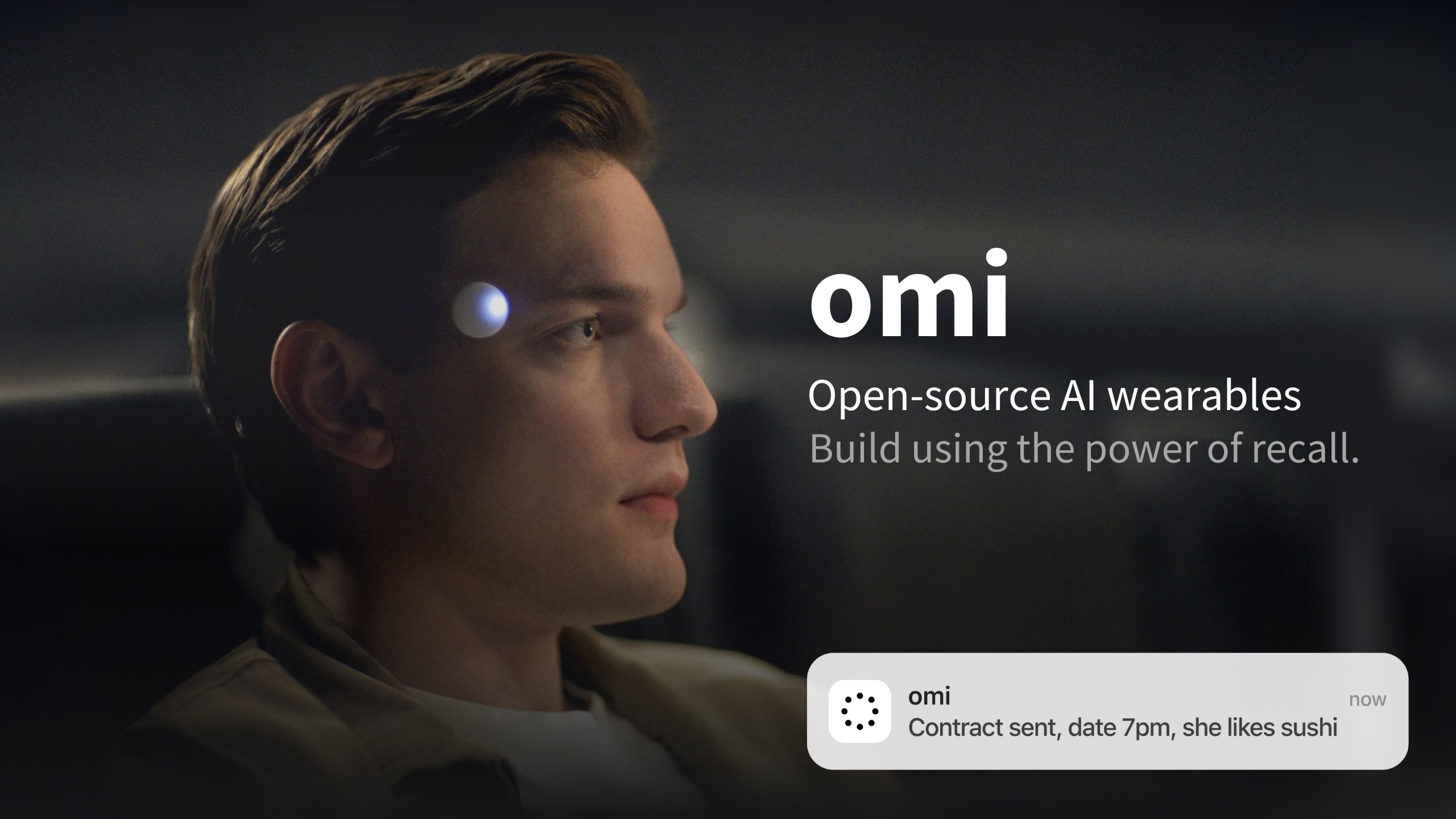
Leading repos: EvoMap/evolver (+1,150), BasedHardware/omi (+617), and Lordog/dive-into (+562).
HuggingFace
Leading models: zai-org/GLM (104K), MiniMaxAI/MiniMax (258K), and google/gemma-4-31B (3.78M).
Product Hunt
Top launches: Claude Design (378), Notebooks in Gemini (227), and CraftBot (219).
API Pricing
What this means: KIMI K2.6's $0.60/M input pricing is the most aggressive from a frontier-class model.
arXiv
Adaptive Parallel Monte Carlo Tree Search for Efficient Test — Integrated with vLLM (a popular AI model serving framework), the approach substantially reduces p99 end-to-end latency while improving throughput and maintaining reasoning accuracy.

Hot off the Presses

01

The $300 Overnight Loop That Could Make Manual Engineering Obsolete

What this means for you: If your competitor can run 700 optimization experiments overnight for $300, your team's manual iteration cycle is now a strategic liability.

The "$300 Overnight Loop" is an emerging AI agent pattern where autonomous systems run hundreds of experiments on codebases or business processes while engineers sleep. The economics are startling.

The competitive insight is that teams who can define "better" as a clear, measurable metric will compound improvements faster than competitors relying on manual engineering. The article argues this becomes table-stakes within 12-18 months.

“700 experiments over two days, $300 total compute, 11% training time reduction”
  • SkyPilot scaled to 910 experiments on a 16-GPU (Graphics Processing Unit) cluster with the total compute bill under $300
  • Andrej Karpathy applied the pattern to his training code - an AI agent ran 700 experiments over two days, cut training time by 11%, and surfaced bugs in the attention implementation that human engineers had missed
  • The startup ThirdLayer used it on agent behavior - every other entry on the leaderboards it targeted was hand-engineered by humans
  • The pattern works within three constraints: one file, one metric, one time budget
02

Stanford AI Index 2026: The Numbers That Rewrite the AI Map

What this means for you: The gap between AI leaders and everyone else is widening fast - and the countries and companies that aren't investing billions right now may never catch up.

IEEE Spectrum analyzed Stanford University's 2026 AI Index report, and the data paints a picture of an industry accelerating beyond most predictions.

“295,000 robot installations in China versus 34,200 in the US”
  • $581 billion in global AI investment in 2025 - private AI investment alone hit $100 billion
  • The US released 50 notable AI models in 2025, maintaining its lead, but industry now accounts for over 90% of notable releases compared to 50% in 2015
  • China dominates robotics: 295,000 industrial robot installations in 2024 versus 34,200 in the US - nearly an 8-to-1 ratio
  • Global AI compute capacity expanded 3.3x since 2019, with Nvidia controlling over 60% of the compute market
  • AI models scored 50% on Humanity's Last Exam - a benchmark designed to be unsolvable by current systems
  • Environmental costs are rising: training a single frontier model now produces emissions comparable to 25 round-trip flights from New York to London
03

KIMI K2.6: The Stealth Launch That Undercuts Every Frontier Model

What this means for you: A powerful new AI model just appeared at a fraction of the price of its competitors - if you're paying for AI API (Application Programming Interface) access, your costs could drop significantly.

Moonshot AI quietly rolled out Kimi K2.6 Code Preview to subscribers on April 13 without a press release. The specs are striking.

Kimi K2.6 is now undergoing pilot testing for broader rollout.

  • 1 trillion parameters total with 32 billion active per query - a Mixture of Experts (MoE) design where only a small fraction of the model runs for each request
  • 256K context window with output at 100 tokens per second
  • $0.60 per million input tokens - roughly 8x cheaper than Claude Opus 4.7 and 3x cheaper than GPT-4.1
  • K2.5 scored 76.8% on SWE-bench (a coding benchmark that tests whether AI can fix real GitHub issues) - K2.6 is expected to improve on this
  • Beta testers described the reasoning as "very Opus-like" with deeper reasoning traces and better multi-step tool execution
1
trillion parameters total with 32
256K
context window with output at
$0.60
per million input tokens
04

OpenClaw's Security Crisis: When Open Source Becomes a Target

What this means for you: The most popular open-source AI project has a serious security problem - if you're using OpenClaw skills from the community, one in five may be malicious.

Previously: April 13 - OpenClaw hit 250K GitHub stars, then 20% of its skills turned malicious.

Two presentations on the same day at different conferences revealed a stark split. Peter Steinberger's TED talk celebrated OpenClaw's meteoric growth. The AIE Conference technical presentation delivered sobering numbers.

The core question is whether OpenClaw's governance can scale as fast as its adoption, or whether the "move fast" ethos will produce a catastrophic security failure.

  • 20% of community skill contributions are malicious - actively designed to exploit users
  • OpenClaw receives 60x more bug and security reports than curl, one of the most widely deployed open-source projects
  • The security surface area expands with every contribution, and the project's popularity makes it an attractive target for supply-chain attacks
05

Microsoft's $25 Billion AI Bet: Own the Surface, Not the Model

What this means for you: Microsoft is betting that the apps you already use (Word, Excel, Teams) will be how most people interact with AI - which means your AI experience may be shaped more by Microsoft than by any model maker.

Josh Bersin's analysis argues Microsoft's enterprise AI strategy centers on owning the application layer rather than competing on model quality.

The counterargument is that the best AI models will eventually commoditize the application layer. But Microsoft's distribution advantage - already inside every enterprise - may prove decisive.

  • 15 million licensed Copilot users at approximately $25 per user per month
  • $25 billion+ in total AI revenue annually, including Azure AI services, growing at 39%
  • Consolidated leadership: Jacob Andreou on growth, Ryan Roslansky on M365 apps, Charles Lamanna on Agents
  • The strategic play: by embedding AI into Office, Teams, and Azure, Microsoft makes the underlying model interchangeable - reducing dependency on any single model provider
15
million licensed Copilot users at
$25
billion+ in total AI revenue

Trends & Themes

Trends & Themes

The Qwen 3.6 Ecosystem Is Building Out - Fast

Why this matters to you: A free, downloadable AI model is now running at professional speeds on consumer hardware - the gap between paid cloud AI and free local AI is shrinking every week.

Previously: April 16 - Qwen3.6-35B-A3B launched and beat Claude Opus 4.7 at drawing a pelican. April 17 - Community benchmarks confirmed Day 1 excitement.

Six sources: r/LocalLLaMA 627pts, r/LocalLLaMA 374pts, r/LocalLLaMA 169pts, r/LocalLLaMA 100pts, r/LocalLLaMA, r/LocalLLaMA

  • 79 tokens per second on an RTX 5070 Ti - a user paired it with an AMD 9800X3D and ran the model with 128K context using the --n-cpu-moe flag for MoE layer offloading
  • Qwen 3.6 beat six other models across five agent frameworks on an Apple M3 Ultra, with Rapid-MLX showing significant speedups for Apple Silicon
  • The coding leap is real: Qwen3.6-35B-A3B scored 73.4% on SWE-bench, solving problems its predecessor Qwen3.5-27B couldn't handle
  • Uncensored variants already shipping: Wasserstein-GGUF uses a mathematical loss function approach rather than crude abliteration
  • Community concern: Unsloth GGUFs (a popular quantization format) run noticeably slower than alternatives, sparking debugging discussions

AI Infrastructure Spending Has Entered the Hundreds-of-Billions Phase

Why this matters to you: Companies are betting the equivalent of small national budgets on AI computing power - these investments will determine which AI tools you can access and how much they cost.

The sheer scale suggests that the major cloud providers believe AI compute demand will continue growing for years, not quarters.

  • Nvidia plans to invest up to $100 billion in OpenAI and supply data center chips, with the first gigawatt of systems deploying in H2 2026
  • Oracle signed a $300 billion cloud deal for the Stargate venture; CoreWeave committed $21 billion to Meta
  • Amazon is considering $10 billion in Amazon Web Services (AWS) data centers; Disney committed $1 billion to AI entertainment infrastructure
  • Microsoft invested $5 billion and Nvidia $10 billion into Anthropic, cementing the multi-provider strategy

Claude Design Day 2: The Honeymoon Is Over, the Debate Begins

Why this matters to you: The first serious user reviews of Claude Design are in - and the consensus is that it's impressive for quick work but not ready to replace professional design tools.

Previously: April 17 - Anthropic launched Claude Design, design software stocks dropped.

  • 10-hour deep review verdict: excellent at visual polish through conversational prompts, with refinement via inline comments, direct text editing, and dynamically generated adjustment sliders - but limited for complex multi-page systems
  • A veteran designer argues Figma is vulnerable because its proprietary format excluded it from LLM training data, while code-based design tools are native to AI workflows
  • The humor backlash is real: multiple posts document Claude Design generating unintended shapes, with "keeps drawing a turd" trending on r/ClaudeAI
  • Adaptive Thinking frustrations: an analysis of 6,852 sessions showed a 67% drop in reasoning quality since the default effort level was lowered from high to medium in March

Education's Analog Counterrevolution Gains Steam

Why this matters to you: Schools and universities are increasingly deciding that digital tools - including AI - are making students worse at basic skills, and some are literally bringing back typewriters.
  • Sweden is reversing its digitalization policy nationwide, mandating reduced screen time in classrooms after 2022 PISA data showed 24% of 15-year-olds lacked basic reading comprehension
  • A Cornell instructor uses vintage typewriters for in-class writing assignments to ensure students produce original work without AI assistance
  • r/Professors reports a consistent theme: students can't use basic textbooks, can't read or write at expected levels, and professors are increasingly testing analog-only formats
  • The debate is global: Sweden's shift is the most dramatic national policy reversal, but similar conversations are happening in Australia, UK, and across US universities

Context Engineering Is Replacing RAG as the Architecture of Choice

Why this matters to you: The way AI systems remember and retrieve information is being redesigned - the new approach is faster and more accurate, which means better AI assistants in the apps you use.
  • A five-component architecture achieves 92ms full pipeline latency using hybrid retrieval with exponential memory decay - faster than most RAG (Retrieval-Augmented Generation) systems
  • Andrej Karpathy's "LLM Wiki" architecture bypasses RAG entirely by constructing structured knowledge stores that LLMs navigate directly
  • VentureBeat's 2026 predictions flagged contextual memory as the component most likely to surpass RAG as the primary retrieval mechanism
  • Open-source implementations emerging: Claude-persistent-memory provides a zero-cost architecture using free Google services across four integrated layers

Creative AI & Media

LTX-2.3 Adds Audio Generation to Its Video Model

What this means for you: A single AI model can now generate both video and synchronized audio - moving closer to one-click video production.
  • LTX-2.3 is a video generation model from Lightricks that now includes an audio generation component
  • Demonstrated outputs show synchronized audio-visual content created from text prompts alone
  • Runs locally without cloud dependencies for users with sufficient GPU memory

Claude Design's Creative Limits Get Stress-Tested

What this means for you: AI design tools can produce impressive results fast, but they still stumble on specific visual elements - know what to hand-draw versus what to generate.

Previously: April 17 - Claude Design launched.

  • Users report excellent results for prototypes, slide decks, and one-pagers through conversational prompts
  • Specific failure modes documented: difficulty with certain organic shapes, inconsistent rendering of detailed icons
  • The strongest use case is rapid iteration - going from concept to polished visual in minutes rather than hours

AI Companions Get "Offscreen Lives"

What this means for you: AI characters in games and apps are starting to simulate lives that continue when you're not watching - making virtual companions feel more real.
  • A developer implemented autonomous events that happen to AI companions while the user is away
  • Events include social interactions, personal developments, and environmental changes that the companion references naturally in conversation
  • The technique creates a sense of persistence that static chatbots lack

Developer Tools & Infrastructure

Rapid-MLX: Faster Local AI on Apple Silicon

What this means for you: If you have a Mac with Apple Silicon, this tool can significantly speed up running AI models locally.
  • Rapid-MLX provides optimized inference for Apple Silicon, benchmarked across multiple models in the Qwen 3.6 agent framework comparison
  • Showed meaningful speedups over standard MLX implementations on M3 Ultra hardware
  • Open source and designed for the growing local AI community on Mac

GHOST v2.1: AMD GPUs Can Now Run CUDA-Only AI Software on Windows

What this means for you: If you have an AMD graphics card, you can now run AI software that was previously locked to Nvidia hardware - on Windows, not just Linux.
  • Smart failover approach: first attempts native ROCm execution, then automatically falls back to ZLUDA (a CUDA translation layer) if it detects a crash
  • Hardware identity masking makes AMD GPUs appear as Nvidia to applications that check
  • Full native Windows support is new in v2.1 - previous versions required Linux

Prefill-as-a-Service: A New Pricing Model for AI Inference

What this means for you: The most expensive part of using AI - processing your initial input - could become a separately traded commodity, potentially lowering costs for heavy AI users.
  • The prefill phase (processing all input tokens to build the key-value cache) is the most compute-intensive step in AI inference
  • Disaggregated serving architectures now separate prefill from generation, enabling specialized pricing
  • The proposal: sell prefill computation as a service, allowing users to buy cached context rather than recomputing it each time

Simon Willison's Agentic Pattern: Reference Code as Spec

What this means for you: When asking AI to build something similar to existing code, pointing it at the existing implementation works better than writing a detailed specification.
  • Willison added "beats" to his blog-to-newsletter pipeline using Claude Code with a three-part prompting strategy
  • The key pattern: clone the reference codebase to /tmp, then tell the AI to mirror its logic - the agent derives schemas and conventions independently
  • This reduces prompt complexity because the agent inspects reference code rather than needing explicit specification of every detail

Research & Models

Zero-Shot World Models Learn Like Infants

What this means for you: AI systems trained on just 3 months of baby video can predict what happens next in a scene - suggesting AI could learn far more efficiently than current approaches require.
  • Trained on developmental video data equivalent to approximately 3 months of infant visual experience
  • Competitive with systems trained on millions of examples, despite seeing orders of magnitude less data
  • 155 upvotes on r/MachineLearning signals strong research community interest
  • Implication: current AI training may be vastly inefficient - developmental learning strategies could slash data and compute requirements

Qwen3-Coder-Next Enters the Ring

What this means for you: The team behind Qwen is building a specialized coding model to compete with dedicated coding AI tools.
  • Compared directly against Qwen3.6 in community tests, showing areas where a specialized coding model outperforms a generalist
  • Signals Alibaba's strategy: release both general-purpose and task-specific models rather than a single do-everything system
  • The local AI community is actively benchmarking to determine which model to use for which task

micro-kiki-v3: 35 Domain LoRAs in One Model

What this means for you: A single downloadable model can now switch between 35 different specializations - from Python to electronics design to HIPAA compliance - using an automatic router.
  • Built on Qwen3.5-35B-A3B with 256 experts, 3B active per token
  • 35 domain-specific LoRA adapters covering Python, TypeScript, C++, Rust, Docker, DevOps, ML training, KiCad electronics, SPICE simulation, and HIPAA compliance
  • A router selects up to 4 LoRA stacks per request, dynamically composing the right specialist combination
  • Open source on HuggingFace - free to download and run locally

Business & Industry

AI Infrastructure Deals Reach Unprecedented Scale

What this means for you: The companies building AI computing infrastructure are making bets measured in hundreds of billions - which means AI services are likely to get faster and cheaper, but also more concentrated among a few giants.
  • Nvidia: up to $100 billion into OpenAI, with first gigawatt systems deploying H2 2026
  • Oracle: $300 billion for the Stargate cloud venture
  • CoreWeave: $21 billion in cloud capacity for Meta
  • Microsoft: $5 billion and Nvidia: $10 billion into Anthropic
  • Disney: $1 billion into AI entertainment infrastructure

Canada's Biggest Banks Go All-In on AI

What this means for you: If you bank with a major Canadian institution, AI is already handling parts of your customer service, fraud detection, and loan processing.
  • RBC (Royal Bank of Canada), TD, and CIBC are deploying AI across customer-facing and back-office operations
  • Use cases include automated fraud detection, customer service chatbots, loan underwriting assistance, and internal knowledge management
  • The banking sector sees AI as a competitive necessity rather than an experiment

Nvidia DGX Spark Scams Hit eBay

What this means for you: If you're shopping for AI hardware on eBay, beware of fake Nvidia DGX Spark listings at suspiciously low prices.
  • Scammers mass-listing counterfeit units at approximately $2,000 - roughly 50% of retail price
  • Red flags: identical photos across sellers, prices too good to be true, new seller accounts
  • Targeting deep learning newcomers who may not know legitimate pricing

GenAI in Education

Sweden Reverses Course: Back to Books, Away from Screens

What this means for you: One of the world's most digitally advanced countries just decided its schools went too far with technology - and is mandating a return to textbooks and handwriting.
  • Sweden's government is implementing a nationwide shift from digital screens back to traditional textbooks, reversing years of digitalization policy
  • 2022 PISA data was the catalyst: 24% of 15-year-olds lacked basic reading comprehension
  • The right-wing coalition government began mandating reduced screen time in April 2026, particularly for younger students
  • This is the most dramatic national-level reversal of education technology policy to date

Cornell Instructor Deploys Typewriters Against AI

What this means for you: Some instructors are going fully analog to ensure students do their own thinking - a creative but labor-intensive response to AI-generated submissions.
  • Grit Matthias Phelps, a German language instructor, sourced dozens of vintage manual typewriters from secondhand shops
  • Students complete "analog" assignments in class on the typewriters, ensuring original work without AI or translation tools
  • The approach is gaining attention as other instructors look for ways to verify authentic student work

The Student Literacy Crisis Continues

What this means for you: Professors report that students increasingly struggle with basic reading and writing - and the debate over whether technology is helping or hurting shows no signs of resolution.
  • Multiple r/Professors threads describe students unable to use basic textbooks, struggling with reading comprehension at college level
  • "Skynet Saturday" discussion focuses specifically on AI solutions for classroom challenges
  • Faculty burnout is accelerating as professors adapt assignments to combat AI-generated work while maintaining educational standards

Surprising & Under-the-Radar

Cryptographic Approval for AI Agents Still Isn't Enough

A team added cryptographic signing to their AI agent's approval workflow - creating tamper-proof records of human authorization for every consequential action. They discovered the system was still unsafe because the attack surface shifted to the approval prompt itself: if the agent can influence what the human sees when approving, cryptographic proof of consent becomes meaningless.

The AI Integration Paradox Mirrors the Dot-Com Bubble

Companies are panic-buying AI tools the way they once panic-bought .com domains. The article draws direct comparisons: in the late 1990s, companies bought websites without clear strategy; today, they buy AI solutions the same way. The pattern suggests most enterprise AI spending in 2026 will produce the same ROI (Return on Investment) as most corporate websites did in 1998 - approximately zero.

ICML 2026 Review Variance Is Raising Questions

The machine learning community is debating significant score variance across reviewer batches at ICML 2026 (the International Conference on Machine Learning). Papers receiving dramatically different scores depending on which batch of reviewers they were assigned to undermines the perceived fairness of the peer review process.

A Curated List of GenAI Failures Now Exists

An open-source repository cataloging real-world GenAI incidents - from hallucinated legal citations to chatbot manipulations - provides a structured reference for anyone building AI systems. The list serves as both a cautionary resource and a training aid for teams deploying AI in production.

Gemma 4 Runs Usably on a $200 Android Phone

Google's Gemma 4 E2B variant with Q4_K_M quantization is 1.3GB and achieves 12-20 tokens per second on Snapdragon chips with just 6GB of RAM. This is the first time a competitive language model runs conversationally on hardware that costs less than a pair of running shoes.

Signals to Track

Worth Watching
01

Thunderbird Enters the AI Client Market

Mozilla's email team just released an open-source, cross-platform AI client that lets you pick your own models and keep your data local.

Thunderbolt (not the email client - a new product from the same team) gained 458 GitHub stars on day one. It supports frontier, local, and on-premises models with zero vendor lock-in. Built in TypeScript under the MPL-2.0 license. If this gains traction, it could become the "Firefox of AI" - a privacy-first alternative to cloud-locked assistants.

02

Evolver: Self-Evolving AI Agents via Gene Expression

An AI agent improvement framework just hit 1,150 GitHub stars in a single day - and its approach is borrowed from genetics, not software engineering.

EvoMap's Evolver transforms ad hoc prompt adjustments into auditable, reusable "evolution assets." It scans runtime logs, selects optimal "genes" from a structured asset library, and emits protocol-bound prompts. The genetic metaphor maps to real functionality: agents literally evolve their behavior through selection pressure on structured assets.

03

PyCon US 2026 Debuts Dedicated AI and Security Tracks

The Python community's flagship conference now treats AI as a first-class discipline alongside security - not a side conversation.

PyCon US 2026 runs May 13-19 in Long Beach, California. The AI track was curated by Silona Bonewald (CitableAI) and Zac Hatfield-Dodds (Anthropic), covering topics from running LLMs on personal devices to building real-time voice agents. For Python developers, this signals AI integration is now core to the Python ecosystem, not a specialty.

Top Repos Today

Rank yesterday: New entry 🆕
⭐ Stars today: +1,150  ·  📦 Total: 4,976
📜 License: GPL-3.0  ·  👤 By: EvoMap (startup)
🎯 Time to value: 15 minutes
What it is: A self-evolution engine for AI agents that borrows concepts from genetics. It scans runtime logs, selects optimal "genes" from a structured asset library, and emits protocol-bound prompts to guide agent improvements. Think of it as automated prompt tuning that evolves rather than being manually tweaked. Why you'd want it: If you're running AI agents in production and tired of manually adjusting prompts, this automates the improvement loop with auditable, reusable assets.
✓ Pros✗ Cons
Automated agent improvement from runtime dataGPL-3.0 may conflict with commercial use
Auditable evolution historyYoung project, API may change rapidly
Works with any LLM backendRequires runtime logging infrastructure
GitHub - EvoMap/evolver: The GEP-Powered Self-Evolution Engine for AI Agents. Genome Evolution Protocol. | evomap.ai
The GEP-Powered Self-Evolution Engine for AI Agents. Genome Evolution Protocol. | evomap.ai - EvoMap/evolver
Rank yesterday: #5 - Rising ↑
⭐ Stars today: +617  ·  📦 Total: 10,398
📜 License: MIT  ·  👤 By: BasedHardware (open-source hardware org)
🎯 Time to value: 30 minutes
What it is: An AI personal assistant that sees your screen, listens to conversations, and provides real-time transcription, summaries, and action items. Works across desktop, mobile, and wearable devices. Think of it as a second brain that's always paying attention. Why you'd want it: Captures meetings, conversations, and screen activity automatically, generating searchable transcripts and action items without manual note-taking.
✓ Pros✗ Cons
Always-on contextual awarenessPrivacy implications of constant monitoring
Cross-platform (desktop, mobile, wearable)Requires significant trust in the software
MIT license, fully self-hostableHardware wearable component sold separately
GitHub - BasedHardware/omi: AI that sees your screen, listens to your conversations and tells you what to do
AI that sees your screen, listens to your conversations and tells you what to do - BasedHardware/omi
Rank yesterday: #3 - Holding steady ➡
⭐ Stars today: +562  ·  📦 Total: 31,998
📜 License: Public welfare  ·  👤 By: Yuan Tongxin, Shanghai Jiao Tong University
🎯 Time to value: 60 minutes
What it is: Comprehensive programming tutorials for Large Language Models (LLMs) covering fine-tuning, prompt engineering, knowledge editing, mathematical reasoning, watermarking, jailbreak attacks, multimodal models, AI agents, and alignment techniques. Jupyter notebook format for hands-on learning. Why you'd want it: The most complete single-repository LLM curriculum available, covering both fundamentals and cutting-edge techniques with executable code.
✓ Pros✗ Cons
Covers 10+ LLM topics in one repoSome content may be in Chinese
Executable Jupyter notebooksUniversity-paced, not production-focused
32K stars = strong community validationUpdates may lag behind fastest-moving areas
GitHub - Lordog/dive-into-llms: 《动手学大模型Dive into LLMs》系列编程实践教程
《动手学大模型Dive into LLMs》系列编程实践教程. Contribute to Lordog/dive-into-llms development by creating an account on GitHub.
Rank yesterday: #8 - Rising ↑
⭐ Stars today: +473  ·  📦 Total: 22,287
📜 License: MIT  ·  👤 By: OpenAI
🎯 Time to value: 10 minutes
What it is: OpenAI's official lightweight framework for building multi-agent workflows. Provider-agnostic SDK supporting OpenAI APIs plus 100+ other LLMs with agent configuration, tool integration, safety guardrails, conversation history, and built-in tracing. Why you'd want it: The official way to build multi-agent systems with OpenAI models, but flexible enough to use with any LLM provider.
✓ Pros✗ Cons
Official OpenAI support and documentationOpinionated architecture may not fit all use cases
Provider-agnostic despite the nameRelatively new, community ecosystem still building
Built-in tracing and safety guardrailsRequires understanding of agent design patterns
GitHub - openai/openai-agents-python: A lightweight, powerful framework for multi-agent workflows
A lightweight, powerful framework for multi-agent workflows - openai/openai-agents-python
Rank yesterday: New entry 🆕
⭐ Stars today: +458  ·  📦 Total: 1,531
📜 License: MPL-2.0  ·  👤 By: Thunderbird (Mozilla organization)
🎯 Time to value: 5 minutes
What it is: An open-source, cross-platform AI client that lets you choose your own models (frontier, local, or on-premises) and own your data. Think of it as a model-agnostic ChatGPT alternative where nothing leaves your machine unless you want it to. Why you'd want it: Privacy-first AI interaction without vendor lock-in. Use any model provider or run entirely local.
✓ Pros✗ Cons
Zero vendor lock-in, any modelBrand new - features still maturing
Mozilla/Thunderbird pedigree for trustSmaller community than established clients
Cross-platform (desktop + mobile)Self-hosted models require local hardware
GitHub - thunderbird/thunderbolt: AI You Control: Choose your models. Own your data. Eliminate vendor lock-in.
AI You Control: Choose your models. Own your data. Eliminate vendor lock-in. - thunderbird/thunderbolt
Rank yesterday: New entry 🆕
⭐ Stars today: +408  ·  📦 Total: 3,107
📜 License: Apache-2.0  ·  👤 By: SimoneAvogadro
🎯 Time to value: 5 minutes
What it is: A Claude Code skill that decompiles Android APK/XAPK/JAR/AAR files and extracts HTTP APIs. Identifies Retrofit endpoints, OkHttp calls, hardcoded URLs, and authentication patterns without requiring original source code. Why you'd want it: Reverse-engineer any Android app's API surface in minutes, useful for security audits, competitive analysis, or building compatible clients.
✓ Pros✗ Cons
Automated API extraction from compiled appsSecurity/ethical implications of reverse engineering
Works with Claude Code's skill systemRequires Claude Code subscription
Finds auth patterns automaticallyMay miss obfuscated or native code APIs
GitHub - SimoneAvogadro/android-reverse-engineering-skill: Claude Code skill to support Android app’s reverse engineering
Claude Code skill to support Android app’s reverse engineering - SimoneAvogadro/android-reverse-engineering-skill
Rank yesterday: #12 - Rising ↑
⭐ Stars today: +31  ·  📦 Total: 6,523
📜 License: MIT  ·  👤 By: DeepSeek AI
🎯 Time to value: 30 minutes
What it is: A unified, high-performance tensor core kernel library for FP8/FP4/BF16 matrix multiplications, fused MoE with overlapped communication (Mega MoE), and MQA scoring. Reaches up to 1,550 TFLOPS on H800 hardware. Why you'd want it: If you're serving large AI models, these kernels can significantly improve inference throughput, especially for MoE architectures.
✓ Pros✗ Cons
Up to 1,550 TFLOPS on H800Requires Nvidia H-series hardware
Supports FP4/FP8/BF16 precisionLow-level CUDA - not for beginners
Optimized for MoE architecturesDeepSeek-specific optimizations may not generalize
GitHub - deepseek-ai/DeepGEMM: DeepGEMM: clean and efficient FP8 GEMM kernels with fine-grained scaling
DeepGEMM: clean and efficient FP8 GEMM kernels with fine-grained scaling - deepseek-ai/DeepGEMM

Top Models Today

The largest open-weight model currently trending - 754 billion parameters of text generation power.
📥 Downloads (30d): 104K  ·  📜 License: Not specified
👤 By: Zhipu AI  ·  🎯 Task: Text Generation
📐 Size: 754B
What it is: Zhipu AI's latest flagship model at 754 billion parameters. This is one of the largest publicly available models, competing directly with closed frontier models on general text generation tasks. Why you'd want it: Access to near-frontier-quality text generation without API costs - if you have the hardware to run it (requires multiple high-end GPUs).
✓ Pros✗ Cons
754B parameters - near-frontier scaleRequires multi-GPU setup to run
Open weights for researchLicense terms not yet clarified
Strong text generation qualityHigh download/storage requirements
zai-org/GLM-5.1 · Hugging Face
We’re on a journey to advance and democratize artificial intelligence through open source and open science.
229 billion parameters with aggressive community licensing after initial controversy.
📥 Downloads (30d): 258K  ·  📜 License: Community-friendly (updated)
👤 By: MiniMax AI  ·  🎯 Task: Text Generation
📐 Size: 229B
What it is: MiniMax's large-scale text generation model. After initial controversy over restrictive licensing (covered April 12), MiniMax clarified that personal and research use is explicitly free (covered April 15). Why you'd want it: Strong performance at 229B scale with now-clarified licensing for personal and research use.
✓ Pros✗ Cons
258K downloads signals real adoptionCommercial use terms still unclear
Strong benchmark performanceRequires significant hardware
License controversy resolvedChinese company may face geopolitical headwinds
MiniMaxAI/MiniMax-M2.7 · Hugging Face
We’re on a journey to advance and democratize artificial intelligence through open source and open science.
Google's most downloaded trending model with 3.78 million downloads - the multimodal workhorse.
📥 Downloads (30d): 3.78M  ·  📜 License: Gemma
👤 By: Google  ·  🎯 Task: Image-Text-to-Text
📐 Size: 33B
What it is: Google's instruction-tuned multimodal model that processes both images and text. Built on the same research as Gemini 3, released under the Gemma open license for local use. Why you'd want it: The most popular open multimodal model for understanding images and text together - strong for document analysis, visual QA, and image description.
✓ Pros✗ Cons
3.78M downloads - massive communityGemma license has some restrictions vs MIT
Multimodal: images + text33B requires decent GPU
Google-backed with regular updatesNot the absolute best at any single task
google/gemma-4-31B-it · Hugging Face
We’re on a journey to advance and democratize artificial intelligence through open source and open science.
The MoE model dominating today's digest - 35B total but only 3B active, making it fast on consumer hardware.
📥 Downloads (30d): 82K  ·  📜 License: Apache 2.0
👤 By: Alibaba/Qwen  ·  🎯 Task: Image-Text-to-Text
📐 Size: 36B total / 3B active
What it is: Alibaba's mixture-of-experts model that activates only 3 billion of its 35 billion parameters per query. This architecture makes it dramatically faster and cheaper to run than its parameter count suggests. Why you'd want it: Near-frontier quality at consumer hardware speeds - 79 tokens per second on an RTX 5070 Ti with 128K context.
✓ Pros✗ Cons
3B active params = fast on consumer GPUsMoE architecture needs more total VRAM
73.4% SWE-bench - strong codingRelatively new, ecosystem still building
Apache 2.0 - fully openSome quantization formats run slower than expected
Qwen/Qwen3.6-35B-A3B · Hugging Face
We’re on a journey to advance and democratize artificial intelligence through open source and open science.
Tencent's robotics AI - a 4B model designed for physical world understanding.
📥 Downloads (30d): 1.45K  ·  📜 License: Not specified
👤 By: Tencent  ·  🎯 Task: Image-Text-to-Text
📐 Size: 4B
What it is: An embodied AI model designed for robotics and spatial understanding. At just 4 billion parameters, it's small enough to run on edge devices while processing visual and textual information for physical world tasks. Why you'd want it: If you're building robotics applications or need AI that understands physical spaces, this is purpose-built for that use case.
✓ Pros✗ Cons
Purpose-built for roboticsVery early (v0.5)
Small enough for edge deploymentLimited downloads suggest early adoption
Multimodal spatial understandingLicense not yet clarified
tencent/HY-Embodied-0.5 · Hugging Face
We’re on a journey to advance and democratize artificial intelligence through open source and open science.
Open-source text-to-speech with strong community engagement - 1,110 likes.
📥 Downloads (30d): 35.9K  ·  📜 License: Not specified
👤 By: OpenBMB  ·  🎯 Task: Text-to-Speech
📐 Size: Not specified
What it is: A text-to-speech model from the OpenBMB research group with unusually high community engagement (1,110 likes). Designed for natural-sounding speech synthesis from text input. Why you'd want it: High-quality open-source TTS for applications that need natural speech - voice assistants, accessibility tools, content creation.
✓ Pros✗ Cons
1,110 likes = strong community validationLicense terms not specified
Open-source TTSSize/hardware requirements unclear
Natural speech qualityMay require fine-tuning for specific voices
openbmb/VoxCPM2 · Hugging Face
We’re on a journey to advance and democratize artificial intelligence through open source and open science.
Google's efficient MoE variant - 26B total but only 4B active, designed for speed.
📥 Downloads (30d): 2.78M  ·  📜 License: Gemma
👤 By: Google  ·  🎯 Task: Image-Text-to-Text
📐 Size: 27B total / 4B active
What it is: Google's mixture-of-experts version of Gemma 4, activating only 4 billion of its 26 billion parameters per query. Runs on Android phones at 12-20 tokens per second with just 6GB of RAM. Why you'd want it: The most practical way to run a competitive multimodal model on mobile devices and low-end hardware.
✓ Pros✗ Cons
Runs on phones with 6GB RAMMoE may have quality gaps on some tasks
2.78M downloads - widely adoptedGemma license restrictions
4B active = very fast inferenceLess capable than full 31B variant
google/gemma-4-26B-A4B-it · Hugging Face
We’re on a journey to advance and democratize artificial intelligence through open source and open science.

AI Launches Today

Make prototypes, slides & one-pagers by talking to Claude
🔥 Upvotes: 378  ·  👤 By: Anthropic Labs
💰 Pricing: Included with Claude Pro/Team/Enterprise  ·  🏷 Category: AI Design
Anthropic's entry into visual design lets users create polished prototypes, slide decks, and one-pagers through conversational prompts. Refinement happens through inline comments, direct text editing, and dynamically generated adjustment sliders. This is the product that caused design software stocks to drop (covered April 17). Verdict: Impressive for rapid prototyping and quick visual work; not yet a Figma replacement for complex design systems.
Claude Design | Make prototypes, slides, and one-pagers by talking to Claude | Product Hunt
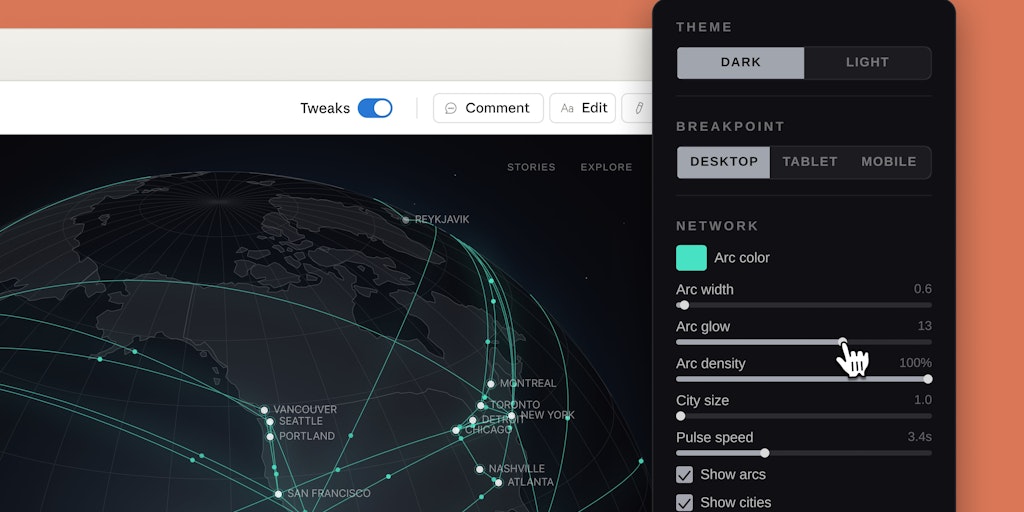
Claude Design is an AI tool for creating polished visual work. It helps turn ideas into prototypes, slides, and design assets. It uses Claude Opus 4.7 for strong vision capabilities and you can refine designs with simple controls and live feedback. It supports team collaboration and consistent design systems.
Keep every project, chat, and file in one focused space
🔥 Upvotes: 227  ·  👤 By: Google
💰 Pricing: Free with Gemini  ·  🏷 Category: AI Productivity
Google adds persistent project workspaces to Gemini, letting users organize chats, files, and research into focused notebooks rather than a single chat history. Each notebook maintains its own context and can reference uploaded documents. Verdict: A meaningful quality-of-life improvement for heavy Gemini users who juggle multiple projects.
View on Product Hunt →
Self-hosted proactive AI assistant that lives locally
🔥 Upvotes: 219  ·  👤 By: CraftOS-dev
💰 Pricing: Free (self-hosted)  ·  🏷 Category: AI Agent
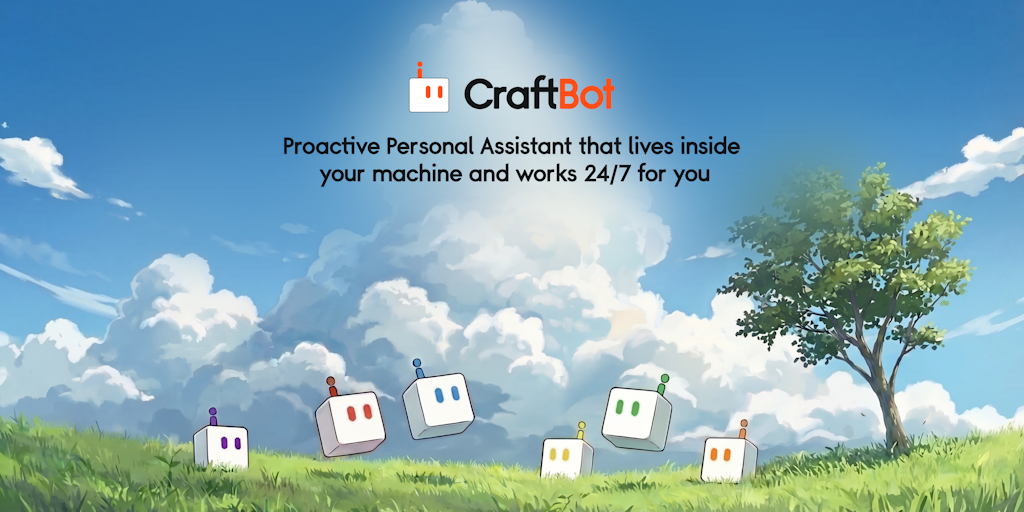
A self-hosted AI assistant that runs entirely on your hardware. Proactively suggests actions rather than waiting for commands. Zero cloud dependencies means your data never leaves your machine. Verdict: Strong privacy story for the self-hosting crowd; adoption depends on how good the proactive suggestions actually are.
CraftBot | Self-hosted proactive AI assistant that lives locally | Product Hunt
A self-hosted Proactive AI Assistant that lives inside your machine and works 24/7 for your daily execution. It autonomously interprets tasks, plans actions, and executes them to achieve your goals. It learns your objectives, proactively helping you plan and initiate tasks to achieve your life goals. MCPs,Skills, and external App integrations are supported. The agent harness, from prompt to agentic loop, is under the MIT license. Try it out here! https://github.com/CraftOS-dev/CraftBot
Scan your website to see how ready it is for AI agents
🔥 Upvotes: 199  ·  👤 By: Cloudflare
💰 Pricing: Free  ·  🏷 Category: AI Infrastructure
A diagnostic scanner that checks whether websites have the metadata, structured data, and API endpoints that AI agents need to interact programmatically. Scores sites on agent readiness and suggests improvements. Verdict: Could become as important as mobile-readiness testing was a decade ago - especially if AI shopping agents take off.
Scan your website to see how ready it is for AI agents. - Is Your Site Agent-Ready? by Cloudflare | Product Hunt
Cloudflare’s Agent-Ready Scanner analyzes your website for AI compatibility across standards like robots.txt, MCP, OAuth, and agent protocols. Identify gaps, improve discoverability, and prepare your site for AI agents to browse, interact, and transact seamlessly.
Richer, more visually immersive shopping experiences
🔥 Upvotes: 132  ·  👤 By: OpenAI
💰 Pricing: Free with ChatGPT  ·  🏷 Category: AI Commerce
OpenAI adds shopping features to ChatGPT with product cards, reviews, price comparisons, and direct purchase links. Designed to compete with Google Shopping and Amazon product search. Verdict: Makes ChatGPT a viable product research tool; the real question is whether users will trust AI purchase recommendations. Product Hunt Also Notable: Claude Code Rendering (121 upvotes, Anthropic), Android CLI (114 upvotes, Google), Grok Voice API (106 upvotes, xAI)

Snapshot

ProviderModelInput $/1MOutput $/1MContext
AnthropicClaude Opus 4.7$5.00$25.001M
AnthropicClaude Sonnet 4.6$3.00$15.001M
OpenAIGPT-4.1$2.00$8.001M
OpenAIGPT-5$1.25$10.00128K
OpenAIo4-mini$1.10$4.40200K
GoogleGemini 3.1 Pro Preview$2.00$12.00200K+
GoogleGemini 3 Flash Preview$0.50$3.00Free tier
GroqGPT OSS 120B$0.15$0.60128K
GroqLlama 3.1 8B$0.05$0.08128K
NewKIMI K2.6$0.60TBD256K
What this means: KIMI K2.6's $0.60/M input pricing is the most aggressive from a frontier-class model. Groq remains the cheapest for raw throughput at $0.15/M input on GPT OSS 120B (500 tokens/second). The price gap between top-tier models (Opus at $5, GPT-4.1 at $2) and budget options (Groq at $0.15) is now 33x - the widest it has ever been. Google's free tiers on Flash models continue to undercut everyone for low-volume use.

Adaptive Parallel Monte Carlo Tree Search for Efficient Test-time Compute Scaling

Hongbeen Kim, Juhyun Lee, Sanghyeon Lee, Kwanghoon Choi, Jaehyuk Huh - arXiv:2604.00510
What it claims: Addresses the latency problem in Monte Carlo Tree Search (MCTS) applied to LLM reasoning. Proposes "negative early exit" to eliminate unproductive search paths and an "adaptive boosting mechanism" that redistributes freed compute resources to reduce contention among parallel searches.

Key finding: Integrated with vLLM (a popular AI model serving framework), the approach substantially reduces p99 end-to-end latency while improving throughput and maintaining reasoning accuracy.

Why practitioners should care: If you're serving reasoning-heavy models (like o3-style systems that use test-time compute scaling), this directly reduces your inference costs and latency. The vLLM integration means it plugs into existing production serving stacks without architectural changes.

arXiv

Runners-up: - Self-Routing: Parameter-Free Expert Routing from Hidden States (2604.00421) - Eliminates learned routing modules in MoE layers, achieving 17% higher routing entropy. Relevant for MoE deployment efficiency. - Agent Psychometrics (2604.00594) - Framework combining Item Response Theory with task features to predict coding agent success without expensive benchmarks.

Member discussion

Subscribe to GenAI Secret Sauce newsletter and stay updated.

Don't miss anything. Get all the latest posts delivered straight to your inbox. It's free!

By subscribing, you agree to our Privacy Policy and Terms. We track email opens and clicks. Unsubscribe anytime.

Great! Check your inbox and click the link to confirm your subscription.