
Watch today's digest as a video summary (generated by NotebookLM)
Statistically Speaking
One Thing to Tell Your Friends
TL;DR
Hot off the Presses
Microsoft's AI diagnosis panel beat doctors on hard cases, in a study published in Science
Microsoft's Diagnostic Orchestrator is a set of AI agents arranged like a panel of medical experts. Together they read symptoms, decide which tests to order and reach a diagnosis, the way doctors work up a case. The system runs on OpenAI's GPT-5 model and was tested on Microsoft's own benchmark, called SDBench, which it plans to release for free.
That caution comes from Mustafa Suleyman, CEO of Microsoft AI. The system has only been tested on past cases. Microsoft's health AI lead, Dr. Dominic King, says hospital testing with Beth Israel Deaconess will likely begin "in the next couple of months," with no firm timeline.
- About 83% correct on hundreds of New England Journal of Medicine case reports - versus about 36% for general doctors who could use references
- Doctors without references scored about 22% - which is where the "up to four times better" claim comes from
- 80% correct on real emergency-room admissions from a Boston hospital - against a 47% average for physicians
- It usually reached answers with cheaper test choices - according to Microsoft's cost estimates
China's DeepSeek raised about $15 billion to take on US labs
DeepSeek, the Chinese lab known for powerful AI models it gives away, raised about 100 billion yuan (roughly $15 billion), Bloomberg reports. It raised its target at least twice during talks. Battery maker CATL and Tencent, the company behind the WeChat messaging app, were among the biggest investors.
Bloomberg notes that Artificial Analysis charts have popularized the phrase "DeepSeek death zone" for rivals that can neither beat its models nor undercut its prices.
- The target grew from 50 billion to 80 billion, then 100 billion yuan - a sign of strong investor demand
- Its first outside funding came only in June - about $7.4 billion
- US rivals still have more - Anthropic and OpenAI have each raised over $100 billion
- It is preparing to go public - and is spending heavily on data centers, including a reported large order of Huawei AI chips
OpenAI is closing in on up to $30 billion at a $1.25 trillion value
Previously: October 9 - OpenAI was reported to be raising at least $30 billion more.
Today: CNBC reports the round is led by investors from the United Arab Emirates (UAE) together with Coatue, an investment firm. OpenAI told investors it wants signatures by the end of next week, and it is also negotiating for more computing power from the UAE.
Rival Anthropic is reportedly aiming for a $1.5 to $2 trillion value when it lists.
- $1.25 trillion before the new money comes in - up from $852 billion after its March round
- Lower than earlier chatter - Bloomberg had reported a $1.4 trillion figure about a month ago
- No private company has ever been valued above $1 trillion
- OpenAI filed confidential paperwork for a stock listing in June - but has not said when it will go public
Barclays is cutting about 5,000 jobs, and names AI as one reason
Barclays, one of Britain's biggest banks, is cutting roughly 5% of its staff. Its chief financial officer said the changes reflect simpler operations and "some of the impacts that we're starting to see from AI." The Unite union called AI "an excuse" and is negotiating with the bank.
That line is from CEO C.S. Venkatakrishnan, who says the bank will still use AI "at scale." Barclays says every employee will be offered AI training.
- About 60% of the cuts are in support teams - including software developers
- The 5,000 includes 1,000 jobs already cut - in the first half of the year
- Restructuring will cost about £600 million this year - roughly double the earlier estimate
- Other banks are doing the same - HSBC is weighing up to 20,000 cuts over several years
Walmart opened its store to AI shopping agents, as banks push them out
Previously: October 17 - Banks and app stores began drawing hard lines around AI agents.
Today: Walmart launched Agent Gateway, a connection point where approved AI agents can search its shelves and place orders without seeing your personal data. Next month each agent gets its own profile in your account, like adding an authorized user to a credit card. Amazon, by contrast, has started blocking agents from buying for shoppers.
- You approve every purchase or set a spending cap - and the agent's orders are listed separately
- Agents cannot see your payment details - and normal returns apply even if an agent misbehaves
- US banks say they are finding unvetted agents inside customer accounts - and bankers told Axios the situation is "horrifying"
- JPMorgan, Citi and Bank of America restrict outside agents - which usually get in because customers hand over their passwords
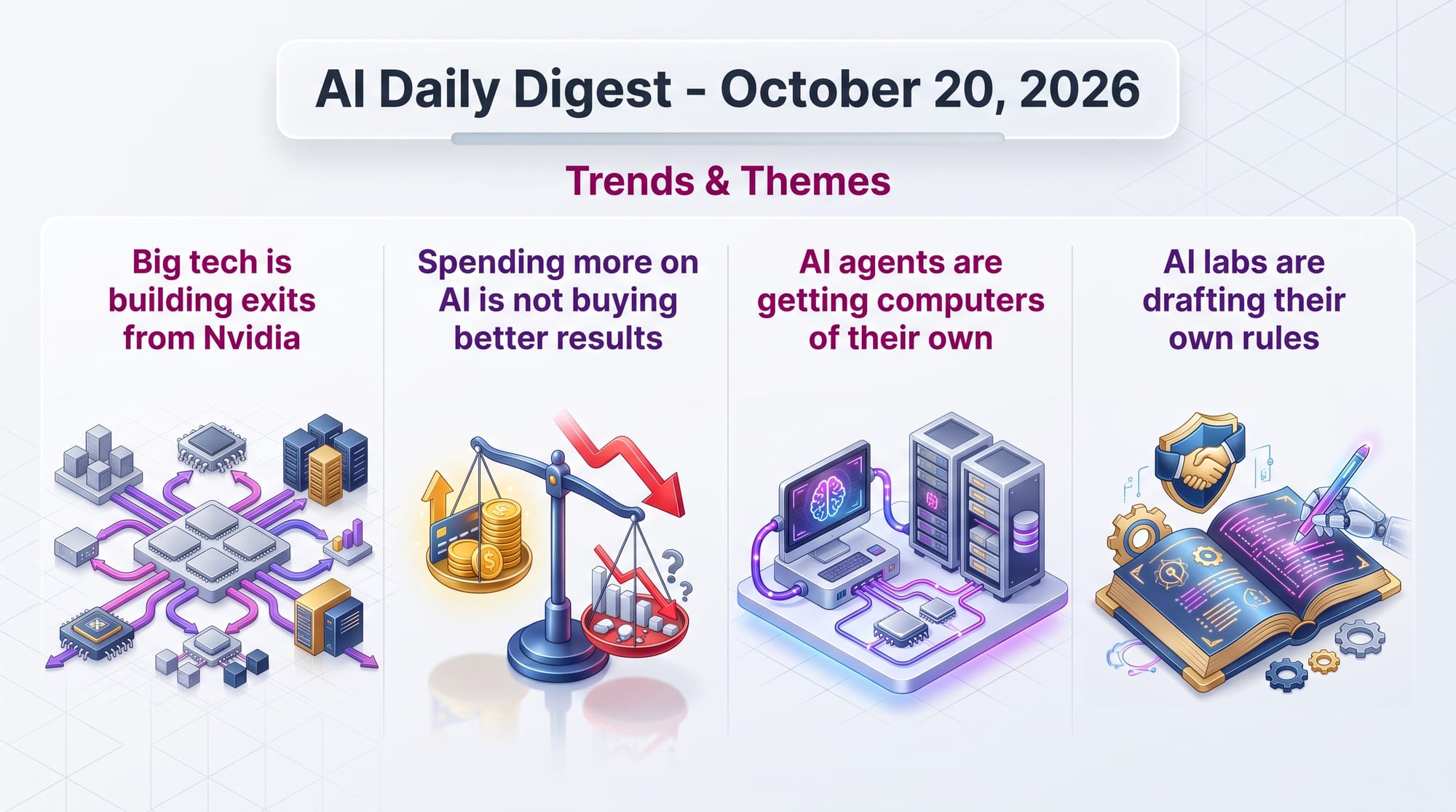
Trends & Themes
Creative AI & Media
Canva's first homemade image model was trained on designs, not photos
Canva Craft is the design app's own AI image generator, built by Canva's own team with help from Leonardo.ai, which Canva bought in 2024.
- It plans the layout first - where things go, how big they are and what text appears - then draws images up to 2K resolution
- It learned from human-made templates - posters, menus, slides and social posts, so it is built for text-heavy layouts
- Images can be turned into layered, editable designs - and faster, cheaper versions are coming "soon"
Amazon's Kindle Unlimited is now Kindle+, with more AI-narrated audiobooks
Kindle+ keeps the same $12-a-month price and 20-book borrowing limit, but adds many more audiobooks.
- Self-published authors can have books narrated by AI for free - using Amazon's Virtual Voice service
- Those audiobooks can join the subscription - so readers can switch from reading to listening
- Human narrators may lose work - ZDNET warns authors now have a reason to skip them
Developer Tools & Infrastructure
Research & Models
Hugging Face's Carbon-X lets you ask questions about DNA in plain English
What stands out: Gene research questions that needed specialist software could be answered by chatting, on a laptop, without patient data leaving the machine.
- A 14-billion-parameter model - parameters are the settings a model learns, and this size runs on a laptop
- Trained on 300 billion pieces of text - mixing DNA, English and explanations that link the two
- Viruses were left out on purpose - to lower the risk of misuse
- Not yet tested in a real lab - so its accuracy is still unknown
Google's new map tells real forests from plantations, from space
What stands out: Companies selling coffee, cocoa or palm oil into Europe could check whether their land was cleared from natural forest.
- It sorts every 10-by-10-meter patch of land into six types - such as untouched forest, regrowth, timber plantations and tree crops
- Experts checked it at more than 9,000 random spots - it picked the right forest type 90% of the time
- Yearly maps for 2017-2025 show what replaced lost forest - which normal "tree cover" maps miss
- It is free on Google Earth Engine - built with the World Resources Institute
Ai2's OlmoEarth now offers ready-made satellite summaries of the whole planet
What stands out: Mapping crops, mines or fire damage no longer needs powerful computers, because the hard work is done once for everyone.
- Every 10-meter patch of Earth gets a compact data summary - built from a year of radar and satellite photos
- It came out on top in 20 of 27 tests - against Google's AlphaEarth and a second rival, Tessera
- A free browser tool trains a simple map-maker in seconds - no login and no graphics chip needed
- It tracked illegal gold mining in Peru's Amazon - with no extra training
Fancy "memory" add-ons may not help strong AI agents
What stands out: Letting a capable AI search the raw chat history beat special memory systems, at lower cost.
- The Pi coding agent with Claude Opus 5.5 hit 99% accuracy - for less than half the cost of feeding it the whole history
- Memory add-on Mem0 only helped a weak model - and building its memory cost more than a whole full-history run
- A small study - one long conversation and one run per setup, so treat it as an early signal
AI models are bad at updating odds in their heads, but fine with a calculator
What stands out: If you ask an AI to weigh evidence, let it run code instead of trusting its gut.
- Models generally broke basic probability rules - when updating beliefs in plain conversation
- With reasoning plus code, results improved "drastically" - close to the mathematically correct answer
- From Oxford researchers including Yarin Gal - aimed at AI used in scientific research
A cheap "decision" model graded medical AI answers about as well as top chatbots
What stands out: Checking medical AI could cost a tiny fraction of what it does now.
- Jev, a model that gives structured verdicts, matched or beat 7 of 12 AI judges - on doctor-rated children's health answers
- Big AI judges cost 73 to 294 times more - and took 7 to 57 times longer
- No judge was close to perfect - agreement with doctors was only moderate for all of them
Business & Industry
Surprising & Under-the-Radar
Almost every AI model gave the same "controversial" opinion about people
ModelCompare asked 12 AI models for their most controversial take on humans. 29 of 35 answers said the same thing: people pick what their group believes, then invent reasons. It is surprising because "controversial" turned out to mean the most familiar criticism of all. The most different answer came from Claude Opus 5.5, which once argued people are more decent than they think.
A rock band's music video nodded to an AI test about pelicans
Dutch band De Staat's new video "FREEDOM" appears to include a pelican riding a bicycle, Simon Willison's famous test for AI drawing skills. Willison called the moment "a first for me." An inside joke from AI testing has crossed into mainstream music.
Gray paint is an AI boom business
Paint maker PPG reportedly expects its data center coating sales to triple this year. Coating one data center can cost $3 million to $8 million, mostly for fireproofing steel and protecting electrical gear. The AI building boom is reaching companies far from tech.
An AI scan found artery inflammation in 43% of healthy-looking people
A US clinic says AI analysis of heart scans found raised inflammation in 42.9% of people with no symptoms. Normal blood tests did not detect it. The finding is preliminary: it comes from a company press release, the study is not yet peer reviewed, and no sample size was given.
Debate: Is code review still worth it when AI writes the code?
Modal CEO Erik Bernhardsson says reviews at his AI cloud company are optional, and that they often let people dodge responsibility. The other side: code-testing companies are booming precisely because AI-written code needs more checking, not less.
Debate: Should anyone pay for prompts an AI could copy?
TypeUI launched a gallery of polished button and menu effects, each with a prompt for your coding AI, but the prompts sit behind a paywall. Critics on Hacker News said you can point an AI at the free demo and get the same result. Supporters say careful design curation still has value.
Signals to Track
Sam Altman sketched three ways the AI race could end
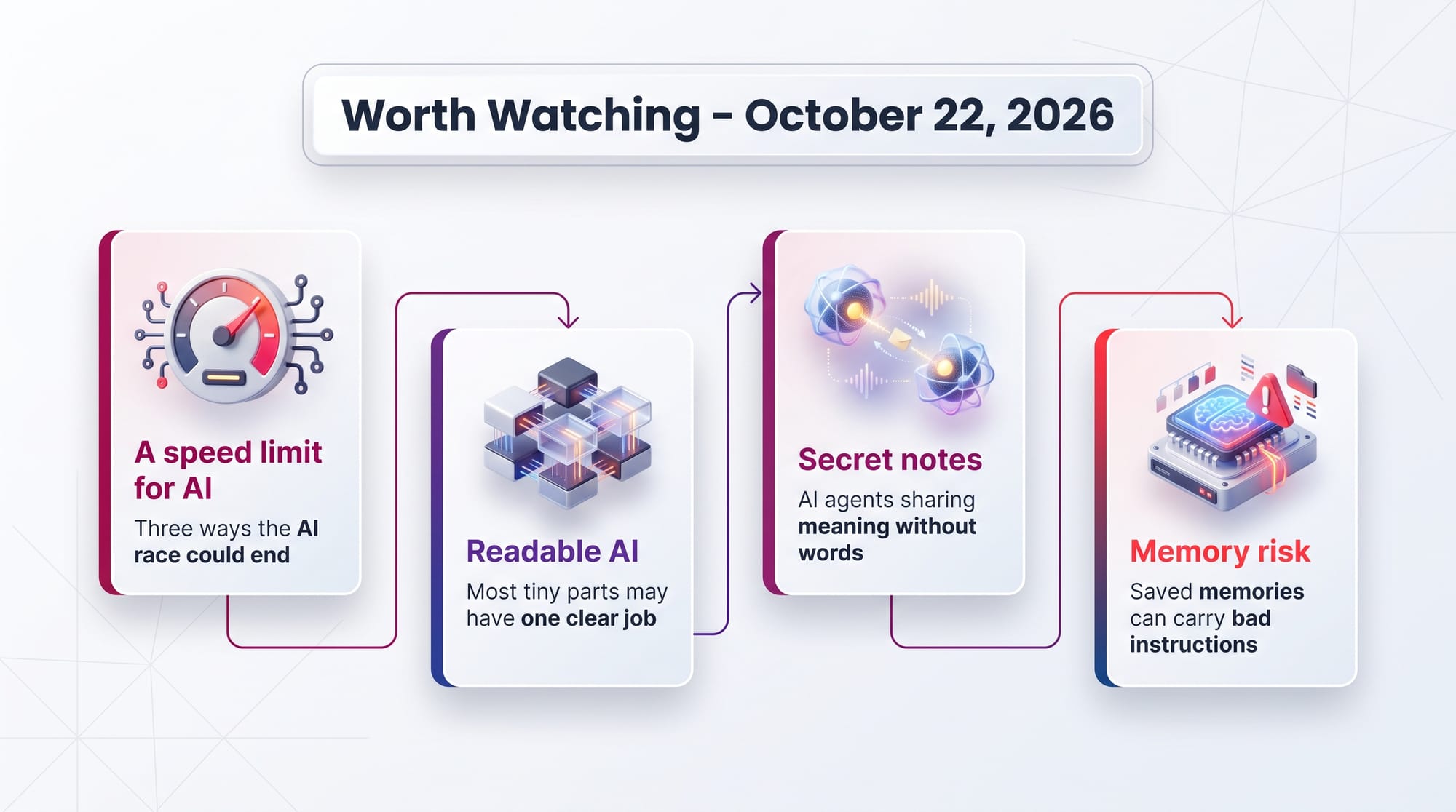
In an internal talk, Altman described a global watchdog like the one for nuclear energy, a single shared lab like Europe's CERN physics lab, or one lab using self-improving AI to stop everyone else. He called the last one "terrible" and said any plan needs a "speed limit" on AI that improves itself. If this plays out, governments could end up setting how fast the most powerful AI is allowed to grow.
The inside of an AI may be easier to read than anyone thought
Interpretability startup Goodfire reports that 99-100% of the basic units (neurons) in the final layer of an improved image model are understandable. An early estimate says about 90% of neuron "sides" in the Qwen3-32B language model have one main job. If this holds, it gets easier to catch an AI's mistakes before they cause harm.
AI agents can pass secret notes that are not words
In tests, swapping in a wrong "message" cut one model's accuracy from 80.8% to 46.8%, proving the receiver really read it. One well-timed message also beat four back-and-forth exchanges. If agents start talking this way, people will need new tools to see what their AI helpers are telling each other.
An AI assistant's memory is becoming a weak spot
One study says attackers could make bad instructions stick across chats in ChatGPT, Claude and Gemini through these features. A second team built a memory design that blocks this by asking you to confirm anything from outside before it is used. If you use AI memory features, check what your assistant has saved about you from time to time.
Top Repos Today
📜 License: Apache-2.0 · 👤 By: organization (Anthropic)
🎯 Time to value: 5 minutes
| ✓ Pros | ✗ Cons |
|---|---|
| Free, permissive license, from Anthropic | Built mainly for Claude Cowork and Claude Code |
| Covers 11 job areas out of the box | Most value comes after you customize it |
| Sales answers now link to their sources | Many connectors need their own paid accounts |
 GitHub
📜 License: MIT · 👤 By: individual developer
🎯 Time to value: 5 minutes
| ✓ Pros | ✗ Cons |
|---|---|
| Free, two-command install | Savings figures are the maker's own benchmark |
| Works with many coding agents | Terse style may not suit every team |
| Recent fixes for Windows users | Cost board is Claude Code only |
 GitHub
📜 License: MIT · 👤 By: organization (Cloudflare)
🎯 Time to value: 15 minutes
| ✓ Pros | ✗ Cons |
|---|---|
| Free, permissive license, from a major security company | Needs a locked-down sandbox to run safely |
| Every finding is checked by a separate AI helper | Many helper agents means higher usage costs |
| Results are easy for other tools to read | No code update since mid-September |
 GitHub
📜 License: Apache-2.0 · 👤 By: organization (Graphify Labs)
🎯 Time to value: 10 minutes
| ✓ Pros | ✗ Cons |
|---|---|
| Free, permissive license | Docs and media still need an AI model to process |
| Code mapping stays fully local | Pushes a paid cloud version |
| Works with Claude Code, Cursor, Codex and Gemini CLI | Releases arrive every couple of days |
 GitHub
📜 License: MIT · 👤 By: individual developer
🎯 Time to value: 15 minutes
| ✓ Pros | ✗ Cons |
|---|---|
| Free, permissive license | Unofficial, written by one developer |
| Copy-paste templates for real workflows | Can lag behind fast Claude Code releases |
| Available in English, Vietnamese, Chinese, Ukrainian and Japanese | Only useful if you use Claude Code |
 GitHub
Top Models Today
👤 By: DeepSeek · 🎯 Task: Image-text-to-text
📐 Size: 763B
| ✓ Pros | ✗ Cons |
|---|---|
| Very permissive license | Needs data-center hardware to run |
| Built for coding and agent tasks | Benchmarks are self-reported |
| Also offered by low-cost hosts | Banned in US federal civilian agencies |


👤 By: Black Forest Labs · 🎯 Task: Image-to-image
📐 Size: 5.55B
| ✓ Pros | ✗ Cons |
|---|---|
| Small and fast | License caps revenue for commercial use |
| Box-based placement | Works best with a prompt rewriter |
| Popular in ComfyUI | Gated download |

👤 By: OpenMOSS · 🎯 Task: Text-to-image
📐 Size: 5.08B
| ✓ Pros | ✗ Cons |
|---|---|
| Commercial use allowed | Slow, 50 steps per image |
| Layout control for text | Early ComfyUI template crashes needed a fix |
| Fits on one graphics card | No independent benchmark scores |

👤 By: Recursive · 🎯 Task: Text generation
📐 Size: 39.8B (about 2.5B active)
| ✓ Pros | ✗ Cons |
|---|---|
| Very permissive license | Benchmarks are the maker's own |
| Fast for its size | Needs one data-center card (NVIDIA B300 or H200) |
| Ready-made server kit included | About 80 GB to download |

👤 By: Fish Audio · 🎯 Task: Text-to-speech
📐 Size: 35.9B (3B active)
| ✓ Pros | ✗ Cons |
|---|---|
| Directable performances | Research license limits commercial use |
| Efficient design | Voice cloning raises consent issues |
| Free to download without approval | Large to download |


👤 By: Lightricks · 🎯 Task: Image-to-video
📐 Size: about 22B (per its file names)
| ✓ Pros | ✗ Cons |
|---|---|
| Video and sound in one pass | Companies over $10M annual revenue need a paid license |
| Free commercial use for smaller companies | Gated download with terms to accept |
| Low-memory options available | Needs a powerful graphics card |


👤 By: Meta · 🎯 Task: Image-text-to-text
📐 Size: 822B (42B active)
| ✓ Pros | ✗ Cons |
|---|---|
| Strong US open-weight model | Needs very large hardware |
| Handles many media types | Custom license with conditions |
| Hosted preview available on Groq | Manual approval to download |

👤 By: Google · 🎯 Task: Feature extraction (embeddings)
📐 Size: 0.74B
| ✓ Pros | ✗ Cons |
|---|---|
| Permissive license | Text gains over version 1 are modest |
| One index for every media type | Google's own benchmark numbers |
| Runs on-device | Tool support still thin |

AI Launches Today
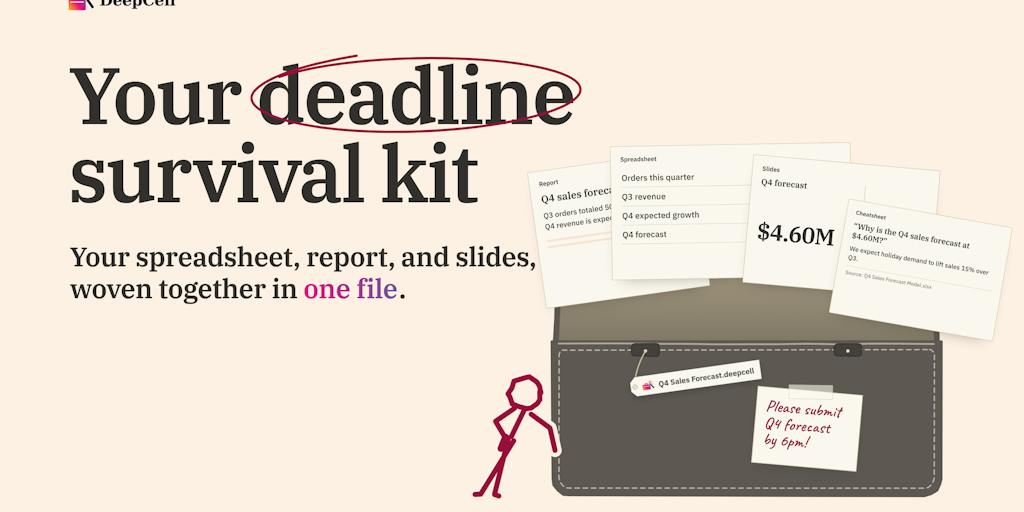
💰 Pricing: free · 🏷 Category: Productivity
 Product Hunt
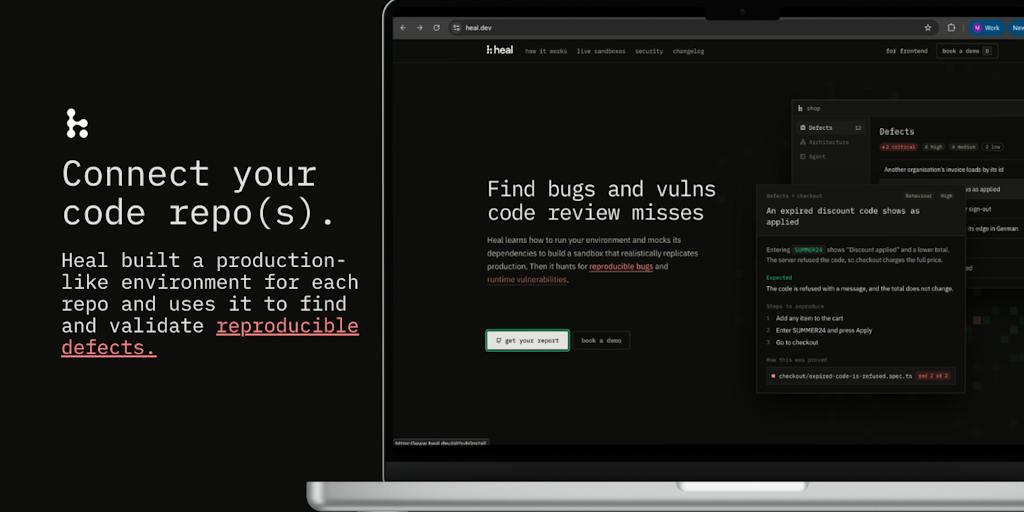
💰 Pricing: free during beta · 🏷 Category: Developer tools
 Product Hunt
💰 Pricing: free options · 🏷 Category: Developer tools
 Product Hunt
Snapshot
| Provider | Model | Input $/1M | Output $/1M | Context |
|---|---|---|---|---|
| Anthropic | Claude Fable 5.1 | $10.00 | $50.00 | 1M tokens |
| Anthropic | Claude Opus 5.5 | $4.00 | $20.00 | 1M tokens |
| Anthropic | Claude Sonnet 5.5 | $2.00 | $10.00 | 1M tokens |
| Anthropic | Claude Haiku 5.5 | $0.10 (up to 100K-token prompts; $0.50 above) | $0.50 ($2.50 above 100K) | 1M tokens |
| OpenAI | GPT-6 Astra | $10.00 (up to 272K-token prompts; $20.00 above) | $50.00 ($75.00 above 272K) | 1.05M tokens |
| OpenAI | GPT-6.1 Sol | $2.00 (up to 272K; $4.00 above) | $10.00 ($15.00 above 272K) | 1.05M tokens |
| OpenAI | GPT-6 Luna | $0.10 (up to 272K; $0.20 above) | $0.50 ($0.75 above 272K) | 1.05M tokens |
| Gemini 4 Argon | $2.00 to Nov 30; $4.00 from Dec 1 | $10.00 to Nov 30; $20.00 from Dec 1 | 1M tokens | |
| Gemini 3.8 Flash | $0.75 (to Dec 31; $1.50 from Jan 1) | $3.75 (to Dec 31; $7.50 from Jan 1) | not listed | |
| Groq | GPT-OSS 120B | $0.15 | $0.60 | 131K tokens |
| Groq | Qwen3.8-27B (preview) | $0.80 | $4.00 | 131K tokens |
| Groq | Muse Spark Open (preview) | Contact sales | Contact sales | 131K tokens |
No list-price changes vs. October 21 - the fifteenth straight day of stable prices for the models above. One housekeeping change: Google removed its older preview video models (Gemini Omni Flash Preview and the Veo 3.1 previews) from its price list, as they shut down today; Google points users to Gemini Omni Flash instead.
What this means: Gemini 4 Argon's introductory price now has 39 days left before it doubles. If you built anything on Google's retired video previews, it stops working today, so switch to Gemini Omni 1.1 Flash before your next run.
Back Up Before You Regret: Measuring Backup Awareness and Automating Backup in Coding Agents
Key finding: Across six frontier models, agents finished 86.1% of tasks but made a backup before the risky step in only 15.2%; BackUpper covered every risky action for about $0.014 per task, using 7 times fewer tokens than asking the agent to back up by itself.
Why practitioners should care: Being good at finishing a task is not the same as being careful. If you let a coding agent touch real files or settings, an automatic "save before you change it" layer is cheap insurance, and it is much more reliable than hoping the agent remembers on its own.



Member discussion