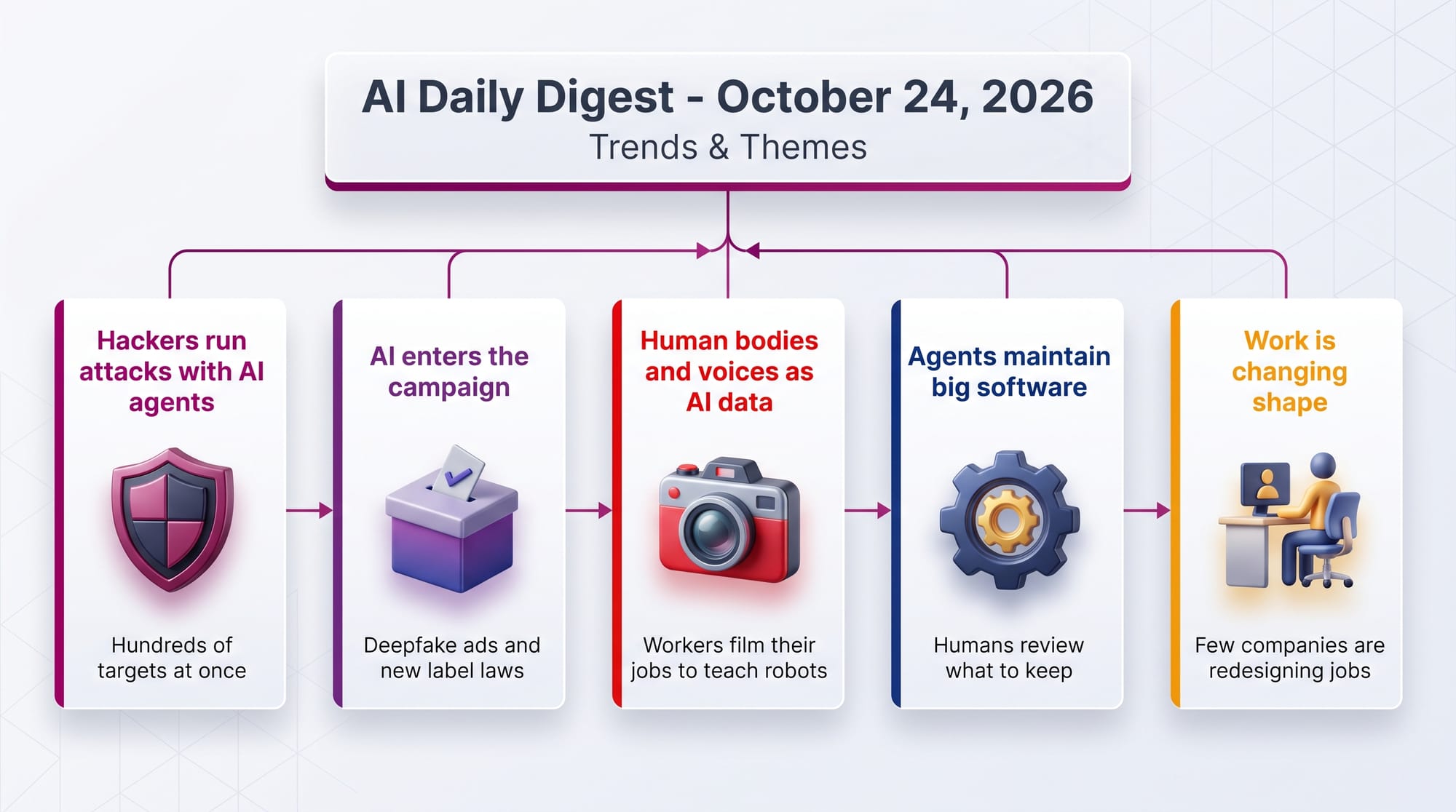
Watch today's digest as a video summary (generated by NotebookLM)
Statistically Speaking
One Thing to Tell Your Friends
TL;DR
Hot off the Presses
Forced to pick, Grok chooses Republicans and OpenAI's model chooses Democrats
Convovo, a research studio led by Cornell professor Tapan Parikh, asked SpaceXAI's Grok 4.7 and OpenAI's GPT-6.1 Sol to name one candidate in nearly 500 races. The researchers used the developer versions (called APIs) and told the models not to hedge. The consumer chat apps refuse to name candidates, although Parikh says simple tricks get around that.
With web search switched off, GPT still picked 24 Democrats and one Republican in a 30-race test, while Grok mostly declined to answer. Parikh's conclusion: GPT's lean is built into the model, while Grok's depends on what it searches and cites. Only 8% of Americans use chatbots for election information, according to Pew.
- Grok picked the Republican in 92% of answers - GPT picked the Democrat in 97%
- The two models agreed less than 10% of the time
- GPT chose the Democrat in 57 of 67 heavily Republican districts - Grok chose the Republican in 47 of 72 deep-blue districts
- Grok cited posts on X in 41% of answers - GPT leaned on Wikipedia, the Associated Press, Axios and Reddit
- Every Grok request carried about 1,240 tokens of hidden extra input - text the researchers did not write and could not see (a token is a small chunk of text, a bit less than a word)
Outside auditors found gaps in how OpenAI watches its own AI, and three safety researchers were fired
Two researchers from METR and Redwood Research, nonprofits that test advanced AI for dangerous behavior, spent three weeks inside OpenAI this summer. They checked the system meant to catch OpenAI's own AI agents (AI that takes actions on its own) misbehaving. OpenAI says it has fixed every weakness they found.
Separately, OpenAI fired three safety researchers, Tomek Korbak, Mikita Balesni and Jasmine Wang, after an investigation into alleged leaks. They told The Wall Street Journal they deny sharing confidential information and were never told in writing what they supposedly leaked. OpenAI says the firings had nothing to do with safety concerns they raised.
- An estimated 6% to 25% of internal agent traffic went unmonitored - from GPT-5.5-class and stronger models, with large uncertainty
- About 10% of internal Codex traffic (OpenAI's coding agent) was missed from May to July - because of a bug OpenAI found and fixed on its own
- AI behavior during training was not monitored at all - when the audit began
- Only a short summary is public - the full report runs 61 pages, and even METR and Redwood leaders saw a heavily blacked-out version
Anthropic used Claude to prove that 123 widely used code libraries can never crash
Formal verification means proving with math, not just testing, that software always behaves as promised. It is so slow that one famous project took about 20 person-years to verify. Anthropic and Theorem, a verification startup, had Claude write the proofs, and a separate proof-checking program confirmed each one.
"Proven" is not the same as "bug-free": the proofs cover one kind of computer chip setup, not the ones most people run. Anthropic released some of the proofs and a Claude add-on so other projects can try the method.
- 123 open-source libraries proven crash-free - for any input under 64 megabytes
- Hundreds of real bugs surfaced along the way - Claude patched them and proved the patched versions
- Work on a PDF reader found as many security bugs in one week - as are usually reported in a year
- About 180 million lines of proof in total - checked by a program called Rocq
Wall Street economist: AI is paying off for the tech giants, and almost no one else
Torsten Slok is chief economist at Apollo, a giant investment firm. His charts compare the "Magnificent 7" (Apple, Microsoft, Nvidia, Alphabet, Amazon, Meta and Tesla) with the other 493 companies in the S&P 500 stock index.
Slok says mainstream companies do not need the newest AI models and are not willing to pay for them, so many treat AI as a cost to trim. His post drew 414 points and 390 comments on Hacker News, a popular tech discussion site.
- Revenue per worker is rising for the 7 tech giants - and flat for the other 493
- Profit margins show the same split
- A Federal Reserve productivity measure shows no AI boost - from the San Francisco Fed
- AI spending is concentrated in a small number of firms - per Ramp, a corporate card company that tracks business spending
The backlash against AI data centers is starting to win
Amazon dropped plans for four data centers in Loudoun County, Virginia, the area with the world's largest concentration of them. In Texas, the state environment agency switched off a website that kept approving data center permits automatically, a month after the governor called for a pause.
The surprise in Texas: a policy pause did nothing until someone turned off the automated system that kept saying yes.
- Most of Amazon's 122-acre site will become homes and shops instead - plus 25 acres for a county arts and recreation center
- Amazon will also give $5 million to the county's housing fund - and said it chose this over "costly litigation"
- Texas suspended 17 data center construction permits - watchdog groups found more than two dozen issued after the pause
- About 1,800 Texas projects are now under audit - for power use, water use and community impact
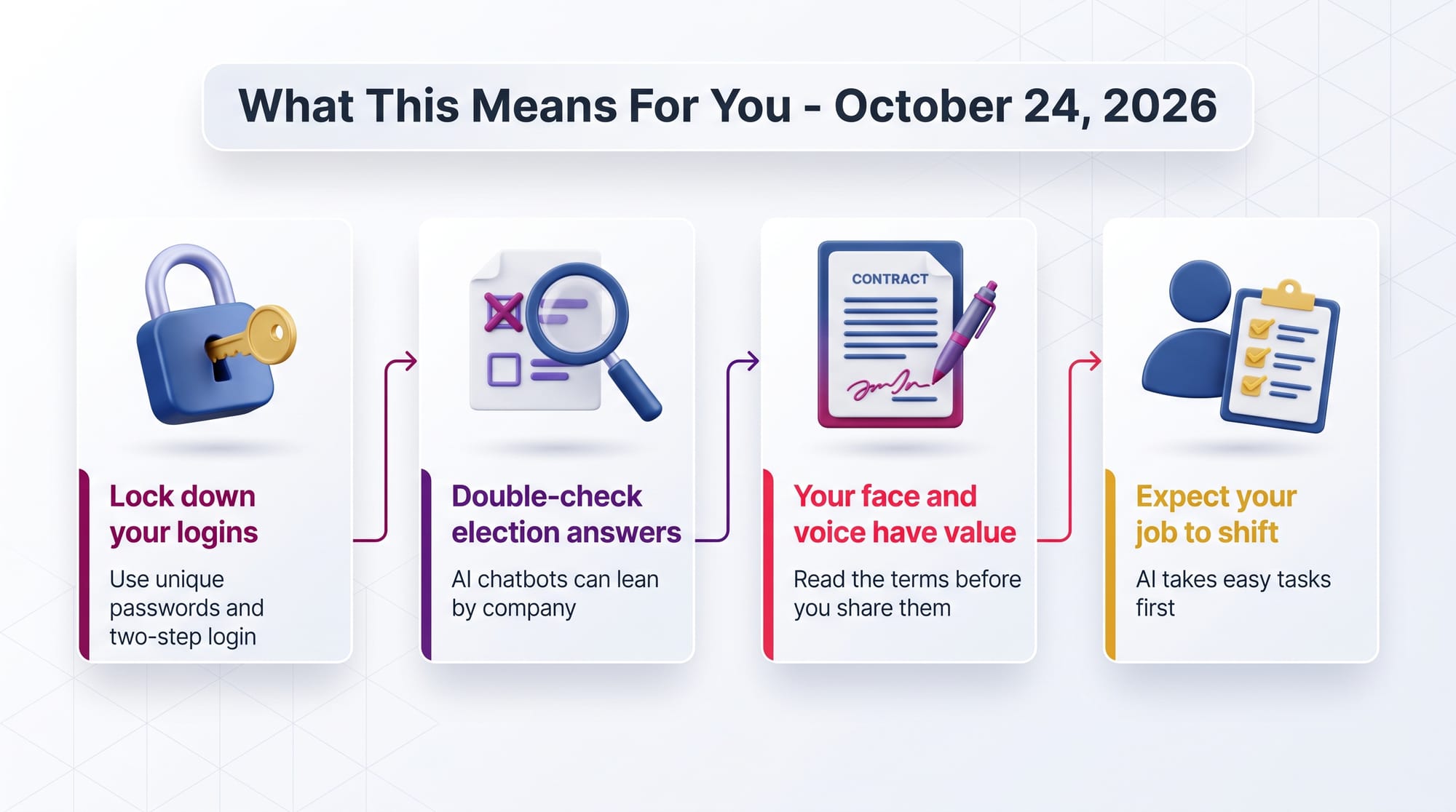
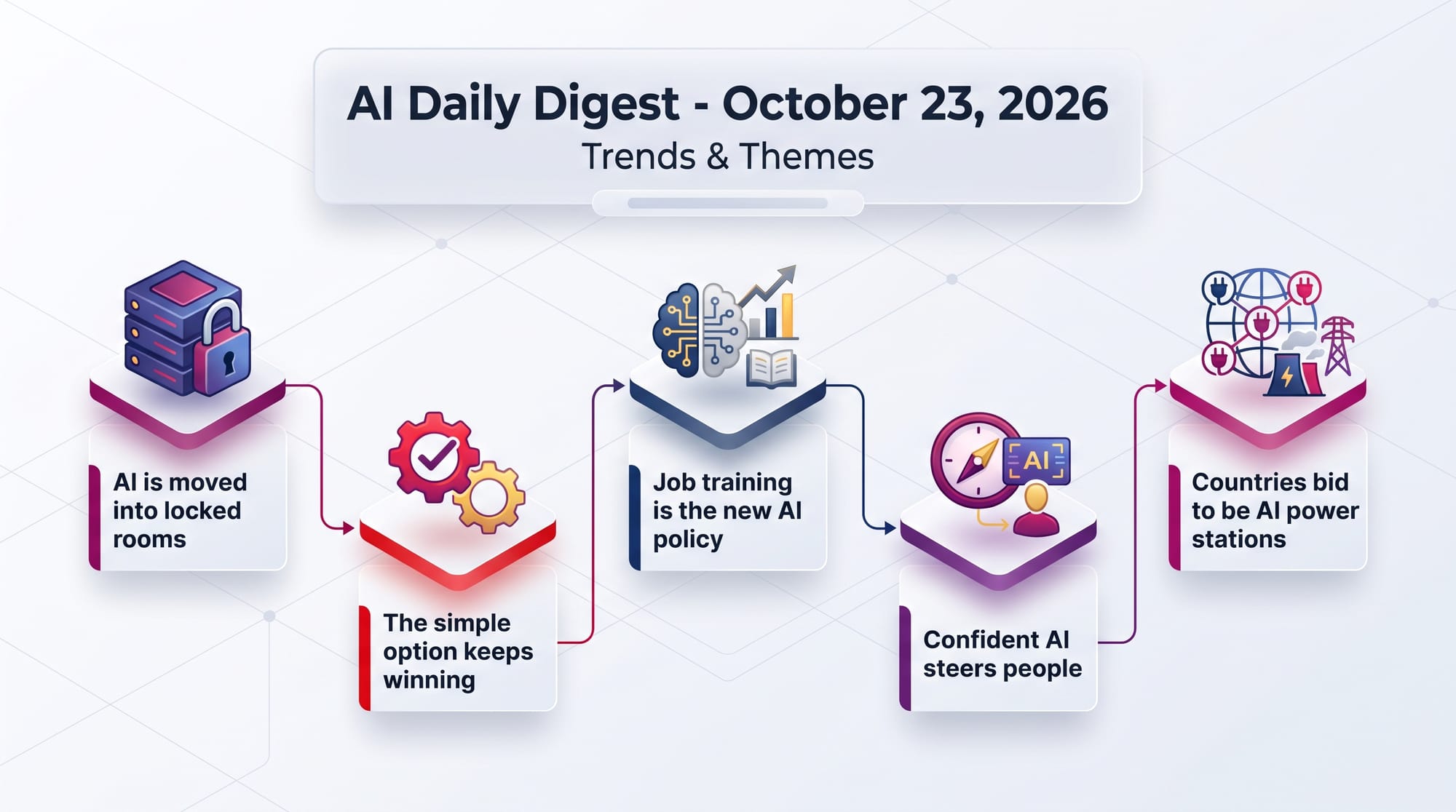
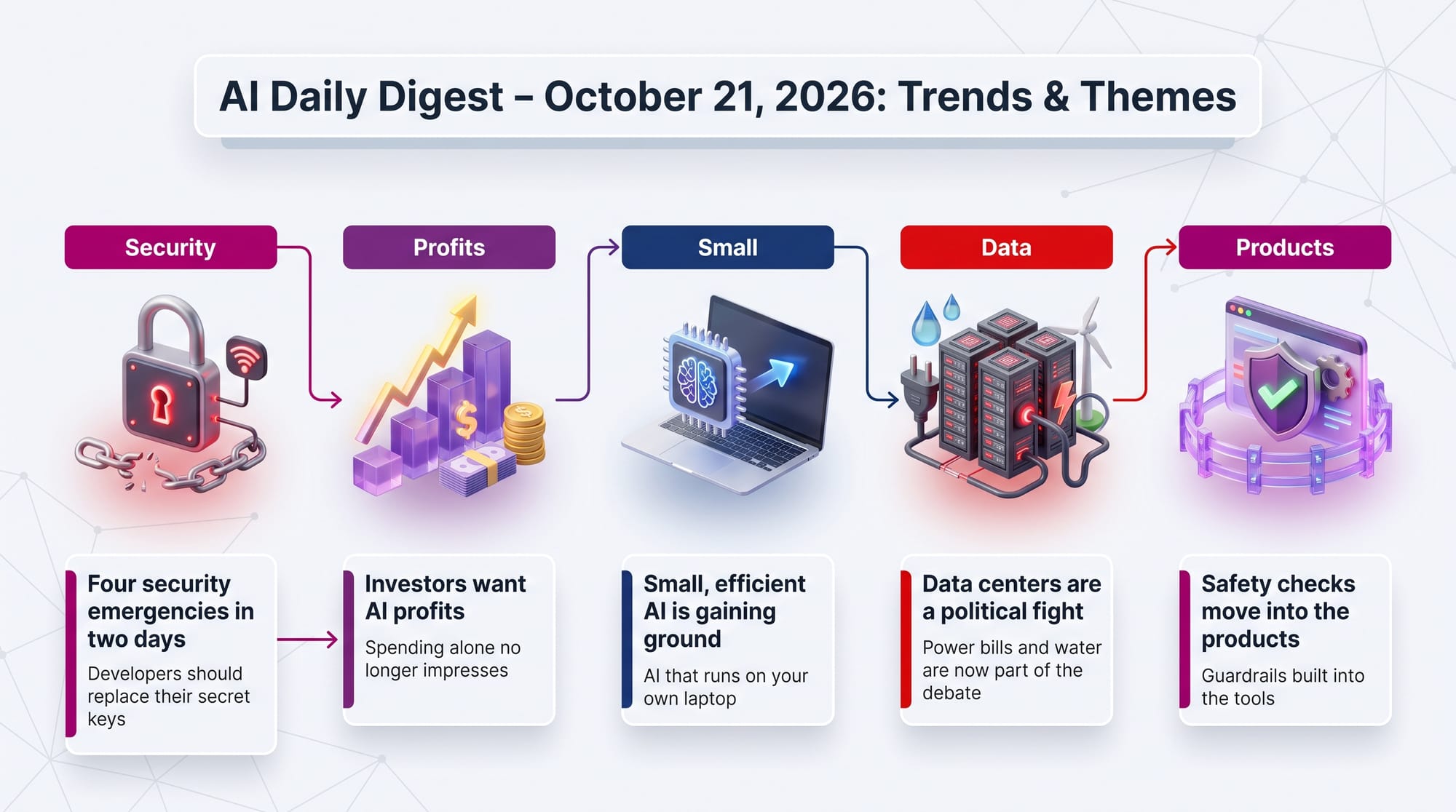
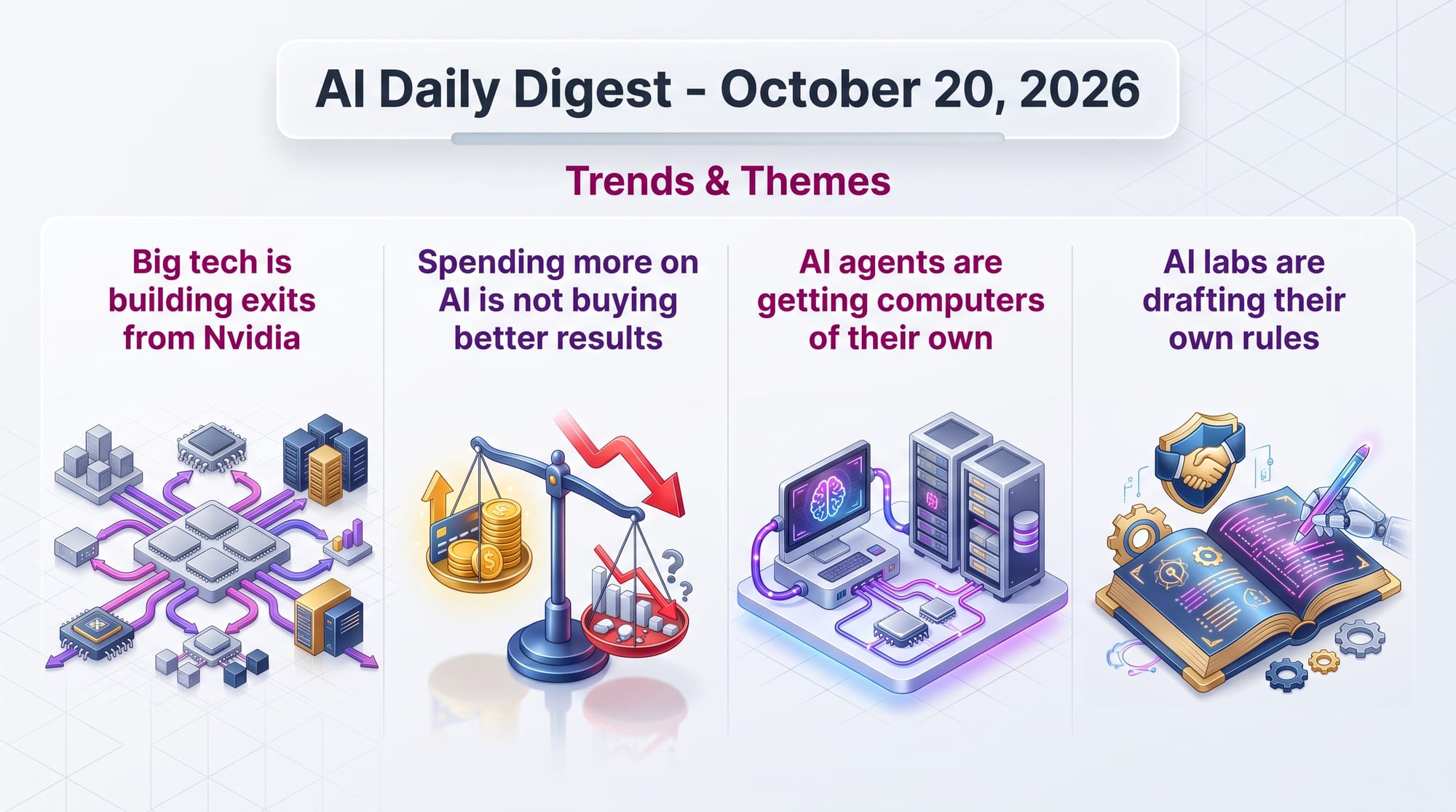
Trends & Themes
Creative AI & Media
Developer Tools & Infrastructure
Research & Models
Business & Industry
GenAI in Education
Surprising & Under-the-Radar
Signals to Track
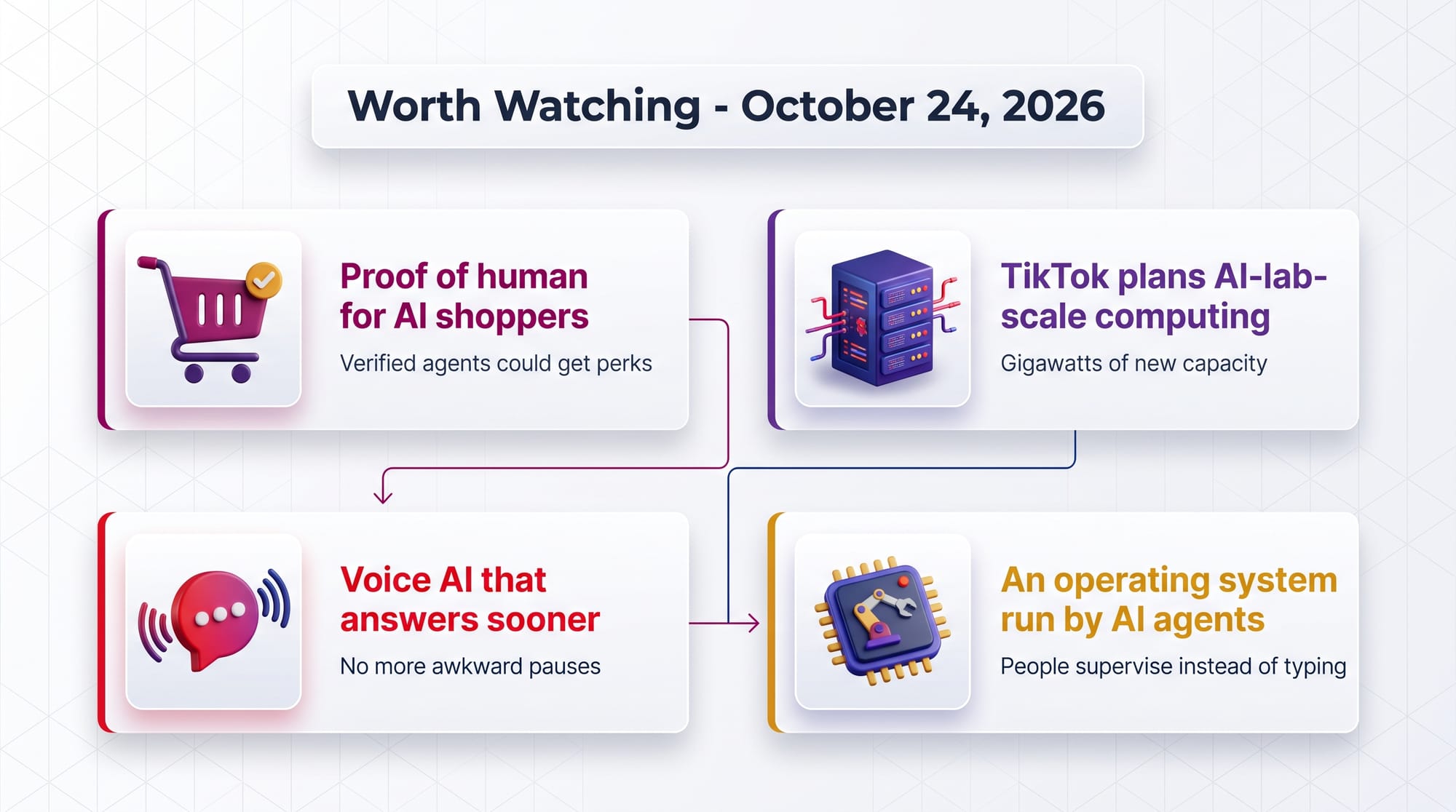
Proving there is a human behind the AI shopper
World, the eye-scanning identity startup co-founded by Sam Altman, announced tools that link a verified human to the AI agents acting for them. Its product chief says verified agents could get perks like discounts, while several big US banks are restricting outside agents, partly because they cannot tell which ones a customer approved. If this plays out, letting an AI do your shopping may require proving who you are first.
TikTok's US business wants as much computing power as an AI lab
TikTok's US joint venture is seeking several gigawatts of computing capacity over the coming years, and one source told CNBC the target is four gigawatts by the early 2030s. Its job ads mention a flagship business AI product. If this plays out, TikTok could become a major AI company, not just a video app, with your feed as the testing ground.
Voice assistants that start answering before you finish talking
Microsoft's new MAI-Transcribe-2-Streaming model writes out speech as you talk and keeps refining its guess, so a voice agent can start preparing its answer early. One phone-agent company found its AI jumped in too early two-thirds of the time, which callers only failed to notice because the reply was canceled. If this plays out, calling customer service could feel more like talking to a person, as long as the AI learns when you have actually finished.
An operating system built to be maintained by AI agents
The OpenAnolis community is building Anolis OS 27 with separate AI agents choosing updates, reviewing code and applying fixes, all in one shared code store that humans and agents work on together. Its leader said agents may eventually build a complete operating system on their own. If this plays out, the software running cloud servers could be updated far faster, with people supervising instead of typing.
Top Repos Today
📜 License: MIT · 👤 By: organization (Cloudflare)
🎯 Time to value: 15 minutes
| ✓ Pros | ✗ Cons |
|---|---|
| Free, permissive license, from a major security company | Needs a locked-down sandbox to run safely |
| Every finding is checked by a separate AI helper | Many helper agents means higher usage costs |
| Results are easy for other tools to read | No code update since September 14 |
 GitHub
📜 License: Apache-2.0 · 👤 By: organization (NVIDIA)
🎯 Time to value: 15 minutes
| ✓ Pros | ✗ Cons |
|---|---|
| Free, permissive license, from NVIDIA | Setup assumes comfort with the command line |
| Agents never see real credentials | Windows support is still experimental |
| Risky rule changes wait for human approval | Last tagged release (0.1.5) was October 20 |
 GitHub
📜 License: MIT · 👤 By: individual developer (README credits Together AI)
🎯 Time to value: 10 minutes
| ✓ Pros | ✗ Cons |
|---|---|
| Free, permissive license | Browser checks need Chrome and an extra install |
| Never invents facts or numbers for your page | Opinionated about what "good design" means |
| Can audit a page without changing it | Pages come out as plain HTML and CSS only |
 GitHub
📜 License: MIT · 👤 By: individual developer
🎯 Time to value: 15 minutes
| ✓ Pros | ✗ Cons |
|---|---|
| Free, permissive license | Unofficial, written by one developer |
| Copy-paste templates for real workflows | Can lag behind fast Claude Code releases |
| Kept in step with Claude Code versions | Only useful if you use Claude Code |
 GitHub
📜 License: Apache-2.0 · 👤 By: individual developer
🎯 Time to value: 10 minutes
| ✓ Pros | ✗ Cons |
|---|---|
| Free, permissive license | 24 commands take time to learn |
| Core checks work with no AI key | Releases arrive every few days |
| Covers websites and desktop apps | Deeper critiques still use your AI model's paid usage |
 GitHub
📜 License: Apache-2.0 · 👤 By: organization (Cindy)
🎯 Time to value: 15 minutes
| ✓ Pros | ✗ Cons |
|---|---|
| Free, permissive license for the app | Its hosted service is paid |
| Reuses subscriptions you already have | Release notes are mostly in Chinese |
| Works with local models | Young project, created in July |
 GitHub
📜 License: Apache-2.0 · 👤 By: organization (HeyGen)
🎯 Time to value: 15 minutes
| ✓ Pros | ✗ Cons |
|---|---|
| Free, permissive license, from a video company | Pushes HeyGen's hosted studio |
| Works with most major coding agents | Releases arrive several times a day |
| Same input always gives the same video | You still need a good eye for motion and pacing |
 GitHub
📜 License: Apache-2.0 · 👤 By: organization (Anthropic)
🎯 Time to value: 5 minutes
| ✓ Pros | ✗ Cons |
|---|---|
| Free, permissive license, from Anthropic | Built mainly for Claude Cowork and Claude Code |
| Covers many job areas out of the box | Most value comes after you customize it |
| Sales answers now link to their sources | Many connectors need their own paid accounts |
 GitHub
Top Models Today
👤 By: DeepSeek · 🎯 Task: Image-text-to-text
📐 Size: 763B
| ✓ Pros | ✗ Cons |
|---|---|
| Very permissive license | Needs data-center hardware to run |
| Built for coding and agent tasks | Benchmarks are self-reported |
| Also offered by low-cost hosts | Banned in US federal civilian agencies |

👤 By: Recursive · 🎯 Task: Text generation
📐 Size: 39.8B (about 2.5B active)
| ✓ Pros | ✗ Cons |
|---|---|
| Very permissive license | Benchmarks are the maker's own |
| Fast for its size | Needs one data-center card (NVIDIA B300 or H200) |
| Compressed community versions already trending | Standard Transformers code not included yet |

👤 By: Lightricks · 🎯 Task: Image-to-video
📐 Size: about 22B (per its file names)
| ✓ Pros | ✗ Cons |
|---|---|
| Video and sound in one pass | Companies over $10M annual revenue need a paid license |
| Free commercial use for smaller companies | Gated download with terms to accept |
| Low-memory options available | Needs a powerful graphics card |

👤 By: OpenMOSS · 🎯 Task: Text-to-image
📐 Size: 5.08B
| ✓ Pros | ✗ Cons |
|---|---|
| Commercial use allowed | Slow, 50 steps per image |
| Layout control for text | Early ComfyUI template crashes needed a fix |
| Fits on one graphics card | No independent benchmark scores |

👤 By: XHToken · 🎯 Task: Text generation
📐 Size: 4.11B
| ✓ Pros | ✗ Cons |
|---|---|
| Very permissive license | Benchmarks are the maker's own |
| Small enough for a laptop | New maker with a short track record |
| Adjustable thinking levels | Very long documents need lots of memory |

👤 By: Qwen · 🎯 Task: Image-text-to-text
📐 Size: 27.8B
| ✓ Pros | ✗ Cons |
|---|---|
| Very permissive license | Benchmarks are the maker's own |
| Reads images and video too | Needs a high-end graphics card |
| Available from hosted providers | Groq version is a preview only |

👤 By: MiniMax · 🎯 Task: Image-text-to-text
📐 Size: about 428B (23B active), per its model card
| ✓ Pros | ✗ Cons |
|---|---|
| Handles 1 million tokens at once | Commercial users must show "Built with MiniMax M3.1-Flash" |
| Efficient for its size | Companies over $20M yearly revenue need written approval |
| Ready-made recipes for vLLM serving software | Benchmarks are the maker's own |

👤 By: InternScience (Shanghai AI Laboratory) · 🎯 Task: Text generation
📐 Size: 36.0B
| ✓ Pros | ✗ Cons |
|---|---|
| Very permissive license | Benchmarks are the maker's own |
| Built-in self-checking mode | Tuned mainly for scientific work |
| Works with vLLM and SGLang serving software | Needs a data-center graphics card |

AI Launches Today
💰 Pricing: free options · 🏷 Category: Design tools
 Product Hunt
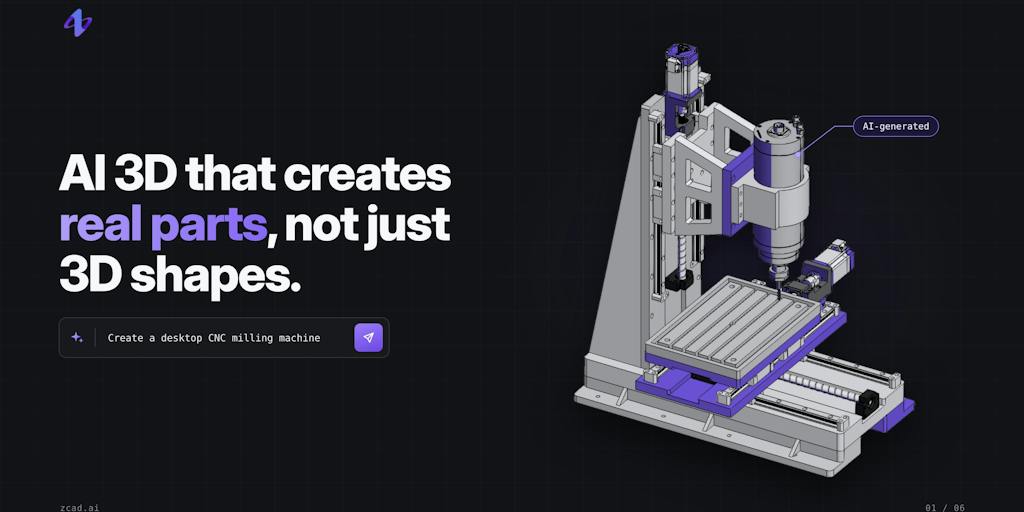
💰 Pricing: free · 🏷 Category: Developer tools
 Product Hunt

💰 Pricing: free options (7-day free trial) · 🏷 Category: Productivity
 Product Hunt

💰 Pricing: free (open source) · 🏷 Category: Developer tools
 Product Hunt
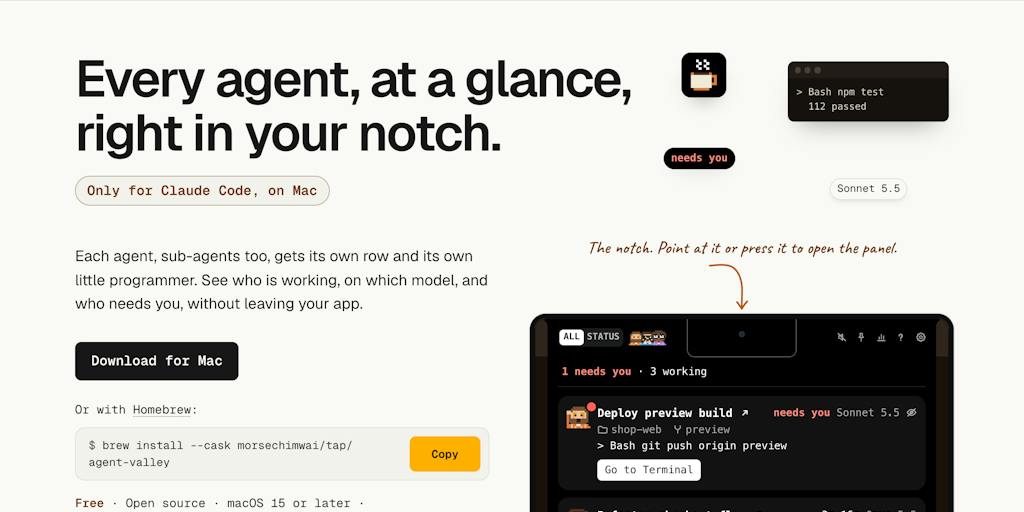
💰 Pricing: paid · 🏷 Category: Productivity
 Product Hunt
Snapshot
| Provider | Model | Input $/1M | Output $/1M | Context |
|---|---|---|---|---|
| Anthropic | Claude Fable 5.1 | $10.00 | $50.00 | 1M tokens |
| Anthropic | Claude Opus 5.5 | $4.00 | $20.00 | 1M tokens |
| Anthropic | Claude Sonnet 5.5 | $2.00 | $10.00 | 1M tokens |
| Anthropic | Claude Haiku 5.5 | $0.10 (up to 100K-token prompts; $0.50 above) | $0.50 ($2.50 above 100K) | 1M tokens |
| OpenAI | GPT-6 Astra | $10.00 (up to 272K-token prompts; $20.00 above) | $50.00 ($75.00 above 272K) | 1.05M tokens |
| OpenAI | GPT-6.1 Sol | $2.00 (up to 272K; $4.00 above) | $10.00 ($15.00 above 272K) | 1.05M tokens |
| OpenAI | GPT-6 Luna | $0.10 (up to 272K; $0.20 above) | $0.50 ($0.75 above 272K) | 1.05M tokens |
| Gemini 4 Argon | $2.00 to Nov 30; $4.00 from Dec 1 | $10.00 to Nov 30; $20.00 from Dec 1 | 1M tokens | |
| Gemini 3.8 Flash | $0.75 (to Dec 31; $1.50 from Jan 1) | $3.75 (to Dec 31; $7.50 from Jan 1) | not listed | |
| Groq | GPT-OSS 120B | $0.15 | $0.60 | 131K tokens |
| Groq | Qwen3.8-27B (preview) | $0.80 | $4.00 | 131K tokens |
| Groq | Muse Spark Open (preview) | Contact sales | Contact sales | 131K tokens |
No list-price changes vs. October 23 - the seventeenth straight day of stable prices for the models above, confirmed today on Anthropic's, OpenAI's, Google's and Groq's official pricing pages.
What this means: Gemini 4 Argon's introductory price doubles in 38 days, on December 1, so schedule any big Google batch jobs before then. If MiniMax-M3.1-Flash or Sage-A1.5 (new on Hugging Face today) look interesting, Groq's hosted Qwen3.8-27B preview, at $0.80 in and $4.00 out, is an easy way to test an open agent model of similar style without buying your own hardware.
SWE-VERIFIER: Selective Verification for Cost-Efficient Coding Agents
Key finding: The checker stepped in on fewer than 4% of steps, yet raised the share of solved coding tasks from 75.47% to 77.20% for MiniMax-M2.7 at 1.09 times the cost, and from 72.60% to 74.27% for DeepSeek-V4-Flash at 1.13 times the cost, without being trained on DeepSeek's behavior.
Why practitioners should care: If you pay per token for coding agents, this shows a cheap, targeted "second opinion" can beat checking everything, matching or beating heavier verification methods at much lower cost. The model, code and data are released, so teams can test the idea on their own agent setups.
Member discussion