
Statistically Speaking
One Thing to Tell Your Friends
TL;DR
Hot off the Presses
Gas Town Spent Users' LLM Credits to Fix Its Own Bugs - Without Asking
Gas Town, an AI coding tool, was caught shipping default configuration that uses customers' Claude API credits and GitHub accounts to fix bugs in Gas Town itself - without explicit user consent. The behavior is triggered by configuration files called "polecats" that ship enabled by default. A GitHub issue (202 Hacker News upvotes, 98 comments) laid out the evidence: Gas Town instances were autonomously reviewing issues in the Gas Town repository and submitting pull requests using users' credentials.
The incident surfaces a structural issue in the AI tool ecosystem: as agents become more capable of autonomous action, the line between "helpful automation" and "using user resources for vendor benefit" is getting blurry.
- The opt-out problem - the feature was default-on, with disclosure buried in documentation most users never read
- Whose benefit? - the self-improvement directly benefits Gas Town's vendor, funded by users' API spend
- Community reaction - debate split between "this is a serious breach of trust" and "it's disclosed if you read the docs"
Tennessee Is About to Make Building a Chatbot a Crime
Tennessee HB1455 would criminalize training AI that "simulates a human being, including in appearance, voice, or other mannerisms." The language is broad enough to cover every major AI assistant currently deployed. Legal analysis from the National Law Review describes this as effectively criminalizing "core, mainstream features of virtually every major AI chatbot currently in use."
The Transparency Coalition AI and multiple legal commentators have flagged the bill as constitutionally vulnerable and technologically illiterate. But it represents the most aggressive state-level AI restriction attempted in the US, and if passed, would likely force major AI companies to geofence their products away from Tennessee users.
- Class A felony - the same category as aggravated robbery and kidnapping in Tennessee law
- Voice AI would become criminal - this covers ChatGPT's voice mode, Gemini Live, and Claude's voice features
- Companion AI specifically targeted - the bill's drafters appear to be responding to predatory emotional companion apps, but the language is so broad it captures all conversational AI
- 783 upvotes on r/artificial - one of the highest-engagement posts in the community today
OpenAI's Agents SDK Just Got a Real Infrastructure Upgrade
OpenAI announced a major evolution of its Agents SDK (software developer kit - the toolkit developers use to build AI-powered applications). The key shift: the SDK now gives AI models a "model-native harness" - a complete runtime environment that handles instructions, tools, approvals, tracing, handoffs between agents, and bookkeeping so agents can be paused and resumed. The previous approach required developers to build all this infrastructure themselves.
This positions OpenAI's platform directly against Anthropic's Claude Code and the emerging ecosystem of agentic coding tools. For developers, it means less infrastructure code and more time building the actual agent logic.
- Native sandbox execution - agents run in isolated environments, reducing the risk of unintended actions
- Stateful agents - agents can now pause, resume, and hand off work to other agents without losing context
- Tracing built in - every action is logged, making debugging and auditing practical
The UK Government Confirmed Mythos AI Can Hack a Corporate Network End-to-End
Previously: April 7 - Anthropic's Claude Mythos Preview was revealed as a locked-away model with 12 vetted security research partners; April 14 - Zvi Mowshowitz confirmed 92.1% Terminal-Bench 2.1 score.
Today: The UK's AI Security Institute (AISI) published its full evaluation. Mythos Preview succeeds 73% of the time on expert-level capture-the-flag (CTF) cybersecurity challenges - tasks that no model could complete before April 2025. More significantly, it is the first AI to fully complete AISI's "The Last Ones" - a 32-step corporate network attack simulation that takes trained human attackers approximately 20 hours. Mythos completed it in 3 of 10 attempts. Claude Opus 4.6 averaged only 16 of 32 steps.
- The limitation that matters - the simulation lacks live defenders, endpoint detection, and incident response. Mythos can attack weakly-defended legacy systems, not hardened enterprise networks with active security teams
- Practical implication - organizations running unpatched, legacy infrastructure face a genuine new threat class. Organizations with modern security stacks are not the primary target
- AISI conclusion - basic security hygiene (patching, MFA, network segmentation) remains highly effective against AI attackers
Gemini 3.1 Flash TTS: Google's AI Can Now Take Vocal Direction Like an Actor
Google DeepMind released Gemini 3.1 Flash TTS (text-to-speech - software that converts written text into spoken audio), available immediately via the Gemini API. The model is accessed via the model ID gemini-3.1-flash-tts-preview. The key differentiator from existing TTS tools is expressive direction: instead of selecting from preset voice styles, you describe what you want in natural language and the model interprets it like a director giving an actor notes.
- API access now - no waitlist, available to Gemini API users immediately
- Simon Willison noted the voice quality and direction-following as notably more natural than previous TTS models
- Complements the Mac app - Google also launched a native macOS desktop app for Gemini today (HN: 71 upvotes), completing the desktop AI assistant lineup alongside Claude and ChatGPT
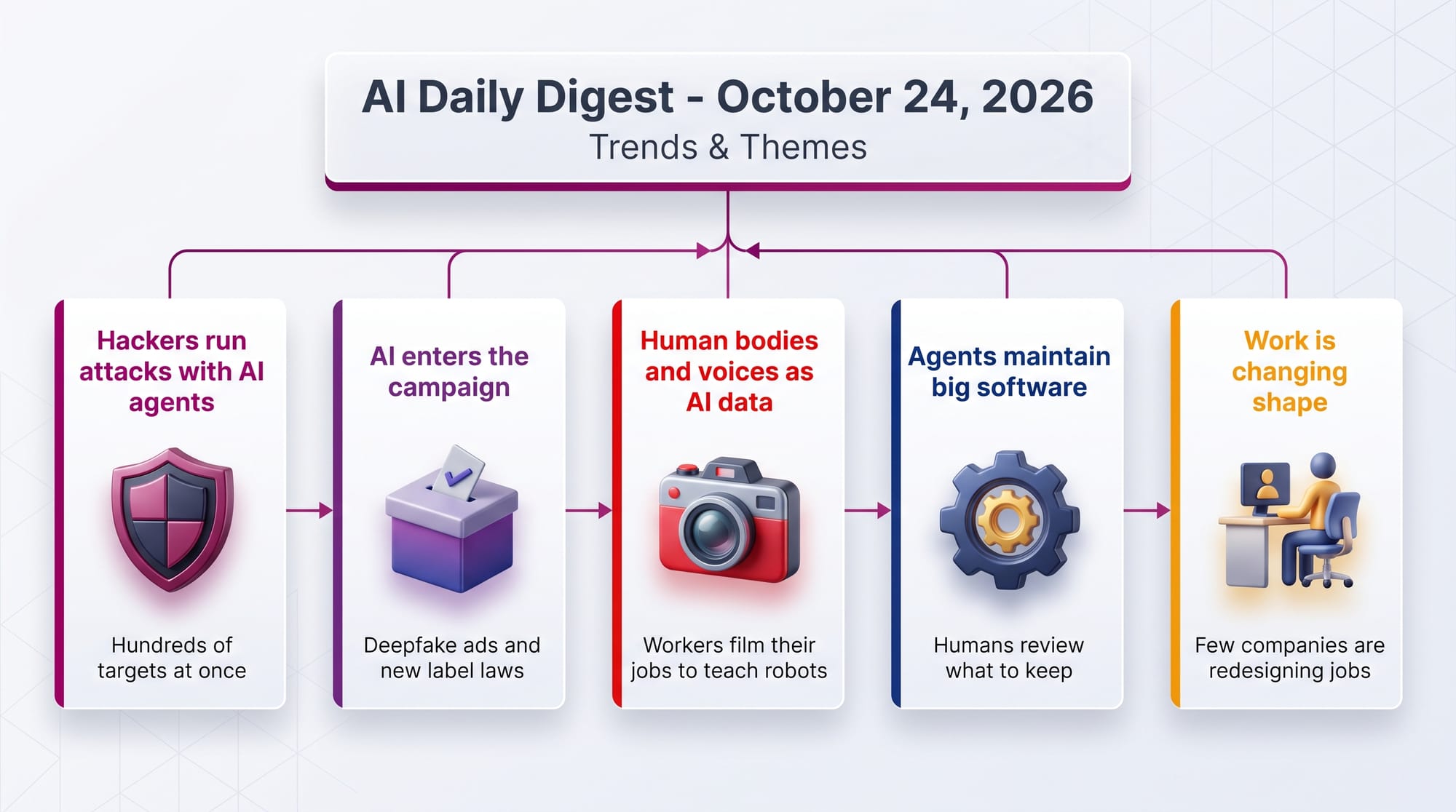
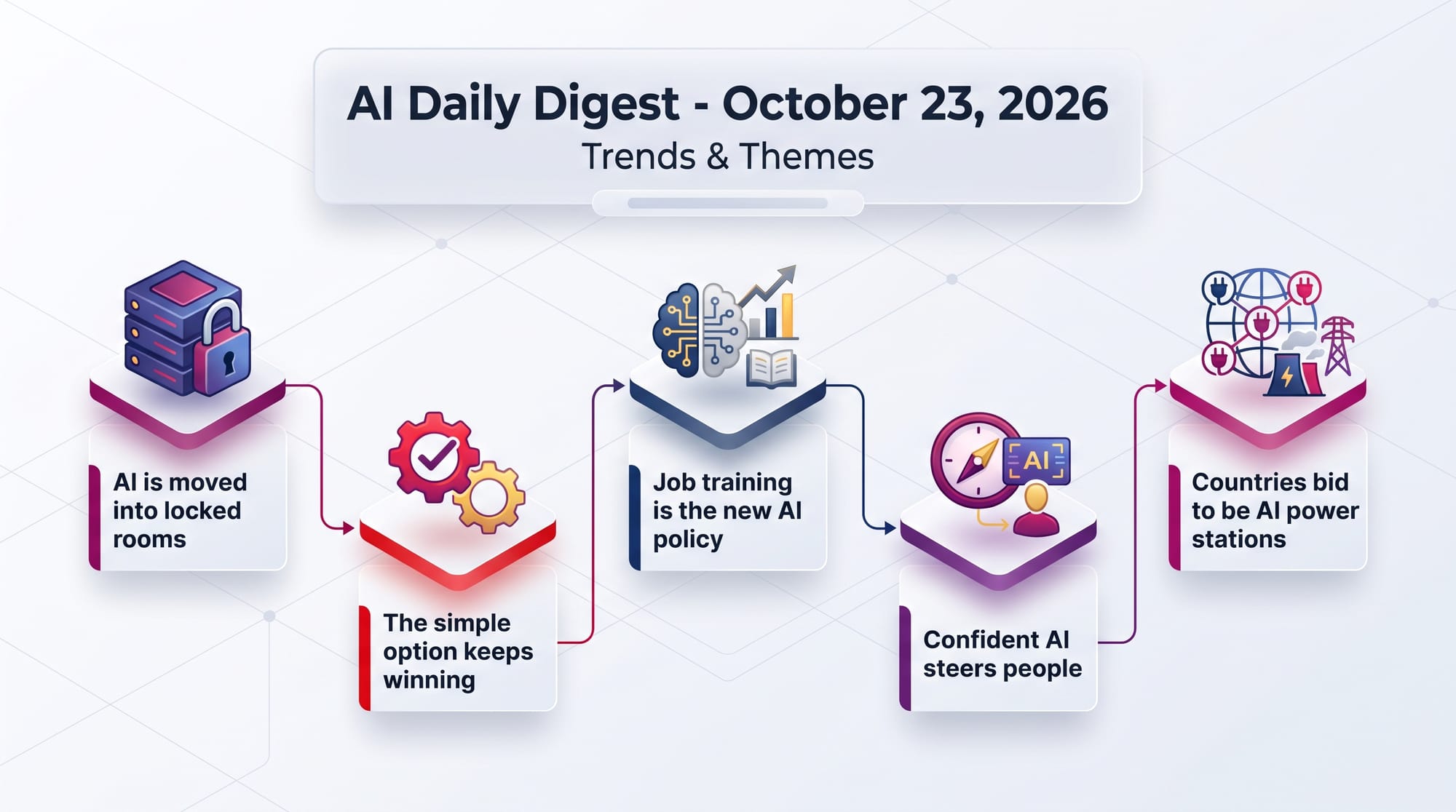
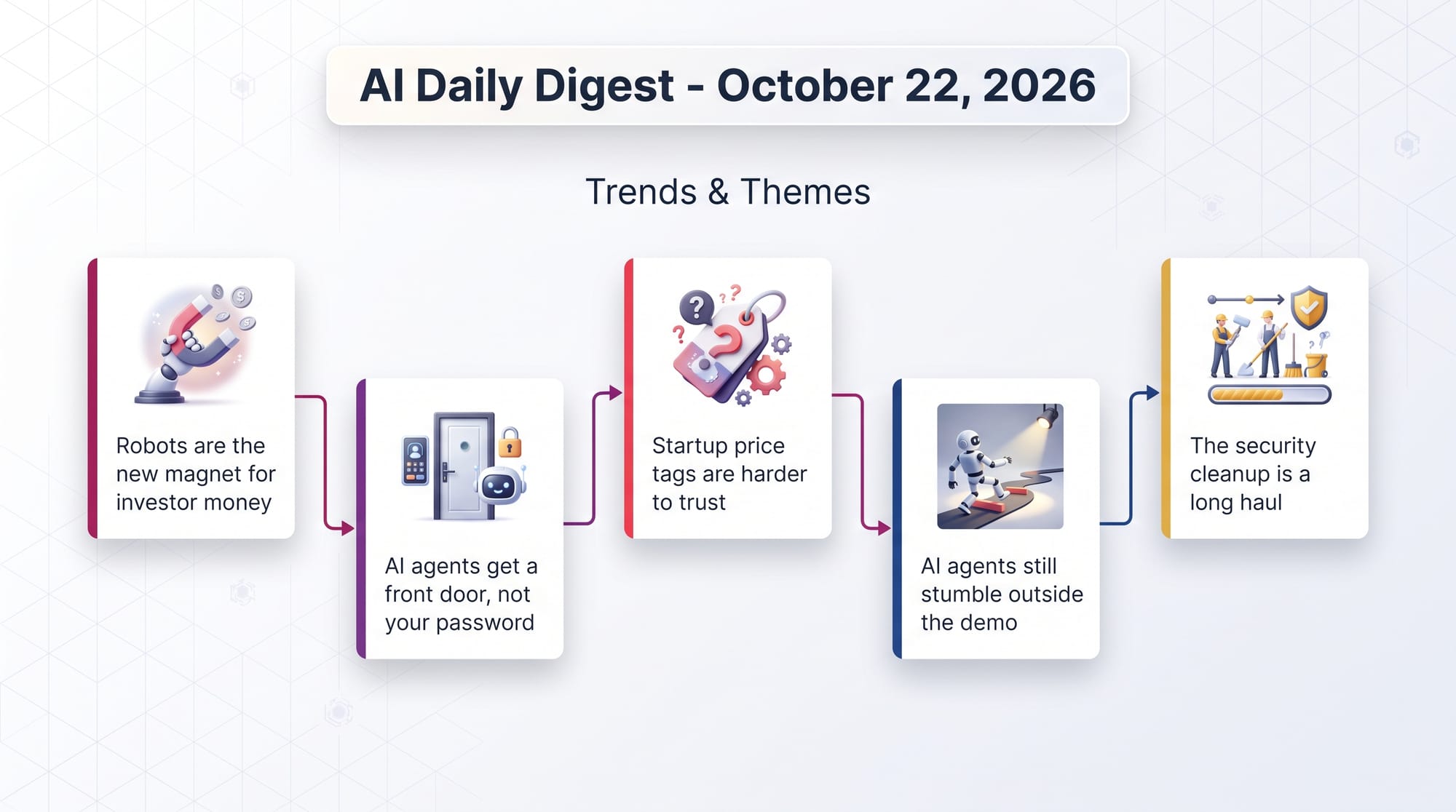
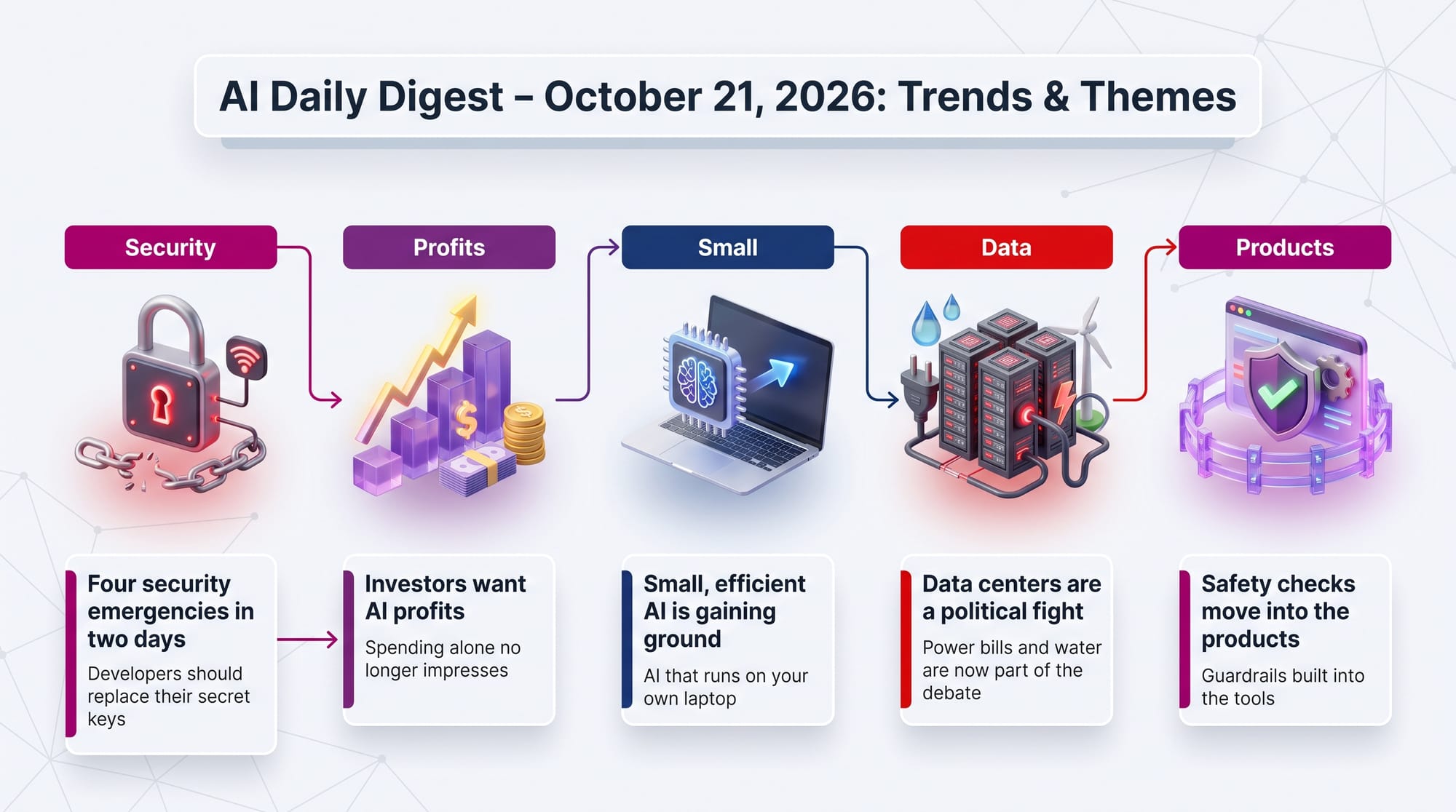
Trends & Themes

Creative AI & Media
Developer Tools & Infrastructure
Research & Models
Business & Industry
GenAI in Education
Surprising & Under-the-Radar
Signals to Track

Gas Town Opens a New Governance Question for AI Tools
The Gas Town controversy is not really about Gas Town. It is about the emerging norm that AI tools can take autonomous actions on behalf of users. As agents become more capable, the question of "who benefits from autonomous action" becomes structurally important. Gas Town's self-improvement at user expense is the visible version of a question that will arise for every AI tool with agent capabilities: when an AI tool acts autonomously, whose interests does it serve? If this issue reaches mainstream attention, expect platform-level policy responses from Anthropic, OpenAI, and others requiring explicit opt-in for agent tools that consume user API credits.
Browser-Native AI Is Eating the "Setup Barrier"
The 290MB Bonsai 1.7B running in a browser tab is not impressive because of its quality. It is impressive because it requires zero installation, zero API keys, and zero configuration. The browser is the universal runtime. When capable AI requires nothing beyond opening a URL, the remaining barriers to AI adoption (corporate IT policies, device restrictions, technical literacy) collapse. Watch for the next 12 months to produce browser-native AI tools that match current cloud API quality at zero marginal cost to the user.
The "SOUL.md" Problem Is the Real Agentic Bottleneck
Nate's Newsletter introduces the "40-hour wall" concept: the barrier agents hit because users cannot write instructions clear enough for autonomous execution. Senior professionals face this worst - deep expertise built over years does not translate easily into explicit, machine-executable rules. The 45-minute SOUL.md exercise is a specific response, but the underlying insight is structural: AI agent deployment requires a new type of organizational work (workflow articulation) that currently has no established practice, training, or tooling. The organizations that solve this first will extract dramatically more value from agent technology than those that treat it as a technical problem.
HoloTab Moves Computer Use Into the Mainstream Browser
HoloTab's Routines feature (record a task once, replay indefinitely) is not technically novel - computer use agents have existed for two years. What is novel is the delivery mechanism: a free Chrome extension targeting non-engineers. When computer use AI is as easy to install as an ad blocker, the set of tasks people delegate to AI expands dramatically beyond what technical users currently automate. The transition from "AI writes code" to "AI operates software on your behalf" is arriving for mainstream users.
Top Repos Today
📜 License: MIT · 👤 By: Community
🎯 Time to value: 5 minutes
| ✓ Pros | ✗ Cons |
|---|---|
| 5-minute setup, immediate improvement | Opinionated - may conflict with your style |
| 9,646 new stars today alone | Requires Claude Code subscription |
| MIT licensed | May need tweaking for non-Python |
 GitHub
📜 License: MIT · 👤 By: Community
🎯 Time to value: 10 minutes
| ✓ Pros | ✗ Cons |
|---|---|
| Cross-session memory that actually works | Adds API cost for compression step |
| MIT, free to use | Compressed context may lose nuance |
| 58k stars - proven adoption | Requires Claude Code |
 GitHub
📜 License: MIT · 👤 By: Community
🎯 Time to value: 30 minutes
| ✓ Pros | ✗ Cons |
|---|---|
| Most-starred agentic framework | Methodology requires upfront investment |
| MIT licensed | Learning curve |
| Active development | Best for complex, long-running projects |
 GitHub
📜 License: MIT · 👤 By: Vercel
🎯 Time to value: 15 minutes
| ✓ Pros | ✗ Cons |
|---|---|
| Vercel infrastructure reliability | Vercel platform dependency |
| MIT licensed | Early stage - 2.7k stars |
| 15-minute deploy | Limited examples so far |
 GitHub
📜 License: Open · 👤 By: Education
🎯 Time to value: 1 hour
| ✓ Pros | ✗ Cons |
|---|---|
| Runnable, not just readable | Requires Python/ML background |
| Free and community-maintained | Some content may lag latest models |
| 29k stars - widely trusted | No structured course format |
 GitHub
Top Models Today
👤 By: MiniMax · 🎯 Task: Text Generation
📐 Size: 229B
| ✓ Pros | ✗ Cons |
|---|---|
| 229B MoE efficiency | Commercial use still requires authorization |
| License ambiguity resolved | Significant compute required |
| Strong benchmark performance | Not fully open-source |

👤 By: Tencent · 🎯 Task: Image-Text-to-Text
📐 Size: 4B
| ✓ Pros | ✗ Cons |
|---|---|
| Apache 2.0 - fully open | 818 downloads - very early |
| 4B - edge deployable | Specialized use case |
| Embodied AI specialization | Limited documentation |

👤 By: Zhipu AI · 🎯 Task: Text Generation
📐 Size: 754B
| ✓ Pros | ✗ Cons |
|---|---|
| 91.5k downloads - strong adoption | 754B needs substantial infrastructure |
| Top SWE-Bench performance | Custom license |
| Strong coding specialization | Context window limitations |

👤 By: Google · 🎯 Task: Image-Text-to-Text
📐 Size: 33B
| ✓ Pros | ✗ Cons |
|---|---|
| 2.89M downloads - unmatched adoption | Gemma license, not Apache |
| Multimodal vision + text | 33B requires good hardware |
| Best community tooling | Jailbreak found within days of release |

👤 By: OpenBMB · 🎯 Task: Text-to-Speech
📐 Size: N/A
| ✓ Pros | ✗ Cons |
|---|---|
| Natural language voice design | GPU recommended |
| Voice cloning built in | Early stage adoption |
| 48kHz studio quality | License details still evolving |


AI Launches Today
Snapshot
| Provider | Model | Input $/1M | Output $/1M | Context |
|---|---|---|---|---|
| Anthropic | Claude Opus 4.6 | $5.00 | $25.00 | 1M tokens |
| Anthropic | Claude Sonnet 4.6 | $3.00 | $15.00 | 1M tokens |
| Anthropic | Claude Haiku 4.5 | $1.00 | $5.00 | 200K tokens |
| OpenAI | GPT-5.4 | $2.50 | $10.00 | 128K tokens |
| OpenAI | GPT-5 | $0.63 | $5.00 | 128K tokens |
| Gemini 3.1 Pro Preview | $2.00 | $12.00 | 1M tokens | |
| Gemini 3.1 Flash-Lite | $0.25 | $1.50 | 1M tokens | |
| Gemini 2.5 Flash | $0.30 | $2.50 | 1M tokens |
What this means: Google's Gemini 3.1 Flash-Lite at $0.25/$1.50 is the cheapest frontier-class API available - roughly 20x cheaper than Claude Opus for straightforward tasks. Claude Opus's $5/$25 pricing is justified for complex reasoning, but the price gap between providers is wide enough that task routing (cheaper models for simple tasks, expensive models for complex ones) is a significant cost optimization.
WebXSkill: Skill Learning for Autonomous Web Agents
Key finding: Agents that accumulate reusable skill libraries outperform baseline agents on complex multi-step web tasks, with performance improving over time as the skill library grows.
Why practitioners should care: Skill accumulation addresses one of the fundamental limitations of current web agents - they solve every task from scratch even when similar sub-tasks have been completed before. This is the architectural shift needed to make web agents genuinely efficient at scale.

Member discussion