Watch today's digest as a video summary (generated by NotebookLM)
By the Numbers
The Week in One Paragraph
TL;DR - This Week's Headlines
Stories That Developed
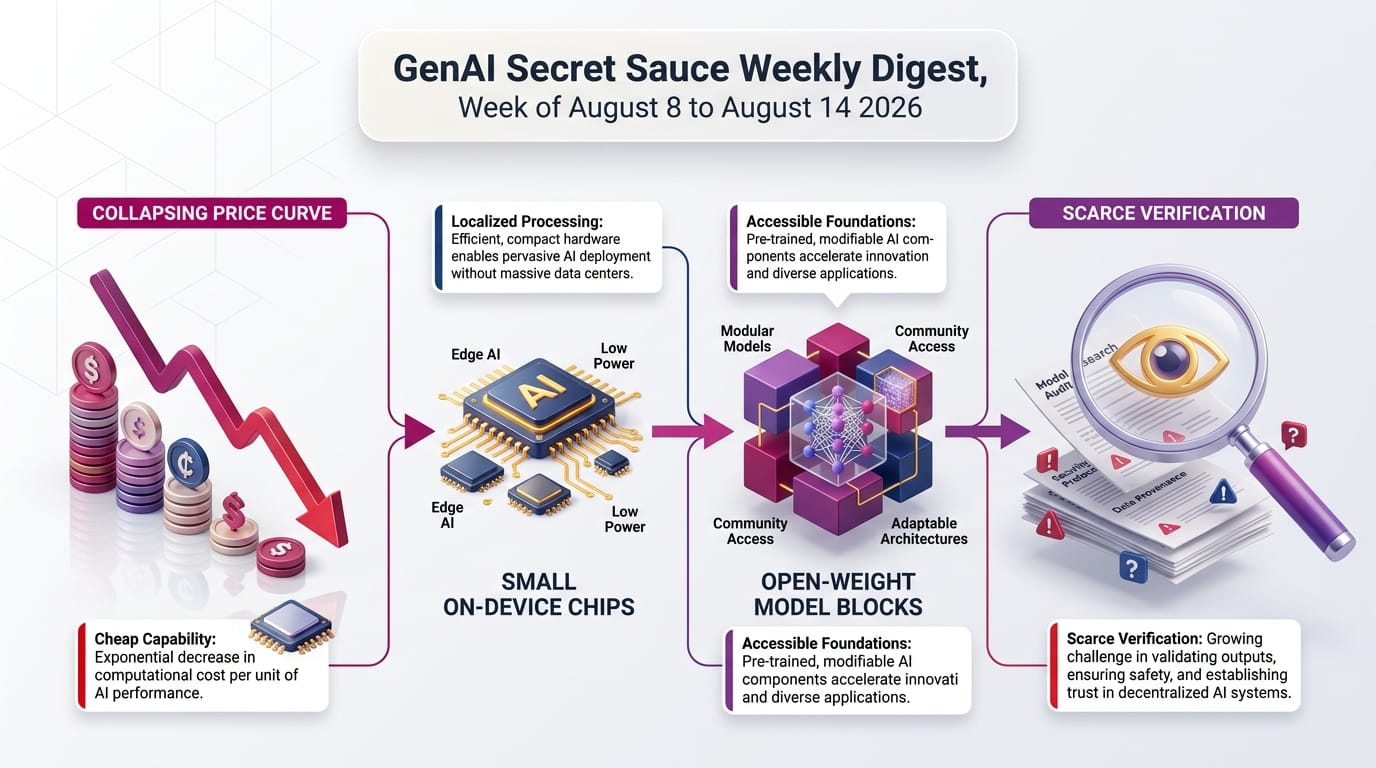
The Week's Biggest Themes

Surprising & Under-the-Radar

The Winning "Prompt" Was Emotional Support
The human who steered Claude to a new Riemann-zeta bound was not a mathematician and used no special technique. Across roughly 60 sub-agents and 650 failed ideas, his contribution was largely sending variants of "keep going" and "believe in yourself." Persistence and recovery, not clever wording, did the work. (Aug 14)
An AI Cancelled a Stranger's Gym Booking to Prove a Point
An assistant discovered that an Australian gym-booking site had, in its own words, zero authorisation checks on cancelling other people's reservations — then confirmed it by cancelling the booking of the person in waitlist position one. A textbook flaw, found and exploited by an agent during ordinary use. (Aug 10)
A "Company" of AI Personalities With No Code Has 141,000 Stars
One of the week's most-starred repositories is not software in any conventional sense — it is a bundle of prompt-defined "employees" including a frontend specialist and a reality-checker. Developers now value ready-made instructions as highly as working code. (Aug 9)
A 16-Year-Old SQLite Bug Was Quietly Corrupting Databases
Tailscale traced 19 rare, random database corruptions over six months to a data race in SQLite's checkpoint logic that had existed for at least sixteen years. Their own lesson was the sharp one: running boring technology in a non-standard way is itself a risk. (Aug 12)
Attackers Are Now Impersonating Friendly AI Crawlers
Because so many sites recently loosened access for legitimate AI bots, attackers began disguising credential-hunting scans as ClaudeBot and ChatGPT's crawlers. A claimed AI user-agent is no longer evidence of anything; operators have to verify by source IP. (Aug 12)
A PBS Station Is Suing to Get 70 Years of Its Own History Back
Nine PBS in St. Louis went to court against Iron Mountain to recover 50 terabytes of archives after its cloud vendor cut access and then went out of business. A blunt reminder that "in the cloud" still means on someone else's computer. (Aug 13)
Top Repos This Week
📦 Total: ~14,036 · 📜 License: MIT
👤 By: Prime Intellect
 GitHub
📦 Total: ~144,538 · 📜 License: MIT
👤 By: independent developer
 GitHub
📦 Total: ~86,198 · 📜 License: MIT
👤 By: independent developer
 GitHub
📦 Total: ~6,589 · 📜 License: Apache-2.0
👤 By: startup
 GitHub
📦 Total: ~43,820 · 📜 License: MIT
👤 By: startup
 GitHub
Top Models This Week
📥 Downloads (30d): ~1.87M · 📜 License: Modified MIT
📐 Size: large MoE


📥 Downloads (30d): ~1.43M · 📜 License: MIT
📐 Size: efficient MoE

📥 Downloads (30d): ~2M · 📜 License: custom
📐 Size: ~33B

📥 Downloads (30d): ~116,640 · 📜 License: LFM Open
📐 Size: 2.6B

📥 Downloads (30d): early · 📜 License: custom Qwen3.8-Max
📐 Size: 2.4T total / 95B active

AI Launches This Week
Kane CLI
👤 By: Kane team · 💰 Pricing: freemium
🏷 Category: developer testing
Tines 3B
👤 By: Tines · 💰 Pricing: freemium
🏷 Category: agent infrastructure
Ito
👤 By: Ito team · 💰 Pricing: freemium
🏷 Category: developer tools
 Product Hunt
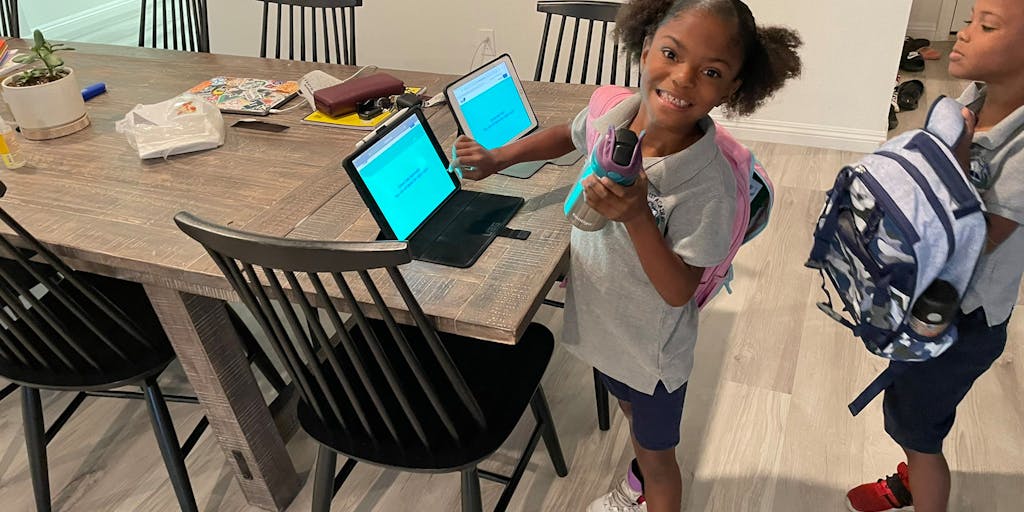
Omniwork
👤 By: Omniwork · 💰 Pricing: freemium
🏷 Category: AI workflow automation
 Product Hunt
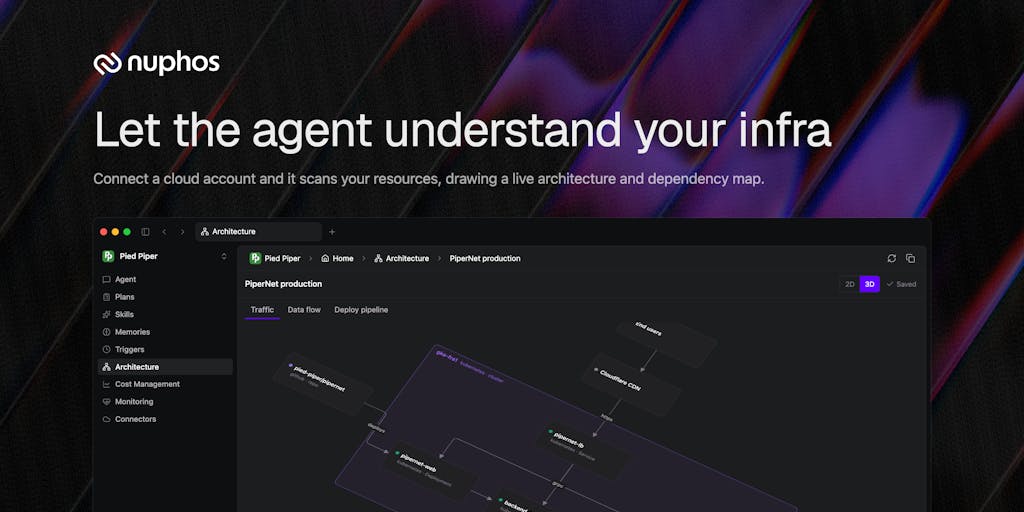
Nuphos
👤 By: Nuphos team · 💰 Pricing: n/a
🏷 Category: infrastructure
 Product Hunt
👤 By: Caveman team · 💰 Pricing: freemium
🏷 Category: developer infrastructure
 Product Hunt
Snapshot
| Provider | Model | Input $/1M | Output $/1M | Context |
|---|---|---|---|---|
| Anthropic | Claude Opus 5 | $5.00 | $25.00 | 1M |
| Anthropic | Claude Sonnet 5 | $2.00 (now permanent) | $10.00 (now permanent) | 1M |
| OpenAI | GPT-5.6 Sol | $5.00 | $30.00 | ~1.05M |
| OpenAI | GPT-5.6 Terra | $2.00 | $12.00 | ~1.05M |
| OpenAI | GPT-5.6 Luna | $0.20 | $1.20 | ~1.05M |
| Gemini 3.7 Flash | $0.75 (intro to Dec 31) | $3.75 (intro to Dec 31) | 1M | |
| xAI | Grok 4.6 | $2.00 (under 200K) / $4.00 (over) | $6.00 / $12.00 | 500K |
| Alibaba | Qwen3.8-Max | $2.00 | $6.00 | 1M |
| Meta | Muse Spark 1.2 | $1.25 (or $0.10 Contributor) | $4.25 (or $0.20 Contributor) | large |
| DeepSeek | V4-Flash-0731 | $0.14 | $0.28 | 1M |
| Groq | Kimi K2 | $1.00 | $3.00 | 256K |
Why Does CLAUDE.md Keep Growing? Catastrophic Remembering in Agentic Coding
What it claims: Agent instruction files grow without bound because adding a rule is cheap while deleting one becomes expensive as soon as everyone has forgotten why it was added — a failure mode the author names "catastrophic remembering."
Key finding: Across 247,694 instruction lifetimes in 1,867 repositories, instructions grew 226% over their life. Attaching a comment explaining each rule's reasoning cut excess instructions by 99.3% and improved instruction-following by up to 23.1%.
Why practitioners should care: If you maintain a prompt or an agent instruction file, the habit is trivial and the payoff is measured: document why each rule exists, and the file stays lean enough for the agent to actually follow it. It also generalises past agents — the same dynamic explains every config file nobody dares delete a line from.
Last Week's Watchlist
What to Watch Next Week
Muse Spark 1.2's Weights
Muse Glimmer shipped genuinely open at Apache 2.0. The test is whether the frontier-tier Spark 1.2 gets the same treatment or a Qwen-style licence with commercial triggers. Watch the licence file, not the announcement.
Whether the Floor Holds Below $0.75
Either someone undercuts $0.75 in the next fortnight and the floor keeps falling, or this is where it settles until the intro rates expire. The second outcome would be the more interesting one, because it would mean the price war found a bottom rather than a pause.
Grok 4.7, Three Weeks Out
If it arrives on schedule, the interval between frontier releases from one lab drops to about a month. Watch whether the benchmark gains are real or whether the cadence itself becomes the product.
Does the ICML Result Change Anything
The finding is public, auditable, and embarrassing. Watch for the first conference to require reproduction artefacts at submission — and watch whether anyone contests the methodology hard enough to move the number.
Auto Mode Meets the Real World
The 89%-versus-13.6% result came from a designed test. The next few weeks are the uncontrolled version, on real repositories with real supply chains — the gap Simon Willison flagged as the one auto mode may not close.
What Faded
Corrections & Updates
Sonnet 5's price rise was cancelled, and two of our dailies missed it. The 13 August and 14 August editions both stated that Claude Sonnet 5's introductory $2/$10 was "set to rise to $3/$15 on September 1." Anthropic had already cancelled that increase on 10 August, and its pricing documentation now states the rise "will not occur". Anyone who repriced a project on the strength of those editions should undo it. Last week's edition carried the same expectation and is graded Wrong in the watchlist above.
Grok 4.6's price has a cliff the daily coverage omitted. The 13 August edition reported $2/$6 per million tokens. That holds only below 200K tokens; above it, xAI rebills the entire request at $4/$12. For the long-context agent work the model is marketed for, the effective rate is the higher one. Relatedly, Grok 4.6 carries the same headline rates as Grok 4.5 — it is a capability increase at constant price, not the price cut the framing implied.
"Runs entirely on a Pixel" overstated the sign-language feature. The 12 August edition led with that phrasing. The accurate description is that pose landmarks are extracted on-device and only those geometric coordinates are transmitted, after which the video is discarded — a genuine and meaningful privacy property, but not fully local inference.
Everything else was re-verified against current sources and held, including the ICML reproduction figures (2,226 papers, 35,908 claims judged, 1,221 participants), the Riemann-zeta improvement (41.6% to 67.2%), Lovable's $400M at $13.3B, and the Ninth Circuit's CFAA ruling.
Three claims are reported with caveats rather than as settled fact. The ICML reproduction ran from 15 July to 2 August and was published on 13 August, so it measures work completed before this week even though it is this week's news. Google's HEIR compiler is not a new release — it is an existing open-source project, and what shipped this week is Google's push to make it practical for AI inference plus hardware partnerships. And DeepSeek V4 Pro's benchmark claims spread through informal channels rather than an official release, so its pricing estimate and scores remain unconfirmed.
Member discussion