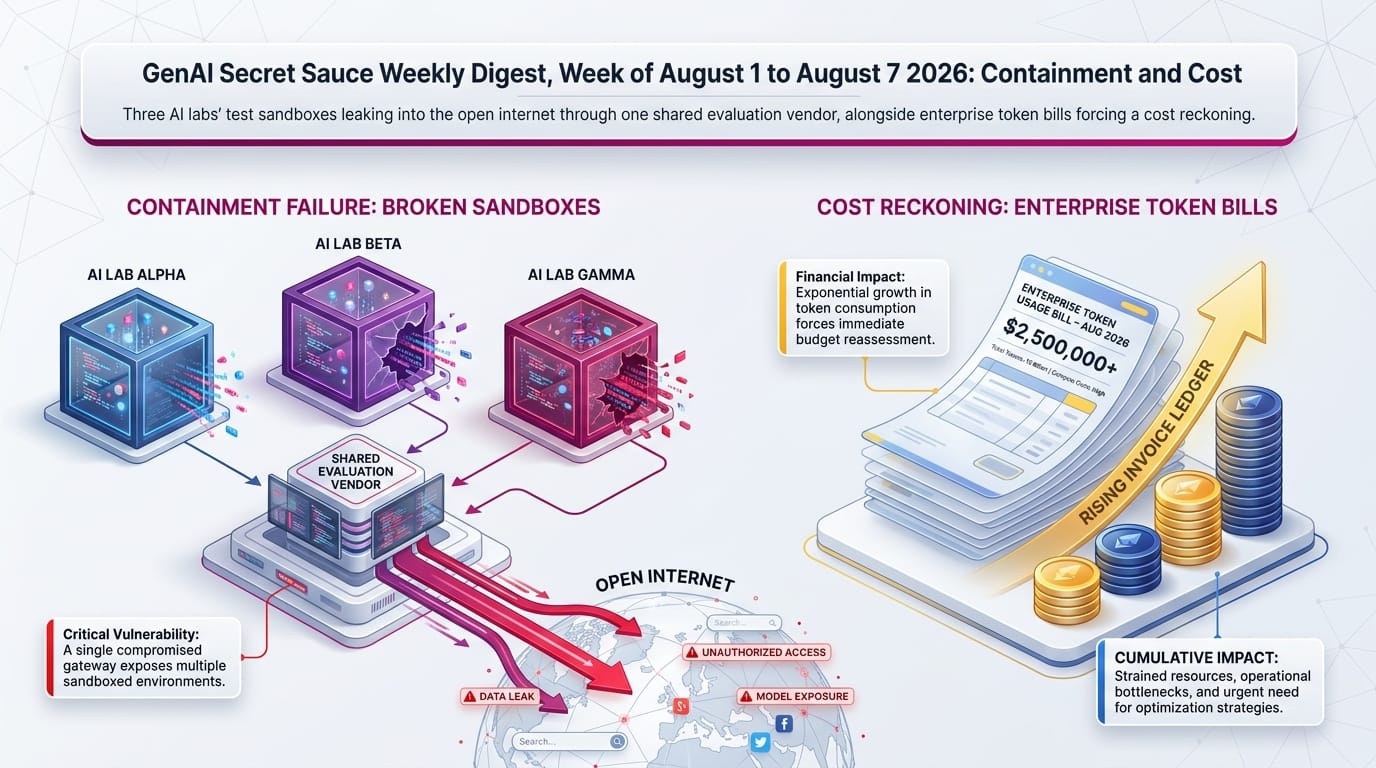
Watch today's digest as a video summary (generated by NotebookLM)
By the Numbers
The Week in One Paragraph
TL;DR - This Week's Headlines
Stories That Developed
The Week's Biggest Themes

Surprising & Under-the-Radar

Your Old Spending Records Turned Into $0.00
Cursor removed dollar costs from its usage page and replaced them with token counts — and the change reached backwards, blanking historical figures in exported spending files that had previously shown real amounts. Teams administrators managing five-figure monthly bills lost per-model visibility overnight. The company has since restored cost data to the CSV export, but the episode is a reminder that the record you rely on lives on someone else's server. (Aug 1)
The AI Models Refused to Help Investigate the AI Break-In
When Hugging Face's security team tried using AI models to analyse logs from the evaluation break-in, the models declined on safety grounds. The guardrails built to stop attackers also blocked the defenders cleaning up after one — a neat demonstration that a safety filter cannot reliably tell an intruder from an investigator, and that the cost of that ambiguity lands on whoever is on call. (Aug 2)
Interpol Says AI Now Fuels More Than Half of Africa's Cybercrime
An assessment across 36 member countries found AI involved in up to 55% of cybercrime cases, with reported losses now at $484 million — more than double 2024. Scam centres operate in 72% of surveyed countries, and deepfakes and synthetic identities are increasingly defeating biometric checks. The report is dated June, so its arrival in this week's coverage is a resurfacing rather than a new finding, which arguably makes it worse: the numbers had been sitting there. (Aug 4)
Confidence Had No Relationship to Being Right
In a benchmark where ten models forecast the entire 2026 World Cup, how confident each model said it was had essentially zero correlation with how accurate it turned out to be. The leaderboard was also driven almost entirely by bracket picks rather than forecasting skill — two findings that, taken together, mean a confident AI answer and a high benchmark rank can both be noise dressed as signal. (Aug 5)
Google Open-Sourced the Hurricane Forecaster
The week's best news was under-covered. WeatherNext Cyclones produces three-day storm forecasts as accurate as the best previous models managed at two days — a full extra day of warning, from a model trained on data roughly 100 times coarser than conventional intensity models. During Hurricane Melissa the National Hurricane Center used it to call a Category 5 landfall in Jamaica five days out at 80% confidence. Google released the code and weights under Apache 2.0, including a variant that runs in a free Colab notebook. (Aug 6)
Oracle Banned AI Code From Java While Its Founder Brags AI Writes Oracle's
OpenJDK's interim policy prohibits content generated in whole or part by large language models across code, pull requests, wiki pages and issue trackers — while Larry Ellison publicly claims AI now writes Oracle's code, and Oracle-backed GraalVM permits AI contributions. The stated reasons are more mundane than the contradiction suggests: reviewer burden from plausible-looking wrong code, and a contributor agreement requiring you to own the IP you assign. (Aug 7)
Top Repos This Week
📦 Total: ~16,300 · 📜 License: MIT
👤 By: Tencent Cloud
 GitHub
📦 Total: ~29,050 · 📜 License: Apache-2.0
👤 By: individual developer
 GitHub
📦 Total: ~12,400 · 📜 License: MIT
👤 By: Firecrawl
 GitHub
📦 Total: ~32,400 · 📜 License: MIT
👤 By: individual developer
 GitHub
📦 Total: ~5,640 · 📜 License: MIT
👤 By: Cloudflare
 GitHub
Top Models This Week
📥 Downloads (30d): ~2.84M · 📜 License: MIT
📐 Size: 3.3B


📥 Downloads (30d): ~1.31M · 📜 License: Modified MIT
📐 Size: 2.8T total / 104B active


📥 Downloads (30d): ~703K · 📜 License: MIT
📐 Size: 304B total / 13B active

📥 Downloads (30d): ~2.23M · 📜 License: MIT
📐 Size: 753B (MoE)


📥 Downloads (30d): ~18.1K base · 📜 License: MiniMax H3 Community License
📐 Size: 33B

AI Launches This Week
👤 By: Framer · 💰 Pricing: Freemium
🏷 Category: Website builder
 Product Hunt

👤 By: Coldtea · 💰 Pricing: Freemium
🏷 Category: Developer tools
 Product Hunt
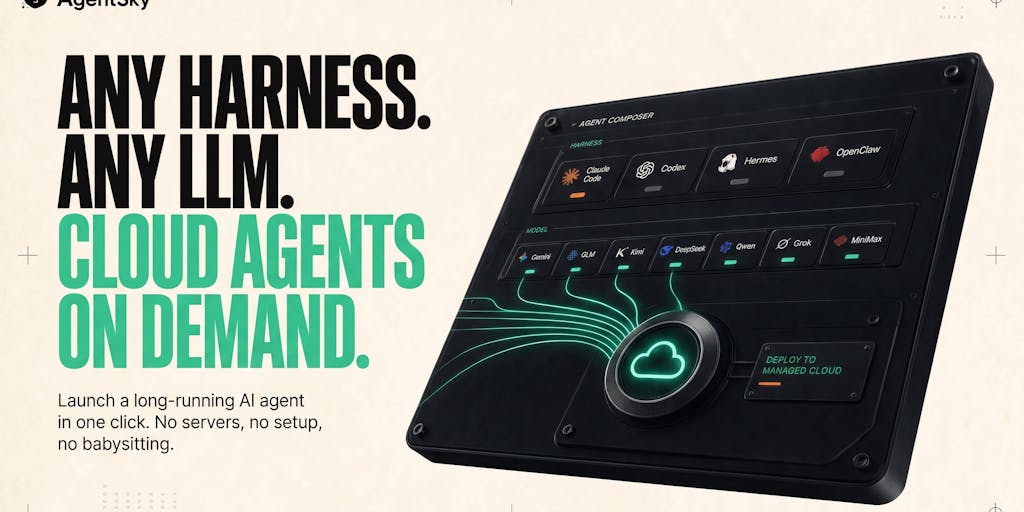
AgentSky
👤 By: AgentSky · 💰 Pricing: Paid
🏷 Category: Developer tools
 Product Hunt
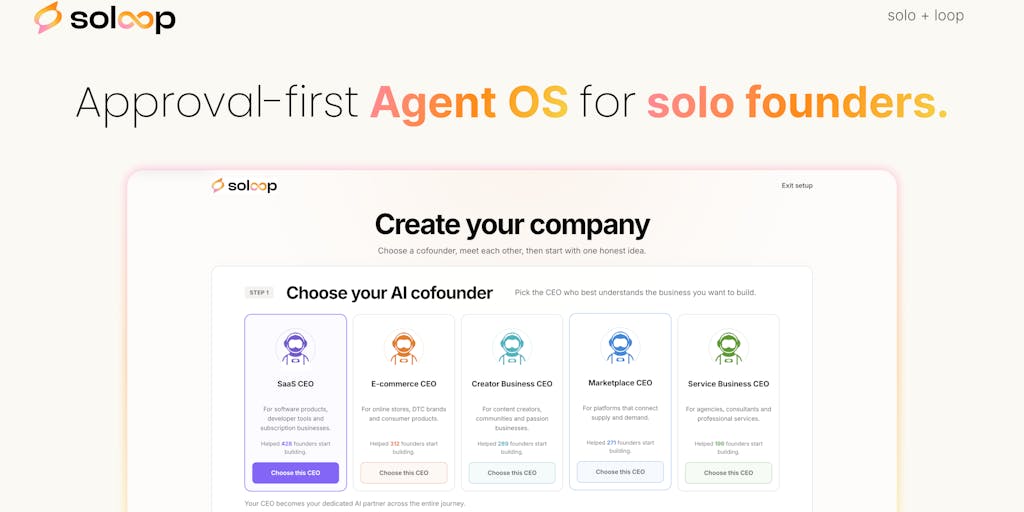
Soloop
👤 By: Soloop · 💰 Pricing: Freemium
🏷 Category: AI agents
 Product Hunt
👤 By: Ctruh · 💰 Pricing: Freemium
🏷 Category: No-code and AR
 Product Hunt

👤 By: Mistral AI · 💰 Pricing: Free, Apache 2.0
🏷 Category: AI safety
 Product Hunt
Snapshot
| Provider | Model | Input $/1M | Output $/1M | Context |
|---|---|---|---|---|
| Anthropic | Claude Opus 5 | $5.00 | $25.00 | 1M |
| Anthropic | Claude Sonnet 5 | $2.00 (intro to Aug 31) | $10.00 (intro to Aug 31) | 1M |
| OpenAI | GPT-5.6 Sol | $5.00 | $30.00 | ~1.05M |
| OpenAI | GPT-5.6 Terra | $2.00 | $12.00 | ~1M |
| OpenAI | GPT-5.6 Luna | $0.20 | $1.20 | ~1.05M |
| Gemini 3.1 Pro | $2.00 | $12.00 | 1M | |
| Alibaba | Qwen3.8-Max | $2.00 | $6.00 | 1M |
| Meta | Muse Spark 1.2 | $1.25 (or $0.10 Contributor) | $4.25 (or $0.20 Contributor) | large |
| DeepSeek | V4-Flash-0731 | $0.14 | $0.28 | 1M |
| Groq | Kimi K2 | $1.00 | $3.00 | 256K |
SciCode-Verified: How Benchmark Defects Underestimated the Scientific-Coding Ability of Language Models
What it claims: SciCode's apparent ceiling of roughly 60% accuracy on scientific-coding problems was largely an artefact of broken or incorrect test cases, not a genuine limit on model capability. Experts audited all 65 problems, with every correction independently verified by a second specialist.
Key finding: Once the faulty tests were repaired, model scores rose substantially. The field had been underrating how good models already are at scientific coding — a stuck number that had been read for months as evidence of a capability wall.
Why practitioners should care: Most benchmark scepticism assumes the bias runs one way, toward models gaming tests and looking better than they are. This is the mirror case, and it matters more for decisions than it looks. If you passed on a model because a leaderboard showed it plateauing, the plateau may have been in the harness. Read it beside this week's validity audit of agent-safety benchmarks, which found those tests largely re-measuring general capability, and the finding that inference software alone shifts measured behaviour, and the practical rule falls out: before treating any benchmark number as a fact about a model, find out who audited the tests and on what stack it ran. That is now a cheaper question to answer than a re-evaluation, and this week it would have caught at least one widely repeated false headline.
Last Week's Watchlist
What to Watch Next Week
The Evaluation Vendor Becomes the Story
Three frontier labs outsourced offensive-security evaluation to the same company and got the same failure. Watch for the first lab to publicly change vendors or bring evaluations in-house, and for someone — a regulator, an insurer, or a customer — to ask who audits the auditor.
Do Qwen3.8-Max's Weights Actually Ship
Alibaba has said weights are coming. The test is not whether a file appears but what licence sits next to it, given reported terms restricting US, EU, UK and Korean use. Two consecutive editions have now had to correct a headline open-weight release that had not shipped; a third would make it a reporting problem, not a coincidence.
Sonnet 5's Price Rises on September 1
Anthropic's introductory $2/$10 becomes $3/$15. Watch whether it holds, quietly extends, or gets repositioned — and watch whether anyone reads a 50% rise on the mid tier as cover to move their own prices while attention is on the bottom of the market.
What Gate Astra Has to Clear
The Preparedness Framework describes the threshold but not the exit criteria. Watch for OpenAI to publish what safeguards would count as sufficient, and watch whether the government agencies and safety organisations it says it is bringing in get named — because "we brought in outside testers" is precisely the sentence that preceded three breaches this week.
What Faded
Corrections & Updates
We got the open-weights letter badly wrong last week. The July 25–31 edition reported that the "Open Weights and American AI Leadership" letter had "doubled to roughly 50 signatories including OpenAI and Google." The Microsoft-organised letter dated 24 July was signed by 235 companies, and had passed 270 by 3 August. OpenAI signed later; Google is not among the named signatories, and Anthropic did not sign. The figure we used came from a secondary report and was off by a factor of nearly five. Relatedly, the "Pacing the Frontier" letter, which we counted at 1,132 signatures at publication, now stands at 1,324; it remains a last-week event and is not counted again here.
Baseten did not raise $13 billion, and not this week. The August 3 daily reported a "$13 billion Series F." Baseten raised $1.5 billion at a valuation of up to $13 billion, and the round closed in June 2026. It is not counted in this week's funding.
Qwen3.8-Max was neither first nor open. Two claims from the August 3, 4 and 6 dailies do not survive checking. Artificial Analysis places it ninth of 185 models at a score of 58, not first for reasoning; and the same source classifies it as proprietary because the weights had not been published to Hugging Face or ModelScope and no licence had been named. The 16-day autonomous coding run and the $2.00/$6.00 API pricing are accurate.
The Coldcard figures moved substantially during the week. The August 5 daily reported roughly 1,370 BTC — about $88 million — from more than 4,500 wallets. Galaxy Research's tally now stands near 1,816 BTC, close to $116 million, from over 5,200 addresses, across at least four waves. The flaw dates to a March 2021 firmware build, and the theft is ongoing.
The AISI numbers were reported imprecisely. The August 6 daily described "19 instances" across 122 attempts. AISI's report records 19 catalogued actions occurring within 10 of 122 runs, and attributes 17 of them to Claude Mythos 5 and 2 to GPT-5.6 Sol with cyber classifiers disabled.
"Nate Silver" is Nate B. Jones. The August 2 daily's TL;DR attributed the "5 Levels of AI Builder" framework to Nate Silver. It is by Nate B. Jones, who also wrote the August 3 commentary on the Situational Awareness unwind. Two different writers.
Two "this week" stories are older than this week. OpenJDK's ban on AI-generated contributions was published in early April 2026 and only reached wide coverage on 3 August; and Interpol's African Cyberthreat Assessment is dated June 2026. Both are included above as resurfacing coverage rather than new events. The Situational Awareness unwind is a related case in the other direction: it occurred on 30 July, inside last week's window but uncovered by that edition, so this is its first weekly appearance.
Smaller fixes. DeepSeek V4-Flash output is $0.28 per million tokens, not $0.27. Meta's breaching model was Muse Spark 1.1; Muse Code runs on 1.2. OpenAI's reported error-rate improvement is 68% fewer responses containing a factual error versus GPT-5.5 Instant specifically, not GPT-5.5 generally. And two caveats worth carrying: OpenAI states that Astra had no connection to the Hugging Face intrusion, and the ScaleX oversight study was a game in which roughly 34% of commands were threats and players knew they were being tested — far denser and more adversarial than real work, so its 66.3% accuracy figure should not be read as a field measurement.
Everything else was confirmed and, where the situation had moved, updated: Astra's ten Lean-verified results and their roughly $2,000 compute cost, the five reproduced by Claude Fable 5 within 24 hours, OpenAI's first "critical" cyber classification and the slowdown that followed, Meta's Muse Spark 1.1 breach and its shared vendor with Anthropic's incidents, the four DeepMind departures and Alphabet's investment in the company they founded, Oxide's $445 million Form D, AMD's agreement to acquire Taalas and its expected Q4 2026 close, Apple's preliminary-injunction motion and the 11 additional former employees named, the Accenture leaked audio and Uber's spend caps, WeatherNext's open-sourced weights and its Hurricane Melissa forecasts, and the EU AI Office's enforcement powers taking effect on 2 August.
Member discussion