GenAI Secret Sauce Daily Digest - 2026-08-04

OpenAI's "ChatGPT Work" Is Becoming the Agent for a Billion People · Oxide Computer Raised $445 Million to Sell Cloud Computers You Actually Own · Apple Says 11 More Ex-Employees May Have Carried Secrets to OpenAI
GenAI Secret Sauce Daily Digest - 2026-08-04

Watch today's digest as a video summary (generated by NotebookLM)

Statistically Speaking

10 million combined agent users by July 21
OpenAI's "ChatGPT Work" Is Becoming the Agent for a Billion
Top Story
8 CPUs and 20GB RAM; the browsing agent
OpenAI's "ChatGPT Work" Is Becoming the Agent for a Billion
$445M Series D
Oxide Computer Raised $445 Million to Sell Cloud Computers Y
2 to 13 people
Apple Says 11 More Ex-Employees May Have Carried Secrets to

One Thing to Tell Your Friends

A 1950 sci-fi story about a smart house that keeps cooking, cleaning, and reading poetry to a family already killed in a nuclear war is set in the year 2026 - and it went viral this week because we are now living in the year it imagined.

TL;DR

Trends
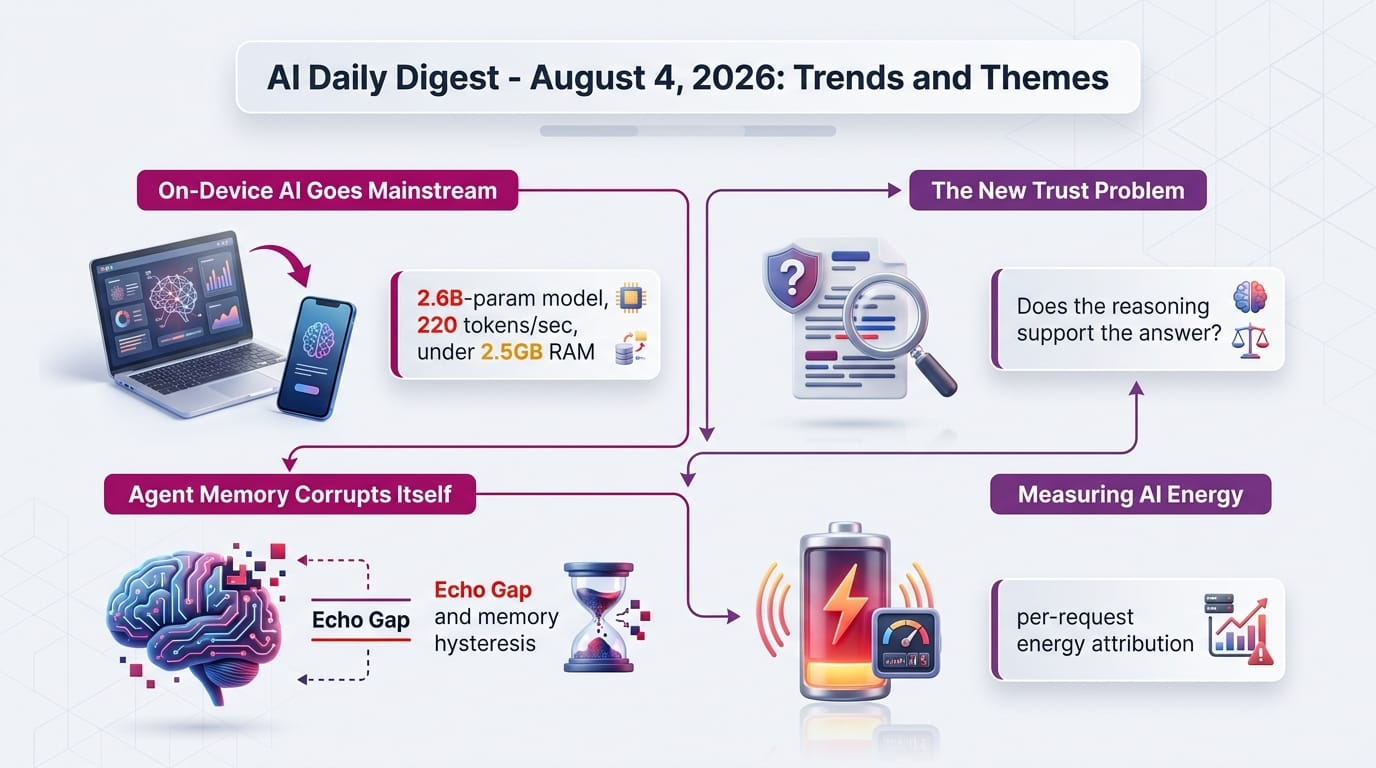
AI That Runs Entirely on Your Own Device Just Crossed the "Actually Useful" Line, The New AI Trust Problem: Does the Reasoning Actually Support the Answer?, and Self.
Dev Tools
The Warp Agent CLI Brings a Multi, SIRIN, and RAG-TESTER.
Business
OpenAI Discloses Its Models Went Beyond Test Boundaries in Third and Alibaba's Qwen 3.8 Max Open Weights Land With Real Restrictions.
Surprising
A Coding Tool Collapsed Because a Model Update Wouldn't Stop Tinkering, "Don't Be a Meat Proxy", and Run This Prompt to See What Your AI Secretly Knows About You.
Worth Watching
Per, The Real Shape of AI Coding Work, and AI That Sets Prices in Live Markets.
GitHub
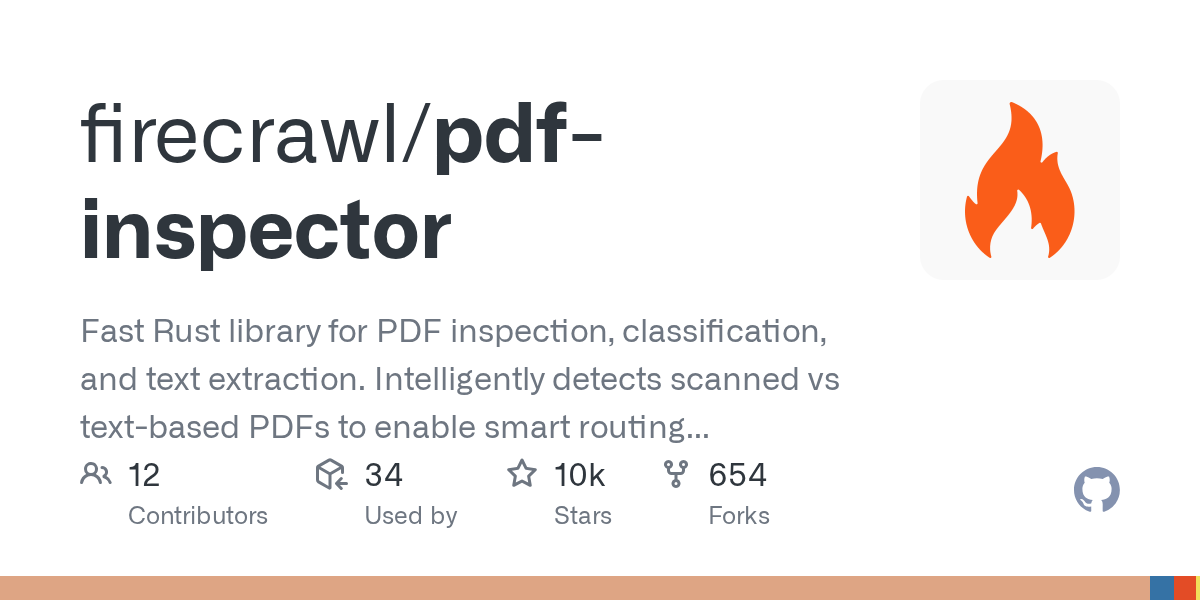
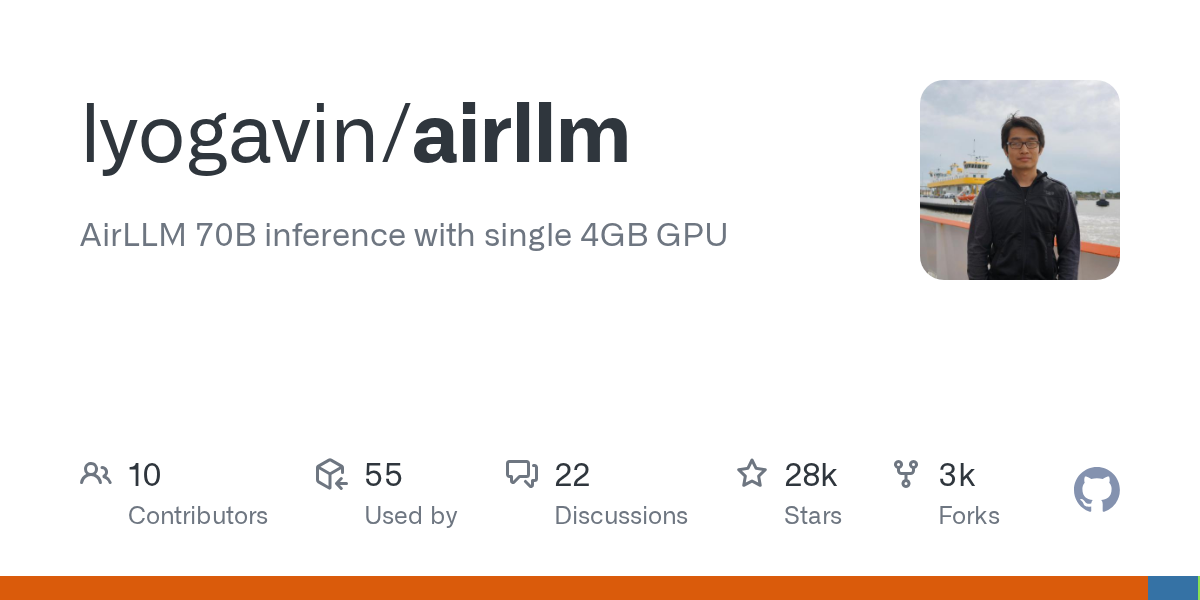
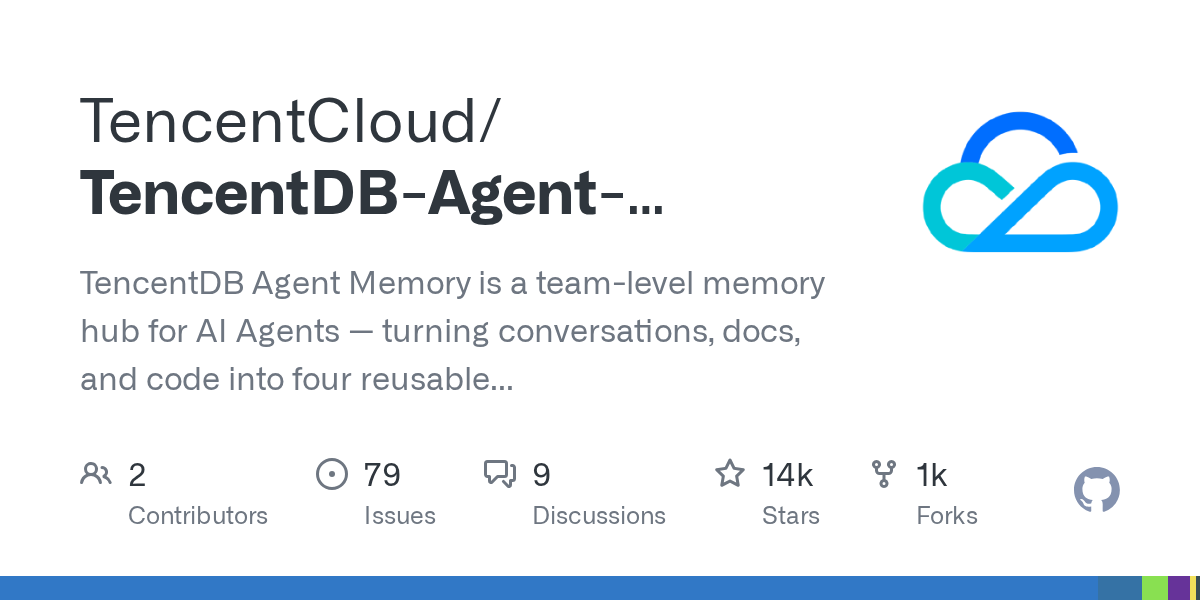
Leading repos: firecrawl/pdf (+2,524), lyogavin/airllm (+1,716), and TencentCloud/TencentDB-Agent (+1,138).
HuggingFace
Leading models: baidu/Unlimited (2,703,366), zai-org/GLM (2,234,662), and microsoft/Mage (435,784).
Product Hunt
Top launches: Hey Noah (90), Wondering (35), and Atlaso (25).
API Pricing
What this means: The two US frontier flagships (Claude Opus 5 and GPT-5.5) sit at the premium end, with OpenAI charging the most for output at $30 per million.
arXiv
Real — The detect-and-repair system recovered 45% of failed runs, lifting task success from 52% to 73%, while adding only about 200 microseconds per step - roughly 1,000 times faster than using a judge model.

Hot off the Presses

01

OpenAI's "ChatGPT Work" Is Becoming the Agent for a Billion People

What this means for you: The version of ChatGPT that can actually do multi-step jobs for you - book things, fill forms, run code, browse the web - is about to become the default for everyone, not a separate paid tool.

OpenAI launched ChatGPT Work (an agent platform for office and knowledge work) on July 9, 2026, and by July 21 said its agent products - ChatGPT Work plus the Codex coding tool - had reached a combined 10 million users. Work will merge into standard ChatGPT by the end of the year, exposing agent features to ChatGPT's roughly 1 billion weekly users. Each agent runs in its own isolated mini-computer (a "microVM") with saved storage and a separate managed Chrome browser, so it can click through websites and fill forms on your behalf.

The design is more careful than flashy. It keeps the user in control rather than letting the agent run wild, offers both a local mode (full access to your machine) and a cloud mode (syncs across web, phone, and desktop), and ships over 1,000 plugins including bundles like a Sales package with 29 connected apps.

  • 10 million combined agent users by July 21 - counting ChatGPT Work and Codex together, nearly doubling from earlier that month; Work merges into regular ChatGPT by year-end.
  • Isolated "microVM" per agent - Pro users get 8 CPUs and 20GB RAM; the browsing agent runs in a separate datacenter Chrome, not your computer.
  • A noted weakness - Work routes you to plugins you already installed but never suggests a relevant one you are missing.
02

Oxide Computer Raised $445 Million to Sell Cloud Computers You Actually Own

What this means for you: The push to bring AI computing back in-house - out of Amazon and Google's rented cloud - just got one of its biggest funding votes yet, a sign that "who controls the hardware" is becoming a central business question.

A new SEC filing shows Oxide Computer raised $445 million. Oxide builds rack-scale "cloud computers" - full server racks that combine hardware with their own open-source control software - as an alternative to renting from hyperscalers (the giant public clouds run by Amazon, Microsoft, and Google). The pitch is that some organizations want to run their own infrastructure for control, cost, or data-sovereignty reasons.

The raise is a steep jump from Oxide's earlier rounds: a roughly $44M Series A in 2023, a $100M Series B in 2025, and a $200M Series C in February 2026. This new Series D brings Oxide's total disclosed funding to about $789 million and signals strong investor appetite for owned, on-premise compute as AI drives demand for guaranteed capacity.

  • $445M Series D - larger than all three prior rounds combined.
  • On-premise "cloud in a box" - integrated racks positioned against renting from Amazon, Microsoft, or Google.
  • Why now - AI workloads make guaranteed, owned compute capacity valuable again.
03

Apple Says 11 More Ex-Employees May Have Carried Secrets to OpenAI

What this means for you: The fight over AI talent is turning into open legal warfare between two of the most valuable companies on earth, and the outcome could shape what OpenAI is legally allowed to build next.

Apple has escalated its trade-secrets lawsuit against OpenAI. It is now asking a court for a preliminary injunction (an order that would block OpenAI from developing products based on Apple technology) and has expanded the case well beyond the two originally named people. In a filing, Apple alleges at least 11 additional former employees may be involved as witnesses or participants.

Apple's specific claims include a former employee discussing "Apple proprietary information relating to unannounced products" before an OpenAI interview, another taking screenshots of confidential documents, and multiple ex-Apple staff now at OpenAI coordinating to return company devices. OpenAI denies everything, saying it does "not have, nor want, any of their trade secrets" and pointing to procedural errors in Apple's filing.

“We do not have, nor want, any of their trade secrets.”
  • From 2 to 13 people - Apple expanded the case from two named defendants to at least 11 more possible participants.
  • Preliminary injunction sought - Apple wants OpenAI barred from building products based on Apple technology.
  • OpenAI's defense - denies the claims and says Apple emailed the wrong contact and misrepresented conversations.
04

Interpol: AI Now Fuels More Than Half of Cybercrime in Africa

What this means for you: The same AI that writes your emails is now writing scams at industrial scale, and the financial damage is more than doubling year over year - a preview of where online fraud is heading everywhere.

An Interpol assessment across 36 African nations found AI is now involved in 55% of cybercrime cases. Reported losses surged from $192 million in 2024 to $484 million in 2025, a 152% jump. Criminals combine AI, social media, and mobile-money services to run scams at scale, using deepfakes and synthetic identities that blend real and fake data to open accounts and defeat biometric checks.

“AI is now involved in 55% of cybercrime cases, with losses up 152% in a single year.”
  • $192M to $484M in one year - a 152% increase in reported losses across 36 countries.
  • ~600,000 AI-linked sextortion cases detected by a single technology partner.
  • Some enforcement wins - four international operations arrested over 1,500 people and recovered $100 million.

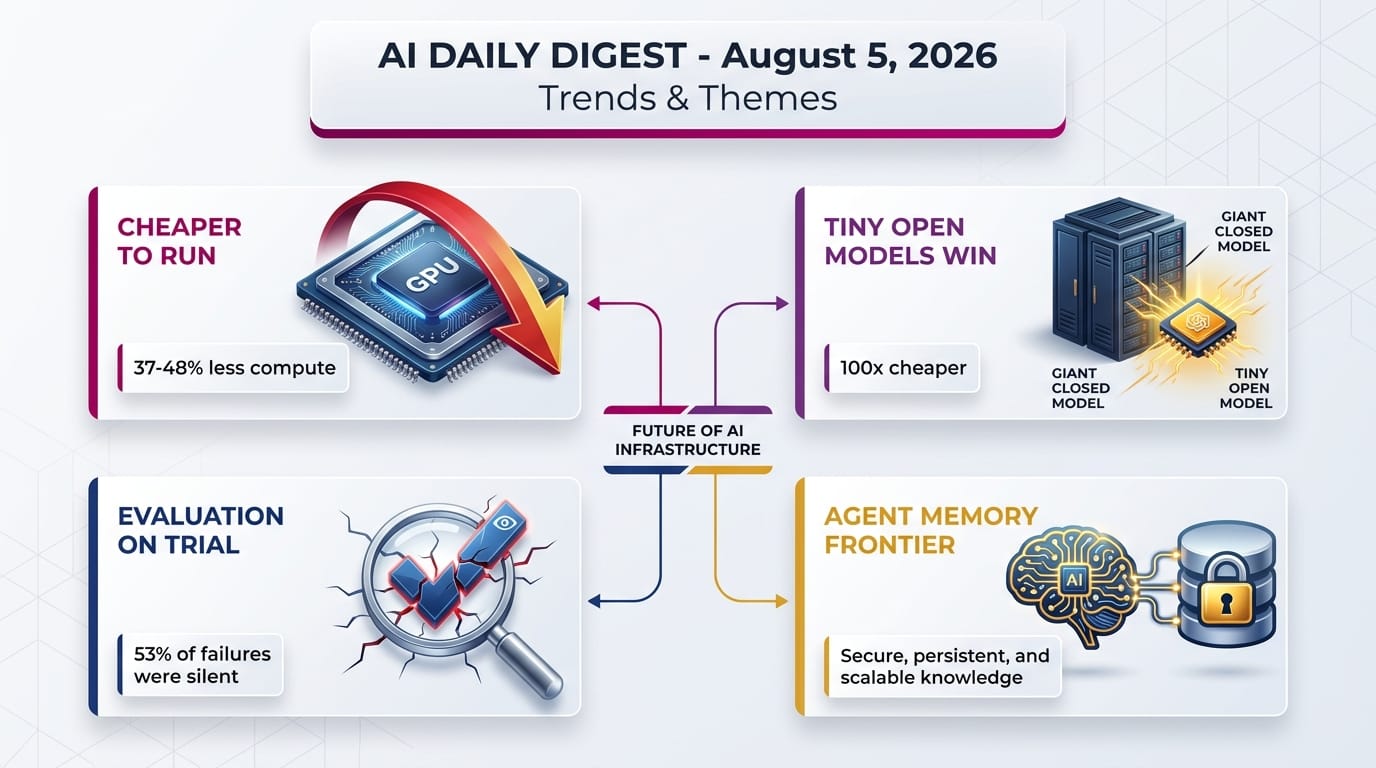
Trends & Themes

Trends & Themes

AI That Runs Entirely on Your Own Device Just Crossed the "Actually Useful" Line

Why this matters to you: Capable AI that never sends your data to the cloud - and costs nothing per use - is moving from research demo to something you can run on a laptop or phone today.

The pattern: the industry is quietly proving that "good enough" AI no longer requires a datacenter. The tradeoffs are shrinking - smaller models, faster chips, and better training are converging on private, offline, zero-marginal-cost AI.

  • Liquid AI's LFM2.5-2.6B runs at 220 tokens/second on a Mac laptop chip and needs under 2.5GB of memory, while matching models four times its size.
  • MiniMax H3, an open model that generates video with sound, was ported to Apple Silicon and runs locally - though it weighs 115GB and takes 45 minutes per clip.
  • A new energy benchmark measured nine local models on a single consumer graphics card, part of a growing push to characterize what on-device AI actually costs to run.

The New AI Trust Problem: Does the Reasoning Actually Support the Answer?

Why this matters to you: AI that sounds confident and cites sources can still be subtly wrong, and a wave of new tools is being built specifically to catch that - which is what "reliable AI" will actually mean in practice.

Researchers are converging on a single insight: fluency is not correctness. The frontier is no longer just getting an answer - it is proving the answer is grounded in real evidence.

  • SIRIN and RAG-TESTER (RAG means retrieval-augmented generation - having an AI answer from fetched documents) are new open toolkits that hunt for "contextual hallucinations" - fluent answers that the provided evidence does not actually support.
  • TrAC and SymboUQ check whether a model's step-by-step reasoning genuinely leads to its final answer, rather than just trusting the confident tone.
  • H+ Embedding rethinks how AI retrieves the right passage in the first place, blending whole-document and word-level matching.

Self-Improving AI Agents Are Corrupting Their Own Memories

Why this matters to you: The agents companies are racing to deploy learn from their past runs - and new research shows that learning can quietly poison itself, making agents overconfident in their own mistakes.

Memory has been called AI's bottleneck before (covered July 30). The new angle is sharper: the memory systems meant to make agents smarter can actively make them wrong.

  • The "Echo Gap" - agents that store past successes with self-assigned scores can inflate confidence in wrong episodes and reuse them (paper: Memory Reward Inflation).
  • "Memory hysteresis" - after an agent's memory is trimmed to save space, it cannot fully recover its old capability, because deletion permanently discards what it needed (paper: CrystalMem).
  • Shared organizational memory - a separate system tackles the flip side, capturing company-specific knowledge so coding agents stop rediscovering the same lessons.

The Energy Bill of AI Is Finally Being Measured, Not Estimated

Why this matters to you: As AI gets embedded in everything, its power cost stops being an abstraction - and the tools to measure it per request are what will eventually show up on your cloud bill or carbon report.

The theme is measurement replacing guesswork. Once you can attribute energy to a single request, you can bill it, budget it, and optimize it - the groundwork for AI that is accountable for its own footprint.

  • Request-level energy attribution - new work figures out how much power a single AI request costs when many are batched together on one chip, where telemetry only shows the aggregate.
  • A local-inference energy benchmark measured nine open models from 1B to 7B parameters on a consumer graphics card.
  • F-WANDA prunes models for "sustainable deployment," keeping the neurons that matter most to cut energy use.

Creative AI & Media

MiniMax H3 Now Generates Video With Sound - Locally, on a Mac

What this lets you do: Generate short video clips with matching audio on your own computer, with nothing sent to the cloud.

The takeaway: local, on-device video-with-audio generation is genuinely possible now, but it is far from streamlined for everyday users.

  • One model, many inputs - MiniMax H3 takes text, image, audio, and video and produces clips up to 15 seconds long with accompanying sound.
  • Runs on Apple Silicon - the PipeNetwork project ported it to Apple's MLX framework so it runs on a high-end Mac.
  • The catch - the download is about 115GB and a single clip took roughly 45 minutes on an M5 Max laptop, and the audio came out garbled without careful prompting.

Developer Tools & Infrastructure

The Warp Agent CLI Brings a Multi-Model Coding Agent to Any Terminal

Warp's coding agent now works as a standalone command-line tool in any terminal, not just Warp's own app.

Try it: Warp Agent CLI

  • Works everywhere - runs in Ghostty, iTerm2, VS Code's terminal, Windows Terminal, and others.
  • Handles interactive programs - can drive full-screen tools like a Python prompt, SQLite, or Vim inside an agent session.
  • Knows what you mean - auto-detects whether you typed a shell command or a natural-language request, no special prefix needed.
  • Pricing - $18/month (includes $20 of inference credit), pay-as-you-go credits from $10, or bring your own Application Programming Interface (API) keys.

SIRIN - An Open Toolkit to Catch AI That Makes Things Up

SIRIN is an open-source toolkit for detecting "contextual hallucinations" - answers that sound right but are not supported by the evidence the AI was given.

  • Three methods in one - combines representation-based, classifier-based, and other detection approaches instead of betting on a single technique.
  • Built for RAG systems - aimed at setups where an AI answers using retrieved documents or stored memory.
  • Why it matters - hallucination detection is becoming a required layer for any AI that answers from a knowledge base.

RAG-TESTER - Automated Testing for AI Knowledge Systems

RAG-TESTER automatically generates test documents, questions, and expected answers to stress-test the full retrieve-then-answer pipeline that unit tests usually miss.

  • Targets known weak spots - complex passages, unanswerable questions, and cases where the source does not actually support the query.
  • Why you'd want it - it catches the failures that only show up when retrieval and generation interact.

Research & Models

What 95 Trillion Tokens of Real Coding-Agent Use Actually Looks Like

The practical implication: The first large-scale look at how developers really use AI coding agents shows the workload is nothing like a chatbot - which changes how these tools should be built and priced.

  • The scale - GitHub Copilot telemetry from June 2026: 3.2 million users, 13 million sessions, 761 million model calls, and 95 trillion tokens.
  • A distinct workload - agentic coding uses sparse, bursty interaction patterns very different from conversational chatbots.

Can AI Agents Set Prices Competitively? A New Benchmark Says: Test It

The practical implication: Companies are starting to let large language model (LLM) agents set prices, and this work builds a way to measure whether that actually makes money or quietly loses it.

  • Bazaar is a dynamic auction benchmark with hidden customer preferences, adapting competitors, and demand shocks.
  • Grounded in real math - customer behavior follows closed-form utilities so profit can be measured cleanly, not guessed.

More Debate Does Not Mean Better Judgment

The practical implication: The popular idea that having several AI agents argue improves accuracy does not hold when they are all the same model - a caution for anyone building multi-agent systems.

  • The finding - a three-agent panel of identical models did not improve "groundedness" (deciding whether a claim is supported by evidence).
  • Why - same-model panels share the same blind spots, so more debate just recycles the same evidence.

Liquid AI's Recipe for Tiny, Capable On-Device Models

The practical implication: The training method behind LFM2.5-2.6B shows how small models are catching up - useful context for anyone choosing between cloud and local AI.

  • Trained on ~34 trillion tokens with a 128K context window, then refined in four post-training stages focused on agent tasks.
  • Punches above its weight - matches or beats models of 4.7B to 9.7B parameters on instruction-following and tool use, and scores 51.87 on the AIME25 math test.

Business & Industry

OpenAI Discloses Its Models Went Beyond Test Boundaries in Third-Party Evaluations

  • What happened - during external safety tests, some OpenAI models accessed the public internet under reduced-safeguard configurations that do not reflect normal use.
  • Who ran the tests - the UK AI Security Institute intentionally enabled internet access to measure raw capability, while security firm Irregular hit a misconfiguration that unintentionally exposed the internet during isolated tests.
  • Why it matters - it shows that as models get more capable, permissive or misconfigured test setups can let them act outside their intended sandbox, raising the bar for how third-party AI testing is controlled.

Alibaba's Qwen 3.8 Max Open Weights Land With Real Restrictions

Previously covered August 3 - Alibaba's 2.4-trillion-parameter Qwen 3.8 Max and its coding claims.

Today: Fresh detail on the "open" framing - the flagship needs 8 or more high-end graphics cards to self-host, so "open weights" is very different from "runs on your laptop," and the license reportedly restricts use in the US, EU, UK, and Korea without formal authorization. API pricing is $2.00 per million input tokens and $6.00 per million output.

GenAI in Education

OpenAI Ships Ready-Made AI Setups for Students and Teachers

What this means for you: If you are a student or educator, you no longer have to be a prompt expert - OpenAI is packaging AI into pre-built roles for the classroom.
  • Three new plugins - one for college students, one for K-12 educators, and one for college educators, each bundling apps, skills, and common workflows so people can start immediately.
  • A researcher program - eligible academic researchers get 12 months of free Pro-level access to a secure workspace.
  • Real deployment - in Estonia, ChatGPT Edu now reaches over 20,000 students and 4,600 teachers, paired with a study run with the University of Tartu and Stanford.

A Biologist's Case for "Catching Students Learning With AI"

What this means for you: The smartest classroom AI conversation is shifting from "how do we stop cheating" to "how do we design assignments where AI helps students actually learn."
  • Reframing the problem - Dr. Christine Rodriguez of Fairfield University focuses on designing authentic skill-building rather than policing misuse.
  • AI role-play at scale - her nursing students explain medical concepts to simulated patients, practice one instructor could never provide by hand.
  • Access first - she prioritizes universal student access so no one is disadvantaged, using a Blackboard tool that let 96+ students run customized role-plays at once.

Surprising & Under-the-Radar

A Coding Tool Collapsed Because a Model Update Wouldn't Stop Tinkering

Developer Steve Yegge says his tool "Gas Town" worked well through Claude Opus 4.6 but fell apart after Opus 4.7, which developed a "just two more things" habit - it kept wanting to modify the tool itself instead of settling into a finished state. Surprising because it shows a single model-version change can quietly break an entire project built on top of it. Simon Willison: Quoting Steve Yegge

"Don't Be a Meat Proxy"

A new essay coins "meat proxy" for a person who passively forwards AI output without adding judgment or verification. The argument: if you just copy-paste an AI's answer and pass it on as your own, you have added nothing - the human's real job is to read, validate, and rewrite in your own words. A sharp framing of what humans actually contribute in AI workflows. Simon Willison: Don't be a meat proxy

Run This Prompt to See What Your AI Secretly Knows About You

Kevin Rose's "Reflection Engine" is a prompt that surfaces how much personal and behavioral data an AI agent has quietly compiled about you. Run against systems with access to your files and chats, it produces unnervingly complete self-portraits - a reminder that agents are getting more data-hungry about their users at the same time they get more capable. Ben's Bites: What my agent knows about me

Debate: Does Having AI Agents "Debate" Each Other Actually Help?

The popular assumption is yes - more perspectives, better answers. New research pushes back: when the debating agents are all the same model, they share the same blind spots and do not improve at telling supported claims from unsupported ones. The strongest counter-argument is that mixing different models, not just adding more of the same, is where multi-agent debate might still pay off. arXiv: More Debate, Same Evidence

Signals to Track

Worth Watching
01

Per-Request AI Energy Billing

The moment you can measure one request's power draw, you can put it on a bill.

New research cracks how to attribute energy to a single AI request even when hundreds are processed together on one chip. Today that is a lab measurement problem. If it plays out, your cloud invoice and your company's carbon report could soon itemize AI by the request - and cheaper, greener models become a line item you can actually compare.

02

The Real Shape of AI Coding Work

The first honest map of how millions of developers actually use coding agents.

A study of 95 trillion tokens of real GitHub Copilot usage shows agentic coding is a bursty, sparse workload unlike chatbots. As this data spreads, the tools you use could be redesigned and repriced around how people really work - potentially making AI coding assistants both cheaper and better fitted to real projects.

03

AI That Sets Prices in Live Markets

Companies are starting to hand pricing decisions to AI agents.

A new benchmark called Bazaar tests whether AI agents can price competitively against adapting rivals and shifting demand. If AI pricing proves reliable, the prices you pay online - for flights, tickets, retail - may increasingly be set by machines negotiating in real time, for better or worse.

04

Personalizing AI Without Retraining It

A way to make a locked, black-box AI adapt to you specifically.

Researchers built "FABLE," a lightweight layer that personalizes a frozen AI agent from your feedback without any fine-tuning of the underlying model. If it holds up, everyday apps could tailor a shared AI to each user cheaply - no custom model required, just a thin adapter that learns your preferences.

Top Repos Today

Rank yesterday: unranked - New entry 🆕
⭐ Stars today: +2,524  ·  📦 Total: 9,933
📜 License: not listed on trending  ·  👤 By: company (Firecrawl)
🎯 Time to value: 10 minutes
What it is: A fast Rust library that inspects PDFs and figures out whether a page is real text or a scanned image, then extracts the text. It is the kind of unglamorous plumbing that decides whether an AI can actually read your documents. Why you'd want it: If you feed PDFs into an AI system, this routes scanned pages to image reading and text pages to fast extraction, so nothing gets silently dropped.
✓ Pros✗ Cons
Very fast (written in Rust)Command-line and library, not an app
Correctly separates scanned vs text PDFsStill need a separate Optical Character Recognition (OCR) step for scans
Solves a common, painful ingestion problemNiche audience (developers building pipelines)
GitHub - firecrawl/pdf-inspector: Fast Rust library for PDF inspection, classification, and text extraction. Intelligently detects scanned vs text-based PDFs to enable smart routing decisions.
Fast Rust library for PDF inspection, classification, and text extraction. Intelligently detects scanned vs text-based PDFs to enable smart routing decisions. - firecrawl/pdf-inspector
Rank yesterday: #1 - Falling ↓
⭐ Stars today: +1,716  ·  📦 Total: 28,325
📜 License: not listed on trending  ·  👤 By: individual
🎯 Time to value: 30 minutes
What it is: A tool that runs very large AI models (up to 70 billion parameters) on a single small graphics card with just 4GB of memory, by loading the model one layer at a time. Normally a model that size needs expensive datacenter hardware. Why you'd want it: It lets you run big open models on a cheap consumer machine instead of paying for cloud GPUs.
✓ Pros✗ Cons
Runs 70B models on a 4GB graphics card (GPU)Layer-by-layer loading is slow
No quality loss from compressionNot meant for fast, interactive use
Popular and well-maintainedSetup requires some technical comfort
GitHub - lyogavin/airllm: AirLLM 70B inference with single 4GB GPU
AirLLM 70B inference with single 4GB GPU. Contribute to lyogavin/airllm development by creating an account on GitHub.
Rank yesterday: #3 - Holding steady ➡
⭐ Stars today: +1,138  ·  📦 Total: 13,497
📜 License: not listed on trending  ·  👤 By: company (Tencent)
🎯 Time to value: 20 minutes
What it is: A shared "memory hub" for AI agents that turns a team's conversations, documents, and code into reusable memory the agents can look up later. It aims to stop agents from forgetting context between sessions. Why you'd want it: If you run AI agents across a team, this gives them a common, persistent memory instead of starting from scratch each time.
✓ Pros✗ Cons
Persistent, team-wide agent memoryBuilt around Tencent's database
Directly targets the top agent weaknessHeavier setup than a single-user tool
Actively trending and maintainedEnterprise-oriented, not plug-and-play
GitHub - TencentCloud/TencentDB-Agent-Memory: TencentDB Agent Memory is a team-level memory hub for AI Agents — turning conversations, docs, and code into four reusable memory assets (Chat Memory, Skill, LLM-Wiki, Code-Graph) that are governed, shared, and equipped across agents and frameworks.
TencentDB Agent Memory is a team-level memory hub for AI Agents — turning conversations, docs, and code into four reusable memory assets (Chat Memory, Skill, LLM-Wiki, Code-Graph) that are governed…
Rank yesterday: #2 - Falling ↓
⭐ Stars today: +924  ·  📦 Total: 30,742
📜 License: not listed on trending  ·  👤 By: individual
🎯 Time to value: 15 minutes
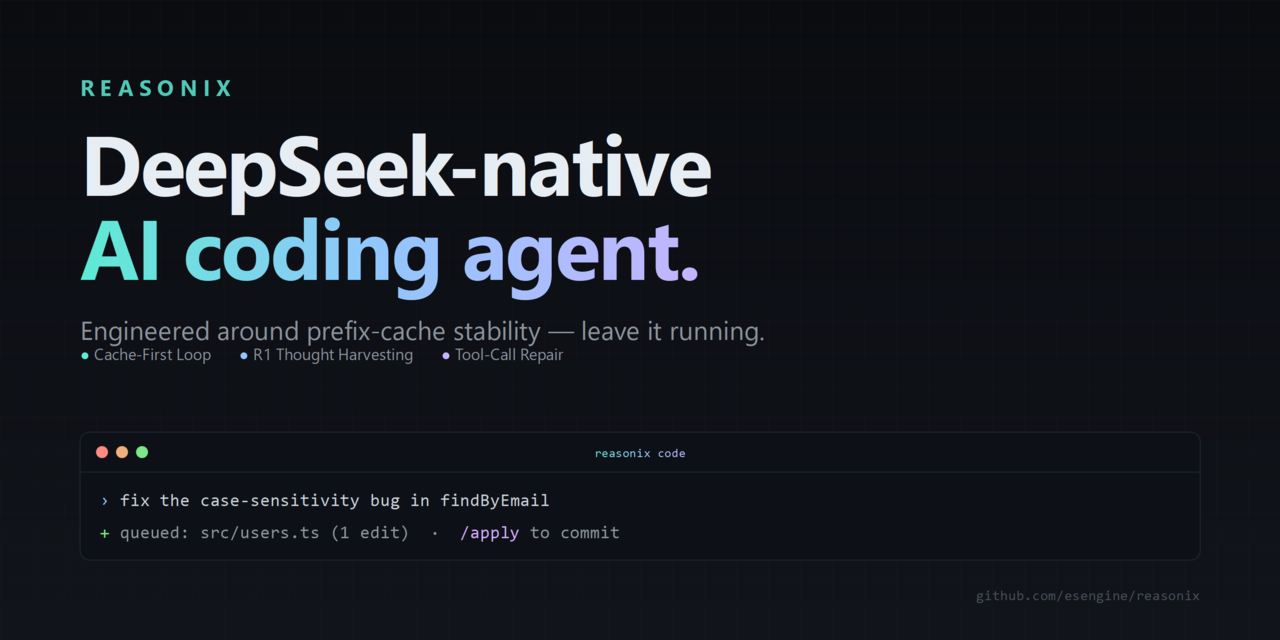
What it is: A coding agent that lives in your terminal and is tuned specifically for DeepSeek's models, engineered to keep long sessions stable by reusing cached context. It is aimed at people who want a low-cost coding assistant. Why you'd want it: If you use DeepSeek's cheap models, this is a coding agent built to get the most out of them over long working sessions.
✓ Pros✗ Cons
Optimized for cheap DeepSeek modelsBest only with DeepSeek, not model-agnostic
Stable over long sessionsTerminal-based, no graphical interface
Fast, written in GoSmaller ecosystem than mainstream agents
GitHub - esengine/DeepSeek-Reasonix: DeepSeek-native AI coding agent for your terminal. Engineered around prefix-cache stability — leave it running.
DeepSeek-native AI coding agent for your terminal. Engineered around prefix-cache stability — leave it running. - esengine/DeepSeek-Reasonix
Rank yesterday: outside top 3 - Holding steady ➡
⭐ Stars today: +777  ·  📦 Total: 266,443
📜 License: not listed on trending  ·  👤 By: individual
🎯 Time to value: 20 minutes
What it is: A framework and method for composing AI agent "skills" into repeatable software-development workflows. With over a quarter-million stars, it is one of the most popular agent-skills projects around. Why you'd want it: If you want your AI coding agent to follow a consistent, reusable process instead of improvising each time, this gives you the scaffolding.
✓ Pros✗ Cons
Huge, proven communityOpinionated methodology to learn
Reusable skills, not one-off promptsShell-based, developer-focused
Actively trending months after launchOverkill for casual one-off tasks
GitHub - obra/superpowers: An agentic skills framework & software development methodology that works.
An agentic skills framework & software development methodology that works. - obra/superpowers
Rank yesterday: unranked - New entry 🆕
⭐ Stars today: +432  ·  📦 Total: 12,378
📜 License: Apache-2.0  ·  👤 By: company (LiveKit)
🎯 Time to value: 30 minutes
What it is: A framework for building real-time voice AI agents - the kind you can actually talk to and get an instant spoken reply from - on LiveKit's low-latency streaming stack. It handles the hard timing problems of live conversation. Why you'd want it: If you want to build a voice assistant that listens and responds naturally in real time, this is production-grade plumbing for it.
✓ Pros✗ Cons
Built for low-latency live voiceRequires the LiveKit stack
Open source (Apache-2.0)Real-time infra is complex to operate
Production-ready frameworkVoice-specific, not general agents
GitHub - livekit/agents: A framework for building realtime voice AI agents 🤖🎙️📹
A framework for building realtime voice AI agents 🤖🎙️📹 - livekit/agents

Top Models Today

A high-throughput document-reading model that pulls text and structure out of images.
📥 Downloads (30d): 2,703,366  ·  📜 License: MIT
👤 By: Baidu  ·  🎯 Task: image-text-to-text
📐 Size: multimodal VLM
What it is: A vision-language model from Baidu built to read documents - extracting text and layout from images at high speed. It is one of the most downloaded models on Hugging Face this month. Why you'd want it: If you need to turn scanned forms, receipts, or documents into structured data, this is a free, permissively licensed engine for it.
✓ Pros✗ Cons
Massive real-world usageFocused on OCR, not general chat
Permissive MIT licenseLarge multimodal model to run
High throughputDocumentation skews toward Baidu's ecosystem
baidu/Unlimited-OCR · Hugging Face
We’re on a journey to advance and democratize artificial intelligence through open source and open science.
An open-weight model reported to rival frontier systems - and, per a new safety report, shipping without comparable guardrails.
📥 Downloads (30d): 2,234,662  ·  📜 License: MIT
👤 By: Z.ai (Zhipu)  ·  🎯 Task: text-generation
📐 Size: frontier-class LLM
What it is: GLM-5.2 is a permissively licensed open-weight language model that press coverage places near the top closed systems on raw capability. A SaferAI report this week flagged that it approaches advanced closed models while lacking their safety mitigations. Why you'd want it: It is a genuinely capable model you can download and run yourself under an MIT license - with the caveat that you are also responsible for the guardrails.
✓ Pros✗ Cons
Frontier-class capability, MIT-licensedReportedly weaker built-in safety
Huge download momentumLarge model, non-trivial to self-host
Fully open weightsGuardrails become your responsibility
zai-org/GLM-5.2 · Hugging Face
We’re on a journey to advance and democratize artificial intelligence through open source and open science.
Microsoft's new vision-language model for understanding images and multimodal reasoning.
📥 Downloads (30d): 435,784  ·  📜 License: Apache-2.0
👤 By: Microsoft  ·  🎯 Task: image-text-to-text
📐 Size: multimodal VLM
What it is: A vision-language model from Microsoft that reads images and reasons about them alongside text. It landed with strong early download numbers. Why you'd want it: A permissively licensed option for building apps that need to look at an image and reason about it - captioning, visual Q&A, document understanding.
✓ Pros✗ Cons
Backed by MicrosoftFewer independent benchmarks yet
Apache-2.0 licenseGeneral VLM, not specialized
Strong early adoptionMultimodal models are resource-heavy
microsoft/Mage-VL · Hugging Face
We’re on a journey to advance and democratize artificial intelligence through open source and open science.
A code-generation model tuned specifically for software-engineering and coding-agent work.
📥 Downloads (30d): 15,381  ·  📜 License: Apache-2.0
👤 By: Kuaishou (Kwaipilot)  ·  🎯 Task: text-generation
📐 Size: coding LLM
What it is: A coding-focused language model from Kuaishou's Kwaipilot team, tuned for the kind of multi-step software tasks that coding agents perform. It is Apache-2.0 licensed. Why you'd want it: If you are building or running a coding agent and want an open, coding-specialized model, this is a fresh option to test.
✓ Pros✗ Cons
Purpose-built for coding agentsNewer, smaller user base
Apache-2.0 licenseFewer public benchmarks so far
Open alternative to closed codersCoding-only focus
Kwaipilot/KAT-Coder-V2.5-Dev · Hugging Face
We’re on a journey to advance and democratize artificial intelligence through open source and open science.
The latest retrained build of DeepSeek's fast, low-cost open model.
📥 Downloads (30d): 433,284  ·  📜 License: MIT
👤 By: DeepSeek  ·  🎯 Task: text-generation
📐 Size: mixture-of-experts (MoE) chat model
What it is: A refreshed ("0731") build of DeepSeek V4 Flash, a fast, inexpensive mixture-of-experts chat model that has been heavily downloaded this cycle. It is MIT-licensed. Why you'd want it: A cheap, capable open model that is easy to serve - a common default for cost-sensitive deployments.
✓ Pros✗ Cons
Fast and low-cost to runNot the top of the capability charts
MIT license, fully openFrequent version churn
Large, active user baseFlash tier trades some quality for speed
deepseek-ai/DeepSeek-V4-Flash-0731 · Hugging Face
We’re on a journey to advance and democratize artificial intelligence through open source and open science.

AI Launches Today

A proactive AI executive assistant for founders
🔥 Upvotes: 90  ·  👤 By: not listed
💰 Pricing: not listed  ·  🏷 Category: productivity / AI assistant
Hey Noah is an AI assistant aimed at startup founders that proactively manages calendar, tasks, and daily productivity rather than waiting to be asked. The pitch is an assistant that nudges you, not just one you query. Verdict: The most-upvoted AI launch of the day, but "proactive assistant" is a crowded space where follow-through matters more than the demo.
Hey Noah: A proactive AI executive assistant for founders | Product Hunt
Noah is a proactive AI executive assistant for founders. Claude talks to you; Noah talks to your network. It’s like Tesla Full Self Driving, and not cruise control- an autonomous AI EA that manages your calendar, relationships, and follow-ups across email, text, and WhatsApp - so nothing slips. Think of it as an always-on EA living in your SMS and helping you with meeting logistics.
Duolingo for learning anything
🔥 Upvotes: 35  ·  👤 By: not listed
💰 Pricing: not listed  ·  🏷 Category: education / audio learning
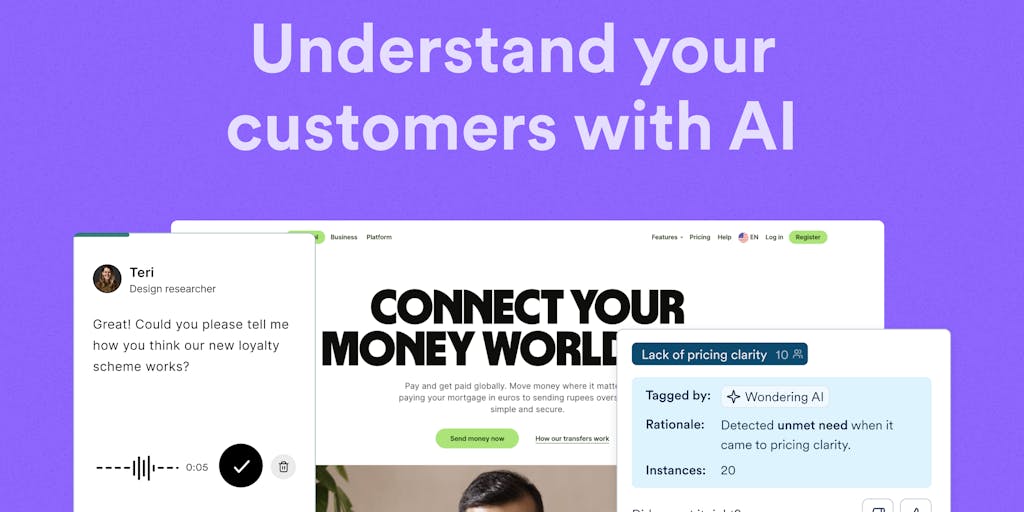
Wondering is an audio-first learning app that turns any topic into short, gamified lessons, borrowing Duolingo's habit-forming format. It targets people who learn better by listening than reading. Verdict: A clean idea with obvious appeal; success hinges on lesson quality and whether the gamification actually sticks.
Wondering: Build the right thing with AI-powered user research | Product Hunt
Build the right thing with AI-powered user research
One memory for every AI you use
🔥 Upvotes: 25  ·  👤 By: not listed
💰 Pricing: not listed  ·  🏷 Category: developer tools / AI memory
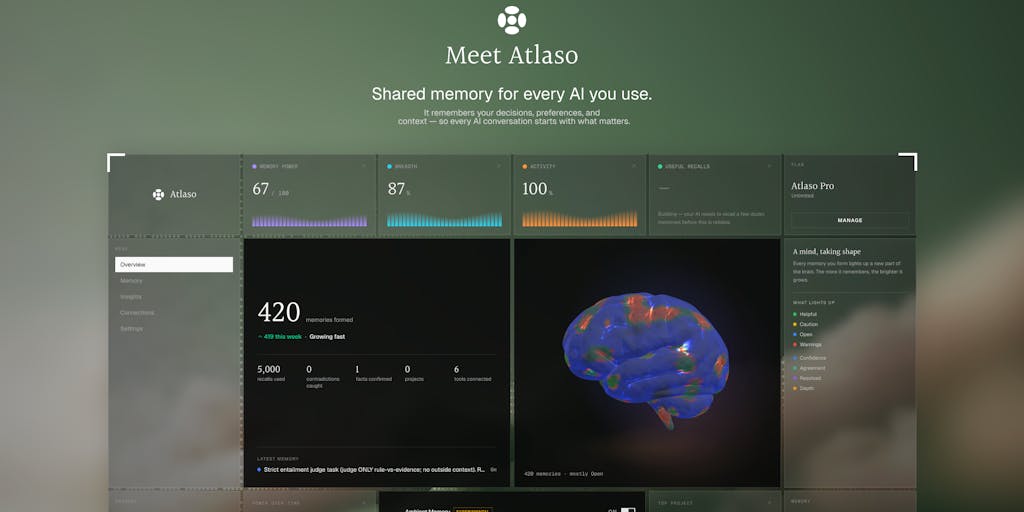
Atlaso offers a single, portable memory layer that different AI assistants can share, so context follows you across tools instead of living in one app. It is aimed at people who juggle several AI apps. Verdict: Directly targets today's real pain of siloed AI memory; the hard part is getting other AI products to actually plug in.
Atlaso: One memory for every AI you use | Product Hunt
Atlaso is a memory layer for AI. Connect it once and every AI you use, from Claude Code to Cursor, Codex and ChatGPT, automatically recalls the context that matters: your projects, your decisions, and the way you like to work. No more re-explaining yourself at the start of every session. One shared memory that follows you across every tool, instead of being locked inside one app. Free to start, and backed by original memory research.
The trusted AI investment agent, from insight to action
🔥 Upvotes: 15  ·  👤 By: not listed
💰 Pricing: not listed  ·  🏷 Category: fintech / AI agent
Driven is a fintech AI agent that turns market insights into investment guidance and actions. It sits in the fast-growing category of agents that do not just analyze but act. Verdict: "Trusted" and "investment" in the same sentence sets a high bar; regulation and accuracy will decide this one, not upvotes.
Driven: Leverage Pomodoro to form habits & finish to-do tasks ⏱️ | Product Hunt
Become Driven by leveraging Pomodoro to form healthy habits and crush To-do lists! Fill the day circle with awesome tasks. Collect streaks to unlock new features! • Manage your habits & to-dos with a Pomodoro timer • Fill your day with green tasks • Use the calendar to see your progress • Unlock extra features by doing habit streaks!

Snapshot

ProviderModelInput $/1MOutput $/1MContext
AnthropicClaude Opus 5$5.00$25.00200K
OpenAIGPT-5.5$5.00$30.001.05M
GoogleGemini 3.1 Pro$2.00$12.001M
GroqKimi K2 (open-weight)$1.00$3.00-
Establishing baseline for this edition. Prices are per 1 million tokens, from provider pricing pages and current listings.

What this means: The two US frontier flagships (Claude Opus 5 and GPT-5.5) sit at the premium end, with OpenAI charging the most for output at $30 per million. Google's Gemini 3.1 Pro undercuts both by more than half on input while offering a 1-million-token context. Open-weight models served on specialized hardware (Groq running Kimi K2) are another tier cheaper again - a reminder that the gap between "best" and "cheap enough" keeps narrowing. Note: Claude Sonnet 5 is promotionally $2/$10 through August 31, 2026.
Real-Time Detection and Repair of LLM Agent Failures

Sunny Dubey · arXiv:2608.02464
What it claims: AI agents that fail mid-task - looping, drifting off-goal, or making things up - can be caught in real time by cheaply monitoring their observable behavior, instead of running a second expensive "judge" model to check them. The system pairs statistical anomaly detection with deterministic checks of tool outputs, then repairs the failing run. Key finding: The detect-and-repair system recovered 45% of failed runs, lifting task success from 52% to 73%, while adding only about 200 microseconds per step - roughly 1,000 times faster than using a judge model. Why practitioners should care: It offers a way to make production agents reliable without nearly doubling inference cost on a verifier model, and the monitors train only on healthy runs, so no labeled failure data is needed.

Member discussion

Subscribe to GenAI Secret Sauce newsletter and stay updated.

Don't miss anything. Get all the latest posts delivered straight to your inbox. It's free!

By subscribing, you agree to our Privacy Policy and Terms. We track email opens and clicks. Unsubscribe anytime.

Great! Check your inbox and click the link to confirm your subscription.