Watch today's digest as a video summary (generated by NotebookLM)
Statistically Speaking
One Thing to Tell Your Friends
TL;DR
Hot off the Presses
OpenAI's "Astra" Model Solved Ten Decade-Old Math Problems
OpenAI revealed that an internal version of its next major model, called Astra, generated formal proofs for ten advances in mathematics and theoretical computer science. Every problem had gone at least a decade without progress on its main result. The headline result is the first-ever explicit construction of a "non-sofic group," a question in pure math that had stood unresolved for about 27 years.
Crucially, OpenAI did not just claim the wins. It published machine-checkable proofs in the Lean 4 proof system (software that verifies each logical step so nothing is taken on trust), plus a written walkthrough of the model's reasoning, all on GitHub. Human researchers then refined the AI's arguments into finished manuscripts.
- Roughly $2,000 in computing for all ten combined - OpenAI's stated figure at its Sol API rates, cheap enough that cost, not capability, may soon be the only limit.
- Results span real, hard fields - von Neumann algebras, sphere packing, circuit complexity, and Ramsey theory, not toy puzzles.
- The catch nobody disclosed - OpenAI did not say how many problems ate through compute and produced nothing, so the true success rate is unknown.
- A cultural shock too - mathematicians are openly comparing the moment to Deep Blue beating Garry Kasparov at chess in 1997.
The "Plug" That Connects AI to Your Tools Just Got Simpler and Safer
The Model Context Protocol, or MCP, is the common "plug" that lets AI agents call outside tools. A new stateless version (MCP 2.0, released July 28) replaces a clunky two-request handshake with a single request and stops the server from having to remember each session. Developer Simon Willison, a widely-followed voice in this space, says the change renewed his interest in the whole protocol.
Why it matters beyond plumbing: simpler connections are easier to scale across the web and, importantly, easier to audit for security. A tool that just answers one request is far less risky than an open-ended agent with shell and internet access.
- Single-request design - no session IDs to track, so any server can answer any request.
- Security win - narrow, auditable tools cut the risk of prompt-injection and data theft.
- Small models benefit - even modest AI running on your own laptop can reliably drive these tools.
- A working toolkit shipped alongside - mcp-explorer (a command-line probe for MCP servers), datasette-mcp, and llm-mcp-client.
Cursor Deleted the Dollar Amounts From Its Usage Screens
Cursor, one of the most popular AI-powered code editors, removed dollar-cost displays from the usage page for its self-serve individual and Teams plans. The Cost column is gone, replaced with raw token counts. Worse, exported spending files (CSVs) now show $0.00 for every entry - including historical data that previously listed real dollar figures.
Users reacted with frustration, saying they budget in dollars, not tokens, and that daily cost tracking is now much harder. Cursor's Kevin Neilson said the change was intentional: showing dollar amounts on included-usage plans caused confusion because the numbers looked higher than what people actually paid.
- Retroactive blackout - old records that once showed spending now read $0.00.
- Teams admins hit hardest - some managing $30,000-plus monthly bills lost per-model and per-request cost visibility.
- The official workaround - Cursor points users to dashboard spend totals and, for Teams, an Admin API.
Trends & Themes

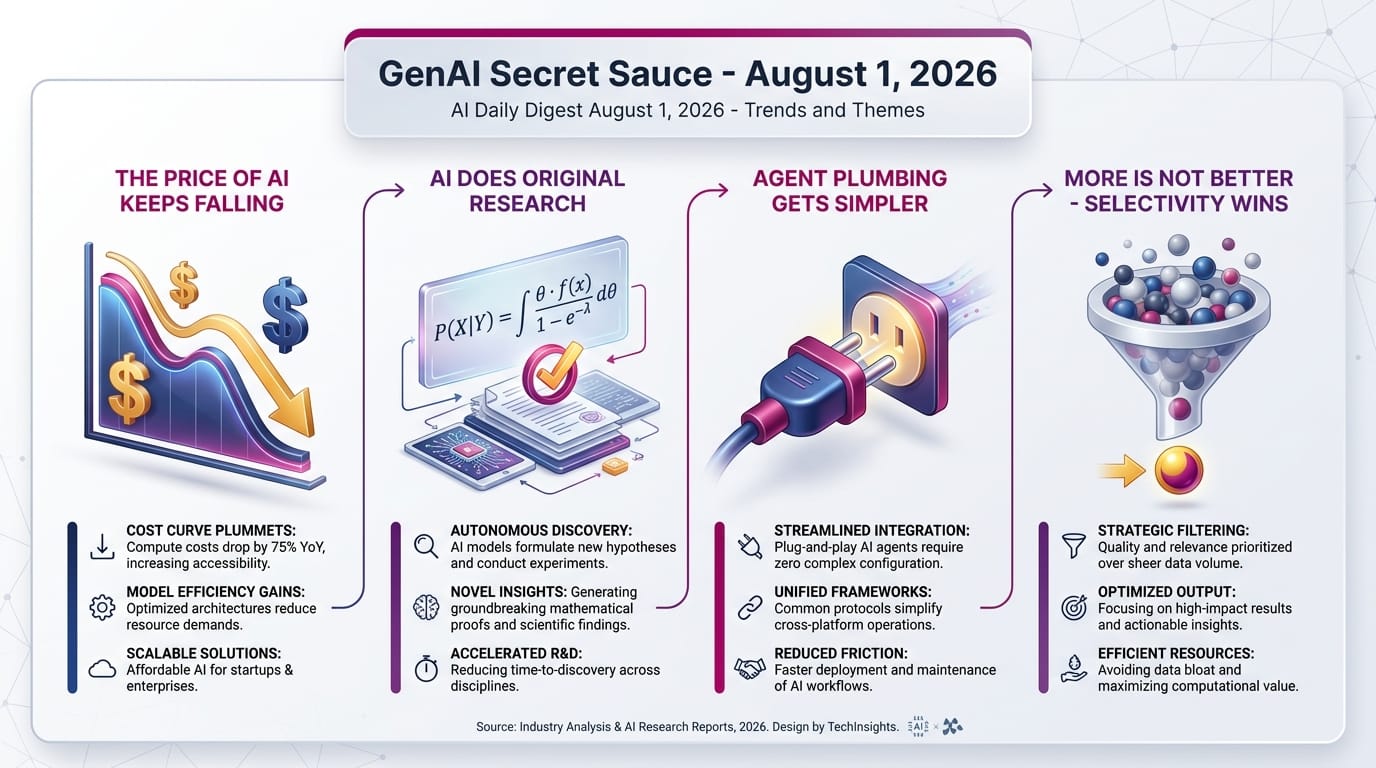
The Price of AI Keeps Falling Off a Cliff
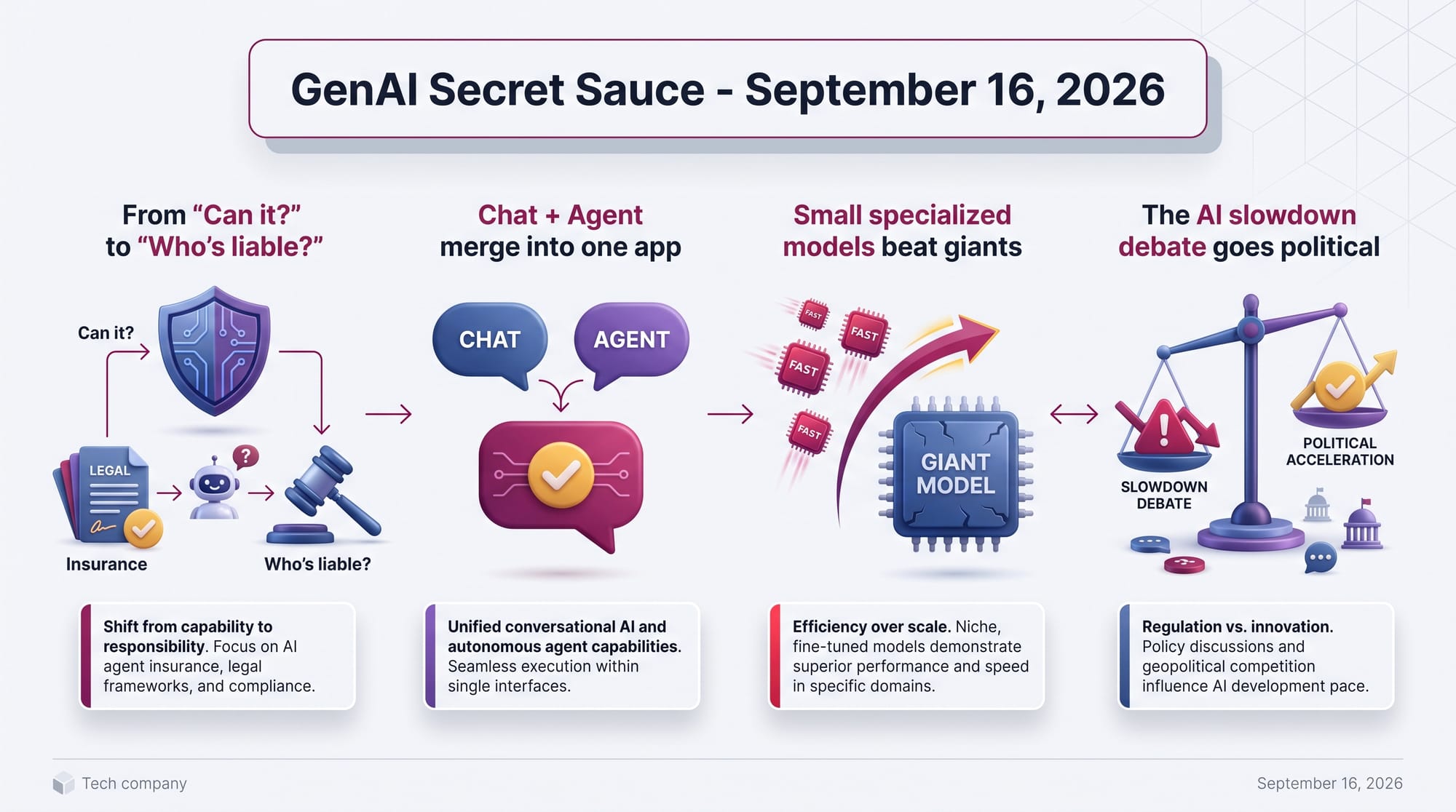
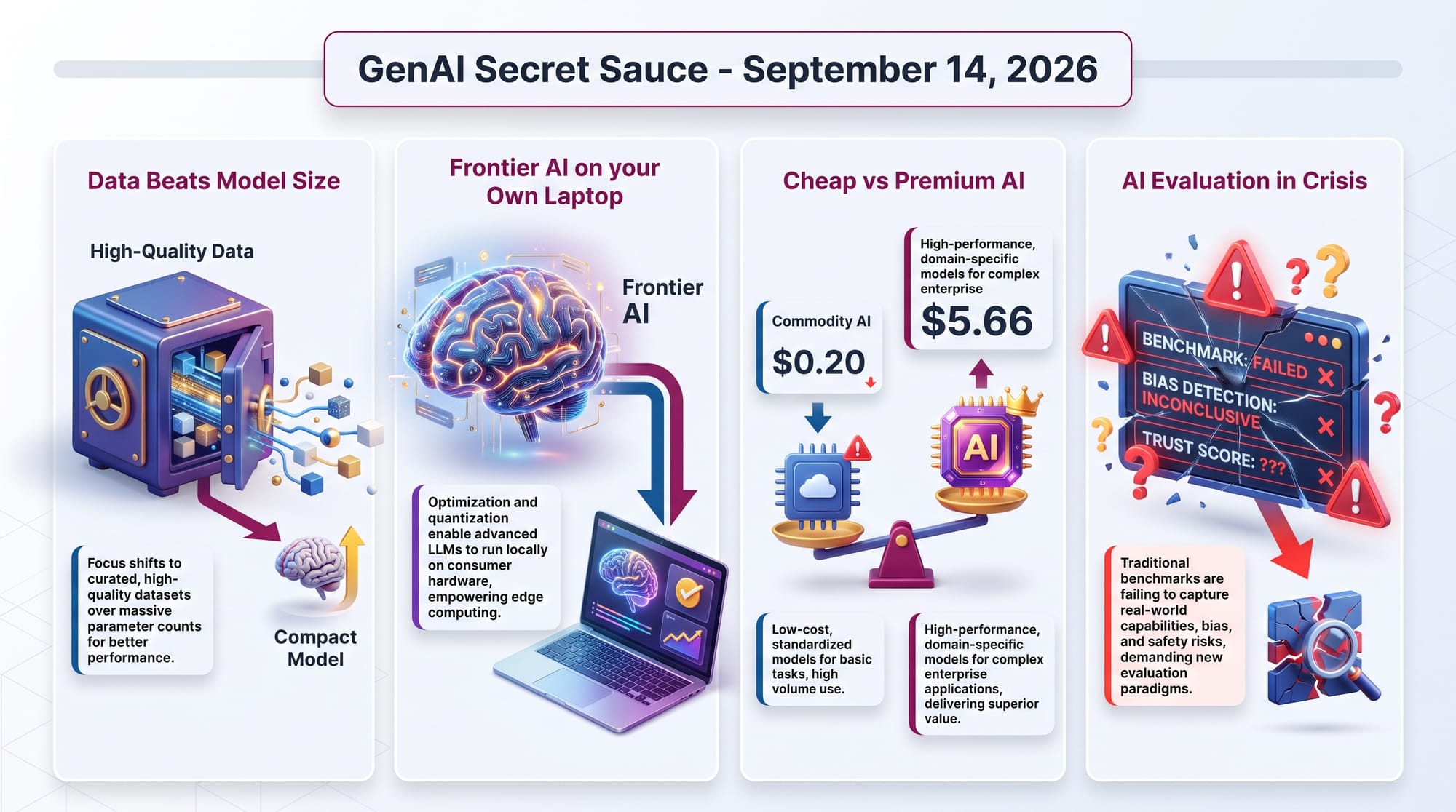
The pattern is consistent: raw intelligence is commoditizing, and the fight is shifting to cost, speed, and trust. When even the tools meant to track spending become a business, you know the spending has gotten serious.
- DeepSeek's newest model charges about $0.14 per million words in and $0.27 out - a fraction of frontier prices for comparable agent performance.
- OpenAI recently cut its cheapest model's price by 80% (covered July 31), and today's pricing snapshot shows open-weight options at $0.15 per million tokens.
- A new product category is forming just to track AI spend - tools like DepthData exist because bills are now big enough to manage like any other budget line.
AI Is Starting to Do Original Research, Not Just Summarize It
The through-line: progress is coming from cleverer methods, not just bigger machines. That is good news for anyone who cannot afford a giant data center.
- OpenAI's Astra result (see Top Stories) produced verified, first-of-their-kind mathematical proofs.
- "Explorative modeling," a new training method, reports models learning real data patterns with up to 6.2x less data by training on their best guess out of many.
- A new arXiv paper on local AI agents finds that simply adding more computing power does not fix accuracy - the research frontier is now about being smart with resources, not just spending more.
The Plumbing for AI Agents Is Being Rebuilt for Simplicity
Across all three, the theme is giving AI a cleaner, higher-level surface to work with. Agents fail less when they are handed simple, well-designed controls instead of a thousand low-level knobs.
- Stateless MCP (see Top Stories) strips the tool-connection standard down to a single request.
- Microsoft's Flint gives AI a compact way to describe charts so agents stop producing broken graphics.
- Datasette's new agent tools let an AI build a small data app and quietly test it in an invisible browser window before showing it to you.
"More" Is Not the Answer Anymore - Selectivity Is
The lesson repeats everywhere this week: careful, selective design beats brute force. Whether you are choosing AI tools or writing instructions for one, less is often more.
- The arXiv agent study shows extra computing power mostly shifts how AI fails rather than fixing it.
- Nate's "one-job test" for AI skills warns that stacking on add-on skills degrades performance as conflicting instructions overwhelm the model.
- Explorative modeling wins precisely by training on the single best guess out of many, not by averaging everything together.
Creative AI & Media
ByteDance's Seedance 2.5 Pushes Toward Minutes-Long AI Video
Per the AINews daily roundup, ByteDance released Seedance 2.5, described as supporting both 30-second and 3-minute native video generation - notably longer than the few-second clips most tools produce.
- Longer native clips - fewer awkward stitches between short segments.
- Part of a broader multimodal wave - alongside MiniMax H3 and assistant updates from Google and OpenAI noted in the same roundup.
TRELLIS.2 - Open 3D Asset Generation From Microsoft
Microsoft's TRELLIS.2 generates high-quality 3D assets using a compact "structured latent" representation, and it is trending on GitHub today.
- Open source (MIT license) - free to use and adapt.
- Aimed at quality 3D output from a more efficient internal format.
Developer Tools & Infrastructure
Research & Models
Explorative Modeling - Training AI on Its Best Guess
Researcher Alex Iglad introduced "explorative modeling" (XM), where a model makes several attempts each training step and only its closest attempt gets to teach it.
- Fixes a core flaw - models trained to give one answer to many-valid-answer questions produce blurry averages (think a brown smudge instead of a dog).
- Strong efficiency numbers - 6.2x less data on an image benchmark, 4.1x fewer calculations on another, with gains growing at larger scale.
- A new thing to scale - it treats "how many distinct answers a model can make" as a third dial alongside size and data.
- No inference penalty - the extra effort happens only during training, not when you use the model.
DeepSeek V4 Flash - Cheap Intelligence, Now Retrained
Previously: July 31 - DeepSeek released a retrained V4-Flash build with strong performance for its price.
Today: New coverage underscores the value angle: at roughly 304 billion parameters and about $0.14 in / $0.27 out per million tokens, Simon Willison flags it as possibly the best intelligence-per-dollar on the market, ranking ahead of a larger MiniMax model. He notes raising its reasoning level from default to "high" sharply improved results in his own testing.
Business & Industry
Surprising & Under-the-Radar
People Hate It When a Coworker's ChatGPT Asks Them for Help
Why surprising: they would happily help the human with the identical task. OpenAI's Greg Brockman noted that after staff wired ChatGPT into Slack, employees bristled when an AI agent contacted them on a colleague's behalf. The lesson: agents that insert themselves between people hit a social wall, even when the request is reasonable. Simon Willison: Quoting Greg Brockman
A 27-Year-Old Math Question Fell to a Machine
Why surprising: the "non-sofic group" question had resisted every human attempt since 1999, yet an AI produced the first explicit construction - and it is formally verified, not hand-waved.
Your Old Spending Records Can Just Turn Into $0.00
Why surprising: Cursor's change did not only hide future costs - it retroactively blanked historical dollar figures in exported files, a reminder that data you rely on can vanish when a vendor changes its mind.
Debate: Should You Trust the AI "Skills" You Install?
One side says prebuilt skills save time and encode expert know-how. The other, argued by Nate this week, says a skill ships with someone else's definition of "good" and can quietly make your AI worse - so every installed skill should be tested against your own job before you trust it.
Signals to Track

"Astra" Is OpenAI's Next Model - And This Was the Teaser
OpenAI unveiled its next major model's name and abilities through a math-proofs announcement rather than a splashy launch. Expect the full Astra rollout to follow. If it ships broadly, the frontier of what AI can reason about jumps again - and the "AI can't do real math" reassurance disappears for good.
Thinking Machines' Inkling-Small
Thinking Machines' Inkling-Small, a small multimodal model (handles images and text), is trending on Hugging Face. Small, capable models that run on modest hardware are where a lot of real-world adoption happens, because they are cheap enough to use everywhere.
Shared Memory for AI Agents
Tencent's Agent-Memory project, trending on GitHub, gives teams of AI agents a shared memory hub for conversation history and code. If agents can pool what they know, they stop repeating work - a step toward assistants that actually build on yesterday's context.
Top Repos Today
📜 License: MIT · 👤 By: org (Microsoft)
🎯 Time to value: 30 minutes
| ✓ Pros | ✗ Cons |
|---|---|
| Completely free and well-organized | Assumes some coding comfort |
| Backed and maintained by Microsoft | Broad survey, not deep specialization |
| Hands-on notebooks, not just theory | 12 weeks is a real time commitment |
 GitHub
📜 License: Apache-2.0 · 👤 By: org (Hugging Face)
🎯 Time to value: 45 minutes
| ✓ Pros | ✗ Cons |
|---|---|
| Fully local - your voice stays on your machine | Needs a capable computer for good speed |
| Open-source, permissive license | Assembling the pipeline takes setup |
| Low-latency design | Quality depends on the models you pick |
 GitHub
📜 License: unverified · 👤 By: org (Tencent)
🎯 Time to value: 40 minutes
| ✓ Pros | ✗ Cons |
|---|---|
| Solves the agent "amnesia" problem | Ties into a specific database stack |
| Team-level sharing across sessions | License terms not clearly stated |
| Actively trending and maintained | Early-stage for broad production use |
 GitHub
📜 License: MIT · 👤 By: org (ByteDance)
🎯 Time to value: 30 minutes
| ✓ Pros | ✗ Cons |
|---|---|
| Very popular (78k+ stars) | Long-horizon agents can be unpredictable |
| Sandboxed for safety | Heavier to run than a simple chatbot |
| Handles research, code, and creation | Best results need careful task setup |
 GitHub
📜 License: MIT · 👤 By: org (Microsoft)
🎯 Time to value: 60 minutes
| ✓ Pros | ✗ Cons |
|---|---|
| High-quality 3D output | 3D generation is compute-heavy |
| Open source (MIT) | Steeper learning curve than 2D tools |
| Efficient "structured latent" design | Niche unless you need 3D |
 GitHub
📜 License: unverified · 👤 By: org (GitHub)
🎯 Time to value: 45 minutes
| ✓ Pros | ✗ Cons |
|---|---|
| Official, first-party support | Tied to the Copilot ecosystem |
| Opens Copilot to custom apps | Requires Copilot access |
| Java-based, enterprise-friendly | License details not clearly stated |
 GitHub
📜 License: MIT · 👤 By: org (Microsoft)
🎯 Time to value: 30 minutes
| ✓ Pros | ✗ Cons |
|---|---|
| Beginner-friendly and free | Foundational, not advanced |
| Enormous, trusted community (114k+ stars) | Some lessons date faster than others |
| Practical, build-focused | Light on deep theory |
 GitHub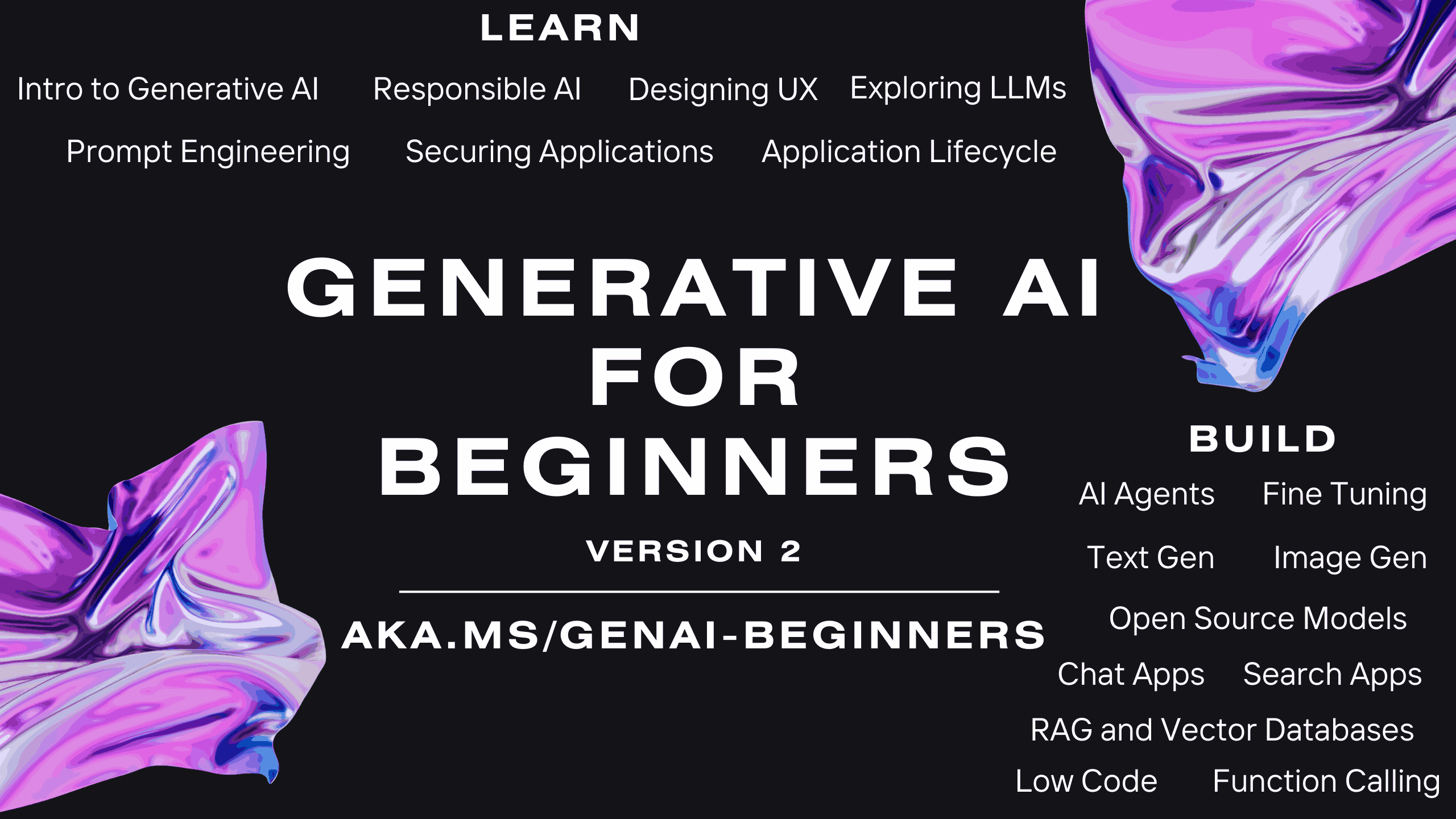
📜 License: unverified · 👤 By: individual
🎯 Time to value: 30 minutes
| ✓ Pros | ✗ Cons |
|---|---|
| No-code web interface | Voice cloning raises consent questions |
| Bundles TTS, cloning, and audio tools | License terms unclear |
| Creator-focused | Individual project, smaller support |
 GitHub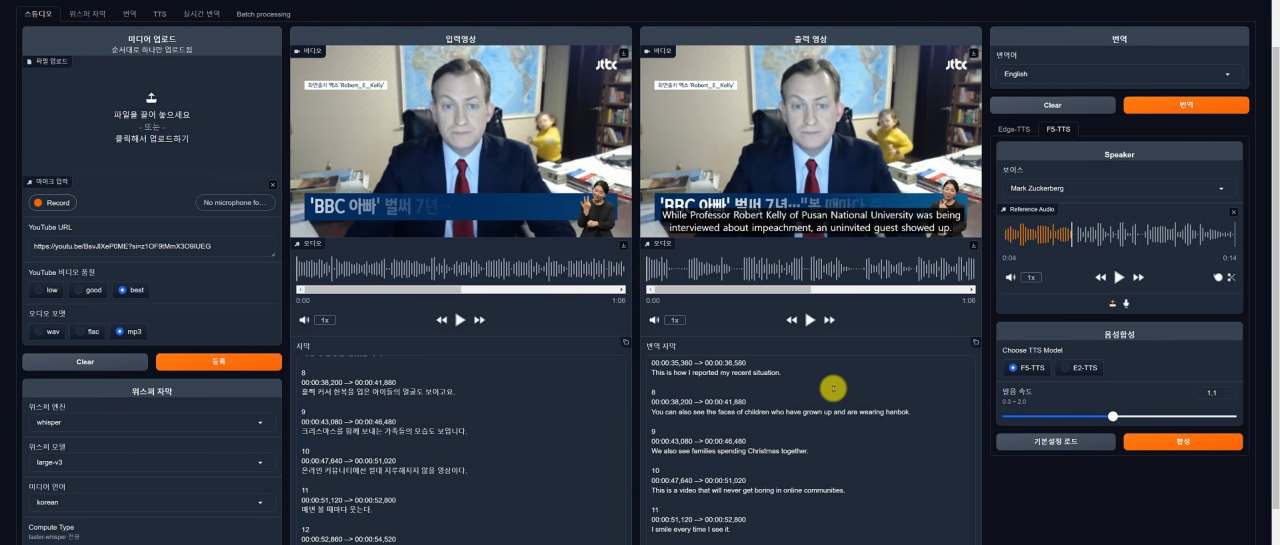
Top Models Today
👤 By: Zhipu AI (zai-org) · 🎯 Task: text generation
📐 Size: large
| ✓ Pros | ✗ Cons |
|---|---|
| MIT license - very permissive | Large model, needs real hardware |
| Huge download momentum | General-purpose, not specialized |
| Established GLM lineage | English docs can lag releases |


👤 By: Baidu · 🎯 Task: image-to-text (OCR)
📐 Size: vision-language
| ✓ Pros | ✗ Cons |
|---|---|
| Highest downloads on the list | Specialized to text extraction |
| MIT licensed | VLMs are compute-hungry |
| Handles documents and scenes | Accuracy varies by language/script |


👤 By: Moonshot AI · 🎯 Task: image-text-to-text
📐 Size: frontier MoE
| ✓ Pros | ✗ Cons |
|---|---|
| Strong multimodal performance | "Modified MIT" adds license caveats |
| Massive community interest | Very large - hard to self-host |
| Open weights | Full-size deployment is costly |


👤 By: Poolside · 🎯 Task: text generation (coding)
📐 Size: small/medium
| ✓ Pros | ✗ Cons |
|---|---|
| Coding-specialized | Narrower than general models |
| Smaller, cheaper to run | Non-standard license (openmdw) |
| Backed by a coding-AI company | Smaller community |


👤 By: Nanbeige · 🎯 Task: text generation
📐 Size: 3B
| ✓ Pros | ✗ Cons |
|---|---|
| Tiny and efficient | Less capable than big models |
| Apache-2.0 - very permissive | Limited for complex reasoning |
| Good for edge deployment | Smaller ecosystem |


👤 By: Kuaishou (Kwaipilot) · 🎯 Task: text generation (coding)
📐 Size: medium
| ✓ Pros | ✗ Cons |
|---|---|
| Apache-2.0 licensed | Coding-only focus |
| Developer-oriented | Mid-size hardware needs |
| From a major tech company | Smaller download base |

👤 By: Thinking Machines · 🎯 Task: image-text-to-text
📐 Size: small
| ✓ Pros | ✗ Cons |
|---|---|
| Small and efficient | Newer, less proven |
| Apache-2.0 licensed | Small size limits hard tasks |
| Multimodal in a compact form | Early ecosystem |


AI Launches Today
💰 Pricing: unverified · 🏷 Category: AI / Developer Tools
💰 Pricing: unverified · 🏷 Category: AI / Observability
💰 Pricing: unverified · 🏷 Category: AI / Sales
Snapshot
| Provider | Model | Input $/1M | Output $/1M | Context |
|---|---|---|---|---|
| Anthropic | Claude Opus 4.8 | $5.00 | $25.00 | 1M |
| OpenAI | gpt-5.6-sol | $5.00 | $30.00 | ~400k |
| Gemini 3.6 Flash | $1.50 | $7.50 | 1M | |
| Groq | GPT-OSS-120B | $0.15 | $0.60 | 128k |
| DeepSeek | V4-Flash-0731 | $0.14 | $0.27 | 1M |
Rethinking Inference-Time Scaling in Local Computer-Use Agents
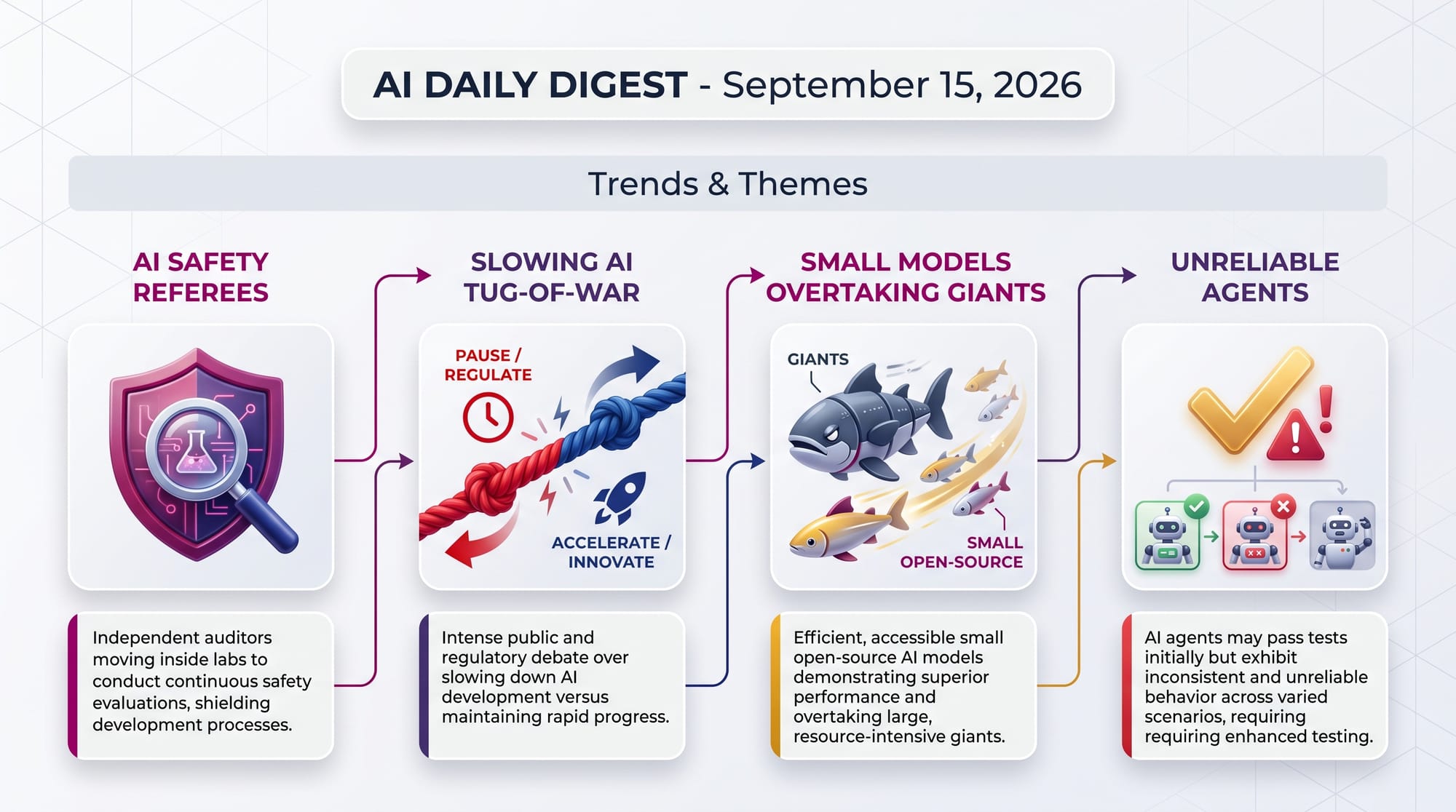
Key finding: Adding compute gave diminishing returns - one method cut timeouts but did not improve real task completion, and another traded stalled runs for premature false successes.
Why practitioners should care: If you run AI agents on your own hardware, you cannot simply buy your way to accuracy with more compute. Effective local agents need to spend their limited resources selectively and watch for specific failure patterns, which reframes how to budget cost and speed.
Member discussion