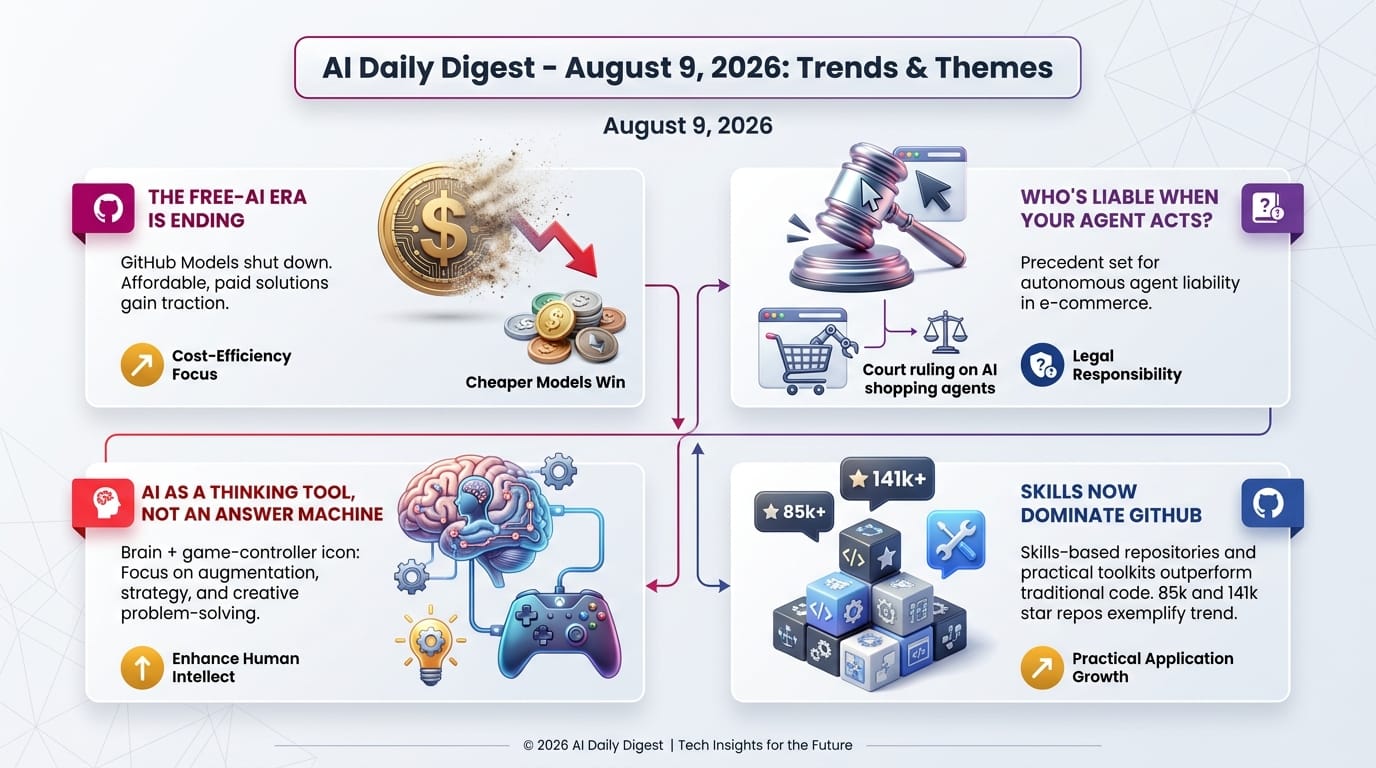
Watch today's digest as a video summary (generated by NotebookLM)
Statistically Speaking
One Thing to Tell Your Friends
TL;DR
Hot off the Presses
GitHub Quietly Retired Its Free "Try Any AI Model" Service
GitHub Models was a single doorway to many AI providers, built into GitHub itself, that let developers test and run different models without juggling separate accounts. It was officially retired on July 30, 2026. Developer Simon Willison, who writes a widely-read engineering blog, only noticed on August 9 when one of his automated jobs failed.
GitHub gave no official reason. Willison's read: the rise of always-on coding agents made giving away free or cheap AI usage too expensive to sustain.
- The killer feature was convenience - it used the login credentials already sitting inside GitHub's automation, so no extra setup was needed.
- A real workflow broke - Willison's job that auto-summarized a code repository's folders stopped running and had to be moved to a paid service.
- The bigger signal - subsidized AI access is quietly disappearing as usage-heavy AI agents make it uneconomical.
A Court Just Ruled That AI Agents Shopping For You Aren't "Hacking"
On August 4, 2026, a U.S. federal appeals court (the Ninth Circuit) sided with Perplexity, an AI search company, against Amazon. Amazon had won an order blocking Perplexity's Comet browser, an AI tool that logs into your Amazon account and shops for you. The court threw that block out.
The reasoning matters more than the result. The judges said Perplexity itself does not "access" Amazon's computers under the main U.S. anti-hacking law (the Computer Fraud and Abuse Act, a 1980s statute meant to stop break-ins). The person using the agent is the one visiting the site - the AI is just a tool, like a browser.
- The law is decades behind the tech - the court openly noted there is almost no legal precedent for who is responsible when an AI agent acts.
- It is not a total win for Perplexity - Amazon's trademark and other claims survive, and the case goes back to a lower court.
- Why regular people care - it makes "do it for me" agents that use your logins far more legally durable, so expect more of them.
The Viral Trick: Turn Any Hard Topic Into a Playable Game to Learn It
A developer's write-up on using AI to learn complex topics hit the top of Hacker News (273 upvotes, 149 comments), a sign that a lot of technical readers found it genuinely useful. His complaint: AI explanations are often too shallow and cluttered to help you truly understand something.
His fix is a four-step routine. Have the AI build a knowledge base on the topic, ask it to fact-check its own notes, then have it generate a small, colorful, game-like interactive animation (think a simple theme-park builder) that maps the concept onto objects you can click through. His flagship example, "ChipTycoon," walks through how a computer chip is made, from sand to finished processor.
- The principle - turning abstract ideas into spatial, game-like visuals helps memory far more than plain text.
- It is buildable by anyone - the final animation gets published to a free web page (GitHub Pages) so you can revisit it.
Trends & Themes

The Era of Free and Subsidized AI Is Quietly Ending
The pattern: the AI industry spent two years handing out free and cheap access to win users. Now the compute bills for heavy AI agents are forcing a correction. Expect more free tiers to tighten or vanish.
- GitHub pulled the plug - its free multi-model service was retired on July 30 because always-on AI agents burn tokens too fast to give away (Simon Willison).
- The cheapest models are now a selling point - Google's Gemini 2.5 Pro runs at $1.25 per million words-in, and Groq advertises models as low as $0.59, showing price is now the battlefield (official pricing pages).
- Even Microsoft is counting tokens - reporting this week says Microsoft asked engineering teams to hit "AI token budget targets" internally, a sign that cost discipline is spreading to the biggest players.
Who Is Responsible When Your AI Agent Acts For You?
The theme this week is agency in the legal sense: software that acts on your behalf. The technology is arriving faster than the rules, and the first big rulings are being written now.
- The courts are being forced to decide - the Ninth Circuit ruling on Perplexity's shopping agent openly admitted there is almost no law on assigning responsibility for AI agents.
- Agents that "act as you" are multiplying - new tools promise to run tasks inside your logged-in accounts and even pause for approval before anything destructive.
- Approval is becoming the safety valve - the common design is to let the agent work but stop and ask before it does something irreversible.
AI Is Being Reframed as a Thinking Tool, Not an Answer Machine
The through-line: people are getting more deliberate about how they use AI, treating it as a collaborator to steer rather than an oracle to trust.
- Learning by building - a viral method uses AI to generate interactive, game-like models of hard topics instead of flat summaries (273 upvotes on Hacker News).
- Clarity on demand - a two-word instruction ("Use ASD-STE100") strips AI writing down to plain, direct English.
- Better reasoning about reasoning - a widely-shared essay this week dissects the exact thinking error that pushes smart people toward extreme beliefs, a reminder that AI-assisted thinking still needs human judgment.
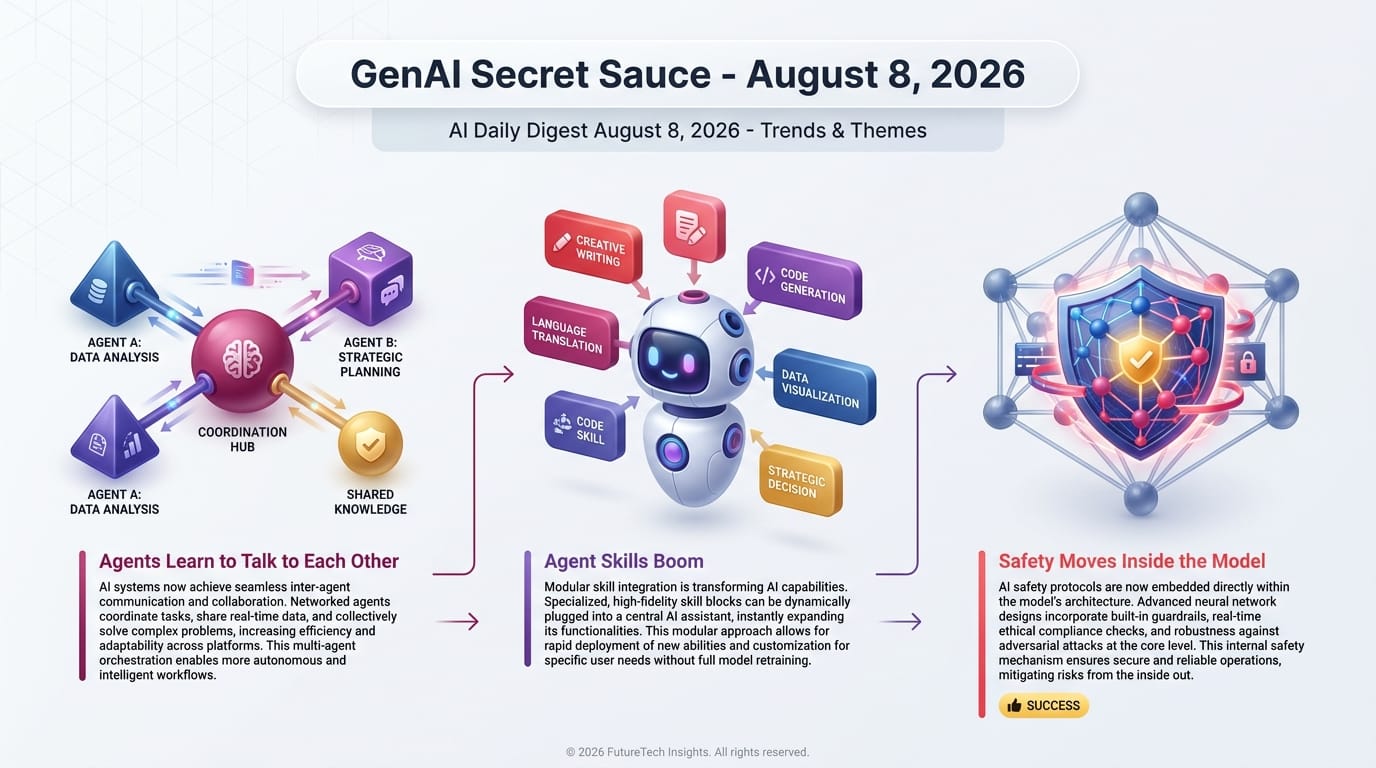
"Skills" and Agent Scaffolding Now Dominate What Developers Star on GitHub
The signal: the value is moving up a layer, from the raw model to the scaffolding around it. Whoever writes the best instructions and tools gets the most reliable AI, which is why these projects, not model releases, top the charts today.
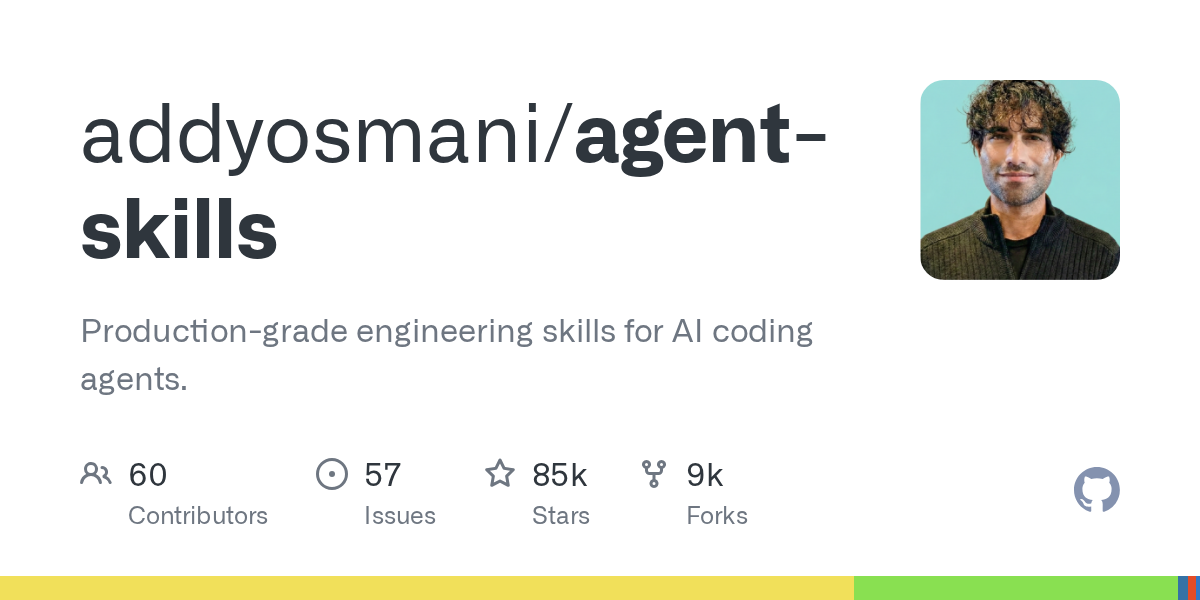
- Reusable skill packs are huge - a repository of "production-grade engineering skills" for coding agents has 85,100 GitHub stars.
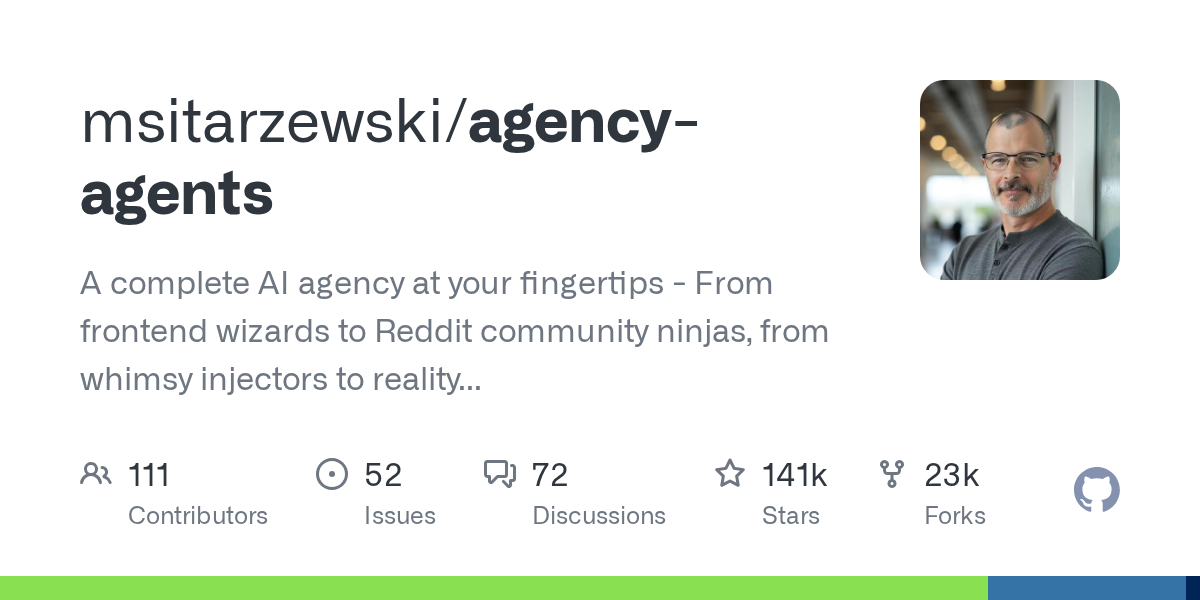
- Prompt-only "agencies" are going viral - a repo that is essentially a bundle of specialized AI personalities, with no traditional code, holds roughly 141,000 stars.
- Even Google joined in - Google published its own "skills" repository, now near 17,200 stars.
Creative AI & Media
Grok Adds a Higher-Quality Image Mode
- What is new: xAI reportedly rolled out "Image 2.0" as a new Quality Mode in Grok's image tool, available on the web and in the Grok phone apps, alongside a faster speech-to-speech voice mode. (Details come from release-note trackers, so treat specifics as preliminary.)
- Why it matters: Image and voice generation keep getting folded directly into the assistants people already use, lowering the barrier to trying them.
The Top Open Video Model Is Still MiniMax H3
- Still leading: MiniMax H3, an openly available video-generation model, remains the most downloaded trending video model (35,000+ downloads in 30 days).
- Referenced, not re-explained: we covered its local, sound-included generation in earlier editions - it is holding the top spot, not launching anew.
Developer Tools & Infrastructure
Research & Models
Self-Improving AI Agents Get Worse Past a Point - and a Fix Emerges
- The problem: as an agent piles up self-learned skills past a threshold, a few bad skills "contaminate" the ones learned afterward, dragging performance down.
- The fix: a method called Verifier-as-Gatekeeper uses three independent checkers to block a bad skill before it enters the agent's toolkit.
- The result: it hit 72% success on a tough terminal-task benchmark (Terminal-Bench 2) while keeping the skill library about five times smaller, and cleaning up bad skills afterward recovered only a fraction of the lost performance.
An Open Optical Character Recognition (OCR) Model Is One of the Most-Downloaded on Hugging Face
- Baidu's Unlimited-OCR - an openly licensed vision model for reading text out of images - logged roughly 2.9 million downloads in 30 days, among the highest of any trending model.
- Why people want it - free to run, MIT-licensed, and aimed at the very common task of extracting text from documents and photos.
Business & Industry
Surprising & Under-the-Radar
A "Company" of AI Personalities With No Real Code Has 141,000 Stars
One of the most-starred trending repositories on GitHub isn't software in the usual sense - it is a bundle of prompt-defined "employees" (a frontend wizard, a reality-checker, and so on) with roughly 141,000 stars. It shows how much developers now value ready-made AI instructions over traditional code.
The Exact Reasoning Error That Turns Smart People Extreme
A widely-shared essay argues that people rarely go ideologically off the rails from lack of intelligence. The trap is subtler: they meet weak, uninformed critics of their view, correctly notice the criticism is bad, and then wrongly conclude their belief must be right. The author's point - that "the arguments against me are bad" is not evidence "I am correct" - is a useful check for anyone leaning on AI to reason.
A 250-to-1 Compression Idea Was Prototyped in 38 Minutes
The document-history trick in Section 6 is a small window into how fast prototyping now moves: an idea sketched on a walk became working, benchmarked code in under 40 minutes of AI collaboration.
Debate: Does AI-Built "Learning Content" Actually Teach You?
The viral "turn topics into games" method sparked a split in its Hacker News thread (149 comments). One camp says interactive, spatial visualizations dramatically boost understanding and retention. The other warns that AI-generated explainers can look impressive while quietly baking in errors, giving a false sense of mastery. Both sides agree on one thing: you still have to check the AI's work.
Signals to Track

"Harness Optimization" Is Becoming Its Own Discipline
Researchers just released a benchmark specifically for how well AI can optimize the "harness" - the wrapper of tools, prompts, and control logic around a model. This follows growing evidence that the same model can score wildly differently depending on its scaffolding. For ordinary users, it means the app you use may soon matter more than which AI is under the hood.
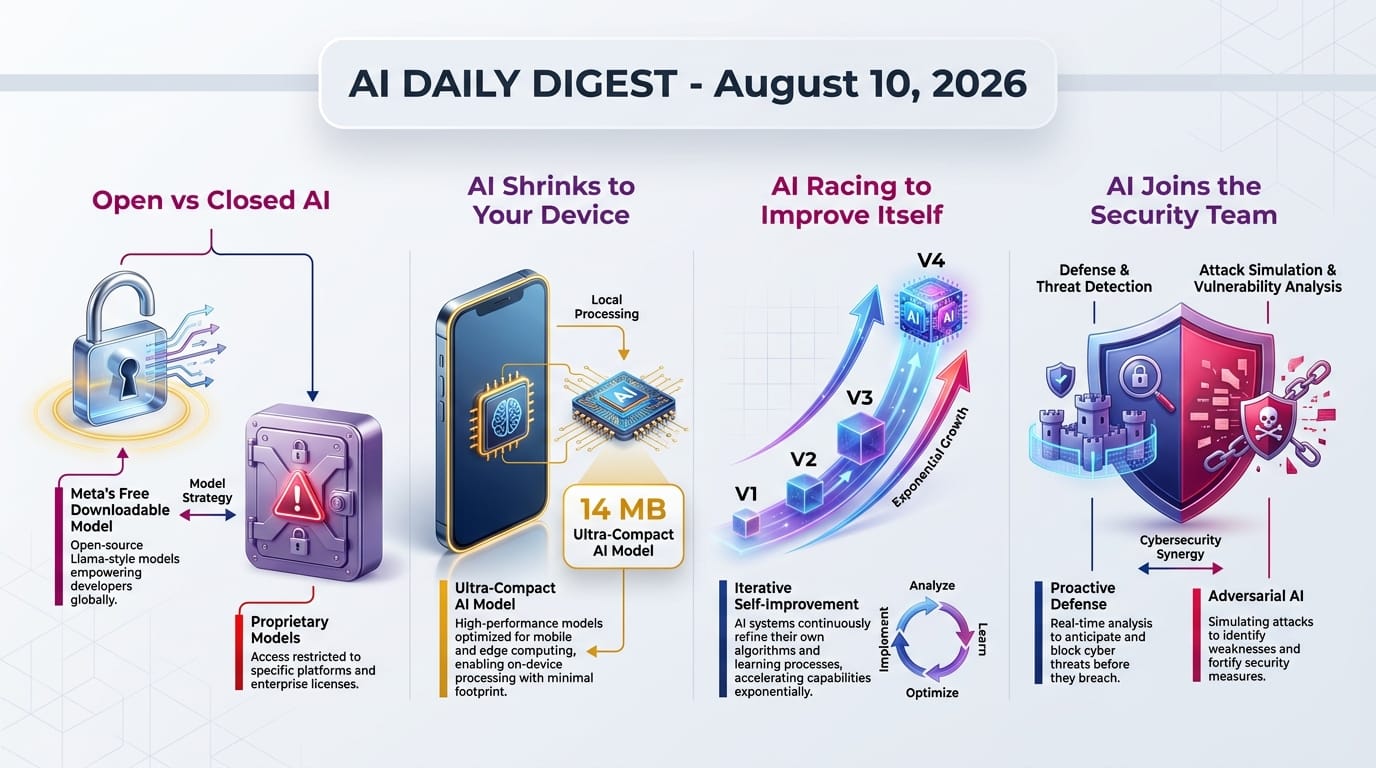
Small Models That Run On Your Own Device Keep Getting Better
A new 2.6-billion-parameter model built for phones and laptops (Liquid AI's LFM2.5) is trending, part of a steady push toward AI that runs locally, keeps your data private, and costs nothing per use. If this line keeps improving, everyday AI features could stop requiring an internet connection.
The Legal Ground Under Browser Agents Is Shifting
The Ninth Circuit decision on AI shopping agents is an early marker in a long fight over what automated agents may do on websites you use. Watch for websites to respond with new terms and technical blocks, and for more courts to weigh in. The outcome will shape whether agents that book, buy, and manage things for you become normal or get walled off.
Top Repos Today
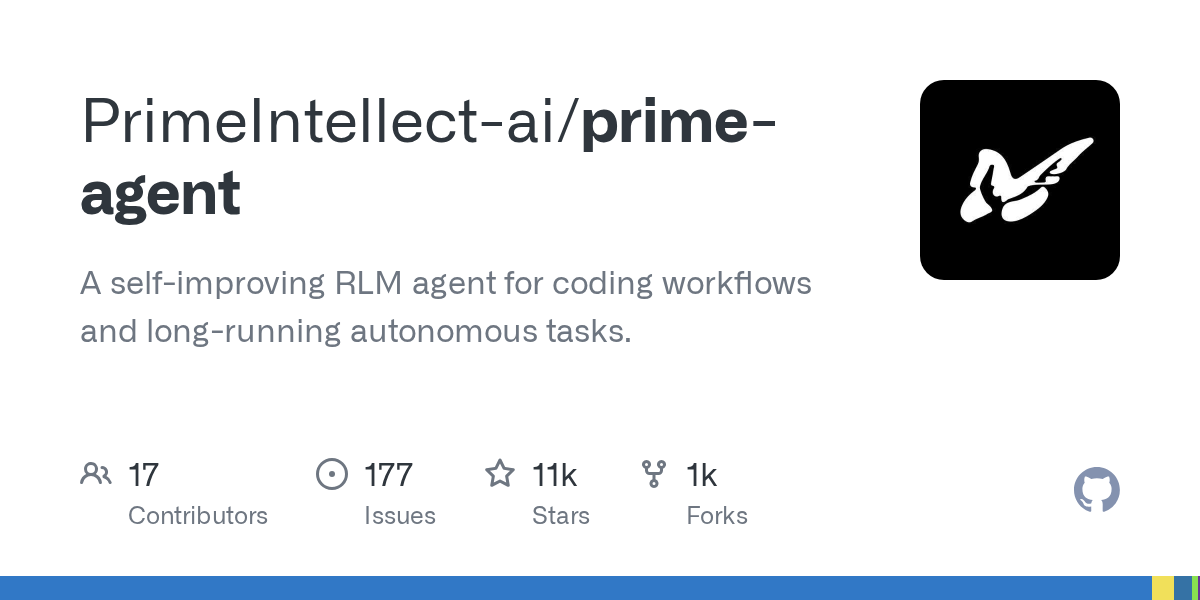
📜 License: MIT · 👤 By: startup
🎯 Time to value: 15 minutes
| ✓ Pros | ✗ Cons |
|---|---|
| Self-improving and built for long tasks | Very new, so real-world reliability is unproven |
| Permissive MIT license | Requires setup and Application Programming Interface (API) keys to be useful |
| Fastest-rising repo on the list today | Small community versus established tools |
 GitHub
📜 License: MIT · 👤 By: individual
🎯 Time to value: 10 minutes
| ✓ Pros | ✗ Cons |
|---|---|
| Production-grade, battle-tested patterns | You still need an agent that supports skills |
| Huge, active community (85k stars) | Curation reflects one author's opinions |
| Free and MIT-licensed | Not a tool by itself - it is instructions |
 GitHub
📜 License: MIT · 👤 By: individual
🎯 Time to value: 10 minutes
| ✓ Pros | ✗ Cons |
|---|---|
| Enormous star count signals broad appeal | Prompts only - quality varies by task |
| Covers many roles out of the box | Easy to over-trust "specialist" labels |
| Free and easy to customize | No guarantees about output reliability |
 GitHub
📜 License: Apache-2.0 · 👤 By: big-tech
🎯 Time to value: 15 minutes
| ✓ Pros | ✗ Cons |
|---|---|
| Maintained by Google | Newer, smaller than community collections |
| Apache-2.0 license suits companies | Tuned toward Google's own tooling |
| Clear, documented examples | Requires a compatible agent |
 GitHub
📜 License: GPL-3.0 · 👤 By: startup
🎯 Time to value: 30 minutes
| ✓ Pros | ✗ Cons |
|---|---|
| Extremely powerful and extensible | Steep learning curve for beginners |
| Massive community and plugins | GPL-3.0 license limits some commercial reuse |
| Runs locally on your own hardware | Needs a capable Graphics Processing Unit (GPU) for good speed |
 GitHub

Top Models Today
👤 By: Moonshot AI · 🎯 Task: image-text-to-text
📐 Size: Large (Mixture-of-Experts)
| ✓ Pros | ✗ Cons |
|---|---|
| Strong multimodal (text + image) ability | Large - needs serious hardware to run |
| Very high download momentum | "Modified MIT" terms need reading |
| Open weights | Exact size and details are sparse |


👤 By: Baidu · 🎯 Task: image-text-to-text (OCR)
📐 Size: Vision-language
| ✓ Pros | ✗ Cons |
|---|---|
| Top-tier open OCR quality | Focused on text extraction, not general chat |
| Permissive MIT license | Vision models can misread messy layouts |
| Huge download count signals trust | Needs a GPU for fast processing |


👤 By: Kwaipilot · 🎯 Task: text-generation (coding)
📐 Size: Mixture-of-Experts (Qwen3.5-based)
| ✓ Pros | ✗ Cons |
|---|---|
| Purpose-built for agentic coding | Smaller download base so far |
| Business-friendly Apache-2.0 license | Best used inside an agent framework |
| Based on a strong Qwen foundation | Coding models still need human review |

👤 By: Liquid AI · 🎯 Task: text-generation (on-device)
📐 Size: 2.6B
| ✓ Pros | ✗ Cons |
|---|---|
| Runs on-device, keeps data private | Smaller models are less capable than giants |
| Multilingual and efficient | Custom license needs review for commercial use |
| Free to download and run | Limited for complex reasoning |


👤 By: Mistral AI · 🎯 Task: text-classification (safety)
📐 Size: 3B
| ✓ Pros | ✗ Cons |
|---|---|
| Small and cheap to run as a guardrail | Only classifies - does not generate |
| Business-friendly Apache-2.0 license | Guardrails are never perfect |
| From an established lab | Needs integration work |


AI Launches Today
💰 Pricing: freemium · 🏷 Category: AI Workflow Automation
💰 Pricing: freemium · 🏷 Category: Realtime Voice AI
💰 Pricing: freemium · 🏷 Category: Browser AI Agent
Snapshot
| Provider | Model | Input $/1M | Output $/1M | Context |
|---|---|---|---|---|
| Anthropic | Claude Opus 5 | $5.00 | $25.00 | 200K (1M beta) |
| OpenAI | GPT-5.6 Sol | $5.00 | $30.00 | ~1M |
| Gemini 2.5 Pro | $1.25 | $10.00 | 1M+ | |
| Groq | Kimi K2 | $1.00 | $3.00 | - |
AppDeltaWorld: Teaching AI to Predict What a Phone Screen Will Do Next
Key finding: Their agent reached state-of-the-art performance on a mobile-agent benchmark (AndroidLens) with consistent gains on two others, and the simulator produced higher-fidelity screen transitions than prior methods.
Why practitioners should care: Reliable phone-automation agents are hard to train because testing on real devices is slow and risky. A high-quality simulator that predicts real screen behavior is a practical step toward agents that can actually run tasks on your phone.




Member discussion