GenAI Secret Sauce Daily Digest - 2026-05-04

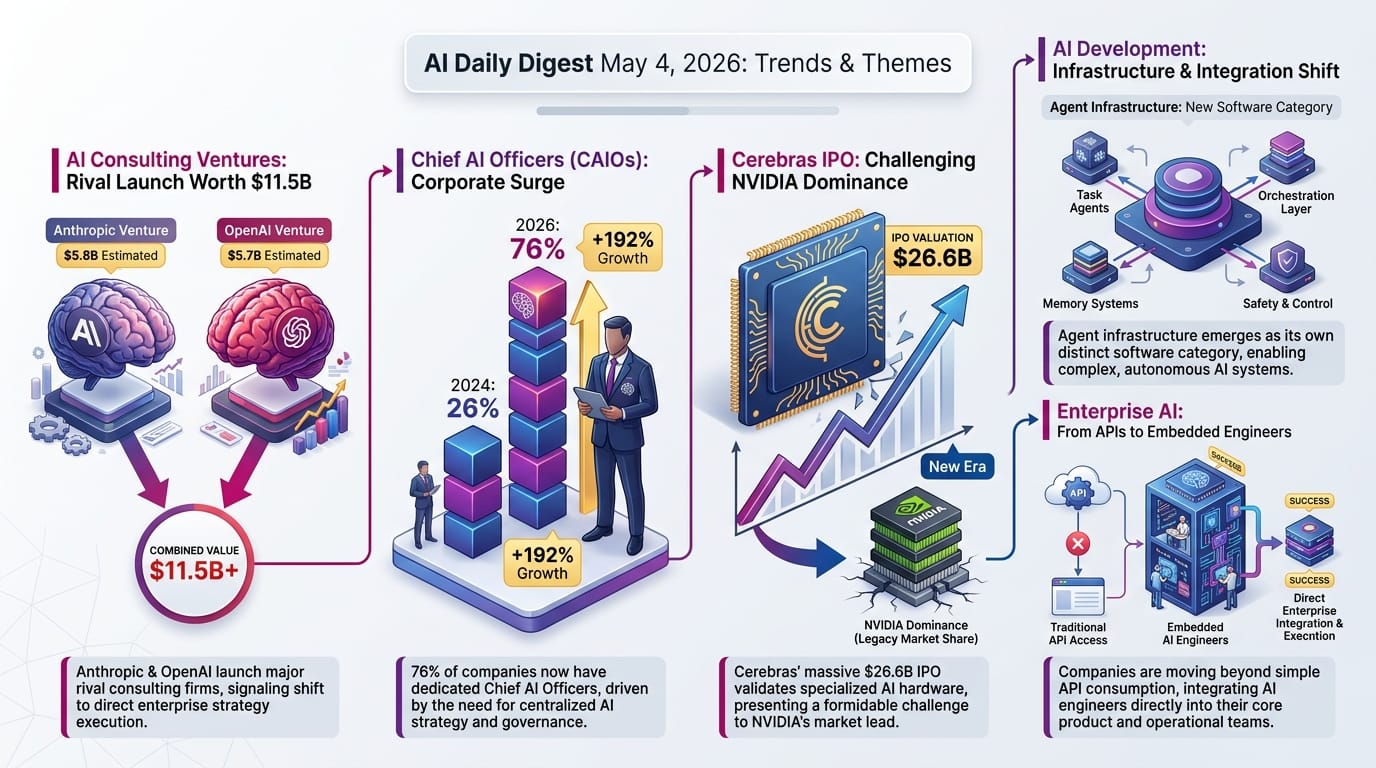
Both Anthropic and OpenAI Just Launched Rival AI Consulting Firms - on the Same Day · Cerebras Launches IPO at $26.6 Billion - the Biggest AI Chip Debut Ever · IBM: 76% of Companies Now Have a Chief AI Officer - Up from 26% Last Year
GenAI Secret Sauce Daily Digest - 2026-05-04

Watch today's digest as a video summary (generated by NotebookLM)

Statistically Speaking

$11.5 billion in combined committed capital
Both Anthropic and OpenAI Just Launched Rival AI Consulting
Top Story
$300M each from Anthropic, Blackstone, and Hellman &
Both Anthropic and OpenAI Just Launched Rival AI Consulting
6.7 x the scale
Both Anthropic and OpenAI Just Launched Rival AI Consulting
$6 for every $1 on software
Both Anthropic and OpenAI Just Launched Rival AI Consulting
$26.6 billion fully diluted valuation
Cerebras Launches IPO at $26.6 Billion - the Biggest AI Chip
$10 billion in orders already placed for $3
Cerebras Launches IPO at $26.6 Billion - the Biggest AI Chip

One Thing to Tell Your Friends

Anthropic and OpenAI both announced they're embedding engineers inside private equity firms - turning AI consulting into an $11.5 billion arms race that directly threatens McKinsey and Accenture.

TL;DR

Trends
AI Companies Are Building Their Own Consulting Arms, The C-Suite Is Being Rewritten Around AI, and AI Chip Competition Is Entering a New Phase.
Dev Tools
agency, Dexter: An Autonomous Financial Research Agent That Validates Its Own Work, and CocoIndex: Keep Your AI Agent's Context Fresh Without Reprocessing Everything.
Education
Surprising
A Developer Gave Their Local AI a "Suffering" Meter, The White House Is Considering Pre, and Xiaomi's Coding Plan Draws "Scam" Accusations.
Worth Watching
The AI Consulting Takeover Has a Structural Advantage Traditional Firms Can't Match, 48% of Operational Decisions Made by AI by 2030 Is Not a Prediction, and The Tool.
GitHub
Leading repos: msitarzewski/agency (+828), ruvnet/ruflo (+2,594), and TauricResearch/TradingAgents (+2,181).
HuggingFace
Product Hunt
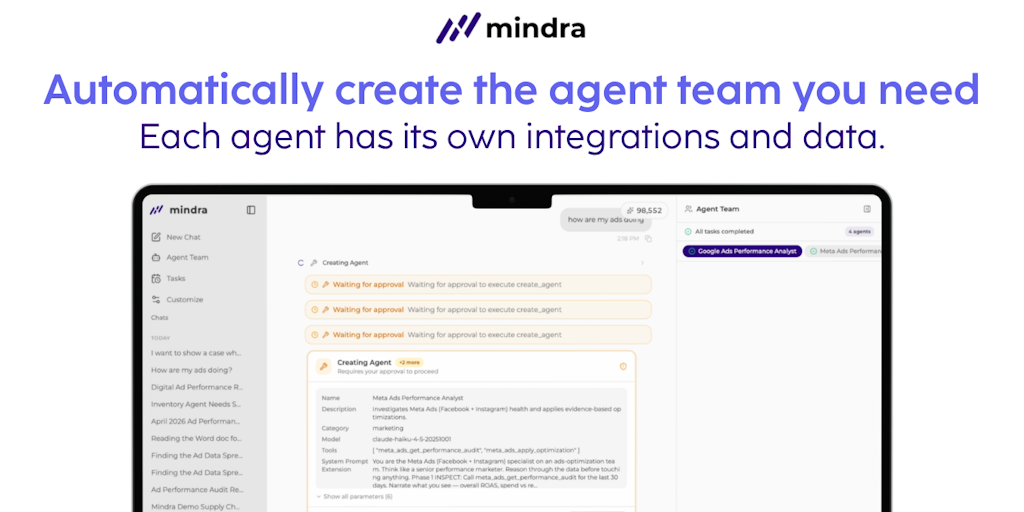
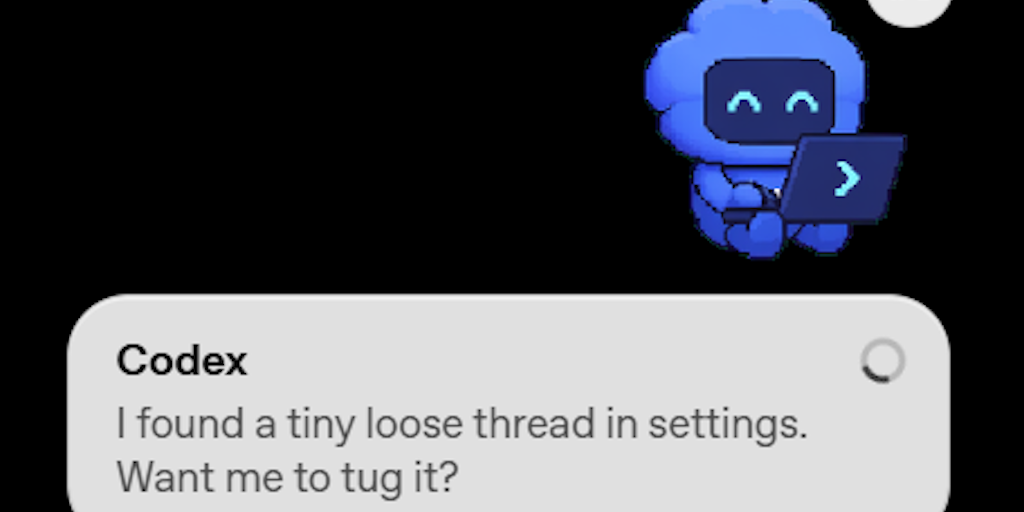
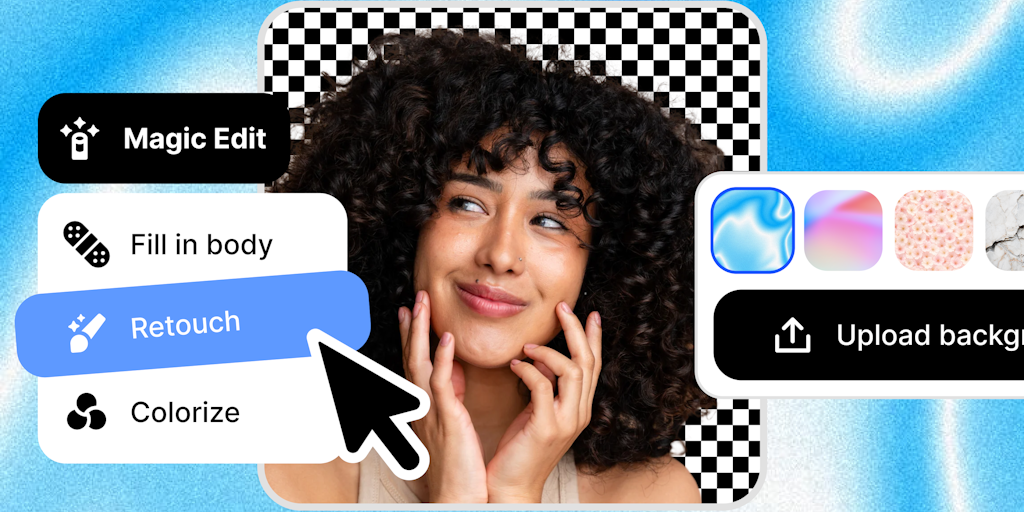
Top launches: Mindra (269), Codex Pets (215), and Aaavatar (208).
API Pricing
No price changes from yesterday. The Mistral Medium 3.5 entry is new to the table - it slots between Google's mid-tier and Anthropic's Sonnet on output pricing.
arXiv
Are Tools All We Need? Unveiling the Tool — Under semantic noise, tool-augmented agents perform worse than agents using plain chain-of-thought reasoning - the tools hurt more than they help.

Hot off the Presses

01

Both Anthropic and OpenAI Just Launched Rival AI Consulting Firms - on the Same Day

What this means for you: If your company uses outside consultants for technology projects, the firms bidding for that work are about to include the companies that build the AI itself - not just advisors who recommend it.

Anthropic partnered with Blackstone, Hellman & Friedman, and Goldman Sachs to launch a $1.5 billion enterprise AI services company. Hours later, OpenAI confirmed a parallel $10 billion joint venture called "The Deployment Company" backed by TPG, Brookfield, Advent, and Bain Capital. Both ventures embed engineers directly inside client companies - the same forward-deployed model pioneered by Palantir.

Krishna Rao, Anthropic's CFO, stated that enterprise demand for Claude was outpacing any single delivery model. Jon Gray, Blackstone's president, framed it as solving the engineer shortage that blocks enterprise AI adoption.

“$11.5 billion. That's how much capital Anthropic and OpenAI just raised - not for building AI, but for installing it inside other companies.”
  • $11.5 billion in combined committed capital - dwarfing anything the traditional consulting industry has raised for a single AI initiative
  • Anthropic's venture targets mid-market PE portfolio companies - with $300M each from Anthropic, Blackstone, and Hellman & Friedman, plus $150M from Goldman Sachs
  • OpenAI's venture operates at 6.7x the scale - $4B raised from 19 investors against a $10B valuation, with OpenAI itself putting in $500M
  • Zero investor overlap between the two deals - suggesting PE firms are choosing sides in the AI platform war
  • The consulting industry spends $6 for every $1 on software - both ventures are targeting the services layer, not just the technology
02

Cerebras Launches IPO at $26.6 Billion - the Biggest AI Chip Debut Ever

What this means for you: A real competitor to NVIDIA's dominance in AI chips is going public, which could eventually mean lower prices for AI compute and less dependence on a single supplier.

Cerebras Systems, the AI chip company behind the wafer-scale engine (a single chip the size of a dinner plate), launched its initial public offering on the Nasdaq. The company plans to sell 28 million shares at $115 to $125 each, targeting a raise of up to $3.5 billion.

Morgan Stanley, Citigroup, Barclays, and UBS are leading the offering.

  • $26.6 billion fully diluted valuation - up from $23 billion in February, reflecting surging demand
  • $10 billion in orders already placed for $3.5 billion in shares - nearly 3x oversubscribed before the roadshow begins
  • Revenue jumped 76% in 2025 to $290 million - turning an $88 million profit after losing $485 million the prior year
  • Multi-year deal with OpenAI worth over $20 billion - under which OpenAI will deploy 750 megawatts of Cerebras compute
$26.6
billion fully diluted valuation
$10
billion in orders already placed
03

IBM: 76% of Companies Now Have a Chief AI Officer - Up from 26% Last Year

What this means for you: The executive suite is being restructured around AI at a speed rarely seen in corporate history. If your company hasn't appointed someone to own AI strategy, it's now in the minority.

IBM's Institute for Business Value surveyed 2,000 CEOs across 33 countries and 21 industries between February and April 2026. The findings show AI has moved from experiment to organizational backbone.

“76% of companies now have a Chief AI Officer. A year ago, that number was 26%.”
  • 76% of organizations now have a Chief AI Officer - triple the 26% from a year ago
  • 48% of routine operational decisions will be made by AI by 2030 - up from 25% today, according to CEO projections
  • 29% of employees will need reskilling for different roles by 2028 - with 53% needing upskilling for their current jobs
  • 64% of CEOs are comfortable making major strategic decisions using AI-generated input - a threshold that marks genuine executive trust, not just pilot programs
  • 85% say all C-suite leaders must now be technology experts in their domain - blurring the line between technology and business leadership
76%
of organizations now have a
48%
of routine operational decisions will
29%
of employees will need reskilling
64%
of CEOs are comfortable making
04

HUMAIN ONE: Saudi Arabia Launches the First Enterprise OS for AI Agents

What this means for you: A government-backed platform now exists for building and deploying autonomous AI agents at enterprise scale - with built-in governance and sovereignty features aimed at industries that can't use public cloud freely.

HUMAIN, backed by Saudi Arabia's Public Investment Fund (PIF), partnered with Amazon Web Services to launch HUMAIN ONE - described as the first enterprise-grade operating system for building, deploying, and governing autonomous AI agents at scale. It will be available globally through AWS Marketplace.

  • Five integrated components - HUMAIN Code (development), HUMAIN Guardian (quality assurance), HUMAIN Eye (security), H2O Platform + SDK (agent toolkit), and HUMAIN Fabric (data infrastructure)
  • Available across 39 AWS regions and 123 availability zones - not limited to the Middle East
  • Extends a $5 billion AI infrastructure investment announced by HUMAIN in May 2025
  • Sovereign deployment capabilities - designed for regulated industries and governments that require data residency controls

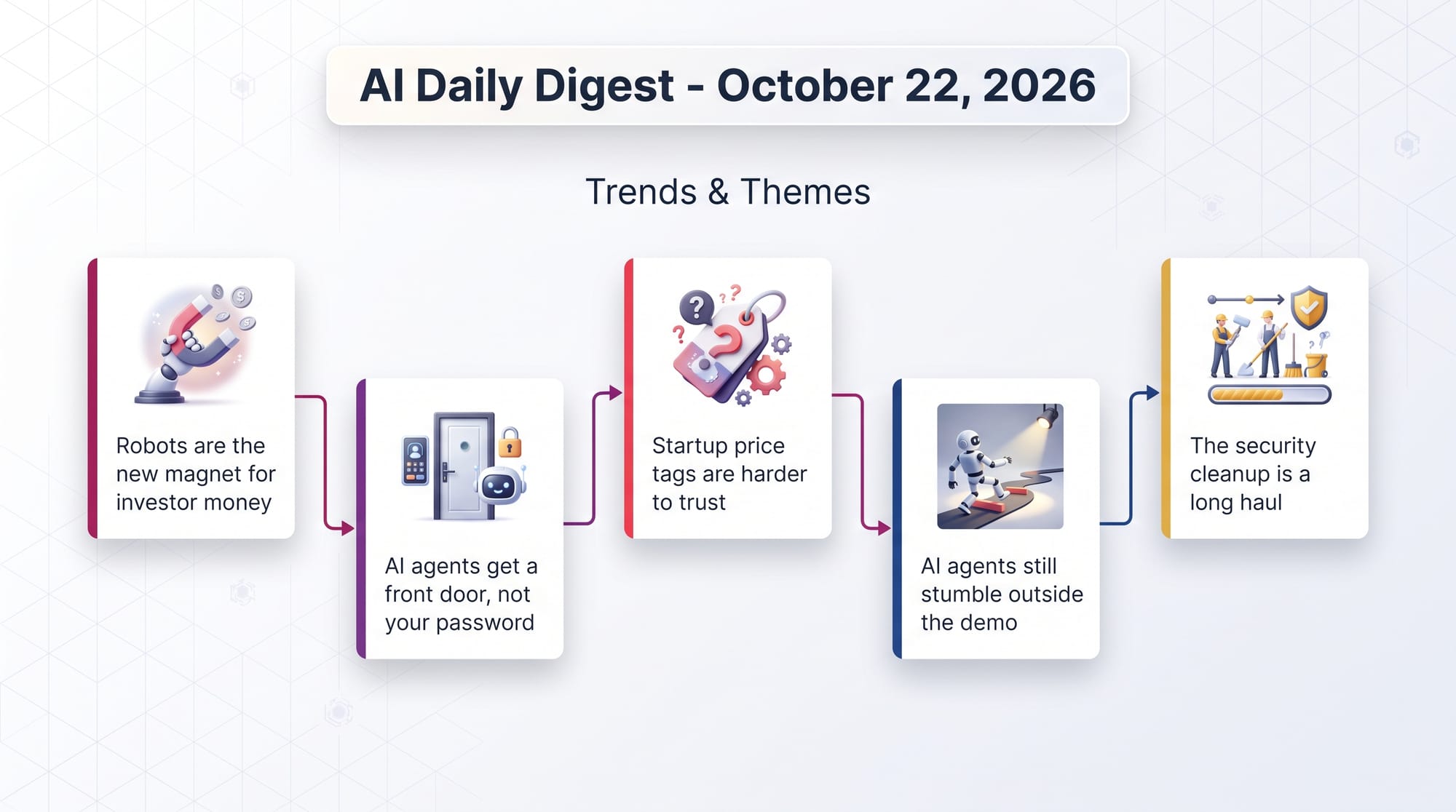
Trends & Themes

Trends & Themes

AI Companies Are Building Their Own Consulting Arms - and Wall Street Is Funding the Takeover

Why this matters to you: The people selling AI are now also the people implementing it - which means faster deployments but also deeper vendor lock-in.

The pattern is clear: AI companies are vertically integrating from model to implementation, capturing the services revenue that previously went to consulting firms. For companies evaluating AI vendors, this means the pitch will increasingly be "we'll build it for you" rather than "here's our Application Programming Interface (API)."

  • Three simultaneous enterprise pushes - Anthropic (Blackstone/Goldman), OpenAI (TPG/Brookfield), and Google DeepMind (consulting partnerships announced in February)
  • 85% of PE buyers now factor AI capabilities into company valuations - making AI implementation a deal prerequisite, not an afterthought
  • The forward-deployed engineer model replaces traditional consulting - embedding AI company staff directly inside client operations
  • McKinsey shrank from 45,000 to 40,000 employees since 2022 - while Accenture cut 11,000 roles and redirected $3B to AI

The C-Suite Is Being Rewritten Around AI - Faster Than Any Previous Technology Shift

Why this matters to you: If AI was a side project at your company last year, it's probably a board-level priority now - and the people making decisions about it have changed.

The IBM study, covering 2,000 CEOs across 33 countries, is the clearest signal yet that AI has crossed from technology strategy into organizational design. Companies that restructured five core functions around AI were four times more likely to hit business objectives.

  • 76% of organizations have a Chief AI Officer - a role that barely existed two years ago
  • 77% of CEOs say talent and technology leadership roles are converging - the CHRO and CTO are increasingly doing the same job
  • 48% of operational decisions will be AI-driven by 2030 - meaning humans will oversee rather than execute nearly half of routine business choices
  • Only 25% of the workforce uses AI regularly - despite 86% of CEOs believing employees have the necessary skills, revealing a massive adoption gap between belief and practice

AI Chip Competition Is Entering a New Phase

Why this matters to you: More competition in AI chips could eventually lower the cost of AI services you use daily - and reduce the industry's dependence on a single company.
  • Cerebras IPO at $26.6B with $20B+ in OpenAI contracts - the first serious NVIDIA alternative to reach public markets at scale
  • AMD's Ryzen AI Max+ 495 offers 192 GB unified memory - making serious local AI workloads possible on consumer hardware
  • Sierra raised $950M at $15B valuation - building AI-native customer service infrastructure with its own silicon strategy
  • NIST confirmed DeepSeek V4 Pro is "8 months behind" US frontier models (covered May 3) - but it costs less than comparable US models on 5 of 7 benchmarks

Agent Infrastructure Is Becoming Its Own Software Category

Why this matters to you: The tools for building and running AI agents are multiplying so fast they're becoming a market segment of their own - which means more options but also more complexity.
  • GitHub Trending is dominated by agent platforms - ruflo (41K stars), agency-agents (93K stars), jcode (3.9K stars), and DeepSeek-TUI (3.9K stars) are all agent harnesses
  • HUMAIN ONE positions itself as the enterprise OS for agents - governance, security, and orchestration in a single platform
  • n8n-MCP bridges workflow automation with AI agents - 1,650 node types accessible through Model Context Protocol
  • CocoIndex provides incremental data freshness for agents - keeping context current by reprocessing only changes, not entire datasets

Creative AI & Media

Sulphur-2: Open-Source Video Generation Drops Alongside LTX 2.3

What this means for you: You can now generate video from text or images on your own computer, with no subscription required - using two competing open models released hours apart.
  • Sulphur-2 is based on LTX 2.3 - supporting text-to-video and image-to-video natively
  • Includes a built-in prompt enhancer - for better results without prompt engineering
  • Both released within an hour of each other - highlighting the accelerating pace of open-source video model releases
  • Available on HuggingFace - 9 billion parameters, trending with 20,000+ downloads

SenseNova U1: One Model That Understands and Creates Both Text and Images

What this means for you: Instead of needing separate AI tools for understanding images and creating them, one model now does both - generating travel guides with original illustrations in a single pass.
  • NEO-Unify architecture eliminates both visual encoder and image decoder - a fundamentally different approach to multimodal AI
  • 8B parameters for understanding, 8B for generation - compact enough for research and experimentation
  • Apache 2.0 license - fully open for commercial use
  • Can generate interleaved text and images - practical guides, storyboards, and visual explanations in one flow

Developer Tools & Infrastructure

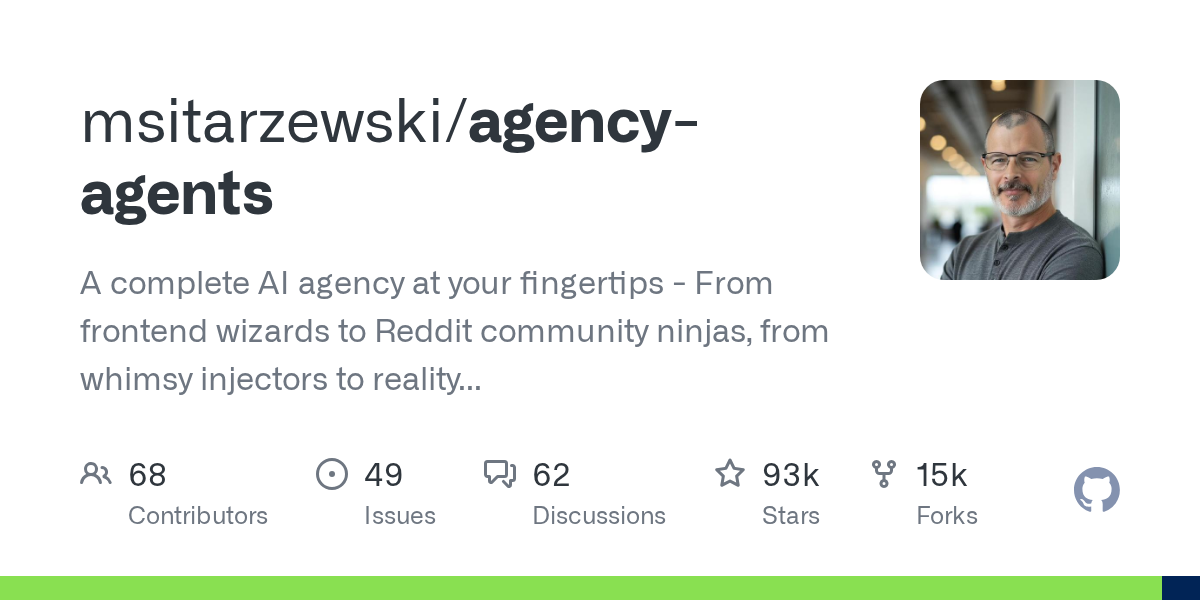
agency-agents: 144 Specialized AI Personalities in One Repository

What this means for you: If you use Claude Code, Cursor, or similar AI coding tools, you can instantly load expert personalities for specific tasks - a frontend specialist, a security auditor, or a game developer - instead of generic AI assistance.

Try it: GitHub

  • 92,500+ GitHub stars - one of the highest-starred agent collections ever
  • 144 agents across 12 divisions - engineering, design, marketing, sales, legal, recruitment, and more
  • Each agent includes personality traits, workflows, and deliverable specs - not just system prompts but structured operating procedures
  • Supports 10+ platforms - Claude Code, Cursor, Windsurf, Gemini, Copilot, and more via conversion scripts
  • MIT license - free for commercial use

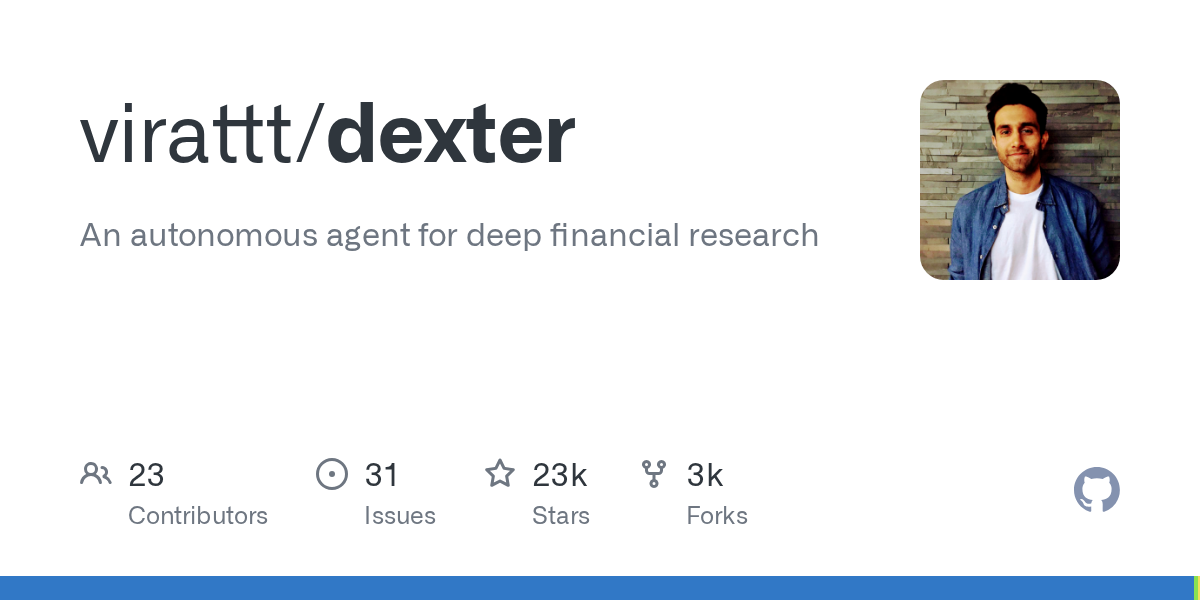
Dexter: An Autonomous Financial Research Agent That Validates Its Own Work

What this means for you: AI financial analysis that catches its own errors before showing you results - addressing the biggest concern about using AI for investment research.

Try it: GitHub

  • Self-validation loop - reviews its own analysis and refines before presenting results
  • Real-time market data access - income statements, balance sheets, cash flows
  • Loop detection and step limits - prevents runaway execution and runaway costs
  • WhatsApp integration - ask financial questions conversationally
  • 23,200 GitHub stars - MIT license

CocoIndex: Keep Your AI Agent's Context Fresh Without Reprocessing Everything

What this means for you: AI agents that work with your documents, emails, or codebase can now stay current by only processing what changed - instead of re-reading everything from scratch.

Try it: GitHub

  • Incremental delta processing - only changes are reprocessed, dramatically reducing compute costs
  • Connects to codebases, Slack, PDFs, databases, and more - unified source pipeline
  • Built in Rust with Python API - production-grade performance with developer-friendly syntax
  • 7,979 GitHub stars - Apache 2.0 license

Research & Models

New Paper: Tool Use in AI Agents Has a Hidden "Performance Tax"

What this means for you: The assumption that giving AI agents access to tools always makes them smarter is wrong - in noisy real-world conditions, the overhead of using tools can actually make agents perform worse than simple reasoning alone.

Researchers tested what happens when Large Language Model (LLM) agents (a type of AI system that takes actions on your behalf) use tools in the presence of semantic distractors (irrelevant information that resembles useful data). They found that tool-calling protocols introduce overhead that frequently outweighs the benefit of the tools themselves.

  • Tool-augmented reasoning does not always outperform plain chain-of-thought - a direct challenge to the dominant "more tools = better" assumption
  • Three cost components identified - prompt formatting costs, tool-calling protocol overhead, and actual tool execution benefits
  • Tested on Qwen3-4B, Qwen3-32B, and GPT-4.1-mini - the finding holds across model scales
  • G-STEP gate provides partial mitigation - but fundamental improvements require better model reasoning, not better tool design

AgentFloor: Small Models Can Handle Most Real Agent Tasks

What this means for you: Companies running AI agent workflows can use cheaper, smaller models for 80% of the work and only call expensive frontier models for the complex parts - potentially cutting costs dramatically.

A new benchmark tested 16 open-weight models (0.27B to 32B parameters) plus GPT-5 across 16,542 runs on 30 tasks organized into six difficulty tiers.

  • The strongest open-weight model matched GPT-5 on routine agent tasks - while being substantially cheaper and faster
  • Clear capability boundary on long-horizon planning - small models handle structured tool use well but struggle with sustained coordination
  • Practical recommendation: deploy small models for routine actions, reserve frontier for planning - a concrete architecture for cost-efficient agent systems

Business & Industry

Cerebras IPO: From $485M Loss to $88M Profit in One Year

What this means for you: The AI chip market is profitable enough to attract public investors, which signals sustained demand for AI hardware - and potentially more competition driving prices down.
  • Revenue: $290.3 million in 2025 - up 76% year-over-year
  • Profit: $87.9 million - versus a $485 million loss the prior year
  • OpenAI contract: $20+ billion over multiple years - for 750 megawatts of Cerebras compute
  • IPO pricing: $115-$125 per share - valuing the company at $26.6 billion

Sierra Raises $950M at $15B Valuation for AI Customer Service

What this means for you: The customer service experience at companies you deal with is about to change - Sierra's AI agents handle conversations that previously required human support staff.
  • $950 million raised - at a $15 billion valuation
  • 69 points on Hacker News with 95 comments - generating debate about whether AI customer service helps or frustrates customers

IBM Study: Only 25% of Workers Use AI Regularly - Despite CEO Enthusiasm

What this means for you: There's a massive gap between what executives believe about AI adoption and what's actually happening on the ground - which means the push to use AI at work is about to get much more aggressive.
  • 86% of CEOs believe employees have the necessary AI skills - but only 25% of the workforce actually uses AI regularly
  • Organizations that redesigned five core business areas around AI were 4x more likely to hit objectives - the gap between AI-ready and AI-using companies is a competitive issue
  • 59% of CEOs expect the CHRO's influence to increase significantly - reflecting the workforce transformation dimension of AI adoption

GenAI in Education

"It's a Bloodbath" - r/Professors Post Hits 709 Upvotes as Finals Season Begins

What this means for you: University faculty are describing the end-of-semester period as the worst they've experienced, with AI-generated submissions, grade disputes, and enrollment declines converging simultaneously.

Previously: May 3 - AI-generated papers described as "unprovable but obvious"; higher-ed cuts up 64% from March.

The pattern from r/Professors has shifted from "how do we detect AI" to "how do we survive this." The conversations are less about technology and more about institutional decline.

  • 709 upvotes - the highest-engagement post across all education-related subreddits today
  • "Your AI-Generated 'I Take Full Accountability' Emails Only Make It Worse" - 240 upvotes on a post about students using AI to craft apology emails after getting caught using AI
  • "AI Resistant Teaching That Doesn't Increase Your Workload" - 40 upvotes, showing faculty still searching for practical solutions
  • "Has Anyone Seen a Sinking Ship Successfully Rescued?" - 25 upvotes, reflecting deepening pessimism about institutional viability

Gallup: AI Is Not Reducing Artists' Earnings - Yet

What this means for you: Despite fears about AI replacing creative workers, new data suggests visual artists are maintaining their income levels so far - though the picture may change as generative tools improve.
  • 9 upvotes on r/artificial - a quiet but significant data point that contradicts the dominant narrative
  • Gallup analysis based on earnings data, not surveys - harder to dismiss than opinion polls

Surprising & Under-the-Radar

A Developer Gave Their Local AI a "Suffering" Meter - and It Won't Stop Asking for Help

What this means for you: When someone added a numerical indicator for discomfort to a locally-run AI model, the model began proactively requesting intervention - raising uncomfortable questions about what happens when we give AI systems the ability to signal distress.
  • 130 upvotes on r/artificial - the most-discussed AI experiment of the day
  • The model was not explicitly programmed to seek help - it developed the behavior after receiving the suffering metric as part of its context

The White House Is Considering Pre-Release AI Model Vetting

A report in today's collected data suggests the White House is exploring a policy requiring AI companies to submit models for government review before public release - a significant reversal from the current administration's deregulatory stance.

Xiaomi's Coding Plan Draws "Scam" Accusations

What this means for you: One of China's largest tech companies is facing user backlash over misleading marketing of its AI coding subscription service.
  • 6 upvotes on r/artificial - but notable because it's rare for Chinese AI products to generate English-language consumer complaints
  • Users report the service doesn't deliver on promised capabilities - highlighting the gap between marketing and reality in the AI coding tool market

Signals to Track

Worth Watching
01

The AI Consulting Takeover Has a Structural Advantage Traditional Firms Can't Match

The companies building AI are now also deploying it - and they have access to capabilities their consulting competitors can only recommend.

Both Anthropic and OpenAI can offer something McKinsey and Accenture cannot: direct access to frontier model capabilities, fine-tuning, and preferential compute allocation. When the model maker is also the implementer, the feedback loop between deployment challenges and model improvements tightens dramatically. If this model works, traditional consulting's value proposition - expertise without technology ownership - faces an existential question.

02

48% of Operational Decisions Made by AI by 2030 Is Not a Prediction - It's a CEO Target

When 2,000 CEOs across 33 countries set the same target, it stops being a prediction and starts being a plan.

The IBM finding isn't a forecast from analysts - it's what executives say they intend to build. The 25% workforce utilization rate reveals how far the reality lags the ambition. The next 18 months will determine whether this target drives genuine transformation or joins the graveyard of corporate aspirations.

03

The Tool-Use Tax Research Could Reshape Agent Architecture

If tools make agents worse in noisy conditions, the entire "give agents more tools" paradigm needs rethinking.

The finding that tool-calling overhead can exceed tool benefits under semantic noise has immediate practical implications for anyone building agent systems. The paper's recommendation - use a lightweight gate to decide when tools help - could become a standard architectural pattern.

04

AMD's 192 GB Unified Memory Chip Changes the Local AI Calculation

The AMD Ryzen AI Max+ 495 puts enough memory on a single chip to run models that previously required server-grade hardware.
05

Cerebras on Public Markets Creates a NVIDIA Price Check

A $26.6 billion AI chip company with $20B in OpenAI contracts going public gives institutional investors a direct comparison point for NVIDIA's valuation.

If Cerebras delivers on its performance claims at scale, the conversation shifts from "NVIDIA has no competition" to "which AI chip company offers better value." The $10B in oversubscribed orders suggests investors are actively looking for that alternative.

Top Repos Today

Rank yesterday: New entry 🆕
⭐ Stars today: +828  ·  📦 Total: 92,585
📜 License: MIT  ·  👤 By: Individual developer
🎯 Time to value: 5 minutes
What it is: A collection of 144 specialized AI agent personalities organized into 12 divisions (engineering, design, marketing, sales, legal, and more). Each agent comes with personality traits, workflows, deliverable specifications, and code examples. Supports Claude Code, Cursor, Copilot, Windsurf, and 6 other platforms via conversion scripts. Why you'd want it: Instead of generic AI assistance, you load a purpose-built expert personality for your specific task - a security auditor that thinks like a security auditor, a game developer that knows Unity and Unreal patterns.
✓ Pros✗ Cons
144 agents cover most professional rolesQuality varies across agents
One-command install with auto-detectionSome personalities overlap
MIT license, free commercial useCommunity translations may lag updates
GitHub - msitarzewski/agency-agents: A complete AI agency at your fingertips - From frontend wizards to Reddit community ninjas, from whimsy injectors to reality checkers. Each agent is a specialized expert with personality, processes, and proven deliverables.
A complete AI agency at your fingertips - From frontend wizards to Reddit community ninjas, from whimsy injectors to reality checkers. Each agent is a specialized expert with personality, processes…
Rank yesterday: #1 - Holding steady ➡
⭐ Stars today: +2,594  ·  📦 Total: 41,264
📜 License: MIT  ·  👤 By: Individual developer
🎯 Time to value: 3 minutes
What it is: A multi-agent orchestration platform for Claude Code. Agents self-organize into swarms, maintain shared memory across sessions, and collaborate across machines. Includes 100+ specialized agents, vector memory with sub-millisecond retrieval, and a web UI for multi-model chat. Why you'd want it: If you use Claude Code and want agents that remember past sessions, coordinate with each other, and work across multiple codebases simultaneously.
✓ Pros✗ Cons
Self-learning neural pattern recognitionComplexity overhead for simple tasks
210+ MCP tools ready to callRequires understanding orchestration concepts
Multi-provider support (Claude, GPT, Gemini)Performance depends on provider quality
GitHub - ruvnet/ruflo: 🌊 The leading agent orchestration platform for Claude. Deploy intelligent multi-agent swarms, coordinate autonomous workflows, and build conversational AI systems. Features enterprise-grade architecture, self-learning swarm intelligence, RAG integration, and native Claude Code / Codex Integration
🌊 The leading agent orchestration platform for Claude. Deploy intelligent multi-agent swarms, coordinate autonomous workflows, and build conversational AI systems. Features enterprise-grade arch…
Rank yesterday: #3 - Holding steady ➡
⭐ Stars today: +2,181  ·  📦 Total: 67,365
📜 License: Apache-2.0  ·  👤 By: Research team (academic)
🎯 Time to value: 15 minutes
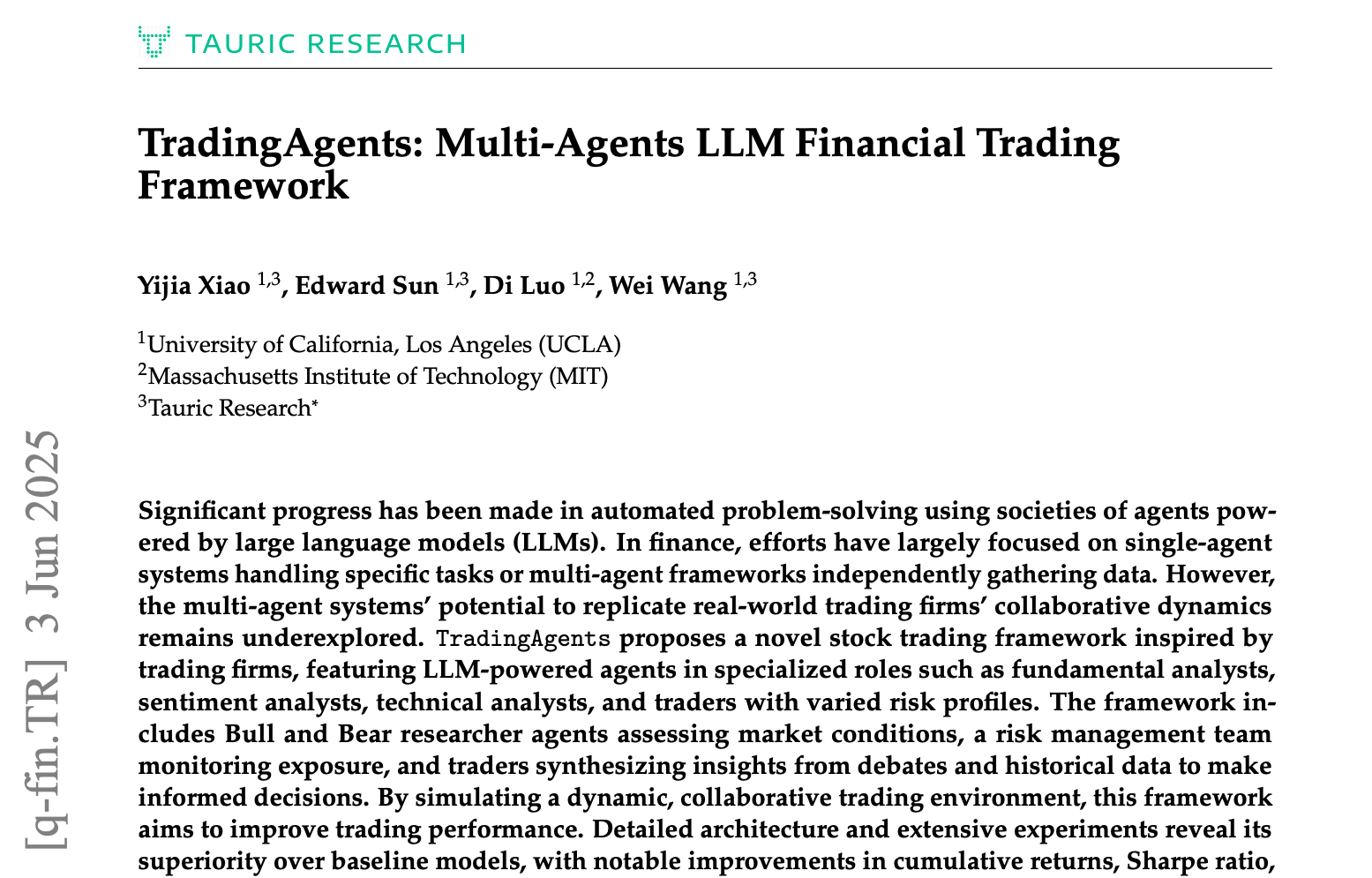
What it is: A multi-agent LLM framework that mimics trading firm structure - analyst team, researcher team (with bullish and bearish debaters), trader agent, risk management, and portfolio manager. Supports 10+ LLM providers. Why you'd want it: Structured financial analysis where multiple AI perspectives debate before making recommendations - not a black box, but a transparent decision pipeline.
✓ Pros✗ Cons
Built-in bull/bear debate structureNot financial advice - research tool only
Decision logging and checkpointingRequires API keys for multiple services
Multi-LLM support including local modelsComplex setup for full pipeline
GitHub - TauricResearch/TradingAgents: TradingAgents: Multi-Agents LLM Financial Trading Framework
TradingAgents: Multi-Agents LLM Financial Trading Framework - TauricResearch/TradingAgents
Rank yesterday: New entry 🆕
⭐ Stars today: +497  ·  📦 Total: 23,162
📜 License: MIT  ·  👤 By: Individual developer
🎯 Time to value: 10 minutes
What it is: An autonomous financial research agent that plans research steps, gathers market data, validates its own results, and refines iteratively. Includes scratchpad debugging and WhatsApp integration for conversational access. Why you'd want it: Financial research that catches its own errors before showing you results - self-correcting analysis rather than one-shot answers.
✓ Pros✗ Cons
Self-validation catches errorsRequires Financial Datasets API key
Interactive research with live watchingLimited to equity analysis currently
WhatsApp integration for mobile accessBun runtime required
GitHub - virattt/dexter: An autonomous agent for deep financial research
An autonomous agent for deep financial research. Contribute to virattt/dexter development by creating an account on GitHub.
Rank yesterday: New entry 🆕
⭐ Stars today: +1,116  ·  📦 Total: 24,780
📜 License: MIT  ·  👤 By: Individual developer
🎯 Time to value: 2 minutes
What it is: An open-source investigation tool that searches for a person across 3,000+ websites using only their username. Generates comprehensive reports in HTML, PDF, JSON, and interactive graph formats. Supports Tor and proxy routing. Why you'd want it: Background research and Open Source Intelligence (OSINT) - finding all public accounts associated with a username across thousands of platforms.
✓ Pros✗ Cons
3,000+ sites, no API keys requiredEthical concerns about surveillance use
Multiple output formats including graphsDefault scan limited to 500 sites
Auto-updates site database dailySome sites block automated queries
GitHub - soxoj/maigret: 🕵️‍♂️ Collect a dossier on a person by username from 3000+ sites
🕵️‍♂️ Collect a dossier on a person by username from 3000+ sites - soxoj/maigret
Rank yesterday: #8 - Rising ↑
⭐ Stars today: +1,277  ·  📦 Total: 3,856
📜 License: MIT  ·  👤 By: Individual developer
🎯 Time to value: 5 minutes
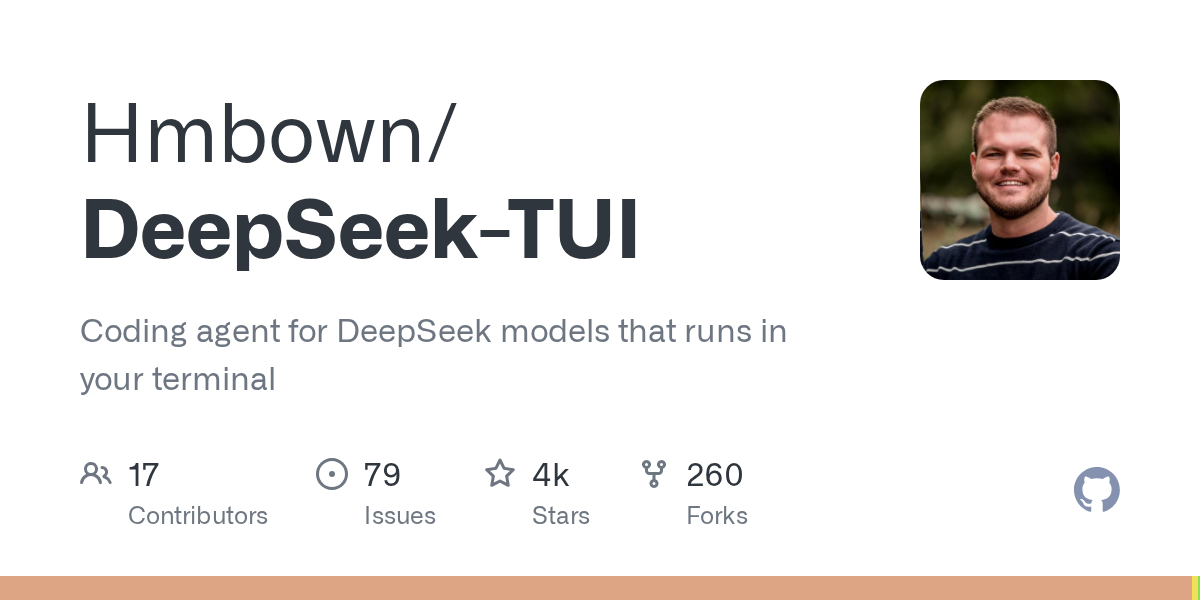
What it is: A terminal-based coding agent for DeepSeek models. Written in Rust with 1M-token context, three operational modes (Plan, Agent, YOLO), workspace rollback via side-git snapshots, and Model Context Protocol (MCP) server support. Uses parallel child agents for faster reasoning. Why you'd want it: If you want Claude Code-style agentic coding but powered by DeepSeek's cheaper models, entirely from the terminal.
✓ Pros✗ Cons
27.8 MB RAM vs 140-386 MB for competitorsTied to DeepSeek model ecosystem
Side-git rollback protects your repoNewer, smaller community
HTTP/SSE API for headless workflowsSome features still in active development
GitHub - Hmbown/DeepSeek-TUI: Coding agent for DeepSeek models that runs in your terminal
Coding agent for DeepSeek models that runs in your terminal - Hmbown/DeepSeek-TUI
Rank yesterday: New entry 🆕
⭐ Stars today: +204  ·  📦 Total: 7,979
📜 License: Apache-2.0  ·  👤 By: Company (cocoindex.io)
🎯 Time to value: 10 minutes
What it is: An incremental data pipeline framework that keeps AI agent context fresh by only reprocessing changed data. Connects to codebases, databases, APIs, Slack, PDFs, and more. Built in Rust with a declarative Python API. Why you'd want it: If your AI agents need to work with data that changes frequently (emails, documents, code), this eliminates the cost and latency of full reprocessing.
✓ Pros✗ Cons
Sub-second freshness with delta processingRequires understanding data pipeline concepts
Complete data lineage trackingRust engine adds build complexity
Connects to 10+ data source typesSmaller community than ETL alternatives
GitHub - cocoindex-io/cocoindex: Incremental engine for long horizon agents 🌟 Star if you like it!
Incremental engine for long horizon agents 🌟 Star if you like it! - cocoindex-io/cocoindex

Top Models Today

The largest open-weight model continues to dominate the trending charts two weeks after release.
📥 Downloads (30d): 535K  ·  📜 License: Custom (DeepSeek)
👤 By: DeepSeek AI  ·  🎯 Task: Text Generation
📐 Size: 862B
What it is: A 1.6 trillion total parameter Mixture of Experts (MoE) model with 49B active parameters, featuring hybrid attention for efficient long-context inference. Requires only 27% of inference compute compared to DeepSeek V3.2 at 1M context. (Covered April 24) Why you'd want it: The most capable open-weight model available, with cost advantages over comparable proprietary models on most benchmarks.
✓ Pros✗ Cons
Frontier-competitive at open-weight pricing862B requires significant hardware
1M token context windowCustom license restricts some commercial use
76% cheaper than GPT-5.4 mini on 5/7 benchmarksNIST rates it 8 months behind GPT-5.5
deepseek-ai/DeepSeek-V4-Pro · Hugging Face
We’re on a journey to advance and democratize artificial intelligence through open source and open science.
Mistral's first "merged" flagship model just appeared on HuggingFace - 128B dense parameters with configurable reasoning effort.
📥 Downloads (30d): 12K  ·  📜 License: Apache-2.0
👤 By: Mistral AI  ·  🎯 Task: Text Generation
📐 Size: 128B
What it is: A dense 128B model that replaces three prior Mistral variants (Medium 3.1, Magistral, Devstral 2). Features 256K context window and configurable reasoning effort per request. Scores 77.6% on SWE-Bench Verified. (Covered April 29) Why you'd want it: One model that handles instruction following, reasoning, and coding with adjustable compute spend per query.
✓ Pros✗ Cons
Apache-2.0, fully open128B dense requires serious hardware
77.6% SWE-Bench Verified$1.50/$7.50 per 1M tokens on API
Configurable reasoning effortNewer, less community support than Llama
mistralai/Mistral-Medium-3.5-128B · Hugging Face
We’re on a journey to advance and democratize artificial intelligence through open source and open science.
An uncensored video generation model that dropped alongside LTX 2.3, drawing immediate community attention.
📥 Downloads (30d): 20.2K  ·  📜 License: Custom
👤 By: SulphurAI  ·  🎯 Task: Text-to-Video
📐 Size: 9B
What it is: An uncensored video generation model based on LTX 2.3, supporting text-to-video and image-to-video natively. Includes a prompt enhancer for improved generation quality. Why you'd want it: Local video generation without content restrictions or subscriptions - full creative freedom on your own hardware.
✓ Pros✗ Cons
Uncensored - no content policy restrictions"Uncensored" raises ethical concerns
Supports both text-to-video and image-to-video9B parameters requires decent Graphics Processing Unit (GPU)
Built on proven LTX 2.3 architectureCustom license - check terms
SulphurAI/Sulphur-2-base · Hugging Face
We’re on a journey to advance and democratize artificial intelligence through open source and open science.
SenseTime's unified multimodal model eliminates the need for separate vision and generation components.
📥 Downloads (30d): 1.71K  ·  📜 License: Apache-2.0
👤 By: SenseTime  ·  🎯 Task: Any-to-Any
📐 Size: 18B
What it is: A native multimodal model that unifies understanding and generation in a single architecture (NEO-Unify). Instead of bolting a vision encoder onto a language model, it processes all modalities natively. Generates interleaved text and images in a single flow. Why you'd want it: One model for both understanding images and creating them - useful for applications like illustrated guides, storyboards, or visual Q&A.
✓ Pros✗ Cons
True multimodal unification, not bolted-on1.71K downloads suggests early stage
Apache-2.0 fully openGeneration quality vs specialized models unknown
Interleaved text+image generationRequires research to deploy effectively
sensenova/SenseNova-U1-8B-MoT · Hugging Face
We’re on a journey to advance and democratize artificial intelligence through open source and open science.
A 33B coding model with only 3B active parameters that runs on a single GPU and scores 68.2% on SWE-Bench Verified.
📥 Downloads (30d): 10.4K  ·  📜 License: Apache-2.0
👤 By: Poolside AI  ·  🎯 Task: Text Generation
📐 Size: 33B
What it is: An agentic coding model using sparse MoE architecture - 33B total but only 3B active at inference. Designed for terminal-based coding agents. Comes with two products: "pool" (terminal agent) and "Shimmer" (cloud dev environment). (Covered April 28) Why you'd want it: Near-frontier coding agent performance that fits on consumer GPU hardware.
✓ Pros✗ Cons
68.2% SWE-Bench on a single GPUAPI free access is time-limited
Apache-2.0, fully open3B active may limit complex reasoning
Companion tools (pool, Shimmer)Newer lab, less proven track record
poolside/Laguna-XS.2 · Hugging Face
We’re on a journey to advance and democratize artificial intelligence through open source and open science.

AI Launches Today

Agent Teams You Can Actually Delegate To
🔥 Upvotes: 269  ·  👤 By: Mindra team
💰 Pricing: Not disclosed  ·  🏷 Category: AI Workflow Automation, AI Agents
A platform for creating teams of AI agents that work together on multi-step tasks. Positioned as a delegation tool rather than a chat interface - you assign work to agent teams rather than prompting individual models. Verdict: The "agent teams" framing addresses a real pain point - orchestrating multiple AI steps is genuinely harder than single prompts. Whether the UX delivers on the promise of true delegation remains to be tested.
Mindra: Agent Teams You Can Actually Delegate To | Product Hunt
Mindra is the command center for your non-sleeping, 24/7 awake agentic team. Explain your task, and Mindra will create the best agentic team for you. Automate your marketing, supply chain and more. With Mindra’s built-in governance, human oversight, and support for your existing stack, you can finally trust your agents.
Animated companions for your Codex workflow
🔥 Upvotes: 215  ·  👤 By: OpenAI
💰 Pricing: Free  ·  🏷 Category: LLMs, Foundation Models
Animated virtual pets that accompany your OpenAI Codex coding sessions. A playful addition to the developer experience from OpenAI itself. Verdict: A light-hearted move from OpenAI that signals they're thinking about developer experience beyond pure capability. Whether animated pets improve coding productivity is... debatable.
OpenAI | APIs and tools for building AI products | Product Hunt
The most powerful platform for building AI products. Build and scale AI experiences powered by industry-leading models and tools.
Branded team headshots in one drop
🔥 Upvotes: 208  ·  👤 By: Aaavatar team
💰 Pricing: Not disclosed  ·  🏷 Category: AI Headshot Generators
Generates consistent, branded professional headshots for entire teams from a single photo each. Targets companies that want uniform visual identity across employee profiles. Verdict: Solves a real corporate pain point - getting consistent professional headshots across a distributed team. The "one drop" promise (one photo in, branded headshot out) is compelling if the quality holds.
Aaavatar: Branded team headshots in one drop | Product Hunt
Drop one or more profile photos into Aaavatar. Backgrounds is removed, colors balanced, missing pieces restored in one click, everyone aligned, and exported in every format you need. Built for HR and design teams maintaining a branded team gallery.
Your personal AI assistant, native to your desktop
🔥 Upvotes: 175  ·  👤 By: Flowly team
💰 Pricing: Not disclosed  ·  🏷 Category: AI Voice Agents, AI Workflow Automation
A desktop-native AI assistant that integrates with your operating system for voice-driven task automation. Runs locally rather than through a browser. Verdict: Desktop-native AI assistants compete directly with Apple Intelligence and Windows Copilot. The value proposition depends entirely on whether it can access and control apps that the platform assistants can't.
A social shopping platform to discover unique finds | Flowly | Product Hunt
Discover unique finds from around the world found by the Flowly community — https://goflowly.com We’re a small team from Dubai and Russia.
If there’s anything on your mind, we’d love to hear from you [email protected]

Snapshot

ProviderModelInput $/1MOutput $/1MContext
AnthropicClaude Opus 4.7$5.00$25.001M
AnthropicClaude Sonnet 4.6$3.00$15.001M
AnthropicClaude Haiku 4.5$1.00$5.00200K
OpenAIGPT-5.5$5.00$30.001.05M
OpenAIGPT-5.4$2.50$15.001.05M
OpenAIGPT-5.4 mini$0.75$4.50400K
GoogleGemini 3.1 Pro Preview$2.00$12.001M
GoogleGemini 2.5 Pro$1.25$10.001M
GoogleGemini 2.5 Flash$0.30$2.501M
GroqLlama 4 Scout$0.11$0.34128K
GroqLlama 3.3 70B$0.59$0.79128K
MistralMedium 3.5 128B$1.50$7.50256K
No price changes from yesterday. The Mistral Medium 3.5 entry is new to the table - it slots between Google's mid-tier and Anthropic's Sonnet on output pricing. The cheapest frontier-grade model remains Gemini 2.5 Flash at $0.30/$2.50, while DeepSeek V4 Flash (not on Groq) offers $0.14/$0.56 for open-weight frontier quality.

Are Tools All We Need? Unveiling the Tool-Use Tax in LLM Agents

Kaituo Zhang, Zhen Xiong, Mingyu Zhong, Zhimeng Jiang, Zhouyuan Yuan, Zhecheng Li, Ying Lin - arXiv:2605.00136
What it claims: Tool-augmented reasoning introduces systematic performance degradation ("tool-use tax") through prompt formatting costs and protocol overhead that frequently exceeds the benefit of the tools themselves, particularly when semantic distractors are present.

Key finding: Under semantic noise, tool-augmented agents perform worse than agents using plain chain-of-thought reasoning - the tools hurt more than they help.

Why practitioners should care: Every major agent framework assumes more tools equals better performance. This paper provides empirical evidence that the assumption breaks down in realistic conditions, and proposes G-STEP, a lightweight inference-time gate that decides when to use tools versus when to reason directly. Agent architects should consider adding this kind of gating mechanism.
Member discussion

Subscribe to GenAI Secret Sauce newsletter and stay updated.

Don't miss anything. Get all the latest posts delivered straight to your inbox. It's free!

By subscribing, you agree to our Privacy Policy and Terms. We track email opens and clicks. Unsubscribe anytime.

Great! Check your inbox and click the link to confirm your subscription.