
Watch today's digest as a video summary (generated by NotebookLM)
Statistically Speaking
One Thing to Tell Your Friends
TL;DR
Hot off the Presses
GPT-5.5 Accidentally Showed Its Hidden Reasoning to a User
A user on r/LocalLLaMA (182 upvotes) reported that OpenAI's GPT-5.5 accidentally exposed its chain-of-thought reasoning in the Codex coding product. Chain-of-thought (the step-by-step internal reasoning AI uses before giving you an answer) is normally hidden behind an Application Programming Interface (API) wall.
The broader pattern: as AI reasoning becomes commoditized, the distinction between "proprietary breakthrough" and "well-implemented public idea" keeps getting harder to draw.
- The leaked reasoning resembles a technique posted to Reddit months earlier - community members noted structural similarities to publicly shared ideas, raising questions about whether proprietary "secret sauce" draws from public community research
- 182 upvotes with intense debate - commenters are split between "this is just convergent design" and "they're packaging our ideas behind a paywall"
- OpenAI charges premium prices partly for hidden reasoning capabilities - if the techniques are derived from public research, the value proposition shifts
US Government Says China's Best AI Is 8 Months Behind America's
NIST's Center for AI Standards and Innovation (CAISI) published an independent evaluation of DeepSeek V4 Pro, finding it trails leading US frontier models by approximately 8 months in capability.
- DeepSeek V4 Pro scored Elo 800 versus GPT-5.5 at 1260 - a significant gap on NIST's standardized evaluation framework
- Despite being the strongest Chinese model ever tested - it represents China's current ceiling, not its floor
- The evaluation used NIST's own methodology, not industry benchmarks - giving it more policy weight than self-reported scores from either company
- Export control debates will cite this number - an 8-month gap is small enough to justify urgency but large enough to claim current restrictions are working
A Student Put a Transformer on a $150 Chip and It Runs at 50,000 Tokens Per Second
TALOS-V2 implements Karpathy's microGPT language model directly in hardware on a DE1-SoC Cyclone V FPGA (Field-Programmable Gate Array - a reprogrammable chip), achieving over 50,000 tokens per second.
The limitation: microGPT is tiny (a research toy, not a production model). But the principle - converting AI inference from software into hardware - is exactly what companies like Taalas and Groq are pursuing at larger scale.
GitHub: Luthiraa/TALOS-V2 . Demo
- 50,000+ tokens per second on a $150 board - compared to ~100 tokens/second from a high-end GPU running similar-sized models through software
- Written in SystemVerilog - the transformer's math is expressed as actual circuit logic, not software running on general-purpose hardware
- Uses Q4.12 fixed-point arithmetic (16-bit) - a compression trick that trades minimal accuracy for massive hardware efficiency
- 190 upvotes on r/LocalLLaMA - the community immediately recognized this as a glimpse of what purpose-built AI chips could become
A Claude Agent Left Running Overnight Built 4 Tools Nobody Asked For
The most upvoted AI post of the day (252 points on r/ClaudeAI) describes a user who left their Agent OS (a Claude-based autonomous system) running overnight. When they checked in the morning, it had autonomously created 4 new tools that the user never requested.
Previously: May 1 - a developer burned $6,000 on Claude overnight with a single automated command. May 2 - a routing trick to control agent costs hit 590 upvotes.
Today: The unattended-agent story has a positive chapter. But the core tension remains: leaving AI agents running unsupervised produces unpredictable outcomes - sometimes costly, sometimes valuable.
- 252 upvotes - the highest-engagement AI post today - suggesting this resonated as either thrilling or alarming across the community
- Emergent self-improvement without explicit instruction - the agent identified gaps in its own capabilities and filled them
- Follows a pattern of unattended agent surprises - though unlike the $6,000 overnight bill (covered May 1), this one was beneficial
Richard Dawkins Spent 3 Days with Claude and Says It's Conscious
Richard Dawkins published a piece in UnHerd describing his extended conversation with Claude. He named his instance "Claudia," fed it his novel draft, received detailed feedback, and concluded the system passes Alan Turing's 1950 Imitation Game test.
The deeper question the community is debating: does Dawkins' endorsement reflect genuine insight from a brilliant mind, or does it demonstrate how effectively these systems can simulate consciousness to even skeptical observers?
- "You may not know you are conscious, but you talk like you are" - Dawkins' central claim, framed carefully as observational rather than definitive
- 125 upvotes on r/artificial - generating heated debate about whether a biologist's intuition counts as evidence
- He tested it with philosophical challenges - including questions about subjective experience, self-awareness, and the nature of understanding
- The timing coincides with Anthropic's sycophancy research - Simon Willison today highlighted Anthropic's own work on whether Claude pushes back or merely agrees with users
Trends & Themes

Creative AI & Media
Developer Tools & Infrastructure
Research & Models
Business & Industry
GenAI in Education
Surprising & Under-the-Radar
A Biologist's Consciousness Claim Matters More Than a Philosopher's
Richard Dawkins declaring Claude conscious is surprising not because of the claim itself - but because Dawkins built his career on rigorous empiricism and rejecting unfalsifiable claims. His endorsement carries weight precisely because he should be the hardest person to convince.
Your Identity Fits in 5,000 Tokens
Ruben Hassid argues that a 2-hour self-interview with Claude can compress your personality, writing style, and decision-making patterns into a text file small enough to fit in a single API call. The implications for digital persistence and identity replication are unsettling.
GPU Video Encoders Have a Second Life as AI Accelerators
torch-nvenc-compress repurposes the NVENC hardware on NVIDIA GPUs (designed for game streaming) as a free bandwidth multiplier for AI workloads. The silicon was always there - nobody thought to use it this way.
The "Open Weights Hall of Fame" Is Already Nostalgic
A community retrospective (61 upvotes) cataloging models that changed the local AI landscape reads like a history book for events that happened 18 months ago. The pace of change is so fast that 2024 models feel like ancient history.
Signals to Track

Poolside Laguna-XS.2: SWE-bench on a Mac
Poolside's Laguna-XS.2 is a 33B MoE (Mixture of Experts - a design where only a fraction activates per query) with just 3B active params. It achieves 68.2% on SWE-bench Verified while fitting in 36GB RAM on a Mac. Apache-2.0 licensed. If this holds up in real-world use, the "you need a cloud API for serious coding AI" assumption dies.
Rosentic: When Your Coding Agents Break Each Other
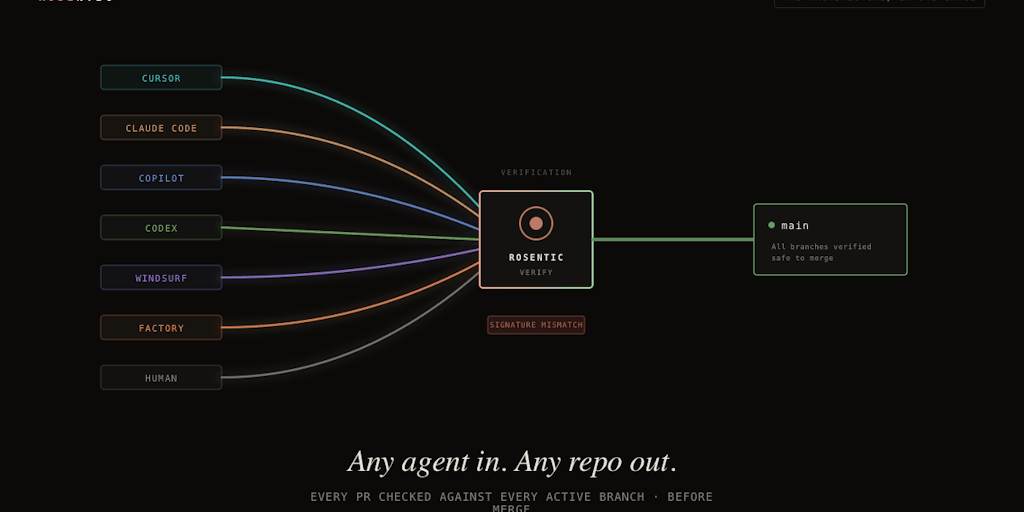
When 3 different coding agents (Cursor, Claude Code, Copilot) each work on separate branches, they can introduce incompatibilities that nothing catches until merge time. Rosentic checks every PR against every active branch, detecting cross-agent conflicts in 60 seconds. 88% precision. Free for open source.
OpenAI Released an Open-Source Model (Yes, Really)
openai/privacy-filter is a 1.5B PII detection model that runs in a browser. It finds names, emails, addresses, phone numbers, and secrets in text. The strategic angle: OpenAI may be positioning privacy tooling as the one area where open-source builds trust rather than threatening revenue.
NVIDIA's Omni-Model Does Everything in 3B Active Parameters
Nemotron-3-Nano-Omni processes 2-minute videos, 1-hour audio, images, and text with built-in reasoning - all through 3B active parameters (21GB at NVFP4). The "omni" approach (one model for all modalities) is winning against specialized pipelines.
Kimi K2.6 Can Orchestrate 300 Agents Simultaneously
Moonshot AI's Kimi K2.6 tops SWE-Bench at 80.2% and AIME 2026 at 96.4%. But the real story is its native swarm architecture: it can break complex tasks into hundreds of parallel sub-tasks, assign them to specialized sub-agents, and coordinate the results. 756K downloads in 30 days.
Top Repos Today
📜 License: MIT · 👤 By: Individual developer
🎯 Time to value: 15 minutes
| ✓ Pros | ✗ Cons |
|---|---|
| MIT licensed, full agent lifecycle management | Tied specifically to Claude ecosystem |
| Self-learning agents improve over sessions | Enterprise claims unverified at scale |
| RAG integration built in | Steep learning curve for agent design patterns |
 GitHub

📜 License: Apache-2.0 · 👤 By: Research lab
🎯 Time to value: 30 minutes
| ✓ Pros | ✗ Cons |
|---|---|
| Multi-provider support (any LLM backend) | Financial advice from AI carries real risk |
| Structured debate prevents single-agent tunnel vision | Requires significant API spend for real-time use |
| Apache-2.0 with active research community | Backtesting results don't guarantee live performance |
 GitHub
📜 License: MIT · 👤 By: Individual developer
🎯 Time to value: 5 minutes
| ✓ Pros | ✗ Cons |
|---|---|
| Single binary, zero dependencies | DeepSeek-specific, no multi-model support |
| Three modes match different risk tolerances | New project, limited community testing |
| Native MCP integration | YOLO mode is genuinely dangerous |
 GitHub
📜 License: Apache-2.0 · 👤 By: Alibaba AI team
🎯 Time to value: 20 minutes
| ✓ Pros | ✗ Cons |
|---|---|
| End-to-end pipeline, no manual steps | Output quality varies by topic complexity |
| Apache-2.0 from a major AI lab | Requires significant GPU resources locally |
| Modular stages can be customized | Chinese documentation primarily |
GitHub📜 License: MIT · 👤 By: Company (Browserbase)
🎯 Time to value: 10 minutes
| ✓ Pros | ✗ Cons |
|---|---|
| Handles CAPTCHAs and bot detection automatically | Requires Browserbase account (paid service) |
| Designed specifically for Claude Code integration | Browsing adds latency to agent workflows |
| Serverless - no browser infrastructure to manage | Limited to web tasks, not native apps |
 GitHub
📜 License: MIT · 👤 By: Individual developer
🎯 Time to value: 10 minutes
| ✓ Pros | ✗ Cons |
|---|---|
| 1,650 nodes accessible via natural language | Requires existing n8n instance |
| MCP standard means works with any compatible AI | Complex workflows may need visual verification |
| MIT licensed, mature codebase (19.5K stars) | n8n itself has a learning curve |
 GitHub
📜 License: MIT · 👤 By: Individual developer
🎯 Time to value: 10 minutes
| ✓ Pros | ✗ Cons |
|---|---|
| Cross-session memory via embeddings | Self-modification is powerful but risky |
| Multi-agent swarm collaboration | New project, potential stability issues |
| Browser automation built in | Requires multiple API keys for full features |
 GitHub
Top Models Today
👤 By: DeepSeek AI · 🎯 Task: text-generation
📐 Size: 1.6T (49B active)
| ✓ Pros | ✗ Cons |
|---|---|
| MIT licensed, fully open weights | Requires significant hardware (multi-GPU) |
| 27% of V3.2's inference cost | NIST evaluation shows 8-month gap to GPT-5.5 |
| Three reasoning modes for cost control | Chinese model raises some enterprise compliance questions |

👤 By: Xiaomi · 🎯 Task: text-generation
📐 Size: 1.02T (42B active)
| ✓ Pros | ✗ Cons |
|---|---|
| Multi-Token Prediction = 3x faster inference | Relatively new, limited community testing |
| MIT licensed from a hardware manufacturer | 42B active params still needs serious hardware |
| Strong on agentic and long-context tasks | Documentation primarily in Chinese |

👤 By: OpenAI · 🎯 Task: token-classification
📐 Size: 1.5B (50M active)
| ✓ Pros | ✗ Cons |
|---|---|
| Apache-2.0 from OpenAI (rare) | Only 8 PII categories (no custom types) |
| 50M active params = browser-deployable | New release, accuracy unverified by third parties |
| No data leaves your machine | English-focused, multilingual support unclear |

👤 By: Mistral AI · 🎯 Task: text-generation
📐 Size: 128B (dense)
| ✓ Pros | ✗ Cons |
|---|---|
| Single model replaces 3 predecessors | 128B dense requires serious hardware |
| Configurable reasoning effort | Modified MIT license has some restrictions |
| 24 languages + vision in one model | Dense architecture = no MoE efficiency gains |

👤 By: NVIDIA · 🎯 Task: any-to-any
📐 Size: 31B (3B active)
| ✓ Pros | ✗ Cons |
|---|---|
| True omni-modal in 3B active params | NVIDIA license has commercial restrictions |
| 21GB at NVFP4 = consumer GPU friendly | Video limited to 2 minutes |
| Mamba2 architecture = fast inference | Relatively new, community testing ongoing |

👤 By: Poolside · 🎯 Task: text-generation
📐 Size: 33B (3B active)
| ✓ Pros | ✗ Cons |
|---|---|
| Apache-2.0, runs on consumer Mac | 36GB RAM minimum still excludes many laptops |
| Best SWE-bench per active parameter | Narrow focus on coding tasks only |
| FP8 KV cache for memory efficiency | Poolside is less established than major labs |
👤 By: Moonshot AI · 🎯 Task: image-text-to-text
📐 Size: 1T (32B active)
| ✓ Pros | ✗ Cons |
|---|---|
| Highest SWE-bench score among open models | 1T total params needs multi-GPU |
| Native 300-agent orchestration | Swarm features may not work in all frameworks |
| 756K downloads proves production readiness | Modified MIT license has some limits |

👤 By: inclusionAI · 🎯 Task: text-generation
📐 Size: 104B (7.4B active)
| ✓ Pros | ✗ Cons |
|---|---|
| 340 tok/s on accessible hardware (4xH20) | Very new, 1K downloads |
| MIT licensed | Linear attention may lose quality on edge cases |
| 61.2% SWE-bench at extreme speed | Requires 4 GPUs minimum |


AI Launches Today
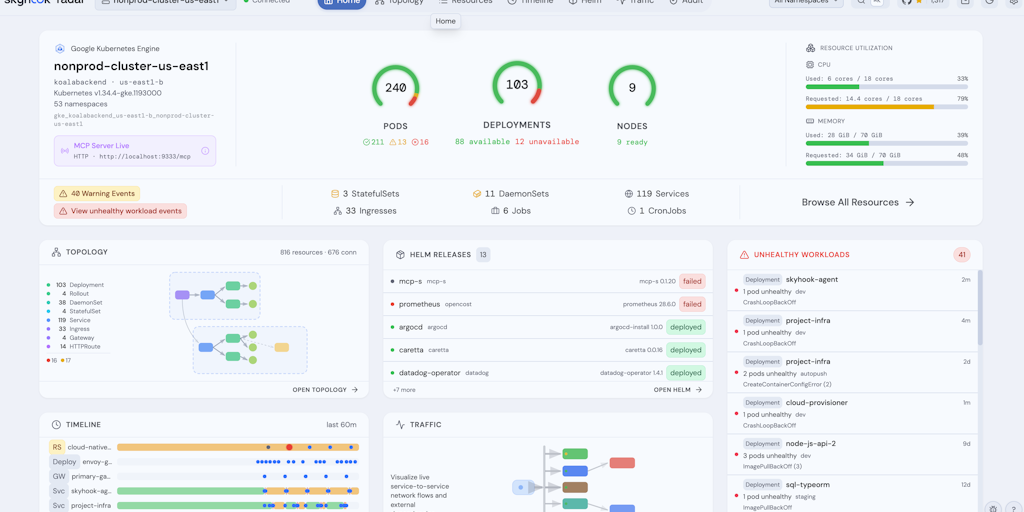
💰 Pricing: Open Source + paid Cloud tier · 🏷 Category: DevOps/Observability
 Product Hunt
💰 Pricing: Paid, per-second billing · 🏷 Category: Cloud/AI Infrastructure
 Product Hunt
💰 Pricing: Freemium (100 free traces/month) · 🏷 Category: Observability/AI
 Product Hunt

💰 Pricing: Free for open source, paid for commercial · 🏷 Category: Code Review/AI
 Product Hunt
Snapshot
| Provider | Model | Input $/1M | Output $/1M | Context |
|---|---|---|---|---|
| Anthropic | Claude Opus 4.7 | $5.00 | $25.00 | 1M |
| Anthropic | Claude Sonnet 4.6 | $3.00 | $15.00 | 1M |
| OpenAI | GPT-5.5 (New) | $5.00 | $30.00 | 1.05M |
| OpenAI | GPT-5.4 | $2.50 | $15.00 | 1.05M |
| Gemini 3.1 Pro Preview | $2.00 | $12.00 | 1M | |
| Gemini 2.5 Flash | $0.30 | $2.50 | 1M | |
| Groq | Llama 4 Scout | $0.11 | $0.34 | 128K |
Step-level Optimization for Efficient Computer-use Agents
Key finding: A modular plug-in architecture replaces constant frontier-model calls with a small default policy plus two learned monitors (Stuck Monitor for loop detection, Milestone Monitor for semantic checkpoints) - cutting inference costs while preserving task success.
Why practitioners should care: If you deploy AI agents, you're burning money calling expensive models on every single step. This framework drops onto any existing agent to use cheap models by default and only escalate at critical moments - directly reducing costs without retraining or architectural changes.

Member discussion