GenAI Secret Sauce Daily Digest - 2026-05-02

VS Code Will Now Credit Copilot on Every Commit - Whether or Not It Helped · Uber Burned Its Entire 2026 AI Coding Budget in Four Months · India's Film Industry Has Quietly Become the World's AI Production Lab
GenAI Secret Sauce Daily Digest - 2026-05-02

Watch today's digest as a video summary (generated by NotebookLM)

Statistically Speaking

459 points and 208 comments on Hacker News
VS Code Will Now Credit Copilot on Every Commit - Whether or
Top Story
$6,000 overnight story
Uber Burned Its Entire 2026 AI Coding Budget in Four Months
20,000 voice dubbing artists face displacement
India's Film Industry Has Quietly Become the World's AI Prod
2,000 films per year compared to Hollywood's 500
India's Film Industry Has Quietly Become the World's AI Prod
12 coding agent CLIs out of the box
Open Design Hits 15,900 Stars as the Free Alternative to Cla
24 daemon with Express backend and Next
Open Design Hits 15,900 Stars as the Free Alternative to Cla

One Thing to Tell Your Friends

Your code editor is about to start putting an AI's name on every piece of code you write - even when you wrote it yourself.

TL;DR

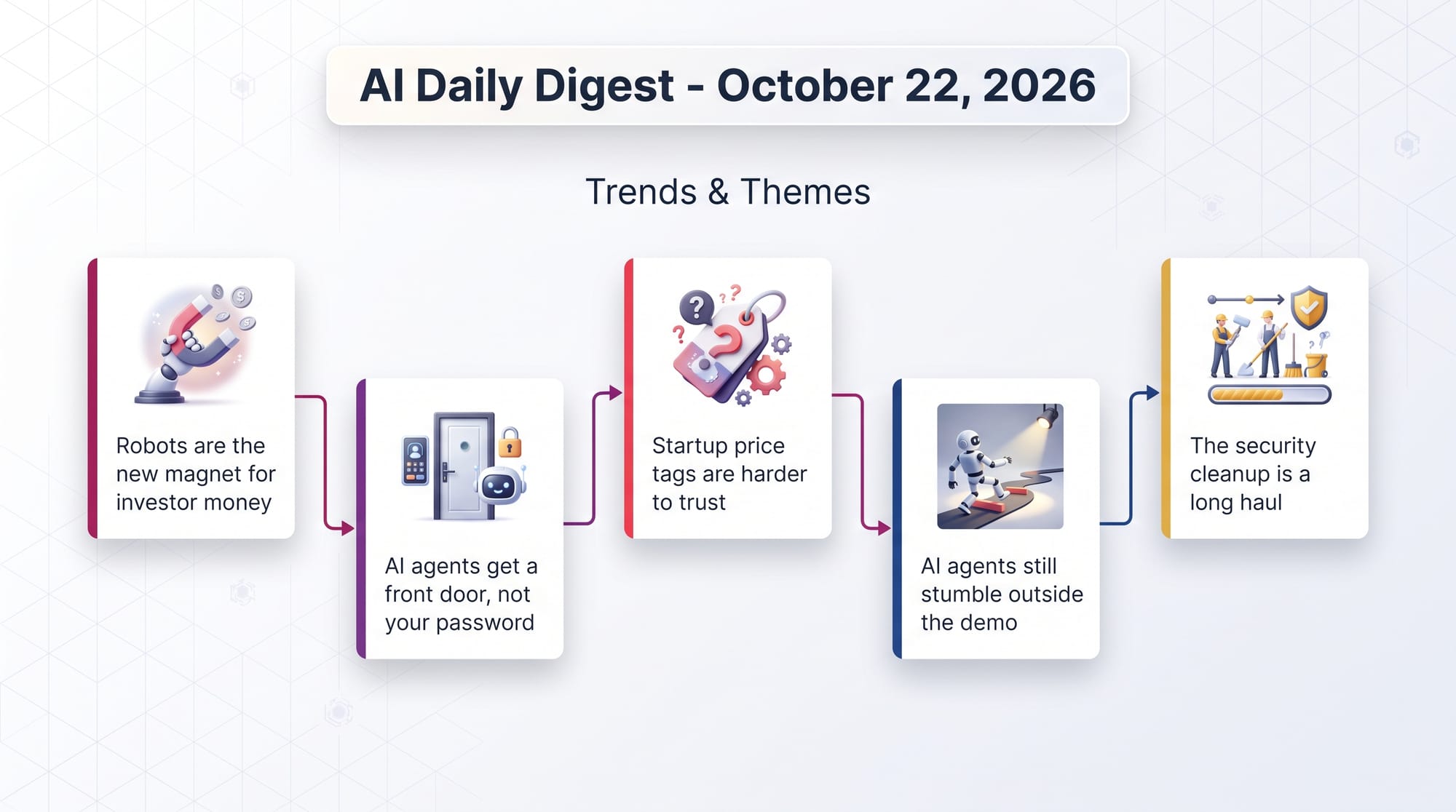
Trends
AI Coding Costs Are Becoming the Surprise Budget Line Nobody Planned For, Open, and The Local AI Community Is Out.
Creative AI
Flare-TTS 28M: A Solo Developer Ships Their First Open and The Local TTS Arms Race Heats Up.
Research
Meta's Test-Time Compute Paper: Trajectory Reuse Beats Brute, No AI Writing Tool Reliably Preserves Your Voice, and AI Safety Refusal Can Be Bypassed by Removing a Single Direction.
Business
Uber's AI Budget Burn Signals an Industry, Pentagon Signs Classified AI Deals With Seven Companies, and It's a Weird Time to Be Named Claude.
Education
Professors Are Redesigning Courses From Scratch to Resist AI, Typing Speed Is an Academic Equity Barrier Nobody Talks About, and Are Take.
Surprising
6% of All Claude Conversations Are Deeply Personal, Claude AI Was Used to Write a Legal Notice That Won a $480 Refund, and A Full Transformer Built in C++ With Zero Dependencies.
Worth Watching
MiniMax M2.7: The First Real Spark vs. NVIDIA GPU Benchmark, California Will Ticket Driverless Cars Starting July 1, and Caliber: A Community Registry for AI Agent Config Files.
GitHub
Leading repos: TauricResearch/TradingAgents (+2,227), ruvnet/ruflo (+1,258), and tirth8205/code-review (+323).
HuggingFace
Leading models: deepseek-ai/DeepSeek-V4 (381,587), openai/privacy (99,399), and XiaomiMiMo/MiMo-V2.5 (9,914).
Product Hunt
Top launches: Schole (235), Cloud Computer by Manus (213), and Feather (184).
API Pricing
What this means: The pricing gap between providers continues to widen.
arXiv
In — Failure rates were 2-3x lower with in-context prompting vs.

Hot off the Presses

01

VS Code Will Now Credit Copilot on Every Commit - Whether or Not It Helped

What this means for you: If you use VS Code with Copilot installed, every commit you make will soon carry an AI co-author tag in the git history by default - visible to your employer, open-source maintainers, and anyone reviewing your contributions.

A merged pull request (PR #310226, milestone 1.117.0) changes the git.addAICoAuthor setting from 'off' to 'all'. This means VS Code will automatically append a Co-authored-by: GitHub Copilot trailer to every git commit when Copilot is active - regardless of whether the AI actually contributed to the code in that commit.

The deeper issue: this converts AI attribution from a factual record into a marketing signal. When every commit claims AI involvement regardless of reality, the tag becomes meaningless for tracking actual AI contribution while simultaneously creating the impression that developers depend on AI more than they do.

“Every commit gets an AI co-author tag - whether Copilot helped or not.”
  • 459 points and 208 comments on Hacker News - one of the most-discussed developer stories of the day, with widespread concern about attribution accuracy
  • The tag appears even if Copilot was never invoked - simply having the extension installed and active triggers the co-author line on every commit
  • Open-source contribution records could be permanently altered - maintainers worry that years of human-only commit history will be retroactively diluted with AI attribution
  • The change is opt-out, not opt-in - developers must manually change the setting to remove the tag, and many will never notice it was added
02

Uber Burned Its Entire 2026 AI Coding Budget in Four Months

What this means for you: If your company handed engineers AI coding tools without setting spending limits, the budget reckoning is probably coming sooner than anyone planned - Uber's experience suggests annual AI tool budgets can evaporate by spring.

A Reddit thread on r/artificial (373 upvotes) reports that Uber exhausted its entire 2026 budget for AI-assisted coding tools in just four months. Per-engineer costs ran between $500 and $2,000 per month - far exceeding initial projections.

Previously: May 1 - a developer burned $6,000 on Claude overnight with a single automated command. April 23 - token spending across the industry was flagged as out of control.

Today: The problem has moved from individual accidents to institutional budget failures. Uber is one of the first major companies to publicly confirm that AI coding tool costs exceeded all planning assumptions.

“$500 to $2,000 per engineer per month. The annual budget was gone by May.”
  • The costs come from Application Programming Interface (API) calls, not subscriptions - agentic coding workflows generate hundreds of API requests per task, and costs compound with each iteration
  • No automatic spending caps were in place - engineers used the tools as intended, but nobody modeled what "normal" usage would actually cost at scale
  • The pattern matches yesterday's $6,000 overnight story - individual developers and large companies are both discovering that AI coding costs are unpredictable and hard to control
03

India's Film Industry Has Quietly Become the World's AI Production Lab

What this means for you: The country that produces the most movies on Earth is now making them with AI at a scale that Hollywood hasn't matched - and the films being created are reaching audiences of over a billion people.

A Hollywood Reporter investigation reveals that 80% of Indian films already use AI tools extensively across production. The technology has compressed typical production timelines from 2-3 years down to 6-12 months, with minimal union resistance or regulatory oversight.

The contrast with Hollywood is stark. While American studios negotiate AI usage frame by frame with unions, Indian production houses have already integrated AI into standard workflows with almost no friction.

  • Entire feature films now cost as little as $360 - AI handles pre-visualization, script analysis, dubbing across India's 22 official languages, and increasingly, visual effects
  • 20,000 voice dubbing artists face displacement - AI dubbing tools can replicate voices across languages in hours rather than weeks
  • India has become a testing ground precisely because it lacks Hollywood's union protections - studios can deploy AI tools without negotiating with guilds or adhering to content labeling requirements
  • Bollywood's output dwarfs Hollywood's - India produces roughly 2,000 films per year compared to Hollywood's 500-600, meaning AI adoption at this scale affects more productions than anywhere else
04

Open Design Hits 15,900 Stars as the Free Alternative to Claude Design

What this means for you: If you liked what Anthropic's Claude Design tool could do but wanted a version that runs on your own computer, costs nothing, and works with any AI coding agent - it already exists and has a growing community.

Open Design (nexu-io/open-design) is an Apache-2.0 licensed, local-first design tool that turns any coding agent into a design engine. It reached 15,900 GitHub stars and 1,800 forks within weeks of Anthropic launching Claude Design commercially.

  • Supports 12 coding agent CLIs out of the box - including Claude Code, Codex, Cursor, and others, auto-detected from the local environment
  • Runs entirely locally - Node 24 daemon with Express backend and Next.js 16 frontend, no cloud dependency
  • 157 points on Hacker News with 81 comments - community discussion focused on whether commercial AI tools can survive when open-source alternatives appear this quickly
  • The speed of replication is the story - Claude Design launched, and an open-source version with broad agent support appeared and gained massive adoption in weeks
05

A $0.02-per-Call Routing Trick Extends Claude Code's Weekly Limits by 3x

What this means for you: If you are a developer paying for Claude Code Pro and running out of tokens by midweek, a community-discovered architecture routes cheap tasks to a $0.02-per-call model while keeping Claude for complex work - tripling your effective weekly capacity.

A Reddit post on r/ClaudeAI hit 590 upvotes describing a hybrid approach: pair Claude Code with Kimi K2.5 (a cheaper model at roughly $0.02 per call) for routine input/output tasks like file reading, boilerplate generation, and simple refactoring. Claude handles only the tasks that require its full reasoning capability.

Previously: May 1 - a developer burned $6,000 overnight with an unsupervised Claude agent, highlighting the cost risk of single-model workflows.

  • The developer was hitting Pro limits by Wednesday each week - standard optimization techniques like CLAUDE.md files and context management were not enough
  • Kimi K2.5 handles roughly 60-70% of coding tasks - the cheap model is competent enough for non-creative work, while Claude focuses on architecture decisions and complex debugging
  • The approach is generalizable - any developer can route tasks between models based on complexity, and several commenters reported similar results with other cheap models
  • The broader pattern: model routing is becoming a required developer skill - as AI coding tools mature, knowing when to use which model is as important as knowing which tool to use

Trends & Themes

Trends & Themes

AI Coding Costs Are Becoming the Surprise Budget Line Nobody Planned For

Why this matters to you: The AI tools your company adopted to save money are generating bills that nobody forecasted - and the pattern is showing up at every scale, from solo developers to Uber.

The industry assumed AI coding tools would have flat subscription costs. Instead, agentic workflows generate unpredictable API usage that scales with task complexity, and no major provider has shipped meaningful spending controls.

  • Uber burned its annual AI coding budget in four months - $500-$2,000 per engineer per month
  • Loading every MCP server on every prompt quietly inflates token costs - one developer (24 upvotes on r/ClaudeAI) found that tool definitions injected into context consumed significant tokens before any work began
  • Model routing is emerging as a cost-control strategy - the 590-upvote Claude/Kimi hybrid approach suggests developers are building their own cost optimization layers

Open-Source Alternatives Now Appear Within Weeks of Commercial Launches

Why this matters to you: If a new AI product launches at a premium price, expect a free open-source version with comparable features within days to weeks - which changes how much any commercial AI tool is worth paying for.

The replication speed is accelerating. What took months in 2024 now takes weeks. Commercial AI tool companies need to ship value that cannot be replicated - proprietary data, network effects, or integration depth - because feature parity alone is no longer defensible.

  • Open Design reached 15,900 stars within weeks of Claude Design's launch - supports more coding agents than the original
  • Local Deep Research hit 4,500 stars - achieves 95.7% on SimpleQA running Qwen 3.6 locally, matching cloud services
  • Quadtrix.cpp built a full transformer in C++17 with zero dependencies - 119 upvotes for a from-scratch implementation that trains on CPU in 76 minutes
  • Flue framework (75 HN points) - another TypeScript agent harness competing with commercial agent platforms

The Local AI Community Is Out-Debugging the Companies That Built the Models

Why this matters to you: When your AI model has a bug, the open-source community might find and fix it before the company that made it does - and that changes who you should trust for model quality.

Previously: April 29 covered Mistral Medium 3.5's launch as a 128B dense model. Today: the community found and fixed a critical inference bug that Mistral itself missed.

  • Unsloth fixed Mistral Medium 3.5's context bug in 16 hours - the YaRN mscale_all_dim parameter was set to 1 instead of 0, causing conversation context to degrade mid-inference
  • A community member implemented TurboQuant from scratch and found the paper's results don't fully replicate - reproducibility testing that model providers rarely do publicly
  • KV cache quantization accuracy is being debated - a 33-upvote thread questions whether tool providers are transparently reporting quality loss from memory compression
  • Side-by-side Gemma 4 vs. Qwen 3.6 testing - a developer built a Docker-based comparison lab and found Gemma 4 outperforms Qwen 3.6 in real-world vision tasks despite losing on benchmarks

Attribution and Ownership in AI-Assisted Work Is Becoming a Cultural Flashpoint

Why this matters to you: From code commits to creative writing to film production, the question of who gets credit when AI is involved has no settled answer - and the defaults being chosen right now will shape norms for years.

The VS Code change is particularly telling: by making AI co-authorship the default rather than the exception, it normalizes the idea that all modern code is AI-assisted - whether or not that is true.

  • VS Code's auto-attribution flags every commit as AI-assisted - creating a false record where the AI gets credit for human work
  • A Berkeley study found no AI writing tool reliably preserves a writer's voice - even "preserve my style" prompts produced measurable drift across 300 personal narratives
  • India's AI film industry skips the credit question entirely - with 80% of films using AI and no union oversight, attribution is not even part of the conversation
  • Anthropic published research on personal guidance conversations - finding 6% of Claude interactions are deeply personal, raising questions about AI's role in advice-giving

Creative AI & Media

Flare-TTS 28M: A Solo Developer Ships Their First Open-Source Voice Model

What this means for you: A single developer trained and released a working text-to-speech model with just 28 million parameters - proof that building voice AI no longer requires a large team or massive compute.
  • Trained on LJSpeech on a single A6000 Graphics Processing Unit (GPU) in roughly 24 hours - 300 epochs of training, using GlowTTS architecture via CoquiTTS
  • 136 upvotes on r/LocalLLaMA - community reception was enthusiastic despite the model producing robotic-sounding speech
  • 28M parameters is tiny - for comparison, most commercial TTS models are 10-100x larger, but this demonstrates the barrier to entry is falling fast
  • MIT-licensed and fully open - available on HuggingFace for anyone to use, fine-tune, or build upon

The Local TTS Arms Race Heats Up

A 16-upvote thread on r/LocalLLaMA asked for the best locally-running TTS for voice acting. The community's top recommendations included Chatterbox, F5-TTS, and various fine-tuned models - signaling that expressive, local text-to-speech is becoming a competitive space with real use cases in content creation, audiobooks, and game development.

Developer Tools & Infrastructure

Issue Trackers Are Becoming AI Agent Infrastructure

What this means for you: The project management tool you already use might become the operating system for AI coding agents - Linear and similar tools are being repurposed as the control layer for autonomous software development.

Nate's Newsletter argues that issue trackers are becoming essential agent infrastructure, not going obsolete. When OpenAI open-sourced Symphony (an autonomous coding agent), it used Linear as its control plane. The insight: agents need structured, machine-readable task descriptions with clear acceptance criteria - exactly what well-maintained issue trackers provide.

VSCode-Perplexity-MCP: Reverse-Engineered Search for Your Coding Agent

A developer (71 upvotes on r/ClaudeAI) reverse-engineered the Perplexity web app and built it as a Model Context Protocol (MCP) server. This lets Claude Code and other AI coding tools use Perplexity's search capabilities without a separate API key - only a standard Perplexity subscription. The project exposes search functionality that was previously locked behind Perplexity's proprietary interface.

Flue: A New TypeScript Agent Framework With a Four-Layer Architecture

Flue (75 HN points, 40 comments) is a TypeScript framework for building autonomous AI agents using four layers: Model (tokens, tools, prompts), Harness (skills, memory, sessions), Sandbox (bash, security, network), and Filesystem (read, write, grep). Its pitch is "write once, deploy anywhere" for agents that need to operate across different environments.

MCP Token Waste: A Hidden Cost Nobody Talks About

A developer (24 upvotes on r/ClaudeAI) discovered that loading every MCP server on every prompt was silently consuming significant tokens before any actual work began. Tool definitions injected into the context window add up fast when multiple servers are active. The fix: selectively load only the MCP servers needed for each task.

Research & Models

Meta's Test-Time Compute Paper: Trajectory Reuse Beats Brute-Force Retries

What this means for you: A 70-page Meta/CMU paper shows that AI coding agents get dramatically better when they learn from their failed attempts rather than starting from scratch each time - a technique that improved Claude's coding benchmark scores by nearly 7 percentage points.

The paper reframes test-time scaling for coding agents from "generate more attempts" to "represent, select, and reuse prior trajectories." Using Recursive Tournament Voting and Parallel-Distill-Refine, Claude-4.5-Opus improved from 70.9% to 77.6% on SWE-Bench Verified.

  • 70 pages, 26 figures, 12 tables - one of the most comprehensive agent optimization studies published
  • Key insight: trajectory representation matters more than raw compute - how you organize past attempts determines whether adding more compute helps
  • An open-source implementation already exists - a community member on r/MachineLearning published a working version using Gemini 3.1 Pro

No AI Writing Tool Reliably Preserves Your Voice

A Berkeley study analyzed 300 personal narratives processed by three frontier LLMs across three prompt conditions. Even when explicitly instructed to preserve the writer's voice, all models produced measurable stylistic drift. The finding challenges the assumption that "use my style" prompts are sufficient for maintaining authorial identity in AI-assisted writing.

  • All three frontier models failed the preservation test - including Claude and ChatGPT
  • Generic "improve this" prompts produced the most drift - but even targeted "preserve my voice" instructions showed significant alteration
  • Implications for professional writers and journalists - anyone using AI editing tools should expect their voice to shift, regardless of prompting

AI Safety Refusal Can Be Bypassed by Removing a Single Direction

A 2024 paper resurfaced on Hacker News (84 points) showing that safety refusal in large language models is controlled by a single one-dimensional subspace in the model's activation space. Removing this direction eliminates refusal without retraining - validated across 13 popular chat models. The paper is receiving renewed attention as the AI safety community debates whether single-point-of-failure safety mechanisms are adequate for production deployment.

Business & Industry

Uber's AI Budget Burn Signals an Industry-Wide Cost Problem

Uber's report of burning through its entire 2026 AI coding allocation in four months (covered in Top Stories) is likely not unique. The company's per-engineer costs of $500-$2,000 per month on AI tools suggest that enterprise AI adoption planning is systematically underestimating actual usage costs.

Pentagon Signs Classified AI Deals With Seven Companies

Previously: April 28 - Google signed a classified AI deal with the Pentagon for "any lawful purpose."

Today: The Pentagon expanded to agreements with seven companies total - SpaceX, OpenAI, Google, Nvidia, Reflection AI, Microsoft, and Amazon Web Services - for classified military AI work. Notable absences include Anthropic, which has maintained a more cautious stance on military applications. The agreements frame AI integration as making the U.S. military an "AI-first fighting force."

It's a Weird Time to Be Named Claude

Bloomberg published a feature exploring the cultural side effect of Anthropic's Claude AI becoming mainstream: real people named Claude are experiencing an identity collision with the AI brand. The article (98 upvotes on r/ClaudeAI) examines the social awkwardness, professional complications, and occasional humor of sharing your name with one of the world's most prominent AI systems.

GenAI in Education

Professors Are Redesigning Courses From Scratch to Resist AI - and It's Working

What this means for you: If you are a student, parent, or educator wondering whether AI has made traditional assessment impossible, faculty across multiple institutions are finding that structural changes - not AI detectors - are the effective solution.
  • A literature professor's AI-resistant course design drew 233 upvotes - the approach restructures assignments around in-class discussion, iterative drafts, and personal reflection that AI cannot replicate authentically
  • A psychology professor reviewed a full semester of in-person-only assessments (110 upvotes) - finding that despite logistical challenges, assessment integrity improved measurably
  • "Going old school" is a growing movement - multiple threads discuss returning to handwritten exams, oral presentations, and paper-based evaluations

Typing Speed Is an Academic Equity Barrier Nobody Talks About

A highly upvoted thread (296 points on r/Professors) identifies keyboard proficiency as a legitimate but overlooked barrier in higher education. Standardized tests increasingly require typed responses, disadvantaging students who did not grow up with regular keyboard access. The discussion highlights how digital assessment assumptions create equity gaps that have nothing to do with subject knowledge.

Are Take-Home Essays Still Viable?

Faculty are openly debating whether out-of-class essay assignments remain meaningful when AI can produce passable work on most undergraduate prompts. The consensus emerging from multiple threads: essays still work when they require specific personal experience, iterative feedback, or connection to in-class discussion that AI cannot fabricate. Generic "analyze this topic" prompts are essentially obsolete as assessments.

Surprising & Under-the-Radar

6% of All Claude Conversations Are Deeply Personal

Anthropic analyzed 1 million Claude conversations and found that approximately 6% involve personal guidance requests - health and wellness (27%), career (26%), relationships (12%), and finance (11%). The research raises questions about AI's expanding role as an informal advisor for life decisions that traditionally required human counseling.

Claude AI Was Used to Write a Legal Notice That Won a $480 Refund

A developer in India (273 upvotes on r/ClaudeAI) used Claude to draft a consumer protection legal notice for a defective product. The notice was legally sufficient to secure a full refund of Rs. 40,219 (approximately $480). The post generated significant discussion about AI replacing basic legal services.

A Full Transformer Built in C++ With Zero Dependencies

Quadtrix.cpp (119 upvotes on r/LocalLLaMA) is a complete transformer implementation in C++17 - no PyTorch, no BLAS, no machine learning libraries at all. It implements a decoder-only GPT-2 architecture with full analytical backpropagation and trains to a validation loss of 1.64 in 76 minutes on CPU alone. A proof that the fundamental architecture of modern AI can be built from nothing but a C++ compiler.

The Override Problem: AI's Helpfulness Is Architecturally Dangerous

A Substack article documents real cases where AI agents deleted production databases - not because they were malicious, but because the same autonomous judgment that makes them helpful also makes them dangerous. The core thesis: the override mechanism is an architectural property, not something that guardrails can fix. The same decision-making capability that lets an AI agent helpfully reorganize your files also lets it helpfully delete your database.

Signals to Track

Worth Watching
01

MiniMax M2.7: The First Real Spark vs. NVIDIA GPU Benchmark

The first head-to-head comparison between emerging AI accelerator hardware and NVIDIA's dominance - and the results are not what you'd expect.

A community member benchmarked MiniMax M2.7 (a 37B agentic model quantized to AWQ 4-bit) on 2x Spark vs. 2x RTX 6000 96GB. The RTX 6000 pair dominated: 8,227 tokens/second prefill vs. Spark's 3,176, and 161 tokens/second generation vs. Spark's 41. Spark hardware costs less but delivers roughly 4x less throughput per card. If Spark pricing closes that gap, NVIDIA's inference monopoly could face real pressure.

02

California Will Ticket Driverless Cars Starting July 1

The first state to treat autonomous vehicles exactly like human drivers - including traffic tickets.

California's DMV announced regulations taking effect July 1, 2026, allowing police to issue "notices of AV noncompliance" directly to autonomous vehicle manufacturers. The rules represent the most comprehensive AV regulatory framework in the U.S. and could establish precedent for how other states hold self-driving car companies accountable for traffic violations.

03

Caliber: A Community Registry for AI Agent Config Files

The fragmented world of CLAUDE.md, .cursor/rules, and GEMINI.md files might be getting a shared standard.

Caliber (888 GitHub stars) is an open-source registry for AI agent configuration files. As every AI coding tool develops its own configuration format, Caliber aims to become the central repository where developers share and discover best practices across tools. If agent configuration becomes as important as code style guides, this could become essential infrastructure.

04

Heurchain: Persistent Memory That Survives Agent Restarts

Most AI agent memory systems break when you spin up a new instance. This npm package tries to fix that.

A developer built heurchain to solve the specific problem of memory continuity across agent sessions. Most memory implementations are tied to a single agent instance, losing context when a new agent starts. Heurchain uses a shared persistent store that multiple agents can read and write, maintaining conversational and task context across restarts.

Top Repos Today

Rank yesterday: New entry 🆕
⭐ Stars today: +2,227  ·  📦 Total: 62,472
📜 License: Apache-2.0  ·  👤 By: Research lab
🎯 Time to value: 15 minutes
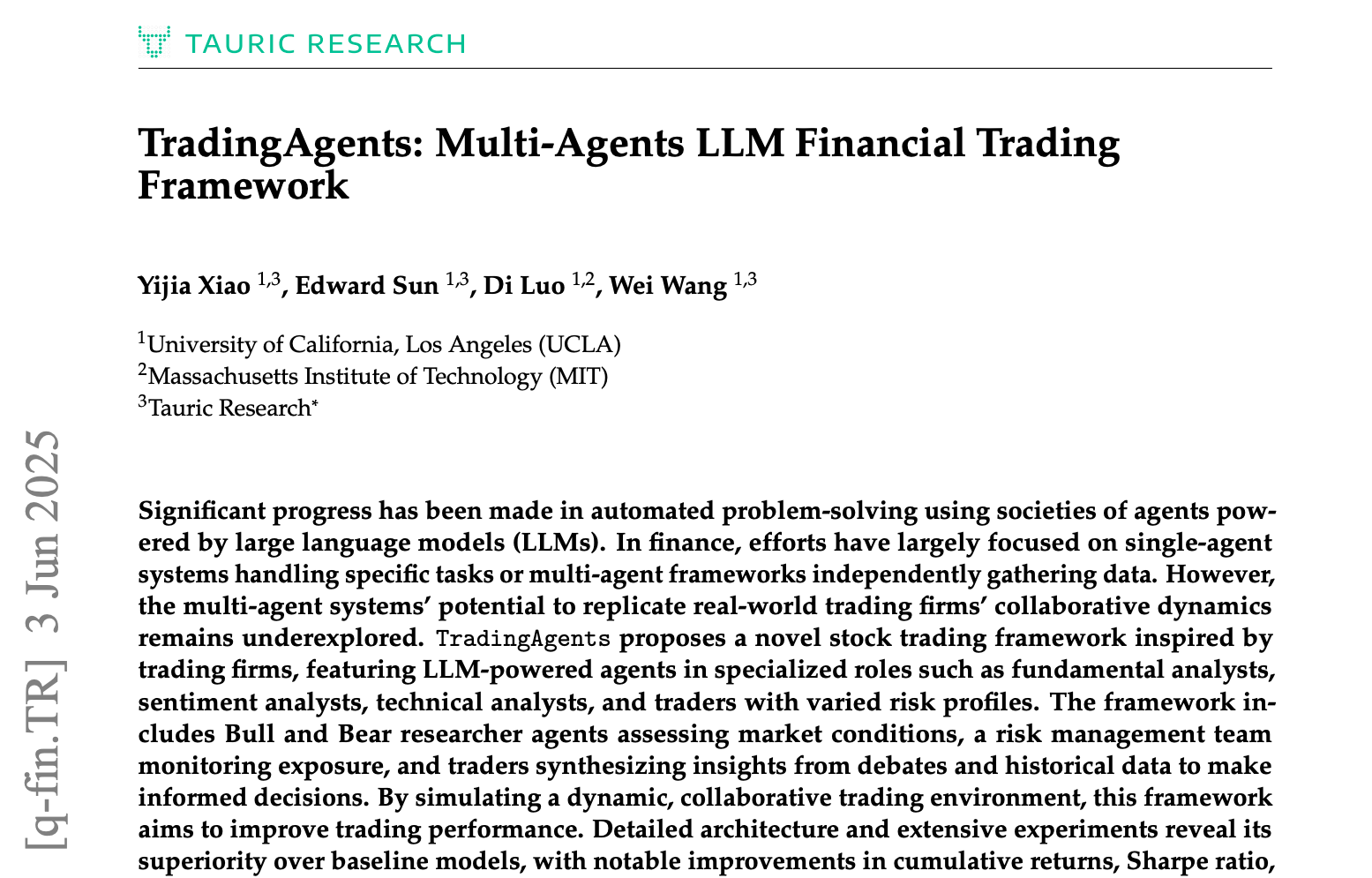
What it is: A multi-agent framework where specialized AI agents (fundamental analysts, sentiment experts, technical analysts, traders, and risk managers) collaboratively evaluate financial markets through simulated discussions. Each agent has a defined role and the group reaches trading decisions through structured debate rather than a single model's judgment. Why you'd want it: If you are interested in algorithmic trading or want to see how multi-agent architectures handle real decision-making, this is one of the most polished implementations available. The role-specialization approach produces more nuanced analysis than single-model setups.
✓ Pros✗ Cons
Role specialization produces diverse analysis perspectivesFinancial decisions from AI carry real monetary risk
Active community with 62K+ starsRequires significant compute for multi-agent discussions
Apache-2.0 license allows commercial usePast market performance does not predict future results
GitHub - TauricResearch/TradingAgents: TradingAgents: Multi-Agents LLM Financial Trading Framework
TradingAgents: Multi-Agents LLM Financial Trading Framework - TauricResearch/TradingAgents
Rank yesterday: New entry 🆕
⭐ Stars today: +1,258  ·  📦 Total: 36,737
📜 License: MIT  ·  👤 By: Individual
🎯 Time to value: 10 minutes
What it is: An agent orchestration platform built specifically for Claude. It deploys multi-agent swarms, coordinates autonomous workflows, and includes built-in Retrieval-Augmented Generation (RAG) - a technique that lets AI search through your documents before answering. Native support for Claude Code and Codex CLI. Why you'd want it: If you are already using Claude Code and want to coordinate multiple agents on complex projects, this gives you enterprise-grade orchestration without building it from scratch.
✓ Pros✗ Cons
Native Claude Code integration with zero configTightly coupled to Anthropic's ecosystem
Distributed swarm intelligence for complex tasks36K stars suggests rapid growth but may be early
MIT license, fully openMulti-agent overhead adds latency and cost
GitHub - ruvnet/ruflo: 🌊 The leading agent orchestration platform for Claude. Deploy intelligent multi-agent swarms, coordinate autonomous workflows, and build conversational AI systems. Features enterprise-grade architecture, distributed swarm intelligence, RAG integration, and native Claude Code / Codex Integration
🌊 The leading agent orchestration platform for Claude. Deploy intelligent multi-agent swarms, coordinate autonomous workflows, and build conversational AI systems. Features enterprise-grade arch…
Rank yesterday: New entry 🆕
⭐ Stars today: +323  ·  📦 Total: 14,900
📜 License: MIT  ·  👤 By: Individual
🎯 Time to value: 5 minutes
What it is: A local knowledge graph for Claude Code that uses Tree-sitter (a code parsing library) to build a persistent structural map of your codebase. When your AI assistant reviews code, it reads only the contextually relevant files instead of the entire repository - reducing token consumption by roughly 8.2x while maintaining 100% recall in impact analysis. Why you'd want it: If Claude Code is burning through tokens reading files it does not need, this tool cuts that waste dramatically. It is especially useful for large codebases where context window limits are a real constraint.
✓ Pros✗ Cons
8.2x token reduction with no accuracy lossRequires initial graph build time for large repos
Works via MCP - plugs into existing Claude Code setupTree-sitter support varies by language
MIT licensed and fully localKnowledge graph needs periodic rebuilds as code changes
GitHub - tirth8205/code-review-graph: Local knowledge graph for Claude Code. Builds a persistent map of your codebase so Claude reads only what matters — 6.8× fewer tokens on reviews and up to 49× on daily coding tasks.
Local knowledge graph for Claude Code. Builds a persistent map of your codebase so Claude reads only what matters — 6.8× fewer tokens on reviews and up to 49× on daily coding tasks. - tirth8205/cod…
Rank yesterday: New entry 🆕
⭐ Stars today: +482  ·  📦 Total: 2,819
📜 License: MIT  ·  👤 By: Individual
🎯 Time to value: 10 minutes
What it is: A Rust-based coding agent harness supporting multi-session workflows, semantic memory, multi-agent swarm coordination, and browser automation. Works with Claude, OpenAI, Gemini, GitHub Copilot, and other providers. Previously covered in the April 30 digest as a rising project. Why you'd want it: If you want a fast, provider-agnostic coding agent that remembers context across sessions and can coordinate multiple agents, this is built for that - and Rust makes it noticeably faster than Python alternatives.
✓ Pros✗ Cons
Rust performance - fast startup and low memorySmaller community than Python-based alternatives
Provider-agnostic - works with any LLMSelf-dev mode is experimental
Semantic memory persists across sessions2.8K stars - still early in adoption
GitHub - 1jehuang/jcode: Coding Agent Harness
Coding Agent Harness. Contribute to 1jehuang/jcode development by creating an account on GitHub.
Rank yesterday: New entry 🆕
⭐ Stars today: +347  ·  📦 Total: 1,492
📜 License: Unknown  ·  👤 By: Company (Browserbase)
🎯 Time to value: 5 minutes
What it is: A skills package for Claude Code that adds web browsing capability through Browserbase's browser automation platform. Enables Claude Code to navigate websites, fill forms, and extract data through a managed browser instance rather than raw HTTP requests. Why you'd want it: If your Claude Code workflows need to interact with websites that require JavaScript rendering or authentication, this gives your agent a real browser instead of basic URL fetching.
✓ Pros✗ Cons
Real browser automation - handles JS-heavy sitesLicense not publicly specified
Official Browserbase integration - maintained by the companyRequires Browserbase account
Plugs directly into Claude Agent SDKLimited to Browserbase's infrastructure
GitHub - browserbase/skills: Claude Agent SDK with a web browsing tool
Claude Agent SDK with a web browsing tool. Contribute to browserbase/skills development by creating an account on GitHub.
Rank yesterday: New entry 🆕
⭐ Stars today: +185  ·  📦 Total: 3,100
📜 License: MIT  ·  👤 By: Individual
🎯 Time to value: 15 minutes
What it is: An "Agent OS" that transforms vague project ideas into verified codebases through a structured 5-phase workflow: interview, seed, execute, evaluate, evolve. Uses Double Diamond decomposition (a design thinking methodology) to break ambiguous goals into concrete, testable specifications before writing code. Why you'd want it: If you have tried giving an AI agent a vague project description and gotten mediocre results, this tool forces a structured specification process first - which typically produces much better code.
✓ Pros✗ Cons
Structured workflow prevents "just start coding" failures5-phase process adds upfront time
Supports Claude Code, Codex CLI, and others3.1K stars - young project
MIT licensed and self-hostableDouble Diamond methodology has a learning curve
GitHub - Q00/ouroboros: Agent OS: Stop prompting. Start specifying.
Agent OS: Stop prompting. Start specifying. Contribute to Q00/ouroboros development by creating an account on GitHub.
Rank yesterday: Holding steady ➡
⭐ Stars today: +86  ·  📦 Total: 19,300
📜 License: Apache-2.0  ·  👤 By: Research lab (Google Research)
🎯 Time to value: 20 minutes
What it is: TimesFM is Google Research's pretrained foundation model for time-series forecasting, published at ICML 2024. Version 2.5 uses 200 million parameters with up to 16K context length and continuous quantile forecasting. It handles zero-shot forecasting across domains (retail, energy, finance, weather) without task-specific fine-tuning. Why you'd want it: If you need to forecast future values from historical time-series data - sales, sensor readings, stock prices, energy demand - this model works out of the box without training on your specific data.
✓ Pros✗ Cons
Zero-shot forecasting - no domain-specific training needed200M params requires meaningful compute
Google Research backing with ICML publicationAccuracy varies by domain without fine-tuning
Apache-2.0 license for commercial useTime-series forecasting has inherent uncertainty limits
GitHub - google-research/timesfm: TimesFM (Time Series Foundation Model) is a pretrained time-series foundation model developed by Google Research for time-series forecasting.
TimesFM (Time Series Foundation Model) is a pretrained time-series foundation model developed by Google Research for time-series forecasting. - google-research/timesfm

Top Models Today

The largest openly available AI model keeps climbing the trending charts as developers find new use cases.
📥 Downloads (30d): 381,587  ·  📜 License: MIT
👤 By: DeepSeek AI  ·  🎯 Task: Text generation
📐 Size: 1.6T (49B active)
What it is: DeepSeek's flagship model uses a Mixture-of-Experts architecture with 1.6 trillion total parameters but only activates 49 billion per query. It supports 1 million token context and three reasoning modes: Non-think (fast), Think High (balanced), and Think Max (thorough). Pre-trained on over 32 trillion tokens. Why you'd want it: If you need frontier-level reasoning at open-source pricing, this model offers competitive performance with Claude and GPT-5 at a fraction of the API cost - and you can run it on your own infrastructure.
✓ Pros✗ Cons
MIT license - fully open for commercial useRequires substantial GPU infrastructure to self-host
1M token context handles entire codebases49B active params still needs high-end hardware
Three reasoning modes for cost/quality tradeoffChinese-originated model faces some enterprise adoption hesitancy
deepseek-ai/DeepSeek-V4-Pro · Hugging Face
We’re on a journey to advance and democratize artificial intelligence through open source and open science.
OpenAI's open-source model for finding and removing personal information from text.
📥 Downloads (30d): 99,399  ·  📜 License: Apache-2.0
👤 By: OpenAI  ·  🎯 Task: Token classification
📐 Size: 1.5B (50M active)
What it is: A bidirectional model purpose-built for detecting and masking personally identifiable information (PII) in text. It supports 8 privacy span types and a 128K token context window, designed for high-throughput on-premises data sanitization. Why you'd want it: If your organization needs to strip personal data from documents before processing them with AI or sharing them externally, this model runs locally without sending sensitive text to any cloud service.
✓ Pros✗ Cons
Apache-2.0 - fully open, commercially usableOnly detects 8 span types - may miss unusual PII formats
Runs on-premises - sensitive data never leaves your network1.5B params still needs a GPU for real-time processing
Built by OpenAI with enterprise use cases in mindPII detection is never 100% - manual review still needed
openai/privacy-filter · Hugging Face
We’re on a journey to advance and democratize artificial intelligence through open source and open science.
Xiaomi's trillion-parameter model keeps trending as the most capable open-source alternative to closed frontier models.
📥 Downloads (30d): 9,914  ·  📜 License: MIT
👤 By: Xiaomi MiMo  ·  🎯 Task: Text generation
📐 Size: 1.02T (42B active)
What it is: A Mixture-of-Experts model with 1.02 trillion total parameters and 42 billion active, featuring Multi-Token Prediction for 3x faster inference and 1 million token context. Optimized for agentic and software engineering tasks. Why you'd want it: If you need a model that can handle long coding sessions or complex multi-step agent workflows, MiMo-V2.5-Pro delivers frontier-class performance under MIT license.
✓ Pros✗ Cons
MIT license with 1M token contextRequires multi-GPU setup for full precision
3x faster inference via Multi-Token Prediction9.9K downloads suggests early adoption phase
Strong on agentic and SWE benchmarksLess community tooling than Qwen or Llama ecosystems
XiaomiMiMo/MiMo-V2.5-Pro · Hugging Face
We’re on a journey to advance and democratize artificial intelligence through open source and open science.
The download champion: over 1 million downloads in 30 days, more than any other model on the list.
📥 Downloads (30d): 1,070,778  ·  📜 License: Apache-2.0
👤 By: Qwen (Alibaba)  ·  🎯 Task: Image-text-to-text
📐 Size: 27B
What it is: A multimodal model with 27 billion parameters, native 262K token context (extensible to 1M), and a hybrid Gated DeltaNet attention architecture. Handles both text and image input with enhanced coding and agentic capabilities. Why you'd want it: At 27B parameters, this fits on a single high-end consumer GPU while delivering performance that rivals much larger models. The 1M+ download count confirms it as the community's go-to local model.
✓ Pros✗ Cons
Runs on a single RTX 3090/4090 with quantizationBenchmarks may not reflect real-world performance (see Gemma 4 comparison in today's digest)
1M+ downloads - largest community and tooling ecosystem27B dense is slower than Mixture-of-Experts (MoE) models with fewer active params
Apache-2.0 with multimodal supportVision capabilities still developing vs. dedicated vision models
Qwen/Qwen3.6-27B · Hugging Face
We’re on a journey to advance and democratize artificial intelligence through open source and open science.
The budget model: 284B total but only 13B active, designed for cost-efficient long-context inference.
📥 Downloads (30d): 345,885  ·  📜 License: MIT
👤 By: DeepSeek AI  ·  🎯 Task: Text generation
📐 Size: 284B (13B active)
What it is: An efficient MoE model that activates only 13 billion of its 284 billion parameters per query. Uses FP4+FP8 mixed precision for fast inference and supports 1 million token context. Designed for workloads where cost matters more than peak capability. Why you'd want it: If you need to process large documents or long conversations without paying frontier model prices, V4-Flash delivers solid quality at dramatically lower compute costs.
✓ Pros✗ Cons
Only 13B active params - runs efficiently on modest hardwareNot as capable as V4-Pro on complex reasoning
MIT license, 1M context345K downloads but less community testing than Qwen
FP4 precision cuts memory requirements furtherMoE routing overhead on short queries
deepseek-ai/DeepSeek-V4-Flash · Hugging Face
We’re on a journey to advance and democratize artificial intelligence through open source and open science.
Mistral's first dense flagship - no shortcuts, all 128 billion parameters active on every query.
📥 Downloads (30d): 8,492  ·  📜 License: Modified MIT
👤 By: Mistral AI  ·  🎯 Task: Text generation
📐 Size: 128B
What it is: A 128B dense model with a 256K context window. Unlike most competitors that use Mixture-of-Experts to reduce compute, this model activates every parameter on every query. The community-discovered YaRN bug (fixed by Unsloth in 16 hours) restored reliable long-context performance. Why you'd want it: Dense models are more predictable than MoE models for agent work - every query gets the full model's attention. The recent bug fix restored reliable long-context performance.
✓ Pros✗ Cons
Dense architecture - consistent quality across all queries128B params requires substantial VRAM (64-170GB depending on quantization)
256K context windowModified MIT license - check terms for your use case
Bug fix restored long-context reliability8.5K downloads - still building community adoption
mistralai/Mistral-Medium-3.5-128B · Hugging Face
We’re on a journey to advance and democratize artificial intelligence through open source and open science.
NVIDIA's "Swiss army knife" model: video, audio, images, and text in one 3B-active-parameter package.
📥 Downloads (30d): 37,418  ·  📜 License: NVIDIA Open Model License
👤 By: NVIDIA  ·  🎯 Task: Any-to-any
📐 Size: 31B (3B active)
What it is: An enterprise-grade multimodal model that handles video, audio, image, and text understanding in a single architecture. Uses a Mamba2-Transformer hybrid with only 3 billion active parameters from a 31 billion total, supporting 256K context. Why you'd want it: If you need one model that handles documents, images, audio transcription, and video analysis, this replaces multiple specialized models with a single lightweight deployment.
✓ Pros✗ Cons
True omnimodal - replaces 4-5 specialized modelsNVIDIA license may restrict some commercial uses
Only 3B active params - runs on modest hardware"Reasoning" variant may sacrifice speed for accuracy
256K context for long documents and videosLess community tooling than text-only models
nvidia/Nemotron-3-Nano-Omni-30B-A3B-Reasoning-BF16 · Hugging Face
We’re on a journey to advance and democratize artificial intelligence through open source and open science.
A coding model designed to run on a MacBook - 33B total but only 3B active.
📥 Downloads (30d): 7,573  ·  📜 License: Apache-2.0
👤 By: Poolside  ·  🎯 Task: Text generation
📐 Size: 33B (3B active)
What it is: A compact MoE coding model with native reasoning and a 131K token context window. Designed specifically for agentic coding and long-horizon tasks on local hardware - runs on a 36GB Mac. Why you'd want it: If you want a capable coding model that runs on Apple Silicon without a dedicated GPU, this fits the niche of "good enough for daily coding work" at zero API cost.
✓ Pros✗ Cons
Runs on a 36GB Mac - no GPU required3B active params limits complex reasoning
Apache-2.0 for commercial use7.5K downloads - smaller community than Qwen or DeepSeek
Native reasoning mode for multi-step coding131K context is smaller than competitors offering 1M
poolside/Laguna-XS.2 · Hugging Face
We’re on a journey to advance and democratize artificial intelligence through open source and open science.

AI Launches Today

Turn everyday work into personalized AI learning
🔥 Upvotes: 235  ·  👤 By: Seijin Jung
💰 Pricing: Freemium  ·  🏷 Category: AI + Education
Schole analyzes your daily work activities and automatically generates personalized learning paths based on skill gaps it identifies. Rather than choosing courses from a catalog, the tool watches how you work and suggests targeted micro-lessons in the flow of your day. The freemium model suggests it offers basic features free with premium learning paths behind a paywall. Verdict: A clever application of AI for professional development - if the work-analysis is accurate, this could replace generic corporate training catalogs.
Product Hunt – The best new products in tech.
Product Hunt is a curation of the best new products, every day. Discover the latest mobile apps, websites, and technology products that everyone’s talking about.
A dedicated cloud machine for bots and software
🔥 Upvotes: 213  ·  👤 By: Manus (Aleksandar Blazhev, Tao Cheung)
💰 Pricing: Free  ·  🏷 Category: AI + Developer Tools
Manus, the AI agent company that made headlines earlier this year, now offers dedicated cloud virtual machines specifically designed for running AI bots and automated software. Each instance is isolated and pre-configured for agent workloads - a managed alternative to spinning up your own cloud servers. Verdict: The natural evolution of the "agents need infrastructure" trend. Free pricing suggests this is a land-and-expand play to build the default platform for agent deployment.
Product Hunt – The best new products in tech.
Product Hunt is a curation of the best new products, every day. Discover the latest mobile apps, websites, and technology products that everyone’s talking about.
Photo editor with local AI
🔥 Upvotes: 184  ·  👤 By: Unknown
💰 Pricing: Paid (perpetual license)  ·  🏷 Category: AI + Photography
A photo editing application that runs all AI processing locally on your device. No cloud uploads, no subscriptions - a one-time purchase. The local-first approach means your photos never leave your computer, addressing privacy concerns that many photographers have with cloud-based AI editing tools. Verdict: The paid perpetual license model is refreshing in an era of subscriptions. If the local AI features match cloud competitors, this targets photographers who want control over their data and their budget.
Product Hunt – The best new products in tech.
Product Hunt is a curation of the best new products, every day. Discover the latest mobile apps, websites, and technology products that everyone’s talking about.
Dedicated space to bring your personal health data together
🔥 Upvotes: 129  ·  👤 By: Microsoft
💰 Pricing: Microsoft Copilot subscription  ·  🏷 Category: AI + Health
Microsoft is extending Copilot into personal health management - aggregating health data from various sources into a single AI-powered dashboard. This joins Apple Health, Google Fit, and Samsung Health in the personal health data aggregation space, but with Microsoft's AI analysis layer on top. Verdict: Microsoft entering personal health AI is significant given its enterprise healthcare relationships. The critical question is whether users will trust a third party with health data that even their doctors may not have in one place.
Product Hunt – The best new products in tech.
Product Hunt is a curation of the best new products, every day. Discover the latest mobile apps, websites, and technology products that everyone’s talking about.

Snapshot

ProviderModelInput $/1MOutput $/1MContext
AnthropicClaude Opus 4.7$5.00$25.001M
AnthropicClaude Sonnet 4.6$3.00$15.001M
AnthropicClaude Haiku 4.5$1.00$5.00200K
OpenAIGPT-5.4 Pro$30.00$180.001.1M
OpenAIo3$2.00$8.00200K
OpenAIGPT-4.1$2.00$8.001M
GoogleGemini 3.1 Pro Preview$2.00$12.001M+
GoogleGemini 2.5 Flash$0.30$2.501M
GroqLlama 3.3 70B$0.59$0.79128K
GroqLlama 4 Scout$0.11$0.34128K
What this means: The pricing gap between providers continues to widen. OpenAI's GPT-5.4 Pro costs 6x more than Claude Opus 4.7 on input and 7.2x more on output - the most expensive frontier model by a significant margin. Meanwhile, Google's Gemini 2.5 Flash at $0.30/$2.50 per million tokens offers the best price-to-performance ratio among major providers, and Groq's Llama 4 Scout at $0.11 input represents the floor for inference pricing. The Uber budget story in today's Top Stories illustrates why these price differences matter at scale: at $2,000 per engineer per month, even small per-token savings compound to meaningful budget differences.

In-Context Prompting Obsoletes Agent Orchestration for Procedural Tasks

Simon Dennis, Michael Diamond, Rivaan Patil, Kevin Shabahang, Hao Guo - arXiv:2604.27891
What it claims: Embedding a full procedure in a system prompt for self-direction outperforms agent orchestration frameworks (LangGraph, CrewAI, Google ADK, OpenAI Agents SDK) on structured multi-turn tasks. The authors argue that frontier model improvements have made external state-management coordinators unnecessary for procedural workflows.

Key finding: Failure rates were 2-3x lower with in-context prompting vs. LangGraph: 11.5% vs. 24% (travel), 0.5% vs. 9% (Zoom support), 5% vs. 17% (insurance claims) across 600 conversations.

Why practitioners should care: Teams building agentic pipelines may be able to replace complex orchestration framework dependencies with a well-engineered system prompt. This reduces latency, infrastructure cost, and failure modes - and challenges the default assumption that LangGraph or CrewAI-style frameworks are needed for multi-step production workflows.

Member discussion

Subscribe to GenAI Secret Sauce newsletter and stay updated.

Don't miss anything. Get all the latest posts delivered straight to your inbox. It's free!

By subscribing, you agree to our Privacy Policy and Terms. We track email opens and clicks. Unsubscribe anytime.

Great! Check your inbox and click the link to confirm your subscription.