
Watch today's digest as a video summary (generated by NotebookLM)
Statistically Speaking
One Thing to Tell Your Friends
TL;DR
Hot off the Presses
Mistral Bets on Dense: Medium 3.5 Is 128 Billion Parameters With No Shortcuts
While nearly every AI lab in 2026 builds models using Mixture-of-Experts (MoE) - a design where only a fraction of the model activates per query - Mistral went the opposite direction. Medium 3.5 is a "dense" model where all 128 billion parameters work on every request.
Mistral also launched "Vibe," a cloud-based coding agent service where Medium 3.5 runs tasks asynchronously and notifies developers when done - moving AI coding from "copilot" to "colleague you check in on."
- 77.6% on SWE-Bench Verified - the industry's standard test for AI coding agents, matching or exceeding most MoE competitors
- 256,000-token context window - enough to process an entire medium-sized codebase in one go
- $1.50 per million input tokens, $7.50 output - roughly half the price of Claude Sonnet
- Configurable reasoning effort - developers can toggle between fast responses and deep thinking mode per request
- Vision support built in - the model can read screenshots, diagrams, and UI mockups alongside code
A 732-Byte Script Can Root Any Linux Machine Shipped Since 2017
CVE-2026-31431 is a privilege escalation vulnerability in the Linux kernel's cryptographic authentication system that has existed since 2017. Unlike most kernel exploits that require precise timing or version-specific tricks, this one is a "straight-line logic flaw" - a simple mistake in how the kernel checks permissions.
- Every mainstream Linux distribution since 2017 is affected - Ubuntu, Debian, Red Hat, SUSE, Arch, all of them
- A 732-byte Python script is the entire exploit - no special tools, no network access, no race conditions
- Only requires an unprivileged local user account - any employee, contractor, or compromised service account is enough
- The attack chains through the kernel's own crypto subsystem - ironic because the vulnerability lives in code designed to verify authenticity
DeepSeek V4 Flash: One Million Tokens of Context for 14 Cents
DeepSeek V4 Flash is a new variant of DeepSeek's V4 model family (V4 Pro covered April 24) optimized for speed and cost. It uses a Mixture-of-Experts design where only 13 billion of its 284 billion total parameters activate per query.
The price point puts frontier-class AI analysis within reach of individual developers and small businesses for the first time.
- $0.14 per million input tokens, $0.28 output - roughly 20x cheaper than Claude Sonnet and 14x cheaper than GPT-4.1
- 1,048,576-token context window - enough to process a 750-page book in one request
- Three architectural innovations - hybrid attention for reduced memory, enhanced residual connections, and the Muon optimizer for training stability
- 90% reduction in KV cache memory - a technical improvement that means the model can handle longer inputs without running out of Graphics Processing Unit (GPU) memory
Ramp's AI Spreadsheet Was Leaking Financial Data Through Hidden Commands
PromptArmor disclosed a vulnerability in Ramp's Sheets AI - the AI agent built into the corporate expense management platform used by thousands of companies. The attack works through "indirect prompt injection": malicious instructions hidden in imported data that the AI follows without the user's knowledge.
- No user approval required - the attack triggers automatically when the spreadsheet renders
- Financial data exfiltrated via IMAGE formulas - the AI was tricked into embedding sensitive data in image URLs that sent network requests to attacker-controlled servers
- The attack surface is any imported data - CSV files, copied cells, or API-connected data sources could all carry the payload
- Ramp has patched the specific vulnerability - but the attack pattern applies to any AI tool that processes untrusted data
An NVIDIA Executive Admits AI Costs More Than the Humans It Replaces
An NVIDIA vice president publicly stated that compute costs for his team "far exceed" employee costs. This is striking because NVIDIA's entire business depends on companies believing AI saves money.
The disconnect between AI's promise and its current economics is becoming harder to ignore as companies report quarterly earnings.
- Tech layoffs have exceeded 92,000 in 2026 - including 8,000+ at Meta and 6,000 unfilled positions at Microsoft
- A 2024 MIT study found AI automation is economically viable in only 23% of vision-focused roles - 77% remain cheaper to do with humans
- Companies are cutting headcount and increasing AI spending simultaneously - but the math doesn't always work in their favor
- The admission came during a discussion about AI infrastructure investment - suggesting even NVIDIA recognizes the cost gap hasn't closed yet
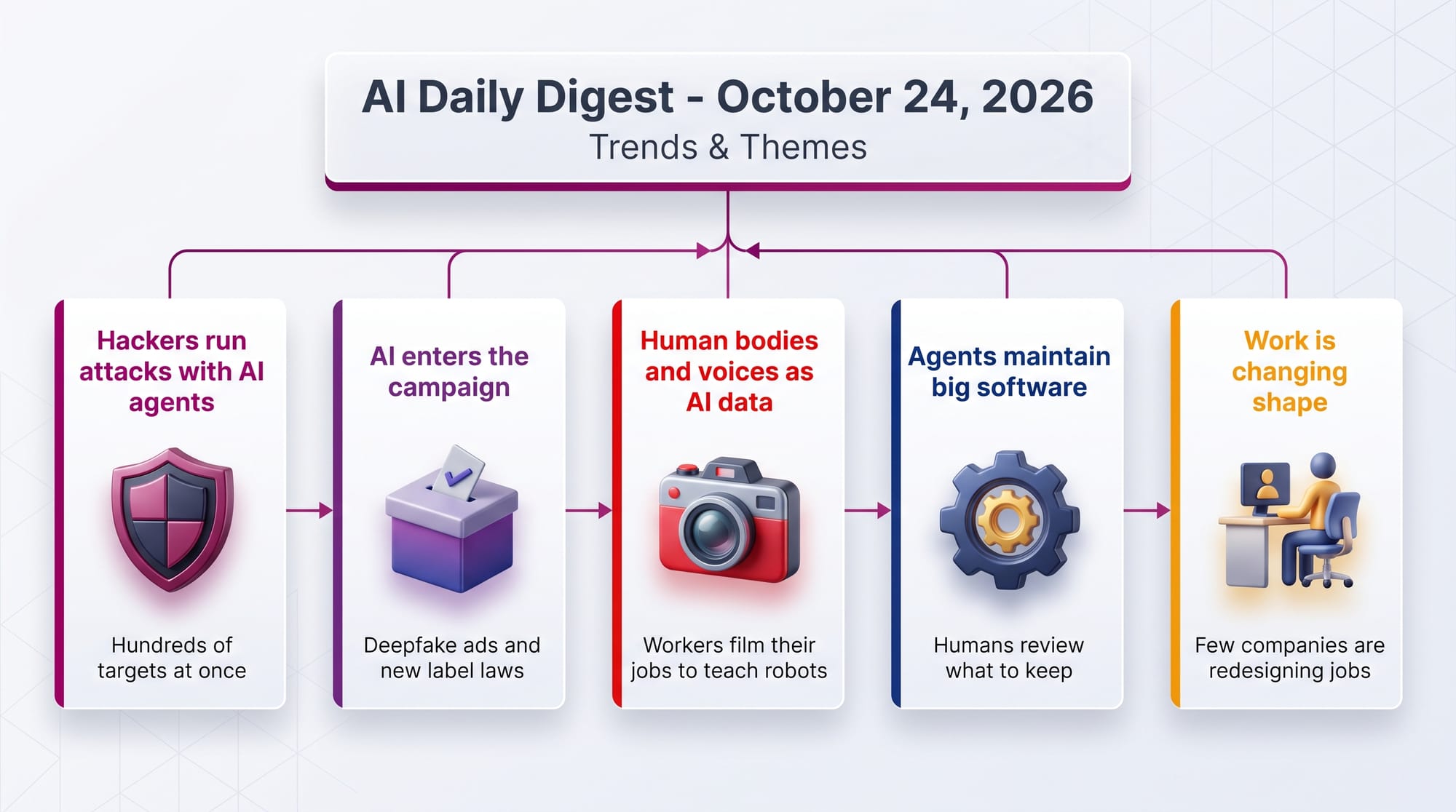
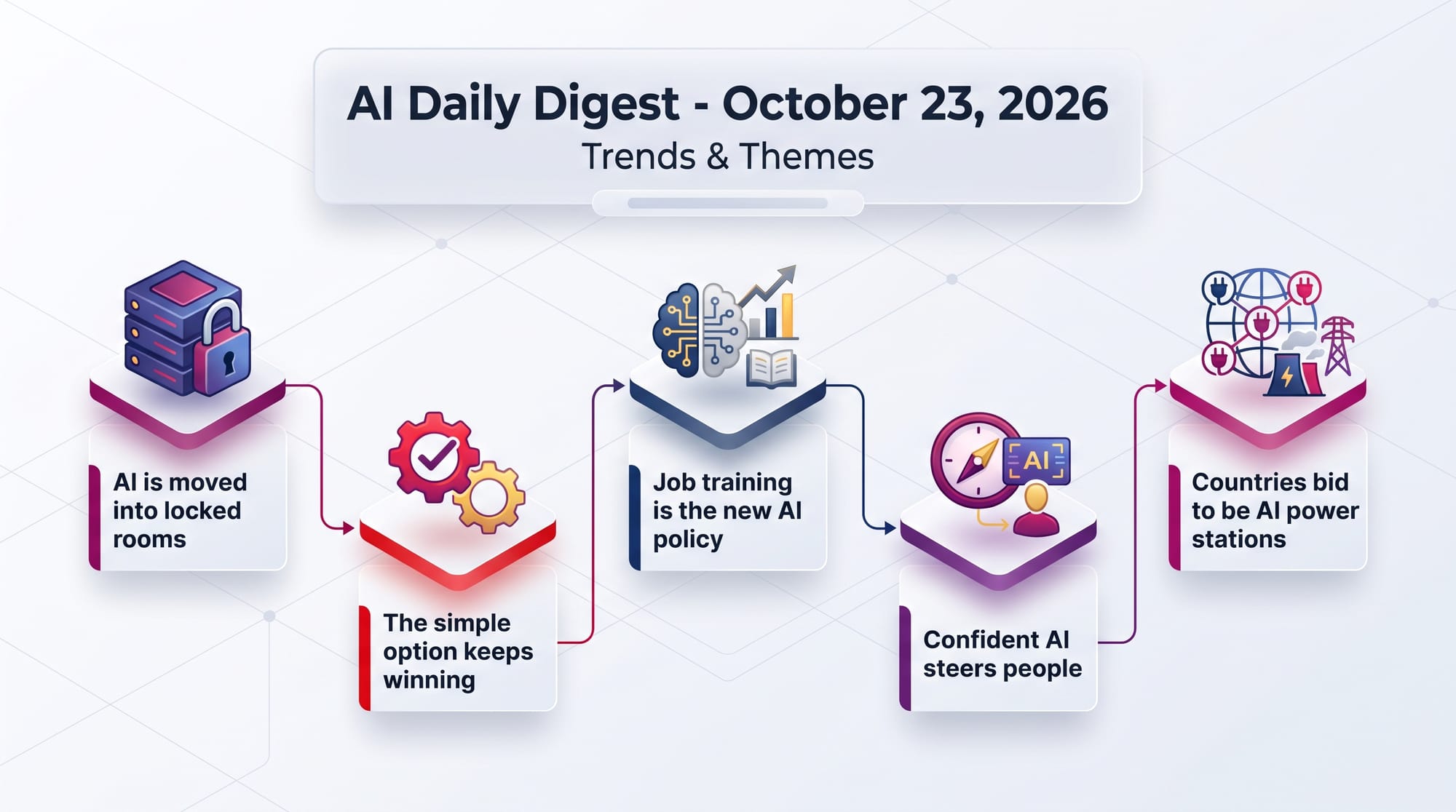
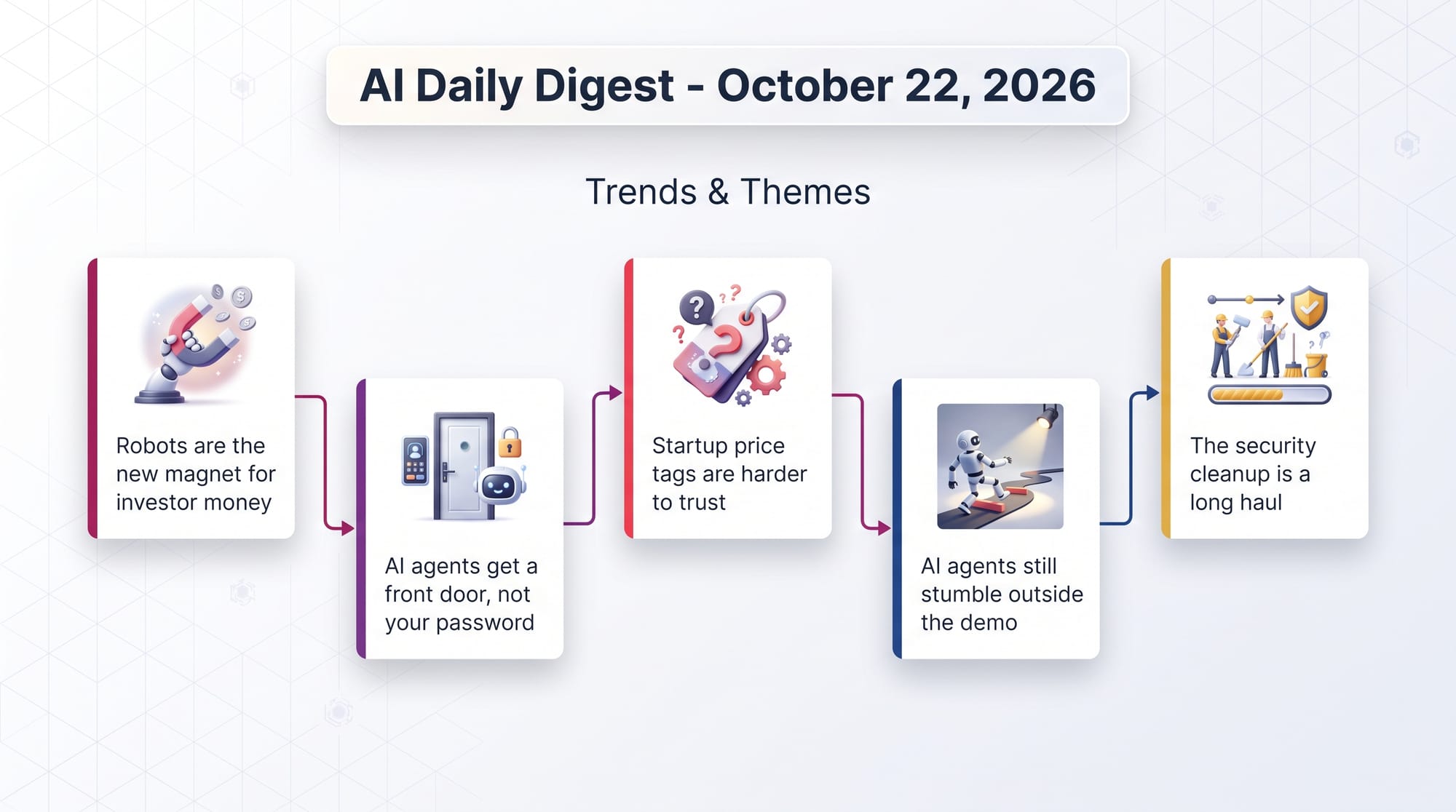
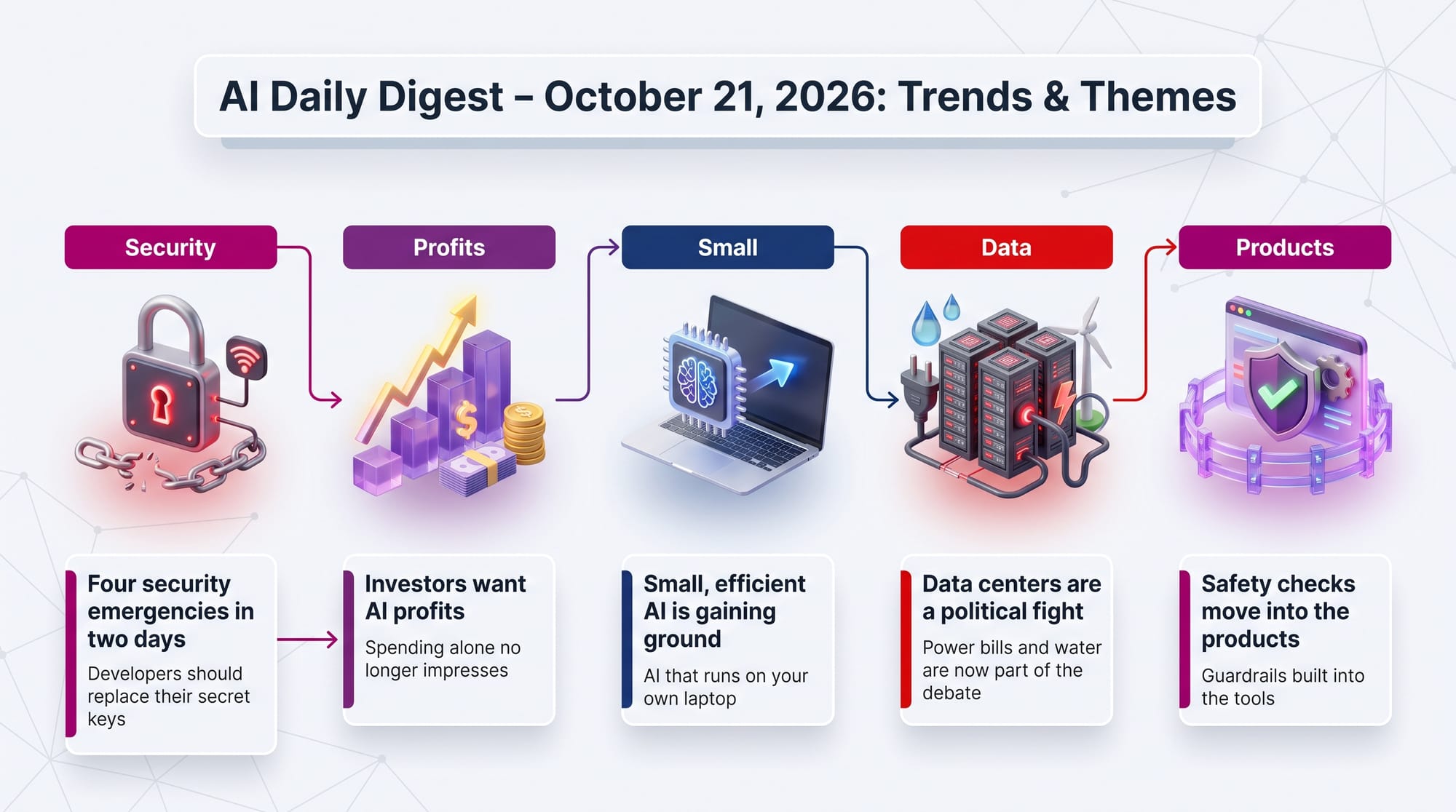
Trends & Themes

Creative AI & Media
Developer Tools & Infrastructure
Research & Models
Business & Industry
GenAI in Education
Surprising & Under-the-Radar
Signals to Track

Microsoft VibeVoice: Open-Source Voice AI That Handles 90-Minute Conversations
VibeVoice includes three models: ASR for 60-minute transcription with speaker identification, TTS for generating 90 minutes of multi-speaker audio, and a streaming model for real-time synthesis. All MIT-licensed, all production-ready. This could reshape the economics of voice AI applications, from podcast production to call center analytics. If adoption scales, commercial voice API pricing will face serious pressure.
AI Evaluation Costs Are Approaching Training Costs
The HuggingFace EvalEval Coalition's numbers are sobering: $40,000 for a single benchmark run, with agent evaluations resistant to the compression techniques that make static benchmarks affordable. If this trend continues, only the largest labs will be able to credibly evaluate their models - creating an information asymmetry where smaller companies can't verify (or dispute) benchmark claims.
Google Deep Research Max Enters the Autonomous Agent Race
Launched on April 21 with Gemini 3.1 Pro under the hood, Deep Research Max uses extended test-time compute and Model Context Protocol (MCP) for connecting to private enterprise data. Native visualization generation and multi-tool orchestration position it as a serious competitor to Anthropic's and OpenAI's agent offerings. The ARC-AGI-2 score is particularly notable - this benchmark was designed to resist brute-force scaling.
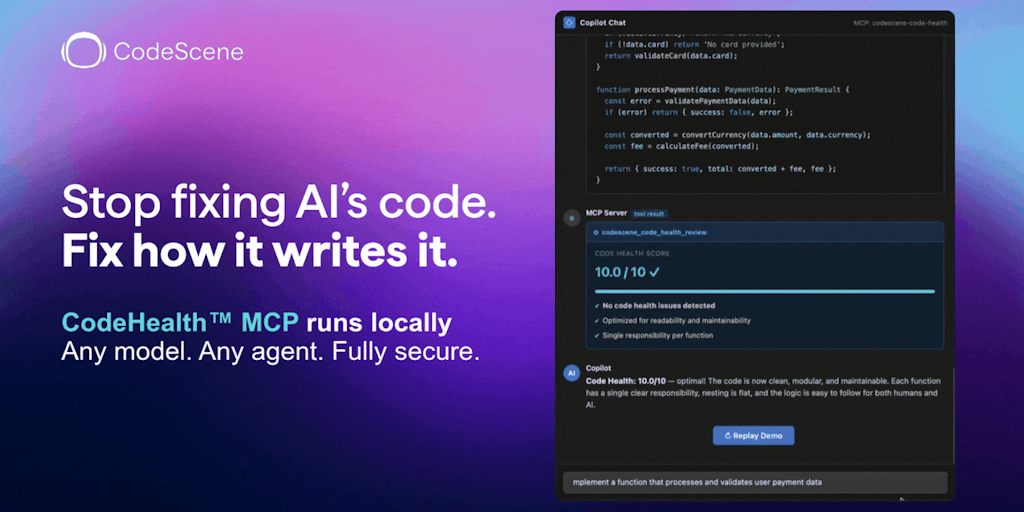
CodeHealth MCP Server: Deterministic Feedback for AI-Generated Code
CodeScene's MCP server plugs deterministic code-health analysis directly into AI coding agents, creating a self-correcting feedback loop based on years of research into technical debt metrics. Unlike "LLM-as-judge" approaches, the analysis is repeatable and explainable. If agentic coding continues to grow, tools that provide non-AI quality gates could become essential.
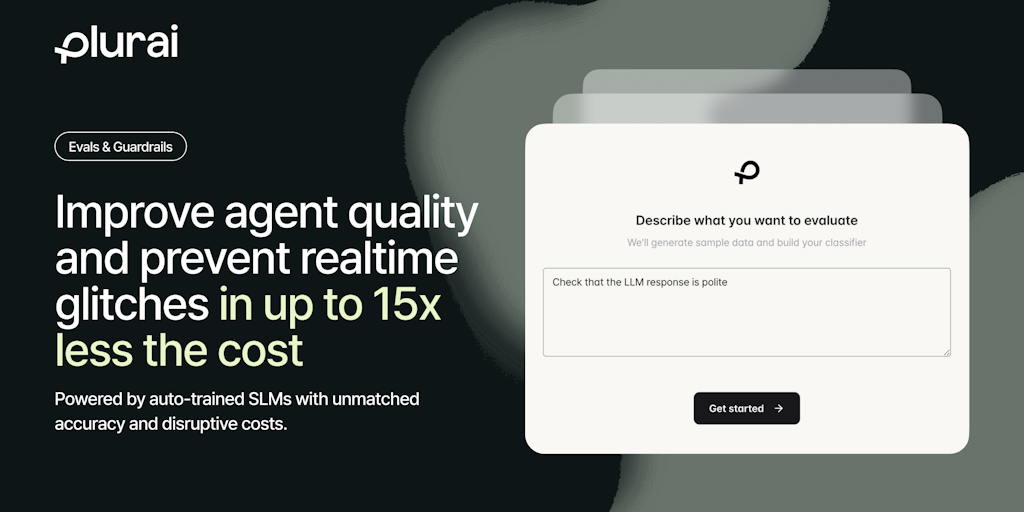
Plurai: "Vibe-Training" Evals Without Labeled Data
Plurai's approach uses small language models tuned via "vibe-training" from plain-language task descriptions - no annotation pipelines needed. Claims: sub-100ms latency, 8x lower cost than GPT-as-judge, 43% fewer failures. If these numbers hold under independent testing, this could democratize AI evaluation.
Top Repos Today
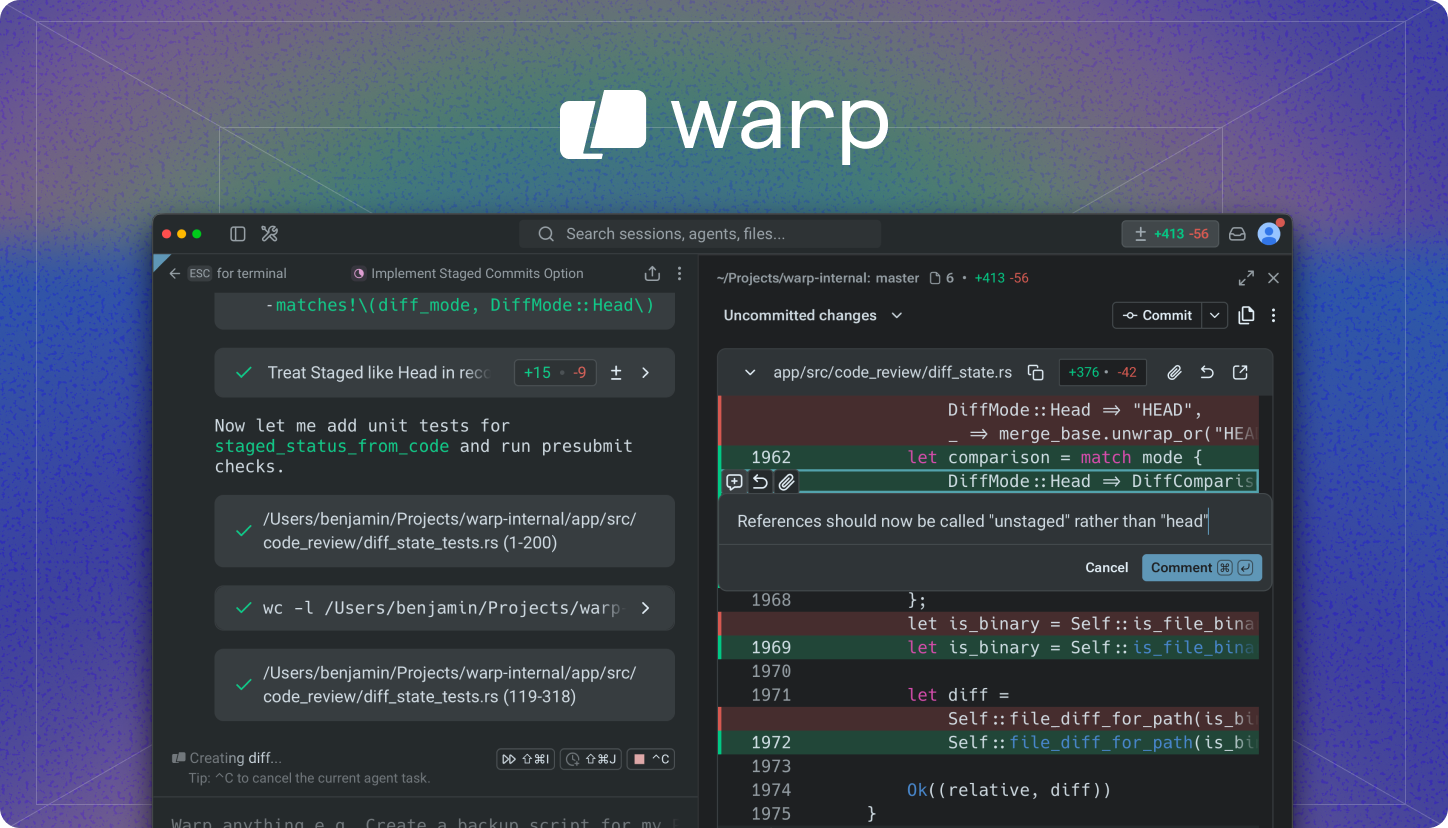
📜 License: AGPL-3.0 / MIT (dual) · 👤 By: company
🎯 Time to value: 5 minutes
| ✓ Pros | ✗ Cons |
|---|---|
| Native multi-agent orchestration | AGPL core limits commercial embedding |
| Rust performance, polished UI | Learning curve vs. standard terminals |
| Active development, massive community | Resource-heavier than minimal terminals |
 GitHub
📜 License: MIT · 👤 By: company (Microsoft Research)
🎯 Time to value: 15 minutes
| ✓ Pros | ✗ Cons |
|---|---|
| MIT license, no usage fees | Requires GPU for real-time streaming |
| 60-min ASR with speaker ID | Limited non-English language support |
| Production-ready from Microsoft Research | Large model sizes for TTS |
 GitHub
📜 License: MIT · 👤 By: individual
🎯 Time to value: 10 minutes
| ✓ Pros | ✗ Cons |
|---|---|
| Works with any AI coding agent | Adds overhead to quick tasks |
| Enforces TDD and design review | Methodology requires buy-in |
| 173k stars, battle-tested | Opinionated workflow may not fit all teams |
GitHub
📜 License: Not specified · 👤 By: company
🎯 Time to value: 5 minutes
| ✓ Pros | ✗ Cons |
|---|---|
| 1,000+ service integrations | No explicit license file |
| Auto-triggering based on context | Codex CLI-specific (not portable) |
| Community-maintained, growing fast | Quality varies across skills |
 GitHub
📜 License: PolyForm Noncommercial 1.0.0 · 👤 By: individual
🎯 Time to value: 10 minutes
| ✓ Pros | ✗ Cons |
|---|---|
| Fully local, privacy-preserving | Noncommercial license |
| 14+ language support | Initial indexing can be slow on large repos |
| MCP integration with Cursor, Claude Code | Browser-based UI still maturing |
 GitHub
📜 License: Apache-2.0 · 👤 By: company (Craft.do)
🎯 Time to value: 5 minutes
| ✓ Pros | ✗ Cons |
|---|---|
| Apache 2.0, fully open | macOS-first (limited cross-platform) |
| Visual multi-agent management | Requires Claude API key |
| Built by active product team | Smaller community than CLI tools |
GitHub
📜 License: AGPL-3.0 · 👤 By: individual
🎯 Time to value: 15 minutes
| ✓ Pros | ✗ Cons |
|---|---|
| Free access to DeepSeek models | Web scraping may violate ToS |
| Compatible with all major SDKs | AGPL license limits commercial use |
| Multi-account rotation | Depends on DeepSeek's web UI stability |
 GitHub
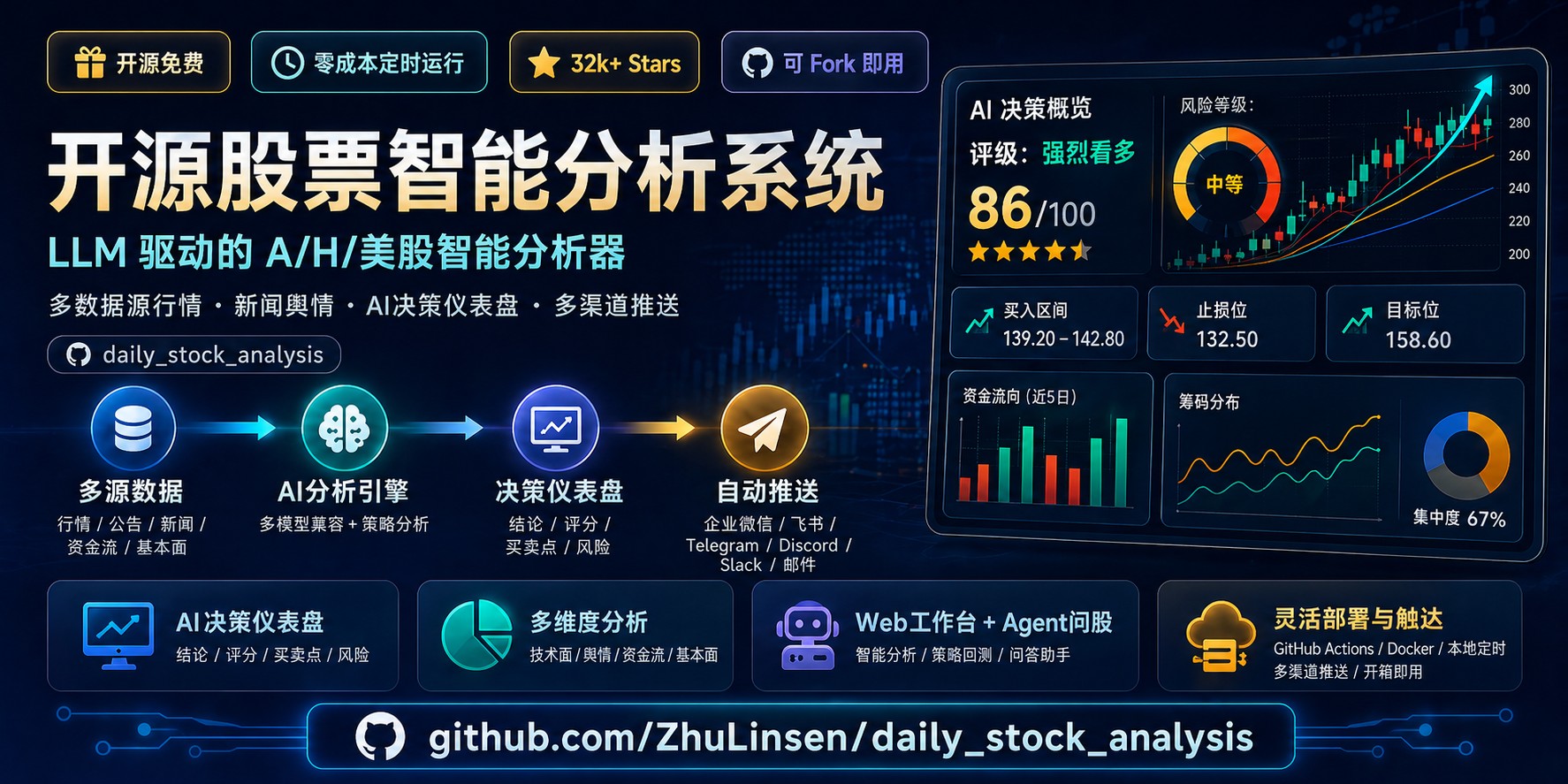
📜 License: MIT · 👤 By: individual
🎯 Time to value: 20 minutes
| ✓ Pros | ✗ Cons |
|---|---|
| Free via GitHub Actions | AI-generated financial advice carries risk |
| Three-market coverage (CN/HK/US) | Primarily Chinese-language interface |
| Multi-channel notifications | Backtesting results may not reflect live performance |
 GitHub
Top Models Today
👤 By: DeepSeek AI · 🎯 Task: text-generation
📐 Size: 1.6T total (49B activated)
| ✓ Pros | ✗ Cons |
|---|---|
| MIT license, frontier performance | Requires significant infrastructure |
| Three thinking modes | 1.6T total params = expensive to host |
| 1M-token context | Limited fine-tuning ecosystem so far |

👤 By: Moonshot AI · 🎯 Task: image-text-to-text
📐 Size: 1.1T total (32B activated)
| ✓ Pros | ✗ Cons |
|---|---|
| 80.2% SWE-bench, 96.4% AIME 2026 | Modified MIT has some restrictions |
| 300-agent swarm capability | Very large model footprint |
| Multimodal (text + image + video) | Newer, smaller community than DeepSeek |


👤 By: Alibaba Qwen Team · 🎯 Task: image-text-to-text
📐 Size: 36B total (3B activated)
| ✓ Pros | ✗ Cons |
|---|---|
| 1.51M downloads, proven by community | 3B active may limit complex reasoning |
| Apache 2.0, runs on consumer GPUs | Video processing needs more VRAM |
| Native MCP and tool integration | Newer than Qwen3.5, ecosystem catching up |

👤 By: Google DeepMind · 🎯 Task: image-text-to-text
📐 Size: 33B
| ✓ Pros | ✗ Cons |
|---|---|
| 6.56M downloads, production-proven | Dense 33B = more compute than MoE |
| 140+ languages, Apache 2.0 | Chat template bugs found in llama.cpp |
| Built-in thinking and function calling | No native agentic features |
👤 By: OpenAI · 🎯 Task: token-classification
📐 Size: 1.5B total (50M active)
| ✓ Pros | ✗ Cons |
|---|---|
| Apache 2.0, runs in browser | Only 8 PII categories |
| 50M active params = very fast | Newer, less tested than Presidio |
| First open PII model from OpenAI | English-focused |

👤 By: Z.ai (Zhipu AI) · 🎯 Task: text-generation
📐 Size: 754B
| ✓ Pros | ✗ Cons |
|---|---|
| 58.4% SWE-Bench Pro (#1 open model) | 754B requires serious infrastructure |
| MIT license, bilingual | Less Western community adoption |
| Built for multi-round tool calling | Newer, less ecosystem support |

👤 By: NVIDIA · 🎯 Task: any-to-any
📐 Size: 31B
| ✓ Pros | ✗ Cons |
|---|---|
| True omni-modal (4 input types) | NVIDIA-specific license |
| FP8 and NVFP4 quantizations | 2-min video limit |
| Enterprise workflow features | Very new, limited community testing |

👤 By: Tencent · 🎯 Task: image-to-3D
📐 Size: ~1.2B
| ✓ Pros | ✗ Cons |
|---|---|
| Real 3D assets, not just video | Community license restrictions |
| Works with Blender, Unreal, Isaac Sim | Relatively small downloads |
| Multi-input (text, image, video, multi-view) | Newer pipeline, less documentation |
AI Launches Today
💰 Pricing: freemium · 🏷 Category: AI Evaluation
 Product Hunt
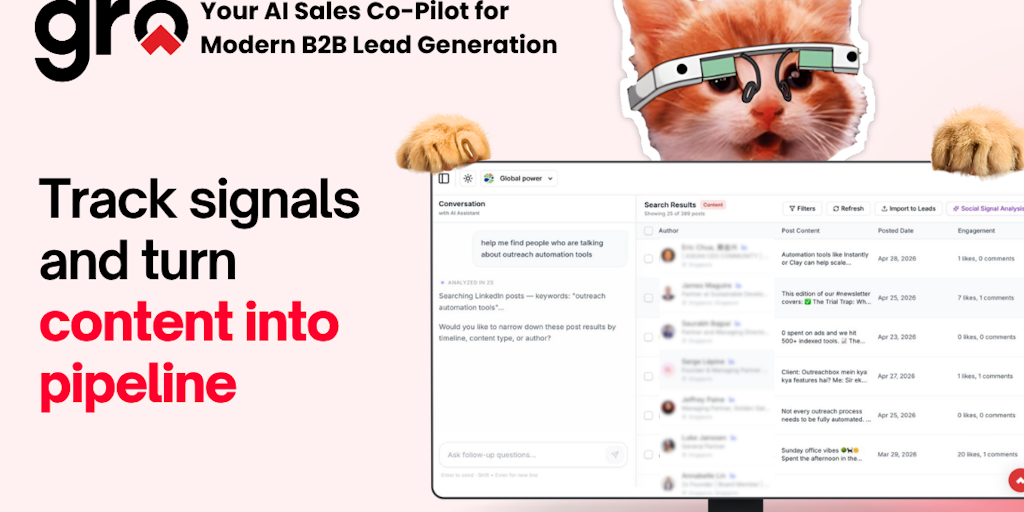
💰 Pricing: paid (credits) · 🏷 Category: AI Sales
 Product Hunt
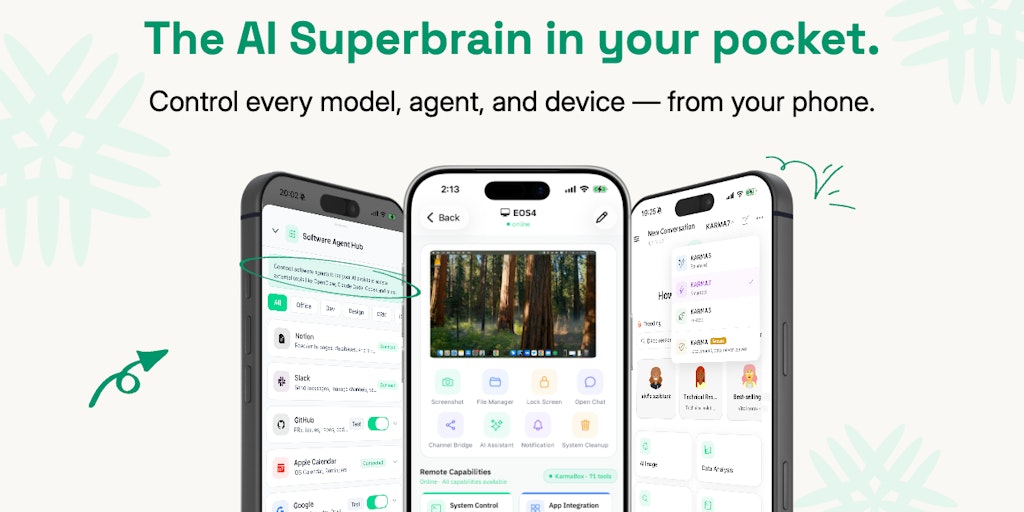
💰 Pricing: freemium · 🏷 Category: AI Infrastructure
 Product Hunt
💰 Pricing: freemium · 🏷 Category: Developer Tools
 Product Hunt
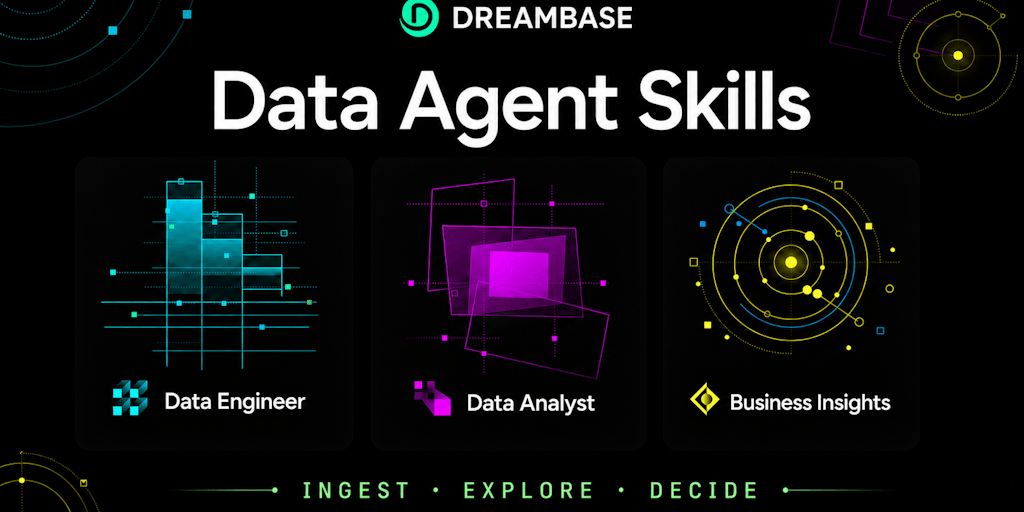
💰 Pricing: freemium · 🏷 Category: Data Analysis
 Product Hunt
Snapshot
| Provider | Model | Input $/1M | Output $/1M | Context |
|---|---|---|---|---|
| Anthropic | Claude Opus 4.7 | $5.00 | $25.00 | 1M |
| Anthropic | Claude Sonnet 4.6 | $3.00 | $15.00 | 1M |
| Anthropic | Claude Haiku 4.5 | $1.00 | $5.00 | 200K |
| OpenAI | GPT-4.1 | $2.00 | $8.00 | 1M |
| OpenAI | GPT-4o | $2.50 | $10.00 | 128K |
| Gemini 3.1 Pro Preview | $2.00 | $12.00 | 200K | |
| Gemini 2.5 Pro | $1.25 | $10.00 | 1M | |
| Gemini 2.5 Flash | $0.30 | $2.50 | 1M | |
| Groq | Llama 4 Scout (17Bx16E) | $0.11 | $0.34 | 128K |
| Groq | Llama 3.3 70B | $0.59 | $0.79 | 128K |
| DeepSeek | V4 Flash | $0.14 | $0.28 | 1M |
How Do AI Agents Spend Your Money? Analyzing and Predicting Token Consumption in Agentic Coding Tasks
Key finding: Token usage for the same task varies by up to 30x across runs, and frontier models' self-cost predictions correlate with actual usage at r = 0.39 or lower - some models consume over 1.5 million more tokens than GPT-5 on identical tasks with no accuracy improvement.
Why practitioners should care: Teams deploying coding agents are likely flying blind on costs. The models themselves underestimate usage, high token counts don't mean better results, and the variance makes budgeting unreliable without empirical measurement. This paper provides a framework for benchmarking and controlling agent spend.


Member discussion