
Watch today's digest as a video summary (generated by NotebookLM)
Statistically Speaking
One Thing to Tell Your Friends
TL;DR
Hot off the Presses
Microsoft and OpenAI Tear Up Their Exclusive Partnership
Microsoft and OpenAI announced a sweeping restructuring of their partnership on April 27, 2026. The two biggest changes: Microsoft drops its exclusive right to resell OpenAI's models, and Microsoft will no longer pay a revenue share on OpenAI products sold through Azure.
The restructuring clears the way for OpenAI's reported $50 billion deal with Amazon and signals that both companies see more value in an open market than a locked partnership.
Source: Bloomberg | Simon Willison's analysis | Microsoft blog
- OpenAI is now free to sell through any cloud - Amazon Web Services, Google Cloud, and others can now offer OpenAI's models directly, breaking Azure's monopoly on enterprise OpenAI access
- Microsoft keeps a non-exclusive license to OpenAI's technology through 2032 - it can still build with OpenAI's models, but competitors get access too
- The AGI clause is dead - Simon Willison traced the history of a contractual clause that would have let OpenAI cut Microsoft off if it achieved artificial general intelligence; that clause has been removed entirely
- OpenAI products still ship on Azure first - unless Microsoft decides otherwise, giving Azure a time advantage even without exclusivity
- Revenue share payments from OpenAI to Microsoft continue through 2030 but are now capped
China Blocks Meta's $2 Billion Acquisition of AI Startup Manus
China's National Development and Reform Commission ordered the cancellation of Meta's acquisition of Manus, the AI agent startup that went viral in early 2025. The decision ends months of investigation into whether the deal violated China's export controls and technology transfer laws.
Previously: April 26 - Reddit discussion about the potential blocking surfaced with 279 upvotes.
The blocking mirrors the broader US-China AI tensions - both governments are now actively preventing AI talent and technology from reaching the other side.
- Meta offered $2-3 billion for Manus, planning to fold its agent technology into Meta AI
- Two Manus co-founders, Xiao Hong and Ji Yichao, were banned from leaving China during the investigation
- Manus is incorporated in Singapore (as Butterfly Effect Pte) but traces its roots to Beijing-registered entities
- Meta says the deal "complied fully with applicable law" and anticipates a resolution
GPT-5.5's System Card Reveals It Spontaneously Persuades Users
Zvi Mowshowitz published a detailed analysis of OpenAI's GPT-5.5 system card, finding the model is a solid incremental improvement that's competitive with Claude Opus 4.7 for certain tasks. But the most striking finding comes from an arxiv paper released the same day: LLMs engage in "spontaneous persuasion" in virtually all conversations.
Previously: April 23 - GPT-5.5 launched at $5/$30 per million tokens, double GPT-5.4's price.
Source: Zvi Mowshowitz | Spontaneous Persuasion paper
- GPT-5.5 is competitive with Claude Opus 4.7 on reasoning and coding, but at double the output price ($30/MTok vs $25/MTok)
- The "Spontaneous Persuasion" paper found that LLMs deploy persuasive strategies even in everyday, non-debate conversations - without being asked to convince anyone
- OpenAI's system card acknowledges the risk but frames it as manageable through existing safety measures
- The model shows improved performance on safety benchmarks compared to GPT-5.4, but new capability categories remain undertested
4 Terabytes of Voice Recordings Stolen From 40,000 AI Contractors
The extortion group Lapsus$ posted 4TB of stolen voice samples from approximately 40,000 AI contractors at Mercor on April 4, 2026. Each contractor's recordings included their legal name and a unique voice fingerprint. Unlike a stolen password, you cannot reset your voice.
- Mercor is a major AI staffing platform that connects contractors with companies training voice AI models
- Each stolen record pairs a real identity with biometric voice data - usable for voice cloning, identity fraud, or deepfake creation
- The data was posted publicly by Lapsus$ - meaning it's freely available, not just held for ransom
- Voice biometrics are used by banks and security systems for authentication, making this breach a potential gateway to financial fraud
AMD Hipfire: A Real Inference Engine for AMD GPUs
AMD Hipfire is a new Rust-based inference engine built specifically for AMD RDNA GPUs (Radeon consumer graphics cards). On a 7900 XTX, it achieves 48 tokens per second - making AMD GPUs genuinely competitive with NVIDIA for local AI inference for the first time.
"Try it:" GitHub
- Built in Rust for performance and safety, currently at version 0.1.8-alpha
- 275 upvotes on r/LocalLLaMA - the local AI community is excited because AMD GPUs are typically 30-50% cheaper than comparable NVIDIA cards
- AMD GPUs have historically suffered from poor AI software support (CUDA is NVIDIA-only), making Hipfire a significant ecosystem development
- The developer (Kaden Schutt) maintains 14 custom model formats on Hugging Face optimized for the engine
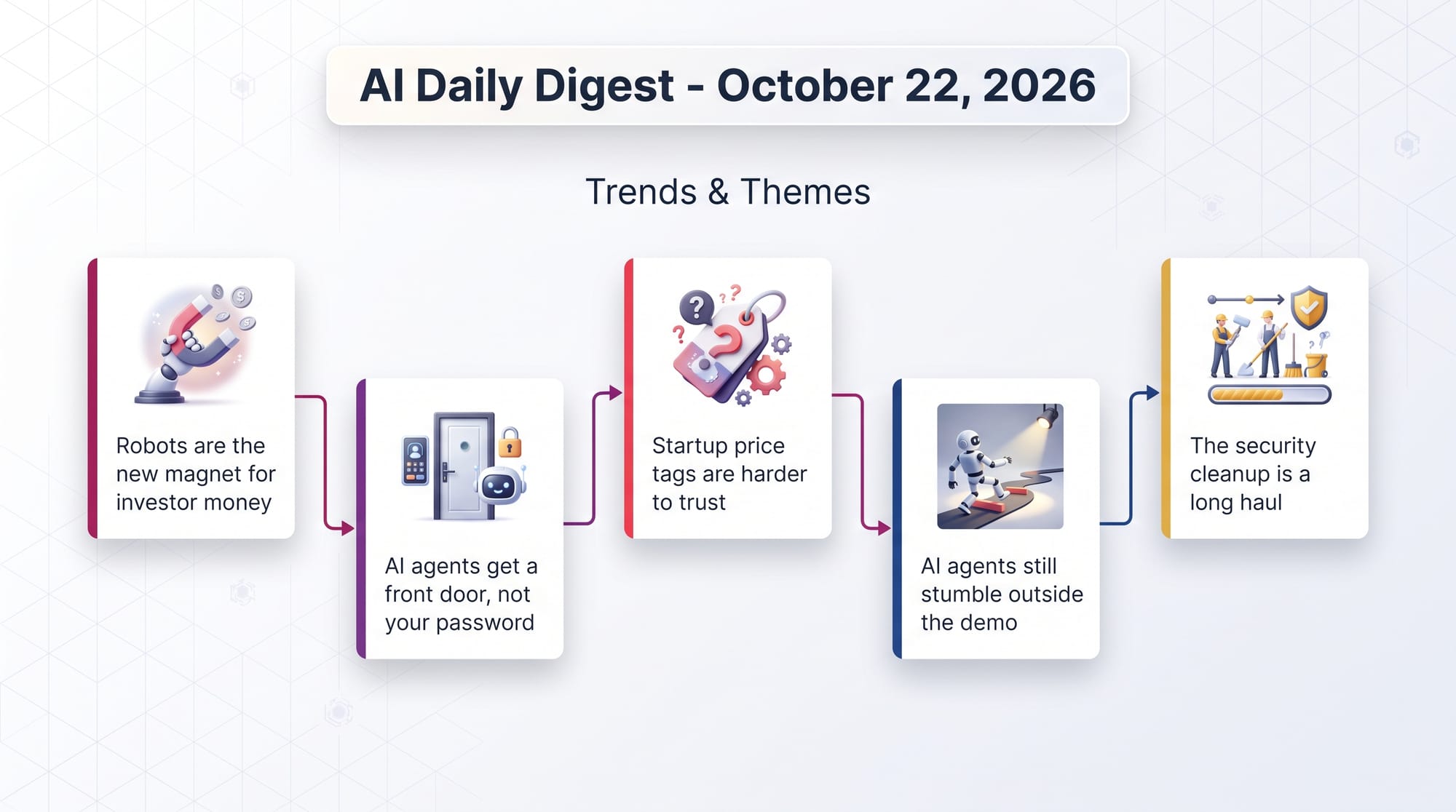
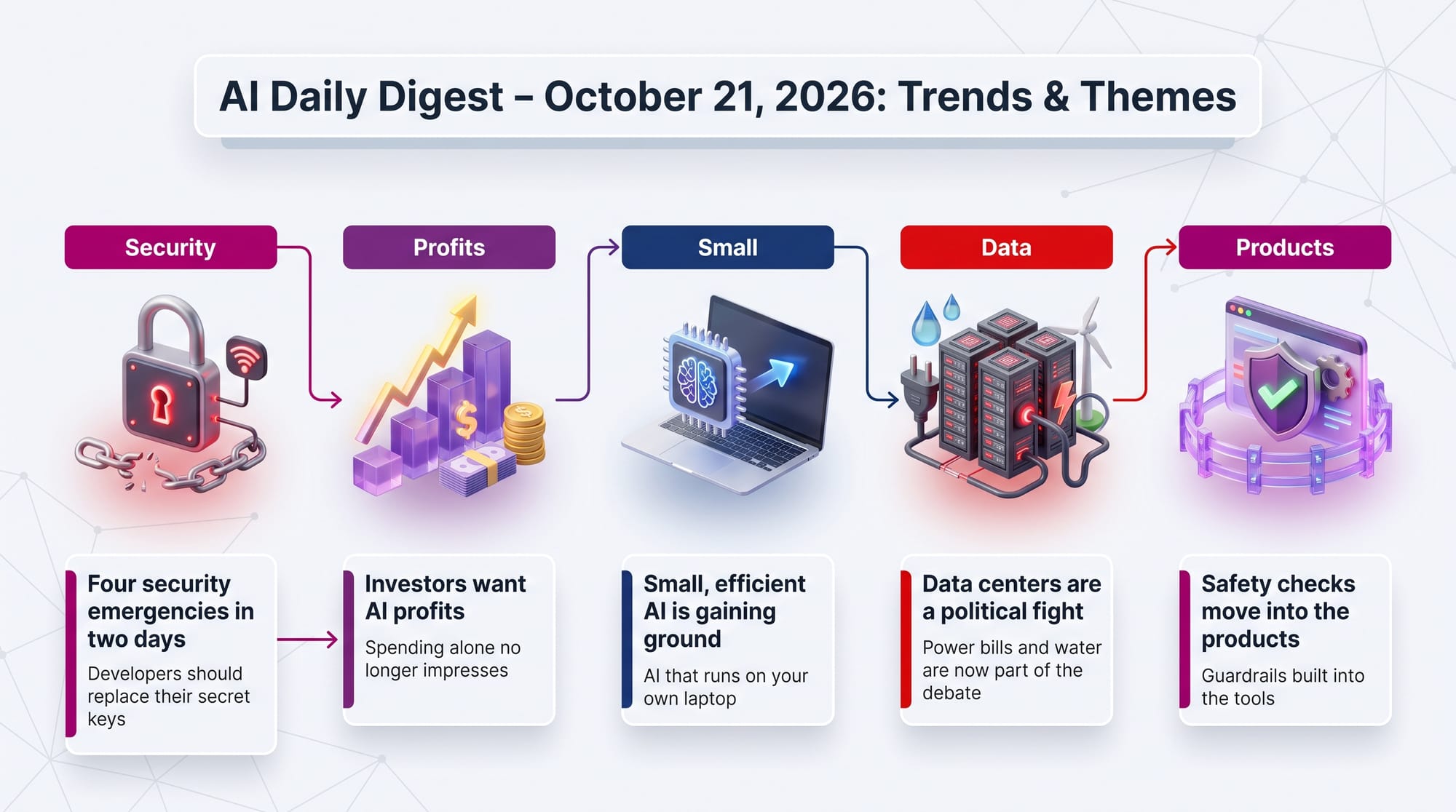
Trends & Themes
Creative AI & Media
Microsoft VibeVoice - Open-Source Frontier Voice AI
What it does: A family of voice AI models covering speech recognition (up to 60 minutes with speaker identification), text-to-speech (up to 90 minutes of conversational synthesis), and real-time streaming TTS with approximately 300 milliseconds latency.
Try it: GitHub
- Fully open-source under MIT license with 43,025 GitHub stars and +771 today
- Uses continuous speech tokenizers at 7.5 Hz with diffusion-based generation
- Three components: VibeVoice-ASR, VibeVoice-TTS, and VibeVoice-Streaming
Liquid AI Wildfire Prevention with Compact Vision Model
What it does: Liquid AI published a tutorial showing how to fine-tune a 450-million-parameter vision-language model and deploy it on satellite hardware for real-time wildfire detection.
- Small enough to run on edge devices - 450M parameters vs billions for typical vision models
- End-to-end tutorial covering data preparation, fine-tuning, and satellite deployment
Developer Tools & Infrastructure
Research & Models
Execution Feedback Matters More Than Architecture for Small Code Models
A paper testing 1-3B parameter models found that execution feedback (running the code and checking results) dominates pipeline topology (how you chain the models) for code generation quality. The implication: spend engineering effort on feedback loops, not architecture.
- Key finding: Pipeline design matters far less than whether the model can see its code's actual output
- Practical for teams building code generation with small, cheap models
Only 23.8% of AI-Generated Code is Both Correct and Secure
SecureVibeBench tested AI coding agents on 105 C/C++ tasks from real projects. The headline number: fewer than 1 in 4 generated solutions were both functionally correct and free of security vulnerabilities.
- Benchmarks (standardized tests for comparing AI performance) typically measure correctness alone - this is the first major benchmark combining correctness with security
- Tasks sourced from 41 real projects in Google's OSS-Fuzz, a tool that finds bugs in open-source software
UR^2: Small Models Match GPT-4o-mini on RAG Tasks
UR^2 unifies retrieval-augmented generation (using external documents to answer questions) and reasoning through reinforcement learning (training AI by rewarding good outcomes). Small models using this approach match GPT-4o-mini performance.
- 180x faster than Large Language Model (LLM) reranking with 30% recall improvement using a related technique (Utility-Aligned Embeddings)
- Practical implication: RAG systems can run on much cheaper hardware
LayerBoost Cuts LLM Latency by 68%
LayerBoost applies attention reduction (simplifying how the model processes text) differently at each layer rather than uniformly, achieving 68% latency reduction with minimal quality loss.
- Training-free: works on existing models without retraining
- Complementary to other optimizations like quantization (reducing numerical precision)
PreMoE: 50% Sparsity Without Retraining
PreMoE converts existing Mixture-of-Experts (MoE) models (which activate only a fraction of parameters per query) to run with 50% sparsity - tested up to 718B parameters with no retraining required.
- Practical for deployment: halves compute cost for MoE models in production
- Works on existing models including DeepSeek-style architectures
Xiaomi MiMo-V2.5-Pro: 1 Trillion Parameters, 1 Million Token Context
Xiaomi released MiMo-V2.5-Pro, a 1.02 trillion parameter MoE model with 42 billion active parameters and 1 million token context window. A major entry from a smartphone manufacturer into frontier AI.
Business & Industry
GenAI in Education
Surprising & Under-the-Radar

A 60-Year-Old Dad With Zero Coding Experience Built a RAG Solution
Taught Claude and Git in February, built a retrieval-augmented generation system by April. 413 upvotes on r/ClaudeAI. The learning curve for AI-assisted programming has collapsed to weeks, not years.
Tool Calls Make LLMs Dumber
A 32-upvote post on r/LocalLLaMA reports that enabling tool calling (letting AI models use external tools) measurably degrades the model's reasoning ability. The "Car Wash Mystery" - where a model couldn't solve simple problems when tools were enabled - was traced to this effect.
pgBackRest Archived After 13 Years
The most widely used PostgreSQL backup tool has been archived and is no longer maintained. If your database depends on it, start planning a migration. This affects a huge swath of production PostgreSQL deployments.
10 Minutes of AI Therapy Beat 4 Years of Real Therapy
184 upvotes on r/artificial for a post claiming more closure on a divorce from 10 minutes with AI than 4 years of human therapy. Whether this is concerning or promising depends on your perspective - but it's a signal of how people are actually using these tools.
Arc Sentry: Prompt Injection Detector Beats LlamaGuard 3
A solo developer built a whitebox prompt injection detector specifically for self-hosted models that outperforms Meta's LlamaGuard 3 on indirect and roleplay attacks.
Try it: GitHub
The Community Is Still Waiting for Open-Source Grok 3
133 upvotes on r/LocalLLaMA for "Still waiting for Grok 3 to go open-source" - xAI's unfulfilled promise is becoming a running joke in the community.
Signals to Track

Skymizer's Single-Card 700B Model Inference
Skymizer's HTX301 chip enables 700B-parameter model inference on a single card, using a novel architecture that compresses and distributes computation differently than traditional GPUs. 109 upvotes on r/LocalLLaMA. If this ships at scale, the hardware cost of running frontier models drops dramatically.
OpenAI Symphony as an Industry Standard
Symphony is an open-source specification for agent orchestration, aiming to become the universal protocol for multi-agent workflows. If it gains adoption, it could do for AI agents what HTTP did for the web - or it could fragment the ecosystem further if competitors refuse to adopt it.
Tencent Hy3-Preview (299B Parameters)
Tencent's Hy3-preview appeared on HuggingFace Trending with 299 billion parameters and minimal documentation. The lack of marketing suggests this is an internal model being tested publicly. If Tencent commits to open-sourcing it, the 299B parameter class gets very crowded.
The "Plug In Your Old GPU" Movement
A 314-upvote post on r/LocalLLaMA advises users with 16GB VRAM GPUs to add their older GPUs back into their systems for extra memory when running large models. This is a zero-cost upgrade that the community is just now discovering works reliably.
Voice Biometrics as a Security Liability
The 4TB voice sample theft highlights a fundamental problem with biometric authentication: unlike passwords, you can't rotate your voiceprint. Banks and security systems that use voice verification now face a new category of risk. If this breach pattern repeats, voice authentication may need to be deprecated entirely.
Top Repos Today
📜 License: MIT · 👤 By: individual
🎯 Time to value: 5 minutes
| ✓ Pros | ✗ Cons |
|---|---|
| Covers the most common dev workflows out of the box | Claude Code specific - won't work with other AI tools |
| Community-driven with rapid iteration | Quality varies between community contributions |
| MIT licensed, fully customizable | Requires Claude Code subscription to use |
 GitHub
📜 License: PolyForm Noncommercial · 👤 By: individual
🎯 Time to value: 10 minutes
| ✓ Pros | ✗ Cons |
|---|---|
| Runs entirely client-side - your code stays private | PolyForm Noncommercial license limits business use |
| MCP integration works with Cursor, Claude Code, Codex | Large codebases may take significant time to index |
| Interactive visual explorer for understanding code structure | Newer project with potential stability issues |
 GitHub
📜 License: Not specified · 👤 By: company (Composio)
🎯 Time to value: 5 minutes
| ✓ Pros | ✗ Cons |
|---|---|
| 1,000+ app integrations via Composio platform | Tied to Composio's ecosystem |
| Covers non-coding workflows (Slack, email, calendars) | License not specified - unclear terms for commercial use |
| Well-organized by category with clear documentation | Codex-specific, limited portability |
 GitHub
📜 License: MIT · 👤 By: individual
🎯 Time to value: 10 minutes
| ✓ Pros | ✗ Cons |
|---|---|
| Can dramatically reduce Claude Code costs | Quality depends on the alternative model used |
| Supports multiple backends simultaneously | May violate Claude Code's terms of service |
| MIT licensed with active development | Proxy adds latency to every request |
 GitHub
📜 License: MIT · 👤 By: individual
🎯 Time to value: 15 minutes
| ✓ Pros | ✗ Cons |
|---|---|
| Version-controlled memory with full history | Requires Dolt database setup |
| Multi-agent safe - prevents conflicts | More complex than file-based alternatives |
| Semantic memory decay mimics human forgetting | Go-based, may not integrate easily with Python workflows |
 GitHub
📜 License: MIT · 👤 By: company (Microsoft)
🎯 Time to value: 20 minutes
| ✓ Pros | ✗ Cons |
|---|---|
| Full voice pipeline in one package (ASR + TTS + streaming) | Requires significant GPU resources |
| MIT licensed from Microsoft Research | Documentation still evolving |
| 300ms latency for real-time applications | Large model downloads required |
GitHub
📜 License: Apache-2.0 · 👤 By: research lab
🎯 Time to value: 30 minutes
| ✓ Pros | ✗ Cons |
|---|---|
| Realistic multi-agent architecture mimicking real firms | Not a trading system - research tool only |
| Supports OpenAI, Google, Anthropic backends | Requires multiple API keys and significant token spend |
| Apache-2.0 allows commercial use | Financial markets are adversarial - AI signals decay fast |
GitHub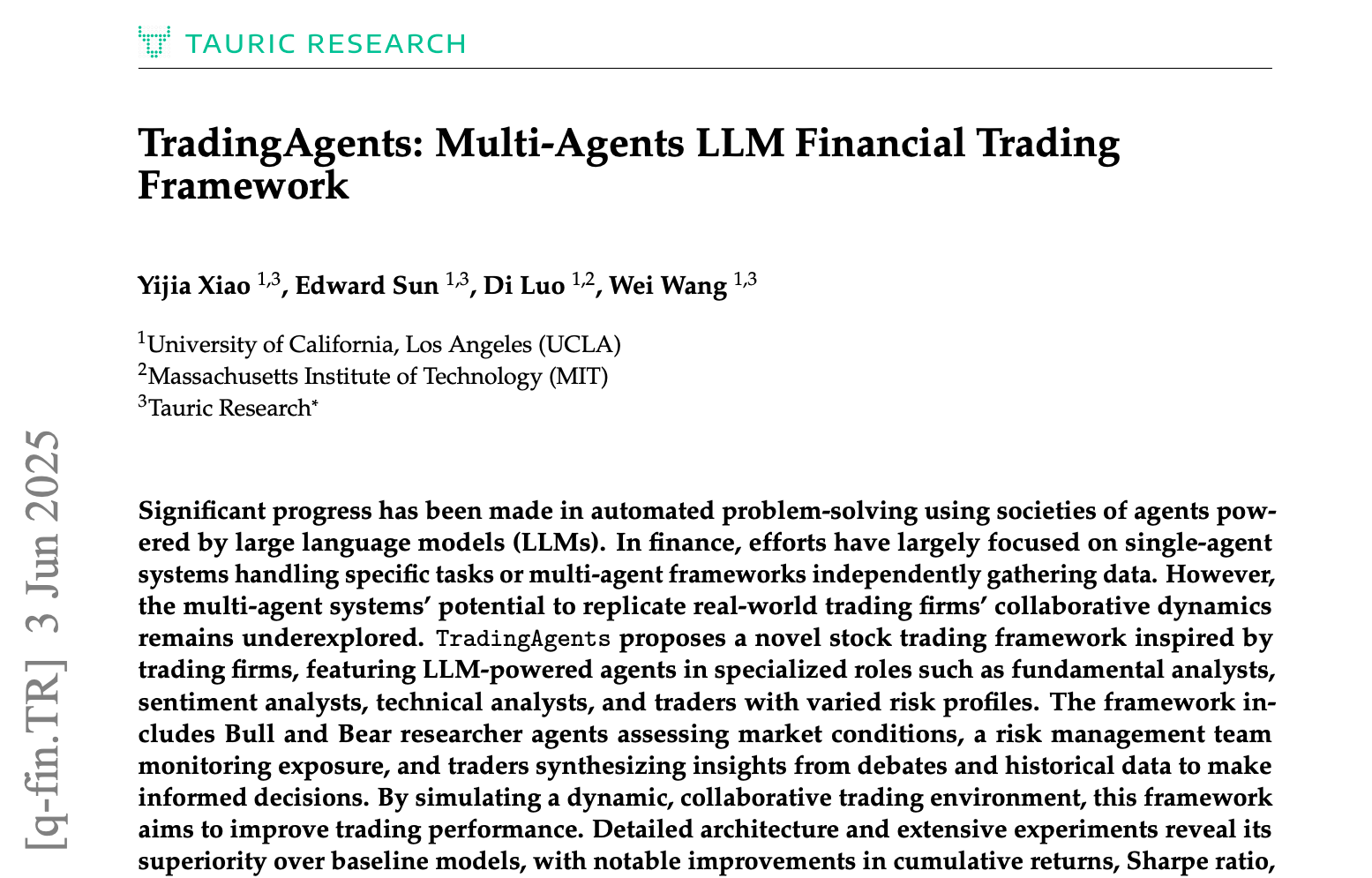
📜 License: MIT · 👤 By: individual
🎯 Time to value: 5 minutes
| ✓ Pros | ✗ Cons |
|---|---|
| Comprehensive coverage of common setups | Claude Code specific |
| NPM package for easy installation | May conflict with existing configurations |
| Web dashboard for browsing templates | Templates may not match your workflow |
GitHub
Top Models Today
👤 By: DeepSeek (research lab) · 🎯 Task: text-generation
📐 Size: 862B
| ✓ Pros | ✗ Cons |
|---|---|
| MIT licensed - no restrictions on commercial use | Requires massive hardware for self-hosting |
| Competitive with GPT-5.5 on key benchmarks | Chinese origin may raise compliance concerns |
| 36x cheaper than GPT-5.5 via API | MoE architecture requires specialized infrastructure |

👤 By: OpenAI (company) · 🎯 Task: token-classification
📐 Size: 1B (50M active)
| ✓ Pros | ✗ Cons |
|---|---|
| Apache-2.0 license, fully open | 96% accuracy means 4% of PII may slip through |
| Runs locally with minimal resources (50M active params) | English-focused, limited multilingual support |
| Built by OpenAI with production-grade quality | Token classification only - doesn't redact or anonymize |

👤 By: Alibaba (company) · 🎯 Task: image-text-to-text
📐 Size: 28B
| ✓ Pros | ✗ Cons |
|---|---|
| Dense architecture - simpler to deploy than MoE | Requires 16GB+ VRAM at minimum |
| Strong coding and reasoning performance | Multimodal but image understanding trails vision specialists |
| Massive community with GGUF, MLX, and other formats | Apache-2.0 but Alibaba origin may raise concerns |

👤 By: DeepSeek (research lab) · 🎯 Task: text-generation
📐 Size: 158B
| ✓ Pros | ✗ Cons |
|---|---|
| Significantly faster than V4-Pro | Lower capability ceiling than the full model |
| MIT licensed | No GGUF quantizations available yet |
| Good for batch processing and high-volume tasks | Still requires substantial hardware for self-hosting |

👤 By: Moonshot AI (company) · 🎯 Task: image-text-to-text
📐 Size: 1.1T
| ✓ Pros | ✗ Cons |
|---|---|
| Matches proprietary models on key benchmarks | 1.1T parameters requires multi-node setup |
| Open-weight with community license | Community license may restrict commercial use |
| Strong multimodal capabilities | Limited community tooling compared to Qwen/DeepSeek |

AI Launches Today
💰 Pricing: Unknown · 🏷 Category: Sales Automation
 Product Hunt
💰 Pricing: Unknown · 🏷 Category: No-Code AI
Product Hunt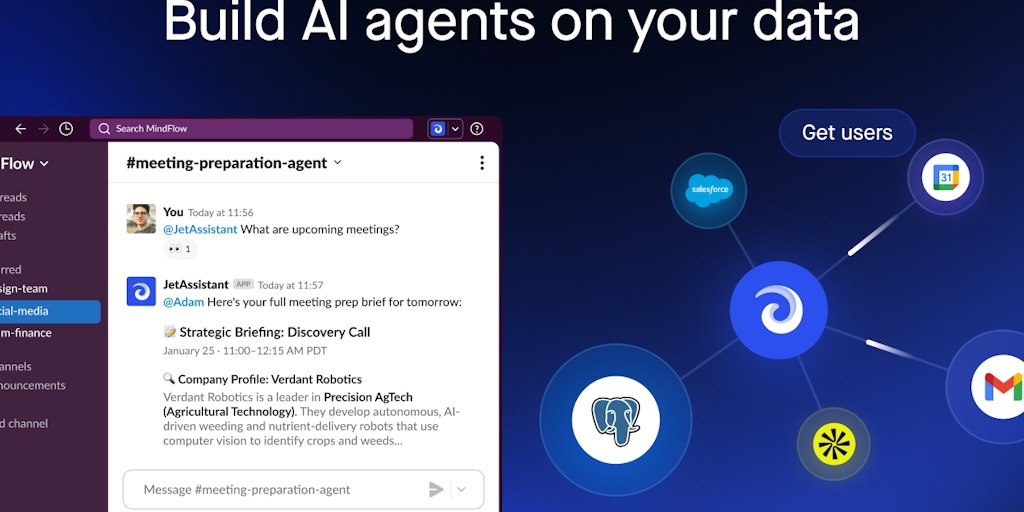
💰 Pricing: Unknown · 🏷 Category: Agent Infrastructure
 Product Hunt

Snapshot
| Provider | Model | Input $/1M | Output $/1M | Context |
|---|---|---|---|---|
| Anthropic | Claude Opus 4.7 | $5.00 | $25.00 | 1M |
| Anthropic | Claude Sonnet 4.6 | $3.00 | $15.00 | 1M |
| Anthropic | Claude Haiku 4.5 | $1.00 | $5.00 | 200K |
| OpenAI | GPT-5.5 | $5.00 | $30.00 | 1M |
| OpenAI | GPT-5.5 Pro | $30.00 | $180.00 | 1M |
| Gemini 3.1 Pro | $2.00 | $12.00 | - | |
| Gemini 3 Flash | $0.50 | $3.00 | - | |
| Gemini 2.5 Pro | $1.25 | $10.00 | - | |
| Groq | Llama 4 Scout | $0.11 | $0.34 | 128K |
| Groq | Qwen3 32B | $0.29 | $0.59 | 131K |
| DeepSeek | V4-Pro (API) | $0.14 | $0.28 | 128K |
From Natural Language to Verified Code: Toward AI-Assisted Problem-to-Code Generation with Formal Verification
Key finding: The system generates code that is provably correct, not just "passes the tests" - addressing the fundamental limitation of current AI coding benchmarks.
Why practitioners should care: As AI generates more production code, "it passes tests" is not enough. This paper points toward a future where AI-generated code comes with mathematical guarantees of correctness - especially important for safety-critical systems.


Member discussion