
Watch today's digest as a video summary (generated by NotebookLM)
Statistically Speaking
One Thing to Tell Your Friends
TL;DR
Hot off the Presses
The $700 Billion AI Bet: All Four Hyperscalers Report Blowout Earnings
All four major U.S. hyperscalers - Alphabet, Microsoft, Meta, and Amazon - reported Q1 2026 earnings within 24 hours of each other, and every one beat expectations on AI-driven growth.
The pattern is clear: these companies see AI infrastructure as the defining competitive advantage of the decade, and none of them are blinking.
- Microsoft: $82.9B revenue, 18% growth - AI revenue run rate hit $37B, a 123% year-over-year increase
- Alphabet: $109.9B revenue, 21.8% growth - Google Cloud crossed $20B quarterly revenue for the first time
- Meta: $56.3B revenue, 33% growth - 3.56 billion daily active users across its apps
- Amazon AWS: 28% growth with record margins - AI workload demand beating internal forecasts
- Combined AI capex expected to exceed $700B for full-year 2026
Google Declares the "Agentic Enterprise" Era at Cloud Next 2026
Google Cloud CEO Thomas Kurian unveiled the Gemini Enterprise Agent Platform, the centerpiece of Google's new "Agentic Enterprise" strategy. The platform is the evolution of Vertex AI, and all future Vertex services will be delivered through it.
The strategic shift is from AI as a "system of intelligence" (answer questions) to a "system of action" (execute workflows). Google is betting that the next wave of enterprise AI isn't about smarter models - it's about agents that can actually do things.
- Agent Studio, Agent Registry, Agent Gateway - a full lifecycle platform for building, deploying, and governing AI agents at enterprise scale
- Agent-to-Agent Orchestration - agents can delegate tasks to other agents, creating multi-agent workflows
- Long-running agents with persistent memory - agents that operate for days, not seconds, to complete complex business processes
- TPU 8i: 80% better price-performance for inference - purpose-built silicon for high-concurrency agentic workloads
- 260+ product updates announced at the conference, heavily focused on agent infrastructure and governance
- 40% growth in Gemini Enterprise paid users quarter-over-quarter
Samsung's Chip Division Profit Grows 48x as AI Memory Boom Accelerates
Samsung posted record Q1 2026 earnings driven almost entirely by AI memory demand.
Samsung warned that the supply-demand gap for AI memory chips is expected to widen further into 2027, suggesting prices may not come down soon.
- 53.7 trillion won ($41.8B) semiconductor operating profit - up from 1.1 trillion won a year ago, a 48x increase
- Chip division accounted for 94% of total company profit - Samsung is now effectively a memory chip company
- DRAM prices rose ~90% year-over-year - NAND prices rose ~88%
- First company to mass-produce and ship HBM4 (High Bandwidth Memory 4) - the next-generation memory chips that AI data centers need
- Memory business revenue alone hit 74.8 trillion won - driven by hyperscaler demand for AI training and inference
Musk Concludes OpenAI Testimony: "I Was a Fool"
Elon Musk concluded his testimony in the Oakland federal court trial against OpenAI, seeking $130 billion in damages and the ouster of CEO Sam Altman.
The trial continues with additional witnesses. The verdict could set legal precedent for how nonprofit organizations in AI can restructure.
- Musk said he "came up with the idea, the name, recruited the key people" and provided the initial $38 million in funding for what was supposed to be a nonprofit AI lab
- He described three phases of losing faith in OpenAI's leadership, culminating in the belief that "they were looting the nonprofit"
- Cross-examination revealed Musk pledged $1 billion but contributed $38 million - OpenAI's attorney pressed on the gap between promise and delivery
- The core legal question: whether OpenAI's transformation from nonprofit to a for-profit entity valued at $800B+ constitutes a breach of its founding agreement
The Inference Inflection: AI's Center of Gravity Is Shifting
The Latent Space newsletter identified a fundamental shift underway in the AI industry: the era of training dominance is giving way to an era of inference.
The implication: the next competitive moat in AI may not be who has the smartest model, but who can run any model most efficiently.
- Sam Altman stated OpenAI must "become an AI inference company" - a striking pivot for a company known for training frontier models
- Noam Brown called inference compute "a strategic resource, currently undervalued" - the researcher behind o1's reasoning approach
- Computing demand surged approximately 1 million times in two years according to Jensen Huang, driven by inference workloads
- CPU demand is rising alongside GPU demand - Intel reported increasing CPU utilization for AI workloads including reinforcement learning simulations and agent execution environments
- vLLM achieved 230 tokens/second for DeepSeek V3.2 with 0.96-second time-to-first-token, demonstrating that inference optimization is becoming as important as model architecture
Trends & Themes

Creative AI & Media
Developer Tools & Infrastructure
Research & Models
Business & Industry
Surprising & Under-the-Radar
Signals to Track

The CPU Shortage Nobody Is Talking About
AI agents don't just need GPUs (Graphics Processing Units) - they need CPUs for reinforcement learning simulations, production orchestration, and software execution environments. Intel reported increasing CPU utilization, and the combination of a refresh cycle and chronic underinvestment means potential CPU shortages. If AI agent deployment scales as projected, a CPU crunch could bottleneck the entire agentic era.
Google's Agent Platform Could Become the "AWS of Agents"
The Gemini Enterprise Agent Platform includes agent identity, governance, observability, simulation, and evaluation - the complete operating system for running AI agents in production. With 40% quarter-over-quarter growth in paid users and first-class access to 200+ models, Google is positioning itself as the default infrastructure for enterprise AI agents. If this gains traction, it could define how companies deploy AI agents the way AWS defined how they deploy web services.
The Musk-OpenAI Verdict Could Reshape AI's Corporate Structure
If Musk wins, OpenAI could be forced to return to a nonprofit structure or pay damages exceeding its valuation. If OpenAI wins, it validates the nonprofit-to-profit conversion model that other AI organizations might follow. Either outcome sets legal precedent for how AI companies can structure themselves.
Zvi's "Google Sells Out" Analysis
Zvi Mowshowitz analyzed Google's positioning between its commercial AI ambitions and its growing government/military partnerships, including the Pentagon contract (covered April 28). The tension between "don't be evil" and defense contracts is intensifying as Google's AI capabilities become more strategically significant.
Top Repos Today
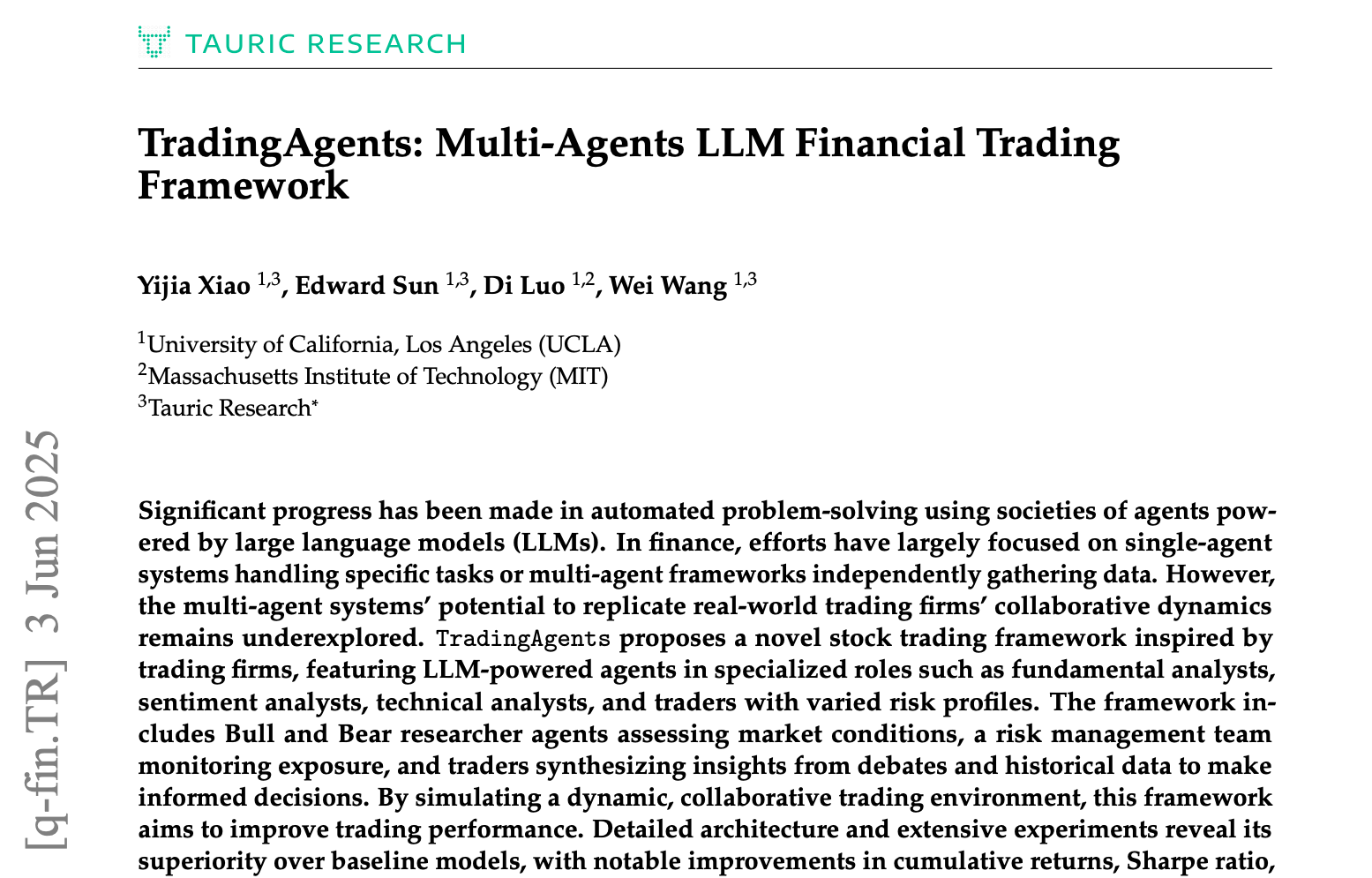
📜 License: Apache-2.0 · 👤 By: research organization
🎯 Time to value: 20 minutes
| ✓ Pros | ✗ Cons |
|---|---|
| Full trading desk simulation | Designed for research, not live trading |
| 20+ AI provider support | Complex setup with many dependencies |
| Apache 2.0, fully open | Financial AI carries inherent risk |
 GitHub
📜 License: MIT · 👤 By: individual
🎯 Time to value: 5 minutes
| ✓ Pros | ✗ Cons |
|---|---|
| 14ms startup, 27.8MB RAM | Very new, small community |
| Semantic memory, no manual context | Self-development mode needs caution |
| MIT license, multi-provider | Documentation still maturing |
GitHub
📜 License: Not specified · 👤 By: company
🎯 Time to value: 10 minutes
| ✓ Pros | ✗ Cons |
|---|---|
| Built on Claude Agent SDK | Very small community so far |
| Ready-made browser automation | Requires Browserbase API key |
| Skills-based architecture | Limited documentation |
Top Models Today
👤 By: Poolside · 🎯 Task: text-generation
📐 Size: 33B (3B active)
| ✓ Pros | ✗ Cons |
|---|---|
| Runs on a MacBook, Apache 2.0 | Only 3.1K downloads - very new |
| 68.2% SWE-bench | Smaller community than Qwen/DeepSeek |
| Ollama + vLLM support | 33B still needs decent hardware |


👤 By: inclusionAI · 🎯 Task: text-generation
📐 Size: 104B (7.4B active)
| ✓ Pros | ✗ Cons |
|---|---|
| 4x token efficiency in agent tasks | Only 805 downloads - very new |
| MIT license, 340 tok/s | Requires 4x H20 for full speed |
| SOTA on agent benchmarks | Limited community documentation |
AI Launches Today
💰 Pricing: Not specified · 🏷 Category: Productivity
 Product Hunt
💰 Pricing: Not specified · 🏷 Category: Design
Product Hunt💰 Pricing: Not specified · 🏷 Category: Video
Product Hunt💰 Pricing: Not specified · 🏷 Category: Marketing
Product Hunt💰 Pricing: Not specified · 🏷 Category: Developer Tools
Product Hunt💰 Pricing: API pricing · 🏷 Category: Research
Product Hunt💰 Pricing: Not specified · 🏷 Category: Privacy
Product HuntSnapshot
| Provider | Model | Input $/1M | Output $/1M | Context |
|---|---|---|---|---|
| Anthropic | Claude Opus 4.6 | $15.00 | $75.00 | 200K |
| Anthropic | Claude Sonnet 4.6 | $3.00 | $15.00 | 200K |
| Anthropic | Claude Haiku 4.5 | $0.80 | $4.00 | 200K |
| OpenAI | GPT-5.5 | $5.00 | $30.00 | 1M+ |
| OpenAI | GPT-4.1 | $2.00 | $8.00 | 1M |
| OpenAI | GPT-4.1 Nano | $0.10 | $0.40 | 1M |
| Gemini 3.1 Pro | $2.00 | $12.00 | N/A | |
| Gemini 2.5 Flash | $0.30 | $2.50 | N/A | |
| Gemini 2.5 Flash-Lite | $0.10 | $0.40 | N/A | |
| DeepSeek | V4 Flash | $0.14 | $0.28 | 1M |
| DeepSeek | V4 Pro | $0.80 | $2.40 | 1M |
| Groq | GPT OSS 20B | $0.075 | $0.30 | 128K |
| Groq | Llama 4 Scout | $0.11 | $0.34 | 128K |
When to Retrieve During Reasoning: Adaptive Retrieval for Large Reasoning Models
Key finding: 10.1% absolute improvement in answer F1 over standard RAG with 47% fewer retrieval calls - better answers with less computation.
Why practitioners should care: If you're building applications with reasoning models and RAG, this paper shows that timing retrieval adaptively - rather than retrieving everything upfront or at fixed intervals - dramatically improves both quality and cost. The 47% reduction in retrieval calls translates directly to lower latency and API costs.






Member discussion