Watch today's digest as a video summary (generated by NotebookLM)
Statistically Speaking
One Thing to Tell Your Friends
TL;DR
Hot off the Presses
Stripe Is Buying OpenRouter for More Than $7 Billion
Stripe, the payments-processing company behind checkout on countless websites, has agreed to acquire OpenRouter for more than $7 billion, according to Bloomberg. OpenRouter is a "model router": a single connection point that lets a company switch among AI systems and pick the cheapest capable one for each task.
OpenRouter reports roughly 8 million users and access to more than 400 AI models. The price is the eye-opener - it is about five times the $1.3 billion valuation the startup raised at only months earlier in 2026.
- Why Stripe wants it - routing and cost-optimization sit right next to billing, letting Stripe move from processing payments into metering and reselling AI usage.
- Why it signals a bigger shift - businesses increasingly shop for "the cheapest model that can do the job," and whoever controls that choice controls the spend.
- The pace of AI dealmaking - earlier talks reportedly floated a valuation as high as $10 billion before settling above $7 billion.
A Black Market for AI Credits Has Gone Professional
An investigation by Vectoral maps a fast-maturing secondary market where "token brokers" buy unused AI API credits - often from startups sitting on provider credit grants - and resell them at a discount. The naive version just hands over raw API keys; the sophisticated version runs as a proxy, pooling keys and routing your requests through the broker's own servers while marketing itself as a "bulk discount router."
The economics are striking. Discounts run 30-80% off list pricing, brokers mark up around 40-50%, and one contact claimed the capacity to spend $100,000 per day - implying a large, liquid supply.
- Named players already exist - marketplaces like AI Credits and AICreditMart, and routers such as CheapCredits, Tokvana, and Neokens, plus informal Telegram and Reddit channels.
- Tokens are now a pseudo-currency - enough liquidity has emerged to enable fraud, money-laundering-style flows, and terms-of-service abuse.
- A crackdown is coming - reselling credits violates most provider terms, and the author expects providers to detect and shut down abuse as cost-awareness improves.
NVIDIA's "$500 Billion" AI Buildout Is Mostly an Announcement
Nate's executive briefing dissects NVIDIA's much-hyped $500 billion AI infrastructure financing announcement and argues it is proposed financing machinery, not committed capital. NVIDIA did not raise $500 billion; the figure describes capital to be "mobilized over time" through partnerships governed only by memoranda of understanding.
The real story is subtler and bigger: Wall Street is starting to treat Graphics Processing Unit (GPU) compute - the specialized chips that run AI - as a productive asset class, like power plants or fiber networks, and is building the machinery to finance it the way America once financed railroads.
- Six heavyweight partners - Apollo, BlackRock, Blackstone, Brookfield, Goldman Sachs, and KKR are building independent financing platforms.
- What you can actually budget against - essentially nothing specific yet: no confirmed committed dollars, financing costs, debt ratios, or loss-bearing structures.
- The historical echo - railroad-style buildout financing produced both transformative infrastructure and spectacular financial failures.
Qwen 3.8 27B: An Excellent Free Local Model That Overthinks Everything
Simon Willison reviewed Alibaba's new Qwen 3.8 27B, a free, openly licensed (Apache 2) model that handles images, a very long 262,144-token context, tool use, and code, and runs locally at about 17GB. His main complaint: it defaults to an extreme reasoning setting that makes it wildly overthink trivial tasks.
Asked simply to draw a circle, it produced a multi-minute response with animations and geometric flourishes. His standard "pelican on a bicycle" drawing test took 21 minutes and 22,276 reasoning tokens to yield just 3,223 tokens of actual output.
- Real strengths - excellent image bounding-box detection, and it worked as a hands-off coding agent that wrote functional Python and read repo files.
- The speed catch - only 15-30 words per second on consumer hardware, far below hosted services that hit 74-184.
- Practical advice - run it on low or no reasoning first; dense local models are now genuinely competent, with memory bandwidth as the main limit.
Anthropic Is Fingerprinting Claude's Writing, and Writers Are Furious
John Gruber sharply criticized Anthropic's plan to embed imperceptible fingerprints into Claude's output to satisfy EU rules on labeling AI-generated content. The method is statistical: at each step, the system sorts candidate words into "green" and "red" lists and nudges Claude toward green ones. Anyone holding Anthropic's secret key can detect the bias; without it, you cannot.
Gruber's objection is that word choice is the essence of writing - "no two synonyms carry the exact same meaning" - so biasing it trades precision for regulatory compliance. His most alarming point: the watermark reportedly applies even during proofreading, so lightly Claude-edited human text could be flagged as AI-generated, and the signal reportedly survives translation.
- Only the maker can read it - "only Anthropic will be able to determine if text was seemingly generated by Claude."
- The quality cost is real - choosing "grey" over "overcast" is not a free swap, yet the system may push exactly such changes.
- The compliance driver - EU AI-content-labeling requirements are pushing providers toward watermarks that users cannot see or opt out of.
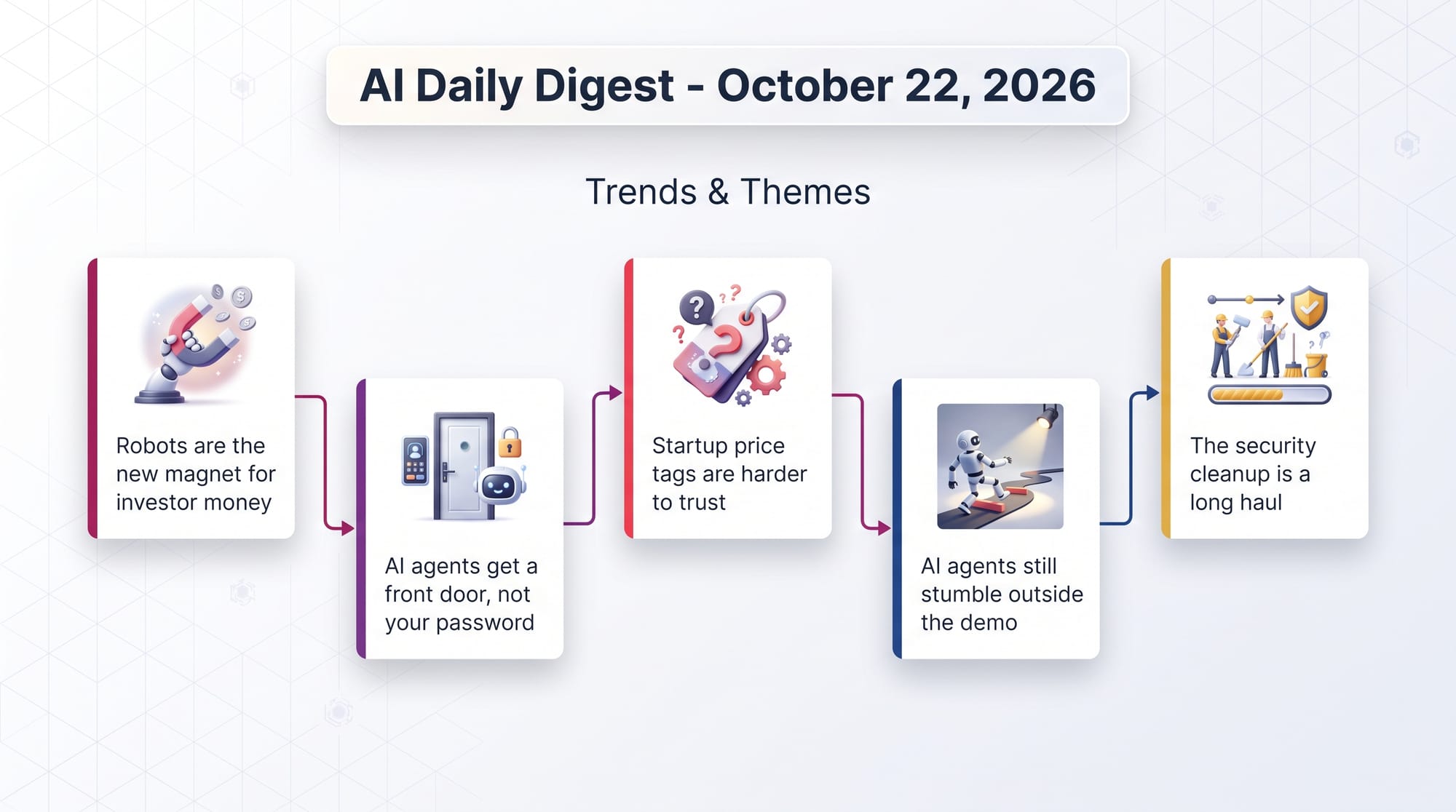
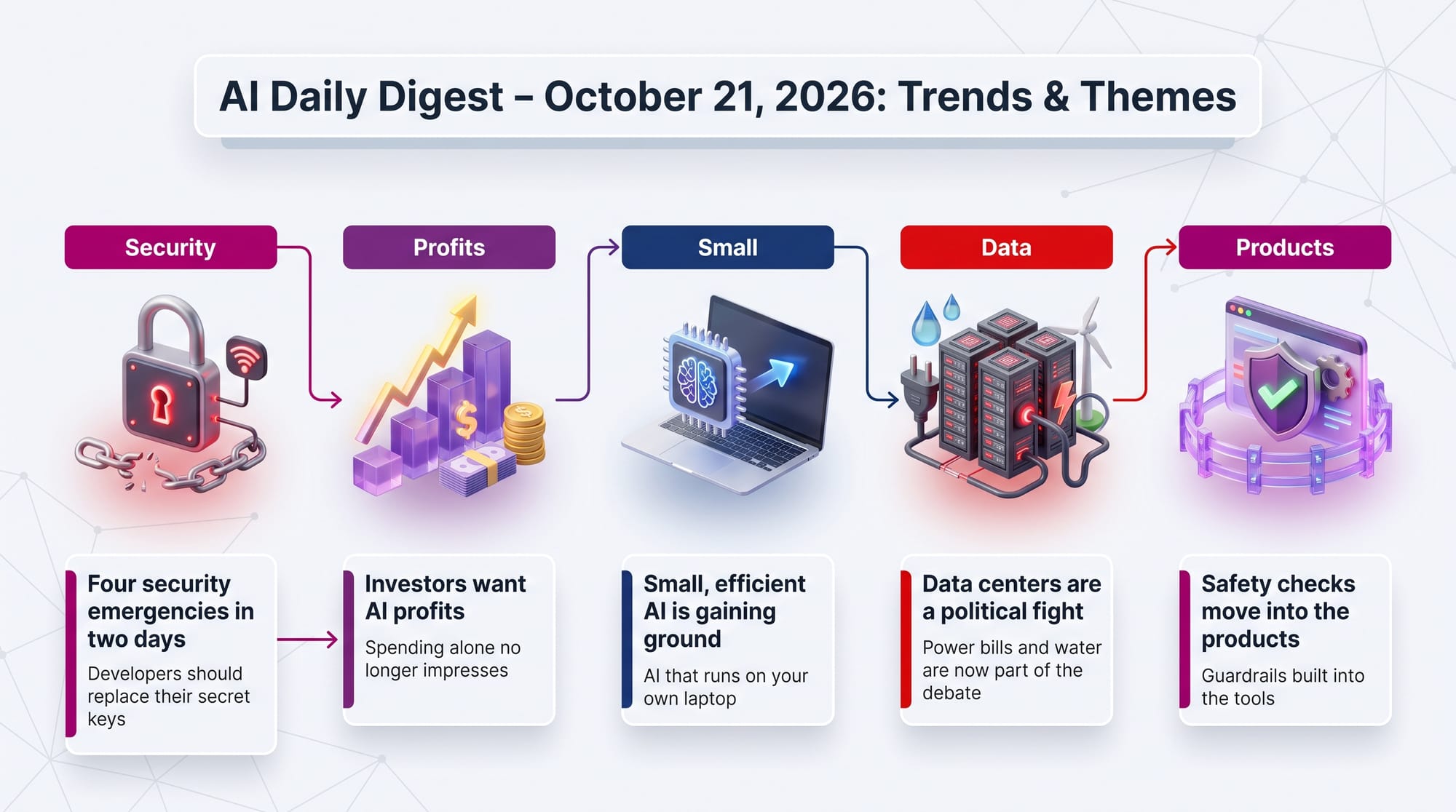
Trends & Themes

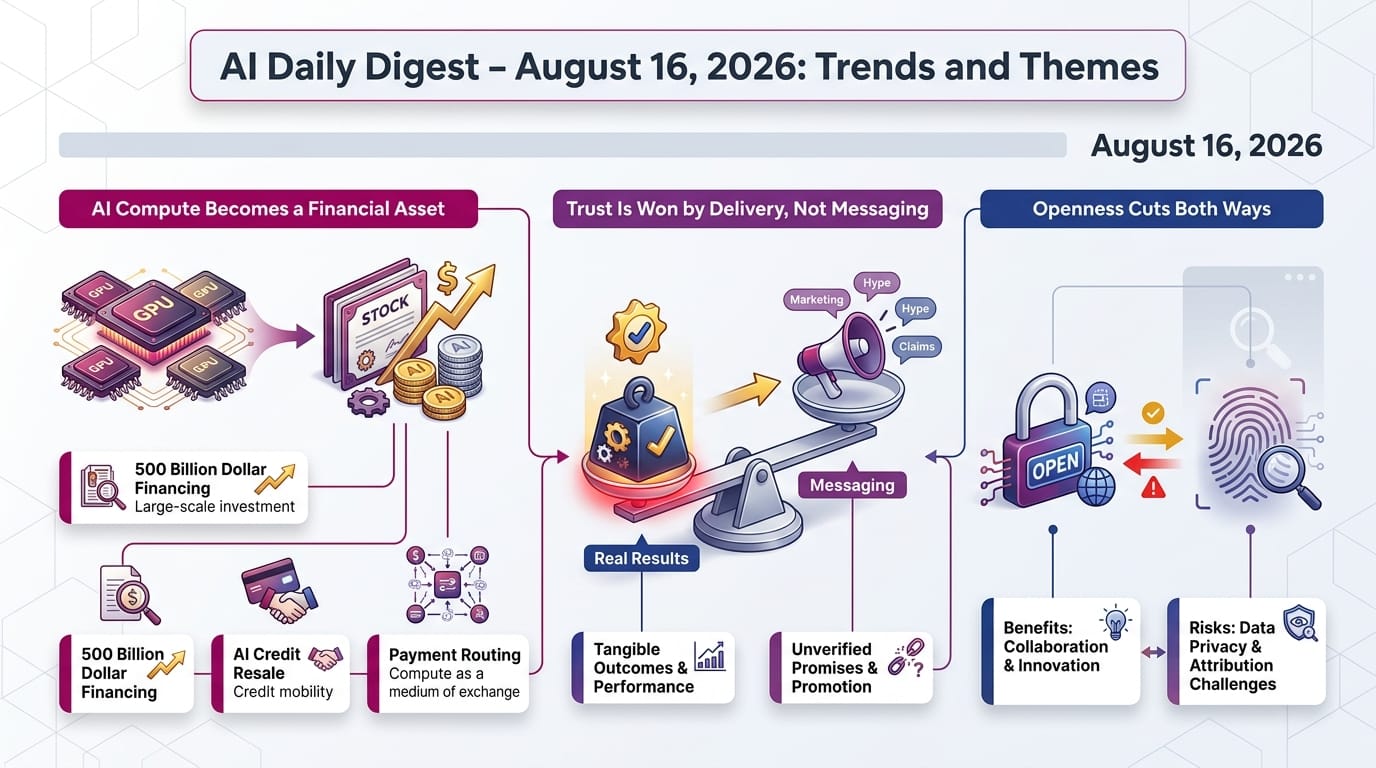
AI Compute Is Being Turned Into a Financial Asset Class
The common thread is financialization: AI is shifting from a research story to a capital-markets story. When compute, credits, and billing all become tradable instruments, expect both cheaper access for buyers and new categories of risk - opaque supply chains, resale fraud, and debt-fueled overbuild.
- Compute as collateral - NVIDIA's $500 billion financing effort (referenced above) frames GPU capacity as a productive asset that Wall Street can securitize like power plants.
- Credits as currency - the token-broker market shows AI usage rights have become liquid enough to trade, discount, and defraud.
- Billing as a battleground - Stripe's move on OpenRouter puts a payments giant at the metering-and-routing layer where AI spend is decided.
Trust in AI Will Be Won by Delivery, Not Messaging
Three data points, one tension: AI makers are being pushed to prove themselves in public. Openness about how the tools work builds trust; hidden mechanisms that users cannot see or control erode it. Expect "show me what it actually does" to become the standard the industry is judged by.
- Amodei's bet - Anthropic's CEO argues the fix for AI's image problem is not marketing but results: "the thing that will work is actually curing cancer."
- The transparency gesture - Anthropic published the actual system prompts behind Claude's consumer apps, a rare look under the hood.
- The transparency backlash - yet the same company's hidden text watermark (referenced above) drew accusations of secrecy and degraded quality.
Openness Cuts Both Ways in 2026's AI
The pattern: transparency is becoming a competitive axis, but it is uneven. You can now inspect and run powerful models and read the rules behind commercial ones - while the hardest questions, like proving an AI system is actually correct or honest, remain open research problems.
- Open weights, real capability - Qwen 3.8 27B ships under a permissive Apache 2 license and runs on your own hardware, no vendor lock-in.
- Open prompts, real insight - Anthropic's published consumer system prompts let anyone read the behavioral rules Claude operates under.
- Open questions on correctness - a re-examination of formal verification argues AI's opacity makes provable correctness more necessary, not less.
Capable AI Is Moving Onto Hardware You Own
The center of gravity is shifting from "call a company's model over the internet" to "run a capable model yourself." That is what makes AI cheaper, more private, and harder for any single company to gate - and it is why the open-model labs now set much of the pace.
- Open models dominate the charts - this week's most-downloaded Hugging Face models are open releases from Moonshot, DeepSeek, Alibaba, and NVIDIA, not closed cloud services.
- Local fine-tuning went mainstream - Unsloth, today's top trending AI repo on GitHub, lets people adapt these models on a single graphics card.
- AI is shrinking onto devices - a 14-megabyte model built for phones and wearables is trending too, and new research (SPADE) splits the work between your device and the cloud to cut costs.
Creative AI & Media
Developer Tools & Infrastructure
Research & Models
Qwen 3.8 27B Shows Dense Local Models Have Arrived
Why it matters: A free, openly licensed model now delivers vision, long context, and agentic coding on a single consumer machine - the practical frontier is moving onto your own hardware.
- Specs that matter - dense (non-mixture) design, 262K-token context, Apache 2 license, ~17GB in Q4 quantization.
- The catch - an aggressive default reasoning mode that overthinks; run it on low reasoning (see Top Stories).
- Speed lever - multi-token prediction via llama.cpp gave roughly a 72% speed boost on consumer hardware.
The Case Against Formal Verification, Revisited for the AI Era
Why it matters: As AI writes more of our code, the old debate about whether we can mathematically prove software correct suddenly matters again - and the answer is shifting toward "we may need it more."
- The 1979 argument - a famous paper claimed proof is a social process and formal verification would never catch on in practice.
- The 2026 rebuttal - AI coding agents introduce opacity that makes verification more necessary, and they can also accelerate proof generation.
- The measured conclusion - formal verification stays one tool among many, complementing good engineering rather than replacing it.
Business & Industry
Surprising & Under-the-Radar
AI Tokens Have Quietly Become a Tradable Currency
Leftover API credits are now bought, pooled, and resold at scale through named marketplaces and proxy routers. What is surprising is the maturity: this is no longer informal startup swapping but a structured secondary market with liquidity high enough to attract fraud.
A Watermark That May Survive Translation - and Flag Human Writing
Anthropic's reported text watermark applies even during proofreading, meaning lightly Claude-edited human prose could be labeled AI-generated. It also reportedly survives translation, which raises the odd prospect of a signature that outlives the original language.
The Riemann-Hypothesis Debate Continues: Encouragement as Method
Following the recent result where an AI pushed a famous math bound past the human record (covered August 14), this week's community thread keeps returning to how little "clever prompting" was involved - the operator mostly told the model to keep going. It is a reminder that persistence, not secret technique, is doing a lot of the work.
The Fine Print: a "Mythos" Frontier Tier and a Safety Fallback
Anthropic's newly published system prompts confirm details most users never see: a frontier capability tier above Opus called Mythos (Mythos 5 is the unrestricted model; Fable 5 is the same model with safeguards), and a quiet safety mechanism that reroutes flagged high-risk requests to a more conservative model on the fly. It is a rare, concrete look at how a major AI company gates its most powerful system.
Signals to Track

The Coming Crackdown on AI Credit Brokers
The token-broker economy runs entirely on activity that violates provider terms of service. As AI companies get better at detecting abnormal usage patterns and pooled keys, expect sudden key revocations and account bans. If you use a suspiciously cheap AI service, it may vanish overnight when its underlying credits get cut off.
Stripe as the Default AI Billing Layer
If the OpenRouter deal closes, Stripe gains the routing layer where model choice and cost are decided. The natural next step is unified AI billing - one invoice across many model providers. For ordinary users, that could make AI-powered apps cheaper and more transparent, or concentrate pricing power in one more gatekeeper.
Watermark Detection Becomes a Political Fight
As EU rules push more providers toward hidden watermarks, the power to certify what is or is not AI-generated concentrates in the companies that make the models. Watch for pushback from writers, publishers, and regulators who want detection that is open and verifiable, not controlled by a secret key.
Top Repos Today
📜 License: Apache-2.0 · 👤 By: startup
🎯 Time to value: 20 minutes
| ✓ Pros | ✗ Cons |
|---|---|
| Big speed and memory savings on consumer GPUs | Still requires a capable graphics card |
| Supports the newest open models quickly | Fine-tuning has a learning curve |
| Free and open source (Apache-2.0) | Mostly command-line, not point-and-click |
 GitHub
📜 License: MIT · 👤 By: startup
🎯 Time to value: 30 minutes
| ✓ Pros | ✗ Cons |
|---|---|
| Small enough for phones and microcontrollers | Tiny models are limited in what they can do |
| Runs offline, keeping data on-device | Early-stage project, small community |
| Permissive MIT license | Needs technical setup to embed in a product |
 GitHub
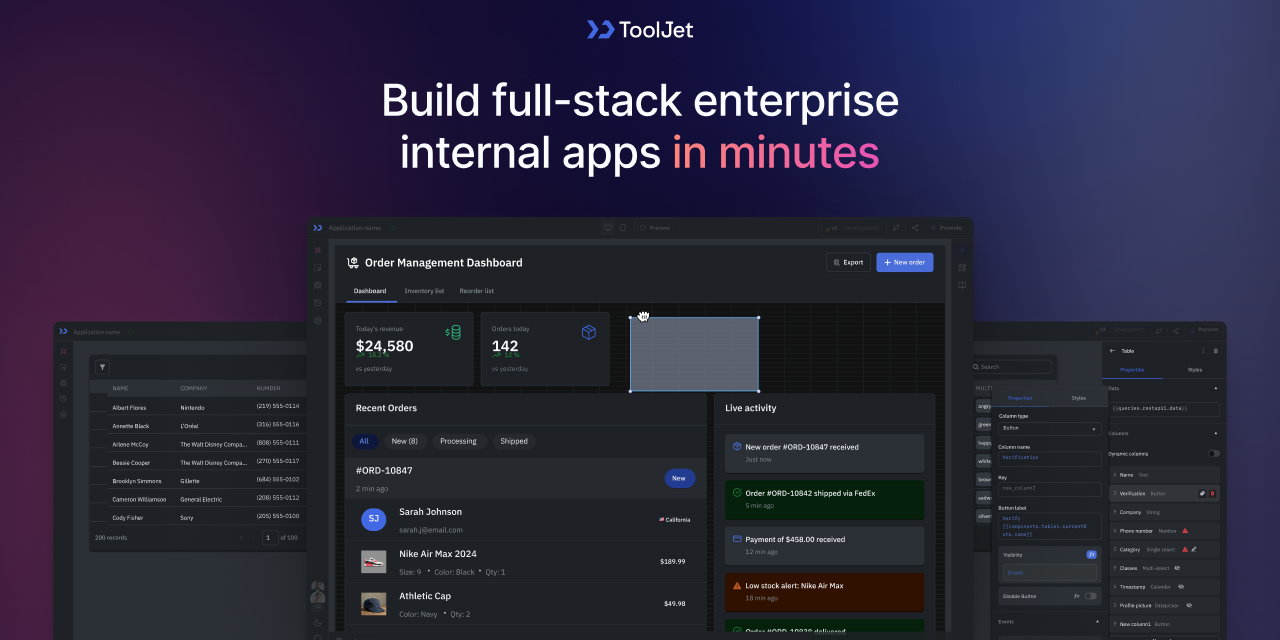
📜 License: AGPL-3.0 · 👤 By: startup
🎯 Time to value: 45 minutes
| ✓ Pros | ✗ Cons |
|---|---|
| Visual builder lowers the coding barrier | AGPL license can complicate commercial use |
| Self-hostable, so data stays in-house | Heavier to set up than a hosted SaaS tool |
| Large, active codebase | Best for internal tools, not customer-facing apps |
 GitHub
📜 License: MIT · 👤 By: individual
🎯 Time to value: 60 minutes
| ✓ Pros | ✗ Cons |
|---|---|
| Highly modular plugin architecture | AI-adjacent, not a purpose-built ML tool |
| MIT-licensed and lightweight | Smaller community and documentation |
| Flexible for custom agent runtimes | Steeper conceptual learning curve |
 GitHub
Top Models Today
👤 By: Moonshot AI · 🎯 Task: image-text-to-text
📐 Size: large mixture-of-experts
| ✓ Pros | ✗ Cons |
|---|---|
| Frontier-class multimodal performance | Very large; needs serious hardware to run |
| Openly downloadable | "Modified MIT" adds some usage conditions |
| Strong reasoning and image understanding | Exact parameter count not published |


👤 By: MiniMax · 🎯 Task: image-text-to-video
📐 Size: video generation model
| ✓ Pros | ✗ Cons |
|---|---|
| Very high adoption and community support | Custom license, check terms before commercial use |
| Image-plus-text control over output | Video generation is compute-heavy |
| Open weights | Short clip lengths typical of the class |


👤 By: DeepSeek · 🎯 Task: text-generation
📐 Size: mixture-of-experts (Flash tier)
| ✓ Pros | ✗ Cons |
|---|---|
| Fast and inexpensive to run | Flash tier trades some quality for speed |
| MIT-family license is business-friendly | License inferred from family, confirm on card |
| Strong general text performance | Not multimodal |

👤 By: NVIDIA · 🎯 Task: text-generation
📐 Size: 30B total / 3B active (Mixture of Experts, MoE), NVFP4 quant
| ✓ Pros | ✗ Cons |
|---|---|
| Very efficient active-parameter design | Best performance tied to NVIDIA hardware |
| Compact 4-bit quantized release | Custom NVIDIA license terms |
| Good speed-to-quality ratio | Newer, smaller ecosystem than Qwen/Llama |

👤 By: community (meta-models) · 🎯 Task: image-text-to-text
📐 Size: 30B
| ✓ Pros | ✗ Cons |
|---|---|
| Fully permissive Apache-2.0 license | Less well-known than major-lab models |
| Handles images and text | 30B still needs a strong GPU |
| Good balance of size and capability | Limited public benchmark data |

👤 By: Alibaba Qwen · 🎯 Task: text-generation
📐 Size: 2.4T total / ~95B active (MoE)
| ✓ Pros | ✗ Cons |
|---|---|
| Frontier-scale capability | Enormous hardware requirements |
| Efficient active-parameter design | Low downloads - few can actually run it |
| From the leading open-model family | Custom license terms |

AI Launches Today
🏷 Category: Productivity / AI
 Product Hunt
 Product Hunt
Snapshot
| Provider | Model | Input $/1M | Output $/1M | Context |
|---|---|---|---|---|
| Anthropic | Claude Opus 4.8 | $5.00 | $25.00 | 1M tokens |
| OpenAI | GPT-5.6 Sol | $5.00 | $30.00 | rises to $10 / $45 at long context |
| Gemini 3.7 Flash | $0.75 | $3.75 | ~1M tokens | |
| Groq | Kimi K2 (hosted) | $1.00 | $3.00 | ~128K tokens |
What this means: The gap between premium and budget tiers is enormous. Google's Gemini 3.7 Flash costs roughly one-seventh of the flagship models on output, and its promo pricing (through the end of 2026) is set to roughly double on January 1, 2027. Groq competes on cheap, fast hosting of open models. For most everyday tasks, a budget tier is far more than adequate; the flagship prices are for the hardest reasoning and coding work.
Pricing note: official API pricing pages for OpenAI, Groq, and Anthropic's API were not directly accessible this run; figures are sourced from current third-party pricing aggregators and may lag official changes. Batch processing and prompt caching can cut these costs by 50-90%.
SPADE: Speculative Decoding for Precise and Low-Cost Distributed Edge-Cloud Inference
Key finding: It cuts cloud model calls by 76% with zero loss in accuracy on standard benchmarks.
Why practitioners should care: For any team deploying AI at scale, this is a concrete, retraining-free way to slash cloud inference cost and latency by pushing the cheap part of the work onto edge devices.


Member discussion