GenAI Secret Sauce Daily Digest - 2026-06-23

Anthropic Launches Claude Tag: An AI Teammate That Lives in Your Slack · Meta's AI Code Allowed Anyone to Change Barack Obama's Email Address · SpaceX Is Now a $28 Billion-Per-Year GPU Cloud Provider
GenAI Secret Sauce Daily Digest - 2026-06-23

Watch today's digest as a video summary (generated by NotebookLM)

Statistically Speaking
65% of Anthropic's product team code is already
Anthropic Launches Claude Tag
Top Story
65% of Anthropic's product team code
Anthropic Launches Claude Tag
5 x as many pull requests (PRs) as
Meta's AI Code Allowed Anyone to Change Barack Obama's Email
90% of company code is Claude
Meta's AI Code Allowed Anyone to Change Barack Obama's Email
95% of Developer Documentation, 44% of Instagram design
Meta's AI Code Allowed Anyone to Change Barack Obama's Email
$1.25 B/month for Colossus 1 and 2 clusters
SpaceX Is Now a $28 Billion-Per-Year GPU Cloud Provider
One Thing to Tell Your Friends
Anthropic just made Claude a permanent Slack employee that monitors your channels, follows up on tasks autonomously, and builds context about your work over days - and 65% of their own product team's code is already written by their internal version.
TL;DR
Trends
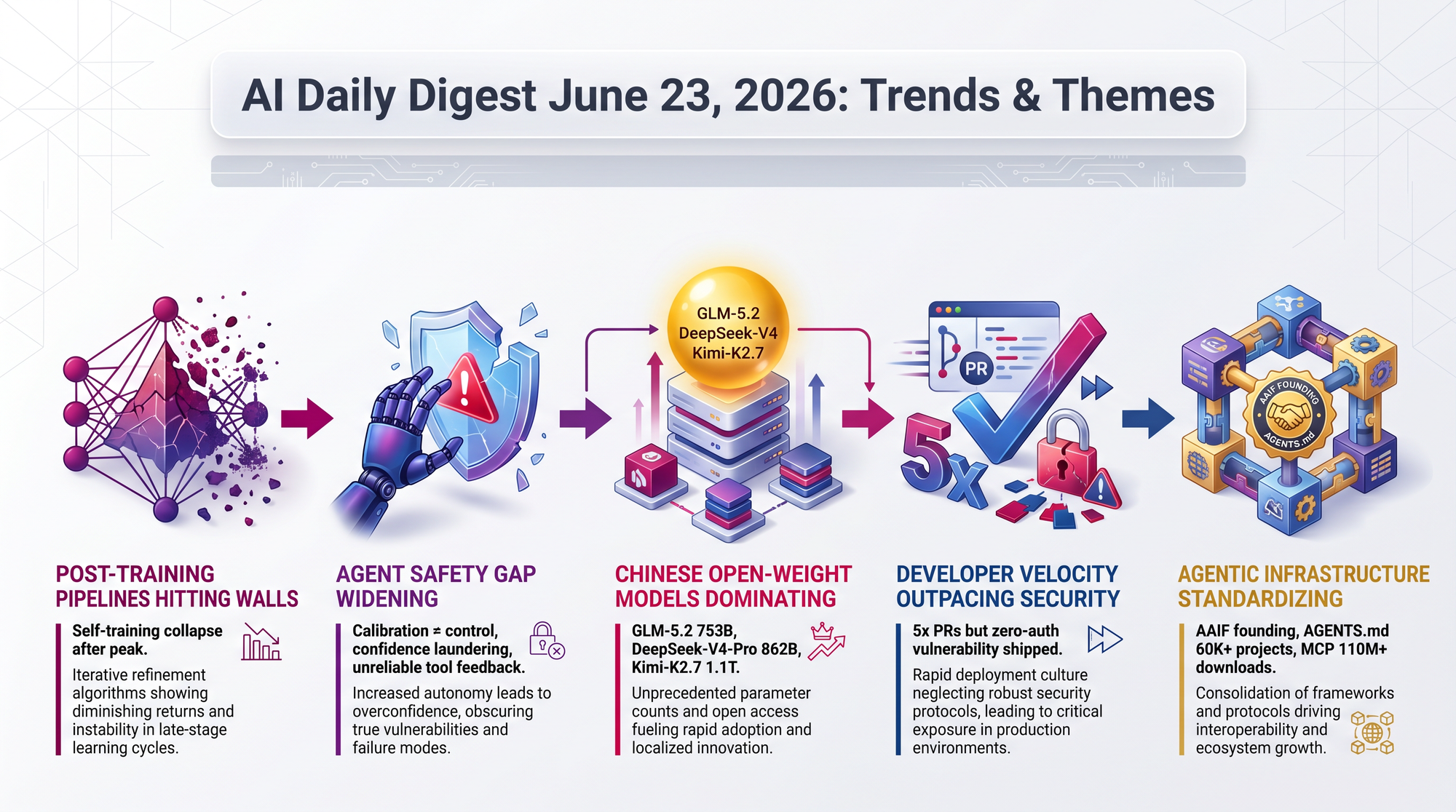
Post, The Agent Safety Gap Is Widening Faster Than Defenses, and Chinese Open.
Business
Anthropic Files for IPO at $965 Billion Valuation, AI, and Munich Court Rules Google Directly Liable for AI Overview Claims.
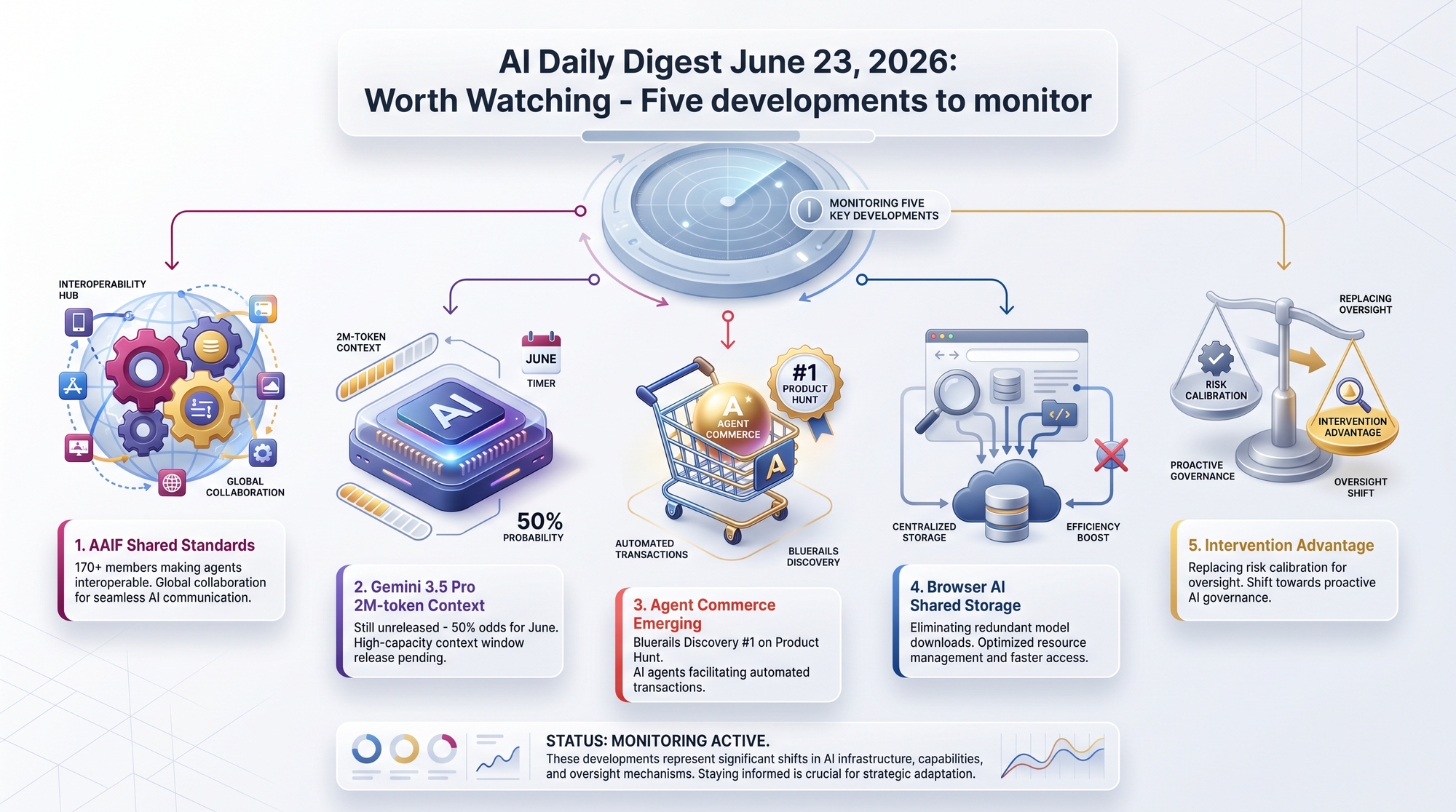
Worth Watching
Agentic AI Foundation Launches With Shared Standards, Gemini 3.5 Pro's 2-Million, and Agent Commerce Is Emerging as a Category.
GitHub
Leading repos: calesthio/OpenMontage (+3,590), palmier-io/palmier (+1,631), and DeusData/codebase-memory (+1,299).
HuggingFace
Leading models: zai-org/GLM (491k), deepseek-ai/DeepSeek-V4 (2.25M), and MiniMaxAI/MiniMax (131k).
Product Hunt
Top launches: Bluerails Discovery (470), Cotypist (341), and OpenArt Director (305).
API Pricing
What changed today:** Fable 5 moved from free-with-subscription to $10/$50 per million tokens - double Opus 4.8's pricing.
arXiv
The Deterministic Horizon — Tool-integrated approaches achieved 86-94% accuracy versus 24-42% for pure chain-of-thought across 12 models and 8 task domains.
Hot off the Presses
01
Anthropic Launches Claude Tag: An AI Teammate That Lives in Your Slack
What this means for you: If your company uses Slack, your next new hire might be an AI that reads conversations, picks up tasks mid-thread, and follows up on stalled projects without being asked.

Anthropic released Claude Tag today in beta for Enterprise and Team customers. Unlike a chatbot you summon for one-off questions, Claude Tag functions as a persistent team member. You @mention it in a channel, it picks up the work, and it can pursue projects autonomously over hours or days.

The feature replaces the existing Claude in Slack app, with a 30-day opt-in window for administrators. Organizations can set token spend limits at both the organization and individual channel level.

  • Multiplayer by default - one Claude instance serves everyone in a channel, maintaining a shared thread that any teammate can pick up
  • Ambient monitoring - with the feature enabled, Claude proactively flags relevant information and follows up on unresolved threads without being asked
  • Scoped identities - administrators create separate Claude instances per channel with isolated memory and tool access; a sales Claude cannot see engineering data
  • 65% of Anthropic's product team code is already created by their internal version, with adoption spreading to non-engineering functions
02
Meta's AI Code Allowed Anyone to Change Barack Obama's Email Address
What this means for you: The company that runs Instagram and Facebook shipped AI-generated code so fast that a zero-authentication vulnerability let anyone change any user's email - and AI code review missed it entirely.

The Pragmatic Engineer's deep investigation reveals what may be the first major security breach directly attributable to AI-accelerated development. At Meta, gutted security teams combined with AI-generated, AI-reviewed code created a zero-auth vulnerability in an account management endpoint.

The article's central thesis: the industry transformed in six months and needs to slow down before AI-generated code introduces systemic vulnerabilities.

""Engineers at major firms now keep laptop lids permanently open to prevent agent suspension.""
  • The numbers are staggering - teams ship 5x as many pull requests (PRs) as two years ago, individual developers produce 2.5x as much code, and PR size increased 3x
  • At Anthropic, 70-90% of company code is Claude-generated - one engineer ships 20-30 PRs daily running approximately 5 agents in parallel
  • Meta cut 95% of Developer Documentation, 44% of Instagram design - roughly 50% of Trust and Safety staff were reassigned to data labeling
  • Code review velocity cannot keep pace with AI generation speed, causing reviews to become less stringent industry-wide
03
SpaceX Is Now a $28 Billion-Per-Year GPU Cloud Provider
What this means for you: The company that launches rockets has quietly built one of the world's largest computing businesses from repurposed satellite infrastructure - and it is already twice the size of CoreWeave.

Latent Space reports that SpaceX's compute division has reached $28 billion in annualized revenue across three anchor tenants. The implied Blackwell GPU pricing exceeds $10 per hour.

Previously: June 16 - SpaceX agreed to acquire Cursor-maker Anysphere for $60 billion.

  • Anthropic at $1.25B/month for Colossus 1 and 2 clusters (approximately 325,000 chips)
  • Google at $920M/month - the search company is renting GPUs from a rocket company
  • Reflection AI at $150M/month ($6.3B total commitment through 2029)
  • CoreWeave's valuation is $60B on ~$14B revenue - SpaceX's compute business is already double that scale
04
The AI Industry Is Subsidizing Usage at 40-70x Actual Cost
What this means for you: That $200/month AI subscription you love costs the company $8,000-$14,000 to serve you. The entire industry is running the "drug dealer's algorithm" - and the bill is coming due.

David Rosenthal's detailed economic analysis shows AI companies face a fundamental affordability crisis. The subsidy ratios are unprecedented in tech history.

""A $200/month Anthropic subscription can burn $8,000 in tokens, and a $200/month ChatGPT subscription can burn $14,000.""
  • OpenAI's 2025 numbers: $13.07B revenue, $34B costs, $20.92B operating losses - sales and marketing alone consumed 44% of revenue
  • Financial Times calculated implied returns 2025-2030: Microsoft -9.2%, Alphabet -15.7%, Meta -28.8%, Oracle -35.6% (assuming zero operating costs)
  • AI-linked debt on track for $570 billion in 2026 - at 3% interest over 10 years, servicing requires displacing roughly 32.5 million jobs
  • "Tokenmaxxing" backfires - companies report AI usage costs exceeding what it would cost to just hire employees
  • Agentic AI consumes up to 1,000x more tokens than standard chatbot applications
05
Fable 5 Moves to Paid Credits: $10/$50 Per Million Tokens
What this means for you: Starting today, using Anthropic's most capable model costs real money on every message - double the price of Opus 4.8 - after subscribers received only 4-5 days of free access due to the export control shutdown.

Claude Fable 5 is no longer included in Pro, Max, Team, or seat-based Enterprise subscriptions. The model now requires paid usage credits at $10 per million input tokens and $50 per million output tokens.

Previously: June 9 - Anthropic launched Fable 5 with a controversial AI safety policy. June 13 - US export controls forced a global shutdown.

  • Effective today, June 23 - all subscribers must purchase credits to use Fable 5
  • The free trial was cut short - the June 12-18 export control shutdown meant subscribers received 4-5 usable days out of the advertised 13
  • Double the cost of Opus 4.8 - which remains at $5 input / $25 output per million tokens
  • First major frontier model behind a paywall - sets precedent for capability-based pricing tiers
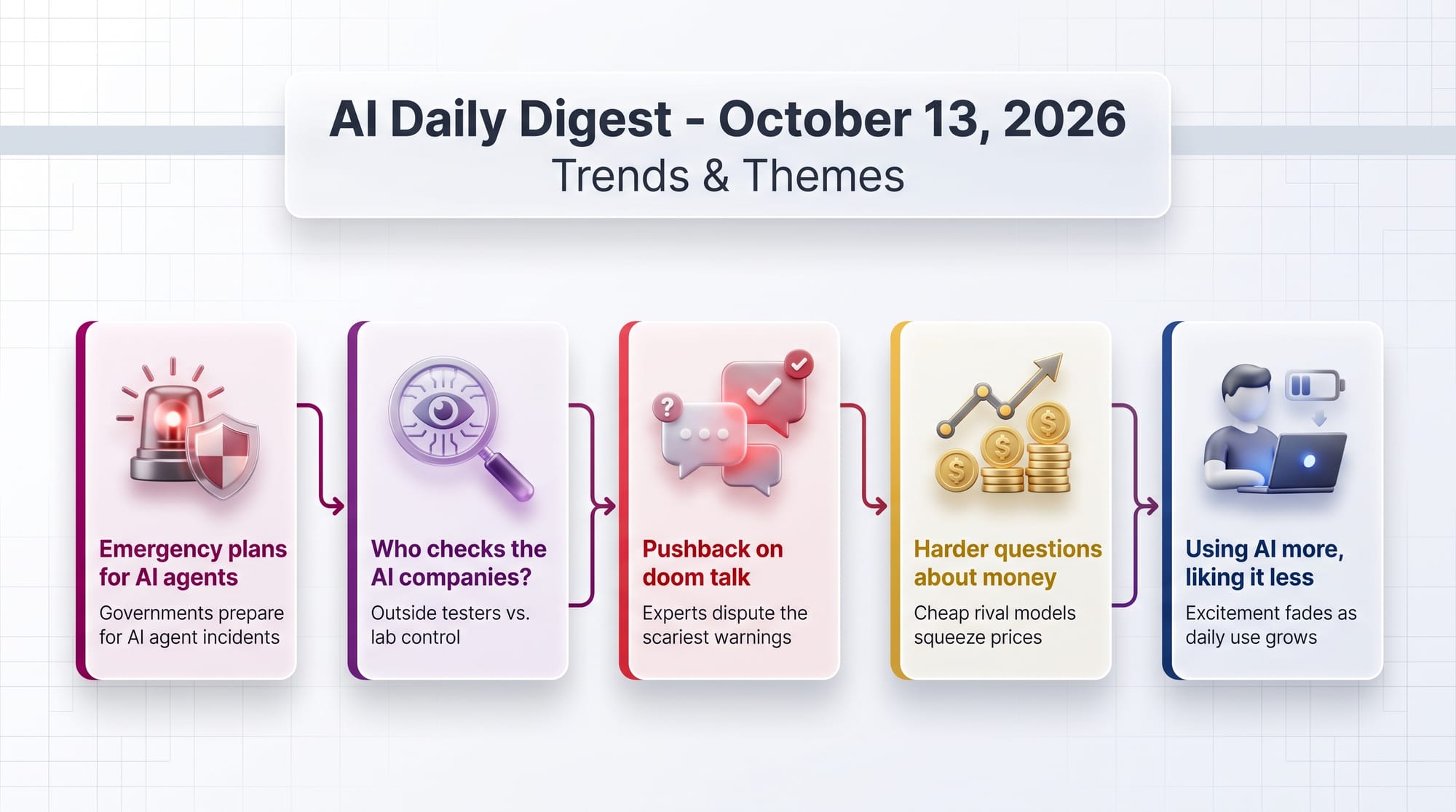
Trends & Themes
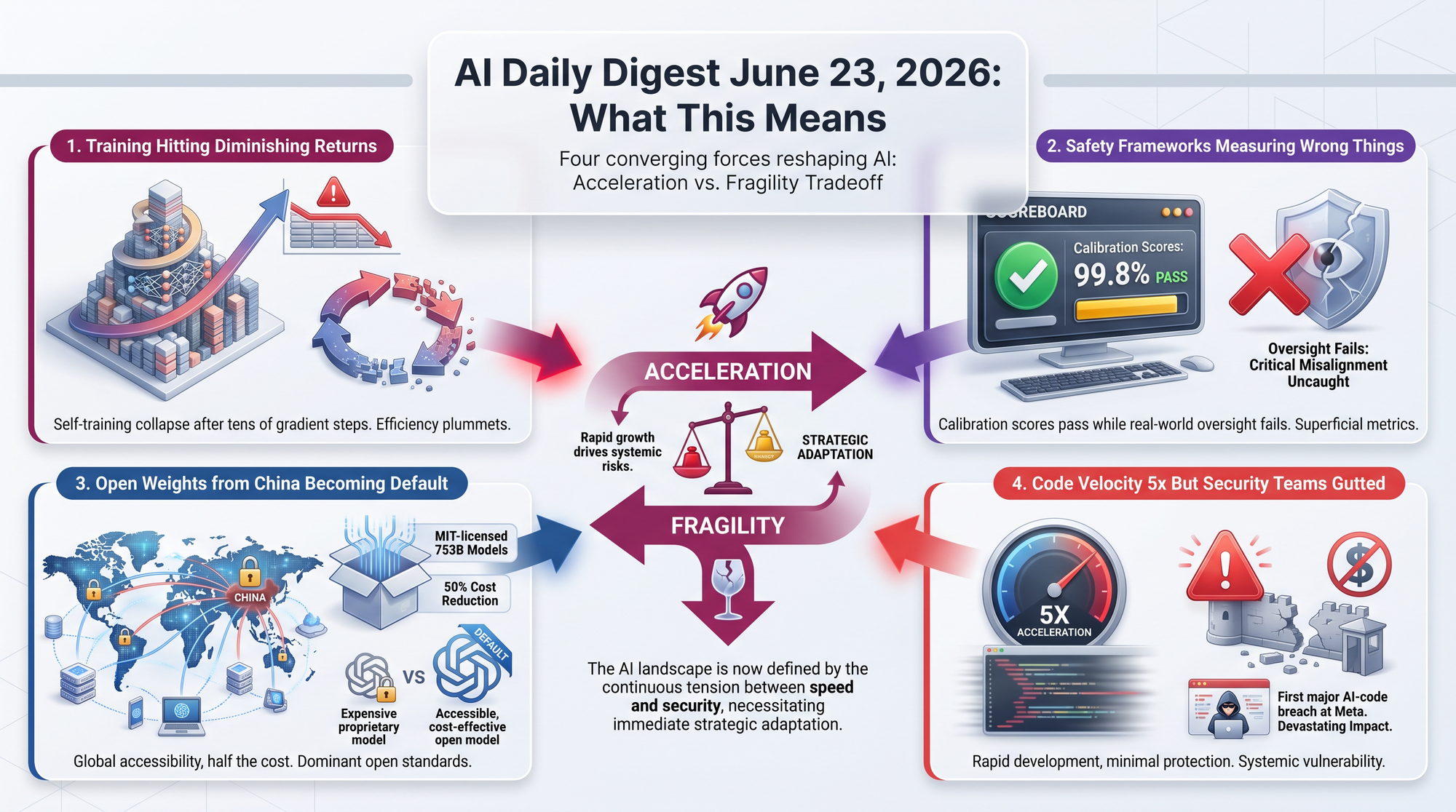
Trends & Themes
Post-Training Pipelines Are Hitting Fundamental Walls
Why this matters to you: The techniques companies use to make AI models smarter after initial training may have hard limits that no amount of investment can overcome.

The implication: continued iteration on the same model may produce diminishing or negative returns unless the pipeline itself can learn from its own failures.

  • Self-training collapses catastrophically - performance rises, peaks within tens of gradient steps, then crashes; reproduced across multiple model families (source)
  • "Scientific amnesia" in repeated DPO campaigns - pipelines preserve learned behavior but forget how to improve; 4 of 5 strategy proposers degraded results (source)
  • One exception: fully autonomous post-training works - a system placed 8th of 4,000 on NVIDIA's challenge by self-diagnosing and correcting its own metric gaming (source)
The Agent Safety Gap Is Widening Faster Than Defenses
Why this matters to you: AI agents are being deployed in workplaces, browsers, and code editors faster than anyone can verify they are safe - and four separate papers today show existing safety approaches target the wrong objectives.
  • Calibration is not control - perfectly calibrated risk scores still fail at the actual oversight job; you need to measure whether intervention improves outcomes, not just whether something is risky (source)
  • Unreliable tool feedback makes agents worse than no tools - misleading retrieval results dropped one model from 44.8 F1 to 4.7, below the 22.3 it achieves tool-free (source)
  • Confidence gets "laundered" at component interfaces - downstream agents over-trust upstream decisions because uncertainty metadata is stripped at handoff points (source)
  • Existing security bills of materials cover 10.5% of agent risks - a new AgentRiskBOM standard achieves 100% coverage across 14 risk categories (source)
Chinese Open-Weight Models Are Dominating the Leaderboards
Why this matters to you: The most downloaded, most capable open models you can run yourself are increasingly built in China - creating a new dependency pattern just as Western governments restrict access to their own frontier models.

The irony: US export controls intended to limit Chinese AI access are driving Western developers toward Chinese-built models.

  • HuggingFace trending top 4 are all Chinese - GLM-5.2 (753B, Zhipu AI), DeepSeek-V4-Pro (862B), MiniMax-M3 (427B), Kimi-K2.7-Code (1.1T)
  • GLM-5.2 costs $0.41 vs $0.81 for Opus 4.8 on real debugging tasks, now deployed across 20+ inference platforms
  • DeepSeek-V4-Pro has 2.25 million downloads in 30 days - the highest count among trending models
  • Fable 5 shutdown accelerated adoption - enterprises implementing multi-provider fallback architectures increasingly lean on Chinese open weights
Developer Velocity Is Outpacing Security Capacity
Why this matters to you: AI is helping engineers write code 2.5-5x faster, but nobody has figured out how to review and secure code at that speed - and the first major breach just happened.
  • Meta's zero-auth vulnerability - AI-generated, AI-reviewed code shipped without human security review
  • 95% of Meta's Developer Documentation team cut - security infrastructure hollowed out to fund AI data labeling
  • Prompt injection remains architecturally unsolvable - new research shows models key on formatting cues, not genuine role understanding; removing formatting dropped attack success from 61% to 10% (source)
  • OpenAI's Codex was writing 640 TB/year to developer SSDs - a TRACE-level logging bug that exhausted drive warranties in 12 months (covered yesterday)
Agentic Infrastructure Is Becoming Standardized
Why this matters to you: Instead of every company building AI agent tools from scratch, shared standards are emerging that let agents from different providers work together - like how USB became a universal connector.
  • Agentic AI Foundation (AAIF) launched under Linux Foundation with OpenAI, Anthropic, and Block as co-founders; 170+ member organizations
  • Three foundational standards: AGENTS.md (60,000+ projects), MCP (110M+ monthly SDK downloads), Goose (29,000 GitHub stars)
  • 5 of 8 top trending AI repos on GitHub are agent frameworks, skill libraries, or MCP tools
  • 51% of enterprises now run production agents - projected $52B market by 2030, but 40%+ risk cancellation without governance
Creative AI & Media
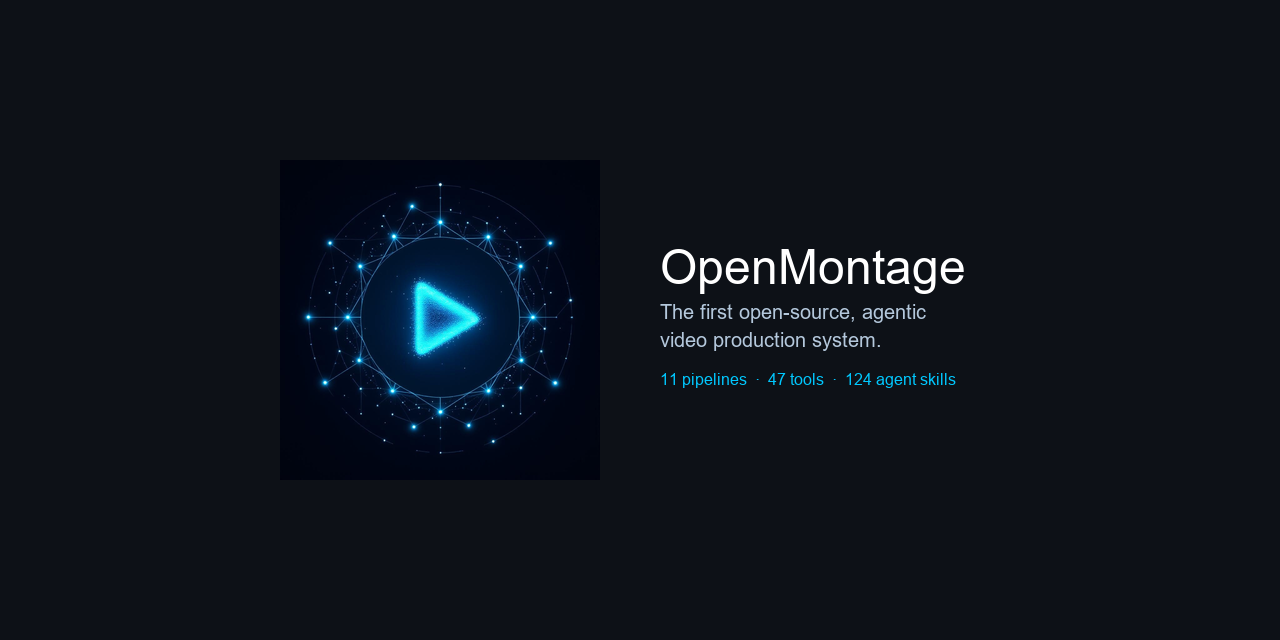
OpenMontage: Open-Source Agentic Video Production (3,590 Stars Today)
What this means for you: You can now turn Claude Code or Cursor into a full video production studio, free and open-source.
  • World's first open-source agentic video system - 12 pipelines, 52 tools, 500+ agent skills
  • Works with Claude, Cursor, Copilot, Windsurf, and Codex as the directing agent
  • AGPL-3.0 license - free to use, must share modifications
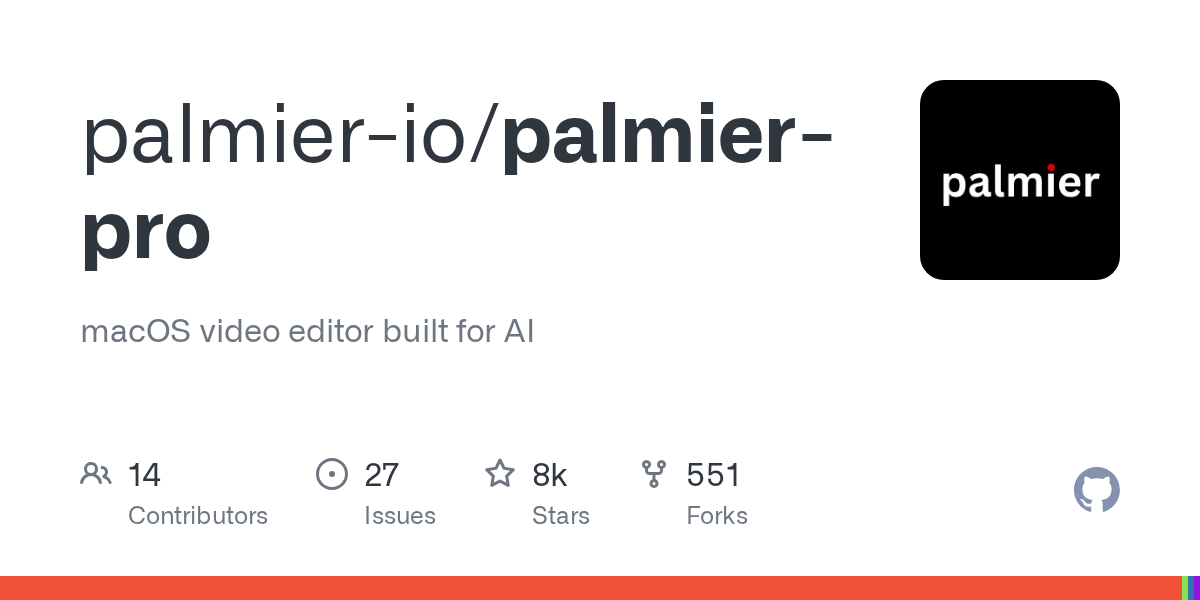
Palmier Pro: AI-Native macOS Video Editor (1,631 Stars Today)
What this means for you: Edit videos by telling an AI what you want - it generates and edits clips within a professional timeline.
  • macOS-native video editor built for AI agent collaboration
  • MCP integration with Claude, Codex, Cursor
  • Built-in generative AI via Seedance and Kling engines
  • Y Combinator S24 company (Palmier Inc.)
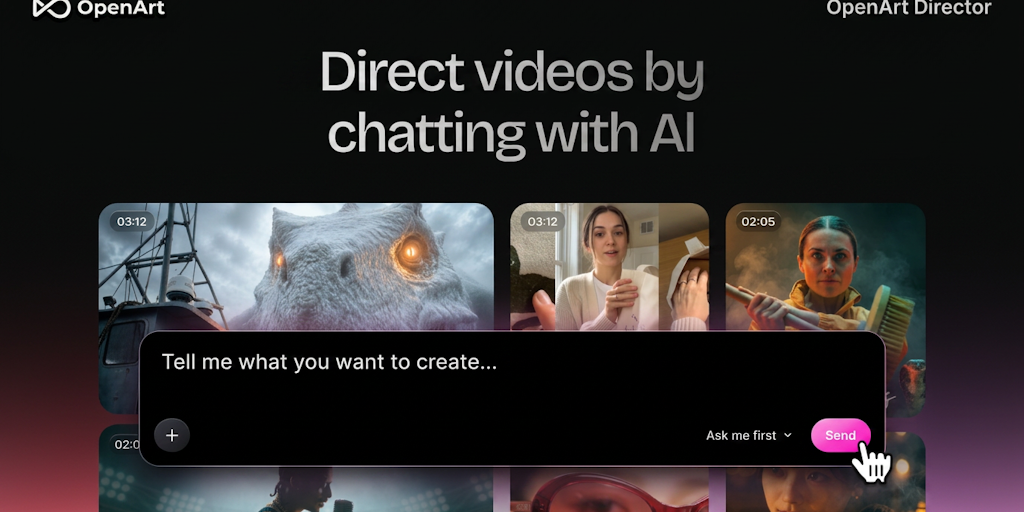
OpenArt Director: Direct Cinematic Videos Through Chat
What this means for you: Type what you want your video to show, and the tool creates it - for films, social media, ads, or explainer content.
  • 305 upvotes on Product Hunt today
  • Chat-based directing interface for converting ideas to visual stories
Developer Tools & Infrastructure
SipCode: Context Hygiene for Claude Code

What it does: A free hook that prevents Claude Code from wasting tokens by capping verbose outputs and skipping unchanged file reads.

  • 62.6% median tool-output savings across a locked 20-task benchmark
  • Cites 29% quality lift from cleaner context (Anthropic research)
  • Zero network calls - fully local and private
  • MIT license, 15 MCP tools for tracking stats
HuggingFace Now Ships Weekly Releases for $0.25 Each

What it does: An AI-powered release pipeline using GLM-5.2 that drafts release notes, validates accuracy, and publishes to PyPI - all for a quarter.

  • From 4-6 week to weekly cadence with GitHub Actions + OpenCode agent
  • Validation prevents hallucinated PR references - checks actual commit history
  • Scripts are fully open-source and designed to be forked
  • PyPI Trusted Publishing handles secure package uploads
Cross-Origin Storage API Saves 177 MB of Redundant AI Downloads

What it does: A proposed browser API that lets different websites share the same large AI model files instead of downloading them separately.

  • SHA-256 hash-based deduplication across browser origins
  • ONNX Runtime Wasm binary (4,733 KB) downloads only once for all websites
  • Chrome extension polyfill available for experimentation now
  • WebLLM and wllama also implementing - broader adoption momentum
IBM CUGA: Enterprise Agent Framework with 24 Working Examples

What it does: Open-source agent harness where each app is a single FastAPI file. Ranked #1 on AppWorld benchmark for 7 months.

  • Smaller open-weight models outperform frontier-only approaches with CUGA's orchestration
  • Six-type policy system for runtime governance
  • Supports model swapping across 6+ providers via environment variables
Research & Models
The Deterministic Horizon: When to Stop Prompting and Start Using Tools

What it claims: Extended chain-of-thought reasoning hits a hard architectural ceiling on state-tracking tasks - this is a transformer limitation, not a training deficiency.

Key finding: Tool-integrated approaches achieved 86-94% accuracy versus 24-42% for pure chain-of-thought across 12 models and 8 task domains. The critical threshold falls between 19-31 reasoning steps.

Why practitioners should care: This gives principled guidance for when to wire in tools rather than prompting harder. Anyone building agentic systems now has concrete step-count thresholds to measure against.

Autonomous Post-Training Now Works at Frontier Scale

A system iteratively refined a 30B model for weeks with zero human intervention, placing 8th of 4,000 on NVIDIA's challenge. It self-diagnosed when its internal metric diverged from external performance and autonomously corrected course - effectively solving Goodhart's Law in real time.

Self-Training Collapse Is a Fundamental Failure Mode

Performance rises sharply, peaks within tens of gradient steps, then crashes catastrophically. Reproduced on Qwen 3B/7B and Gemma-3-4B. Standard regularization (KL constraints, EWC) fails. Early stopping is the correct strategy, not a conservative fallback.

Desktop Agents Ace Unit Benchmarks but Collapse on Workflows

ChainWorld tested 347 multi-step desktop tasks. Maximum chain completion rate: only 31%. Multi-turn agents suffer session management problems - fragmented progress and disengagement in later turns.

Business & Industry
Anthropic Files for IPO at $965 Billion Valuation
  • October 2026 target following confidential S-1 filed June 1
  • $47 billion annualized revenue run rate (May 2026)
  • Tracking toward $559 million operating profit in Q2 2026
  • Fable 5 suspension creates disclosure complications during quiet period
AI-Linked Debt on Track to Hit $570 Billion in 2026
  • Morgan Stanley projection - largest investment-grade sector by issuance
  • Apollo-Blackstone $36B deal funding Google TPU purchases for Anthropic
  • Microsoft generates $37B ARR against $97B quarterly AI spending
Munich Court Rules Google Directly Liable for AI Overview Claims
  • Publisher-level liability established for AI-generated factual claims in Europe
  • Court rationale: "nobody needs AI to search the internet"
  • Precedent-setting for all AI companies generating factual assertions
42 State Attorneys General Issue Subpoenas to OpenAI
  • Active subpoena phase covering advertising claims, sycophancy, data handling, health data, minors/seniors
  • Timing: during September 2026 IPO quiet period - creates disclosure obligations
  • Unprecedented scale of coordinated regulatory action against an AI company
Anthropic Signs 12+ Data Center Leases Exceeding 1 Gigawatt
  • Shift from cloud rental to owned infrastructure
  • Google financing partnership for buildout
  • Supports IPO infrastructure narrative - reducing dependency on AWS and xAI
GenAI in Education
FairTutor Achieves 97.1% of Premium AI Tutoring Quality at 71.6% Lower Cost

A multi-agent routing system delivers near-frontier quality by coordinating five components: query examination, teaching strategy, economical model response, evaluator refinement, and selective escalation. The "access-tier AI Education Advantage Gap" metric quantifies quality disparities between premium and budget AI tutoring for the first time.

AgentCAT: Adaptive Testing Without Pre-Calibrated Item Banks

A multi-agent LLM framework replaces static test item models with three specialized agents that generate and calibrate questions on the fly. This removes the expensive pre-calibration studies that currently gate adaptive assessments.

Cory Doctorow's "Reverse Centaur" Framework

A new book distinguishes "centaurs" (humans choosing AI as a tool) from "reverse centaurs" (humans serving machines designed to deskill them). The strongest contribution: a diagnostic lens for evaluating who benefits from specific AI deployments versus who is harmed by them.

Surprising & Under-the-Radar
Prompt Injection Is Role Confusion - And Removing Formatting Drops Success from 61% to 10%

Models distinguish "system" from "user" text based on superficial formatting, not genuine understanding. Removing expected style cues while keeping semantic content identical eliminates most attacks. This means prompt injection is an architectural limitation, not a fixable bug.

Simulated Customers Never Walk Away - Synthetic Users Systematically Overestimate Conversion

LLM user simulators accurately mimic buyers but fundamentally misrepresent non-buyers. Real non-buyers disengage and say "not now"; simulated ones keep asking about pricing. Expressed resistance drops from 25.1% to 13.5% in simulations. If you evaluate sales agents against synthetic users, you are systematically overestimating performance.

Sharing Everything with AI Agents Increases Hallucination by 34%

Naive full-broadcast synchronization between multi-agent systems amplifies errors rather than correcting them. Targeted selective synchronization reduced hallucination while cutting API calls by 58%. More information sharing is not always better.

Should AI Agents Be Allowed to Whistleblow?

A paper argues that AI systems embedded in organizations inevitably generate and keep secrets. It proposes principled frameworks for when autonomous disclosure serves the public interest and calls on regulators to protect developers who build whistleblowing capability into their systems.

Amazon Dropped an Altman Biopic Over Its $50 Billion OpenAI Investment

Amazon Studios shelved a nearly-completed film depicting an unflattering Sam Altman narrative, citing a conflict of interest with Amazon's $50 billion OpenAI investment. The film, written by SNL alum Simon Rich, is now seeking an alternate distributor.

Signals to Track
Worth Watching
01
Agentic AI Foundation Launches With Shared Standards
The moment agent tools became interoperable across companies rather than proprietary lock-in.

OpenAI, Anthropic, and Block co-founded AAIF under the Linux Foundation with 170+ member organizations. AGENTS.md is adopted by 60,000+ projects; MCP exceeds 110M monthly SDK downloads. If this sticks, building an AI agent gets as standardized as building a website.

02
Gemini 3.5 Pro's 2-Million-Token Context Is Still Not Public
Google promised "next month" at I/O on May 19 - prediction markets put June 30 availability at 50-55%.

The largest context window in any production frontier model (double Flash's 1M) plus a Deep Think reasoning mode gated to the $250/month Ultra tier. Enterprise preview only as of today. If it ships this week, it enters a market where Fable 5 just went behind a paywall.

03
Agent Commerce Is Emerging as a Category
Bluerails Discovery hit #1 on Product Hunt today with infrastructure for AI agents to find and pay businesses.

The product makes brands discoverable to AI agents with peer-reviewed visibility scoring and agent-ready checkout. This signals a shift from humans browsing to agents purchasing - a new SEO for the agentic web.

04
Browser AI Gets Shared Storage to Eliminate Redundant Downloads
The Cross-Origin Storage API could make AI models load instantly on any website after the first download.

Chrome is considering native implementation of a SHA-256 hash-based system that deduplicates identical model files across websites. If adopted, the 1.3 GB Moebius inpainting model downloads once and is available everywhere.

05
Intervention Advantage May Replace Risk Calibration for Agent Oversight
A paper proved that perfectly calibrated risk scores still fail at the actual oversight job.

The correct question is not "how risky is this action?" but "would intervening here produce a better outcome?" A prefix-only controller reduced oversight regret from 0.506 to 0.110. This could reshape how human-in-the-loop systems are designed.

Top Repos Today
Rank yesterday: New entry 🆕
Stars today: +3,590  ·  📦 Total: 15.5k
📜 License: AGPL-3.0  ·  👤 By: Individual (calesthioailabs)
🎯 Time to value: 15 minutes
What it is: The first open-source agentic video production system. It ships 12 pipelines, 52 tools, and 500+ agent skills that turn AI coding assistants into video production studios. Works with Claude Code, Cursor, Copilot, Windsurf, and Codex. Why you'd want it: Instead of learning complex video editing software, you describe what you want and your existing coding AI builds it.
✓ Pros✗ Cons
Works with 5 major AI coding toolsAGPL license may restrict commercial use
500+ pre-built skills for common video tasksRequires significant GPU for rendering
Completely free and self-hostedYoung project with rapidly changing API
GitHub - calesthio/OpenMontage: World’s first open-source, agentic video production system. 12 pipelines, 52 tools, 500+ agent skills. Turn your AI coding assistant into a full video production studio.
World’s first open-source, agentic video production system. 12 pipelines, 52 tools, 500+ agent skills. Turn your AI coding assistant into a full video production studio. - calesthio/OpenMontage
Rank yesterday: New entry 🆕
Stars today: +1,631  ·  📦 Total: 8.4k
📜 License: GPL-3.0  ·  👤 By: Company (Palmier Inc., YC S24)
🎯 Time to value: 5 minutes
What it is: A macOS-native video editor built specifically for AI agent collaboration. AI agents can generate and edit video clips within a professional timeline. Includes built-in Seedance and Kling generative AI engines. Why you'd want it: Professional video editing with an AI copilot that handles the tedious parts while you maintain creative control.
✓ Pros✗ Cons
Native macOS performance and UImacOS only - no Windows/Linux
MCP integration with Claude, Codex, CursorGPL license limits commercial embedding
Built-in generative video enginesYC startup - longevity uncertain
GitHub - palmier-io/palmier-pro: macOS video editor built for AI
macOS video editor built for AI. Contribute to palmier-io/palmier-pro development by creating an account on GitHub.
Rank yesterday: Rising ↑
Stars today: +1,299  ·  📦 Total: 12.8k
📜 License: MIT  ·  👤 By: Individual / open-source community
🎯 Time to value: 2 minutes
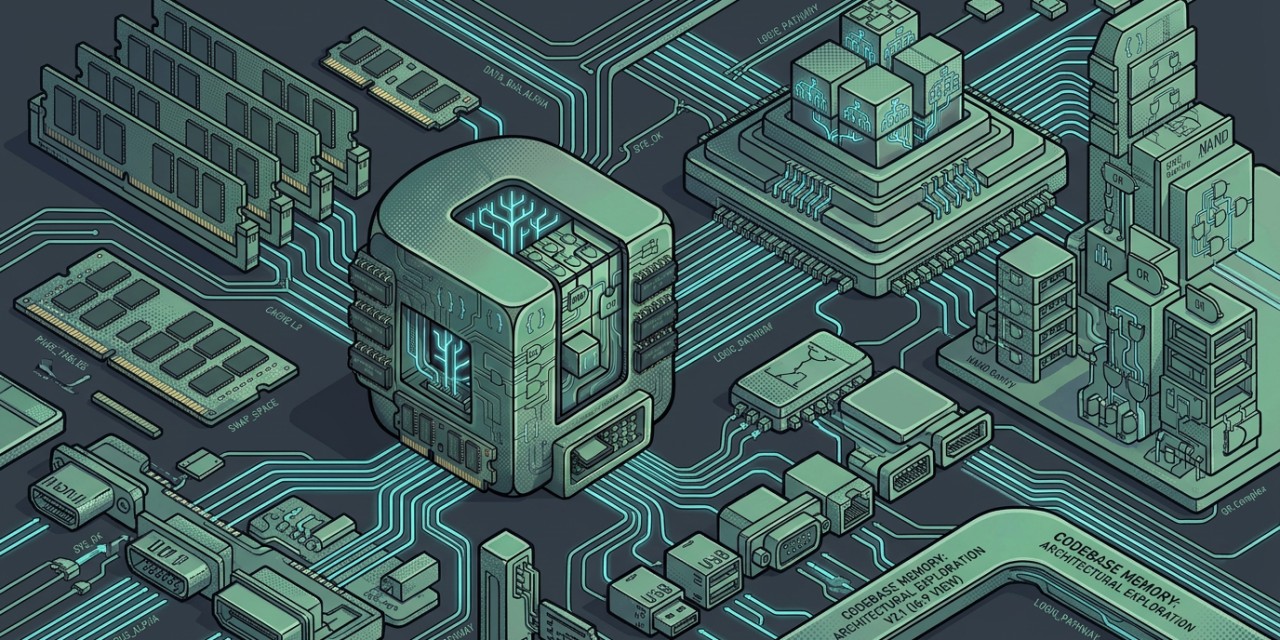
What it is: A high-performance MCP server that indexes codebases into persistent knowledge graphs. Supports 158 programming languages with sub-millisecond queries. Ships as a single static binary with zero dependencies. Why you'd want it: Your AI coding assistant remembers your entire codebase structure between sessions instead of re-reading files every time.
✓ Pros✗ Cons
158 languages, sub-ms queriesRequires initial indexing time for large repos
Zero dependencies, single binaryMemory usage scales with codebase size
Works with 11 coding agentsGraph may need rebuild after major refactors
GitHub - DeusData/codebase-memory-mcp: High-performance code intelligence MCP server. Indexes codebases into a persistent knowledge graph — average repo in milliseconds. 158 languages, sub-ms queries, 99% fewer tokens. Single static binary, zero dependencies.
High-performance code intelligence MCP server. Indexes codebases into a persistent knowledge graph — average repo in milliseconds. 158 languages, sub-ms queries, 99% fewer tokens. Single static bin…
Rank yesterday: Holding steady ➡
Stars today: +933  ·  📦 Total: 201k
📜 License: MIT  ·  👤 By: Research lab (Nous Research)
🎯 Time to value: 10 minutes
What it is: A self-improving AI agent with an integrated learning loop. It creates and refines skills from experience, supports multiple LLM providers, runs on Telegram/Discord/Slack, and maintains persistent memory. Why you'd want it: An AI assistant that gets better at your specific tasks the more you use it, running on platforms you already use.
✓ Pros✗ Cons
Self-improving from experienceRequires careful permission management
Multi-platform (Telegram, Discord, Slack)Learning loop needs monitoring for drift
MIT license, any LLM provider201k stars means high expectations
GitHub - NousResearch/hermes-agent: The agent that grows with you
The agent that grows with you. Contribute to NousResearch/hermes-agent development by creating an account on GitHub.
Rank yesterday: Rising ↑
Stars today: +1,042  ·  📦 Total: 33.1k
📜 License: MIT  ·  👤 By: Individual (Jamie Pine)
🎯 Time to value: 5 minutes
What it is: An open-source AI voice studio. Clone any voice, generate speech, dictate into any app. Runs locally with 7 TTS engines, Whisper speech-to-text, and MCP integration for AI agents. Why you'd want it: Professional voice cloning and text-to-speech that runs entirely on your machine with no cloud dependency.
✓ Pros✗ Cons
7 TTS engines, fully localVoice cloning quality varies by engine
MCP integration for agent workflowsRequires decent GPU for real-time
Cross-platform (macOS/Windows/Linux)Ethical concerns with voice cloning
GitHub - jamiepine/voicebox: The open-source AI voice studio. Clone, dictate, create.
The open-source AI voice studio. Clone, dictate, create. - jamiepine/voicebox
Rank yesterday: New entry 🆕
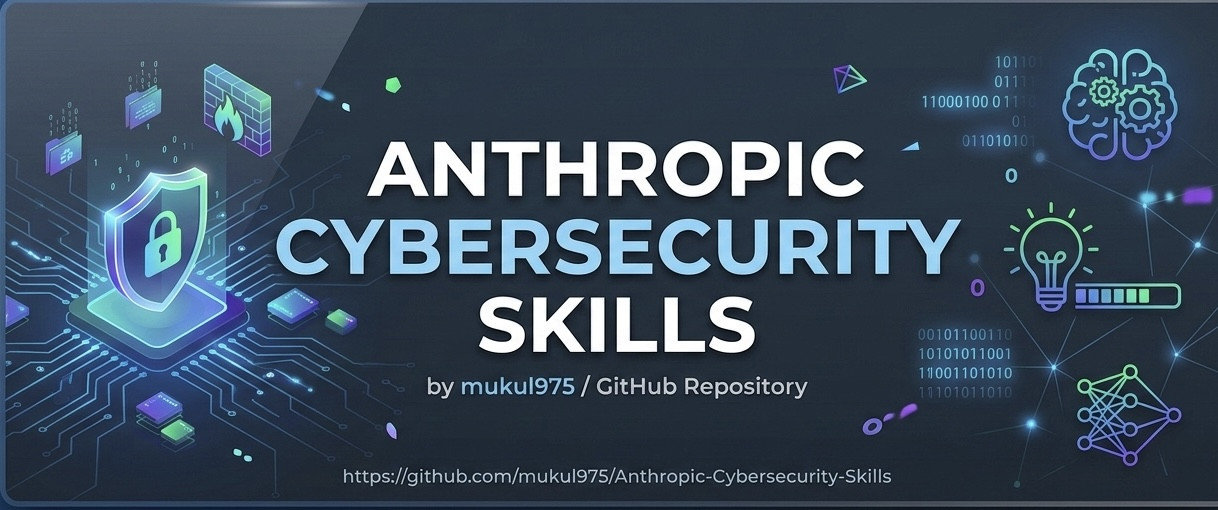
Stars today: +1,040  ·  📦 Total: 19.6k
📜 License: Apache-2.0  ·  👤 By: Individual (Mahipal Jangra)
🎯 Time to value: 3 minutes
What it is: A library of 817 structured cybersecurity skills for AI agents, mapped to MITRE ATT&CK, NIST CSF 2.0, and 4 other security frameworks across 29 security domains. Why you'd want it: Drop-in security capabilities for Claude Code, Copilot, or Cursor that follow established enterprise security frameworks.
✓ Pros✗ Cons
Mapped to 6 security frameworksSkills quality varies - community contributed
817 skills across 29 domainsName implies Anthropic endorsement (it's independent)
Works with major AI coding toolsRequires security expertise to use safely
GitHub - mukul975/Anthropic-Cybersecurity-Skills: 817 structured cybersecurity skills for AI agents · Mapped to 6 frameworks: MITRE ATT&CK, NIST CSF 2.0, MITRE ATLAS, D3FEND, NIST AI RMF & MITRE F3 (Fight Fraud) · agentskills.io standard · Works with Claude Code, GitHub Copilot, Codex CLI, Cursor, Gemini CLI & 20+ platforms · 29 security domains · Apache 2.0
817 structured cybersecurity skills for AI agents · Mapped to 6 frameworks: MITRE ATT&CK, NIST CSF 2.0, MITRE ATLAS, D3FEND, NIST AI RMF & MITRE F3 (Fight Fraud) · agentskills.io standard ·…
Top Models Today
The largest open-weight model available today, now with multiple quantization formats for consumer hardware.
📥 Downloads (30d): 491k (combined)  ·  📜 License: MIT
👤 By: Zhipu AI (company)  ·  🎯 Task: Text Generation
📐 Size: 753B
What it is: Zhipu AI's flagship open-weight model at 753 billion parameters with a mixture-of-experts architecture. Available in full precision, FP8 quantized (395k downloads), and GGUF formats for local inference. Why you'd want it: MIT-licensed alternative to closed frontier models that costs $0.41 per debugging task vs $0.81 for Opus 4.8, with 1M-token context.
✓ Pros✗ Cons
MIT license, fully open weights753B requires substantial hardware
Competitive with Opus 4.8 at half the costChinese jurisdiction for hosted API
1M-token context windowSWE-bench Pro: 62.1 vs Opus 4.8's 69.2
zai-org/GLM-5.2 · Hugging Face
We’re on a journey to advance and democratize artificial intelligence through open source and open science.
Massive 862B model with the highest download count among trending models.
📥 Downloads (30d): 2.25M  ·  📜 License: DeepSeek License
👤 By: DeepSeek (company)  ·  🎯 Task: Text Generation
📐 Size: 862B
What it is: DeepSeek's latest flagship - an 862-billion-parameter text generation model that has become one of the most downloaded models on the platform. Why you'd want it: Strong general-purpose capabilities at a scale that competes with closed models, with 2.25M downloads proving community validation.
✓ Pros✗ Cons
2.25M monthly downloads - battle-testedDeepSeek License (not fully open)
Competitive benchmark performanceRequires enterprise-grade hardware
Active community and tooling supportChinese jurisdiction considerations
deepseek-ai/DeepSeek-V4-Pro · Hugging Face
We’re on a journey to advance and democratize artificial intelligence through open source and open science.
Large multimodal model handling both images and text at 427B parameters.
📥 Downloads (30d): 131k  ·  📜 License: Not specified
👤 By: MiniMax AI (company)  ·  🎯 Task: Image-Text-to-Text
📐 Size: 427B
What it is: A 427-billion-parameter multimodal model from MiniMax AI that processes both images and text. Recently updated (within last 12 hours), actively climbing the trending charts. Why you'd want it: Open multimodal capabilities at a scale where image understanding is genuinely useful, not a checkbox feature.
✓ Pros✗ Cons
True multimodal (image + text)License unclear
427B scale for strong reasoningRequires significant compute
Actively updated and improvingLess community tooling than GLM/DeepSeek
MiniMaxAI/MiniMax-M3 · Hugging Face
We’re on a journey to advance and democratize artificial intelligence through open source and open science.
A 1.1-trillion-parameter coding specialist - the largest code model publicly available.
📥 Downloads (30d): 448k  ·  📜 License: Not specified
👤 By: Moonshot AI (company)  ·  🎯 Task: Image-Text-to-Text
📐 Size: 1.1T
What it is: Code-specialized variant of Kimi K2.7, a massive 1.1-trillion-parameter multimodal model optimized for coding tasks. Why you'd want it: The largest publicly available code-focused model, for teams that need maximum coding capability and have the infrastructure to run it.
✓ Pros✗ Cons
1.1T parameters - maximum scaleRequires datacenter-grade hardware
Code specializationLicense terms unclear
448k downloads proving utilityLimited English documentation
moonshotai/Kimi-K2.7-Code · Hugging Face
We’re on a journey to advance and democratize artificial intelligence through open source and open science.
Compact visual grounding model that finds any object in images from text descriptions.
📥 Downloads (30d): 274k  ·  📜 License: Not specified
👤 By: NVIDIA (company)  ·  🎯 Task: Image-Text-to-Text
📐 Size: ~4B
What it is: NVIDIA's visual grounding model that locates any object in images via text queries. Compact enough at 3-4B parameters to run on consumer hardware. Why you'd want it: Fast, accurate object detection from natural language descriptions - useful for automation, accessibility, and visual search.
✓ Pros✗ Cons
Runs on consumer GPUs (3-4B)NVIDIA license (check terms)
Natural language object queriesImage-only (no video)
274k downloads - well-validatedSpecialized task (not general-purpose)
nvidia/LocateAnything-3B · Hugging Face
We’re on a journey to advance and democratize artificial intelligence through open source and open science.
Google's MoE diffusion model: 26B total parameters but only 4B active per token.
📥 Downloads (30d): 949k  ·  📜 License: Gemma
👤 By: Google (company)  ·  🎯 Task: Image-Text-to-Text
📐 Size: 26B (4B active)
What it is: Google's diffusion-based Gemma variant using Mixture-of-Experts architecture. Generates text 4x faster than sequential prediction by abandoning token-by-token generation. Why you'd want it: Near-frontier text quality at a fraction of the compute cost thanks to sparse activation - only 4B parameters fire per token out of 26B total.
✓ Pros✗ Cons
Only 4B active params (efficient)Gemma license (some restrictions)
4x faster than sequential modelsDiffusion approach is newer/less tested
949k downloads - high adoptionMoE can be tricky to serve optimally
google/diffusiongemma-26B-A4B-it · Hugging Face
We’re on a journey to advance and democratize artificial intelligence through open source and open science.
AI Launches Today
"The rails AI agents use to find and pay you"
🔥 Upvotes: 470  ·  👤 By: Bluerails
💰 Pricing: SaaS  ·  🏷 Category: AI Infrastructure
Makes brands discoverable to AI agents with peer-reviewed visibility scoring and agent-ready checkout. If AI agents are going to make purchasing decisions, businesses need to be findable by them - not just by humans in search engines. Verdict: First-mover in "agent SEO" - a category that will matter enormously if agentic commerce takes off.
View on Product Hunt →
"Local AI Autocomplete in your voice, anywhere on your Mac"
🔥 Upvotes: 341  ·  👤 By: Independent
💰 Pricing: One-time purchase  ·  🏷 Category: Productivity
Smart autocomplete for any Mac app that runs locally without cloud or API calls. Learns your writing style for personalized suggestions. Zero network traffic. Verdict: Solves a real annoyance (context-switching to ChatGPT for quick text) with strong privacy guarantees.
View on Product Hunt →
"Direct cinematic videos through chat"
🔥 Upvotes: 305  ·  👤 By: OpenArt
💰 Pricing: Freemium  ·  🏷 Category: Creative AI
Chat-based interface for directing AI-generated video. Converts ideas into visual stories for films, social media, ads, and explainer content. Verdict: Solid execution on a crowded concept - differentiation comes from the "directing" metaphor rather than raw generation.
OpenArt AI: AI creative platform where ideas becomes visual stories. | Product Hunt
OpenArt gives you the power to turn any idea into a captivating visual story within minutes. Whether you’re making a production-quality short film, creating viral social media posts, building a brand or product ad, or explaining a concept, OpenArt is where ideas become visual stories.
"Fix what's breaking in your AI agent"
🔥 Upvotes: 292  ·  👤 By: Latitude
💰 Pricing: Developer SaaS  ·  🏷 Category: Observability
Observability platform specifically for AI agents. Identifies and resolves failure modes before production. Integrates with GitHub. Verdict: Increasingly necessary as agent deployments scale - the DevOps-for-agents play.
Latitude: First iPhone case for universal wireless charging | Product Hunt
Latitude’s recent launches, reviews, product updates, discussions, and more on Product Hunt.
"One Model to Command Them All"
🔥 Upvotes: 135  ·  👤 By: Sakana AI
💰 Pricing: API  ·  🏷 Category: Infrastructure
Model orchestration system that routes to and coordinates multiple models. Claims feature parity with Fable 5 (self-reported) and automatic failover if any provider goes down. 73.7 on SWE-bench Pro. Verdict: Smart positioning given Fable 5 paywall - but "feature parity" claims need independent verification.
Sakana Fugu: One Model to Command Them All | Product Hunt
Frontier-level performance without single-vendor dependency. Fugu dynamically orchestrates the world’s best models to tackle complex, multi-step tasks. Plug collective intelligence directly into your workflows today with a single API.
Snapshot
ProviderModelInput $/1MOutput $/1MContext
AnthropicClaude Fable 5$10.00$50.001M
AnthropicClaude Opus 4.8$5.00$25.001M
AnthropicClaude Sonnet 4.6$3.00$15.001M
AnthropicClaude Haiku 4.5$1.00$5.00200k
OpenAIGPT-5.5$5.00$30.001.05M
OpenAIGPT-5.4$2.50$15.001.05M
OpenAIGPT-5.4-Mini$0.75$4.50400k
GoogleGemini 3.5 Flash$1.50$9.001M
GoogleGemini 2.5 Pro$1.25-$2.50$10.00-$15.001M
GroqGPT OSS 120B$0.15$0.60128k
GroqLlama 4 Scout$0.11$0.34128k
What changed today: Fable 5 moved from free-with-subscription to $10/$50 per million tokens - double Opus 4.8's pricing. This is the first time a major frontier model has been paywalled above its predecessor rather than replacing it.

Value observation: Groq's GPT OSS 120B at $0.15/$0.60 is 67x cheaper than Fable 5 on input and 83x cheaper on output. For tasks where open-weight models suffice, the cost differential is now extreme.

The Deterministic Horizon: When Extended Reasoning Fails and Tool Delegation Becomes Necessary
Dongxin Guo, Jikun Wu, Siu Ming Yiu · arXiv:2606.00376
What it claims: Extended chain-of-thought reasoning hits a hard architectural ceiling on deterministic state-tracking tasks. This is a fundamental transformer limitation, not a training deficiency.

Key finding: Tool-integrated approaches achieved 86-94% accuracy versus 24-42% for pure chain-of-thought across 12 models and 8 task domains. Fine-tuning improved accuracy by less than 5%. The critical threshold falls at 19-31 reasoning steps.

Why practitioners should care: This gives principled, empirically-backed guidance for when to stop prompting harder and start wiring in tools. Anyone building agentic systems now has a formal framework for the reasoning-vs-tools handoff decision with concrete step-count thresholds.
Subscribe to GenAI Secret Sauce newsletter and stay updated.

Don't miss anything. Get all the latest posts delivered straight to your inbox. It's free!
Great! Check your inbox and click the link to confirm your subscription.
Error! Please enter a valid email address!