
Watch today's digest as a video summary (generated by NotebookLM)
Statistically Speaking
One Thing to Tell Your Friends
TL;DR
Hot off the Presses
DeepSeek Makes Its 75% Price Cut Permanent - Output Tokens Now 34x Cheaper Than GPT-5.5
DeepSeek announced on May 23 that the promotional 75% discount on its V4-Pro model, originally set to expire May 31, will now be the permanent price. The company also locked in a 90% cost reduction for cached input tokens across its entire API.
The move follows DeepSeek's $10.29 billion funding round (covered May 22) and signals that the Chinese AI lab is willing to sacrifice margins to capture market share. DeepSeek V4-Pro trails frontier models on some benchmarks, but at 34x lower cost, "good enough" becomes compelling for many use cases.
- V4-Pro output tokens: $0.87 per million - compared to GPT-5.5 at $30/M (34x more expensive) and Claude Opus 4.7 at $25/M (29x more expensive)
- V4-Pro input tokens: $0.435 per million - roughly 11.5x cheaper than GPT-5.5's $5/M
- V4 Flash even cheaper at $0.14/$0.28 per million for input/output
- Cache hits at $0.003625 per million - effectively free for repeated prompts
Anthropic and the Gates Foundation Launch a $200 Million AI Partnership
Anthropic and the Bill & Melinda Gates Foundation committed $200 million in grant funding, Claude usage credits, and technical support over four years to deploy AI in healthcare, education, and agriculture in underserved regions.
This is the first time a frontier AI lab has partnered at this scale with a global health organization. The initiative could also serve as a proving ground for Claude in low-resource environments - languages, connectivity, and use cases that Silicon Valley rarely prioritizes.
- Healthcare first: Accelerating vaccine and therapy development for overlooked diseases, starting with polio, HPV (Human Papillomavirus), and preeclampsia (a dangerous pregnancy complication)
- Education in three regions: Claude-powered tutoring and career guidance for K-12 students in the US, sub-Saharan Africa, and India
- Agriculture: Improving productivity for nearly two billion people whose income depends on small-scale farming
- $200 million total in grants, credits, and technical support - one of the largest AI-for-good commitments to date
Google Gemini Becomes a Creative Studio With Adobe, Canva, and CapCut Built In
Within four days of Google I/O 2026, three major creative platforms confirmed native integrations inside the Gemini app: Adobe (May 20), Canva (May 19), and CapCut (May 21).
This is Google's play to make Gemini the hub for creative work rather than just a text chatbot. By embedding professional editing tools directly into the AI, Google is betting that creation and editing should happen in the same place.
- Canva is live now: Type @Canva in Gemini to generate designs, search existing content, and convert AI images into editable Canva projects
- Adobe coming as a "creative agent": Will orchestrate across Photoshop, Illustrator, Premiere Pro, and Adobe Express through natural language
- CapCut for video: Trimming, transitions, effects, and auto-captions directly inside the Gemini interface
- Timing matters: Google replaced fixed usage quotas with compute-based limits the same week, meaning heavier creative workflows may cost more
AI Chip Memory Now Costs More Than Everything Else Combined
Epoch AI published new data showing that high-bandwidth memory (HBM) - the fast memory that sits right next to AI processors - has grown from 52% to 63% of total AI chip component costs in just 18 months.
This explains why even as AI models get more efficient, the hardware to run them keeps getting pricier. Companies like Microsoft and Meta have already raised capital expenditure projections to account for elevated component costs.
- Total AI chip component spending doubled from roughly $22 billion (2024) to $52 billion (2025)
- HBM spending alone grew from $12 billion to $32 billion - the $20 billion increase accounts for most of the total growth
- Logic dies (the actual processors): Only 13% of chip cost, roughly flat
- Memory supply constraints expected to persist into 2026, pushing prices higher
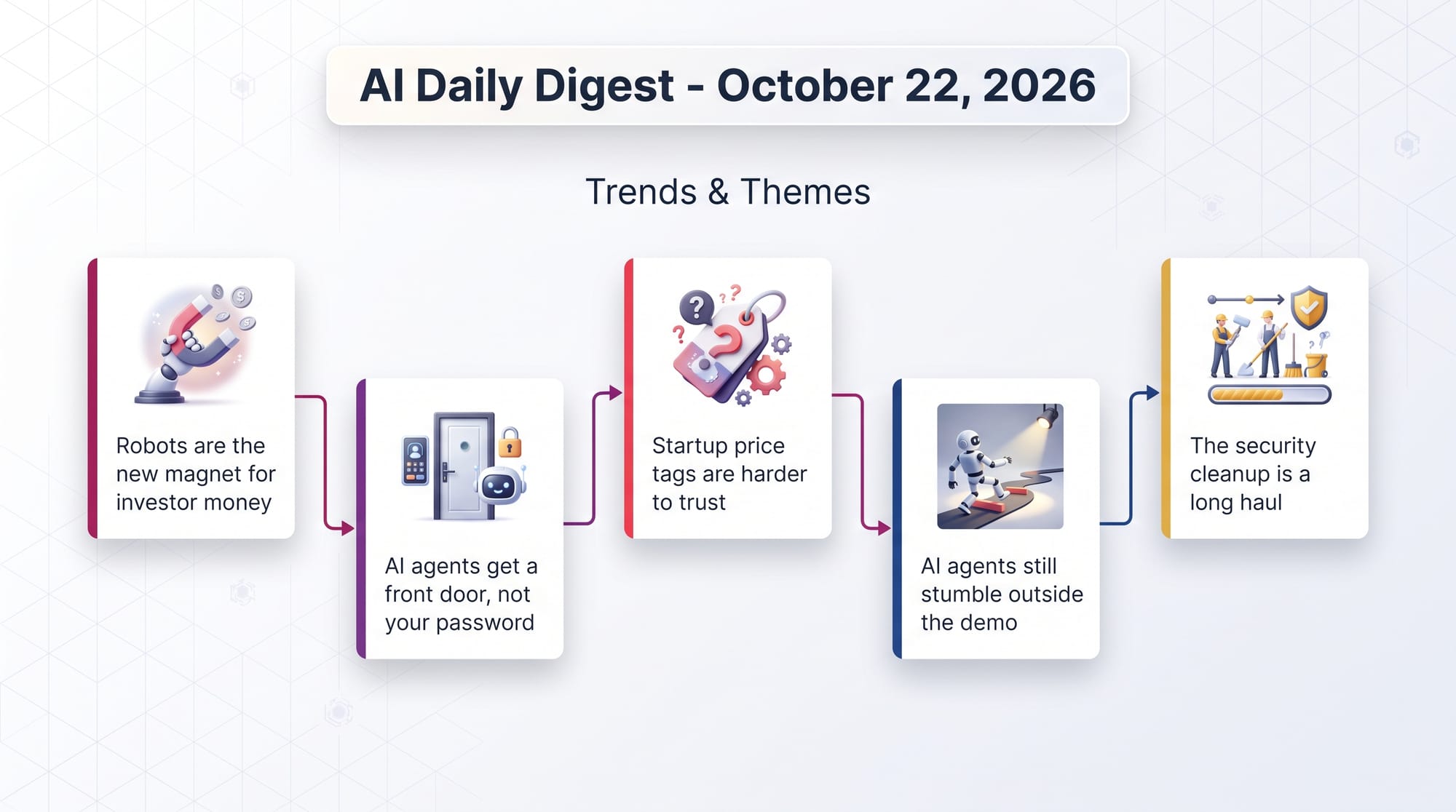
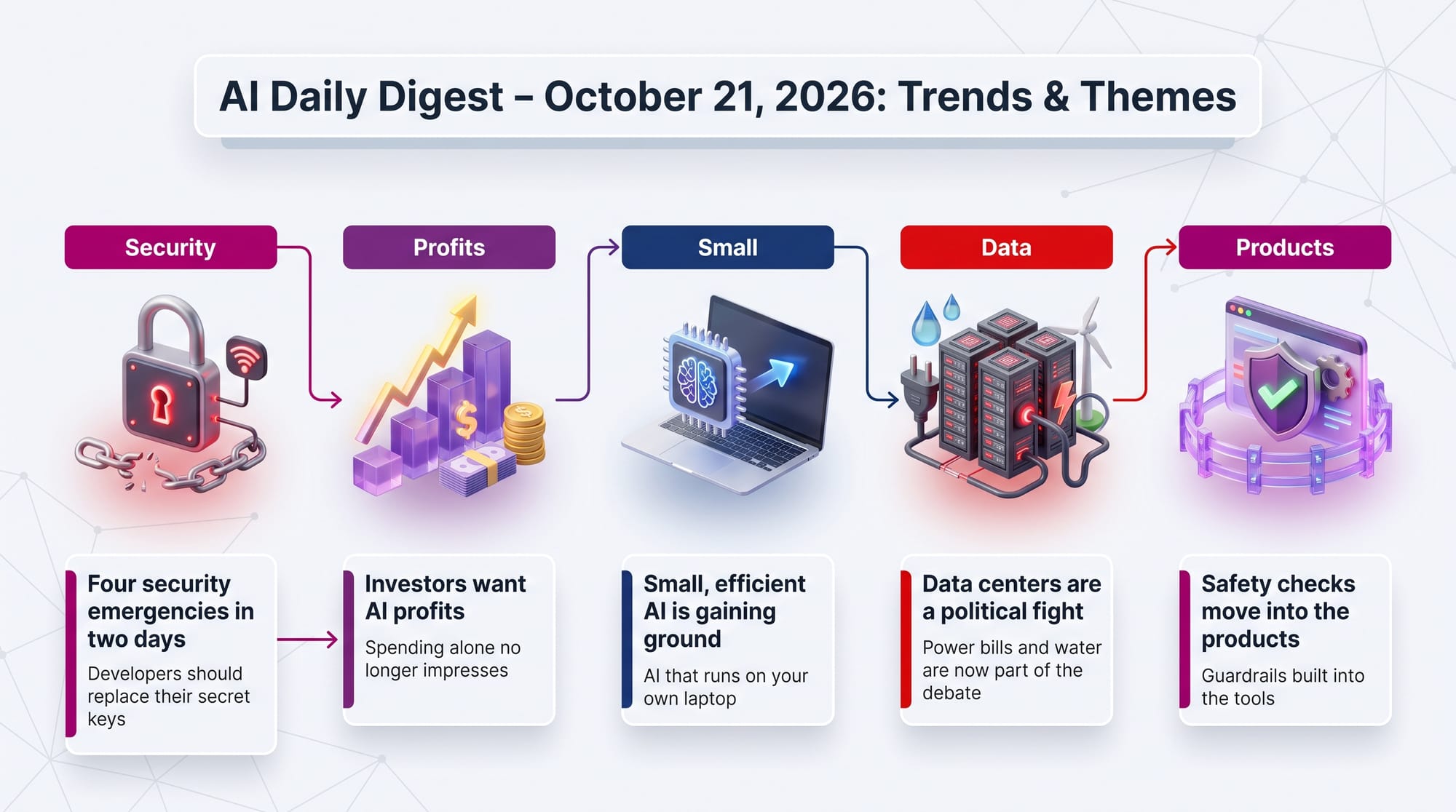
Trends & Themes

Creative AI & Media
Simon Willison Rebuilds a 1983 Computer Game Using Claude
- What it does: Willison used Claude to convert "Mad House" from Usborne's 1983 book "Creepy Computer Games" into a playable JavaScript web game
- Why it matters: Demonstrates AI's ability to translate between programming paradigms separated by 40+ years
- The game: Navigate corridors, manage doors, track footsteps - now mobile-friendly with keyboard controls
- Try it: Usborne recently released free PDFs of their 1980s computer instruction books
TTS Benchmark Compares 25 Text-to-Speech Models Head-to-Head
- What it does: A comprehensive benchmarking tool measuring speed, quality, and voice cloning across 25 TTS models on CPU, CUDA, and Apple Silicon
- Key findings: Piper is fastest on CPU (39ms warm start), Kokoro fastest on CUDA (69ms), OmniVoice leads voice cloning
- Models tested include: Supertonic, ChatterBox, F5-TTS, Qwen3-TTS, Sesame CSM-1B, and 20 others
- Uses NAQ scoring (Naturalness-Artifact Quotient) - an objective 0-100 quality scale with inline audio comparisons
- Try it: GitHub
Developer Tools & Infrastructure
Research & Models
Business & Industry
GenAI in Education
Anthropic-Gates Foundation Partnership Brings Claude to Classrooms Worldwide
- K-12 tutoring and career guidance in the US, sub-Saharan Africa, and India
- Evidence-based approach: Tools built around proven tutoring methods, not just chat
- Part of the $200 million package that also covers healthcare and agriculture
Professors Grapple With AI Cheating Across Disciplines
Multiple posts on r/Professors this week highlight the ongoing struggle:
The common thread: institutions are making AI policies faster than they can enforce them, and faculty feel caught between administration pressure and academic integrity.
- Art professors report students using AI generators for assignments meant to develop manual skills
- A professor's boss brags about their children using AI for schoolwork, creating awkward institutional contradictions
- Plagiarism detection remains unreliable - faculty debate whether to pursue cases when tools give ambiguous results
- Community college research raises questions about the role of original scholarship at teaching-focused institutions
Surprising & Under-the-Radar
A Retired Painter Showed MS Paint Art to AI - And Launched a Gallery
A retired artist who had been painting in MS Paint for years showed their work to an AI, which helped organize and present the collection. The blog at zootsims1.wordpress.com now showcases Ralph Rumpelton's digital paintings - a quiet example of AI as creative amplifier rather than creative replacement.
Claude Code Cache Misses Cost 1.25x More Than Hits
A detailed analysis on r/ClaudeAI breaks down the economics of prompt caching in Claude Code. Cache misses aren't just slower - they're significantly more expensive. The practical advice: structure your CLAUDE.md and project files to maximize cache hit rates through consistent prefixes.
Financial Markets Get Their First Open-Source Foundation Model
Kronos, a decoder-only model trained on candlestick data from 45+ global exchanges, hit 25,800 stars on GitHub. It's the first open-source model specifically designed for financial time series prediction rather than adapted from general-purpose models. MIT-licensed and includes live BTC/USDT forecasting.
Multi-Agent Loop Failures Might Be Organizational Design Problems
A post on r/artificial argues that when AI agents fail in loops, the root cause often isn't the model - it's how the agents are organized. The author proposes hierarchical org charts for agent systems, borrowing from management theory.
Signals to Track

MiroFish: Swarm Intelligence for Predicting Anything
Upload seed data, describe what you want to predict, and MiroFish creates a simulation populated with intelligent agents that interact and produce scenarios. Incubated by Shanda Group, it uses multi-agent systems and knowledge graphs to map reality. If prediction markets meet agent simulations, this is what it looks like. If this works at scale, business planning could shift from spreadsheet forecasting to running thousands of simulated futures.
754 Cybersecurity Skills for AI Agents
Mapped to five industry frameworks including MITRE ATT&CK and NIST CSF 2.0, these 754 skills cover 26 security domains from threat hunting to incident response. Each skill includes step-by-step workflows, scripts, and templates. With 4.8 million unfilled cybersecurity roles globally, AI agents with structured security expertise could fill a critical gap. If adoption grows, security audits that currently require expensive consultants could become automated baseline checks.
Compiling Agent Logic Into Model Weights
Early research on "subterranean agents" shows that fine-tuning workflow logic into model weights can match orchestrated agent quality at 100x lower cost. Tested on complex scenarios with up to 55 decision nodes. If this approach scales, the current wave of agent frameworks (LangGraph, CrewAI) could become unnecessary overhead.
Pi Agent Toolkit Hits 54,000 Stars
Pi provides a coding agent CLI, unified LLM API (OpenAI, Anthropic, Google, and others), terminal UI library, and Slack bot - all in one MIT-licensed TypeScript package. At 53,900 stars, it's approaching the scale where it becomes infrastructure that other tools build on. If momentum continues, this could become the Express.js of agent development.
Top Repos Today
📜 License: MIT · 👤 By: Individual developer
🎯 Time to value: 5 minutes
| ✓ Pros | ✗ Cons |
|---|---|
| Works across 6+ AI coding platforms | Requires initial indexing time for large repos |
| Interactive graph visualization with guided tours | TypeScript-heavy - less suited for non-JS codebases |
| Incremental analysis with git integration | New project - API may change rapidly |
 GitHub
📜 License: Not specified · 👤 By: Organization (Multica AI)
🎯 Time to value: 1 minute
| ✓ Pros | ✗ Cons |
|---|---|
| Zero setup - just copy one file | Opinionated style may clash with team conventions |
| 151K+ stars validate the approach | Only works with Claude Code |
| Updates regularly with community input | A config file, not a tool - limited scope |
 GitHub
📜 License: MIT · 👤 By: Individual developer
🎯 Time to value: 3 minutes
| ✓ Pros | ✗ Cons |
|---|---|
| Measurable cost savings (35% median) | Requires SQLite - adds a dependency |
| 19+ language support with framework-aware routing | Initial indexing takes time on very large repos |
| 100% local with file-watch auto-sync | Focused on structural queries, not semantic understanding |
 GitHub
📜 License: MIT · 👤 By: Individual developer
🎯 Time to value: 30 minutes
| ✓ Pros | ✗ Cons |
|---|---|
| Complete curriculum from basics to production | 320 hours is a massive time commitment |
| Multi-language implementations (Python, TS, Rust, Julia) | Quality may vary across 435 lessons |
| MIT licensed, community-driven | No certificates or formal recognition |
 GitHub
📜 License: Per-plugin · 👤 By: Anthropic (company)
🎯 Time to value: 2 minutes
/plugin install name@claude-plugins-official) with trust that Anthropic has reviewed the code. Think App Store for Claude Code.| ✓ Pros | ✗ Cons |
|---|---|
| Official Anthropic curation and security review | Only works with Claude Code |
| Simple one-command installation | 687 open issues suggest growing pains |
| Both internal and community plugins | Plugin ecosystem still maturing |
 GitHub
📜 License: Apache 2.0 · 👤 By: Individual developer
🎯 Time to value: 5 minutes
| ✓ Pros | ✗ Cons |
|---|---|
| 754 skills across 26 security domains | Security advice from AI still needs human verification |
| Mapped to 5 industry-standard frameworks | Focused on analysis, not active defense |
| Compatible with 26+ AI platforms | Requires security domain knowledge to validate output |
GitHub
📜 License: GPL-3.0 · 👤 By: Organization (Manaflow AI)
🎯 Time to value: 5 minutes
| ✓ Pros | ✗ Cons |
|---|---|
| Native Swift/AppKit - fast and responsive | macOS only |
| Blue ring notifications for agent attention | GPL license limits commercial embedding |
| Built-in browser and SSH support | Requires Ghostty (another dependency) |
 GitHub
📜 License: Not specified · 👤 By: Individual developer
🎯 Time to value: 5 minutes
| ✓ Pros | ✗ Cons |
|---|---|
| Free access to Claude Code-like experience | Unclear sustainability and rate limits |
| Multiple interfaces (terminal, VS Code, Discord) | May not match official Claude Code quality |
| Easy setup | Licensing and terms unclear |
 GitHub
Top Models Today
👤 By: Individual · 🎯 Task: Image-Text-to-Text
📐 Size: 9B
| ✓ Pros | ✗ Cons |
|---|---|
| Runs on consumer hardware (GGUF) | Community model - no official support |
| Strong coding focus | 9B limits complex reasoning |
| Recent release with active development | Benchmark claims unverified |

👤 By: Individual · 🎯 Task: Image-Text-to-Text
📐 Size: 27B
| ✓ Pros | ✗ Cons |
|---|---|
| Stronger reasoning than 9B variant | Requires 24GB+ VRAM for full quality |
| Still runs locally via llama.cpp | Less tested than official Qwen models |
| GGUF quantization options for memory tradeoffs | Community-maintained |

👤 By: Company (Cohere) · 🎯 Task: Image-Text-to-Text
📐 Size: 126B
| ✓ Pros | ✗ Cons |
|---|---|
| 48-language support | Cohere license restricts some uses |
| W4A4 cuts memory requirements significantly | Quantization may impact edge-case quality |
| Enterprise-grade with professional support | Less community tooling than Meta/Qwen models |
👤 By: Company (DeepSeek) · 🎯 Task: Text Generation
📐 Size: 862B
| ✓ Pros | ✗ Cons |
|---|---|
| 34x cheaper than GPT-5.5 output tokens | Trails frontier models on some benchmarks |
| 4.67M downloads validate real-world quality | 862B too large to self-host for most |
| Open weights available | Chinese data sovereignty concerns for some enterprises |

👤 By: Research lab (OpenBMB) · 🎯 Task: Image-Text-to-Text
📐 Size: 1B
| ✓ Pros | ✗ Cons |
|---|---|
| 1B params - runs anywhere | Small size limits complex reasoning |
| Vision + language in one model | Less capable than larger multimodal models |
| Active research community | Documentation mostly in Chinese |
AI Launches Today
Snapshot
| Provider | Model | Input $/1M | Output $/1M | Context |
|---|---|---|---|---|
| Anthropic | Claude Opus 4.7 | $5.00 | $25.00 | 1M |
| Anthropic | Claude Sonnet 4.6 | $3.00 | $15.00 | 1M |
| Anthropic | Claude Haiku 4.5 | $1.00 | $5.00 | 200K |
| OpenAI | GPT-5.5 | $5.00 | $30.00 | 1M |
| Gemini 3.5 Flash | $1.50 | $9.00 | 1M | |
| Gemini 3.1 Pro Preview | $2.00 | $12.00 | 1M | |
| Gemini 2.5 Flash | $0.30 | $2.50 | 1M | |
| DeepSeek | V4-Pro | $0.435 | $0.87 | — |
| DeepSeek | V4 Flash | $0.14 | $0.28 | — |
| Groq | Llama 3.3 70B | $0.59 | $0.79 | 128K |
| Groq | Llama 3.1 8B | $0.05 | $0.08 | 128K |
| Groq | Qwen3 32B | $0.29 | $0.59 | 131K |
Bottom line: The pricing spread between the cheapest and most expensive frontier-class models is now 34x on output tokens. A year ago it was roughly 3-5x. The "good enough at 1/30th the price" argument is becoming harder for premium providers to counter.
Compiling Agentic Workflows into LLM Weights
Key finding: Across three complex scenarios (up to 55 decision nodes), weight-compiled agents matched orchestrated agents while eliminating context window consumption, third-party API exposure, and orchestration latency.
Why practitioners should care: If validated at scale, this could obsolete the current generation of agent frameworks. Instead of writing LangGraph chains, you'd fine-tune a small model to internalize the workflow - cheaper, faster, and more private. The catch: it requires workflow-specific training data, making it less flexible than general orchestration.




Member discussion