
Watch today's digest as a video summary (generated by NotebookLM)
Statistically Speaking
One Thing to Tell Your Friends
TL;DR
Hot off the Presses
Microsoft Cancels Its Anthropic AI Subscription After Token Bills Spiral Out of Control
Microsoft shut down its internal Claude Code pilot program after token-based pricing produced unpredictable and explosive costs. The problem is structural: unlike traditional software licenses with flat monthly fees, AI tools charge per "token" (roughly per word processed), and a single developer running complex code generation can burn through thousands of dollars in a day without realizing it.
The shift from flat-rate software licensing to token-based AI pricing is creating a new category of financial risk that most corporate budgeting processes were never designed to handle.
- Uber burned through its entire 2026 AI budget in just four months - heavy users running complex tasks drained millions before finance could react
- AI software prices have increased 20-37% across the industry recently
- The core issue is visibility - most companies lack tools to track or cap per-user AI spending in real time
- 516 upvotes on r/artificial signal widespread concern about this pattern
DeepSeek Raises $10.29 Billion and Promises to Keep Its AI Open-Source
DeepSeek founder Liang Wenfeng announced the round with an explicit AGI (Artificial General Intelligence) goal, doubling down on the company's strategy of releasing powerful models for anyone to download and use. This contrasts sharply with the trend of well-funded Western labs closing their models behind paid APIs.
- One of the largest AI funding rounds in history - dwarfing most recent Western AI raises
- 542 upvotes on r/LocalLLaMA - the community that runs AI models on personal hardware celebrated the news
- DeepSeek V4-Pro already has 4.3 million downloads on HuggingFace and competes with the best closed models
- The commitment to open-source despite massive funding defies the conventional wisdom that large AI investments require closed, proprietary models to generate returns
Popular AI Coding Tool "Get Shit Done" Was a Scam - Creator Disappears With $500K
The creator of GSD (Get Shit Done), an AI coding tool that won the Bags Hackathon on the Solana blockchain, deleted all social media accounts and dumped approximately $500K worth of tokens. The community fork, get-shit-done-redux, conducted a security audit that found no active malware but identified critical gaps: the original npm package signing keys were still controlled by the vanished creator.
This is the second high-profile AI tool supply chain incident this month, following the CISA contractor credential leak discovered on public GitHub.
- Total extraction was approximately $500K - from hackathon grants, trading rewards, token fees, and personal holdings
- 169 upvotes on r/ClaudeAI as users warned each other to migrate immediately
- Security audit found 293 passing tests but critical gaps - including dependency integrity drift and base64 scanner limitations
- The original npm package keys remain compromised - anyone still using the original package is at risk
A Pirate Library Writes an Open Letter Directly to AI Models
Anna's Archive, the largest shadow library aggregator, published a page at llms.txt specifically addressing the AI models that crawl their site. Rather than fighting AI access with stronger CAPTCHAs, they offer structured alternatives and appeal directly to the systems for cooperation. The page points AI models toward bulk downloads via torrents, GitLab repositories, and APIs.
- 693 points and 386 comments on Hacker News - the highest-engagement story of the day
- The approach treats AI systems as negotiating partners rather than adversaries to be blocked
- All their data is freely available for download - making CAPTCHA circumvention unnecessary
- Raises fundamental questions about how websites will communicate with AI agents as they become the primary "readers" of web content
AI Chip Demand Is Making Your Phone More Expensive
Simon Willison highlighted an analysis showing how AI's demand for HBM (High Bandwidth Memory) chips is reshaping the global electronics supply chain. Only three manufacturers produce these chips, and they are rapidly shifting production capacity from consumer devices to AI hardware.
- HBM allocation has grown from 2% to an expected 20% of wafer capacity by end of 2026
- A single gigabyte of HBM consumes 3x more silicon than the memory in your phone
- Budget smartphones in developing markets are the hardest hit - they operate on the thinnest margins
- The shortage is structural, not temporary - AI demand for memory will keep growing as models get larger
Trends & Themes

Creative AI & Media
Developer Tools & Infrastructure
Research & Models
Business & Industry
GenAI in Education
Surprising & Under-the-Radar
Antigravity 2.0 Wins an Architectural 3D Modeling Benchmark
Despite the backlash from its botched auto-update (covered May 21), Google's Antigravity 2.0 scored 4.5/5 on an OpenSCAD benchmark that tested AI's ability to model a Pantheon-accurate 3D building. It was the only model to implement the interior coffered ceiling pattern using historically accurate dimensions. The technical capability and the product disaster exist simultaneously - 330 HN points.
Veteran Tech Journalist Says AI's Trillion-Dollar Bet May Be Architecturally Wrong
Robert X. Cringely, who has covered Silicon Valley since the 1980s, returned from a three-year hiatus during which he co-founded an AI startup. He claims the industry's approach is fundamentally flawed and that his company has patented an alternative architecture - teasing a series of articles that could generate controversy.
Zvi's Verdict on Gemini 3.5 Flash: Fast But Flawed
Previously: May 19 - Google launched Gemini 3.5 Flash at I/O 2026.
Today: Zvi Mowshowitz's detailed review highlights a bizarre January 2025 knowledge cutoff, catastrophically bad sycophancy scores, and pricing that is 3x the previous version. The model is genuinely 4x faster than competitors but ranked only 9th on Arena, behind Opus and GPT-5.5.
"Are Tools All We Need?" - Research Shows AI Tools Can Make Agents Worse
A new paper introduces the concept of a "tool-use tax": the overhead of formatting and protocol complexity when AI agents use external tools can actually hurt performance compared to letting the model think without tools. They propose G-STEP, a gate that decides at inference time whether a tool call is worth the cost.
Signals to Track

Behavior Cue Reasoning Makes AI Safety Monitoring Practical
A new paper shows that training AI models to emit brief "behavior cues" alongside their reasoning allows external monitors to catch unsafe behavior with 96% accuracy - up from 46% without cues. The monitoring model can be tiny and fast, making real-time safety supervision economically viable. If widely adopted, this could shift AI safety from expensive human review to automated, always-on monitoring.
MEMTIER: Tiered Memory Gives Agents Long-Term Recall on Consumer Hardware
This architecture jumps agent memory accuracy from 5% to 38% by organizing memories into tiers (short-term, episodic, semantic) that get promoted or demoted based on relevance. It runs on consumer GPUs, which means personal AI assistants could maintain persistent context across sessions without sending your data to the cloud.
Epistemic Regret Minimization Drops Causal Reasoning Failures From 55% to 4%
Current AI models struggle with causal reasoning - confusing correlation with causation at rates of 55-70%. This approach uses a self-correction mechanism that catches and fixes causal errors during reasoning, reducing failure rates to 4%. If this transfers to production systems, it could make AI agents significantly more reliable at multi-step planning.
Heartbeat-Bound Credentials Could Solve the AI Agent Identity Problem
As AI agents proliferate, revoking access when an agent goes rogue is a growing problem. Standard OAuth tokens can take hours to revoke. This system binds credentials to a regular heartbeat - miss one check-in and your access dies automatically. It achieves a 90x reduction in the window during which a compromised agent can act.
Google's 3.2 Quadrillion Tokens Per Month Signal a Scaling Threshold
Fireship's I/O recap revealed Google went from 9.7 trillion to 3.2 quadrillion tokens served per month in two years - a 330x increase. They are now splitting TPU chips into separate training (TPU-T) and inference (TPU-I) designs. If token demand continues on this curve, the infrastructure requirements will reshape the semiconductor industry beyond what even the current chip boom anticipated.
Top Repos Today
📜 License: Per-plugin · 👤 By: Anthropic (company)
🎯 Time to value: 5 minutes
| ✓ Pros | ✗ Cons |
|---|---|
| Official curation reduces malware risk | Limited to Claude Code ecosystem |
| Standardized plugin format | New - small plugin library so far |
| Community contributions accepted | Per-plugin licensing can be confusing |
 GitHub
📜 License: MIT · 👤 By: Individual developer
🎯 Time to value: 10 minutes
| ✓ Pros | ✗ Cons |
|---|---|
| Works with every major AI coding tool | Initial indexing takes time on large repos |
| 100% local - no data leaves your machine | SQLite may not scale to massive monorepos |
| 19+ language support | Individual maintainer - bus factor of one |
 GitHub
📜 License: MIT · 👤 By: Individual developer
🎯 Time to value: 30 minutes
| ✓ Pros | ✗ Cons |
|---|---|
| Free and comprehensive (435 lessons) | No instructor feedback |
| Covers math to deployment | Quality may vary across sections |
| 17 capstone projects for practice | Individual maintainer |
 GitHub
📜 License: Apache-2.0 · 👤 By: Google (company)
🎯 Time to value: 5 minutes
| ✓ Pros | ✗ Cons |
|---|---|
| 40+ tools with deep browser access | Chrome-only (no Firefox/Safari) |
| Official Google project | Requires Chrome to be running |
| Works with all major AI coding tools | Security surface area of browser control |
 GitHub
📜 License: MIT · 👤 By: Individual developer
🎯 Time to value: 15 minutes
| ✓ Pros | ✗ Cons |
|---|---|
| Guided tours for onboarding | Indexing cost for large codebases |
| Diff impact analysis shows change ripples | May struggle with poorly structured code |
| Works with 5+ AI coding tools | Requires initial setup time |
GitHub
📜 License: MIT · 👤 By: Microsoft (company)
🎯 Time to value: 5 minutes
| ✓ Pros | ✗ Cons |
|---|---|
| Official Microsoft project | .NET/C# only |
| 11 specialized domain plugins | New - may have gaps |
| Works with Copilot, Claude Code, Cursor | Smaller community than general tools |
 GitHub
📜 License: MIT · 👤 By: Individual developer
🎯 Time to value: 10 minutes
| ✓ Pros | ✗ Cons |
|---|---|
| 40+ LLM providers supported | Terminal-only (no GUI) |
| 32 built-in tools including debugger | Fork of Pi - uncertain long-term identity |
| Subagent orchestration | Crowded market for terminal AI tools |
 GitHub
📜 License: MIT · 👤 By: Andrej Karpathy (individual)
🎯 Time to value: 60 minutes
| ✓ Pros | ✗ Cons |
|---|---|
| Taught by Karpathy (legendary educator) | No new content recently |
| Free video lectures + code | Covers fundamentals, not latest models |
| Hands-on Jupyter notebooks | Requires math comfort |
 GitHub
Top Models Today
👤 By: ByteDance Research · 🎯 Task: Any-to-any (image/video gen+edit+understand)
📐 Size: 3B
| ✓ Pros | ✗ Cons |
|---|---|
| Six capabilities in one 3B model | 480p video resolution limit |
| Apache-2.0 commercial license | Only 1K downloads so far (very new) |
| Matches 7B-20B specialist benchmarks | Requires multi-GPU for training |


👤 By: DeepSeek · 🎯 Task: Text generation
📐 Size: 1.6T total / 49B active (MoE)
| ✓ Pros | ✗ Cons |
|---|---|
| MIT license - fully open | 1.6T total params needs serious hardware |
| Competitive with GPT-5.5 on coding | Only 49B active but still large |
| 1M token context window | Chinese company may face policy risk |

👤 By: SulphurAI · 🎯 Task: Text-to-video, image-to-video
📐 Size: 9B
| ✓ Pros | ✗ Cons |
|---|---|
| 1.25M downloads prove community trust | No content safety guardrails |
| Multiple quantization options | Community license (check terms) |
| Built-in prompt enhancer | Requires significant GPU memory |


👤 By: OpenBMB (Tsinghua) · 🎯 Task: Image-text-to-text
📐 Size: 1B
| ✓ Pros | ✗ Cons |
|---|---|
| Runs on phones (iOS, Android) | 1B limits complex reasoning |
| Apache-2.0 commercial license | Image/video understanding only (no generation) |
| 50% vision FLOP reduction | Smaller context than cloud models |

👤 By: Supertone · 🎯 Task: Text-to-speech
📐 Size: 99M
| ✓ Pros | ✗ Cons |
|---|---|
| 99M params - runs on any CPU | OpenRAIL-M license has use restrictions |
| 31 languages + voice cloning | Audio quality ceiling vs larger models |
| No cloud dependency | Expression tags limited to preset types |

👤 By: Cohere Labs · 🎯 Task: Multimodal agentic
📐 Size: 218B total / 25B active (MoE)
| ✓ Pros | ✗ Cons |
|---|---|
| Apache-2.0 - full commercial use | 218B total still needs significant RAM |
| 48 languages + vision + tools | Newer release - less community testing |
| W4A4 quantization for single GPU | Cohere ecosystem integration preferred |

👤 By: NemoStation · 🎯 Task: Video captioning, temporal grounding
📐 Size: 2B
| ✓ Pros | ✗ Cons |
|---|---|
| Tops CaReBench at only 2B | Video understanding only (no generation) |
| Second-precise timestamps | Fine-tuned from Qwen - inherits limitations |
| Apache-2.0 license | Small community (4K downloads) |

AI Launches Today
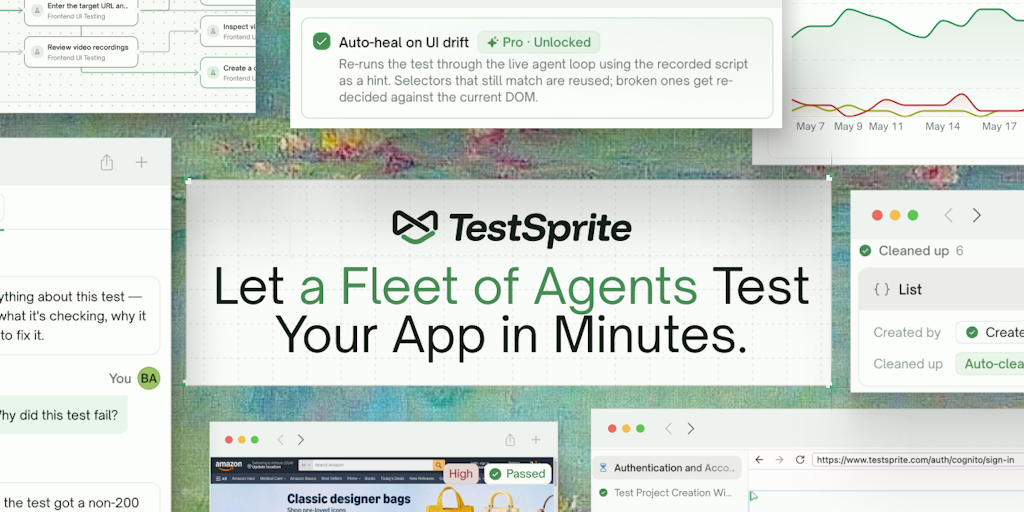
💰 Pricing: Freemium · 🏷 Category: Developer Tools / Testing
 Product Hunt
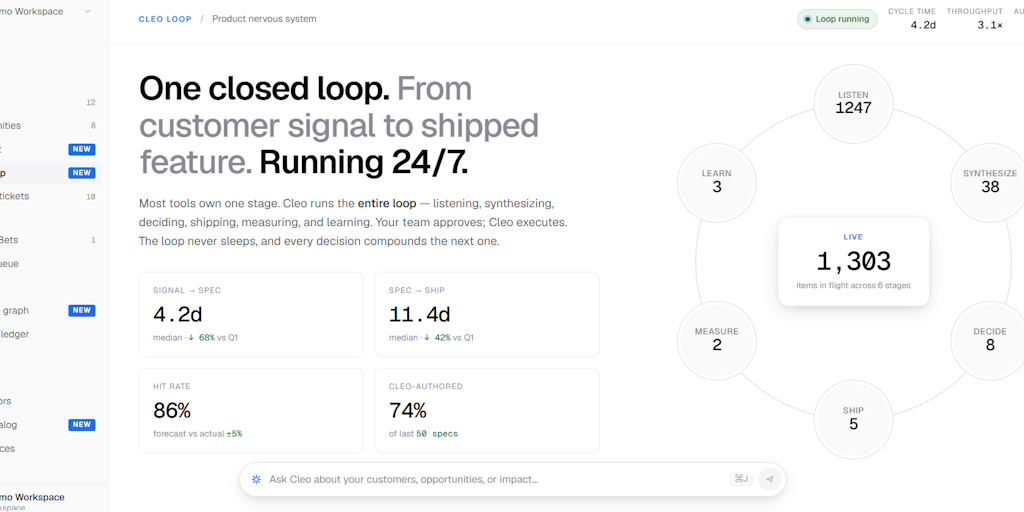
💰 Pricing: Free (beta) · 🏷 Category: Productivity / Business Intelligence
 Product Hunt
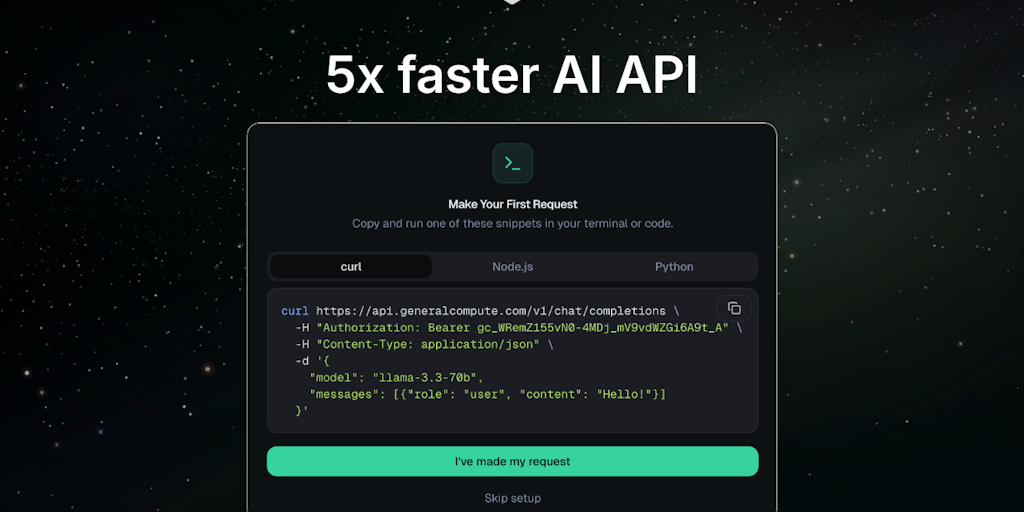
💰 Pricing: Freemium · 🏷 Category: AI Infrastructure
 Product Hunt
💰 Pricing: Paid ($197) · 🏷 Category: Content Creation
 Product Hunt

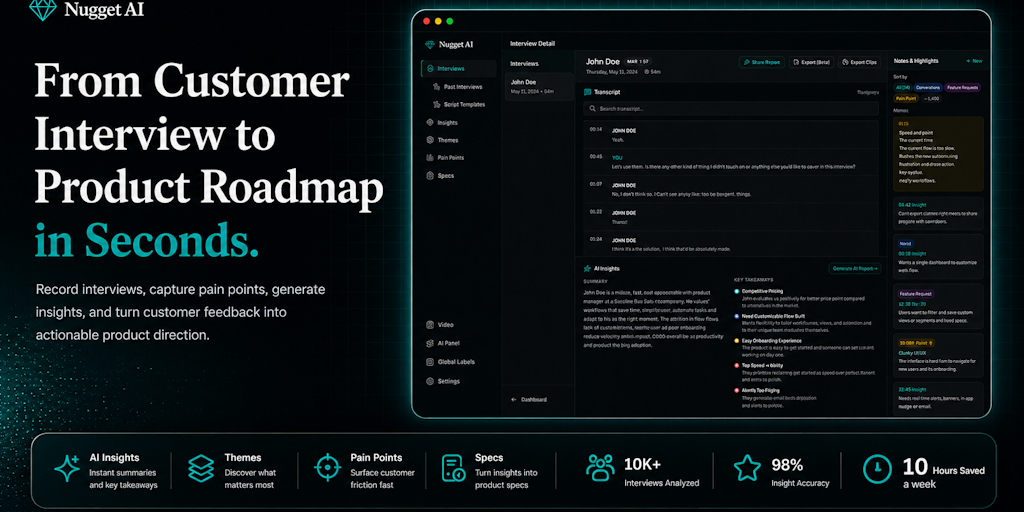
💰 Pricing: Freemium · 🏷 Category: User Research
 Product Hunt
Snapshot
| Provider | Model | Input $/1M | Output $/1M | Context |
|---|---|---|---|---|
| Anthropic | Claude Opus 4.7 | $5.00 | $25.00 | 1M |
| Anthropic | Claude Sonnet 4.6 | $3.00 | $15.00 | 1M |
| Anthropic | Claude Haiku 4.5 | $1.00 | $5.00 | 200K |
| OpenAI | GPT-5.5 | $5.00 | $30.00 | 1M |
| OpenAI | o3 | $2.00 | $8.00 | 200K |
| OpenAI | GPT-4.1 Nano | $0.10 | $0.40 | 1M |
| Gemini 3.5 Flash | $1.50 | $9.00 | 1M | |
| Gemini 2.5 Flash-Lite | $0.10 | $0.40 | 1M | |
| Groq | Llama 3.1 8B | $0.05 | $0.08 | 128K |
What this means: The 100x gap between frontier models ($5/MTok) and open-source inference ($0.05/MTok) persists. Google's newer Flash-Lite models cost 2.5x more than the versions they replace - confirming the pricing trend highlighted in today's Top Stories. The cheapest way to run capable AI remains Groq's open-source hosting at 50 cents per million input tokens for a 120B model.
Are Tools All We Need? Unveiling the Tool-Use Tax in LLM Agents
Key finding: The authors decompose tool-use costs into three components (formatting overhead, protocol complexity, and actual tool benefit) and propose G-STEP, a lightweight gate that decides at inference time whether a tool call is worth the cost.
Why practitioners should care: If you are building AI agents with tool use, this provides evidence that naively adding tools can degrade performance. G-STEP offers a practical way to reduce unnecessary API calls, directly cutting cost and latency.






Member discussion