GenAI Secret Sauce Daily Digest - 2026-05-12

Google DeepMind Wants to Replace the Mouse Pointer With AI · A 26-Million-Parameter Model Matches Gemini at Tool Calling · The Curl Maintainer Says Anthropic's Mythos Found a Real Vulnerability
GenAI Secret Sauce Daily Digest - 2026-05-12

Watch today's digest as a video summary (generated by NotebookLM)

Statistically Speaking

26 million parameters is roughly 1,000x smaller than
A 26-Million-Parameter Model Matches Gemini at Tool Calling
Top Story
582 tokens per second on an M4 Pro
A 26-Million-Parameter Model Matches Gemini at Tool Calling
26 million parameters is roughly 1,000x smaller
A 26-Million-Parameter Model Matches Gemini at Tool Calling
501 AI-related court cases are now active
Second AI Chatbot Mass-Shooting Lawsuit Filed
1 complaint about AI coding
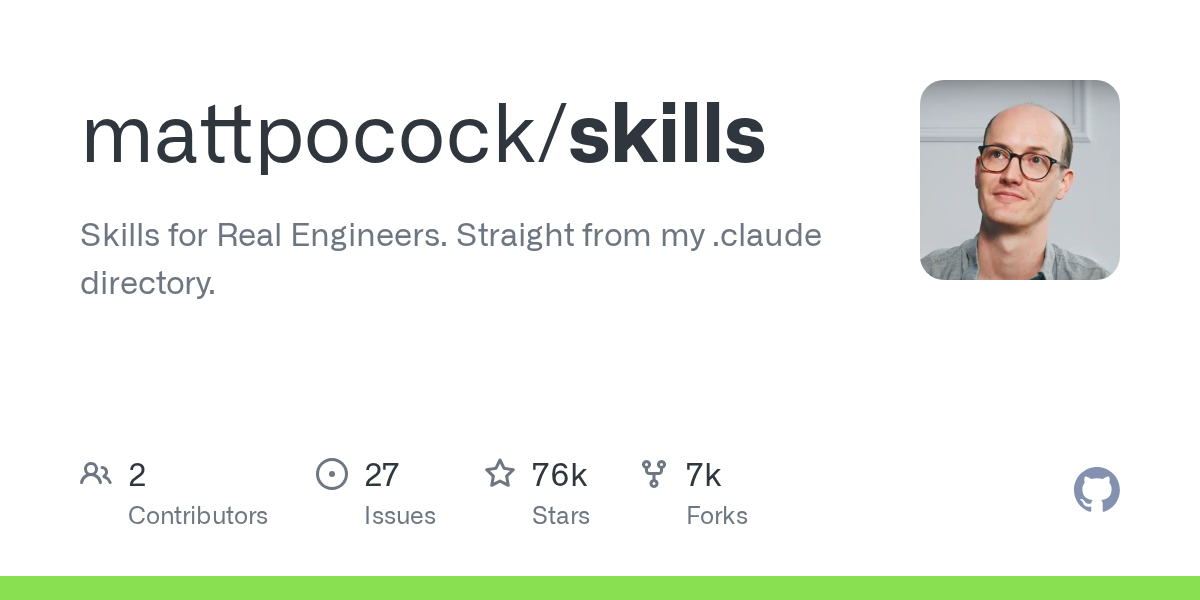
Matt Pocock's Agent Skills Repo Gains 76,000 Stars
26 million parameters
Tiny Models Are Eating the Agent Stack From the Bottom Up

One Thing to Tell Your Friends

A team built a 26-million-parameter AI model - smaller than most smartphone apps - that matches Google's Gemini at calling software tools.

TL;DR

Trends
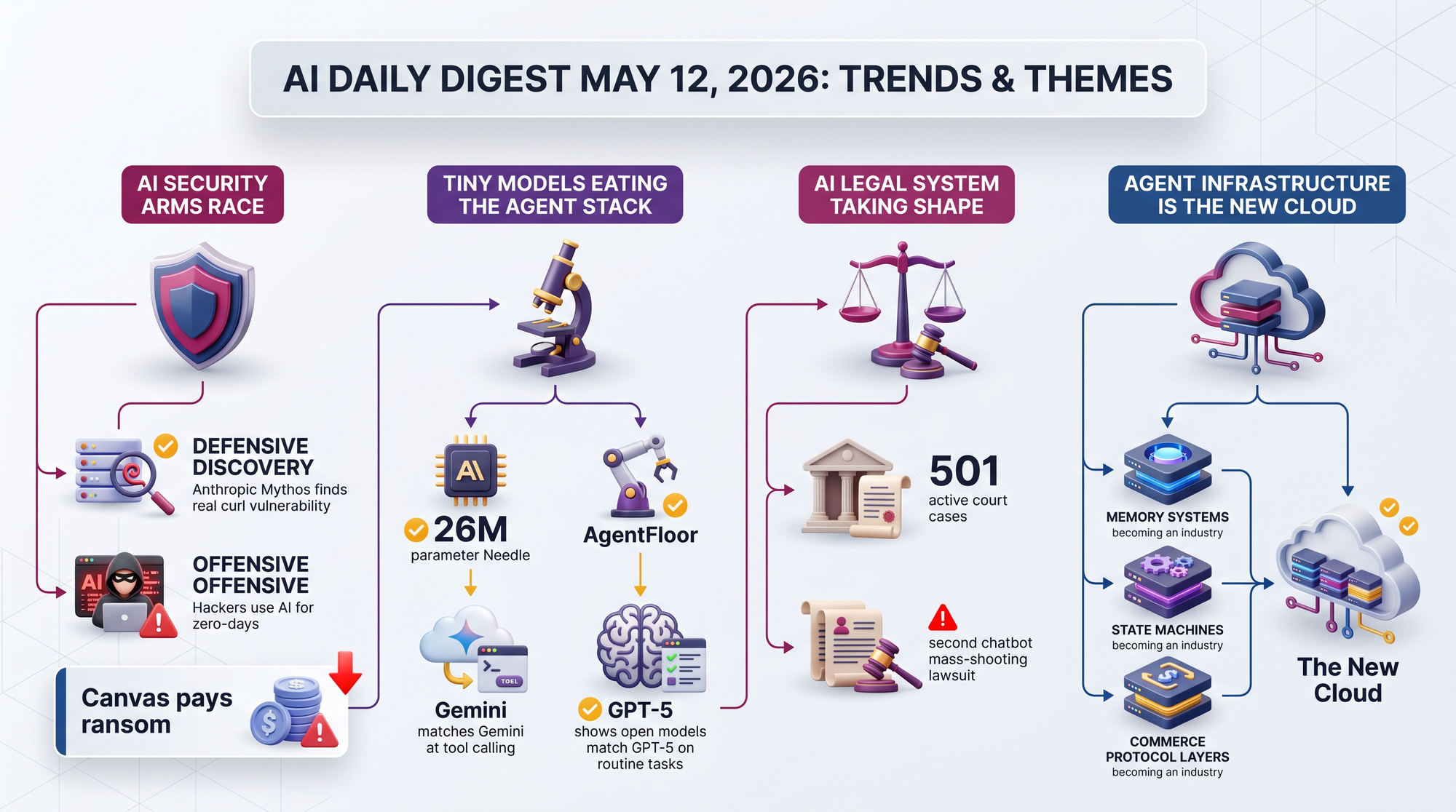
AI Security Is Now a Two, Tiny Models Are Eating the Agent Stack From the Bottom Up, and The AI Legal System Is Taking Shape in Real Time.
Creative AI
AI-Powered Manuscript Editing Goes Full.
GitHub
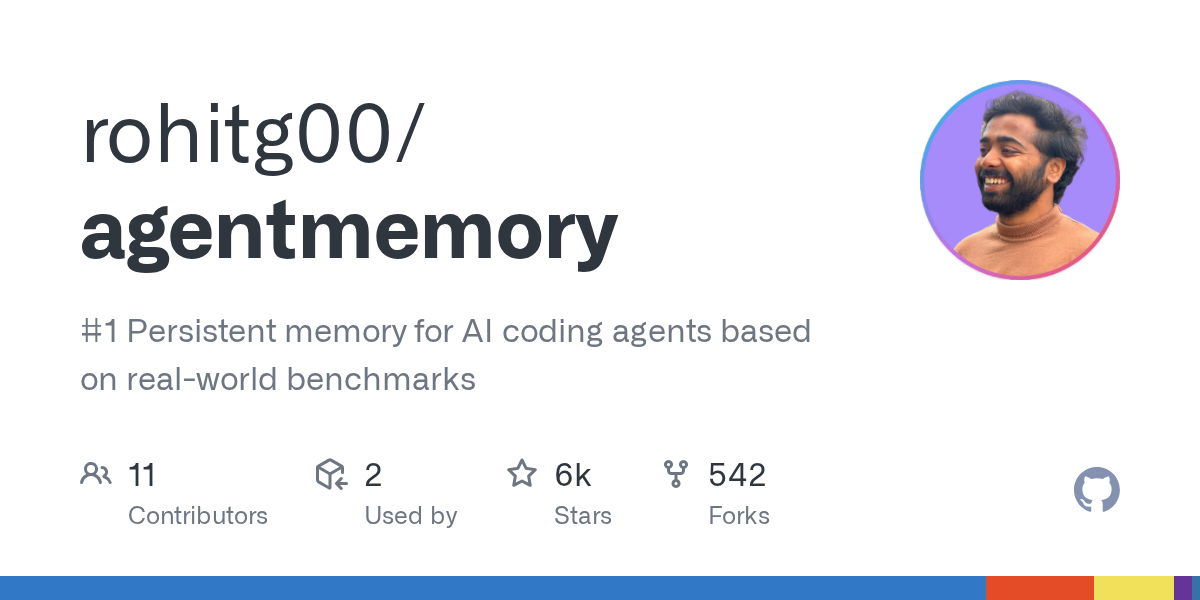
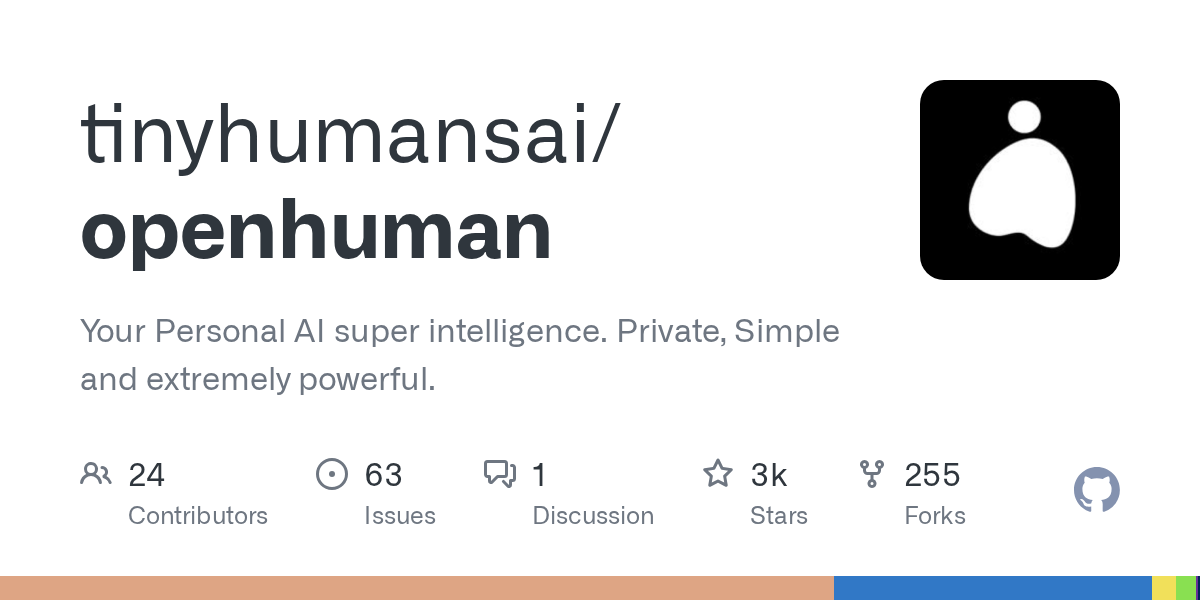
Leading repos: mattpocock/skills (+3,886), rohitg00/agentmemory (+1,067), and tinyhumansai/openhuman (+1,042).
HuggingFace
Leading models: deepseek-ai/DeepSeek-V4 (2.02M), deepseek-ai/DeepSeek-V4 (1.16M), and moonshotai/Kimi (1.42M).
Product Hunt
Top launches: Jotform Claude App (154), display.dev (135), and Free AI SEO Auditor (134).
API Pricing
What this means: The pricing spread between frontier and open-source inference continues widening.
arXiv
AgentFloor: How Far Up the Tool Use Ladder Can Small Open — The strongest open-weight model matches GPT-5 on the broad base of tool-calling work that dominates real agent pipelines.

Hot off the Presses

01

Google DeepMind Wants to Replace the Mouse Pointer With AI

What this means for you: The way you point and click on a computer screen could fundamentally change - instead of hunting for tiny buttons, an AI-powered cursor would understand your intent and guide you to the right target.

Google DeepMind published "AI Pointer," a research project reimagining the most basic computer interaction. The system combines a vision-language model with a learned pointing policy that predicts where a user wants to click based on context, gaze patterns, and task history.

The deeper signal: Google is quietly building the infrastructure for AI-native operating systems where the boundary between "you controlling the computer" and "AI controlling the computer" blurs.

  • The pointer predicts intent, not just position - it analyzes the current screen layout and your recent actions to anticipate the next target, reducing misclicks on crowded interfaces
  • Targets accessibility and motor impairment use cases first - the research paper specifically addresses users who struggle with precise cursor control
  • Builds on DeepMind's broader "AI agent" infrastructure - the same technology that lets AI agents navigate interfaces could help humans navigate them better
02

A 26-Million-Parameter Model Matches Gemini at Tool Calling

What this means for you: The AI agents that handle tasks like booking flights, managing files, or querying databases could soon run entirely on your phone - privately, instantly, and for free.

Cactus Compute released Needle, a 26-million-parameter model distilled from Google Gemini specifically for function calling. It strips out everything except the ability to understand a request and generate the correct tool call, achieving 99% JSON accuracy on structured outputs.

The implication: the tool-calling layer of AI agents - the part that actually does things - may not need a large model at all.

“99% JSON accuracy from a model that fits in 76MB of RAM”
  • 26 million parameters is roughly 1,000x smaller than typical large language models (LLMs) - small enough to run on a smartwatch chip
  • 582 tokens per second on an M4 Pro using just 76 megabytes (MB) of memory, via their custom Cactus inference engine
  • Uses a novel "Simple Attention Network" architecture that removes the feed-forward layers found in standard transformers, keeping only the attention mechanism
  • Open-sourced on Hugging Face under a research license, with weights and architecture documentation
26
million parameters is roughly 1,000x
582
tokens per second on an
03

The Curl Maintainer Says Anthropic's Mythos Found a Real Vulnerability

What this means for you: AI security scanners are crossing from "interesting experiment" to "genuinely useful" - the maintainer of software installed on billions of devices just confirmed one found a bug humans missed.

Daniel Stenberg, creator and sole maintainer of curl (a command-line tool for transferring data that ships with virtually every operating system), published a detailed blog post about his experience with Anthropic's Mythos AI security audit. Unlike previous AI code reviews that produced mostly false positives, Mythos identified a genuine, previously unknown vulnerability.

  • Stenberg specifically praised the signal-to-noise ratio - Mythos flagged far fewer issues than previous automated tools, and the ones it flagged were real
  • The vulnerability was in curl's URL parsing logic - a category of bugs that has historically been difficult to catch with traditional static analysis
  • This follows Google's disclosure yesterday (covered May 11) that hackers used AI to create a zero-day exploit - AI security is now simultaneously offense and defense
04

Second AI Chatbot Mass-Shooting Lawsuit Filed

What this means for you: Courts are now actively deciding whether AI companies can be held legally responsible when users commit violence after chatbot interactions - the outcome will shape how all AI products handle safety.

A second lawsuit alleging that an AI chatbot contributed to a mass shooting has been filed, following the first case earlier this year. The legal blog tracking AI court cases now catalogs 501 active cases involving artificial intelligence.

Previously: First chatbot shooting case covered in earlier editions - the first lawsuit established the legal framework that this second case builds upon.

  • The legal theory is novel - plaintiffs argue the chatbot's responses constituted a "substantial factor" in the shooter's radicalization, similar to how social media companies have been sued
  • 501 AI-related court cases are now active across multiple jurisdictions, up from roughly 200 a year ago, covering everything from copyright to liability to discrimination
  • No precedent exists - courts are essentially writing the rules of AI liability in real time
05

Matt Pocock's Agent Skills Repo Gains 76,000 Stars

What this means for you: If you use AI coding tools like Claude Code or Cursor, a set of community-built "rules" that make the AI write better code is now one of the most popular developer resources on the internet.

Matt Pocock, a well-known TypeScript educator, published his personal .claude skills directory - structured rules that guide AI coding assistants toward better engineering practices. The repo gained 3,886 stars in a single day, reaching 75,900 total, making it one of the fastest-growing developer tools repositories of 2026.

  • The skills enforce engineering discipline - test-driven development, comprehensive documentation, disciplined debugging, and architectural consistency
  • Addresses the #1 complaint about AI coding - that agents produce working but unmaintainable code without guardrails
  • Pocock's tagline: "Skills for Real Engineers" - positioning agent configuration as a core engineering competency, not an afterthought

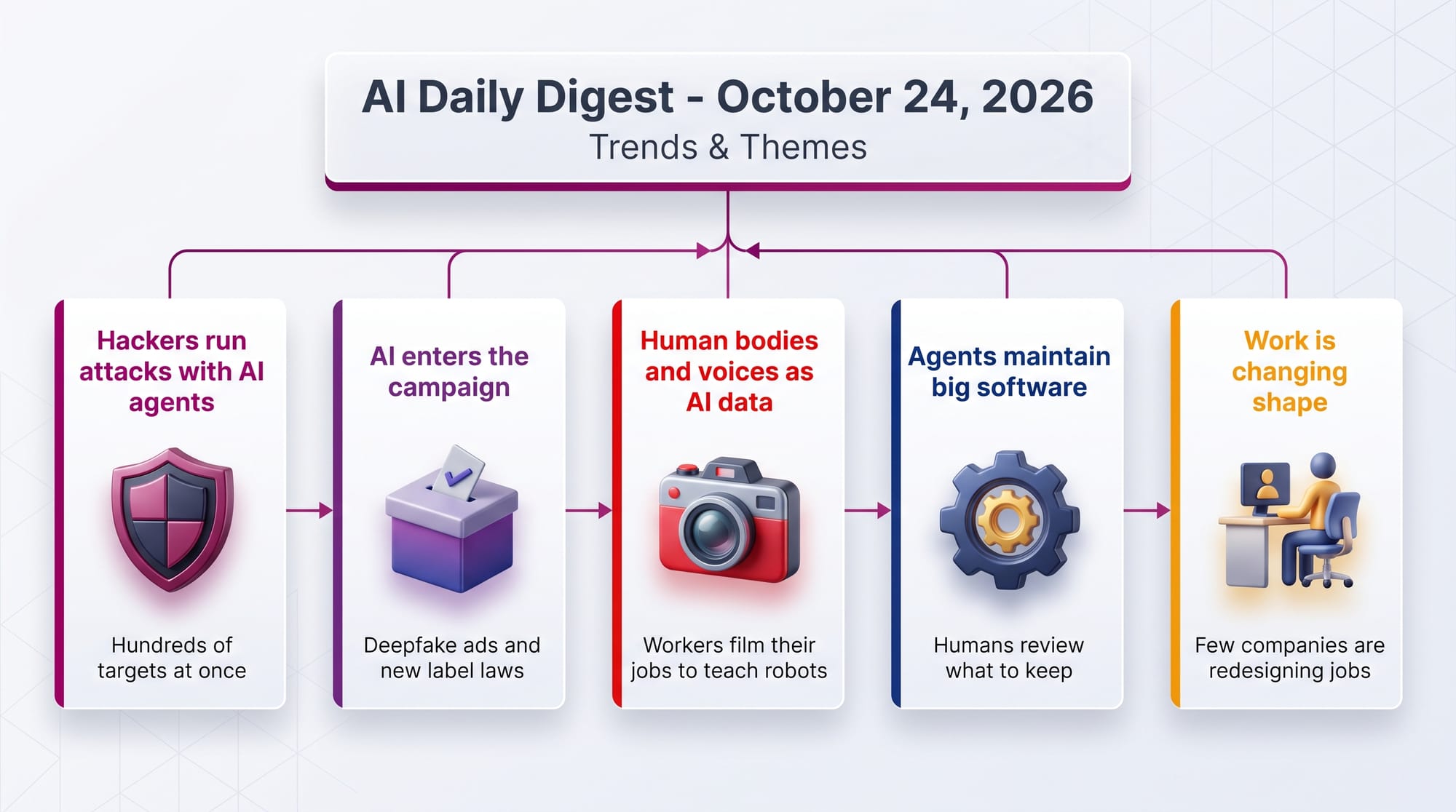
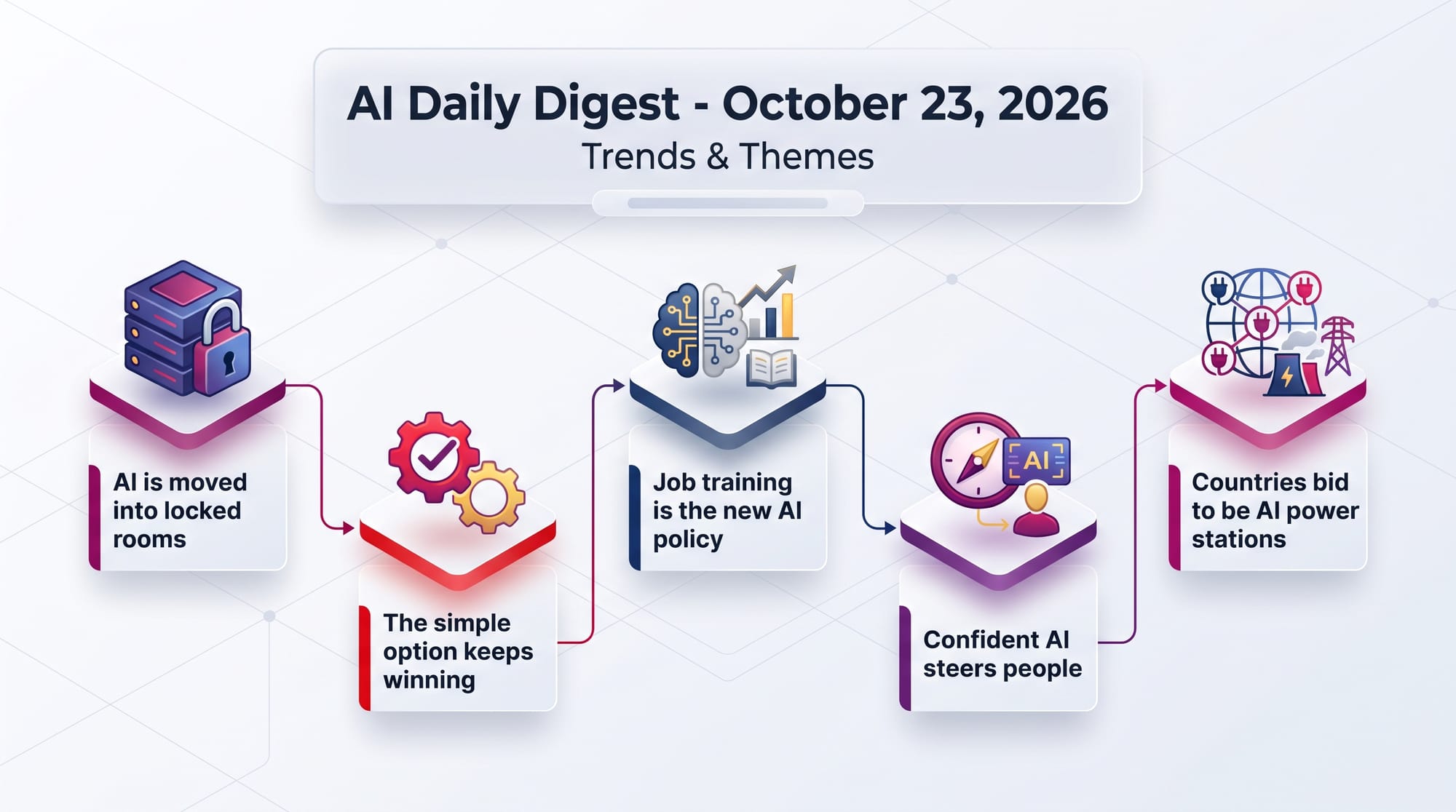
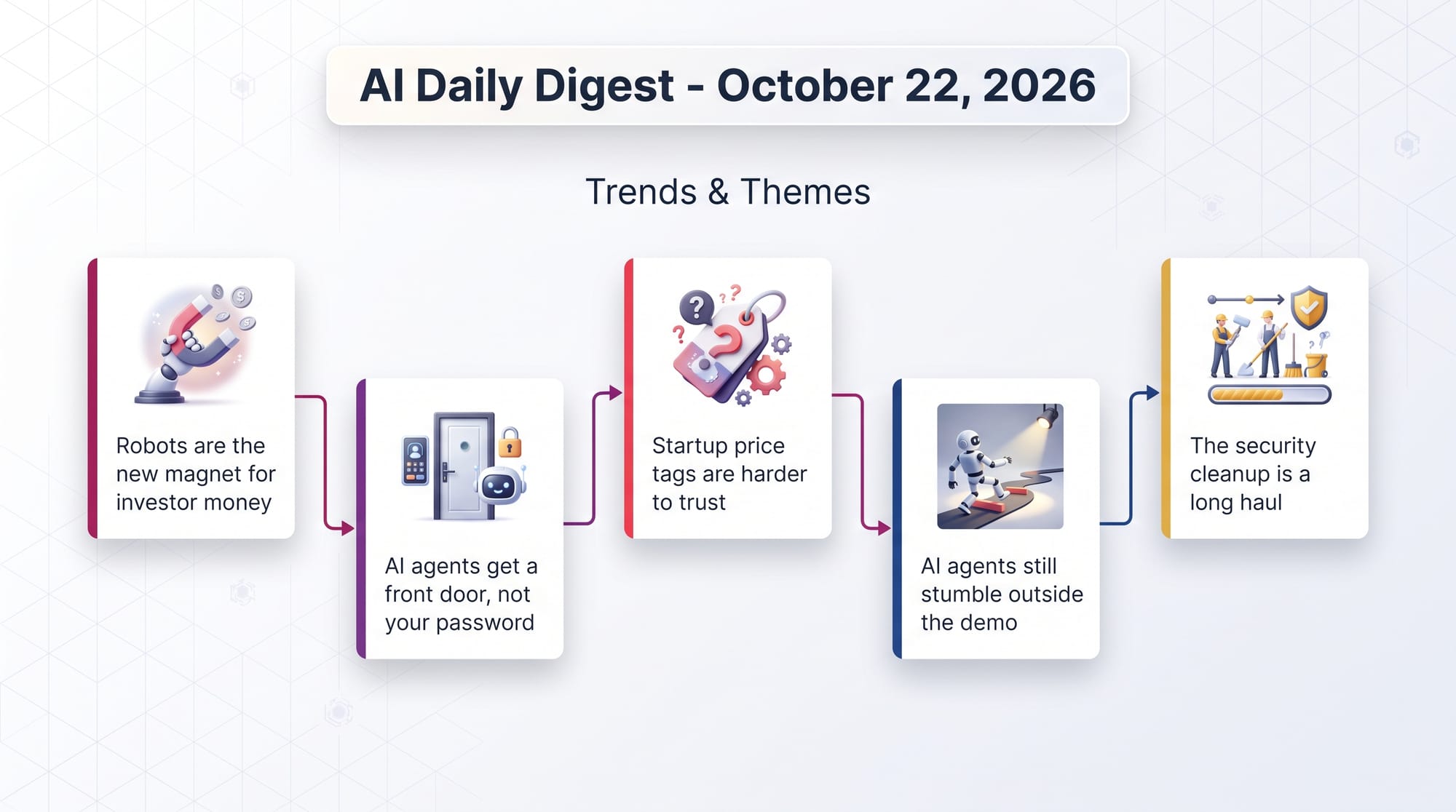
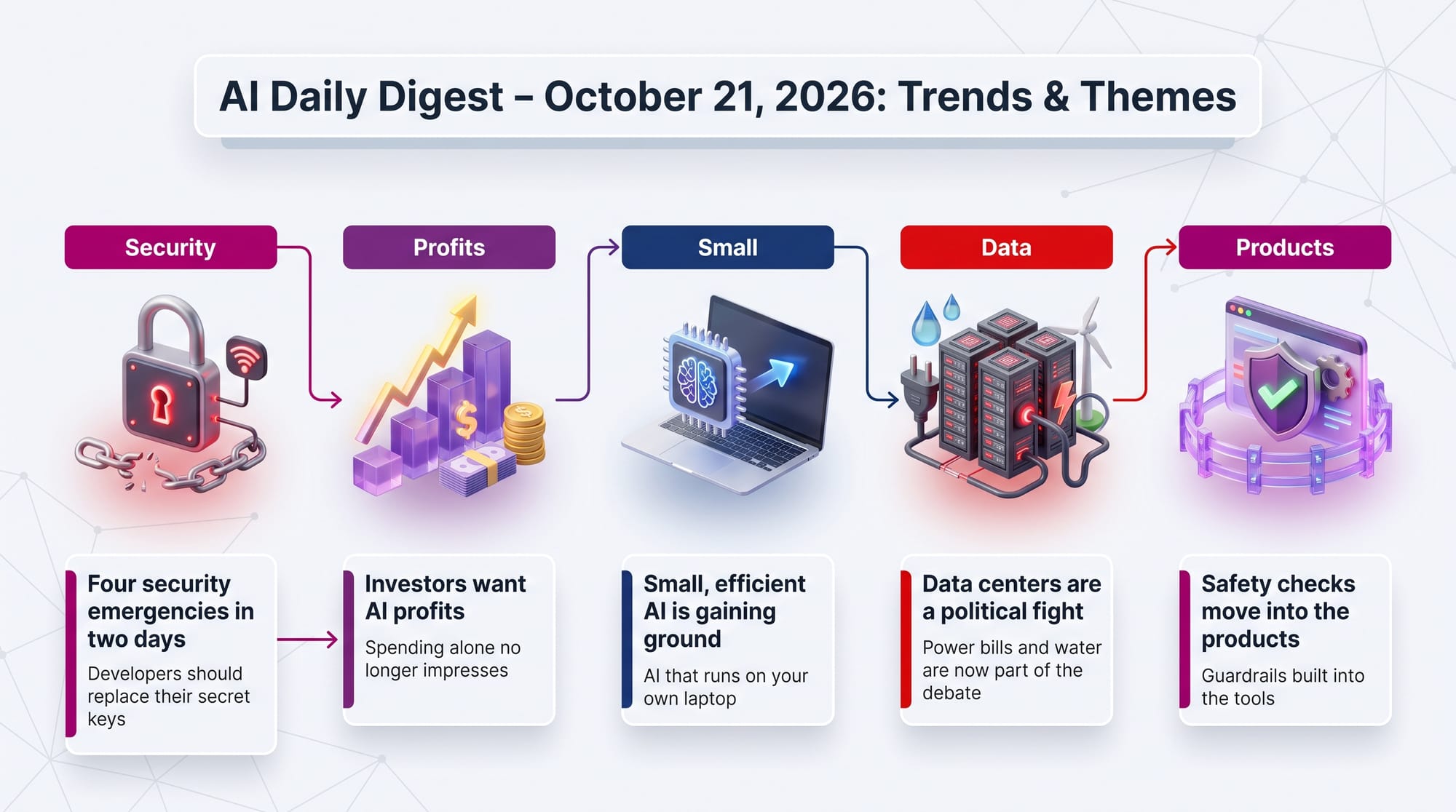
Trends & Themes

Trends & Themes

AI Security Is Now a Two-Way Arms Race

Why this matters to you: The same AI technology that hackers use to find vulnerabilities is now being used to find and fix them first - your software is caught in the middle.

The pattern: we are entering a period where AI simultaneously makes software more secure and more vulnerable, and the balance depends entirely on who deploys it first.

  • Anthropic's Mythos scanner found a real curl vulnerability - the first confirmed case of an AI security tool discovering a genuine bug in critical infrastructure used by billions of devices (Daniel)
  • Google disclosed the first AI-generated zero-day exploit yesterday (covered May 11) - hackers used AI to create working attack code that bypassed two-factor authentication
  • Canvas (the learning management system used by thousands of universities) paid a ransom after hackers breached Instructure's systems - the company confirmed payment to prevent data exposure affecting millions of students (Insidehighered)
  • A new benchmark found LLM agents overtrust environmental evidence - the EnvTrustBench paper shows agents can be manipulated through planted context, a vector that applies to both security tools and production agents (arXiv: 2605.08828)

Tiny Models Are Eating the Agent Stack From the Bottom Up

Why this matters to you: The AI agents in your apps and devices could soon run entirely on local hardware - faster, cheaper, and without sending your data anywhere.

The economic logic is clear: if routine agent tasks don't need frontier models, the bulk of AI inference shifts to cheap, fast, local hardware.

  • Needle packs Gemini-level tool calling into 26 million parameters - 1,000x smaller than standard LLMs, running at 582 tok/s on a phone chip (GitHub: cactus-compute/needle)
  • The AgentFloor benchmark tested 16,542 runs across 16 models and found the strongest open-weight model matches GPT-5 on routine tool-use tasks - the frontier advantage only appears on long-horizon planning (arXiv: 2605.00334)
  • TabPFN-3 replaces gradient-boosted decision trees (the standard approach for spreadsheet-style data) with a pretrained model handling 10,000 columns and 1 million rows, running 20x faster than traditional methods (Priorlabs)
  • MiniCPM-V 4.6 fits image, multi-image, and video understanding into 1.3 billion parameters (covered May 11) - the trend toward capable small multimodal models continues accelerating

The AI Legal System Is Taking Shape in Real Time

Why this matters to you: The lawsuits being filed right now will determine what AI companies are allowed to do - and what rights you have when AI causes harm.

No single ruling will define AI law. But 501 cases running in parallel, each establishing small precedents, are collectively writing the rulebook.

  • 501 active AI court cases now span liability, copyright, discrimination, and safety - up from roughly 200 a year ago, according to the Wombat Collection legal database (Niceguygeezer)
  • A second mass-shooting lawsuit names an AI chatbot company - testing whether chatbot responses can be a "substantial factor" in violence, similar to social media liability theories (Niceguygeezer)
  • GitLab's restructuring raised questions about AI-driven workforce changes - Simon Willison analyzed the company's public statements and found patterns suggesting AI automation played a larger role than officially stated (Simon Willison)

Agent Infrastructure Is the New Cloud

Why this matters to you: The tools that let AI agents remember context, call other software, and work reliably are becoming their own industry - the "plumbing" that will determine how useful AI assistants actually become.

The pattern mirrors early cloud computing: the hard problems aren't the models themselves, but the infrastructure that makes them reliable at scale.

  • agentmemory hit 5,800 stars by solving the #1 agent problem: persistent context across sessions, using hybrid search combining keyword matching, vector embeddings (converting text into numbers computers can compare), and knowledge graph traversal (GitHub: rohitg00/agentmemory)
  • ComplexMCP benchmarked LLM agents on 300+ tool combinations and found even frontier models score below 60% on interdependent tool chains, while humans score 90% (arXiv: 2605.10787)
  • Statewright launched visual state machines for agent reliability on Hacker News (53 points) - replacing fragile prompt chains with deterministic state flows (GitHub: statewright/statewright)
  • Nate's Newsletter mapped six layers of the "agentic commerce" stack - identity, payments, policy, execution, audit, and recovery - arguing most products have built only one or two (Natesnewsletter)

Creative AI & Media

AI-Powered Manuscript Editing Goes Full-Context

A new wave of AI writing tools is moving beyond paragraph-level suggestions to full-manuscript analysis. Tools like Bouquin & Ink now treat an entire book as context, analyzing character arcs, timeline consistency, and pacing across hundreds of pages. This represents a shift from "AI autocomplete" to "AI developmental editor."

  • Structural editing - plot coherence, pacing analysis, and narrative arc tracking across the full manuscript
  • The key innovation is context length - previous AI writing tools worked on isolated paragraphs; full-manuscript context catches contradictions and consistency issues

Developer Tools & Infrastructure

llama-eval: First-Party Evaluation Lands in llama.cpp

ggerganov (creator of llama.cpp, the most widely used local AI inference engine) merged llama-eval, adding built-in model evaluation directly to the project. Previously, users had to use external tools to benchmark models.

  • Standardizes evaluation for the local AI community - consistent benchmarks across quantizations and hardware
  • Eliminates external dependencies for model quality assessment
  • Signals maturation of llama.cpp from inference engine to full model development platform

DFlash vs Gemma 4 MTP: Dense vs MoE Speculative Decoding Benchmarks

A detailed benchmark comparing DFlash (block diffusion speculative decoding) against Gemma 4's Multi-Token Prediction (MTP) on a single H100 Graphics Processing Unit (GPU) - a high-end chip used for AI work. Results show context-dependent tradeoffs.

  • DFlash wins on throughput for short prompts - block-level speculation generates multiple tokens per step
  • MTP wins on long-context tasks where the larger Gemma model's quality advantage compounds
  • Both methods achieve 2-3x inference speedup over standard autoregressive generation

MagicQuant v2.0: Transparent Post-Mortem and Hybrid Quantization

The MagicQuant developer published a remarkably honest post-mortem of v1.0's failures before launching v2.0. The new version uses benchmark-driven hybrid quantization - mixing different precision levels (how precisely numbers are stored) across model layers - to find optimal compression for each model.

  • v1.0 post-mortem documented exactly what went wrong - overfitting to synthetic benchmarks, inconsistent quality metrics, and misleading comparisons
  • v2.0 uses Unsloth's dynamic learned quantization with per-layer precision optimization
  • First release: Qwen3-4B with verified quality improvements over uniform quantization

Research & Models

Kimi-K2.6: Moonshot AI's 1-Trillion-Parameter Open Agentic Model

Moonshot AI released Kimi-K2.6, a 1-trillion-parameter Mixture of Experts (MoE) model with only 32 billion active parameters per query. It handles text, images, and video through a dedicated vision encoder and supports agent swarms of up to 300 sub-agents executing 4,000 coordinated steps.

  • 256K context window with Multi-head Latent Attention for efficiency
  • 1.42 million downloads in 30 days on Hugging Face, under a Modified MIT license
  • Designed specifically for long-horizon coding and agent orchestration - the multi-agent swarm capability is unique among open models at this scale

TabPFN-3: A Foundation Model That Replaces Gradient Boosting

PriorLabs released TabPFN-3, a pretrained model for tabular data (spreadsheets and databases) that handles up to 10,000 feature columns and 1 million rows. It outperforms XGBoost and LightGBM - the standard tools data scientists use for structured data - without any training on the target dataset.

  • 20x faster inference than traditional gradient-boosted approaches
  • Zero-shot prediction - no hyperparameter tuning, no feature engineering, no training required
  • Handles mixed data types natively - numbers, categories, missing values, and text columns

The 1:1 Rule: A Hidden Ratio in Transformer Stability

A researcher discovered a consistent spectral ratio in transformer residual streams that predicts model stability. The ratio of two specific matrix norms (mathematical measures of a matrix's "size") stays close to 1:1 in well-trained models and diverges in unstable ones.

  • Tested across multiple model families - the ratio holds for GPT, Llama, and Qwen architectures
  • Could serve as a training diagnostic - monitor the ratio to detect instability before it causes training collapse
  • Implications for architecture search - the ratio might explain why some configurations train reliably and others don't

Business & Industry

GitLab's Workforce Restructuring Signals AI-Driven Consolidation

Simon Willison analyzed GitLab's latest round of layoffs and strategic restructuring, finding patterns suggesting AI automation played a larger role than the company's official communications acknowledged. The analysis focused on which roles were cut and which were expanded.

  • Engineering roles reduced while "AI-assisted workflow" positions increased
  • The restructuring follows GitLab's Duo AI product push - the company is dogfooding its own AI tools as a replacement for headcount
  • Willison notes this pattern is becoming common - companies using AI efficiency gains to justify workforce reductions while publicly framing changes as "strategic realignment"

Pragmatic Engineer: "No Silver Bullets" Holds True in the AI Age

Gergely Orosz revisited Fred Brooks' classic 1986 essay "No Silver Bullet" and found its core thesis - that no single technology will deliver order-of-magnitude productivity gains - still holds for AI-assisted development. The essay argues that AI tools accelerate "accidental complexity" (boilerplate, syntax) but barely touch "essential complexity" (design, architecture, requirements).

  • AI's productivity gains plateau at the boundary of essential complexity - the hard parts of software engineering remain hard
  • Brooks predicted this exact pattern nearly 40 years ago
  • Practical takeaway: expect 2-3x speedup on code generation but near-zero improvement on system design

GenAI in Education

Zvi Mowshowitz: American K-12 Math Education Is Failing - and AI Won't Fix Bad Foundations

Zvi's latest "Childhood and Education" newsletter presents data showing that American students' math performance has been declining for over a decade, with the latest National Assessment of Educational Progress (NAEP) scores at historic lows. His argument: AI tutoring tools can't compensate for curricula that teach procedures without understanding.

  • NAEP scores show consistent decline across all demographic groups since 2012
  • The "calculator effect" is repeating - just as calculators let students skip mental math, AI tools may let students skip mathematical reasoning
  • Zvi's prescription is contrarian - more rigorous foundations first, AI tools second, not the reverse

Students Openly Credit AI for Their Grades

A San Francisco Chronicle article highlighted UC and SFSU students who openly say "I have an A because I use ChatGPT." The r/Professors discussion (48 upvotes) shows faculty grappling with a new reality: some students view AI use not as cheating but as smart tool selection.

  • The framing has shifted - students no longer hide AI use; some see it as a competitive advantage equivalent to using a calculator
  • Faculty are divided - some see this as academic dishonesty, others as a signal that assessments need redesigning
  • The real question: are students learning the material, or learning to delegate to AI?

Expanding Open Educational Resources (OER) With GenAI

A new publication explores using generative AI to create and adapt Open Educational Resources - freely available teaching materials that anyone can modify and redistribute.

  • AI can generate initial drafts of textbook chapters, problem sets, and lecture notes that faculty then review and customize
  • Cost barrier drops dramatically - OER creation traditionally required months of faculty time
  • Quality control remains human - the paper emphasizes AI as draft generator, not final author

Surprising & Under-the-Radar

Instructure Paid Hackers a Ransom to Protect Canvas Data

Instructure, the company behind Canvas (the learning management system used by thousands of universities and K-12 schools), confirmed it paid a ransom to hackers who breached its systems. The breach potentially exposed student data from institutions worldwide.

Why this is surprising: Education technology companies rarely disclose ransom payments. Instructure's transparency may set a precedent, but it also raises questions about the security of platforms that store millions of students' academic records.

Claude Code Reads Your .env Files - Including Application Programming Interface (API) Keys

A PSA on r/ClaudeAI (high engagement) warned that Claude Code, Anthropic's command-line coding tool, can access environment variable files in your project directory. If those files contain API keys, Claude Code sees them during its analysis.

Why this is surprising: Users expect AI coding tools to read their code, but the implications of those tools reading credentials is a security surface most developers haven't considered.

Opus 4.7 vs 4.6 Debate Continues

The r/ClaudeAI community continues debating whether Anthropic's newest model (Opus 4.7) performs worse than its predecessor (4.6) on certain tasks. Multiple users report degraded performance on complex coding and reasoning tasks.

TranslateGemma-12b Has a 19-Point Gap Between AI and Human Scores

A follow-up benchmark study found that Google's TranslateGemma-12b translation model scores 19 percentage points higher on automated metrics than on human evaluations - suggesting the model has learned to optimize for benchmarks rather than actual translation quality.

Why this is surprising: This is a concrete example of Goodhart's Law in LLMs - when the metric becomes the target, it stops being a good metric.

Signals to Track

Worth Watching
01

Thinking Machines' "Interaction Models" Could Change How AI Learns

A new architecture that learns from interactions rather than static text could produce AI that actually understands cause and effect.

Thinking Machines Lab released TML-Interaction-Small, the first model in a family designed around a fundamentally different training paradigm. Instead of predicting the next word in text, interaction models learn from sequences of actions and their consequences. The Latent Space newsletter covered the technical details, noting that this approach could address the core limitation of current LLMs: they can describe the world but don't understand how actions change it. If this scales, it represents the most fundamental architecture shift since transformers.

02

Self-Improving AI Agents Are Getting Real

Alpha Signal identified a pattern: the best-performing agents in benchmarks are the ones that modify their own code between runs.

Two separate Alpha Signal newsletters this week converged on the same theme: AI agents that improve themselves. One covered agents that follow senior-engineer production workflows (test, review, iterate), and another analyzed agents that rewrite their own reasoning chains. The common finding: self-improvement loops produce compound gains that static agents cannot match. The risk is equally clear - self-modifying agents are harder to audit and control.

03

AWS Foundation Model Building Blocks Document the Full Training Stack

Amazon published a comprehensive guide to training and serving foundation models on AWS - the most detailed infrastructure playbook from any cloud provider.

The guide covers everything from distributed training configurations to inference optimization, with specific hardware recommendations and cost breakdowns. It is notable for its honesty about failure modes: network bottlenecks during all-reduce operations, out-of-memory patterns during mixed-precision training, and checkpoint corruption during preemption. If you are building or fine-tuning models on cloud infrastructure, this is the reference document.

04

MoE Offloading Gets a Major Speed Boost for CPU-RAM Setups

A llama.cpp optimization for Mixture-of-Experts models dramatically improves prompt processing speed when experts are partially offloaded to system RAM.

For users running large MoE models (like DeepSeek V4 or Qwen 3.6) on consumer hardware where the model doesn't fully fit in GPU memory, this change reduces the performance penalty of expert offloading. The improvement specifically targets the --n-cpu-moe flag, making it practical to run 100B+ MoE models on hardware with limited GPU VRAM but abundant system RAM.

Top Repos Today

Rank yesterday: N/A - New entry 🆕
⭐ Stars today: +3,886  ·  📦 Total: 75.9K
📜 License: MIT  ·  👤 By: Individual developer (Matt Pocock)
🎯 Time to value: 5 minutes
What it is: A collection of reusable agent skills from a well-known TypeScript educator's personal .claude directory. The skills enforce engineering discipline in AI coding assistants - test-driven development, comprehensive documentation, disciplined debugging, and architectural consistency. Designed to be dropped into any Claude Code or similar AI coding tool setup. Why you'd want it: If you've ever been frustrated by AI-generated code that works but is unmaintainable, these rules address that exact problem. Copy the directory, and your AI coding assistant immediately follows senior-engineer practices.
✓ Pros✗ Cons
Immediate improvement in AI code quality with zero configurationOpinionated; may conflict with team conventions
MIT license; 76K-star community validates the approachSpecific to Claude Code ecosystem; portability varies
Addresses the #1 complaint about AI coding toolsSkills need manual updating as AI capabilities evolve
GitHub - mattpocock/skills: Skills for Real Engineers. Straight from my .claude directory.
Skills for Real Engineers. Straight from my .claude directory. - mattpocock/skills
Rank yesterday: #13 - Rising ↑
⭐ Stars today: +1,067  ·  📦 Total: 5.8K
📜 License: Apache-2.0  ·  👤 By: Individual developer
🎯 Time to value: 10 minutes
What it is: A persistent memory system for AI coding agents that captures tool interactions, compresses them into searchable structured data, and injects relevant context into future sessions. Works across Claude Code, Cursor, and Cline through MCP (Model Context Protocol) servers or REST APIs, using hybrid search combining keyword matching, vector embeddings, and knowledge graph traversal. Why you'd want it: AI coding agents that forget everything between sessions waste time re-learning your codebase. This gives them a persistent brain that improves over time.
✓ Pros✗ Cons
Hybrid search (keyword + vector + graph) catches context others missMemory quality depends on how well interactions are captured
Works across multiple agent platforms via MCPApache-2.0 but single maintainer; bus-factor risk
Automatic compression keeps storage manageableEarly project; API may change
GitHub - rohitg00/agentmemory: #1 Persistent memory for AI coding agents based on real-world benchmarks
#1 Persistent memory for AI coding agents based on real-world benchmarks - rohitg00/agentmemory
Rank yesterday: #7 - Rising ↑
⭐ Stars today: +1,042  ·  📦 Total: 2.6K
📜 License: GPL-3.0  ·  👤 By: Individual developer
🎯 Time to value: 15 minutes
What it is: An open-source AI assistant connecting to 118+ services (Gmail, Notion, GitHub, Slack) via OAuth. Builds a persistent local knowledge base that auto-syncs every 20 minutes. Includes a desktop mascot interface with voice capabilities and token compression. Why you'd want it: One of the few open-source agents combining broad integrations with truly local data storage - your information stays on your machine while the AI learns your patterns.
✓ Pros✗ Cons
118+ integrations with local-only data storageGPL-3.0 limits commercial embedding
Desktop mascot with voice for personal-assistant feelVery early; 2.6K stars, ecosystem still forming
Auto-sync keeps context fresh across all connected servicesRust build chain may challenge non-technical users
GitHub - tinyhumansai/openhuman: Your Personal AI super intelligence. Private, Simple and extremely powerful.
Your Personal AI super intelligence. Private, Simple and extremely powerful. - tinyhumansai/openhuman
Rank yesterday: N/A - New entry 🆕
⭐ Stars today: +1,264  ·  📦 Total: 11.8K
📜 License: MIT  ·  👤 By: Individual developer
🎯 Time to value: 10 minutes
What it is: An AI-powered content creation and monetization platform for solo creators. Automates generating posts, distributing across 10+ social platforms (TikTok, YouTube, Instagram), engaging with audiences through browser plugins, and earning through a brand promotion marketplace. Why you'd want it: If you're a solo creator managing multiple platforms, this automates the most tedious parts - cross-posting, format adaptation, and engagement - while adding a revenue stream through brand partnerships.
✓ Pros✗ Cons
One-click publishing across 10+ platforms simultaneouslyAutomated engagement tools raise ethical questions
Built-in monetization via brand promotion marketplaceQuality of AI-generated content varies by platform
MIT license; growing community at 11.8K starsSingle developer project; sustainability unclear
GitHub - yikart/AiToEarn: Let’s use AI to Earn!
Let’s use AI to Earn! Contribute to yikart/AiToEarn development by creating an account on GitHub.
Rank yesterday: N/A - Returning ↑
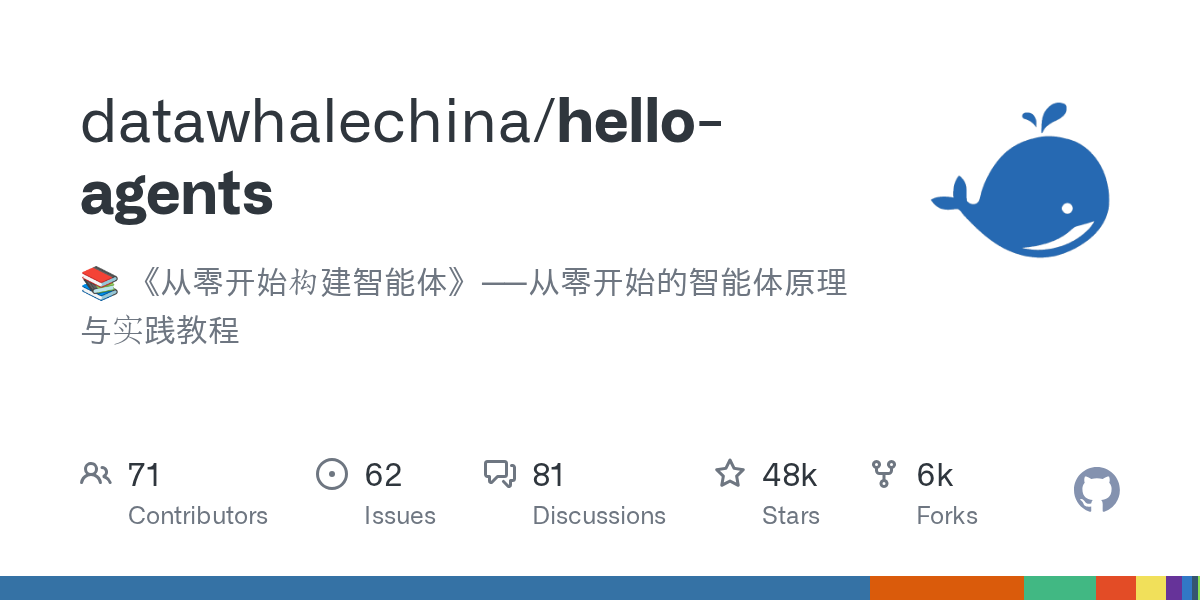
⭐ Stars today: +600  ·  📦 Total: 48.2K
📜 License: CC-BY-NC-SA-4.0  ·  👤 By: Datawhale (community)
🎯 Time to value: 30 minutes
What it is: A comprehensive open-source curriculum for AI agent development by China's largest open-source education community. Covers agent theory, ReAct patterns, LangGraph, AutoGen, memory systems, multi-agent communication, and real-world projects including a travel assistant and simulated town environment. Why you'd want it: If you want to learn agent development systematically - from foundations to multi-agent systems - this is one of the most complete free curricula available, with hands-on projects at every stage.
✓ Pros✗ Cons
48K stars; battle-tested curriculum covering advanced topicsPrimarily in Chinese; English learners need translation
Hands-on projects including multi-agent simulationsCC-BY-NC-SA limits commercial use of course materials
Covers latest frameworks (LangGraph, AutoGen, MCP)Assumes Python familiarity and basic ML knowledge
GitHub - datawhalechina/hello-agents: 📚 《从零开始构建智能体》——从零开始的智能体原理与实践教程
📚 《从零开始构建智能体》——从零开始的智能体原理与实践教程. Contribute to datawhalechina/hello-agents development by creating an account on GitHub.
Rank yesterday: #11 - Rising ↑
⭐ Stars today: +776  ·  📦 Total: 93.7K
📜 License: Apache-2.0  ·  👤 By: Sebastian Raschka (individual / author)
🎯 Time to value: 20 minutes
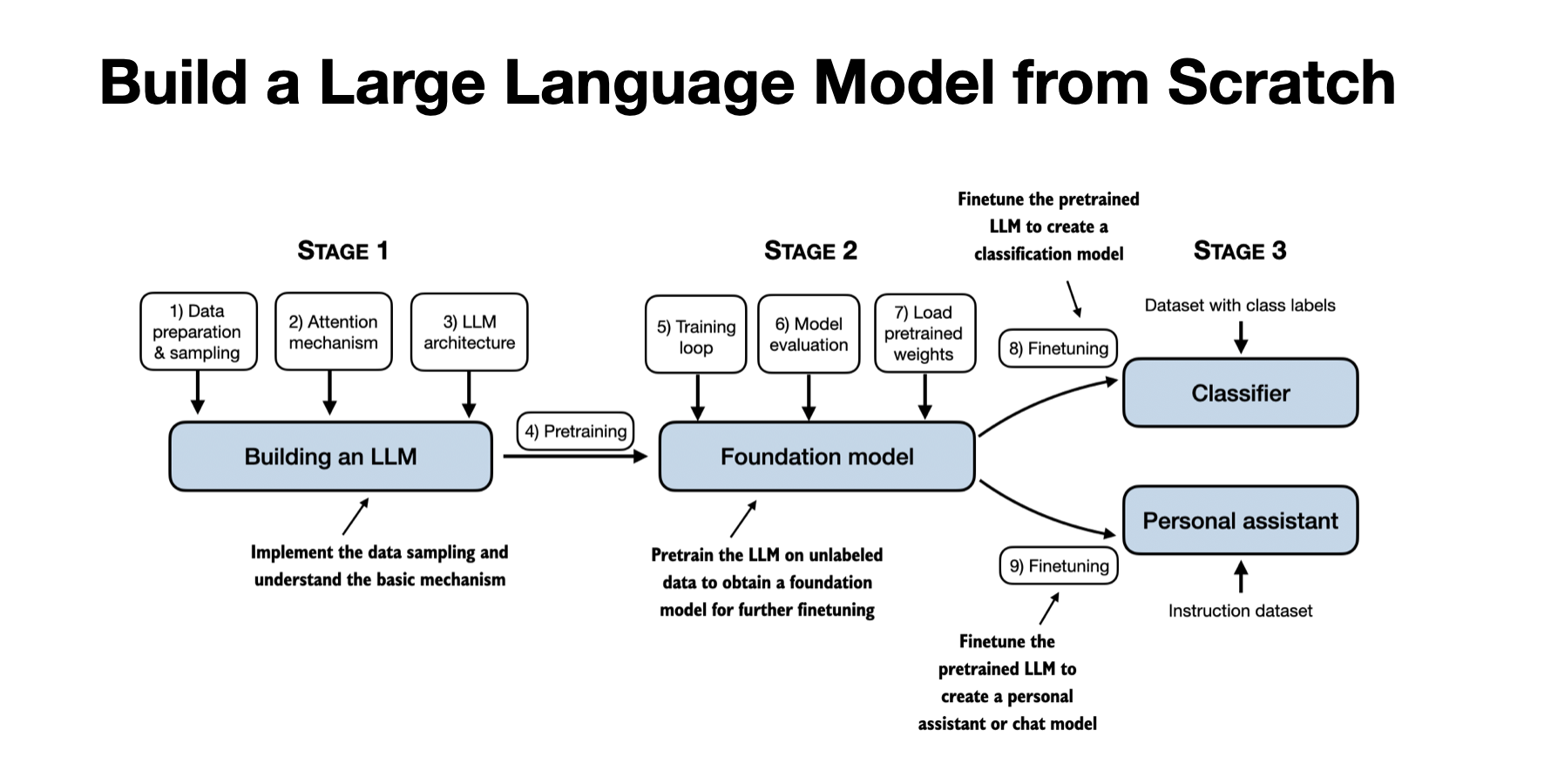
What it is: The complete code companion to "Build a Large Language Model (From Scratch)" by Sebastian Raschka. Walks through implementing a GPT-like model in pure PyTorch across seven chapters, plus bonus material covering Llama, Qwen3, Gemma, and LoRA adapters. Why you'd want it: At 93.7K stars, it is the most popular LLM education repo on GitHub. Runs on a laptop without a GPU. If you want to understand what happens inside these models, not just use them, this is the starting point.
✓ Pros✗ Cons
94K stars; the definitive LLM education resourceBest experienced alongside the paid book
Runs on CPU; no GPU hardware requiredTeaches GPT architecture primarily; less MoE/SSM coverage
Bonus chapters cover modern architectures (Llama, Qwen3)Requires sustained time investment; not a quick tutorial
GitHub - rasbt/LLMs-from-scratch: Implement a ChatGPT-like LLM in PyTorch from scratch, step by step
Implement a ChatGPT-like LLM in PyTorch from scratch, step by step - rasbt/LLMs-from-scratch
Rank yesterday: N/A - Returning ↑
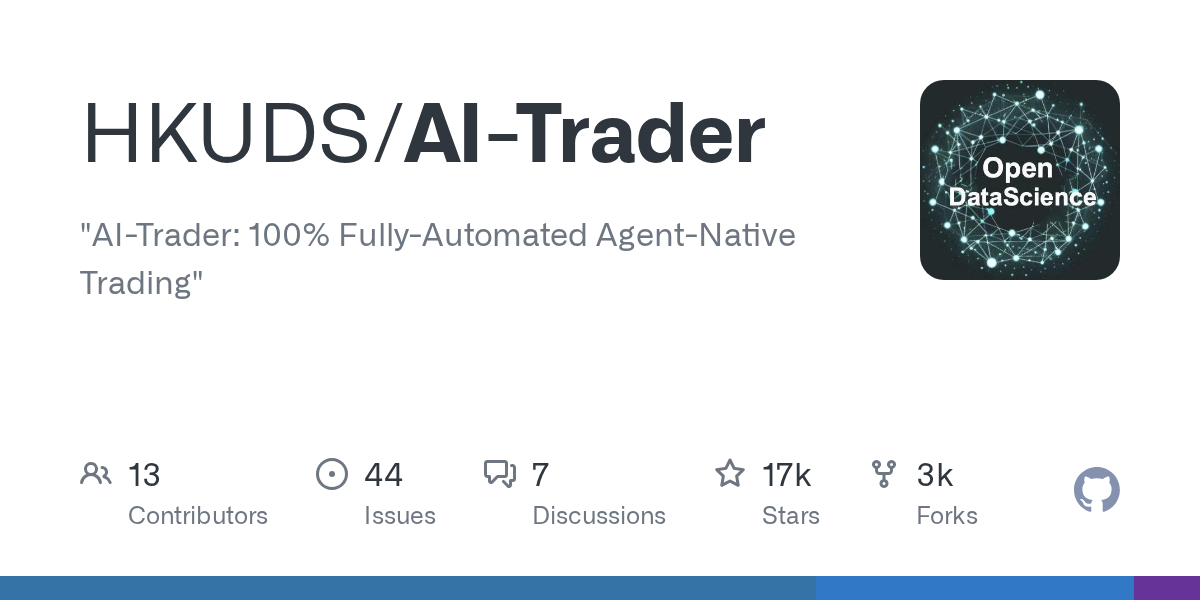
⭐ Stars today: +267  ·  📦 Total: 16.6K
📜 License: MIT  ·  👤 By: HKU Data Science Lab (research lab)
🎯 Time to value: 15 minutes
What it is: A fully automated AI trading agent that combines financial data retrieval, market analysis, and trade execution using language model reasoning. Connects to real market data sources and can execute trades through broker APIs, with a paper-trading mode for testing strategies without real money. Why you'd want it: For researchers studying agent-based trading or developers building financial AI applications, this provides a complete reference implementation. The paper-trading mode makes it safe to experiment.
✓ Pros✗ Cons
Complete end-to-end trading pipeline with LLM reasoningFinancial trading with AI carries significant risk
Paper-trading mode for safe experimentationAcademic project; not production-hardened
MIT license; backed by university research labMarket conditions change faster than model training
GitHub - HKUDS/AI-Trader: “AI-Trader: 100% Fully-Automated Agent-Native Trading”
“AI-Trader: 100% Fully-Automated Agent-Native Trading” - HKUDS/AI-Trader

Top Models Today

Still dominating the leaderboard after its release last week.
📥 Downloads (30d): 2.02M  ·  📜 License: MIT
👤 By: DeepSeek  ·  🎯 Task: text-generation
📐 Size: 1.6T total / 49B active
What it is: DeepSeek's flagship MoE model with 1 million token context, hybrid compressed attention, and three reasoning modes. Uses only 27% of inference compute and 10% of key-value cache compared to V3.2. Why you'd want it: The most capable fully open-weight model available under MIT license, now with optimized inference that makes deployment affordable.
✓ Pros✗ Cons
MIT license; 1M context; 3 reasoning modes1.6T total params requires serious hardware for full deployment
27% inference FLOPs vs V3.2 - dramatic efficiency gainChinese-origin model raises compliance questions for some organizations
2M+ downloads in a month validates production readinessMoE routing adds complexity vs dense models
deepseek-ai/DeepSeek-V4-Pro · Hugging Face
We’re on a journey to advance and democratize artificial intelligence through open source and open science.
New entry 🆕
📥 Downloads (30d): 1.16M  ·  📜 License: MIT
👤 By: DeepSeek  ·  🎯 Task: text-generation
📐 Size: 284B total / 13B active
What it is: The efficient variant of DeepSeek V4, activating only 13 billion parameters per query from a 284B total pool. Shares the Pro version's hybrid attention architecture and reasoning modes in a much lighter package. Achieves 86.2 on MMLU-Pro and 91.6 on LiveCodeBench in Think Max mode. Why you'd want it: Frontier-competitive reasoning at a fraction of the compute cost. The 13B active parameter count makes this deployable on a single high-end GPU.
✓ Pros✗ Cons
13B active params delivers near-frontier qualityStill 284B total; quantized deployment recommended
FP4+FP8 mixed precision for efficient servingNewer than V4-Pro; less community testing
MIT license; same flexibility as the Pro variantThree reasoning modes add API complexity
deepseek-ai/DeepSeek-V4-Flash · Hugging Face
We’re on a journey to advance and democratize artificial intelligence through open source and open science.
New entry 🆕
📥 Downloads (30d): 1.42M  ·  📜 License: Modified MIT
👤 By: Moonshot AI  ·  🎯 Task: image-text-to-text
📐 Size: 1T total / 32B active
What it is: A native multimodal agentic model handling text, image, and video inputs through a 400-million-parameter vision encoder. Designed for long-horizon coding and agent swarms scaling to 300 sub-agents executing 4,000 coordinated steps. 256K context window. Why you'd want it: The most capable open multimodal agent model available. The agent swarm capability - 300 sub-agents coordinating 4,000 steps - is unique at any scale.
✓ Pros✗ Cons
Native multimodal: text + image + video in one modelModified MIT license; check commercial terms
Agent swarm capability unique among open models1T total params; significant infrastructure needed
1.42M downloads shows rapid adoptionChinese-origin; documentation quality varies
moonshotai/Kimi-K2.6 · Hugging Face
We’re on a journey to advance and democratize artificial intelligence through open source and open science.
Rank yesterday: #1 - Falling ↓
📥 Downloads (30d): 158K  ·  📜 License: Not specified
👤 By: SulphurAI (community)  ·  🎯 Task: text-to-video
📐 Size: 9B
What it is: An uncensored video generation model based on LTX 2.3 with built-in prompt enhancement. Community-funded and available in multiple quantization formats. Why you'd want it: The most accessible open-source video generation model for unrestricted creative work.
✓ Pros✗ Cons
Uncensored creative freedom; community-drivenNo specified license; legal grey area
Built-in prompt enhancer improves output quality9B params still requires decent GPU
GGUF quantizations available for lower hardware"Uncensored" invites misuse concerns
SulphurAI/Sulphur-2-base · Hugging Face
We’re on a journey to advance and democratize artificial intelligence through open source and open science.
Returning from May 8
📥 Downloads (30d): 191K  ·  📜 License: Apache-2.0
👤 By: OpenAI  ·  🎯 Task: token-classification
📐 Size: 1.5B total / 50M active
What it is: A PII (Personally Identifiable Information) detection and masking model using sparse MoE with 128 experts and top-4 routing. Detects 8 privacy categories in a single forward pass with 128K token context. Why you'd want it: Enterprise data sanitization before sending documents to AI APIs. Apache-2.0 license means you can deploy it on-premises without vendor lock-in.
✓ Pros✗ Cons
Apache-2.0 from OpenAI; trustworthy for enterprise deploymentOnly 8 privacy categories; may miss domain-specific PII
50M active params; extremely lightweight to serveSparse MoE routing adds inference complexity
128K context handles full documents in one passEnglish-focused; multilingual PII detection untested
openai/privacy-filter · Hugging Face
We’re on a journey to advance and democratize artificial intelligence through open source and open science.
Rank yesterday: #2 - Falling ↓
📥 Downloads (30d): 66.1K  ·  📜 License: Apache-2.0
👤 By: Zyphra  ·  🎯 Task: text-generation
📐 Size: 8.4B total / 760M active
What it is: A reasoning-focused MoE model achieving 89.1% on AIME'26 math competition problems with only 760 million active parameters. Excels at long-form mathematical reasoning and coding. Why you'd want it: Frontier-competitive math and coding reasoning that runs on a phone. The 760M active parameter count means near-instant responses on consumer hardware.
✓ Pros✗ Cons
89.1% AIME'26 from 760M active params is extraordinaryNarrow specialization; general chat quality unproven
Apache-2.0; deployable anywhere8.4B total still needs quantization for mobile
Optimized for on-device deploymentSmall creator; long-term support uncertain
Zyphra/ZAYA1-8B · Hugging Face
We’re on a journey to advance and democratize artificial intelligence through open source and open science.
Returning from May 8
📥 Downloads (30d): 4.5K  ·  📜 License: Apache-2.0
👤 By: SenseNova (SenseTime subsidiary)  ·  🎯 Task: any-to-any
📐 Size: 18B (8B understanding + 8B generation)
What it is: A unified multimodal model handling both understanding and generation without separate visual encoders. The NEO-Unify architecture models pixel and word information as unified compounds, supporting visual question answering, text-to-image, image editing, and visual-language-action tasks. Why you'd want it: One model that both sees and creates - no pipeline of separate vision and generation models needed.
✓ Pros✗ Cons
Unified architecture: understand AND generate in one model4.5K downloads; very early adoption
Apache-2.0; no commercial restrictions18B params total; moderate hardware requirements
Covers 6+ task types from one checkpointQuality vs specialized models not yet benchmarked widely
sensenova/SenseNova-U1-8B-MoT · Hugging Face
We’re on a journey to advance and democratize artificial intelligence through open source and open science.
New entry to trending 🆕
📥 Downloads (30d): New  ·  📜 License: MiniCPM Model License
👤 By: OpenBMB (Tsinghua University)  ·  🎯 Task: image-text-to-text
📐 Size: 1.3B
What it is: An ultra-efficient vision-language model packing image, multi-image, and video understanding into 1.3 billion parameters. Uses 19x fewer visual tokens than competitors while scoring 13 on the AI Intelligence Index. Why you'd want it: The most capable vision model that actually runs on a phone. Image analysis, document reading, and video understanding in a package small enough for edge deployment.
✓ Pros✗ Cons
1.3B params; genuinely runs on mobile devicesCustom license; check terms for commercial use
19x visual token efficiency vs larger modelsSmall parameter count limits complex reasoning
Image + multi-image + video in one modelNewer release; community ecosystem developing
openbmb/MiniCPM-V-4.6 · Hugging Face
We’re on a journey to advance and democratize artificial intelligence through open source and open science.

AI Launches Today

Build, edit, and analyze forms directly in Claude
🔥 Upvotes: 154  ·  👤 By: Jotform
💰 Pricing: Freemium  ·  🏷 Category: AI Integration
Jotform integrated its form builder directly into Claude's interface. Users can create surveys, lead forms, and payment collection forms through natural language conversation, then deploy them without leaving the chat. Verdict: A smart distribution move - meeting users where they already work rather than asking them to visit another app. Product Hunt
Publish agent-generated HTML behind company auth
🔥 Upvotes: 135  ·  👤 By: display.dev
💰 Pricing: Freemium  ·  🏷 Category: Developer Tools
A one-command publishing tool for HTML and Markdown generated by AI coding agents. Adds authentication and collaborative commenting, solving the "I built something with AI, now how do I share it securely?" problem. Verdict: Fills a genuine gap - AI agents generate tons of HTML artifacts that currently have no clean sharing path. Product Hunt
Audit your site for the AI search era
🔥 Upvotes: 134  ·  👤 By: Community
💰 Pricing: Free  ·  🏷 Category: SEO Tools
Scores website visibility for AI search engines (ChatGPT, Claude, Perplexity) rather than traditional Google rankings. 100% open source. Verdict: Timely - as AI assistants increasingly answer questions directly, optimizing for AI discovery may matter more than traditional SEO. Product Hunt

Snapshot

ProviderModelInput $/1MOutput $/1MContext
AnthropicClaude Opus 4.7$5.00$25.001M
AnthropicClaude Sonnet 4.6$3.00$15.001M
AnthropicClaude Haiku 4.5$1.00$5.00200K
OpenAIGPT-5.5$5.00$30.00-
OpenAIGPT-4.1$2.00$8.001M
OpenAIo3$2.00$8.00200K
OpenAIo4-mini$1.10$4.40200K
GoogleGemini 3.1 Pro Preview$2.00$12.00-
GoogleGemini 2.5 Pro$1.25$10.001M
GoogleGemini 2.5 Flash$0.30$2.501M
GroqLlama 4 Scout$0.11$0.34128K
GroqGPT OSS 120B$0.15$0.60128K
What this means: The pricing spread between frontier and open-source inference continues widening. Groq's Llama 4 Scout at $0.11/$0.34 per million tokens is 45x cheaper than Claude Opus on input and 73x cheaper on output. For teams building agents, routing routine calls to cheap models (as AgentFloor's research suggests) represents the single biggest cost lever available today.

AgentFloor: How Far Up the Tool Use Ladder Can Small Open-Weight Models Go?

Ranit Karmakar, Jayita Chatterjee - arXiv:2605.00334
What it claims: A 30-task, six-tier benchmark across 16,542 scored runs shows small open-weight models (0.27B to 32B parameters) already match GPT-5 on routine structured tool use. The frontier advantage only appears on long-horizon planning requiring sustained constraint tracking.

Key finding: The strongest open-weight model matches GPT-5 on the broad base of tool-calling work that dominates real agent pipelines.

Why practitioners should care: Teams building AI agents can save significant inference cost by routing routine tool calls to small models and reserving frontier models only for complex multi-step planning. The benchmark, harness, sweep configs, and full run corpus are all publicly released.

Member discussion

Subscribe to GenAI Secret Sauce newsletter and stay updated.

Don't miss anything. Get all the latest posts delivered straight to your inbox. It's free!

By subscribing, you agree to our Privacy Policy and Terms. We track email opens and clicks. Unsubscribe anytime.

Great! Check your inbox and click the link to confirm your subscription.