GenAI Secret Sauce Daily Digest - 2026-05-13

OpenAI Winds Down Its Fine-Tuning Platform · Google and SpaceX Plan to Put AI Data Centers in Orbit · Google Turns Android Into an AI Agent With Gemini Intelligence
GenAI Secret Sauce Daily Digest - 2026-05-13

Watch today's digest as a video summary (generated by NotebookLM)

Statistically Speaking

80% of the AI engineering industry was already
OpenAI Winds Down Its Fine-Tuning Platform
Top Story
$25 billion while doubling down on custom model
OpenAI Winds Down Its Fine-Tuning Platform
100K tokens
OpenAI Winds Down Its Fine-Tuning Platform
$1.75 trillion IPO later in 2026, selling investors
Google and SpaceX Plan to Put AI Data Centers in Orbit
26 and Pixel 10, expanding to watches and
Google Turns Android Into an AI Agent With Gemini Intelligen
75% of the power consumed by Liberty Utilities'
49,000 Lake Tahoe Residents Told to Find New Power as Utilit

One Thing to Tell Your Friends

A utility company just told 49,000 Lake Tahoe residents to find their own electricity because AI data centers need the power more.

TL;DR

Trends
AI Infrastructure Is Displacing Human Infrastructure, The Agent OS Is Arriving on Every Screen, and Fine.
Dev Tools
agentmemory: Persistent Memory That Replaces Static Config Files, OpenAI Codex Gets a Native Windows Sandbox, and Simon Willison's CSP Allow.
Business
Google's Project Suncatcher Signals a $1.75T SpaceX IPO Play, OpenAI's Strategic Consolidation: Sora, Fine, and Anders Hejlsberg Predicts Developers Become Code Review Managers.
Worth Watching
Project Suncatcher Could Reshape Who Controls AI Compute, agentmemory Is Building the Memory Layer That Agent OSes Need, and SenseNova U1: "Mixture of Thoughts" Architecture Appears.
GitHub
Leading repos: tinyhumansai/openhuman (+1,595), rohitg00/agentmemory (+1,335), and obra/superpowers (+1,506).
HuggingFace
Leading models: SulphurAI/Sulphur-2 (535K), Zyphra/ZAYA1 (110K), and openbmb/MiniCPM-V (3.49K).
Product Hunt
Top launches: PitchDrop AI, Blaze 2.0, and BossHogg.
API Pricing
What this means: Anthropic's Opus 4.7 and OpenAI's GPT-5.5 are now priced identically on input ($5/1M) but Opus is 17% cheaper on output ($25 vs $30).
arXiv
Are Tools All We Need? Unveiling the Tool — The overhead of tool orchestration in current agent architectures creates a measurable performance ceiling that grows with task complexity.

Hot off the Presses

01

OpenAI Winds Down Its Fine-Tuning Platform

What this means for you: If you were planning to customize an AI model for your business, the most popular way to do it just disappeared - but the replacement (longer, better prompts) is easier and cheaper for most people.

OpenAI announced on May 8 that its fine-tuning API is no longer accessible to new users, with existing users given months to complete training jobs. Latent Space's analysis today confirms this represents a permanent strategic shift, not a temporary pause.

  • 80% of the AI engineering industry was already moving away from fine-tuning - very long prompts and constitutional AI approaches handle most use cases
  • Top-tier companies diverged - Cursor and Cognition actually increased their open model fine-tuning, creating a two-tier market
  • Cognition raised $25 billion while doubling down on custom model training, validating the niche path
  • Jeremy Howard predicted this decline in 2023 - the writing was on the wall when context windows expanded past 100K tokens
02

Google and SpaceX Plan to Put AI Data Centers in Orbit

What this means for you: The race for AI computing power is now so intense that companies are literally leaving the planet to find more electricity and space - which tells you how fast demand is growing.

The Wall Street Journal reported that Google and SpaceX are in talks under "Project Suncatcher" to launch satellites equipped with Google's custom TPU chips by 2027. The pitch: unlimited solar energy, no land constraints, no community displacement.

  • SpaceX is positioning this ahead of its projected $1.75 trillion IPO later in 2026, selling investors on orbital compute as the cheapest long-term option
  • Google is talking to other rocket companies too - not exclusive to SpaceX
  • Current economics don't work - launch costs remain far higher than ground-based facilities today
  • The timing is telling - this announcement comes the same week Lake Tahoe residents learned they're losing electricity to terrestrial data centers
03

Google Turns Android Into an AI Agent With Gemini Intelligence

What this means for you: Starting this summer, your Android phone will be able to complete multi-step tasks on its own - booking workouts, ordering groceries from a photo of your fridge, and filling out complex web forms while you watch.

Announced at the Android Show: I/O Edition, Gemini Intelligence transforms Android from a phone operating system into an agent platform. The AI can navigate apps, understand what's on screen, and chain actions across services.

Privacy approach: everything opt-in, on-device processing, persistent notification whenever Gemini acts in background.

  • App Automation - Gemini navigates your phone to complete tasks: book a class, build a shopping cart from a screenshot of a grocery list
  • Rambler - new Gboard feature that cleans filler words, pauses, and language switches from voice dictation into ready-to-send text
  • Text-to-Widget - describe what you want in plain language and Android builds the widget
  • Chrome Auto-Browse (late June) - handles routine web tasks like reserving parking spots
  • Rolling out summer 2026 starting with Samsung Galaxy S26 and Pixel 10, expanding to watches and laptops later
04

Meta's Unblockable AI Account Sparks User Revolt on Threads

What this means for you: A major social platform just decided that its AI chatbot is more important than your ability to choose who you interact with - setting a precedent for AI being forced into social spaces.

Meta launched @meta.ai on Threads, enabling Grok-like public AI replies to posts. Users immediately discovered they cannot block the account - unlike every other account on the platform.

  • Over a million posts addressed the issue, with "Users cannot block Meta AI" trending to the top
  • Users tried reporting for spam - blocks did not take effect
  • Meta's response: you can mute, use "not interested," or hide AI replies to your posts - but you cannot block
  • Currently limited to five countries (Malaysia, Saudi Arabia, Mexico, Argentina, Singapore) but the account is visible globally
  • The design choice is deliberate - Meta is testing whether users will accept mandatory AI presence in exchange for "helpful" information
05

49,000 Lake Tahoe Residents Told to Find New Power as Utility Prioritizes Data Centers

What this means for you: AI's hunger for electricity is no longer an abstract infrastructure problem - it's now directly threatening to cut power to entire communities so data centers can run.

NV Energy notified Liberty Utilities on May 13 that it will stop delivering power to the Lake Tahoe region by May 2027. The reason: surging electricity demands from AI data centers in Northern Nevada.

“75% of an entire community's power supply - redirected to AI data centers in 12 months.”
  • NV Energy supplies 75% of the power consumed by Liberty Utilities' 49,000 California-side customers
  • Electricity prices already up 77% since late 2022 in the region
  • "It's like we don't exist" - Danielle Hughes, CEO of consumer advocacy group Tahoe Spark
  • Sierra Club demanding formal proceedings rather than backroom utility deals
  • South Lake Tahoe's mayor said the cutoff triggered "a great deal of concern" among residents and businesses

Trends & Themes

Trends & Themes

AI Infrastructure Is Displacing Human Infrastructure

Why this matters to you: The electricity powering AI doesn't come from nowhere - and the places being asked to give it up are fighting back.

The pattern: AI companies need power, utilities redirect it from residents, residents protest, and companies start exploring extreme alternatives (space, nuclear, offshore). The displacement is no longer hypothetical.

  • Lake Tahoe (49,000 residents) told to find new power within 12 months for data centers
  • Maryland ($2 billion grid bill) for out-of-state AI data centers (covered May 10)
  • Google's orbital pivot - "Project Suncatcher" exists partly because terrestrial expansion is hitting political limits
  • Electrek reports data center grid strain is driving residential solar and battery demand as a survival mechanism

The Agent OS Is Arriving on Every Screen

Why this matters to you: Your phone, computer, and browser are all being redesigned around the assumption that AI will drive them on your behalf.

The shift: interfaces designed for human fingers are being redesigned for AI navigation. The OS is becoming a runtime for agents, not just a desktop for people.

  • Google Gemini Intelligence - Android becomes an agent platform this summer, navigating apps autonomously
  • OpenAI Codex Windows Sandbox - coding agent gets native OS-level isolation, indicating agents need their own security boundaries
  • Google DeepMind AI Pointer (covered May 12) - even the cursor itself is being AI-augmented
  • agentmemory (7,500+ stars) - persistent memory layer so coding agents remember context across sessions

Fine-Tuning Is Redistributing, Not Dying

Why this matters to you: If you were considering customizing an AI model, the path just split in two - and which side you're on depends on your budget.

A two-tier market is forming: prompt engineering for most, fine-tuning for the best-resourced. The middle ground - casual fine-tuning by typical developers - is what actually died.

  • OpenAI deprecated fine-tuning for the 80% who were already trending toward prompt-only approaches
  • Cursor and Cognition increased their custom model training - proving the technique matters more at the top
  • Cognition's $25B valuation validates that elite fine-tuning creates defensible advantages
  • Context windows expanding to 1M tokens reduce the need to bake knowledge into weights

Platform Power Is Being Tested by Forced AI Presence

Why this matters to you: Companies are deciding that you must interact with their AI whether you want to or not - and the pushback is immediate and fierce.

The companies choosing forced AI presence (Meta) are getting immediate backlash. Those choosing opt-in (Google, Anthropic) are seeing adoption. The market is voting.

  • Meta's unblockable @meta.ai on Threads - a million protest posts in hours
  • OpenAI's "2026 Side Quest massacre" - shutting down Sora, fine-tuning to consolidate around core products
  • Claude Connectors now reach 200+ apps - voluntary integration vs. forced presence represents two philosophies
  • Google's opt-in approach with Gemini Intelligence - persistent notification, user control preserved

Creative AI & Media

SulphurAI Sulphur-2-base: Open 9B Text-to-Video Model

What this means for you: A new open-source video generation model is trending #1 on HuggingFace with over 535,000 downloads.
  • 9 billion parameters - large enough for quality, small enough to potentially run on consumer hardware
  • 826 likes on HuggingFace in its first days of release
  • Text-to-video generation as the primary task
  • Open weights - anyone can download and run it

Supertonic 3: Lightning-Fast On-Device Multilingual TTS

What this means for you: Generate natural speech from text on your phone or laptop without needing an internet connection.

Try it: GitHub

  • Runs via ONNX - cross-platform, no cloud required
  • Multilingual support - multiple languages in a single model
  • Swift implementation - optimized for Apple devices
  • 4,950 downloads and trending on HuggingFace
  • 1,048 stars today on GitHub (supertone-inc/supertonic)

NVIDIA's New AI Video Model Is an Efficiency Monster

What this means for you: NVIDIA is competing in the AI video generation space with a model optimized for speed rather than raw quality.
  • Two Minute Papers covered the release, highlighting inference speed improvements
  • Focused on efficiency - generates video faster per frame than competing approaches

Developer Tools & Infrastructure

agentmemory: Persistent Memory That Replaces Static Config Files

What it does: A local service that automatically captures and retrieves AI coding agent context across sessions - replacing static CLAUDE.md files with a searchable database.

Try it: GitHub - npx @agentmemory/agentmemory

  • Three-layer architecture - capture (12 lifecycle hooks), processing (SHA-256 dedup + privacy filtering), retrieval (BM25 + vector + graph combined via Reciprocal Rank Fusion)
  • ~1,900 tokens per session vs ~22,000 for CLAUDE.md approach - 91% token reduction
  • Four-tier memory consolidation - Working → Episodic → Semantic → Procedural with Ebbinghaus-curve decay
  • Local-first - REST API on 127.0.0.1:3111, no external dependencies
  • 7,568 total stars, +1,335 today on GitHub

OpenAI Codex Gets a Native Windows Sandbox

What it does: Codex on Windows now blocks filesystem writes outside the working folder and prevents network access without approval - matching macOS and Linux safety.

  • Previously, Windows users had no sandbox - forced to approve every command or enable unrestricted mode
  • Solution uses lower-privilege sandbox users - filesystem permission boundaries, firewall rules, local policy changes
  • AppContainer rejected - too restrictive for the shells, Git, Python, and build tools agents need
  • Windows lacks native equivalents to macOS Seatbelt or Linux seccomp/bubblewrap

Simon Willison's CSP Allow-list: Interactive Security Permission Management

What it does: A tool that intercepts Content Security Policy violations in sandboxed iframes and prompts users to approve blocked domains in real time.

Try it: Simon Willison

  • Custom fetch() implementation intercepts CSP violations
  • Parent window prompts for domain approval, adds to connect-src allow-list
  • Built using GPT-5.5 in the Codex desktop app - demonstrating AI-assisted security tooling
  • Makes CSP discoverable rather than opaque - developers see exactly what's being blocked and why

GitHub Spec-Kit: Spec-Driven Development Toolkit

What it does: GitHub's official toolkit for specification-driven development - a methodology where you write the spec first and code follows.

Try it: GitHub

  • 98,326 total stars - massive community adoption
  • +1,159 stars today - still growing rapidly
  • Python-based toolkit
  • Aligns with the agent-first development pattern - specs give AI agents clearer targets than natural language instructions

Research & Models

Zyphra ZAYA1-8B: New 9B General-Purpose Model

What this means for you: A new competitor in the dense 8-9B model size class that's trending heavily on HuggingFace.
  • 9 billion parameters - the sweet spot for local deployment on consumer GPUs
  • 110,000 downloads already
  • 474 likes - strong community interest
  • From Zyphra - a relatively new lab making waves in the efficient model space

OpenBMB MiniCPM-V-4.6: Tiny Multimodal Model

What this means for you: A 1-billion-parameter model that handles both images and text - small enough to run on a phone.
  • 1B parameters - extraordinarily small for a vision-language model
  • Image-text-to-text task - analyze images and respond in natural language
  • 480 likes, 3,490 downloads in its first days
  • Continues the "small models that punch above their weight" trend we've tracked for weeks

Position Paper: Agentic AI Orchestration Should Be Bayes-Consistent (ICML 2026)

What this means for you: A 25+ author position paper argues that AI agent systems need mathematical guarantees to be reliable - not just vibes and testing.
  • Proposes Bayes-consistency as a formal requirement for agent orchestration
  • Accepted at ICML 2026 - top machine learning venue
  • Addresses a real gap - current agent frameworks have no formal reliability guarantees
  • Authored by Theodore Papamarkou, Pierre Alquier and 25+ additional researchers

Business & Industry

Google's Project Suncatcher Signals a $1.75T SpaceX IPO Play

  • SpaceX IPO projected at $1.75 trillion later in 2026
  • Orbital data centers are being pitched as an IPO narrative - future cheapest compute location
  • Google hedging by talking to multiple rocket companies simultaneously
  • Current economics are negative - but the bet is on exponential cost curves

OpenAI's Strategic Consolidation: Sora, Fine-Tuning Both Cut

  • Fine-tuning API deprecated May 8 - no new users, existing users have months
  • "2026 Side Quest massacre" - industry term for OpenAI cutting non-core products
  • Focus narrowing to Chat, API, and Codex as primary revenue drivers
  • Cognition fills the gap with $25B valuation for specialized fine-tuning services

Anders Hejlsberg Predicts Developers Become Code Review Managers

  • Creator of TypeScript, C#, and Turbo Pascal gave a rare interview
  • "Developers will evolve into managers overseeing AI agents" - code review becomes the primary craft
  • AI struggles with compiler-level tasks requiring big-picture type understanding
  • Training data volume determines AI effectiveness per language, not language design

GenAI in Education

RAG Architecture for AI Agents: The 85% Context Rediscovery Problem

What this means for you: AI systems in education and enterprise are wasting massive compute by re-learning the same information every single time they're used.
  • Agents rediscover 85% of their context every run - the system doesn't remember what it already knows
  • Classic vector search is insufficient - agents need permissions, policies, history, and provenance simultaneously
  • Token waste compounds - each redundant retrieval costs money and adds latency
  • Architectural shift needed - from vector-search-as-RAG to a full "knowledge layer" with access control, memory, and write-back

Claude Connectors Reach 200+ Integrations

  • One-click bridges between Claude and existing apps (Notion, Slack, Gmail, HubSpot, etc.)
  • Key advice: toggle per conversation - connectors consume tokens during context processing
  • Read-only first - observe behavior before enabling write capabilities
  • Recommended starting trio: meetings (Granola), email (Gmail), and team communication (Slack)

Surprising & Under-the-Radar

Boris Mann: "I Have 11 AI Agents" Is as Meaningless as "I Have 11 Spreadsheets"

The number of AI agents you run tells people nothing about your actual capability or output. The industry is in a counting phase (like early cloud: "we use 47 microservices!") that will eventually mature into outcome metrics.

Zvi: 90-Day Vulnerability Disclosure Windows Are Now 89 Days Too Long

AI security tools like Claude Mythos are finding thousands of critical vulnerabilities in weeks - timeframes that make traditional responsible disclosure windows dangerously slow. The governance infrastructure hasn't adapted.

OpenAI's Privacy Filter Model on HuggingFace

OpenAI released a 1B-parameter token classification model specifically for privacy filtering - identifying and redacting personal information in text. It has 207,000 downloads and 1,430 likes, making it one of the most popular utility models on the platform.

Open Human: "Personal AI Super Intelligence" Hits #1 on GitHub Trending

A Rust-based project claiming to be a private, local AI assistant gained 1,595 stars in one day and 5,394 total. The description promises "private, simple, and extremely powerful" - though projects making such claims warrant skepticism.

Signals to Track

Worth Watching
01

Project Suncatcher Could Reshape Who Controls AI Compute

If orbital data centers work, the bottleneck for AI shifts from "who has land and power" to "who has rockets" - and only a handful of companies have rockets.

Google and SpaceX plan to test space-based TPU computing by 2027. The economics don't work today, but SpaceX's declining launch costs follow exponential improvement curves. If a $1.75T IPO depends on this narrative becoming real, expect aggressive timelines. What changes for ordinary people: where AI runs determines who regulates it - and space has almost no regulation.

02

agentmemory Is Building the Memory Layer That Agent OSes Need

A local memory service for AI agents gained 1,335 GitHub stars in one day - suggesting developers are desperate for this primitive.

The 91% token reduction vs. static config files (1,900 vs 22,000 tokens/session) is economically compelling. If agents need an OS, they need persistent memory, and this is the leading open-source candidate. What changes for ordinary people: AI assistants that actually remember your preferences and past conversations without sending data to the cloud.

03

SenseNova U1: "Mixture of Thoughts" Architecture Appears

A Chinese lab released a model with a novel "Mixture of Thoughts" (MoT) architecture - potentially a new paradigm alongside Mixture of Experts.

SenseNova's U1-8B-MoT (18B total, 8B active) is trending on HuggingFace with an "Any-to-Any" task type. If MoT works like MoE but for reasoning strategies rather than parameter subsets, it could enable models that switch thinking styles mid-inference. What changes for ordinary people: AI that adapts its problem-solving approach depending on what you ask.

04

The "Agent Skills" Pattern Is Consolidating Into a Standard

Three of the top 20 GitHub trending repos today are agent skills frameworks - obra/superpowers (189K stars), K-Dense-AI/scientific-agent-skills (21K), and mattpocock/skills (78K).

Previously: May 12 - Matt Pocock's skills repo hit 76,000 stars.

Today: The repo added another 3,372 stars (now 78,894) and two competing frameworks are surging alongside it. The pattern of giving AI agents structured skills rather than freeform prompts appears to be consolidating into an industry standard. What changes for ordinary people: AI coding tools become dramatically more reliable when given specific rules rather than hoping they guess correctly.

Top Repos Today

Rank yesterday: New entry 🆕
⭐ Stars today: +1,595  ·  📦 Total: 5,394
📜 License: Unknown  ·  👤 By: Independent dev
🎯 Time to value: 15 minutes
What it is: A Rust-based personal AI assistant that runs entirely on your machine. It promises "super intelligence" that's private and simple - a local-first AI companion that doesn't send your data anywhere. Why you'd want it: If you want an AI assistant that never touches the cloud and runs fast (Rust performance), this is the pitch. The privacy-first angle resonates with the "local AI" community.
✓ Pros✗ Cons
Fully private, local-firstExtremely new - 5 days old
Rust performance"Super intelligence" claims unverified
Simple setup promisedUnknown model capabilities
GitHub - tinyhumansai/openhuman: Your Personal AI super intelligence. Private, Simple and extremely powerful.
Your Personal AI super intelligence. Private, Simple and extremely powerful. - tinyhumansai/openhuman
Rank yesterday: #4 - Rising ↑
⭐ Stars today: +1,335  ·  📦 Total: 7,568
📜 License: MIT  ·  👤 By: Independent developer
🎯 Time to value: 10 minutes
What it is: Persistent memory for AI coding agents. Instead of static markdown files, it provides a local service with lifecycle hooks, deduplication, and multi-strategy retrieval (BM25 + vector + graph) that automatically captures context across coding sessions. Why you'd want it: Your AI coding assistant will actually remember what you worked on yesterday - without manual note-taking and at 91% lower token cost than config files.
✓ Pros✗ Cons
91% token reduction vs CLAUDE.mdRequires always-running local service
Automatic context captureKey features disabled by default
Privacy-filtered (strips API keys)TypeScript + Rust dual-stack
GitHub - rohitg00/agentmemory: #1 Persistent memory for AI coding agents based on real-world benchmarks
#1 Persistent memory for AI coding agents based on real-world benchmarks - rohitg00/agentmemory
Rank yesterday: #2 - Falling ↓
⭐ Stars today: +1,506  ·  📦 Total: 189,472
📜 License: MIT  ·  👤 By: Community
🎯 Time to value: 5 minutes
What it is: An agentic skills framework and software development methodology that provides structured capabilities for AI coding agents. Think of it as a curriculum of skills your AI assistant can learn. Why you'd want it: Makes AI coding agents dramatically more reliable by giving them specific, tested patterns rather than hoping they figure things out from context.
✓ Pros✗ Cons
Massive community (189K stars)Large skill library to configure
Battle-tested methodologyShell-based, limited language support
Works with multiple AI toolsOpinionated workflow
GitHub - obra/superpowers: An agentic skills framework & software development methodology that works.
An agentic skills framework & software development methodology that works. - obra/superpowers
Rank yesterday: #6 - Rising ↑
⭐ Stars today: +1,829  ·  📦 Total: 9,462
📜 License: Unknown  ·  👤 By: CloakHQ
🎯 Time to value: 20 minutes
Previously: May 10 - Featured in Worth Watching as source-level anti-detection Chromium. What it is: A modified Chromium browser that passes every bot detection test. Designed as a drop-in Playwright replacement for web automation that won't get blocked. Why you'd want it: AI agents that browse the web keep getting blocked by bot detection. This solves that problem at the browser engine level rather than with fragile workarounds.
✓ Pros✗ Cons
Passes all bot detectionEthical concerns with anti-detection
Drop-in Playwright replacementSource-level mods may lag Chromium updates
Highest star gain today (+1,829)Unclear long-term maintenance
GitHub - CloakHQ/CloakBrowser: Stealth Chromium that passes every bot detection test. Drop-in Playwright replacement with source-level fingerprint patches. 30/30 tests passed.
Stealth Chromium that passes every bot detection test. Drop-in Playwright replacement with source-level fingerprint patches. 30/30 tests passed. - CloakHQ/CloakBrowser
Rank yesterday: #3 - Falling ↓
⭐ Stars today: +1,159  ·  📦 Total: 98,326
📜 License: MIT  ·  👤 By: GitHub (Microsoft)
🎯 Time to value: 10 minutes
What it is: GitHub's official toolkit for spec-driven development. Write specifications first, then use AI agents to implement them - a methodology that gives AI clear targets rather than ambiguous natural language. Why you'd want it: AI coding agents perform dramatically better when given a formal spec rather than a chat message. This codifies that workflow with GitHub's backing.
✓ Pros✗ Cons
Official GitHub backing (98K stars)Requires upfront spec writing
Works with any AI coding toolAdds process overhead
Python-based, extensibleLearning curve for spec format
GitHub - github/spec-kit: 💫 Toolkit to help you get started with Spec-Driven Development
💫 Toolkit to help you get started with Spec-Driven Development - github/spec-kit
Rank yesterday: New entry 🆕
⭐ Stars today: +1,048  ·  📦 Total: 4,319
📜 License: Unknown  ·  👤 By: Supertone (Korean AI audio company)
🎯 Time to value: 5 minutes
What it is: Lightning-fast, on-device, multilingual text-to-speech engine running natively via ONNX. No cloud required - generates natural speech locally on phones and laptops. Why you'd want it: Generate voice content without sending text to any server. Fast enough for real-time applications, multilingual, and runs on Apple Silicon natively.
✓ Pros✗ Cons
Fully on-device, no cloudNew release, limited community testing
ONNX for cross-platformSwift-primary may limit non-Apple use
Multilingual in single modelUnknown voice quality vs cloud TTS
GitHub - supertone-inc/supertonic: Lightning-Fast, On-Device, Multilingual TTS — running natively via ONNX.
Lightning-Fast, On-Device, Multilingual TTS — running natively via ONNX. - supertone-inc/supertonic
Rank yesterday: #1 - Falling ↓
⭐ Stars today: +3,372  ·  📦 Total: 78,894
📜 License: MIT  ·  👤 By: Matt Pocock (TypeScript educator)
🎯 Time to value: 2 minutes
Previously: May 12 - Covered as gaining 76,000 stars. What it is: A curated collection of skills (structured rules) for AI coding agents, taken directly from Matt Pocock's personal .claude directory. Copy skills into your own config to make your AI assistant better at specific tasks. Why you'd want it: The fastest path to making Claude Code or similar tools dramatically better at TypeScript, testing, and code review.
✓ Pros✗ Cons
Highest absolute star gain (+3,372)TypeScript-focused
Copy-paste simplicitySkills are author's opinions
Real-world tested workflowMay not suit all coding styles
GitHub - mattpocock/skills: Skills for Real Engineers. Straight from my .claude directory.
Skills for Real Engineers. Straight from my .claude directory. - mattpocock/skills
Rank yesterday: #8 - Holding steady ➡
⭐ Stars today: +439  ·  📦 Total: 13,344
📜 License: MIT  ·  👤 By: Daniel Miessler (security researcher)
🎯 Time to value: 30 minutes
What it is: Agentic AI infrastructure designed to magnify human capabilities. A TypeScript framework for building personal AI systems that work together as an integrated platform. Why you'd want it: If you want to build your own AI-powered productivity system rather than relying on SaaS tools, this provides the architectural foundation.
✓ Pros✗ Cons
From respected security researcherRequires significant setup
Focuses on human augmentationTypeScript knowledge needed
Privacy-conscious designOpinionated architecture
GitHub - danielmiessler/Personal_AI_Infrastructure: Agentic AI Infrastructure for magnifying HUMAN capabilities.
Agentic AI Infrastructure for magnifying HUMAN capabilities. - danielmiessler/Personal_AI_Infrastructure

Top Models Today

Open-source text-to-video model surging with 535K downloads in its first week
📥 Downloads (30d): 535K  ·  📜 License: Unknown
👤 By: SulphurAI  ·  🎯 Task: Text-to-Video
📐 Size: 9B
What it is: A 9-billion-parameter text-to-video generation model that converts text descriptions into video clips. It represents the latest push to democratize video generation capabilities previously limited to closed systems like Sora and Runway. Why you'd want it: Generate video content from text prompts without paying per-generation fees or waiting for API access.
✓ Pros✗ Cons
Open weights for self-hosting9B params needs significant GPU
535K downloads validates interestQuality unknown vs closed models
No per-generation API costsLicense terms unclear
SulphurAI/Sulphur-2-base · Hugging Face
We’re on a journey to advance and democratize artificial intelligence through open source and open science.
New general-purpose model from an emerging lab gaining fast traction
📥 Downloads (30d): 110K  ·  📜 License: Unknown
👤 By: Zyphra  ·  🎯 Task: General
📐 Size: 9B
What it is: A 9-billion-parameter general-purpose language model from Zyphra, an emerging AI lab. Positioned in the competitive 8-9B parameter class alongside Llama, Gemma, and Qwen models. Why you'd want it: Another option for the "runs on a single consumer GPU" size class, potentially with architectural innovations from a fresh team.
✓ Pros✗ Cons
9B sweet spot for local runningNew lab, limited track record
110K downloads shows early trustTask capabilities unclear
Fresh architecture possibilitiesBenchmark comparisons pending
Zyphra/ZAYA1-8B · Hugging Face
We’re on a journey to advance and democratize artificial intelligence through open source and open science.
A 1B vision-language model that runs on phones
📥 Downloads (30d): 3.49K  ·  📜 License: Unknown
👤 By: OpenBMB (Tsinghua)  ·  🎯 Task: Image-Text-to-Text
📐 Size: 1B
What it is: An extraordinarily small multimodal model (1 billion parameters) that can analyze images and respond in natural language. From the team at Tsinghua University's OpenBMB lab. Why you'd want it: Run image analysis on a phone or edge device with near-zero compute cost. Useful for accessibility, document scanning, or visual question-answering where cloud latency is unacceptable.
✓ Pros✗ Cons
1B params - runs anywhereQuality limited by tiny size
Image + text understandingNarrow compared to larger VLMs
Academic backing (Tsinghua)Low download count so far
openbmb/MiniCPM-V-4.6 · Hugging Face
We’re on a journey to advance and democratize artificial intelligence through open source and open science.
The 862B MoE model continues dominating downloads
📥 Downloads (30d): 2.42M  ·  📜 License: MIT
👤 By: DeepSeek  ·  🎯 Task: Text Generation
📐 Size: 862B
What it is: DeepSeek's massive Mixture-of-Experts model with 862 billion total parameters. Despite its size, community-built quantization and engines have made it runnable on consumer hardware. Why you'd want it: The most capable open-weight model available, now practically usable thanks to community optimization efforts.
✓ Pros✗ Cons
Most capable open modelEnormous resource requirements
MIT license - fully openQuantization needed for consumer use
2.42M downloads proves utilityChinese lab - geopolitical concerns
deepseek-ai/DeepSeek-V4-Pro · Hugging Face
We’re on a journey to advance and democratize artificial intelligence through open source and open science.
Novel "Mixture of Thoughts" architecture from a Chinese lab
📥 Downloads (30d): 7.73K  ·  📜 License: Unknown
👤 By: SenseNova (SenseTime)  ·  🎯 Task: Any-to-Any
📐 Size: 18B (8B active)
What it is: A model using a novel "Mixture of Thoughts" (MoT) architecture - potentially activating different reasoning strategies per query rather than different parameter subsets (as in MoE). From SenseTime, one of China's largest AI companies. Why you'd want it: If MoT works as implied, the model could adapt its thinking approach based on the problem type - using analytical reasoning for math and creative reasoning for writing within the same model.
✓ Pros✗ Cons
Novel MoT architectureUnproven paradigm
Only 8B active paramsLimited documentation
Any-to-Any flexibilityFrom SenseTime - access restrictions
sensenova/SenseNova-U1-8B-MoT · Hugging Face
We’re on a journey to advance and democratize artificial intelligence through open source and open science.

AI Launches Today

AI-powered pitch deck analysis and feedback
👤 By: PitchDrop  ·  🏷 Category: AI Products
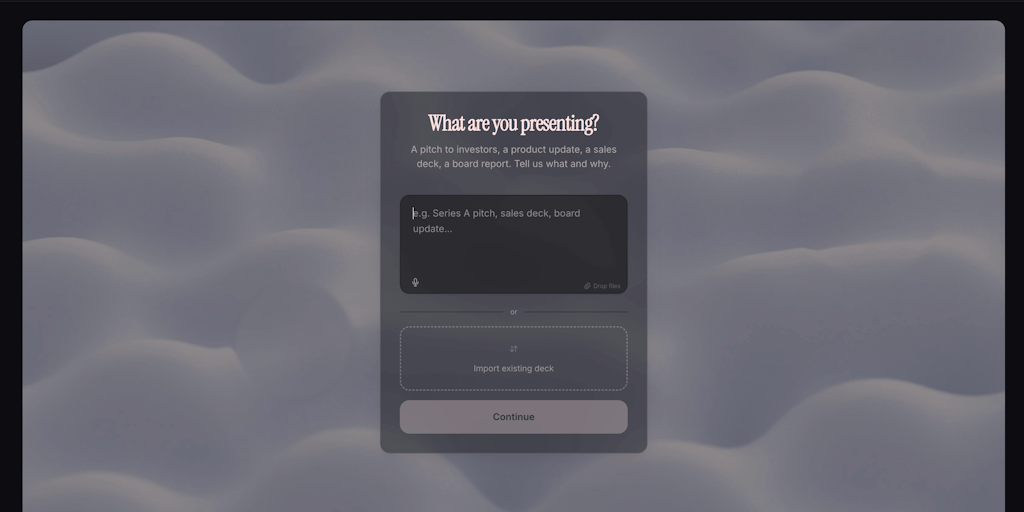
PitchDrop uses AI to analyze startup pitch decks and provide feedback on structure, narrative, and investor appeal. Aimed at founders preparing for fundraising who want objective feedback before meeting investors. Verdict: Useful niche tool for pre-seed founders who can't afford pitch coaches.
PitchDrop.ai: Turn your pitch into a live, branded URL that wins deals | Product Hunt
PitchDrop is the first AI-native pitch builder. Built around the conversation that wins investors, partners, customers, anyone whose first impression matters. Your pitch isn’t a PDF or PPTX. It’s a personalized, branded, motion-rich web page at its own URL, password-protected. An AI advisor that gains context as you tell it more. Brand-aware in 60 seconds, paste your URL or upload a design.md. Built with an arc that lands and gets you the deal.
AI content creation and scheduling platform
👤 By: Blaze  ·  🏷 Category: AI Content
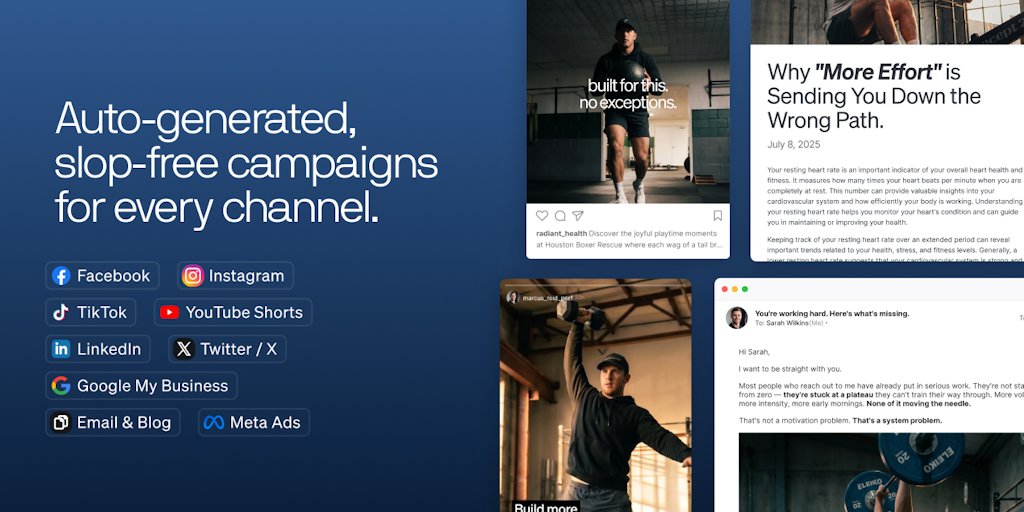
Major update to Blaze's AI content creation platform, adding scheduling, multi-channel publishing, and improved generation capabilities for marketing teams. Verdict: The content creation space is crowded, but integrated scheduling is a genuine differentiator for solo marketers.
Blaze | Marketing, Done for You | Product Hunt
Blaze 2.0 is the marketing solution for people who don’t have time to do marketing. It learns your business, your audience, and your voice — then creates and manages your entire content strategy, automatically. Like having a full-time marketer on your team without the salary.
AI meeting assistant for managers
👤 By: BossHogg  ·  🏷 Category: AI Productivity
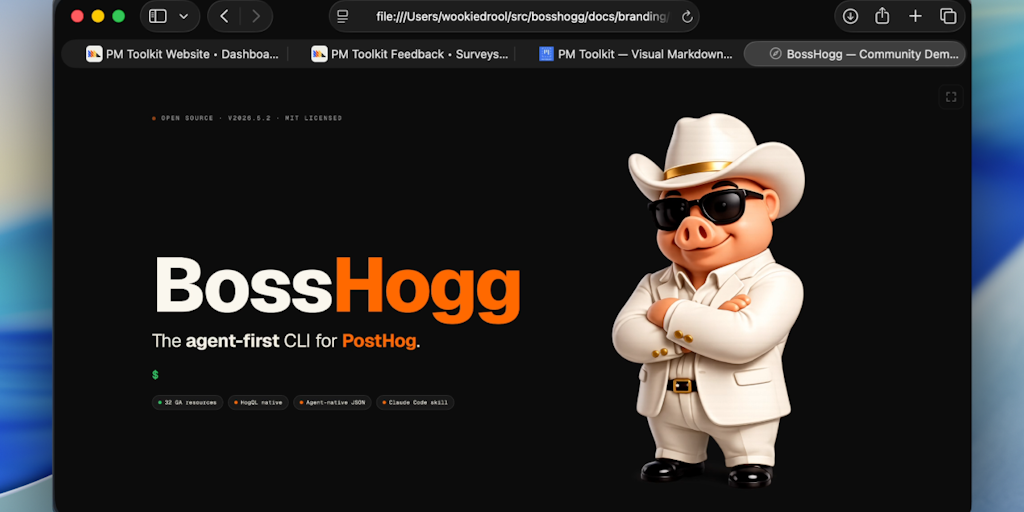
An AI assistant specifically designed for people managers - summarizes meetings, tracks action items, identifies team sentiment, and generates follow-up messages. Verdict: Narrow focus (managers only) could be a strength if execution is good - the generic meeting bot market is oversaturated.
BossHogg | Agent-first CLI for PostHog analytics and feature flags | Product Hunt
BossHogg gives AI coding agents and terminal-native developers a compact, scriptable way to operate PostHog without loading a large MCP tool surface into every session.

Snapshot

ProviderModelInput $/1MOutput $/1MContext
AnthropicClaude Opus 4.7$5.00$25.00200K
AnthropicClaude Sonnet 4.6$3.00$15.00200K
AnthropicClaude Haiku 4.5$1.00$5.00200K
OpenAIGPT-5.5$5.00$30.001M
DeepSeekV4-Pro (open)Free (self-host)Free (self-host)128K
What this means: Anthropic's Opus 4.7 and OpenAI's GPT-5.5 are now priced identically on input ($5/1M) but Opus is 17% cheaper on output ($25 vs $30). GPT-5.5 offers 5x the context window (1M vs 200K). For budget workloads, Claude Haiku at $1/$5 remains the best price-to-quality ratio from a major provider. DeepSeek V4-Pro being MIT-licensed means the most capable open model is effectively free for anyone with hardware.

Are Tools All We Need? Unveiling the Tool-Use Tax in LLM Agents

Kaituo Zhang, Zhen Xiong, Mingyu Zhong et al. - arXiv:2605.00136
What it claims: Every time an AI agent uses a tool (searches the web, runs code, calls an API), there is a hidden efficiency cost - a "tool-use tax" - that compounds across multi-step tasks and can exceed the benefit of the tool itself.

Key finding: The overhead of tool orchestration in current agent architectures creates a measurable performance ceiling that grows with task complexity.

Why practitioners should care: If you're building AI agents that chain multiple tools, this paper quantifies why your system feels slower than expected and suggests architectural patterns to reduce the tax. As agents become the default deployment pattern, understanding these costs becomes critical for system design.

Member discussion

Subscribe to GenAI Secret Sauce newsletter and stay updated.

Don't miss anything. Get all the latest posts delivered straight to your inbox. It's free!

By subscribing, you agree to our Privacy Policy and Terms. We track email opens and clicks. Unsubscribe anytime.

Great! Check your inbox and click the link to confirm your subscription.