
On this page
A Non-Coder’s Guide to AI Agent Design Patterns
If 2025 was the year of creating your perfect prompts to make you more productive, then 2026 is going to be the year you build out your intelligent workflows and design your AI agent teammate.
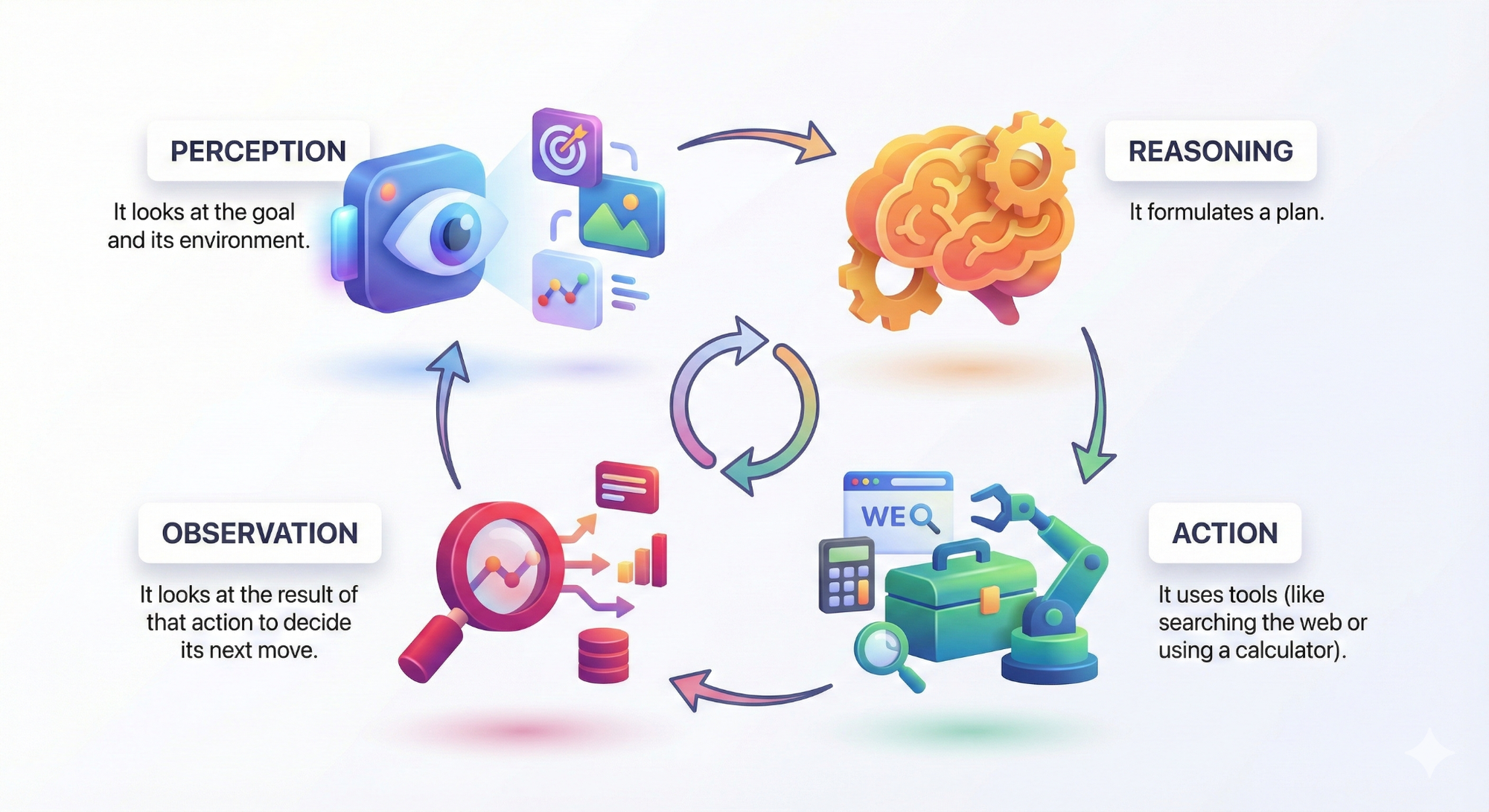
Before we create our new AI agent teammate, we need to understand how they think. A standard chatbot maps an input to an output based on probability. An agent, however, uses a "Perception-Action Loop".
When you give an agent a goal (e.g., "Plan a marketing campaign"), it doesn't just guess. It follows a cycle of cognition:
- Perception: It looks at the goal and its environment.
- Reasoning: It formulates a plan.
- Action: It uses tools (like searching the web or using a calculator).
- Observation: It looks at the result of that action to decide its next move .
This ability to "figure it out as they go" is what makes them autonomous. To harness this power, we use Design Patterns. Think of these patterns not as technical specs, but as job descriptions for your digital workforce.
Part 1: The Solo Stars (Single Agent Patterns)
Every great team starts with a strong individual contributor. These patterns are for when you need one AI to handle a task from start to finish.
1. The "ReAct" Agent (The Reference Librarian)
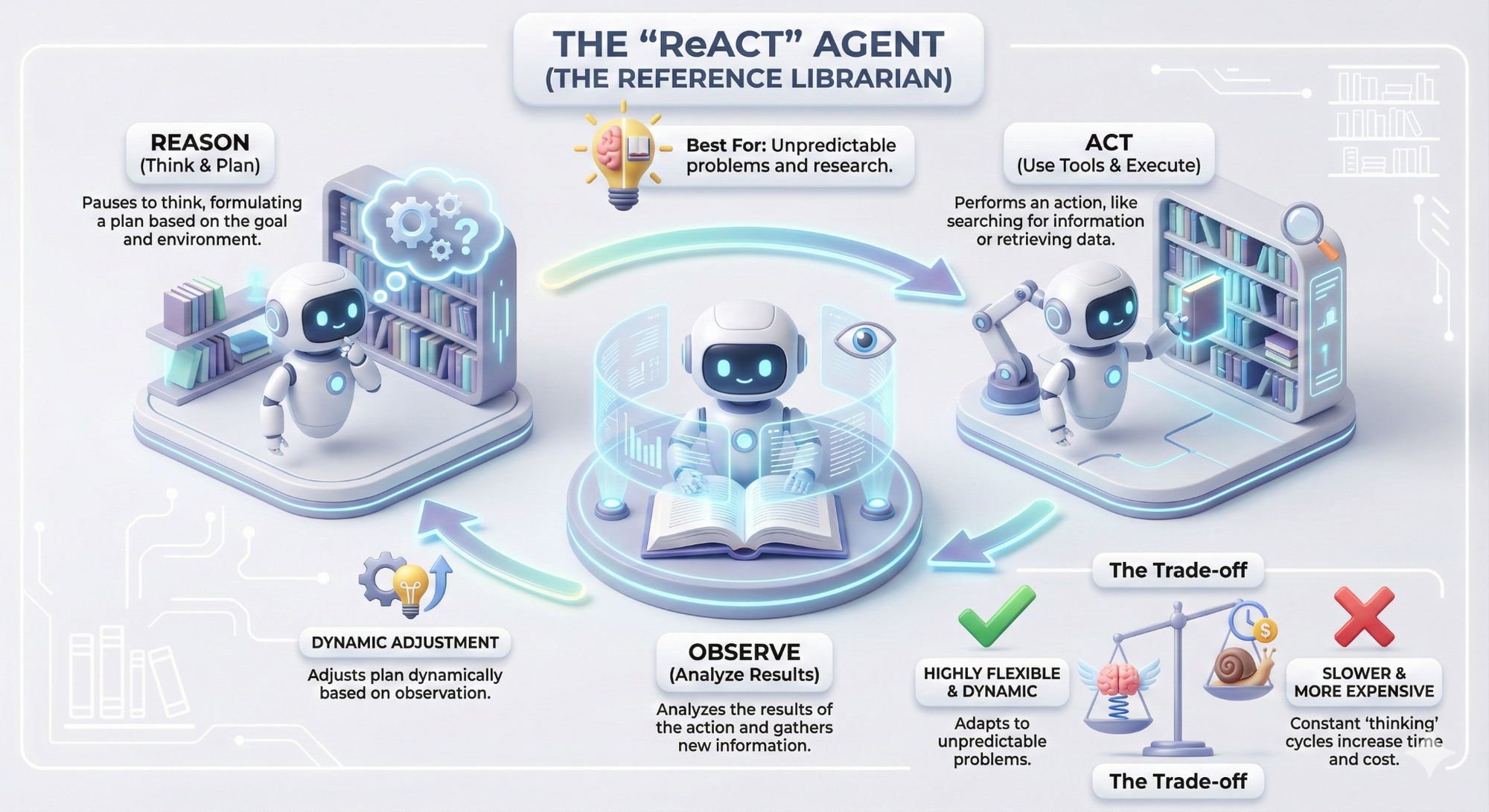
Best For: Unpredictable problems and research.
This is the most common and flexible pattern. "ReAct" stands for Reason + Act. Imagine a reference librarian asked a difficult trivia question. They don't just guess. They pause (Reason), walk to the shelf (Act), read a book (Observe), realize they need a different book, and try again.
- How it works: The agent "thinks out loud" step-by-step. It acts, observes the result, and adjusts its plan dynamically.
- The Trade-off: It is highly flexible but can be slower and more expensive because it stops to "think" after every single action.
2. The "ReWOO" Agent (The Drive-Thru)
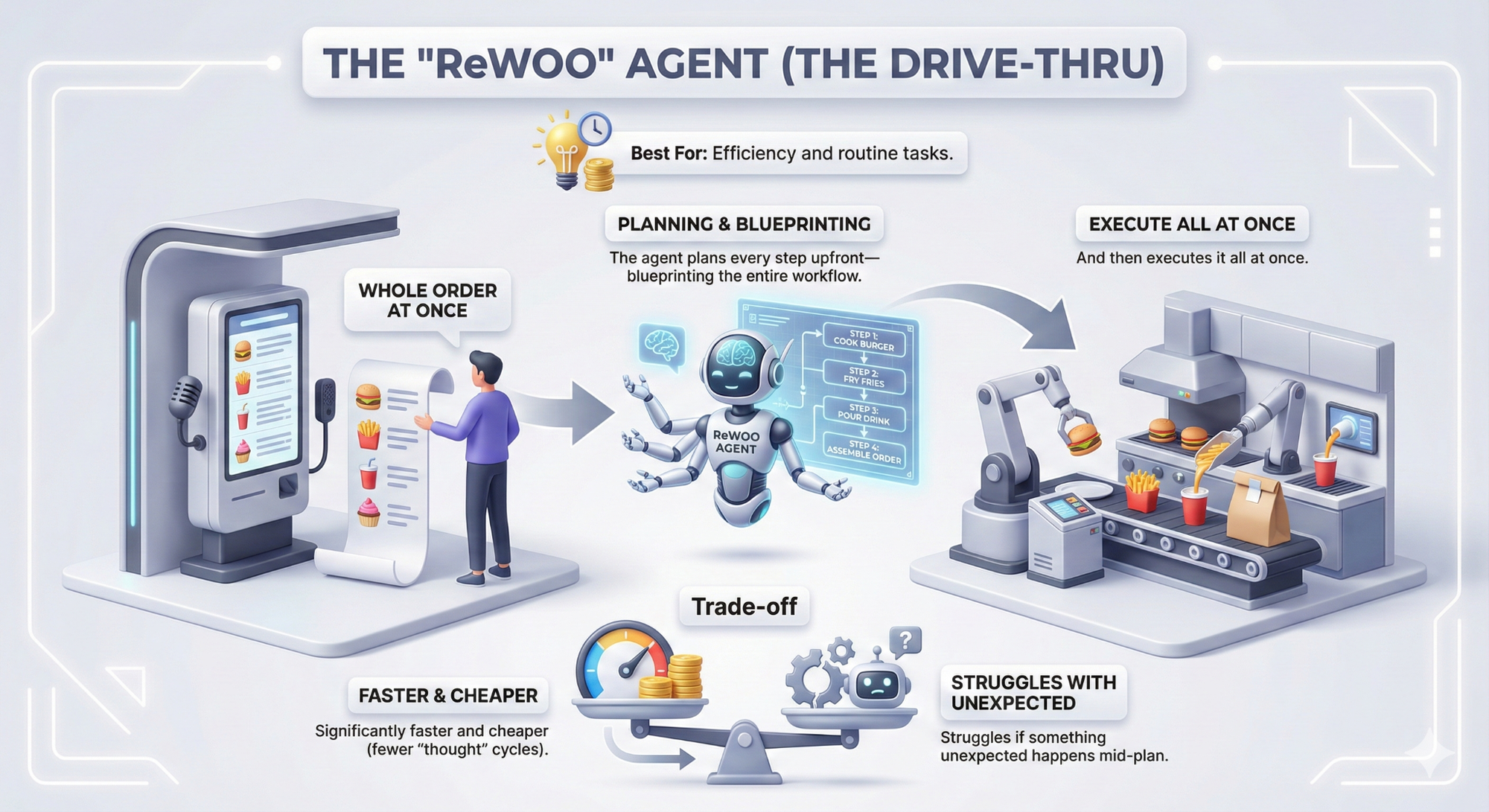
Best For: Efficiency and routine tasks .
Sometimes you don't need a librarian; you need speed. ReWOO (Reasoning Without Observation) is like ordering at a drive-thru. You don't order a burger, wait for it to be cooked, and then order fries. You give the whole order at once.
- How it works: The agent plans every step upfront—blueprinting the entire workflow—and then executes it all at once.
- The Trade-off: It is significantly faster and cheaper (fewer "thought" cycles), but it struggles if something unexpected happens mid-plan.
Part 2: The Multi-Agent Team (Orchestration Patterns)
A single brilliant person can only do so much. When a task is too complex for one agent (e.g., "Build a software application"), we build a team. This is called Multi-Agent Orchestration.
3. The Coordinator (The Triage Nurse)
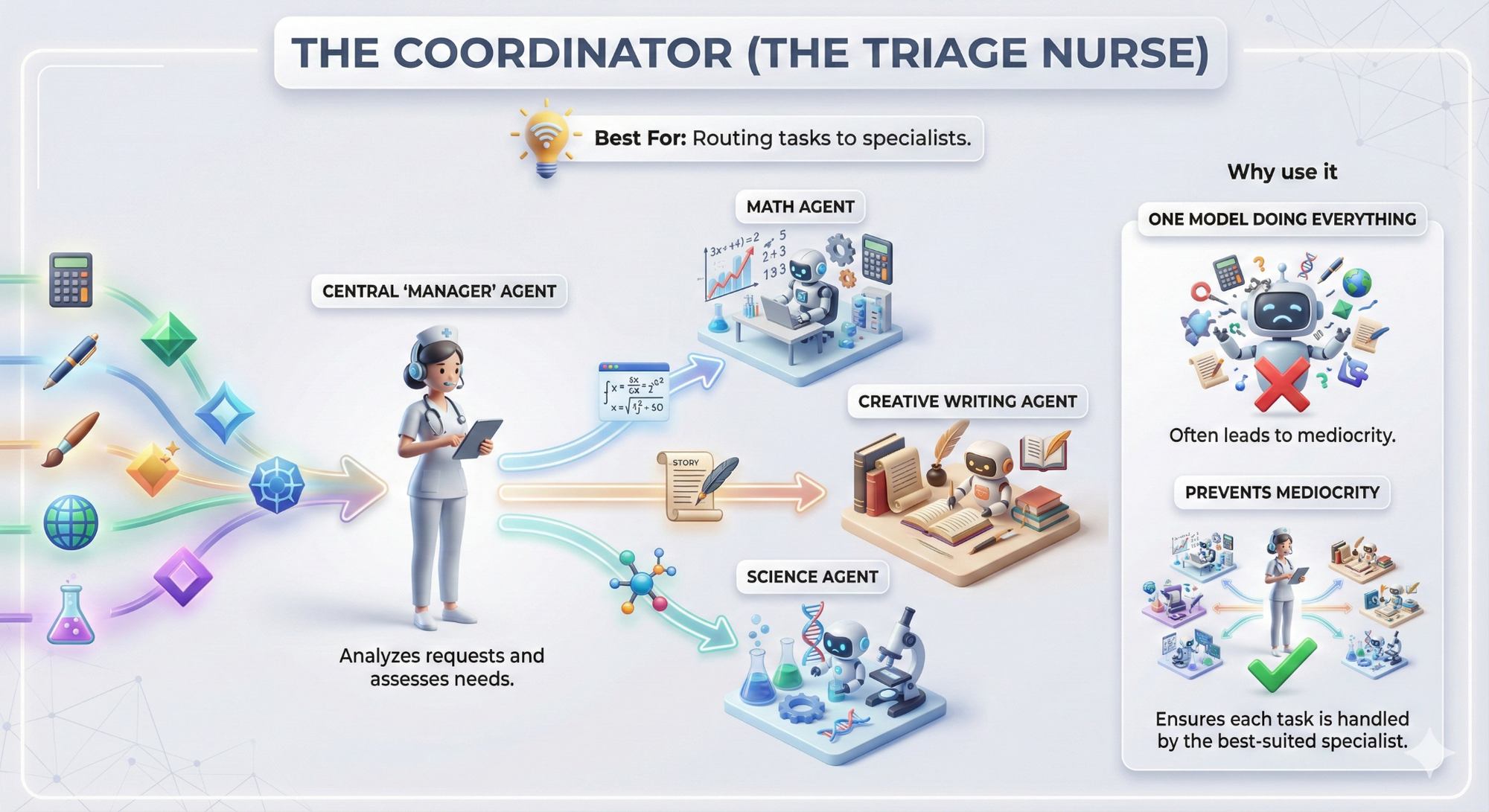
Best For: Routing tasks to specialists.
If you walk into an ER, the Triage Nurse doesn't perform surgery. They assess you and send you to Cardiology or Orthopedics.
- How it works: A central "Manager" agent analyzes your request and routes it to the specific agent best suited for the job (e.g., a Math Agent vs. a Creative Writing Agent).
- Why use it: It prevents one model from trying to be "good at everything," which often leads to mediocrity.
4. The Hierarchical Pattern (The General Contractor)
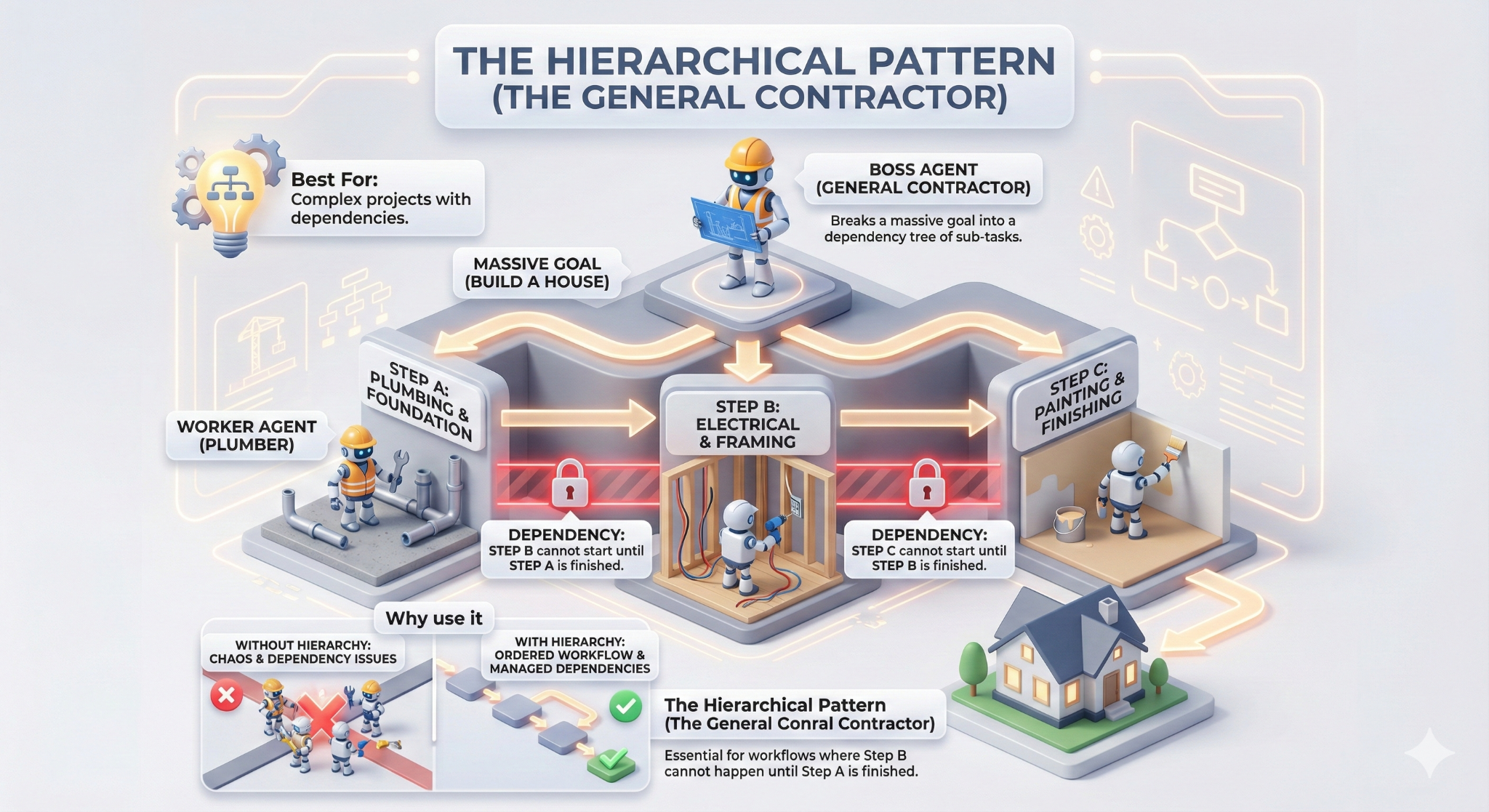
Best For: Complex projects with dependencies.
Think of a General Contractor building a house. They don't swing the hammer. They hire a plumber, an electrician, and a painter, and they ensure the plumber finishes before the painter starts.
- How it works: A "Boss" agent breaks a massive goal into a dependency tree of sub-tasks and assigns them to "Worker" agents.
- Why use it: It is essential for workflows where Step B cannot happen until Step A is finished.
5. The Swarm Pattern (The Jury)
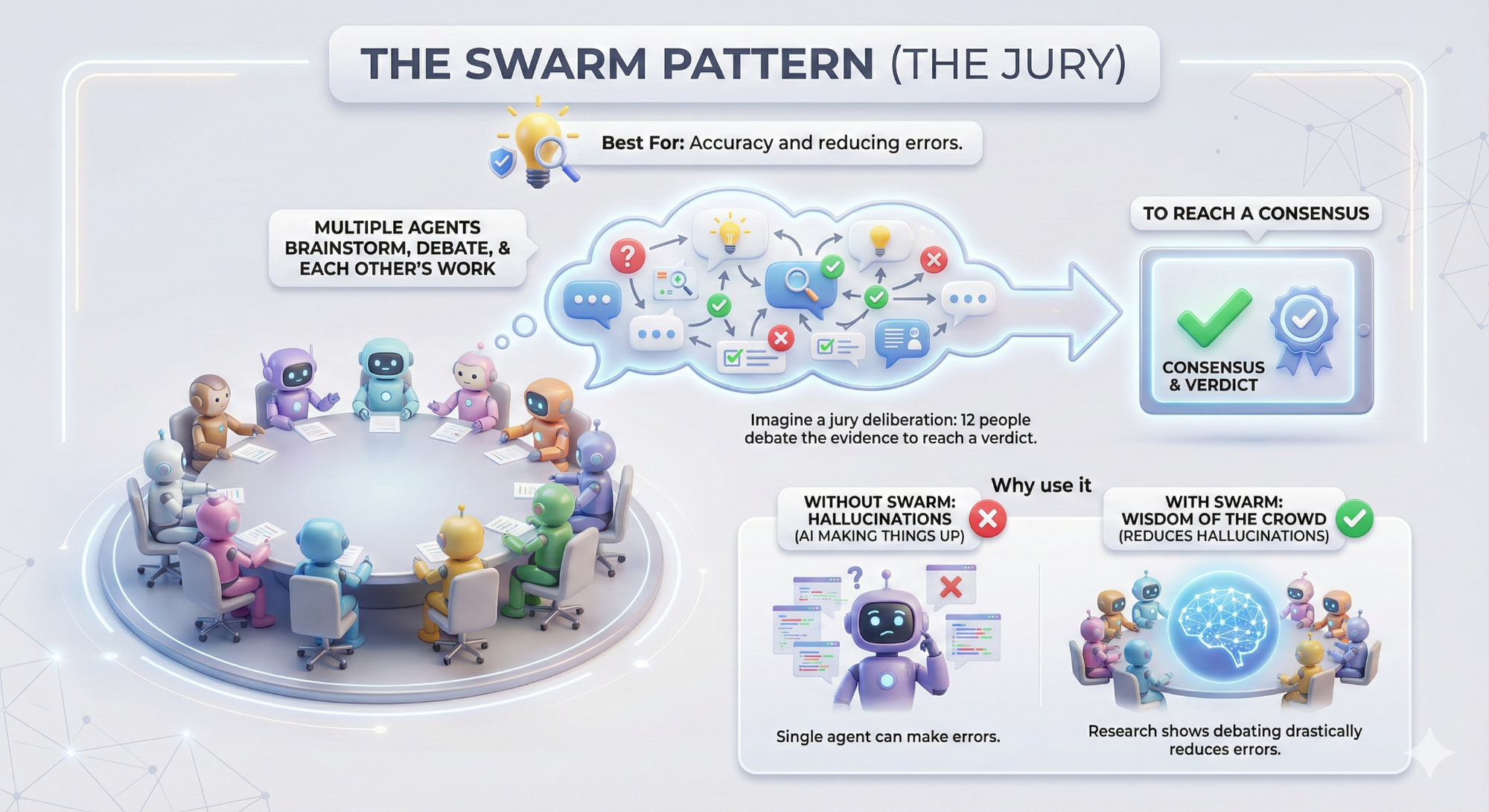
Best For: Accuracy and reducing errors.
In a Swarm, there is no boss. Agents work as peers. Imagine a jury deliberation: 12 people debate the evidence to reach a verdict.
- How it works: Multiple agents brainstorm, debate, and critique each other’s work to reach a consensus.
- Why use it: It leverages the "wisdom of the crowd." Research shows that having agents debate each other drastically reduces "hallucinations" (AI making things up).
Part 3: The Safety Net (Reliability Patterns)
You’ve hired your team, but you still need management and Quality Assurance (QA). These patterns ensure your agents don't go off the rails.
6. The Reflexion Pattern (The Writer & Editor)
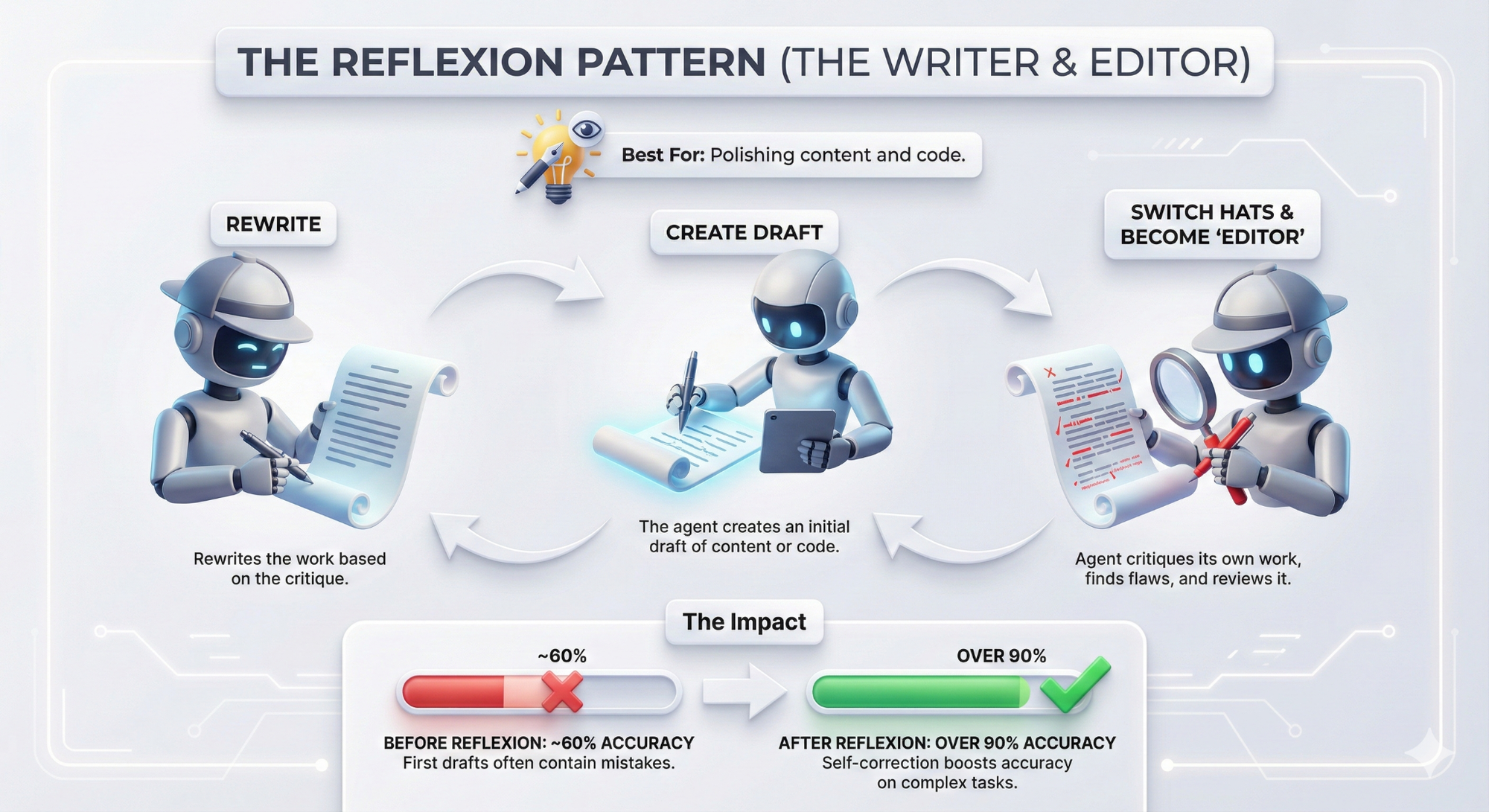
Best For: Polishing content and code.
We all make mistakes in our first draft. The Reflexion pattern forces the agent to critique its own work.
- How it works: The agent creates a draft, then switches hats to become an "Editor." It reviews the work, finds flaws, and rewrites it .
- The Impact: This simple "self-correction" step has been shown to boost accuracy on complex tasks from ~60% to over 90%.
7. Human-in-the-Loop (The Approval Gate)
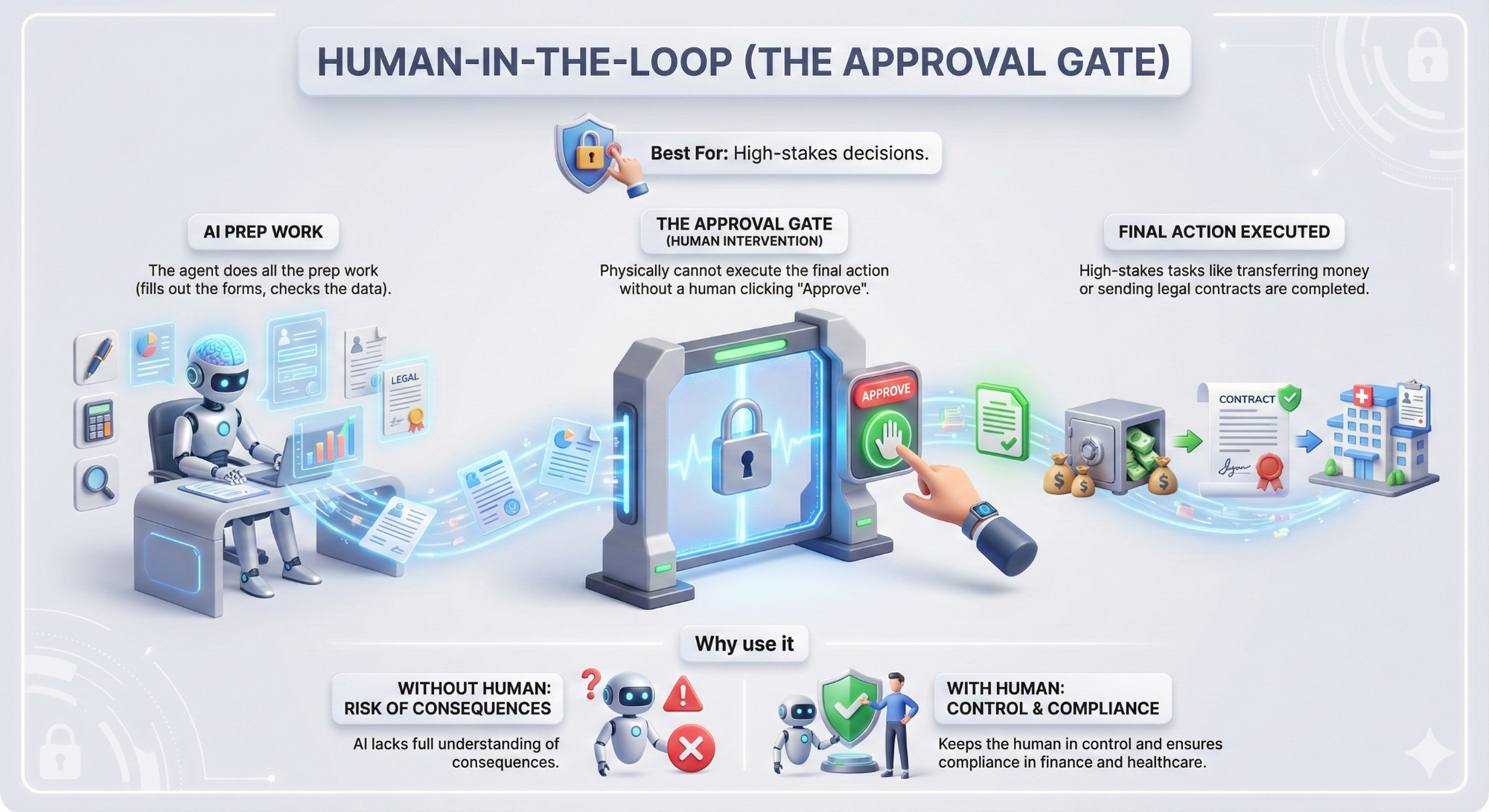
Best For: High-stakes decisions.
For a practical pattern that makes approvals visible and actionable, see a concrete approval-queue implementation.
For the most critical tasks, like transferring money or sending legal contracts, you need the ultimate safety net: a human.
- How it works: The agent does all the prep work (fills out the forms, checks the data), but it physically cannot execute the final action without a human clicking "Approve".
- Why use it: It keeps the human in control of the consequences while the AI handles the drudgery. This is often required for compliance in finance and healthcare.


Member discussion