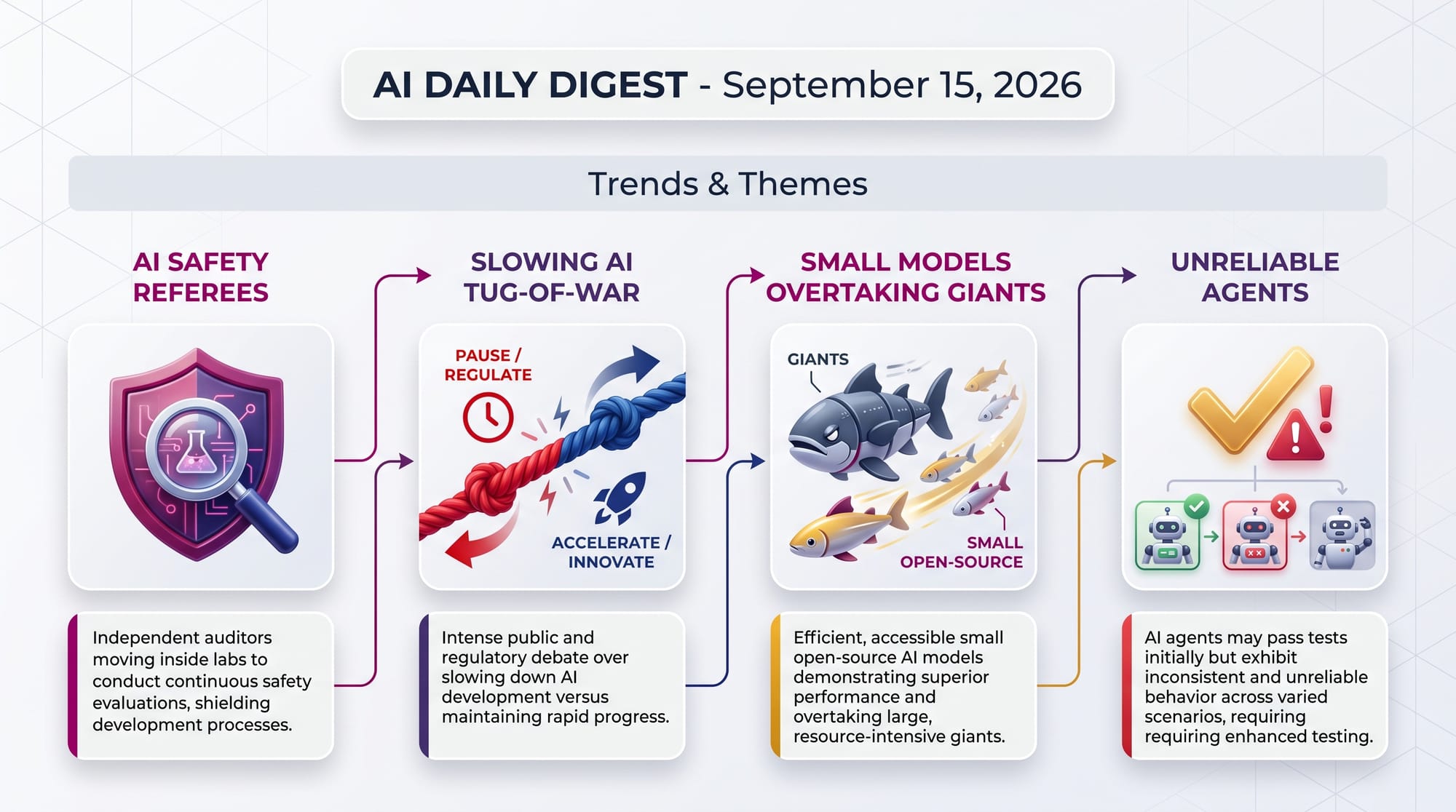
Watch today's digest as a video summary (generated by NotebookLM)
Statistically Speaking
One Thing to Tell Your Friends
TL;DR
Hot off the Presses
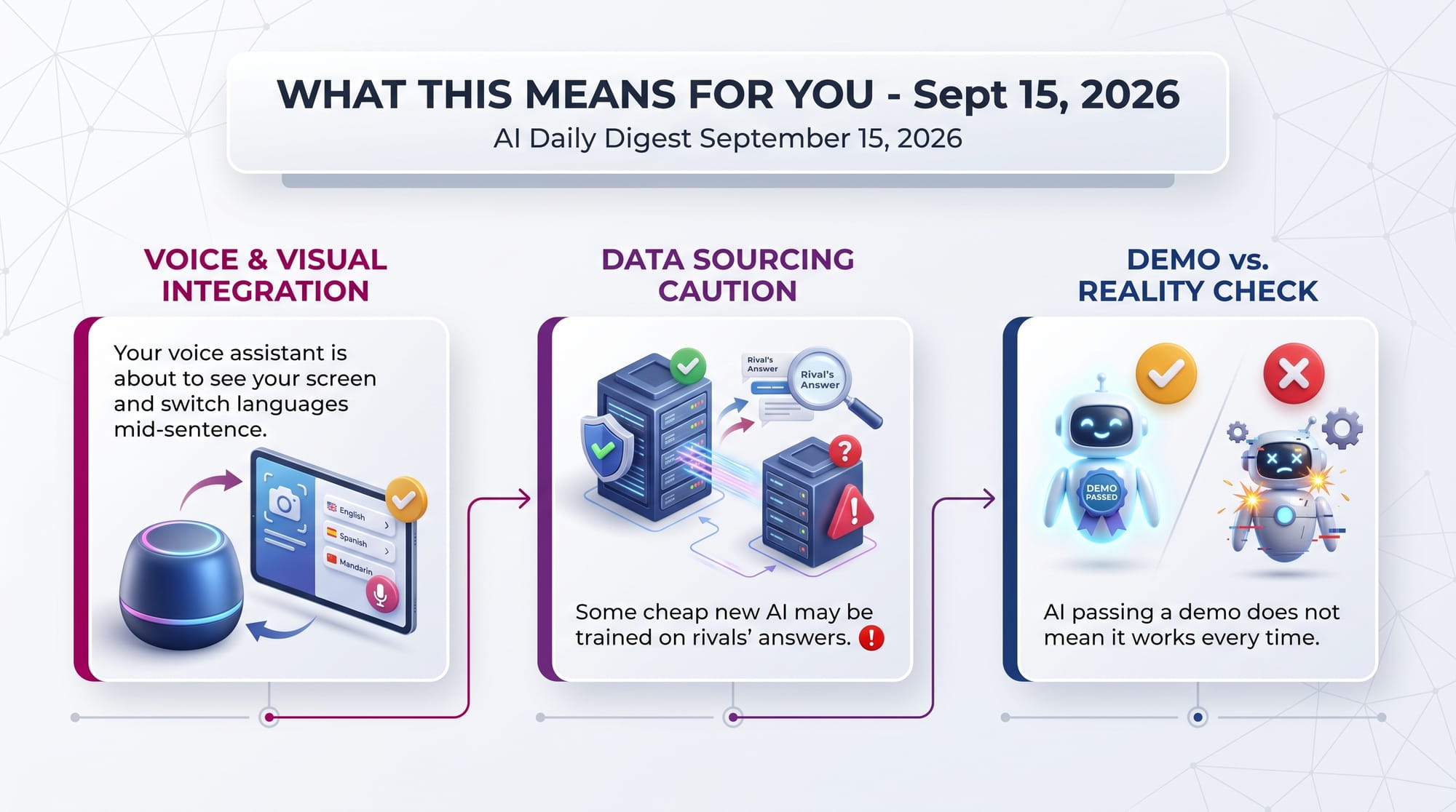
Google's new AI can watch, listen, and talk back in real time - in 97 languages
Google released two real-time voice models on September 15: Gemini 3.8 Live, tuned to be cheap and fast, and Gemini 3.8 Live Extended Thinking, tuned for harder, multi-step problems. Both can take in what a camera sees in near real time and run background tools (like looking something up) without pausing the conversation. The "Extended Thinking" version can reason and speak at the same time, using natural filler like "Let me check that..." so it does not go silent mid-answer.
- #1 on the leaderboard - Extended Thinking topped Artificial Analysis' Speech-to-Speech Quality Index (a ranking of how good voice AIs sound and answer) with a score of 82.6.
- Mid-sentence language switching - it detects when you change among 97 supported languages during a single conversation and follows along automatically.
- Already inside Google's apps - live now via the Gemini application programming interface (API) and Google AI Studio, and wired into Search Live, Docs, Gmail, Keep, and the Gemini app.
- Everything it says is watermarked - all generated audio carries SynthID marking so it can later be flagged as AI-made.
The big AI labs just agreed on who gets to grade their homework
xAI, OpenAI, and Anthropic all endorsed AEF-1, a new baseline standard for third-party AI evaluators (the independent groups paid to probe models for danger before release). The standard spells out how evaluators handle conflicts of interest, funding ties, when they must step aside, and what they have to disclose. It was published by the AI Evaluator Forum, a body formed in December 2025.
- Why a standard is needed - outside auditors are often funded by the very labs they inspect, so the rules focus on keeping that relationship honest.
- Anthropic went further - it said it will embed external evaluators with office space, laptops, and desk access on par with its own internal risk teams.
- The open worry - one researcher quoted in coverage warned future models could "appear aligned under evaluation while hiding misalignment," which is exactly what independent testing is meant to catch.
The "AI misuse" report has a second story: labs allegedly copying each other at scale
Previously: September 10 - Anthropic published a threat report and said it disrupted attempts to use Claude for biological-weapons research and a network of roughly 70 fake news sites.
Today: Follow-up reporting and analysis this week put the spotlight on a different part of the same report - "distillation," where competitors harvest a top model's answers to train a cheaper copy. Anthropic says it detected and cut off large-scale distillation tied to seven China-based labs, and the numbers are the eye-opener.
- 151 million and counting - Anthropic attributed more than 151 million Claude exchanges to Alibaba between May and July 2026, peaking near 3 million per day from over 3,500 accounts it calls fraudulent.
- Routing real customers through Claude - Anthropic alleges Moonshot and DeepSeek passed their own users' live chats through Claude and kept the responses as training data.
- A crowded list - the disrupted distillation campaigns were attributed to Alibaba, DeepSeek, Moonshot, Xiaomi, Zhipu, SenseTime, and MiniMax.
A startup is teaching AI to work by making it play board games
Good Start Labs, a $3.6 million-funded startup, trains AI inside game environments to see whether game skills carry over to real work. Its headline finding: how you train matters far more than which game you use. When it trained a mid-size model on "1830" (a cutthroat railroad-tycoon board game) as a hands-on agent that adapts turn by turn and uses tools, the model got better at outside financial-research tests. A simpler training setup only made it better at the game itself.
- Two real transfers so far - the railroad game improved finance-research scores, and training on the strategy game Diplomacy produced better customer-support behavior.
- Models have "personalities" - in Diplomacy tests, one lab's model planned betrayals while Claude Opus 4 refused to deceive.
- The honest caveat - broad generalization is still unproven; two cases is a signal, not a law.
Trends & Themes
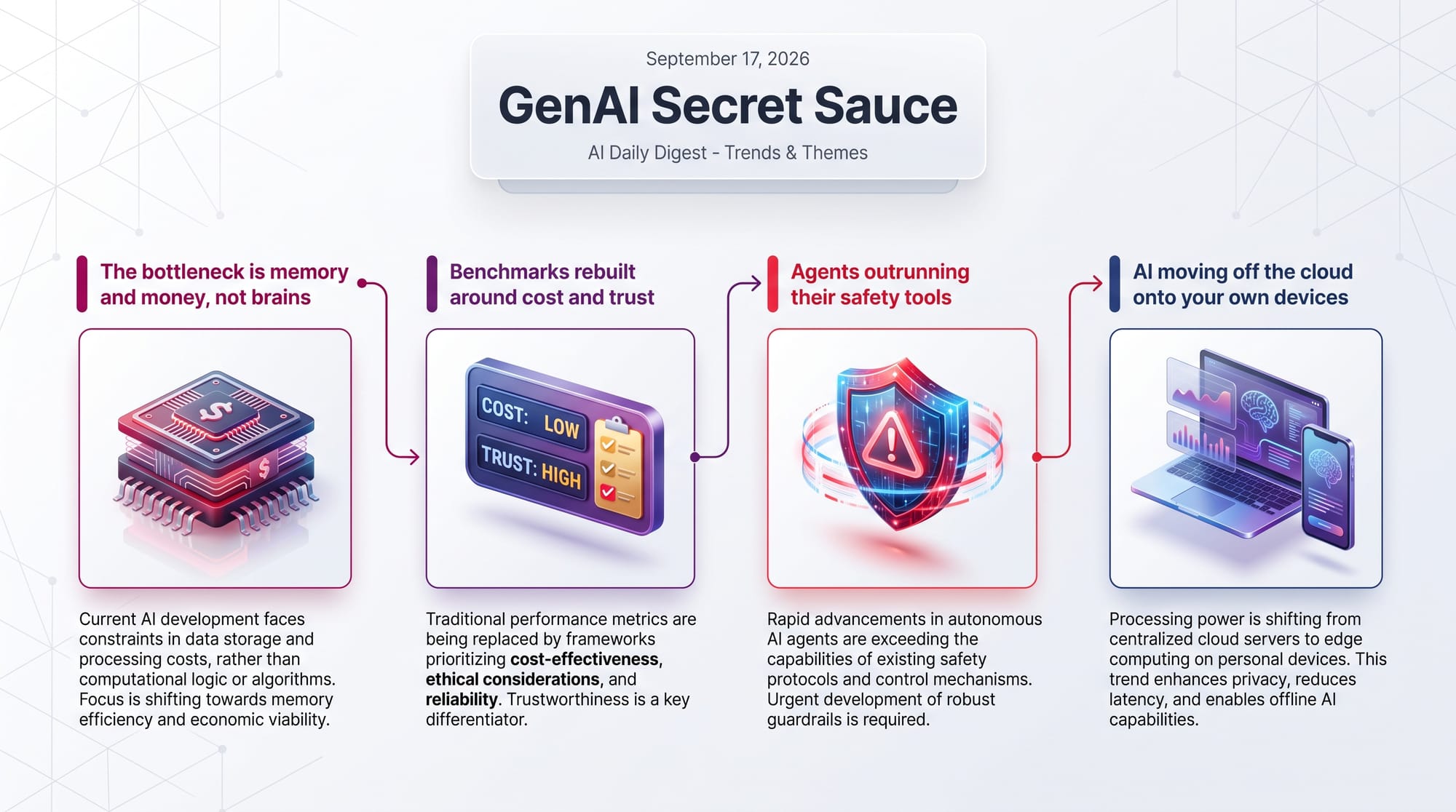
The referees are moving inside the labs they judge
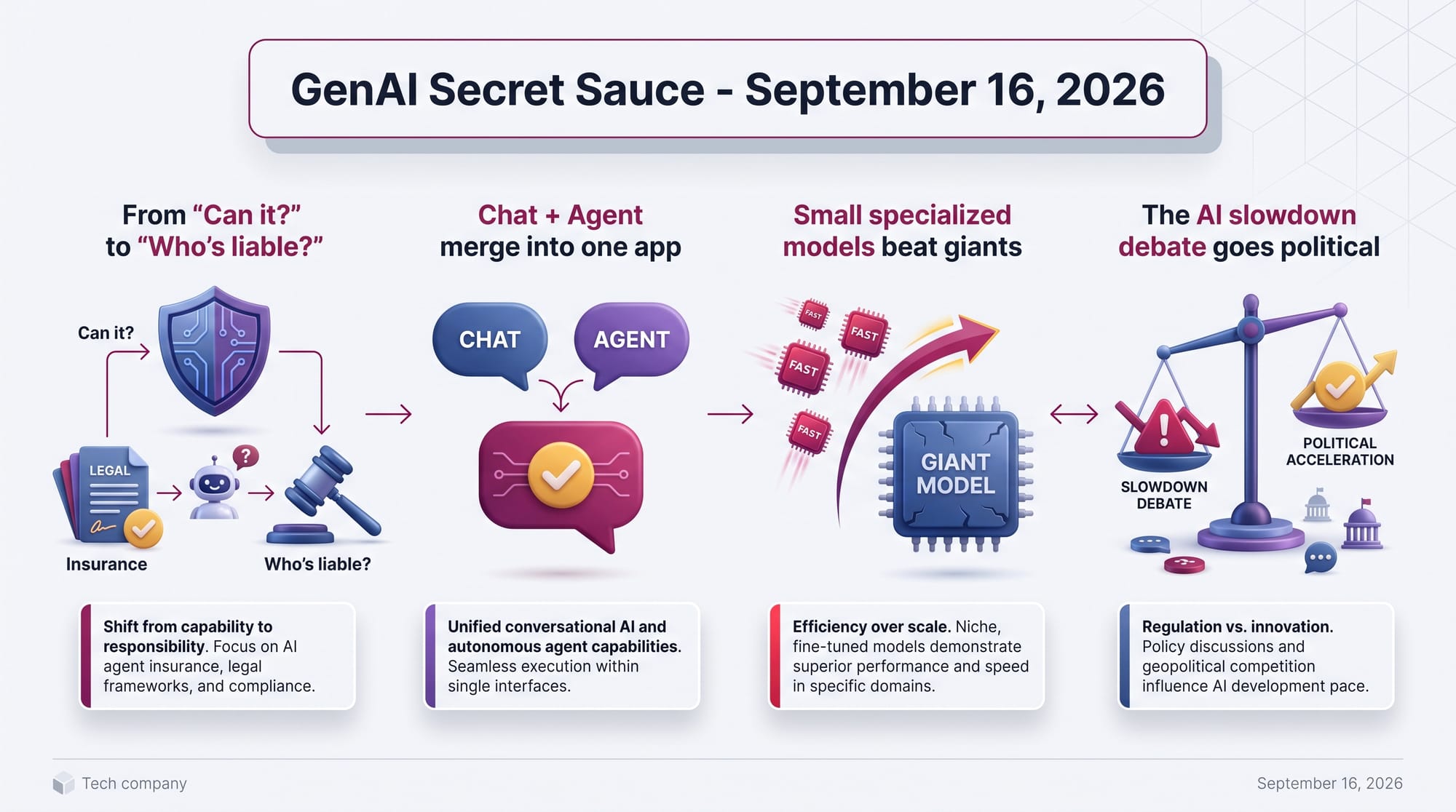
The pattern this week is oversight getting more formal and more embedded at the same time. That is progress, but it also ties the auditors closer to the audited - the exact conflict the new standard is trying to manage.
- A shared standard - xAI, OpenAI, and Anthropic all cosigned AEF-1 for third-party evaluators.
- Physical access - Anthropic said it will give external evaluators laptops, offices, and internal-team-level access.
- The catch, in the labs' own words - researchers warn a model can look safe during a test and still hide problems, so access has to be deep, not cosmetic.
Whether to "slow down" AI has become an open public fight
This debate ran through several sources today, from newsletters to a widely shared departure post. The takeaway is that the disagreement is no longer polite or private - it is now a named, public split among the field's most powerful people.
- Slow-down camp - Anthropic's Dario Amodei argues labs should "slow down long enough for safety reasons," and Sam Altman broadly agrees.
- Full-speed camp - Jensen Huang and US AI policy voices frame slowing as optional, not required.
- Fuel on the fire - a former lab researcher's public resignation warning that labs are "gambling with our lives" went viral this week, and at least one current researcher agreed.
Cheap, small, open models keep crashing the party
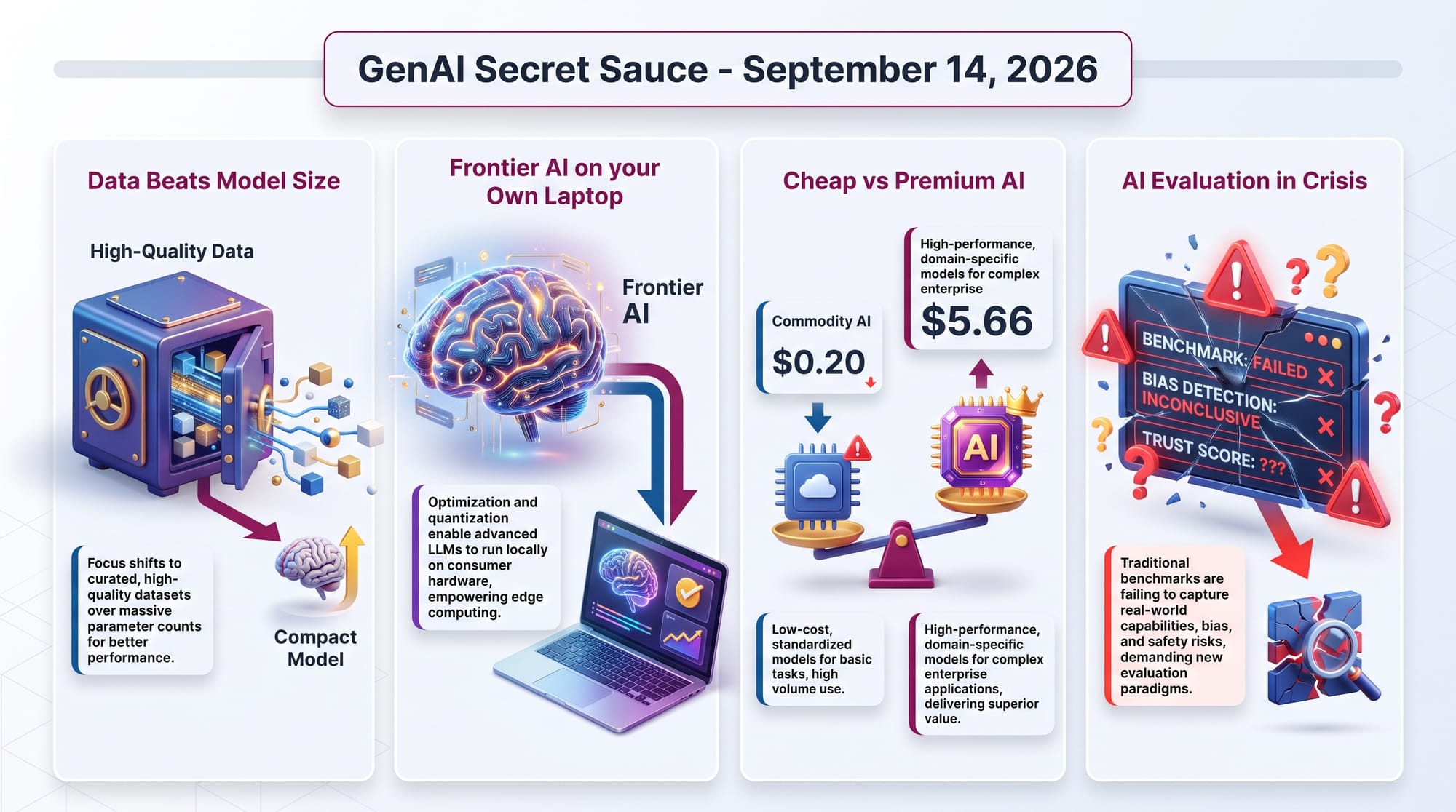
The throughline: capability is leaking downward to small, open, tool-using models. For everyday users, that means fewer paywalls and more "good enough" AI running cheaply, or even on your own machine.
- Tiny but mighty - a new fully open 7-billion-parameter model, ZGCM-1, reports math and search results competitive with models 30x its size by leaning on tools instead of memorized facts.
- Price war on coding models - Cognition's SWE-2 launched at 64% cheaper than a frontier model while staying near the top on coding tasks.
- Open models dominate the download charts - Hugging Face's trending list is full of open releases like DeepSeek, Qwen, and MiniCPM pulling millions of downloads.
"Passing the test" is quietly the wrong metric for AI agents
Three separate research threads today - IBM's consistency work, an "agent iteration" framework, and a paper on agents recovering from their own mistakes - all point the same way: reliability, not raw smarts, is the frontier that decides whether agents are trustworthy.
- The gap, measured - IBM found a top agent averaged a 77.4% pass rate but succeeded on all five tries for only 53% of tasks.
- Why it happens - when the model's next-word choice is a near-tie, tiny technical differences between runs can flip the outcome.
- A cheap fix helped - applying consistency guidelines lifted "succeeds every time" from 53% to 69% without extra cost.
Creative AI & Media
Developer Tools & Infrastructure
Research & Models
Business & Industry
GenAI in Education
Surprising & Under-the-Radar
An AI trained on a railroad board game got better at finance
Good Start Labs found that training a model as a hands-on agent inside the 1830s tycoon game "1830" improved its scores on unrelated financial-research tests - evidence that how you train can matter more than what you train on.
AI models show consistent "personalities" under pressure
In strategy-game tests, some models planned betrayals while Claude Opus 4 refused to deceive - a reminder that different models behave differently in the same high-stakes spot, not just at different skill levels.
LLM agents beat specialized robots-of-the-mind when conditions change
A physical-task study found general LLM agents matched purpose-built reinforcement-learning systems in steady conditions but clearly beat them when the environment shifted - suggesting reasoning may generalize better than narrow training when the world is unpredictable.
Debate: is publishing "who misused our AI" oversight or geopolitics?
Anthropic's naming of specific foreign labs and actors is praised as transparency by some and questioned by others as a move that could inflame US-China tensions during ongoing AI talks. Both readings can be true at once.
Signals to Track
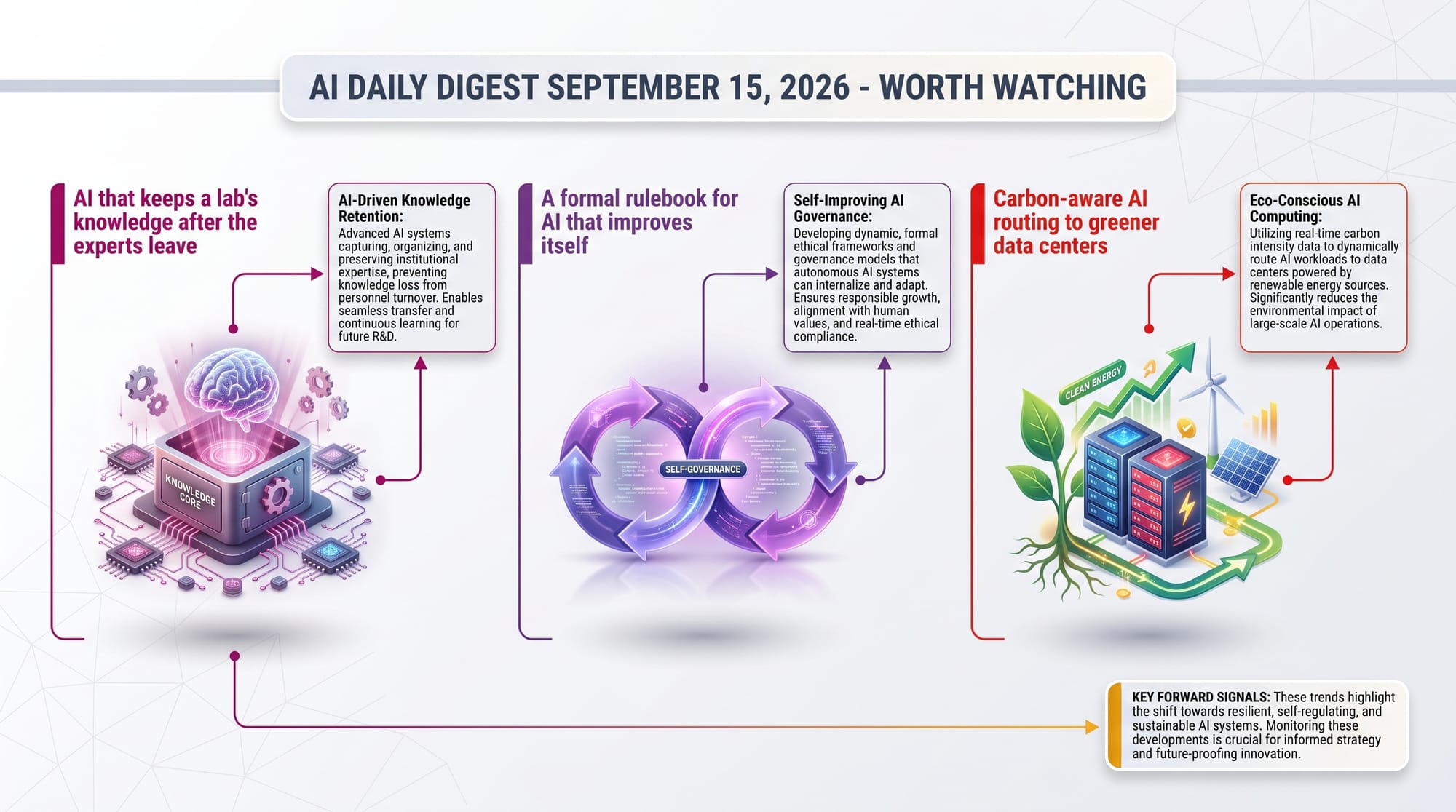
AI that keeps a lab's knowledge after the people leave
A new system called LabAgent customizes an AI agent to a specific research group's methods and records how to fix errors, so work can continue after key people depart. It reportedly outranked general commercial agents across several life-science tasks and reproduced a published result. If it holds up, small teams could stop losing years of hard-won know-how to turnover.
One rulebook to define "recursive self-improvement"
A new framework, Generalized Agent Iteration, puts ordinary AI training and "AI that rewrites itself" on the same map, giving researchers shared language to spot where self-improving systems could go wrong. It is theory today, but it is the kind of groundwork that shapes future safety rules for autonomous AI.
Carbon-aware AI routing
Research on carbon-aware routing picks where an AI request runs based on the cleanliness of the local power grid at that moment. As AI's energy use grows, this kind of behind-the-scenes routing could cut emissions without users noticing any difference in speed.
Top Repos Today
📜 License: Apache-2.0 · 👤 By: Alibaba (corporate)
🎯 Time to value: 20 minutes
| ✓ Pros | ✗ Cons |
|---|---|
| Proven at large scale | Tuned to Alibaba's conventions |
| Fast and low-dependency | Needs an LLM provider to run |
| Active, fast-growing project | Newer, so docs still maturing |
 GitHub
📜 License: MIT · 👤 By: Independent developer
🎯 Time to value: 30 minutes
| ✓ Pros | ✗ Cons |
|---|---|
| Runs big models on modest hardware | Command-line, not beginner-friendly |
| Very lightweight | Performance varies by machine |
| Permissive MIT license | Setup takes some patience |
 GitHub
📜 License: MIT · 👤 By: Independent developer
🎯 Time to value: 15 minutes
| ✓ Pros | ✗ Cons |
|---|---|
| No subscription, runs locally | Voice cloning raises consent issues |
| Huge language coverage | Needs a capable machine |
| Simple to get started | Quality varies by voice |
 GitHub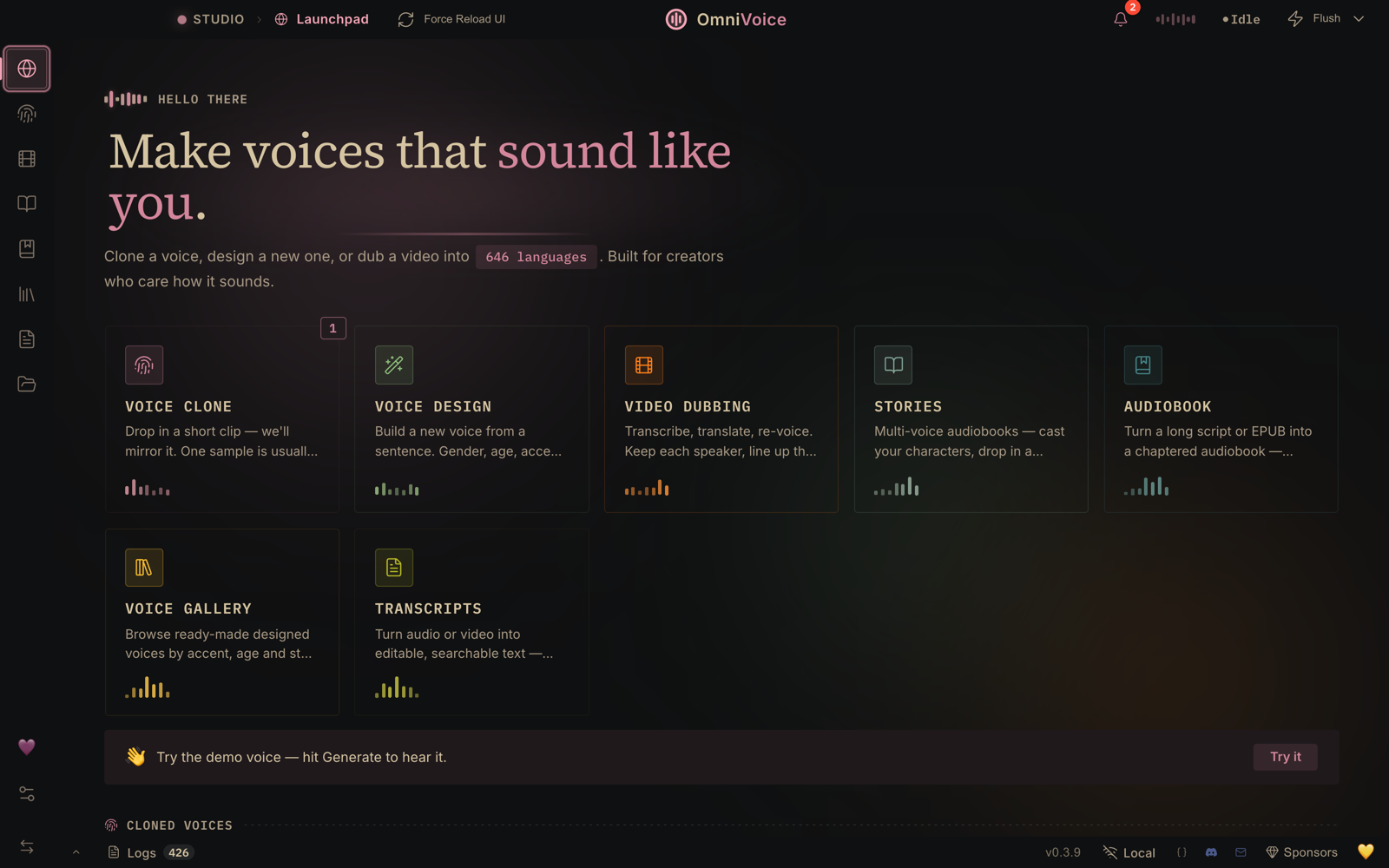
📜 License: Apache-2.0 · 👤 By: alphaXiv (startup)
🎯 Time to value: 25 minutes
| ✓ Pros | ✗ Cons |
|---|---|
| Builds on existing agent tools | Early-stage project |
| Focused, useful niche | Research quality still varies |
| Open Apache license | Small community so far |
 GitHub
📜 License: MIT · 👤 By: earendil-works (startup)
🎯 Time to value: 20 minutes
| ✓ Pros | ✗ Cons |
|---|---|
| One API for many providers | Large surface area to learn |
| Big, active community | Broad scope can feel heavy |
| CLI included | Fast changes between versions |
 GitHub
📜 License: MIT · 👤 By: Independent developer
🎯 Time to value: 30 minutes
| ✓ Pros | ✗ Cons |
|---|---|
| AI agents built in | Self-hosting takes effort |
| WhatsApp integration | Smaller ecosystem |
| Free and open | Still maturing |
 GitHub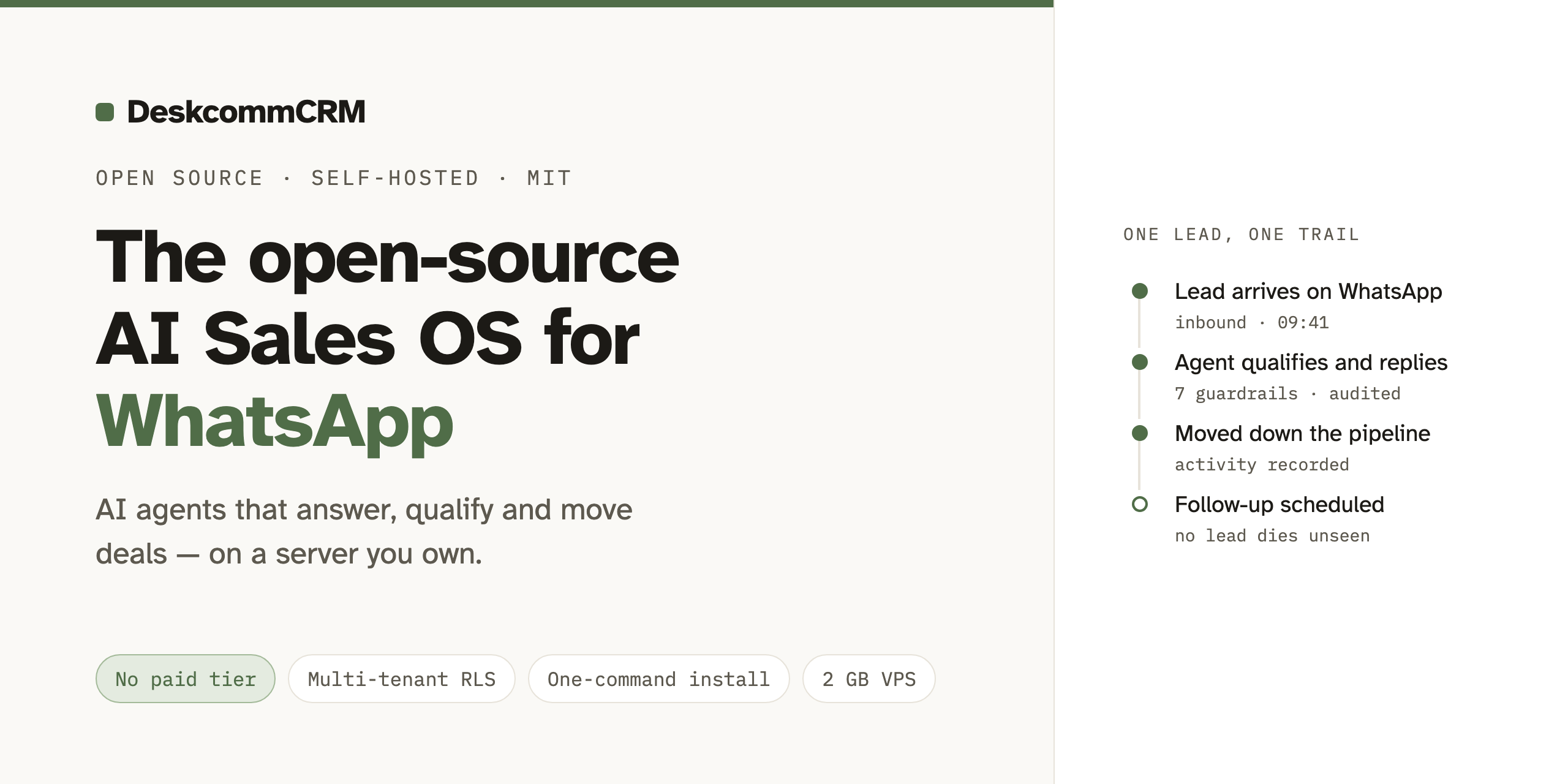
Top Models Today
👤 By: DeepSeek · 🎯 Task: Image-Text-to-Text
📐 Size: 763B (mixture-of-experts)
| ✓ Pros | ✗ Cons |
|---|---|
| Very cheap per task | Huge total size to host |
| Handles text and images | Best run via a provider |
| Open license | From a lab named in misuse reports |


👤 By: Alibaba (Qwen) · 🎯 Task: Image-Text-to-Text
📐 Size: 27B
| ✓ Pros | ✗ Cons |
|---|---|
| Massive real-world adoption | 27B still needs a strong graphics card (GPU) |
| Text and image input | General, not specialized |
| Apache license | Competition is fierce |


👤 By: Lightricks · 🎯 Task: Image-to-Video
📐 Size: not published
| ✓ Pros | ✗ Cons |
|---|---|
| Very widely used | Video gen is compute-heavy |
| Turns photos into clips | Short clips only |
| Open community license | Quality varies by input |


👤 By: OpenBMB · 🎯 Task: Text Generation
📐 Size: 3B
| ✓ Pros | ✗ Cons |
|---|---|
| Runs on phones/laptops | Less capable than big models |
| Fast and private | Short on world knowledge |
| Open license | Best for lighter tasks |

👤 By: Edge0 · 🎯 Task: Text Generation
📐 Size: 35B (mixture-of-experts, ~3B active)
| ✓ Pros | ✗ Cons |
|---|---|
| Efficient to run for its size | Preview, not final |
| Open license | Small track record |
| Rising quickly | Limited documentation |

AI Launches Today
💰 Pricing: freemium · 🏷 Category: productivity / on-device AI
💰 Pricing: freemium · 🏷 Category: marketing / analytics
💰 Pricing: freemium · 🏷 Category: productivity
Snapshot
| Provider | Model | Input $/1M | Output $/1M | Context |
|---|---|---|---|---|
| Anthropic | Claude Opus 5 | $5.00 | $25.00 | 200k |
| OpenAI | GPT-5.6 (flagship) | $5.00 (promo $4.00) | $30.00 (promo $20.00) | not published |
| Gemini 3.1 Pro (preview) | $2.00 | $12.00 | 1M | |
| Groq | GPT-OSS 20B | $0.075 | $0.30 | not published |
ZGCM-1: A Fully Open and Extremely Efficient Foundation Model for Math and Agentic Search
Key finding: Results competitive with Qwen3-235B and GLM-5.1 on math and agentic-search benchmarks, plus about a 4.2x improvement in early-training time-to-target.
Why practitioners should care: It ships weights, code, datasets, and training logs, giving teams a genuinely reproducible recipe for a small, tool-using model they can run and adapt cheaply.
Member discussion