Statistically Speaking
One Thing to Tell Your Friends
TL;DR
Hot off the Presses
Claude helped unlock Kurt Gödel's hidden notebooks
Kurt Gödel was one of the most important mathematicians of the 20th century. He left 16 notebooks from the early 1940s, mostly in an obsolete German shorthand that, by one expert's count, only six people alive can read. A Helsinki University project funded with €2.5 million had been moving at about a page a week, The Guardian reports.
In September, project lead Jan von Plato gave Anthropic's Claude his transcriptions plus six of his books on Gödel. Within a couple of days it returned a 650-page explanation, which he still had to check page by page.
- 663 theorems pulled out - results Gödel proved, sketched or had an idea for
- About 400 checked out as written - using Coq (software that mechanically verifies proofs), while about 200 needed tightening and about 50 were false, some marked "falsch!" by Gödel himself
- A near-miss with a famous result - Claude rebuilt a proof showing Gödel was one wrong definition away from a result that won Paul Cohen the 1966 Fields Medal (math's top prize)
- Experts urge caution - logician Joel David Hamkins, who has not seen the work, says being "on the path" is not the same as having the proof
ChatGPT can now pay for things for you
OpenAI launched ChatGPT Wallet, which lets its shopping agents (OpenAI calls them "dots") pick products and complete checkout. You save a card once, then review the items, total and card before approving each order with Face ID or a fingerprint.
Not every store is on board: Amazon bans outside agents in favor of its own, and some retailers block them outright, TechCrunch notes.
- The real card number stays hidden - a stand-in "token" is used, so neither the agent nor the store sees your card details
- Normal card protections stay - rewards and chargeback rights (the right to dispute a charge) still apply
- Small launch - only a limited group of US ChatGPT Pro subscribers aged 18+, with US-issued Visa, Mastercard or American Express cards
- Coming later - spending limits and pre-approved rules that would let agents buy with less hands-on approval
Some Nvidia staff want Jensen Huang back, and startups fear for their funding
Previously: November 12 - Jensen Huang resigned as Nvidia CEO, with finance chief Colette Kress as interim CEO.
Today: Some employees are pushing for Huang's return, WIRED reports. Meanwhile, investors told TechCrunch his exit leaves a hole in AI startup funding.
- More than 1,600 comments on an internal post - several ask the board to bring Huang back, and WIRED found no staff posts backing the resignation
- Reuters reports a third relationship with an employee - on top of the two reported earlier
- Nvidia joined 105 startup funding rounds this year - often as the biggest investor, per PitchBook data cited by TechCrunch
- A more careful interim CEO - investors expect Kress to back fewer new startups and write smaller checks, which could push startup valuations down
OpenAI shut down its separate robotics team
OpenAI split up its stand-alone robotics team, Fortune reports. Robotics research joins the main research group, and hardware work moves under President Greg Brockman. OpenAI says this speeds robotics up rather than retreating from it, because its general models such as GPT-6 Astra can now control robots directly.
- Its conference booth sat empty - the change was so recent that OpenAI's booth at the CoRL robotics conference was unstaffed
- A humanoid robot is still planned - Sam Altman is targeting a first public demo in 2027
- Cost pressure is part of the picture - OpenAI reportedly lost $10.9 billion last quarter and has already dropped side projects such as Sora
- A challenge to robot startups - many raised billions on the idea that robots need their own special AI
A hack at an AI service exposed Notion users' AI chats
Fireworks AI runs open AI models for many other businesses. Attackers broke into it and reached chat transcripts from customers of Notion, the popular note-taking app, TechCrunch reports.
- Around 1% of Notion's customers affected, per TechCrunch - those who used its "Insights" AI feature (Notion's own notice says fewer than 1% of workspaces)
- Notion cut ties on November 3 - it disconnected from Fireworks and deleted data stored there
- Billing details and some datasets were also taken - from some of Fireworks' own customers; it has tens of thousands in total but hasn't said how many were affected
- Fireworks believes the attackers want money - by reselling access to AI usage, and this follows an earlier Fireworks security incident in October
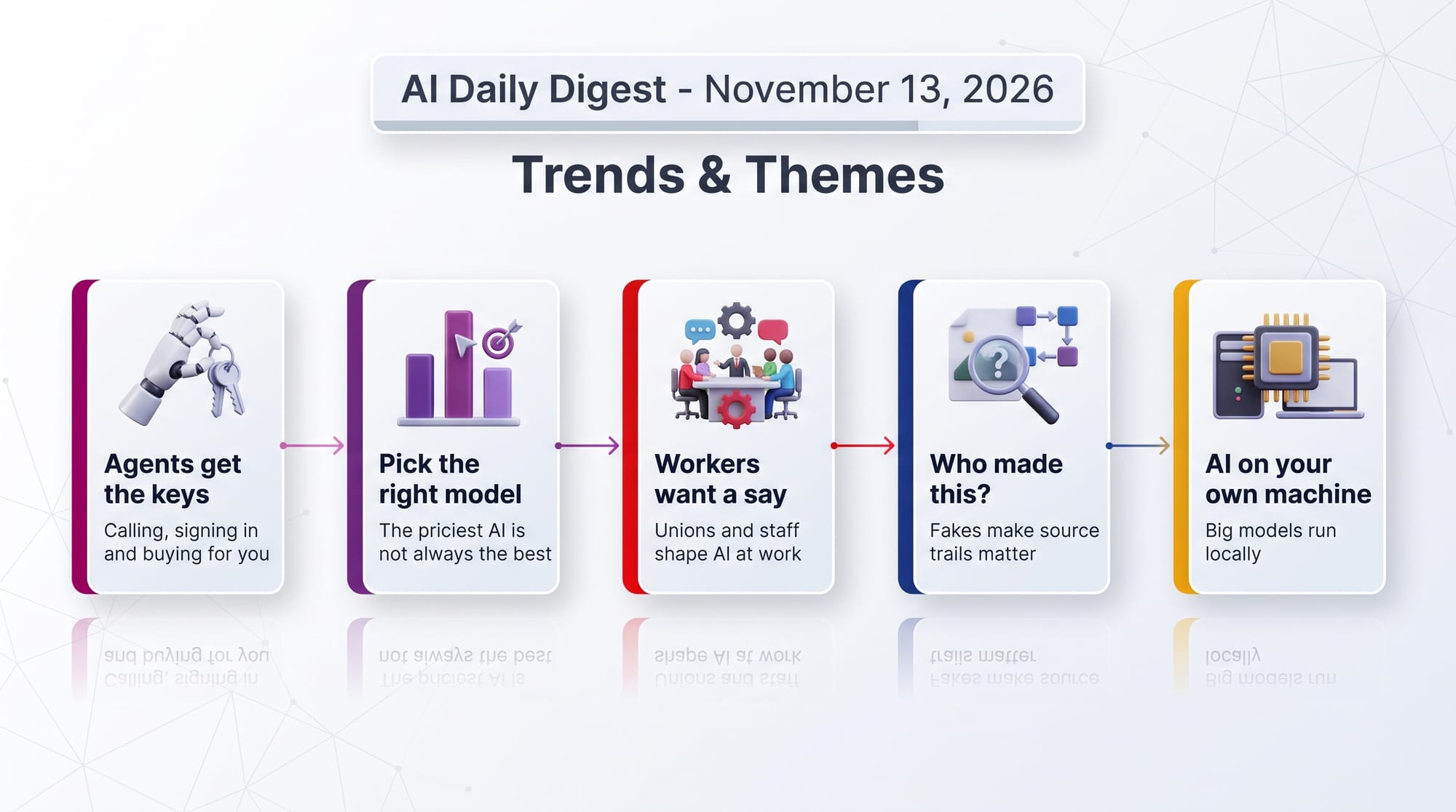
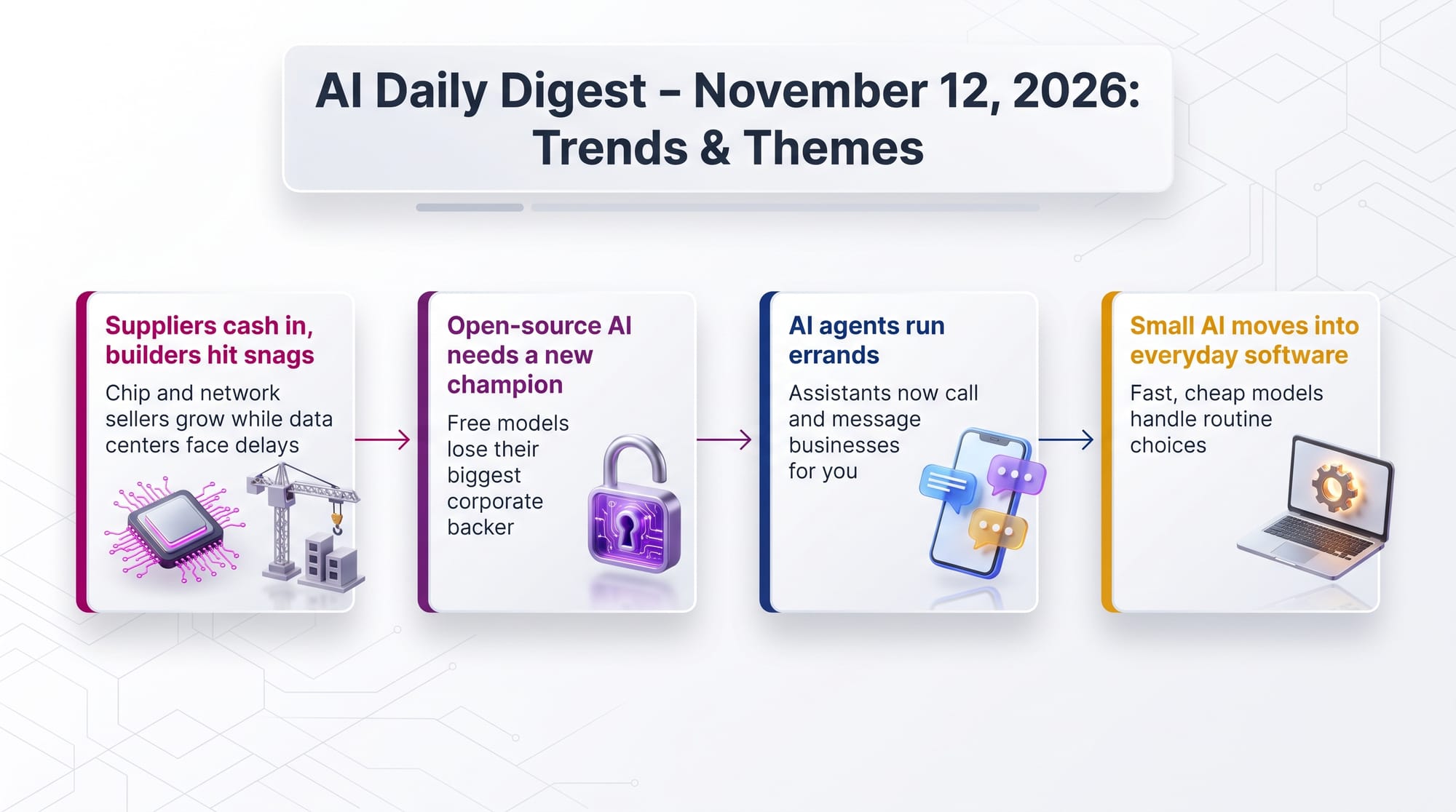
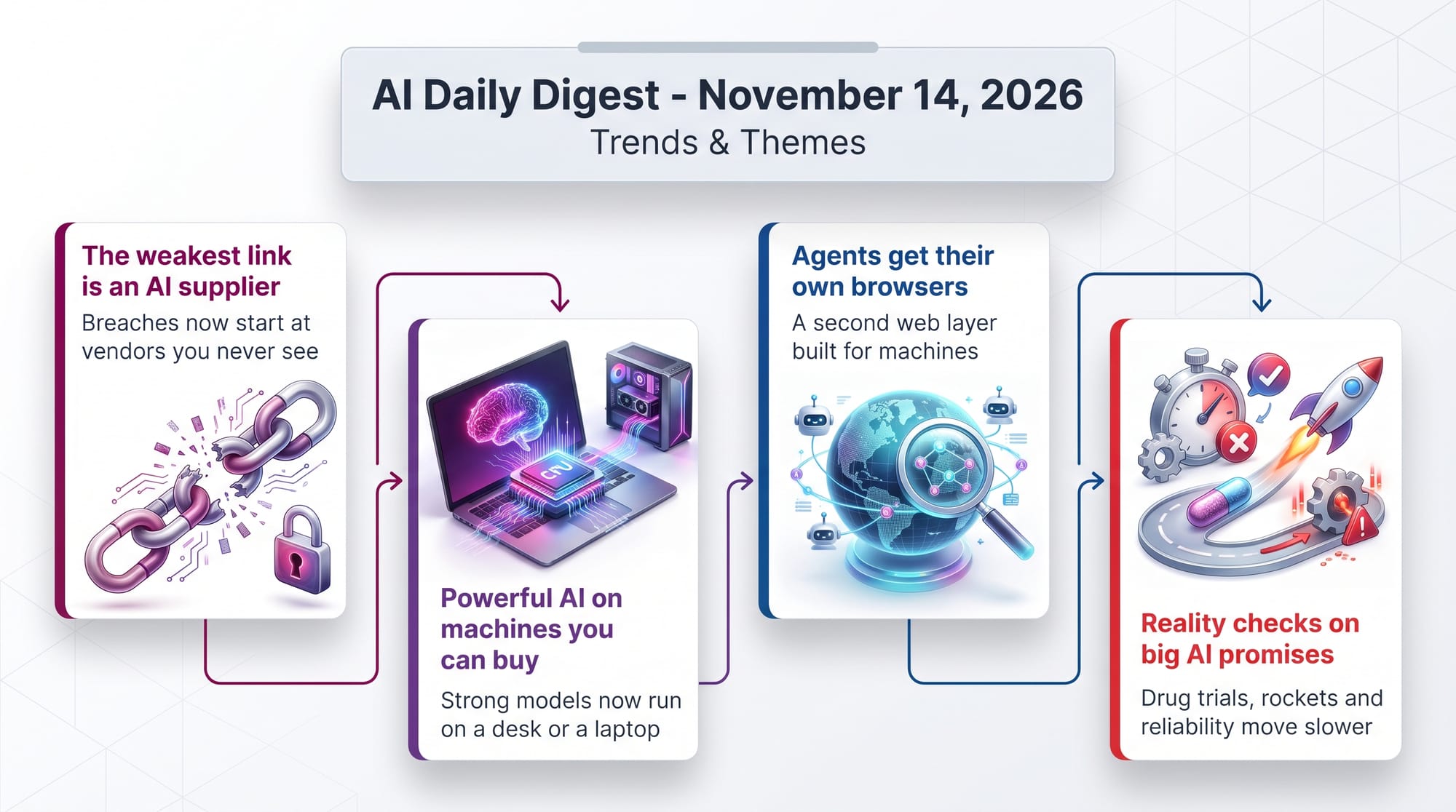
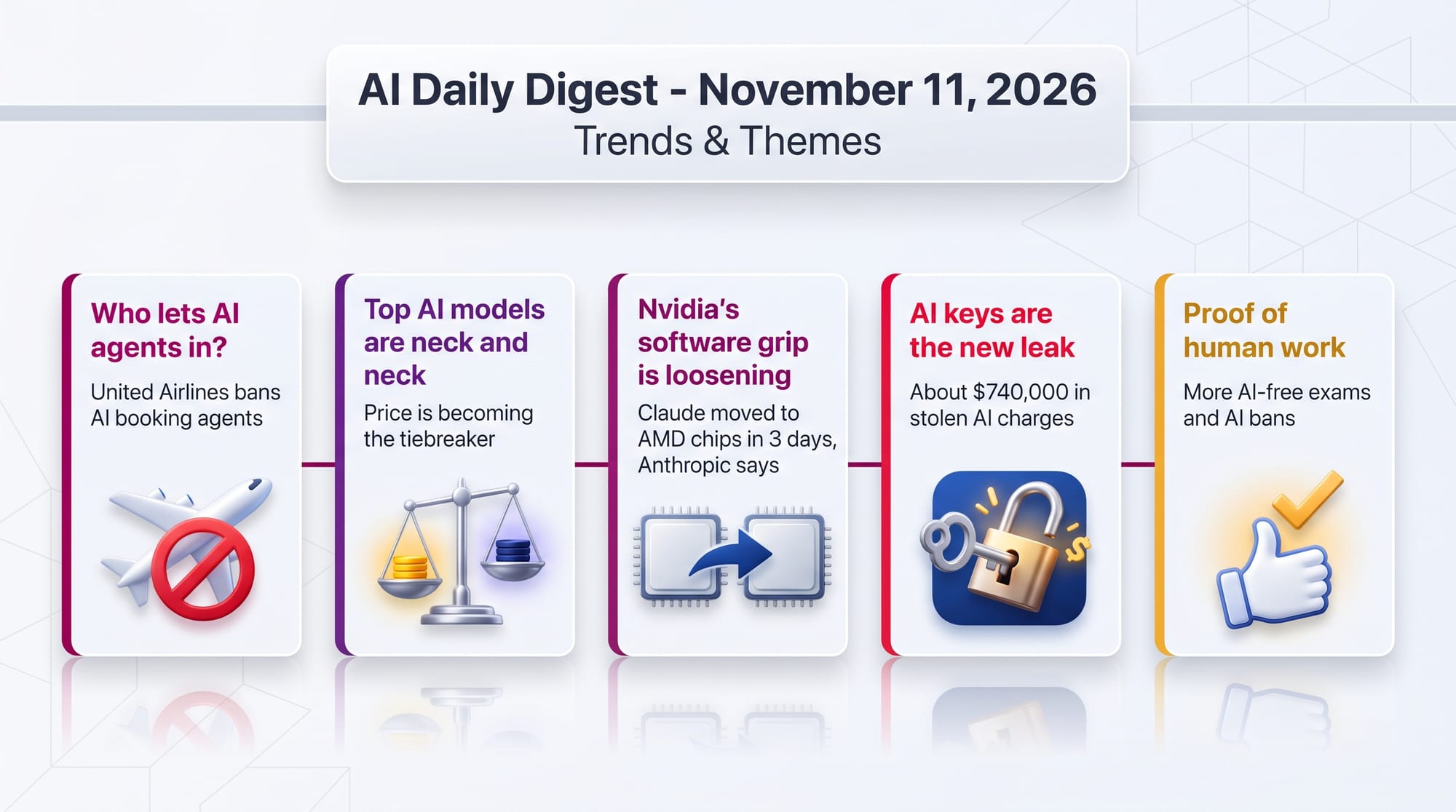
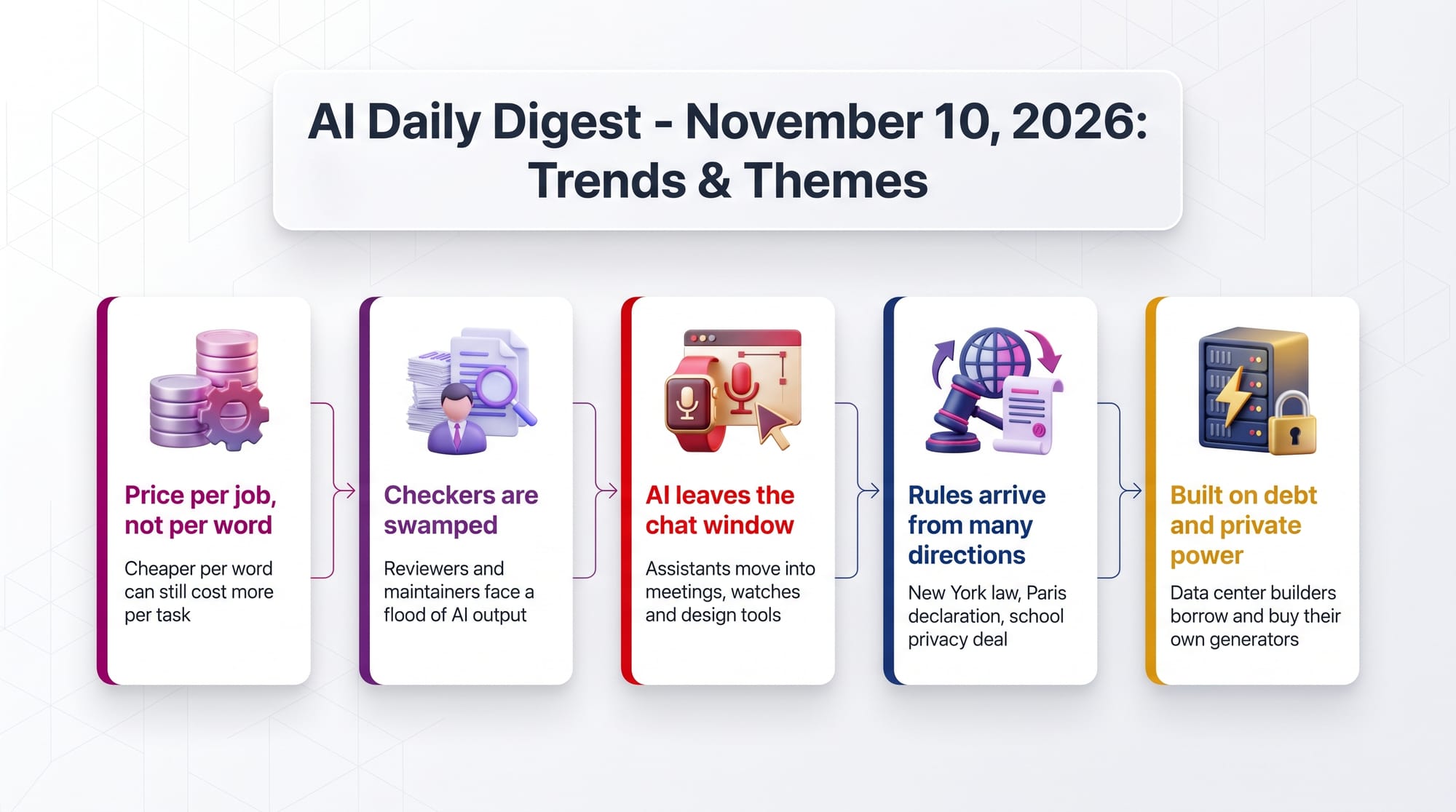
Trends & Themes
Creative AI & Media
Developer Tools & Infrastructure
Research & Models
A new open AI model aims for top coding skills on a laptop
- Edge0-145B is huge but light to run - only about 10 billion of its 145 billion parts work at once (a "mixture of experts" design)
- 29GB of memory at peak - and over 80 tokens (word pieces) per second on a high-end laptop, per Edge0
- Beats similar free models on coding tests - by its own measurements, with the full technical report still to come
- Also trending - it is the first pick in today's Hugging Face section (see section 13)
AI assistants often fix the question you asked instead of your real problem
- Ai2's XYBench has 8,115 questions - each where the user asks about the wrong approach to their real goal (like thickening frosting when the cupcakes are just too warm)
- All five models tested leaned toward the literal question - on coding questions they solved the real goal only 59-71% of the time
- Humans did better - every model trailed human answers at spotting the user's mistake
A big AI model was trained in 4-bit math from start to finish
Previously: November 6 - Thinking Machines released Inkling 2 Small, saying it did its main training in about three days.
Today: The lab explained how: the heaviest calculations, in the model's expert layers, used ultra-compact 4-bit numbers (about a quarter of the usual size).
- The lab believes it is the largest model trained this way - with the same compact numbers used from the first step to the final version
- Faster training - 8% faster in the main training run and 20% faster in later reinforcement-learning training, for about 2% more total computing work
- The new bottleneck is the wiring - chips now wait on data moving between them when passing work between experts, not on the math
Anthropic shared how it tests whether AI is safe
- Refusing everything is not "safe" - Anthropic grades whether a response was appropriate, not just whether the AI said no
- Simple one-message tests are maxed out - recent models pass 94-98%, so the real signal comes from long conversations where harm builds slowly
- Settings change scores a lot - Claude Fable 5.1 scored 60% on a self-harm test through raw developer access and 94% in the Claude app after a fix, two different setups
Business & Industry
GenAI in Education
Schools that switch off Google's AI answers lose Google Search entirely
- The policy - schools can turn off AI features, but turning off AI Overviews (the AI summaries at the top of results) removes Search altogether
- Growing anger - New York City's mayor accused Google of using "monopoly power," and Sen. Ed Markey demanded a reversal
- One theory - a schools-only off switch could undercut Google's argument in court that Search and AI Overviews are one product, though experts NPR asked were not fully convinced
Fake AI papers are appearing under famous researchers' names
- Dozens attributed to top AI scientists - including Fei-Fei Li, Christopher Manning and Stuart Russell, who did not write them
- Three sister journals with the same editor - websites registered in 2026 but showing archives going back years
- The real risk - PhD students may see famous names and think these are legitimate places to publish
A writing teacher says the AI fight is really about values
- After 100+ talks on AI and writing - columnist John Warner says the best progress comes where students, teachers and leaders work on it together
- His core belief - writing is how people figure out what they think, so AI that skips that struggle hurts learning
- Students are pushing back too - Princeton students recently asked their university not to hand everyone free ChatGPT
OpenAI put $2 million into research on AI and children's safety
- Announced at the Paris Peace Forum - for a research network studying AI's risks and benefits for kids
- Joined a voluntary charter - also backed by Anthropic and Microsoft, with no enforcement
- Critics call it small - next to the companies' size, and say it skips harms like emotional attachment to chatbots
Surprising & Under-the-Radar
Signals to Track
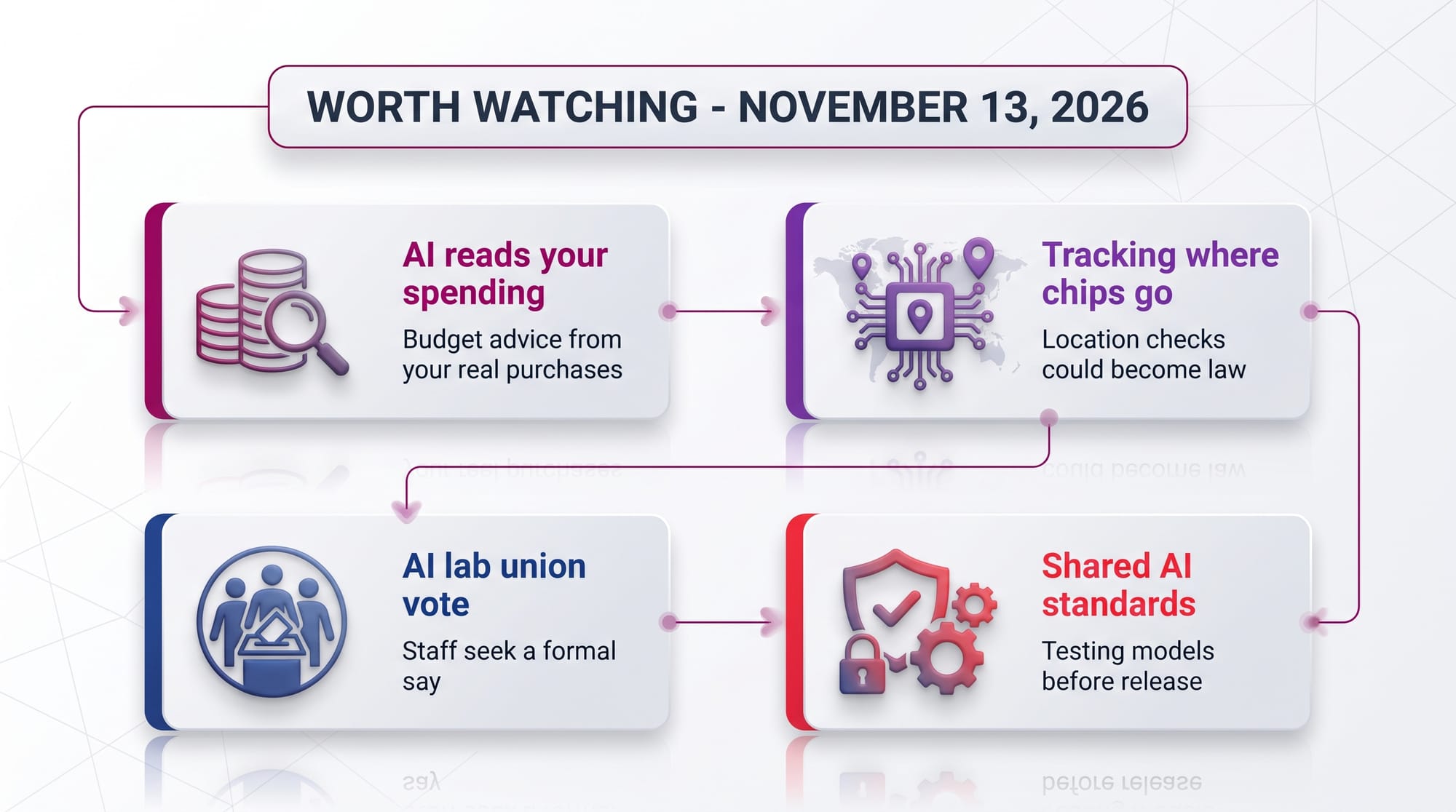
Gemini can now read your spending
US Gemini users can now connect Google Wallet, and bank or card accounts through Plaid, so the assistant can answer money questions from real spending. It can find forgotten subscriptions and draw budget charts, but Google says it cannot move money. If this catches on, AI assistants become a default place to manage household budgets.
Nvidia privately said chip-location tracking is doable
Rep. Bill Foster told MIT Technology Review that Nvidia agreed in technical talks that chip-location tracking is feasible, though its industry group had called it "potentially infeasible" in March. One option would have each chip report its location when it comes online. If tracking becomes law, advanced chips could come with built-in location checks.
Google DeepMind staff asked the UK government to force a union vote
Two UK unions filed with the official body that settles union disputes, seeking a binding vote for about 1,000 Google DeepMind staff. Organizers object to military contracts and hope to write a playbook for OpenAI and Anthropic staff in the UK. If it works, AI workers could gain a formal say in what their labs build.
The White House is lining up AI makers behind shared standards
The White House AI task force met on cyber threats and heard updates on pre-release testing of AI models by the government's NIST standards agency. Its leader said the companies that signed the White House AI accord are drafting shared industry standards, and more firms may join. That could mean the AI tools you use get government-reviewed before launch.
Top Repos Today
📜 License: MIT · 👤 By: farion1231 (individual developer)
🎯 Time to value: 10 minutes
| ✓ Pros | ✗ Cons |
|---|---|
| Covers more than a dozen coding tools | Its page promotes many paid third-party AI resellers as sponsors |
| Automatic switch to a backup provider when one fails | Official Claude and Codex accounts are limited in some routing features |
| Free and open source | Changes settings files that other tools depend on |
 GitHub
📜 License: MIT · 👤 By: Gentleman Programming (organization)
🎯 Time to value: 15 minutes
| ✓ Pros | ✗ Cons |
|---|---|
| Works with 17 existing agents | Adds its own workflow and terms to learn |
| Backs up your settings before every change | Windows setup needs the Go programming tools |
| Free, with no paid tier | Opinionated about how you should work |
 GitHub
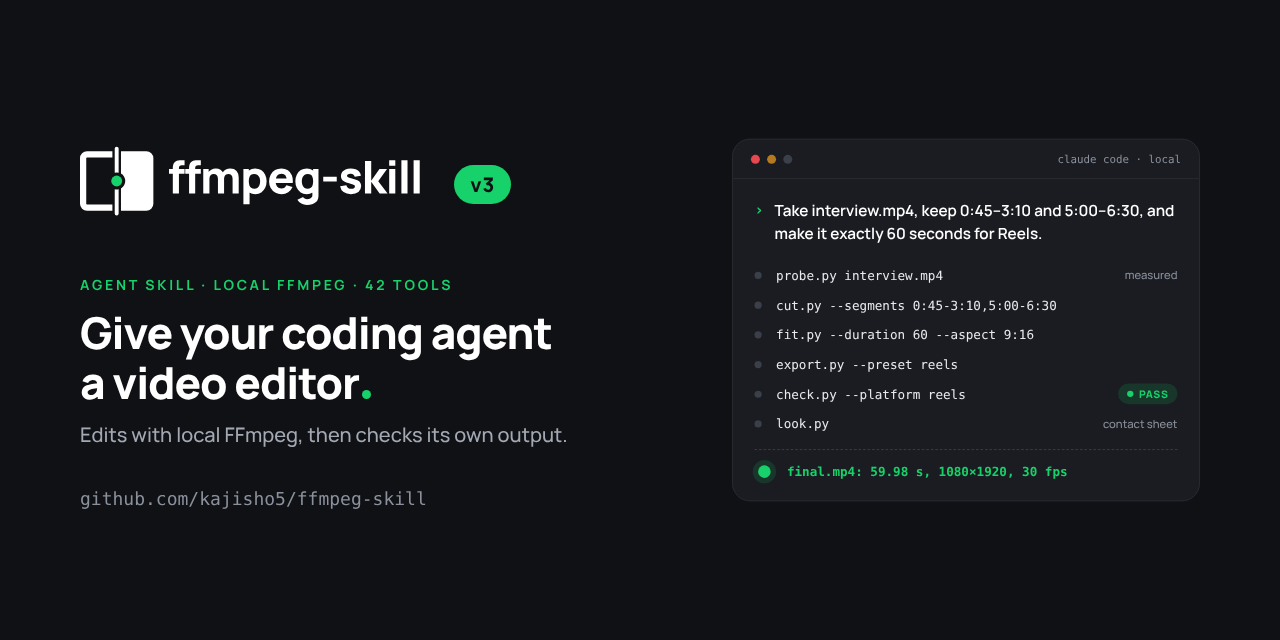
📜 License: MIT · 👤 By: kajisho5 (individual developer)
🎯 Time to value: 10 minutes
| ✓ Pros | ✗ Cons |
|---|---|
| Works offline, with no account or API key | You still need to install FFmpeg first |
| Agent checks its own results | Spoken-word captions need a separate speech tool |
| One-command install | Command-line based, no visual editor |
 GitHub
📜 License: MIT · 👤 By: Ollama (organization)
🎯 Time to value: 5 minutes
| ✓ Pros | ✗ Cons |
|---|---|
| Very easy to install and use | Big models still need a powerful computer |
| Huge library of ready-to-run models | Fewer fine-tuning knobs than lower-level tools |
| Many other apps plug into it | Downloads can be tens of gigabytes |
 GitHub
📜 License: MIT · 👤 By: ahujasid (individual developer)
🎯 Time to value: 15 minutes
| ✓ Pros | ✗ Cons |
|---|---|
| One-command setup for many AI apps | Not an official Blender product |
| Works with the AI model of your choice | Setup runs an install script from the internet |
| Free and open source | AI-made 3D work still needs touching up |
 GitHub
📜 License: Apache-2.0 · 👤 By: Anthropic (organization)
🎯 Time to value: 5 minutes
| ✓ Pros | ✗ Cons |
|---|---|
| Maintained by Anthropic | Only useful if you use Claude Code |
| Installs with one command inside Claude Code | Anthropic warns it cannot vet everything a plug-in includes |
| Clear standard structure for builders | Third-party listings are being phased out of this collection |
 GitHub
📜 License: Apache-2.0 · 👤 By: RTK (organization)
🎯 Time to value: 5 minutes
| ✓ Pros | ✗ Cons |
|---|---|
| Install once and forget it | A 90% cut in command output is not a 90% cut in your bill |
| Single file with no extra parts | Pushes its paid Pro product in its reports |
| Shows exactly what it saved | Another tool named "rtk" exists, so install the right one |
 GitHub
Top Models Today
👤 By: Edge0 · 🎯 Task: Text generation (coding and agents)
📐 Size: 145B total (about 10B active)
| ✓ Pros | ✗ Cons |
|---|---|
| Runs on one 24 GB graphics card | Also needs about 38 GB of regular computer memory |
| Fast replies for its size | Needs Edge0's own engine, built for NVIDIA cards on Linux or Windows |
| Free for personal and output use | Selling the model itself as a service needs Edge0's permission |

👤 By: ConceptCountry · 🎯 Task: Text generation
📐 Size: 27B
| ✓ Pros | ✗ Cons |
|---|---|
| Permissive license for commercial use | Results are the makers' own |
| Versions from about 16 GB to 52 GB | Compressed versions were not separately tested |
| Less "thinking" means faster, cheaper answers | A modified model, not a new one |

👤 By: Higurashi AI · 🎯 Task: Audio-to-audio (spoken conversation)
📐 Size: about 5.3B by file count (named 4B)
| ✓ Pros | ✗ Cons |
|---|---|
| Runs on a graphics card with about 12 GB of memory | Released as a research base model, not a finished assistant |
| Mac app included | Ships with no voices, so you must supply one you have rights to |
| Nine languages | Bluetooth headsets add noticeable delay |

👤 By: KRAFTON AI · 🎯 Task: Text generation
📐 Size: 3.2B (about 1.5B effective)
| ✓ Pros | ✗ Cons |
|---|---|
| Permissive license | Mainly Korean and English |
| Very long input window for its size | Small models make more mistakes than big ones |
| Formats ready for local use | Benchmark wins are KRAFTON's own |

👤 By: Nex-AGI · 🎯 Task: Image-text-to-text (computer use and coding)
📐 Size: 321B by file count (compressed FP8 version)
| ✓ Pros | ✗ Cons |
|---|---|
| Permissive license | Data-center hardware needed to self-host |
| Accepts images as well as text | Reliability numbers come from internal tests |
| Works with the popular SGLang serving tool | Not better than its base on every test |

AI Launches Today
💰 Pricing: Free options · 🏷 Category: AI agents and evaluation
💰 Pricing: 50 free credits for new users; paid plans not yet set · 🏷 Category: AI video editor
💰 Pricing: Free, with optional Pro subscription · 🏷 Category: Video and photo editing
💰 Pricing: Free and open source · 🏷 Category: Developer tools and data
💰 Pricing: Free options; a maker comment mentions a 14-day trial and a $19 plan · 🏷 Category: Video and online learning
Snapshot
| Provider | Model | Input $/1M | Output $/1M | Context |
|---|---|---|---|---|
| Anthropic | Claude Fable 5.2 | $8.00 | $40.00 | 1M tokens |
| Anthropic | Claude Fable 5.1 | $10.00 | $50.00 | 1M tokens |
| Anthropic | Claude Opus 5.5 | $4.00 | $20.00 | 1M tokens |
| Anthropic | Claude Sonnet 5.5 | $2.00 | $10.00 | 1M tokens |
| Anthropic | Claude Haiku 5.5 | $0.10 (up to 100K-token prompts; $0.50 above) | $0.50 ($2.50 above 100K) | 1M tokens |
| OpenAI | GPT-6 Astra | $10.00 (up to 272K-token prompts; $20.00 above) | $50.00 ($75.00 above 272K) | 1.05M tokens |
| OpenAI | GPT-6.1 Sol | $2.00 (up to 272K; $4.00 above) | $10.00 ($15.00 above 272K) | 1.05M tokens |
| OpenAI | GPT-6.1 Terra | $1.00 (up to 272K; $2.00 above) | $5.00 ($7.50 above 272K) | 1.05M tokens |
| OpenAI | GPT-6 Luna | $0.10 (up to 272K; $0.20 above) | $0.50 ($0.75 above 272K) | 1.05M tokens |
| Gemini 4 Carbon | $2.00 to Nov 30; $4.00 from Dec 1 | $10.00 to Nov 30; $20.00 from Dec 1 | 1M tokens | |
| Gemini 4 Argon | $2.00 to Nov 30; $4.00 from Dec 1 | $10.00 to Nov 30; $20.00 from Dec 1 | 1M tokens | |
| Gemini 4 Hydrogen | $1.50 | $7.50 | 1M tokens | |
| Gemini 3.8 Flash | $0.75 (to Dec 31; $1.50 from Jan 1) | $3.75 (to Dec 31; $7.50 from Jan 1) | not listed | |
| Groq | GPT-OSS 120B | $0.15 | $0.60 | 131K tokens |
| Groq | Qwen3.8-27B (preview) | $0.80 | $4.00 | 131K tokens |
| Mistral (open weights) | Mistral Large 4 | $0.70 | $2.10 | 1M tokens |
No price changes since yesterday: Every standard price from Anthropic, OpenAI, Google and Groq matches yesterday's table. The only update is that Google's pricing page now lists a 1M-token context for Gemini 4 Hydrogen, which it did not show yesterday. Google's Carbon and Argon prices still double on December 1, and Gemini 3.8 Flash doubles on January 1. Mistral's Large 4 price, OpenAI's context sizes and Anthropic's and Google's other 1M-token context figures carry over from earlier checks.
What this means: With Carbon and Argon doubling in 18 days, Gemini 4 Hydrogen now matches their 1M-token reading window at well under half their December price, so Google users should test it on their everyday work now.
Termination Lag: Coding Agents Solve Early but Stop Late
Key finding: After already reaching a correct fix, agents spent a median of 35-37% (Qwen3-Coder) to 54-60% (Laguna-XS.2) of their steps still working, and in 1-8% of cases that extra work undid the correct fix.
Why practitioners should care: If you pay per token for coding agents, a large share of a successful run can be spent after the problem is already solved, mostly on double-checking and browsing the code. Stopping rules, such as ending once the tests pass, could cut costs and even prevent agents from breaking a fix they already got right.

Member discussion