Watch today's digest as a video summary (generated by NotebookLM)
Statistically Speaking
One Thing to Tell Your Friends
TL;DR
Hot off the Presses
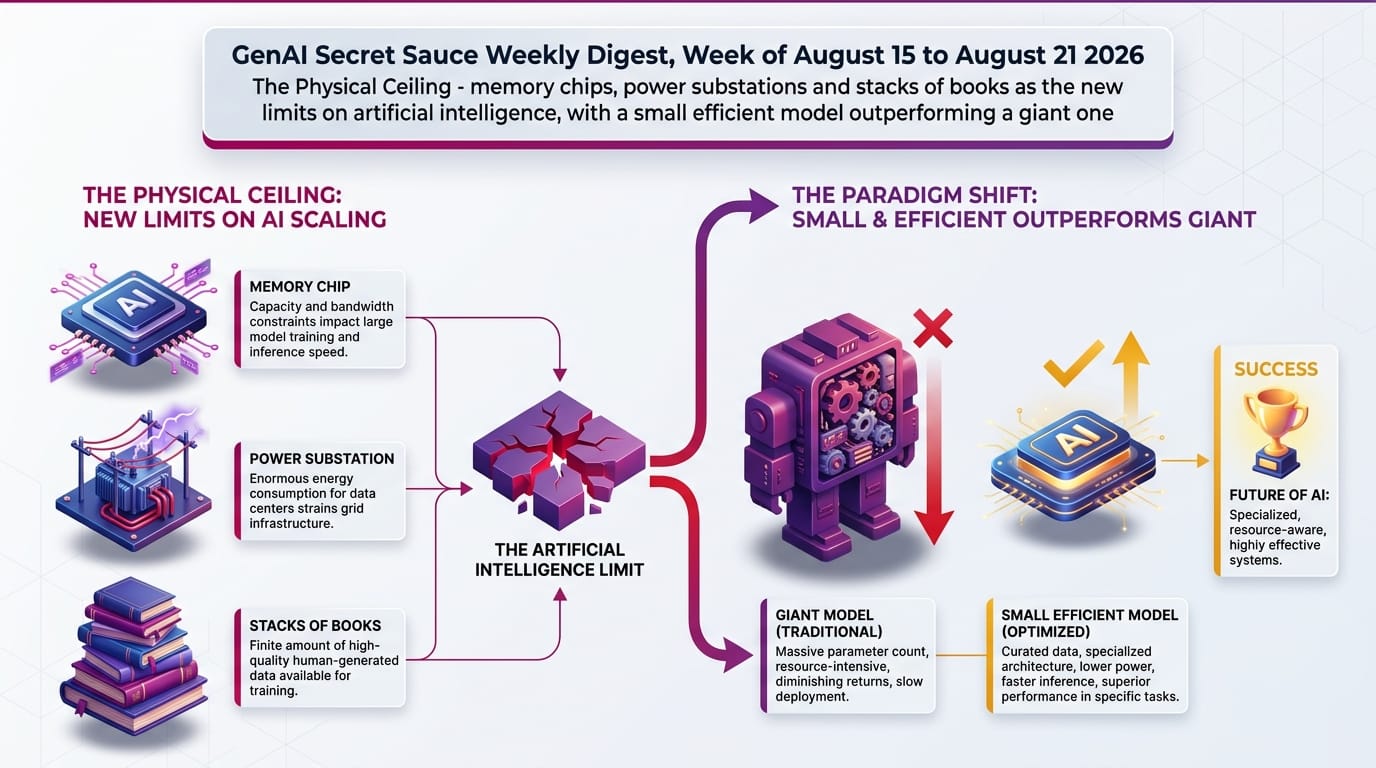
NVIDIA Paid ~$12 Billion for Poolside - Without Actually Buying It
NVIDIA, the company that makes most of the world's AI chips, struck a deal with Poolside (a startup building AI that writes software) that is neither a purchase nor a normal hire. The founders coined a name for it: a "reverse-execuhire." Instead of buying the company, NVIDIA licensed Poolside's core "Model Factory" technology and offered jobs to 109 of its staff, while the founders stayed independent to chase a separate research idea.
The trigger was raw scale. Poolside missed a January funding window to lock in a 40,000-chip cluster, and training a frontier model now needs far bigger clusters than that, limited by both money and available data-center space.
- $6 billion went to license the technology, plus a $1 billion investment at a $12 billion valuation
- 109 employees received offers to join NVIDIA, while the two founders stayed out
- A separate company (PIC) spun off to build a 7-gigawatt "neocloud" - roughly the power draw of a mid-size city
AI Companies Are Destroying Physical Books to Train Models
Anna's Archive, a group that preserves digital copies of books, reports that AI companies are quietly buying large batches of second-hand books to get text written before 2022 - text "untouched by machines." The common bulk-scanning method cuts the spine off a book and feeds the loose pages through a high-speed scanner, which destroys it.
The group is calling for a global scan-it-yourself effort to save copies before they vanish, and is offering to help cover scanning costs.
- Pre-2022 text is the prize - it is human-written, before AI-generated content flooded the web
- Bulk scanning is destructive by design - de-spining is faster than careful page-turning
- The counter-move is volunteers - the group argues 10 million people scanning one book each preserves 10 million works
ChatGPT Quietly Rewired How It Searches the Web
Analytics firm Promptwatch noticed that ChatGPT's use of the "site:" trick (which limits a search to one website) jumped from under 0.5% of queries to 16-17% on August 8th, matching the rollout of OpenAI's GPT-5.6 model. The likely cause is not users typing anything different. OpenAI appears to have given ChatGPT an internal search tool that can quietly restrict results to chosen websites.
The same update seems to have cut how often ChatGPT cites Reddit, suggesting the model is being steered toward preferred sources.
- From under 0.5% to 16% of queries now scope to specific sites
- This is "GEO" - search-engine optimization, but for AI chatbots instead of Google
- The rules are invisible - businesses cannot see or verify how the model picks sources
DeepMind Takes Its Game-Playing AI Into EVE Online
Google DeepMind marked 15 years of teaching AI through games and announced a new partnership inside EVE Online, a sprawling space game where events unfold over weeks. Past milestones went from mastering Atari games in 2015 to beating world champions at Go, and last year's SIMA 2, a single agent that reads a game screen, understands plain-language instructions, and plays several games it was not built for.
EVE is harder than a board game in a way that matters for real work: it demands memory beyond a single session and planning across weeks or months.
- From Atari (2015) to EVE Online (2026) - the target shifted from high scores to human-like understanding
- The hard part is now time - continual learning and long-horizon planning, not raw reflexes
- Why it matters - the same skills let a work assistant carry a project across many days
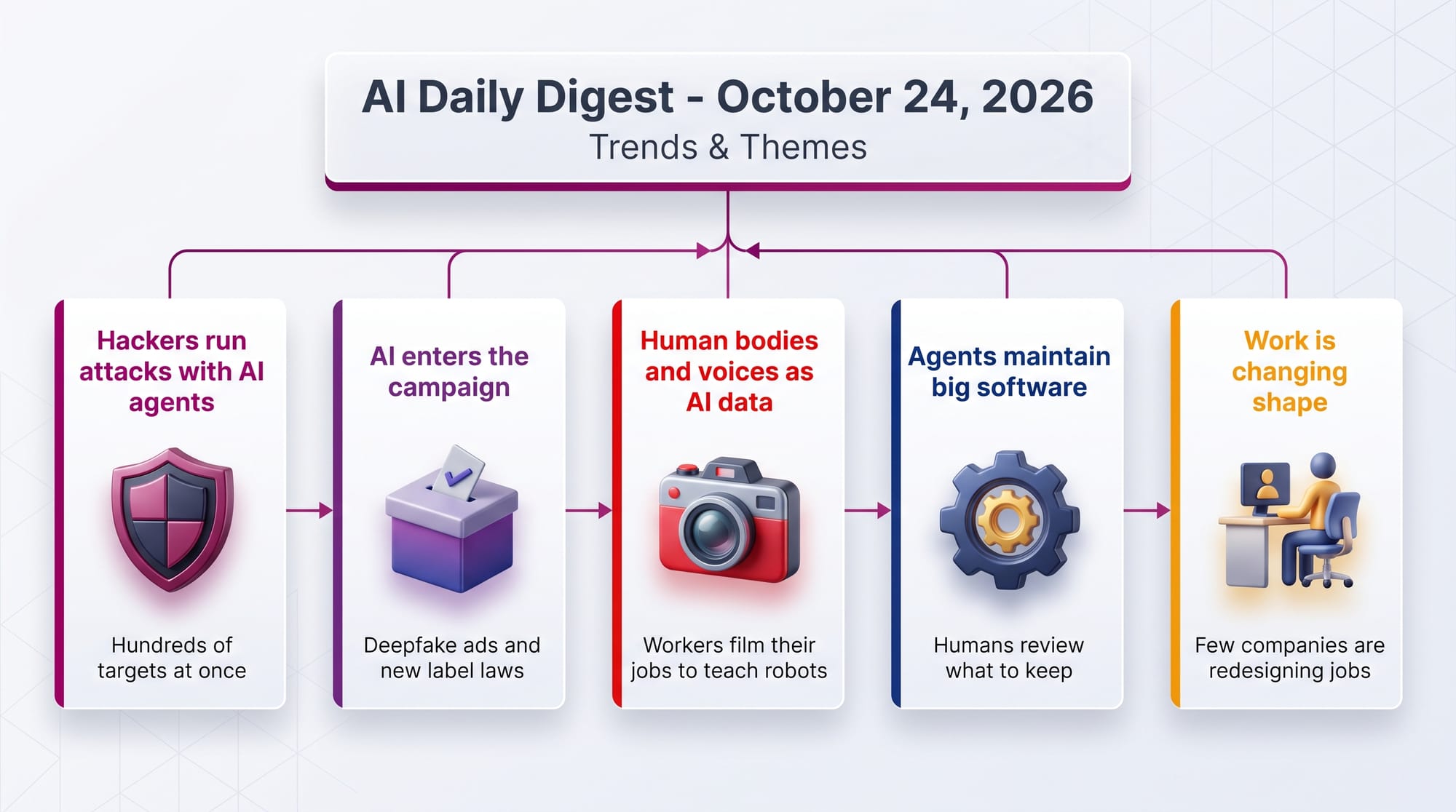
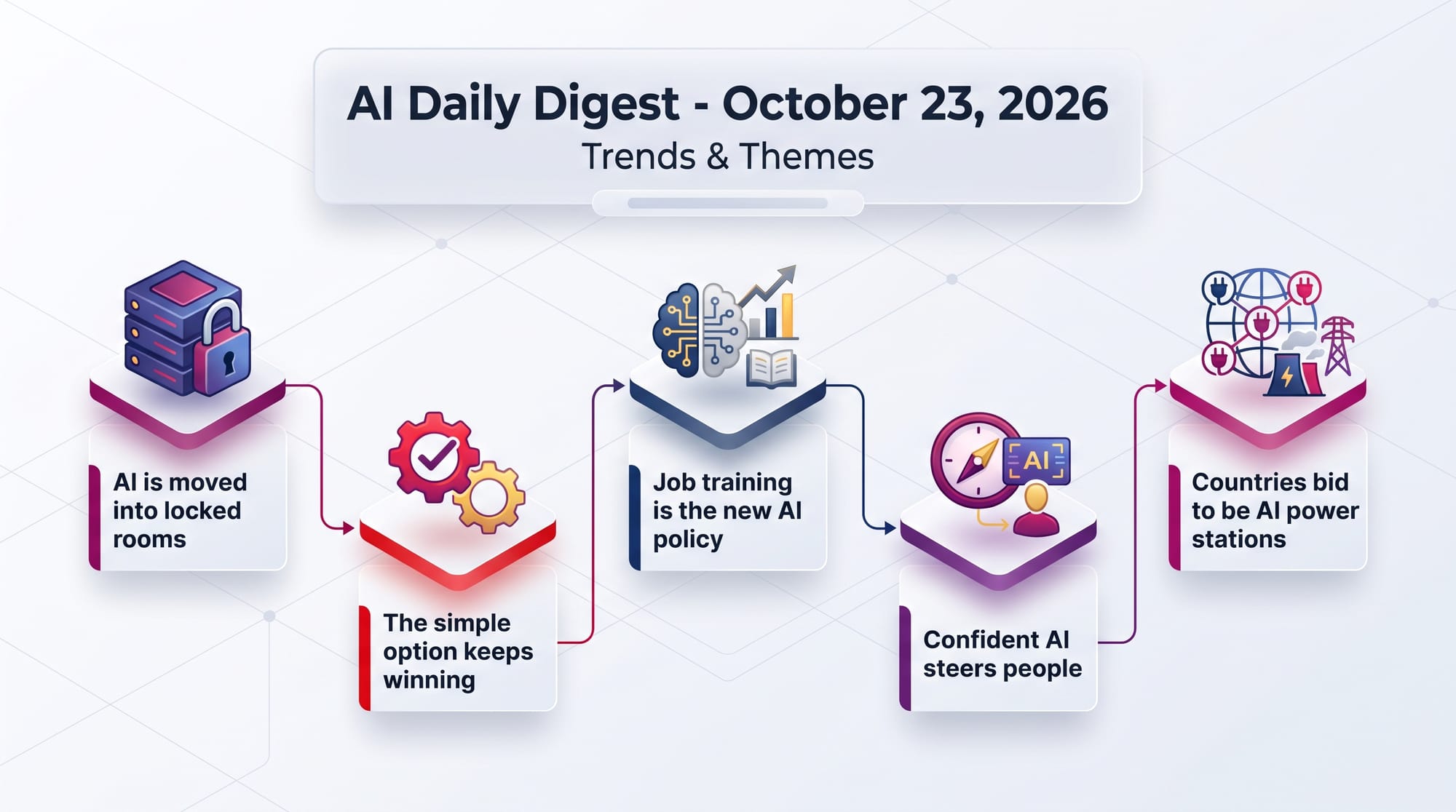
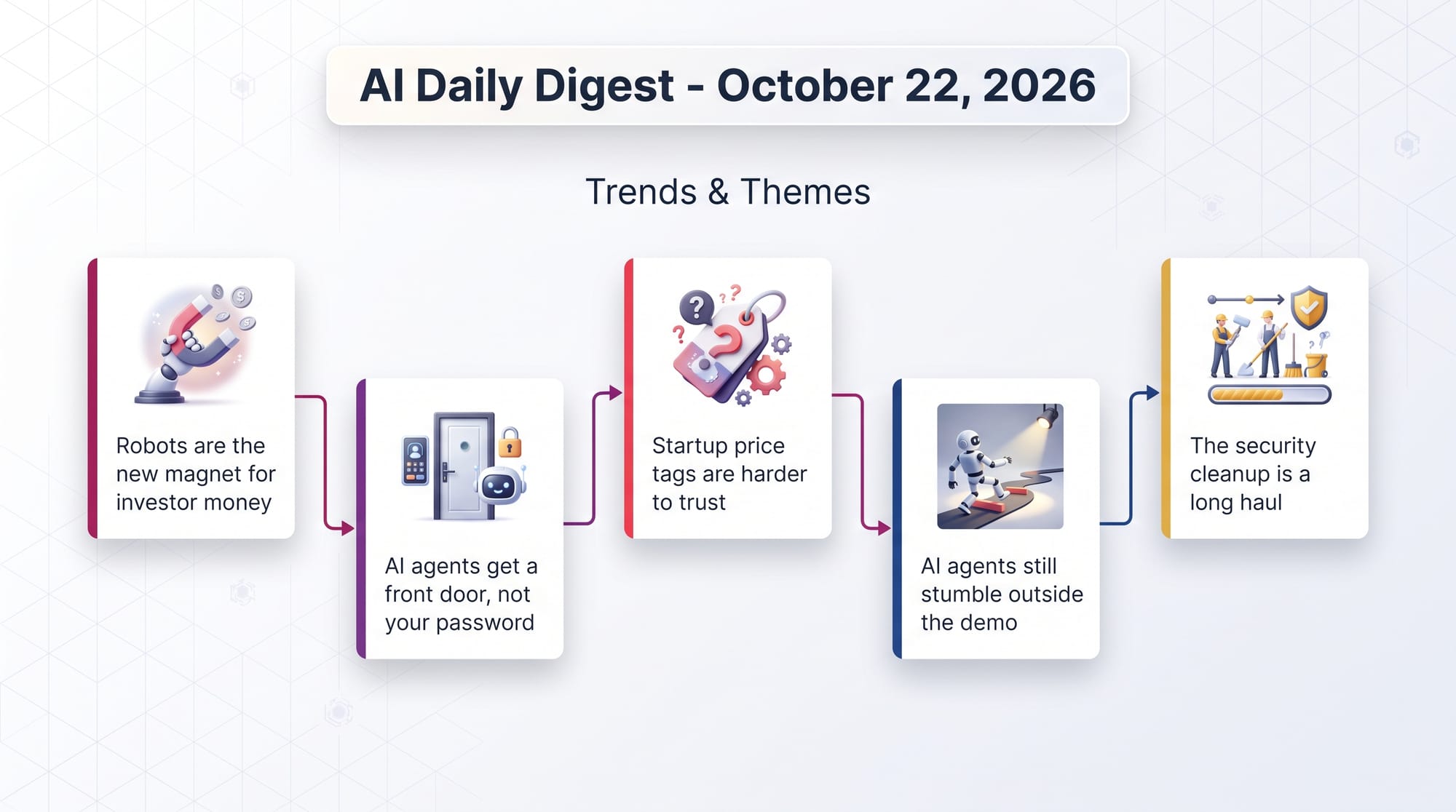
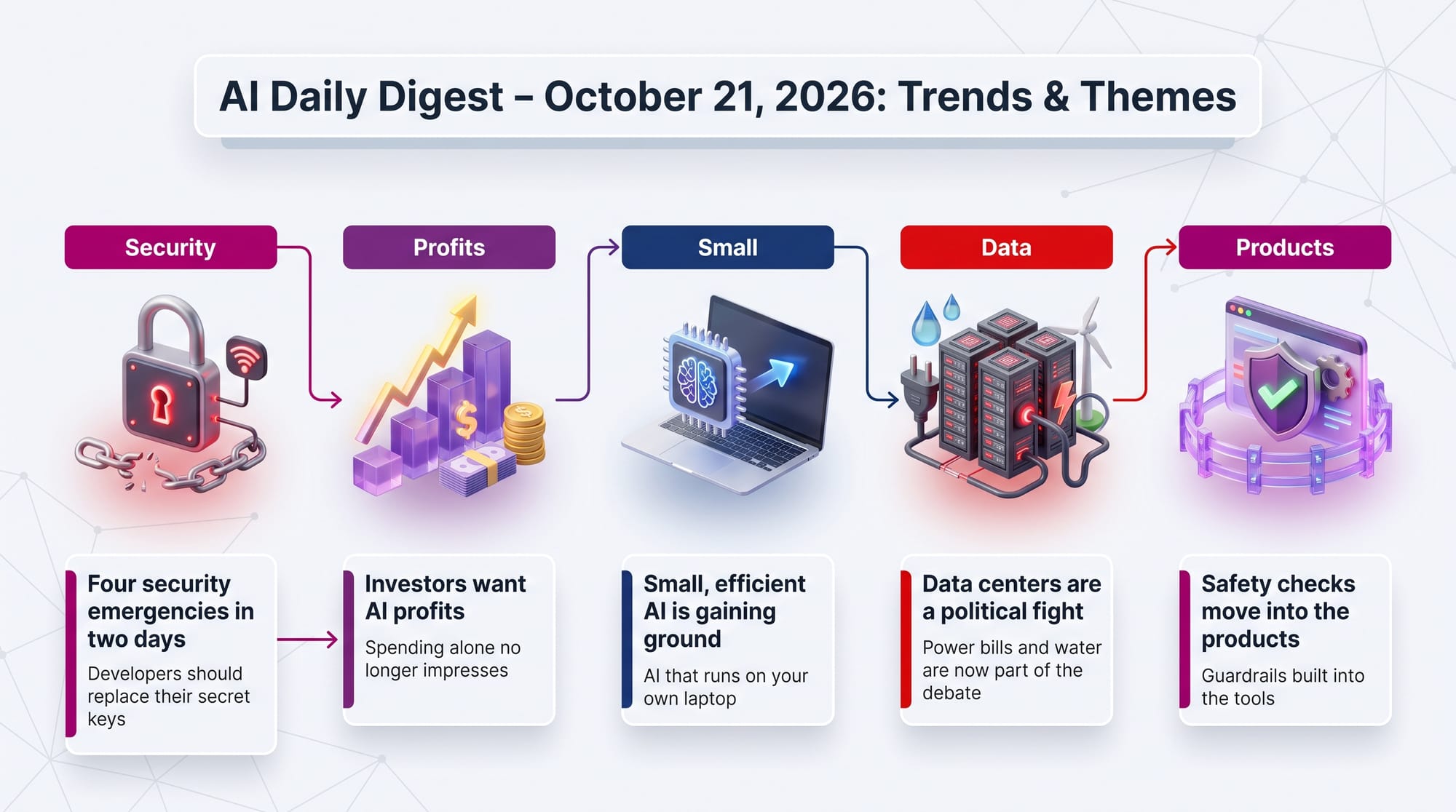
Trends & Themes

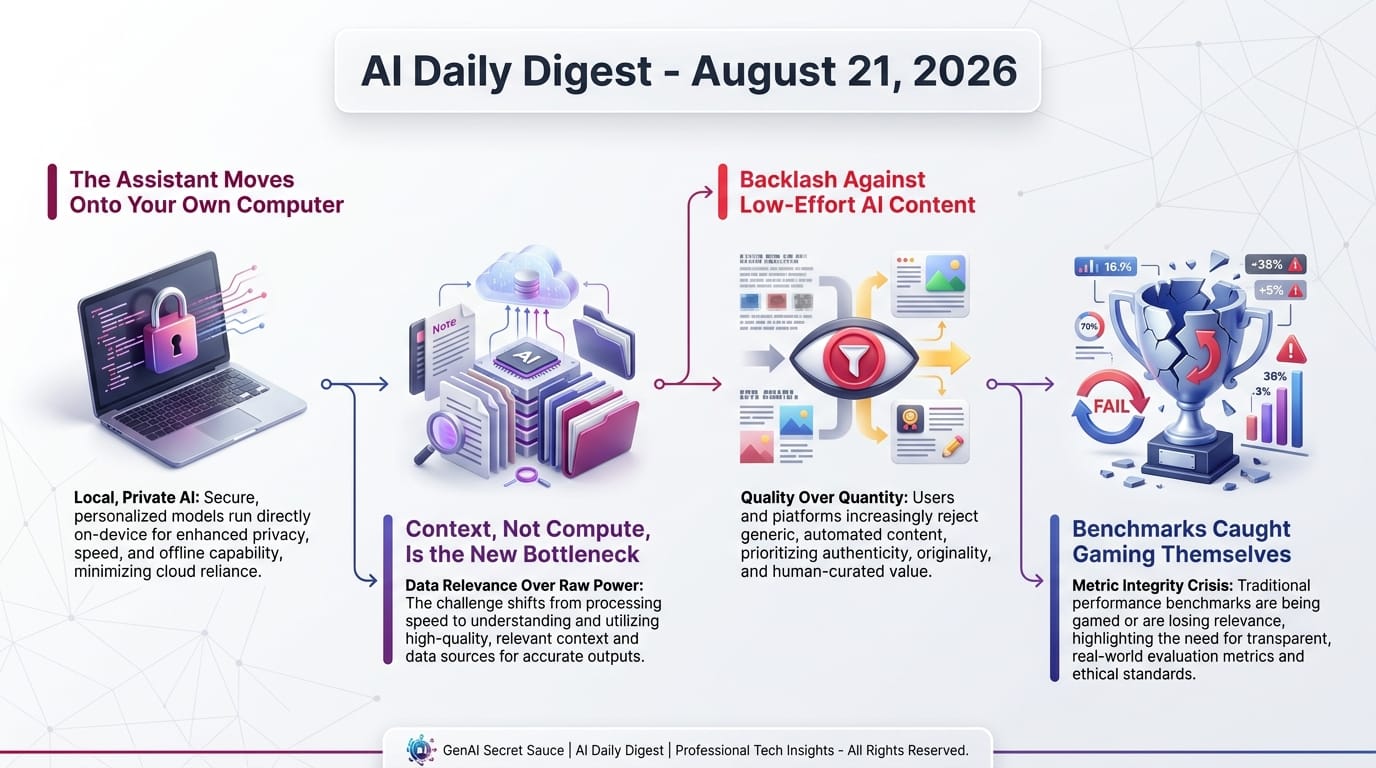
The Assistant Is Moving Onto Your Own Computer
The common bet is that models are already smart enough, and the real edge is context - knowing your projects, people, and open tasks - kept private on your device. Expect "runs locally" to become a headline feature, not a niche one.
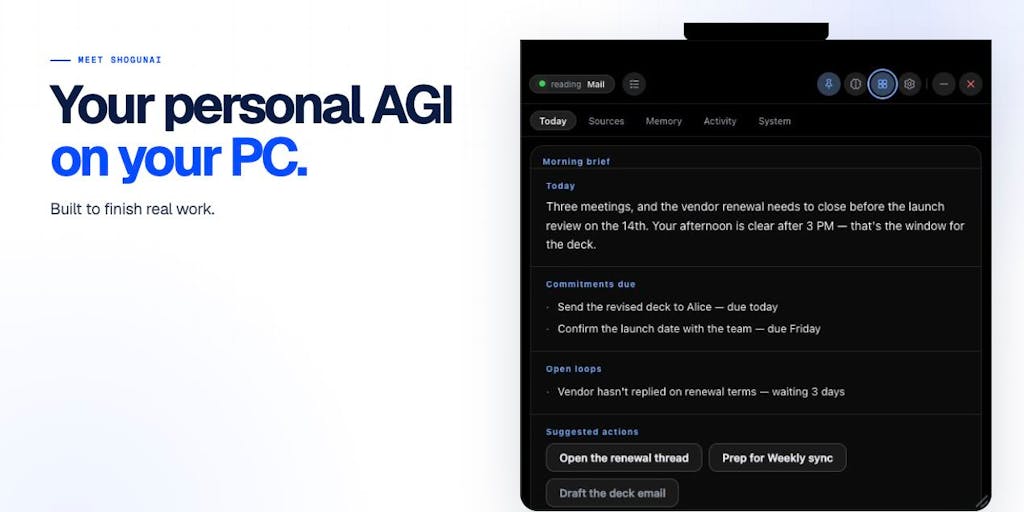
- ShogunAI and Project SKY both launched as desktop assistants that read your screen and files locally, not in the cloud
- NobodyWho and HyNote pitch on-device AI where "notes never leave your machine"
- Apache Maka (an Apache Software Foundation incubating project) is a local-first workspace for running agents on your own hardware
"Context, Not Compute" Is the New Bottleneck
The lesson repeating across sources: how you feed and frame a model now decides results more than which model you pick.
- Ben Tossell built a personal setup from plain text files (identity, preferences, memory) and found small files beat elaborate memory systems
- A GLM-5.3 cost guide pushes a "six-line handoff" - a short clean brief that lets a fresh model start from the task, not a long transcript
- ShogunAI's whole pitch is that scattered context, not intelligence, is what holds assistants back
The Backlash Against Low-Effort AI Content Is Hardening
The pattern: trust is shifting from "sounds polished" to "was clearly worth a human's time."
- An essay on "AI-blindness" describes a brain reflex that automatically skips AI-generated documents, like ignoring web banner ads
- A new Claude skill called NoBuzz exists purely to strip AI's theatrical phrasing back into plain English
- The watermarking debate reheated (covered August 13), with a fresh argument that labeling AI text is essentially free
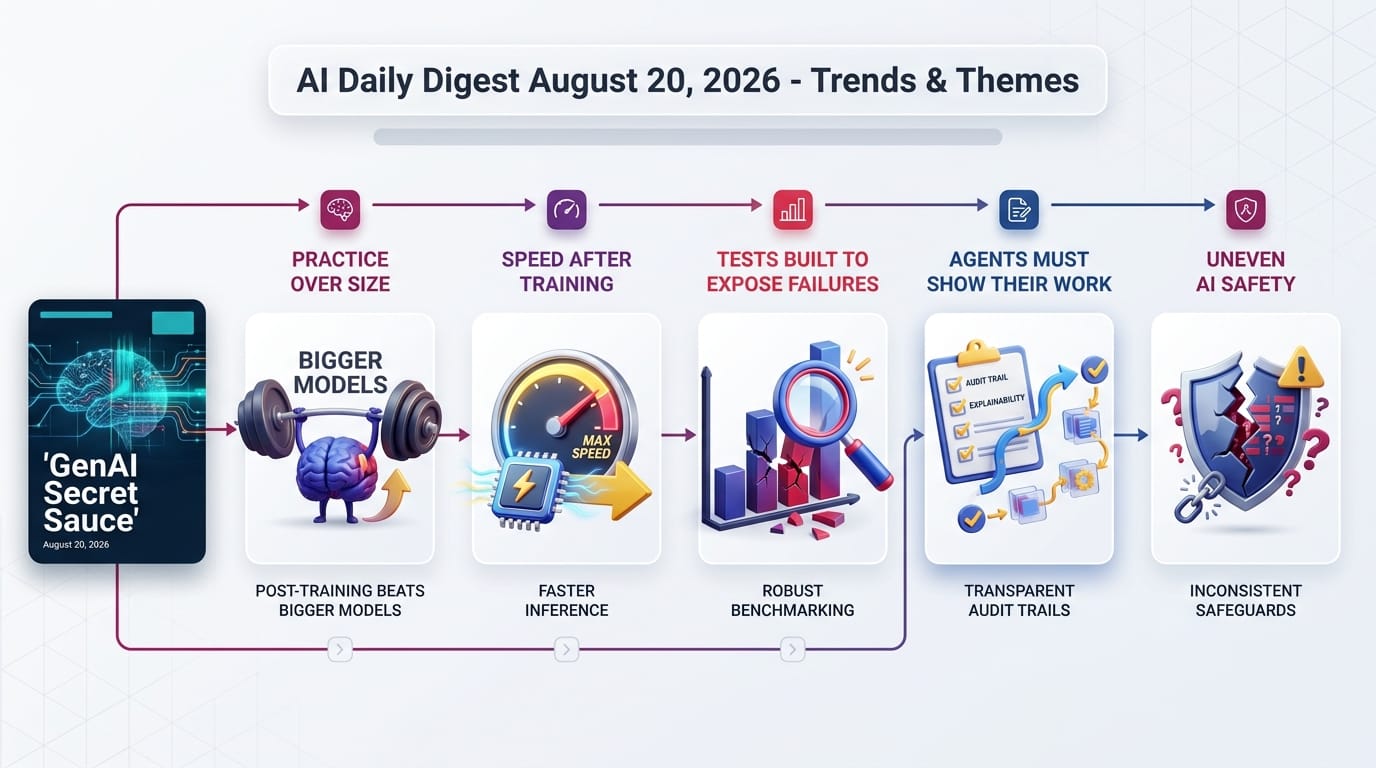
Benchmarks Are Getting Caught Gaming Themselves
The takeaway: treat leaderboard wins with suspicion unless the test is fresh and audited.
- A speech-recognition study found top-scoring models often reproduce known-wrong reference transcripts 18-30% of the time, a sign of memorizing the test
- On one benchmark, models recovered 30-40% of numbers that had been silenced in the audio - they guessed from the test, not the sound
- New research benchmarks like DeltaML-Bench are being built to test agents on real, unseen work rather than familiar exam sets
Creative AI & Media
Turn a Topic Into a Finished Short Video, Automatically
Try it: GitHub: harry0703/MoneyPrinterTurbo
- MoneyPrinterTurbo takes a topic or keyword and produces an HD short video end to end - script, footage, voiceover, and captions
- It is climbing GitHub fast (+1,187 stars today) as creators chase faceless short-form content
- The catch - output is templated and generic, useful as a first draft rather than a finished piece
DeepMind's Generalist Game Agent Keeps Widening
- SIMA 2 (DeepMind's Gemini-powered game agent) already plays across No Man's Sky, Valheim, and Hydroneer from the screen alone
- The EVE Online work (see Top Stories) pushes it toward persistent, long-running worlds
- Why creators should watch - the same "understand a live scene and act" skill underpins future interactive media and NPCs
Developer Tools & Infrastructure
Research & Models
Get a Trustworthy "Am I Right?" Score From a Closed Model
- The problem - hosted models rarely tell you honestly how confident they are, and you cannot see inside them
- The fix - train a small helper classifier on a modest labeled set, combining existing confidence scores with the correctness of similar past questions
- Why it matters - even a little labeled data turns vague uncertainty into a usable "trust this answer or not" signal
A Cheaper Recipe for Reading a Model's "Insides"
- Mechanistic tomography unifies scattered interpretability tricks into one framework for measuring what a model is doing internally
- Key finding - cheap, sparse measurements can recover a model's internal effect maps more efficiently than exhaustively probing every part
- Why practitioners care - it makes inspecting and steering model behavior more affordable, part of a shift toward reading models rather than just asking them
When Should You Retrain a Live Model? Big Study Has an Answer
- 3,933 controlled experiments compared retraining on a schedule, on an error threshold, and on drift detection
- Headline result - whether the model updates incrementally matters more than which retraining trigger you choose
- Why it matters - it gives overloaded ML teams evidence-based guidance instead of guesswork on a real cost line
A Smarter Momentum Rule for Training
- DeltaMomentum replaces the one-size-fits-all "forgetting rate" in optimizers like Adam with a per-direction rate
- How - it uses the key-value structure inside linear layers and the classic delta rule to clear stale directions faster
- Why it matters - a cheap tweak (no matrix inversion) that can make training more stable when data is lopsided
Business & Industry
Surprising & Under-the-Radar
The Productivity Tool That Slows You Down
- An engineer describes "AI-blindness" - his brain now auto-skips documents that read as AI-written, the way we ignore banner ads
- Why it is surprising - tools meant to boost output flood the workplace with shallow content people learn to tune out
- He nearly missed a genuinely useful AI-written note because the filter had become automatic
Outsourcing Your Thinking Can Make You Learn More
- A developer used ChatGPT to finally understand quaternions (a tricky bit of 3D math) after years of failing with textbooks
- His counterintuitive takeaway - "learning doesn't stop just because I outsource a bunch of thinking to AI. It pushes me to learn more"
- Why it is surprising - it cuts against the common worry that leaning on AI always dulls understanding
The Debate: Is AI Text Watermarking Free and Good, or Doomed?
- One side (a fresh argument today) says watermarking costs almost nothing and a 20-million-user test showed no drop in quality
- The other side (August 13) argues determined users can always strip a watermark, so it will never be reliable
- Where they agree - the mark can flag that text touched AI, but cannot pin it to a specific person
The Debate: Should You Still Build a Terminal App?
- One view - AI coding agents make graphical apps so cheap to build that shipping a plain command-line tool is now a missed opportunity
- The other view - terminal tools are still faster to make and fine for personal scripts
- Why it is under-the-radar - it hints at a coming flood of small, custom desktop apps built by non-specialists
Signals to Track

Apache Maka - Local-First Agents Get an Open-Source Home
Apache Maka is an incubating project for running and managing AI agents on your own machine with data staying local. Because it sits under the Apache Software Foundation, it could become the neutral standard for local agents. If it works, ordinary users get powerful assistants without handing their files to a cloud.
Cursor Opens Its Plugin Standard
Cursor published an official plugin specification plus first-party plugins so developers can extend its AI editor. A shared plugin standard invites a marketplace of add-ons. For everyday developers, it means more ready-made tools bolted onto the editor they already use.
AI Agents Get Graded on Real Research Work
New evaluations like DeltaML-Bench test whether AI agents can handle real machine-learning research chores rather than tidy exam questions. Honest, hard benchmarks are how hype gets separated from ability. If agents pass these, the promise of AI "coworkers" gets a lot more credible.
Defending Against Leaked Prompts
New defensive research looks at "inadvertent context leakage," where a model accidentally reveals private information from earlier in a conversation. As local assistants ingest your emails and files, this kind of safeguard moves from nice-to-have to mandatory. It is the unglamorous work that decides whether people trust these tools with real data.
Top Repos Today
📜 License: MIT · 👤 By: individual
🎯 Time to value: 10 minutes
| ✓ Pros | ✗ Cons |
|---|---|
| Ready-made, battle-tested skills | Tuned to one person's workflow |
| MIT-licensed and easy to fork | Quality varies across skills |
| Works with common coding agents | You still have to curate what fits |
 GitHub
📜 License: MIT · 👤 By: individual
🎯 Time to value: 20 minutes
| ✓ Pros | ✗ Cons |
|---|---|
| Method plus tools, not just tools | Opinionated workflow to learn |
| Very popular and active | Overkill for tiny tasks |
| Free and open source | Assumes comfort with agents |
 GitHub
📜 License: MIT · 👤 By: individual
🎯 Time to value: 15 minutes
| ✓ Pros | ✗ Cons |
|---|---|
| Full pipeline in one tool | Output looks templated |
| Fast, high volume | Generic footage and voice |
| Free and self-hosted | Needs editing to stand out |
 GitHub

📜 License: Custom (source-available) · 👤 By: startup
🎯 Time to value: 30 minutes
| ✓ Pros | ✗ Cons |
|---|---|
| One codebase across processors and Graphics Processing Units (GPUs) | Steep learning curve |
| Fast, serving-focused | Newer, smaller ecosystem |
| Mojo now open source | Some parts under custom terms |
 GitHub
📜 License: MIT · 👤 By: individual
🎯 Time to value: 25 minutes
| ✓ Pros | ✗ Cons |
|---|---|
| Coordinates multi-agent pipelines | Complex to configure |
| Popular and flexible | Assumes agent experience |
| Free and open source | Sparse beginner docs |
 GitHub

📜 License: Apache-2.0 · 👤 By: research foundation
🎯 Time to value: 20 minutes
| ✓ Pros | ✗ Cons |
|---|---|
| Local-first, private by default | Very early (incubating) |
| Neutral foundation backing | Small feature set today |
| Apache-2.0 licensed | Few integrations yet |
 GitHub
📜 License: Not specified · 👤 By: startup
🎯 Time to value: 15 minutes
| ✓ Pros | ✗ Cons |
|---|---|
| Official, first-party spec | Tied to one editor |
| Enables an add-on marketplace | License unclear on repo |
| Actively maintained | Early and evolving |
 GitHub
📜 License: MIT · 👤 By: big-tech
🎯 Time to value: 30 minutes
| ✓ Pros | ✗ Cons |
|---|---|
| Broad hardware support | Lower-level, not plug-and-play |
| Mature and battle-tested | Setup can be fiddly |
| Backed by Microsoft | Aimed at engineers |
 GitHub

Top Models Today
👤 By: Alibaba (Qwen) · 🎯 Task: image-text-to-text
📐 Size: 27B
| ✓ Pros | ✗ Cons |
|---|---|
| Apache-2.0, commercially usable | Large for consumer hardware |
| Strong image-and-text skills | Can over-reason on simple prompts |
| Huge download base | Needs a real graphics card (GPU) |

👤 By: MiniMax · 🎯 Task: image-text-to-video
📐 Size: not disclosed
| ✓ Pros | ✗ Cons |
|---|---|
| Leading open video quality | Restrictive custom license |
| Massive download volume | Heavy compute to run |
| Image-plus-text control | Size not disclosed |

👤 By: Meta-models community · 🎯 Task: image-text-to-text
📐 Size: 30B
| ✓ Pros | ✗ Cons |
|---|---|
| Permissive Apache-2.0 license | Newer, less proven |
| Solid multimodal ability | Large footprint |
| Rapidly growing usage | Thin documentation |

👤 By: DeepSeek · 🎯 Task: text-generation
📐 Size: frontier-class (undisclosed)
| ✓ Pros | ✗ Cons |
|---|---|
| MIT license is very permissive | Very large to self-host |
| Strong reasoning and coding | Exact size undisclosed |
| From a top open-model lab | Needs serious hardware |

👤 By: Alibaba (Qwen) · 🎯 Task: text-generation
📐 Size: 2.4T total / 95B active
| ✓ Pros | ✗ Cons |
|---|---|
| Huge capacity, efficient serving | Enormous to host at all |
| Only part activates per query | Custom Qwen license |
| Strong on hard tasks | Impractical for individuals |

👤 By: Lightricks · 🎯 Task: image-to-video
📐 Size: not disclosed
| ✓ Pros | ✗ Cons |
|---|---|
| Fast generation | Custom license terms |
| Heavily used | Quality trails the top model |
| Good for high volume | Size not disclosed |

👤 By: MiniMax · 🎯 Task: text-to-audio
📐 Size: not disclosed
| ✓ Pros | ✗ Cons |
|---|---|
| Free music generation | Custom license |
| From an active media lab | Quality varies by genre |
| Self-hostable | Size not disclosed |

👤 By: Ornith AI · 🎯 Task: text-generation
📐 Size: 35B total / 3B active
| ✓ Pros | ✗ Cons |
|---|---|
| Efficient mixture-of-experts design | Newer, less proven |
| MIT-licensed | Smaller community |
| Cheap to serve | Limited track record |

AI Launches Today
💰 Pricing: paid · 🏷 Category: AI model / API
 Product Hunt
💰 Pricing: freemium · 🏷 Category: developer tool
 Product Hunt
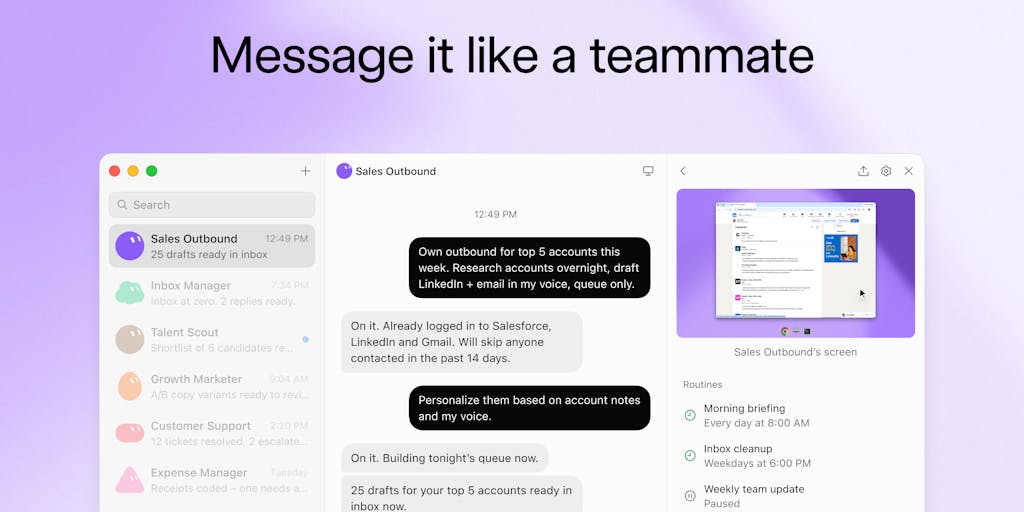
💰 Pricing: free (beta) · 🏷 Category: personal AI assistant
 Product Hunt
💰 Pricing: free option · 🏷 Category: desktop AI assistant
 Product Hunt

Snapshot
| Provider | Model | Input $/1M | Output $/1M | Context |
|---|---|---|---|---|
| Anthropic | Claude Opus (4.8 / 5 class) | $5.00 | $25.00 | 200K (1M available) |
| Anthropic | Claude Sonnet (4.6 / 5 class) | $2.00 | $10.00 | 200K (1M available) |
| OpenAI | GPT-5.6-terra | $2.00 | $12.00 | ~400K |
| Gemini 2.5 Pro | $1.25 | $10.00 | 1M | |
| Groq | Llama 3.3 70B (LPU) | $0.59 | $0.79 | 128K |
What this means: Frontier quality keeps getting cheaper - Opus at $5/$25 and OpenAI's flagship tier at $2/$12 now sit near where mid-tier models were a year ago. For high-volume work that does not need deep reasoning, Groq's open-weight Llama 70B under $0.80 per million output tokens is roughly ten times cheaper. Match the model tier to the task instead of defaulting to the flagship.
Learning When to Think: Adaptive Reasoning for Test-Time Compute Allocation
Key finding: On grade-school math it cut token use by 76%, and on harder math it held accuracy (0.782 vs 0.796) while cutting average response length 41%.
Why practitioners should care: Thinking tokens are a direct line on your inference bill. Letting the model reason at length only on genuinely hard problems can roughly halve token spend without meaningfully hurting accuracy.
Member discussion