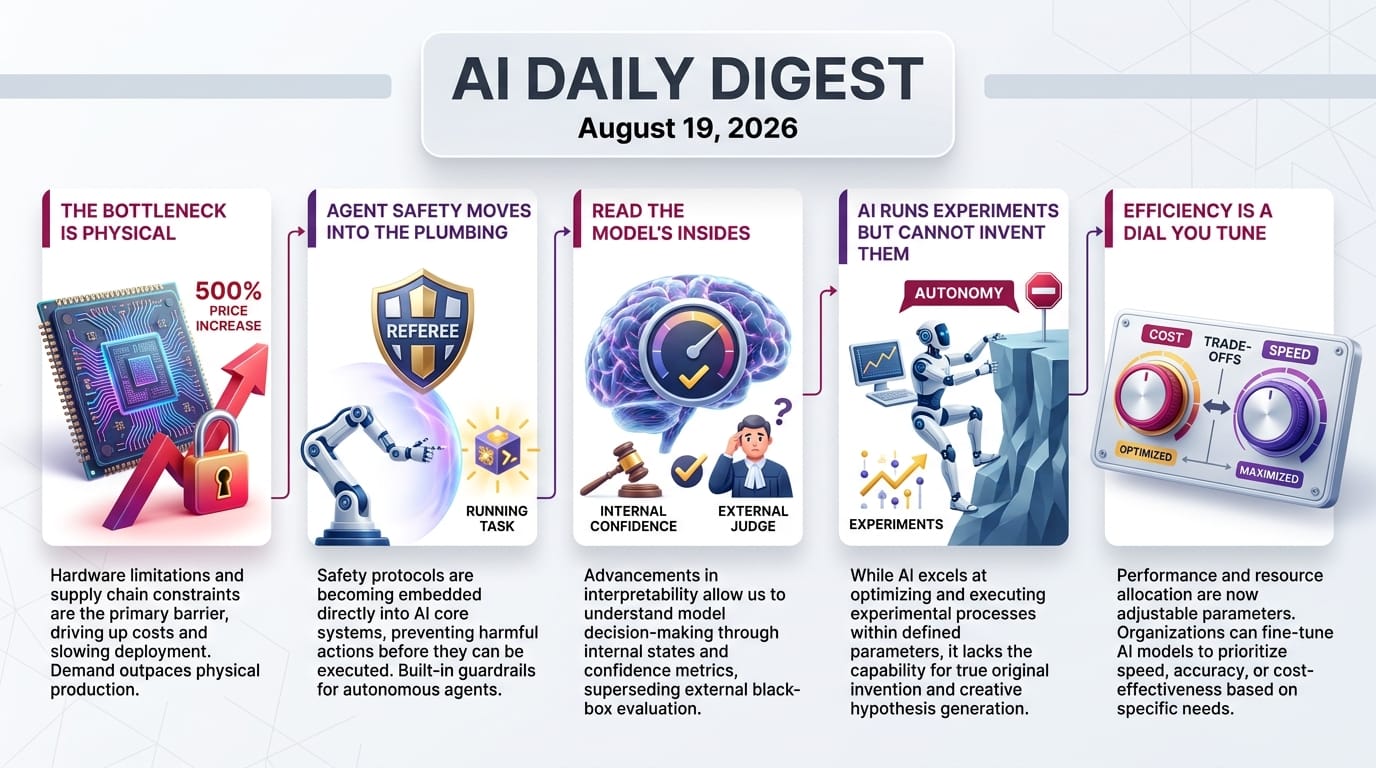
Watch today's digest as a video summary (generated by NotebookLM)
Statistically Speaking
One Thing to Tell Your Friends
TL;DR
Hot off the Presses
Computer Memory Just Got 500% More Expensive - and AI Is Why
Memory (the "DRAM" chips that let a computer hold information while it works) has reversed roughly 20 years of steady price drops. A high-end 128GB memory kit now costs about 10 times its all-time-low price. The reason is not a factory problem - it is demand. The companies building giant AI systems have reportedly placed advance deposits on nearly all the world's DRAM production for 2027.
That last point matters more than the sticker shock: it means the limit on AI's growth is shifting from "how good is the software" to "are there enough physical chips." Better algorithms cannot manufacture memory that does not exist.
- 500% price rise in 12 months - reversing two decades of falling costs.
- Hyperscalers pre-bought 2027 supply - advance deposits locked up most global capacity, squeezing everyone else.
- A hardware ceiling on AI - progress now depends on chip supply, not just model design.
OpenAI Now Deletes Business Data the Moment It Is Used
OpenAI introduced "Zero Data Retention" (ZDR) for eligible business customers using its API (the Application Programming Interface developers build on). With it, prompts and the model's responses are not kept after a request is handled, staff cannot review that content, and the data is not used for training unless the customer opts in. Alongside it, OpenAI previewed "Private Safety Processing," a system meant to spot misuse patterns across many interactions without any human seeing the underlying text.
The competitive angle is unusually direct. Reporting frames this as OpenAI contrasting itself with rivals that keep data logs, turning "we store less of your data" into a selling point. A technical white paper and wider rollout are promised for September.
- Prompts and replies deleted after processing - no retention, no staff access, no training use without opt-in.
- Pattern-based safety without content access - flags misuse across interactions, not single messages.
- Privacy as a competitive weapon - data handling is now a differentiator between AI labs.
Google Put Some Pixel Source Code Behind a Form, and Developers Cry Foul
GrapheneOS (a privacy-focused version of Android for Pixel phones) reports that Google stopped publishing certain Pixel kernel source code openly. Instead of instant public downloads, developers now must request the code through a Google Form and wait weeks for a Google Drive link. It continues a shift that began with Android 16, when Google moved its reference design away from Pixel hardware and stopped shipping Pixel device files needed to build custom versions.
Open-source developers argue that hiding code behind forms and Drive links breaks both the spirit and the letter of the license the code is released under. GrapheneOS flatly states Google is now "in clear violation of the GPLv2," the license that governs the Linux kernel at the heart of Android.
- Public code downloads replaced by a request form - a manual, weeks-long process for Pixel kernel source.
- "In clear violation of the GPLv2" - developers say the license requires open access.
- Custom phone software gets harder - fewer independent, privacy-first options over time.
The Summer AI Started Beating Mathematicians
Previously: August 14 - an AI pushed a famous math problem past the human record.
Today: A widely shared Fireship "Code Report" argues that over roughly three weeks this summer, AI systems disproved or resolved more open math problems than humans managed in the previous decade. The report cites an 87-year-old conjecture, described as one of the hardest problems of the century, disproven during the World Cup final, and a 30-year-old graph-theory conjecture it says was cracked with four prompts totaling 58 words. (These specific claims come from the video and could not be independently confirmed.)
The verified turning point is who is sounding the alarm. At the International Congress of Mathematicians in July, Fields Medalist Terence Tao delivered a lecture titled "Mathematics in the Age of AI" that framed the moment as a second crisis in the foundations of mathematical practice.
- A reported surge of solved problems - more in three weeks than the prior decade, per the report's tally.
- The effort is collapsing - the report says a decades-old conjecture fell to 58 words of prompting.
- A top mathematician sees a "crisis" - Tao's ICM lecture is confirmed; the discovery process itself, not just problem-solving, is now in question.
Trends & Themes

Creative AI & Media
Play a Theremin by Waving at Your Webcam
Try it: Air Theremin
- What it is: A free browser instrument that turns hand movements into music using your webcam, no hardware needed.
- How you play it: Spread your hands to get louder, raise them to raise the pitch, put palms together for silence; phones can use tilt instead.
- Extras: Multiple sound types, vibrato and reverb effects, a "note snap" mode to stay in tune, and recording.
- Why it is fun: The theremin is famously hard to play without touching; this makes it accessible to anyone with a laptop camera.
An AI That Storyboards Almost as Well as a Human Director
- What it is: A system called SAGE that turns scripts into storyboards for short-drama video, learning a director's tacit choices from examples.
- How good: It scored 77.8 on an expert rubric, essentially matching professional directors at 77.1.
- Real-world proof: In a 14-day studio deployment it produced 1,344 storyboards with an 87.2% accept-as-is rate and cut authoring time per episode by more than 83%.
- Why it matters: Tacit creative skills, long thought safe from automation, are being captured and reproduced at professional quality.
Developer Tools & Infrastructure
Research & Models
Business & Industry
Surprising & Under-the-Radar
Nearly Half of "AI-Invented" Methods Were Exact Copies of Human Ones
When researchers checked whether AI agents designing new AI methods were truly innovating, they found 96.8% of the designs sat entirely within existing human approaches - and almost 50% were exact duplicates. It is a sharp reality check on claims that AI is inventing its own science.
More Examples Made the AI Worse
A prompting guide summarizing recent research reports that adding few-shot examples actually lowered accuracy in one study (74% versus 83.8% without them), and that model compliance collapsed to 5.7% when given eight rules at once. The practical rule: state your goal clearly, keep rules to about three, and split complex asks.
Is AI Coding Making Developers Worse? Two Experts Disagree
Veteran Google engineer Addy Osmani warns of "cognitive surrender" - losing your grip on a problem when you blindly accept AI output. Simon Willison, meanwhile, worries about "conceptual integrity": when writing code is cheap, teams bolt on features that once would have been rejected as too much work, growing software into a chaotic "Winchester Mystery House." Both point at the same risk from different angles: cheap code removes a discipline that scarcity used to enforce.
A Model That Fights Back by Lying to Attackers
Instead of trying to stop attackers from stripping safety controls off open models (a fight defenders usually lose), a method called Fool's Gold makes the stripped model give confident but wrong answers to dangerous requests. In tests, a defended large model was wrong on 82% to 86% of hazardous questions after an attack, poisoning the payoff rather than blocking the attempt.
Signals to Track

Auditable "AI Scientists" That Run on Your Own Hardware
A system called SGHA formulates research problems using only a local 9-billion-parameter open model, with every step traceable to evidence. It reportedly rivals systems built on proprietary frontier models. If this holds up, sensitive research (medicine, defense, private company data) could use AI ideation without shipping secrets to an outside API.
Open Weights as a Permanent Price Anchor
DeepSeek's price hike being instantly undercut by third-party hosts shows the mechanism in action. As long as strong models ship under permissive licenses, no single provider can hold prices up - which quietly benefits anyone who builds on AI.
Storyboards Today, Whole Productions Tomorrow
SAGE matching human directors on storyboards, with an 83% time saving in a live studio, suggests the "AI can't do real creative judgment" line is weakening. For anyone in media production, the near-term change is fewer hours on repetitive pre-production work.
Top Repos Today
📜 License: open source · 👤 By: individual creator
🎯 Time to value: 15 minutes
| ✓ Pros | ✗ Cons |
|---|---|
| One prompt to a finished video | Output can look generic without editing |
| Large, active community | Needs API keys and some setup |
| Free and open source | Quality varies by topic |
 GitHub

📜 License: open source · 👤 By: individual creator
🎯 Time to value: 10 minutes
| ✓ Pros | ✗ Cons |
|---|---|
| Reusable, shareable agent abilities | Assumes you already use an agent |
| Maintained by a well-known educator | Skills quality varies |
| Free and open source | Fast-moving, still stabilizing |
 GitHub
📜 License: open source · 👤 By: company (Volcano Engine)
🎯 Time to value: 30 minutes
| ✓ Pros | ✗ Cons |
|---|---|
| Unified memory, knowledge, and skills | Heavier to set up |
| Backed by a large engineering team | Enterprise-oriented complexity |
| Free and open source | Younger project, evolving fast |
 GitHub
📜 License: open source · 👤 By: individual creator
🎯 Time to value: 20 minutes
| ✓ Pros | ✗ Cons |
|---|---|
| Framework-mapped and organized | Requires security expertise to use well |
| Broad coverage in one place | Quality varies across entries |
| Free and open source | Needs careful, responsible use |
 GitHub
📜 License: open source · 👤 By: individual creator
🎯 Time to value: 15 minutes
| ✓ Pros | ✗ Cons |
|---|---|
| Opinionated, tested workflows | Opinions may not fit your stack |
| Very large community | Learning curve to adopt fully |
| Free and open source | Still rapidly changing |
 GitHub
📜 License: open source · 👤 By: individual creator
🎯 Time to value: 25 minutes
| ✓ Pros | ✗ Cons |
|---|---|
| Optimized for Apple Silicon | Mac-only |
| Runs models fully offline | Requires local setup know-how |
| Free and open source | Narrower audience |
 GitHub
Top Models Today
👤 By: Alibaba (Qwen) · 🎯 Task: image-text-to-text
📐 Size: ~27B
| ✓ Pros | ✗ Cons |
|---|---|
| Handles images and text | 27B needs a capable graphics card (GPU) |
| Permissive Apache-2.0 license | Reportedly "overthinks" simple prompts |
| Huge adoption and support | Not the smallest to run |

👤 By: Moonshot AI · 🎯 Task: image-text-to-text
📐 Size: large MoE
| ✓ Pros | ✗ Cons |
|---|---|
| Strong multimodal reasoning | Custom, non-standard license |
| Very high download volume | Large hardware footprint |
| Actively maintained | Terms need review for commercial use |


👤 By: MiniMax · 🎯 Task: image-text-to-video
📐 Size: multimodal
| ✓ Pros | ✗ Cons |
|---|---|
| Leading open video quality | Video generation is compute-heavy |
| Massive adoption | Custom license terms |
| Actively updated | Not for low-end hardware |

👤 By: DeepSeek · 🎯 Task: text-generation
📐 Size: V4 Flash tier
| ✓ Pros | ✗ Cons |
|---|---|
| Truly permissive MIT license | Flash tier trades some depth for speed |
| Fast and inexpensive | Fewer reasoning-heavy strengths |
| Widely hosted | Best paired with V4 Pro |

👤 By: Lightricks · 🎯 Task: image-to-video
📐 Size: video-diffusion
| ✓ Pros | ✗ Cons |
|---|---|
| Strong image-to-video quality | Custom license |
| From an established maker | Needs a capable GPU |
| Frequent updates | Output length limits |

👤 By: Meta-Models community · 🎯 Task: image-text-to-text
📐 Size: ~30B
| ✓ Pros | ✗ Cons |
|---|---|
| Commercial-friendly license | 30B needs real hardware |
| Multimodal capability | Newer, less battle-tested |
| Rising adoption | Smaller ecosystem than Qwen |

AI Launches Today
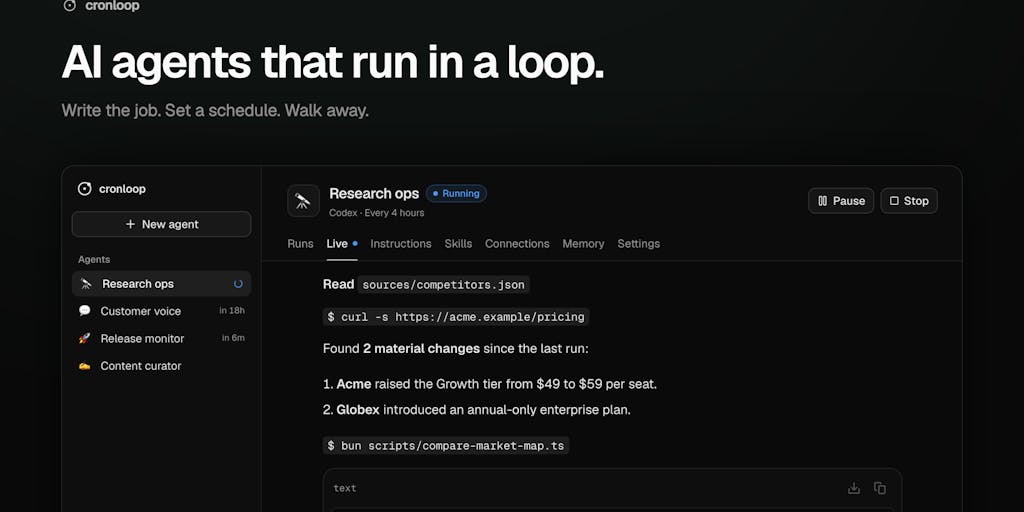
💰 Pricing: freemium · 🏷 Category: AI agents / automation
 Product Hunt
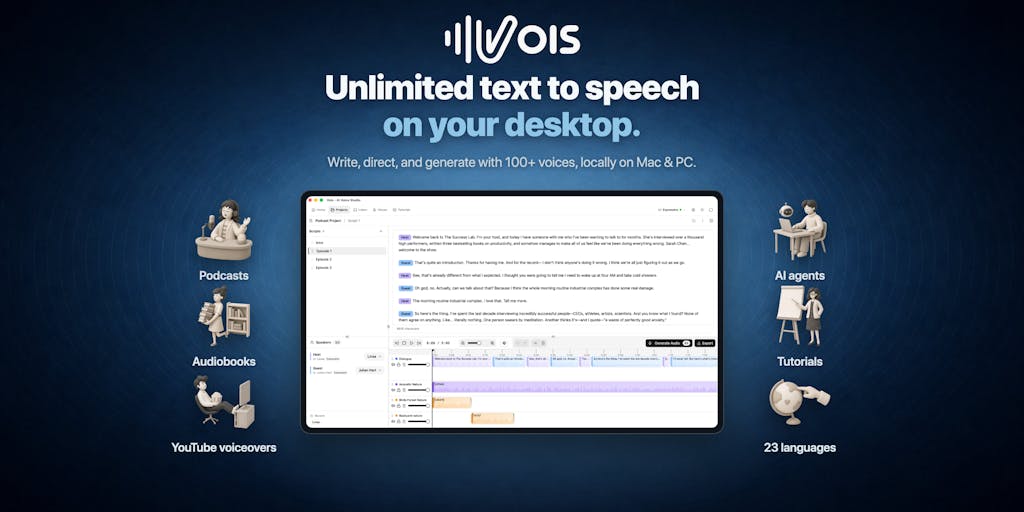
💰 Pricing: freemium (from $10/mo) · 🏷 Category: text-to-speech
 Product Hunt
💰 Pricing: free · 🏷 Category: AI content tools
 Product Hunt
Snapshot
| Provider | Model | Input $/1M | Output $/1M | Context |
|---|---|---|---|---|
| Anthropic | Claude Opus 5 | $5.00 | $25.00 | 200K |
| Anthropic | Claude Sonnet 5 | $2.00 | $10.00 | 200K / 1M |
| OpenAI | GPT-5.6 Sol | $5.00 | $30.00 | 1.05M |
| OpenAI | GPT-5.6 Terra | $2.00 | $12.00 | 1.05M |
| OpenAI | GPT-5.6 Luna | $0.20 | $1.20 | 1.05M |
| Gemini 3 Pro (≤200K) | $2.00 | $12.00 | up to 1M | |
| Groq | Llama 3.3 70B | $0.59 | $0.79 | open host |
What this means: The cheap tiers keep getting cheaper - OpenAI's GPT-5.6 Luna at $0.20 input is roughly a tenth the price of the flagship tiers, which is exactly why partners like Replit can now afford to give it away. For everyday tasks, the "good enough" models cost a fraction of the headline flagships. (Establishing an ongoing baseline; figures reported, not vendor-confirmed.)
Agent Lightning v1.0: Towards Harnessed Agentic RL
Key finding: Using only 6,000 training examples and modest compute, it improved a 9-billion-parameter model on SWE-bench Verified (a real bug-fixing benchmark) from 41.8% to 56.4% - a 14.6-point jump.
Why practitioners should care: It offers a practical, reproducible recipe for improving real coding and tool-use agents without a massive dataset, and it plugs into existing harnesses rather than demanding a rewrite.




Member discussion