GenAI Secret Sauce Daily Digest - 2026-07-15

How 64 AI Agents Actually Pulled Off the Bun Rewrite - and Why Its Feud Went Public · Anthropic Patched a Trick That Made Claude Leak Your Private Data · xAI Open-Sourced Its Coding Assistant After a Privacy Backlash
GenAI Secret Sauce Daily Digest - 2026-07-15

Watch today's digest as a video summary (generated by NotebookLM)

Statistically Speaking

6,700 commits, peaking near 1,300 lines of new
How 64 AI Agents Actually Pulled Off the Bun Rewrite - and W
Top Story
844,530 lines of Rust, putting it in the
xAI Open-Sourced Its Coding Assistant After a Privacy Backla
84% of the time versus 13% for human
OpenAI Built an AI Whose Only Job Is to Hack Other AIs
64
AI agents with a written porting guide
Running Fleets of AI Agents Is Becoming a Real Engineering S
$79
total versus another at $155 for the
The Real Cost of AI Is Hidden in the Plumbing
5,000
words of guidance to a model and
The Real Cost of AI Is Hidden in the Plumbing

One Thing to Tell Your Friends

Scientists opened up an AI model's "brain" and found it had grown the same navigation cells a mouse uses to find its way around a room - and nobody put them there.

TL;DR

Trends
Running Fleets of AI Agents Is Becoming a Real Engineering Skill, The Real Cost of AI Is Hidden in the Plumbing, and Efficiency Research Has Become a Fight Over Memory.
Dev Tools
Tiptap AI Toolkit, Brainless - Copy, and What Building "Shippy" Taught AllenAI About Agents.
Research
Formal Proofs Can Nearly Eliminate AI Hallucination, A Cheaper, Faster Way to Rank Search Results for AI, and Deep Research Agents Now Run on a Laptop.
Business
A $500M Fund to Fight Colds and Flu, Backed by AI Money, Multi, and The Assistant Wars Are Converging on Price.
Surprising
Giving an AI More Instructions Made It Worse, Audio AI Literally Cannot Hear the Word "No", and Most AI "Memorization" Panic May Be a Measurement Error.
Worth Watching
Formal Verification as the Cure for AI Lies, Evolution Strategies as a Simpler Path to Aligned Models, and LoRA as a Model's Long.
GitHub
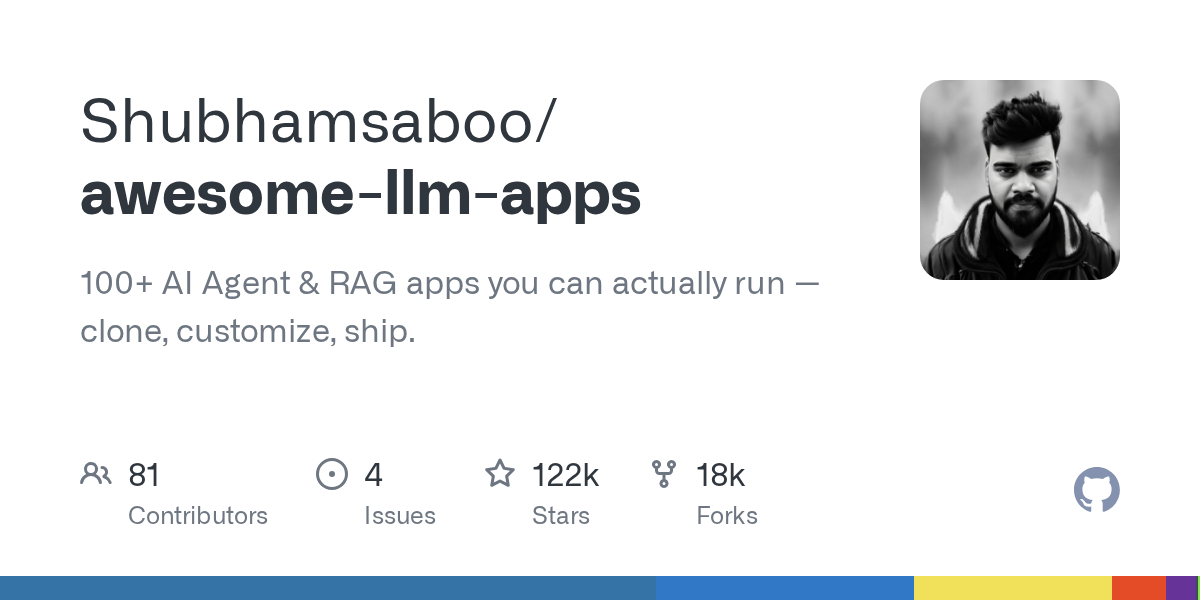
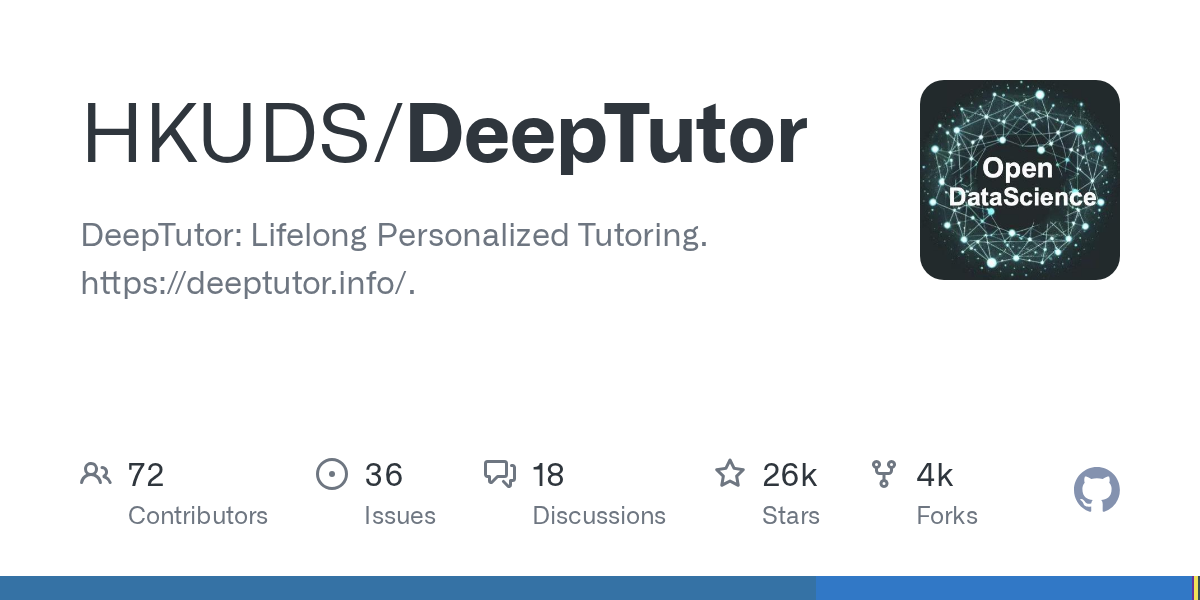
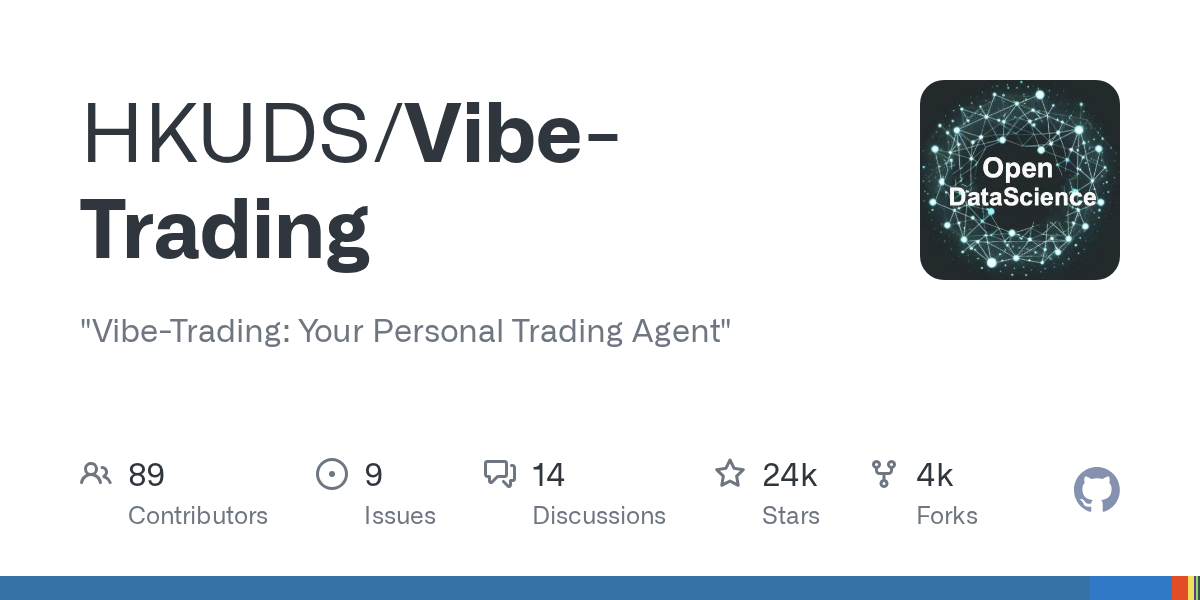
Leading repos: Shubhamsaboo/awesome-llm (+1,236), HKUDS/DeepTutor (+172), and HKUDS/Vibe (+915).
HuggingFace
Leading models: zai-org/GLM (489,611), baidu/Unlimited (1,715,301), and thinkingmachines/Inkling.
Product Hunt
API Pricing
What this means: The spread from cheapest to priciest is now roughly 50x.
arXiv
Function-Aware Fill-in-the-Middle as Mid — On a small 2.6-billion-word cleaned GitHub corpus, it lifts SWE-Bench-Verified (a standard real-world coding-fix benchmark) by up to +3 points and SWE-Bench-Lite by up to +5.4 points, without hurting ordinary coding performance.

Hot off the Presses

01

How 64 AI Agents Actually Pulled Off the Bun Rewrite - and Why Its Feud Went Public

What this means for you: The full playbook behind the biggest AI code rewrite yet is now public, and it shows both how far fleets of AI agents have come and how bitter the fallout can be.

Previously: July 9 - Bun rewrote its runtime from Zig to Rust in 11 days for about $165,000 in AI tokens.

Today: The methodology and the backlash both came into focus. Bun (a popular all-in-one toolkit for JavaScript, the language that runs most websites) ran up to 64 Claude agents at once across four parallel workflows, and paired every agent writing code with two more whose only job was to assume that code was wrong and prove it.

“Up to 64 AI agents at once, each writer watched by two more told to prove it wrong.”
  • The workflow - Claude first studied the old code for hours to write a "porting guide," then traced the lifetime of every piece of data into a giant spreadsheet before any code was converted.
  • The output - more than 6,700 commits, peaking near 1,300 lines of new code per minute, fixing 128 long-standing bugs and shrinking the finished program 20%. It has quietly powered Claude Code since June.
  • The feud - Andrew Kelley, creator of the Zig language Bun left behind, called the result unreviewed low-quality work, argued the speed gains came from an optimization Zig already had, and traded personal jabs with Bun's founder.
02

Anthropic Patched a Trick That Made Claude Leak Your Private Data

What this means for you: If you use an AI assistant that can both read your personal information and browse the web, a booby-trapped web page can try to steal that information - and this is exactly how.

Security researcher Ayush Paul found a way to make Claude's web-browsing tool hand over private details - a user's name, location, and employer - to an attacker. The setup is what researchers call the "lethal trifecta": the assistant holds your private data, it can reach the internet, and it encounters content written by an attacker.

Anthropic had already blocked the obvious version of this attack, but the browsing tool was still allowed to follow links buried inside a page it had already opened. That was the gap.

  • The bait - a fake login page listed pretend "user profiles" sorted alphabetically and told Claude to "navigate letter by letter" to find the user. Each click quietly smuggled out another piece of private data.
  • The fix - Anthropic removed the tool's ability to follow links it discovers inside fetched pages, closing the leak.
  • The lesson for builders - if your AI agent holds private data, do not let it follow links that a web page hands it.
03

xAI Open-Sourced Its Coding Assistant After a Privacy Backlash

What this means for you: A tool that many developers installed was quietly uploading sensitive files from their computers - and the fix was to make the whole thing public so anyone can inspect it.

xAI released the full source code of grok-build, its command-line coding assistant, for free under an open license. The release followed an uproar: the tool had been uploading entire folders, including SSH keys and password databases, to xAI's servers without clearly asking permission.

  • The response - xAI turned off data collection by default, deleted data it had already stored, and removed the upload feature entirely.
  • The scale - the now-public code is about 844,530 lines of Rust, putting it in the same complexity bracket as OpenAI's rival coding tool.
  • What being open reveals - the community can now read the exact hidden instructions that steer the assistant, and see that it borrowed compatibility features from competitors like Codex and Claude.
04

OpenAI Built an AI Whose Only Job Is to Hack Other AIs

What this means for you: The most effective way to find security holes in an AI is now another AI - and the attacker is far better at it than human experts.

OpenAI revealed GPT-Red, an in-house model trained specifically to break its other models before they ship, hunting for "prompt injections" (hidden instructions that hijack an AI's behavior). It learns by playing a game against a defender AI: it is rewarded every time it successfully tricks the target.

OpenAI: Unlocking self-improvement for robustness (page returned an error on direct access; details cross-checked via MIT Technology Review coverage)

“84% attack success for the AI red-teamer, versus 13% for humans.”
  • The gap - on new tests, GPT-Red succeeded 84% of the time versus 13% for human red-teamers.
  • The payoff - models hardened against GPT-Red showed six times fewer failures on prompt-injection tests than their version from just four months earlier.
  • The investment - OpenAI trained GPT-Red using as much computing power as some of its largest model-training runs, an unusual amount to spend purely on safety.
05

Scientists Found a Mouse-Like "GPS" Inside a Language Model

What this means for you: AI models are not just memorizing answers - they quietly invent internal tools to solve problems, and we are only now learning to see those tools.

Researchers cracked open a large language model to understand how it judges whether a sentence will fit on a line, a task it can do even though it never receives character counts. The answer is strange and revealing.

  • It counts indirectly - it does not count characters; it counts word-pieces and multiplies by roughly four, like estimating shelf length by assuming each book is an inch thick.
  • It grew brain-like cells - the model developed features that fire based on how far along a line it is, or when it is near the end - directly mirroring the "place cells" and "boundary cells" biologists find in mice navigating a room.
  • Nobody designed this - the model built these tools on its own during training because it needed them, which is why researchers now describe this work as a kind of "robo-psychology."

Trends & Themes

Trends & Themes

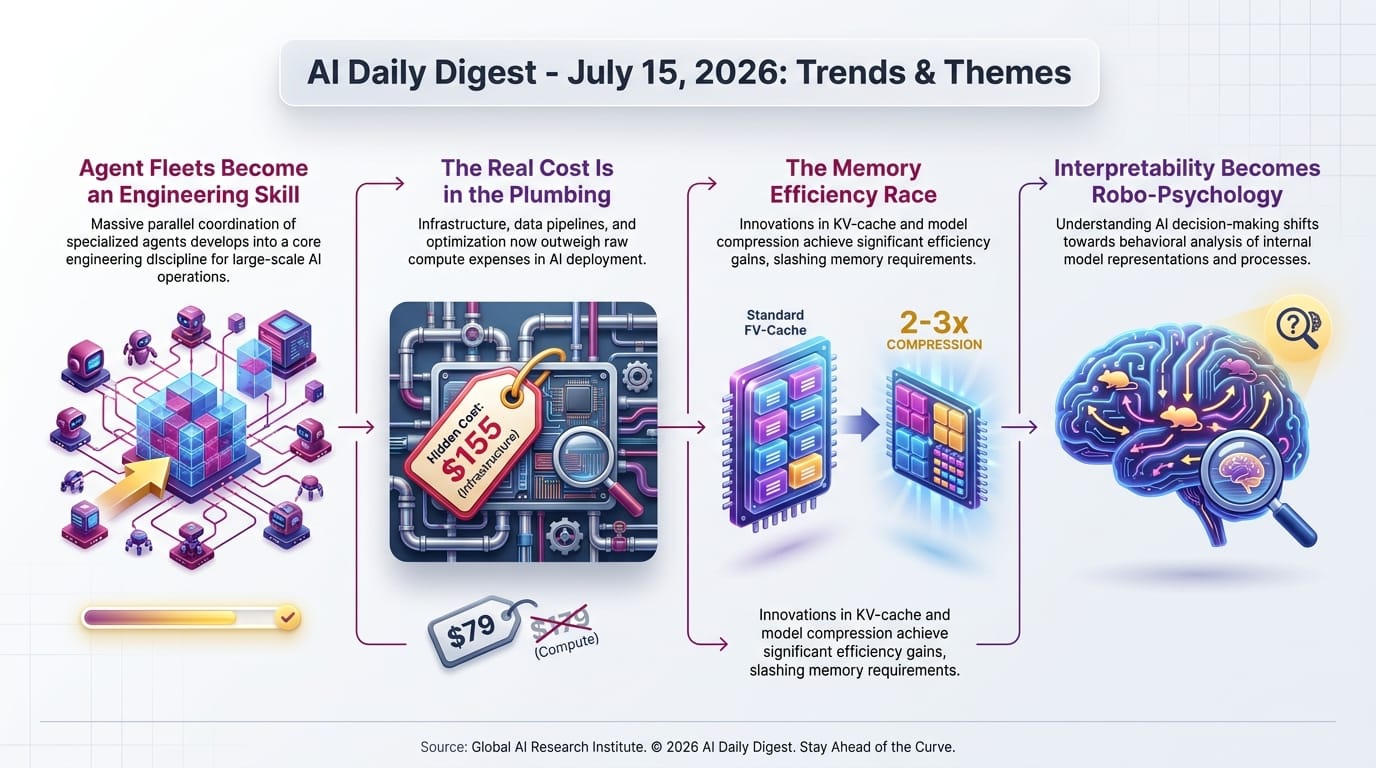
Running Fleets of AI Agents Is Becoming a Real Engineering Skill

Why this matters to you: The people getting the most out of AI are not writing cleverer prompts - they are building careful systems around the AI, and that discipline now has a name and a playbook.

The common thread is that the model is now the easy part. Reliability comes from the scaffolding around it: how work is split, how context is managed, and how outputs get checked. This is quietly turning into a distinct engineering role.

  • Parallel agent fleets - Bun coordinated 64 AI agents with a written porting guide and paired each with adversarial reviewer agents.
  • Context engineering over prompt engineering - engineer Dex Horthy argues the real job is deciding what information the model sees, and warns of a "dumb zone" where models get worse long before their memory fills up.
  • Agents as versioned systems - AllenAI's team structures each agent as separate "soul, skills, and config" parts so each can be audited and updated independently.

The Real Cost of AI Is Hidden in the Plumbing

Why this matters to you: The advertised price of an AI model tells you almost nothing about what it will actually cost you to run.

The lesson: sticker price, caching behavior, instruction bloat, and plan tiers matter more than the number on the pricing page. Teams that measure their real end-to-end costs are finding surprises.

  • Cheaper-per-word can cost more - IBM Research measured one model at $79 total versus another at $155 for the same work, even though the pricier-looking one had a lower per-word rate, because of how caching worked.
  • More instructions can make things worse - one writer added 5,000 words of guidance to a model and it failed to finish the task in two of three runs, while a leaner setup succeeded every time.
  • Enterprise pricing has a cliff - one analysis estimates a 150-person company would pay an extra $17,000 to $37,000 a month for ChatGPT Enterprise over base plans.

Efficiency Research Has Become a Fight Over Memory

Why this matters to you: The improvements that make AI cheaper and able to handle longer documents are increasingly about how models store and reuse information, not about making them bigger.

Across a dozen papers today, the frontier is not raw capability but the economics of memory: what to keep, what to compress, and what to recompute.

  • Compressing the "scratchpad" - a method called JoLT shrinks an AI's working memory (its KV cache) by 2-3x with almost no quality loss.
  • Reusing past work - "Speculate with Memory" gives an agent's helper model a memory of previous tasks, speeding up repetitive work by up to 2.5x at zero extra cost.
  • Weights as memory - a new study reframes LoRA (a lightweight fine-tuning method) as a way to store knowledge directly in a model, alongside retrieval and context.

Interpretability Is Turning Into "Robo-Psychology"

Why this matters to you: Researchers are getting better at reading what is actually happening inside AI models, which is the foundation for trusting them.

The pattern: models build modular, findable tools on their own, and we are learning to name and locate them. This is the groundwork for catching failures before they cause harm.

  • Reusable mental circuits - one paper found a "countdown circuit" that models use to plan when to stop writing, and that the same circuit shows up across different models and tasks.
  • Emergent navigation cells - another traced how a model grows mouse-like "place cells" to track position in text.
  • Confidence as a real signal - a third borrowed a framework from neuroscience to show that a model's confidence scores often reflect a genuine internal decision, not just surface guessing.

Creative AI & Media

Developer Tools & Infrastructure

Tiptap AI Toolkit - Let AI Safely Edit Real Documents

What it is: Infrastructure that lets AI agents edit rich-text documents (with tables, headers, and live collaboration) without breaking their structure.

  • Why it is hard - "rich text is not plain text"; editing a document with tables and shared cursors safely is a problem most developers would otherwise solve from scratch.
  • What it does - server-side edits even when the user is offline, structural awareness so the AI knows a table from a header, and a diff engine that compares documents by structure rather than raw text.
  • Availability - a production-ready beta offering free licenses (100k tool calls/month) in exchange for feedback. Tiptap: AI Toolkit

Brainless - Copy-In UI Components That Look Like Claude Code and Codex

What it is: A free component kit that recreates the chat and agent interfaces of Claude Code, Codex, and Grok as ready-made React building blocks.

  • What you get - session containers, message and "thinking" blocks, tool-call displays, diff viewers, and input composers in each tool's visual style.
  • Why you'd want it - ship a polished, familiar AI-agent interface without hand-building terminal-style chrome.
  • Nice touch - it keeps proper accessible markup instead of flattening everything into plain boxes. Brainless component registry (78 points on Hacker News)

What Building "Shippy" Taught AllenAI About Agents

What it is: A field report on building a real-world maritime AI agent, with lessons that apply to any serious agent project.

  • Deterministic tools beat raw API access - wrapping an Application Programming Interface (API) in a self-documenting command-line tool prevented malformed-query and pagination bugs.
  • Isolate every user - each session ran in its own short-lived, credential-scoped sandbox to prevent data leaking between the 300+ partners it serves.
  • Test the whole agent, not the parts - experts weighted evaluation criteria by task, and the system was tested against live data. HuggingFace: What building Shippy taught us

Model Routing Is a Systems Problem, Not a Simple Choice

What it is: IBM Research's argument that picking which AI model handles each request is far trickier than it looks.

  • Caching upends pricing - a model with a higher list price came out cheaper overall because its cache reads were cheaper.
  • Difficulty is invisible - a simple-looking "summarize this contract" can secretly trigger retrieval and multiple refinement rounds.
  • The payoff - reframing routing as balancing cost, quality, and speed cut costs 21% for only a 4% accuracy loss. HuggingFace: Model Routing Is Simple. Until It Isn't.

Research & Models

Formal Proofs Can Nearly Eliminate AI Hallucination

Why it matters: For high-stakes number-crunching, you can force an AI to prove every claim instead of trusting it.

  • How - EG-VAR routes every claim through a formal theorem prover (built on Lean 4); if it cannot verify an answer, it honestly refuses instead of guessing.
  • Result - a perfect 120/120 on a table-reasoning test versus 95% for the baseline, and 100% source fidelity under stress tests.
  • Trade-off - near-total reliability on the claims it does make, at the cost of sometimes abstaining. arXiv: Evidence-Grounded Verified Agentic Reasoning

A Cheaper, Faster Way to Rank Search Results for AI

Why it matters: Retrieval-augmented AI (which looks up documents before answering) depends on good ranking, and this makes ranking cheaper.

  • The recipe - fine-tune a general 8-billion-parameter model into a specialized re-ranker, then shrink it with 4-bit compression.
  • Result - 21% better answer correctness and 19% better answer similarity than the traditional approach, while dodging its speed bottleneck. arXiv: Transforming LLMs into Efficient Cross-Encoders

Deep Research Agents Now Run on a Laptop

Why it matters: A capable research assistant that reads sources and writes cited briefs no longer needs the cloud.

  • The setup - a 4-billion-parameter model on a 24GB laptop, searching and citing sources locally.
  • The insight - showing the model more of each source improves how well claims are supported (faithfulness); which sources it finds is a separate retrieval problem.
  • Practical tip - boost per-source context first (a cheap win) and treat retrieval as the separate lever. arXiv: On-Device Deep Research at 4B

Why Multi-AI "Debates" Often Fail - and How to Fix Them

Why it matters: Having several AIs debate an answer sounds smart but often does worse than one AI; this explains why.

  • Competitive debate collapses into "cheap talk" where agents mislead each other; consensus-seeking debate throws out correct minority views too early.
  • The fix (ColMAD) rewards agents for being both truthful and informative, improving results up to 10 points and beating a single agent at equal cost. arXiv: When and Why Does Multi-Agent Debate Fail?

Speeding Up "Diffusion" Language Models Is Harder Than It Looks

Why it matters: A newer type of language model promises to generate text in parallel, but a new survey warns the speedup is not automatic.

  • The catch - "parallel generation alone does not guarantee practical speedups"; you need diffusion-aware caching and careful engineering.
  • The contribution - a shared framework for measuring where the time actually goes, so competing speed claims can finally be compared fairly. arXiv: Accelerating Masked Diffusion Large Language Models

Business & Industry

A $500M Fund to Fight Colds and Flu, Backed by AI Money

What this means for you: Windfalls from the AI boom are starting to flow into unrelated public-health bets.
  • The Intercept Respiratory Initiative - a $500M philanthropic effort backed by Stripe, Anthropic, OpenAI, the Gates Foundation, and Jane Street to develop broad-spectrum preventatives and air-cleaning tech.
  • The target - cold, flu, RSV, and COVID, which together cost about $600B a year and kill roughly 1M people annually.
  • The bigger picture - AI equity windfalls are set to produce tens of billions in employee donations from Anthropic and OpenAI staff. Zvi Mowshowitz: Monthly Roundup #44

Multi-Agent AI Has Quietly Taken Over Recruiting

What this means for you: If you apply for an hourly job soon, an AI agent will likely screen, schedule, and assess you.
  • The players - Eightfold, Paradox (Chipotle, McDonald's), Maki People (H&M, Delta), and Radancy now field agents across web, mobile, and Slack.
  • The results - time-to-hire dropping from two weeks to three days, and a 30% retention improvement at H&M from scaled assessment.
  • The runway - fewer than 5% of the million-plus employers with frontline workforces use these tools yet. Josh Bersin: Multi-Agent AI for Talent Acquisition

The Assistant Wars Are Converging on Price

What this means for you: ChatGPT and Claude now offer nearly the same features, so the real decision is cost and company size.
  • Feature parity - ChatGPT's new "Work" mode closely mirrors Claude's multi-agent Cowork, one analyst argues, down to templates, skills, and site generation (ChatGPT Work was covered July 14).
  • The pricing split - the analysis concludes Claude's $100/month tier is the better value for companies under about 150 people, above which adoption rate matters more than token cost. Ruben: ChatGPT copied Claude

Surprising & Under-the-Radar

Giving an AI More Instructions Made It Worse

One writer added 5,000 words of careful guidance and the model failed to finish the task two out of three times. The culprit was an 18,384-word instruction "harness" built up through years of one-off fixes that had become invisible - and stale rules written for weaker models now actively hurt a smarter one. The takeaway: prune your AI instructions like a garden, because scaffolding decays. Nate's Newsletter: AI harness audit

Audio AI Literally Cannot Hear the Word "No"

Models that match sounds to descriptions treat "a dog barking" and "no dog barking" as nearly identical. A new test (NegEval-Audio) shows these systems score below random chance on negation, and the flaw is baked so deeply into how they represent sound that quick fixes barely help. If you use audio search, do not trust it with "absence" queries. arXiv: The Sound of Absence

Most AI "Memorization" Panic May Be a Measurement Error

A rigorous re-analysis finds much of what looked like models regurgitating training data is just ordinary predictability. On one model, a quarter of supposed "extractions" were false positives, and some memorization claims held only for sequences no realistic effort could ever actually pull out. The paper redefines the term - relevant to every copyright and privacy fight that hinges on it. arXiv: Extractable Memorization From First Principles

An Old Training Method Just Beat Reinforcement Learning

"Evolution strategies" - long dismissed as too crude for big models - outperformed the standard reinforcement-learning approach for fine-tuning billion-parameter models. It handles delayed rewards better, resists reward-hacking, and trains more stably, all without the complex machinery of today's alignment pipelines. If it holds up, a chunk of AI training could get simpler. arXiv: Evolution Strategies at Scale

Signals to Track

Worth Watching
01

Formal Verification as the Cure for AI Lies

Why this is worth watching right now: it turns "trust me" AI into "prove it" AI for tasks where being wrong is expensive. Pairing language models with formal theorem provers (as in today's EG-VAR result) can push hallucination toward zero on factual, number-heavy tasks, at the price of the model sometimes saying "I can't verify this." Expect this to show up first in finance, medicine, and compliance tools. For ordinary people, it means AI answers you can actually audit.

02

Evolution Strategies as a Simpler Path to Aligned Models

Why this is worth watching right now: it challenges the assumption that you need complex reinforcement learning to steer big models. If gradient-free evolution can match or beat reinforcement learning at scale, smaller teams could fine-tune capable models without the fragile, expensive tooling that dominates today. That would widen who can build custom AI.

03

LoRA as a Model's Long-Term Memory

Why this is worth watching right now: it reframes a common fine-tuning trick as a modular memory you can plug in and out. Treating lightweight adapters as swappable "knowledge packs" - alongside retrieval and context - points toward systems that update what they know without full retraining. For users, that could mean assistants that stay current without waiting for a new model. arXiv: Understanding LoRA as Knowledge Memory

04

On-Device Research Agents

Why this is worth watching right now: a genuinely useful research assistant now fits on a laptop instead of a data center. Today's 4-billion-parameter result shows cited, source-grounded briefs are feasible offline, which matters for privacy, cost, and working without a connection. If this scales, "deep research" stops being a cloud-only, subscription-gated feature.

Top Repos Today

Rank yesterday: #2 - Rising ↑
⭐ Stars today: +1,236  ·  📦 Total: 121,899
📜 License: Apache-2.0  ·  👤 By: solo dev
🎯 Time to value: 15 minutes
What it is: A big, curated collection of 100-plus ready-to-run AI agent and RAG (retrieval-augmented generation, where an app looks up documents before answering) example apps. Each one is a small, self-contained project you can clone and run - voice assistants, document Q&A bots, multi-step agents. It is a learning library, not a single product. Why you'd want it: It is one of the fastest ways to see working, end-to-end agent code instead of toy snippets you have to glue together yourself.
✓ Pros✗ Cons
Huge breadth of runnable examplesQuality varies across examples
Each app tested end-to-endMostly Python-only
Great for learning agent patternsYou still build your own production app
GitHub - Shubhamsaboo/awesome-llm-apps: 100+ AI Agent & RAG apps you can actually run — clone, customize, ship.
100+ AI Agent & RAG apps you can actually run — clone, customize, ship. - Shubhamsaboo/awesome-llm-apps
Rank yesterday: New entry 🆕
⭐ Stars today: +172  ·  📦 Total: 26,255
📜 License: Apache-2.0  ·  👤 By: research lab
🎯 Time to value: 30 minutes
What it is: An open-source AI tutoring workspace that bundles explanations, problem-solving, quiz generation, and visualizations into one tool. It keeps an inspectable memory of what a learner has covered, so lessons adapt over time. Why you'd want it: A self-hosted, personalized study assistant that remembers your progress - useful for students and educators building custom learning tools.
✓ Pros✗ Cons
Adaptive, memory-based tutoringAcademic project, not polished
Fully open and self-hostableSetup takes technical effort
Many learning tools in one placeSmall maintaining team
GitHub - HKUDS/DeepTutor: DeepTutor: Lifelong Personalized Tutoring. https://deeptutor.info/.
DeepTutor: Lifelong Personalized Tutoring. https://deeptutor.info/. - HKUDS/DeepTutor
Rank yesterday: #4 - Rising ↑
⭐ Stars today: +915  ·  📦 Total: 23,694
📜 License: MIT  ·  👤 By: research lab
🎯 Time to value: 30 minutes
What it is: A research platform that turns plain-English market questions into runnable trading analysis. It connects to free market-data sources, generates strategies, and backtests them against history, plus a "Shadow Account" to analyze your own habits. It is a research tool, not an auto-trader. Why you'd want it: It lets non-experts explore and stress-test trading ideas in natural language before risking real money.
✓ Pros✗ Cons
Natural-language to backtest workflowBacktests can mislead about real returns
Uses 19+ free data sourcesEasy to over-trust, not financial advice
Docker setup for easy runningNeeds market knowledge to interpret
GitHub - HKUDS/Vibe-Trading: “Vibe-Trading: Your Personal Trading Agent”
“Vibe-Trading: Your Personal Trading Agent”. Contribute to HKUDS/Vibe-Trading development by creating an account on GitHub.
Rank yesterday: New entry 🆕
⭐ Stars today: +299  ·  📦 Total: 65,481
📜 License: Apache-2.0  ·  👤 By: startup
🎯 Time to value: 20 minutes
What it is: A coding agent that runs on your own computer and executes code in a sandbox to finish tasks from the terminal. This version is a Rust rebuild forked from OpenAI's Codex, tuned to work well with cheaper, low-cost models. Why you'd want it: A local, model-agnostic coding agent that does not lock you into one expensive provider - good for automating scripts and dev chores affordably.
✓ Pros✗ Cons
Optimized for cheap modelsRunning generated code carries risk
Runs locally in a sandboxTerminal-first, less beginner-friendly
Fast Rust implementationFork lineage can confuse newcomers
GitHub - openinterpreter/openinterpreter: A coding agent for low-cost models
A coding agent for low-cost models. Contribute to openinterpreter/openinterpreter development by creating an account on GitHub.
Rank yesterday: #5 - Holding steady ➡
⭐ Stars today: +1,277  ·  📦 Total: 8,501
📜 License: MIT  ·  👤 By: startup
🎯 Time to value: 10 minutes
What it is: A design "skill" for coding agents like Claude Code, Cursor, and Codex that makes AI-generated websites look less generic. It applies 57 quality checks and 20 themes and deliberately refuses the bland defaults most models reach for, fighting "AI slop" visual sameness. Why you'd want it: If your AI-built sites all look the same, this raises the design bar with almost no extra effort.
✓ Pros✗ Cons
Directly targets generic AI designOpinionated aesthetic may not fit all
Works across popular agentsNewer project, still evolving
Simple to drop inDesign-only, no logic help
GitHub - Nutlope/hallmark: Anti-AI-slop design skill for Claude Code, Cursor, and Codex.
Anti-AI-slop design skill for Claude Code, Cursor, and Codex. - Nutlope/hallmark
Rank yesterday: #6 - Holding steady ➡
⭐ Stars today: +471  ·  📦 Total: 4,763
📜 License: Custom (see repo)  ·  👤 By: solo dev
🎯 Time to value: 10 minutes
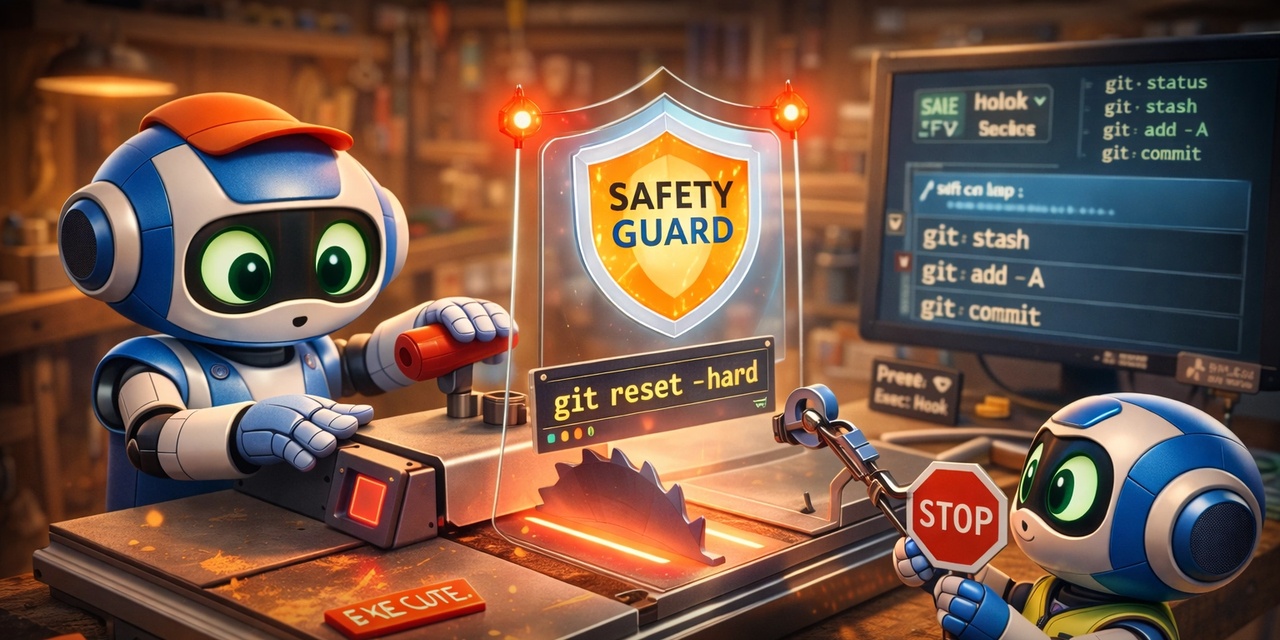
What it is: A safety hook that intercepts and blocks dangerous shell and git commands before an AI coding agent can run them. It catches things like rm -rf, git reset --hard, and database drops in real time and suggests safer alternatives. Why you'd want it: As agents run more commands unattended, one bad command can wipe your work - this is cheap insurance.
✓ Pros✗ Cons
Prevents costly accidental data lossNon-standard custom license
Works with multiple AI agentsCan block legitimate commands
Fast Rust hook with safe alternativesAdds a layer to configure
GitHub - Dicklesworthstone/destructive_command_guard: The Destructive Command Guard (dcg) is for blocking dangerous git and shell commands from being executed by agents.
The Destructive Command Guard (dcg) is for blocking dangerous git and shell commands from being executed by agents. - Dicklesworthstone/destructive_command_guard
Rank yesterday: New entry 🆕
⭐ Stars today: +725  ·  📦 Total: 5,891
📜 License: Apache-2.0  ·  👤 By: solo dev
🎯 Time to value: 5 minutes
What it is: A free, structured set of study notes on the maths, computer science, and AI needed to work as a machine-learning research engineer. The author compiled them while getting into Y Combinator, and friends used them to prep for interviews at labs like DeepMind and OpenAI. Why you'd want it: A concise, interview-tested map of what to actually learn for AI/ML roles, saving you from scattered resources.
✓ Pros✗ Cons
Curated, interview-proven materialNotes, not a full course
Free and openly licensedAssumes strong self-discipline
Focused path for AI/ML engineeringOne author's perspective
GitHub - HenryNdubuaku/maths-cs-ai-compendium: Become a cracked AI/ML Research Engineer
Become a cracked AI/ML Research Engineer. Contribute to HenryNdubuaku/maths-cs-ai-compendium development by creating an account on GitHub.

Top Models Today

Open-weight flagship Mixture-of-Experts chat and reasoning model from Z.ai (Zhipu).
📥 Downloads (30d): 489,611  ·  📜 License: MIT
👤 By: Z.ai / Zhipu AI  ·  🎯 Task: text-generation
📐 Size: Large Mixture-of-Experts (MoE)
What it is: The latest open-weight large language model in the GLM family, using a Mixture-of-Experts design (only part of the network runs per word, saving compute). It targets strong general chat, reasoning, and coding while staying downloadable under a permissive license. Why you'd want it: One of the top open flagship models you can self-host without usage restrictions - a real alternative to closed APIs.
✓ Pros✗ Cons
Permissive MIT licenseLarge hardware needs to run well
MoE efficiency at inferenceMoE serving is complex
Strong general and coding abilityDocs mostly English/Chinese
zai-org/GLM-5.2 · Hugging Face
We’re on a journey to advance and democratize artificial intelligence through open source and open science.
Vision-language model from Baidu that reads text and structure from images and documents (Optical Character Recognition, or OCR).
📥 Downloads (30d): 1,715,301  ·  📜 License: MIT
👤 By: Baidu  ·  🎯 Task: image-text-to-text
📐 Size: Vision-language model
What it is: A multilingual model that extracts text and layout from images, scans, and documents. Rather than classic character recognition, it reads a page like a language model and returns clean text, handling messy layouts. Why you'd want it: With over 1.7M downloads it is a go-to open engine for document pipelines, invoices, and forms, and the MIT license makes it easy to embed.
✓ Pros✗ Cons
Very high adoptionCustom code to trust and set up
Multilingual document understandingHeavier than lightweight OCR libraries
Permissive MIT licenseAccuracy varies by language/layout
baidu/Unlimited-OCR · Hugging Face
We’re on a journey to advance and democratize artificial intelligence through open source and open science.
One of the first open-weight releases from Thinking Machines Lab - a multimodal model taking text, image, and audio.
📥 Downloads (30d): brand new  ·  📜 License: Apache-2.0
👤 By: Thinking Machines Lab  ·  🎯 Task: image-text-to-text
📐 Size: Multimodal MoE
What it is: A freshly released multimodal Mixture-of-Experts model that accepts images and audio alongside text. It is drawing attention despite being brand new because of who released it. Why you'd want it: Early access to a closely watched frontier lab's open multimodal model, good for experimenting with combined vision, audio, and text.
✓ Pros✗ Cons
Handles text, image, and audioJust released, unproven
From a closely watched labNear-zero downloads so far
Apache-2.0 licenseSparse documentation
thinkingmachines/Inkling · Hugging Face
We’re on a journey to advance and democratize artificial intelligence through open source and open science.
Multilingual long-form speech model doing transcription plus speaker labeling in one pass.
📥 Downloads (30d): 65,109  ·  📜 License: Apache-2.0
👤 By: OpenMOSS Team (Fudan University)  ·  🎯 Task: audio-text-to-text
📐 Size: Audio-language model
What it is: A model that transcribes speech to text while also labeling who spoke when (diarization) and adding timestamps, across multiple languages and long recordings - meetings and interviews in a single pass instead of chaining separate tools. Why you'd want it: It combines transcription, timestamps, and speaker labels in one open model, simplifying meeting and podcast pipelines.
✓ Pros✗ Cons
Transcription + diarization in oneCustom code and heavier setup
Long-form multilingual audioDiarization accuracy varies
Apache-2.0 licenseCompute-intensive on long files
OpenMOSS-Team/MOSS-Transcribe-Diarize · Hugging Face
We’re on a journey to advance and democratize artificial intelligence through open source and open science.
Vision-language Mixture-of-Experts model tuned specifically for tool-use and multi-step agent tasks.
📥 Downloads (30d): 30,539  ·  📜 License: Apache-2.0
👤 By: InternScience (Shanghai AI Lab)  ·  🎯 Task: image-text-to-text
📐 Size: MoE VLM
What it is: A vision-language model built for agentic workflows, where the model uses tools and takes multiple steps to finish a task. It can see images as well as read text, aimed at building autonomous assistants. Why you'd want it: Purpose-built for agents rather than plain chat, so it handles tool loops better out of the box - a good base for open-source agent projects that also need vision.
✓ Pros✗ Cons
Designed for agentic tool-useAgent models need careful scaffolding
Multimodal (vision + text)MoE serving complexity
Apache-2.0 licenseNewer, less battle-tested
InternScience/Agents-A1 · Hugging Face
We’re on a journey to advance and democratize artificial intelligence through open source and open science.
A 27-billion-parameter model squeezed to ~2-bit weights so it runs on modest hardware.
📥 Downloads (30d): 23  ·  📜 License: Apache-2.0
👤 By: prism-ml  ·  🎯 Task: text-generation
📐 Size: 27B, ternary (~2-bit)
What it is: A 27-billion-parameter model whose weights are compressed to ternary (roughly 2-bit) values, so it fits and runs on laptops via llama.cpp. It ships in GGUF format for processors and graphics cards (Graphics Processing Unit, or GPU) across CPU, CUDA, and Metal. Why you'd want it: It chases near-large-model quality at a tiny memory footprint - interesting for anyone experimenting with extreme quantization on edge devices.
✓ Pros✗ Cons
Runs a 27B on modest hardwareTernary quantization can hurt quality
GGUF works across CPU/GPU/MetalVery low downloads, unproven
On-device focused, Apache-2.0Best via llama.cpp only
prism-ml/Ternary-Bonsai-27B-gguf · Hugging Face
We’re on a journey to advance and democratize artificial intelligence through open source and open science.

AI Launches Today

Use AI agents on the canvas to design, write, analyze, and organize sites
Featured: July 15 leaderboard  ·  👤 By: Framer
💰 Pricing: freemium  ·  🏷 Category: AI website building
Building a marketing site usually means juggling design, copy, and structure by hand. Framer's new agent layer lets you run AI agents directly on the design canvas to generate and reorganize pages, and even connect external coding agents like Claude Code or Codex. Verdict: A strong sign that design tools are becoming agent hosts, though the agents' quality on complex sites is the real test.
Best of Product Hunt: July 15, 2026 | Product Hunt
Explore the top products launched on Product Hunt on July 15, 2026.
Speak naturally and it writes in your style in every app
Featured: July 15 leaderboard  ·  👤 By: Wispr
💰 Pricing: freemium  ·  🏷 Category: AI dictation
Most dictation tools produce robotic, unedited text. Wispr Flow is a Mac app that turns natural speech into polished writing in your own style across any application, with auto-edits, a command mode, and 100-plus languages. Verdict: Genuinely useful if the style-matching and auto-edits hold up across messy real-world apps.
Best of Product Hunt: July 15, 2026 | Product Hunt
Explore the top products launched on Product Hunt on July 15, 2026.
Gives all your AI agents one shared context
Featured: July 15 leaderboard  ·  👤 By: N71
💰 Pricing: freemium  ·  🏷 Category: AI agent infrastructure
People now use many separate AI agents that each forget what the others know, forcing constant re-explaining. N71 gives all of your agents one shared memory so they stay in sync across tools. Verdict: Solves a real and growing problem, but shared-context products live or die on integrations and privacy handling.
Best of Product Hunt: July 15, 2026 | Product Hunt
Explore the top products launched on Product Hunt on July 15, 2026.
The usage runtime for AI products
Featured: July 15 leaderboard  ·  👤 By: Stigg
💰 Pricing: paid  ·  🏷 Category: AI billing infrastructure
Charging for AI features is messy because costs scale with unpredictable token usage. Stigg 2.0 meters, prices, and enforces limits for AI products so builders can bill by consumption without wiring it all themselves. Verdict: Squarely aimed at a real developer headache; value depends on how cleanly it slots into existing billing stacks.
Best of Product Hunt: July 15, 2026 | Product Hunt
Explore the top products launched on Product Hunt on July 15, 2026.

Snapshot

ProviderModelInput $/1MOutput $/1MContext
AnthropicClaude Opus 4.8$5.00$25.00200K
AnthropicClaude Sonnet 5$3.00 (intro $2.00 to Aug 31)$15.00 (intro $10.00 to Aug 31)200K (1M beta)
AnthropicClaude Haiku 4.5$1.00$5.00200K
OpenAIGPT-5.5 (flagship)$5.00$30.00400K (est.)
OpenAIGPT-5.1$1.25$10.00400K (est.)
GoogleGemini 3.1 Pro (preview)$2.00$12.001M
GoogleGemini 3.5 Flash$1.50$9.001M
GroqGPT-OSS 120B (open)$0.15$0.60128K
GroqQwen 3.6 27B (open)$0.60$3.00131K
What this means: The spread from cheapest to priciest is now roughly 50x. Groq's open-weight models cost about $0.15 per million words of input, versus $5.00 for the top closed flagships - so routing routine work to open models and reserving premium models for hard tasks is where the real savings live. Establishing baseline for daily tracking; prices verified against provider pages and recent listings, with OpenAI context windows marked estimated where the page was unreachable.

Function-Aware Fill-in-the-Middle as Mid-Training for Coding Agent Foundation Models

Yubo Wang, Jiarong Liang, Yuxuan Zhang, Xuye Liu, Cong Wei, and colleagues · arXiv:2607.12463
What it claims: Standard pretraining does not teach coding models to fold external tool outputs back into their reasoning - exactly what coding agents must do. The authors add a "function-aware fill-in-the-middle" training step that masks whole functions (chosen by analyzing how code depends on itself) so the model learns to reconstruct them the way an agent reconstructs a tool's return value.

Key finding: On a small 2.6-billion-word cleaned GitHub corpus, it lifts SWE-Bench-Verified (a standard real-world coding-fix benchmark) by up to +3 points and SWE-Bench-Lite by up to +5.4 points, without hurting ordinary coding performance.

Why practitioners should care: It is a cheap, self-supervised step that meaningfully improves real coding-agent benchmarks, so teams building or fine-tuning coding agents can get better tool-use behavior without expensive new labeled data.
Member discussion

Subscribe to GenAI Secret Sauce newsletter and stay updated.

Don't miss anything. Get all the latest posts delivered straight to your inbox. It's free!

By subscribing, you agree to our Privacy Policy and Terms. We track email opens and clicks. Unsubscribe anytime.

Great! Check your inbox and click the link to confirm your subscription.