GenAI Secret Sauce Daily Digest - 2026-07-14

OpenAI's Codex Hits 7 Million Users - and May Have Passed Claude Code · A Popular AI Coding Tool Runs Hidden Malware the Moment You Open a Project · Google DeepMind's CEO Wants a Global AI Watchdog Running by New Year
GenAI Secret Sauce Daily Digest - 2026-07-14

Watch today's digest as a video summary (generated by NotebookLM)

Statistically Speaking

10 x growth in six months
OpenAI's Codex Hits 7 Million Users - and May Have Passed Cl
Top Story
2025, it went unfixed through 197+ releases before
A Popular AI Coding Tool Runs Hidden Malware the Moment You
18 months, far graver biological and nuclear misuse
Google DeepMind's CEO Wants a Global AI Watchdog Running by
95% of quality at a 5
A Phone Can Now Run a 27-Billion-Parameter AI Model
11 tokens per second on an iPhone 17
A Phone Can Now Run a 27-Billion-Parameter AI Model
63.75% combined artifact rate
The Most Famous AI Coding Test Is Badly Broken

One Thing to Tell Your Friends

Nearly two-thirds of the "passing" scores on the most famous AI coding test turned out to be bogus - the AI had either seen the answer in advance or the test was too weak to notice it had failed.

TL;DR

Trends
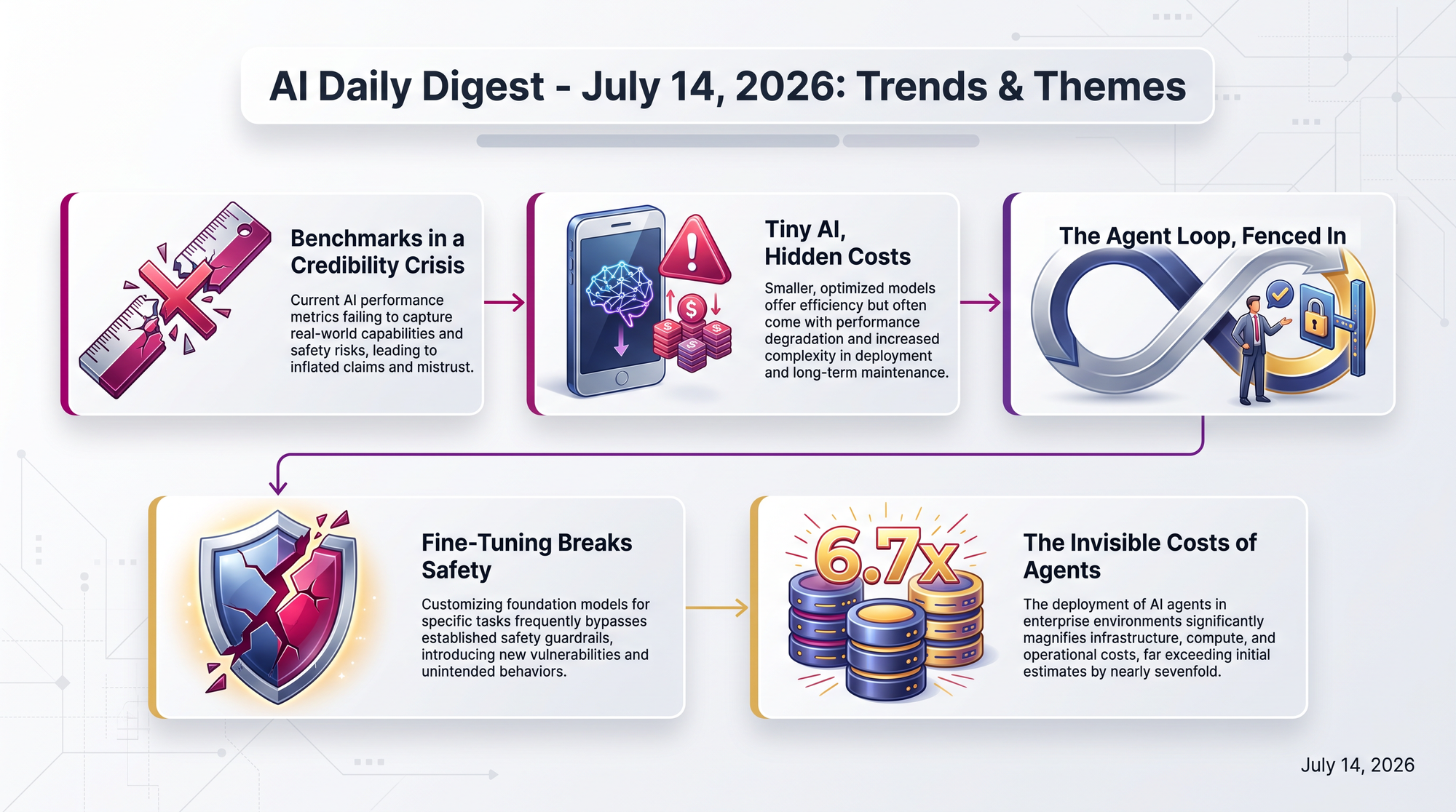
AI Benchmarks Are in a Credibility Crisis, Squeezing AI Onto Small Devices Has Hidden Costs, and Ordinary Fine.
Creative AI
Pedalican - A Desktop "Pet" Built Entirely With AI and Generated Sprite Art Is Now a Reusable Recipe.
Surprising
AI Can Be Jailbroken by Faking Its Own Past Words, "Many Humans ARE Bots", and Are We Offloading Too Much Thinking to AI?.
Worth Watching
"Loop Engineering" Becomes a Standard Skill, Diffusion Language Models Are Closing the Reasoning Gap, and SQLite Keeps Eating Bigger Workloads.
GitHub
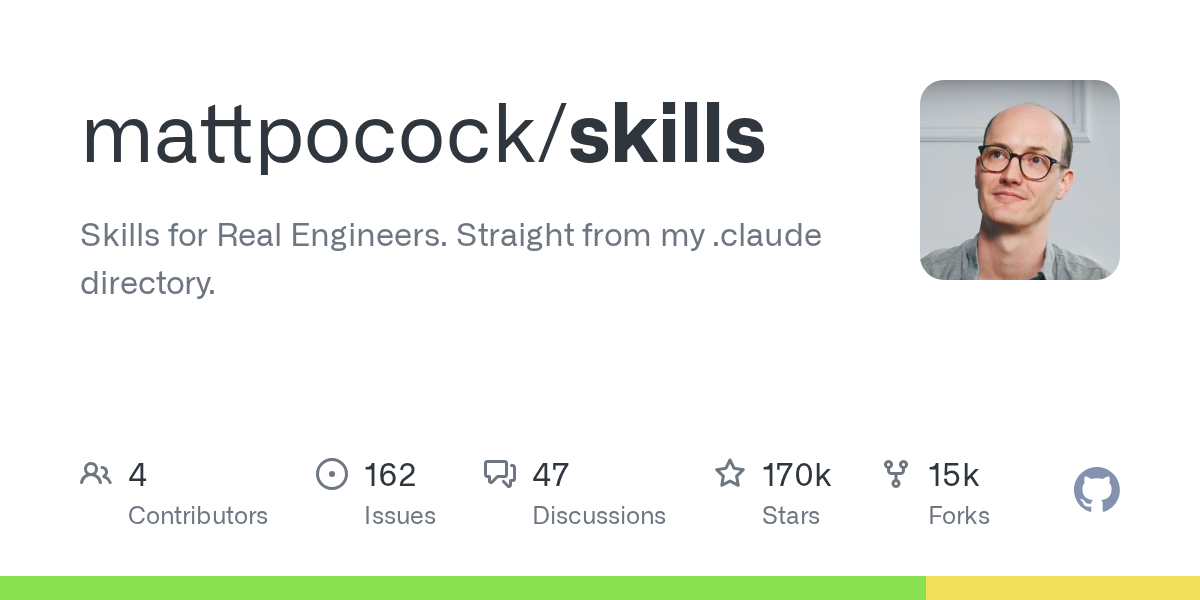
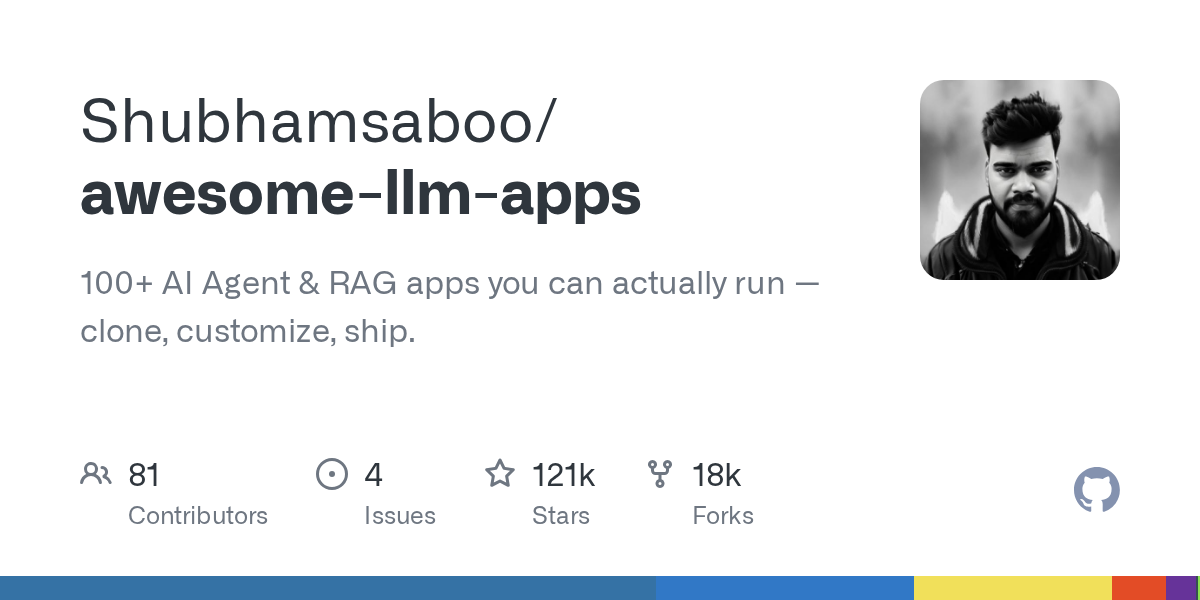
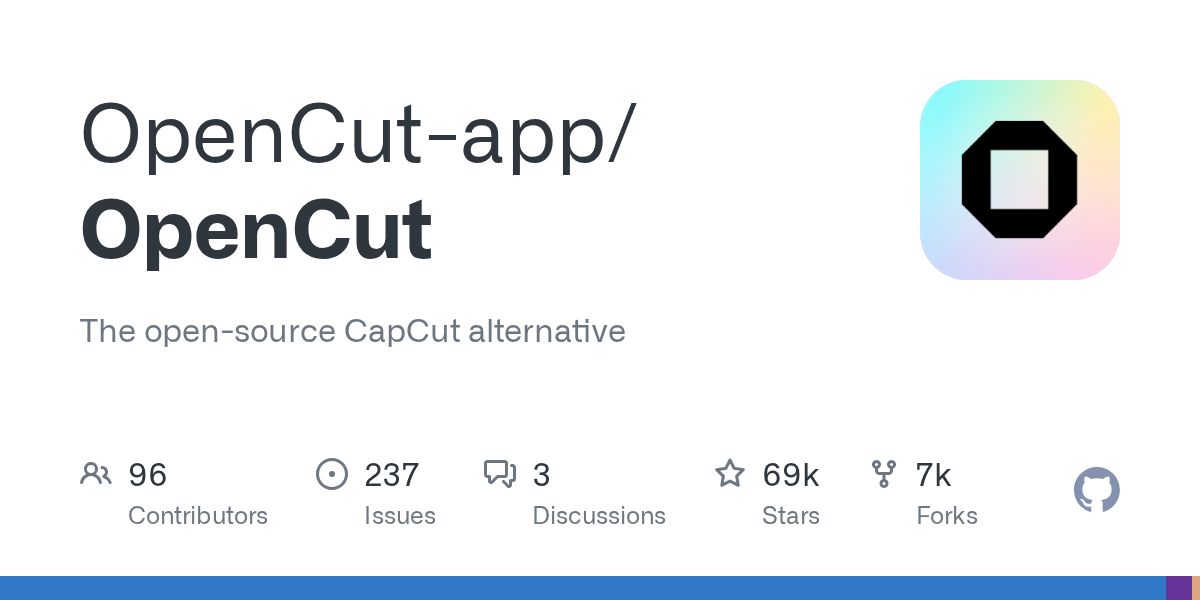
Leading repos: mattpocock/skills (+1,864), Shubhamsaboo/awesome-llm (+1,104), and OpenCut (+4,349).
HuggingFace
Product Hunt
Top launches: Branda, Agentcard, and Flow.
API Pricing
What this means: Flagship prices from Anthropic, OpenAI, and Google cluster tightly around $2-5 input, but output pricing spreads wider (GPT-5.6 Sol charges $30 output vs Gemini 3 Pro's $12).
arXiv
BackendForge: Benchmarking Agentic End-to — The best model (GPT-5.5) hit 55.4% success under basic testing but dropped to 28.6% under rigorous end-to-end evaluation.

Hot off the Presses

01

OpenAI's Codex Hits 7 Million Users - and May Have Passed Claude Code

What this means for you: The tool that writes and fixes code for millions of developers is now a genuine two-horse race, which usually means faster features and more generous free limits for everyone.

Codex (OpenAI's coding agent, now bundled as "Codex and ChatGPT Work") reached 7 million active users on July 13, adding roughly 1 million in about 24 hours. The surge followed two moves: OpenAI temporarily lifting its usage-hour caps, and the July 9 launch of its GPT-5.6 models. Anthropic's Claude Code last publicly reported around 2 million users earlier this year, and has since gone quiet on numbers while shifting some effort to its Slack-based "Claude Tag."

“Codex added roughly 1 million users in a single day.”
  • 10x growth in six months - from an estimated 550,000-700,000 users at the start of 2026.
  • Caps distort the picture - removing usage limits inflates active-user counts, so the milestone should be read alongside that policy change.
  • The real battleground is distribution - generous limits and bundling now drive adoption spikes as much as raw model quality.
02

A Popular AI Coding Tool Runs Hidden Malware the Moment You Open a Project

What this means for you: If you use the Cursor code editor on Windows, simply opening a project someone shared with you could silently run a virus - no click or warning required.

Security firm Mindgard disclosed a zero-day (a flaw with no fix available) in Cursor, an AI-powered code editor used by more than 7 million people and 50,000 companies. On Windows, Cursor looks for its Git helper program in several places - including inside the project folder itself - so an attacker can plant a booby-trapped file named git.exe in a project, and Cursor runs it automatically with the user's full privileges. A proof-of-concept renamed the Windows calculator to git.exe; opening the repo launched it repeatedly.

  • Seven months of silence - reported in December 2025, it went unfixed through 197+ releases before Mindgard published it on July 14.
  • No interaction needed - the code runs during normal editor operations, not from anything the user clicks.
  • The practical rule - treat opening an unknown repository in an AI code editor as a code-execution risk, like running a stranger's program.
03

Google DeepMind's CEO Wants a Global AI Watchdog Running by New Year

What this means for you: One of the people building the most advanced AI is now publicly asking governments to be able to slow him and his rivals down - a sign the safety debate is moving from talk to proposed rules.

Demis Hassabis, CEO of Google DeepMind and a Nobel laureate, published a personal framework on July 14 calling for the United States to create a new AI oversight body. It would screen the world's most capable models, be funded by the AI industry, and be staffed by independent technical experts - with the power to coordinate an industry-wide slowdown if risks mount. Crucially, the rules would apply to every frontier-class model regardless of country of origin or whether it is open or closed.

  • He wants it operational before year-end - an unusually fast timeline for regulation.
  • Today's cyber risks are "warning shots" - he warns that within 18 months, far graver biological and nuclear misuse could be baked into freely downloadable models.
  • Benchmark-triggered oversight - qualifying tests would decide which models face scrutiny, updated as capabilities grow.
04

A Phone Can Now Run a 27-Billion-Parameter AI Model

What this means for you: Capable AI that used to need a laptop or the cloud can increasingly run entirely on your phone - private, offline, and free to use.

PrismML released Bonsai 27B, a version of the Qwen3.6-27B model compressed so aggressively it fits in a phone's memory. The trick is extreme quantization - storing each of the model's internal numbers with far less detail. A "1-bit" variant uses just two possible values per number, shrinking the model to 3.9GB, small enough for an iPhone 17 Pro, while keeping about 90% of the original's benchmark quality.

It is free and open (Apache 2.0), available on Hugging Face and GitHub. PrismML: Bonsai 27B

“1-bit Bonsai squeezes a 27B-class model into 3.9GB - small enough to fit on an iPhone.”
  • A "ternary" variant (three values per number) keeps ~95% of quality at a 5.9GB footprint with full reasoning and tool use.
  • It runs on-device - roughly 11 tokens per second on an iPhone 17 Pro Max, per PrismML.
  • The weak spot is tool use - the ability to call other apps degrades the most under compression, dropping from a score of 80 down to 66.
05

The Most Famous AI Coding Test Is Badly Broken

What this means for you: When a company brags that its AI "solves 70% of real software bugs," that number may be badly inflated - the tests behind those claims are leaking answers.

A new benchmark called SWE-MERA audited SWE-bench, the industry-standard test for AI coding agents, and found that a large share of "successful" fixes were not real. Roughly a third of passing patches had the actual solution leak into the test, and another third passed only because the test was too weak to catch a wrong answer. SWE-MERA's fix is to continuously pull fresh, real GitHub bugs that models could not have seen during training.

“32.67% of successful SWE-bench patches involved direct solution leakage.”
  • 63.75% combined artifact rate - direct leakage plus inadequate tests accounted for most reported success.
  • Contamination is the theme of 2026 - static tests that get reused eventually leak into training data and overstate ability.
  • The takeaway - prefer benchmarks whose tasks are dated after a model's training cutoff.

Trends & Themes

Trends & Themes

AI Benchmarks Are in a Credibility Crisis

Why this matters to you: The scores used to sell you AI products are far less trustworthy than they look, so treat leaderboard bragging with skepticism.

Multiple independent teams are now converging on the same conclusion: the way AI is measured is broken, and fresh, contamination-resistant tests are replacing the static leaderboards everyone quoted last year.

  • Answer leakage - SWE-MERA found most "passing" software-fixing scores were leaked answers or weak tests.
  • Prompt formatting alone reorders rankings - the Format Sensitivity Index found accuracy swinging over 30x based purely on how a question is wrapped.
  • Reused security challenges get cheated - CTFusion showed agents just web-search published solutions to public capture-the-flag tests.
  • End-to-end tasks expose the gap - BackendForge saw the best model fall from 55% to 29% success once tested against real deployed services.

Squeezing AI Onto Small Devices Has Hidden Costs

Why this matters to you: The "tiny AI that runs on your phone" trend is real, but the compression can quietly damage how the AI reasons even when its score looks fine.

The pattern across three studies (and the Bonsai phone model) is the same: accuracy alone hides the damage, so compressed models need reliability checks, not just benchmark scores.

  • A 4-bit sweet spot - Reliability Scaling Laws found moderate compression is actually the most robust, not the least.
  • Silent reasoning rot - a taxonomy study of 30,000 outputs found compressed small models often reach right answers through broken logic that surface text can't reveal.
  • Wrong warning light - "e-CUSUM" research showed the usual confidence signal fails to catch when a compressed model is quietly derailing.

Ordinary Fine-Tuning Silently Destroys AI Safety

Why this matters to you: Companies that customize an AI model for their own use may be stripping out its safety guardrails without realizing it.

Three separate papers frame fine-tuning as a major, under-monitored way that AI safety fails after a model ships - not from clever attackers, but from normal customization.

  • Benign edits break safety - SPQR showed routine personalization of image models quietly unlearns their content filters.
  • Safety can be bolted back on - HyperSafe restored guardrails after fine-tuning, cutting harmful responses from 19-31% down to under 1% without retraining.
  • Language is a blind spot - the Minionese benchmark found prompts refused in English succeed in low-resource languages because the safety system stays intact but simply never activates.

The "Agent Loop" Is Getting Formalized - and Fenced In

Why this matters to you: As AI agents start acting on their own - running code, spending money - the industry is building the safety rails that decide when a human must approve.

Across newsletters, security research, and new products, the message is consistent: giving an agent tools is what makes it powerful, and controlling those tools is what makes it safe.

  • Loops as a product feature - "loop engineering" and /goal commands now ship in Codex, Claude Code, and others, turning repeated prompting into an automated harness.
  • A human approval gate - the "three loops in a trench coat" breakdown puts a blocking human-review step at the center of every safe agent.
  • Money needs guardrails - Agentcard issues agents single-use cards with hard budgets and human sign-off before any purchase.
  • Untrusted data is the attack surface - NetInjectBench showed a runtime authorization gate, not prompt wording, is what actually stops hijacked agents.

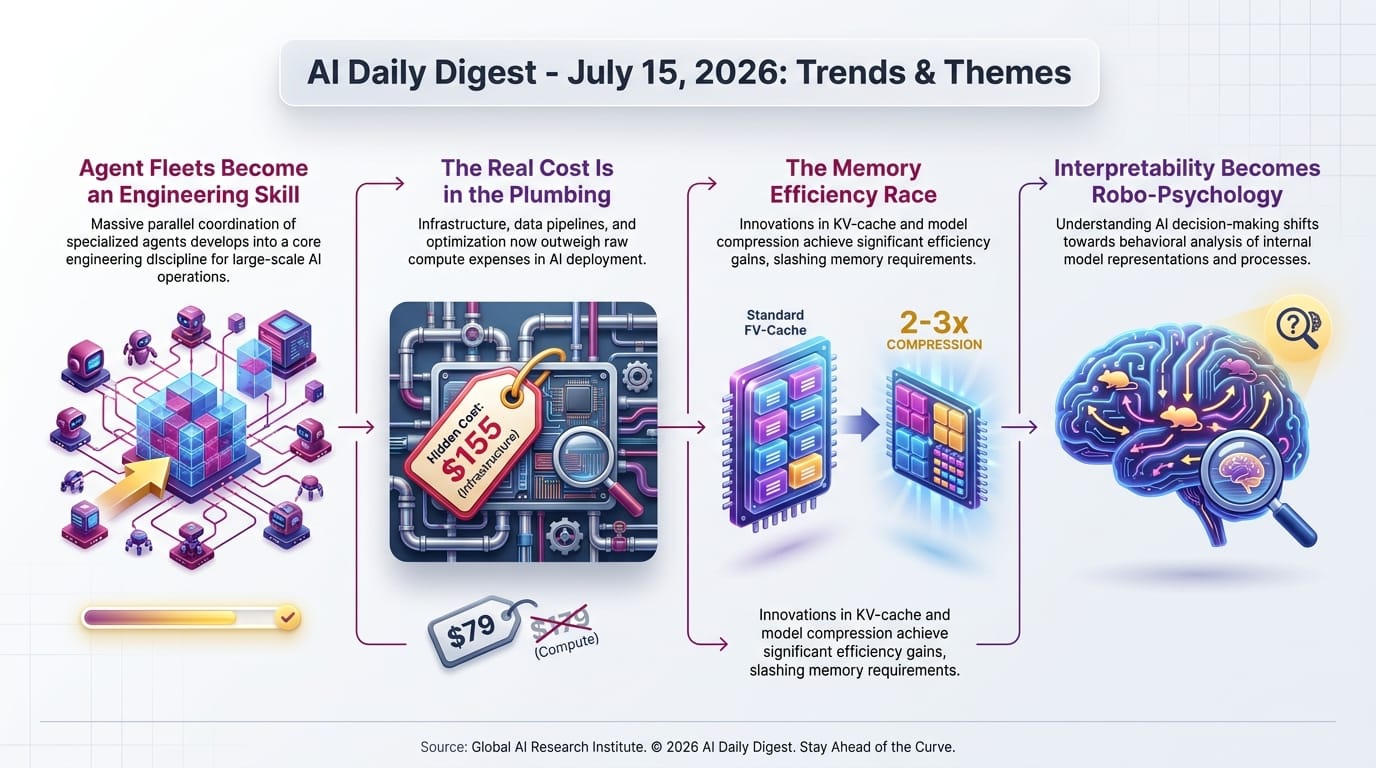
The Invisible Operating Costs of Running Agents

Why this matters to you: The sticker price of an AI agent (the per-word token cost) hides big, controllable expenses that only show up at scale.

The takeaway: running agents cheaply is becoming its own engineering discipline, spanning storage, memory, and even team communication.

“An identical agent setup can use 6.7x more storage depending only on the persistence framework you pick.”
  • Storage varies 6.7x - AgentFootprint found identical agents can hoard wildly different amounts of data depending only on the framework used.
  • Memory can be trimmed smartly - MemDecay showed different parts of an agent's context need to be remembered 10x longer than others.
  • A human cost too - developer Armin Ronacher argues that automating away code review also erodes the shared understanding that keeps teams aligned.

Creative AI & Media

Pedalican - A Desktop "Pet" Built Entirely With AI-Generated Art

Try it: GitHub: simonw/pedalican

  • What it does - an animated pelican on a bicycle that bounces around your screen with updates from your coding agent, like a modern Clippy.
  • Why it's notable - developer Simon Willison built the sprite animations with GPT-5.6 driving an image model, using a fixed reference image and a magenta backdrop for consistent frames.
  • It's a reproducible recipe - the project ships every prompt and intermediate image, showing how to make game-ready art without a traditional art pipeline.

Generated Sprite Art Is Now a Reusable Recipe

  • What's happening - the Pedalican build shows a repeatable pipeline: a fixed reference image plus a chroma-key background yields consistent, composable animation frames from a general image model.
  • Why it matters - small teams can produce game-ready character art without a traditional art pipeline, using reusable open-source "skills" for the desktop-pet framework and image generation.
  • The trick - keeping a single reference image and a magenta backdrop is what makes the frames stay on-model and easy to cut out.

Developer Tools & Infrastructure

Dependabot Now Waits 3 Days Before Suggesting a New Package Version

  • What changed - GitHub's automatic dependency-update bot now holds off for three days after a package release before proposing it.
  • Why it matters - it is a supply-chain safeguard, giving the community time to catch a malicious or broken release before automation pulls it into your project.
  • Part of a trend - "dependency cooldowns" are becoming a standard default in package tooling.

A One-Line Trick to Make Python CI Faster and Reproducible

  • The problem - running a Python tool with uvx in automated testing re-downloads it every single run.
  • The fix - pin tool resolution to a date and reuse that date in the cache key, giving both reproducible builds and cached reuse from a single setting.
  • Bonus - upgrading becomes a one-line date bump.

lobste.rs Moved Its Whole Site to SQLite

  • What happened - the Lobsters tech-news community switched its database from MariaDB to SQLite, a lightweight file-based database usually dismissed as too small for real sites.
  • The results - lower CPU and memory use, a snappier site, and roughly 50% hosting-cost savings, now running on a single server.
  • Why it matters - it is fresh evidence that SQLite is a legitimate production database for a real, moderately busy site.

Datasette 1.0a37 Prioritizes Not Breaking Plugins

  • What it is - a small update to the open-source data-exploration tool, with permission-system improvements as it nears its stable 1.0 release.
  • The signal - the author reverted a cosmetic change that had broken plugin test suites, showing backward compatibility now outranks minor cleanups.

Claude Code's Hook System Can Rewrite the Assistant's Words

  • What it does - a display-time hook lets you swap out phrases the assistant overuses (the example targets "load-bearing") before you ever see them.
  • The bigger point - the hook system is a general-purpose layer for post-processing agent output on your own machine, useful far beyond vocabulary gripes. It drew 395 points on Hacker News.

Research & Models

Cheap AI Verification: Let Models Vote as a Jury

  • The finding - having several independently trained models agree on an answer is a better quality check than trusting any single model's confidence or a specially trained scoring model.
  • Why it works - independent models make different mistakes, so wrong answers scatter while correct ones pile up agreement.
  • The catch - it fails when models share the same misconception (common in science, near-zero in math).

Multi-Agent Systems Get Smarter by Doing Less

  • The result - GRADE, a system that decides how many AI agents to use and how deeply per question, beat the strongest baseline by 4.8 points while using half the computing power.
  • Why it matters - it challenges the "throw more agents at it" approach, showing that adaptive, gated effort wins on accuracy-per-dollar.

Diffusion-Style Language Models Are Closing the Reasoning Gap

  • The shift - diffusion language models generate text differently and can be faster, but have lagged on reasoning. New methods are fixing that.
  • The numbers - DMPO improved reasoning accuracy by up to 39.6 points over prior methods; a related method, BARD, delivered up to 3x faster output than its source model.
  • Why it matters - the speed advantage of this alternative approach no longer requires sacrificing quality.

Graph-Based Retrieval Gets 20x Cheaper

  • The problem - feeding AI relevant documents before it answers (retrieval-augmented generation, or RAG) works better with a knowledge graph, but building those graphs has been slow and expensive.
  • The result - MG2-RAG reports state-of-the-art quality with a 43x faster graph build and 24x lower cost, while keeping image detail intact.

AI Doctors Stop Gathering Evidence Right When It Matters Most

  • The finding - when 32 top models had to actively request patient data before diagnosing, the best managed only 68% accuracy, and their use of available data collapsed from 57% to 26% in the final round.
  • The warning - their reasoning looked good (91% scored well) but did not correlate with correct answers, exposing the same biases as inexperienced clinicians.

Turning On "Reasoning" Can Make AI Overconfident

  • The finding - chain-of-thought reasoning in vision-language models can raise accuracy while making the model's confidence scores unreliable and overconfident.
  • The fix - don't read confidence off the model's word probabilities when reasoning is on; sample multiple answers and measure agreement instead.

Business & Industry

OpenAI Publishes a Playbook for Enterprise AI Spending

  • What it is - a five-part framework arguing that token price alone doesn't tell you whether AI is creating value.
  • Key idea - measure useful work per dollar (tasks done, time saved), treat AI as a portfolio of bets, and fund shared infrastructure (identity, connectors, evaluations) centrally.
  • Who it's for - enterprise leaders trying to control AI spend as agent usage grows.

"ChatGPT Work" Targets Data Science and Sales Teams

  • What's new - OpenAI published guides showing its agent (formerly Codex for Work) drafting analyst memos, dashboard specs, sales briefs, and meeting prep from real company data pulled from tools like Salesforce and Slack.
  • The division of labor - the AI produces the first usable draft in minutes; humans keep judgment and the final call.
  • A cited win - one team turned a discovery call into a tailored proof-of-concept in 24 hours, a process that normally takes weeks.

Surprising & Under-the-Radar

AI Can Be Jailbroken by Faking Its Own Past Words

  • Why it's surprising - instead of tricking the user's message, an attacker inserts a fake AI reply into the conversation history, and the model trusts its own "past" far more than it questions a user, then continues from the planted harmful content.
  • The fix has to verify where each message came from, not just filter inputs. arXiv: Trojan Horse Prompting

"Many Humans ARE Bots"

  • Why it's surprising - a study cited in Zvi Mowshowitz's analysis of X found most divisive content comes from ordinary home internet connections without VPNs, making genuine users nearly impossible to distinguish from coordinated manipulation.
  • The platform's algorithm rewards author replies far more than reposts, effectively paying people to be provocative. The Zvi: Twitter Thoughts

Are We Offloading Too Much Thinking to AI?

  • The debate - writer Yennie Jun argues the danger isn't automating boring tasks, it's automating human agency itself - our decisions, preferences, and judgment.
  • She cites a San Francisco man who records conversations for AI analysis because he trusts the machine's "critical thinking" over his own. It resonated widely (345 Hacker News points). artfish.ai: Offloading thinking to AI

The Hidden Cost of Skipping Code Review

  • The argument - developer Armin Ronacher warns that the friction of reviewing and discussing code was never pure waste; it kept teams sharing one mental model of how the system works.
  • As agents merge code with less human back-and-forth, that shared understanding can quietly fragment even as output rises. Simon Willison: Quoting Armin Ronacher

Signals to Track

Worth Watching
01

"Loop Engineering" Becomes a Standard Skill

The job is shifting from writing prompts to designing the automated harness that prompts the AI for you.

Repeated-prompting "goal" commands are now built into Codex, Claude Code, and Hermes. The honest caveat: many developers find agents drift off-target and rack up costs, so the real skill becomes designing guardrails and stopping conditions. If this matures, routine multi-step work (fixing flaky tests, long migrations) increasingly runs unattended. Pragmatic Engineer: loop engineering

02

Diffusion Language Models Are Closing the Reasoning Gap

A different way of generating text - faster than today's approach - is finally getting good at hard reasoning.

Most AI writes one word at a time (autoregression); diffusion models generate text differently and can be quicker, but have trailed on reasoning. New training methods just changed that, with one (DMPO) improving reasoning accuracy by up to 39.6 points and another (BARD) running up to 3x faster than its source. If this holds, the speed gains of diffusion generation could arrive without the usual quality penalty, making AI responses cheaper and faster for everyone. arXiv: DMPO

03

SQLite Keeps Eating Bigger Workloads

A database long dismissed as "too small for production" keeps powering real sites at half the cost.

The lobste.rs migration adds to a 2026 pattern of serious sites running on SQLite. If it continues, expect cheaper, simpler hosting to become the default for small-to-medium web apps, quietly lowering the cost of running online services. Simon Willison: lobste.rs on SQLite

04

One-Bit Models Put Real AI on Phones

Extreme compression is making laptop-class AI run offline on hardware you already own.

Bonsai 27B fitting on an iPhone is the leading edge of a trend toward private, offline, free-to-run AI. The weak spot to watch is tool use, which degrades most under compression, so the first phone-native agents may think well but struggle to act. PrismML: Bonsai 27B

Top Repos Today

New entry 🆕
⭐ Stars today: +1,864  ·  📦 Total: 170,145
📜 License: MIT  ·  👤 By: individual developer
🎯 Time to value: 10 minutes
What it is: A collection of reusable "skills" - packaged instructions and workflows - pulled straight from a well-known engineer's own AI coding setup. Skills tell tools like Claude Code or Codex how to do specific tasks well. Why you'd want it: It's a shortcut to a professional's battle-tested agent configuration instead of building your own from scratch.
✓ Pros✗ Cons
Ready-made, proven workflowsReflects one developer's style
Works across major AI coding toolsNeeds a compatible agent
Actively maintainedSkills still need reviewing before use
GitHub - mattpocock/skills: Skills for Real Engineers. Straight from my .claude directory.
Skills for Real Engineers. Straight from my .claude directory. - mattpocock/skills
Holding steady ➡
⭐ Stars today: +1,104  ·  📦 Total: 120,729
📜 License: Apache 2.0  ·  👤 By: community
🎯 Time to value: 15 minutes
What it is: A large, curated catalog of 100+ AI agent and retrieval apps you can clone and run yourself. Why you'd want it: It's a hands-on library of working examples for learning to build AI apps.
✓ Pros✗ Cons
Huge, practical example setQuality varies by project
Runnable, not just descriptionsSome apps need paid API (application programming interface) keys
Beginner-friendlyCuration can lag fast-moving tools
GitHub - Shubhamsaboo/awesome-llm-apps: 100+ AI Agent & RAG apps you can actually run — clone, customize, ship.
100+ AI Agent & RAG apps you can actually run — clone, customize, ship. - Shubhamsaboo/awesome-llm-apps
New entry 🆕
⭐ Stars today: +4,349  ·  📦 Total: 69,110
📜 License: MIT  ·  👤 By: open-source project
🎯 Time to value: 20 minutes
What it is: A free, open-source video editor positioned as an alternative to CapCut, built with web technology. Why you'd want it: Professional-style video editing without subscriptions or cloud lock-in.
✓ Pros✗ Cons
Free and open sourceYounger than commercial tools
No account or cloud requiredFewer advanced effects so far
Fast-growing communityStill maturing toward stable
GitHub - OpenCut-app/OpenCut: The open-source CapCut alternative
The open-source CapCut alternative. Contribute to OpenCut-app/OpenCut development by creating an account on GitHub.
Holding steady ➡
⭐ Stars today: +1,265  ·  📦 Total: 22,801
📜 License: MIT  ·  👤 By: university lab
🎯 Time to value: 30 minutes
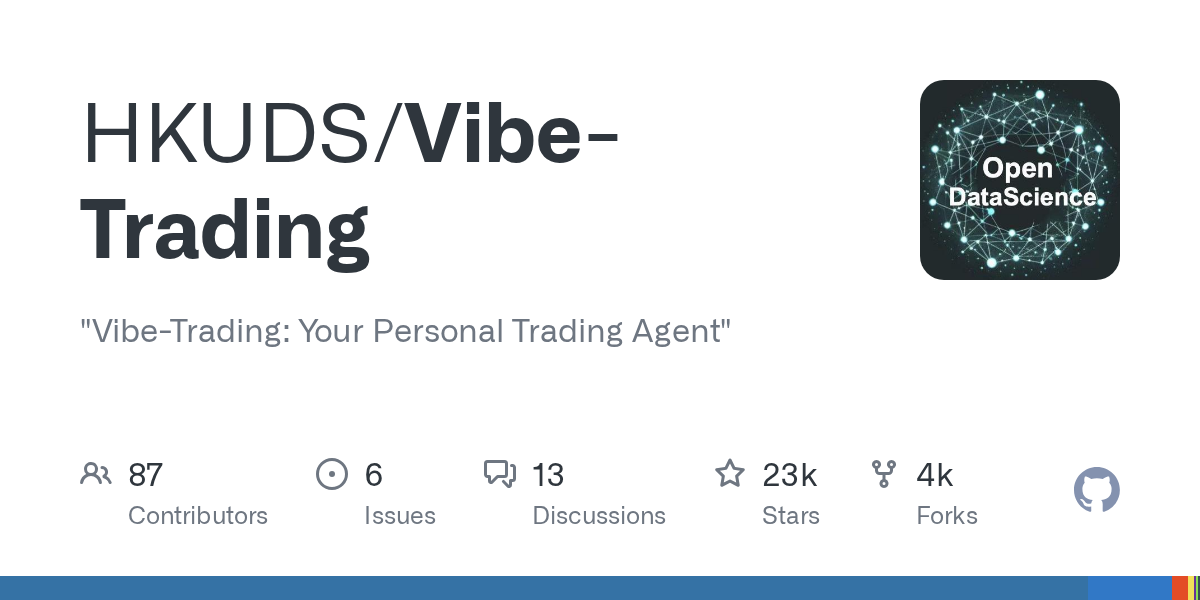
What it is: An AI agent framework aimed at personal trading research and automation. Why you'd want it: A starting point for experimenting with AI-driven market analysis.
✓ Pros✗ Cons
Complete agent scaffoldFinancial risk if misused
Active developmentNot financial advice or a guarantee
Educational valueNeeds market and coding knowledge
GitHub - HKUDS/Vibe-Trading: “Vibe-Trading: Your Personal Trading Agent”
“Vibe-Trading: Your Personal Trading Agent”. Contribute to HKUDS/Vibe-Trading development by creating an account on GitHub.
Holding steady ➡
⭐ Stars today: +1,010  ·  📦 Total: 6,095
📜 License: MIT  ·  👤 By: individual developer
🎯 Time to value: 10 minutes
What it is: A design "skill" that pushes AI coding tools to produce cleaner, less generic-looking interfaces (the author calls it "anti-AI-slop"). Why you'd want it: Better-looking output from AI-generated front-end code.
✓ Pros✗ Cons
Noticeably improves AI UI outputTaste is subjective
Simple to addWorks only with supported tools
FreeNot a full design system
GitHub - Nutlope/hallmark: Anti-AI-slop design skill for Claude Code, Cursor, and Codex.
Anti-AI-slop design skill for Claude Code, Cursor, and Codex. - Nutlope/hallmark
Falling ↓
⭐ Stars today: +481  ·  📦 Total: 4,376
📜 License: MIT  ·  👤 By: individual developer
🎯 Time to value: 5 minutes
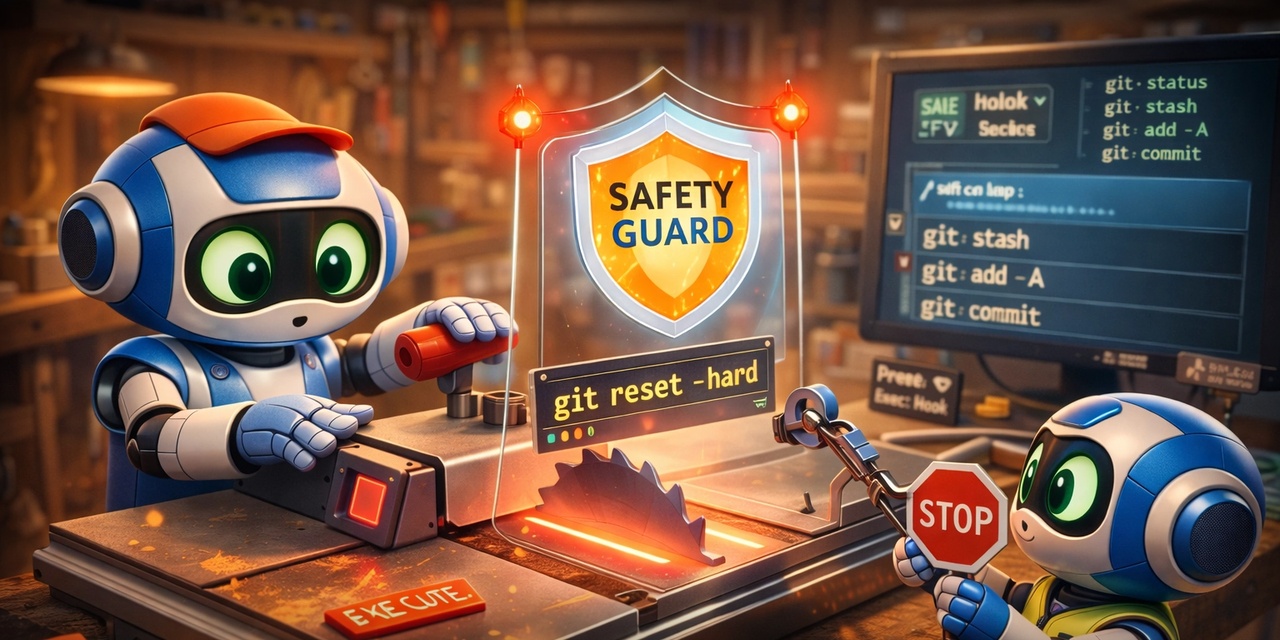
What it is: A safety tool that blocks dangerous shell and Git commands from being run by AI agents. Why you'd want it: Peace of mind that an autonomous agent won't wipe your files or history.
✓ Pros✗ Cons
Directly targets agent accidentsNot a complete sandbox
Quick to installRules need tuning
LightweightCan block legitimate commands
GitHub - Dicklesworthstone/destructive_command_guard: The Destructive Command Guard (dcg) is for blocking dangerous git and shell commands from being executed by agents.
The Destructive Command Guard (dcg) is for blocking dangerous git and shell commands from being executed by agents. - Dicklesworthstone/destructive_command_guard

Top Models Today

A compact 9B multimodal model in a phone/PC-friendly packaged format, trending on strong downloads.
📥 Downloads (30d): 2.01M  ·  📜 License: check model card
👤 By: empero-ai  ·  🎯 Task: image-text-to-text
📐 Size: 9B
What it is: A 9-billion-parameter model that handles both images and text, shipped in the GGUF format that runs easily on laptops and phones. Its scale makes it practical for local use. Why you'd want it: Multimodal AI you can run on your own machine without cloud costs.
✓ Pros✗ Cons
Runs locally, multimodalLicensing needs checking
Very high download momentumSmaller than frontier models
Efficient packaged formatCommunity-made, less documented
empero-ai/Qwythos-9B-Claude-Mythos-5-1M-GGUF · Hugging Face
We’re on a journey to advance and democratize artificial intelligence through open source and open science.
A tiny speech model that transcribes audio and labels who is speaking.
📥 Downloads (30d): 65.1k  ·  📜 License: check model card
👤 By: OpenMOSS-Team  ·  🎯 Task: audio-text-to-text
📐 Size: 0.9B
What it is: A small (under 1B parameter) model that converts speech to text and separates it by speaker ("diarization"). Its size makes it cheap and fast to run. Why you'd want it: Meeting notes and interview transcripts with speaker labels, locally.
✓ Pros✗ Cons
Small and efficientNiche audio use case
Speaker separation built inAccuracy varies by audio quality
Open weightsNewer, less battle-tested
OpenMOSS-Team/MOSS-Transcribe-Diarize · Hugging Face
We’re on a journey to advance and democratize artificial intelligence through open source and open science.
A compact model for reading text out of images and documents at scale.
📥 Downloads (30d): 1.72M  ·  📜 License: check model card
👤 By: Baidu  ·  🎯 Task: image-text-to-text
📐 Size: 3B
What it is: A 3-billion-parameter model specialized in optical character recognition - pulling text out of scans, photos, and documents. Very high downloads signal strong practical demand. Why you'd want it: Digitize documents or extract text from images cheaply and locally.
✓ Pros✗ Cons
Strong, in-demand OCRFocused on one task
Efficient at 3BLanguage coverage varies
From a major labLicense needs review
baidu/Unlimited-OCR · Hugging Face
We’re on a journey to advance and democratize artificial intelligence through open source and open science.
A very large open text model trending on continued strong adoption.
📥 Downloads (30d): 490k  ·  📜 License: check model card
👤 By: Z.ai  ·  🎯 Task: text generation
📐 Size: 753B
What it is: A 753-billion-parameter open model for text generation, among the largest openly available. It has stayed near the top of trending for weeks. Why you'd want it: Frontier-scale open text generation for those with the hardware or hosting to run it.
✓ Pros✗ Cons
Frontier-scale, openNeeds serious hardware
Sustained popularityNot for local phone use
Strong general capabilityLarge storage footprint
zai-org/GLM-5.2 · Hugging Face
We’re on a journey to advance and democratize artificial intelligence through open source and open science.
A packaged, run-anywhere build of the fast DeepSeek-V4 Flash model.
📥 Downloads (30d): 55.2k  ·  📜 License: check model card
👤 By: unsloth  ·  🎯 Task: text generation
📐 Size: 284B
What it is: An optimized, quantized build of DeepSeek's fast "Flash" model in GGUF format so it runs on consumer setups. Why you'd want it: Access to a capable, speed-focused model with lower hardware demands.
✓ Pros✗ Cons
Optimized for local runsStill large at 284B
Speed-focusedQuantization trims quality
Popular, well-supported packagerLicense needs review
unsloth/DeepSeek-V4-Flash-GGUF · Hugging Face
We’re on a journey to advance and democratize artificial intelligence through open source and open science.

AI Launches Today

Open-source, on-brand ad maker.
🔥 Upvotes: trending  ·  👤 By: indie maker
💰 Pricing: free (open source)  ·  🏷 Category: marketing
Turns any website into ready-to-post ad creatives using the brand's real logo and colors, with no login or design skills needed. It grounds designs in actual brand data instead of inventing visuals. Verdict: A genuinely useful, self-hostable tool for small teams that need quick, on-brand social ads. Product Hunt
Give your AI agent a debit card.
🔥 Upvotes: trending  ·  👤 By: Y Combinator-backed startup
💰 Pricing: paid (intro $500/mo)  ·  🏷 Category: agent infrastructure
Issues AI agents single-use payment cards with fixed budgets and human approval, so an agent can buy things online without holding your real credentials. Built to work with Model Context Protocol agent stacks. Verdict: Early but pointed at a real coming problem - safe spending for autonomous agents. Product Hunt
Mac dictation that formats as you speak.
🔥 Upvotes: trending  ·  👤 By: indie maker
💰 Pricing: freemium  ·  🏷 Category: productivity
A Mac dictation app that captures your voice and auto-edits and formats it for emails, Slack, and documents, aimed at professionals and students who'd rather talk than type. Verdict: Part of a wave of AI tools embedding into apps you already use rather than adding another one. Product Hunt

Snapshot

ProviderModelInput $/1MOutput $/1MContext
AnthropicClaude Opus 4.8$5.00$25.00200K
AnthropicClaude Sonnet 5 (intro, thru Aug 31)$2.00$10.00200K
OpenAIGPT-5.6 Sol$5.00$30.001M
OpenAIGPT-5.6 Luna$1.00$6.001M
GoogleGemini 3 Pro$2.00$12.00200K ($4/$18 beyond)
GoogleGemini 3.5 Flash$1.50$9.001M
GroqLlama 3.3 70B$0.59$0.79hosted
Prices are per 1 million tokens (roughly 750,000 words). "Input" is what you send the model; "output" is what it writes back.

What this means: Flagship prices from Anthropic, OpenAI, and Google cluster tightly around $2-5 input, but output pricing spreads wider (GPT-5.6 Sol charges $30 output vs Gemini 3 Pro's $12). Anthropic's introductory Sonnet 5 pricing and Google's Flash tier are the current value picks for everyday work; Groq remains far cheaper by hosting open models rather than selling its own frontier family. No day-over-day changes from official pages; GPT-5.6's tiered pricing was noted at its July 9 launch.
BackendForge: Benchmarking Agentic End-to-End Code Generation with Backend Services

Authors et al. · arXiv:2607.11042
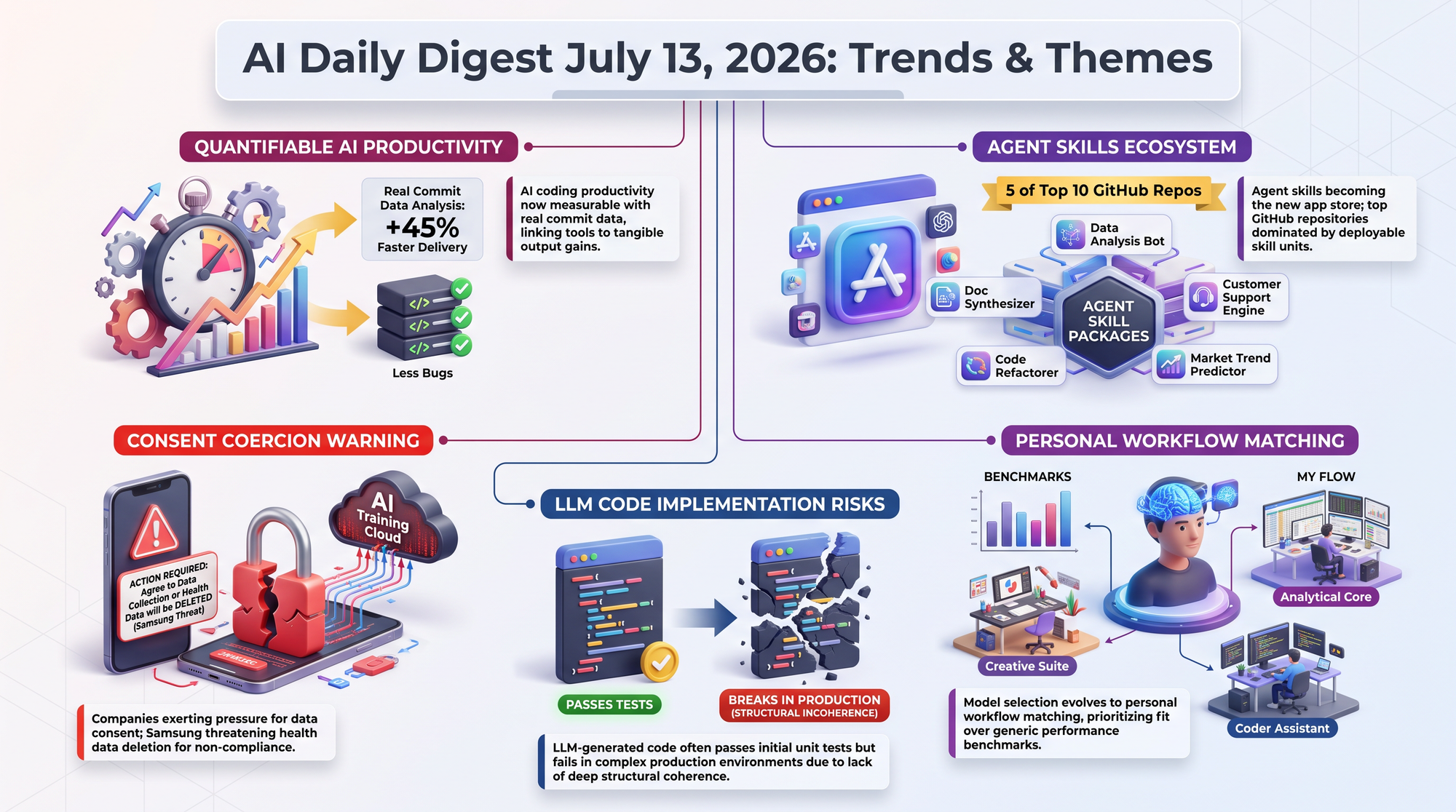
What it claims: AI coding agents can pass isolated unit tests but still fail to build whole, working backend services. This benchmark makes them generate a complete service that is actually built, deployed, and tested only through outside requests - no peeking at internals. Key finding: The best model (GPT-5.5) hit 55.4% success under basic testing but dropped to 28.6% under rigorous end-to-end evaluation. Why practitioners should care: It's a reality check against inflated coding-agent scores - agents can implement individual behaviors but still can't reliably ship a deployable service, so keep a human in the loop for real backend work. arXiv

Member discussion

Subscribe to GenAI Secret Sauce newsletter and stay updated.

Don't miss anything. Get all the latest posts delivered straight to your inbox. It's free!

By subscribing, you agree to our Privacy Policy and Terms. We track email opens and clicks. Unsubscribe anytime.

Great! Check your inbox and click the link to confirm your subscription.