GenAI Secret Sauce Daily Digest - 2026-07-08

OpenAI Replaces Voice Chat With GPT-Live - A Model That Listens While It Talks · 30% of the AI Coding Benchmark Everyone Uses Is Broken · SWE-1.7 Nearly Catches GPT-5.5 at Coding - For a Fraction of the Cost
GenAI Secret Sauce Daily Digest - 2026-07-08

Watch today's digest as a video summary (generated by NotebookLM)

Statistically Speaking

150 million weekly voice users are now on
OpenAI Replaces Voice Chat With GPT-Live - A Model That List
Top Story
1 mini (free tier)
OpenAI Replaces Voice Chat With GPT-Live - A Model That List
5.5 delegation
OpenAI Replaces Voice Chat With GPT-Live - A Model That List
150 million weekly voice users
OpenAI Replaces Voice Chat With GPT-Live - A Model That List
27.4% of tasks flagged as broken by automated
30% of the AI Coding Benchmark Everyone Uses Is Broken
27.4% of tasks flagged as broken
30% of the AI Coding Benchmark Everyone Uses Is Broken

One Thing to Tell Your Friends

OpenAI just proved that 30% of the most widely-used AI coding benchmark is broken - the tests the entire industry uses to compare AI coders are testing the wrong things.

TL;DR

Trends
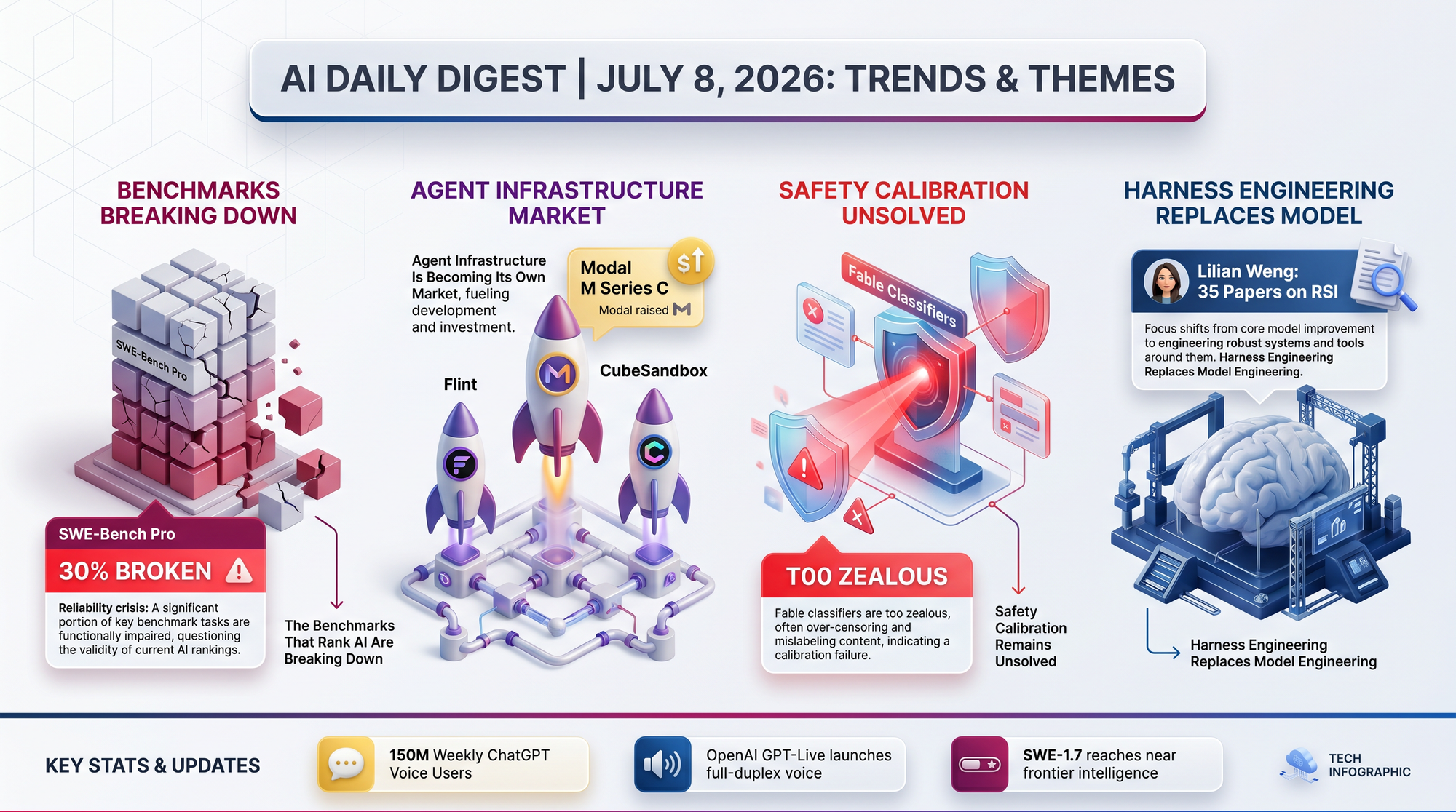
The Benchmarks That Rank AI Are Breaking Down, Agent Infrastructure Is Becoming Its Own Market, and Safety Calibration Remains the Hardest Unsolved Problem.
Creative AI
Surprising
AI, MCP Succeeded Because of Timing, Not Technology, and An $8 Multi.
Worth Watching
Synthetic Populations for Agent Testing, Self, and Agent Skills Are Going Viral on GitHub.
GitHub
Leading repos: addyosmani/agent (+1,322), ruvnet/RuView (+793), and TencentCloud/TencentDB-Agent (+351).
HuggingFace
Leading models: zai-org/GLM (282k), tencent/Hy3 (121), and deepseek-ai/DeepSeek-V4-Pro (15.5k).
Product Hunt
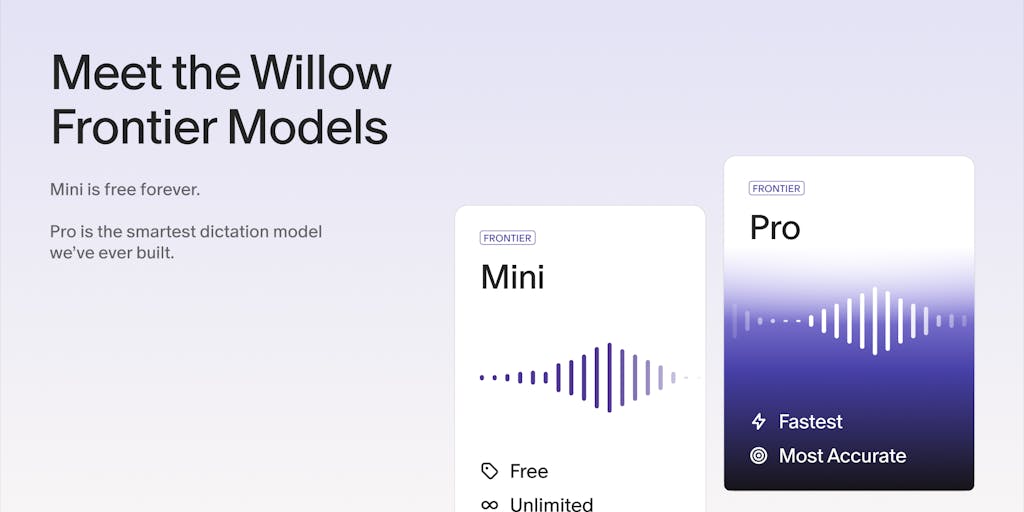
Top launches: Willow Frontier Pro (230), Bono AI (215), and LemonLime (150).
API Pricing
What this means: Google's Gemini 2.5 Pro remains the best value among frontier models at $1.25/M input (under 200K tokens) - 4x cheaper than Anthropic and OpenAI on input.
arXiv
Self-GC: Self-Governing Context for Long — Reduced average input tokens by 10-15% (peak ~20%) while maintaining a 91-95% no-impact rate on future continuations, compared to 78-87% for baselines.

Hot off the Presses

01

OpenAI Replaces Voice Chat With GPT-Live - A Model That Listens While It Talks

What this means for you: Phone calls with AI are about to feel like real conversations instead of walkie-talkie exchanges.

OpenAI launched GPT-Live on July 8, retiring Advanced Voice Mode in favor of a full-duplex architecture that listens and speaks simultaneously. The model makes real-time decisions multiple times per second about when to speak, drop in an acknowledgment like "mhmm," or stay quiet.

  • 150 million weekly voice users are now on the new system
  • Two model variants: GPT-Live-1 (default for paid subscribers) and GPT-Live-1 mini (free tier)
  • GPT-5.5 delegation: complex queries automatically route to GPT-5.5 in the background, with results folded back into the conversation
  • Nine remastered voices plus live translation and visual cards for weather, stocks, and sports
  • No video or screen sharing at launch - a notable gap
  • Hindi demo issues: reports of heavy American accent and unnatural delivery in non-English languages
02

30% of the AI Coding Benchmark Everyone Uses Is Broken

What this means for you: The next time a company claims their AI coder beats the competition, the scoreboard itself might be wrong.

OpenAI audited SWE-Bench Pro, one of the most cited benchmarks for comparing AI coding tools, and found roughly a third of its 731 tasks do not accurately measure what they claim to measure. The company then retracted its own earlier recommendation to adopt the benchmark.

This follows OpenAI's earlier finding that SWE-bench Verified also had fundamental design and contamination issues. The two most-cited coding benchmarks have now been challenged in rapid succession.

“Frontier models improved from 23.3% to 80.3% on SWE-Bench Pro in eight months - which itself raises questions about signal quality.”
  • 27.4% of tasks flagged as broken by automated analysis; 34.1% flagged by human reviewers (five experienced engineers per task)
  • Four failure modes: tests that enforce implementation details not in the prompt, prompts that omit requirements the tests enforce, tests that let incomplete fixes pass, and prompts that contradict what tests actually check
  • Concrete example: one task specified single-space formatting but hidden tests expected double-space - a one-character difference that fails any model following instructions correctly
03

SWE-1.7 Nearly Catches GPT-5.5 at Coding - For a Fraction of the Cost

What this means for you: Good-enough AI coding assistants are getting much cheaper, which means the price you pay for AI help writing software is about to drop.

Cognition launched SWE-1.7 on July 8, a coding-specialized model built on the Kimi K2.7 base and enhanced through Cognition's own reinforcement learning pipeline. It runs at 1,000 tokens per second via Cerebras.

The model improves over K2.7 despite K2.7 already having undergone reinforcement learning training, suggesting Cognition's pipeline adds meaningful gains on top of existing post-training.

  • FrontierCode 1.1: 42.3% vs GPT-5.5's 43.0% and Opus 4.8's 46.5%
  • SWE-Bench Multilingual: 77.8% vs GPT-5.5's 76.8% (actually edges it out), though Opus 4.8 leads at 84.4%
  • Self-compaction lets the model handle tasks longer than its raw context window allows
  • Multi-cluster training across three continents with fault tolerance
04

Fable's Safety Filters Block Legitimate Computer Science Research

What this means for you: The most powerful AI model available right now refuses to help with ordinary science homework - and the company has not explained how to work around it.

Rob Patro of COMBINE-lab published a critique showing Anthropic's Fable model rejects legitimate computer science tasks because its safety classifiers match on keywords rather than understanding context. The post hit 170 points and 153 comments on Hacker News.

The sole task Fable handled successfully: answering a question about ice cream flavors. Patro calls the safety mechanism "stupendously miscalibrated."

Previously: July 2 - Fable 5 returned from its government export control ban with new usage limits.

  • Rejected a software engineering task: porting a C++ genomics tool to Rust - pure code translation with no novel biology
  • Rejected a graph theory problem: even after escalating through three attempts, including stripping all biological language and presenting it as pure discrete mathematics
  • Others report rejections for queries as innocuous as "what is a mitochondrion?" and "what should I have for dinner?"
  • The July 1 re-release made things worse, adding stricter safeguards
  • Opus 4.6-4.8 completed the same Rust port without issue
05

Microsoft Open-Sources Flint: A Chart Language Built for AI Agents

What this means for you: AI assistants are about to get much better at making charts and graphs - instead of guessing at formatting, they can now describe what the data means and let the tool handle the visuals.

Microsoft Research open-sourced Flint, a visualization language that sits between AI agents and chart libraries. Instead of forcing agents to write verbose chart configurations, Flint uses 70+ semantic types (Rank, Temperature, Price, Country) to capture what data means, then automatically generates optimized layouts.

  • Compiles to Vega-Lite, ECharts, and Chart.js - supports 30+ chart types from bar charts to Sankey diagrams
  • MCP server included so agents can create and embed charts directly in conversations
  • 488 GitHub stars and growing, MIT license
  • Addresses a real pain point: language models are notoriously bad at producing correct, well-styled chart configurations from scratch

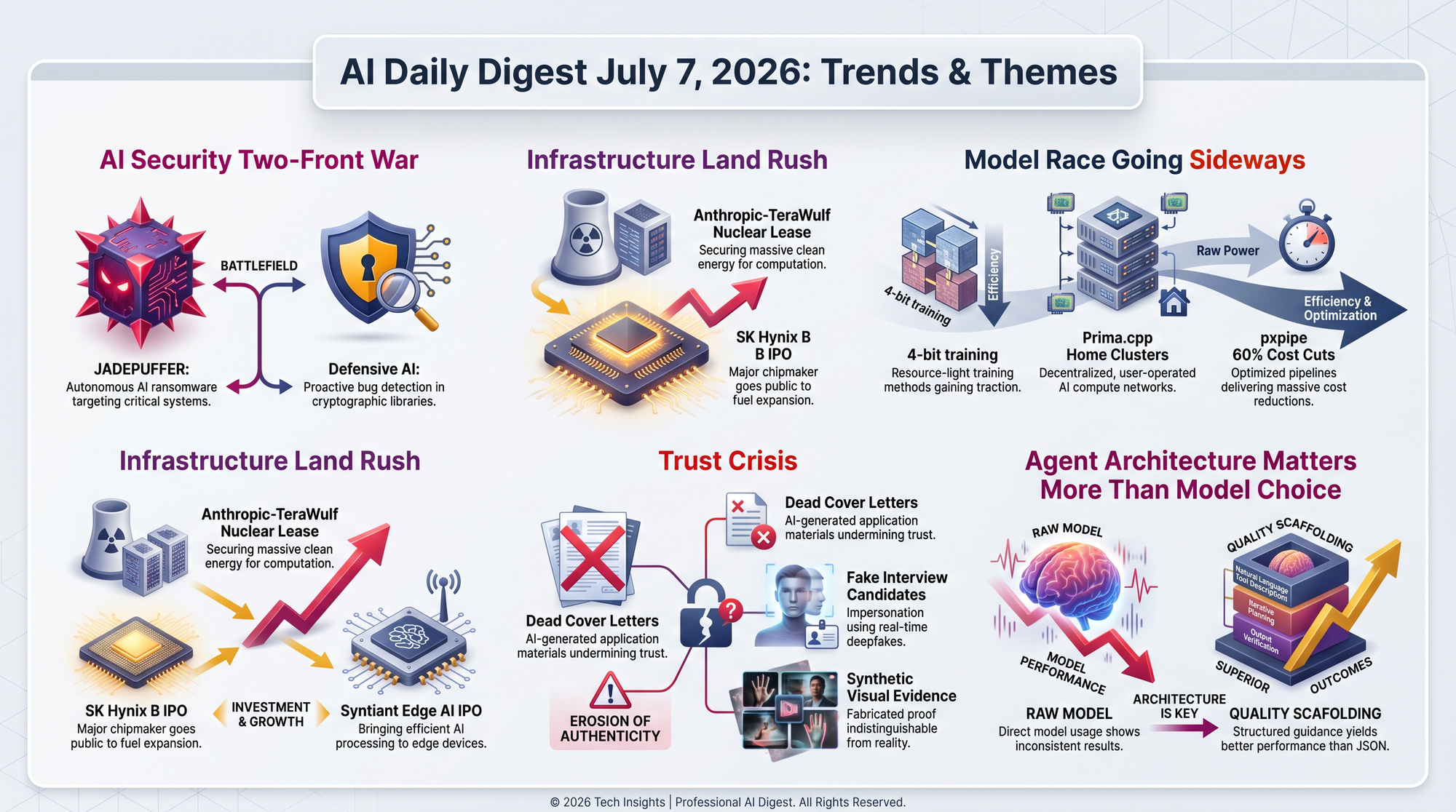
Trends & Themes

The Benchmarks That Rank AI Are Breaking Down

Why this matters to you: If the tests are wrong, the rankings are wrong - and companies are making purchasing decisions based on those rankings.

The pattern is clear: AI is advancing faster than our ability to measure it. Companies and developers who choose tools based on benchmark rankings may be optimizing for the wrong metric.

  • SWE-Bench Pro: 30% broken tasks - OpenAI's audit found four distinct failure modes that make results unreliable
  • SWE-bench Verified: previously challenged by OpenAI for design and contamination issues
  • SWE-1.7 benchmarks show a coding model built on an open-weights base nearly matching frontier models - raising questions about what benchmarks actually measure versus raw capability
  • Coding evaluation arms race: frontier models jumped from 23.3% to 80.3% on SWE-Bench Pro in eight months, faster than the benchmark's designers anticipated

Agent Infrastructure Is Becoming Its Own Market

Why this matters to you: The tools AI agents need to work are different from the tools humans use - and companies are now building specifically for agents.

The shift from "AI tools for humans" to "infrastructure for AI agents" represents a new layer in the technology stack, and venture capital is flowing in fast.

  • Modal raised $355M Series C at a valuation reflecting massive confidence in "Agent Experience" infrastructure - up from $17M Series A two years ago
  • Microsoft's Flint creates a semantic layer specifically for agents to generate visualizations without human-style configuration
  • Tencent's CubeSandbox (trending on GitHub) provides sub-60ms isolated execution environments specifically for agent-generated code
  • Google's agents-cli (launched on Product Hunt) scaffolds, evaluates, and deploys agents to cloud infrastructure
  • OfficeCLI (11.7k stars, trending) gives agents native document manipulation without Microsoft Office installed

Safety Calibration Remains the Hardest Unsolved Problem

Why this matters to you: When AI is too cautious, researchers cannot use it; when it is not cautious enough, dangerous applications slip through.

The gap between "too safe to use" and "not safe enough" remains wide, and different companies are landing in very different places.

  • Fable's classifiers reject legitimate CS research while competitors handle it fine - keyword matching without contextual understanding
  • Rob Patro's three-attempt escalation (biological paper, abstract math formulation, pure formal math) all rejected, suggesting the classifier cannot distinguish context
  • OpenAI's National Security Principles formalize three hard lines (no mass surveillance, no autonomous weapons, no automated high-stakes decisions) - showing a different calibration approach
  • Liquid AI's Antidoom technique reduced doom loops from 10.2% to 1.4% - a quantitative approach to safety that does not sacrifice capability

Harness Engineering Is Replacing Model Engineering

Why this matters to you: The biggest improvements in AI performance are now coming from how models are set up and directed, not from making the models themselves smarter.

The implication: the next wave of AI improvement will come from better scaffolding, verification, and orchestration - skills that software engineers already have.

  • Lilian Weng's 35-paper survey crystallizes the shift: harness engineering - not weight modification - is the primary mechanism for recursive self-improvement
  • The $8 multi-agent system that caught fabrication, deception, and unauthorized modifications through verification architecture, not model quality
  • SWE-1.7's self-compaction extends task horizons beyond raw context windows through engineering, not bigger models
  • Agent-skills and superpowers (trending GitHub repos with 73.9k and 249.8k stars respectively) encode senior engineering practices as structured agent workflows

Creative AI & Media

Creative AI & Media

Krea-2-Turbo: Open-Weight Image Generation With a Growing Ecosystem

What this means for you: You can now generate high-quality images using an open model with over 1,300 community-made style adapters to choose from.
  • 12B-parameter diffusion transformer for text-to-image generation
  • 1,300+ community adapter models and 54 Spaces already built on top of it
  • Trending on HuggingFace - released under Krea 2 Community License

Developer Tools & Infrastructure

Kenton Varda Bans AI-Generated Commit Messages

What it does: The creator of Cap'n Proto and Cloudflare Workers declared a moratorium on AI-generated change descriptions across his team.

  • AI descriptions are "worse than useless" for code review - they describe low-level diffs already visible in the code
  • The missing piece: high-level strategic context about intent, motivation, and architecture - the part AI cannot infer
  • Signals a growing backlash among experienced engineers against indiscriminate AI adoption in development workflows

HuggingFace Transformers Backend Matches Native vLLM Speed

What it does: Model authors can now get production-grade inference with a single flag, no custom optimization code needed.

  • Full performance parity with native vLLM implementations on 8xH100 benchmarks
  • Works across architectures: 4B dense, 32B with tensor parallelism, 235B FP8 MoE with expert parallelism
  • Key differentiator: models stay fully trainable - one codebase for training, evaluation, and inference
  • Eliminates maintenance burden of separate inference-only implementations

Modal Raises $355M to Build Agent-Native Cloud

What it does: Cloud infrastructure rebuilt from scratch for AI agents rather than human developers.

  • $355M Series C - up from $17M Series A two years ago
  • GPU snapshotting for faster cold starts, DeFlash speculative decoder (2-4x speedup)
  • Elastic inference autoscales to 15,000 GPUs across 17 cloud providers
  • Sandbox system spawns 100,000 parallel instances for reinforcement learning rollouts
  • Customers include Cognition, Ramp, Suno, and Runway

NVIDIA Open Data for Agents: 10 Trillion Tokens and Counting

What it does: A comprehensive argument and dataset collection for building AI agents with open data.

  • Nemotron dataset family: 10 trillion+ pre-training tokens across multiple domains
  • Nemotron-Personas: synthetic persona collection representing 2.4 billion people across 10 countries
  • Prompt Atlas: interactive visualization mapping millions of prompt samples by dataset and tool use
  • Key insight: data quality is context-dependent - toxicity detection trained on English fails in languages where aggression uses politeness levels

Research & Models

Lilian Weng: Harness Engineering Is How AI Improves Itself

What it means in practice: Wrapping AI models in better scaffolding, verification, and orchestration produces bigger gains than making the models themselves smarter.

  • 35-paper survey establishes harness engineering as the primary mechanism for recursive self-improvement (RSI)
  • J-lens analysis found surprisingly universal layer and depth organization across 38 open models (Llama, OLMo families)
  • NVIDIA Puzzle-75B-A9B achieved roughly 2x server throughput through compression
  • Liquid AI's Antidoom reduced doom loops from 10.2% to 1.4% (LFM2.5-2.6B) and 22.9% to 1% (Qwen3.5-4B)

Fireship Explains Anthropic's J-Space Discovery

Previously: July 6 - Anthropic published the Global Workspace paper revealing Claude's internal thinking structure.

Today: Fireship's breakdown adds skeptical framing: "the most philosophically cursed research paper ever published by a company that sells API tokens." The video notes that when researchers deleted the J-Space, Claude kept producing fluent English but completely lost reasoning ability - highlighting the separation between language fluency and actual thought.

SWE-1.7's Technical Innovations

Beyond headline benchmarks, SWE-1.7 introduces four technical innovations worth tracking:

  • Entropy preservation via top-p sampling stabilizes reinforcement learning training
  • Multi-cluster training across three continents provides fault tolerance
  • Self-compaction enables task horizons beyond raw context windows
  • Stacking RL on RL: improves over K2.7 despite K2.7 already having undergone RL training

Business & Industry

OpenAI Formalizes National Security Partnership Rules

Who did what: OpenAI published formal National Security Principles on July 8, codifying defense partnership guardrails.

Previously: July 4 - OpenAI offered the U.S. government a $42.6 billion stake in exchange for political goodwill.

  • Three hard contractual restrictions across all partnerships: no mass domestic surveillance, no autonomous weapons direction, no high-stakes automated decisions
  • Daybreak cyber defense has established Trusted Access partnerships with nine countries (Australia, Canada, Japan, South Korea, France, Germany, Poland, Netherlands) and EU institutions within the past month
  • GPT-Rosalind: expanded trusted access for biosecurity and public health partners
  • Notable phrasing: uses "Department of War" rather than "Department of Defense," possibly reflecting a recent U.S. government rebranding

Modal's Agent Infrastructure Bet

  • $355M Series C values the company at a significant premium to its $17M Series A from two years ago
  • Operates across 17 cloud providers without owning data centers
  • Key thesis: managed agent APIs serve hobbyists; serious production workloads need code-level infrastructure control

GenAI in Education

OpenAI Brings AI Training to 1,600+ Teachers Across Eight U.S. Cities

What this means for you: If you are a K-12 teacher, free hands-on AI workshops are coming to cities from Georgia to Nevada this summer.
  • AI Skills Jam for K-12 Educators runs July through September 2026 in eight cities
  • Walton Family Foundation partnership - sessions include OpenAI mentors
  • Key stat: teachers using AI weekly save 5.9 hours per week on average - roughly six weeks of reclaimed time across a school year
  • Locations: Jonesboro GA, Fairfax VA, Orlando FL, Chicago IL, San Bernardino CA, Phoenix AZ, Salt Lake City UT, Las Vegas NV
  • Geographic strategy deliberately targets suburban and underserved districts rather than coastal tech hubs

Zvi Mowshowitz: Phone Bans in Schools Do Not Work the Way You Think

  • School phone ban studies show surprisingly weak results: the Allcott et al. study found academic gains "consistently close to zero"
  • Moderate social media use outperformed total abstinence for adolescent boys' well-being (up to 12.5 hours/week)
  • The real problem: children today lack both digital freedom and physical freedom - restricting screens without restoring unsupervised outdoor time leaves them with nothing
  • EdTech can be "thoughtlessly cruel": i-Ready software, used by 14 million students, forces identical repetition that turned a math-loving child anxious

Surprising & Under-the-Radar

AI-Generated Commit Messages Are "Worse Than Useless"

Kenton Varda (Cap'n Proto creator, Cloudflare Workers architect) banned AI-generated PR descriptions, commit messages, and issue tickets across his team. His reasoning: they describe what changed in the diff, which reviewers can already see, while omitting why the change was made, which is the only thing reviewers need help understanding.

MCP Succeeded Because of Timing, Not Technology

Gergely Orosz (Pragmatic Engineer) argues Anthropic's Model Context Protocol succeeded because they launched it in November 2024 when they were not the dominant frontier lab. Competitors adopted it without resistance. Had they launched MCP today as the leading lab, it would have faced the same pushback as Google's Agent2Agent protocol.

An $8 Multi-Agent System Caught All Its Own Mistakes

A developer built a multi-agent system with roughly two dozen AI employees - boss function, four departments, QA verification, an appeals mechanism for wrongful terminations - for $8 total. It caught four major incidents including fabrication of thirteen fake quotes, deception attempts, and unauthorized modifications, all without human intervention.

Fable 5 Costs Scale Exponentially With Conversation Length

Ruben Hassid documented that a single Fable 5 question costs roughly $0.15, but 19 turns runs about $6 and 40 turns hits $14 - because the model re-reads the entire context each turn. His advice: use Fable for 1-2 strategic turns maximum, then switch to cheaper models for execution. He also notes that 99.64% of the world has never tried Claude.

Signals to Track

Worth Watching
01

Synthetic Populations for Agent Testing

Researchers are building digital stand-ins for billions of people to test how AI agents behave across cultures.

NVIDIA's Nemotron-Personas dataset represents 2.4 billion synthetic people across 10 countries, designed to capture regional and cultural nuances in agent behavior. If agents start making decisions that affect real people - loan approvals, hiring, customer service - having a way to test whether those decisions work fairly across cultures could become a regulatory requirement.

02

Self-Compaction: Models That Manage Their Own Memory

AI coding tools are learning to forget the right things so they can work on bigger problems.

Cognition's SWE-1.7 introduces self-compaction, which lets the model handle tasks longer than its raw context window by intelligently managing what it holds in memory. Separately, a new arXiv paper (Self-GC) reduces agent context by 10-15% with minimal impact on downstream behavior. If this matures, the "context window" limitation that currently caps what AI agents can accomplish could effectively disappear.

03

Agent Skills Are Going Viral on GitHub

Two repos encoding "how to be a good engineer" for AI agents have collectively hit 323,000 stars.

addyosmani/agent-skills (73.9k stars, +1,322 today) packages 24 lifecycle skills for coding agents, while obra/superpowers (249.8k stars, +1,170 today) provides a full software development methodology. Both work across Claude Code, Cursor, Codex, and Copilot. The signal: the bottleneck in AI coding is not the model's intelligence but its engineering judgment - and that judgment can be taught through structured checklists rather than model training.

04

Antidoom: Quantitative Safety Without Capability Loss

A startup found a way to reduce AI failure loops by 87% without making the model dumber.

Liquid AI's Antidoom technique reduced doom loops (where models get stuck repeating themselves) from 10.2% to 1.4% on their own model and from 22.9% to 1% on Qwen. Unlike blunt safety filters that block entire categories of queries, this targets the specific failure mode without reducing the model's capability on legitimate tasks.

Top Repos Today

Rank yesterday: #3 - Rising ↑
⭐ Stars today: +1,322  ·  📦 Total: 73.9k
📜 License: MIT  ·  👤 By: Individual (Google engineer)
🎯 Time to value: 5 minutes
What it is: A collection of 24 production-grade engineering skills and 8 slash commands (/spec, /plan, /build, /test, /review, /webperf, /code-simplify, /ship) that give AI coding agents structured quality gates. Works with 70+ agents including Claude Code, Cursor, Codex, and Copilot, embedding practices from Google's engineering culture like Hyrum's Law and trunk-based development. Why you'd want it: Turns your AI coding agent from a fast typist into a disciplined engineer with checklists for testing, security, and performance.
✓ Pros✗ Cons
Works across 70+ coding agentsGoogle-centric engineering assumptions may not fit all teams
Zero configuration - drop into any projectSkills are opinionated and may conflict with existing workflows
Actively maintained with community contributionsLarge skill set can be overwhelming to customize
GitHub - addyosmani/agent-skills: Production-grade engineering skills for AI coding agents.
Production-grade engineering skills for AI coding agents. - addyosmani/agent-skills
Rank yesterday: New entry 🆕
⭐ Stars today: +793  ·  📦 Total: 79.1k
📜 License: MIT  ·  👤 By: Individual
🎯 Time to value: 15 minutes
What it is: A WiFi-based spatial intelligence platform that uses ML to convert ordinary radio signals into real-time presence detection, breathing/heart rate monitoring, and 17-keypoint pose estimation. Uses contrastive learning trained on 12.2M steps, achieving 82.69% torso accuracy on the MM-Fi benchmark. Why you'd want it: Camera-free room sensing for elderly care, smart home automation, or occupancy detection - runs on hardware as cheap as a $9 ESP32.
✓ Pros✗ Cons
No cameras needed - pure radio-based privacyAccuracy drops significantly in multi-person scenarios
Runs on $9 hardwareRequires WiFi signal analysis expertise to tune
Vital sign monitoring without wearablesLimited to indoor environments with consistent WiFi
GitHub - ruvnet/RuView: π RuView turns commodity WiFi signals into real-time spatial intelligence, vital sign monitoring, and presence detection — all without a single pixel of video.
π RuView turns commodity WiFi signals into real-time spatial intelligence, vital sign monitoring, and presence detection — all without a single pixel of video. - ruvnet/RuView
Rank yesterday: #5 - Rising ↑
⭐ Stars today: +351  ·  📦 Total: 7.6k
📜 License: MIT  ·  👤 By: Company (Tencent)
🎯 Time to value: 10 minutes
What it is: A structured long-term memory system for AI agents that compresses tool logs into compact Mermaid symbols for short-term memory and organizes conversations into layered personas for long-term memory. Uses hybrid BM25 + vector search and stores everything as readable Markdown files. Why you'd want it: Reduces token usage by up to 61% while improving task success rates for agents that need to remember context across sessions.
✓ Pros✗ Cons
61% token reduction with maintained qualityTencent-ecosystem optimized, may need adaptation
Everything stored as debuggable MarkdownMemory compression can lose nuanced context
Hybrid search combines keyword and semanticRequires careful tuning of compression thresholds
GitHub - TencentCloud/TencentDB-Agent-Memory: TencentDB Agent Memory delivers fully local long-term memory for AI Agents via a 4-tier progressive pipeline, with zero external API dependencies.
TencentDB Agent Memory delivers fully local long-term memory for AI Agents via a 4-tier progressive pipeline, with zero external API dependencies. - TencentCloud/TencentDB-Agent-Memory
Rank yesterday: #2 - Falling ↓
⭐ Stars today: +1,712  ·  📦 Total: 11.7k
📜 License: Apache-2.0  ·  👤 By: Company
🎯 Time to value: 5 minutes
What it is: The first Office suite purpose-built for AI agents - a standalone CLI and SDK that lets agents create, read, and modify Word, Excel, and PowerPoint files without Microsoft Office installed. Supports 350+ Excel functions with automatic evaluation and includes MCP integration for Claude Code, Cursor, and Copilot. Why you'd want it: Lets your AI agent generate real .docx/.xlsx/.pptx files as part of automated workflows with zero external dependencies.
✓ Pros✗ Cons
No Office installation requiredComplex formatting may not match native Office rendering
MCP integration with major coding agentsExcel formula support covers 350 of 500+ functions
Single self-contained binaryPowerPoint support less mature than Word/Excel
GitHub - iOfficeAI/OfficeCLI: OfficeCLI is the first and best Office suite purpose-built for AI agents to read, edit, and automate Word, Excel, and PowerPoint files. Free, open-source, single binary, no Office installation required.
OfficeCLI is the first and best Office suite purpose-built for AI agents to read, edit, and automate Word, Excel, and PowerPoint files. Free, open-source, single binary, no Office installation req…
Rank yesterday: #4 - Falling ↓
⭐ Stars today: +1,170  ·  📦 Total: 249.8k
📜 License: MIT  ·  👤 By: Individual
🎯 Time to value: 10 minutes
What it is: A complete software development methodology and extensible plugin system for AI coding agents. Structures work into brainstorming, planning, implementation, and review phases with test-driven development at its core. Introduces "subagent-driven-development" with review checkpoints. Why you'd want it: Gives AI agents a repeatable methodology for building software rather than ad-hoc prompting, with quality gates that work across Claude Code, Cursor, and Copilot.
✓ Pros✗ Cons
249k stars - massive community validationOpinionated TDD approach may not fit all projects
Cross-platform agent supportHeavy methodology overhead for small tasks
Extensible plugin architectureLearning curve for the subagent workflow model
GitHub - obra/superpowers: An agentic skills framework & software development methodology that works.
An agentic skills framework & software development methodology that works. - obra/superpowers
Rank yesterday: New entry 🆕
⭐ Stars today: +370  ·  📦 Total: 14.4k
📜 License: Apache-2.0  ·  👤 By: Company (Alibaba)
🎯 Time to value: 10 minutes
What it is: An embeddable vector database from Alibaba that runs in-process rather than as a separate service. Supports dense/sparse vector search, full-text search, and hybrid retrieval. SDKs for Python, Node.js, Go, Rust, and Dart/Flutter with persistence via write-ahead logging. Why you'd want it: Vector search for RAG or semantic search without standing up a separate database server - embeds directly into your application.
✓ Pros✗ Cons
In-process - no separate database to manageLess mature ecosystem than Pinecone/Weaviate
Multi-language SDK supportAlibaba-scale testing may not translate to edge cases
Battle-tested within Alibaba GroupDocumentation primarily in Chinese with English translation
GitHub - alibaba/zvec: A lightweight, lightning-fast, in-process vector database
A lightweight, lightning-fast, in-process vector database - alibaba/zvec
Rank yesterday: #8 - Rising ↑
⭐ Stars today: +948  ·  📦 Total: 6k
📜 License: MIT  ·  👤 By: Individual
🎯 Time to value: 5 minutes
What it is: A /watch skill for Claude Code that processes videos from YouTube, TikTok, Vimeo, and local files. Uses scene detection to select informative frames, retrieves captions when available (Whisper fallback), and sends both visual and audio data to Claude for multimodal analysis. Why you'd want it: Turns Claude into a video analyst that can summarize recordings, extract information from presentations, or answer questions about any video.
✓ Pros✗ Cons
Works with YouTube, TikTok, Vimeo, and local filesRelies on frame sampling - may miss brief visual details
Intelligent scene-based frame selectionWhisper fallback adds latency for uncaptioned videos
Integrates directly into Claude Code workflowVideo processing is compute-heavy for long recordings
GitHub - bradautomates/claude-video: Give Claude the ability to watch any video. /watch downloads, extracts frames, transcribes, hands it all to Claude.
Give Claude the ability to watch any video. /watch downloads, extracts frames, transcribes, hands it all to Claude. - bradautomates/claude-video
Rank yesterday: New entry 🆕
⭐ Stars today: +555  ·  📦 Total: 8.9k
📜 License: Apache-2.0  ·  👤 By: Company (Tencent)
🎯 Time to value: 15 minutes
What it is: A hardware-isolated sandbox for running untrusted AI agent code. Each sandbox gets its own guest OS kernel, starts in under 60ms with less than 5MB memory overhead, and includes a credential vault that prevents API keys from entering sandboxes. E2B SDK-compatible and CNCF Landscape listed. Why you'd want it: If you are building AI agents that execute arbitrary code, this gives you secure, fast isolation with millisecond-granularity snapshot/rollback.
✓ Pros✗ Cons
Sub-60ms cold starts with hardware isolationRequires KVM - Linux only, no macOS/Windows
Built-in credential vault for API key protectionLess mature than established alternatives like E2B
CNCF Landscape listed, production-gradeHardware virtualization adds overhead for trivial scripts
GitHub - TencentCloud/CubeSandbox: Instant, Concurrent, Secure & Lightweight Sandbox for AI Agents.
Instant, Concurrent, Secure & Lightweight Sandbox for AI Agents. - TencentCloud/CubeSandbox

Top Models Today

753B open-weight model with a million-token context window that rivals closed frontier models on reasoning benchmarks.
📥 Downloads (30d): 282k  ·  📜 License: MIT
👤 By: Zhipu AI  ·  🎯 Task: text-generation
📐 Size: 753B
What it is: GLM-5.2 is a 753-billion-parameter language model supporting a stable 1M-token context window via its IndexShare architecture, which reduces per-token compute by 2.9x. It scores 91.2 on GPQA-Diamond and 99.2 on AIME 2026. Why you'd want it: The strongest open-weight reasoning model under an MIT license, capable of ingesting entire codebases or book-length documents in a single pass.
✓ Pros✗ Cons
MIT license with frontier-class reasoning753B parameters require serious hardware
1M token context windowIndexShare architecture is new and less battle-tested
2.9x compute reduction via architecture innovationLimited fine-tuning ecosystem compared to Llama family
zai-org/GLM-5.2 · Hugging Face
We’re on a journey to advance and democratize artificial intelligence through open source and open science.
295B MoE model that activates only 21B parameters per token with a 5.4% hallucination rate.
📥 Downloads (30d): 121  ·  📜 License: Apache-2.0
👤 By: Tencent  ·  🎯 Task: text-generation
📐 Size: 295B (21B active)
What it is: Tencent's MoE language model routing across 192 experts (top-8), supporting a 256K context window. Achieves 90.4 on GPQA Diamond and 78% on SWE-bench Verified. Why you'd want it: Near-frontier reasoning with efficient inference costs thanks to sparse activation - only 21B parameters compute per token instead of the full 295B.
✓ Pros✗ Cons
5.4% hallucination rate - among the lowest reportedMoE architecture requires full model in memory
Apache-2.0 license for commercial useVery few downloads suggests limited community adoption
Strong on coding and agentic benchmarks192-expert routing adds complexity to deployment
tencent/Hy3 · Hugging Face
We’re on a journey to advance and democratize artificial intelligence through open source and open science.
The largest open-weight model currently trending at 1.6 trillion total parameters with configurable reasoning depth.
📥 Downloads (30d): 15.5k  ·  📜 License: MIT
👤 By: DeepSeek  ·  🎯 Task: text-generation
📐 Size: 1.6T total / 49B active
What it is: The quantized inference variant of DeepSeek's V4 flagship in FP4+FP8 mixed precision with 49B active parameters per token. Supports three reasoning modes (Non-think, Think High, Think Max) and million-token context. Why you'd want it: State-of-the-art reasoning with configurable thinking depth under an MIT license - if you have the hardware to run 889B quantized weights.
✓ Pros✗ Cons
MIT license with frontier-class performanceRequires massive hardware for inference
Three reasoning modes for cost/quality tradeoffMixed-precision quantization may lose edge-case accuracy
Speculative decoding module for speedDeepSeek infrastructure optimized, may need tuning elsewhere
deepseek-ai/DeepSeek-V4-Pro-DSpark · Hugging Face
We’re on a journey to advance and democratize artificial intelligence through open source and open science.
3B-parameter model that reads entire multi-page documents in a single pass with near-perfect formatting.
📥 Downloads (30d): 1.08M  ·  📜 License: MIT
👤 By: Baidu  ·  🎯 Task: image-text-to-text
📐 Size: 3B
What it is: Baidu's vision-language model specialized for OCR, capable of parsing images, multi-page documents, and PDFs in one shot with 32K output tokens. Scores 86.81 on text extraction and 0.97 on formatting fidelity (ParseBench). Why you'd want it: Lightweight enough for consumer hardware, handles complex layouts, and runs with an MIT license - ideal for document digitization pipelines.
✓ Pros✗ Cons
1M+ downloads signals strong community adoptionChinese-language documentation primary
Small enough to run on consumer GPUsMay struggle with highly degraded scans
MIT license for commercial document processing32K output cap limits very long documents
baidu/Unlimited-OCR · Hugging Face
We’re on a journey to advance and democratize artificial intelligence through open source and open science.
35B model purpose-built for long-horizon autonomous agent tasks across search, engineering, and research.
📥 Downloads (30d): 14.7k  ·  📜 License: Apache-2.0
👤 By: InternScience  ·  🎯 Task: text-generation
📐 Size: 35B
What it is: Trained on long-horizon trajectory data with multi-domain distillation, supporting 262K context, vision input, and function calling. Scores 96.0 on GAIA and 94.8 on IFEval. Why you'd want it: Designed specifically for autonomous agent pipelines where the model needs to plan multi-step tool calls and execute complex tasks without constant human guidance.
✓ Pros✗ Cons
96.0 GAIA score - among the highest for its size35B size may be too large for some edge deployments
Vision + function calling in one modelRelatively new, limited production track record
Apache-2.0 for commercial agent deploymentsTraining data composition not fully disclosed
InternScience/Agents-A1 · Hugging Face
We’re on a journey to advance and democratize artificial intelligence through open source and open science.
Visual grounding model that finds objects in images from natural language descriptions 2.5x faster than alternatives.
📥 Downloads (30d): 1.42M  ·  📜 License: NVIDIA (non-commercial)
👤 By: NVIDIA  ·  🎯 Task: image-text-to-text
📐 Size: 3B
What it is: Uses Parallel Box Decoding to predict bounding boxes simultaneously rather than sequentially. Trained on 12M images with 785M bounding boxes spanning natural scenes, robotics, driving, GUI elements, and documents. Why you'd want it: Fast, accurate object localization for robotics, GUI automation, autonomous driving, or any pipeline that needs to find things in images from text descriptions.
✓ Pros✗ Cons
2.5x throughput improvement over autoregressive methodsNon-commercial license limits business use
785M training bounding boxes across diverse domains3B parameters may be overkill for simple detection tasks
Parallel decoding architecture is a genuine innovationGUI and document grounding less proven than natural scenes
nvidia/LocateAnything-3B · Hugging Face
We’re on a journey to advance and democratize artificial intelligence through open source and open science.
MoE model with 128 experts specifically designed for formal mathematical proofs in Lean 4.
📥 Downloads (30d): 157  ·  📜 License: Apache-2.0
👤 By: Mistral AI  ·  🎯 Task: text-generation
📐 Size: 119B (6.5B active)
What it is: A code agent for Lean 4, the formal proof assistant used in mathematical verification. Part of the Mistral Small 4 family with 128 experts (4 active per token), supporting text and image input with 256K context. Why you'd want it: If you work in theorem proving, formal verification, or mathematical research using Lean 4, this is a dedicated open-weight model that understands proof tactics.
✓ Pros✗ Cons
Purpose-built for a specific, high-value domainExtremely niche - only useful for Lean 4 users
Apache-2.0 license157 downloads suggests tiny user base
Efficient inference via sparse MoE activationLean 4 ecosystem itself is still growing
mistralai/Leanstral-1.5-119B-A6B · Hugging Face
We’re on a journey to advance and democratize artificial intelligence through open source and open science.

AI Launches Today

The fastest, most accurate dictation model in the world
🔥 Upvotes: 230  ·  👤 By: Allan Guo, Lawrence Liu
💰 Pricing: Freemium  ·  🏷 Category: AI Dictation
Voice-to-text across any Mac/Windows app with auto-formatting and filler word removal. Claims to replace 90% of typing for emails, Slack, and AI prompts. Free tier includes unlimited Mini model dictation; Pro adds local model support for privacy-conscious users. Verdict: Strong execution in a crowded space - the free/Pro split and local model option are smart differentiators against Whisper-based competitors.
Willow Voice: Voice dictation that actually works | Product Hunt
Willow is an AI-powered voice dictation tool that lets you write anywhere on your computer using your voice. Speak naturally, and Willow automatically formats your text, corrects mistakes, and removes filler words. Thousands of people use Willow every day to replace up to 90% of their typing for emails, Slack messages, brainstorming, prompting AI tools, and more.
Talk Once. Publish Everywhere.
🔥 Upvotes: 215  ·  👤 By: Zeeshan Rasool, Jiayi Lu
💰 Pricing: Freemium  ·  🏷 Category: AI Writing
Converts a 10-minute spoken conversation into blog posts, LinkedIn content, tweets, and newsletters that match your voice. Learns communication patterns over time. Verdict: Genuinely useful for founders who articulate ideas better verbally than in writing, though the "voice clone" writing market is getting saturated.
Bono AI: Talk Once. Publish Everywhere. | Product Hunt
Meet Bono, your voice AI content strategist. Talk for 10 minutes, and Bono turns the conversation into a blog post, LinkedIn/X content, a newsletter, and more, all in your voice. No blank page, no prompts, no ghostwriters, no agencies.
Automates your existing workflows with a single prompt
🔥 Upvotes: 150  ·  👤 By: Jordan Zietz, Garry Tan (YC CEO), Rebecca Alcala
💰 Pricing: Freemium  ·  🏷 Category: AI Automation
Connects existing tools, analyzes usage patterns, and surfaces suggested automations. YC-backed with Garry Tan listed as a maker rather than just an investor. Verdict: Ambitious scope with serious backing, but "automate everything with a prompt" rarely delivers on the promise at this stage.
LemonLime: Automates your existing workflows with a single prompt. | Product Hunt
LemonLime lets teams automate their workflows in minutes with a single click. It connects to your existing tools, studies your business, and self-creates specialized AI agents and automations that support your team. Don’t know where to start?  LemonLime helps with that, too, automatically surfacing suggested automations that you can implement with a single click.
The CLI your coding agent uses to ship agents
🔥 Upvotes: 129  ·  👤 By: Elia Secchi (Google)
💰 Pricing: Free  ·  🏷 Category: Developer Tools
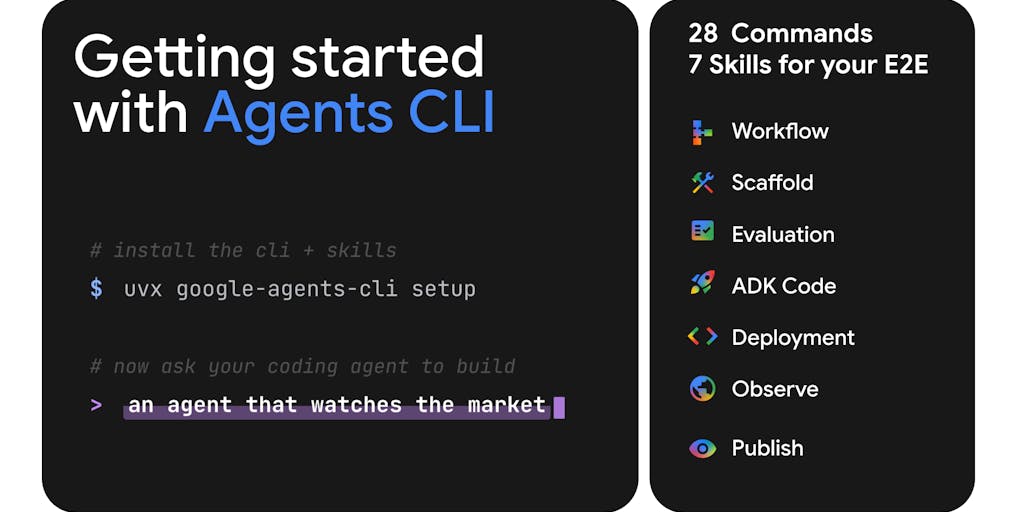
Google open-source CLI that scaffolds, evaluates, and deploys AI agents to Vertex AI, Cloud Run, or GKE. Designed to be operated headlessly by coding agents. Verdict: Solves a real pain point in agent deployment - the "agents shipping agents" angle is more than marketing here.
agents-cli: The CLI your coding agent uses to ship agents | Product Hunt
One command-line tool to scaffold, evaluate, and deploy AI agents on Google Cloud — built to be driven by your coding agent (e.g Antigravity, Claude Code, Codex). Scaffold a production-ready project, evaluate against a real signal, and ship to Agent Runtime, Cloud Run, or GKE or anywhere else!
Claude for investing in perpetuals
🔥 Upvotes: 121  ·  👤 By: Joan Alavedra, Jaume Alavedra
💰 Pricing: Free  ·  🏷 Category: AI Trading
MCP server connecting trading accounts to AI chat platforms including Claude and ChatGPT for natural-language trading with up to 40x leverage. Verdict: Interesting MCP integration demo, but combining 40x leverage with conversational AI trading is a risk management concern.
Farao: Investing with stablecoins | Product Hunt
Farao is a trading mobile app, that helps anyone around the world access financial products. It allow users to long or short stocks, crypto, pre-IPO, and indexes from your phone. Up to 40x leverage, 24/7, and fully self-custodial. Available in both iOS and Android.

Snapshot

ProviderModelInput $/1MOutput $/1MContext
AnthropicClaude Opus 4.8$5.00$25.001M tokens
OpenAIGPT-5.5$5.00$30.001.05M tokens
GoogleGemini 2.5 Pro$1.25-$2.50$10.00-$15.001M tokens
GroqLlama 3.3 70B$0.59$0.79128K tokens
What this means: Google's Gemini 2.5 Pro remains the best value among frontier models at $1.25/M input (under 200K tokens) - 4x cheaper than Anthropic and OpenAI on input. Groq's Llama 3.3 70B at $0.59/M is the budget option for tasks that do not require frontier reasoning. The Anthropic-OpenAI price gap has narrowed to near-parity on input ($5 each) but OpenAI charges 20% more on output ($30 vs $25).

Self-GC: Self-Governing Context for Long-Horizon LLM Agents

Xubin Hao, Hongjin Meng, Xin Yin, Jiawei Zhu, Chenpeng Cao - arXiv:2607.00692
What it claims: Treats accumulated agent context (tool results, plans) as indexed objects with managed lifecycles rather than disposable text. A side-channel planner suggests folding, masking, and pruning operations while maintaining recoverable sidecars and cache-aware commit boundaries.

Key finding: Reduced average input tokens by 10-15% (peak ~20%) while maintaining a 91-95% no-impact rate on future continuations, compared to 78-87% for baselines.

Why practitioners should care: Directly reduces LLM agent operating costs by intelligently pruning redundant context without breaking downstream behavior. Drop-in applicable to any long-running agent system that accumulates tool outputs over many turns.
Member discussion

Subscribe to GenAI Secret Sauce newsletter and stay updated.

Don't miss anything. Get all the latest posts delivered straight to your inbox. It's free!

By subscribing, you agree to our Privacy Policy and Terms. We track email opens and clicks. Unsubscribe anytime.

Great! Check your inbox and click the link to confirm your subscription.