GenAI Secret Sauce Daily Digest - 2026-05-17

An AI Model Cracked Apple's M5 Chip Security in Five Days · Claude Reportedly Overtakes ChatGPT in Business Revenue for the First Time · Publicis Buys LiveRamp for $2.5 Billion in Agentic AI Data Play
GenAI Secret Sauce Daily Digest - 2026-05-17

Watch today's digest as a video summary (generated by NotebookLM)

Statistically Speaking

25, Dion Blazakis joined April 27, working exploit
An AI Model Cracked Apple's M5 Chip Security in Five Days
Top Story
$30 billion annualized revenue for Anthropic as of
Claude Reportedly Overtakes ChatGPT in Business Revenue for
25 billion annualized at the same time
Claude Reportedly Overtakes ChatGPT in Business Revenue for
$1 million annually on Claude, a number that
Claude Reportedly Overtakes ChatGPT in Business Revenue for
8 of the Fortune 10 are now Claude
Claude Reportedly Overtakes ChatGPT in Business Revenue for
$30 billion annualized revenue
Claude Reportedly Overtakes ChatGPT in Business Revenue for

One Thing to Tell Your Friends

A three-person security team used an AI model to crack Apple's newest chip defense in five days - a defense Apple spent five years and billions of dollars building.

TL;DR

Trends
AI Is Becoming a Double, The Real Cost of Running AI Locally Challenges Assumptions, and "Context Engineering" Emerges as the New AI Skill.
Dev Tools
GitHub
Leading repos: tinyhumansai/openhuman (+1,694), HKUDS/CLI (+306), and Anil-matcha/Open-Generative (+704).
HuggingFace
Leading models: deepseek-ai/DeepSeek-V4 (3.14M), Qwen/Qwen3.6-35B (5.48M), and google/gemma-4-31B (9.86M).
Product Hunt
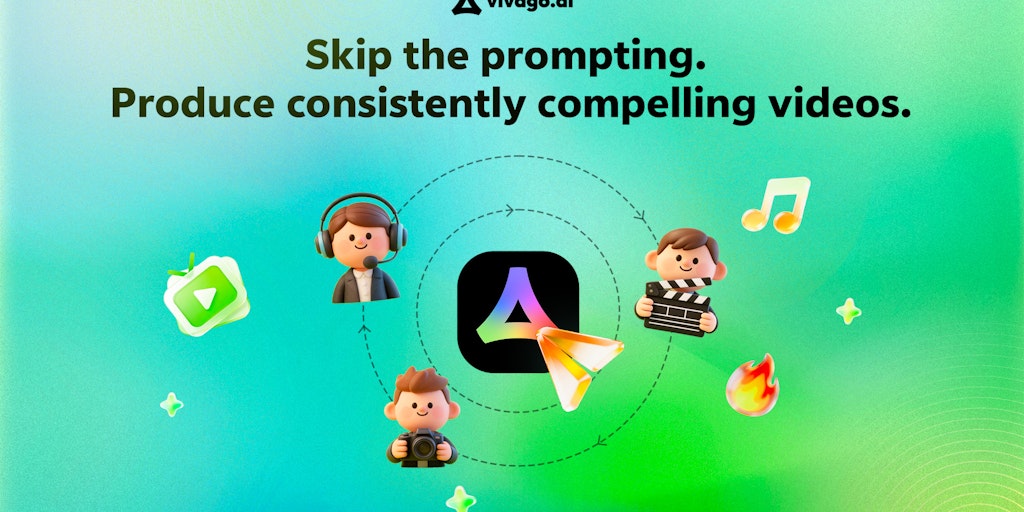
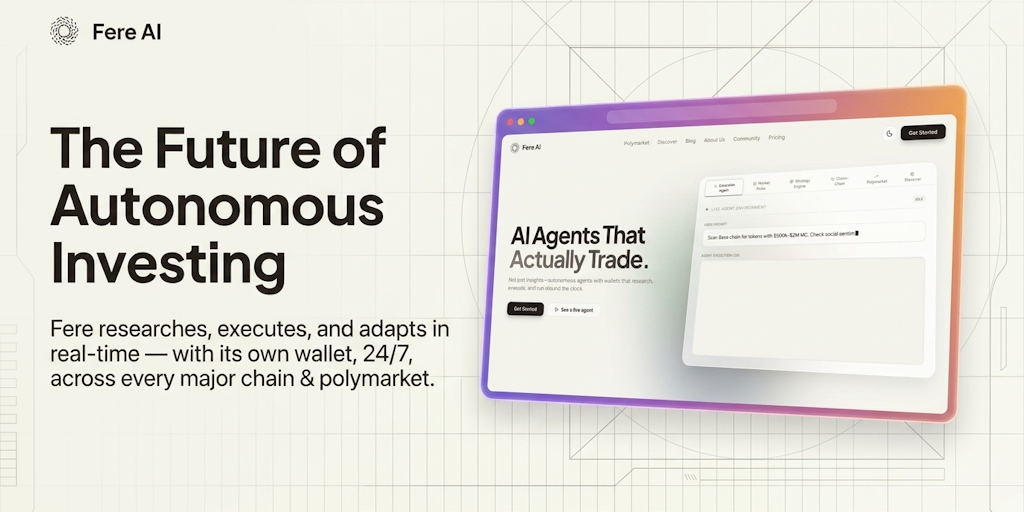
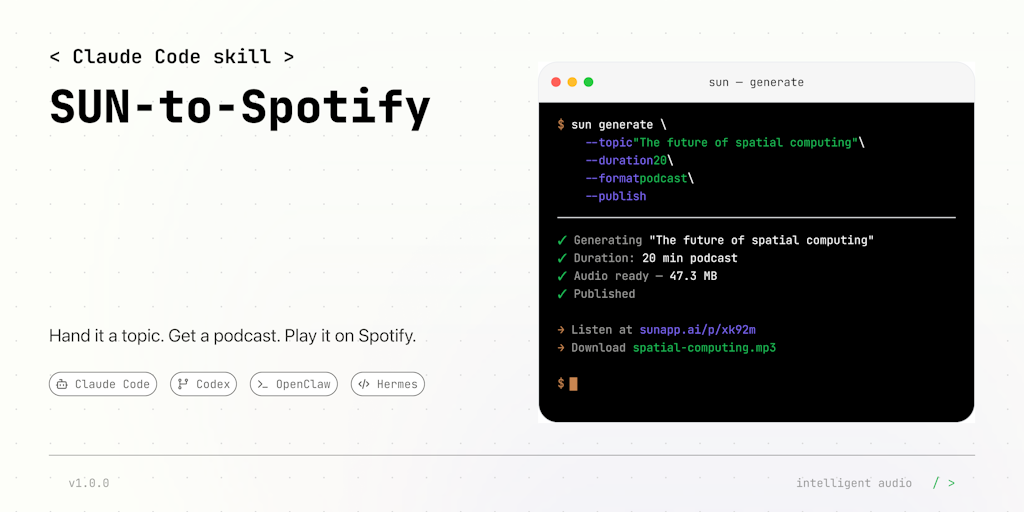
Top launches: Vivago Video Agent (299), Fere AI (298), and SUN-to (291).
API Pricing
What this means: The frontier tier ($5 input) is tightly clustered between Anthropic and OpenAI.
arXiv
Agentic Systems as Boosting Weak Reasoning Models — A single GPT-5.4 Nano solved 67.0% of SWE-bench Verified, but the same nano model with critic-comparator committee search achieved 76.4% with 8 proposals - matching standalone Gemini 3 Pro and Claude Opus 4.5 Thinking.

Hot off the Presses

01

An AI Model Cracked Apple's M5 Chip Security in Five Days

What this means for you: The balance between AI-powered attackers and defenders just shifted. Security vulnerabilities in the devices you use every day may be found faster than manufacturers can patch them.

Previously: May 12 - Curl maintainer confirmed Anthropic's Mythos found a real vulnerability in the curl codebase.

Today: Security firm Calif published the first public kernel-level exploit for macOS on Apple's M5 chip, built with help from Anthropic's restricted Mythos Preview model. The exploit bypasses Memory Integrity Enforcement (MIE) - Apple's hardware-level defense against memory corruption attacks.

Mythos Preview remains restricted to vetted security organizations. The Reddit discussion was notably skeptical, with commenters questioning why such a powerful tool is not public.

  • Five-day timeline - Bruce Dang found the bugs April 25, Dion Blazakis joined April 27, working exploit completed May 1
  • Apple invested roughly five years and billions building MIE specifically to prevent this class of attack
  • Mythos generalizes - once it learned how to attack one vulnerability type, it could find similar weaknesses on entirely new hardware targets
  • Full details withheld until Apple ships a patch. The technical report was laser-printed and hand-delivered at Apple Park.
02

Claude Reportedly Overtakes ChatGPT in Business Revenue for the First Time

What this means for you: The AI market is no longer a one-horse race. Competition between Claude and ChatGPT means better tools and lower prices for everyone.

A Tech Times report claims Anthropic's Claude has passed ChatGPT across multiple business metrics. The numbers are striking but contested.

Community pushback was immediate. ChatGPT still dominates in daily active users, ranking above Reddit and X in global web traffic. One commenter questioned whether the revenue figures hold up, noting Anthropic had reported only $5 billion in lifetime revenue as of March. The gap between enterprise revenue leadership and consumer usage leadership tells a more nuanced story than the headlines suggest.

“More U.S. businesses paid for Claude than for ChatGPT in April 2026.”
  • $30 billion annualized revenue for Anthropic as of early April 2026, up from roughly $9 billion at end of 2025
  • OpenAI sits at $24-25 billion annualized at the same time
  • 1,000+ enterprise customers now spend over $1 million annually on Claude, a number that doubled in under two months
  • 8 of the Fortune 10 are now Claude customers
$30
billion annualized revenue for Anthropic
8
of the Fortune 10 are
03

Publicis Buys LiveRamp for $2.5 Billion in Agentic AI Data Play

What this means for you: The companies behind the ads you see are now racing to build AI agents that know who you are across every platform. Data about your identity just became a $2.5 billion asset class.

Publicis Groupe (one of the world's largest advertising companies) announced an all-cash acquisition of LiveRamp, a company that specializes in connecting customer data across different platforms.

The acquisition combines LiveRamp's data "clean rooms" (secure environments where companies can match customer data without exposing it directly) with Epsilon's identity graph. Competitors Omnicom and WPP have already made similar moves with Acxiom and InfoSum.

  • $38.50 per share, a 30% premium over the May 15 closing price
  • LiveRamp's numbers - $813 million revenue (up 9% year-over-year), 846 direct subscription customers, 133 spending over $1 million annually
  • The AI angle - Publicis cites the "AI paradox": 93% of companies lack adequate data for effective AI, investing millions but getting thousands in return
  • Deal is accretive to earnings from year one with Publicis raising its 2027-2028 guidance on revenue and earnings growth
04

85 GPU-Hours Reveal Which AI "Uncensoring" Methods Actually Work

What this means for you: Removing safety filters from AI models is becoming a science, not a hack. Understanding which methods preserve intelligence matters if you use customized AI tools for legitimate research or creative work.

A developer spent 85 hours of GPU time on an RTX 5090 rigorously comparing five different "abliteration" techniques (methods that remove safety refusals) on Alibaba's Qwen3.6-27B model. This is the most systematic public comparison to date.

“KL divergence of 0.0037 - Heretic is the most surgically precise abliteration method, barely touching the model's core behavior while removing all safety filters.”
  • All five methods successfully removed safety filters, pushing attack success rates from 25.8% to 88-99%
  • Two winners emerged - Heretic and Huihui preserve the model's original capabilities within 1% while completely removing refusals
  • The surgical precision varies dramatically - Heretic modified only 14.1% of the model's internal weights, while HauhauCS modified 66.4%
  • A key gotcha - apparent improvements in math scores were misleading. When excluding invalid responses, all models scored around 96% on math benchmarks
05

Anthropic Publishes the Field Guide for "Context Engineering"

What this means for you: If you use AI tools for work, the quality of your results depends less on how smart the AI is and more on what information you feed it. Anthropic just published the manual for doing that well.

Anthropic released a new engineering guide coining "context engineering" as a discipline - the practice of curating the smallest possible set of high-quality information to feed an AI model. The guide was accompanied by a popular Reddit breakdown of four Claude Code tools most users never try.

The guide argues that the best AI users will be those who master information curation, not prompt writing. This parallels a broader industry shift from "prompt engineering" to "context engineering" as the key AI skill.

  • The core problem - as AI context windows get larger, accuracy actually gets worse because the AI's attention gets stretched thinner across more text
  • Four underused tools - /btw (answers side questions without polluting context), /rewind (selective compression), /compact with instructions (guided compression), and CLAUDE.md rules (persistent compression policies)
  • The /btw command was called "criminally underrated" for keeping AI sessions clean
  • A new concept: "context rot" - the gradual degradation of AI performance as irrelevant information accumulates during a session

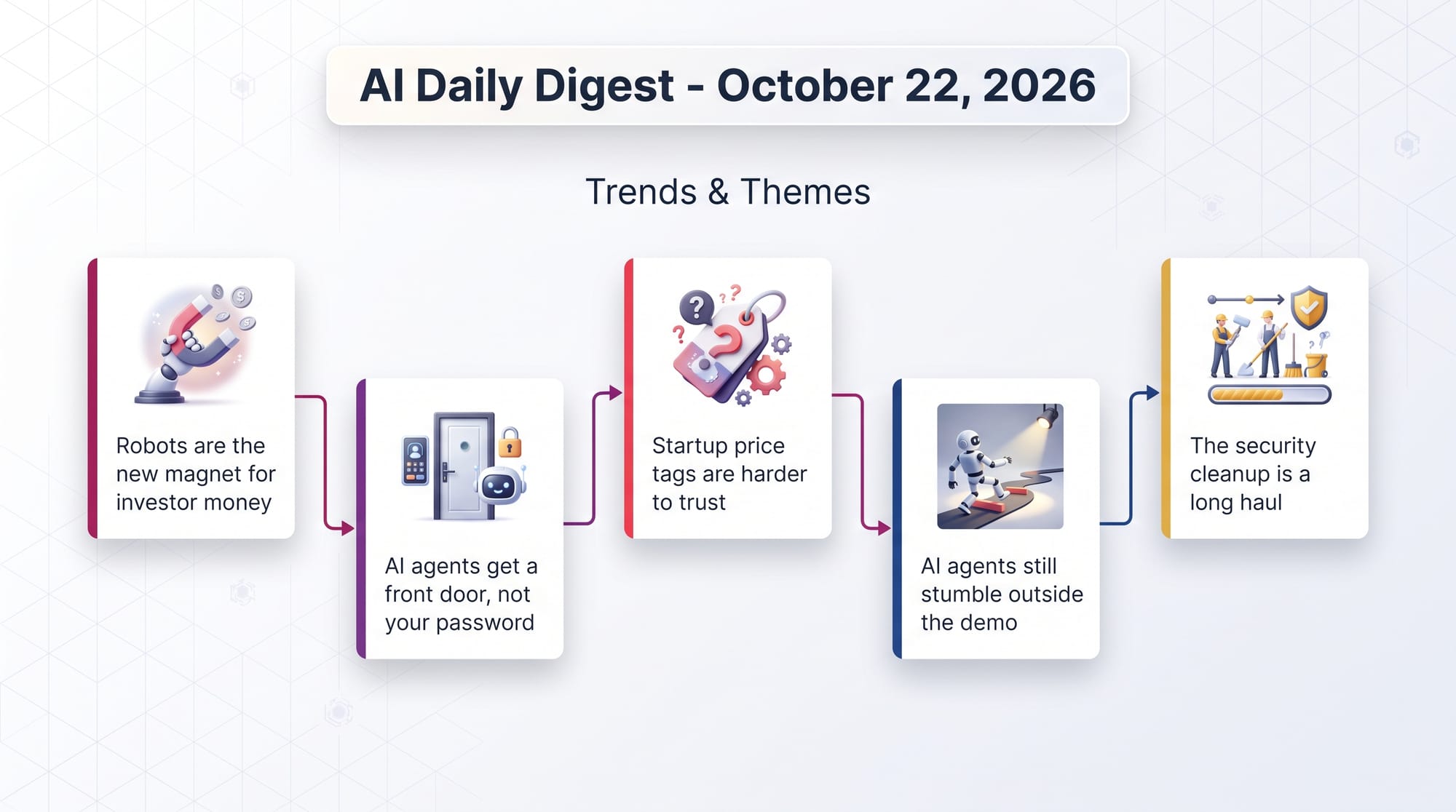
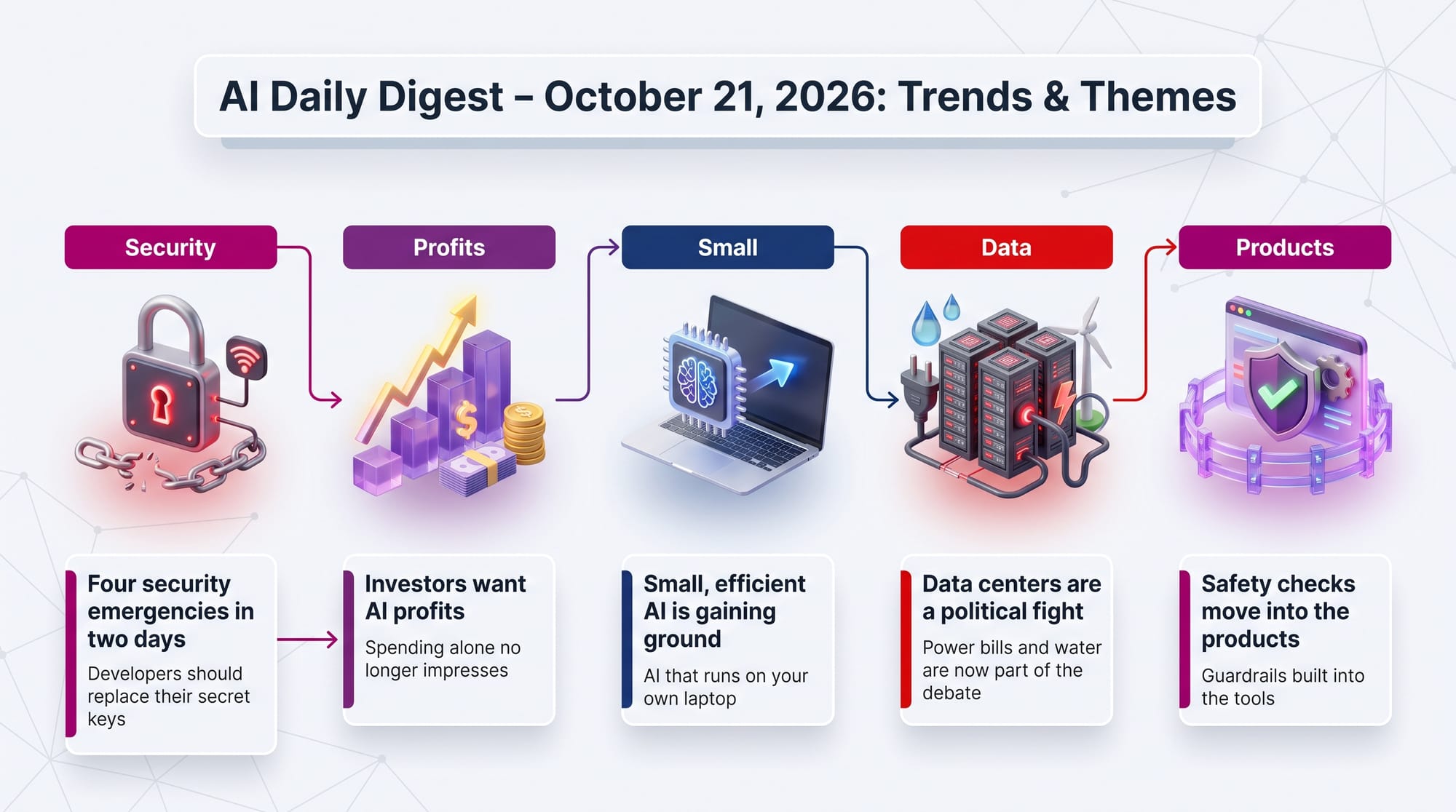
Trends & Themes

Trends & Themes

AI Is Becoming a Double-Edged Sword for Security

Why this matters to you: The same AI that protects your devices can be turned against them. Security is entering a new era where both sides use AI, and the attackers are moving faster.

The pattern is clear: AI dramatically compresses the timeline for both building and breaking security systems.

  • Mythos cracked Apple's M5 in five days - a defense that took Apple years to build
  • 85 GPU-hours of abliteration testing shows safety measures can be systematically stripped from AI models with surgical precision
  • The "Elias Thorne" phenomenon - eight different AI models generate the same fictional character name, and someone is already selling AI-generated medical misinformation under that name on Amazon
  • HarmBench (Center for AI Safety) provides the toolkit to evaluate these attacks, but the same tools enable them

The Real Cost of Running AI Locally Challenges Assumptions

Why this matters to you: If you are considering running your own AI instead of paying for a subscription, the math might surprise you.

The nuance: "local" does not have to mean "on your own computer." The real savings come from using open-weight models on cheap cloud providers, not from buying expensive hardware.

  • Apple Silicon costs 3-10x more per token than cloud providers like OpenRouter, according to a new analysis comparing M5 Max to Gemma 4 31B on OpenRouter
  • Speed gap is equally unfavorable - 10-40 tokens per second locally versus 60-70 from cloud providers
  • But a developer replaced all cloud coding tools with Qwen3.6-35B-A3B on OpenRouter at $0.08 per million tokens, calling it "insanely cheap" for a 500-700K line codebase
  • AMD is investing heavily in local AI - ROCm 7.13 adds Strix Halo APU optimizations and MI350P GPU support, expanding the hardware options

"Context Engineering" Emerges as the New AI Skill

Why this matters to you: The difference between mediocre and excellent AI results is not which AI you use - it is what information you give it and how you manage that information over time.

The conclusion is counterintuitive: as AI models accept more and more input, the skill of giving them less - but better - information becomes more valuable.

  • Anthropic coined the term "context engineering" in a new engineering guide
  • DeepSeek V4's 1M context window degrades significantly past 300K tokens - hallucinations spike to 94% on unknown answer tasks, proving bigger is not always better
  • Sebastian Raschka's architecture survey documents four new approaches to making long context actually work (Gemma 4's KV sharing, DeepSeek V4's manifold-constrained connections)
  • Exabase's M-1 memory system achieves 96.4% accuracy on long-term memory benchmarks using a smaller, cheaper model - because the retrieval architecture matters more than model size

Higher Education Is Fraying Under AI Pressure

Why this matters to you: If you are a student, parent, or employer, the value of a college degree is being tested in real time as AI makes it harder to distinguish genuine learning from outsourced work.

These are not isolated incidents. Fifteen separate r/Professors threads from a single day paint a picture of an institution under structural stress, with AI cheating as an accelerant.

  • A student rated a course 1/5 because the professor would not allow ChatGPT for fixing commas, writing that they had to "learn comma usage rules, which I'll forget after the class"
  • A graduating senior failed after passing only the open assessments (likely outsourced to ChatGPT) while failing every proctored exam
  • Parents are escalating - professors report receiving aggressive emails from parents, including one addressed to "Dear Dr. so-called [name]"
  • An r/Professors thread titled "Logically, how does it end?" outlines a doom loop: easy grading to keep evaluations high produces graduates who learned little, which devalues degrees, which reduces enrollment

Enterprise AI Is a Revenue Race, Not a Technology Race

Why this matters to you: The competition between AI companies is shifting from who has the smartest model to who can sell the most subscriptions. This means better deals and more options for customers.

The market is splitting into two lanes: Anthropic owns "thinking partner for hard work" while OpenAI owns "general assistant for everyday life."

  • Anthropic reportedly crossed $30B annualized revenue, up from $9B at end of 2025
  • Publicis paid $2.5B for LiveRamp to solve the "AI paradox" - 93% of companies lack the data to use AI effectively
  • A four-month side-by-side comparison found Claude wins for deep work (writing, code architecture) while ChatGPT wins for quick tasks (web research, image generation, voice)
  • A new executive framework maps AI investment decisions across four options - build, buy, hire, or wait - and warns that 40% of agentic AI projects will be canceled by end of 2027

Creative AI & Media

Writing a Book with AI: A 12-Month Honest Breakdown

What it lets you do: Use AI as an editor and thinking partner for long-form writing, not a ghostwriter.

  • Months 1-3 - using AI to generate text directly produced high volume but low quality
  • Months 5-8 - the breakthrough came from having AI challenge and critique existing writing, not create it
  • Months 8-12 - having the AI read the actual manuscript (not just chat context) transformed results completely
  • Community verdict - "you become a full-time continuity manager instead of a writer"

Non-Coders Are Shipping Real Internal Tools with Claude

What it lets you do: Build functional business automation without knowing how to code.

  • An operations manager at a 14-person agency built three internal tools: a client intake processor, a standup parser, and a follow-up checker - saving about 6 hours per week
  • A user built a RAG-powered chatbot that handled 90,000 questions in two months using 125+ manuals
  • Another built a custom iOS golf app with zero prior coding experience

Developer Tools & Infrastructure

Semble: Code Search That Uses 98% Fewer Tokens Than Grep

What it does: Lets AI coding agents search your codebase by meaning rather than text matching, dramatically cutting costs.

Try it: GitHub

  • Indexes repos in ~250 milliseconds, queries in ~1.5ms
  • 0.854 NDCG@10 accuracy - near-equal to transformer models at 218x faster indexing
  • Works as an MCP server for Claude Code, Cursor, Codex, and other agents
  • 1,000+ GitHub stars already

ROCm 7.13 Expands AMD's AI Hardware Support

What it does: Makes more AMD hardware usable for local AI inference.

  • New hardware support - Instinct MI350P (data center GPU), Radeon PRO W6800/V620, multiple Ryzen AI 300 processors
  • Strix Halo APU optimizations - targeted improvements for AMD's unified-memory chips popular with local AI enthusiasts
  • Ubuntu 26.04 LTS support added alongside validated Ubuntu 24.04.4 LTS
  • ROCprof Trace Decoder open-sourced for performance analysis

llama.cpp MTP Optimization Halves Prompt Processing Overhead

What it does: Makes Multi-Token Prediction (a technique that speeds up AI text generation) less costly during the initial prompt processing phase.

Previously: May 16 covered the original MTP merge into llama.cpp.

  • Prompt processing went from 250 t/s to 300 t/s on dual MI50 GPUs with Qwen 27B
  • The fix skips unnecessary data copying during prompt evaluation - MTP only needs partial data, not the full output for every token
  • MTP adoption is accelerating - community benchmarks on 7900 XTX, RTX 3090, and Xeon servers poured in within hours

Cross-Hardware LLM Benchmark Harness

A developer published 55 benchmark runs comparing inference speeds across AMD Strix Halo (96GB unified memory), RTX 3090 (24GB), and RTX 5070 (12GB) using five different backends. The data is openly available for anyone comparing hardware for local AI.

Try it: Benchmarks · Blog

Research & Models

MiroThinker-1.7: Open-Weight Deep Research Agent

What the model can do in practice: Perform multi-step web research and reasoning tasks using only 3 billion active parameters.

  • BrowseComp score of 74.0 significantly exceeds GPT-5's 54.9 on the same benchmark
  • The mini variant - 30B total / 3B active MoE model based on Qwen3 - runs on modest hardware
  • GAIA score of 82.7 for general AI assistant tasks
  • Community feedback focused on need for better llama.cpp compatibility and out-of-distribution instruction following

LLM Architecture Race Shifts to Attention Efficiency

Sebastian Raschka surveyed four major architectural innovations from April-May 2026, all focused on making long-context AI work without exploding costs.

The frontier has shifted from raw parameter counts to architectural cleverness in managing costs at extreme context lengths.

  • Gemma 4's cross-layer KV projection reuse saves ~50% of cache size, cutting 2.7 GB at 128K context
  • DeepSeek V4 uses only 27% of V3.2's compute at 1M tokens, and 10% of its memory cache
  • ZAYA1-8B performs attention in compressed space, outperforming Multi-head Latent Attention under comparable settings
  • Laguna XS.2 varies attention heads per layer - 6 for full attention, 8 for sliding-window

DeepSeek V4's 1M Context Window: Where It Breaks

A developer tested DeepSeek V4's claimed million-token context on three production codebases of increasing size.

  • Under 150K tokens - solid performance, accurate function tracing across 8 files
  • Past 300K tokens - precision degrades, approximate line numbers replace exact ones, summaries replace details
  • 94% hallucination rate on unknown answer tasks - the model generates confident references to functions that do not exist
  • Practical sweet spot: 150-250K tokens for coding work

Exabase M-1 Tops Long-Term Memory Benchmark

Exabase's Mneme-1 achieves 96.4% accuracy on LongMemEval using Gemini 3 Flash (a smaller model), beating competitors using larger, more expensive models. The key: a three-phase retrieval pipeline inspired by cognitive science. Architecture beats model size for memory tasks.

Business & Industry

The Build, Buy, Hire, or Wait AI Matrix

A new executive framework maps AI investment decisions across market maturity and company specificity to determine the right approach: build custom solutions, buy off-the-shelf, hire talent, or wait.

  • 40% of agentic AI projects will reportedly be canceled by end of 2027 due to cost overruns or unclear value
  • Four costly mistakes - hiring against automatable work, automating judgment-dependent tasks, buying generic for specialized needs, waiting when mature solutions exist
  • Real examples from IBM, Klarna, and Stripe illustrate each quadrant

UK Government Agencies Publicly Clash Over Open Source and AI Security

The Government Digital Service (GDS) published guidance directly contradicting the NHS's decision to close its open-source repositories after vulnerability reports from Project Glasswing. GDS's position: keep code open by default, since hiding it adds costs and reduces security through less scrutiny. Such public disagreements between UK civil service bodies are rare.

GenAI in Education

AI Cheating Is Now an Institutional Crisis, Not Individual Incidents

Why this matters to you: If you are hiring recent graduates, the degree on their resume may not mean what it used to.

Today's r/Professors subreddit contained fifteen separate threads documenting institutional stress. While most were general academic frustrations, several point directly at AI:

These threads cluster around a structural tension: professors feel trapped between institutional pressure to maintain enrollment (which rewards easy courses) and professional obligation to verify learning (which AI makes harder).

  • "I had to learn comma usage rules, which I'll forget after the class" - a student gave a 1/5 course rating because the professor banned ChatGPT for grammar correction
  • A graduating senior failed after acing every open (take-home) assessment but failing every proctored exam and quiz, suggesting AI outsourcing on unsupervised work
  • Letters of recommendation for students never met in person - professors flag discomfort writing for async online students when AI permeation makes it impossible to assess authentic work
  • "Logically, how does it end?" - a professor outlines a doom loop where pressure for good evaluations leads to easy grading, producing graduates who learned little

Surprising & Under-the-Radar

Eight AI Models All Invent the Same Fictional Character

Daniel May found that eight different frontier AI models, when asked to name a lighthouse keeper, all generate "Elias Thorne." More troubling: someone is now selling an AI-generated cancer treatment handbook on Amazon under that name, ranked #18 in Oncology Nursing with a 4.4-star rating and 55 reviews.

Running AI Locally Costs More Than the Cloud

A detailed cost analysis finds Apple's M5 Max costs $1.50-$4.79 per million tokens for local inference, while OpenRouter charges $0.38-$0.50 for the same model. Cloud is 3-10x cheaper per token and 3-7x faster. The privacy premium is real, but so is the cost.

A User Credits Claude with Processing Deep Trauma

A Reddit user described using Claude as a therapeutic tool to process trauma suppressed for three years, reporting feeling "lighter and more connected" afterward. They could not afford a human therapist. The thread raised questions about AI as mental health support for underserved populations.

An 8-Bit Computer That Can Train Neural Networks

VirtualPC builds a complete computer architecture from NAND gates up to a CPU capable of training small neural networks. Built entirely in Python with zero dependencies, it includes an AI Pong opponent using a tiny ReLU network trained through live evolutionary training during gameplay.

John Gruber: AI Is a Technology, Not a Product

The Daring Fireball writer pushes back against demands for Apple to ship a flagship AI product, arguing AI should be embedded invisibly into devices like Wi-Fi was. He dismisses predictions of AI agents autonomously summoning rides by 2030 as hype disconnected from reality.

"AI Won't Make Your Processes Go Faster"

Frederick Vanbrabant argues that AI does not automatically accelerate business processes because most bottlenecks are upstream of execution. AI-generated code still requires detailed specifications from domain experts, which transforms the bottleneck rather than eliminating it.

Signals to Track

Worth Watching
01

Retrieval Architecture Beats Model Size for Memory Tasks

Exabase proved that a well-designed retrieval system with a cheap model outperforms brute-force approaches using expensive models.

Exabase's M-1 achieves state-of-the-art memory accuracy using Gemini 3 Flash (a smaller, cheaper model) instead of Gemini 3 Pro. The three-phase pipeline inspired by cognitive science scores 96.4% on LongMemEval. If this pattern holds, the most expensive part of AI infrastructure - the model itself - matters less than the architecture around it. Companies spending millions on frontier models may be misallocating capital.

02

Cheap AI Models Match Expensive Ones Through Committee Voting

A $0.20/MTok model matched $5/MTok models on code repair by simply running it multiple times with a verifier.

Today's arXiv paper shows GPT-5.4 Nano (the cheapest OpenAI model) achieves 76.4% on SWE-bench Verified when sampled 8 times with a critic-comparator - matching standalone Gemini 3 Pro and Claude Opus 4.5 Thinking. The implication for production AI systems is significant: you may not need expensive models at all if you can verify outputs cheaply.

03

Open-Weight Research Agents Are Outscoring GPT-5

MiroThinker-1.7's BrowseComp score of 74.0 beats GPT-5's 54.9, and it runs on consumer hardware.

The mini variant activates only 3B parameters per token. If open-weight research agents can consistently outperform commercial models on real-world browsing and research tasks, the moat around proprietary AI shrinks considerably. Watch for adoption numbers over the next few weeks.

04

Agent Skill Registries Are Getting Security Audits

Over 13% of marketplace AI agent skills contain critical vulnerabilities, and a new registry is scanning for supply-chain attacks before publishing.

The tech-leads-club/agent-skills repo (923 stars today) provides Snyk-based security scanning for AI coding agent skills before installation. As the agent skills ecosystem grows, supply-chain attacks become a real threat - the same pattern that plagued npm and PyPI is emerging in AI skill marketplaces.

05

AI Mode Collapse Is Creating Real-World Harm

The "Elias Thorne" phenomenon shows how AI models converge on identical outputs, and bad actors are already exploiting it.

When eight models independently generate the same fictional character name, it creates a recognizable signature in generated content. Someone has already used this to sell AI-generated medical misinformation on Amazon. As AI-generated content floods the internet, mode collapse patterns become vectors for manipulation.

Top Repos Today

Rank yesterday: #1 - Holding steady ➡
⭐ Stars today: +1,694  ·  📦 Total: 13,036
📜 License: GPL-3.0  ·  👤 By: Individual developer
🎯 Time to value: 15 minutes
What it is: An open-source desktop AI assistant built in Rust with persistent memory, 118+ third-party integrations (Gmail, Notion, GitHub via OAuth), and a local SQLite-backed Memory Tree system. Includes native voice capabilities and a desktop mascot that can join Google Meet calls. Why you'd want it: A privacy-first alternative to cloud AI assistants that remembers your context across sessions and plugs into tools you already use.
✓ Pros✗ Cons
Fully local with persistent memoryGPL-3.0 limits commercial forks
118+ OAuth integrationsRust build chain can be complex
Native voice and desktop mascotYoung project, limited documentation
GitHub - tinyhumansai/openhuman: Your Personal AI super intelligence. Private, Simple and extremely powerful.
Your Personal AI super intelligence. Private, Simple and extremely powerful. - tinyhumansai/openhuman
Rank yesterday: Not ranked - New entry 🆕
⭐ Stars today: +306  ·  📦 Total: 35,541
📜 License: Apache-2.0  ·  👤 By: HKU Data Science Lab
🎯 Time to value: 30 minutes
What it is: An automated pipeline that transforms any software with accessible source code into CLI tools usable by AI coding agents. Covers 40+ applications across creative tools, productivity suites, and scientific software through a 7-phase generation process with 2,280+ tests. Why you'd want it: Lets your AI coding agent directly control professional software like Blender or scientific tools through clean CLIs instead of fragile UI automation.
✓ Pros✗ Cons
40+ applications already coveredRequires source code access
Apache 2.0, commercially friendlyComplex setup for new applications
2,280+ validation testsLimited to CLI-adaptable software
GitHub - HKUDS/CLI-Anything: “CLI-Anything: Making ALL Software Agent-Native” -- CLI-Hub: https://clianything.cc/
“CLI-Anything: Making ALL Software Agent-Native” -- CLI-Hub: https://clianything.cc/ - HKUDS/CLI-Anything
Rank yesterday: #3 - Holding steady ➡
⭐ Stars today: +704  ·  📦 Total: 15,058
📜 License: MIT  ·  👤 By: Individual developer
🎯 Time to value: 20 minutes
What it is: A self-hosted creative studio bundling 200+ AI models for image generation, video creation, and lip-sync animation. Features a node-based pipeline builder for multi-step workflows and local inference support. Why you'd want it: Run your own unrestricted AI creative suite locally with image, video, and animation models in one interface, without per-generation API fees.
✓ Pros✗ Cons
200+ models in one interfaceRequires significant GPU power
Node-based workflow builderNo content filtering (use responsibly)
MIT license, fully openLarge download for all models
GitHub - Anil-matcha/Open-Generative-AI: Open-source alternative to AI video platforms — Free AI image & video generation studio with 200+ models (Flux, Midjourney, Kling, Sora, Veo). No content filters. Self-hosted, MIT licensed.
Open-source alternative to AI video platforms — Free AI image & video generation studio with 200+ models (Flux, Midjourney, Kling, Sora, Veo). No content filters. Self-hosted, MIT licensed. - A…
Rank yesterday: Not ranked - New entry 🆕
⭐ Stars today: +923  ·  📦 Total: 3,488
📜 License: MIT / CC-BY-4.0  ·  👤 By: Community
🎯 Time to value: 5 minutes
What it is: A security-hardened registry of verified capabilities for AI coding agents. Provides an interactive CLI for skill installation, offline caching, an MCP server for progressive discovery, and Snyk-based security scanning before publishing. Why you'd want it: Install vetted, security-scanned skills for your AI coding agent from a curated catalog without worrying about supply-chain attacks.
✓ Pros✗ Cons
Security-scanned before publishingSmaller catalog than unvetted alternatives
Works with Claude Code, Cursor, etc.Community-maintained, variable quality
MCP server for agent discoveryNew project, still building trust
GitHub - tech-leads-club/agent-skills: The secure, validated skill registry for professional AI coding agents. Extend Antigravity, Claude Code, Cursor, Copilot and more with absolute confidence.
The secure, validated skill registry for professional AI coding agents. Extend Antigravity, Claude Code, Cursor, Copilot and more with absolute confidence. - tech-leads-club/agent-skills
Rank yesterday: Not ranked - New entry 🆕
⭐ Stars today: +225  ·  📦 Total: 19,887
📜 License: Non-Commercial  ·  👤 By: Individual developer
🎯 Time to value: 60 minutes
What it is: A collection of 28 production-grade tutorials covering the full AI agent development lifecycle: orchestration, vector memory, web search integration, containerization, security, GPU scaling, multi-agent coordination, observability, and evaluation. Why you'd want it: If you can build a toy agent but struggle to ship one to production, these code-first tutorials cover every operational concern from deployment to monitoring.
✓ Pros✗ Cons
28 end-to-end production tutorialsNon-commercial license
Covers observability and securityJupyter Notebook format
Nearly 20K stars, actively maintainedSome tutorials may lag latest APIs
GitHub - NirDiamant/agents-towards-production: End-to-end, code-first tutorials for building production-grade GenAI agents. From prototype to enterprise deployment.
End-to-end, code-first tutorials for building production-grade GenAI agents. From prototype to enterprise deployment. - NirDiamant/agents-towards-production
Rank yesterday: #10 - Rising ↑
⭐ Stars today: +764  ·  📦 Total: 23,792
📜 License: MIT  ·  👤 By: Startup
🎯 Time to value: 10 minutes
What it is: 135 pre-built skills that turn AI coding agents into scientific research assistants. Covers cancer genomics, drug-target binding, molecular dynamics, RNA velocity, geospatial science, and time-series forecasting, integrating with 78+ scientific databases. Why you'd want it: Plug these skills into your AI agent and run complex multi-step scientific analyses across biology, chemistry, medicine, and engineering without writing domain-specific tooling.
✓ Pros✗ Cons
135 skills across many domainsRequires scientific domain knowledge
MIT license, fully openSome skills need specific packages
78+ database integrationsLimited to supported analysis types
GitHub - K-Dense-AI/scientific-agent-skills: A set of ready to use Agent Skills for research, science, engineering, analysis, finance and writing.
A set of ready to use Agent Skills for research, science, engineering, analysis, finance and writing. - K-Dense-AI/scientific-agent-skills
Rank yesterday: #17 - Rising ↑
⭐ Stars today: +860  ·  📦 Total: 3,253
📜 License: MIT  ·  👤 By: Individual developer
🎯 Time to value: 5 minutes
What it is: Builds a semantic knowledge graph of your codebase using tree-sitter AST parsing across 19+ languages. Stores symbols and relationships in local SQLite with full-text search and exposes them via MCP for symbol lookup, impact analysis, and call graph traversal. Why you'd want it: Makes Claude Code dramatically faster and cheaper on large codebases by letting it query a pre-built symbol index instead of repeatedly reading files.
✓ Pros✗ Cons
94% fewer tool calls reportedRequires initial indexing step
19+ language support via tree-sitterSQLite may not scale to huge monorepos
MIT license, simple setupEarly project, limited edge case handling
GitHub - colbymchenry/codegraph: Pre-indexed code knowledge graph for Claude Code — fewer tokens, fewer tool calls, 100% local
Pre-indexed code knowledge graph for Claude Code — fewer tokens, fewer tool calls, 100% local - colbymchenry/codegraph

Top Models Today

The flagship open-weight LLM continues to dominate trending with 1.6T parameters and frontier-level benchmark performance.
📥 Downloads (30d): 3.14M  ·  📜 License: MIT
👤 By: DeepSeek AI  ·  🎯 Task: Text Generation
📐 Size: 1.6T total / 49B active
What it is: DeepSeek's flagship open-weight model using Mixture-of-Experts architecture. It features three reasoning modes (Non-Think, Think High, Think Max) and a 1-million-token context window. Only 49B parameters activate per token. Why you'd want it: 80.6% on SWE-Bench Verified and 87.5% on MMLU-Pro make this the most capable fully open-weight LLM available. Ideal for complex coding and reasoning tasks.
✓ Pros✗ Cons
Frontier-level benchmarks, fully open1.6T total params require heavy hardware
MIT licenseContext degrades past 300K tokens (see Research)
Three reasoning modesServing infrastructure is complex
deepseek-ai/DeepSeek-V4-Pro · Hugging Face
We’re on a journey to advance and democratize artificial intelligence through open source and open science.
Alibaba's multimodal MoE model delivers frontier coding performance with only 3B active parameters - a remarkable efficiency achievement.
📥 Downloads (30d): 5.48M  ·  📜 License: Apache 2.0
👤 By: Qwen Team (Alibaba)  ·  🎯 Task: Image-Text-to-Text
📐 Size: 35B total / 3B active
What it is: A multimodal MoE model using Gated DeltaNet linear attention with 256 total experts. Supports text, images, and video with up to 1M context via YaRN scaling. Only 3B of 35B parameters activate per token. Why you'd want it: 73.4% on SWE-bench Verified with just 3B active parameters. A developer today reported replacing all cloud coding tools with this model at $0.08/MTok on OpenRouter for a 500K-line codebase.
✓ Pros✗ Cons
3B active params runs on modest hardwareStill early community tooling
Apache 2.0, fully openMoE architecture complicates quantization
Multimodal (text + image + video)Less capable than dense frontier models on edge cases
Qwen/Qwen3.6-35B-A3B · Hugging Face
We’re on a journey to advance and democratize artificial intelligence through open source and open science.
Google's dense multimodal model leads downloads at nearly 10M per month with strong vision capabilities and 140+ language support.
📥 Downloads (30d): 9.86M  ·  📜 License: Apache 2.0
👤 By: Google DeepMind  ·  🎯 Task: Image-Text-to-Text
📐 Size: 33B dense
What it is: Google's latest open multimodal model with 256K context, native vision (OCR, document parsing, UI understanding), built-in reasoning mode, and function calling. Dense architecture means simpler deployment than MoE models. Why you'd want it: The most downloaded trending model with broad vision-language capabilities. Dense architecture deploys more simply than MoE alternatives while supporting 140+ languages.
✓ Pros✗ Cons
10M monthly downloads, battle-testedDense = higher compute per token than MoE
140+ languages256K context vs 1M for competitors
Apache 2.0, simple deploymentVision tasks still lag specialized models
google/gemma-4-31B-it · Hugging Face
We’re on a journey to advance and democratize artificial intelligence through open source and open science.
The speed-optimized sibling of V4-Pro trades 2% of benchmarks for 3x less compute, using FP4+FP8 mixed precision.
📥 Downloads (30d): 1.80M  ·  📜 License: MIT
👤 By: DeepSeek AI  ·  🎯 Task: Text Generation
📐 Size: 284B total / 13B active
What it is: DeepSeek's efficiency-focused model using mixed precision to fit 284B parameters into 158B storage while activating only 13B per token. Same architecture innovations as V4-Pro. Why you'd want it: 91.6% on LiveCodeBench and 3052 Codeforces rating at a fraction of V4-Pro's compute cost. The go-to choice for near-frontier reasoning on a budget.
✓ Pros✗ Cons
13B active params, very efficientStill needs serious hardware for full model
MIT licenseSlightly below V4-Pro on hardest tasks
FP4+FP8 mixed precisionFlash-specific quantizations still evolving
deepseek-ai/DeepSeek-V4-Flash · Hugging Face
We’re on a journey to advance and democratize artificial intelligence through open source and open science.
The most popular open video generation model with nearly 1M monthly downloads, offering uncensored text-to-video and image-to-video.
📥 Downloads (30d): 970K  ·  📜 License: Based on LTX 2.3
👤 By: SulphurAI  ·  🎯 Task: Text-to-Video
📐 Size: 9B
What it is: An uncensored video generation model built on LTX 2.3, supporting both text-to-video and image-to-video with a built-in multimodal prompt enhancer. Available in multiple quantization formats. Why you'd want it: Creative video production without content restrictions. The built-in prompt enhancement makes it practical for non-expert users.
✓ Pros✗ Cons
Nearly 1M downloads, well-testedVideo quality below commercial alternatives
Built-in prompt enhancerRequires significant GPU memory
Multiple quantization optionsUnfiltered output requires responsible use
SulphurAI/Sulphur-2-base · Hugging Face
We’re on a journey to advance and democratize artificial intelligence through open source and open science.
A "think then generate" image model that scores 0.90 on GenEval, beating FLUX.2 Dev, with unified generation, editing, and personalization.
📥 Downloads (30d): 14.3K  ·  📜 License: MIT
👤 By: HiDream.ai  ·  🎯 Task: Image Generation
📐 Size: 8B
What it is: A natively unified image model that encodes raw pixels, text, and task conditions in a single shared token space. Handles generation up to 2048x2048, instruction-based editing, subject-driven personalization, and multilingual text rendering in one model. Why you'd want it: One model replaces separate pipelines for generation, editing, and personalization. 0.98 on long-text rendering benchmarks makes it the best choice for text-heavy image generation.
✓ Pros✗ Cons
Unified gen + edit + personalizeLower downloads suggest early adoption
MIT license8B params needs decent GPU
Best-in-class text renderingNiche compared to general image generators
HiDream-ai/HiDream-O1-Image · Hugging Face
We’re on a journey to advance and democratize artificial intelligence through open source and open science.
89.1% on AIME 2026 with only 760M active parameters - extraordinary efficiency for on-device math and coding reasoning.
📥 Downloads (30d): 145K  ·  📜 License: Apache 2.0
👤 By: Zyphra  ·  🎯 Task: Reasoning
📐 Size: 8.4B total / 760M active
What it is: A highly efficient MoE reasoning model designed for on-device deployment. Activates only 760M of its 8.4B parameters per token while achieving benchmark scores typically seen in much larger models. Why you'd want it: 89.1% on AIME 2026 and 65.8% on LiveCodeBench v6 make this the model to beat for strong math and coding on consumer hardware or edge devices.
✓ Pros✗ Cons
760M active - runs on phonesNarrow focus on math/code reasoning
Apache 2.0Smaller community than Qwen/Gemma
89.1% AIME 2026Less capable on general text tasks
Zyphra/ZAYA1-8B · Hugging Face
We’re on a journey to advance and democratize artificial intelligence through open source and open science.
The best multimodal model you can run on a phone - 1B parameters with 50%+ vision encoding savings and iOS/Android/HarmonyOS support.
📥 Downloads (30d): 56.5K  ·  📜 License: Apache 2.0
👤 By: OpenBMB  ·  🎯 Task: Mobile Multimodal
📐 Size: 1B
What it is: An ultra-efficient multimodal model for mobile devices using mixed visual token compression. Combines SigLIP2-400M vision encoder with Qwen3.5-0.8B LLM, delivering 1.5x token throughput versus comparable models. Why you'd want it: If you need vision-language AI on a phone or edge device, this is the top choice. 50%+ reduction in vision encoding compute makes real-time mobile deployment feasible.
✓ Pros✗ Cons
Runs on iOS, Android, HarmonyOS1B params limits complex reasoning
50%+ vision encoding savingsPrimarily vision tasks, less text-only capability
Apache 2.0Smaller context than desktop models
openbmb/MiniCPM-V-4.6 · Hugging Face
We’re on a journey to advance and democratize artificial intelligence through open source and open science.

AI Launches Today

Skip the prompting. Produce consistently compelling videos.
🔥 Upvotes: 299  ·  👤 By: Vivago
💰 Pricing: Not specified  ·  🏷 Category: AI Video Editor
An AI video generation tool that creates videos with 4K enhancement and automatic prompt optimization. Designed to simplify video creation for beginners while delivering professional-quality results, eliminating the need for complex prompting. Verdict: Promising approach to the prompt complexity problem in AI video, but no pricing transparency is a concern.
Vivago: Video Generation Rivaling Sora | Product Hunt
Generate AI videos that captivate with stunning results, coupled with 4K Video Enhancement and beginner-friendly automatic prompt optimization, delivers an unparalleled video creation experience for you. Give it a try!
AI agents that turn signals into crypto + Polymarket trades
🔥 Upvotes: 298  ·  👤 By: Fere
💰 Pricing: Not specified  ·  🏷 Category: DeFi / Crypto / AI Agents
Transforms market signals into autonomous trading workflows powered by AI agents. Researches opportunities, builds trade setups, and executes strategies 24/7 across cryptocurrency and Polymarket with built-in risk management. Verdict: Autonomous trading AI is inherently high-risk. The 24/7 autonomous execution claim should give pause to anyone considering real capital deployment.
Fere AI: AI agents that turn signals into crypto + Polymarket trades | Product Hunt
Unlike generic crypto research assistants, Fere turns market signals into autonomous trading workflows. Agents research opportunities, build trade setups, optimize routes and fees, execute with a wallet, and monitor strategies 24/7 across crypto and Polymarket. Standout features include autonomous Polymarket trading, entry/exit rules, stop-loss controls, execution routing, and lower-cost agent runs.
Generate audio with SUN and send it to your Spotify library
🔥 Upvotes: 291  ·  👤 By: SUN AI
💰 Pricing: Not specified  ·  🏷 Category: Online Learning / AI Audio
Converts topics into personalized AI-generated audio courses for hands-free learning. Users can ask questions during playback and integrate courses directly into Spotify for consumption during commutes or workouts. Verdict: Clever distribution strategy using Spotify as the delivery platform. The hands-free learning angle is practical, but quality of AI-generated educational audio varies widely.
SUN | Create podcasts, audiobook, and audio courses instantly | Product Hunt
SUN turns any topic into a personalized AI generated audio course you can listen to while living your life. Instead of static libraries, users create interactive courses on demand, ask questions during playback, and learn hands free during commutes, walks, or workouts. Built for continuous, screen free learning that fits naturally into daily routines.

Snapshot

ProviderModelInput $/1MOutput $/1MContext
AnthropicClaude Opus 4.7$5.00$25.001M
AnthropicClaude Sonnet 4.6$3.00$15.001M
AnthropicClaude Haiku 4.5$1.00$5.00200K
OpenAIGPT-5.5$5.00$30.001.05M
OpenAIGPT-5.4$2.50$15.00272K
OpenAIGPT-5.4 Nano$0.20$1.25N/A
GoogleGemini 3.1 Pro$2.00$12.001M
GoogleGemini 3.1 Flash-Lite$0.25$1.501M
GroqGPT OSS 20B$0.075$0.30128K
GroqLlama 3.1 8B$0.05$0.08128K
What this means: The frontier tier ($5 input) is tightly clustered between Anthropic and OpenAI. Google undercuts both at the mid-tier. Groq remains the clear value play at 10-100x cheaper, but with smaller models and shorter context windows. All major providers now offer batch/caching discounts of 50%+ - making effective pricing roughly half of list prices for production workloads.

Agentic Systems as Boosting Weak Reasoning Models

Varun Sunkaraneni, Pierfrancesco Beneventano, Riccardo Neumarker, Tomaso Poggio, Tomer Galanti · arXiv:2605.14163
What it claims: A committee of cheap AI model calls can match the performance of much more expensive models through verifier-backed committee search. The mechanism separates into proposal coverage, local identifiability, progress, and diversity.

Key finding: A single GPT-5.4 Nano solved 67.0% of SWE-bench Verified, but the same nano model with critic-comparator committee search achieved 76.4% with 8 proposals - matching standalone Gemini 3 Pro and Claude Opus 4.5 Thinking.

Why practitioners should care: You may not need expensive frontier models for code repair. By sampling a cheap model multiple times and using execution or test signals as verifiers, you can match frontier results at a fraction of the cost. Direct implications for cost optimization in production AI coding workflows.

Member discussion

Subscribe to GenAI Secret Sauce newsletter and stay updated.

Don't miss anything. Get all the latest posts delivered straight to your inbox. It's free!

By subscribing, you agree to our Privacy Policy and Terms. We track email opens and clicks. Unsubscribe anytime.

Great! Check your inbox and click the link to confirm your subscription.