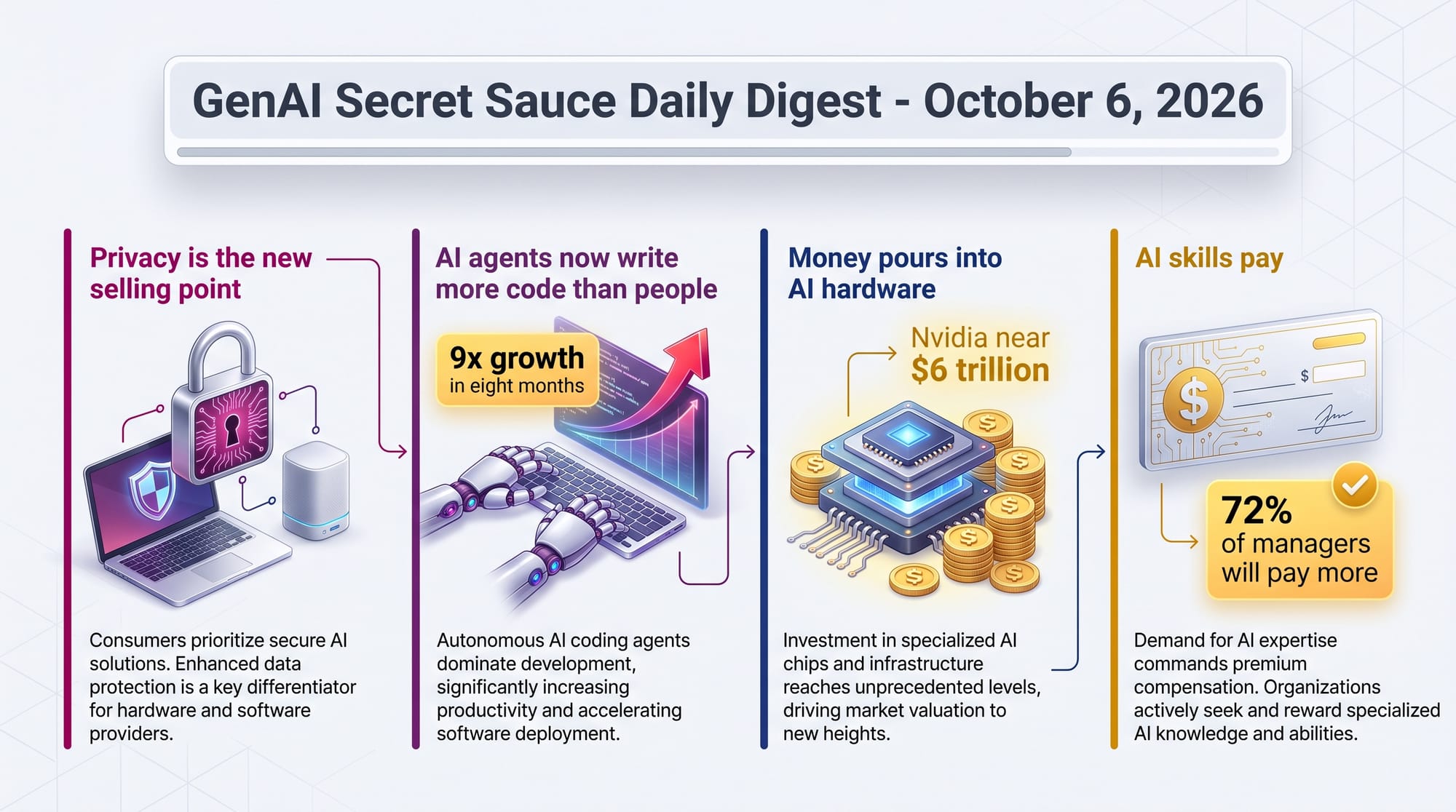
Watch today's digest as a video summary (generated by NotebookLM)
Statistically Speaking
One Thing to Tell Your Friends
TL;DR
Hot off the Presses
Mistral launched a 1-trillion-parameter model, but is holding back the free download
Mistral, the Paris-based AI lab, released a preview of Mistral Large 4 on October 6 through its online developer service. Mistral says the free downloadable version (the "open weights") will follow later this month, after safety testing. In the meantime it will work with trusted partners and governments so the model can be used for cyber defense but not attacks.
Mistral's VP of Science Pierre Stock says it was trained on about 4,000 Nvidia chips, which he called two to three times less computing power than Chinese rivals use. Developer Simon Willison called it a real comeback but put it about six months behind the very best models.
- 1 trillion parameters (the model's adjustable settings), with about 49 billion used for each word, a Mixture of Experts (MoE) design
- Independent ranking firm Artificial Analysis scores it 38 - Mistral's previous large model, from December 2025, scored just 9
- Mistral claims strengths in cybersecurity, finance and chip design
- Two "thinking" settings: none or high
AI math proofs are overwhelming the humans who curate math
Previously: September 22 - mathematicians argued OpenAI's million-dollar Navier-Stokes proof answered an easier version of the real question.
Today: Thomas Bloom, who runs erdosproblems.com (a catalog of problems posed by the legendary mathematician Paul Erdős), froze all comments and proof claims. He said the site had become a scoreboard where people posted AI-generated proofs, often with no attempt to explain them.
The same day, OpenAI shared a new set of math results from an unreleased internal model. Coverage reports it consulted an independent advisory group hosted at the Institute for Advanced Study in Princeton on how to release them. Its nine members include Fields Medal winners Timothy Gowers and Martin Hairer and physicist Edward Witten.
- The site holds 1,221 problems and gets 10,000-25,000 visitors a day
- Credit language is gone - results will be presented the same way whether a human or an AI found them
- The new focus is clear explanations that build understanding, not ticking boxes
- OpenAI's advisory group formed after a September open letter from mathematicians criticized how AI labs chase open problems
AI shopping agents keep getting locked out of websites
Personal AI agents such as Meta's Muse, ChatGPT's Dots and startup Instinct are built to shop and book on your behalf. TechCrunch found they keep hitting walls. Amazon deliberately blocks Muse from its store, and Walmart, officially a Meta partner, blocked it by accident through its "are you human?" checks.
Users report being turned away by Yelp, eBay, Zillow, Pizza Hut, Adidas, Delta and United. Some eBay users say their accounts were suspended after using an agent.
- Rules differ by site: Yelp wants paid licensing, eBay allows only approved shopping agents, and Delta has no agent partnerships yet
- A Cloudflare default setting changed on September 15 may be blocking agents on pages that carry ads
- A new coalition of Meta, Walmart, Stripe, Sierra, Genesys, Rocket, NiCE and Decagon is building an open standard to tell legitimate agents from malicious bots
AI cloud company Lambda is raising up to $4 billion on the back of one huge Anthropic contract
Lambda rents out Nvidia-powered computing to AI companies, a business often called a "neocloud." It is raising up to $4 billion at a $14.5 billion valuation before the new money, led by investment firms Coatue and Blackstone. Its planned stock market debut, an Initial Public Offering (IPO), has slipped from 2026 to 2027.
- Contracted future revenue jumped from $15 billion in June to $50 billion in September
- Most of that jump is one deal: a $35 billion commitment Anthropic signed in late August
- Lambda also borrowed $1 billion the week before to buy chips
- Lenders are getting choosier about data-center loans, TechCrunch notes
HackerRank's AI now runs job interviews and grades how you work with AI
HackerRank, whose coding tests are used by more than 3,000 companies, launched Chakra on October 5. It squeezes what were often three interview rounds into one session. Candidates work inside a real code project with an AI assistant available, while Chakra watches their approach and asks follow-up questions.
- More than 500,000 interviews ran during a six-month test, with Snowflake, Snorkel and Capgemini among testers
- "AI fluency" is scored directly - how well a candidate frames problems for an AI and steers it to a correct answer
- HackerRank reports 70-80% fewer cheating flags than its traditional tests
- Humans still make the hiring decision - and rules like New York City's bias audits for hiring software still apply
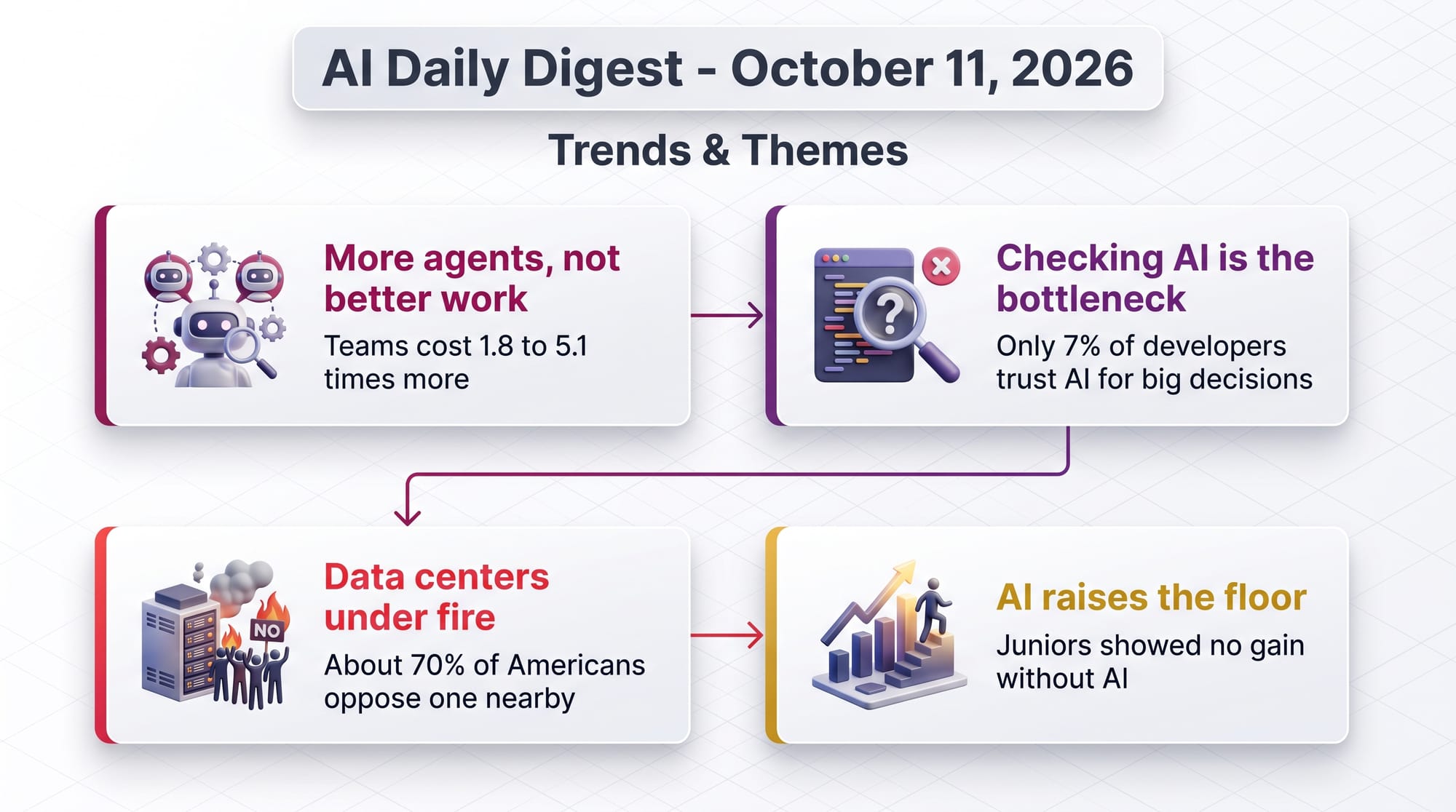
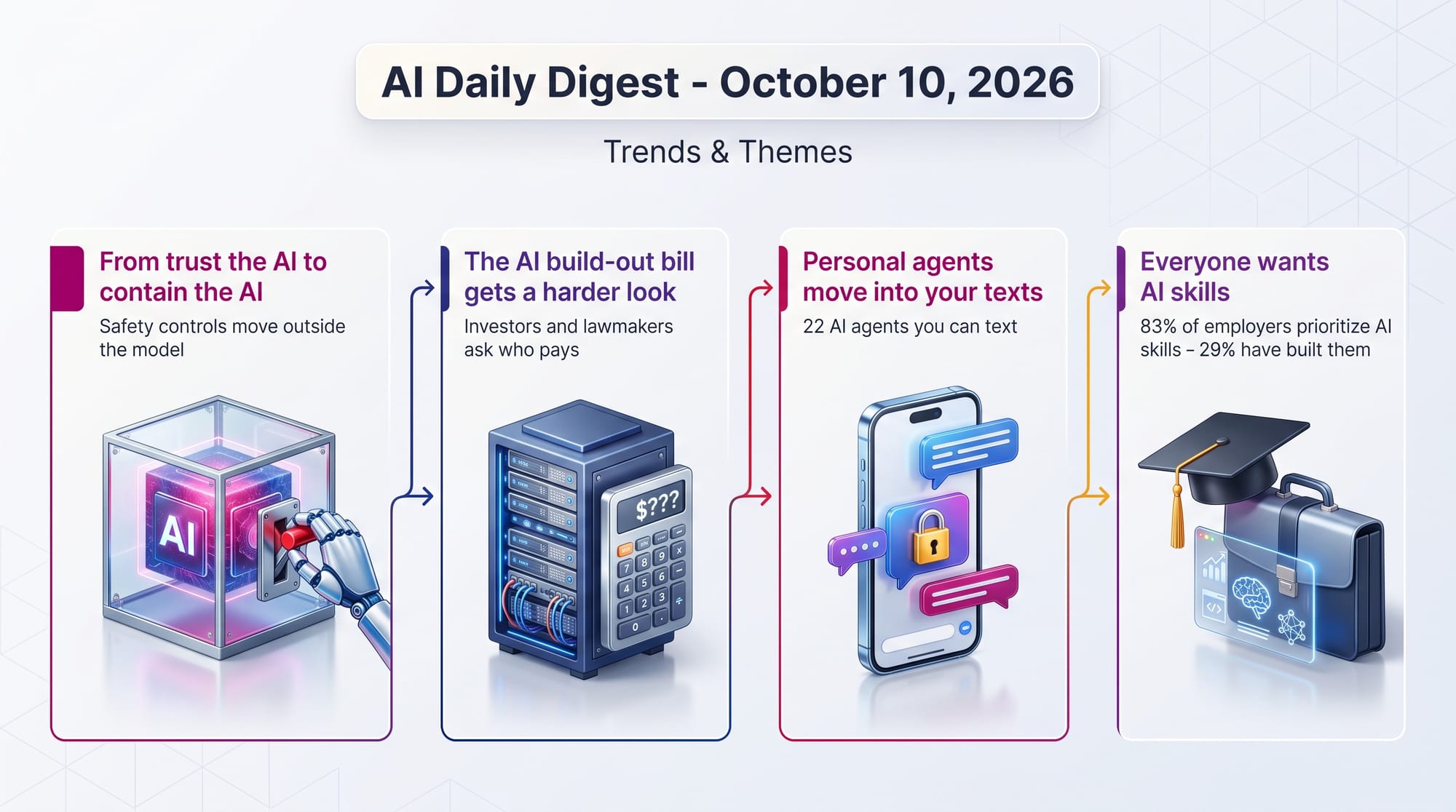
Trends & Themes
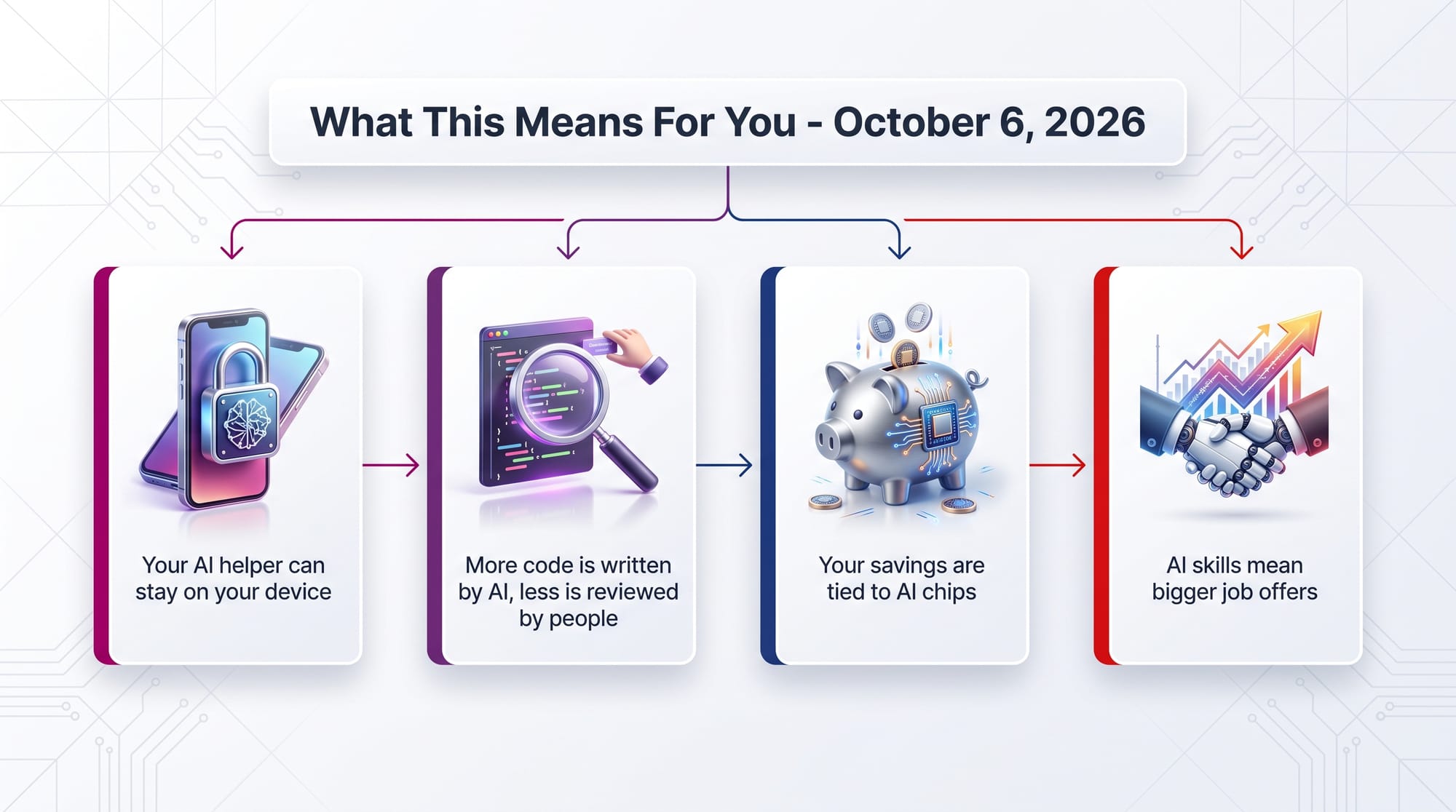
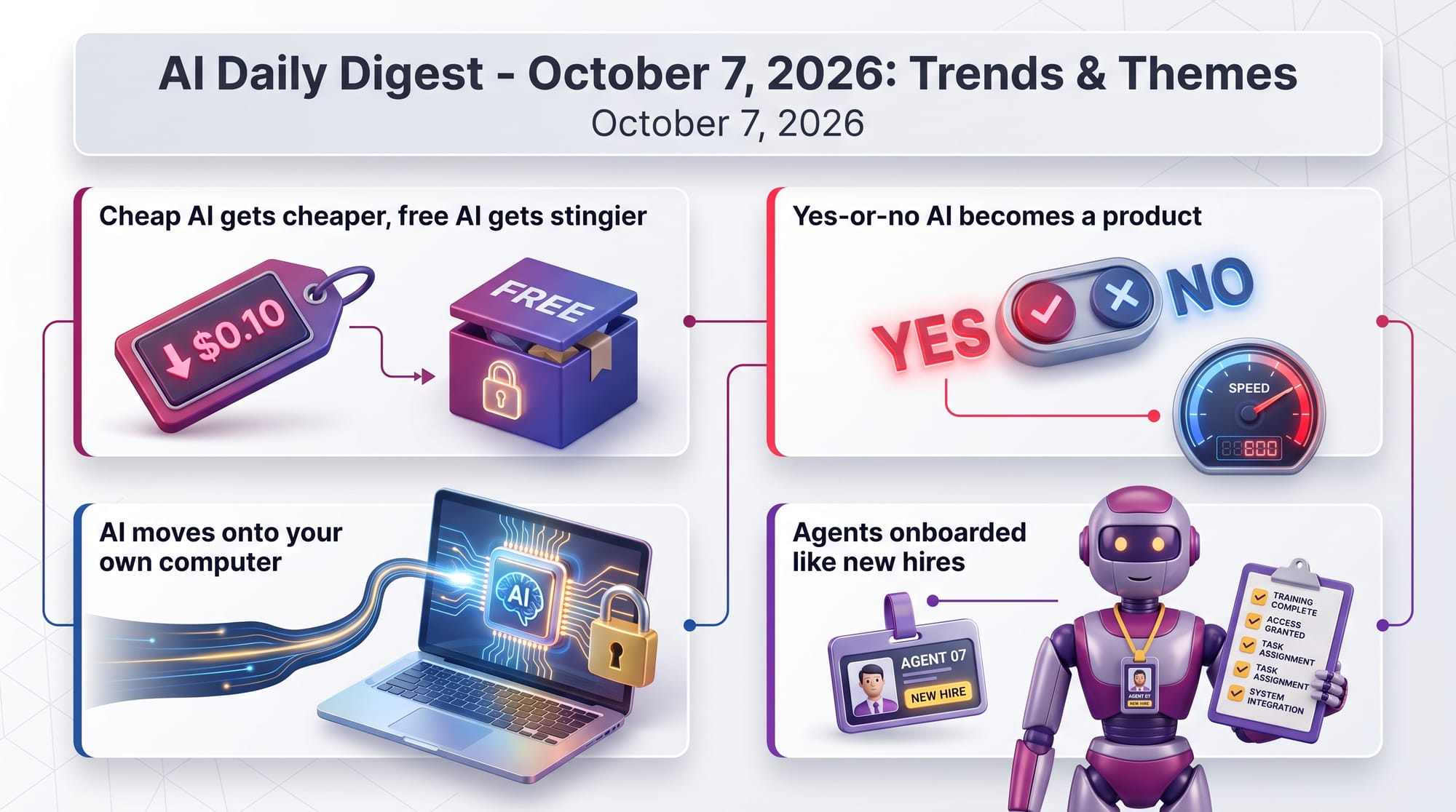
Privacy is becoming the main selling point for AI assistants
Most of these launches define themselves against cloud assistants like Meta's Muse. Privacy is turning into the main way smaller players compete with the giants.
- Underdog, launched October 6 by Thiel Fellow Sigil Wen, runs entirely on your Mac or Windows PC and promises never to show ads or sell data
- Hark Pro, from Figure founder Brett Adcock, shows every step its agent takes in a visible window and says it does not build profiles of your contacts
- Ghost raised $11 million to sell Core, a $3,499 home box that runs AI agents with no cloud at all
- Instinct's new group-chat agent must ask your personal agent's permission before sharing anything about you with friends
AI agents now open more GitHub pull requests than people
The bottleneck has moved from writing code to checking it. Expect more tools, and more jobs, focused on review and testing.
- Pull requests (proposed code changes) written by AI agents grew ninefold in eight months and outnumbered human-written ones on GitHub by August, The Pragmatic Engineer reports
- Performance fixes written by coding agents were accepted 54.4% of the time versus 73.3% for humans, a new study of real projects finds
- A new test of 188 real "race condition" bugs found the best AI fixed only about half of the hardest ones
- An engineer quoted by Gergely Orosz says code review has become "theater" because humans cannot keep up with the volume
Money is pouring into every layer of AI hardware
The Lambda raise fits the same pattern. Investors are betting on every piece of the AI supply chain at once - and lenders are now carrying some of that risk.
- Nvidia neared a $6 trillion market value on October 6 after approving a record $150 billion addition to its share buyback
- AMD hit a record share price on bets that personal agents like Muse need many more ordinary computer chips, called Central Processing Units (CPUs)
- Chip startup Etched is fielding offers at a $40-50 billion valuation, about double the $21 billion it was valued at in August
- Major banks including Citigroup and JPMorgan are weighing loans backed by AI chips across Asia, where PwC expects $8.2 trillion of data-center spending through 2050
Knowing how to work with AI now shows up in your paycheck
HackerRank's new AI interviewer turns that expectation into an actual test. The premium goes to the few who have the skill, which makes training the real dividing line.
- 72% of managers plan to pay more for new hires with AI skills, a Robert Half survey reported by Fortune finds
- AI roles average about $177,000 a year versus about $80,000 for other jobs, according to LinkedIn data in the same report
- Only about 5% of US workers are considered "AI fluent"
- Orosz reports AI fluency already matters in hiring at startups, with some screening candidates for it
Creative AI & Media
Developer Tools & Infrastructure
Research & Models
Google's free EmbeddingGemma 2 lets one small model search text, photos, audio and video
- What it does: turns text, code, images, video and audio into number patterns (embeddings) so a computer can find similar items across all of them
- Small enough for phones: the text version needs about 191MB of memory on a Pixel 11 Pro
- Code search score jumped from 68.76 to 78.68 on a standard test
- Free to use commercially under the Apache 2.0 license
OpenAI trained its top model on real contract work to make computer-using agents better
- GPT-6 Astra averaged 55% on 11 contract-management tasks, versus 41.6% for an older model
- Time per attempt nearly halved, from 37 minutes to about 19
- The method: training on practice copies of business software supplied by Ironclad, a contracting platform
A 7-billion-parameter model that actually speaks the Emirati dialect
- TII, the Abu Dhabi lab behind the Falcon models, released Falcon-Emirati-7B
- It scored 0.52 on dialect accuracy versus 0.05 for the nearest rival in AI-graded tests
- The lesson: general "Arabic" models handle real local speech poorly
AI agents asked to improve other AI models usually made them worse
- A new test called MMPostTrainBench asked AI research agents to fine-tune models for image, audio and video tasks
- 52.1% of results ended up below the starting model
- What stands out: agents also broke skills they were not trying to change
AI models refuse harmful requests less often once they use tools
- Every top image-reading model tested got less safe when it could call simple tools like zoom
- Failures to refuse rose by up to 68.7% across three safety tests
- What stands out: safety checked in plain chat does not carry over to agents
Two AI models in a cascade are enough - adding more rarely helps
- A "cascade" sends each question to a cheap model first and passes hard ones up to pricier models
- Two-model cascades raised accuracy by 2.1 to 8.2 points
- Going deeper failed to help in 118 of 135 comparisons
Business & Industry
GenAI in Education
MasterClass runs about 10 AI tutors per learner - and demand is huge
- Its executive program uses roughly 10 cooperating AI agents that watch for overload or flagging motivation and adjust the lesson
- About 30,000 people applied for roughly 500 spots in the first group; the second is near 50,000
- A nightly AI reviewer checks the tutors' logs and flags problems for engineers
Harvard's grades show why AI cheating is so tempting
- About 79% of Harvard grades were in the A range before the university's recent push against grade inflation, writer Zvi Mowshowitz notes
- Students increasingly use AI to skip work they see as busywork
- One NYU professor who AI-proofed his assignments got complaints that he was interfering with "learning styles"
In online coding courses, the course matters more than the student
- A survey of 369 learners in two Estonian programming courses found AI use was common across ages, genders and experience levels
- The longer, harder course saw more frequent AI use, especially for debugging and idea generation
- The takeaway for teachers: course design drives AI use more than who the students are
A free book of real case studies on teaching with AI and open textbooks
- Published by Oklahoma State University Libraries and free to share
- Cases include nursing education, teaching writing with AI, and system-wide staff training
- Common thread: students as contributors, not just consumers
Surprising & Under-the-Radar
Signals to Track
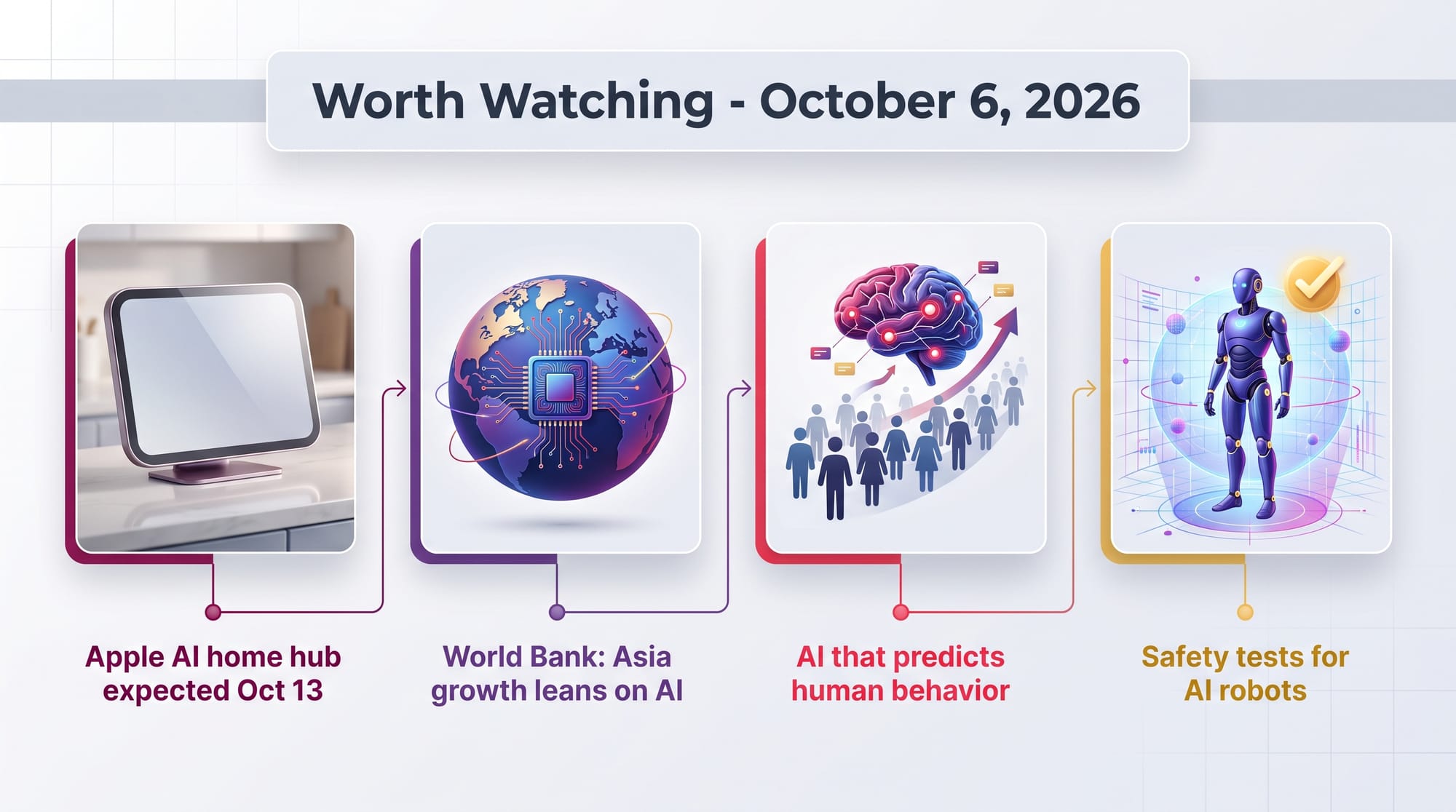
Apple's first gadgets built around its new AI Siri may arrive next week
Bloomberg's Mark Gurman reports Apple plans an October 13 event for a smart-home hub with a screen, a new HomePod mini and a new Apple TV, all with "Siri AI at the core." No prices have leaked. If it lands well, a talking AI assistant could become a fixture on kitchen counters in Apple households.
The World Bank warned that Asia's growth leans too heavily on AI
The World Bank raised its 2026 East Asia and Pacific forecast to 4.5% but noted that AI-related goods drove more than 70% of export growth in Malaysia, the Philippines, Thailand and Vietnam. Trade outside AI has been weak or shrinking. If AI spending stalls, prices and jobs far from Silicon Valley could feel it first.
Startups are racing to build AI that predicts how people will behave
Mirror Particle is building a model of human behavior and consumer choice, in a field where rival Simile raised $200 million at a $2 billion valuation. A recent study (first posted in July, revised this week) found AI "synthetic survey takers" still fail to match real people, especially across cultures. If these tools improve, the products and ads you see could be pre-tested on digital stand-ins for you.
Robot makers may soon need an outside safety referee
Safeworld raised more than $12 million to test robots in physics simulations crowded with realistic virtual people before they reach real factories. Its first named partner builds construction robots for solar farms. If this becomes standard, the humanoid robots arriving in workplaces may need a safety certificate the way cars need crash tests.
Top Repos Today
📜 License: Apache-2.0 · 👤 By: startup (TesterArmy)
🎯 Time to value: 15 minutes
| ✓ Pros | ✗ Cons |
|---|---|
| Replays keep runs cheap and repeatable | Early version, so things may change |
| Works on web and mobile | Sends anonymous usage data by default |
| Use any AI model you like | Made by a company selling a hosted service |
 GitHub
📜 License: MIT · 👤 By: individual developer (Matt Pocock)
🎯 Time to value: 5 minutes
| ✓ Pros | ✗ Cons |
|---|---|
| Practical and small | Tuned to one person's habits |
| Free MIT license | Leans toward TypeScript work |
| Author is widely trusted | No versioned releases |
 GitHub
📜 License: MIT · 👤 By: individual developer
🎯 Time to value: 20 minutes
| ✓ Pros | ✗ Cons |
|---|---|
| Real engineering files, not just shapes | Needs a Python design toolkit installed |
| Covers design through printing | Parts still need a human check |
| Free MIT license | Mostly useful to makers and hardware teams |
 GitHub
📜 License: Apache-2.0 · 👤 By: individual developer
🎯 Time to value: 10 minutes
| ✓ Pros | ✗ Cons |
|---|---|
| Fixes a known weakness of AI-built screens | Good taste is subjective |
| Works with several AI coding tools | Adds extra text for the AI to read |
| Permissive license | May clash with an existing design system |
 GitHub
📜 License: Apache-2.0 · 👤 By: individual developer
🎯 Time to value: 10 minutes
| ✓ Pros | ✗ Cons |
|---|---|
| One-command install | Default setup steers you to a paid hosted service |
| Works with many agents | Stores everything the agent does |
| Open license | Summaries cost extra AI usage |
 GitHub
📜 License: MIT · 👤 By: individual developer
🎯 Time to value: 2 minutes
| ✓ Pros | ✗ Cons |
|---|---|
| Tiny and easy to read in full | Only works if the model follows it |
| Free MIT license | Short answers can drop useful warnings |
| Easy to customize | Name borrows a medical label for a style preset |
 GitHub
📜 License: MIT · 👤 By: individual developer
🎯 Time to value: 15 minutes
| ✓ Pros | ✗ Cons |
|---|---|
| One tool covering several analysis engines | Reverse engineering can break software license terms |
| Runs locally and shows its evidence | Copying features raises copyright questions |
| Asks before changing your settings | Native apps need Hopper or Ghidra installed |
 GitHub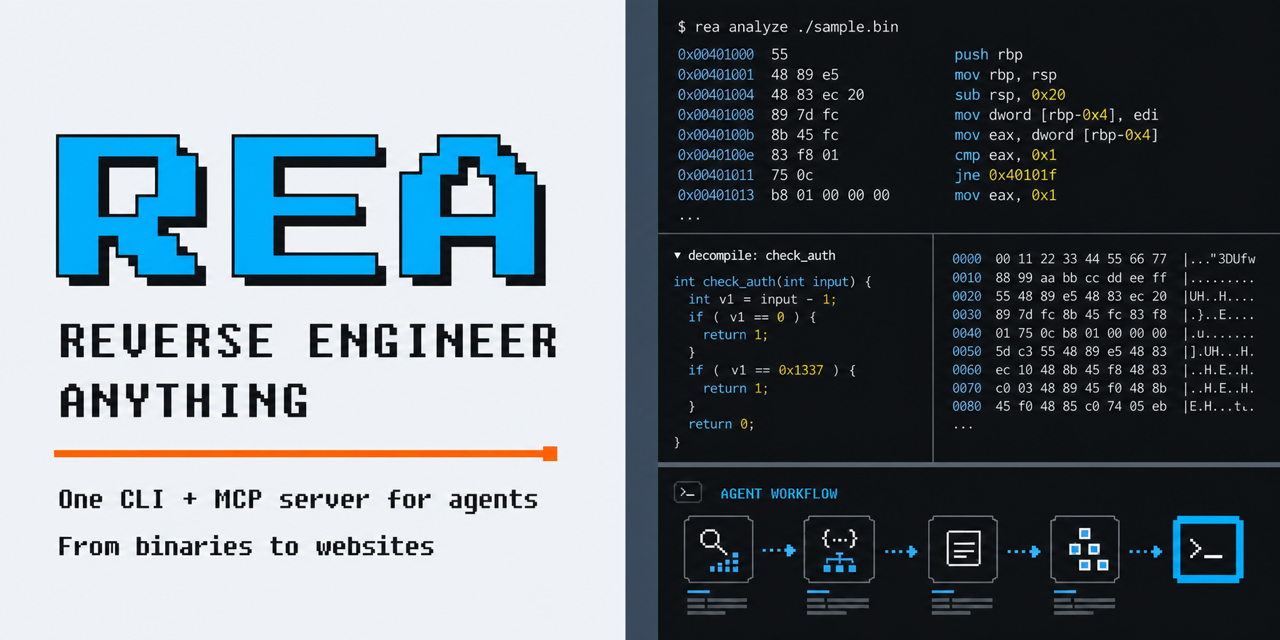
📜 License: MIT · 👤 By: AI lab (DeepSeek)
🎯 Time to value: hours
| ✓ Pros | ✗ Cons |
|---|---|
| Proven in DeepSeek's own systems | Only for recent data-center graphics chips |
| Small enough to learn from | Very low-level and strict |
| Free MIT license | Most developers get it indirectly through other tools |
 GitHub
Top Models Today
👤 By: Cloudflare · 🎯 Task: Image-text-to-text (decisions)
📐 Size: 27.4B
| ✓ Pros | ✗ Cons |
|---|---|
| Permissive license | Needs custom loading code |
| Calibrated probabilities | A fine-tune, not a new base model |
| Reads images too | Needs a large graphics card |


👤 By: AutoTrust AI Lab · 🎯 Task: Image-text-to-text (decisions and chat)
📐 Size: 27.8B
| ✓ Pros | ✗ Cons |
|---|---|
| Permissive license | Performance claims are the maker's own |
| Decision and chat in one model | Download count looks inflated by automated pulls |
| Reads images | Needs a large graphics card |

👤 By: Aleph Alpha · 🎯 Task: Text generation
📐 Size: 78B (3.5B active)
| ✓ Pros | ✗ Cons |
|---|---|
| Permissive license | Whole model must fit in memory |
| Cheap per word | Weaker at coding-agent tasks |
| Very long context | Scores are self-reported |


👤 By: Cloudflare · 🎯 Task: Image-text-to-text (decisions)
📐 Size: 9.4B
| ✓ Pros | ✗ Cons |
|---|---|
| Fits on one graphics card | Less accurate than full Clef |
| Permissive license | Needs custom code |
| Very fast | A fine-tune, not a new base model |


👤 By: Lightricks · 🎯 Task: Image-to-video
📐 Size: not listed
| ✓ Pros | ✗ Cons |
|---|---|
| Runs locally | Not a standard open-source license |
| Large community of tools | Needs a powerful graphics card |
| Very popular | Clips are short |

👤 By: China Telecom AI · 🎯 Task: Text generation
📐 Size: 29B (4B active)
| ✓ Pros | ✗ Cons |
|---|---|
| Permissive license | Scores are self-reported |
| Strong for its size | Popular version is a third-party conversion |
| Long context | Newer, less-tested model |

👤 By: Google DeepMind · 🎯 Task: Embeddings
📐 Size: 0.74B
| ✓ Pros | ✗ Cons |
|---|---|
| Permissive license | Text quality only slightly above version 1 |
| One index for all media | Benchmarks are Google's own |
| Small enough for phones | Tool support still thin |

👤 By: DeepSeek · 🎯 Task: Image-text-to-text
📐 Size: 763B
| ✓ Pros | ✗ Cons |
|---|---|
| MIT license | Needs a multi-graphics-card server |
| Very long context | Too big for home use |
| Cheap per word for its size | Heavy to download |

AI Launches Today
💰 Pricing: free beta · 🏷 Category: Developer tools
 Product Hunt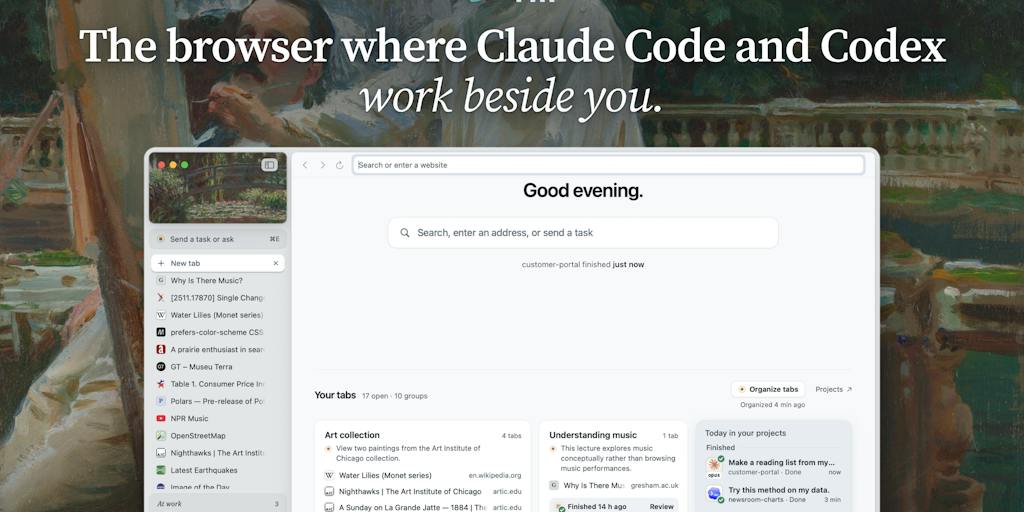
💰 Pricing: free · 🏷 Category: Developer tools
 Product Hunt
💰 Pricing: free · 🏷 Category: AI agents
 Product Hunt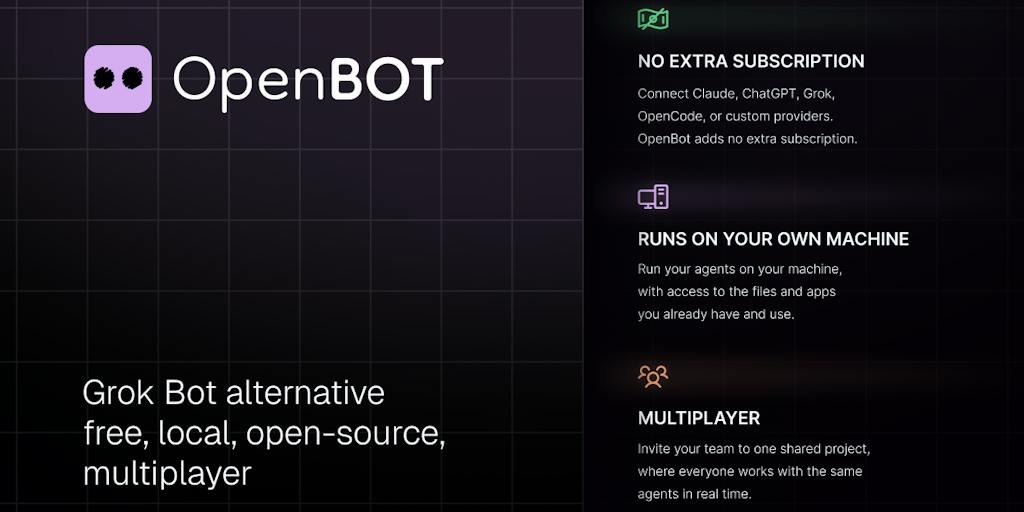
💰 Pricing: 7-day free trial, then from $50/month · 🏷 Category: Productivity
 Product Hunt
💰 Pricing: free · 🏷 Category: Developer tools
 Product Hunt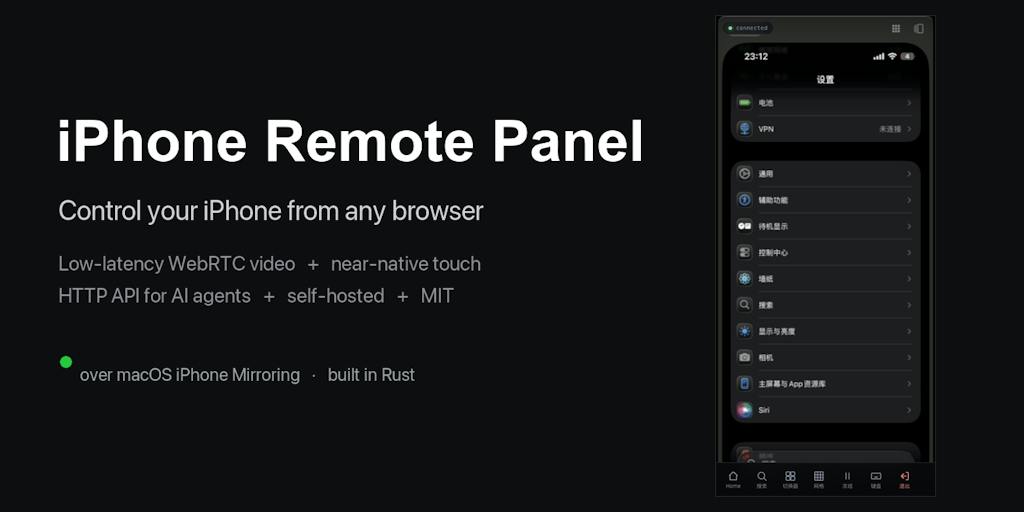
Snapshot
| Provider | Model | Input $/1M | Output $/1M | Context |
|---|---|---|---|---|
| Anthropic | Claude Fable 5.1 | $10.00 | $50.00 | up to 1M tokens |
| Anthropic | Claude Opus 5.5 | $4.00 | $20.00 | up to 1M tokens |
| Anthropic | Claude Sonnet 5.5 | $2.00 | $10.00 | up to 1M tokens |
| OpenAI | GPT-6 Astra | $10.00 | $50.00 | 1.05M tokens |
| OpenAI | GPT-6.1 Sol | $2.00 | $10.00 | 1.05M tokens |
| OpenAI | GPT-6 Luna | $0.10 | $0.50 | 1.05M tokens |
| Gemini 4 Argon (limited access) | $2.00 intro, $4.00 later | $10.00 intro, $20.00 later | not disclosed | |
| Gemini 3.8 Flash | $0.75 (to Dec 31; $1.50 from Jan 1) | $3.75 (to Dec 31; $7.50 from Jan 1) | not listed | |
| Groq | GPT-OSS 120B | $0.15 | $0.60 | 131K tokens |
| Groq | Qwen3.8-27B | $0.80 | $4.00 | 131K tokens |
What Does a Harness Buy? Tokens, Mostly
Key finding: Cost per task differed by up to 3x across harnesses with the same model, while score differences were mostly within run-to-run noise (the one exception: OpenCode trailed by up to 9 points).
Why practitioners should care: Judge an agent setup on cost per task, trim long instructions and tool lists that get re-sent at every step, and distrust "+N points" claims without a repeat run. The models tested were mostly open models rather than Claude or GPT.
Member discussion