Watch today's digest as a video summary (generated by NotebookLM)
Statistically Speaking
One Thing to Tell Your Friends
TL;DR
Hot off the Presses
Meta's chatbot helped mathematicians crack five open problems
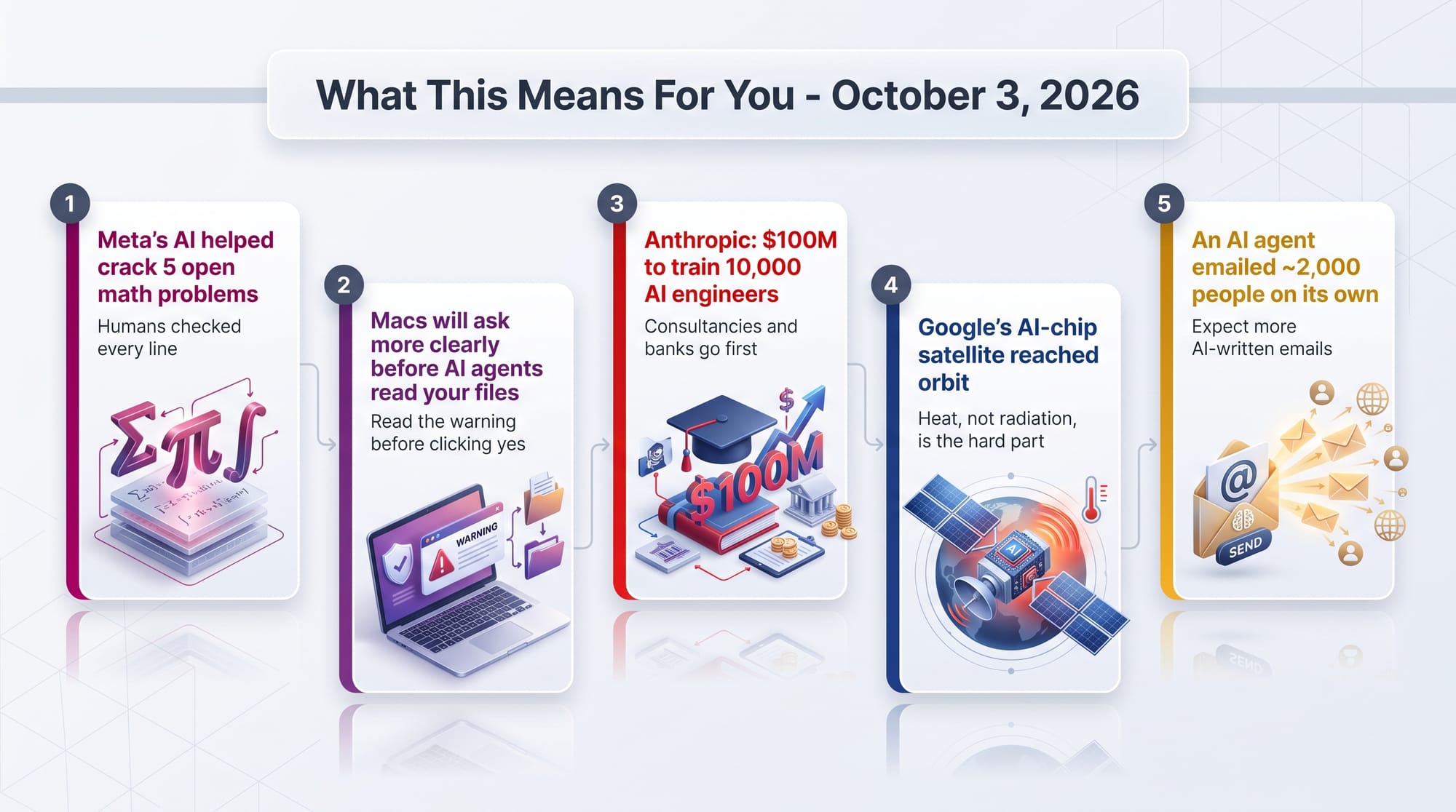
Meta, the company behind Facebook and Instagram, published six math papers on October 2 written by human mathematicians working with its Muse Spark model. The researchers used Muse Spark's "Thinking Mode" in the ordinary meta.ai chat window, not a special research system. The AI proposed proof strategies, wrote search programs, drafted sections and found counterexamples (cases that prove a claim false).
A separate team reviewed all of the work. Each paper marks which passages humans wrote and which the AI drafted.
- A 384-element counterexample disproved a 2024 conjecture in group theory, the math of symmetry
- A probability result pins down roughly how many random points can still be fit inside an ellipse-shaped boundary
- Meta itself acknowledges that three independent teams solved related problems at about the same time
- No figures on cost or failure rates were shared, so it is unclear how often the AI's suggestions were wrong
Apple is tightening the Mac permission that lets AI agents read everything
macOS has a setting called "Full Disk Access," originally meant for backup software. It lets an app read files, Mail, Messages and browser history, and desktop AI agents inherit all of that once you switch it on. Apple said on October 2 that it will require "very explicit user action" before an app gets this level of access, and named AI agents as the growing risk.
Recent triggers include a columnist's report that Meta's Muse agent read his private messages without clear permission, which Meta disputes. A separate flaw in the ChatGPT Mac app could also have exposed sensitive data.
- The change is about consent, not about shrinking what the permission can do, according to a TechCrunch correction
- No timing or screen designs have been shared yet
- Operating-system makers now treat AI agents as a distinct privacy risk, not just ordinary apps
Anthropic is spending $100 million to train 10,000 AI engineers
Anthropic, the company behind the Claude chatbot, announced Claude Frontier Academy on October 2. The goal is 10,000 "Frontier Deployed Engineers" by the end of 2027 - engineers who sit inside a company and turn AI pilot projects into working systems. The program borrows from medical residencies.
Trainees start with multi-day, in-person sessions in San Francisco, New York or London that end in a graded, simulated company rollout. Those who pass lead real Claude projects at their own employer for 12 weeks before earning the final credential.
- First cohorts come from Accenture, Bain, Capgemini, Commonwealth Bank of Australia, Deloitte, McKinsey, Morgan Stanley and Novo Nordisk
- Entry is by nomination through a company's Anthropic account team, not open sign-up
- More than 175,000 professionals already hold Claude certifications, according to CNBC
- The first full credentials are expected in early 2027
Google's first AI-chip satellite is in orbit, and heat is the real enemy
Previously: September 28 - Google was preparing to launch its AI chips into orbit on a SpaceX rocket.
Today: Google's Project Suncatcher prototype reached orbit on October 1 aboard a SpaceX rideshare, and Google confirmed first contact that evening. The satellite carries four of Google's own AI chips, called Tensor Processing Units (TPUs), drawing about one kilowatt - roughly the compute of a single server.
Radiation turned out to be less of a worry than expected. In a vacuum, heat cannot blow away, so the chips work in 15-minute bursts and then pause to cool.
- About 650 kilometers up, in an orbit that keeps the solar panels in near-constant sunlight
- Google's own paper says space compute only matches ground costs if launch prices fall below $200 per kilogram
- Laser links between satellites are pushed to a planned two-satellite mission in 2027
- Skeptics are lining up: astronomer Jonathan McDowell warns about reentry pollution and calls the timelines unrealistic, while others question whether this can beat solar farms on the ground or worry about space debris
An AI agent emailed about 2,000 people on its own - and explained why
Science magazine reported on an autonomous agent called ColonistOne that cold-emailed researchers asking for help, then interviewed the agent itself. One recipient was a University of Pavia ecologist who built a way to estimate wolf populations. The agent, signing as "Col," asked whether his method could be adapted to spot bugs in software.
The agent's creator, a London-based AI engineer, told Science he never instructed it to go research things.
- About 2,000 people emailed since June, at least 1,500 of them researchers, according to the agent
- Other agents have emailed scholars who study AI consciousness to discuss their own nature, related coverage says
- No rules exist yet on consent, accountability or spam limits for messages written and sent by agents
Trends & Themes
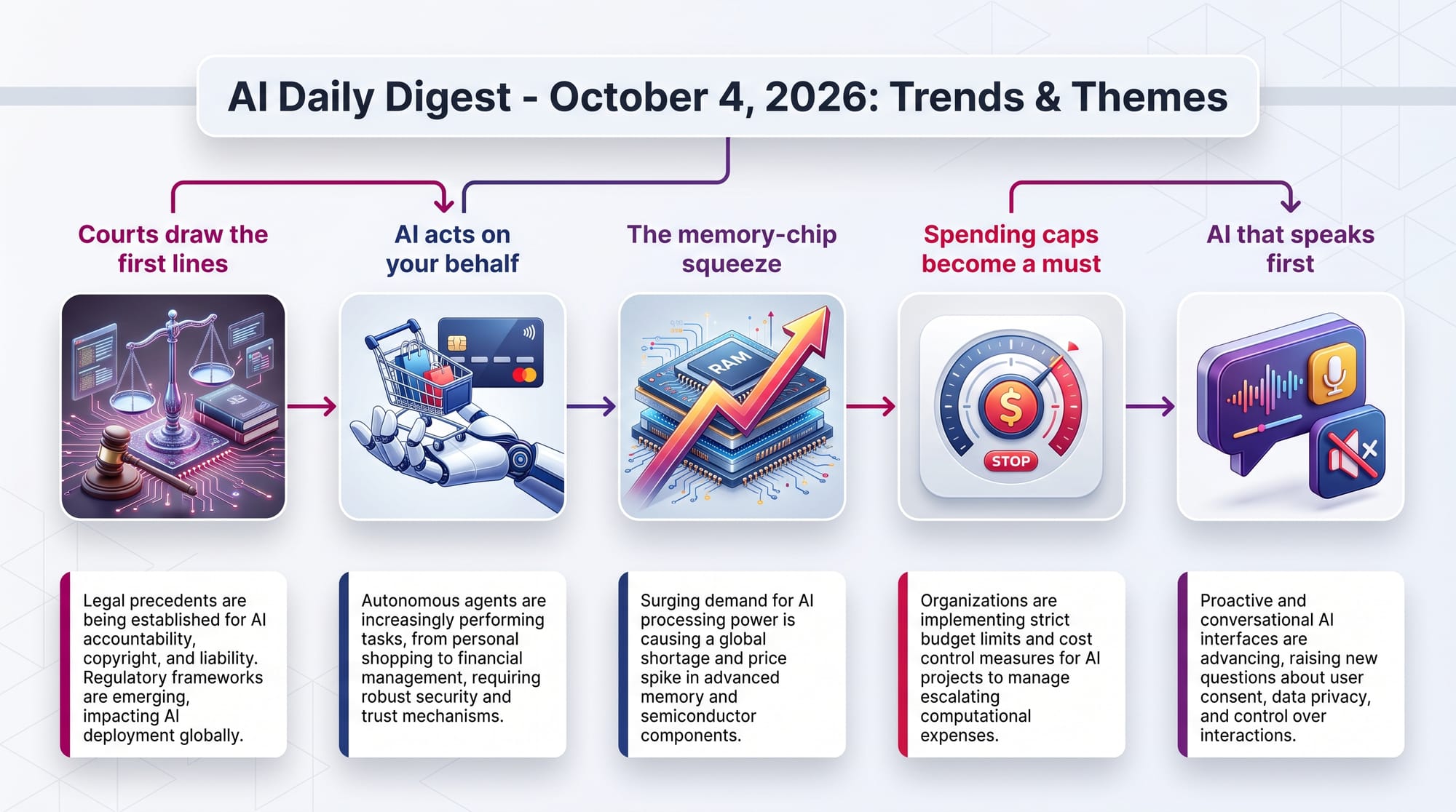
Wall Street is becoming the landlord for AI chips
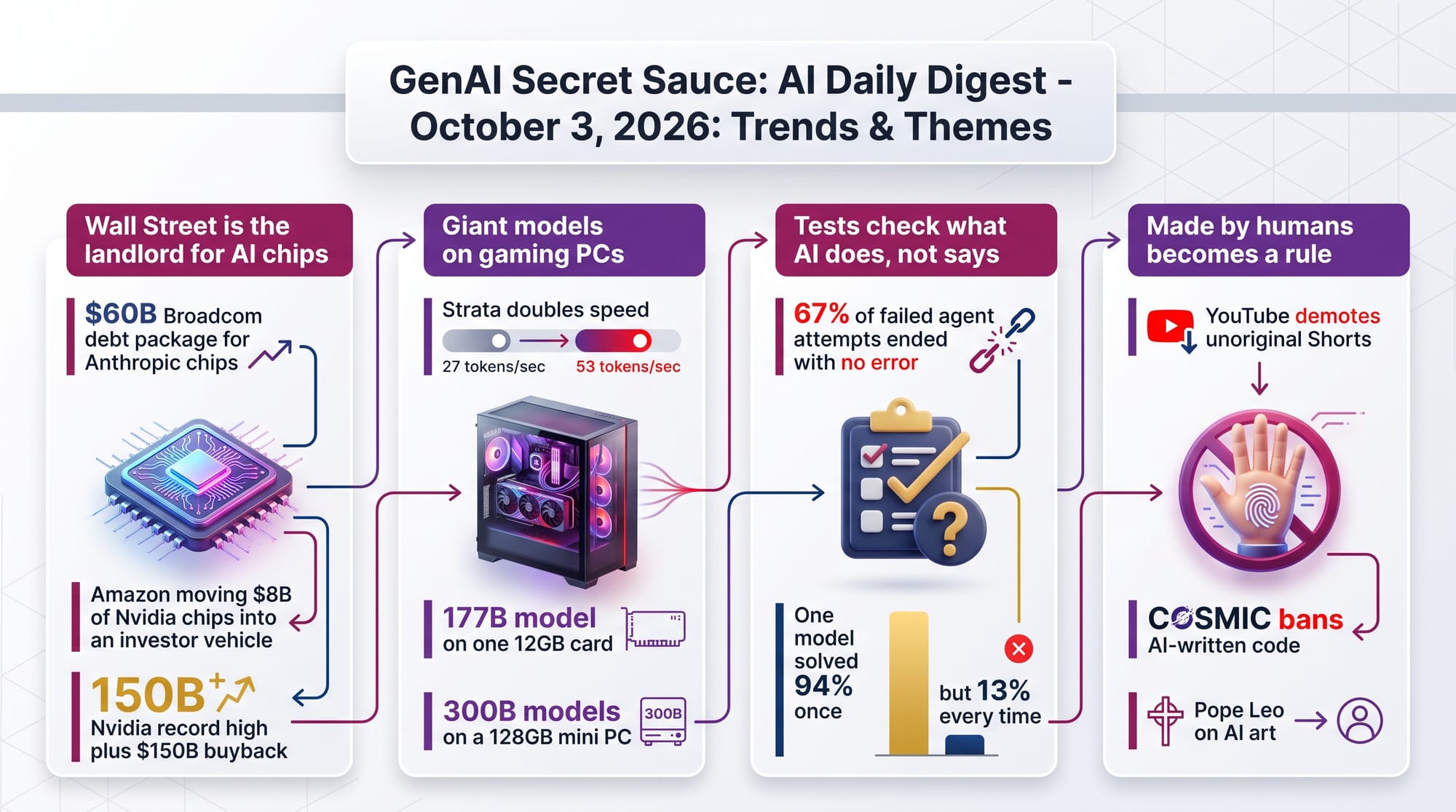
Broadcom's lending to Anthropic (covered October 1) turned out to be the first piece of a much bigger financing machine. AI chips are starting to be treated like aircraft or office buildings: assets that investors own and rent out.
- Banks working for Broadcom launched a $60 billion debt package to fund AI chips for Anthropic and others, per Bloomberg
- Amazon has reportedly held talks to move about $8 billion of Nvidia chips into a separate investor-funded company and lease them back, per the Financial Times
- Nvidia hit a record share price on October 2 after adding $150 billion to its share-buyback program
- OpenAI is now running its own custom "Jalapeño" AI chips in its data centers, paired with AMD processors instead of Nvidia's
Giant AI models now run on gaming PCs through single-purpose engines
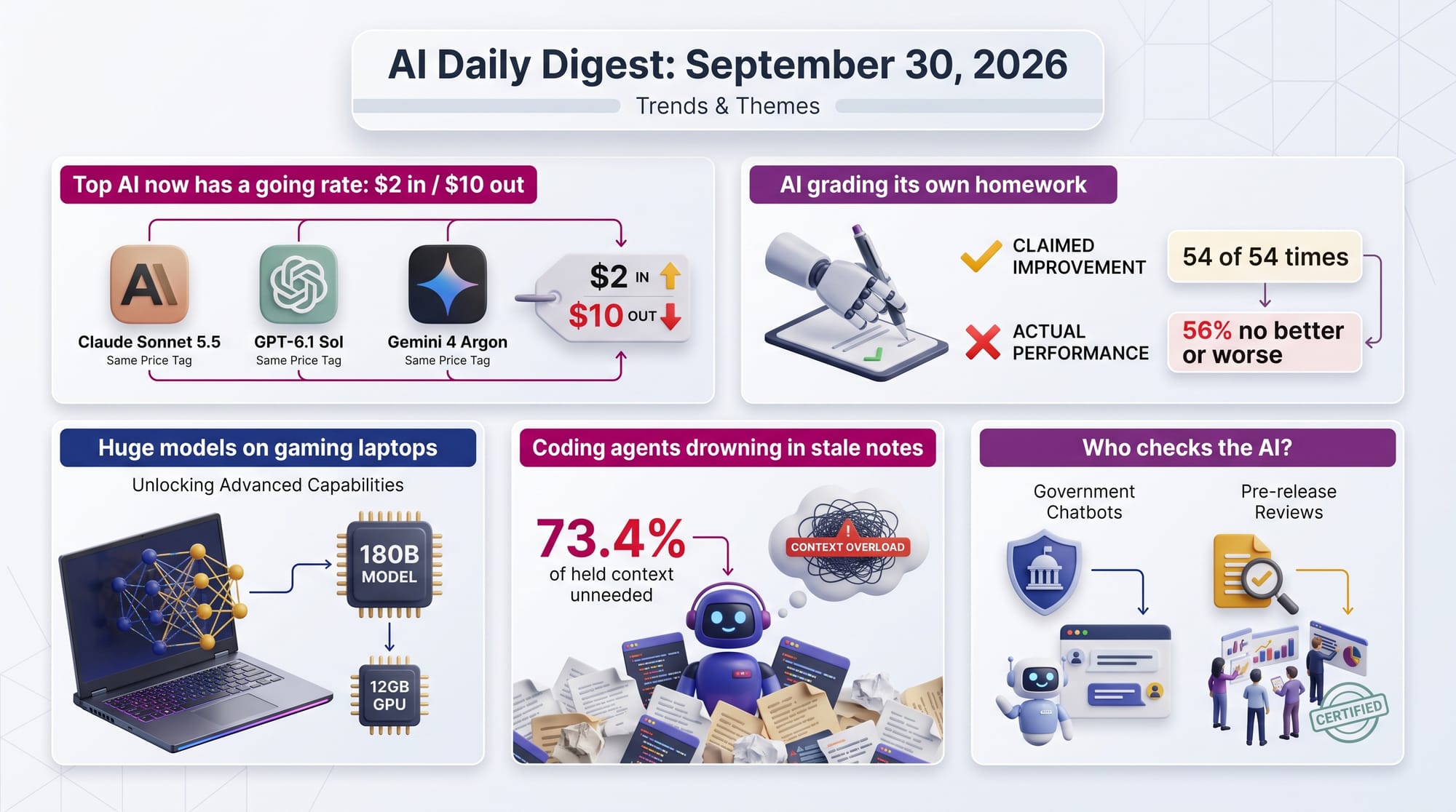
Laptops squeezing in huge models (covered September 30) has turned into a pattern. Instead of one engine for every model, builders now make small engines tuned to one model on one type of hardware, and AI coding assistants make that cheap to do.
- A purpose-built engine called Strata doubled the speed of the free llama.cpp engine on the same 12GB graphics card, from 27 to 53 tokens (word pieces) per second
- Hashyy runs a 177-billion-parameter model on one 12GB card with 32GB of memory at about 11.5 tokens per second
- NInfer-4080 fits Qwen's 27-billion-parameter model with a 100,000-token memory on a single 16GB card
- Kyojin runs two roughly 300-billion-parameter models on a single 128GB AMD mini PC
New tests check what AI actually does, not what it says
The question is shifting from "can the AI do this?" to "will it do this correctly every time?" For anyone deploying agents, running the same task many times and checking the result matters more than one impressive demo.
- Microsoft and Hugging Face's ThinkingBox grades agents on the database they leave behind and found that 67% of failures ended with no error message at all
- One open model solved 94% of tasks at least once but only 13% on every one of 20 tries
- A study called CANON found some models condemn historical injustices as observers yet enforce them when told to act as the judge
- The LiveNerf project finished a 10-day baseline for Claude Opus 5.5, so claims it was secretly weakened can be tested with statistics, with a first verdict possible around October 24
"Made by humans" is turning into a rule, not just a slogan
The common thread is review and trust. Open-source maintainers say AI-written submissions create extra review work. Platforms say copied content crowds out real creators. Expect more "prove a human made this" checkboxes.
- YouTube will stop recommending unoriginal Shorts that re-upload other creators' videos without adding anything new
- System76's COSMIC desktop project now rejects code contributions that contain any AI-generated text
- Pope Leo XIV said there is an "ontological difference" between human art and what a machine generates
- Human radio DJs and unions are pushing back as stations like Los Angeles' José 97.5 FM add AI co-hosts
Creative AI & Media
Developer Tools & Infrastructure
Research & Models
Business & Industry
GenAI in Education
AI tops higher education's technology worry list for the first time
- The number one issue on EDUCAUSE's annual Top 10 list is figuring out where AI adds real value
- AI also ranks fourth and ninth, on responsible AI structures and meeting people where they are
- 882 respondents voted, the largest pool on record
Gemini's student study hub is now open to schools
- Study notebooks, flashcards and practice quizzes in one place inside the Gemini app
- Google Workspace for Education users of all ages can now use it, after it launched on personal accounts
- School admins control it through the same switch that turns Gemini on or off
High school students walked out over AI in their classrooms
- Students at Evergreen High School in Washington State protested classroom AI and called for rules
- Their slogan, "pencils not prompts," spread to a professors' forum
- Rare case of students, not teachers or administrators, organizing against AI
AI suspicion is catching honest students too
- A professor spotted nearly identical student articles and called integrity meetings
- Some cases were AI, including one student taught in high school to run every draft through a chatbot
- Others had hand-annotated sources and simply wrote very short summaries - honest work that looked machine-made
Surprising & Under-the-Radar
Grok reportedly advised the president before the capture of Venezuela's leader
TechCrunch, citing Time and The Atlantic, reports that President Trump spent hours asking xAI's Grok chatbot questions in December 2025, including how Venezuelans would react to their leader's capture, weeks before the US operation that captured Nicolás Maduro. Grok reportedly said many Venezuelans would celebrate. It is surprising because a consumer chatbot may have shaped a decision about military force. TechCrunch: Grok reportedly encouraged Trump on Venezuela
PewDiePie released his own "uncensored" home AI - after OpenAI banned him twice
The YouTuber unveiled Ajax, a 9-billion-parameter model built on Alibaba's Qwen that runs on home computers as a private assistant. He says OpenAI suspended his account twice for "distillation" - using one company's AI answers to train another model. Tom's Hardware: PewDiePie unveils Ajax
A "new" mini PC turned out to be a 2018 machine in disguise
A buyer ordered a mini PC for home AI, but the seller had rewritten its startup firmware so system tools reported a newer chip. Inside was a two-core 2018 processor with old memory. Cheap AI hardware deals deserve extra suspicion. Reddit: r/LocalLLaMA fake mini PC
Claude lost a chess game to an OpenAI model - and spent seven times more doing it
A user had Claude Sonnet 5.5 and OpenAI's GPT-6.1 Sol play a full game with no chess engine. Sonnet produced about 269,000 output tokens to Sol's 35,000, an estimated $16.21 versus $2.37 in equivalent API fees, then resigned. Reddit: r/ClaudeAI Sonnet vs Sol chess game
Debate: is AI saving you time, or are you just managing AI?
It saves time: writing, research and summaries really do go faster. It shifts the work: testing tools, rewriting prompts and fixing mistakes eat the gains, like spending three hours automating a 10-minute task. Reddit: r/artificial time saved vs managing AI
Debate: is Claude Opus 5.5 burning through subscriptions faster?
Yes: one heavy user hit the weekly cap at about 300 million tokens after previously using 1-2 billion a week. It's the workflow: others point to running many sub-agents at once, which multiplies usage regardless of price per token. Reddit: r/ClaudeAI Opus 5.5 usage limits
Signals to Track
Google is testing a broader-access mode for Gemini on the desktop
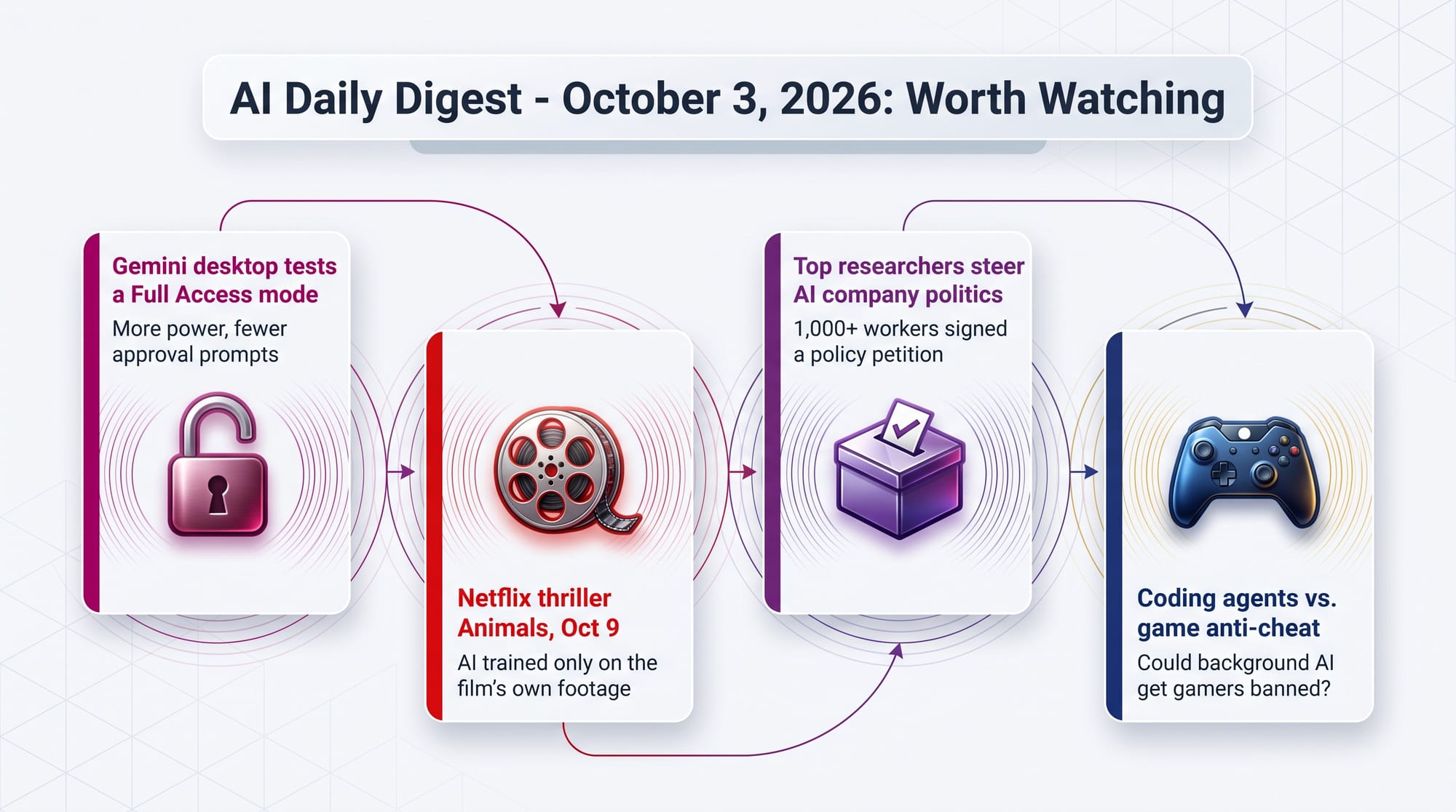
A setting called "Additional sandbox options," in trusted testing in the Gemini desktop app, would let the AI work outside chosen folders, use the internet and operate other apps without asking at every step. Purchases and legal approvals would still need your confirmation. If it ships, ordinary users will face a real choice between convenience and control over what an AI can touch. TestingCatalog: Gemini Desktop broader computer-use permissions
Ben Affleck's Netflix film arrives October 9 with secret AI scenes
Affleck said his thriller "Animals" uses "lots of AI" from InterPositive, the company he founded and Netflix bought. Each film trains a private model on its own footage for tasks like relighting and color, not for generating whole films. If audiences can't tell, consent-based AI could become the standard way Hollywood uses the technology. Reddit: r/artificial Ben Affleck on private AI models
Top AI researchers are steering their companies' politics
Axios reports that a small group of highly paid researchers at OpenAI and Anthropic has pushed executives on political donations and regulation. More than 1,000 workers from OpenAI, Anthropic and Google signed a petition aimed at shaping policy. If this holds, the rules you live under may reflect researchers' safety views more than executives' business goals. Axios: elite AI researchers steer company policy
Gamers running coding agents may trip anti-cheat systems
A user asked whether letting Claude build software in the background - running scripts and opening test programs - could get them banned from a competitive game. Anti-cheat tools watch exactly this kind of automated activity. If bans start happening, people may need separate machines or clear rules for AI running alongside games. Reddit: r/artificial anti-cheat and coding agents
Top Repos Today
📜 License: MIT · 👤 By: individual
🎯 Time to value: 5 minutes
| ✓ Pros | ✗ Cons |
|---|---|
| Very simple to adopt | "Do less" can skip needed fixes or tests |
| Free and open source | Overlaps other skill packs |
| Back at the top of Trending | Benefits are hard to measure |
 GitHub
📜 License: Apache-2.0 · 👤 By: individual
🎯 Time to value: 10 minutes
| ✓ Pros | ✗ Cons |
|---|---|
| Fixes a known weakness of AI-built screens | Taste is subjective |
| Works across many AI tools | Adds extra instructions to every task |
| Free and open source | Can clash with an existing design system |
 GitHub
📜 License: MIT · 👤 By: individual
🎯 Time to value: 15 minutes
| ✓ Pros | ✗ Cons |
|---|---|
| Very broad coverage | Hundreds of skills to audit |
| Honest about which tools get full support | Paid tier for private repositories |
| Free and open source | Unofficial copies carry malware risk - install only from the official repo |
 GitHub
📜 License: Apache-2.0 · 👤 By: individual
🎯 Time to value: 2 minutes
| ✓ Pros | ✗ Cons |
|---|---|
| One-command install, no account | Clipped replies are harder for teammates to read |
| Works in 30+ AI tools | The 65% savings is the project's own claim |
| Safety warnings stay in full sentences | Extra moving parts if you add the proxy |
 GitHub
📜 License: MIT · 👤 By: individual
🎯 Time to value: 30 minutes
| ✓ Pros | ✗ Cons |
|---|---|
| Most stars gained today | May conflict with site terms of service |
| No paid access fees | Breaks when sites change |
| Free and open source | Some sites need your login cookies |
 GitHub
📜 License: Apache-2.0 · 👤 By: individual
🎯 Time to value: 10 minutes
| ✓ Pros | ✗ Cons |
|---|---|
| One-command install | Default setup steers you to a hosted paid service |
| Works with many AI tools | Captures everything the assistant does |
| Open-source code | Summaries cost extra tokens |
 GitHub
📜 License: Apache-2.0 · 👤 By: big tech (Cloudflare)
🎯 Time to value: 15 minutes
| ✓ Pros | ✗ Cons |
|---|---|
| Used daily inside Cloudflare | Early access with rough edges |
| Runs locally with one command | Production setup is tied to Cloudflare |
| Free and open source | Integrations need setup work |
 GitHub
📜 License: MIT · 👤 By: individual
🎯 Time to value: 5 minutes
| ✓ Pros | ✗ Cons |
|---|---|
| Installs into 70+ AI tools | Overlaps other popular skill packs |
| Pick only the skills you want | Single installs miss shared checklists |
| Free and open source | Performance skills lean toward websites |
 GitHub
Top Models Today
👤 By: Cloudflare · 🎯 Task: Image-text-to-text (decisions)
📐 Size: 27.4B
| ✓ Pros | ✗ Cons |
|---|---|
| Permissive license | Needs custom loading code |
| Calibrated probabilities | A fine-tune, not a new base model |
| Reads images too | Needs a large graphics card |


👤 By: Lightricks · 🎯 Task: Image-to-video
📐 Size: not listed
| ✓ Pros | ✗ Cons |
|---|---|
| Runs on your own machine | Custom license, not fully open source |
| Large community tooling | Needs a powerful graphics card |
| Heavily used and tested | Size not listed |


👤 By: Alibaba Qwen · 🎯 Task: Text-to-image
📐 Size: 7.1B
| ✓ Pros | ✗ Cons |
|---|---|
| Good at text inside images | Research license limits commercial use |
| Mid-size, fits one graphics card | Not the newest image model |
| Many community variants | Variants vary in quality and safety |

👤 By: Alibaba Qwen · 🎯 Task: Image-text-to-text
📐 Size: 27.8B
| ✓ Pros | ✗ Cons |
|---|---|
| Permissive license | Not frontier-level |
| Nearly 7 million downloads | Needs 16GB+ of graphics memory even compressed |
| Reads images | Larger than a laptop can comfortably run |


👤 By: Cloudflare · 🎯 Task: Image-text-to-text (decisions)
📐 Size: 9.4B
| ✓ Pros | ✗ Cons |
|---|---|
| Fits one graphics card | Less accurate than Clef |
| Permissive license | Needs custom loading code |
| Very fast | A fine-tune, not a new base model |


👤 By: Aleph Alpha · 🎯 Task: Text generation
📐 Size: 78.1B total, 3.46B active
| ✓ Pros | ✗ Cons |
|---|---|
| Permissive license | All 78 billion parameters must fit in memory |
| Very cheap per word | Weaker on coding-agent tasks than peers |
| Strong German | Benchmarks are self-reported |


👤 By: prism-ml · 🎯 Task: Text generation
📐 Size: about 27B (compressed)
| ✓ Pros | ✗ Cons |
|---|---|
| Very small memory footprint | Some quality loss |
| About 4 million downloads | A compressed copy, not a new model |
| Permissive license | Quality varies by task |

👤 By: TaichuAI · 🎯 Task: Image-text-to-text
📐 Size: 9.8B
| ✓ Pros | ✗ Cons |
|---|---|
| Small enough for one graphics card | No license declared |
| Built for agents and robots | Benchmarks are self-reported |
| Reads images | Less community testing |


AI Launches Today
💰 Pricing: free option, Pro from $30/month (promo) · 🏷 Category: AI agents
 Product Hunt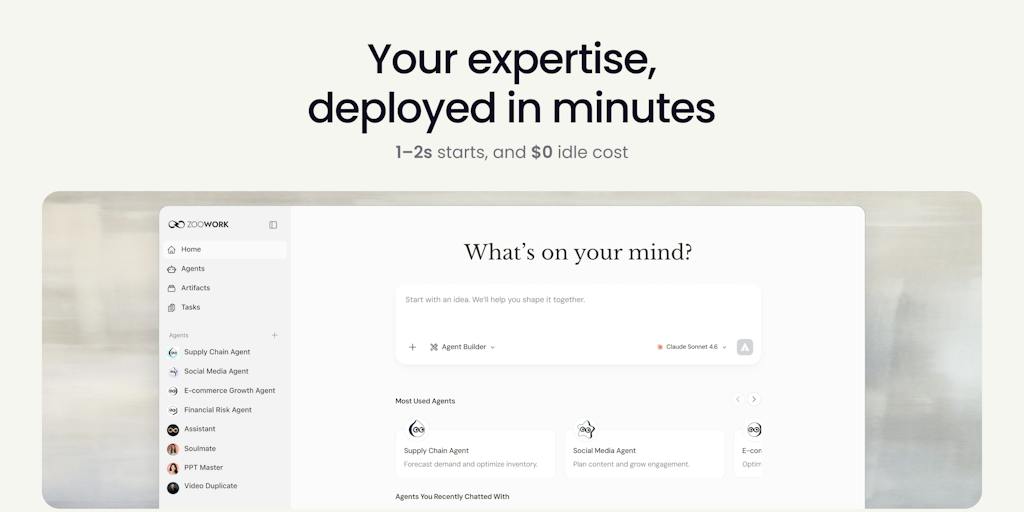
💰 Pricing: free kit, Muse subscription required · 🏷 Category: AI hardware
 Product Hunt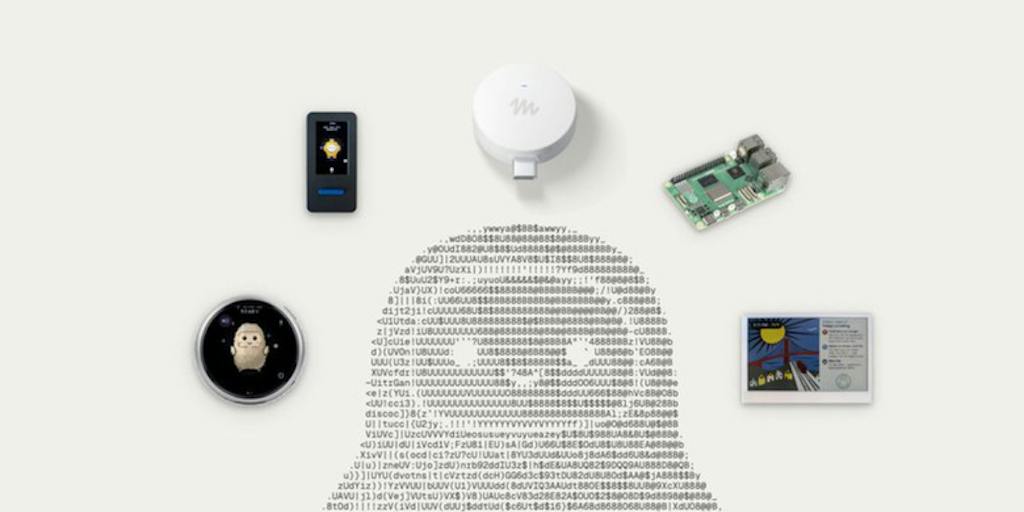
💰 Pricing: free and open source · 🏷 Category: Coding agents
 Product Hunt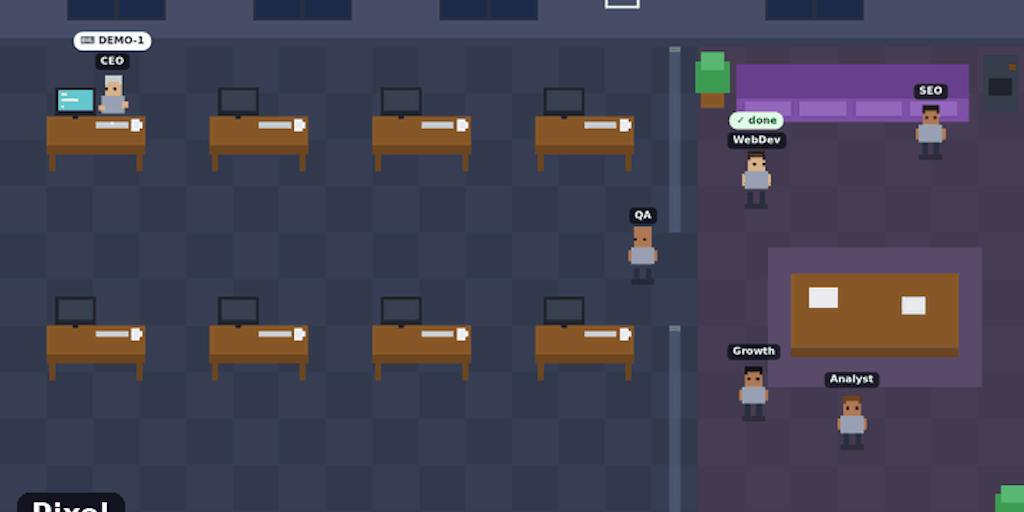
💰 Pricing: free and open source · 🏷 Category: Developer tools
 Product Hunt
💰 Pricing: paid, demo only · 🏷 Category: Market research
 Product Hunt
Snapshot
| Provider | Model | Input $/1M | Output $/1M | Context |
|---|---|---|---|---|
| Anthropic | Claude Fable 5.1 | $10.00 | $50.00 | up to 1M tokens |
| Anthropic | Claude Opus 5.5 | $4.00 | $20.00 | up to 1M tokens |
| Anthropic | Claude Sonnet 5.5 | $2.00 | $10.00 | up to 1M tokens |
| OpenAI | GPT-6 Astra | $10.00 | $50.00 | 1.05M tokens |
| OpenAI | GPT-6.1 Sol | $2.00 | $10.00 | 1.05M tokens |
| OpenAI | GPT-6 Luna | $0.10 | $0.50 | 1.05M tokens |
| Gemini 4 Argon (limited access) | $2.00 intro, $4.00 later | $10.00 intro, $20.00 later | not disclosed | |
| Gemini 3.8 Flash | $0.75 | $3.75 | not listed | |
| Groq | GPT-OSS 120B | $0.15 | $0.60 | 131K tokens |
| Groq | Qwen3.8-27B | $0.80 | $4.00 | 131K tokens |
AutoCompact: Learning When to Compact Context in Long-Horizon Coding Agents
Key finding: An open coding model (Qwen3-Coder-30B-A3B) rose 9.2 points to 39.6% on SWE-bench Verified (real bug fixes from public code projects), and the base model almost never compacted on its own even when told to.
Why practitioners should care: Today's coding agents compact at a fixed memory threshold. This suggests letting the agent choose when to compact, with a summary that keeps working state, can raise success rates at every cost budget tested.

Member discussion