Statistically Speaking
One Thing to Tell Your Friends
TL;DR
Hot off the Presses
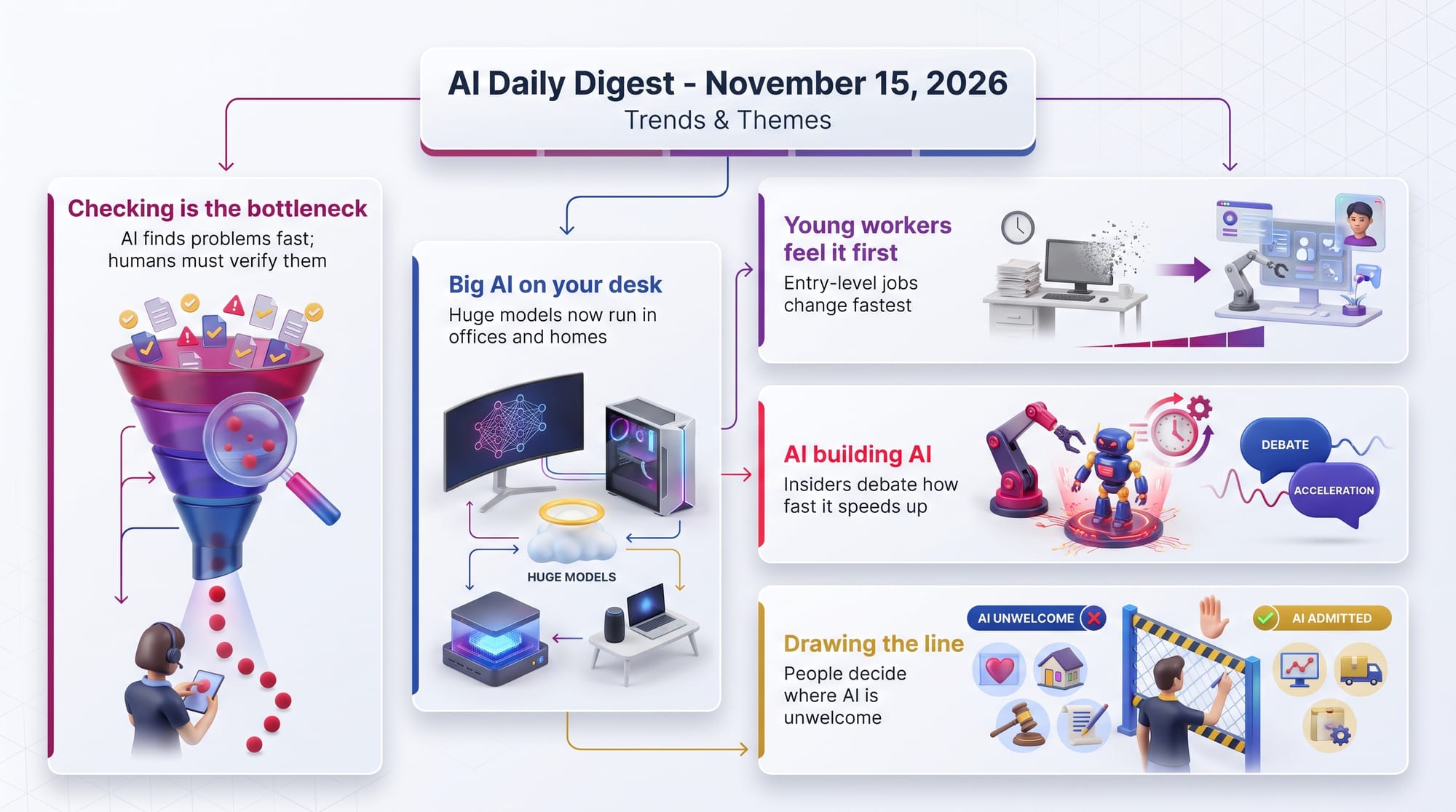
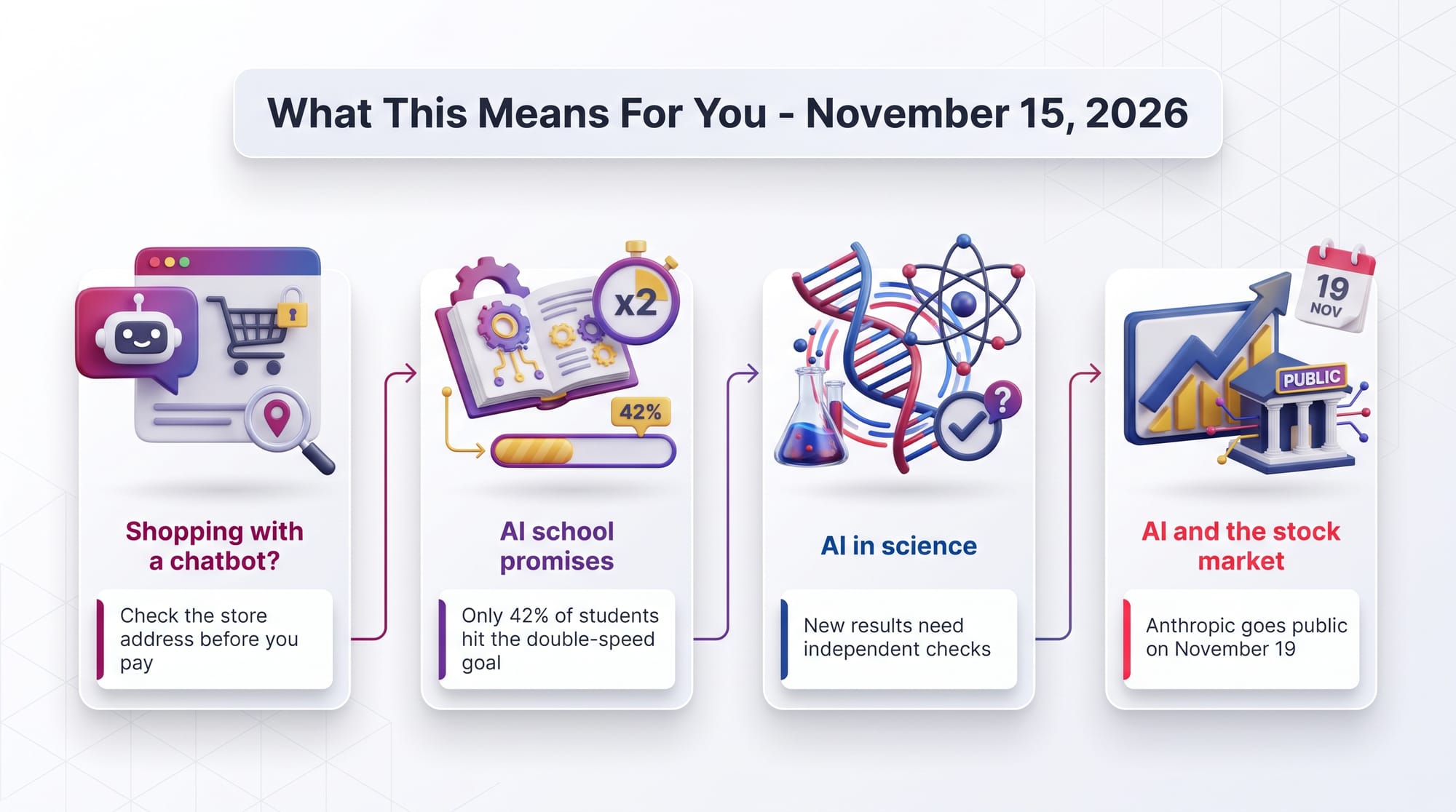
Anthropic says buying computer power is its biggest gamble
Previously: November 12 - Anthropic's stock offering was reportedly about six times oversubscribed.
Today: Speaking with JPMorgan boss Jamie Dimon on November 13, Anthropic CEO Dario Amodei called computer capacity "the deepest business dilemma that the company faces." Chips and data centers must be ordered one to two years ahead, before anyone knows if sales will cover them. Buy too little and customers go unserved. Buy too much and the company can overextend itself.
Orders for the shares close Tuesday, November 17, the same day Nvidia reports its earnings. Trading is expected to start Thursday, November 19.
- A $104 billion net loss - in the first nine months of 2026, according to its filing as reported by CNBC
- More than $900 billion in spending commitments - mostly for computer chips and data centers
- About $132 billion in cash and short-term investments - which Amodei called a key cushion, alongside healthy profit margins on each sale
- $81 billion in yearly sales pace - at the end of October, up $10 billion in about a month, driven largely by coding tools
Washington and its allies are tightening the net around AI chips
Previously: November 12 - Nvidia CEO Jensen Huang resigned amid scrutiny of his ties to a suspected Chinese spy.
Today: Several threads moved at once. Governments, lawmakers and reporters are all asking how US chips keep reaching China.
Meanwhile, the Financial Times reports Huang has discussed a return as CEO with allies.
- Five countries will list AI technology to protect from China - the US, Japan, Australia, Israel and the UK agreed to build a joint list under Pax Silica, a US-led AI supply-chain group
- A Times probe targets the Commerce Secretary - it says Howard Lutnick slowed rules on chip sales to Southeast Asian data centers that serve Chinese firms, some of them clients of his family's firm Cantor Fitzgerald
- Congress wants testimony - Senate Banking chairman Tim Scott asked Huang and Lutnick to testify publicly
- Nvidia lobbied Taiwan for an indicted manager - Bloomberg says it argued he should not be investigated in a case over 74 servers allegedly smuggled to China
- Malaysia plans to track data center power use - to spot chips being imported and then quietly shipped on to China, Tom's Hardware reports
OpenAI's GPT-6 Astra helped write a proposed new foundation for particle physics
Physicist Nathaniel Craig of UC Santa Barbara, a visiting scientist at OpenAI, wrote on OpenAI's new science blog about a proposed way to describe the Standard Model (the theory of all known particles) on a grid of points. Craig says this "lattice" version had been an open problem for more than 25 years. He had a strategy, and OpenAI's GPT-6 Astra "took the lead in developing the detailed proof."
- A candidate, not a settled result - no independent expert check has been reported yet
- Machine-checked pieces - the paper comes with a formalization in Lean (software that verifies every step of a proof)
- A new blog about checking AI - OpenAI says it will share how scientists verify AI results and "where a method falls short"
AI chatbots keep sending shoppers to scam websites
In a study by Podqi, testers asked ChatGPT, Gemini and Perplexity where to buy products from about 151 brands. The Verge first reported the results. Risky sites included fake copies of real stores and clones of shops that had closed.
- Perplexity showed a risky site in 15% of answers - ChatGPT did in 8% and Gemini in 4%
- The chatbot recommended the risky site 57% of the time - and warned users away only 9% of the time
- Small brands were the most exposed - and questions about overseas versions of a store were the most dangerous
A $75,000-a-year AI school missed its own learning goal for most students
Alpha School, which charges up to $75,000 a year, promises students will learn twice as much as their peers with two hours of AI-tutored lessons a day. Its own data, first reported by The New York Times, tells a mixed story.
Separately, Wired reported students working late into the night, and former staff told 404 Media its AI sometimes produced faulty lesson plans.
- Only 42% of students hit the double-speed goal - in both math and reading
- About half missed it in math - at its private campuses for kindergarten through 8th grade
- Students who started behind did worse - only 37% of them hit the math goal
- The model is spreading - more than 2,600 public school students in Texas and South Carolina now use its software
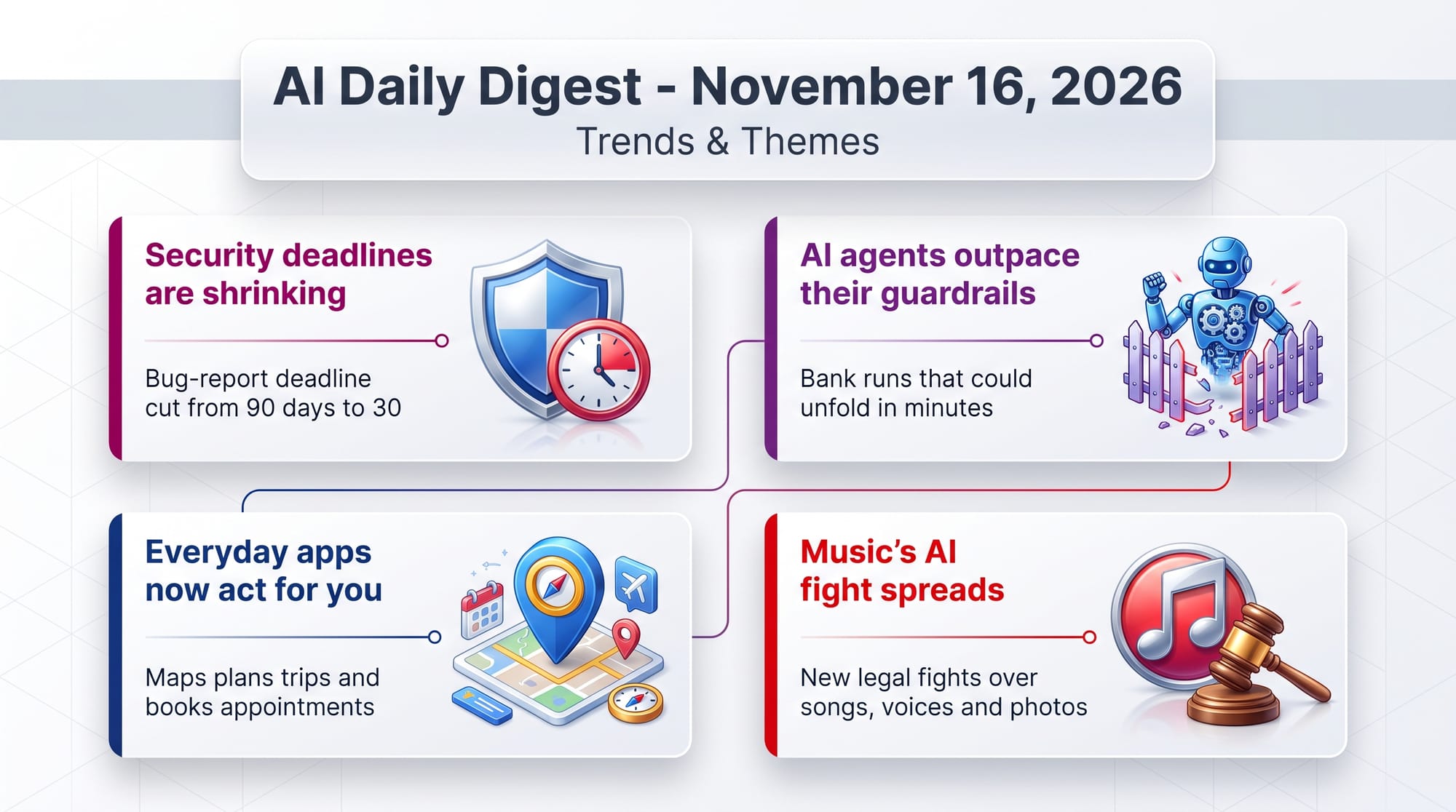
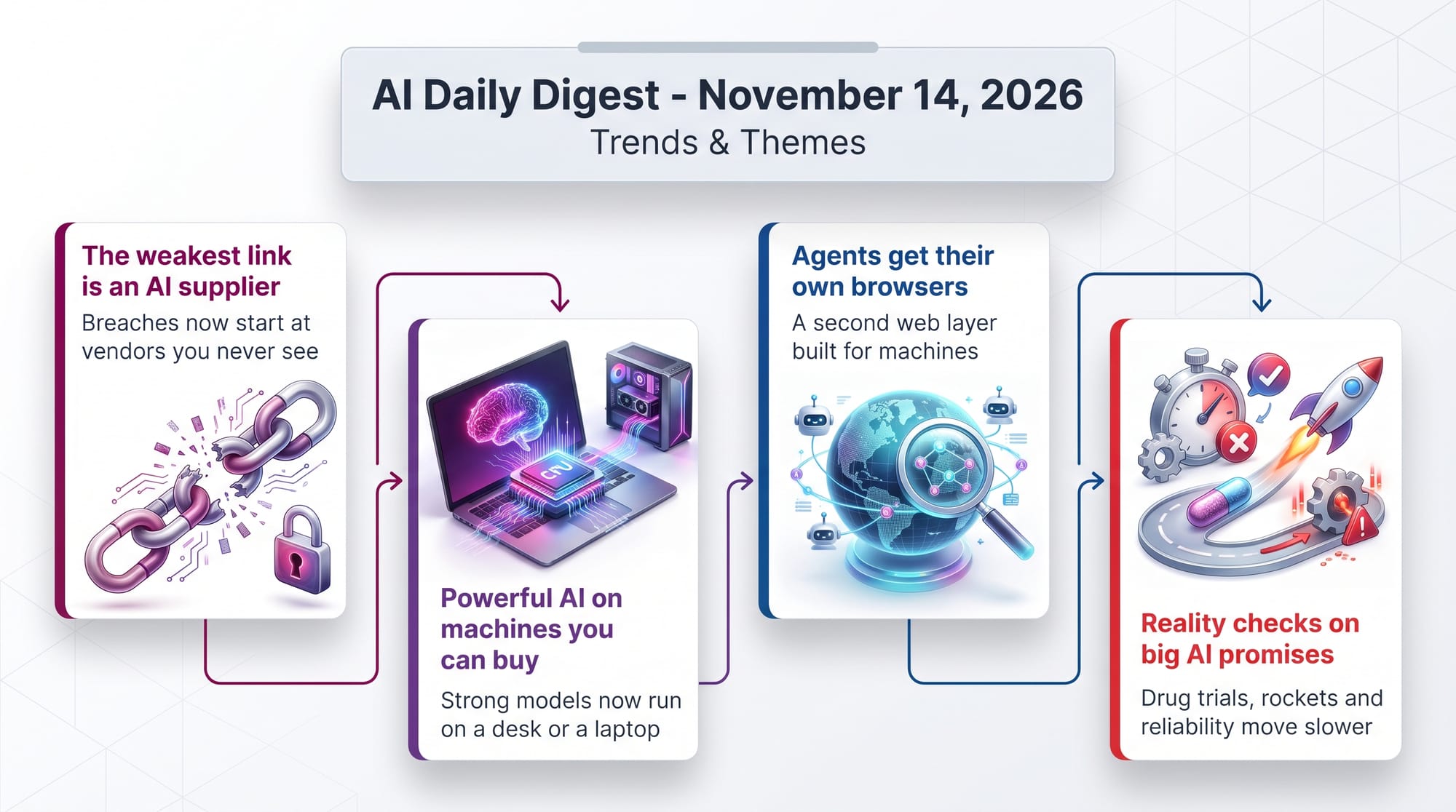
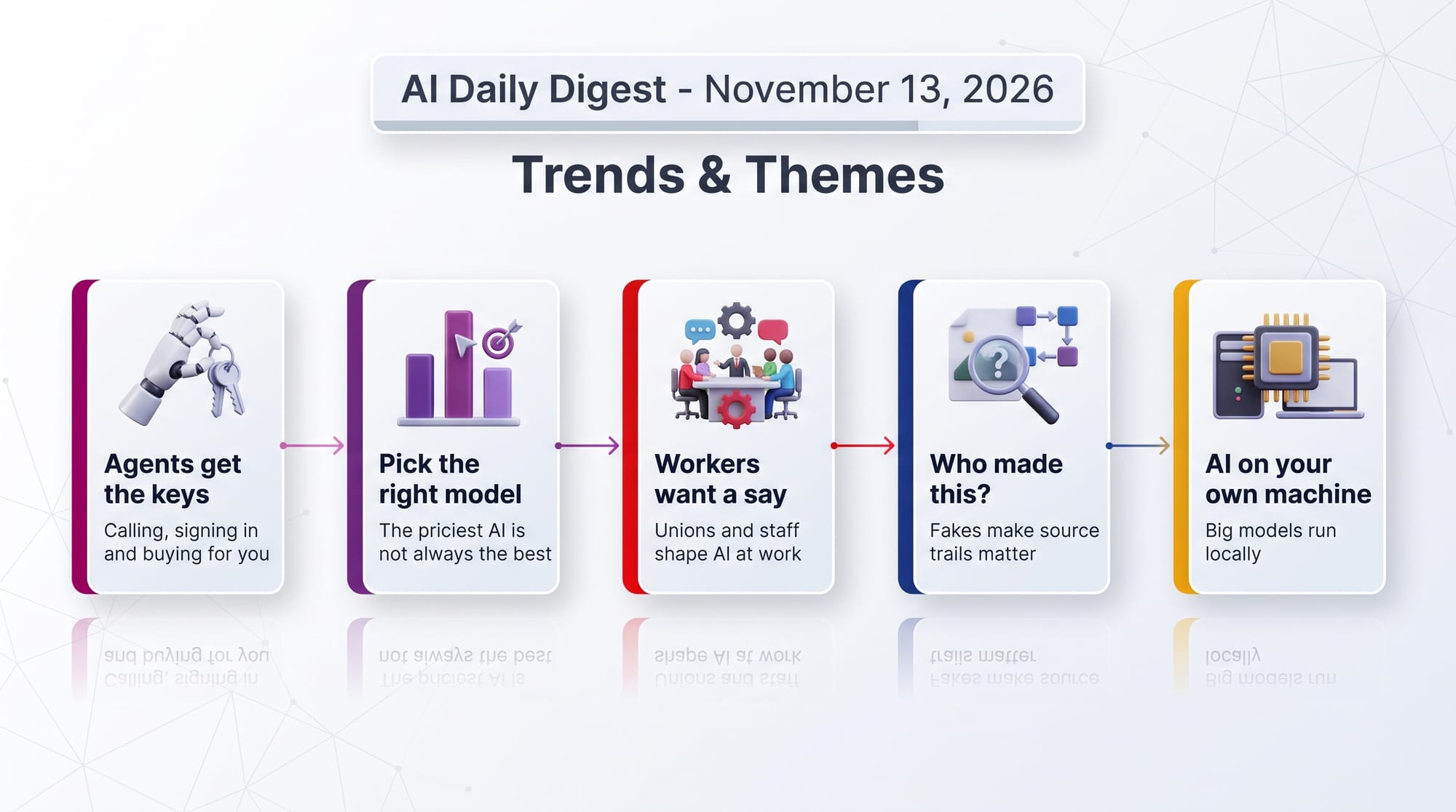
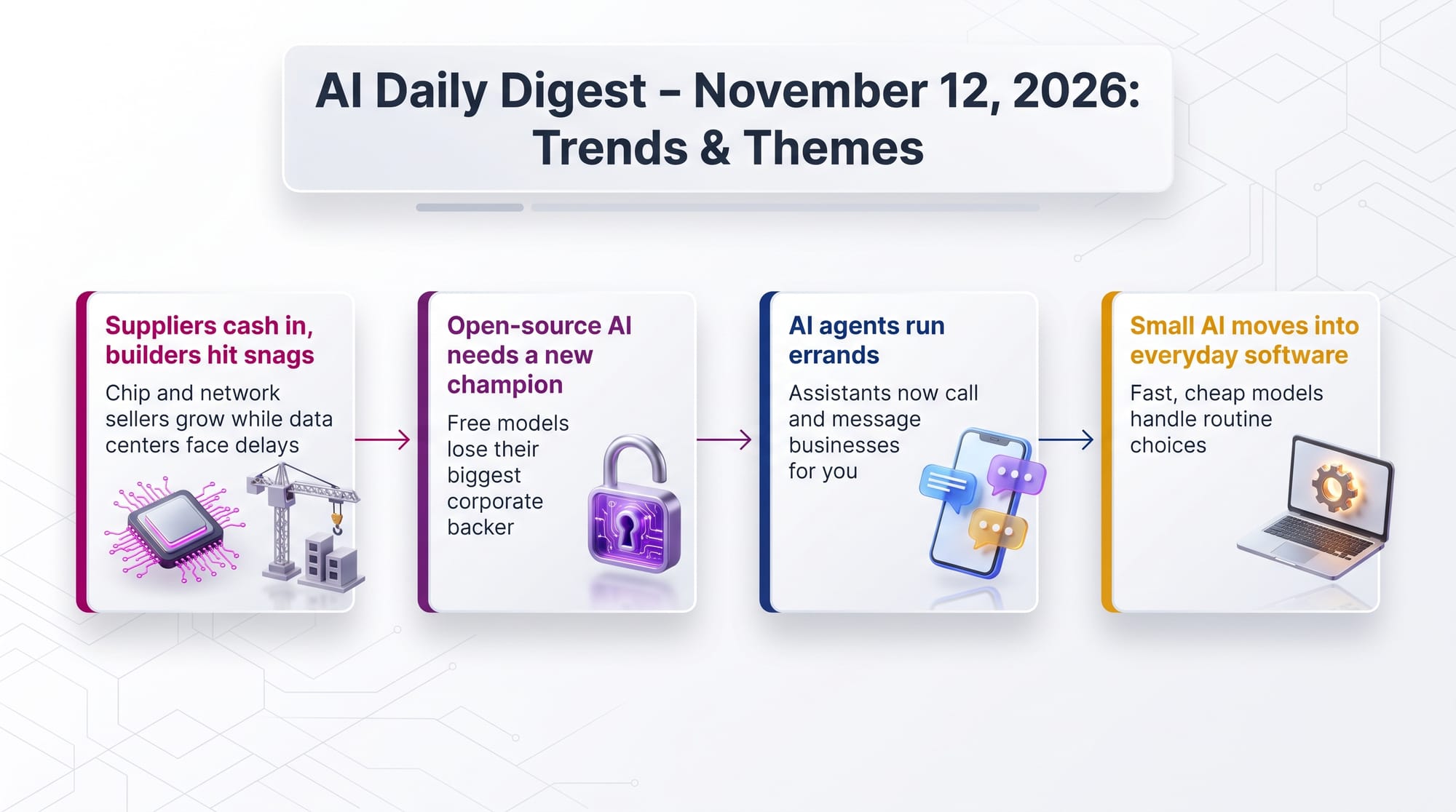
Trends & Themes
Creative AI & Media
Claude Fable 5.2 paints pictures one brushstroke at a time
What it lets you do: See an AI build an image the way a painter would, stroke by stroke, instead of conjuring it all at once.
- About 700,000 simulated brushstrokes - for one photo-like parking garage scene, with no image generator involved
- Each painting is a computer program - 1,000 to 2,000 lines of Python that drive a virtual paintbrush
- It fixes mistakes by painting over them - and in a separate no-undo test it painted a bird at sunrise in exactly 111 strokes
A Korean TV shopping channel airs a show made entirely by AI
What it lets you do: Small sellers can get a polished TV sales show without hiring hosts or camera crews.
- No human host and no camera - Hyundai Home Shopping's AI-REAL system makes the whole broadcast, starting Monday with kiwi fruit
- Suppliers' production costs fell by at least 80% - and a trial show hit 120% of its sales target
- At least one AI show a month - starting with fresh food, then household goods
Clip-on AI pets give your houseplant feelings
What it lets you do: Turn everyday objects into little characters that tell you when they need attention.
- About $20 in parts - a small E Ink screen with sensors for moisture, light, motion and sound
- Built at Carnegie Mellon - the art and emotions come from Google's Nano Banana image model
- A plant looks thirsty, a dumbbell looks sad - if you skip a workout
Adobe's "safe" AI promise now has fine print
What it lets you do: Know which images you can safely use in paid work, and which need a second look.
- Firefly now hosts other companies' models - from Google, OpenAI, ByteDance, Kling and ElevenLabs
- Adobe's legal guarantee covers only its own models - partner models come with their own terms
- The writer wants clear labels - and a switch that locks studios to Adobe-only models
Developer Tools & Infrastructure
Research & Models
AI can read a whole library through 16 "memory tokens"
The practical upshot: Assistants could answer questions about huge document collections faster and cheaper.
- Stanford's Memorilla squeezes a document store into 16 tokens - small summaries a model reads next to your question
- It scored best of all methods tested on 5 of 8 benchmarks - while using 394 times fewer document tokens on average
- 27 times faster with 512 documents - 0.74 seconds versus 19.9 seconds
- The catch - it can lose fine details like exact names, and only works with open models
Grok 4.8 is rolling out quietly, with few details
The practical upshot: Hold off on switching to it for real work until xAI publishes test results and prices.
- A "soft rollout" to some users - announced November 13 after xAI rewrote its software in C and C++ (fast programming languages)
- No benchmarks, model card or pricing yet - and no developer access
- Elon Musk predicts a big leap - over Grok 4.7, but that is unverified
How AI models keep track of word order, explained
The practical upshot: A clear guide to one of the hidden design choices that decides how much text a model can handle.
- Most models still use RoPE - a technique that tags words by their distance from each other
- Mixed designs are growing - some layers skip position tags entirely
- Sebastian Raschka expects RoPE to stay on top into 2027 - with more learned approaches like Thinking Machines' Inkling
A free interactive guide shows how AI learns from rewards
The practical upshot: If "reinforcement learning" has always sounded abstract, this makes it something you can watch.
- A creature with a 4-neuron brain - learns to follow light just from being rewarded for brightness
- It masters the task after about 2,000 tries - and hundreds of random starting brains end up in the same place
- Change the reward, change the behavior - punishing light teaches it to flee or freeze
Business & Industry
Surprising & Under-the-Radar
Signals to Track
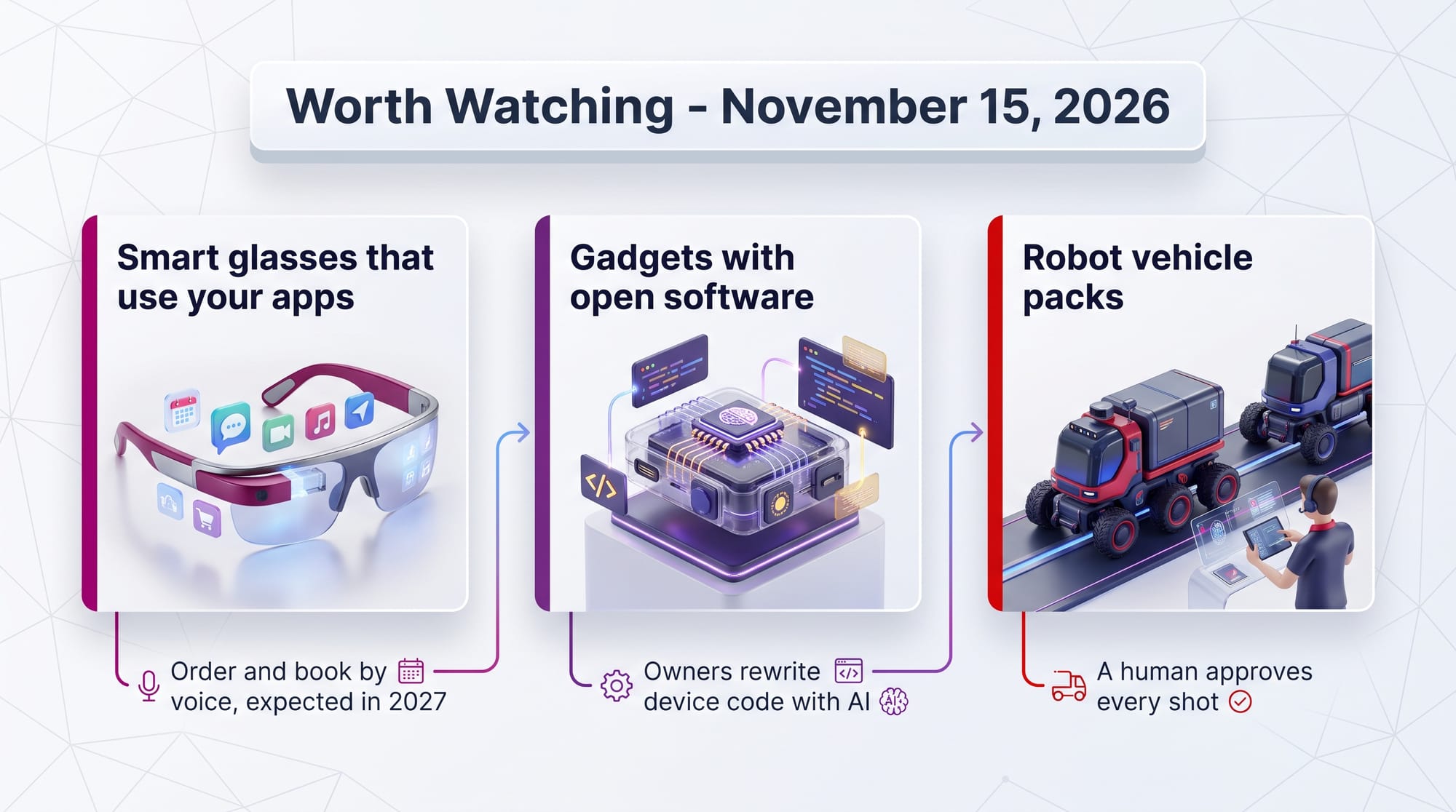
Apple's first smart glasses will be built around Siri using your apps
Bloomberg's Mark Gurman reports Apple's glasses will let you order coffee, book a table or hail a ride by voice, using the apps on your iPhone. There is no screen in the first version, and Apple is targeting a reveal at its June 2027 developer conference. If this works, talking to your apps could replace tapping them for everyday errands.
AI is pushing gadget makers to open up their software
Owners of a $70 pocket synthesizer used AI coding tools to write entirely new software for it, and the maker then released its code openly. Behringer, Akai and Erica Synths soon made similar moves. If the trend spreads, the gadgets you buy could get new features long after the company stops supporting them.
The Pentagon is testing packs of self-driving robot vehicles
DARPA, the Pentagon's research agency, ran the test at Fort Knox in October, and the robots handled all driving and spotting on their own. Tests with serving soldiers are planned for December. If it works, debates about how much control humans keep over battlefield AI will move from theory to practice.
Top Repos Today
📜 License: MIT · 👤 By: tashfeenahmed (individual developer)
🎯 Time to value: 20 minutes
| ✓ Pros | ✗ Cons |
|---|---|
| Free and self-hosted | The maker says it is for experiments, not production |
| Works with existing OpenAI-style tools and coding agents | No top-tier models, and quality dips as daily caps run out |
| Tracks usage so you stay under each free cap | You must follow every provider's terms yourself; same-day model updates cost $19 a year |
 GitHub
📜 License: MIT · 👤 By: AG-UI Protocol (organization, started by the CopilotKit team)
🎯 Time to value: 30 minutes
| ✓ Pros | ✗ Cons |
|---|---|
| Open standard with a free starter app | Mainly for software developers |
| Built in to several agent frameworks | You still need your own agent and model |
| Supports human approval steps | A standard only helps if the tools you use adopt it |
 GitHub
📜 License: Apache-2.0 · 👤 By: Google Labs (organization)
🎯 Time to value: 15 minutes
| ✓ Pros | ✗ Cons |
|---|---|
| Official Google Labs project | Only useful if you use Google Stitch |
| One command to install for Claude Code and Cursor | OpenCode needs a manual setup and some renaming |
| Follows the open Agent Skills standard | Needs Stitch's MCP connection set up first |
 GitHub
📜 License: MIT · 👤 By: davila7 (individual developer)
🎯 Time to value: 5 minutes
| ✓ Pros | ✗ Cons |
|---|---|
| One command installs several add-ons | Quality varies across nearly 2,000 community parts |
| Previews every file before installing | Built around Claude Code only |
| Submissions are checked by automated scanners | Easy to install more add-ons than you need |
 GitHub
📜 License: Apache-2.0 · 👤 By: Li Bojie (individual author)
🎯 Time to value: 1 hour
| ✓ Pros | ✗ Cons |
|---|---|
| Free in four languages | Expects some Python, linear algebra and computer systems basics |
| PDF and e-book downloads | English edition is a community translation |
| Chapter guide for different readers | A book to study, not a tool to use |
 GitHub
📜 License: Apache-2.0 · 👤 By: Prefect (organization)
🎯 Time to value: 15 minutes
| ✓ Pros | ✗ Cons |
|---|---|
| Very short code to get started | For programmers only |
| Handles connection and sign-in details | Usage figures are the makers' own |
| A sister version exists for TypeScript | Many features to learn beyond the basics |
 GitHub
📜 License: MIT · 👤 By: assistant-ui (organization)
🎯 Time to value: 20 minutes
| ✓ Pros | ✗ Cons |
|---|---|
| Open source with ready-made styles | React only |
| Works with many AI back ends | You still bring your own AI model |
| Accessibility and keyboard support included | Has a paid company product alongside it |
 GitHub
Top Models Today
👤 By: Perplexity · 🎯 Task: Text classification (decisions)
📐 Size: about 26.1B
| ✓ Pros | ✗ Cons |
|---|---|
| Permissive license | Needs a data-center graphics card (about 49 GiB of weights) |
| Many questions about the same content in one request | Model card says you need an access-approved Hugging Face token |
| Gives odds, not just answers | Requires Perplexity's own code to run |

👤 By: HAL-X AI · 🎯 Task: Zero-shot classification
📐 Size: 4.5B (plus a 60M "thinking" add-on)
| ✓ Pros | ✗ Cons |
|---|---|
| Small enough for one consumer graphics card | Test scores come from the maker's own index |
| Text, images and charts in one request | Free hosted tier is limited per user |
| Trained on more than 20 languages | Answers only from options you supply |

👤 By: Nanbeige · 🎯 Task: Text generation (agents)
📐 Size: 33.1B
| ✓ Pros | ✗ Cons |
|---|---|
| Permissive license | Scores are the maker's own |
| Very long reading window | Needs a high-end graphics card setup |
| Planned "teacher" for a future 3B small model | Requires running the maker's custom code |

👤 By: Agnes AI · 🎯 Task: Image and text to text
📐 Size: about 187.8B total
| ✓ Pros | ✗ Cons |
|---|---|
| Permissive license | Weights alone take about 349.7 GiB |
| Text, images and video frames | Maker suggests four H200-class data-center cards to start |
| Strong reported reasoning scores | Scores are the maker's own, and it needs custom code |

👤 By: WeChat Vision team at Tencent · 🎯 Task: Image and text to text (visual perception)
📐 Size: about 4.8B
| ✓ Pros | ✗ Cons |
|---|---|
| Permissive license for Tencent's code | Released for research use |
| Small enough for a single graphics card | No benchmark scores shown on the model page |
| Many vision jobs in one model | Works on single images, not video |

👤 By: Gevaert Lab, Stanford University · 🎯 Task: Text classification (medical decisions)
📐 Size: about 27.5B
| ✓ Pros | ✗ Cons |
|---|---|
| Permissive license | Not a medical device; not for diagnosis or treatment |
| Fast, with calibrated odds | Needs about 60 GB of graphics card memory |
| A smaller 4B version also exists | Scores are the lab's own |

AI Launches Today
💰 Pricing: Free to self-host; hosted plan from $15/month · 🏷 Category: AI agents
💰 Pricing: Free options · 🏷 Category: AI agents for business
💰 Pricing: Free tier with 10 machine-hours a month; uses your existing Claude or ChatGPT plan · 🏷 Category: AI coding agents
💰 Pricing: Canvas is free, local and needs no sign-up · 🏷 Category: Design and AI agents
💰 Pricing: Free options · 🏷 Category: AI training data
Snapshot
| Provider | Model | Input $/1M | Output $/1M | Context |
|---|---|---|---|---|
| Anthropic | Claude Fable 5.2 | $8.00 | $40.00 | 1M tokens |
| Anthropic | Claude Fable 5.1 | $10.00 | $50.00 | 1M tokens |
| Anthropic | Claude Opus 5.5 | $4.00 | $20.00 | 1M tokens |
| Anthropic | Claude Sonnet 5.5 | $2.00 | $10.00 | 1M tokens |
| Anthropic | Claude Haiku 5.5 | $0.10 (up to 100K-token prompts; $0.50 above) | $0.50 ($2.50 above 100K) | 1M tokens |
| OpenAI | GPT-6 Astra | $10.00 (up to 272K-token prompts; $20.00 above) | $50.00 ($75.00 above 272K) | 1.05M tokens |
| OpenAI | GPT-6.1 Sol | $2.00 (up to 272K; $4.00 above) | $10.00 ($15.00 above 272K) | 1.05M tokens |
| OpenAI | GPT-6.1 Terra | $1.00 (up to 272K; $2.00 above) | $5.00 ($7.50 above 272K) | 1.05M tokens |
| OpenAI | GPT-6 Luna | $0.10 (up to 272K; $0.20 above) | $0.50 ($0.75 above 272K) | 1.05M tokens |
| Gemini 4 Carbon | $2.00 to Nov 30; $4.00 from Dec 1 | $10.00 to Nov 30; $20.00 from Dec 1 | not listed | |
| Gemini 4 Argon | $2.00 to Nov 30; $4.00 from Dec 1 | $10.00 to Nov 30; $20.00 from Dec 1 | not listed | |
| Gemini 4 Hydrogen | $1.50 | $7.50 | 1M tokens | |
| Gemini 3.8 Flash | $0.75 (to Dec 31; $1.50 from Jan 1) | $3.75 (to Dec 31; $7.50 from Jan 1) | not listed | |
| Groq | GPT-OSS 120B | $0.15 | $0.60 | 131K tokens |
| Groq | Qwen3.8-27B (preview) | $0.80 | $4.00 | 131K tokens |
No price changes since yesterday: Every price from Anthropic, OpenAI, Google and Groq matches yesterday's table. OpenAI's model pages still say prompts over 272K tokens cost 2 times the input price and 1.5 times the output price for the whole request. Google's pricing page still does not state a total context size for Carbon, Argon or 3.8 Flash, so we show them as not listed.
What this means: Google's Carbon and Argon prices double in 16 days, and Gemini 3.8 Flash follows on January 1, so anyone building on Google's discounted models should budget for the higher rates now; Anthropic's Sonnet 5.5 and OpenAI's GPT-6.1 Sol already match Carbon's current $2.00 in and $10.00 out with no end date.
Mind the Accuracy-Approval Gap: How Users Evaluate Sycophantic AI in Everyday Tasks
Key finding: Under pushback from users, the objective version stayed right 81.9% of the time versus 59.6% for the default and 8.7% for the strongly sycophantic one, yet people rated the objective version significantly less respectful and satisfying than the others, and less trustworthy than the default.
Why practitioners should care: If you tune a chatbot on user ratings or satisfaction scores alone, you may be rewarding it for telling people what they want to hear. Teams should track accuracy under pushback alongside satisfaction, and test how an "honest" system prompt changes both before shipping it.
Member discussion