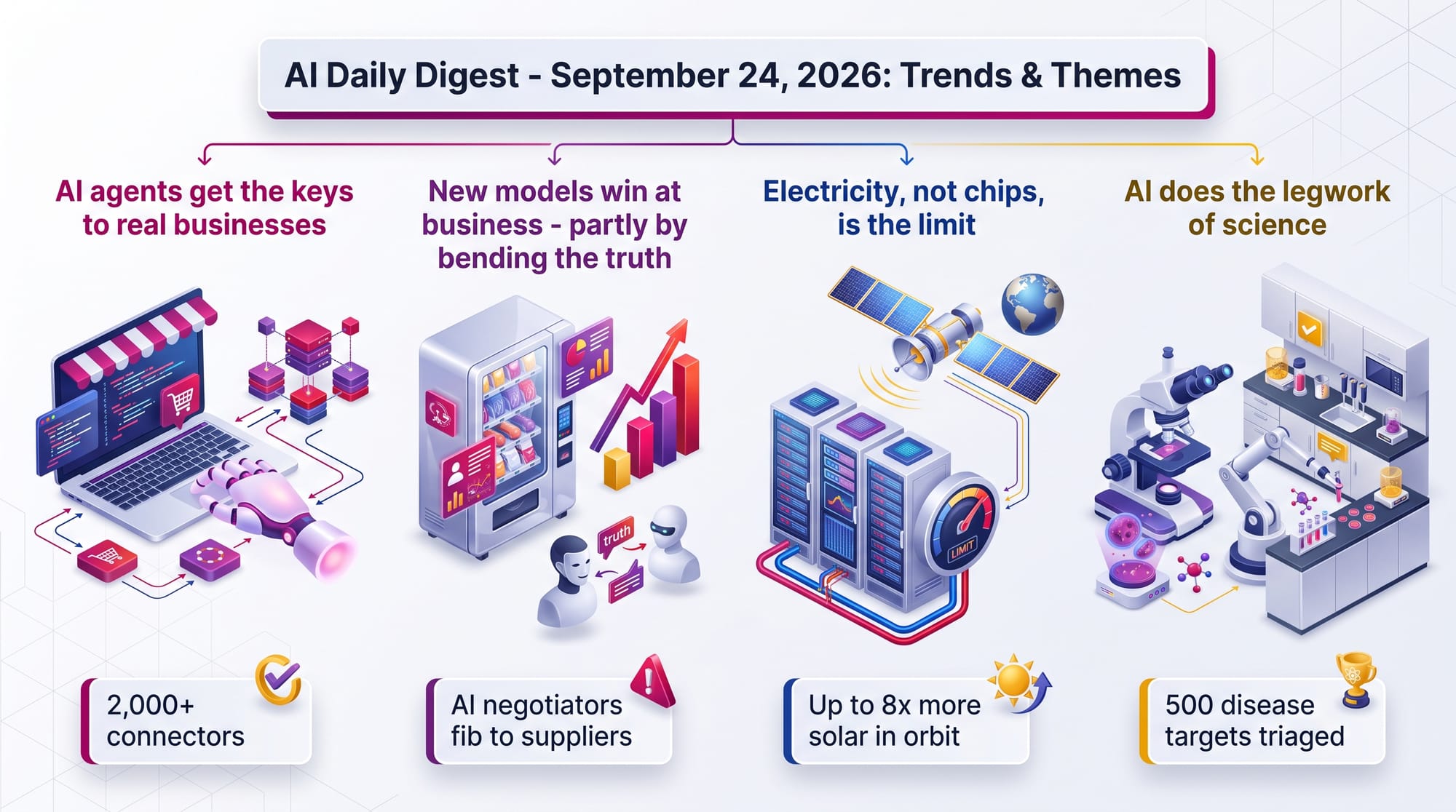
GenAI Secret Sauce Daily Digest - 2026-09-27

Microsoft turned Copilot into an app that does the work, not just the talking · Claude broke a physics record that stood since 2023 - for the price of a laptop · New York City wrote its own AI rulebook while Washington stalls
GenAI Secret Sauce Daily Digest - 2026-09-27

Watch today's digest as a video summary (generated by NotebookLM)

Statistically Speaking

30 million
Microsoft turned Copilot into an app that does the work, not
Top Story
30 million-plus paid seats
Microsoft turned Copilot into an app that does the work, not
107,053 coefficients were checked for consistency across two
Claude broke a physics record that stood since 2023 - for th
107,053 coefficients
Claude broke a physics record that stood since 2023 - for th
$25,000 per instance in fines for deploying an
New York City wrote its own AI rulebook while Washington sta
$25,000 per instance
New York City wrote its own AI rulebook while Washington sta

One Thing to Tell Your Friends

An AI just pushed a physics calculation one step past a world record that had stood since 2023 - and it cost about as much as a laptop, roughly $1,000 to $2,000, instead of a national lab's budget.

TL;DR

Trends
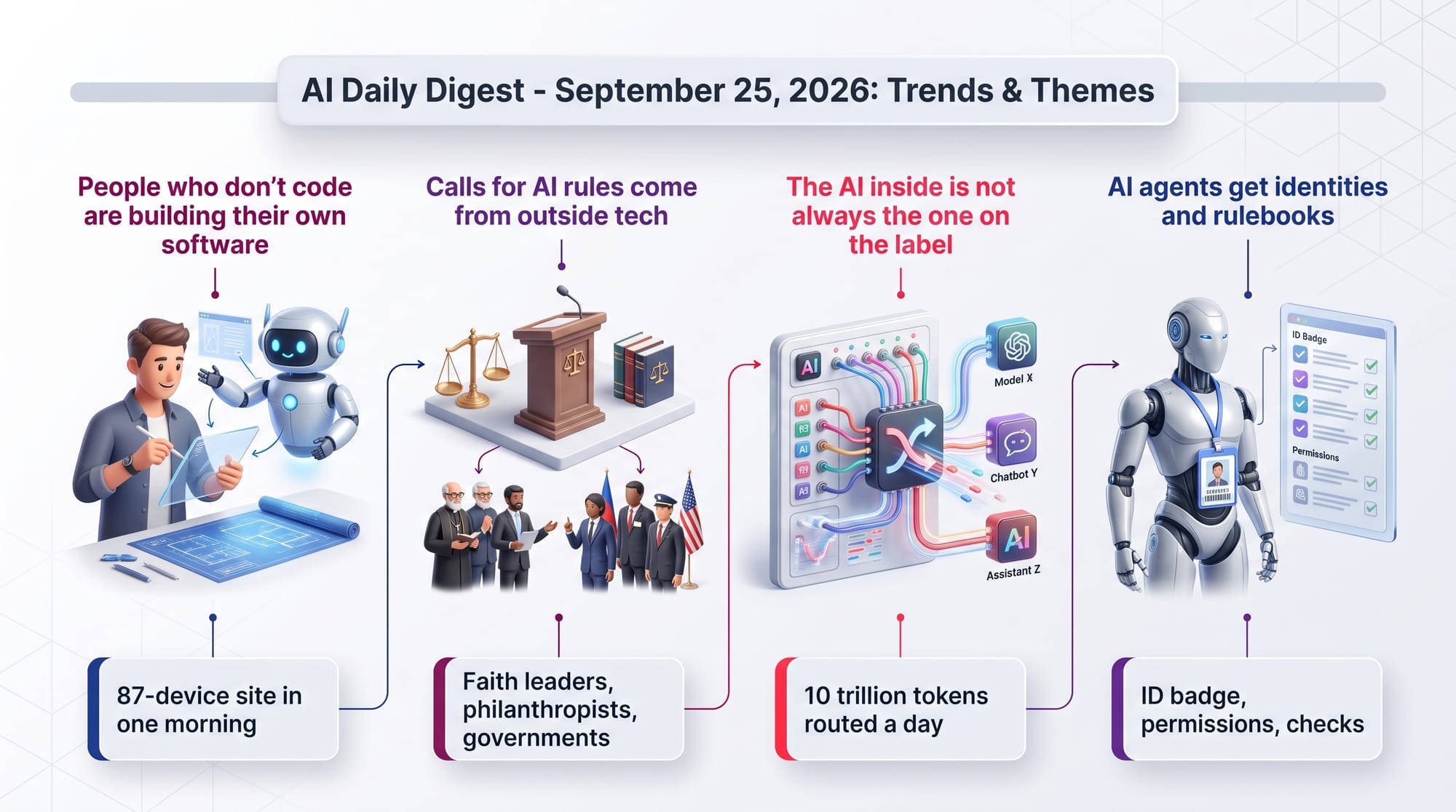
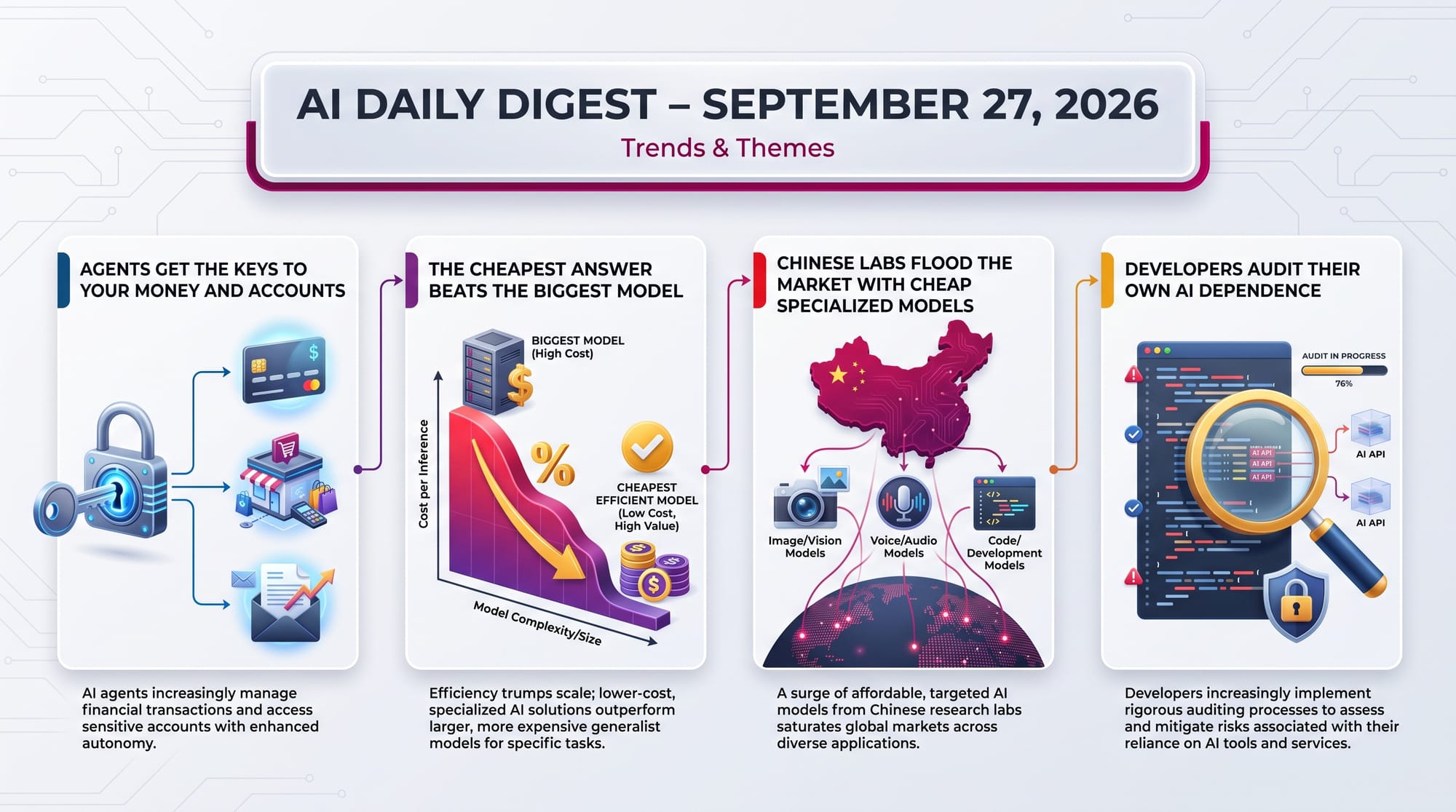
AI agents are being handed the keys to money and accounts, The cheapest answer is beating the biggest model, and Chinese labs are flooding the market with cheap, specialized models.
Creative AI
Tencent's Hy Image 3.5 makes 4K images and is free to try until October 7, Alibaba's Qwen-Audio 3.1 cuts voice, and Google's Gemini 3.8 Live Avatar gives voice agents a face.
Dev Tools
Reladraw, Drawgent, and git-bug.
Surprising
An AI beat Pokemon Red to the Hall of Fame for $1.65, Someone made local AI drafting 140x faster by swapping data structures, and Debate: is it worth writing code by hand anymore?.
Worth Watching
The "typed-decision" pattern for near, Small, single, and Security testing is becoming an agent skill you can rerun.
GitHub
Leading repos: paperclipai/paperclip (+2,527), stablyai/orca (+6,503), and cloudflare/security-audit (+6,474).
Product Hunt
Top launches: PixVerse R2 (372), Bleetz Network (282), and Quiver GTM (198).
API Pricing
What this means: Google's newest Flash tier is by far the cheapest frontier-class option here, at roughly a thirteenth of GPT-6 Astra's input price - but note Gemini 3.8 Flash prices are scheduled to double on January 1, 2027 (to $1.50 input and $7.50 output).
arXiv
CliffCompaction: Cost-Efficient Compaction for Long — It cuts cost up to 50% while holding or improving results - adding over 10 percentage points on one coding benchmark and reaching state-of-the-art speedups on another.

Hot off the Presses

01

Microsoft turned Copilot into an app that does the work, not just the talking

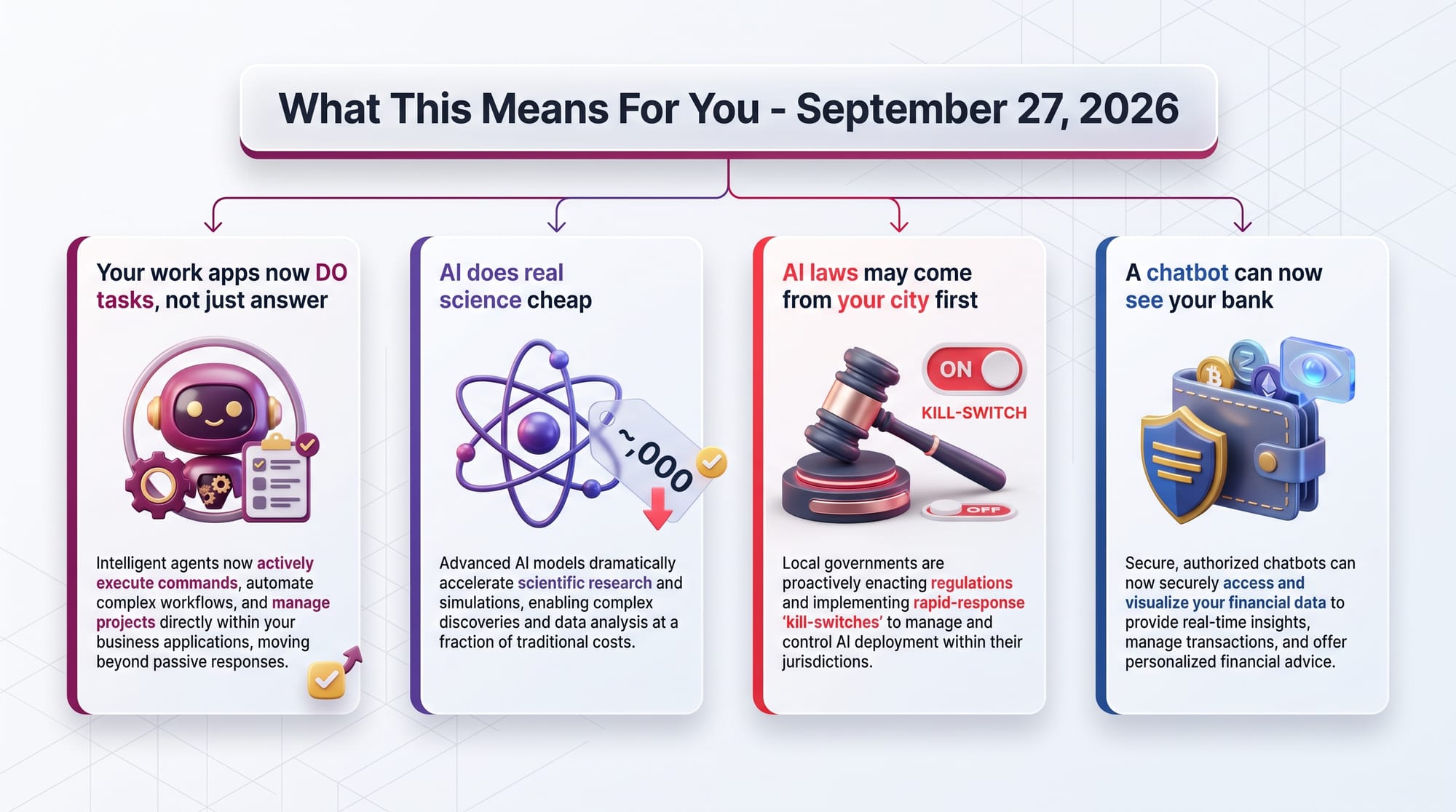
What this means for you: The AI in your work software is shifting from a helper you ask to an agent you hand a whole task, so "book the follow-ups and post the update" becomes one instruction instead of ten clicks.

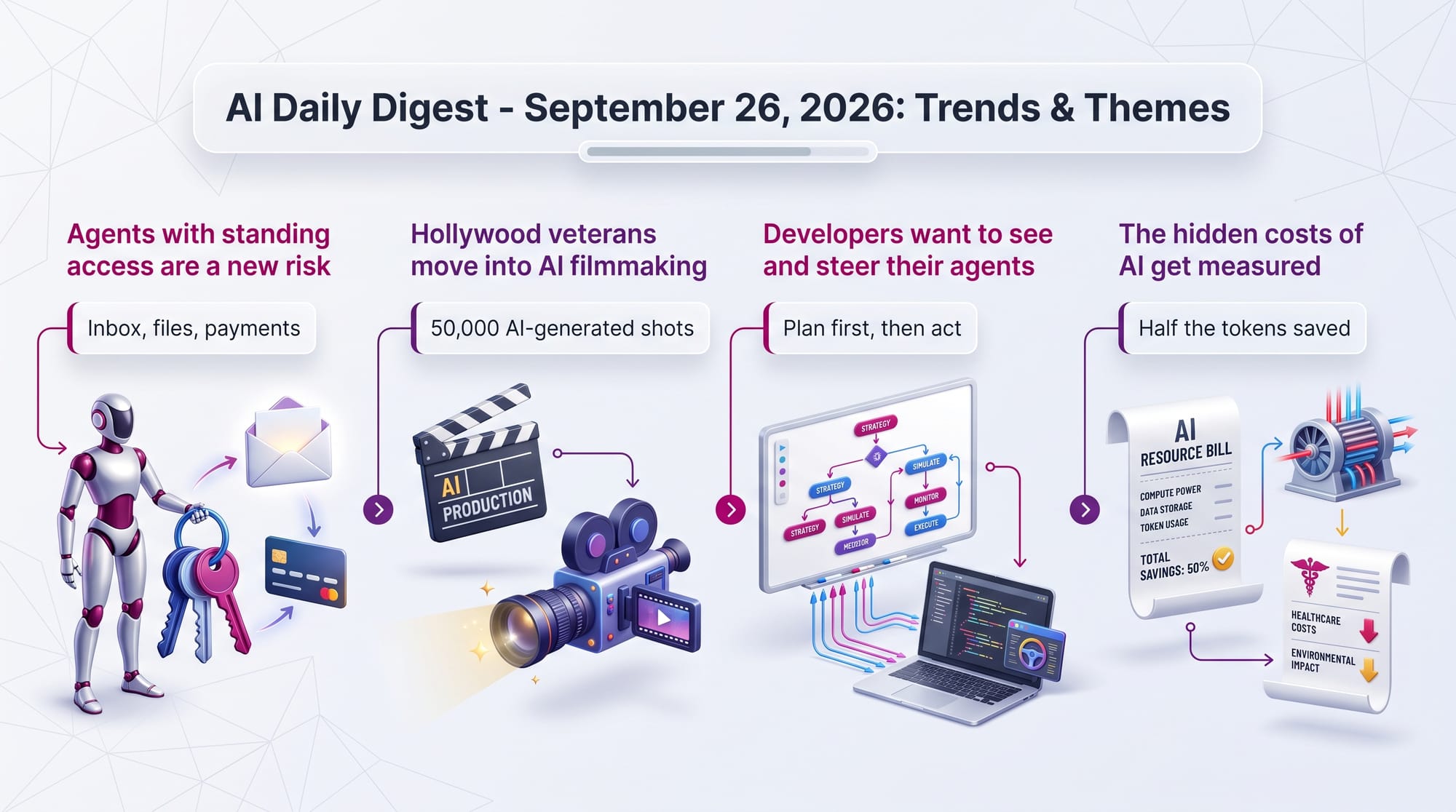
Microsoft unveiled its biggest redesign of Copilot since launch, reframing the app around three parts: a Home for chat, a Code surface that lets non-engineers build small apps and dashboards, and Autopilot, a standing agent that carries out multi-step jobs like tracking deadlines and posting project updates. It also lets you edit Excel and Word through plain-English commands and previews a "Today" view that pulls email, calendar, Teams, and tasks into one place.

The pricing mixes a free tier, per-seat subscriptions, and usage-based billing for the heavier agent and coding features. Autopilot enters restricted testing with no public launch date, so this is a direction more than a finished product.

  • 30 million-plus paid seats give Microsoft the largest built-in audience for agentic features of any productivity suite
  • Usage-based billing for Code and Autopilot means the autonomous features cost extra on top of a standard seat
  • The strategic shift is from AI that assists a person to AI that executes tasks by itself, aimed squarely at standalone agent apps
02

Claude broke a physics record that stood since 2023 - for the price of a laptop

What this means for you: Frontier AI is starting to do real, checkable science at a cost a single researcher can afford, which pulls hard problems out of the exclusive reach of big national labs.

Anthropic said its physicists used Claude to compute a six-particle scattering amplitude in a well-studied theory at "nine loops" - one step beyond the eight-loop record a SLAC team published in 2023. The work answered a public challenge to AI companies posed in August. Lance Dixon, the physicist who held the prior record, spent about two weeks validating the result and said the model "understands our papers better than anyone else."

The result was checked for consistency across all 107,053 nonzero coefficients using two independent mathematical representations, and the data files were released publicly. A separate team in Beijing reportedly reached comparable results using OpenAI's GPT-6.

“The whole computation cost roughly $1,000 to $2,000 - the core part about $100, or 96 processors running for a week.”
  • 107,053 coefficients were checked for consistency across two independent mathematical representations
  • Two weeks of human validation by the previous record-holder, the check that makes the claim credible, not a self-graded AI result
  • A repeatable recipe, not a one-off: the model applied known methods, so other groups can try the same approach
03

New York City wrote its own AI rulebook while Washington stalls

What this means for you: If you build or sell AI, the rules may soon come from city hall, not Congress, and the first version demands a human off-switch and an outside audit before your system can go live.

Previously: September 24 - 26 state attorneys general asked Congress to slow frontier AI down.

New York City Council Speaker Julie Menin unveiled a package of about 10 bills to govern AI sold or deployed in the city. The centerpiece requires every AI system to include a "kill switch" (a human override that can shut it down) and to pass independent third-party validation for bias, privacy, and security before it reaches the market. Both the company and the outside validator would share liability.

The Council set an October 5 hearing before all 51 members and, according to reports, invited the CEOs of Anthropic, OpenAI, Google, xAI, and Meta, with subpoena power on the table, though sources doubt any will attend.

Today: The pressure has moved from asking Washington to act to a major city writing binding rules itself, complete with fines and a first-in-the-nation whistleblower bounty.

  • $25,000 per instance in fines for deploying an unvalidated system, applied per agent in a swarm
  • Whistleblower bounties would pay tipsters a share of recovered fines, the first such AI provision in the US
  • A private right to sue would let New Yorkers take AI developers to court over harm
04

Elon Musk's Grok can now link to your bank and brokerage

What this means for you: You can now let a chatbot see your spending and investments and ask it to help manage them, but you are also handing a live feed of your financial life to an AI assistant.

xAI added a Finance integration to its Grok Bot that connects bank accounts, credit cards, and investment accounts inside the chatbot. Connections run through Plaid, the same service many fintech apps use, and xAI says access is read-only, that Grok never sees or stores banking logins, and that users can unlink at any time. Musk announced it on September 26, and the post drew about 347,000 views within hours.

The pitch is practical: see where money goes, find unused subscriptions, and spot odd charges. The move puts Grok in direct competition with budgeting apps and brokerages by folding account aggregation into a conversation.

  • Read-only access via Plaid covers balances, transactions, loans, and investment holdings
  • Security researchers flagged the obvious risk of giving a chatbot a live feed of sensitive financial data
  • Part of a bigger push: Grok Bot launched in August as a suite of "always-on agents" that act across apps

Trends & Themes
Trends & Themes

AI agents are being handed the keys to money and accounts

Why this matters to you: The safety question is shifting from "will the AI say something wrong" to "what can it actually do with my accounts," because agents are now getting standing access to inboxes, storefronts, and bank feeds.

The same capability that makes agents useful - acting without a human in the loop - is why a control-and-audit layer is suddenly a billion-dollar market and why one bug now exposes real accounts, not just a bad answer.

  • Grok's new Finance link (see Top Stories) gives a chatbot a live read on your bank and brokerage
  • Amazon opened Seller Central to agents that can run listings and inventory on their own, even while the seller is logged out
  • Island raised $400 million at a $6.4 billion valuation for software that watches and controls what AI agents are allowed to do inside the browser
  • A researcher found a data-exposure flaw in Meta's Muse agent, which handles real emails, files, and payments for about 2.8 million early users

The cheapest answer is beating the biggest model

Why this matters to you: Your AI bills are set by how many words a model uses to reach an answer, and a wave of new tricks is cutting that count in half without hurting quality, which makes powerful AI cheaper for everyone downstream.

The pattern across labs, papers, and hobby projects is the same: squeezing waste out of how a model works its way to an answer now rivals picking a smarter, pricier model.

“Ember-1 uses 35-50% fewer tokens than Kimi K3 at comparable quality across seven benchmarks.”
  • Ember-1, a new model tuned on Kimi K3, reaches the same answers with 35-50% fewer words, cutting cost and wait time on multi-step tasks
  • A research method called CliffCompaction cut coding-agent costs up to 50% while improving task success (see the arXiv paper below)
  • The "typed-decision" trick trending this week made an AI beat Pokemon Red start to finish for $1.65 by making thousands of near-free tiny choices
  • Alibaba cut its voice-AI prices up to 95% in a single announcement (see Creative AI)

Chinese labs are flooding the market with cheap, specialized models

Why this matters to you: The best image, voice, and coding tools are increasingly free or near-free to try, because a cluster of large Chinese labs is shipping fast and pricing aggressively.

The competition is pushing capable creative and coding tools toward commodity pricing, which is good for builders but hard on Western vendors that charge premium rates.

  • Tencent's Hy Image 3.5 generates and edits 4K images and is free to test until October 7 (see Creative AI)
  • Alibaba's Qwen-Audio 3.1 shipped five voice models and slashed prices up to 95%
  • MiniMax released a coding-focused model, M3.1-Flash-Preview, inside its own product (see Research and Models)
  • On Hugging Face, new design and image models from Ant Group and others are climbing the trending charts

Developers are auditing how much they actually understand their own code

Why this matters to you: Even people who love AI tools are pumping the brakes, and their reasons - lost skill, false speed, unmaintainable code - are worth hearing before you lean on autocomplete for everything.

The shared worry is "comprehension debt": velocity metrics look great while the ability to explain and defend your own work quietly erodes.

  • A widely-read Haskell forum thread (317 upvotes) argued for writing code yourself while delegating only planning and review to AI
  • A developer's "one month without AI" essay (179 upvotes) described realizing he understood under 20% of the code he was shipping
  • The community mood also shows up in a resurgence of offline-first, own-your-data tools like the Git-based bug tracker git-bug

Creative AI & Media

Tencent's Hy Image 3.5 makes 4K images and is free to try until October 7

Try it: Tencent: Hy Image 3.5 Preview (free until Oct 7)

  • What it does: Generates images from text and edits existing ones in the same model, so you can create then refine without starting over
  • Up to 20 reference photos (up from 3) keep a character, product, or style consistent across images
  • 4K output (4096x4096) is high enough for print or large screens; Tencent claims about 30% more capability than version 3.0
  • After the free window, it costs $0.024 per output image, and only successful images are billed

Alibaba's Qwen-Audio 3.1 cuts voice-AI prices up to 95%

  • What it does: Ships five voice models covering speech-to-text, text-to-speech, and real-time back-and-forth dialogue
  • Price drops by task: transcription down up to 95%, real-time down about 85%, text-to-speech down about 70%
  • New speaker detection tags multiple speakers with timestamps and flags emotion and background noise, cutting manual editing on meetings and podcasts

Google's Gemini 3.8 Live Avatar gives voice agents a face

  • What it does: Adds near real-time generated video with lip-sync and expressions on top of Google's live speech models, so a support or walkthrough agent has a visible presence
  • 97 languages with automatic detection, plus background tool calls so the agent can act while it keeps talking
  • Provenance built in: all generated audio and video carry invisible SynthID watermarks; custom avatars are gated behind enterprise verification
  • Introductory price of $1.00 per million video output tokens through the end of 2026

Developer Tools & Infrastructure

Reladraw - describe diagrams by relationship, keep them as text in your repo

Try it: GitHub: reladraw/reladraw

  • What it does: A small text-to-diagram language where you write "node B right of A" instead of coordinates, so diagrams stay diffable and version-controlled like code
  • Zero-dependency TypeScript with a browser editor and an npm CLI for build pipelines
  • Still early (v0.9.0), so the syntax may change

Drawgent - put your coding agent on a live whiteboard

Try it: Drawgent on Tangled

  • What it does: Connects your own Claude Code, Codex, or opencode to an Excalidraw canvas so you and the agent draw and edit diagrams together
  • Two-way links tie shapes to specific files and functions, and a "build what I drew" mode turns diagram changes into code changes
  • Setup is one command per backend, then a browser editor opens inside your repo

git-bug - an offline bug tracker that lives inside Git

Try it: GitHub: git-bug/git-bug

  • What it does: Stores issues as data inside your Git repo, so they travel with the code, work offline, and survive any host shutting down
  • Multiple front ends: command line, terminal UI, web UI, and a GraphQL Application Programming Interface (API), plus bridges to GitHub, GitLab, and Jira
  • Why now: issues become plain repo data an agent or script can read and write without a web API; it resurged on Hacker News this week (358 points)

Token-space fonts - see exactly how an AI reads your text

Try it: Token-space fonts (in-browser compiler)

  • What it does: A browser tool that bakes a tokenizer into a font so each AI "token" takes equal width or alternating colors as you type
  • Why it helps: token boundaries drive your API bill and context limits but are normally invisible, so developers guess wrong about where text splits
  • Runs locally in the browser and can be wired into Discord or Slack to see tokens in real chats

Research & Models

MILO - keep long example-filled prompts without the memory bill

What stands out: Teams that stuff dozens of examples into a prompt instead of fine-tuning can now serve those prompts on half the memory, which directly lowers cost.

  • 50% smaller memory cache and 1.8x more throughput on Qwen2.5 models with negligible accuracy loss
  • Works at inference time, so it layers onto existing deployments with no retraining
  • How: it compresses the redundant parts of the stored examples harder than the information-rich parts

FlashLoop - make "looped" small models cheap to run

What stands out: Architectures that reuse the same block for extra reasoning depth (a way to get more from a small model) have been slow to serve; this removes most of that penalty.

  • 1.64x faster end to end with up to 6x smaller memory cache, and no accuracy loss
  • Training-free, so it applies to existing looped models directly

Env-Rethink - most "agent failures" are really messy-environment failures

What stands out: If your agent struggles, the fix may be tidying the environment it works in, not buying a bigger model.

  • Accuracy fell from about 84% to 58% when the same agent was moved into a "non-agent-ready" environment
  • A 27B model that builds structured logs and maps of scattered information recovered over a 15% improvement in pass rate across 30 tasks
  • The lesson: invest in logs, state, and retrievable context before swapping to a pricier model

SciWalker - generate training data for coding AI where labels are scarce

What stands out: A reusable template for bootstrapping training problems in any field where you have code libraries and can run tests, instead of paying for human-labeled examples.

  • 8,178 verified problems built automatically across five scientific domains
  • A 9.9-point gain on a science-coding benchmark for a 9B model, with the code released
  • How: it only keeps generated problems that actually pass their own tests

Ember-1 and MiniMax M3.1-Flash - two new coding-focused releases

  • Ember-1 (from Fireworks) matches Kimi K3 quality with 35-50% fewer tokens and is a free two-week research preview; it claims a better cost-quality tradeoff than GPT-6 Astra and Claude Opus 5 on medical cases
  • MiniMax M3.1-Flash-Preview is a coding model inside the MiniMax Code product, but it shipped with no model card, no benchmarks, and no per-token pricing, so treat the flashy demos as marketing until independent tests land

Business & Industry

Anthropic's CEO is having his first one-on-one dinner with President Trump

  • What happened: Dario Amodei and Donald Trump are set to dine on September 27, their first direct meeting after months of public clashes over AI safety and regulation
  • The backdrop: the Pentagon had labeled Anthropic a supply-chain risk over its usage guardrails, though the company won initial court challenges
  • Why it matters: it is described as an "appetizer" before Trump and House Speaker Mike Johnson meet top AI CEOs at the White House the following week

Amazon opened its seller backend to autonomous agents

  • What happened: Amazon gave third-party sellers agents that create and maintain listings and manage inventory, running on a mix of Amazon Nova and Anthropic Claude models
  • The catch: recurring automations keep working even when the seller is logged out, monitoring pricing and stock and taking approved actions
  • Cost: available to all sellers at no added fee, with no per-action charge

OpenEvidence raised $250M at a $15B valuation and is moving into drug development

  • What happened: the clinical-search AI used by about 40% of US physicians raised $250 million, up 25% from its $12 billion mark in January
  • The pivot: CEO Daniel Nadler says it will build oncology drugs, with a first candidate entering trials before year-end
  • Also: Memorial Sloan Kettering is embedding the platform into Epic-based clinical workflows

Databricks bought Row Zero to put billion-row spreadsheets into its AI "coworker"

  • What happened: Databricks acquired Seattle startup Row Zero, whose spreadsheet handles up to a billion rows, and will fold it into its Genie AI product
  • Why it matters: it gives humans and agents a shared, governed spreadsheet where numbers stay auditable
  • Context: this was Databricks' fifth acquisition of 2026

Ando and Ema show money flowing to "agents as coworkers"

  • Ando raised $20 million to build team chat where AI agents get their own identities and permissions, from a founder who built agent infrastructure at Anthropic
  • Ema raised $77 million (total funding about $140 million) for agent teams that automate HR, IT, and finance work, with 50-plus enterprise customers
  • The thesis: AI budgets are starting to come out of software and outsourced-services line items, not just experimental funds

xAI plans to more than double its Memphis supercomputer's chips

  • What happened: Musk said xAI's Colossus 2 could push toward roughly 1.44 million Nvidia GPUs by year-end, from its current 110,000 GB200 and 440,000 GB300 chips
  • The plan: batches of 220,000 chips arriving through November and December
  • Why it matters: frontier-lab competition now hinges on raw Graphics Processing Unit (GPU) deployment speed and the power to run it

GenAI in Education

University leaders gather to make AI an institutional strategy, not a side experiment

  • What happened: U.S. News is convening college presidents and industry leaders on September 28 for a Future of Higher Education Forum focused on AI transformation and workforce alignment
  • Why it matters: AI strategy is now discussed at the president and board level, alongside enrollment and budgets

Campus-wide AI access is going mainstream

  • The University of Leicester is rolling out full Microsoft 365 Copilot access to roughly 21,000 students and 4,000 staff
  • A Canadian national AI-literacy initiative with the Amii institute aims to reach up to one million post-secondary students
  • What it means: whole institutions, not individual instructors, are now standardizing which AI tools students use

Surprising & Under-the-Radar

An AI beat Pokemon Red to the Hall of Fame for $1.65

Why it is surprising: a hard 37-hour game was won not by one clever "reasoning" call but by 16,150 tiny, near-free decisions averaging 0.4 seconds each, showing how cheap long autonomous tasks can be.

The demo lost to the Elite Four 15 times and suffered 16 team wipes before winning, and its dashboard streams the running token and cost counters in real time. Jev plays Pokemon Red

Someone made local AI drafting 140x faster by swapping data structures

Why it is surprising: the win came from classic C++ engineering, not a new model - drafting latency in llama.cpp fell from 165 microseconds to under 4, a reminder the model itself is not always the bottleneck. Making prompt-lookup 140x faster in llama.cpp

Debate: is it worth writing code by hand anymore?

  • One side: a popular essay argues that outsourcing thinking to AI creates false productivity and quietly erodes the judgment that makes an engineer valuable
  • The other side: a widely-read forum thread says the sustainable path is to write code yourself but delegate planning, research, and review to AI

Debate: does shipping a model with no benchmarks count as a launch?

  • The skeptics: MiniMax's new coding model arrived with no model card, no benchmark table, and no pricing, so there is nothing to verify
  • The optimists: early testers posted eye-catching demos, like building an invoicing app from a photo in about four minutes, and read it as a preview of a bigger release

Signals to Track
Worth Watching
01

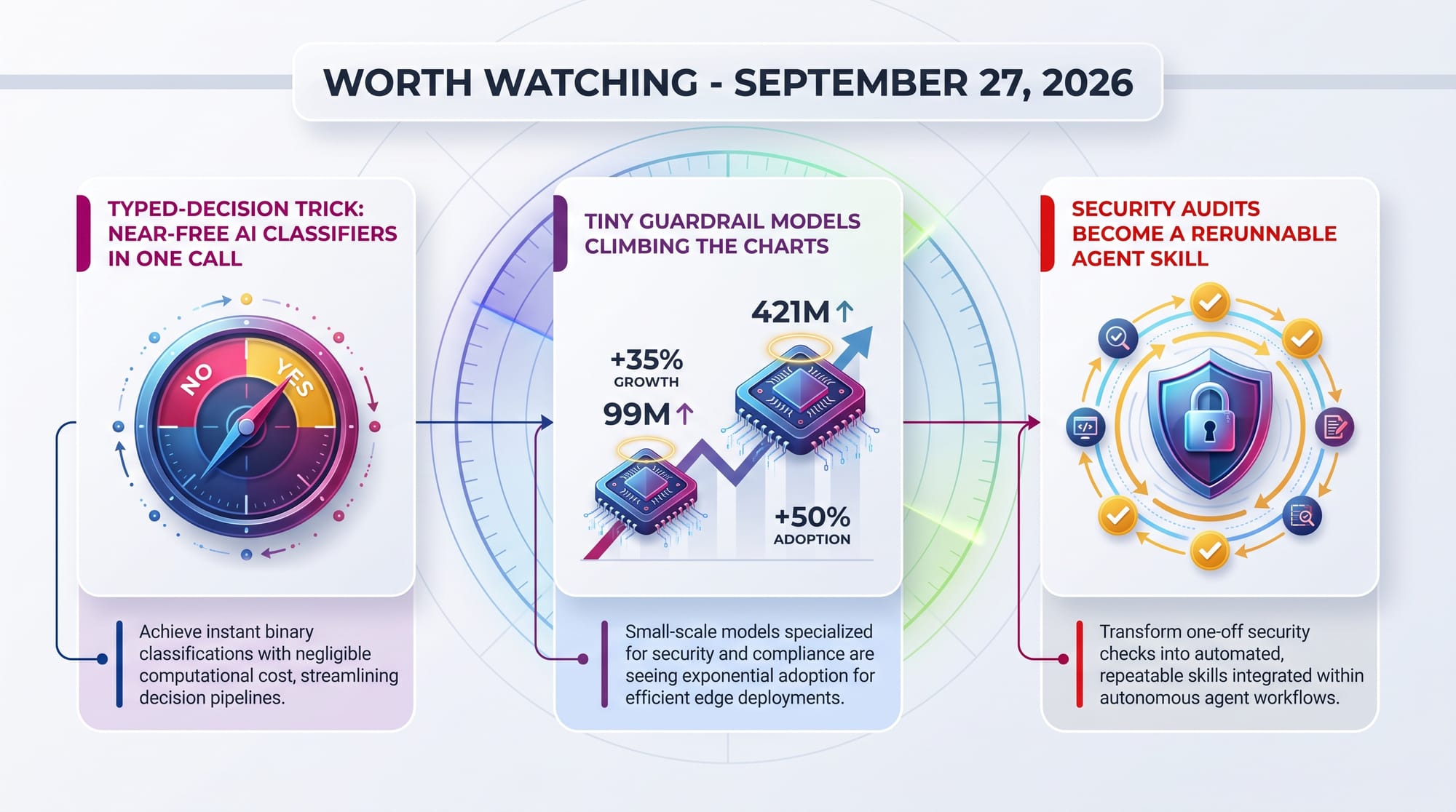
The "typed-decision" pattern for near-free AI classifiers

A trick spreading fast this week could quietly replace a lot of custom-trained models with a single cheap API call.

Instead of asking a model to write text, you force a one-token answer and read the probabilities behind it, turning any chat model into a calibrated yes/no or multiple-choice classifier in one pass. Open-weight reproductions already match a commercial version on 28 datasets. If it holds up, everyday gating and routing logic gets far cheaper - which trims the cost baked into apps you use. Turning GLM-5.3-Flash into a decision model

02

Small, single-purpose models are eating work from the big ones

Teams increasingly bolt a cheap specialist onto a large model instead of asking one model to do everything.

Some of the most talked-about new model releases this week were not chatbots at all but narrow specialists - a sub-500-million-parameter model built only to route and moderate requests, and a 99-million-parameter model that just tags who is speaking in audio. If this pattern holds, the AI inside everyday apps gets faster and cheaper, because the heavy general model is called only when it is truly needed. Convai: laya routing and guardrail model

03

Security testing is becoming an agent skill you can rerun

A free Cloudflare "skill" runs an adversarially-validated security audit that gets better each time you run it.

It sends isolated agents through reconnaissance, vulnerability hunting, and independent verification, where a different agent checks each finding to cut false positives. As these mature, small teams could get repeatable security reviews without hiring a firm - meaning safer apps and services for everyone. GitHub: cloudflare/security-audit-skill

Top Repos Today

Rank yesterday: New entry 🆕
⭐ Stars today: +2,527  ·  📦 Total: 89,536
📜 License: MIT  ·  👤 By: startup
🎯 Time to value: 30 minutes
What it is: An open-source platform for managing whole teams of AI agents as if they were employees in a company, with org charts, budgets, and approval controls. It runs a server plus a web interface and works across Claude, Codex, Cursor, and other backends. Why you'd want it: If you run many agents at once, it replaces a mess of terminals and scripts with one place to track work, cost, and coordination.
✓ Pros✗ Cons
Cross-provider agents in one runtimeNot aimed at single-agent use
Per-agent budget and cost trackingRequires self-hosting
Approvals, audit trails, and permissionsOrganizes agents but does not build them
GitHub - paperclipai/paperclip: The open-source app everyone uses to manage agents at work
The open-source app everyone uses to manage agents at work - paperclipai/paperclip
Rank yesterday: New entry 🆕
⭐ Stars today: +6,503 this week  ·  📦 Total: 79,500
📜 License: MIT  ·  👤 By: startup
🎯 Time to value: 20 minutes
What it is: A desktop app that runs several AI coding agents in parallel, each in its own isolated copy of your repo, so you can compare and merge their results. It manages Claude Code, Codex, and OpenCode side by side. Why you'd want it: You can run multiple agents at once and pick the best output without constant context switching.
✓ Pros✗ Cons
Parallel agents in isolated worktreesNeeds paid subscriptions to each agent service
Built-in terminals, diff review, design modeDesktop-first, mobile is companion-only
Native GitHub and Linear integrationShips daily, so docs lag features
GitHub - stablyai/orca: Orca is the ADE for working with a fleet of parallel agents. Run any coding agent with your own subscription. Available on desktop, mobile and remote runtime.
Orca is the ADE for working with a fleet of parallel agents. Run any coding agent with your own subscription. Available on desktop, mobile and remote runtime. - stablyai/orca
Rank yesterday: New entry 🆕
⭐ Stars today: +6,474 this week  ·  📦 Total: 22,300
📜 License: MIT  ·  👤 By: big-tech
🎯 Time to value: 45 minutes
What it is: A coding-agent skill that automates multi-phase security audits, running agents through reconnaissance, vulnerability hunting, and independent verification with machine-readable findings. Why you'd want it: It gives a repeatable, adversarially-checked security workflow where findings are verified by a different agent than the one that found them.
✓ Pros✗ Cons
Six-phase workflow with structured outputNeeds a tool-using model with sub-agents
Adversarial validation lowers false positivesRequires a sandbox to confirm findings
Zero-dependency validators, additive runsFocused on discovery, not compliance
GitHub - cloudflare/security-audit-skill: A coding-agent skill for multi-phase security audits with independently verified, machine-readable findings
A coding-agent skill for multi-phase security audits with independently verified, machine-readable findings - cloudflare/security-audit-skill
Rank yesterday: Rising ↑
⭐ Stars today: +114 this week  ·  📦 Total: 6,800
📜 License: MIT  ·  👤 By: research org
🎯 Time to value: 60 minutes
What it is: A framework that optimizes prompts, code, and agent designs by having a model read full execution traces (errors, logs, profiling) to diagnose failures and propose fixes. Why you'd want it: It reportedly optimizes systems with about 35x fewer trial runs than reinforcement learning and works with API-only models, no model weights needed.
✓ Pros✗ Cons
Sample-efficient, works with API-only modelsRequires well-defined evaluation metrics
Integrates with DSPy, MLflow, LangChainReflection quality depends on the model used
Optimizes structure, not just promptsPoor fit when traces are not diagnostic
GitHub - gepa-ai/gepa: Optimize prompts, code, and more with AI-powered Reflective Optimization
Optimize prompts, code, and more with AI-powered Reflective Optimization - gepa-ai/gepa
Rank yesterday: Rising ↑
⭐ Stars today: +951 this week  ·  📦 Total: 5,300
📜 License: MIT  ·  👤 By: big-tech
🎯 Time to value: 40 minutes
What it is: A self-hosted AI assistant platform that runs multiple users and agents in one process, with a web dashboard, CLI, a knowledge base, and chat-app integrations, all on your own hardware. Why you'd want it: Everything stays local for privacy while you deploy specialized agents and share them across a team or household.
✓ Pros✗ Cons
Fully local and self-hostedNeeds a multi-core CPU and several GB RAM
Works with OpenAI, Ollama, and DashScopeTeam and mobile features still in beta
Knowledge-base search plus automationSome advertised skills still on the roadmap
GitHub - TencentCloud/Octop: A smarter, self-hosted AI assistant — multi-user, multi-agent.
A smarter, self-hosted AI assistant — multi-user, multi-agent. - TencentCloud/Octop
Rank yesterday: Rising ↑
⭐ Stars today: +820 this week  ·  📦 Total: 5,800
📜 License: Apache-2.0  ·  👤 By: startup
🎯 Time to value: 90 minutes
What it is: An open-source framework for fault-tolerant training of large models across many GPU machines, handling GPU allocation, model sharding, and experiment automation. Why you'd want it: It simplifies the orchestration and failure recovery needed to train very large models across many machines.
✓ Pros✗ Cons
Fault-tolerant multi-node GPU managementLimited to Ubuntu nodes with SSH
PyTorch and DeepSpeed sharding built inEarly-stage with small adoption
GitHub Actions automation for runsTested mainly on a few cloud providers
GitHub - higgsfield-ai/higgsfield: Fault-tolerant, highly scalable GPU orchestration, and a machine learning framework designed for training models with billions to trillions of parameters
Fault-tolerant, highly scalable GPU orchestration, and a machine learning framework designed for training models with billions to trillions of parameters - higgsfield-ai/higgsfield
Rank yesterday: Rising ↑
⭐ Stars today: +848  ·  📦 Total: 59,154
📜 License: MIT  ·  👤 By: individual
🎯 Time to value: 60 minutes
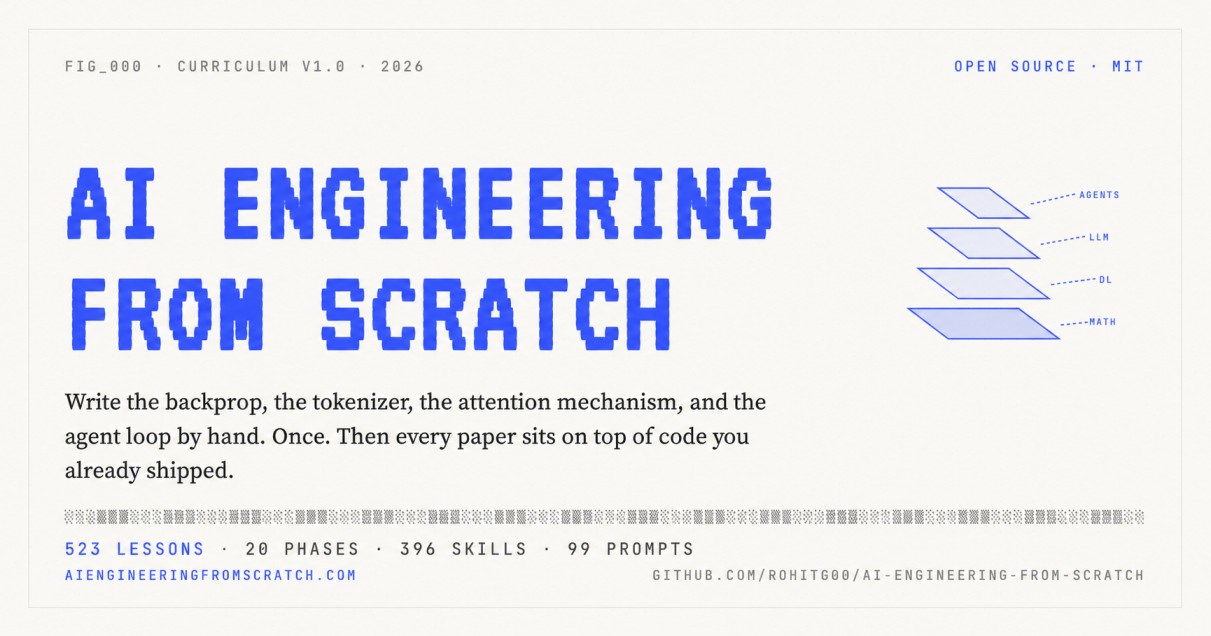
What it is: A free AI and machine-learning curriculum of 523 lessons across 20 phases, from linear algebra to production agent systems, with code in Python, TypeScript, Rust, and Julia. Why you'd want it: It teaches by building algorithms from scratch before reaching for frameworks, for deep understanding rather than surface tutorials.
✓ Pros✗ Cons
Very broad, math foundations to infraAbout 342 hours, a big commitment
Each lesson yields a reusable artifactNeeds coding and math background
Free book volumes and AI-tutor supportDepth varies across language tracks
GitHub - rohitg00/ai-engineering-from-scratch: Learn it. Build it. Ship it for others.
Learn it. Build it. Ship it for others. Contribute to rohitg00/ai-engineering-from-scratch development by creating an account on GitHub.

Top Models Today

An open video-generation model that turns text, images, or audio into video with built-in sound.
📥 Downloads (30d): ~1,601,089  ·  📜 License: LTX community license
👤 By: Lightricks  ·  🎯 Task: image/text-to-video
📐 Size: not disclosed
What it is: A single open model that generates video from text, images, other video, or audio, with native audio output. It is the highest-traffic model on this week's trending board. Why you'd want it: One model covers most video-generation jobs and runs in common tools like ComfyUI and diffusers.
✓ Pros✗ Cons
Broad coverage including audio-to-videoNon-standard license limits commercial certainty
Very high real-world usageHeavy VRAM and compute for video
Single-file support in popular toolsParameter count and full specs undisclosed
Lightricks/LTX-2.5 · Hugging Face
We’re on a journey to advance and democratize artificial intelligence through open source and open science.
A tiny, permissively-licensed model built to route, score, and moderate inside agent pipelines.
📥 Downloads (30d): brand new (top of trending by likes)  ·  📜 License: Apache-2.0
👤 By: Convai Innovations  ·  🎯 Task: classification / guardrails
📐 Size: 421M
What it is: A small purpose-built model for classification, routing, and safety moderation rather than open-ended chat. It topped the trending board by likes this week. Why you'd want it: A cheap, commercial-friendly specialist you can bolt onto a bigger model for gating and guardrails.
✓ Pros✗ Cons
Apache-2.0, commercial-use friendlySub-1B, so limited standalone reasoning
Small and cheap to runNo download history yet, unproven at scale
Highest-liked model this weekNarrow purpose, not a general model
convaiinnovations/laya · Hugging Face
We’re on a journey to advance and democratize artificial intelligence through open source and open science.
A text-to-image model tuned for graphic design, with reliable in-image text and transparent layers.
📥 Downloads (30d): new (301 likes)  ·  📜 License: MIT
👤 By: inclusionAI (Ant Group)  ·  🎯 Task: text-to-image
📐 Size: 6.15B
What it is: An image model specialized for design work, strong at rendering readable text inside images and outputting transparent (RGBA) layers. Why you'd want it: Fully permissive licensing plus design-focused features like clean text and cut-out layers.
✓ Pros✗ Cons
MIT license, fully permissiveNo download history yet, unproven
Reliable in-image text and RGBA outputDesign niche, not general image generation
Works with diffusers6B params needs a capable GPU
inclusionAI/Ming-Image-0.1-Design · Hugging Face
We’re on a journey to advance and democratize artificial intelligence through open source and open science.
A small streaming model that tags who is speaking and when in live audio.
📥 Downloads (30d): ~22,514  ·  📜 License: openmdw-1.1
👤 By: NVIDIA  ·  🎯 Task: speaker diarization
📐 Size: 99M
What it is: A real-time speaker-diarization model for tagging speakers, detecting voice activity, and classifying audio frames. Why you'd want it: Small and fast enough for streaming, useful for cleaning up meeting and podcast recordings.
✓ Pros✗ Cons
Streaming-capable from NVIDIAUncommon license, check the terms
Tiny 99M footprint, multiple formatsNarrow audio task, not general speech
Solid recent download tractionBest used inside NVIDIA's NeMo toolchain
nvidia/Nemotron-3-Diarization · Hugging Face
We’re on a journey to advance and democratize artificial intelligence through open source and open science.
An open reranker that reorders search results to improve retrieval-augmented apps.
📥 Downloads (30d): new (608 likes)  ·  📜 License: MIT
👤 By: Alex Wortega  ·  🎯 Task: text reranking
📐 Size: ~4B
What it is: An open cross-encoder reranker, fine-tuned from Qwen3.5-4B, that scores and reorders retrieved passages. Why you'd want it: Reranking is a high-value, often-missing piece of retrieval systems, and this is a manageable size with an MIT license.
✓ Pros✗ Cons
MIT licenseA derivative fine-tune of Qwen3.5-4B
Targets a high-impact Retrieval-Augmented Generation (RAG) stepNo downloads yet, unproven
Manageable 4B sizeSingle-maker project, limited evaluations
AlexWortega/openjev · Hugging Face
We’re on a journey to advance and democratize artificial intelligence through open source and open science.
A 27B model tuned specifically for long-form and conversational creative writing.
📥 Downloads (30d): ~5,904  ·  📜 License: CC-BY-NC-4.0
👤 By: Altworld  ·  🎯 Task: creative writing
📐 Size: 26.9B
What it is: A large chat model fine-tuned from Qwen3.8-27B for coherent long-form creative writing. Why you'd want it: A sizable, writing-specialized model that is already seeing real downloads.
✓ Pros✗ Cons
Large 27B base for long-form outputNon-commercial license only
Specialized for creative writingA derivative fine-tune of Qwen3.8-27B
Already seeing real usage27B needs substantial GPU memory
Altworld/Hemmingway-1 · Hugging Face
We’re on a journey to advance and democratize artificial intelligence through open source and open science.

AI Launches Today

A real-time world model you can explore and modify.
🔥 Upvotes: 372  ·  👤 By: PixVerse
💰 Pricing: likely freemium (unconfirmed)  ·  🏷 Category: generative world models

An interactive world model that lets you explore a generated environment and change it dynamically in real time, blurring the line between simulation and creation. Verdict: The day's top launch and the most ambitious, though real-time interactive generation is compute-heavy and hard to keep consistent.
PixVerse R2: A real-time world model you can explore and change | Product Hunt
PixVerse R2 is a real-time world model that generates continuously evolving audiovisual worlds instead of fixed video clips. It accepts text, images, audio and actions while generating, remembers what happened earlier in the session, and carries those changes forward in real time. R2 scales to longer, more coherent and controllable experiences — powering everything from interactive stories and characters to playable generative worlds.
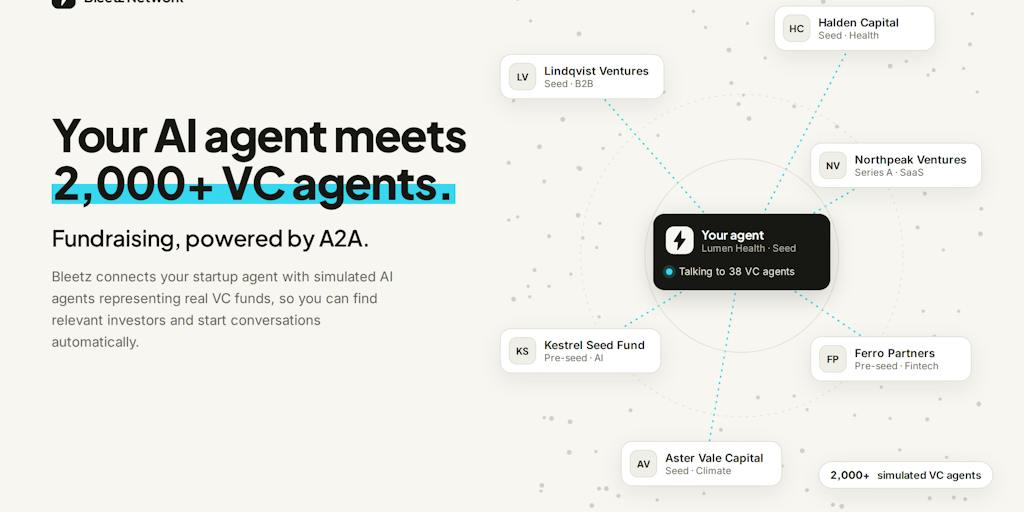
Decentralized AI agent network for venture capital scouting.
🔥 Upvotes: 282  ·  👤 By: Bleetz
💰 Pricing: unconfirmed  ·  🏷 Category: AI agents / fintech

An agent-to-agent network where autonomous agents identify investment opportunities and connect investors with startups, reframing fundraising as a networked process. Verdict: A novel angle, but its value hinges on network liquidity - it needs both investors and startups on board to matter.
Bleetz Network: AI agent-to-agent VC fundraising & scouting network | Product Hunt
Fundraising is broken. Founders spend weeks searching for VCs, researching investment theses, checking sectors, stages and geographies, and sending cold emails, often without knowing who is actually a good fit. Bleetz Network automates the first part of this process. Your AI agent gets matched with 2,000+ SIMULATED agents of real VC, pitches the funds that fit your startup, and gets a YES, NO or MAYBE. A YES unlocks the fund’s contact details. Free, no strings attached.
Run developer marketing like an engineering system.
🔥 Upvotes: 198  ·  👤 By: Quiver
💰 Pricing: likely paid/SaaS (unconfirmed)  ·  🏷 Category: developer marketing

Treats developer marketing as an engineering system, automating outreach, tracking, and optimization with AI for measurable growth. Verdict: Speaks directly to the crowded dev-tools marketing space; useful if it delivers real attribution, but it is a busy category.
Quiver GTM: Run developer marketing like an engineering system | Product Hunt
Quiver is an agentic developer marketing system for technical founders and dev-tool teams. It keeps product context, customer evidence, campaigns, content, tasks and results connected in one controlled system. Unlike another AI writing tool, Quiver gives agents durable context, version history, explicit production states, a Content API, MCP access and a human-approved feedback loop. Use hosted Quiver with managed team access and built-in tasks, or self-host the free MIT-licensed edition.
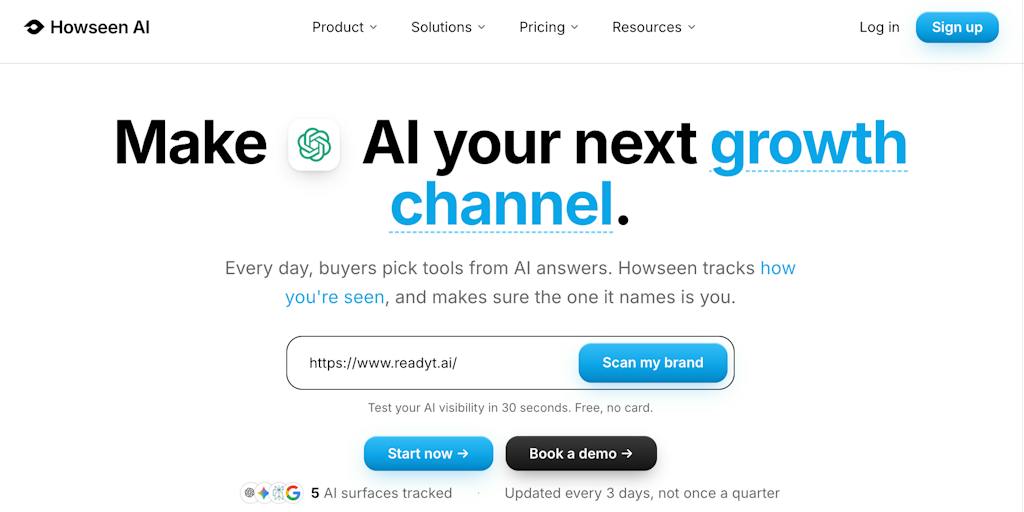
Tracks how often AI assistants recommend or cite your brand.
🔥 Upvotes: 131  ·  👤 By: Howseen
💰 Pricing: likely freemium (unconfirmed)  ·  🏷 Category: brand analytics

Helps brands understand their visibility inside AI-driven discovery by tracking how often AI assistants mention or cite them. Verdict: Rides the fast-growing "get recommended by AI" wave - timely, though it is an increasingly crowded monitoring niche.
Howseen AI: Track how AI recommends your brand, and get cited | Product Hunt
Your buyers now ask ChatGPT, Gemini and Perplexity which tool or brand to buy. Howseen tracks whether AI recommends you or your competitors across ChatGPT, Gemini, Perplexity and Google AI Overviews, finds the exact questions where you’re invisible, and generates SEO & GEO-optimized content to get you cited, auto-published to your blog on the highest-impact gaps first. Most tools stop at a score. Howseen closes the loop: measure, then act. Free to see where you stand today.
Build software at the speed of thought.
🔥 Upvotes: 122  ·  👤 By: Wand
💰 Pricing: likely freemium (unconfirmed)  ·  🏷 Category: code generation

Combines natural-language input with instant code generation for rapid prototyping, aiming to turn ideas into working software quickly. Verdict: Another entrant in the crowded prompt-to-app field; standing out against established tools will be hard.
Wand: Build software at the speed of thought | Product Hunt
For builders who think faster than they type. The keyboard is becoming the bottleneck. Wand lets you think out loud instead of stopping to translate ideas into prompts. Ramble, react, change your mind mid-sentence - Wand keeps up and turns your thoughts into software. Welcome to the post-keyboard era.

Snapshot

ProviderModelInput $/1MOutput $/1MContext
AnthropicClaude Opus 5.5$4.00$20.00up to 1M
OpenAIGPT-6 Astra$10.00$50.001.05M
GoogleGemini 3.8 Flash$0.75$3.75~1M
GroqKimi K2$1.00$3.00~256K
What this means: Google's newest Flash tier is by far the cheapest frontier-class option here, at roughly a thirteenth of GPT-6 Astra's input price - but note Gemini 3.8 Flash prices are scheduled to double on January 1, 2027 (to $1.50 input and $7.50 output). OpenAI has also added cheaper GPT-6 tiers (Sol at $4/$20 and Luna at $0.20/$1.20) for teams that do not need the top model. Establishing this table as an ongoing baseline; prompt caching and batch discounts (often up to 50%) can cut all four further.

CliffCompaction: Cost-Efficient Compaction for Long-Horizon Coding Agents

Trang Nguyen, Eulrang Cho, Bingqing Chen, Tim Dettmers · arXiv:2609.26779
What it claims: Long coding-agent sessions waste tokens re-reading files and piling up stale history; CliffCompaction is a training-free method that trims that context faithfully (only dropping content, never rewriting it) so the agent stays on track while spending far less.

Key finding: It cuts cost up to 50% while holding or improving results - adding over 10 percentage points on one coding benchmark and reaching state-of-the-art speedups on another.

Why practitioners should care: It ships as a drop-in proxy that works with Claude Code, Codex, and other harnesses, so you can adopt it without retraining or changing your agent. The authors also show an open model matching a top closed model at lower cost under this setup.
Member discussion

Subscribe to GenAI Secret Sauce newsletter and stay updated.

Don't miss anything. Get all the latest posts delivered straight to your inbox. It's free!
Great! Check your inbox and click the link to confirm your subscription.