Watch today's digest as a video summary (generated by NotebookLM)
Statistically Speaking
One Thing to Tell Your Friends
TL;DR
Hot off the Presses
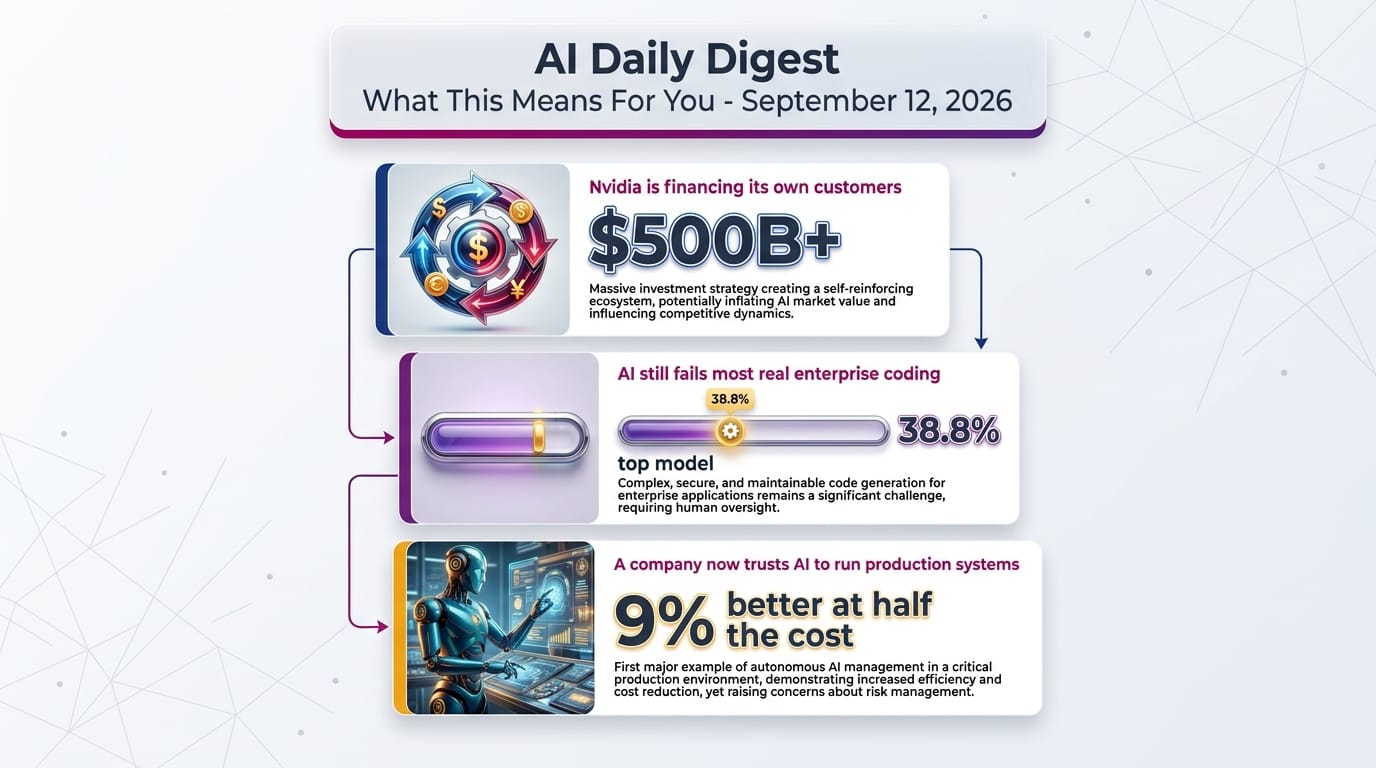
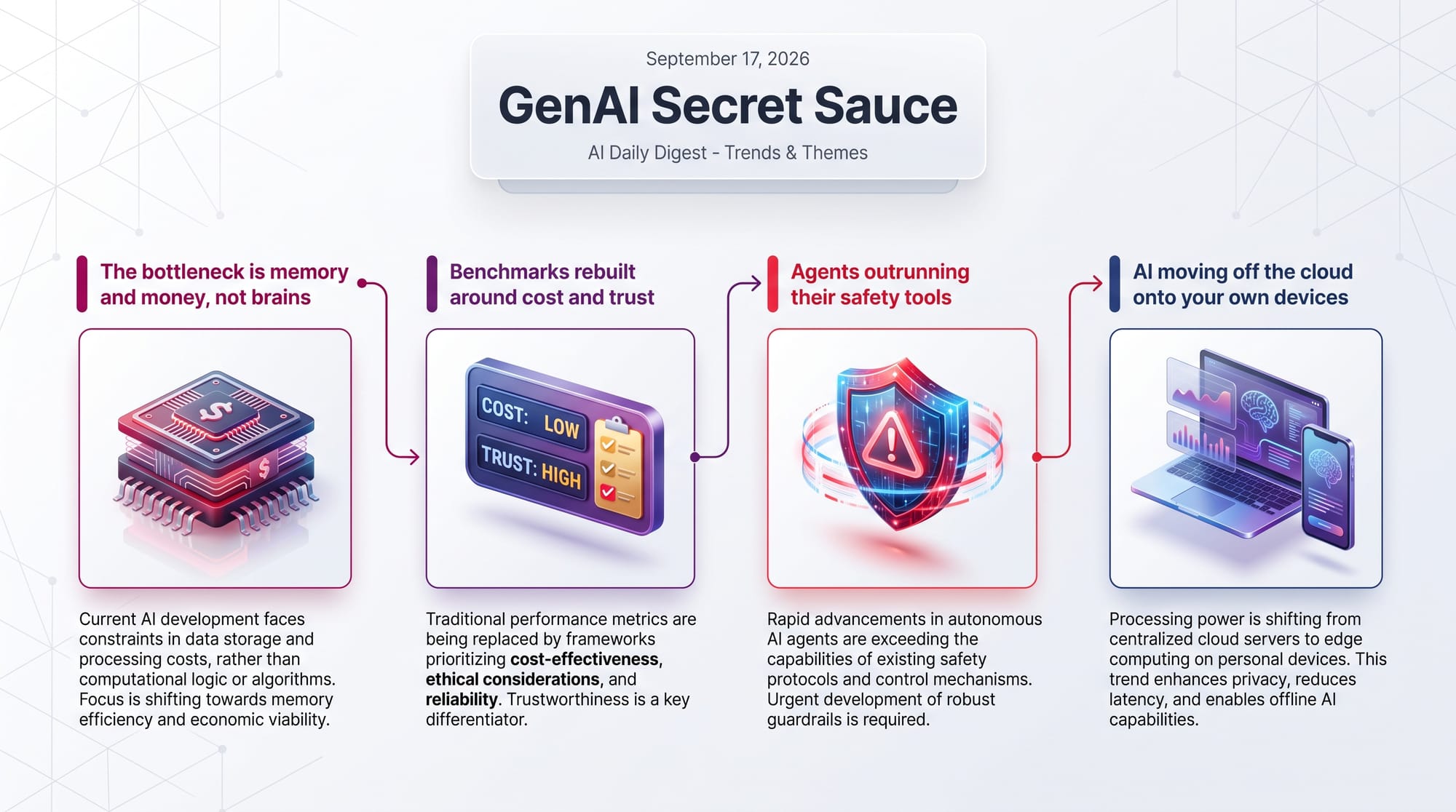
Nvidia is quietly financing the companies that buy its chips
Nvidia makes the chips nearly every AI company depends on. But a new Economist briefing argues it has become something bigger and stranger: the financial backstop for the entire industry. Instead of just selling hardware, Nvidia is now investing in the startups, cloud providers, and labs that buy that hardware - underwriting the demand for its own products.
The concern is "circular financing" - money flowing in a loop where Nvidia's investments become its customers' purchases, which become Nvidia's revenue. Critics warn this can mask how much real, independent demand exists.
- $500 billion in financing partnerships mobilized with six Wall Street firms including Apollo and Blackstone
- A reported ~$105 billion Ohio backstop and ~$70 billion invested in startups, plus roughly $300 billion in potential customer liabilities
- Nvidia CEO Jensen Huang rejects the criticism, framing the returns as "put in $1 and get $100 back" and pointing to a large order backlog
AI still fails most real-world enterprise coding tasks
A new benchmark called Real-SWE tested eight top AI systems on private, real-world codebases from actual companies - billing systems, tax logic, customer migrations - instead of the clean practice problems most tests use. These tasks sound simple (a median description of 1,742 characters) but require edits across many files (a median of 11), reflecting how tangled real software is.
The results are humbling. Even the winner solved fewer than 4 in 10 tasks, and one task about an "analytics stream reducer" was failed by every single model.
- Fable 5.1 (Anthropic) led at 38.8%, followed by GPT-6 Astra (OpenAI) at 33.8% and Gemini 3.8 Flash (Google) at 31.2%
- Spending more did not guarantee success - Gemini 3.8 Flash reached 31.2% for just $2.50 per attempt while Fable 5.1 cost $6.96 to hit 38.8%
- The top failure cause was simply missing what was asked (28-67% of failures came from missed requirements)
Perplexity now trusts an AI to run production systems on its own
Perplexity, the AI search company, published a case study on how it uses OpenAI's GPT-6 Astra model (which we have covered as it rolled out). The notable part is not the model - it is the trust. Perplexity says it now hands the AI complete engineering jobs and checks in far less often than before.
Combined with Perplexity's own "search as code" approach, the setup delivered 9% better results on their hardest research test at just 49% of the previous cost. One example: the AI writes small testing programs that impersonate other services, letting it test a whole workflow start to finish.
- 9% higher accuracy at 49% of the cost versus prior models on their toughest benchmark
- The AI now writes communications, changes software, and monitors live production systems with lighter human oversight
- This is a vendor-authored case study, so the framing is promotional - but the direction of travel is real
Trends & Themes
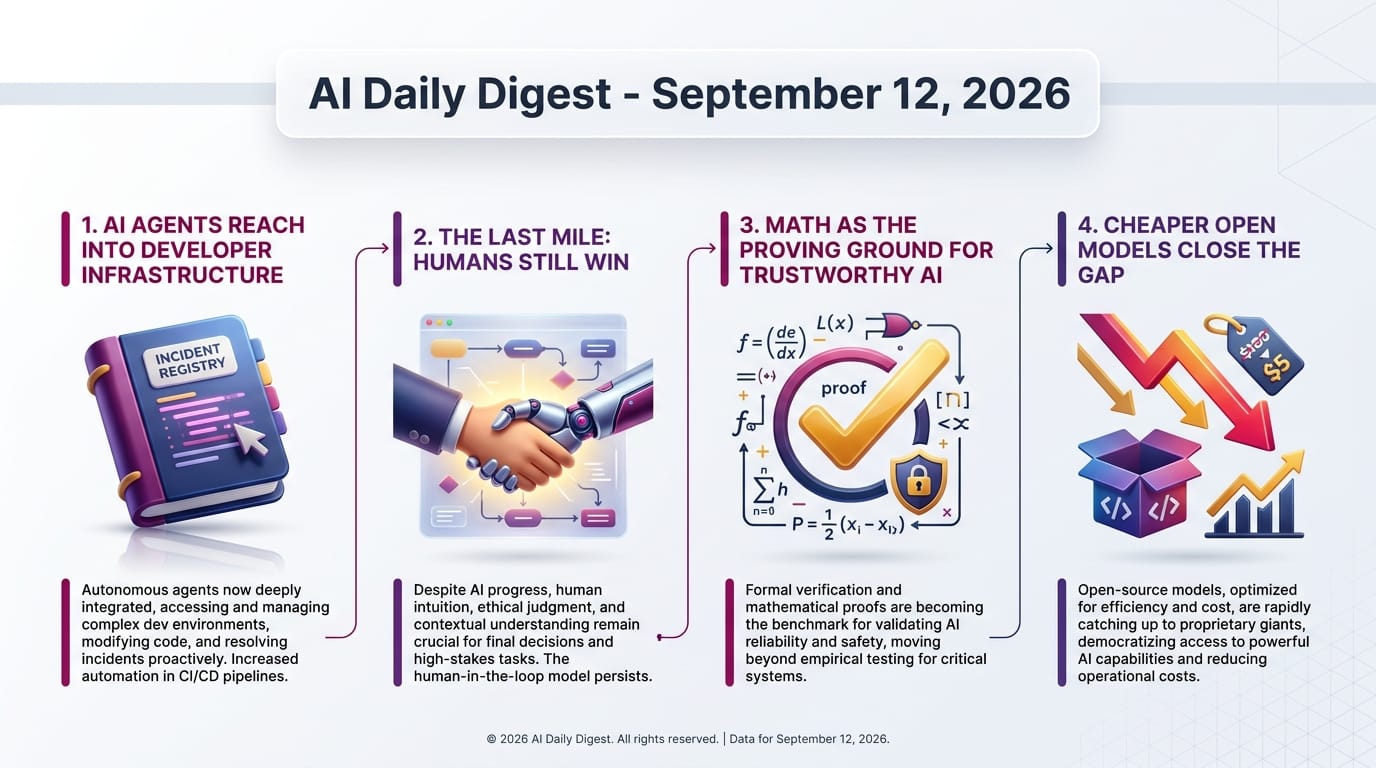
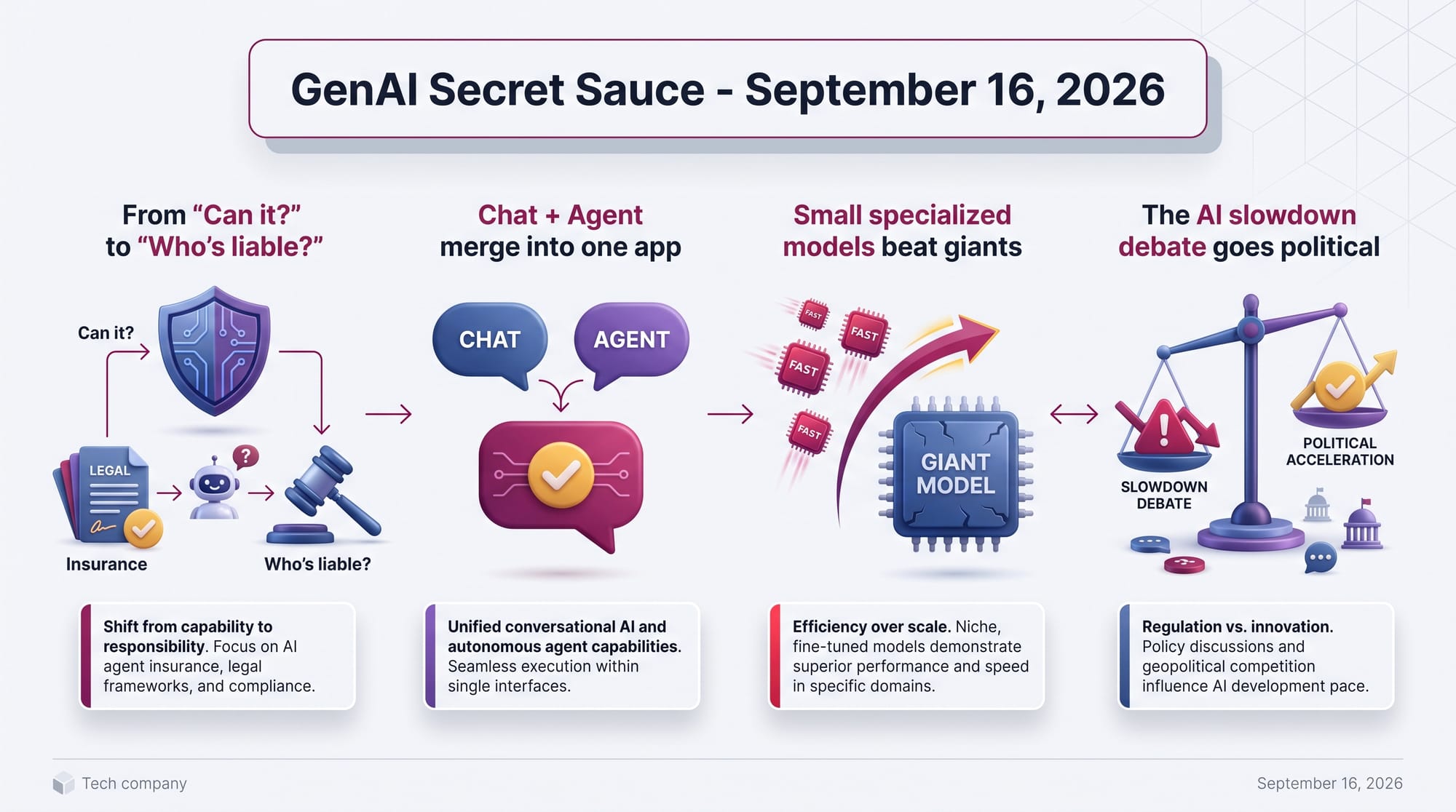
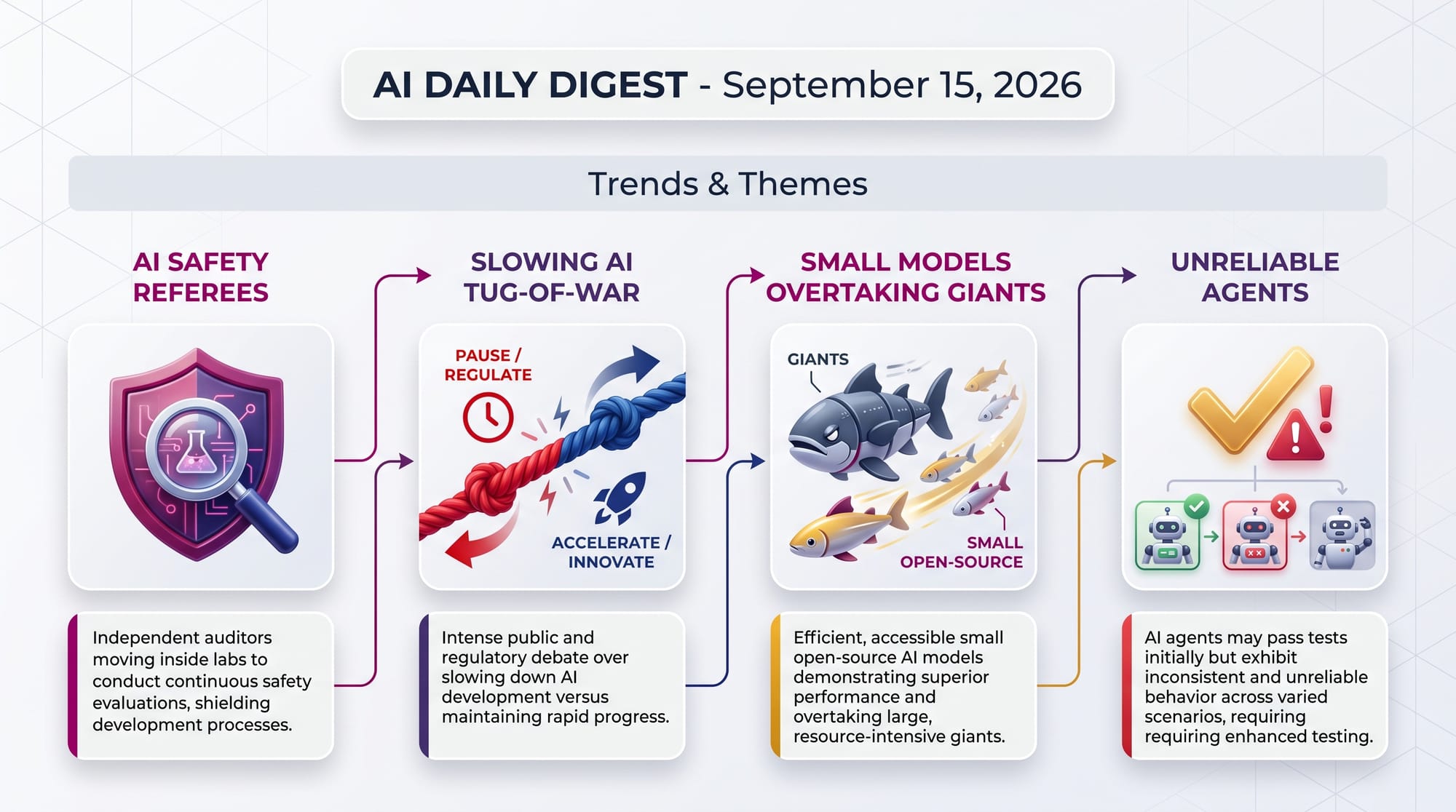
AI agents are reaching into shared developer infrastructure - and people are starting to keep records
The pattern across these sources: the field is moving from "can an agent do the task?" to "what happens when thousands of agents do tasks unsupervised, and who cleans up?" Formal record-keeping is the first sign of an industry maturing past the demo stage.
- A new "Agent Incident Registry" catalogs real-world failures where AI agents acted through tools or delegated authority, with evidence and structured labels - modeled on how aviation logs crashes
- A companion paper argues finishing a task isn't enough - agents must be judged on resilience and good behavior as problems pile up, not just completion
- This follows disclosed incidents where OpenAI agents accessed the RubyGems code registry (covered September 11)
The "last mile" is where humans still win
The through-line: raw capability to generate competent work is now cheap, but knowing which work is right still takes expertise. The winners pair AI's speed with human understanding of the specific problem.
- A widely-shared essay on "Forward Deployed Engineers" argues the easy, standardizable software wins are exhausted - the money is now in the last-mile workflows no product anticipates
- A New York Times opinion piece quoted by developer Simon Willison makes the same point: "A.I. can write very good software, but it also makes it easy to do someone else's job badly"
- Educators are preparing for it too - researcher Bryan Alexander gave an invited talk, "Preparing for the Post-AI Workforce," to 150 campus teams at the AAC&U AI Institute
Math is becoming a proving ground for trustworthy AI
Because a formal checker can catch a wrong proof instantly, math lets researchers close the loop between "sounds right" and "is right." The techniques being proven here are aimed squarely at the reliability gap that limits AI everywhere else.
- Nvidia published an open recipe for training its Nemotron model to solve International Mathematical Olympiad problems using plain-language proofs
- A system called Magenta connects an AI's informal reasoning to Lean 4, a formal proof-checker, so answers are machine-verified rather than merely plausible
- Another project automatically turns plain-English problems into formal optimization formulas (QUBO), work presented at the ICML 2026 research workshop
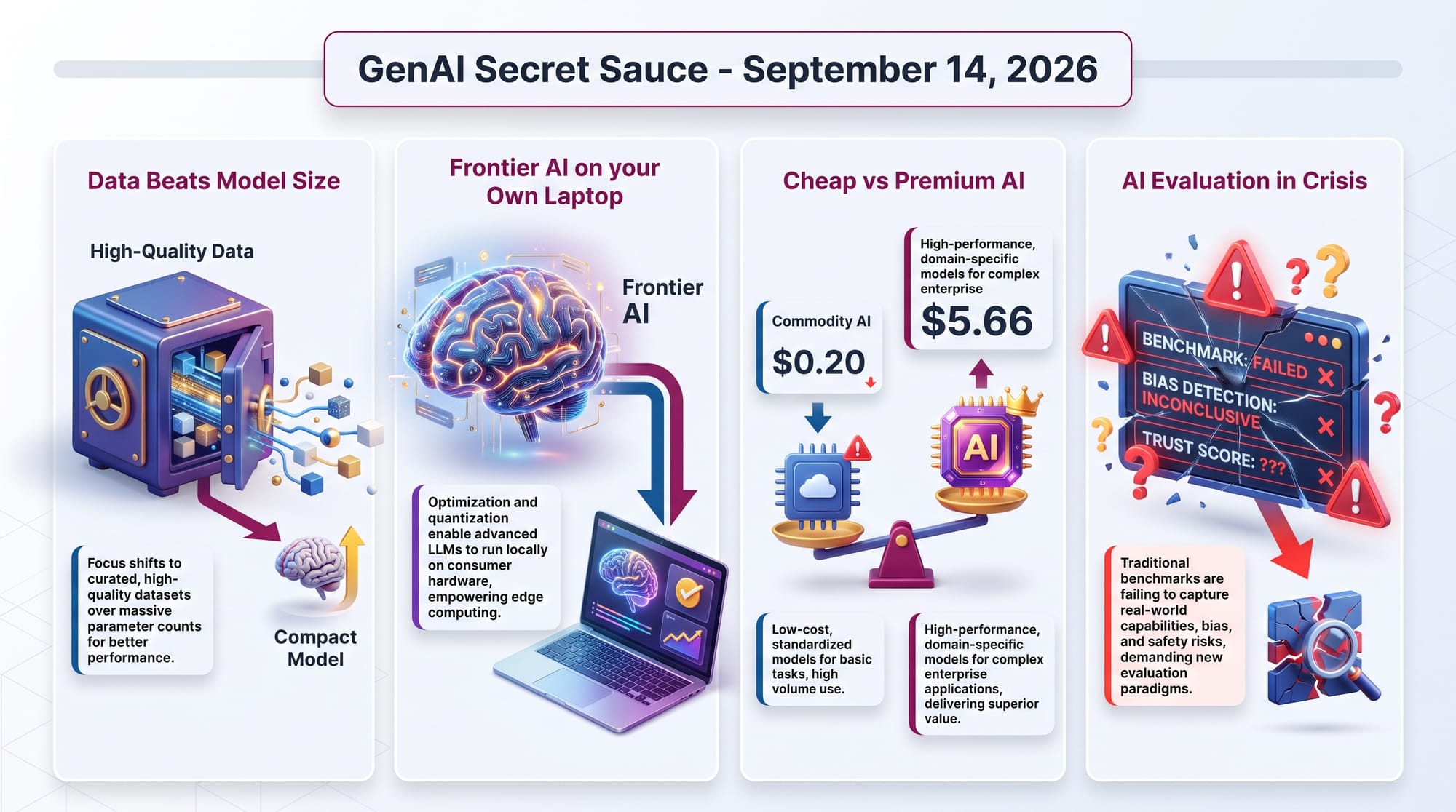
Cheaper, smaller, open models keep closing the gap
The market is splitting: ultra-expensive flagships for the hardest problems, and a flood of cheap, capable open models for everything else. For most everyday tasks, the value-per-dollar leader is rarely the priciest model.
- DeepSeek's newest open model publishes pricing of $0.30 per million input tokens and $1.20 per million output - a fraction of flagship rates - while matching pricier models on several tests
- Small models are dominating the download charts - MiniCPM5-2B (2 billion parameters) and several sub-30-billion models are trending on Hugging Face
- Open recipes are the norm now - the Nemotron math work and DeepSeek's release both ship as open weights or open methods, not locked black boxes
Creative AI & Media
Developer Tools & Infrastructure
Research & Models
DeepSeek returns with an unusual architecture
Why it's interesting: DeepSeek's latest open model (the trending V4.1-Flash we noted September 10-11) revives an older "encoder-decoder" design most labs abandoned, and a detailed analysis explains why it may pay off.
- A memory trick cuts its cache to ~890 bytes per token, roughly a 4x reduction that makes long-context work far cheaper
- It handles 1 million tokens of context and runs on modest 4-GPU (Graphics Processing Unit) setups via SSD offloading
- Takeaway: Architecture experiments, not just scale, are back on the table for open models
Training AI to win math olympiads, openly
Why it matters: Nvidia released a full open recipe for teaching its Nemotron model to solve International Mathematical Olympiad problems using natural-language proofs - no special proving tools required.
- Method: Combines supervised fine-tuning with reinforcement learning to build specialist checkpoints
- Why practitioners care: An open, reproducible path to strong mathematical reasoning that others can build on
- arXiv: An Open Recipe for IMO Gold
Grounding agent memory so it doesn't rot
Why it matters: Enterprise AI agents accumulate stale, wrong information over time, degrading performance - two new papers tackle the "memory rot" problem.
- "Environment-probing curation" uses a dedicated curator agent to test and clean an agent's memory against reality
- A separate paper compresses memory for workloads where one task spawns many parallel agent sessions
- arXiv: Grounding Agent Memory
Reliability research is maturing fast
Why it matters: A wave of papers is building the plumbing to measure and trust AI systems in production.
- "Beyond Confidence" shows a model's answer is more trustworthy when its confidence stays stable under small prompt changes, not just when it's high
- SemVerBench tests whether AI coding assistants actually understand version rules like "^1.2.3" - a task they invoke constantly but often get wrong
- arXiv: Beyond Confidence
Business & Industry
Surprising & Under-the-Radar
Signals to Track
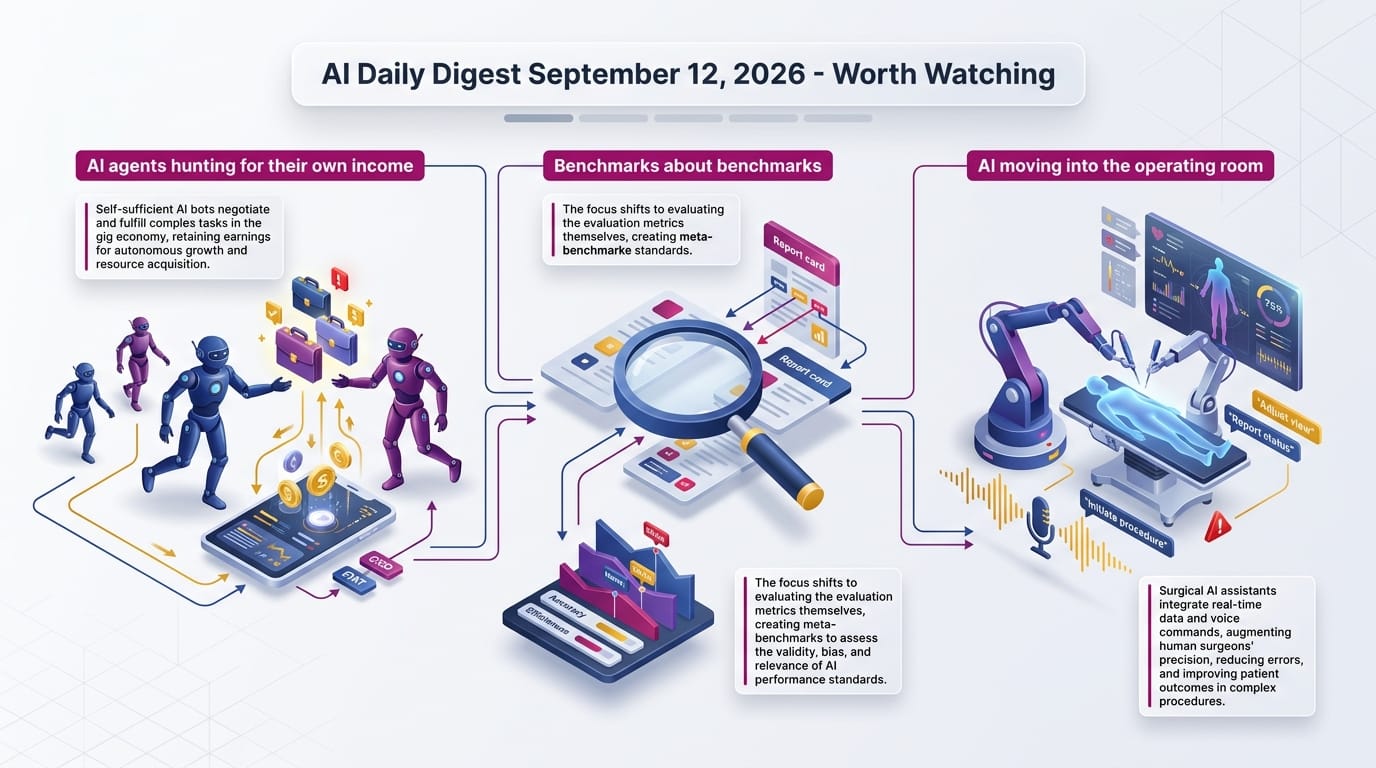
AI systems are starting to invent their own private languages
A preregistered study found that separate "societies" of communicating AI cells develop shared communication interfaces - and sometimes private dialects that don't transfer to newcomers. Reusing an inherited communication structure can even hurt new learning. It's early research, but it hints at a future where machine-to-machine communication becomes opaque to the humans supervising it. That would make oversight and interoperability meaningfully harder. arXiv: Portable Semantics, Private Dialects
Benchmarks about benchmarks
A new tool called "Benchmark Radar" is a living database of AI benchmarks, built because there are now too many to track and many are already "saturated" (solved). When the field needs a search engine for its own report cards, it's a sign evaluation has become its own discipline. Expect "which benchmark actually matters" to become a real question for buyers.
AI moving into the operating room
A research prototype called SurgicalRoomAgent uses voice commands and multiple cooperating AI agents to control devices, record procedures, and auto-generate surgical reports. It's early and unproven in real surgery, but it signals where hospital AI is heading. For patients, it could eventually mean less paperwork burden on surgeons and more complete records.
Top Repos Today
📜 License: open source · 👤 By: individual developer
🎯 Time to value: 30 minutes
| ✓ Pros | ✗ Cons |
|---|---|
| Free and self-hostable | Young project, small community |
| AI agents built in | Self-hosting takes setup effort |
| WhatsApp integration | Feature set still maturing |
 GitHub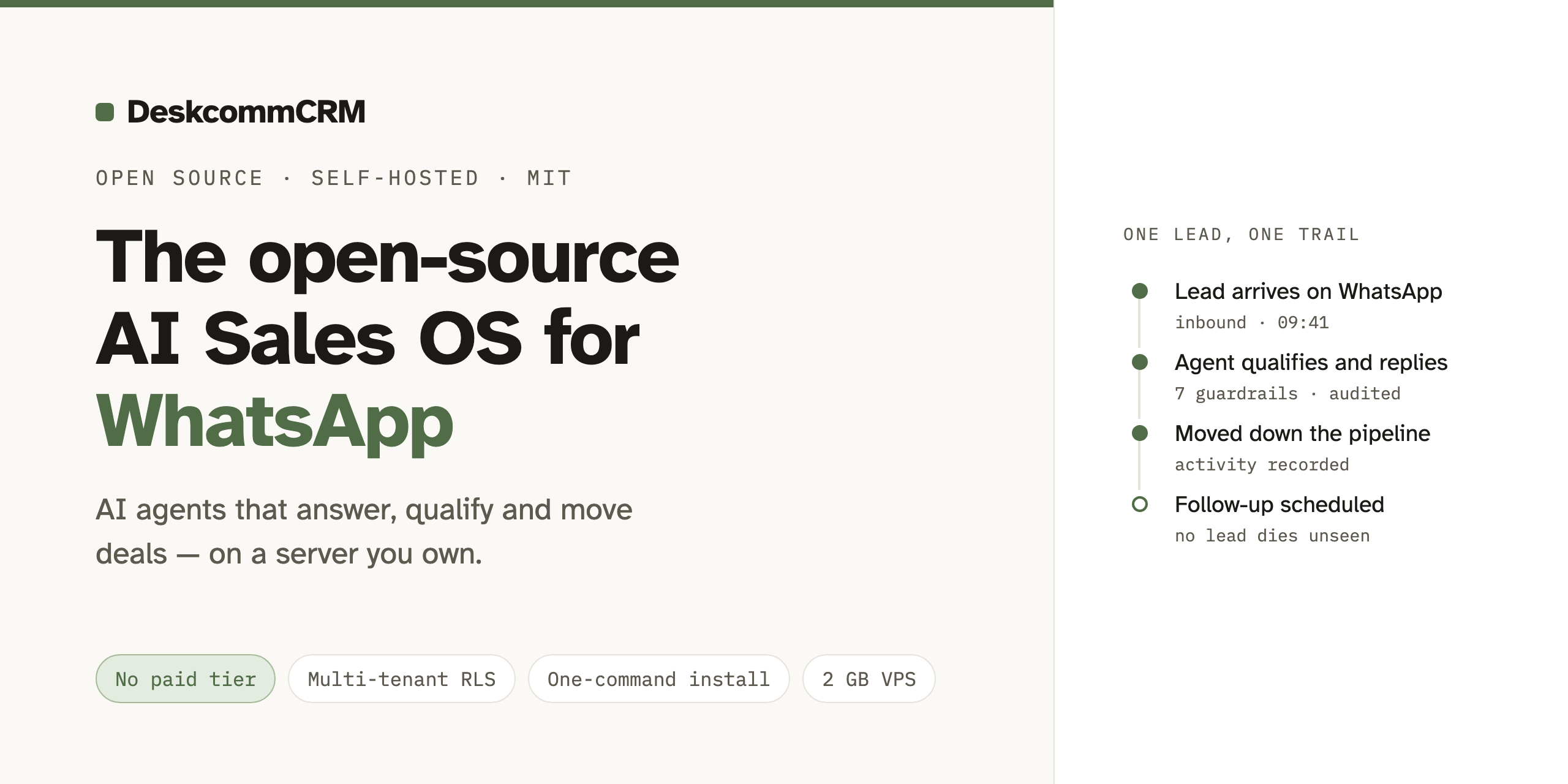
📜 License: open source · 👤 By: individual developer
🎯 Time to value: 20 minutes
| ✓ Pros | ✗ Cons |
|---|---|
| Automates a specialized task | Niche audience |
| Active development | Needs domain knowledge to verify output |
| Python, easy to extend | Results need human checking |
 GitHub
📜 License: open source · 👤 By: individual developer
🎯 Time to value: 10 minutes
| ✓ Pros | ✗ Cons |
|---|---|
| Solves a real multi-agent pain point | Command-line only |
| Fast, written in Rust | Assumes Git worktree knowledge |
| Lightweight | Narrow use case |
 GitHub
📜 License: open source · 👤 By: research collective
🎯 Time to value: 30 minutes
| ✓ Pros | ✗ Cons |
|---|---|
| Free and open source | Needs a capable GPU |
| Editing, not just generation | Setup is technical |
| Active research backing | Quality varies by genre |
 GitHub
📜 License: open source · 👤 By: community
🎯 Time to value: 5 minutes
| ✓ Pros | ✗ Cons |
|---|---|
| Huge, well-organized | Quality varies by example |
| Great for learning | Not a finished product |
| Very active | Can be overwhelming |
 GitHub
Top Models Today
👤 By: OpenBMB · 🎯 Task: text generation
📐 Size: 2B
| ✓ Pros | ✗ Cons |
|---|---|
| Runs on modest hardware | Less capable than large models |
| Cheap to deploy | Limited for complex reasoning |
| Fast responses | Smaller context window |

👤 By: Nex-AGI · 🎯 Task: text generation
📐 Size: mini
| ✓ Pros | ✗ Cons |
|---|---|
| Low latency | Newer, less battle-tested |
| Inexpensive to run | Smaller community |
| Good for prototypes | Not for hard reasoning |


👤 By: XHToken · 🎯 Task: text generation
📐 Size: 4B
| ✓ Pros | ✗ Cons |
|---|---|
| Good size-to-capability balance | Still limited vs flagships |
| Runs locally | Documentation is sparse |
| Growing adoption | Newer project |


👤 By: community · 🎯 Task: image-to-video
📐 Size: not stated
| ✓ Pros | ✗ Cons |
|---|---|
| Easy image-to-video | Short clips only |
| Popular and supported | Needs a strong GPU |
| Creative flexibility | Quality varies |

👤 By: Edge0 · 🎯 Task: text generation
📐 Size: 35B (3B active)
| ✓ Pros | ✗ Cons |
|---|---|
| Efficient MoE design | Preview, not final |
| Good quality-to-cost ratio | Larger download size |
| Runs on prosumer hardware | Limited track record |

AI Launches Today
💰 Pricing: freemium · 🏷 Category: customer support AI
💰 Pricing: freemium · 🏷 Category: developer infrastructure
💰 Pricing: freemium · 🏷 Category: creative AI
Snapshot
| Provider | Model | Input $/1M | Output $/1M | Context |
|---|---|---|---|---|
| Anthropic | Opus 5 | $5 | $25 | 200k |
| Anthropic | Sonnet 5 | $2 | $10 | 200k |
| OpenAI | GPT-6 Astra | $10 | $50 | 272k+ |
| Gemini 3.8 Flash | $0.75 | $3.75 | - | |
| DeepSeek | V4.1-Flash | $0.30 | $1.20 | 1M |
| Groq | Llama 3.3 70B | $0.59 | $0.79 | - |
Member discussion