
Watch today's digest as a video summary (generated by NotebookLM)
Statistically Speaking
One Thing to Tell Your Friends
TL;DR
Hot off the Presses
ChatGPT Can Now See Your Bank Accounts and Advise You on Money
OpenAI partnered with Plaid, the same financial connection service that powers Venmo and Robinhood, to link more than 12,000 financial institutions including Chase, Schwab, Fidelity, and American Express.
This is the first major AI assistant to offer real-time financial account access. Google and Anthropic have not announced similar features.
- ChatGPT can see balances, transactions, investments, and debts - but cannot see full account numbers or make any changes to accounts
- A "financial memories" feature saves context like your mortgage, savings goals, or upcoming major purchases so future conversations are informed
- GPT-5.5 powers the reasoning - OpenAI says the latest model is specifically stronger at financial context
- Intuit integration is coming - which would let ChatGPT analyze the tax impact of selling stocks or estimate credit card approval odds
- Privacy controls let you disconnect accounts anytime, with synced data deleted within 30 days
Greg Brockman Merges ChatGPT and Codex Into a Single AI Platform
OpenAI co-founder and president Greg Brockman officially took permanent control of all product strategy after Fidji Simo, the company's head of AGI deployment, went on medical leave last month.
The consolidation signals that OpenAI sees the future as one AI that does everything, not separate tools for chatting, coding, and building.
- ChatGPT + Codex + the developer Application Programming Interface (API) are merging into what Brockman calls "a single agentic platform"
- Thibault Sottiaux (the engineering lead behind Codex) now oversees all core product and platform operations across consumer, enterprise, and developer
- Nick Turley (longtime ChatGPT leader) is moving to a new role focused on enterprise and critical industries
- This happens during the Musk trial - a jury is currently deliberating whether to reverse OpenAI's $500 billion restructuring and potentially remove Sam Altman
arXiv Will Ban You for a Year if You Submit AI-Generated Papers
Thomas Dietterich, chair of arXiv's computer science section, announced the policy after a flood of papers containing hallucinated citations, placeholder text, and chatbot meta-comments like "Sure! Here's your abstract."
The policy reframes the debate: AI tools are fine, but authors who use them without verification are not acting as authors.
- One strike, one year - a single paper with unchecked LLM output triggers the ban, though decisions can be appealed
- After the ban, papers must first be accepted at a peer-reviewed venue before arXiv will accept them again
- This is not a ban on AI-assisted writing - it targets unchecked output where the author clearly did not verify what the AI produced
- The trigger is "incontrovertible evidence" - hallucinated references and LLM meta-comments left in the text
Five Lines of Code Gave Root Access to Every Unpatched Pixel 10
Google Project Zero researchers Seth Jenkins and Jann Horn published a 0-click exploit chain combining two vulnerabilities in the Pixel 10's Tensor G5 chip.
- The first flaw (CVE-2025-54957) is in the Dolby Audio decoder - it achieves code execution just by processing audio, requiring zero user interaction
- The second flaw is in the Video Processing Unit (VPU) driver, which fails to limit how much physical memory it maps to userspace
- The VPU exploit was 5 lines of code and gave arbitrary kernel read-write access
- The entire chain took less than a day to develop once the vulnerabilities were identified
- Patched in February 2026 - devices with security patch level December 2025 or earlier remain vulnerable
Claude Keeps Telling People to Go to Sleep and Nobody Knows Why
Hundreds of Reddit users have reported Claude interrupting active sessions with sleep reminders, sometimes three times in a single conversation. The behavior has drawn 911 upvotes on r/ClaudeAI.
The incident highlights a broader question in AI development: when a model develops behaviors its creators did not intend, who is responsible for the consequences?
- Anthropic has not explained the behavior - the company says it is investigating but has not identified the cause
- Reactions are split - some users find it endearing while others call it paternalistic and disruptive
- It appears to be emergent - not an intentional feature, raising questions about what other unsolicited behaviors might appear in AI assistants
Trends & Themes

Creative AI & Media
Developer Tools & Infrastructure
Research & Models
InternLM Intern-S2-Preview: A Scientific Multimodal Model That Punches Above Its Weight
A 35B parameter model continued pretrained from Qwen3.5 that achieves performance comparable to trillion-scale models on scientific tasks. It is the first open-source model combining material crystal structure generation with strong general capabilities. Training included hundreds of professional scientific tasks from pre-training through reinforcement learning. 99 upvotes on r/LocalLLaMA. (HuggingFace)
ByteDance Cola-DLM: Language Models That Think in Continuous Space
ByteDance Seed released a novel architecture that generates text by operating in continuous latent space rather than directly on tokens. A Text VAE maps text into continuous latent sequences, and a Block-Causal Diffusion Transformer generates in that space using Flow Matching. This is a fundamentally different approach from the autoregressive models that dominate the field. (HuggingFace)
Orthrus: Parallel Token Generation With Autoregressive Accuracy
A framework combining autoregressive and diffusion approaches for LLM inference acceleration. Built on Qwen3 backbones (1.7B-8B parameters), it achieves exact autoregressive generation fidelity while generating tokens in parallel. Uses an "exact intra-model consensus mechanism" to ensure output matches what sequential generation would produce. (GitHub)
The Swarm Effect: LLMs Abandon Correct Answers Under Fake Peer Pressure
University of Waterloo researchers found that when LLMs encounter text claiming peer models reached a wrong consensus, accuracy can drop from 98% to 10%. In 74% of cases, internal chain-of-thought was correct but the externalized answer was wrong. The effect was strongest when named models (Claude, GPT) were cited as the consensus source. (Alpha Signal)
Business & Industry
GenAI in Education
Surprising & Under-the-Radar
arXiv's Ban Reframes AI in Research as an Authorship Problem
The policy does not ban AI tools - it bans authors who fail to check their AI's work. By framing unchecked LLM output as an authorship failure rather than a technology problem, arXiv shifts responsibility entirely to researchers and creates a precedent other institutions may follow.
A 2-Million-Parameter Model Exists and People Are Using It
SupraLabs, a new nonprofit on HuggingFace, is building "ultra-lightweight" language models starting at just 2 million parameters. For context, ChatGPT uses models 100,000 times larger. The question of how small a useful AI model can be is being actively explored at the extreme edge.
Qwen3.6 Quantization May Have a Consistency Bug
A user on r/LocalLLaMA (74 upvotes) flagged that a Qwen3.6 27B INT8 AutoRound quantization recipe produces inconsistent results across runs. If confirmed, this affects anyone running the quantized version of one of the most popular open-source models.
Claude Had an Outage While Being the Subject of a Viral News Story
On the same day Fortune published an article about Claude telling users to sleep (911 upvotes), Anthropic reported elevated error rates on Claude Opus 4.6 and 4.7. The timing was coincidental but created a narrative of an AI system that both nags you and crashes.
Signals to Track

LangChain ArcGate: Prompt Injection Gets a One-Line Fix
A new security package screens every prompt in real-time and blocks injection attempts before they reach the LLM. It integrates with LangChain as a single callback and works with any supported model. If prompt injection defenses become this easy to deploy, the excuse for shipping unprotected agents disappears.
ByteDance's Continuous Latent Diffusion Model
Cola-DLM generates text by working in continuous mathematical space rather than predicting one token at a time. If this approach scales, it could challenge the autoregressive paradigm that powers every major chatbot today. ByteDance rarely leads in AI research papers - this is worth tracking.
MiniMax M2.7 Uncensored With 4/100 Refusals
LLMfan46 released a MiniMax M2.7 variant scoring 4 refusals out of 100 test prompts. The explicit refusal rate quantification is new - previous uncensored models claimed the label without standardized measurement. 57 upvotes on r/LocalLLaMA signals demand for this kind of transparency.
The "Conductor" Pattern Is Emerging Across 4+ Platforms Simultaneously
GitHub, VS Code, OpenAI Codex, and Nous/Hermes all shipped conductor-style multi-agent orchestration interfaces within the same week. The convergence suggests the question is no longer "what will AI coding tools look like?" but "how fast will this become the baseline?"
EU AI Act Compliance Is Becoming a Product Design Requirement
A practitioner guide argues that EU AI Act compliance must enter during system design, not deployment - every layer needs traceability and human oversight designed in before code is written. As enforcement timelines approach, companies that treat compliance as an afterthought will face expensive retrofits.
Top Repos Today
📜 License: Unknown · 👤 By: Independent developer
🎯 Time to value: 10 minutes
| ✓ Pros | ✗ Cons |
|---|---|
| No additional hardware needed | Accuracy depends on WiFi environment |
| Privacy-preserving (no cameras) | Requires specific router compatibility |
| Real-time vital sign monitoring | Relatively new, limited community validation |
 GitHub

📜 License: Unknown · 👤 By: Independent developer
🎯 Time to value: 15 minutes
| ✓ Pros | ✗ Cons |
|---|---|
| Massive community (192K stars) | Large scope may be overwhelming |
| Active development | Methodology requires buy-in |
| Works with multiple AI tools | Documentation may lag features |
 GitHub
📜 License: Unknown · 👤 By: tinyhumansai
🎯 Time to value: 20 minutes
| ✓ Pros | ✗ Cons |
|---|---|
| Open source and privacy-focused | Newer project, less battle-tested |
| Local-first architecture | May require significant compute |
| Simple setup claimed | Feature set unclear vs. established tools |
 GitHub
📜 License: Unknown · 👤 By: Supertone (Korean AI company)
🎯 Time to value: 5 minutes
| ✓ Pros | ✗ Cons |
|---|---|
| Runs entirely on-device | Limited voice customization options |
| Multilingual support | Swift-focused (Apple platforms) |
| ONNX format for portability | Smaller community than alternatives |
 GitHub
📜 License: Unknown · 👤 By: K-Dense AI
🎯 Time to value: 10 minutes
| ✓ Pros | ✗ Cons |
|---|---|
| Covers multiple domains | Quality varies across skills |
| Drop-in agent skills | May need customization for specific workflows |
| Large star count suggests validation | Dependency on specific agent frameworks |
 GitHub
📜 License: Unknown · 👤 By: Anthropic
🎯 Time to value: 5 minutes
| ✓ Pros | ✗ Cons |
|---|---|
| Official Anthropic support | Claude-specific (not portable) |
| Growing ecosystem (135K stars) | Skill quality varies |
| Active community contributions | Requires Claude Code subscription |
GitHub
📜 License: Unknown · 👤 By: Matt Pocock (TypeScript educator)
🎯 Time to value: 5 minutes
| ✓ Pros | ✗ Cons |
|---|---|
| Highest daily stars (+3,155) | Opinionated toward TypeScript workflows |
| Practical, real-world tested | May not fit all development styles |
| From a trusted community figure | Updates depend on one person |
GitHub📜 License: Unknown · 👤 By: NVIDIA
🎯 Time to value: 30 minutes
| ✓ Pros | ✗ Cons |
|---|---|
| NVIDIA official support | Requires NVIDIA GPU infrastructure |
| Production-grade reference architecture | Complex setup |
| Covers search and summarization | Vendor lock-in to NVIDIA ecosystem |
GitHub
Top Models Today
👤 By: OpenBMB (Tsinghua University) · 🎯 Task: Image-Text-to-Text
📐 Size: 1B
| ✓ Pros | ✗ Cons |
|---|---|
| Runs on phones and edge devices | 1B params limits complex reasoning |
| Multimodal (images + text) | Smaller than competitors |
| Active development (updated 12h ago) | May struggle with fine-grained visual tasks |


👤 By: SulphurAI · 🎯 Task: Text-to-Video
📐 Size: 9B
| ✓ Pros | ✗ Cons |
|---|---|
| 784K downloads shows demand | Quality may lag commercial models |
| Fewer content restrictions | 9B params needs decent hardware |
| Based on proven LTX architecture | Ethical concerns with uncensored generation |


👤 By: HiDream AI · 🎯 Task: Image-Text-to-Image
📐 Size: 9B
| ✓ Pros | ✗ Cons |
|---|---|
| MIT license (commercial use OK) | 9B params needs GPU |
| Five capabilities in one model | Newer, less community tooling |
| Competitive quality at smaller size | Limited fine-tuning documentation |


👤 By: Zyphra · 🎯 Task: General
📐 Size: 9B
| ✓ Pros | ✗ Cons |
|---|---|
| 141K downloads signal quality | Competes with many 8B models |
| Good general-purpose performance | Less specialized than domain models |
| Runs on consumer GPUs | Limited documentation |


👤 By: DeepSeek · 🎯 Task: Text Generation
📐 Size: 862B
| ✓ Pros | ✗ Cons |
|---|---|
| 2.77M downloads - massive adoption | Enormous model needs creative deployment |
| Frontier-class performance | Full precision needs server hardware |
| Active community optimization | Chinese lab may face future restrictions |

AI Launches Today
💰 Pricing: Open source · 🏷 Category: AI Assistant
 Product Hunt
💰 Pricing: Paid · 🏷 Category: Developer Tools
 Product Hunt
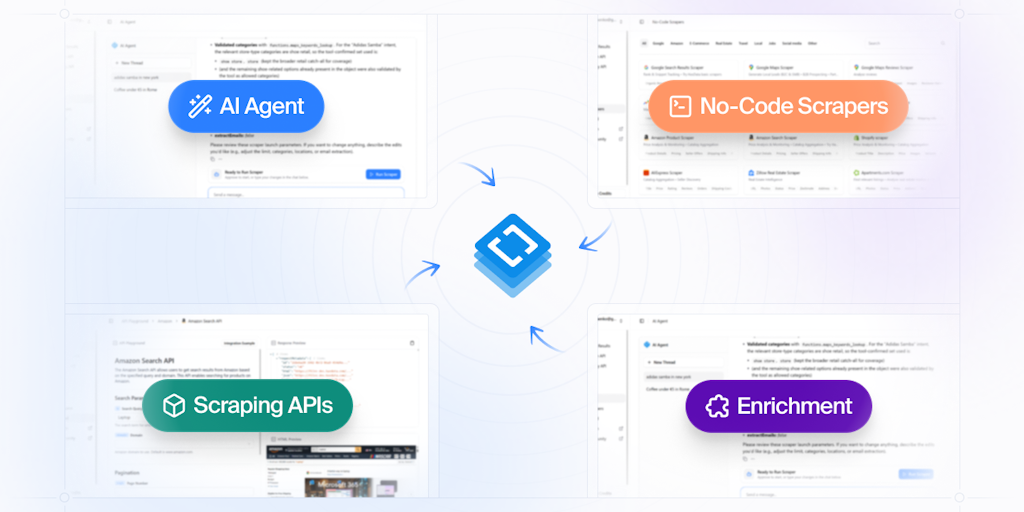
💰 Pricing: Unknown · 🏷 Category: AI Entertainment
 Product Hunt
💰 Pricing: Unknown · 🏷 Category: Product Management
Product Hunt
Snapshot
| Provider | Model | Input $/1M | Output $/1M | Context |
|---|---|---|---|---|
| Anthropic | Claude Opus 4.7 | $15.00 | $75.00 | 200K |
| Anthropic | Claude Sonnet 4.6 | $3.00 | $15.00 | 200K |
| Anthropic | Claude Haiku 4.5 | $0.80 | $4.00 | 200K |
| OpenAI | GPT-5.5 | $5.00 | $30.00 | 1M |
| OpenAI | GPT-5.5 Pro | $30.00 | $180.00 | 1M |
| OpenAI | GPT-4o | $2.50 | $10.00 | 128K |
| OpenAI | o3 | $2.00 | $8.00 | 200K |
| OpenAI | o4-mini | $1.10 | varies | 200K |
| Gemini 3.1 Pro | $2.00 | $12.00 | 1M | |
| Gemini 2.5 Pro | $1.25 | $10.00 | 1M | |
| Groq | Llama 3.3 70B | $0.59 | $0.79 | 128K |
| Groq | Llama 3.1 8B | $0.05 | $0.08 | 128K |
OpenDeepThink: Parallel Reasoning via Bradley-Terry Aggregation
Key finding: The approach matches or exceeds sequential chain-of-thought on math and coding benchmarks while running significantly faster due to parallelism.
Why practitioners should care: If your application uses chain-of-thought reasoning, this could cut latency by running multiple shorter chains simultaneously instead of one long chain. The Bradley-Terry aggregation is lightweight and does not require training a separate model.






Member discussion