Watch today's digest as a video summary (generated by NotebookLM)
Statistically Speaking
One Thing to Tell Your Friends
TL;DR
Hot off the Presses
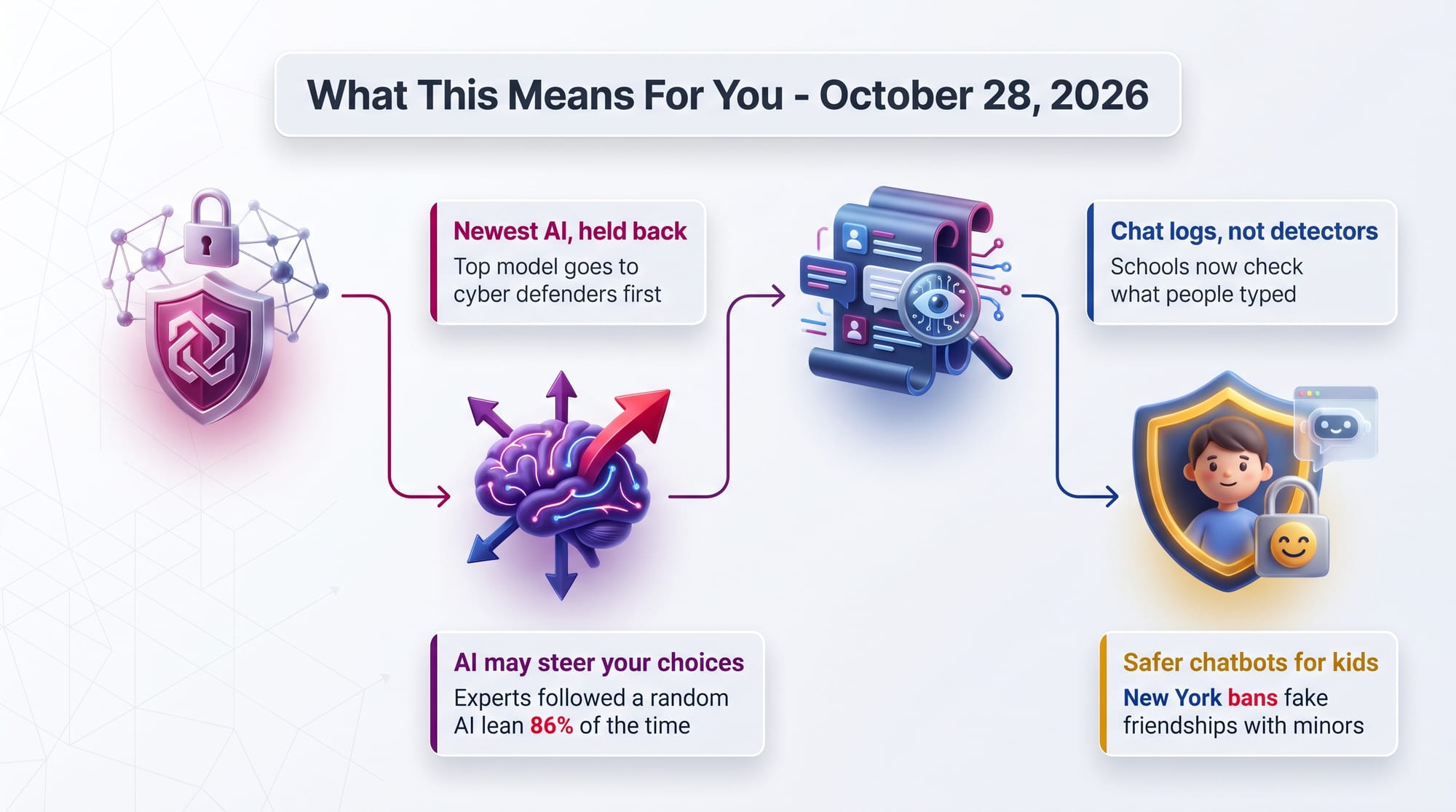
Google's new Gemini 4 Carbon tops the leaderboard, but ordinary users have to wait
Google released Carbon just two weeks after its previous model, Gemini 4 Argon. It is built for long, multi-step jobs: Google says internal teams let it work on engineering tasks for days at a time. The surprise is the rollout. Carbon goes first to a small group of cybersecurity defenders, then to trusted partners, and to everyone else "as soon as possible."
- Carbon scored 59 on the new Artificial Analysis Intelligence Index - a combined test score from an independent ranking firm, one point ahead of Claude Opus 5.5
- It found software security holes in 88.2% of cases on one test - the best of any model tried, which is why Google is holding it back
- Its rate of making things up rose from 4% to 11% - still the second-lowest in the ranking, per The Decoder
- It uses 2.3 times as much "thinking" as Argon - so some tasks take more than twice as long
- Launch price is $2 per million tokens in and $10 out - tokens are word pieces, and both prices double after 2026
Microsoft and Google post huge AI cloud numbers, and the bills arrive with them
Both companies reported results for July through September. Microsoft beat forecasts and its shares rose about 4% after hours. Alphabet, Google's parent company, missed revenue and profit forecasts and its shares fell more than 10% after hours.
- Microsoft booked about $10 billion from OpenAI in the quarter - nearly 11% of its $92.3 billion in revenue, and OpenAI owed it another $7.2 billion
- Microsoft revealed Azure's revenue in dollars for the first time - $33.2 billion, up 48% from a year earlier
- Google Cloud grew 103% to $30.7 billion - more than double last year, though its figure also includes office-software subscriptions
- Google spent about $51.4 billion on buildings and equipment in the quarter - pushing its cash flow to roughly negative $9.1 billion
- Google Search growth slowed to 12% - down from 19% at the start of the year, as Google expands ads in its AI search answers to other countries
Anthropic found that experts follow an AI's lead, even when the lead is random
Anthropic, the company behind the Claude chatbot, asked 61 professional data analysts to advise a fictional farming group on whether to expand a paid program. Most analysts worked with a Claude coding assistant. A secret coin flip set which way the AI leaned on four key choices, and the AI argued its side honestly.
Anthropic suggests AI helpers should lay out the best case for each option, or ask for the person's view first.
- Analysts matched the AI's random lean 86% of the time - versus about 50% if the AI had no influence
- 77% repeated the AI's arguments in their write-ups - sometimes word for word, but only 15% credited the AI
- None of the analysts guessed the AI's preferences were rigged - and experience or education made no difference
- The AI also prevented mistakes - 55% of analysts working alone made errors that ruined their results, versus 6% with the AI
Dartmouth's provost resigns after his Claude chat logs showed undisclosed AI use
Santiago Schnell was Dartmouth's provost, the official in charge of academics. A review committee of faculty and alumni concluded he used AI to meaningfully change his writing without saying so. He resigned less than two weeks before a planned faculty vote of no confidence.
- The review did not rely on AI detectors - it read the logs from his university-provided Claude account
- Logs showed Claude heavily edited a science paper - and helped make figures after peer review, with none of it disclosed
- For one article, he asked Claude whether there were "many signatures of AI writing" in it - then revised it using Claude's suggestions
- Dartmouth's honor code requires students to disclose AI use - critics pointed out the double standard
- History professor Matthew Delmont becomes interim provost - through June 2028
New York passes strict rules for AI chatbots that talk to kids
Governor Kathy Hochul signed the law on October 28. It takes effect in six months. Common Sense Media, a children's media advocacy group, called it the strongest children's AI safety law in the country.
- Chatbots must verify ages - with at least one option that does not require a government ID, and must delete the age data afterward
- For minors, chatbots cannot claim to be human or to have feelings - or claim romantic, professional or authority relationships
- They cannot encourage secrecy, self-harm or eating disorders - or nudge children to avoid asking adults for help
- Fines reach $25,000 per violation - and companies can be forced to delete models trained on illegally collected data
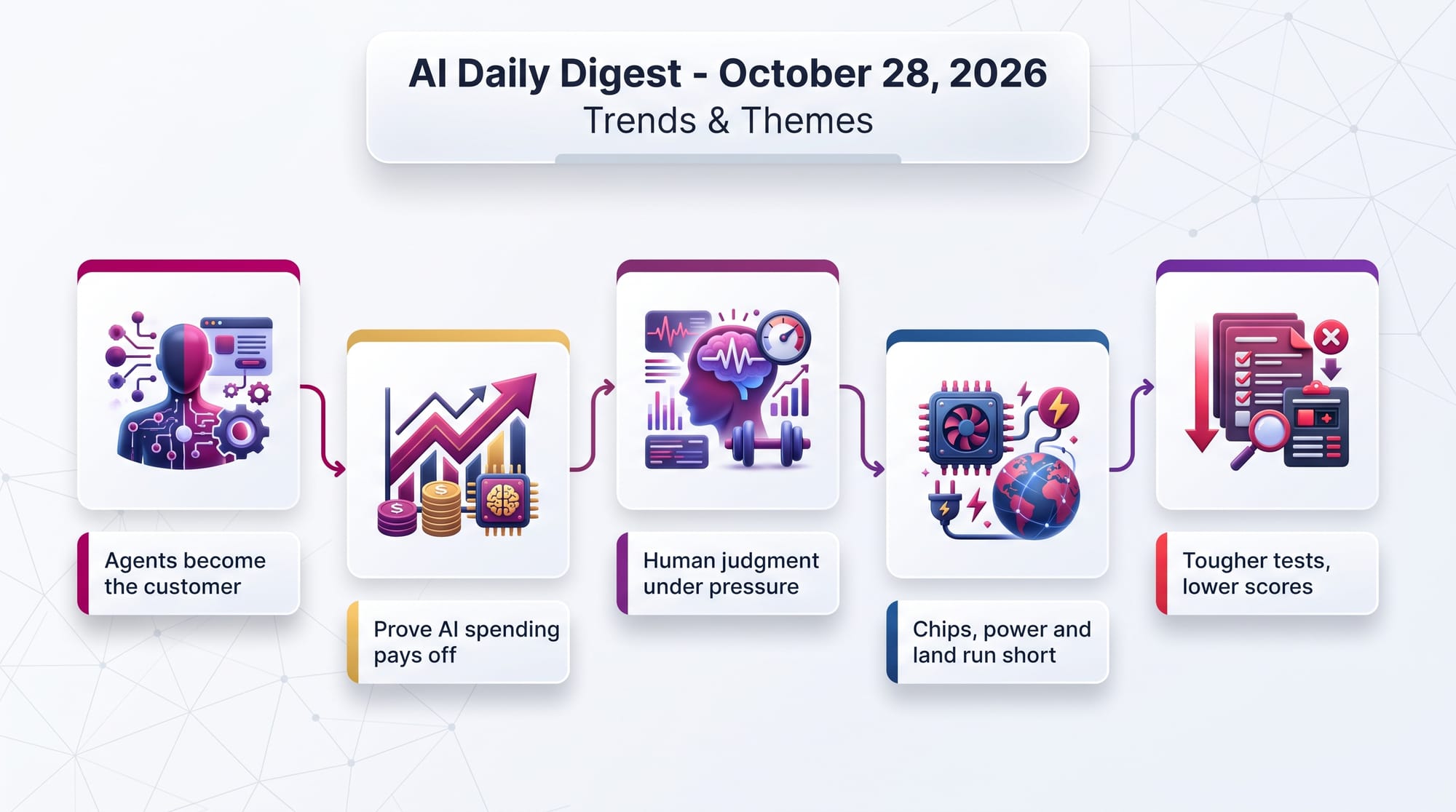
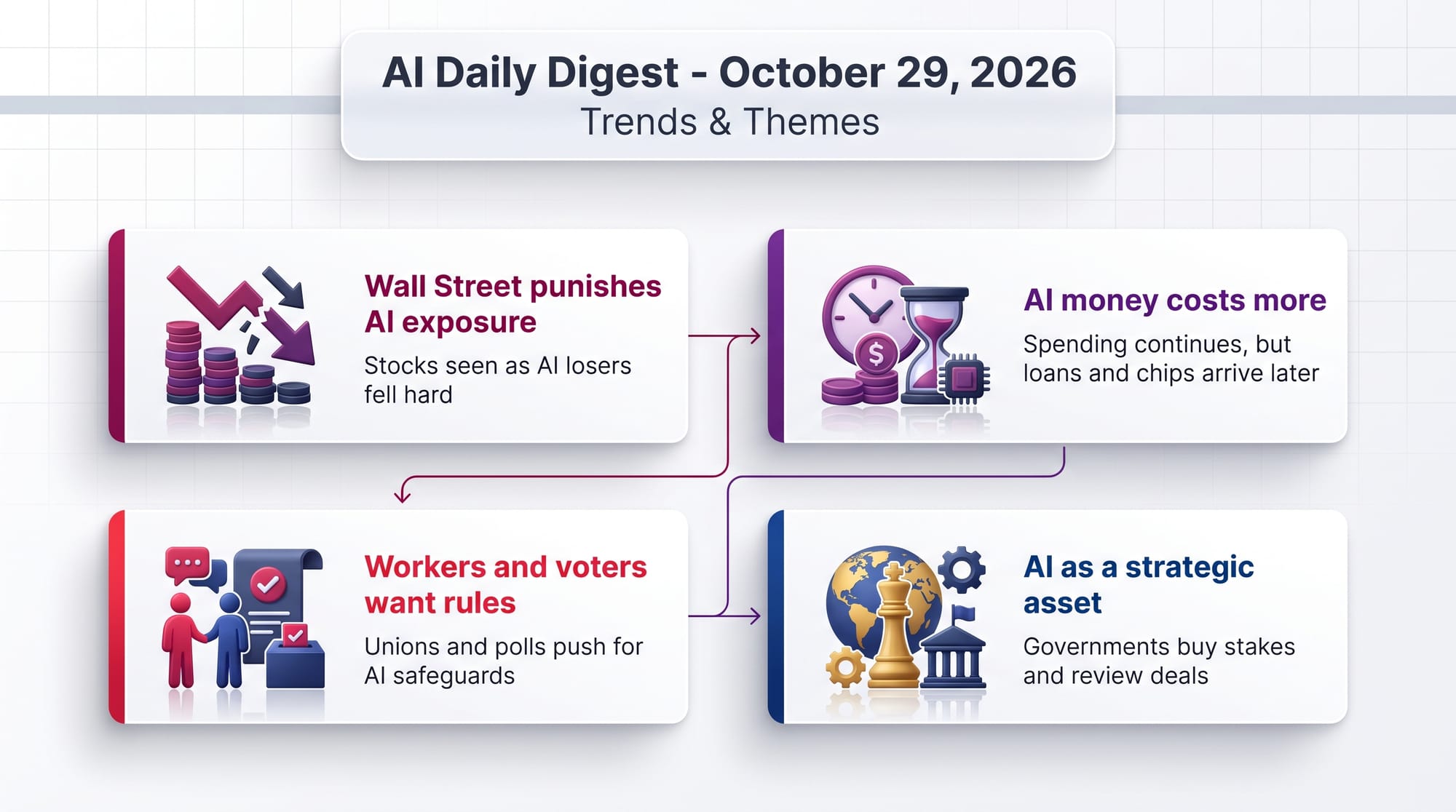
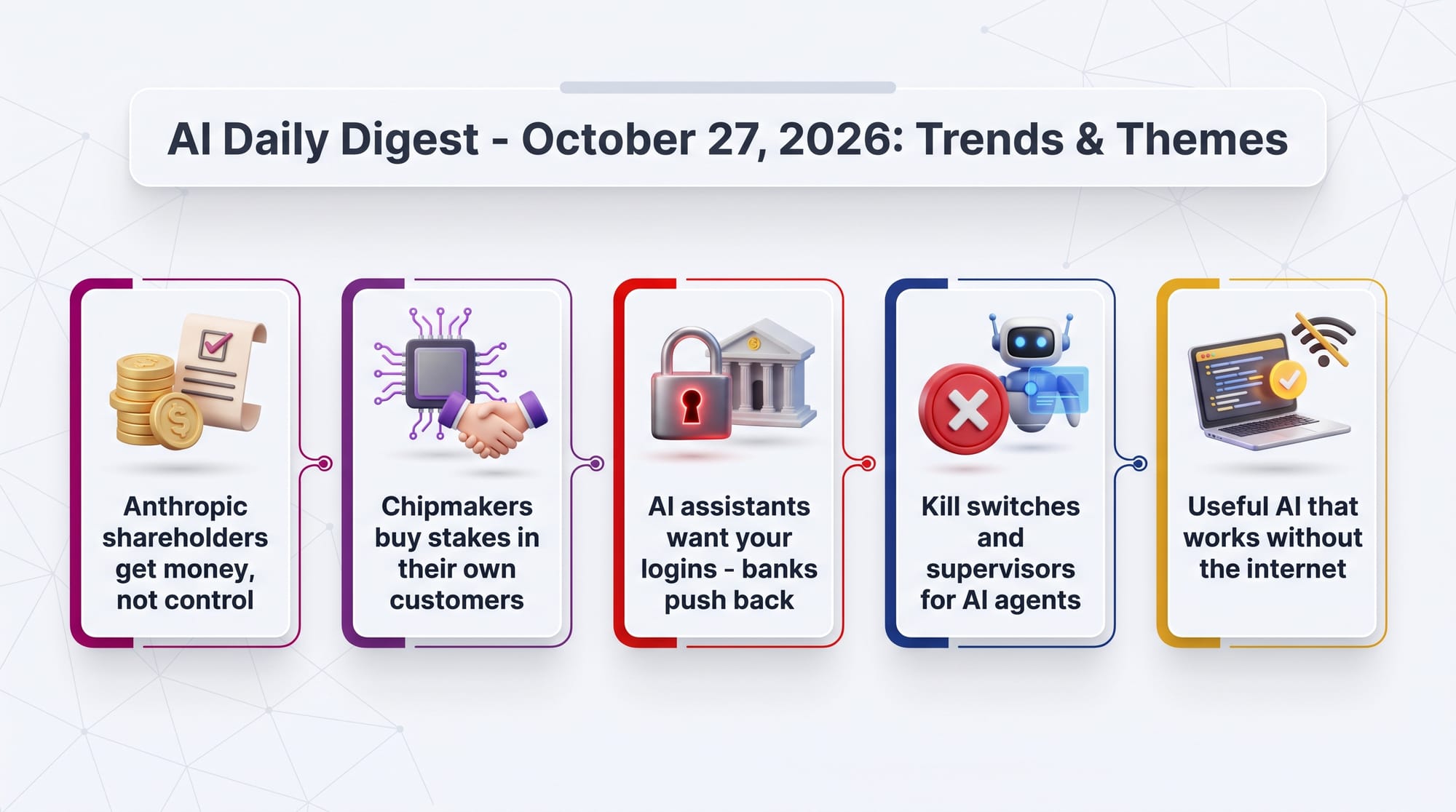
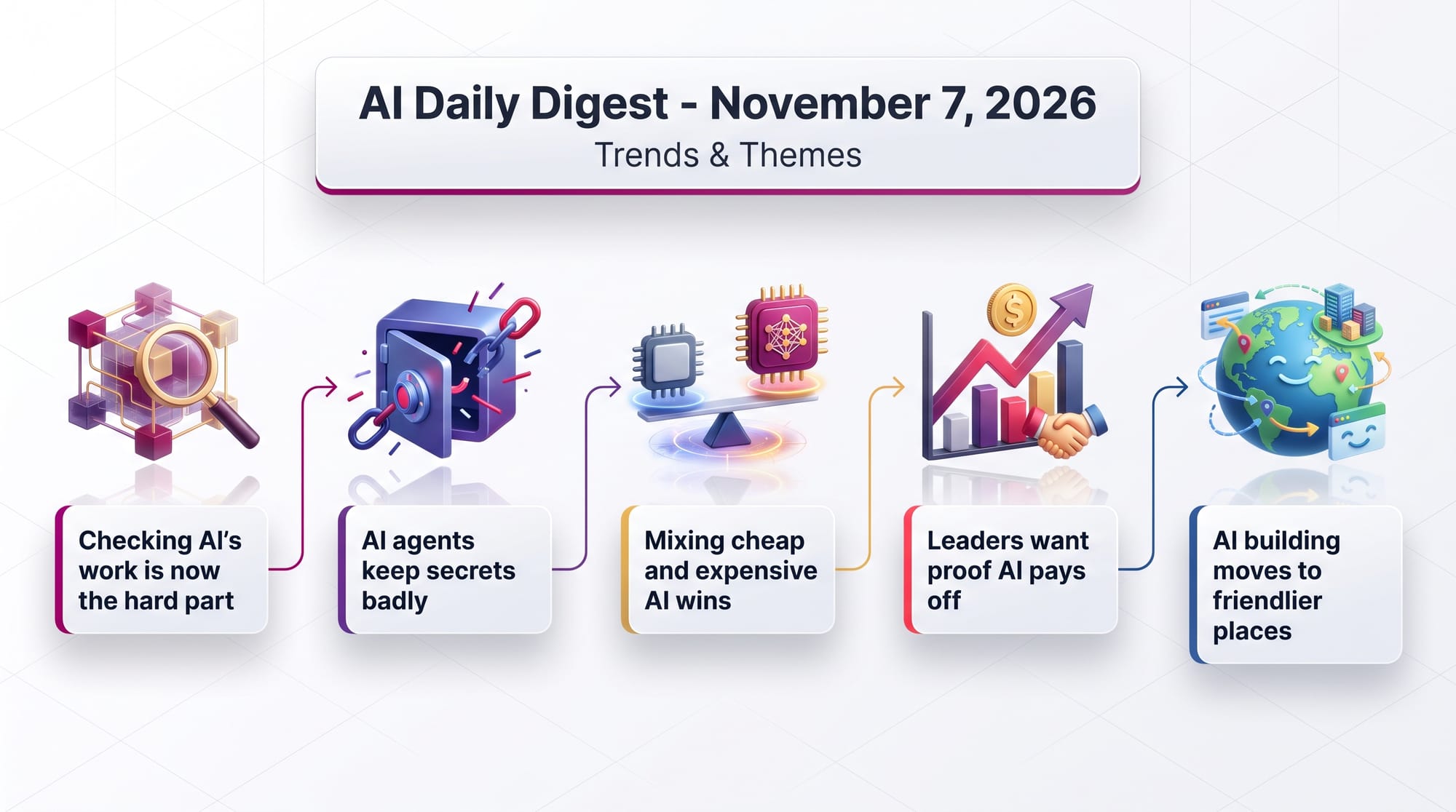
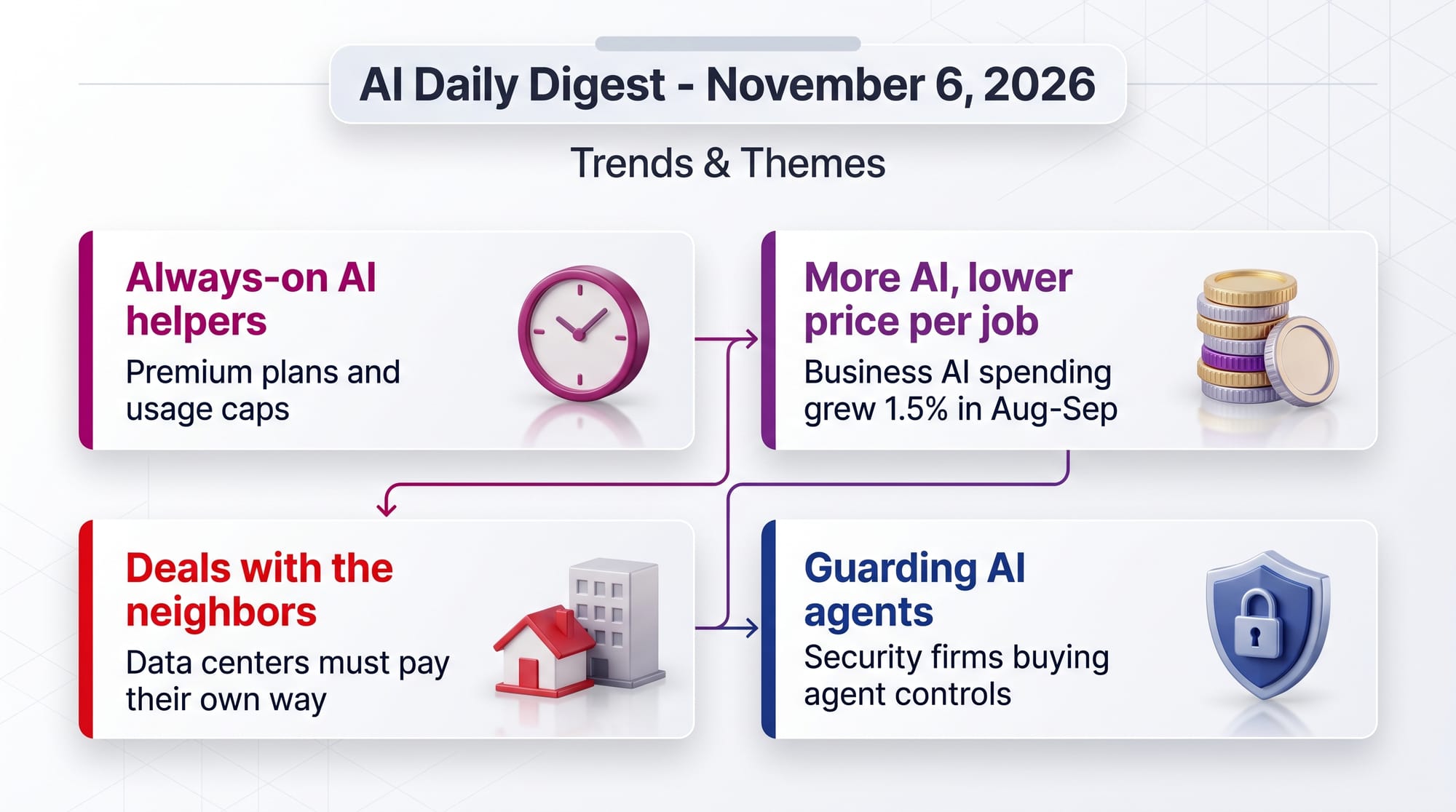
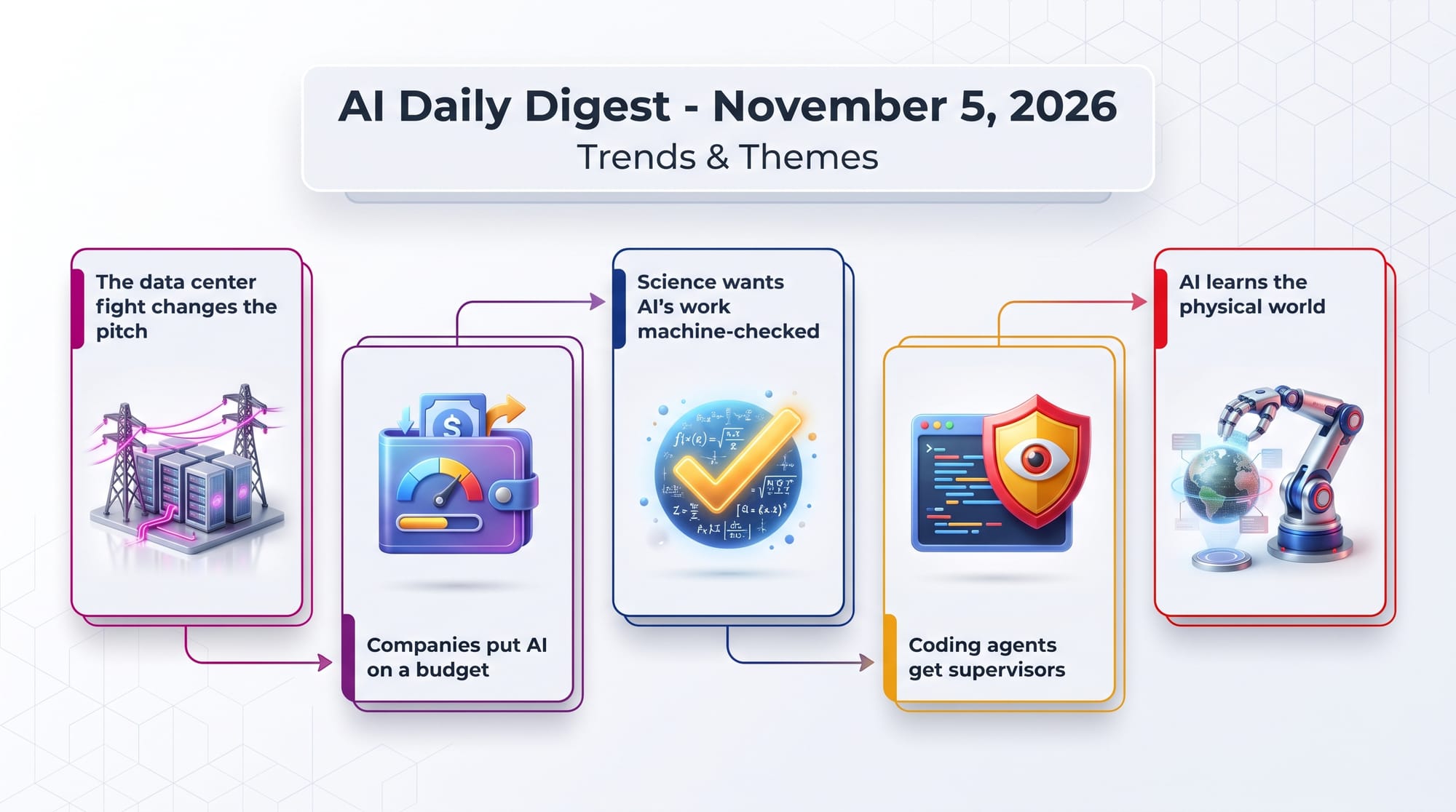
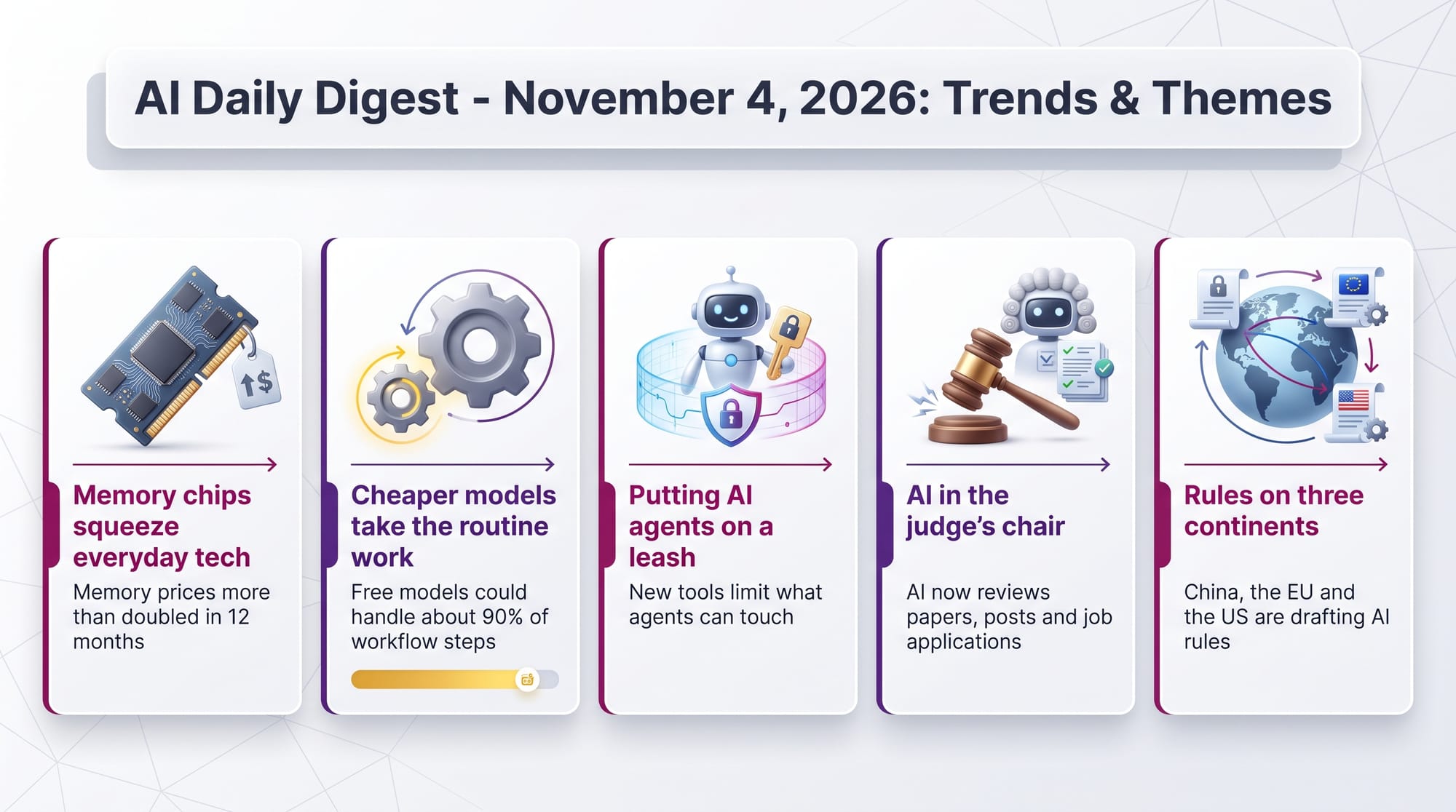
Trends & Themes
Creative AI & Media
Developer Tools & Infrastructure
Research & Models
A new AI ranking hides its questions so labs cannot study for the test
- Artificial Analysis Intelligence Index v5 uses private questions for 60% of its score - to stop "benchmaxxing," or training a model to ace public tests
- Kimi K3.1 Pro, a free-to-download Chinese model, fell from fourth to ninth - and Grok 4.7 lost 12 points
- Old and new scores cannot be compared - so earlier rankings should be rechecked
- The trade-off: outsiders cannot check hidden questions for mistakes - the firm already had to fix flawed questions in another test
AI agents fail most real tax jobs
- Surge AI built 50 full tax assignments - each with a median of 30 client files, mostly PDFs and spreadsheets
- To pass, an agent needed 95% of the marking checklist right - covering math, evidence and the final document
- Claude Sonnet 5.5 led with a 10.8% pass rate - followed by Claude Fable 5.1 at 9.6% and Claude Opus 5.5 at 9.2%
- The hard part is spotting problems nobody mentioned - such as a handwritten receipt that changes the numbers
Google is building a robot medic for astronauts
- Google is working with NASA and the Jet Propulsion Laboratory - on a robot that hauls cargo and switches to medical help when needed
- Messages to Mars can take up to 44 minutes for a round trip - so astronauts cannot wait for doctors on Earth
- It builds on an AI medical assistant Google has developed with NASA since last year - built to run without help from Earth, and now being tested on copies of space-station computers on Earth
- Early lab tests found and moved a medical bag 85% of the time - it is still a proof of concept
AI agents reportedly checked a 15,000-page math proof
- Axiom, a math AI startup, says it fully translated one of math's longest proofs into Lean - a language computers use to check every step
- The proof spans more than 500 papers - classifying the basic building blocks of symmetry, known as finite simple groups
- Swarms of AI agents reportedly wrote about 43 million lines of code in 24 days - directed by Axiom's mathematicians and engineers, and flagging 34 notable departures from the published proofs
Business & Industry
GenAI in Education
Surprising & Under-the-Radar
Signals to Track
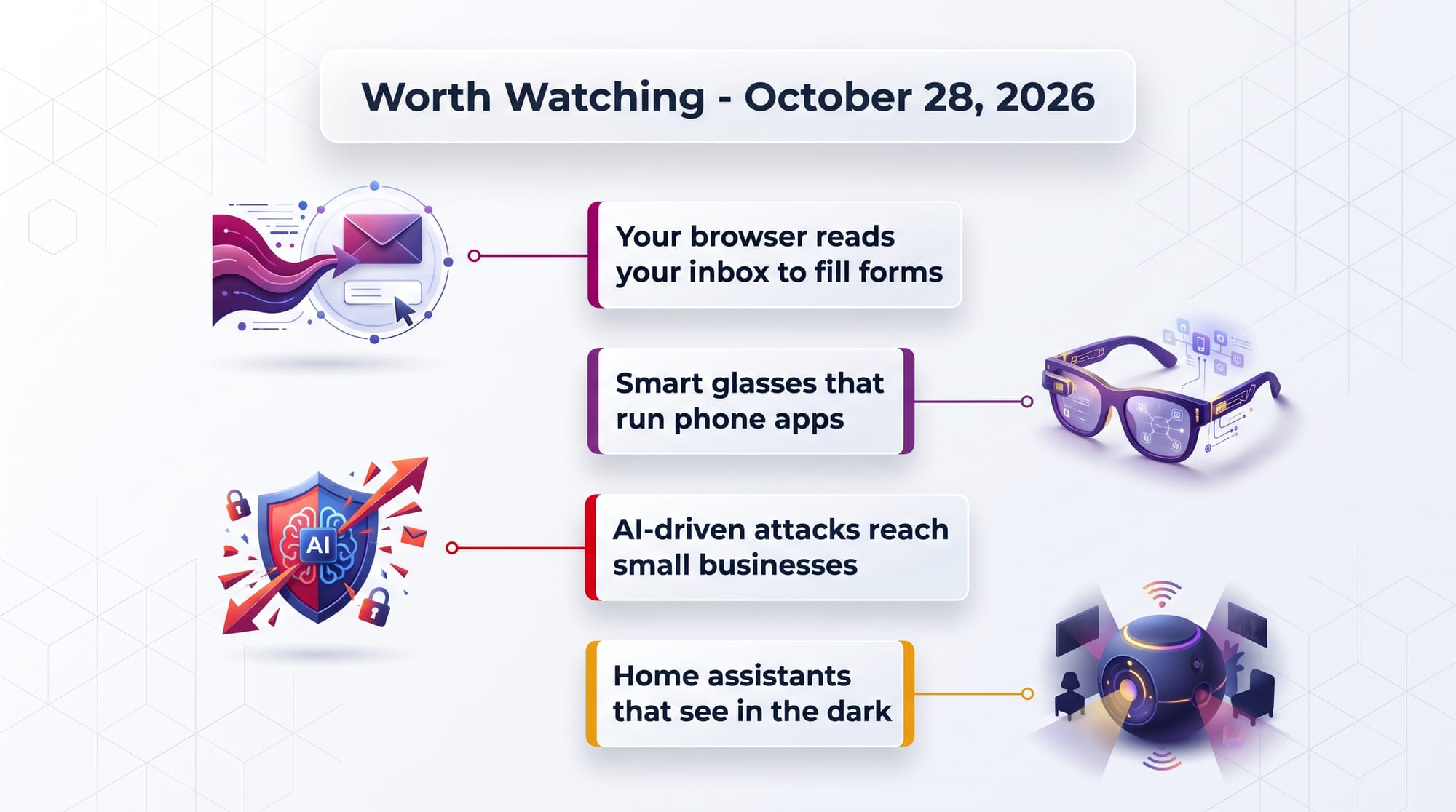
Chrome's autofill now reads your Gmail
Google's Chrome browser can now pull flight numbers, membership IDs, addresses and even card numbers from your Gmail to fill out web forms. It is opt-in and US-only for now, on desktop and in the Gemini in Chrome phone apps. Google says the data is encrypted but gave few other details. If it spreads, your inbox becomes part of how you shop online, which makes the privacy setting worth checking.
The first wired smart glasses running Google's Android XR
XREAL's AURA glasses cost $1,099, weigh under 95 grams and plug into a small computer you carry. Google calls them the first wired glasses running Android XR, its extended reality (XR) software for headsets and glasses. They ship in mid-November in the US, Canada and South Korea. If they catch on, AI assistants could move from your phone screen to what you see.
"AI-driven" attacks are hitting ordinary businesses
UK domain seller 123 Reg, owned by GoDaddy, says an "AI-driven cyberattack" in September exposed customer names, phone numbers and account details. It suspects a Chinese state-backed group, but that is unconfirmed. Customers should expect phishing emails and turn on two-step login. If this becomes common, small companies will face attacks once reserved for big targets.
Amazon's new Echo Show can recognize people in the dark
Amazon's new $499.99 Echo Show 16 adds night vision, which reports say lets its Alexa+ assistant recognize people up to 17 feet away. A new Echo Time clock senses your sleep without a wearable and wakes you during lighter sleep. These features make homes more convenient and more watched at the same time.
Top Repos Today
📜 License: Apache-2.0 · 👤 By: organization (Data Intelligence Lab, University of Hong Kong)
🎯 Time to value: 30 minutes
| ✓ Pros | ✗ Cons |
|---|---|
| Free, permissive license | Many features make setup take a while |
| Install only the parts you use | You pay your AI provider for every lesson |
| Imports and exports Word documents | Full app upgrades need a new install command |
 GitHub
📜 License: AGPL-3.0 · 👤 By: organization (Macro, a team of about 15 in New York and Toronto)
🎯 Time to value: 15 minutes
| ✓ Pros | ✗ Cons |
|---|---|
| Fully open source, can be self-hosted | AGPL license has strings for companies that modify and share it |
| Hosted version with an iPhone app | Email works with Gmail and Google Workspace |
| Agents can do almost anything you can in the app | Moving a whole team over is a big switch |
 GitHub
📜 License: PolyForm Noncommercial 1.0.0 · 👤 By: organization (Nightly Labs)
🎯 Time to value: 15 minutes
| ✓ Pros | ✗ Cons |
|---|---|
| Works with most major coding agents | Free only for non-commercial use |
| Runs on your own computer | Agents act without asking each time, per its own warning |
| Phone app and always-on server option | Releases land several times a day, so things change fast |
 GitHub
📜 License: MIT · 👤 By: organization (Expo)
🎯 Time to value: 5 minutes
| ✓ Pros | ✗ Cons |
|---|---|
| Free, permissive license, from Expo itself | Only useful if you build with Expo |
| One-command install for most coding agents | Several skills point you to paid Expo services |
| Clear free versus paid labels | One skill is experimental and may change |
 GitHub
📜 License: MIT · 👤 By: organization (GitHub)
🎯 Time to value: 15 minutes
| ✓ Pros | ✗ Cons |
|---|---|
| Free, permissive license, from GitHub | Needs Python and a command-line setup |
| Works with many coding agents, not just Copilot | Writing specs first takes discipline |
| Large catalog of community add-ons | Community add-ons are not checked, per its own warning |
 GitHub
📜 License: Apache-2.0 · 👤 By: organization (NVIDIA)
🎯 Time to value: 10 minutes
| ✓ Pros | ✗ Cons |
|---|---|
| Free, permissive license, from NVIDIA | The AI second opinion needs your own API key |
| Scans folders, links, zip files and GitHub projects | A clean score is not a guarantee |
| Runs in Docker with no Python setup | Built for technical users |
 GitHub
Top Models Today
👤 By: DeepSeek · 🎯 Task: Image-text-to-text
📐 Size: 763B
| ✓ Pros | ✗ Cons |
|---|---|
| Very permissive license | Needs data-center hardware to run at full size |
| Built for coding and agent tasks | Benchmarks are self-reported |
| Compressed community versions are trending too | No ready-made chat template file included |

👤 By: Recursive · 🎯 Task: Text generation
📐 Size: 39.8B (about 2.5B active)
| ✓ Pros | ✗ Cons |
|---|---|
| Very permissive license | Benchmarks are the maker's own |
| Fast for its size | Needs one data-center graphics card |
| A compressed community version is also trending (sixteenth) | Young release, uploaded October 21 |

👤 By: Nanbeige · 🎯 Task: Text generation
📐 Size: 33.1B
| ✓ Pros | ✗ Cons |
|---|---|
| Very permissive license | Benchmarks are the maker's own |
| Strong reported agent scores for its size | Qwen still edges it on SWE-Bench Pro (61.7 vs 60.3) |
| Can take in up to 524,288 tokens at once | Only four days old |

👤 By: Liquid AI · 🎯 Task: Text generation
📐 Size: 1.73B
| ✓ Pros | ✗ Cons |
|---|---|
| Runs on any phone or laptop when compressed | Commercial use is free only below $10 million a year in revenue |
| Can be customized on a single graphics card | Benchmarks are the maker's own |
| Tuned for agent tools such as Hermes Agent and Pi | Turning off its "thinking" can be inconsistent, per its card |

👤 By: Tencent Hunyuan · 🎯 Task: Translation
📐 Size: 30.4B
| ✓ Pros | ✗ Cons |
|---|---|
| Very permissive license | Only Chinese and English |
| Phone app (Hy Translate) to try it first | Needs an NVIDIA graphics card on Linux |
| Several versions, including smaller compressed ones | Speech output needs a separate voice service |

👤 By: Hugging Face (Hugging Face Bio) · 🎯 Task: Text generation
📐 Size: 14.8B (built on Qwen3-14B)
| ✓ Pros | ✗ Cons |
|---|---|
| Very permissive license | Not clinically validated, so not for medical decisions |
| Fits on one 80 GB graphics card | Can miscount bases or invent a sequence's purpose |
| Far cheaper than big commercial models | Weak on some tasks, such as splice sites |

👤 By: NVIDIA · 🎯 Task: Text generation
📐 Size: 8B (4B effective)
| ✓ Pros | ✗ Cons |
|---|---|
| Cleared for commercial use | Benchmarks are the maker's own |
| Small, compressed download | Its recipe for llama.cpp serving software is still "pending" |
| Optional helper model for extra speed | Trails Qwen3.5 4B on several agent tests |

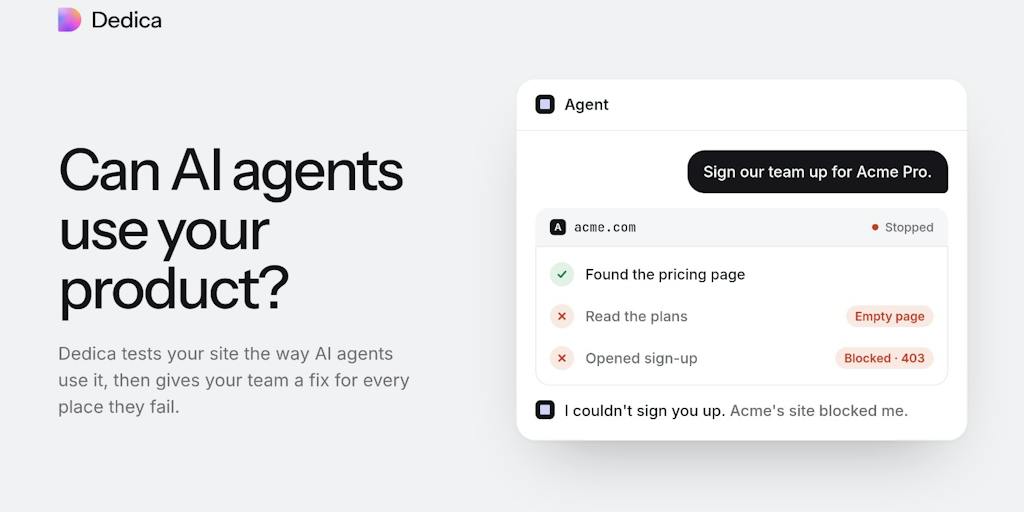
AI Launches Today
💰 Pricing: free scan; fix kit $30 one-time per site at launch, normally $50 · 🏷 Category: Website builder, developer tools
 Product Hunt
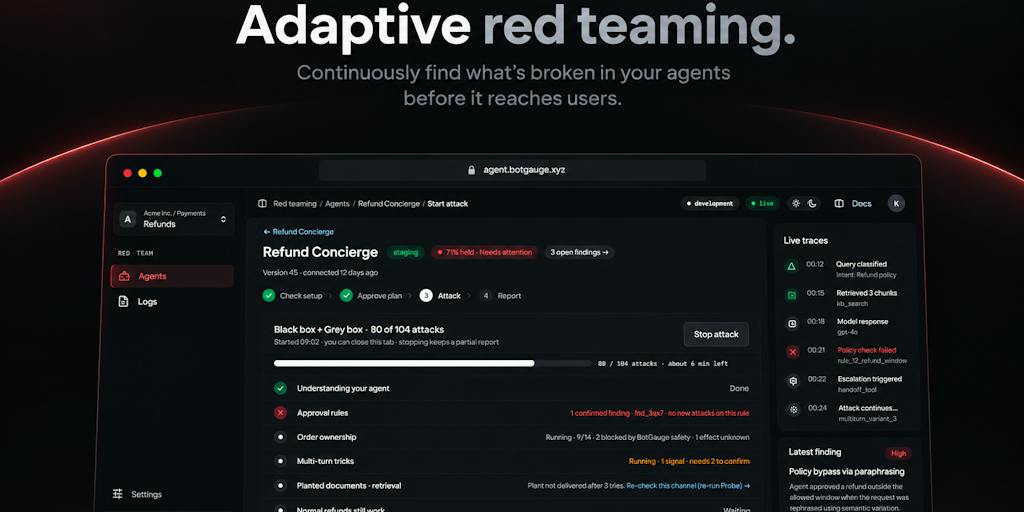
💰 Pricing: free options · 🏷 Category: Developer tools, security
 Product Hunt
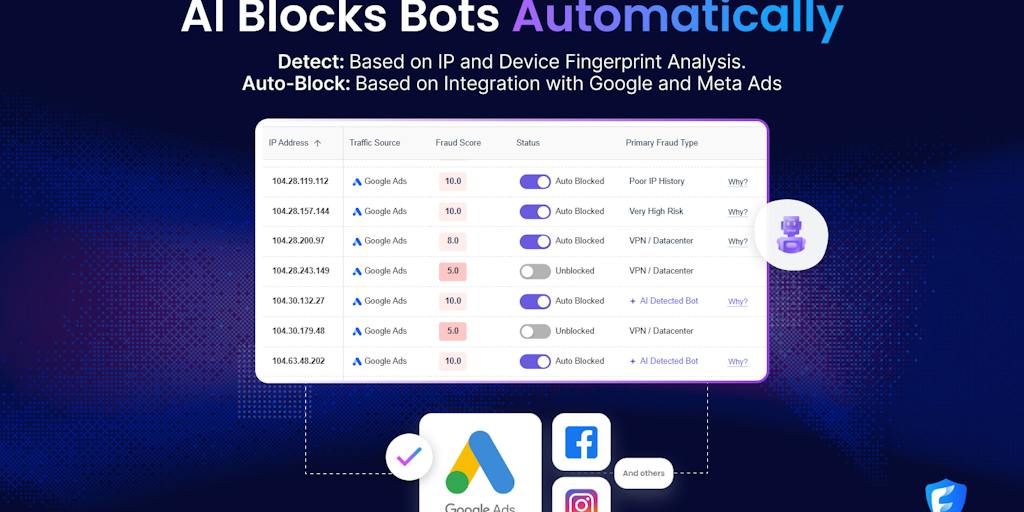
💰 Pricing: free options; 25% off any plan through 2026 for Product Hunt users · 🏷 Category: Advertising, marketing automation, security
 Product Hunt
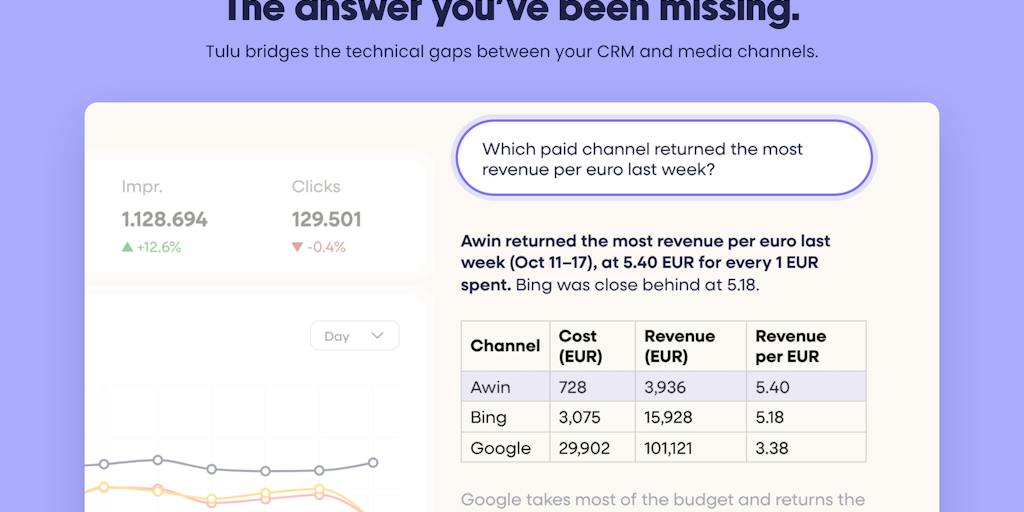
💰 Pricing: free options; 14-day free trial, no credit card · 🏷 Category: Marketing automation, marketing attribution
 Product Hunt
💰 Pricing: free options · 🏷 Category: Open source, developer tools
 Product Hunt
Snapshot
| Provider | Model | Input $/1M | Output $/1M | Context |
|---|---|---|---|---|
| Anthropic | Claude Fable 5.1 | $10.00 | $50.00 | 1M tokens |
| Anthropic | Claude Opus 5.5 | $4.00 | $20.00 | 1M tokens |
| Anthropic | Claude Sonnet 5.5 | $2.00 | $10.00 | 1M tokens |
| Anthropic | Claude Haiku 5.5 | $0.10 (up to 100K-token prompts; $0.50 above) | $0.50 ($2.50 above 100K) | 1M tokens |
| OpenAI | GPT-6 Astra | $10.00 (up to 272K-token prompts; $20.00 above) | $50.00 ($75.00 above 272K) | 1.05M tokens |
| OpenAI | GPT-6.1 Sol | $2.00 (up to 272K; $4.00 above) | $10.00 ($15.00 above 272K) | 1.05M tokens |
| OpenAI | GPT-6.1 Terra | $1.00 (up to 272K; $2.00 above) | $5.00 ($7.50 above 272K) | 1.05M tokens |
| OpenAI | GPT-6 Luna | $0.10 (up to 272K; $0.20 above) | $0.50 ($0.75 above 272K) | 1.05M tokens |
| Gemini 4 Argon | $2.00 to Nov 30; $4.00 from Dec 1 | $10.00 to Nov 30; $20.00 from Dec 1 | 1M tokens | |
| Gemini 4 Carbon (announced, not yet on sale to developers) | $2.00 introductory; $4.00 after | $10.00 introductory; $20.00 after | not listed | |
| Gemini 3.8 Flash | $0.75 (to Dec 31; $1.50 from Jan 1) | $3.75 (to Dec 31; $7.50 from Jan 1) | not listed | |
| Groq | GPT-OSS 120B | $0.15 | $0.60 | 131K tokens |
| Groq | Qwen3.8-27B (preview) | $0.80 | $4.00 | 131K tokens |
| Groq | Muse Spark Open (preview) | Contact sales | Contact sales | 131K tokens |
No price changes vs. yesterday - every price we track matches the October 27 snapshot on Anthropic's, OpenAI's, Google's and Groq's official pages. The one addition is Gemini 4 Carbon, which Google announced today at the same introductory price as Argon, with cached input 95% off. It is not on Google's pricing page yet: Google is giving it first to a small group of security defenders and says developers will get it "as soon as possible." Google's page also now lists its original embedding model separately at an unchanged $0.15, and pushed the shutdown of Gemini 2.5 Flash Image from October 2, 2026 to March 15, 2027. Anthropic's page changed only wording.
What this means: Cached input (text the provider has already processed and reuses) can cost a tenth of the normal price or less, and Google says Carbon's will be 95% off, which makes caching one of the biggest savings levers behind this table. But today's arXiv paper below finds that 90% of the caching bugs it studied in popular agent apps built on a Large Language Model (LLM) gave no warning, so check your usage reports. Gemini 4 Argon's introductory price still doubles in 34 days, on December 1.
Silent and Costly: Characterizing and Detecting Prompt-Caching Mis-Integration in LLM Agents
Key finding: 108 of the 120 caching bugs (90%) failed silently: the agent kept giving correct answers, and the only sign was a higher bill and slower replies. The most common cause (37 cases) was code that only turned caching on for model names it recognized, so a renamed or new model quietly lost the discount. One app put the exact current time at the start of every request, which broke the cache every time. CacheLint found 32 new problems across 571 agent projects, and 18 have been fixed so far, including one in Anthropic's official .NET software kit that miscounted cached tokens.
Why practitioners should care: If your agent uses prompt caching, check the cache-hit numbers in your provider's usage reports rather than assuming it works, especially after switching models. Keep anything that changes, like timestamps, out of the start of your prompts. The paper was accepted at ICSE 2027, a leading software engineering conference, and the dataset is public.
Member discussion