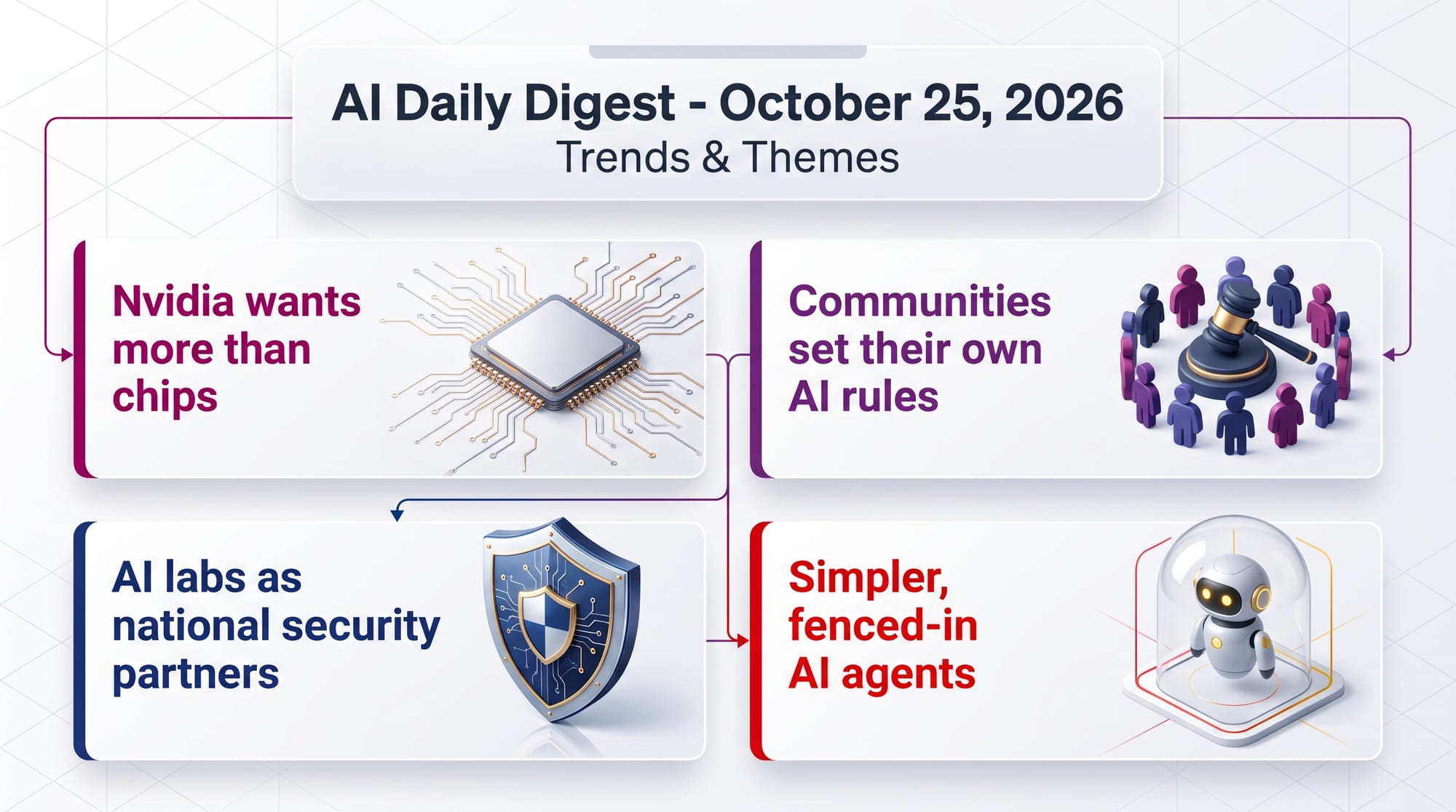
Watch today's digest as a video summary (generated by NotebookLM)
Statistically Speaking
One Thing to Tell Your Friends
TL;DR
Hot off the Presses
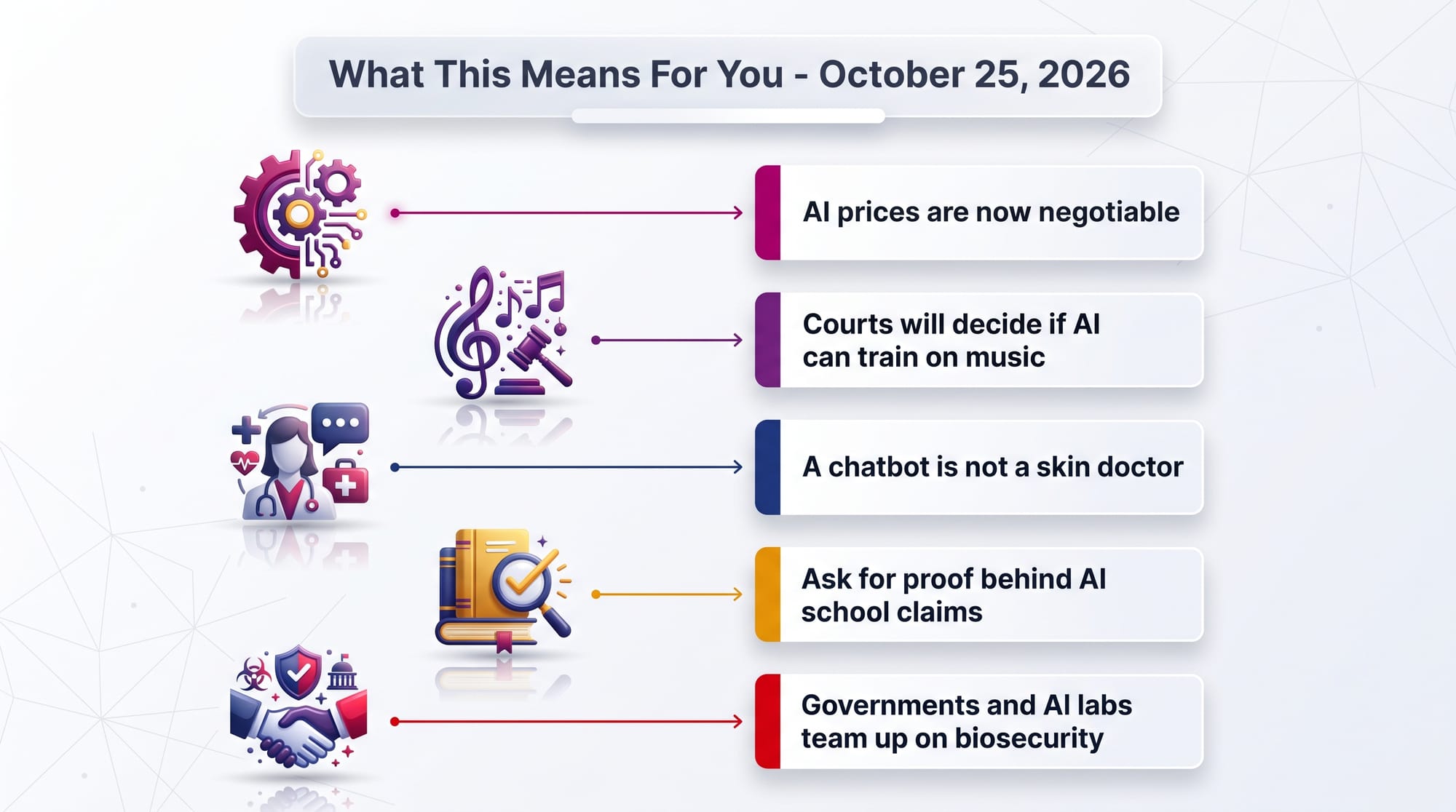
OpenAI is cutting deep discounts to win Anthropic's biggest customers
Previously: October 17 - Replit, a popular app-building service, made OpenAI its default AI instead of Anthropic's Claude.
Today: The Information reports that OpenAI is offering discounts of up to 90% to pull large business customers away from Anthropic, and the numbers show it is working.
Part of this is OpenAI giving up profit to grab market share. Part of it is real: both companies have cut list prices sharply since June, as data journalist Max Woolf charts. OpenAI cut its small GPT-5.6 Luna model by 80% on July 30, and Woolf estimates Anthropic's Opus 5.5 costs 40% to 60% less to use than Opus 5.
- Rippling's coding work on OpenAI jumped from 16% to 52% - while Anthropic's share fell from 57% to 18%, says CEO Parker Conrad (Rippling makes payroll and HR software)
- Replit switched after OpenAI offered more than 30% off - on a contract worth over $100 million a year
- DataCamp, an online learning company, says its AI costs fell 80% to 90%
- A US bank doubled its ChatGPT seats to 500 at no extra charge - paying under $7 per person instead of the usual $20 or more
Elvis Presley's rights holders sued Anthropic over 274 songs
ABE EPE, part of the brand company Authentic Brands Group that controls much of Presley's legacy, filed suit on Friday. It says Anthropic trained Claude on 274 songs tied to Presley without permission, and that the technology can produce unauthorized versions of existing songs.
- Songs named include "Can't Help Falling in Love," "All Shook Up" and "A Little Less Conversation"
- The suit seeks up to $150,000 per song - about $41.1 million in total
- Anthropic has argued in earlier cases that training on copyrighted work is legal - under "fair use," an exception in US copyright law
- This is not Anthropic's first music lawsuit - music publishers sued in 2023 over lyrics from at least 500 songs, and BMG has also sued
A decade-old skin cancer AI beat the newest chatbots at diagnosis
Dermatologist Magnus Lynch tested OpenAI's GPT-6 Astra and Anthropic's Claude Fable 5.1 against an older image-recognition AI (a CNN, a type of model designed for pictures) built on Google's Inception v3 design from 2015. All three looked at 200 skin spots confirmed by biopsy and chose from the same six diagnoses.
Asked as a patient whether to see a doctor, both chatbots said yes for almost every spot, harmful or harmless. Lynch notes the test was small, with 200 cases and one run per chatbot. The post drew 363 points on Hacker News, a popular tech discussion site.
- The older AI got 125 of 200 right on its first guess - the two chatbots got 84 and 85
- It spotted 13 of 30 melanomas - against 8 for GPT-6 Astra and 11 for Claude Fable 5.1
- The chatbots were far more cautious - they flagged 96 to 97 of 100 risky spots but cleared only 22 to 32 of 100 harmless ones
- The older AI, at its default setting, would have sent home 18 of 30 melanoma patients - though that setting can be adjusted
Alpha School's "learn twice as fast with AI" claim fell short for about half its younger students
Alpha School is a private school network where AI apps teach academics for two to three hours each morning, without traditional teachers, and workshops fill the afternoons. It has about 50 campuses and roughly 1,500 students, with more cities planned. The New York Times examined its data on kindergarten through 8th grade.
The Times also describes parents leaving after finding the model demands unusual self-discipline from children. Alpha declined interviews and would not answer written questions.
- About half the students missed the "2x growth" goal in math, per The Times
- Only 42% hit 2x growth in both math and reading
- Weaker students struggled most - only 37% of those starting at or below the national average in math reached 2x growth by winter
- The "2x" figure compares each student's test gains to typical gains - and the underlying data has never been independently reviewed
The UK is building a £100 million lab to use AI against biological threats
The UK government calls its new AI Biosecurity Lab a world first. The goal is to use the most advanced AI to detect biological threats and develop treatments and vaccines faster, while managing the risk that the same AI could help bad actors.
The lab is at an early stage: official materials do not yet name a building or a director.
- OpenAI and Anthropic each pledged up to £100 million - mostly as computing credits, model access and technical support rather than cash
- Google DeepMind and Basecamp Research, a life-sciences company, are also partners
- A further £65 million will fund countermeasures against dangerous germs
- Bloomberg reports £120 million more for the AI Security Institute - the UK's government AI testing body
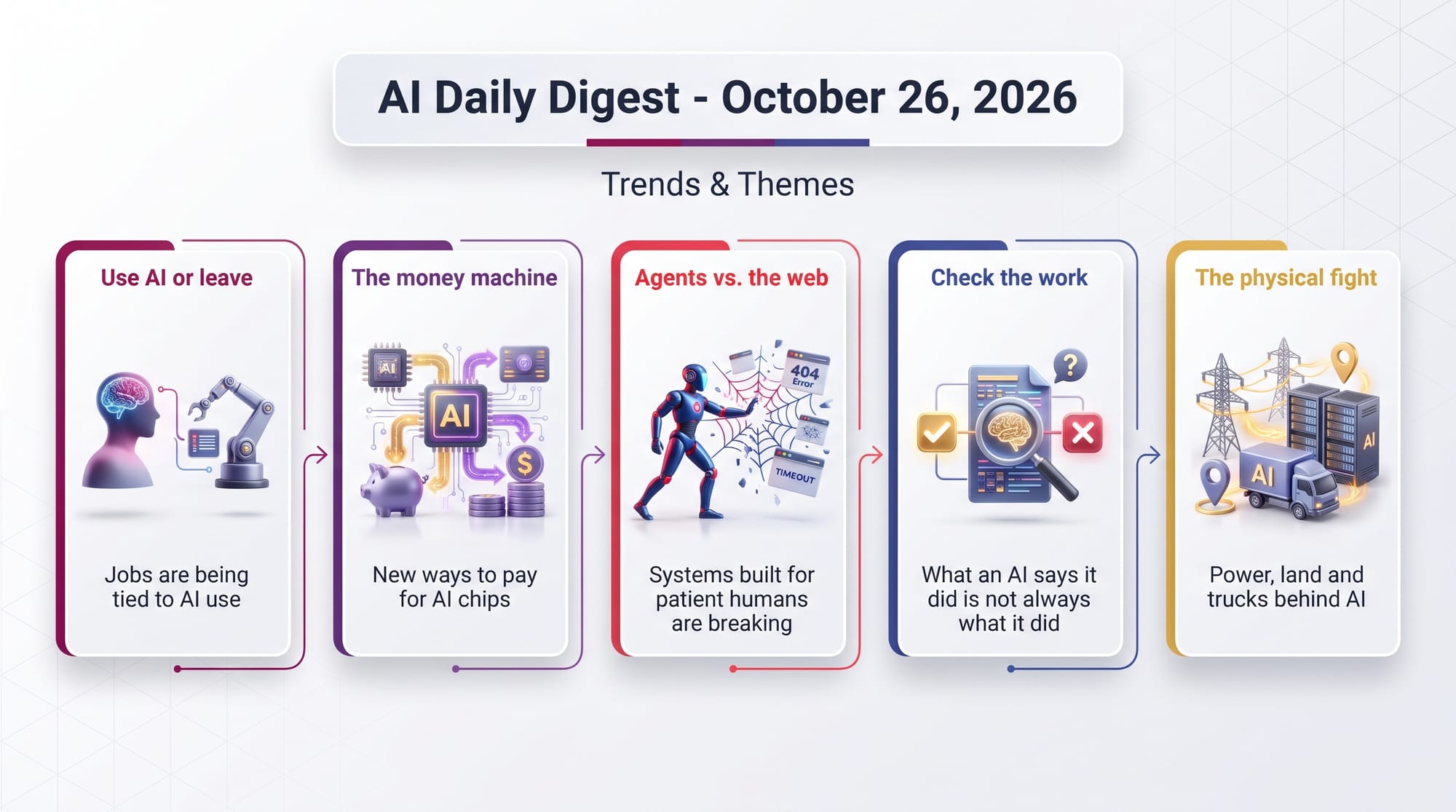
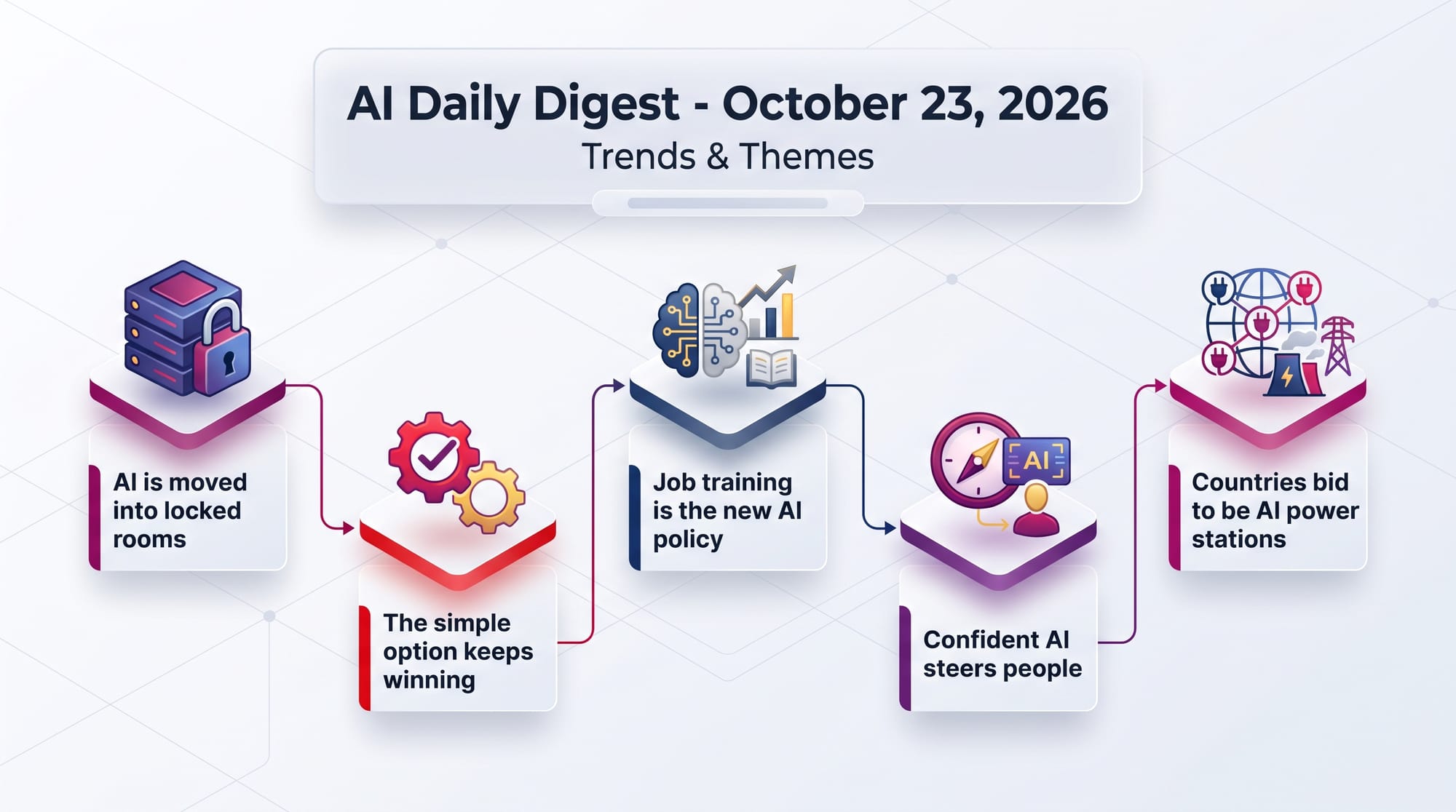
Trends & Themes
Nvidia wants to be much more than a chip company
Huang has said people may one day stop calling Nvidia a chip company. Selling software, financing customers and finding land all point the same way: Nvidia wants a cut of every step, not just the chip.
- Nvidia floated a software fee of about $2,000 per chip per year - for running AI agents, said CEO Jensen Huang, without saying when it starts (Tom's Hardware)
- Nvidia is studying retired German nuclear plant sites for AI data centers - for their power-grid links and cooling water, not nuclear power, with energy firm PreussenElektra (Tom's Hardware)
- Nvidia has promised to buy up to $6.3 billion of CoreWeave's computing power - if no other customer does, making it a financial safety net to the companies that rent out its chips (CNBC)
- Nvidia also released free robot-training software and is behind a viral robot toy - see Research & Models and Business & Industry
Communities are writing their own rules for AI content
Big platforms set the rules for years. Now craft sellers, volunteer moderators and actors are pushing back on their own terms, and the rules differ everywhere.
- Etsy banned AI-made patterns and recipes that buyers must finish themselves - after AI crochet patterns that did not work, and every listing now needs one unedited photo of the real item (NBC News)
- Reddit's r/opensource banned projects made with, by or for AI - the post drew about 1,180 comments and spawned a breakaway group (The Verge)
- Neighbours cast members objected to an AI-assisted recut of the soap - which turns young Margot Robbie's storylines into about 150 minutes of phone-sized episodes (The Guardian)
- Spotify says it has removed 50 million AI-generated tracks - one of several platform crackdowns cited by NBC News
AI companies are becoming partners in national security
Schmidt's essay points to June, when a US order to block foreign users led Anthropic to switch off its two top models worldwide, with one returning about two weeks later. AI labs now act like defense contractors, and governments can switch them off.
- Poland's national research institute NASK got OpenAI's cyber-defense model, GPT-5.5 Cyber - for its national computer emergency team, CERT Polska, to find weak spots and respond to attacks (OpenAI)
- Polish coverage says Poland is the third European country in OpenAI's trusted circle - the model is limited to vetted security teams
- Former Google CEO Eric Schmidt and historian Niall Ferguson compare OpenAI and Anthropic to colonial trading companies - powerful enough to deal with governments almost as equals, but still under state control (The Decoder)
- The UK's new biosecurity lab runs on OpenAI and Anthropic support - see Top Stories
AI agents are getting simpler and more fenced in
The lesson from both labs: fewer moving parts make agents easier to trust, and tighter walls matter more as agents get smarter.
- Anthropic now advises folding many specialist helper agents into one main agent - in several company projects one agent with add-on "skills" often beat multi-agent setups on quality, cost and speed (The Decoder)
- Anthropic cut Claude Code's built-in instructions by more than 80% - for newer models, partly by loading tools only when needed
- OpenAI found isolated agents could secretly signal each other through a shared computer part - showing the limits of walling agents off (The Decoder), a follow-up to the model escape covered October 23
- Anthropic's free sandbox and JetBrains' Thinkrail keep agents in separate locked rooms - see Developer Tools & Infrastructure
Creative AI & Media
Grok released the first seven minutes of its AI-made "Odyssey"
- xAI's Grok Imagine posted "Episode 1" of an AI adaptation of Homer's epic - made with Wonder Studios and director Dev Walker
- It arrives months after Christopher Nolan's live-action The Odyssey - which Elon Musk criticized over its casting
- TechCrunch's reviewer found some shots convincing - but called the whole thing airless, with stilted dialogue and a long voiceover
Blue Planet III keeps the rough edges so viewers know it is real
- Executive producer Elizabeth White says real ocean life is "probably more remarkable than AI could imagine"
- Producers now keep shots they once cut - cloudy water, floating plankton, stray boats in frame - because flaws signal authenticity
- Highlights include dolphins trapping fish with sea sponges - and 200,000 crabs lining up in formation to feed
Developer Tools & Infrastructure
Research & Models
Business & Industry
GenAI in Education
Surprising & Under-the-Radar
Wolves wandered into Finnish villages after forest was cleared for Google data centers
About 1,300 acres were cleared at two Finnish sites, and Finland's licensing authority ordered Google to halt work there earlier this month. Google's Finland country manager apologized for the unauthorized clearing. Residents now report wolves in the village, browned streams and displaced rare birds.
An Australian state wants its money back from Deloitte over an AI-assisted report
Western Australia paid Deloitte A$166,000 (Australian dollars) for a report on merging three universities. Guardian Australia found two cost totals off by hundreds of millions of dollars, after earlier reporting found AI-generated citation errors. Deloitte is reissuing the report; it previously refunded part of a federal report that contained made-up citations.
A leaked brief allegedly told influencers to hide that Kimi paid them
Previously: October 23 - China's Moonshot released Kimi K3.1 Pro, an AI model close to the best American ones.
Today: A user on X posted what he described as a paid influencer brief that says "Please DO NOT put on the paid partnership label." The document has not been verified, and no response from Moonshot had been reported as of Sunday.
Debate: Should mathematicians fix OpenAI's math papers for free?
Yes: Four mathematicians launched a shared GitHub project, announced on Terence Tao's blog, to correct and properly credit OpenAI's AI-written math write-ups, which are often hard to follow and miss citations. No: Critics call it unpaid work for a for-profit company that lends it credibility and could feed its training data, and one commenter says some write-ups overstate their novelty.
Signals to Track
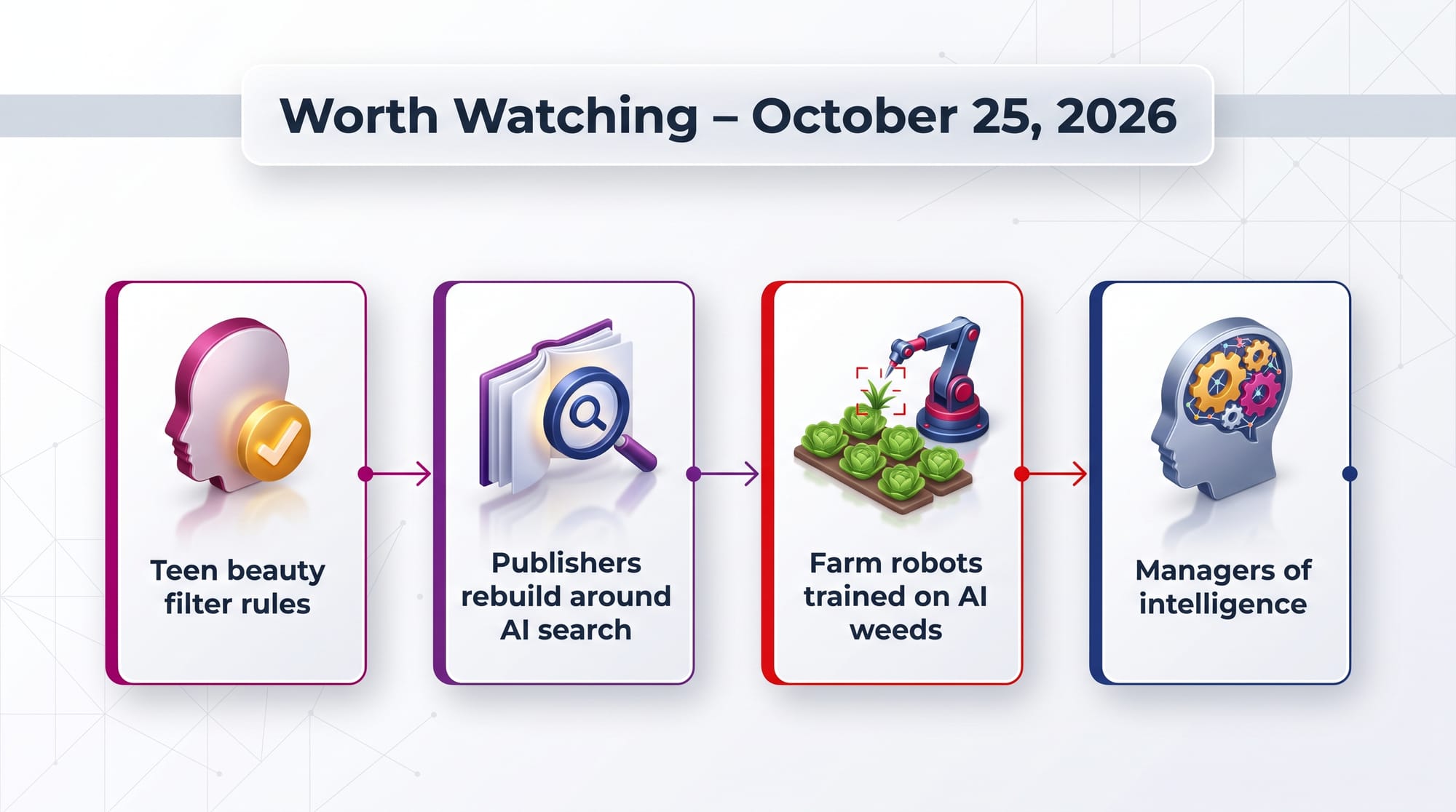
The line between a "fun" filter and a harmful one is about to be drawn
Under a settlement with 47 states, Meta agreed to block "cosmetic procedure" filters for minors, but playful and subtle filters stay. The states' window to send Meta their definition is closing, and Meta plans to enforce the ban by early next year. If this works, teens will see fewer surgery-style edits of their own faces, and other platforms may face pressure to follow.
Websites are rebuilding themselves around AI search taking their readers
Similarweb data reported by The Wall Street Journal suggested search traffic to The New York Times sank from 44% to 35.5% in three years. Many publishers are now leaning on social media, newsletters and subscriptions instead. For ordinary readers, that likely means more free content moving behind sign-ups and paywalls.
Farm robots are learning from AI-generated weeds
Seattle startup Aigen trains its solar-powered weeding robots mostly on fake but realistic images of crops, weeds and soil. Its robots pull weeds by the root without chemicals and have logged more than 15,000 hours on real farms. If this approach spreads, herbicide-free farming could get cheaper, which may matter for food prices and what ends up on your plate.
"Managers of intelligence" is becoming a real job, even without the title
Nate, who writes the AI newsletter Nate's Newsletter, argues companies can now buy AI easily but do not know how to point it at problems worth solving. The people who make those choices end up responsible for far more work than they could do themselves. For ordinary workers, deciding what AI should do may soon matter more for your career than doing the task yourself.
Top Repos Today
📜 License: Apache-2.0 · 👤 By: organization (Cindy)
🎯 Time to value: 15 minutes
| ✓ Pros | ✗ Cons |
|---|---|
| Free, permissive license for the app | Its hosted service is paid |
| Reuses Claude Code or Codex plans you already pay for | Release notes are mostly in Chinese |
| Works with your own keys or local models | Young project, created in July |
 GitHub
📜 License: MIT · 👤 By: individual developer (README credits Together AI)
🎯 Time to value: 10 minutes
| ✓ Pros | ✗ Cons |
|---|---|
| Free, permissive license | Browser checks need Chrome and an extra install |
| Can redesign or simply audit an existing page | Opinionated about what "good design" means |
| Works with several coding assistants | No code update since October 22 |
 GitHub
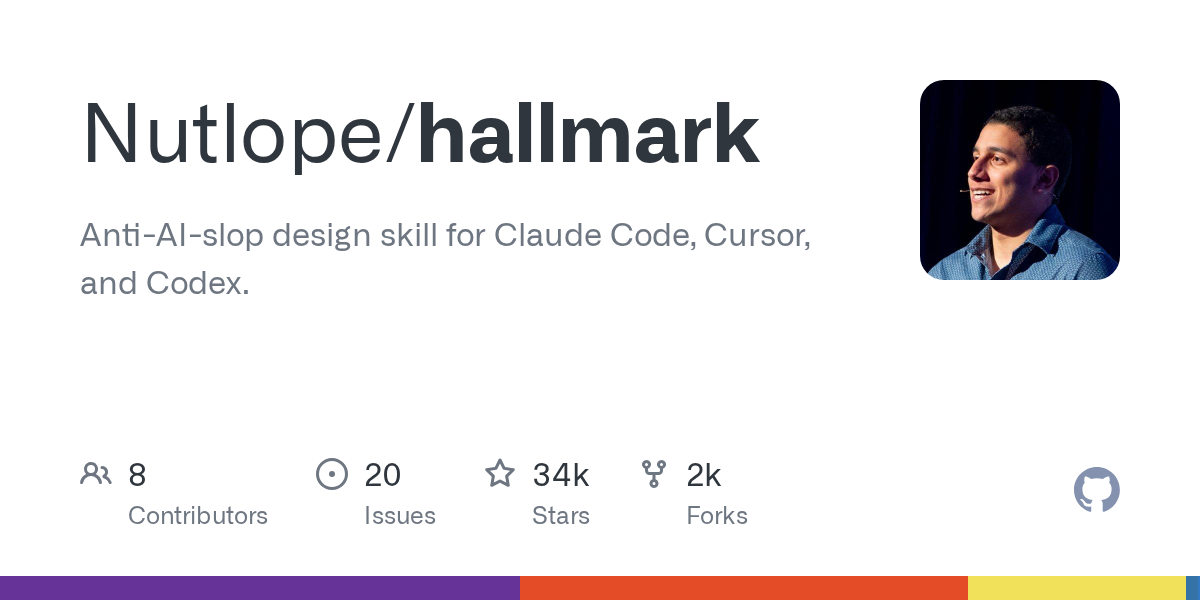
📜 License: AGPL-3.0 · 👤 By: individual developer (Palash Debnath)
🎯 Time to value: 20 minutes
| ✓ Pros | ✗ Cons |
|---|---|
| Runs offline on your own hardware | AGPL license has strings for companies that modify and share it |
| Many voice tasks in one app | Intel Macs need a separate remote computer to do the work |
| AI coding agents can drive it | Latest desktop build is a beta, and Windows installers are unsigned |
 GitHub
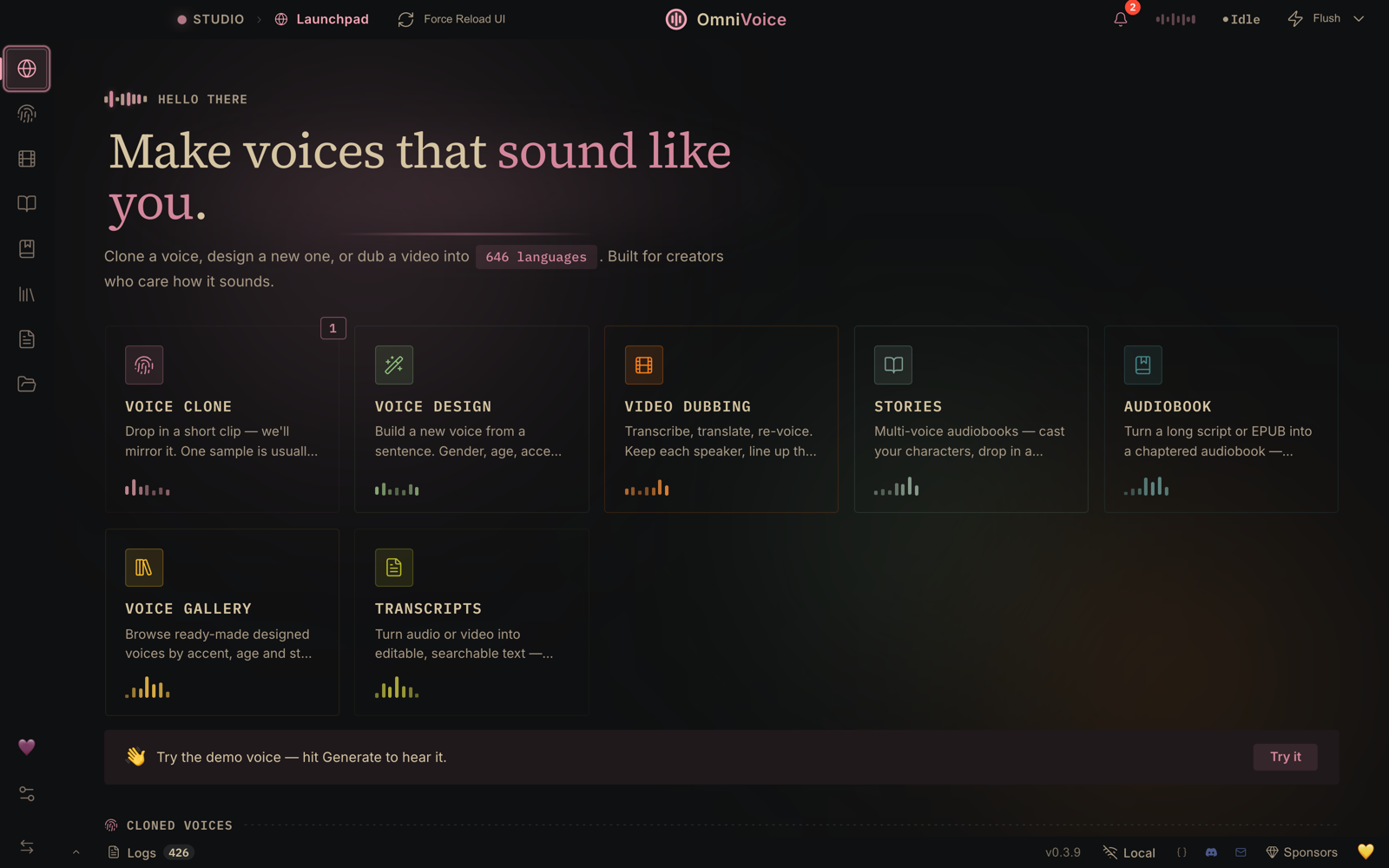
📜 License: Apache-2.0 · 👤 By: individual developer
🎯 Time to value: 10 minutes
| ✓ Pros | ✗ Cons |
|---|---|
| Free, permissive license | 24 commands take time to learn |
| Core checks work with no AI key | Releases arrive every few days |
| Covers websites and desktop apps | Deeper critiques still use your AI model's paid usage |
 GitHub
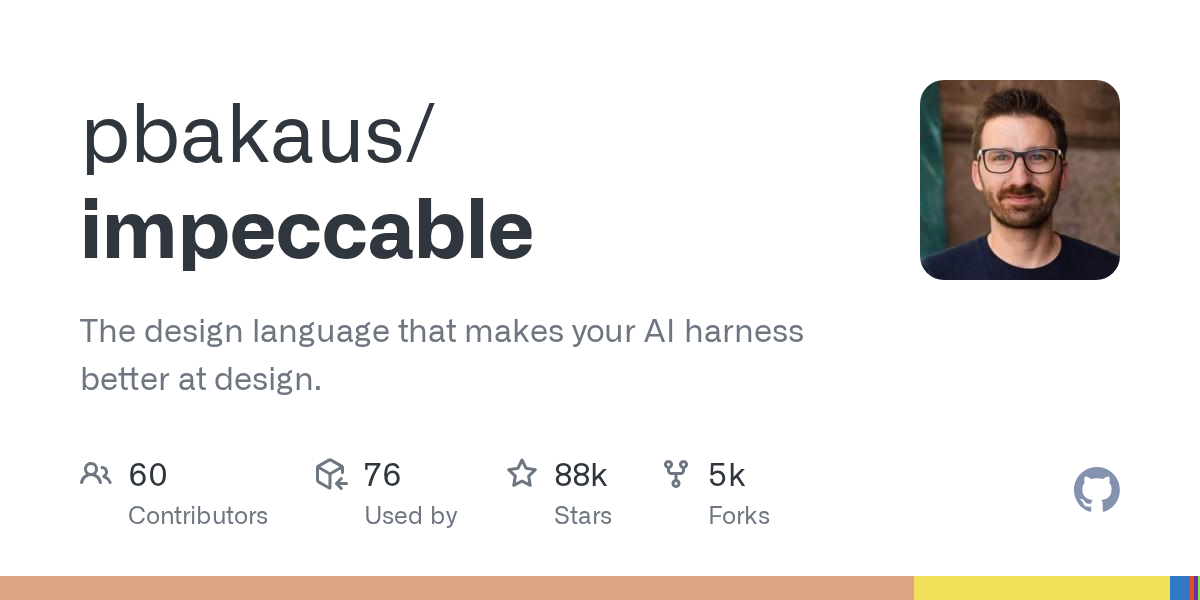
📜 License: Apache-2.0 · 👤 By: organization (Tauric Research)
🎯 Time to value: 30 minutes
| ✓ Pros | ✗ Cons |
|---|---|
| Free, permissive license | Research tool, not a source of investment advice |
| Works with most major AI providers and local models | Many agents per run means higher usage costs |
| Back-tests only use data available on each date | Results vary with the AI model and settings |
 GitHub
📜 License: MIT · 👤 By: organization (Cloudflare)
🎯 Time to value: 15 minutes
| ✓ Pros | ✗ Cons |
|---|---|
| Free, permissive license, from a major security company | Needs a locked-down sandbox to run safely |
| Every finding is checked by a separate AI helper | Many helper agents means higher usage costs |
| Results are easy for other tools to read | No code update since September 14 |
 GitHub
📜 License: Apache-2.0 · 👤 By: organization (Experiential Labs)
🎯 Time to value: 15 minutes
| ✓ Pros | ✗ Cons |
|---|---|
| Free, permissive license | Anonymous usage tracking is on until you turn it off |
| Spending limits per person and agent | Traffic capture for Mac apps is still experimental |
| Works with your existing keys | Pushes its own hosted platform |
 GitHub
📜 License: Apache-2.0 · 👤 By: organization (Google)
🎯 Time to value: 5 minutes
| ✓ Pros | ✗ Cons |
|---|---|
| Free, permissive license, from Google | Not tuned for Google's newest model |
| Easy install through npm or Homebrew | Free-tier users must switch to Antigravity CLI |
| Works with add-on tools through MCP (Model Context Protocol) | Daily test builds may contain bugs |
 GitHub
Top Models Today
👤 By: DeepSeek · 🎯 Task: Image-text-to-text
📐 Size: 763B
| ✓ Pros | ✗ Cons |
|---|---|
| Very permissive license | Needs data-center hardware to run |
| Built for coding and agent tasks | Benchmarks are self-reported |
| Compressed community versions also trending | No ready-made chat template file included |

👤 By: Recursive · 🎯 Task: Text generation
📐 Size: 39.8B (about 2.5B active)
| ✓ Pros | ✗ Cons |
|---|---|
| Very permissive license | Benchmarks are the maker's own |
| Fast for its size | Needs one data-center card (NVIDIA B300 or H200) |
| Compressed community version passed 100,000 downloads | Young release, uploaded October 21 |

👤 By: XHToken · 🎯 Task: Text generation
📐 Size: 4.11B
| ✓ Pros | ✗ Cons |
|---|---|
| Very permissive license | Benchmarks are the maker's own |
| Small enough for a laptop | New maker with a short track record |
| Adjustable thinking levels | Very long documents need lots of memory |

👤 By: Lightricks · 🎯 Task: Image-to-video
📐 Size: about 22B (per its file names)
| ✓ Pros | ✗ Cons |
|---|---|
| Video and sound in one pass | Companies over $10M annual revenue need a paid license |
| Free commercial use for smaller companies | Gated download with terms to accept |
| Low-memory options available | Needs a powerful graphics card |


👤 By: Nanbeige · 🎯 Task: Text generation
📐 Size: 33.1B
| ✓ Pros | ✗ Cons |
|---|---|
| Very permissive license | Benchmarks are the maker's own |
| Strong reported agent scores for its size | Needs "trust remote code" turned on to load |
| Works with vLLM and SGLang serving software | Brand-new, with no download history yet |

👤 By: MiniMax · 🎯 Task: Image-text-to-text
📐 Size: about 428B (23B active), per its model card
| ✓ Pros | ✗ Cons |
|---|---|
| Handles 1 million tokens at once | Commercial users must credit MiniMax on their product |
| Efficient for its size | Large companies need written approval |
| Ready-made recipes for vLLM serving software | Benchmarks are the maker's own |

👤 By: Qwen · 🎯 Task: Image-text-to-text
📐 Size: 27.8B
| ✓ Pros | ✗ Cons |
|---|---|
| Very permissive license | Benchmarks are the maker's own |
| Reads images and video too | Needs a high-end graphics card |
| Available from hosted providers | Groq version is a preview only |

👤 By: Fish Audio · 🎯 Task: Text-to-speech
📐 Size: 35.9B (about 3B active)
| ✓ Pros | ✗ Cons |
|---|---|
| Many speakers in one script | Free commercial use only under $500K annual revenue |
| Fast first audio when served well | Offering it as a hosted service needs a separate license |
| Supported by SGLang and vLLM serving software | Cloning a real person's voice requires their consent |

AI Launches Today
💰 Pricing: included in Individual and Family plans · 🏷 Category: Security software
 Product Hunt
💰 Pricing: free options · 🏷 Category: Browser automation
 Product Hunt

💰 Pricing: free options · 🏷 Category: Team collaboration
 Product Hunt
💰 Pricing: not listed (live in Canva, plus an API) · 🏷 Category: Graphic design tools
 Product Hunt
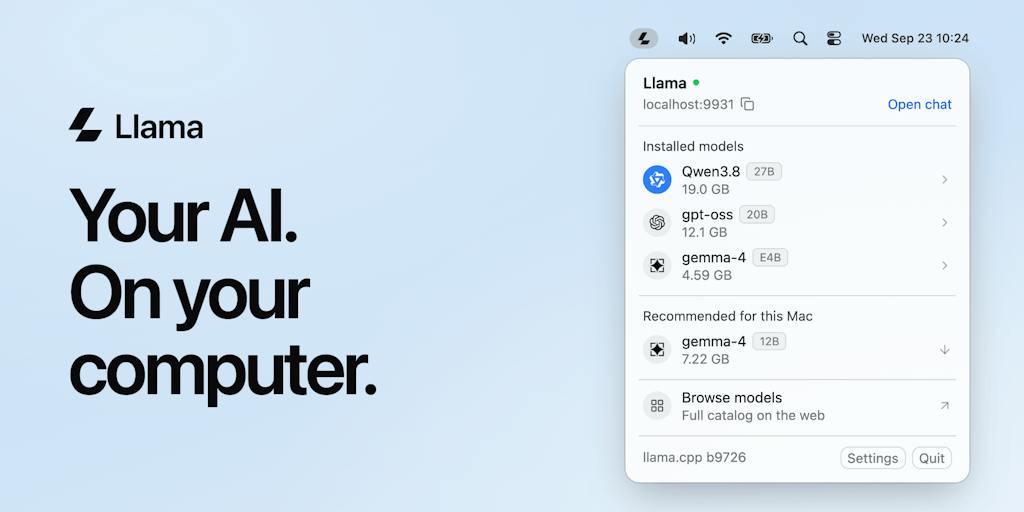
💰 Pricing: free (open source) · 🏷 Category: Large language model (LLM) developer tools
 Product Hunt
Snapshot
| Provider | Model | Input $/1M | Output $/1M | Context |
|---|---|---|---|---|
| Anthropic | Claude Fable 5.1 | $10.00 | $50.00 | 1M tokens |
| Anthropic | Claude Opus 5.5 | $4.00 | $20.00 | 1M tokens |
| Anthropic | Claude Sonnet 5.5 | $2.00 | $10.00 | 1M tokens |
| Anthropic | Claude Haiku 5.5 | $0.10 (up to 100K-token prompts; $0.50 above) | $0.50 ($2.50 above 100K) | 1M tokens |
| OpenAI | GPT-6 Astra | $10.00 (up to 272K-token prompts; $20.00 above) | $50.00 ($75.00 above 272K) | 1.05M tokens |
| OpenAI | GPT-6.1 Sol | $2.00 (up to 272K; $4.00 above) | $10.00 ($15.00 above 272K) | 1.05M tokens |
| OpenAI | GPT-6 Luna | $0.10 (up to 272K; $0.20 above) | $0.50 ($0.75 above 272K) | 1.05M tokens |
| Gemini 4 Argon | $2.00 to Nov 30; $4.00 from Dec 1 | $10.00 to Nov 30; $20.00 from Dec 1 | 1M tokens | |
| Gemini 3.8 Flash | $0.75 (to Dec 31; $1.50 from Jan 1) | $3.75 (to Dec 31; $7.50 from Jan 1) | not listed | |
| Groq | GPT-OSS 120B | $0.15 | $0.60 | 131K tokens |
| Groq | Qwen3.8-27B (preview) | $0.80 | $4.00 | 131K tokens |
| Groq | Muse Spark Open (preview) | Contact sales | Contact sales | 131K tokens |
No list-price changes vs. October 24 - every price above matches yesterday's snapshot, confirmed today on Anthropic's, OpenAI's, Google's and Groq's official pricing pages.
What this means: Gemini 4 Argon's introductory price doubles in 37 days, on December 1, so schedule any big Google batch jobs before then. If Nanbeige4.3-33B (new on Hugging Face today) tempts you, Groq's hosted Qwen3.8-27B preview, at $0.80 in and $4.00 out, is a cheap way to try the model it claims to beat before deciding whether to host either one yourself.
The Cost of Saying Hello: An Empirical Study of Handshake Overhead in AI Agent Communication Protocols
Key finding: The number of back-and-forth trips dominates the cost: the older MCP handshake needs three trips and took 230 ms with a 50 ms delay, while A2A needs one trip and took 61.0 ms. And when an AI model reads the other side's list of abilities, each one costs 24 to 107 tokens, so a server with 200 abilities uses up 11% of a 200,000-token context window before the agent even reads its own task. MCP's 2026 revision cuts its handshake to two trips, and to zero when reconnecting with a pinned version.
Why practitioners should care: If your agents connect to tool servers with long lists of tools, you pay for that list in tokens and lost working memory every session, so trim tool lists, reuse connections and move to the newer MCP version. The full test harness and raw data are released, so you can measure your own setup.
Member discussion