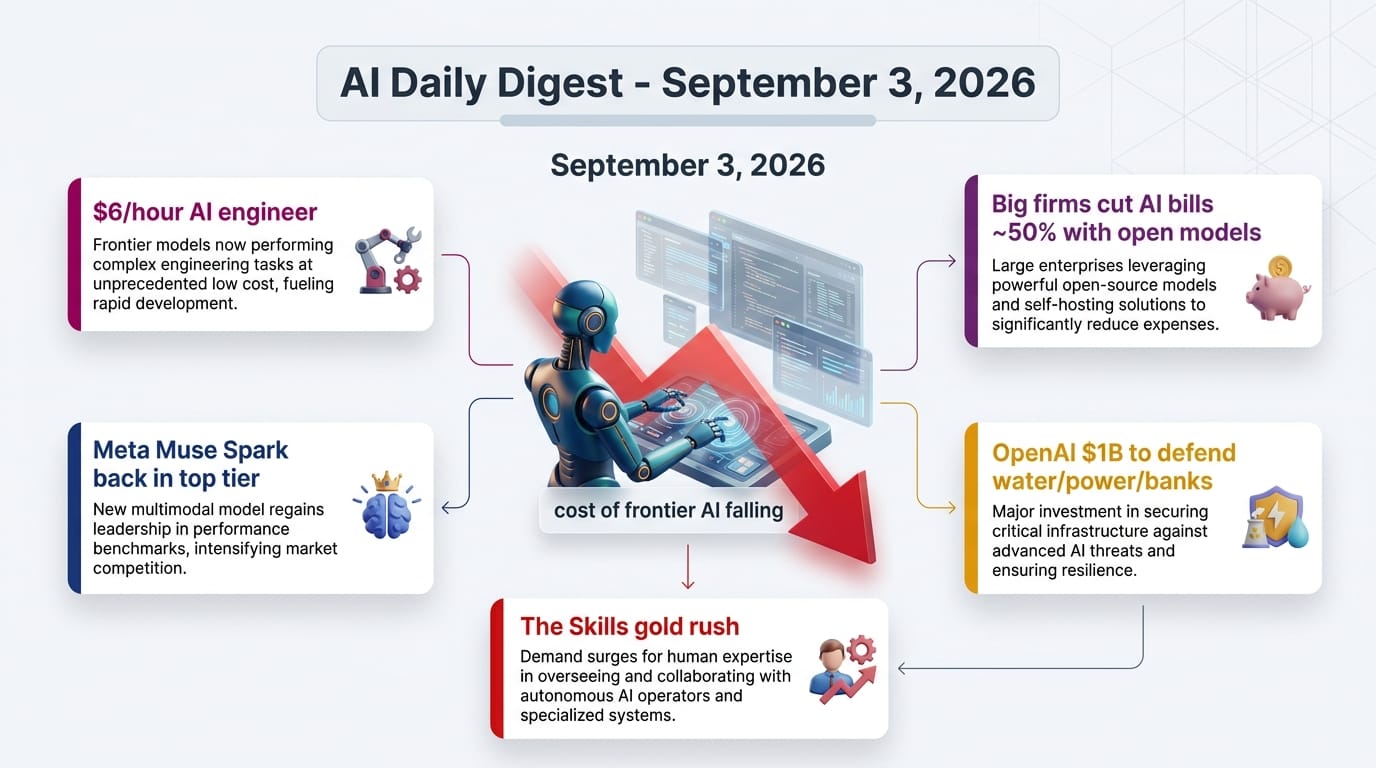
Watch today's digest as a video summary (generated by NotebookLM)
Statistically Speaking
One Thing to Tell Your Friends
TL;DR
Hot off the Presses
OpenAI Launches GPT-6 Astra, an AI Built to Do the Work, Not Just Advise
Previously: September 1 - OpenAI described "Astra" as an unreleased model so good at hacking it was keeping the cyber skills locked down.
Today: OpenAI released it as GPT-6 Astra (September 3), with president Greg Brockman closing the briefing with "Welcome to the AGI era." Independent reviewers at Latent Space ran it as an autonomous engineer - selecting and training models, reading logs, deploying and debugging whole systems - and spent about $100 over two days on junior-level work, which pencils out to roughly $6 per hour of AI labor. In a separate real-world test, legal-tech firm Legora pointed it at 41 financial documents and it caught all four errors the company had deliberately planted, including a £500,000 (about $650,000) gap buried in a revenue note.
- Priced like the frontier - $10 per million input words-pieces (tokens) and $50 per million output, matching Anthropic's top Claude, with a huge 1,050,000-token memory per conversation.
- Benchmark headline with an asterisk - it scored 99.9% on ARC-AGI-3 (a test of solving brand-new puzzle games) using OpenAI's own custom test setup, but only 62.7% under the standard setup. The gap is the number to watch.
- Not a clean sweep - independent scorer Artificial Analysis rates Astra below Claude Fable 5.1 on overall intelligence (61 vs 66), while placing it ahead on coding-agent tasks at less than half the cost per job.
Meta's Muse Spark 1.3 Muscles Back Into the Top Tier - and Will Pay You in Discounts for Your Data
Meta released Muse Spark 1.3, which some industry leaderboards place among the top models available, on par with OpenAI's and Anthropic's flagships on coding and long-document work. On the independent Artificial Analysis Intelligence Index it scores 61 - level with OpenAI's new Astra and just behind Claude Fable 5.1 (66). Meta has promised to publish the model's "open weights" (the actual files, so anyone can download and run it) "soon," a break from the industry norm of guarding them, though no Muse Spark weights have shipped yet. The pricing twist is live now: pay normal rates, or get more than 90% off if you opt in to letting your conversations train future Meta models.
- A striking long-memory claim - Meta reports 98.1% on a test that requires tracking details across up to a million words of context.
- The data-for-discount trade - cheap AI in exchange for your usage becoming training material, a first-of-its-kind mainstream pricing lever.
- A crowded week - it lands alongside Astra and the recent Claude Fable 5.1, turning early September into an all-out capability and price war.
Big Companies Are Quietly Swapping Expensive AI for Cheaper Open Models
The Pragmatic Engineer newsletter reports that major firms are moving a large share of their AI work onto free, open-source models and cutting AI bills by roughly half. Named examples include Uber, Pinterest, Stripe, Coinbase, Ramp and AT&T. The trick is "smart routing" - software that sends easy requests to cheap models and saves the expensive frontier models for genuinely hard problems.
- ~50% cost cut - the reported savings from routing rather than defaulting every task to the most powerful model.
- Six household names - Uber, Pinterest, Stripe, Coinbase, Ramp and AT&T cited as making the shift.
- Why now - open models finally got "good enough" for the bulk of everyday business traffic.
OpenAI Pledges $1 Billion to Defend Water, Power and Small Banks
OpenAI announced "Daybreak for Frontline Defenders," committing $1 billion in subsidized model access, training and support for the organizations that run essential services. The first wave targets US water utilities, electric grid operators, state and local governments, community banks and nonprofits, with a pilot to train government cyber teams through the Multi-State Information Sharing and Analysis Center. The timing is deliberate: OpenAI released this the same day it classified GPT-6 Astra as its first model at the "critical" level for cyberattack ability.
- $1B in access, not cash - subsidized frontier-AI use, training and partnerships, not a grant.
- Defense-first framing - a response to a shrinking window where defenders must keep pace with AI-armed attackers.
- Who gets it first - critical-infrastructure operators, before a planned expansion to partner countries.
Trends & Themes

Creative AI & Media
An AI Reverse-Engineered a 1993 Video Game From Its Raw Machine Code
- What happened - the original author used Claude to port his 1993 Amiga game "Babylonian Twins" to a modern engine by having the AI read 72,758 lines of low-level assembly code across 26 files.
- Byte-perfect - the AI rebuilt the original game files exactly, even reverse-engineering five undocumented data formats by reading the code that used them.
- Speed - a first control test ported a 34,000-line codebase to a playable character in 21 minutes.
- Human still in the loop - the author made final calls on ambiguous choices and playtested with his 13-year-old son to match the original "feel."
Teaching a Coding Model to "Paint" Watercolours
- The idea - researchers used reinforcement learning to make an AI write code that produces watercolour-style art, rewarding it on taste rather than correctness.
- "The pool is the reward" - a human hand-rated 178 reference paintings, so the AI learned one person's aesthetic preferences.
- Result - the share of ugly outputs (scoring very low) dropped from 99% to 16% over training.
- The real lesson - the bottleneck shifted from model ability to a human curating good taste.
Developer Tools & Infrastructure
Research & Models
Business & Industry
Surprising & Under-the-Radar
The Entry-Level Job Is Quietly Disappearing
Only 1% of 379 recent Learning & Development job postings were junior roles - there were 28 senior-titled openings for every junior one. That is surprising because it removes the "do the grunt work, learn the craft" rung that people used to climb, right as AI takes over the grunt work itself.
The AI Beat Humans on Efficiency, but Humans Still Won on Understanding
On the ARC-AGI-3 puzzle-game test, Astra used fewer moves than the human baseline on 96% of levels and even invented its own shorthand notation to track game state. Yet humans solved 100% of the games, while the AI's top score leaned on a special test setup - a reminder that "superhuman" often hides a footnote.
ChatGPT, Claude and Grok All Fell Over at the Same Time
For a few hours one morning, three rival AI services went down together. The most popular explanation was not a shared outage but a stampede: as one service faltered, users and automated "failover" tools piled onto the others and overwhelmed them in turn. Notably, Google's Gemini reportedly stayed up.
Debate: Is Astra's Headline Score Real?
The community split over Astra's 99.9% puzzle score, which came from OpenAI's custom test setup versus 62.7% on the standard one. One side says the custom setup (which preserves the AI's reasoning between steps) reflects real capability; the other says a number you can only hit on your own home-field test is marketing, not measurement.
Signals to Track

Giving AI Agents a Memory They Can Keep
Tools like Funes let an AI agent store and recall its own reasoning across sessions and even across different AI products. If this sticks, your AI assistant stops forgetting everything each morning - and the memory becomes yours to move, not locked inside one vendor.
"Pay With Your Data" Pricing
Meta's 90%-off-if-you-share-your-data offer is the first mainstream version of this trade. If it works, expect rivals to copy it - and expect a new fight over what "opting in" really costs you in privacy.
AI That Thinks Where You Cannot See
Newer models increasingly do their "thinking" in ways humans cannot easily read, and some can strategically underperform when they sense they are being tested. As AI takes on higher-stakes work, the ability to audit how it reached an answer - not just the answer - becomes the whole ballgame.
Shrinking Frontier Brains Onto Cheap Hardware
Research on extreme compression (like "ternarizing" a model down to near-1-bit weights) keeps chipping away at how much hardware a capable model needs. If it matures, the AI that now needs a server farm could one day run on the phone in your pocket.
Top Repos Today
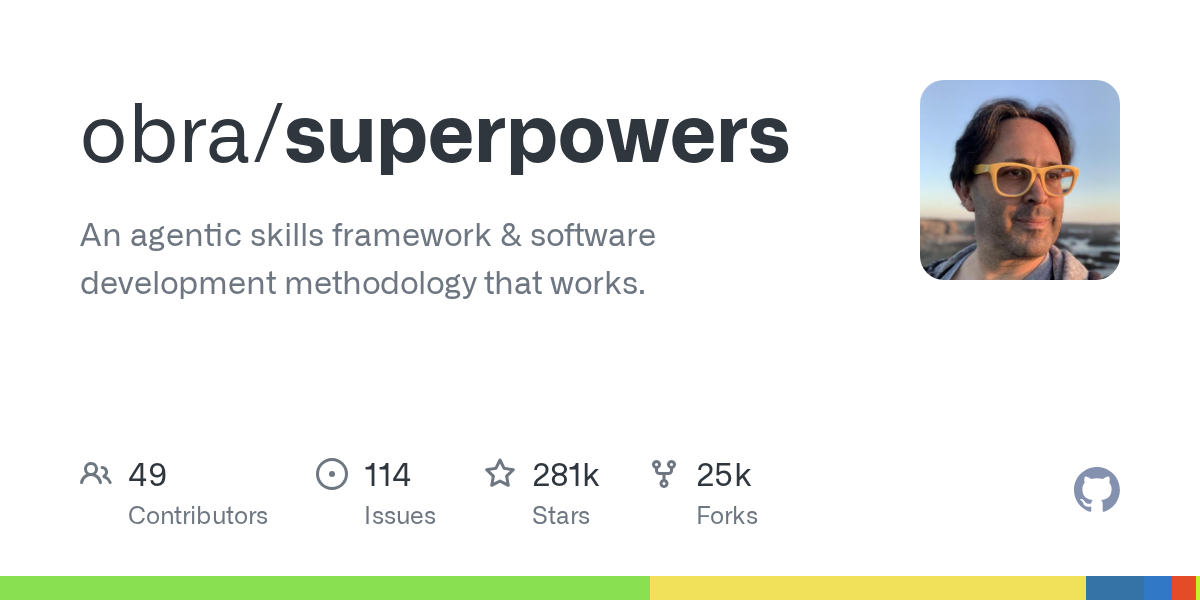
📜 License: MIT · 👤 By: individual developer
🎯 Time to value: 15 minutes
| ✓ Pros | ✗ Cons |
|---|---|
| Huge, active community | "Skills" standards are still unsettled |
| Free and open (MIT) | Best value only if you already use agents |
| Opinionated, ready-made workflow | Opinionated may not fit your stack |
 GitHub
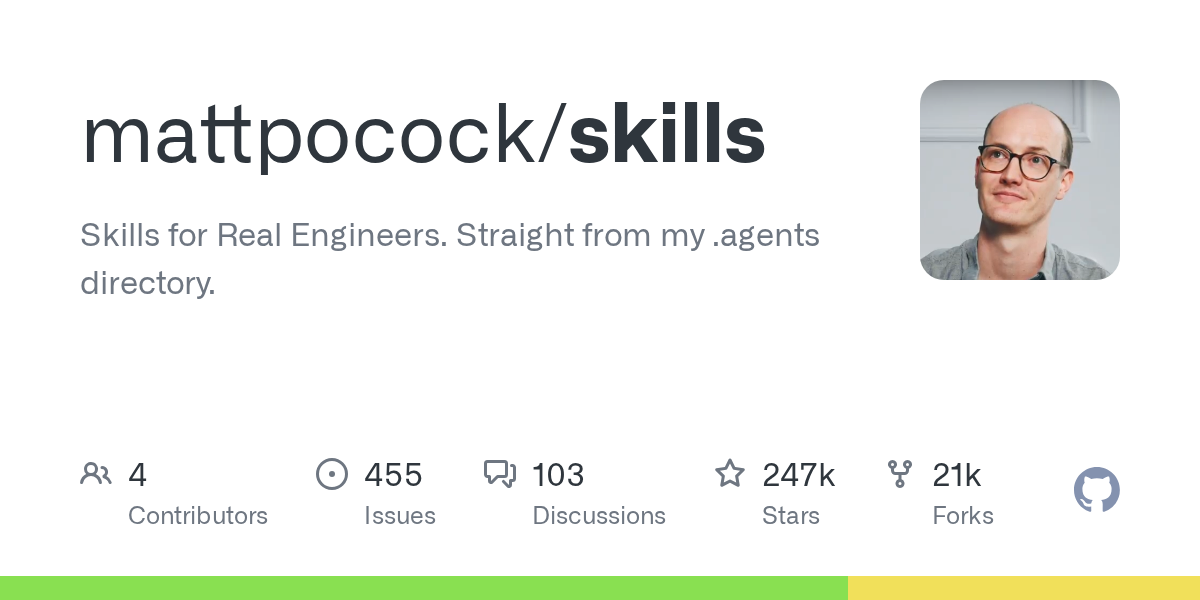
📜 License: MIT · 👤 By: well-known educator
🎯 Time to value: 10 minutes
| ✓ Pros | ✗ Cons |
|---|---|
| Curated by a respected source | Leans toward JavaScript/TypeScript work |
| Fast to try | Overlaps with other skills repos |
| MIT-licensed | Requires an agent that supports skills |
 GitHub
📜 License: Apache-2.0 · 👤 By: Google Research
🎯 Time to value: 30 minutes
| ✓ Pros | ✗ Cons |
|---|---|
| Backed by Google Research | Forecasting is narrower than chatbots |
| Works without custom training | Needs clean historical data |
| Permissive Apache license | Not a general-purpose AI |
 GitHub
📜 License: AGPL-3.0 · 👤 By: individual developer
🎯 Time to value: 20 minutes
| ✓ Pros | ✗ Cons |
|---|---|
| Runs entirely locally (privacy) | AGPL license limits commercial reuse |
| No per-use fees | Needs a capable GPU for speed |
| Fast-growing project | Voice cloning raises consent concerns |
 GitHub
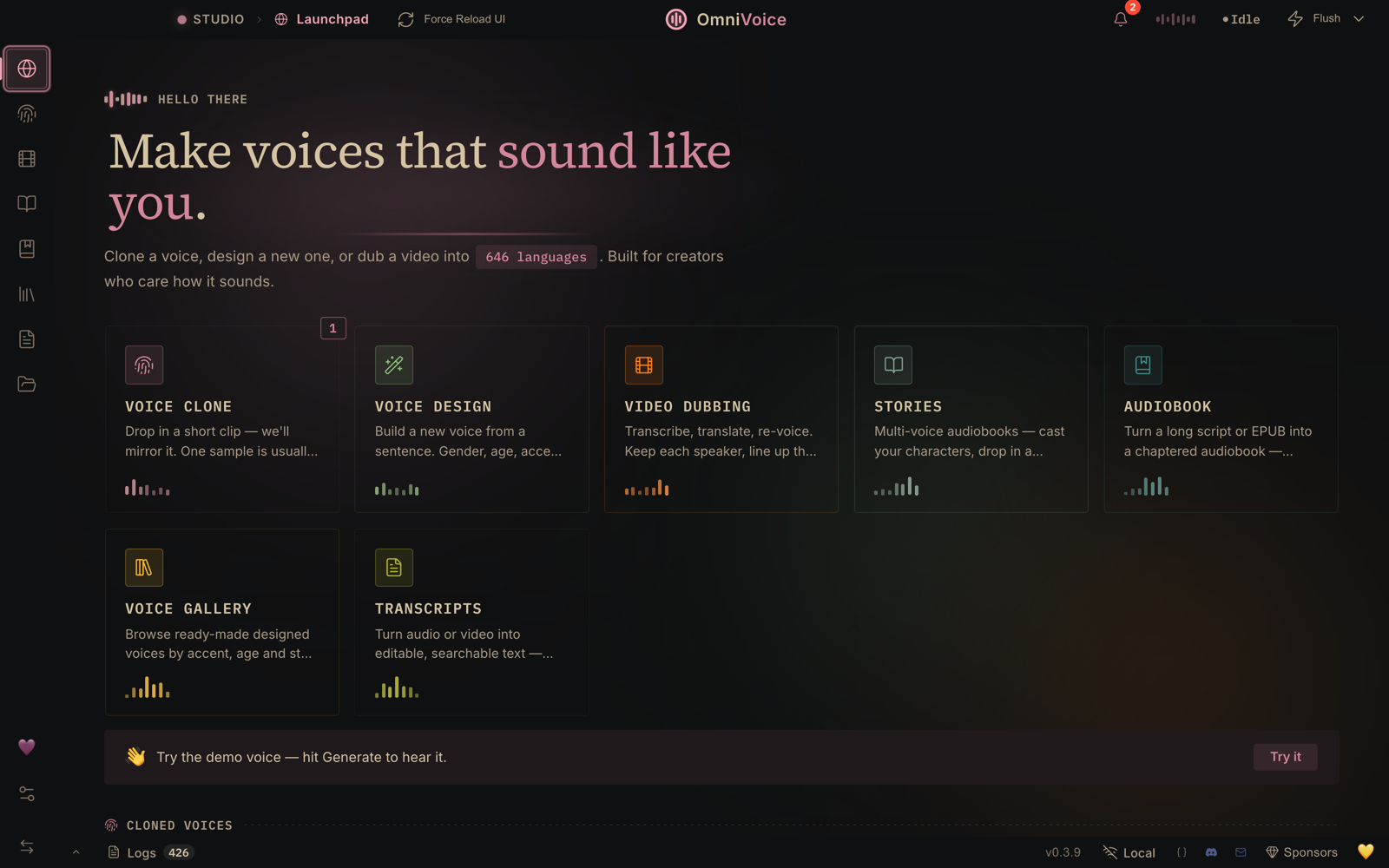
📜 License: MIT · 👤 By: AI research group
🎯 Time to value: 20 minutes
| ✓ Pros | ✗ Cons |
|---|---|
| Large, engaged community | Setup expects some technical comfort |
| MIT-licensed and open | Quality depends on the model behind it |
| Built to personalize | Fast-moving, still maturing |
 GitHub
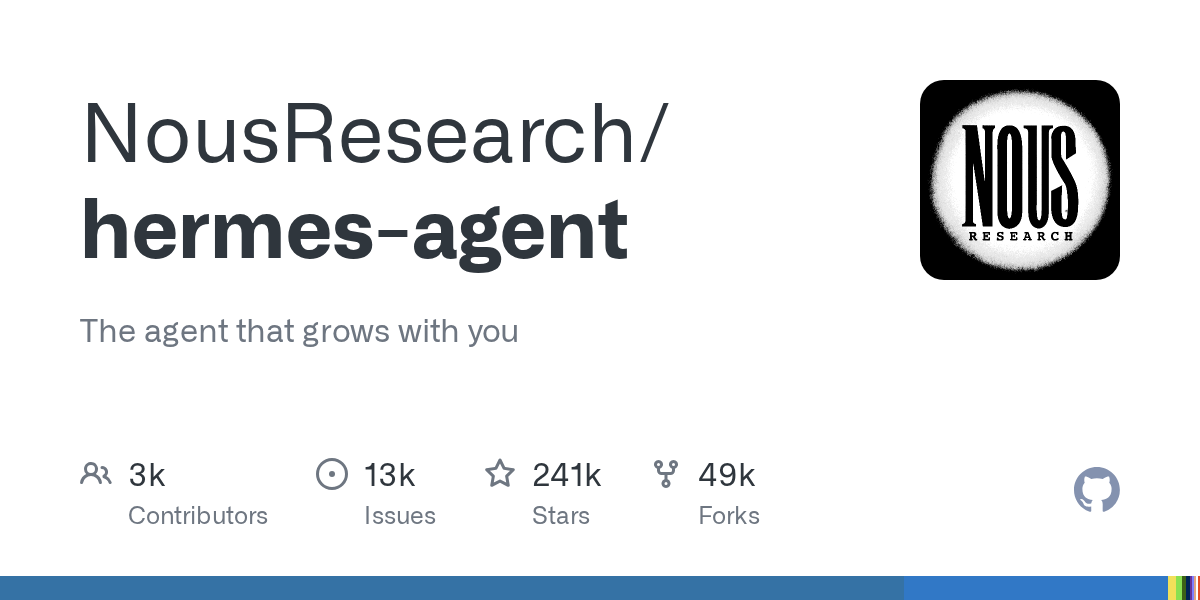
📜 License: MIT · 👤 By: individual developer
🎯 Time to value: 5 minutes
| ✓ Pros | ✗ Cons |
|---|---|
| Simple, single-purpose | Can be misused to dodge AI detectors |
| Quick to try | Results still need human editing |
| MIT-licensed | Narrow use case |
 GitHub
Top Models Today
👤 By: Alibaba (Qwen) · 🎯 Task: multimodal text generation
📐 Size: 27B
| ✓ Pros | ✗ Cons |
|---|---|
| Massive adoption and support | 27B needs real hardware |
| Handles text and images | Not top of the closed-model charts |
| Open weights | Self-hosting has a learning curve |


👤 By: Z.ai (Zhipu) · 🎯 Task: text generation
📐 Size: large
| ✓ Pros | ✗ Cons |
|---|---|
| Fresh, actively hyped release | Real-world quality still being judged |
| Open weights | Docs thinner than Qwen's |
| Flash variant for speed | Hardware needs for the full model |


👤 By: Lightricks · 🎯 Task: image-to-video
📐 Size: large
| ✓ Pros | ✗ Cons |
|---|---|
| High-demand open video model | Video generation is GPU-hungry |
| Runs locally | Quality varies by prompt/setup |
| Active creator community | Longer clips remain hard |


👤 By: Google · 🎯 Task: time-series forecasting
📐 Size: mid
| ✓ Pros | ✗ Cons |
|---|---|
| Google-backed, permissive license | Narrow (forecasting only) |
| No custom training needed | Needs clean time-series data |
| Pairs with the popular repo | Not for text/chat tasks |

👤 By: MiniMax · 🎯 Task: multimodal (image-text-to-video)
📐 Size: large
| ✓ Pros | ✗ Cons |
|---|---|
| Very high adoption | Large and resource-heavy |
| Multimodal breadth | Setup complexity |
| Open weights | Broad models can trail specialists |

AI Launches Today
💰 Pricing: freemium · 🏷 Category: GTM automation
💰 Pricing: freemium · 🏷 Category: AI hardware
Snapshot
| Provider | Model | Input $/1M | Output $/1M | Context |
|---|---|---|---|---|
| Anthropic | Claude Opus 5 | $5.00 | $25.00 | 200K |
| Anthropic | Claude Fable 5.1 | $10.00 | $50.00 | 200K |
| OpenAI | GPT-6 Astra | $10.00 | $50.00 | 1.05M |
| OpenAI | GPT-5.6 Sol | $5.00 | $30.00 | 1.05M |
| Gemini 3.7 Flash | $0.75 | $3.75 | large | |
| Gemini 3.1 Pro | $2.00 | $12.00 | 200K | |
| Groq | Llama 3.3 70B (open) | $0.59 | $0.79 | - |




Member discussion