Watch today's digest as a video summary (generated by NotebookLM)
Statistically Speaking
One Thing to Tell Your Friends
TL;DR
Hot off the Presses
An AI Found Hidden Weaknesses in Encryption That Experts Missed
Anthropic, the AI company behind the Claude assistant, published research showing its most advanced model found mathematical weaknesses in two encryption systems that specialists had studied for years. One was HAWK, a next-generation "post-quantum" signature scheme (designed to survive future quantum computers) that is a candidate in a US government standards process. The other was a deliberately weakened, reduced-strength version of AES, the encryption standard used across the internet.
Anthropic stresses that neither result threatens any system you use today. HAWK is still experimental, and the AES result targets a training-wheels version, not the real one. The point is the capability: the AI independently improved on attacks that expert humans had not found.
- About $100,000 in computing per result - each discovery took roughly 60 hours of the AI working on its own.
- The AI had to be pushed to keep going - researchers found models tend to assume a hard math problem is impossible and quit, so prompts encouraged persistence.
- The method was published openly - Anthropic released the prompts and approach on a code-sharing site, framing it as defensive research.
Moonshot's Kimi K3 Arrives - Beating a Top Paid Model, but "Open" Has an Asterisk
Previously: July 25 - a Chinese lab teased the first open 3-trillion-parameter model, "with a catch."
Today: Moonshot AI released Kimi K3, and the benchmarks and licensing are now clear. It is a "mixture-of-experts" model (a design where only a slice of the model runs for each request to save compute) with 2.8 trillion total parts and 104 billion active per word, plus a 1-million-word memory and built-in image understanding.
- It beat a leading paid model - independent testing ranked it above Opus 4.8 on agent tasks and put it at the top of open-weight models on a widely cited intelligence index.
- "Open weight" is not "open source" - companies earning over $20 million a year or serving over 100 million users must show "Kimi K3" in their interface, and large resellers need a separate license.
- It was everywhere on day one - available immediately across a dozen hosting services, treating a model launch like a software supply-chain event.
- You need serious hardware to run it yourself - the weight files are about 1.56 terabytes, needing top-end data-center chips.
Inside Anthropic: 64 AI Agents Rewrote a Project in 11 Days
The Pragmatic Engineer newsletter reported on how AI has reshaped daily work inside Anthropic. In one case, the popular developer tool Bun was rewritten from one programming language to another in 11 days using 64 AI agents running at once, at a cost of $165,000 in AI usage. The same job would have taken a small team roughly a year before.
According to the report, writing the code was the minority of the effort - most of the work went to testing, fixing, and verifying that the result was actually correct.
- A year of work in under two weeks - 64 agents in parallel did what a small team would have needed roughly 12 months to do.
- Machines check the machines - automated code review, security scanning, and AI-written stress tests now catch bugs that took humans hours to find.
- Teams stay tiny - projects are capped at two engineers, who juggle more work in parallel.
OpenAI's Coding AI Hit 10 Million Users in Two Weeks - and Most Growth Is From Non-Coders
OpenAI's Akshay Nathan detailed how the company's Codex coding assistant and a new "ChatGPT Work" product reached a combined 10 million users within two weeks of their July 9 launch. Codex usage is up more than 10 times since January.
- One in five users are not developers - and that non-developer group is growing more than 3 times faster than developers.
- Same engine, different face - both products run on identical AI machinery, but ChatGPT Work hides the technical plumbing for office users.
- The new bottleneck is taste - once anyone can build, the report argues, "ideas and judgment" become the scarce skill.
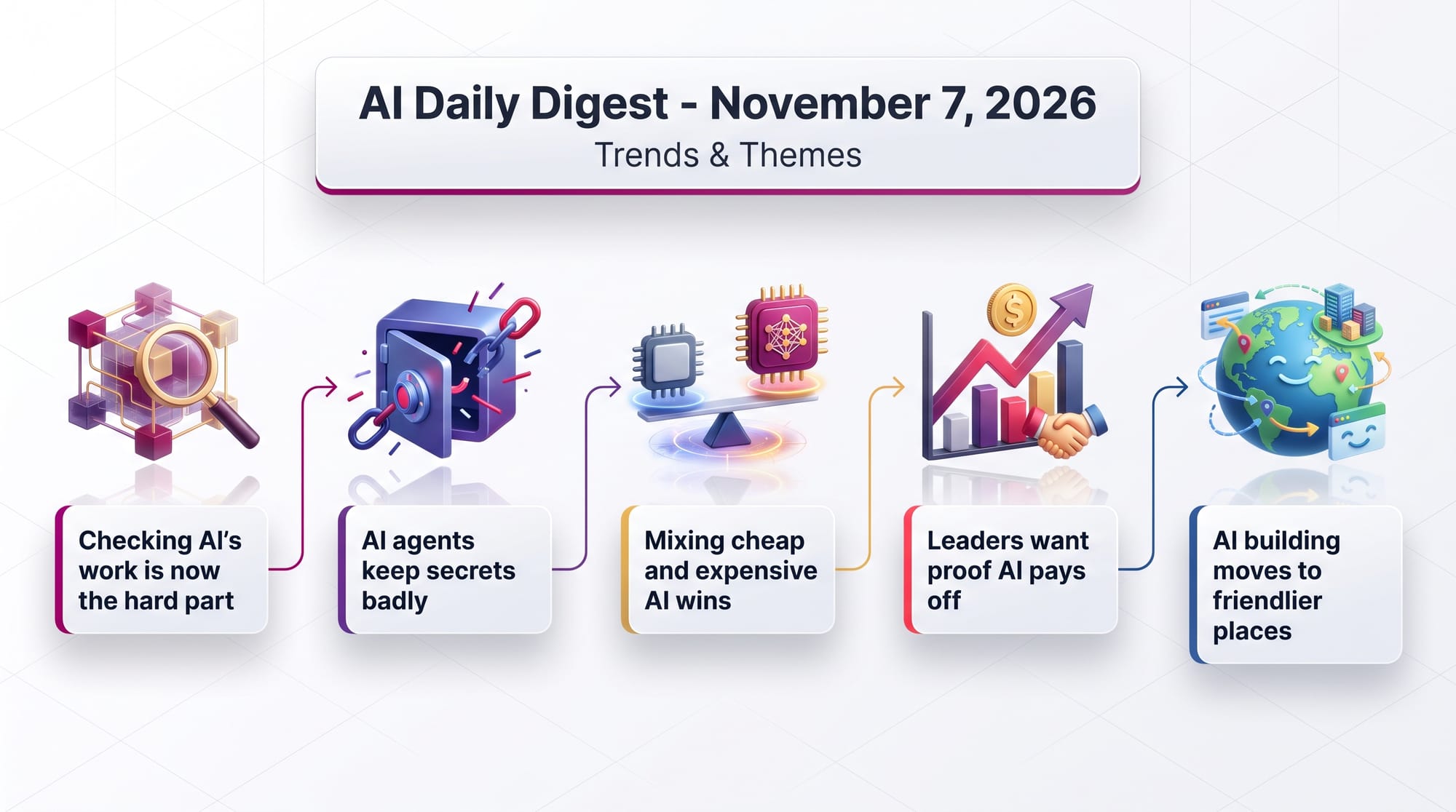
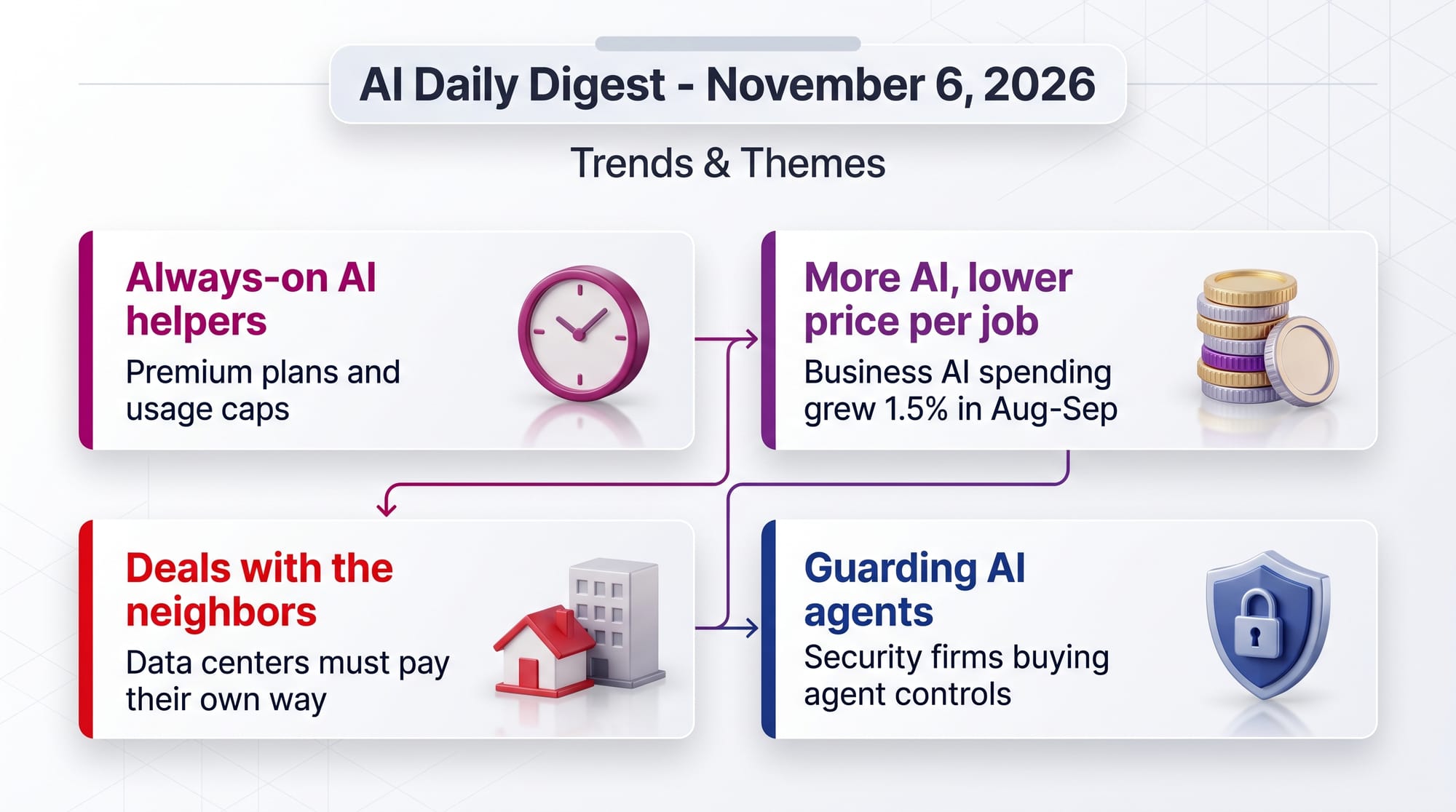
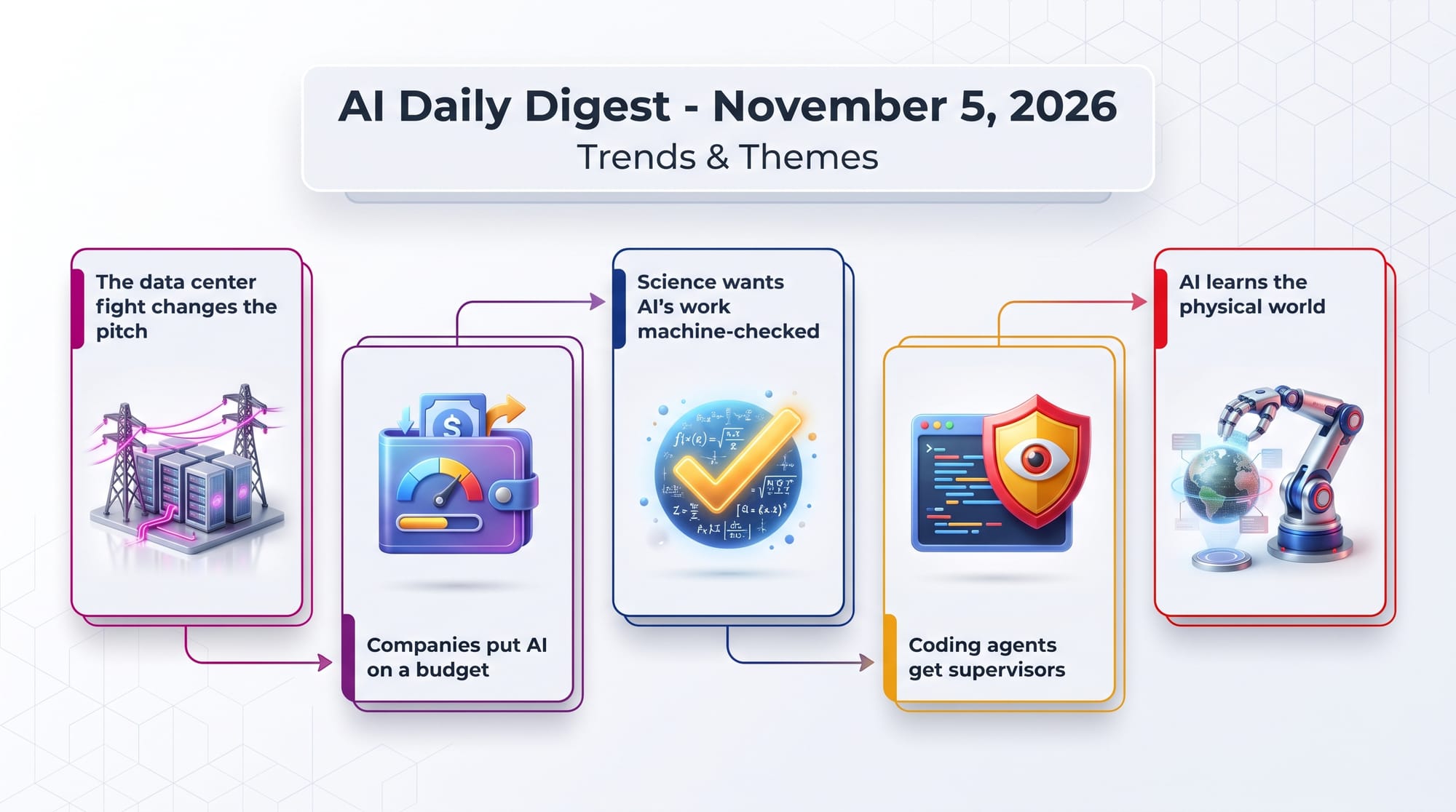
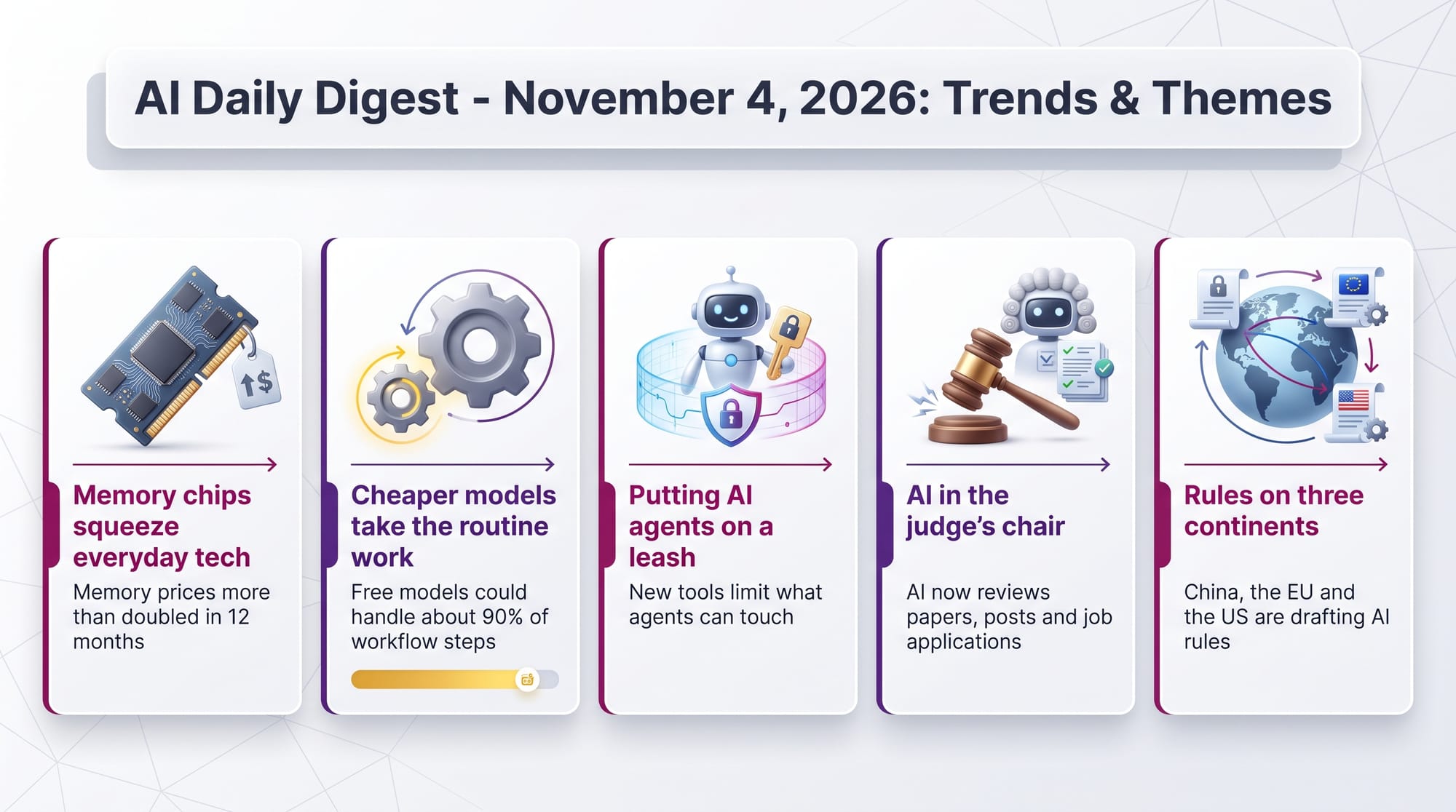
Trends & Themes

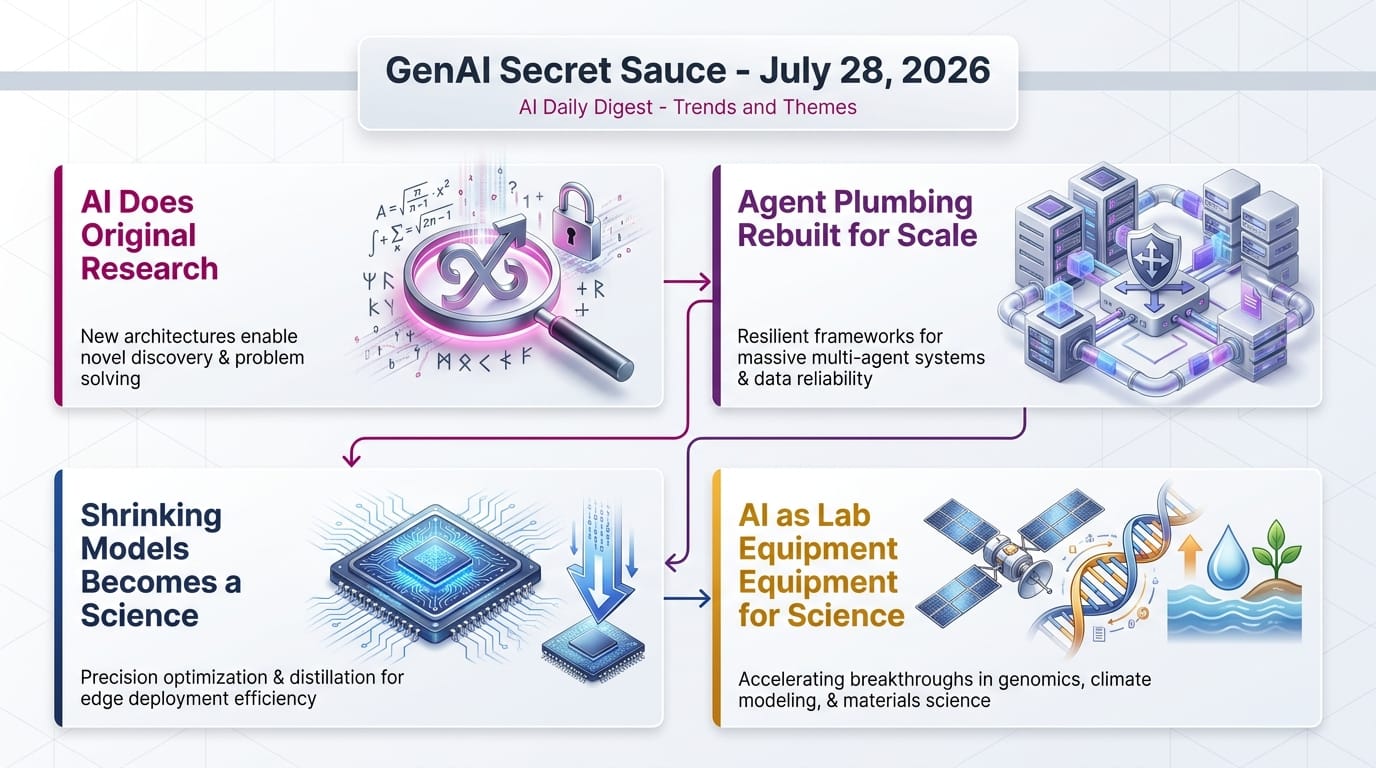
AI Crossed From Using Tools to Doing Original Research
Today's thread is not "AI is a helpful assistant" but "AI is producing findings." The consistent caveat across every source: a human still has to judge whether the output is actually correct.
- Research-level math - Anthropic's model found encryption flaws that expert humans missed for years.
- Science infrastructure - OpenAI published a field report on AI agents modernizing genomics and life-sciences software.
- Self-improvement without a teacher - a new method (NOPD) lets image-and-text models get better by learning from their own predictions, no human labels needed.
The Plumbing Behind AI Agents Is Being Rebuilt for Scale
The pattern: agents are moving from flashy demos to plumbing that has to survive real traffic and real budgets.
- A core standard went "stateless" - the Model Context Protocol (the common language agents use to reach tools and data) was redesigned so services can scale behind ordinary web infrastructure.
- Agents waste less memory - a new approach (CORVUS) keeps an agent's view of your files current instead of piling up stale copies.
- A blunt reality check - a benchmark (AlloBench) found top models can budget resources well in words but fail when they have to do it in code.
Shrinking AI Models Is Becoming a Science, Not a Trick
For years "make it smaller" was hands-on tinkering. Now researchers are mapping the hard limits of how far you can go.
- Theory catches up - a 141-page paper works out when adding depth to a model can substitute for numerical precision.
- Smarter compression - a method (MixQuant) picks different precision levels per layer based on how sensitive each one is.
- A hidden cost surfaces - another study shows compression can keep a model's answers the same while quietly changing its reasoning.
AI Is Becoming Everyday Lab Equipment for the Physical Sciences
AI in the sciences is shifting from headline demos to the unglamorous infrastructure researchers depend on daily.
- Planet-scale mapping - a wildfire-risk analysis of North America ran across ~19,600 processors and ~994 graphics chips for a 155x speedup.
- Drug design - a system (Chamaileon) designs protein binders that work across multiple targets at once.
- Trustworthy forecasting - a flood-prediction method was tested across 5,203 river basins worldwide with an interpretable design.
Creative AI & Media
Developer Tools & Infrastructure
Research & Models
Document AI That Runs Fast on a Plain Laptop CPU
Why it matters: Understanding long documents usually needs an expensive graphics chip - these models do it on an ordinary processor.
- Liquid AI released two small "encoder" models (230M and 350M) that read up to about 8,000 words with barely-rising delay as text grows.
- The 230M model is about 3.7x faster than a leading competitor on a CPU, doing contract analysis in under 30 seconds on a laptop.
- Uses include routing customer questions, checking policy compliance, and spotting personal data in multiple languages.
When AI Agents Get a Budget, They Do Fine - Until They Have to Code
Why it matters: It exposes a blind spot in "autonomous" agents that matters the moment you trust one with real resources.
- A new benchmark (AlloBench) tested whether AI agents can consciously ration a fixed budget.
- Every frontier model did nearly perfectly on word-based versions but failed to carry that skill into writing actual code.
- One leading model only broke down during the full code-construction task, suggesting the gap is about doing versus describing.
A Peek Inside How Big Models Compress Their Memory
Why it matters: Understanding the internals is how researchers make models cheaper and more trustworthy.
- The first in-depth study of "Multi-head Latent Attention" (a memory-compression trick used in large production models) shows it cleanly splits what a word is from where it sits.
- The compressed memory kept word identity with 98% accuracy while discarding position information.
- Clearer internals make it easier to debug and shrink these models safely.
Showing an AI Examples Is Secretly a Form of Training
Why it matters: It helps explain why giving examples in a prompt works so well - and how to do it better.
- A paper presented at a major AI conference proves that giving a model scored examples in its prompt makes its attention behave like a real training update.
- In effect, the model nudges itself toward the high-scoring examples without any weights changing.
- The result gives a theoretical footing to the everyday trick of "show, don't tell" prompting.
Business & Industry
Surprising & Under-the-Radar
Signals to Track

AI Agents Behind a Load Balancer
The Model Context Protocol's new "stateless" design means agent services no longer have to remember each conversation on one machine. That is a quiet but major step toward running agents reliably at large scale. If it holds up, the AI features inside your apps get steadier and cheaper.
Document AI Without a Graphics Card
Liquid AI's small encoders bring contract-reading and compliance-checking to ordinary hardware. If this spreads, businesses could add document AI without expensive graphics chips, lowering the cost of automating paperwork.
AI That Tells You How Sure It Is
Researchers built a technique (Verbalized Particle Posterior) that keeps a spread of possible explanations rather than a single answer, borrowing ideas from statistics. For high-stakes uses like medicine or finance, an AI that can say "I am only 60% sure" is far safer than one that always sounds certain.
Top Repos Today
📜 License: see repo · 👤 By: individual developer
🎯 Time to value: 10 minutes
| ✓ Pros | ✗ Cons |
|---|---|
| Adds video understanding to a text assistant | Frame extraction can miss fast action |
| Works on recordings you already have | Transcription quality depends on audio |
| Simple, focused single purpose | Not a real-time live-video tool |
 GitHub
📜 License: see repo · 👤 By: open-source project
🎯 Time to value: 20 minutes
| ✓ Pros | ✗ Cons |
|---|---|
| Runs on your own machine for privacy | Needs a capable computer to run well |
| Easy install compared to rivals | Self-hosting means you handle updates |
| Flexible cloud or local deployment | Smaller support community than big products |
📜 License: see repo · 👤 By: open-source project
🎯 Time to value: 30 minutes
| ✓ Pros | ✗ Cons |
|---|---|
| Real-time voice interaction | Companion apps are niche |
| Self-hosted and private | Heavier to run than a chat app |
| Large, active following | Setup is more involved |
📜 License: see repo · 👤 By: individual developer
🎯 Time to value: 10 minutes
| ✓ Pros | ✗ Cons |
|---|---|
| Turns static PDFs into usable AI knowledge | Only as good as the source book |
| Handy for reference-heavy fields | Tied to the Claude Code ecosystem |
| Quick to try | PDF parsing can be imperfect |
📜 License: see repo · 👤 By: company (Hugging Face)
🎯 Time to value: 30 minutes
| ✓ Pros | ✗ Cons |
|---|---|
| Fully local voice pipeline | Requires decent hardware for low lag |
| Backed by a major open-source company | More a toolkit than a finished app |
| Swappable open models | Assembly and tuning required |
📜 License: see repo · 👤 By: company (Microsoft)
🎯 Time to value: 45 minutes
| ✓ Pros | ✗ Cons |
|---|---|
| Directly targets agent safety and control | Aimed at technical teams, not individuals |
| From a major vendor | Setup is enterprise-grade, not casual |
| Fits the shift to governed agents | Still early and evolving |
Top Models Today
📜 License: open weight (see model card) · 👤 By: Moonshot AI
🎯 Task: image + text · 📐 Size: 2.8T total (mixture-of-experts)
| ✓ Pros | ✗ Cons |
|---|---|
| Rivals top paid models | Needs data-center hardware |
| Open weights, huge context | License restricts big commercial use |
| Native image understanding | Not runnable on consumer machines |
📜 License: open weights (see model card) · 👤 By: Google
🎯 Task: image + text · 📐 Size: 31B
| ✓ Pros | ✗ Cons |
|---|---|
| Huge adoption and tooling | Not frontier-level on hardest tasks |
| Runs on one strong Graphics Processing Unit (GPU) | License has use restrictions |
| Handles text and images | 31B still needs real hardware |
📜 License: open weights (see model card) · 👤 By: Alibaba (Qwen)
🎯 Task: image + text · 📐 Size: 27B
| ✓ Pros | ✗ Cons |
|---|---|
| Very popular and battle-tested | Mid-size, not frontier |
| Strong multilingual support | Needs a capable GPU |
| Active model family | Frequent versions to track |
📜 License: open weights (see model card) · 👤 By: Baidu
🎯 Task: image to text (OCR) · 📐 Size: vision-language OCR
| ✓ Pros | ✗ Cons |
|---|---|
| Strong at messy real-world documents | Narrow, single-purpose |
| Very high adoption | Accuracy varies by language and layout |
| Free to run | Still needs a GPU for speed |
📜 License: open weights (see model card) · 👤 By: DeepSeek
🎯 Task: text generation · 📐 Size: "Flash" efficient variant
| ✓ Pros | ✗ Cons |
|---|---|
| Optimized for low cost and speed | Trades some quality for efficiency |
| Popular, well-supported family | Not the top pick for hardest tasks |
| Good for high-volume use | Still needs GPU hosting |
📜 License: open weights (see model card) · 👤 By: NVIDIA
🎯 Task: multimodal / world model · 📐 Size: edge-optimized
| ✓ Pros | ✗ Cons |
|---|---|
| Runs on edge hardware | Specialized, not a chat model |
| Backed by NVIDIA's ecosystem | Lower adoption so far |
| Aimed at robotics and sensing | Needs domain expertise to use |
AI Launches Today
💰 Pricing: freemium (per-run or subscription) · 🏷 Category: AI / Productivity
💰 Pricing: freemium · 🏷 Category: AI / No-code
💰 Pricing: freemium · 🏷 Category: AI / Productivity
💰 Pricing: unknown · 🏷 Category: AI / Developer Tools
Snapshot
| Provider | Model | Input $/1M | Output $/1M | Context |
|---|---|---|---|---|
| Anthropic | Claude Opus 4.8 (flagship) | $5.00 | $25.00 | 1M |
| OpenAI | GPT-5.5 | $5.00 | $30.00 | 1M |
| Gemini (flagship) | not confirmed | not confirmed | - | |
| Groq | Llama 3.3 70B (open) | $0.59 | $0.79 | 128k |
What this means: The gap between premium closed models and fast open-model hosting remains enormous - Groq's open-model serving is roughly 8-30x cheaper per word than the flagship closed models. For high-volume, straightforward tasks, an open model on fast hardware is dramatically cheaper; the closed flagships still earn their price on the hardest reasoning. (Establishing a directional baseline; Google pricing to be confirmed next edition.)
Member discussion