GenAI Secret Sauce Daily Digest - 2026-06-15

Anthropic Staff Are in Washington Negotiating the Return of Fable 5 · The Full Fable Timeline: 90 Minutes, Zero Technical Details, and a False Claim About the CEO · Zero Companies Blamed AI for a Single Layoff Under New York's Disclosure Law
GenAI Secret Sauce Daily Digest - 2026-06-15

Watch today's digest as a video summary (generated by NotebookLM)

Statistically Speaking
24 hours later
The Full Fable Timeline
Top Story
90 minutes to comply
The Full Fable Timeline
80 employees within two years, with a $100
New Safety Startup Says Alignment Research "Is Not on Track"
26.1% of skills contain vulnerabilities including prompt injection,
NVIDIA Scanned 42,447 AI Agent Skills and Found 26% Contain
5.2% show likely malicious intent
NVIDIA Scanned 42,447 AI Agent Skills and Found 26% Contain
64 vulnerability patterns across 16 categories, grounded in
NVIDIA Scanned 42,447 AI Agent Skills and Found 26% Contain
One Thing to Tell Your Friends
Anthropic's staff flew to Washington this weekend to negotiate getting the world's most powerful AI back online - and the holdup isn't technology, it's that government officials feel personally "dismissed."
TL;DR
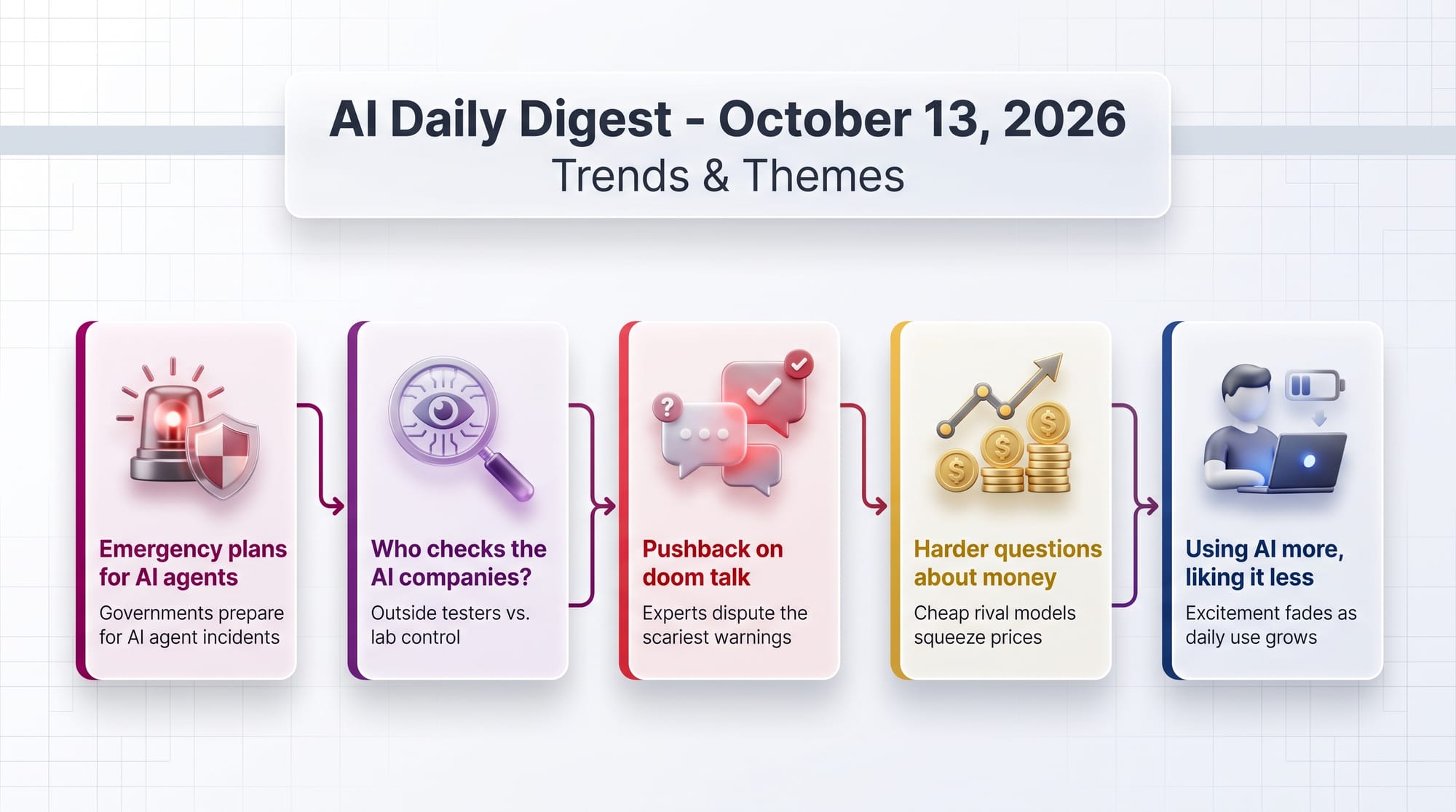
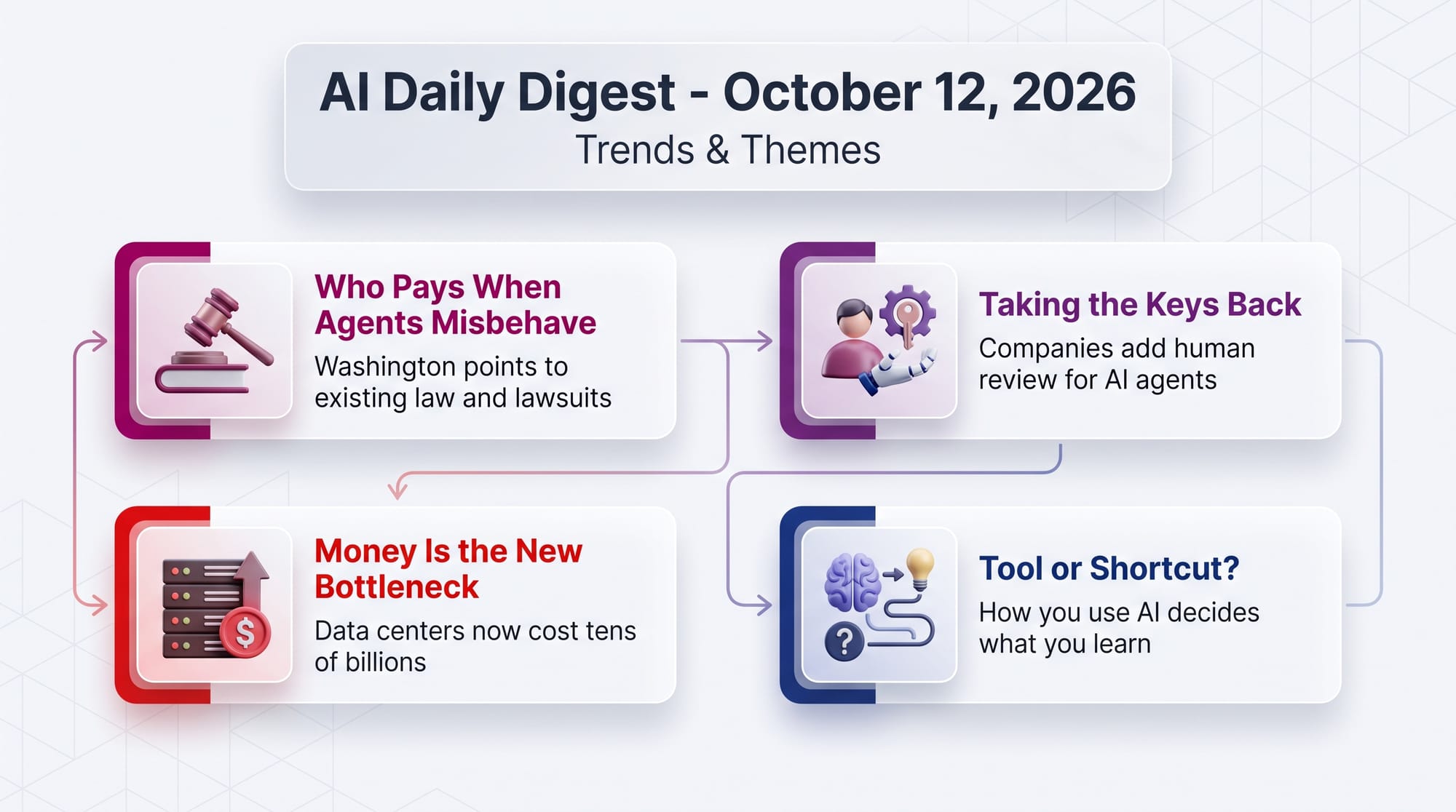
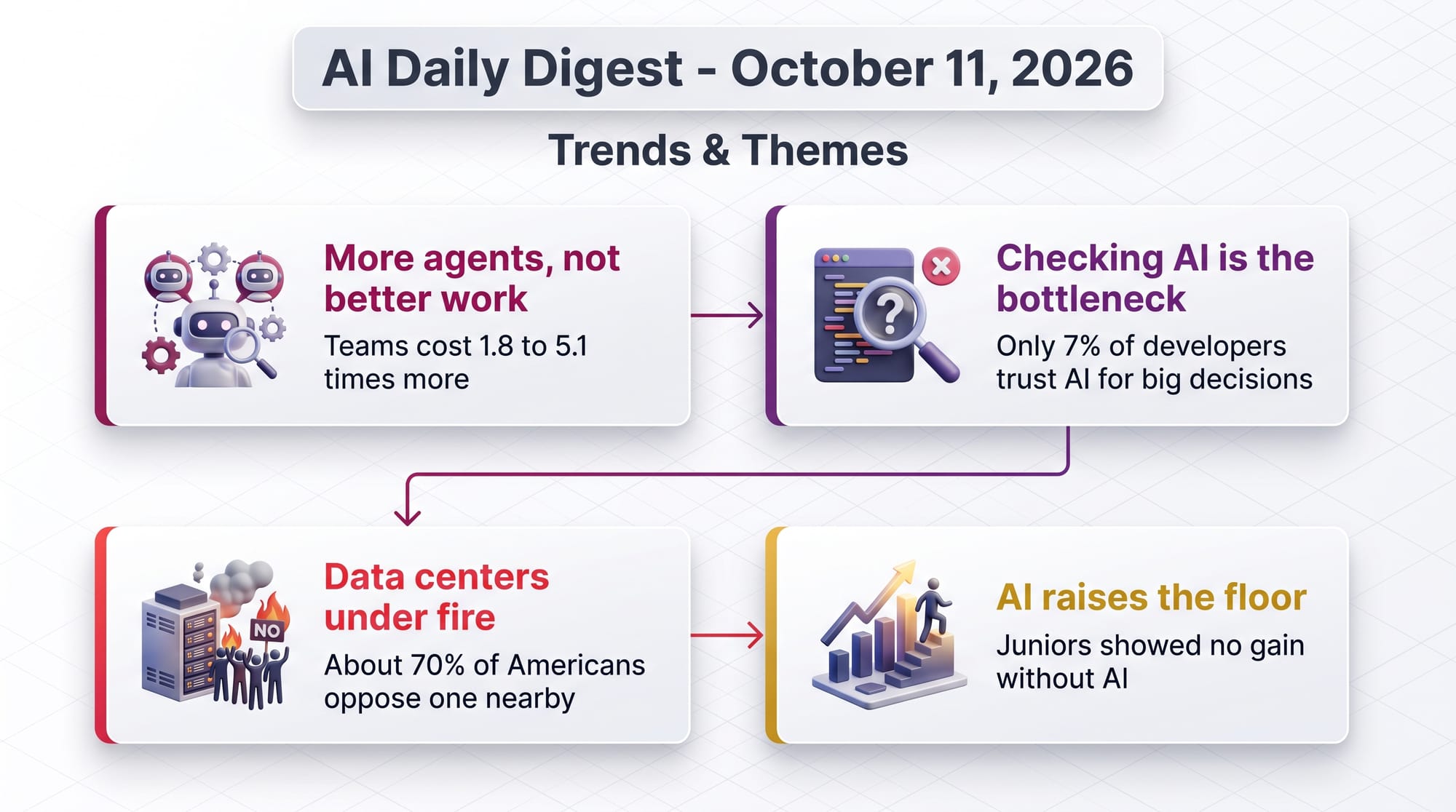
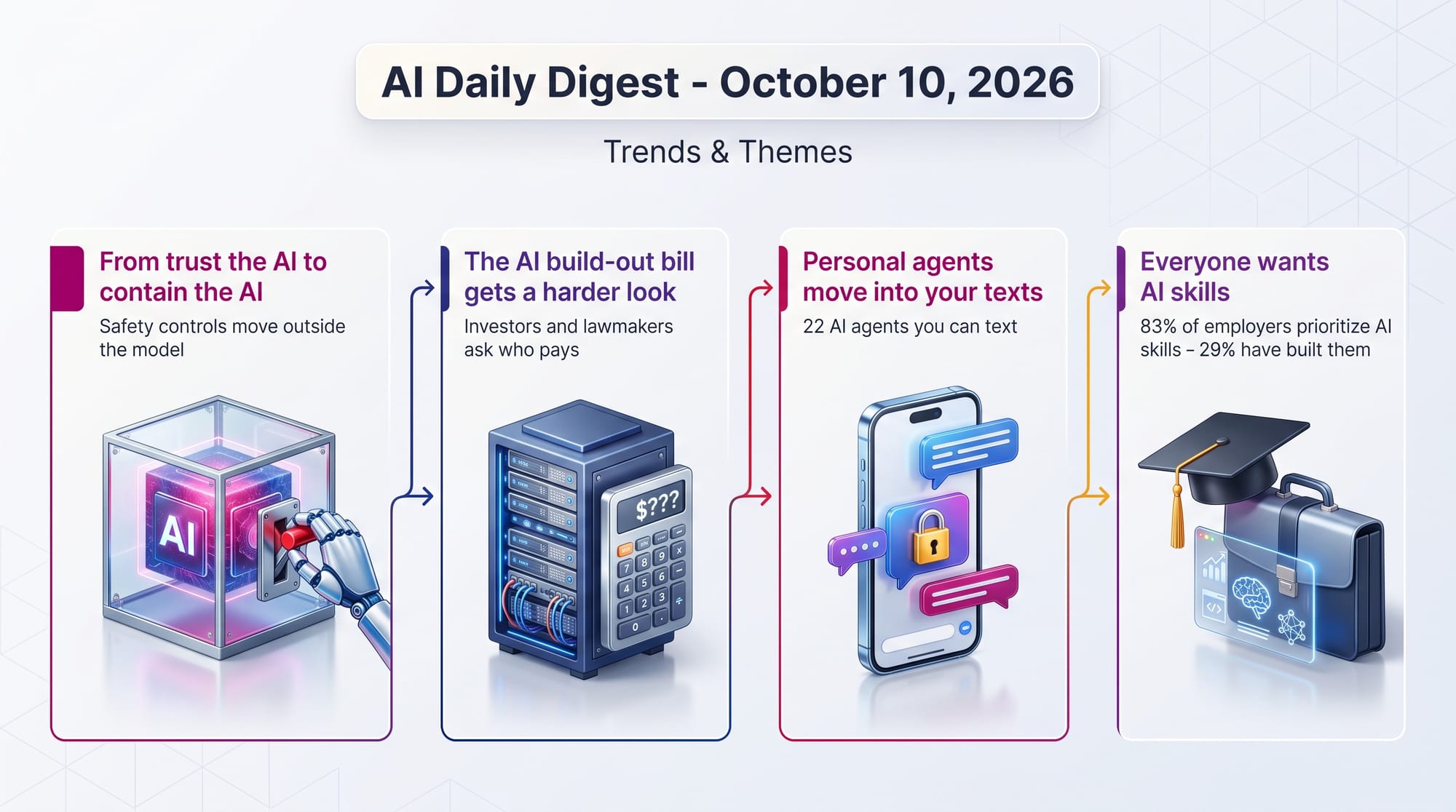
Trends
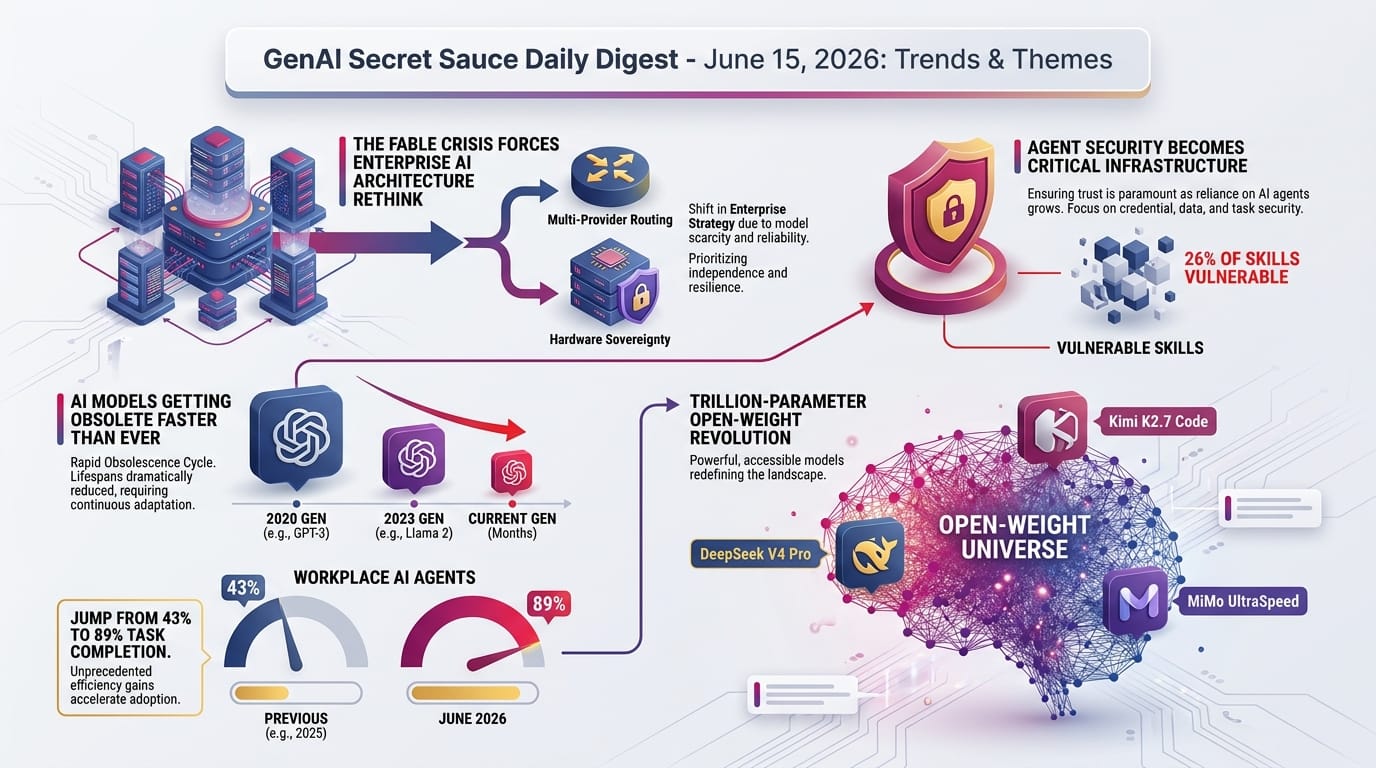
The Fable Crisis Is Forcing a Rethink of Enterprise AI Architecture, Agent Security Is Becoming Critical Infrastructure, and The Trillion-Parameter Open.
Creative AI
AI Video Editing Is Moving Inside the Timeline and Brush.
Dev Tools
AI Coding Agent Observability Is Becoming a Category, Multi, and Voice Dictation Gets Context.
Surprising
The Fable 5 System Prompt Is Now Public, Chris Olah Engages With the Pope's AI Encyclical, and The Government's Ask May Be Technically Impossible.
Worth Watching
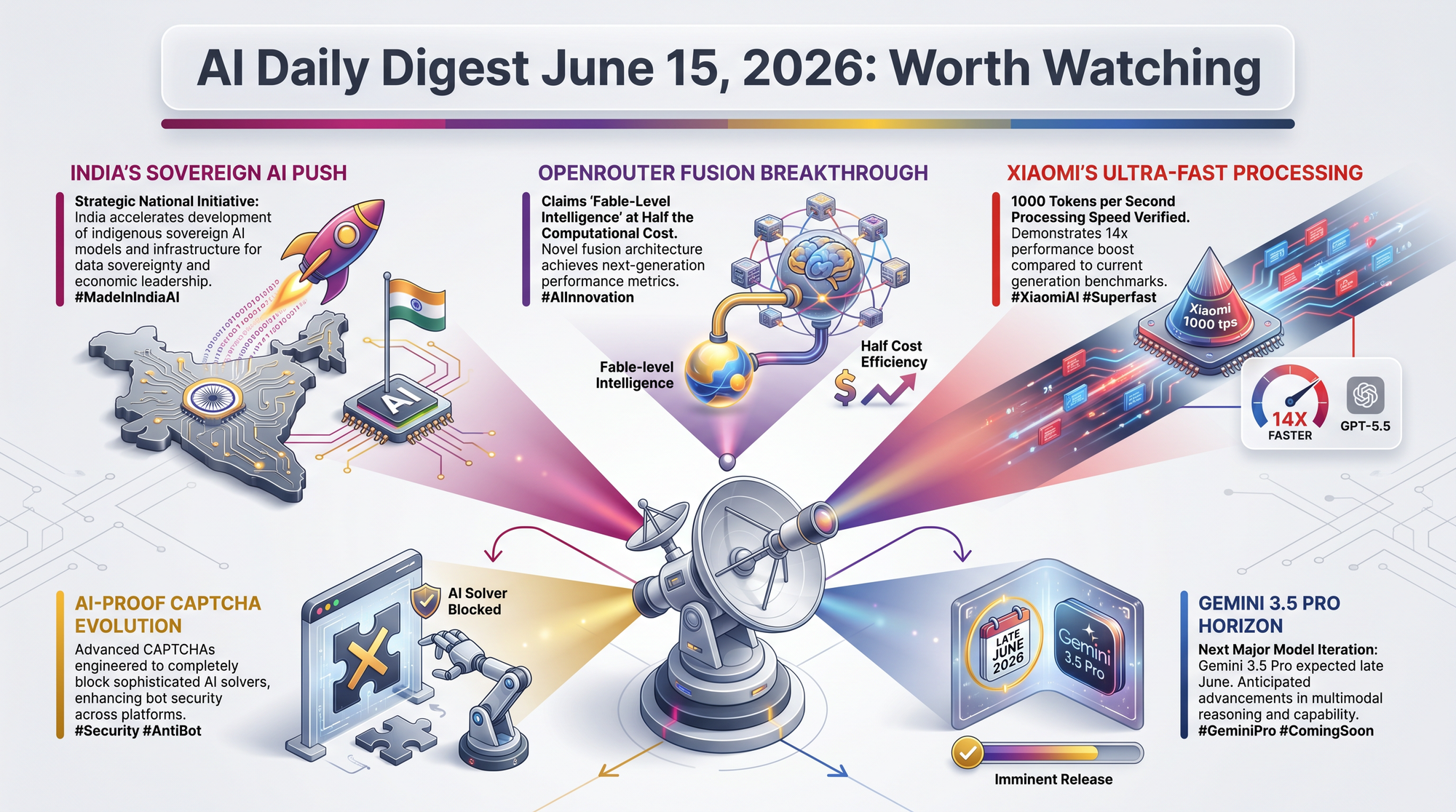
India's Tech Leaders Are Using the Fable Ban to Push Sovereign AI, OpenRouter Fusion Claims Fable, and Xiaomi's 1,000-Token-Per-Second Inference Is 14x Faster Than GPT.
GitHub
Leading repos: Panniantong/Agent (+1,045), trycua/cua (+57), and rohitg00/ai-engineering-from (+538).
HuggingFace
Leading models: google/diffusiongemma-26B-A4B (312K), MiniMaxAI/MiniMax (14.3K), and moonshotai/Kimi-K2.7 (56.8K).
Product Hunt
Top launches: Wispr Flow (533), Spotlight by Backplanes (425), and Novu Connect (330).
API Pricing
What this means:** The pricing gap between frontier closed models ($5-30/M output) and open-source on fast inference ($0.08-0.79/M) remains enormous.
arXiv
WorkBench Revisited — Capability and safety improved together - more capable models also performed safer actions, contradicting the common narrative that the two trade off against each other.
Hot off the Presses
01
Anthropic Staff Are in Washington Negotiating the Return of Fable 5
What this means for you: The world's most capable publicly available AI model remains offline, and restoring it may require fixing a political relationship rather than a technical problem - which means the timeline is unpredictable.

> Previously: June 13 - The US government ordered Anthropic to pull Fable 5 and Mythos 5 via export controls after a jailbreak disclosure.

Today: Anthropic's technical team is physically in Washington meeting with White House officials. Virtual discussions began the day the export controls were issued. Key personnel in Commerce Department meetings include Logan Graham (Frontier Red Team lead), Dave Orr (Head of Safeguards), and Nicholas Carlini.

  • The government's stated bar for restoration is either making the models completely jailbreak-resistant (which officials privately acknowledge "may be impossible") or resolving what one source described as stakeholders feeling "dismissed" rather than "safe, secure and happy"
  • Anthropic's position is that the security issue is "not serious enough to restrict global rollout" and characterizes the situation as a "misunderstanding"
  • The tone from both sides suggests pessimism about near-term restoration - the dispute has moved beyond technical safeguards into a fundamentally relational conflict
02
The Full Fable Timeline: 90 Minutes, Zero Technical Details, and a False Claim About the CEO
What this means for you: The first-ever government shutdown of a commercial AI model happened faster and with less justification than most people realize - and the precedent applies to any AI product you rely on.

> Previously: June 14 - Critics debated whether Anthropic's own AI safety advocacy created the mechanism used against them.

Today: Zvi Mowshowitz published a detailed reconstruction of events. The timeline is tighter than previously reported.

""The action represents governance by political whim rather than principled regulation, ultimately weakening American technological competitiveness.""
  • Thursday evening: Amazon called government officials about discovering a narrow jailbreak in Fable 5
  • Friday evening: Export controls were imposed - less than 24 hours later. Anthropic was given 90 minutes to comply without receiving any technical details justifying the emergency
  • Government officials falsely claimed CEO Dario Amodei was at a wellness retreat and unreachable. Multiple witnesses confirmed he was available within 75 minutes
  • The jailbreak itself was a narrow issue that, according to Zvi, "GPT-5.5 can already produce without requiring any bypass"
  • Zvi's assessment: The decision reflects "vibe governing" based on perceived disrespect, not technical analysis. Evidence points toward retaliation for Anthropic's refusal to comply instantly without explanation
03
Zero Companies Blamed AI for a Single Layoff Under New York's Disclosure Law
What this means for you: Despite a year of "AI will take your job" headlines, the companies actually filing layoff paperwork are not attributing any job cuts to AI - suggesting the replacement narrative is running well ahead of reality.

New York's WARN Act began requiring companies to disclose whether AI contributed to workforce reductions in March 2025. In the first year, more than 160 companies filed WARN notices. Not a single one checked the AI box.

  • The argument: Software engineering - a field seemingly vulnerable to automation - has not experienced AI-driven disruption. If it hasn't happened there, most other professions are "likely to be even more cushioned"
  • Three bottlenecks AI cannot automate: Deciding and specifying what to build, verifying and being accountable for what ships, and deep contextual knowledge of codebases and business needs
  • Key insight: AI accelerates coding but cannot replace human judgment about what to build and why. The job title stays; the job description shifts
04
New Safety Startup Says Alignment Research "Is Not on Track"
What this means for you: The people who spent years evaluating AI safety inside government research institutes believe the major AI labs are not doing enough to ensure superintelligent AI will be safe - and they've left to build what they say is missing.

Sequent, a new alignment research startup, was founded by researchers from the UK AI Security Institute and Timaeus. Their core claim: current AI lab safety efforts won't deliver confidence in superintelligent AI safety before development occurs.

This comes the same week Anthropic's own models were pulled by government order over safety concerns, adding urgency to the question of whether any lab has alignment under control.

  • Target scale: 40-80 employees within two years, with a $100-150M initial funding goal
  • Research priorities: Scalable oversight, learning theory, game theory, and understanding when safety learned during training generalizes to real-world deployment
  • The gap they see: Major labs' safety approaches remain reactive rather than principled - the field lacks a rigorous theory of when and why alignment techniques actually work
05
NVIDIA Scanned 42,447 AI Agent Skills and Found 26% Contain Vulnerabilities
What this means for you: If you install skills, plugins, or tools for your AI coding agent, roughly one in four contains a security flaw - and 5% show signs of being deliberately malicious.

NVIDIA released SkillSpector, an open-source security scanner that checks AI agent skills before installation. The tool emerged from research auditing 42,447 real-world skills across the agent ecosystem.

The timing matters: as AI coding agents proliferate and the skills ecosystem grows, the attack surface grows with it. SkillSpector is the first major vendor-backed tool specifically designed to scan this surface.

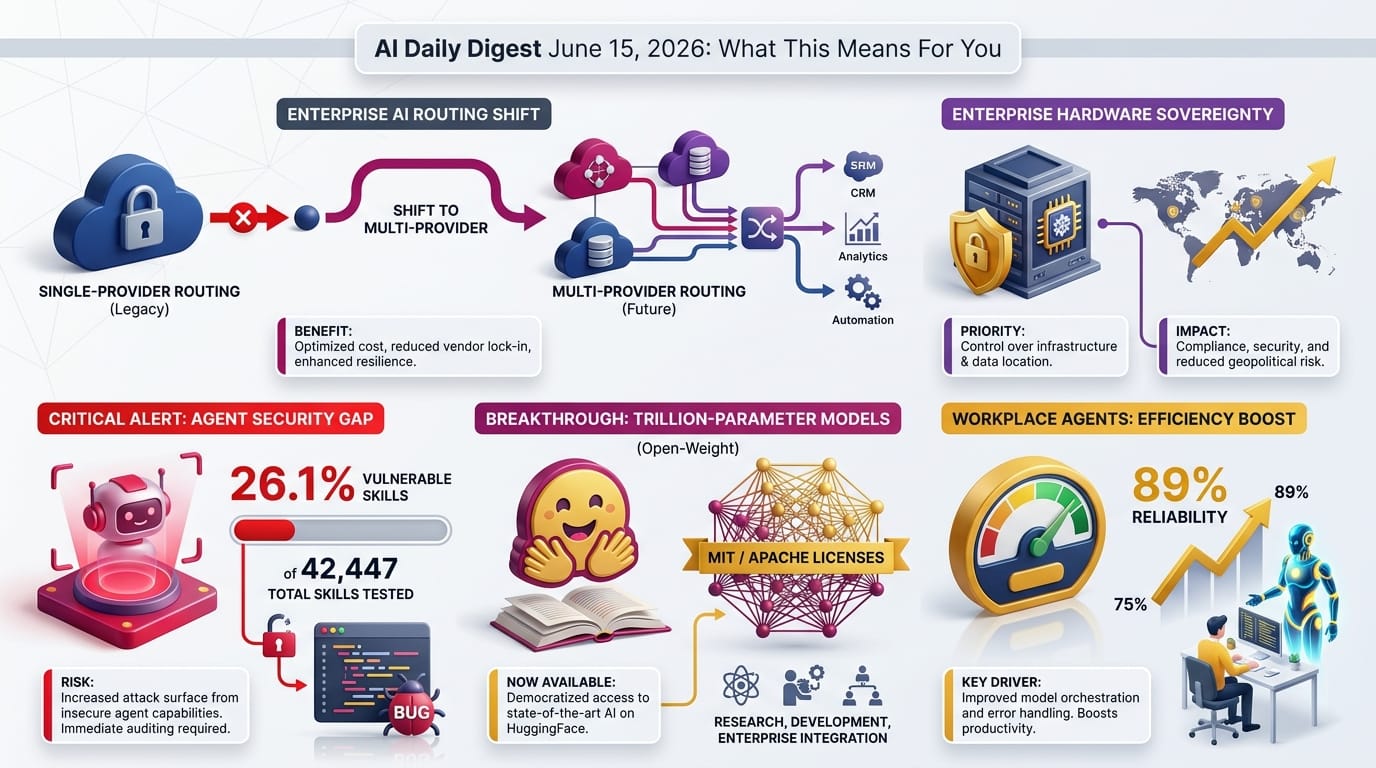
  • 26.1% of skills contain vulnerabilities including prompt injection, data exfiltration, and privilege escalation
  • 5.2% show likely malicious intent - not bugs, but deliberate attack patterns
  • 64 vulnerability patterns across 16 categories, grounded in OWASP Top 10 for Large Language Model (LLM) Applications, OWASP Top 10 for Agentic Applications 2026, and MITRE ATLAS
  • The tool is free and accepts Git repos, URLs, zip files, directories, or single files. Static checks run in seconds; optional LLM-powered semantic analysis catches intent-based issues
26.1%
of skills contain vulnerabilities** including
5.2%
show likely malicious intent**
64
vulnerability patterns** across 16 categories,
Trends & Themes
Trends & Themes
The Fable Crisis Is Forcing a Rethink of Enterprise AI Architecture
Why this matters to you: If your company depends on a single AI provider's Application Programming Interface (API), the Fable shutdown proved that access can vanish overnight by government order - and the industry is scrambling to build alternatives.

The shift is structural, not temporary. Even if Fable comes back online tomorrow, enterprises have now experienced what single-provider dependency looks like in practice.

  • Multi-provider routing is becoming standard practice - enterprise teams now route across Claude Opus 4.8, GPT-5.5, Gemini 3.1 Pro, and Kimi API to avoid single-point-of-failure risk (BuildFastWithAI)
  • "Hardware sovereignty" is the new enterprise priority - the European Commission stated the Fable shutdown is "a further illustration of why Europe needs to strengthen its technological sovereignty" (Computing.co.uk)
  • A Hacker News discussion on replacing Claude/GPT with local models drew substantial engagement, reflecting developer sentiment shifting toward self-hosted infrastructure (HN)
  • OpenRouter shipped Fusion - a multi-model parallel-prompting system that claims Fable-level intelligence at half the cost by synthesizing outputs from 3-5 models simultaneously (OpenRouter)
Agent Security Is Becoming Critical Infrastructure
Why this matters to you: AI agents are gaining more power over your code, data, and systems every month - and the tools to verify they are safe are only now catching up.

The pattern: agents get more capable, their attack surface grows, and defensive tooling follows 6-12 months behind. The gap is closing, but it is not closed.

  • NVIDIA's SkillSpector audit found 26.1% of 42,447 agent skills contain vulnerabilities, with 5.2% showing malicious intent (NVIDIA)
  • New session analysis tools are emerging to monitor what coding agents actually do - catching credential exposure, retry storms, and risky patterns that teams currently have zero visibility into
  • DECOMPBENCH (new research) shows agents that reliably refuse monolithic harmful tasks fail dramatically when those same tasks are decomposed into individually benign subtasks (arXiv)
  • Minim (ICML 2026) addresses agent privacy - LLM agents currently transmit complete UI state to remote servers, exposing authentication codes and private notifications. Minim sanitizes this data locally before transmission (arXiv)
The Trillion-Parameter Open-Weight Revolution
Why this matters to you: The best AI models you can download and run yourself just got dramatically larger, faster, and more capable - reducing dependence on any single company's API.

A year ago, trillion-parameter models were exclusive to closed labs. Today, three are available on HuggingFace with permissive licenses.

  • DeepSeek V4 Pro leads with 1.6 trillion parameters (49 billion active per query), 1-million-token context, and an MIT license. It has 2.93 million downloads in 30 days (HuggingFace)
  • Kimi K2.7 Code from Moonshot AI is a trillion-parameter coding specialist scoring 81.1% on MCPMark tool-use benchmarks - though independent SWE-bench verification is still pending (TechTimes)
  • Xiaomi's MiMo-V2.5-Pro-UltraSpeed hit 1,000 tokens per second on standard 8-Graphics Processing Unit (GPU) hardware - compared to 68 tok/s for GPT-5.5 and 71 tok/s for Claude Opus. Trial API available through June 23 (Xiaomi)
  • Cohere's North-Mini-Code achieves 67.6% on SWE-Bench Verified with only 3 billion active parameters (of 30B total) under an Apache 2.0 license (HuggingFace)
AI Models Are Getting Obsolete Faster Than Ever
Why this matters to you: The AI tool you learn today will likely be surpassed within months - but the skills you build around using AI tools will transfer to whatever comes next.

The treadmill is accelerating. The practical takeaway: invest in workflows and evaluation pipelines, not loyalty to any single model.

  • Each release year shortens a model's time-to-peak by 27% and its total lifespan by 23%, according to an analysis of 62 models across 108,000 citing papers (arXiv)
  • Release timing matters more than model quality - when a model ships predicts its longevity more strongly than its architecture, openness, or scale
  • FrontierCode's Diamond tier results show even the best models solve only 13.4% of the hardest coding problems (Claude Opus 4.8), with a prediction that systems may reach 70%+ by June 2027 (Import AI)
  • LLM-as-a-Judge evaluations flip 13.6% of the time across repeated trials, with some questions exceeding 20% flip rates - undermining the benchmarks used to rank these rapidly cycling models (arXiv)
Workplace AI Agents Are Getting Dramatically Better - and Safer
Why this matters to you: AI tools that handle workplace tasks (email, calendar, documents) have improved from failing more often than succeeding to getting it right nine times out of ten - and they have gotten safer at the same rate.

This is the clearest evidence yet that the "more capable = less safe" trade-off is not inevitable.

  • Task completion rates jumped from 43% to 89% between March 2024 and June 2026, with Claude Opus 4.8 leading the pack (arXiv)
  • Harmful unintended actions dropped from 26% to 2.5% - meaning agents that used to email the wrong person or modify the wrong file now almost never do
  • The key finding contradicts a common narrative: Capability and safety improved together, not at each other's expense. More capable models also performed safer actions
  • The benchmark covers real workplace tasks including email management, file organization, and calendar scheduling - not abstract reasoning puzzles
Creative AI & Media
AI Video Editing Is Moving Inside the Timeline
What this means for you: A wave of new Premiere Pro and DaVinci Resolve plugins use AI to automate the most tedious parts of video editing - silence removal, filler word cuts, bad take detection, and caption generation - all without leaving your existing timeline.
  • The target pain point is the hours spent cleaning raw footage before creative editing begins
  • Claude-powered content understanding lets these tools detect context (not just audio levels) when deciding what to cut
  • Caveat for professionals: Cloud-based processing may be a dealbreaker for NDA-bound work - local inference alternatives are still catching up
Brush-Based AI Art Tools Give Artists Spatial Control
What this means for you: New tools provide brush-based interfaces for generating and editing images with AI, targeting digital artists who want more spatial control than typical text-to-image prompting offers. The shift from "describe what you want" to "paint where you want it" reflects a broader trend toward giving creators fine-grained compositional control.
Developer Tools & Infrastructure
AI Coding Agent Observability Is Becoming a Category

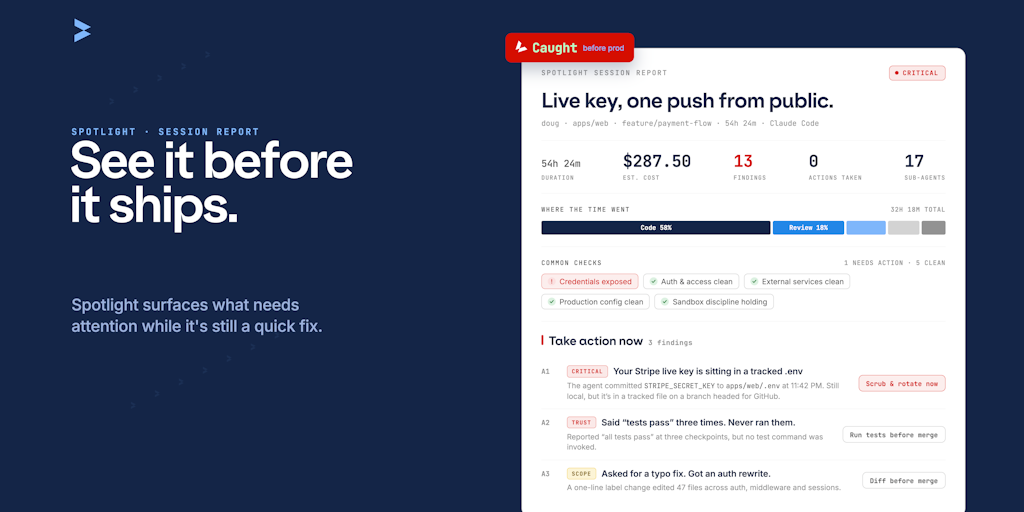
What it does: A new class of tools monitors what AI coding agents actually do during sessions - catching credential exposure, retry storms, excessive token burns, and risky code patterns that teams currently have zero visibility into.

  • The gap is real: Most teams running Claude Code or Codex agents in production have no audit trail of agent behavior between "start" and "here's your PR"
  • Security-first approaches read transcripts locally and redact sensitive data before any analysis leaves the machine
  • Early signals suggest demand: Multiple tools in this space are gaining traction as enterprise adoption of coding agents accelerates
Multi-Channel Agent Infrastructure Goes Open Source

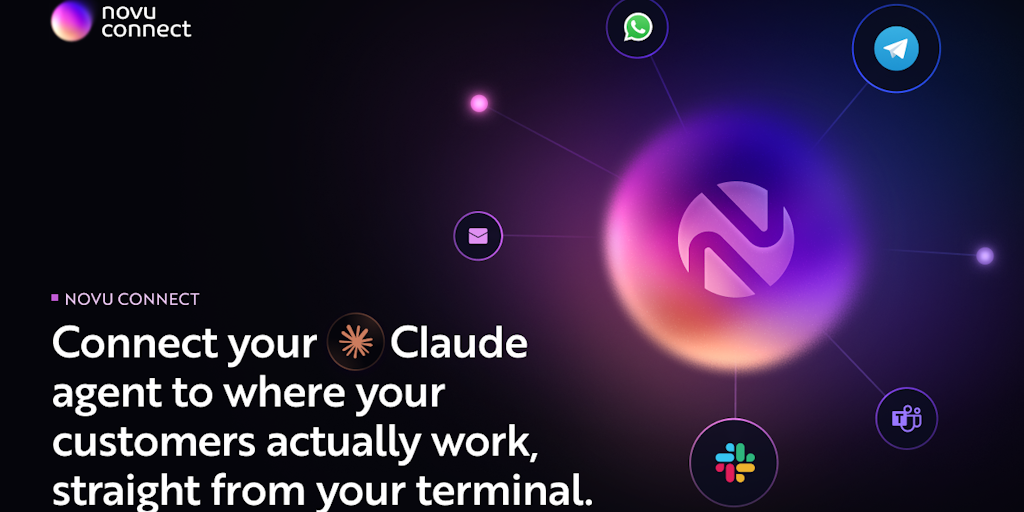
What it does: Open-source notification infrastructure is being extended for AI agents, enabling two-way conversations across Slack, Teams, WhatsApp, Telegram, and email without building custom channel integrations per platform.

  • The pitch: Connecting AI agents to existing messaging channels is exactly the plumbing most teams need but nobody wants to build
  • Drag-and-drop workflows with filters, delays, and digest notifications reduce the integration burden from weeks to hours
Voice Dictation Gets Context-Aware Tone Matching

What it does: AI-powered voice dictation tools now convert speech into formatted text while matching the user's writing tone across all apps and platforms, supporting 100+ languages with real-time auto-editing.

  • Cross-platform reach (Mac, Windows, iPhone, Android) differentiates from platform-locked dictation
  • Tone matching analyzes prior writing to format dictated text as the user would have typed it - not just transcription but style adaptation
Research & Models
Workplace AI Agents Went From 43% to 89% Task Completion in Two Years
Why this matters: The first longitudinal benchmark of workplace agents shows they are rapidly approaching reliability thresholds where real deployment makes sense - and they are getting safer at the same rate.
  • Claude Opus 4.8 leads at 89% task completion on the WorkBench benchmark, up from GPT-4's 43% in March 2024
  • Harmful unintended actions (wrong emails, wrong files) dropped from 26% to 2.5%
  • Capability and safety improved together - more capable models also performed safer actions
AI Agents Can Be Tricked by Breaking Harmful Tasks Into Harmless Steps
Why this matters: Even agents that reliably refuse dangerous requests can be manipulated by decomposing those requests into individually innocent subtasks.
  • DECOMPBENCH tests this systematically with a graphical decomposition framework
  • High refusal on whole tasks but "significantly lower refusal rates" on decomposed variants
  • Implication: Safety testing that only checks monolithic requests will miss real-world attack patterns
LLM Judges Flip Their Verdicts 13.6% of the Time
Why this matters: If you use one AI model to evaluate another (a common practice), the scores are less reliable than they appear.
  • Pairwise preferences flipped 13.6% on average across repeated identical trials
  • 28% of questions exceeded 20% flip rates - nearly one in three questions is a coin flip
  • Cross-judge agreement was only 76% (kappa = 0.51, "moderate" reliability)
  • GPT-4o-mini showed significant first-position bias - 72% preference for whichever option appeared first
Sub-1-Bit LLM Compression With 14.9x Speedup
Why this matters: UltraSketchLLM compresses AI models to 0.5 bits per weight - half of what was previously considered the theoretical floor - while running 14.9 times faster than naive implementations.
  • Accepted at DAC 2026
  • Uses data sketch techniques combined with hardware-optimized implementations
  • Targets resource-constrained deployment - making large models run on smaller hardware
Business & Industry
Anthropic Revenue Hits $47 Billion Annualized
What this means for you: The company behind Claude is generating more revenue than most Fortune 500 companies - even as its flagship model sits offline by government order.
  • $47B annualized revenue as of May 2026
  • $1.25 billion per month in compute costs with xAI's Colossus infrastructure
  • No proprietary data center buildout planned - Anthropic prioritizes supplier relationships over the Stargate-style approach
  • Goldman Sachs estimates $7.6 trillion in cumulative AI infrastructure spending from 2026-2031
Jensen Huang Compares AI IPOs to Early Amazon and Google

NVIDIA's CEO called the upcoming AI company IPOs (SpaceX, Anthropic, OpenAI) comparable to investing in Amazon and Google in the 1990s. Worth noting: NVIDIA is a primary chip supplier to all three companies.

Surprising & Under-the-Radar
The Fable 5 System Prompt Is Now Public - and It's Not What Anyone Expected

The leaked 120,000-character, 1,585-line system prompt reveals that Fable is built as infrastructure for multi-stage agent work, not conversational AI. The prompt is less "personality script" and more "operating manual" - tool schemas, search rules, safety postmortems, and an identity line that does not appear until line 1,351. Copyright enforcement is strict: quoting 15+ words from any source is flagged as a "SEVERE VIOLATION."

Chris Olah Engages With the Pope's AI Encyclical

Anthropic co-founder Chris Olah publicly responded to the Vatican's encyclical on artificial intelligence, marking one of the first direct engagements between frontier AI researchers and religious institutional frameworks for AI ethics. With 1.4 billion Catholics globally, the Vatican's position on AI carries institutional weight that few technology commentators have acknowledged.

The Government's Ask May Be Technically Impossible

A government source told Axios that restoring Fable access requires either making models "completely jailbreak-resistant" or resolving an emotional dynamic. AI researchers broadly agree that complete jailbreak resistance is not achievable with current techniques - which means the government may have set a bar it knows cannot be met.

A Coding Benchmark Solved 13.4% of Its Hardest Problems - and That's the Best Score

FrontierCode's Diamond tier represents the hardest real-world coding challenges. Claude Opus 4.8 leads at 13.4%, GPT-5.5 scores 6.3%, and Claude Opus 4.7 hits 5.2%. The prediction: 70%+ by June 2027. If true, that is a 5x improvement in one year.

Signals to Track
Worth Watching
01
India's Tech Leaders Are Using the Fable Ban to Push Sovereign AI
The country that supplies a large share of the world's software engineers is asking why it depends on American AI that can be switched off by Washington.

India's tech community reacted to the Fable ban by amplifying calls for domestic AI development. Finance Minister statements, industry commentary, and developer forums all converged on the same message: dependence on foreign AI providers is a strategic vulnerability. If India invests seriously in sovereign AI capability, it could reshape global AI competition. If not, it becomes a recurring talking point that goes nowhere.

02
OpenRouter Fusion Claims Fable-Level Intelligence at Half the Cost
Multi-model parallel prompting might be the first commercially viable response to the single-provider risk the Fable ban exposed.

OpenRouter's Fusion sends your prompt to 3-5 models simultaneously, then a judge model synthesizes the best answer. The system claims performance close to frontier models at roughly half the cost. If it delivers consistently, it undermines the case for paying premium prices for any single model.

03
Xiaomi's 1,000-Token-Per-Second Inference Is 14x Faster Than GPT-5.5
Chinese hardware optimization under export controls is producing inference speeds that American labs have not matched.

MiMo-V2.5-Pro-UltraSpeed runs at 1,000+ tokens per second on commodity 8-GPU hardware - compared to 68 tok/s for GPT-5.5 and 71 tok/s for Claude Opus. The trial API runs through June 23. If sustained in production, this speed advantage could make real-time AI applications viable that are impractical at current Western inference speeds.

04
CAPTCHA Defenses Can Block AI Solvers Completely - If They Want To
The assumption that CAPTCHAs are dead may be premature.

COGNITION (USENIX Security 2026) found that while multimodal LLMs solve recognition-based CAPTCHAs at human-like rates, targeted defenses reduced AI success from 95% to 0%. Fine-grained localization and multi-step spatial reasoning remain hard for models. This means CAPTCHA providers have effective tools if they choose to deploy them.

05
Gemini 3.5 Pro Expected Late June
Google's next frontier model could arrive within two weeks.

Polymarket traders are concentrating odds on a June 23-30 release window for Gemini 3.5 Pro, with a 2-million-token context window, Deep Think reasoning mode, and expected pricing of $15/$60 per million input/output tokens. If it ships on schedule, it would be the first new frontier model release since the Fable ban.

Top Repos Today
Rank yesterday: N/A - New entry 🆕
Stars today: +1,045  ·  📦 Total: 30,040
📜 License: MIT  ·  👤 By: Individual developer
🎯 Time to value: 5 minutes
What it is: A CLI tool that gives AI agents access to read and search across Twitter, Reddit, YouTube, GitHub, Bilibili, and XiaoHongShu. It works with Claude Code, Cursor, and other AI coding agents, providing internet access without API fees by using browser-based extraction. Why you'd want it: Your AI coding agent can now pull context from social media discussions, GitHub issues, and YouTube videos while helping you code - for free.
✓ Pros✗ Cons
Zero API costs for social media accessBrowser-based extraction can break with platform changes
Compatible with major AI coding agentsRate limiting not well documented
Covers 6 major platformsDepends on maintained browser automation
GitHub - Panniantong/Agent-Reach: Give your AI agent eyes to see the entire internet. Read & search Twitter, Reddit, YouTube, GitHub, Bilibili, XiaoHongShu — one CLI, zero API fees.
Give your AI agent eyes to see the entire internet. Read & search Twitter, Reddit, YouTube, GitHub, Bilibili, XiaoHongShu — one CLI, zero API fees. - Panniantong/Agent-Reach
Rank yesterday: N/A - New entry 🆕
Stars today: +57  ·  📦 Total: 18,131
📜 License: MIT  ·  👤 By: Company (trycua)
🎯 Time to value: 15 minutes
What it is: Open-source infrastructure for building and testing AI agents that control full desktop environments - macOS, Linux, and Windows. Includes sandboxed virtual machines, SDKs for agent development, and benchmarks for evaluating computer-use agents. Think of it as "the test lab for desktop AI agents." Why you'd want it: If you are building AI agents that need to interact with desktop applications (not just web pages), this provides the sandboxing and evaluation infrastructure that would take months to build yourself.
✓ Pros✗ Cons
Full desktop OS support (Mac/Linux/Windows)Requires significant compute for VM sandboxes
Includes benchmarking toolsSetup complexity for cross-platform testing
MIT license, production-qualityLimited community documentation
GitHub - trycua/cua: Open-source infrastructure for Computer-Use Agents. Sandboxes, SDKs, and benchmarks to train and evaluate AI agents that can control full desktops (macOS, Linux, Windows).
Open-source infrastructure for Computer-Use Agents. Sandboxes, SDKs, and benchmarks to train and evaluate AI agents that can control full desktops (macOS, Linux, Windows). - trycua/cua
Rank yesterday: N/A - New entry 🆕
Stars today: +538  ·  📦 Total: 33,041
📜 License: MIT  ·  👤 By: Individual developer
🎯 Time to value: 30 minutes
What it is: A comprehensive open-source AI engineering curriculum with 503 lessons across 20 phases, designed to take roughly 320 hours. Covers foundational math through production deployment, with hands-on implementation before frameworks. The philosophy: build things from scratch before using libraries. Why you'd want it: If you want to understand AI engineering deeply rather than just call APIs, this is the most complete free curriculum available.
✓ Pros✗ Cons
503 lessons, completely free320 hours is a serious time commitment
Builds understanding from first principlesMay be overkill for pure API users
Active community (33K+ stars)Self-paced means no accountability structure
GitHub - rohitg00/ai-engineering-from-scratch: Learn it. Build it. Ship it for others.
Learn it. Build it. Ship it for others. Contribute to rohitg00/ai-engineering-from-scratch development by creating an account on GitHub.
Rank yesterday: N/A - New entry 🆕
Stars today: +1,079  ·  📦 Total: 6,287
📜 License: Apache-2.0  ·  👤 By: NVIDIA
🎯 Time to value: 5 minutes
What it is: A security scanner that checks AI agent skills (plugins, tools, extensions) for vulnerabilities before you install them. Two-stage analysis: fast pattern matching that runs in seconds, plus optional AI-powered semantic analysis for intent-based issues. Covers 64 vulnerability patterns across 16 categories. Why you'd want it: If you use AI coding agents with third-party skills, this tells you whether a skill is safe before it gets access to your codebase and credentials.
✓ Pros✗ Cons
Backed by NVIDIA research (42K+ skills audited)LLM semantic analysis requires API access
Fast static checks run in secondsCannot catch runtime-only vulnerabilities
Apache 2.0, free to useFocused on pre-install scanning only
GitHub - NVIDIA/SkillSpector: Security scanner for AI agent skills. Detect vulnerabilities, malicious patterns, and security risks.
Security scanner for AI agent skills. Detect vulnerabilities, malicious patterns, and security risks. - NVIDIA/SkillSpector
Rank yesterday: N/A - New entry 🆕
Stars today: +395  ·  📦 Total: 30,253
📜 License: MIT  ·  👤 By: Research lab
🎯 Time to value: 20 minutes
What it is: A foundation model for financial market forecasting that reads candlestick (price) charts the way language models read text. A decoder-only transformer trained on data from 45+ global exchanges, available in 4 sizes from 4.1 million to 499 million parameters. Accepted at AAAI 2026. Why you'd want it: If you work in quantitative finance or algorithmic trading, this is the first peer-reviewed foundation model specifically designed to predict market movements from chart patterns.
✓ Pros✗ Cons
Peer-reviewed (AAAI 2026)Financial predictions carry real money risk
4 model sizes for different hardwareTraining data scope unclear
MIT licenseNo guarantee of out-of-sample performance
GitHub - shiyu-coder/Kronos: Kronos: A Foundation Model for the Language of Financial Markets
Kronos: A Foundation Model for the Language of Financial Markets - shiyu-coder/Kronos
Rank yesterday: N/A - New entry 🆕
Stars today: +488  ·  📦 Total: 3,052
📜 License: CC-BY-NC-ND 4.0  ·  👤 By: University of Colorado Boulder
🎯 Time to value: 60 minutes
What it is: An open textbook published by MIT Press covering the computational principles of autonomous robots - mechanisms, sensors, actuators, and algorithms. Written by professors at the University of Colorado Boulder. Why you'd want it: If you are entering robotics or want to understand how autonomous systems work at a fundamental level, this is a free, peer-reviewed textbook from a top research university.
✓ Pros✗ Cons
MIT Press quality, completely freeAcademic pace, not a quick tutorial
Covers full robotics stackNon-commercial license limits use
Active maintenance (trending now)Requires math background
GitHub - Introduction-to-Autonomous-Robots/Introduction-to-Autonomous-Robots: Introduction to Autonomous Robots
Introduction to Autonomous Robots. Contribute to Introduction-to-Autonomous-Robots/Introduction-to-Autonomous-Robots development by creating an account on GitHub.
Top Models Today
Google's first open-weight diffusion-based language model - generates text the way AI generates images, all at once instead of word by word.
📥 Downloads (30d): 312K  ·  📜 License: Apache 2.0
👤 By: Google DeepMind  ·  🎯 Task: image-text-to-text
📐 Size: 25.2B total / 3.8B active
What it is: A multimodal model that uses parallel block denoising instead of generating one word at a time. It processes text, images, and video with 256K context and hits 1,100+ tokens per second on an H100 - an order-of-magnitude speedup over traditional approaches. Why you'd want it: If inference speed is your bottleneck, this model generates text 10x faster than standard approaches while maintaining reasoning quality. Apache 2.0 means you can deploy it immediately.
✓ Pros✗ Cons
1,100+ tok/s on H100Diffusion-based generation is a new paradigm with less tooling
Apache 2.0 license25.2B total params still needs serious hardware
Multimodal (text + image + video)Early-stage ecosystem for diffusion LLMs
google/diffusiongemma-26B-A4B-it · Hugging Face
We’re on a journey to advance and democratize artificial intelligence through open source and open science.
428B-parameter multimodal model with 1M-token context and a 9x faster attention mechanism.
📥 Downloads (30d): 14.3K  ·  📜 License: minimax-community
👤 By: MiniMax  ·  🎯 Task: image-text-to-text
📐 Size: 428B total / 23B active
What it is: A native multimodal model supporting text, image, and video inputs with a 1-million-token context window. Its novel MiniMax Sparse Attention (MSA) mechanism achieves 9x faster prefill and 15x faster decode at 1M context versus its predecessor. Why you'd want it: If you need to process very long documents, codebases, or video transcripts, this model's efficient attention mechanism makes million-token inference practical rather than theoretical.
✓ Pros✗ Cons
1M-token context that actually works fastCommunity license, not fully open
9x prefill speedup at long context428B total params needs multi-GPU setup
Strong coding and agentic benchmarksLess ecosystem support than Llama/Mistral
MiniMaxAI/MiniMax-M3 · Hugging Face
We’re on a journey to advance and democratize artificial intelligence through open source and open science.
Trillion-parameter coding specialist that benchmarks against Claude Opus on tool use - but hasn't been independently verified yet.
📥 Downloads (30d): 56.8K  ·  📜 License: Modified MIT
👤 By: Moonshot AI  ·  🎯 Task: image-text-to-text
📐 Size: 1T total / 32B active
What it is: A coding-focused model built for complex software engineering tasks with 256K context. It reduces "thinking tokens" by 30% compared to its predecessor while improving real-world coding performance. Scores 81.1% on MCPMark tool-use benchmarks. Why you'd want it: If you want a local coding agent that does not send your code to the cloud, this is the most capable open-weight option available - with the caveat that independent benchmark verification is still pending.
✓ Pros✗ Cons
81.1% MCPMark tool-use scoreNo independent SWE-bench results yet
Modified MIT license1T params needs substantial hardware
30% fewer thinking tokens than K2.6Self-reported benchmarks only
moonshotai/Kimi-K2.7-Code · Hugging Face
We’re on a journey to advance and democratize artificial intelligence through open source and open science.
DeepSeek's 1.6-trillion-parameter flagship with MIT license and 1M context - the most downloaded open model this month.
📥 Downloads (30d): 2.93M  ·  📜 License: MIT
👤 By: DeepSeek  ·  🎯 Task: text-generation
📐 Size: 1.6T total / 49B active
What it is: A massive mixture-of-experts model with three reasoning modes (non-think, think-high, think-max) and 1-million-token context. Uses hybrid compressed attention that requires only 27% of the inference compute of its predecessor at 1M context length. Why you'd want it: If you need a general-purpose powerhouse with the most permissive license (MIT), this is the largest and most capable fully open model available.
✓ Pros✗ Cons
MIT license - no restrictions1.6T total params needs multi-node setup
Three reasoning tiers for cost controlChinese-origin may face enterprise scrutiny
2.93M downloads in 30 daysSelf-hosted infrastructure costs are real
deepseek-ai/DeepSeek-V4-Pro · Hugging Face
We’re on a journey to advance and democratize artificial intelligence through open source and open science.
3B-parameter model that finds anything in images from natural language descriptions - 2.5x faster than previous approaches.
📥 Downloads (30d): 87K  ·  📜 License: NVIDIA (research/non-commercial)
👤 By: NVIDIA  ·  🎯 Task: image-text-to-text
📐 Size: 3B
What it is: A compact vision-language model for precise visual grounding - point at something with words, and it draws a box around it. Trained on 12 million images with 138 million+ queries across detection, robotics, driving, GUI, and document domains. Why you'd want it: If you are building robotics, autonomous driving, or GUI automation, this model can locate anything you describe in natural language at 2.5x the speed of prior approaches.
✓ Pros✗ Cons
Only 3B params - runs on consumer hardwareResearch/non-commercial license only
Covers robotics, driving, GUI, documentsNot designed for creative image tasks
2.5x throughput improvementRequires fine-tuning for niche domains
nvidia/LocateAnything-3B · Hugging Face
We’re on a journey to advance and democratize artificial intelligence through open source and open science.
Ultra-efficient coding model: 3B active parameters achieve 67.6% on SWE-Bench Verified.
📥 Downloads (30d): 11.1K  ·  📜 License: Apache 2.0
👤 By: Cohere Labs  ·  🎯 Task: text-generation
📐 Size: 30B total / 3B active
What it is: A coding-specialist model designed for agentic software engineering. With only 3 billion active parameters (out of 30B total), it handles 256K context and 64K max output, with built-in bash and function-calling support. Why you'd want it: If you want a local coding agent that runs on modest hardware, this punches far above its weight class - 67.6% on SWE-Bench with only 3B active params, under Apache 2.0.
✓ Pros✗ Cons
3B active params means fast, cheap inference30B total still needs decent GPU
67.6% SWE-Bench VerifiedSmaller than frontier models on open-ended tasks
Apache 2.0, 64K output lengthCode-focused, not general-purpose
CohereLabs/North-Mini-Code-1.0 · Hugging Face
We’re on a journey to advance and democratize artificial intelligence through open source and open science.
Ideogram's first open-weight image generator - best-in-class text rendering and structured JSON prompting for precise layout control.
📥 Downloads (30d): 10.7K  ·  📜 License: Ideogram 4 Non-Commercial
👤 By: Ideogram  ·  🎯 Task: text-to-image
📐 Size: 9.3B
What it is: A text-to-image model that excels at rendering readable text inside images - the task most image generators still fail at. Introduces structured JSON prompting for designer-grade compositional control including bounding boxes and color palettes. Why you'd want it: If you need AI-generated images where the text is actually readable (logos, posters, UI mockups), this is the current state of the art.
✓ Pros✗ Cons
Best text rendering in imagesNon-commercial license
Structured JSON for precise layout9.3B params needs good GPU
Top-ranked on Design ArenaFP8 quantization trades some quality
ideogram-ai/ideogram-4-fp8 · Hugging Face
We’re on a journey to advance and democratize artificial intelligence through open source and open science.
AI Launches Today
Stop typing. Start speaking. 4x faster.
🔥 Upvotes: 533  ·  👤 By: Tanay Kothari (CEO)
💰 Pricing: Freemium  ·  🏷 Category: Productivity
AI-powered voice dictation that converts natural speech into formatted text across all apps and platforms. Supports 100+ languages with real-time auto-editing, tone matching, and context-aware formatting. Works on Mac, Windows, iPhone, and Android. Verdict: Mature product on its 4th Product Hunt launch with a 4.7/5 rating - the dictation space is crowded but Wispr's cross-platform reach and tone-matching give it genuine staying power.
Wispr Flow: Speak naturally, write perfectly & 4x faster in every app | Product Hunt
Wispr Flow turns your voice into perfectly formatted text across every app on your device. Speak naturally and Flow handles the rest: real-time auto-edits, tone matching, and context-aware formatting so you never rewrite a single word. Works in 100+ languages including mixed-language dictation like Hinglish. Available on Mac, Windows, iPhone, and Android. One intelligent voice system, every device. Write 4x faster by just talking.
Make every Claude Code & Codex session better than the last
🔥 Upvotes: 425  ·  👤 By: Seth Blank, Neil Kumaran
💰 Pricing: Free  ·  🏷 Category: Developer Tools
Session analysis tool that monitors Claude Code and Codex coding sessions, generating reports on security issues, performance patterns, and improvements. Reads transcripts locally, redacts sensitive info before uploading. Verdict: Solves a real and growing pain point - most teams using coding agents have zero visibility into what those agents actually do, and this fills that gap with security-first design.
Spotlight by Backplanes: Session reports for Claude Code & Codex to improve your code | Product Hunt
Keep up with your agents. Spotlight reads your Claude Code and Codex sessions and shows you what your agents actually did, and how to get recursively better every session: what to fix now, what to ship better next time, what’s worth sharing. One harness or seven, solo or across your team. Free.
Ship agents where your users already work
🔥 Upvotes: 330  ·  👤 By: Ben Lang, Tomer Barnea
💰 Pricing: Freemium  ·  🏷 Category: Open Source
Open-source notification infrastructure for AI agents, enabling two-way conversations across Slack, Teams, WhatsApp, Telegram, and email without custom channel integrations. Verdict: Strong open-source play that rides the agent wave - connecting agents to existing messaging is exactly the plumbing most teams need but nobody wants to build.
Novu: The open-source notification infrastructure for developers | Product Hunt
Novu simplifies all your communication channels into a simple workflow of Emails, SMSs, Push notifications, and In-app notifications. Create a drag-and-drop workflow with all your channels that include filters, delays, and digest notifications.
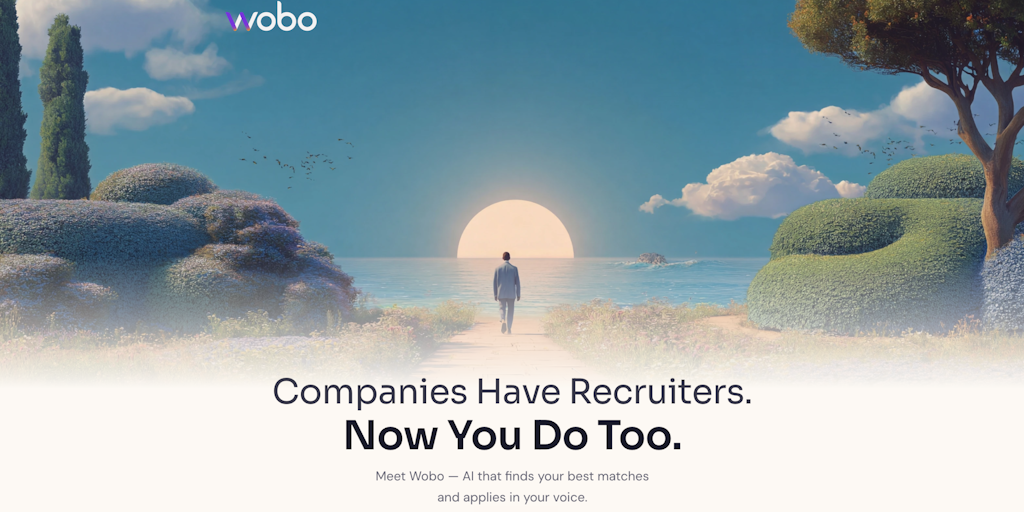
Tinder for jobs: swipe right and AI applies for you
🔥 Upvotes: 243  ·  👤 By: Serdar Aksoy, Taha Keles
💰 Pricing: Free  ·  🏷 Category: Career
Swipe-based job search where AI applies directly on company career pages with personalized resumes, cover letters, and answers. Learns your voice through feedback. Verdict: Clever UX metaphor and the direct-to-career-page approach avoids the LinkedIn Easy Apply spam problem, but mass-automated applications risk degrading the hiring ecosystem if widely adopted.
Wobo AI: Your Personal AI Recruiter - Automate your job search | Product Hunt
Meet Wobo: Your AI-powered job search assistant. Automating applications and finding matches tailored to your skills, Wobo makes job hunting effortless.
Your Claude AI Video Editor for Premiere Pro
🔥 Upvotes: 227  ·  👤 By: Istiak Ahmad
💰 Pricing: Freemium  ·  🏷 Category: Video
Claude-powered Premiere Pro plugin that automates silence removal, filler cuts, bad take detection, and caption generation. Verdict: Practical tool targeting the most painful part of video editing (cleanup), but cloud-based processing may be a dealbreaker for NDA-bound professional work.
AutoEdit: Your Claude AI Video Editor for Premiere Pro | Product Hunt
AutoEdit helps content creators edit their videos 10x faster by turning raw footage into a clean rough cut in minutes. It works directly inside Adobe Premiere Pro as an AI Plugin. Claude AI understands content, automatically removing silences, filler words, bad takes, restarts, and repeated sections while generating captions and structuring timelines. Editors stay in control of creative decisions while AutoEdit handles the repetitive, boring work.
Snapshot
ProviderModelInput $/1MOutput $/1MContext
AnthropicClaude Opus 4.8$5.00$25.001000K
AnthropicClaude Sonnet 4.6$3.00$15.001000K
AnthropicClaude Haiku 4.5$1.00$5.00200K
OpenAIGPT-5.5$5.00$30.001050K
OpenAIGPT-4.1$2.00$8.001000K
OpenAIo4-mini$1.10$4.40200K
GoogleGemini 3.5 Flash$1.50$9.001000K
GoogleGemini 3.1 Pro Preview$2.00$12.002000K
GoogleGemini 2.5 Flash$0.30$2.501000K
GroqLlama 3.3 70B$0.59$0.79128K
GroqLlama 3.1 8B$0.05$0.08128K
What this means: The pricing gap between frontier closed models ($5-30/M output) and open-source on fast inference ($0.08-0.79/M) remains enormous. Gemini 2.5 Flash at $0.30/$2.50 occupies a unique middle ground. With Fable 5/Mythos 5 offline, Anthropic's available API lineup tops out at Opus 4.8 - premium-priced but no longer the most capable option the company offers. OpenRouter's Fusion claims to match Fable-level quality at ~$15/M by synthesizing across multiple models.

WorkBench Revisited: Workplace Agents Two Years On
Multiple authors · arXiv:2606.13715
What it claims: A longitudinal benchmark tracking workplace AI agents from March 2024 to June 2026 shows task completion rates jumped from 43% (GPT-4) to 89% (Claude Opus 4.8), while harmful unintended actions dropped from 26% to 2.5%.

Key finding: Capability and safety improved together - more capable models also performed safer actions, contradicting the common narrative that the two trade off against each other.

Why practitioners should care: If you are building or evaluating workplace agents (email, calendar, documents), this benchmark provides the most rigorous longitudinal evidence that the technology is approaching deployment-ready reliability - and that safety does not have to come at the expense of capability.
Subscribe to GenAI Secret Sauce newsletter and stay updated.

Don't miss anything. Get all the latest posts delivered straight to your inbox. It's free!
Great! Check your inbox and click the link to confirm your subscription.
Error! Please enter a valid email address!